
25 June 2026, 10:07 AM London, UK
By late London morning, FX is moving toward the US PCE and GDP block with the Dollar rally mature rather than cleanly fresh. The core tactical question is whether 13:30 London data extends the Dollar impulse or delivers the stop-run failure that late buyers are vulnerable to. EUR/USD and AUD/USD are hovering above recently defended downside areas, while GBP/USD has reclaimed part of its break below 1.3160 without removing the broader sterling risk premium. USD/CAD is the clearest overbought Dollar expression, and USD/JPY remains the most asymmetric battlefield as 161.93/162.00 combines cycle highs, option-knockout defence, stop interest and intervention-sensitive headlines. EUR/GBP is the non-Dollar exception, still heavy near 0.8600/20, while NZD/USD remains a crowded local downside watch.
--------------------
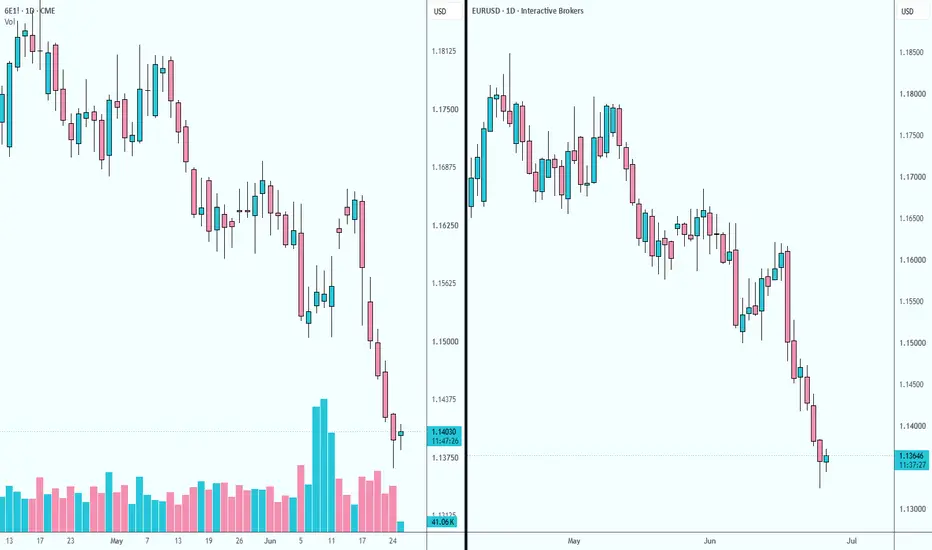
EUR/USD — Spot: 1.1365
Technical Analysis
- The pair remains in a downtrend, but Wednesday's hammer candle and sub-30 RSI soften the immediate bearish read.
- The latest chart note flags 1.1385, the 24 June daily high, as nearby resistance, while 1.1336 Fibonacci support has survived on a closing basis. Deeper support is watched at the 1.1310 monthly average and 1.1291 weekly average.
- Momentum still favours sellers, yet failure to close below 1.1336 keeps consolidation or a tactical rebound in play.
Sell-side Research
- Societe Generale says the fall began when consensus EUR/USD forecasts were bullish and CFTC futures positioning was long, but expects the decline to slow without fresh data.
- Credit Agricole argues EUR/USD can stay offered even if risk sentiment improves, because the Fed rate repricing keeps the Dollar more attractive than the euro.
Market Chatter
- Market colour says post-Fed Dollar gains stalled around 1.1325, with EUR/USD unable to close below the 1.1336 retracement.
- EUR put-over-call premium has peaked from Wednesday's highs, while implied volatility has eased as spot losses stalled.
- Core US PCE at 13:30 London is the key event gate, with Final GDP released at the same time but likely secondary unless the surprise is large.
Strategy
The conditional opportunity is a post-PCE bear trap rather than fresh Dollar chasing. A downside flush that fails below 1.1336 and reclaims it would make EUR/USD rebound risk cleaner, while acceptance below 1.1310 cancels the squeeze setup.
--------------------
GBP/USD — Spot: 1.3190
Technical Analysis
- Sterling printed a new 2026 low at 1.3140, with RSI near 30 confirming both downside strength and developing oversold conditions.
- Recent technical commentary keeps 1.3209, the 24 June high, and 1.3242 pivot resistance in focus above spot. The 1.3140 2026 low and the 1.3125 November 2025 low are the first supports.
- The chart bias remains lower, but rebounds into resistance are more attractive than selling the floor after the first break.
Sell-side Research
- Morgan Stanley prefers short GBP/USD over short EUR/USD as the cleaner hedge for a further Dollar run, citing scope for additional GBP-negative risk premium.
- HSBC expects GBP/USD to drift lower over the next month as Fed hawkishness, fading sterling support and fiscal concerns build.
Market Chatter
- Cable holds below the former 1.32 support area after Wednesday's drop to the lowest level since November 2025.
- UK political risk remains active, with Chancellor succession talk splitting between continuity and fiscal-risk interpretations.
- US PCE is the immediate Dollar catalyst. A soft print would challenge the already visible bearish cable story.
Strategy
The market still prices sterling weakness, but the cleaner short is not a fresh sell near 1.3190. Prefer fading a post-data rebound that fails back below 1.3209, while strength through 1.3279 means the breakdown has lost tactical control.
--------------------
USD/JPY — Spot: 161.81
Technical Analysis
- USD/JPY remains just below the 161.93/161.96 highs, with Fibonacci projection work only activating if the 162 area clears.
- The latest technical note flags 161.93/96 as the cycle-high resistance band before the 162 handle. On dips, 161.54 has already been tested, while 161.27 and the 161.12 10-day average remain the next support references.
- Above 162, 162.88 and 163 become projection and psychological markers, but intervention risk makes acceptance more important than the first spike.
Sell-side Research
- MUFG says BoJ hike expectations have not yet triggered a stronger yen, even as pressure on Japan to support the currency has increased.
- JP Morgan expects the next BoJ hike in October, citing hawkish meeting opinions and rising concern about upside inflation risks.
- Credit Agricole says Japan still has substantial reserve capacity for intervention, while political constraints may affect how investors judge the risk.
Market Chatter
- Spot continues to hover below the 2024 peak and 162.00 option-knockout area, with offers and defensive sales reported ahead of the handle.
- Traders report large stops above 162.00, while a lack of official action could encourage another yen-selling attempt.
- JPY crosses trade heavy, suggesting intervention risk and yen-short reduction are already influencing broader yen exposure.
Strategy
The underpriced path is a stop-run fade, not buying the 162 break. If acceleration through 161.93 fires stops into the handle, the tactical short is cleaner than passive breakout chasing, while acceptance above 162.00 kills the fade.
--------------------
AUD/USD — Spot: 0.6903
Technical Analysis
- AUD/USD remains bear-biased after an 11-week low, although RSI below 30 warns that the decline may be overreaching.
- The chart discussion centres on 0.6924, the 24 June high, as nearby resistance. The 0.6882 lower Bollinger boundary and 0.6857 200-day average are the watched supports.
- Downside pressure still points toward the 200-day average, but the first flush into 0.6882/0.6857 is no longer a clean late-entry zone.
Sell-side Research
- Bank of America says AUD/USD is undervalued, with fair value around 0.71, and keeps a structural buyer-on-dips stance despite headwinds.
- Societe Generale says AUD may flush remaining long positions after the break below 0.70, but would look for improvement signs to buy AUD against the euro later.
Market Chatter
- AUD failed to respond positively to a stronger Australian jobs print, showing how dominant Dollar strength and commodity weakness remain.
- CFTC data showed the net AUD position flipped short for the first time since January in the week to 16 June.
- Stop-liquidity is clustered below 0.6880 and above 0.6923, making the next data reaction vulnerable to a false break.
Strategy
The underpriced path is a bear-trap rebound if PCE triggers a flush through 0.6882 that quickly returns above it. Below 0.6857, the trap has failed and the 200-day support story becomes the next reassessment point.
--------------------
USD/CAD — Spot: 1.4229
Technical Analysis
- USD/CAD keeps its strong May-June uptrend, but an RSI near 88 marks the most overbought reading since March 2020.
- The latest technical note flags 1.4248, the 2026 high, with the 1.4276 upper Bollinger boundary and 1.4292 Fibonacci level above. Support is watched around 1.4203 short-term structure and the 1.4167 weekly technical zone.
- The trend deserves respect, yet any turn from this overbought area could be significant.
Sell-side Research
- Credit Agricole says the Dollar remains the biggest long in its G10 positioning model and has continued to attract buying interest.
- MUFG argues it may be easier for the Fed to hike sooner rather than later, supporting the broader Dollar rates story.
Market Chatter
- Soft commodities and lower oil have added pressure on CAD, while Fed-BoC divergence keeps the pair bid.
- Retail traders remain heavily short USD/CAD, so an early fade before a stop-run is risky.
- The 13:30 PCE release is the session gate. A Dollar spike that fails above the highs would fit the exhaustion template.
Strategy
The underpriced path is a USD/CAD exhaustion reversal only after a stop-run above 1.4248 fails. Retail shorts make pre-fading dangerous, but a return below the high after PCE would shift the cleaner tactical expression lower toward 1.4203.
--------------------
EUR/GBP — Spot: 0.8617
Technical Analysis
- EUR/GBP remains under pressure after lower highs and the largest one-day drop since December 2025 confirmed a bearish structure.
- Recent analysis keeps 0.8633/0.8653 in focus as resistance from the prior daily high and the current 50-day average. The 0.8598 August 2025 low and 0.8556 weekly average are the key supports.
- Momentum is negative, but the 0.8600/20 floor needs acceptance below before downside can be pressed responsibly.
Sell-side Research
- Societe Generale expects the 0.86-0.87 range to hold in the very near term, leaving GBP/USD largely driven by EUR/USD.
Market Chatter
- Weak rebounds keep pressure on the familiar 0.8600/20 support zone, with spot still heavy below recent highs.
- GBP has found support from expectations of a smoother UK political transition, although Chancellor succession risk remains live.
- Stop-liquidity near 0.8600 and 0.8625 makes the cross vulnerable to a false break before direction clarifies.
Strategy
The better tactic is conditional downside, not selling the floor blindly. Follow EUR/GBP lower only if 0.8598 breaks, holds, and fails to reclaim, while a move back through 0.8625 signals the breakdown has become a trap.
--------------------
NZD/USD — Spot: 0.5647
Technical Analysis
- NZD/USD is close to a seventh consecutive decline after failing at the 55-day average on 15 June.
- Chart commentary points to 0.5580 as the next support, while resistance remains distant at 0.5990/95 and 0.6012.
- The current session is still narrow, so fresh downside needs post-data acceptance rather than late selling into a stretched run.
Sell-side Research
- Credit Agricole says NZD remains the largest short in its G10 positioning model, with mild selling interest last week driven mainly by IMM flows.
Market Chatter
- Retail exposure is still heavily long NZD/USD, leaving local downside stop-risk if 0.5623 gives way.
- Stop-liquidity is visible below 0.5623 and above 0.5688, making the PCE reaction the likely trigger for the next range break.
- RBNZ pricing remains supportive on paper, but spot weakness shows the market is not rewarding that narrative today.
Strategy
No clean spot edge before PCE. NZD/USD is already stretched lower and retail longs can add downside fuel, but the reward to 0.5580 is poor unless post-data acceptance below 0.5623 creates a fresh setup.
--------------------
Market Summary
EUR/USD — 1.1365 — Trap watch
- Market consensus: Dollar trend remains favoured, but EUR support and peaked put premium slow downside conviction.
- Recommendation: Fade only a failed post-PCE flush back above 1.1336. Below 1.1310 cancels it.
GBP/USD — 1.3190 — Sell rallies
- Market consensus: Sell-side views favour weaker sterling, with politics and Fed-BoE divergence still weighing.
- Recommendation: Prefer failed rebounds below 1.3209, not fresh shorts into the post-break floor.
USD/JPY — 161.81 — Trap watch
- Market consensus: Upside pressure persists, but 162.00 barriers, stops and intervention risk dominate the session.
- Recommendation: Fade stop-run acceleration into 161.93/162.00. Stand aside if the handle accepts above.
AUD/USD — 0.6903 — Rebound risk
- Market consensus: Commodities and Dollar strength weigh, although AUD is oversold and positioning has turned short.
- Recommendation: Respect a bear-trap rebound if 0.6882 flushes and reclaims. Below 0.6857 cancels it.
USD/CAD — 1.4229 — Trap watch
- Market consensus: Trend and macro still support USD/CAD, but overbought momentum is extreme.
- Recommendation: Do not pre-fade. Short only after a failed stop-run above 1.4248.
EUR/GBP — 0.8617 — Short below 0.8598
- Market consensus: The cross remains heavy, but sell-side range views warn against selling the floor blindly.
- Recommendation: Follow downside only after 0.8598 holds below. Above 0.8625 signals trap risk.
NZD/USD — 0.5647 — No clean spot bias
- Market consensus: NZD remains under pressure, with retail longs exposed and institutional models still short.
- Recommendation: Avoid pre-PCE chasing. Reassess only if 0.5623 accepts below after the release.
--------------------
Futures / Spot FX Context
Although the market review above is based primarily on spot FX analysis, listed FX futures may provide a relevant and transparent way for traders to express or hedge views on the same underlying currency themes. Futures prices may differ from spot prices due to factors such as interest rate differentials, contract expiry, liquidity, and basis, so traders should always refer to the appropriate futures contract and real-time market data before making any decision.
CME Group FX futures offer a centrally cleared, regulated marketplace where counterparty credit risk is mitigated through CME Clearing. They also provide transparent order-book pricing and execution rules, including a first-on-price, first-to-fill framework, which can support fairer access to liquidity across market participants. These features may make futures suitable vehicles for traders who want exposure to major FX themes within a standardized, exchange-traded framework.
When charting futures, the data provided could be delayed. Traders working with the ticker symbols discussed in this idea may prefer to use CME Group real-time data plan on TradingView: tradingview.com/cme/.
This consideration is particularly important for shorter-term traders, whereas it may be less critical for those focused on longer-term trading strategies.
General Disclaimer:
The trade ideas presented herein are solely for illustrative purposes forming a part of a case study intended to demonstrate key principles in risk management within the context of the specific market scenarios discussed. These ideas are not to be interpreted as investment recommendations or financial advice. They do not endorse or promote any specific trading strategies, financial products, or services. The information provided is based on data believed to be reliable; however, its accuracy or completeness cannot be guaranteed. Trading in financial markets involves risks, including the potential loss of principal. Each individual should conduct their own research and consult with professional financial advisors before making any investment decisions. The author or publisher of this content bears no responsibility for any actions taken based on the information provided or for any resultant financial or other losses.

Disclaimer
The information and publications are not meant to be, and do not constitute, financial, investment, trading, or other types of advice or recommendations supplied or endorsed by TradingView. Read more in the Terms of Use.
Disclaimer
The information and publications are not meant to be, and do not constitute, financial, investment, trading, or other types of advice or recommendations supplied or endorsed by TradingView. Read more in the Terms of Use.