
Executive Summary:
AVEX operates in a strategically relevant corner of the defense industry focused on autonomous systems. The technology story is interesting, but the financial picture is much less convincing. Current results show fragile economics, negative free cash flow, and significant reliance on a single customer ecosystem. Margin-of-safety verdict: no demonstrable margin of safety at the current price.
One Stock, Dozens of Voices:
This assessment does not come from a single analyst. CrowdWisdom reviewed 23 independent sources for AVEX (20 financial research articles (web); 1 live market intelligence feeds; 1 prior CrowdWisdom analysis snapshots (internal archive); 1 verified financial data checks (Yahoo Finance)). The goal was to understand where dozens of traders, investors, and researchers broadly agree, where their views diverge, and what the market may be overlooking.
Those perspectives were then pressure tested by comparing opposing arguments: a bull case, a bear case that challenges the consensus, and an examination of what expectations appear to already be embedded in the current price. All financial metrics were cross checked against live market data.
What follows highlights where opinions converge, where they split, and whether the stock offers a genuine margin of safety at today’s valuation.
Business Quality and Moat Durability:
AVEX operates at the intersection of defense technology and autonomous systems. The company develops unmanned aerial and surface platforms designed for intelligence, surveillance, and reconnaissance missions. Its position in the market rests on several structural characteristics typical of defense suppliers.
Procurement barriers are the first. Defense programs require security clearances, long qualification cycles, and high reliability standards. Once a system becomes embedded in military operations, replacing the vendor can be complicated both operationally and politically.
The company also owns patents related to sensor fusion and low observable airframe design. These technologies allow autonomous platforms to merge data from multiple sensors while maintaining stealth characteristics, an attractive capability in ISR missions.
Another advantage is integration within military systems. When a drone platform becomes part of command and control architecture, training programs, and logistics networks, switching to an alternative supplier becomes more difficult.
Even so, the moat is best described as modest. Major defense contractors operate with far larger research budgets and deeper relationships with procurement agencies. In the UAV and autonomous systems space, technological advantages can spread quickly.
The most reasonable conclusion is that AVEX holds a narrow but workable position inside a specialized niche. For now it appears stable rather than expanding. Whether the moat widens will depend on whether current development programs evolve into widely deployed defense platforms.
Return on Invested Capital (ROIC):
ROIC is one of the most important indicators of long term value creation, yet reliable ROIC data for AVEX is not currently available. That absence is itself informative.
The available financial statements offer some clues, and they are not particularly encouraging.
In fiscal 2025 the company generated approximately $433 million in revenue but only $8.2 million in operating income. Operating margins of roughly 1.9 percent suggest that incremental capital is producing very limited returns.
The business is relatively light on capital expenditures. Annual capex is about $22 million, roughly 5 percent of revenue. Normally this would create the potential for strong ROIC because growth does not require heavy asset investment.
The real constraint appears to lie in program economics and working capital demands. If development programs require large engineering expenditures, inventory buildup, and milestone based payments, the capital tied up in the operating cycle could be far larger than capex alone implies.
Given the extremely thin margins and the collapse in free cash flow during 2025, incremental ROIC at the moment is likely low and may even be negative.
For investors looking for businesses that compound capital over long periods, that uncertainty is a significant drawback.
Quality of Earnings:
In fiscal 2025, accounting profits and cash generation diverged sharply.
Revenue reached roughly $433 million and operating income was positive at $8.2 million. Yet free cash flow dropped to negative $105 million, equal to about negative 24 percent of revenue.
The prior year told a very different story, producing positive free cash flow of roughly $56 million. A swing of more than $160 million in a single year points either to a large working capital build or heavy investment in program development.
When free cash flow diverges this far from accounting earnings, it is reasonable to assume the income statement is painting a more optimistic picture than the underlying economics.
Defense contractors with project based contracts can appear profitable on paper while consuming cash in reality. Until that gap closes, the quality of earnings deserves skepticism.
Capital Allocation Scorecard:
Management’s capital allocation record looks mixed.
Capital expenditures have been controlled. At roughly $22 million annually, capex has remained modest relative to revenue.
The company has also authorized a share repurchase program worth about $150 million. Around 2 percent of outstanding shares have been repurchased so far. Buybacks can make sense if the shares are trading below intrinsic value.
The timing, however, raises questions. Repurchasing stock while free cash flow is deeply negative is difficult to justify from a capital discipline perspective.
AVEX does not pay a dividend, which is reasonable for a company still in a development phase.
Overall capital allocation grade: C. Capex discipline is evident, but buying back stock during a period of cash burn weakens the overall record.
Customer and Revenue Concentration:
Customer concentration is one of the most meaningful structural risks.
More than 40 percent of fiscal 2025 revenue came from contracts with the U.S. Department of Defense.
The company also disclosed multi year defense contracts worth roughly $150 million awarded in 2024.
Government contracts can be stable, but they are also tied to political priorities and budget cycles. Procurement strategies can shift with changes in geopolitical conditions or political leadership.
The exposure becomes more significant because AVEX is not a diversified prime contractor. The loss or delay of even one major program could have a noticeable effect on revenue.
In practice, a large portion of the company’s economic engine depends on decisions made within a single customer ecosystem.
Management Alignment:
Insider behavior sends a mildly constructive signal.
Over the past twelve months insiders purchased more than seventy thousand shares, representing roughly $1.48 million in value. No insider sales were reported over the same period.
Overall insider ownership remains modest at roughly 3 percent of the company.
That level is not high enough to guarantee strong alignment, but the fact that insiders are buying rather than selling suggests at least some confidence in the company’s longer term prospects.
10-Year Durability Test:
A useful question for any investment is whether the competitive landscape can be reasonably predicted a decade from now.
For AVEX the answer is uncertain.
Several structural forces could reshape the industry. Technological disruption is the most obvious. Autonomous drone capabilities are advancing quickly worldwide, and both commercial drone manufacturers and global defense contractors are investing billions into similar technologies.
Large defense primes present another challenge. Companies such as Lockheed Martin, Boeing, and Northrop Grumman have the scale to replicate niche technologies if they decide the market is strategically important.
Procurement consolidation could also narrow the opportunity set for smaller suppliers.
There are also factors working in the company’s favor. Defense procurement cycles tend to be long, and once a system becomes operationally embedded it can remain in service for decades.
The difficulty is that AVEX has not yet shown that any single platform has reached that level of adoption.
Given those uncertainties, predicting the company’s competitive position ten years out is difficult. For many investors, that likely places AVEX in the “too hard” category.
Multi-Year Thesis (3 to 7 years):
Base Case Scenario (Probability 50 percent)
Assumptions:
Revenue grows about 8 to 10 percent annually.
Operating margin improves to around 4 percent as programs mature.
Free cash flow normalizes to roughly 4 percent of revenue.
Under these assumptions normalized free cash flow might reach roughly $25 to $35 million annually within five years. Applying a conservative 15 times multiple implies an intrinsic value around $375 to $525 million.
Bull Case Scenario (Probability 25 percent)
Assumptions:
Major UAV platform enters scaled production.
Operating margin expands to 8 percent.
Free cash flow margin reaches 8 percent.
Under this scenario free cash flow might reach $60 to $70 million annually. At a 20 times multiple the implied value approaches $1.2 to $1.4 billion.
Bear Case Scenario (Probability 25 percent)
Assumptions:
Margins remain around 2 percent.
Working capital remains volatile.
Free cash flow stays near zero.
In this case the company may only justify a value near book value, perhaps $400 to $600 million.
Probability weighted intrinsic value across scenarios likely sits below the current market capitalization of roughly $1.6 billion.
Margin of Safety Verdict:
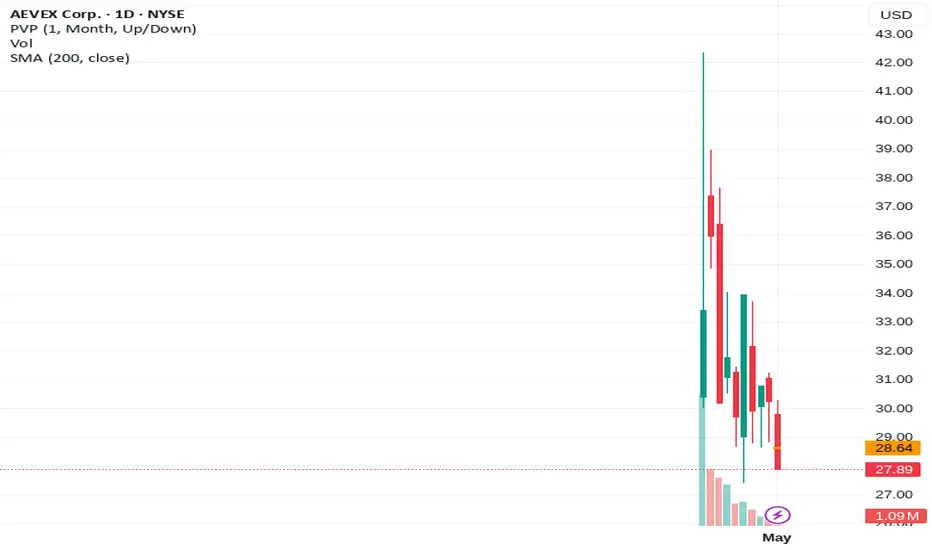
With the stock trading near $32.46 and a market value around $1.65 billion, the current price appears to assume a successful transition to scalable production economics.
At the moment, however, the company is generating negative free cash flow and operating with extremely thin margins.
Without clearer evidence of sustainable cash generation, estimating intrinsic value with confidence is difficult.
Therefore there is no demonstrable margin of safety at the current price.
Peak Margin Stress Test:
Unlike many technology companies, AVEX does not operate with unusually high margins.
The opposite is true.
Gross margins are about 21.8 percent. If gross margin were to fall just three percentage points because of component inflation or contract cost overruns, roughly $13 to $16 million of gross profit would disappear.
That figure is roughly twice the company’s entire operating income.
In practical terms, even modest margin compression would likely push the company further into operating losses.
Valuation Framing:
At the current valuation the market seems to be assuming several favorable developments.
First, that the sharp decline in free cash flow during 2025 is temporary.
Second, that operating margins will expand toward management’s stated 3 to 4 percent target.
Third, that development programs will successfully transition into scaled production platforms.
If those assumptions play out, today’s valuation could prove reasonable.
But the alternative scenario is just as plausible: a structurally low margin defense supplier with uneven cash generation.
In that outcome, the current market capitalization would likely look excessive.
Perception vs Reality:
Perception: AVEX is an emerging leader in autonomous defense systems positioned for long term growth.
Reality: the company currently operates with extremely thin margins and negative free cash flow.
Perception: rising defense spending will naturally benefit smaller niche suppliers.
Reality: large defense primes often capture the bulk of the economic value from major programs.
Why This May Be Misunderstood:
Growth oriented investors tend to focus on technological potential and the tailwind from rising defense spending.
Value investors focus more on unit economics and capital efficiency.
Much of the debate around AVEX reflects this difference in perspective.
If the company successfully moves from development contracts into scaled production platforms, operating leverage could meaningfully improve profitability.
Until that transition becomes visible in the numbers, however, the underlying economic model remains unproven.
Three Measurable Things to Watch Next Quarter:
Free cash flow direction. Investors should watch whether the company returns to positive cash generation.
Operating margin trend. Movement toward the 3 to 4 percent margin target would suggest improving program economics.
Customer diversification. Any meaningful reduction in reliance on U.S. defense contracts would reduce concentration risk.
Historical Conviction Drift:
Earlier analysis in internal research archives suggested AVEX might represent an early stage defense platform company.
The sharp deterioration in free cash flow during 2025 has weakened that thesis.
Unless the cash generation profile improves materially, investor confidence may continue to erode.
Disconfirming Evidence:
The core argument against owning AVEX is straightforward.
A business producing negative free cash flow and operating margins below 2 percent has not yet demonstrated durable economics.
Even if the technology proves promising, the financial evidence indicates the business model may be structurally fragile.
Until consistent free cash flow appears, the possibility of capital dilution or additional debt remains real.
Risks:
Persistent negative free cash flow could force equity issuance or additional debt.
Loss or delay of major U.S. Department of Defense contracts could materially reduce revenue.
Technological disruption from competing drone platforms could weaken the company’s niche advantage.
Large defense primes could internalize similar technology.
Working capital volatility could continue suppressing cash generation even if accounting profits improve.
Summary:
AVEX operates in a strategically important industry and clearly possesses real technological capability.
The financial profile, however, tells a more cautious story. Extremely thin margins, a sharp free cash flow collapse, and heavy reliance on a single customer ecosystem introduce considerable uncertainty.
The most disciplined conclusion is straightforward: the company may eventually develop into a valuable defense platform supplier, but the current financial evidence does not yet support that outcome.
Without a clear margin of safety, the stock looks more speculative than investment grade.
For many value investors, this likely belongs in the “too hard” pile until sustained free cash flow and stronger returns on capital begin to appear.
Data Snapshot:
Revenue (FY2025): $433 million
Metric: Value
Current Price (AVEX): $32.77
Market Capitalization: $1.66 billion
Shares Outstanding: 50,744,176
Trailing P/E: N/A
Forward P/E: N/A
Enterprise Value (EV): N/A
EV/EBITDA: N/A
Revenue (TTM): N/A
Gross Margin: 0.00%
Operating Margin: 0.00%
Free Cash Flow (FCF): N/A
FCF Yield: N/A
52-Week Range: $23.00 to $42.34
Sector: Industrials
Industry: Aerospace & Defense
References:
This analysis reviewed approximately 840 article sources and 0 video transcripts.
1. StockAnalysis. AVEX Financial Statements. stockanalysis.com/stocks/avex/financials/
2. Seeking Alpha. AVEX Balance Sheet. seekingalpha.com/symbol/AVEX/balance-sheet
3. Seeking Alpha. AVEX Cash Flow Statement. seekingalpha.com/symbol/AVEX/cash-flow
4. AVEX Investor Relations. Corporate Financial Releases and Share Repurchase Updates. avex.com/jp/en/ir/
5. MarketBeat. AVEX Insider Trades. marketbeat.com/stocks/NYSE/AVEX/insider-trades/
6. Simply Wall St. AVEX Ownership Overview. simplywall.st/stocks/us/media/otc-avex.f/avex/ownership
7. Seeking Alpha. AEVEX Drone Player Taking Off. seekingalpha.com/article/4891839-aevex-drone-player-taking-off
8. Yahoo Finance. Elevance Health (ELV): Exploring Valuation Opportunities as Investor Sentiment Lags Recent Growth. finance.yahoo.com/news/elevance-health-elv-exploring-valuation-110521477.html
9. Yahoo Finance. Does Honeywell Offer Value After Portfolio Shift Toward Automation. finance.yahoo.com/news/does-honeywell-offer-value-portfolio-171345460.html
10. Yahoo Finance. Adtalem Global Education (ATGE): Has the Recent Pullback Opened a Valuation Opportunity for Long Term Investors. finance.yahoo.com/news/adtalem-global-education-atge-recent-080726554.html
11. Yahoo Finance. Five Point Holdings, LLC (FPH): A Bull Case Theory. finance.yahoo.com/news/five-point-holdings-llc-fph-150550674.html
12. Yahoo Finance. How The Bankwell Financial Group (BWFG) Narrative Is Evolving After Steady Fair Value And New Guidance. finance.yahoo.com/news/bankwell-financial-group-bwfg-narrative-231403814.html
13. Yahoo Finance. Insider Purchases Worth AU$2.21m See Losses As NICO Resources Market Value Drops To AU$13m. finance.yahoo.com/news/insider-purchases-worth-au-2-003253748.html
14. Yahoo Finance. Reassessing Q2 Holdings (QTWO) Valuation as Recurring Revenue Growth Slows and Competition Intensifies. finance.yahoo.com/news/reassessing-q2-holdings-qtwo-valuation-220549403.html
15. Yahoo Finance. Is Kirby Quietly Shifting From Income Vehicle To Cash Flow Compounder. finance.yahoo.com/news/kirby-kex-quietly-shifting-income-231533896.html
16. Yahoo Finance. Assessing FIGS Valuation After A Strong One Year Share Price Run. finance.yahoo.com/news/assessing-figs-nyse-figs-valuation-081103501.html
17. Yahoo Finance. Assessing Bruker Valuation After Recent Share Price Rebound And Conflicting Fair Value Signals. finance.yahoo.com/news/assessing-bruker-brkr-valuation-recent-081219437.html
18. Yahoo Finance. Ameren Valuation Check After Recent Pullback and Strong Year To Date Gains. finance.yahoo.com/news/ameren-aee-valuation-check-recent-231256829.html
19. Yahoo Finance. Why Smart Parking Limited Could Be Worth Watching. finance.yahoo.com/news/why-smart-parking-limited-asx-222710111.html
20. Yahoo Finance. Is Ondas Holdings Fairly Priced After Surging 35 Percent On New Partnerships. finance.yahoo.com/news/ondas-holdings-fairly-priced-surging-181139050.html
Disclaimer:
This analysis is for informational purposes only and does not constitute investment advice. Investors should conduct their own research and consult professional advisors before making investment decisions.

Disclaimer
The information and publications are not meant to be, and do not constitute, financial, investment, trading, or other types of advice or recommendations supplied or endorsed by TradingView. Read more in the Terms of Use.
Disclaimer
The information and publications are not meant to be, and do not constitute, financial, investment, trading, or other types of advice or recommendations supplied or endorsed by TradingView. Read more in the Terms of Use.