
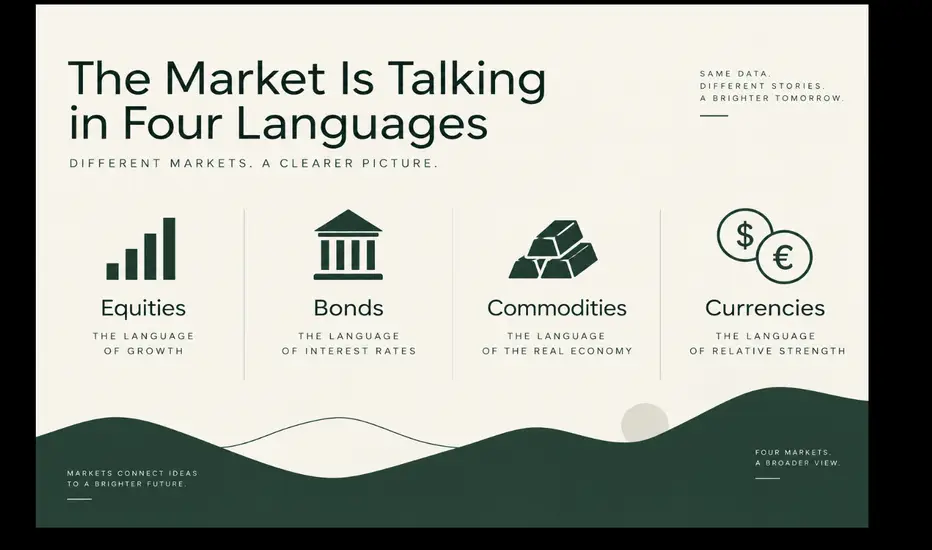
Equities, bonds, commodities, and currencies all react to the economy differently. Each market gives us a different signal about what investors expect. By understanding these four markets together, we can get a clearer picture of growth, inflation, interest rates, and global economic conditions.
1. Equities: What Do Investors Expect About Growth?
The stock market mainly reflects expectations about companies and their future profits. When investors believe businesses will grow and earn more money, stock prices generally rise. When they expect slower growth or lower profits, stocks may fall. Therefore, equities often give us an idea about investor confidence and expectations for economic growth.
Example:
Suppose people are spending more money on cars, smartphones, and travel. Companies may earn higher profits, and investors may become optimistic. As a result, stock prices may rise.
2. Bonds: What Is the Market Saying About Interest Rates?
The bond market is closely connected to interest rates, inflation, and economic growth. Investors watch bond yields to understand what the market expects from central banks and the economy. Falling yields can suggest expectations of slower growth or future interest rate cuts, while rising yields may indicate concerns about inflation or expectations of higher interest rates.
Example:
Suppose economic data shows that growth is slowing. Investors may believe that the central bank will reduce interest rates to support the economy. They may buy bonds, causing bond prices to rise and yields to fall.
3. Commodities: What Is Happening in the Real Economy?
Commodities such as oil, copper, gold, and wheat are connected to real-world supply and demand. Their prices can provide clues about manufacturing activity, consumer demand, and inflation. However, commodity prices can also rise because of supply problems, so it is important to understand the reason behind the movement.
Example:
If construction and manufacturing are growing, demand for copper may increase. Rising copper prices could suggest stronger industrial activity. However, if oil prices rise because supply is disrupted, it may create inflation without stronger economic growth.
4. Currencies: Which Economy Looks Stronger?
Currency markets compare one economy with another. Exchange rates are influenced by interest rates, inflation, economic growth, trade, and investor confidence. A stronger currency can indicate that investors see a country's economy or financial assets as more attractive compared with others.
Example:
Suppose one country has higher interest rates than other countries. International investors may move their money into that country to earn better returns. Increased demand for its currency may cause the currency to strengthen.
The Main Point: Listen to All Four Markets Together
Looking at only one market can give an incomplete picture. Stocks may tell us about growth, bonds may tell us about interest rates, commodities may show real-world demand, and currencies may reveal which economies investors prefer.
The real understanding comes when we look at all four signals together.
Example:
Imagine that stocks are falling, bond yields are falling, and industrial commodities are also falling. Together, these signals may suggest that investors are becoming concerned about economic growth.
On the other hand, if stocks are rising, commodity prices are increasing, and bond yields are moving higher, the market may be signaling stronger growth—but possibly higher inflation as well.
Conclusion:
The market does not speak in one language.
By listening to all four markets together, investors can better understand the bigger economic story.
One market gives a signal. Four markets give a clearer picture.
I can also make it more like a professional financial blog/article, with stronger headings and smoother transitions.
By BrightRally_Research on TradingView
1. Equities: What Do Investors Expect About Growth?
The stock market mainly reflects expectations about companies and their future profits. When investors believe businesses will grow and earn more money, stock prices generally rise. When they expect slower growth or lower profits, stocks may fall. Therefore, equities often give us an idea about investor confidence and expectations for economic growth.
Example:
Suppose people are spending more money on cars, smartphones, and travel. Companies may earn higher profits, and investors may become optimistic. As a result, stock prices may rise.
2. Bonds: What Is the Market Saying About Interest Rates?
The bond market is closely connected to interest rates, inflation, and economic growth. Investors watch bond yields to understand what the market expects from central banks and the economy. Falling yields can suggest expectations of slower growth or future interest rate cuts, while rising yields may indicate concerns about inflation or expectations of higher interest rates.
Example:
Suppose economic data shows that growth is slowing. Investors may believe that the central bank will reduce interest rates to support the economy. They may buy bonds, causing bond prices to rise and yields to fall.
3. Commodities: What Is Happening in the Real Economy?
Commodities such as oil, copper, gold, and wheat are connected to real-world supply and demand. Their prices can provide clues about manufacturing activity, consumer demand, and inflation. However, commodity prices can also rise because of supply problems, so it is important to understand the reason behind the movement.
Example:
If construction and manufacturing are growing, demand for copper may increase. Rising copper prices could suggest stronger industrial activity. However, if oil prices rise because supply is disrupted, it may create inflation without stronger economic growth.
4. Currencies: Which Economy Looks Stronger?
Currency markets compare one economy with another. Exchange rates are influenced by interest rates, inflation, economic growth, trade, and investor confidence. A stronger currency can indicate that investors see a country's economy or financial assets as more attractive compared with others.
Example:
Suppose one country has higher interest rates than other countries. International investors may move their money into that country to earn better returns. Increased demand for its currency may cause the currency to strengthen.
The Main Point: Listen to All Four Markets Together
Looking at only one market can give an incomplete picture. Stocks may tell us about growth, bonds may tell us about interest rates, commodities may show real-world demand, and currencies may reveal which economies investors prefer.
The real understanding comes when we look at all four signals together.
Example:
Imagine that stocks are falling, bond yields are falling, and industrial commodities are also falling. Together, these signals may suggest that investors are becoming concerned about economic growth.
On the other hand, if stocks are rising, commodity prices are increasing, and bond yields are moving higher, the market may be signaling stronger growth—but possibly higher inflation as well.
Conclusion:
The market does not speak in one language.
- Equities speak about growth and company profits.
- Bonds speak about interest rates and inflation.
- Commodities speak about real-world supply and demand.
- Currencies speak about relative economic strength.
By listening to all four markets together, investors can better understand the bigger economic story.
One market gives a signal. Four markets give a clearer picture.
I can also make it more like a professional financial blog/article, with stronger headings and smoother transitions.
By BrightRally_Research on TradingView

Related publications
Disclaimer
The information and publications are not meant to be, and do not constitute, financial, investment, trading, or other types of advice or recommendations supplied or endorsed by TradingView. Read more in the Terms of Use.
Related publications
Disclaimer
The information and publications are not meant to be, and do not constitute, financial, investment, trading, or other types of advice or recommendations supplied or endorsed by TradingView. Read more in the Terms of Use.