
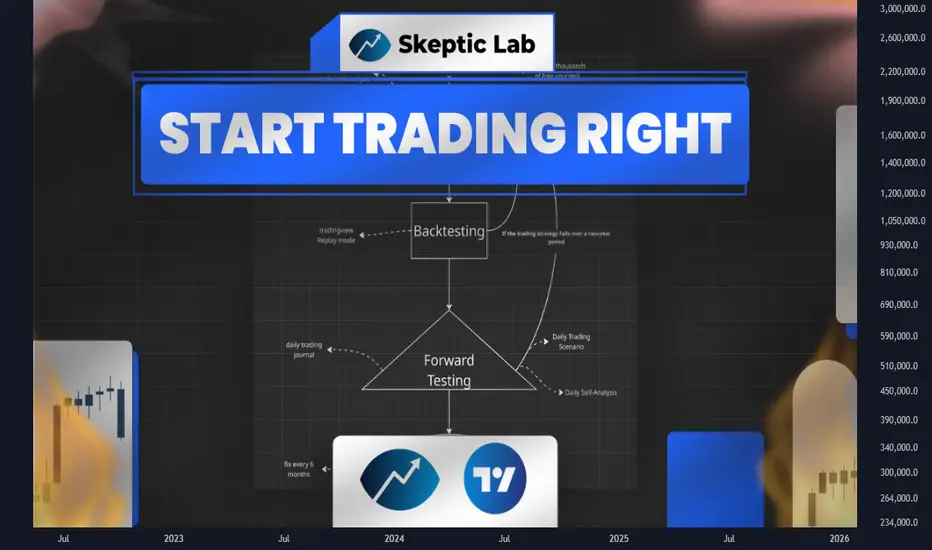
Here’s the blueprint I would follow if I were starting trading from scratch.
Not because this roadmap magically turns five years into one.
Not because everything suddenly becomes easy, smooth, or predictable.
But because the path becomes clearer.
You understand why you’re doing each step.
You know where you are in the process.
And you stop expecting results you haven’t earned yet.
So let’s begin.
Stage One: Education

Trading is no different from any serious skill — you don’t start without learning.
The problem is not whether to learn, but how.
There are many paths, many sources, and a lot of noise.
If I had to recommend one starting point, it would be
“The Handbook of Technical Analysis” by Mark Andrew Lim.
This book is so comprehensive that it can prepare you for IFTA CFTe Level 1 and 2, one of the most respected technical analysis certifications.
But here’s the key question:
Do you need to read the entire book?
Absolutely not.
Over a thousand pages cover tools with heavy overlap and correlation.
Realistically, maybe 5% of the book will actually shape your trading.
So what should you focus on?
Chapter 2: Introduction to Dow Theory
This is the foundation of almost every technical concept.
If you don’t truly understand Dow Theory, everything else remains fragmented.
Chapter 4: Market Phase Analysis
Technical analysis is largely about recognizing structure.
This chapter is just as important as Dow Theory — and works best with it.
If you want to see how I apply this in actual trading, I’ve written a separate educational article on it. (link)
Chapter 6: Volume Analysis
If you trade crypto without volume, you’re essentially navigating blind.
It’s like running downhill with your eyes closed.
I also recommend using one oscillator to assess momentum — especially if your trading style is momentum-based, as mine is.
For RSI and how I personally use it (sometimes differently from the book), I’ve shared a separate breakdown. (link)
Chapter 14: Candlestick Analysis
You don’t need to memorize candle names.
Focus on understanding behavior, not labels.
That’s enough to write your first personal trading plan.
Stage Two: Backtesting

This step is essential.
I’ve already explained backtesting in depth in a separate educational idea that received Editor’s Pick, so I won’t repeat it here.
If you haven’t read it, start there. (link)
Stage Three: Forward Testing

This is where most traders quit.
Not after a week.
Not after a month.
Sometimes after six months.
Sometimes after an entire year of near break-even results.
This phase is rarely discussed honestly.
I call it the “desolate prison pit” — the place Bruce Wayne escaped from.
It’s where patience, discipline, and identity are tested.
I’ve written about this phase separately if you want a deeper perspective. (link)
Two critical notes here:
Final Stage: Ownership
This is where things come together.
Writing your personal trading plan
Executing it with intention
Maintaining a daily trading journal
Practicing scenario writing (yes — the same skill I recently explained in detail)
Skipping this part means skipping responsibility.
You don’t drift into consistency.
You design it.
I could spend hours explaining daily analysis, journaling, and refinement — but attention spans are short now.
If you’ve read this far, you’re already ahead of most people.
I’ll leave you with a quote from Rango — from the Armadillo, Roadkill:
Peace out,
— Skeptic
Disclaimer:
This content is educational and reflects my personal experience and process.
The resources mentioned are shared for learning purposes only and are not sponsored or promotional.
Trading is complex, requires time, discipline, and emotional control, and is not a guaranteed or easy path to profitability.
There are no shortcuts, timelines, or promises implied in this framework.
Not because this roadmap magically turns five years into one.
Not because everything suddenly becomes easy, smooth, or predictable.
But because the path becomes clearer.
You understand why you’re doing each step.
You know where you are in the process.
And you stop expecting results you haven’t earned yet.
So let’s begin.
Stage One: Education
Trading is no different from any serious skill — you don’t start without learning.
The problem is not whether to learn, but how.
There are many paths, many sources, and a lot of noise.
If I had to recommend one starting point, it would be
“The Handbook of Technical Analysis” by Mark Andrew Lim.
This book is so comprehensive that it can prepare you for IFTA CFTe Level 1 and 2, one of the most respected technical analysis certifications.
But here’s the key question:
Do you need to read the entire book?
Absolutely not.
Over a thousand pages cover tools with heavy overlap and correlation.
Realistically, maybe 5% of the book will actually shape your trading.
So what should you focus on?
Chapter 2: Introduction to Dow Theory
This is the foundation of almost every technical concept.
If you don’t truly understand Dow Theory, everything else remains fragmented.
Chapter 4: Market Phase Analysis
Technical analysis is largely about recognizing structure.
This chapter is just as important as Dow Theory — and works best with it.
If you want to see how I apply this in actual trading, I’ve written a separate educational article on it. (link)
Chapter 6: Volume Analysis
If you trade crypto without volume, you’re essentially navigating blind.
It’s like running downhill with your eyes closed.
I also recommend using one oscillator to assess momentum — especially if your trading style is momentum-based, as mine is.
For RSI and how I personally use it (sometimes differently from the book), I’ve shared a separate breakdown. (link)
Chapter 14: Candlestick Analysis
You don’t need to memorize candle names.
Focus on understanding behavior, not labels.
That’s enough to write your first personal trading plan.
Stage Two: Backtesting
This step is essential.
I’ve already explained backtesting in depth in a separate educational idea that received Editor’s Pick, so I won’t repeat it here.
If you haven’t read it, start there. (link)
Stage Three: Forward Testing
This is where most traders quit.
Not after a week.
Not after a month.
Sometimes after six months.
Sometimes after an entire year of near break-even results.
This phase is rarely discussed honestly.
I call it the “desolate prison pit” — the place Bruce Wayne escaped from.
It’s where patience, discipline, and identity are tested.
I’ve written about this phase separately if you want a deeper perspective. (link)
Two critical notes here:
- Do not abandon your strategy just because you’re not profitable after six months or a year.
- Adjust it — don’t destroy it.
- Do not quit.
Final Stage: Ownership
This is where things come together.
Writing your personal trading plan
Executing it with intention
Maintaining a daily trading journal
Practicing scenario writing (yes — the same skill I recently explained in detail)
Skipping this part means skipping responsibility.
You don’t drift into consistency.
You design it.
I could spend hours explaining daily analysis, journaling, and refinement — but attention spans are short now.
If you’ve read this far, you’re already ahead of most people.
I’ll leave you with a quote from Rango — from the Armadillo, Roadkill:
“I will see you on the other side.”
Peace out,
— Skeptic
Disclaimer:
This content is educational and reflects my personal experience and process.
The resources mentioned are shared for learning purposes only and are not sponsored or promotional.
Trading is complex, requires time, discipline, and emotional control, and is not a guaranteed or easy path to profitability.
There are no shortcuts, timelines, or promises implied in this framework.

Related publications
Disclaimer
The information and publications are not meant to be, and do not constitute, financial, investment, trading, or other types of advice or recommendations supplied or endorsed by TradingView. Read more in the Terms of Use.
Related publications
Disclaimer
The information and publications are not meant to be, and do not constitute, financial, investment, trading, or other types of advice or recommendations supplied or endorsed by TradingView. Read more in the Terms of Use.