
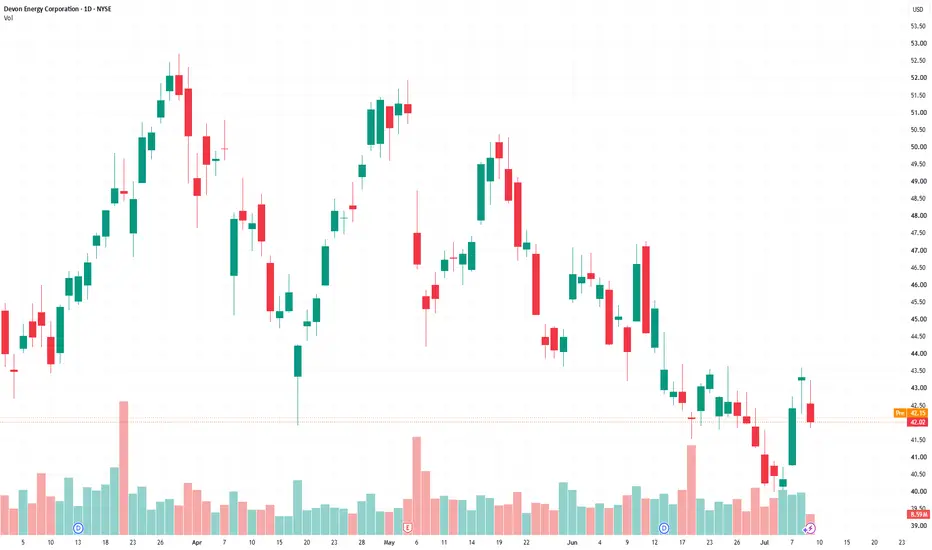
Sector: Oil, Gas & Consumable Fuels
Ticker: DVN
Recommendation: Buy
Entry Price: $40.36
Target Price: $47.30
Stop-Loss: $37.40
Time Horizon: Until September 7, 2026
Risk Level: Medium
Suggested Position Size: 2%
Investment Thesis
Devon Energy is one of the largest oil and gas producers in the United States, with operations fully concentrated in the U.S. market. Devon was founded in 1971 and is headquartered in Oklahoma City, Oklahoma.
In our view, DVN shares offer attractive upside potential over a two-month horizon, supported by stronger seasonal demand for natural gas and oil, favorable commodity price dynamics, and the company’s recently completed acquisition of Coterra Energy.
Our target price is $47.30, implying approximately 17% upside from the entry price of $40.36. A stop-loss at $37.40 helps define the downside risk.
Key Catalysts
1. Rising Demand and Potentially Higher Prices for Natural Gas and Oil
The U.S. Department of Energy expects natural gas demand to rise by 11.0% month over month in July. Seasonal demand for natural gas in the U.S. typically peaks in late July and early August, driven by higher electricity consumption during the summer cooling season.
At the same time, forecasts point to a meaningful slowdown in the pace of natural gas storage injections over the coming weeks. In our view, this combination of stronger demand and slower inventory builds could support higher U.S. natural gas prices.
Oil prices may also find support. Since the beginning of June, WTI crude has declined by 21.5%, falling below $70 per barrel amid optimism surrounding U.S.-Iran negotiations and expectations of a potential oil surplus.
We believe this optimism may be premature. Tensions in the Strait of Hormuz remain elevated, and key disagreements between the U.S. and Iran have not been fully resolved. In addition, U.S. crude oil and petroleum product inventories have fallen to their lowest level since 2004.
A more supportive technical setup, combined with seasonally stronger oil demand during the summer months, could create a favorable backdrop for a rebound in crude prices.
2. Synergy Potential from the Coterra Deal
On May 7, Devon completed the acquisition of its U.S. competitor Coterra Energy. Following the deal, the company increased its dividend by 31%, bringing the quarterly dividend to $0.315 per share. At current prices, this implies an annualized dividend yield of approximately 3.1%.
Devon also plans to allocate $1.0 billion to $1.5 billion per year to share repurchases. This represents approximately 2.5% to 3.7% of the company’s current market capitalization.
Another important factor is the expected synergy from the transaction. Devon aims to achieve $1 billion in annual cost savings by the end of 2027, which could improve margins, strengthen free cash flow, and support further shareholder returns.
3.Higher Dividends and Larger Buybacks
Following the completion of the Coterra Energy acquisition on May 7, Devon increased its dividend by 31%, bringing the quarterly dividend to $0.315 per share. At current prices, this implies an annualized dividend yield of approximately 3.1%.
Devon also plans to allocate $1.0 billion to $1.5 billion per year to share repurchases, equal to roughly 2.5% to 3.7% of the company’s current market capitalization.
These shareholder returns may provide additional support for the stock, especially if commodity prices stabilize or move higher.
Conclusion:DVN presents a bullish short-term setup with a defined risk/reward profile. The key drivers are seasonal energy demand, potential upside in oil and natural gas prices, higher dividends, larger buybacks, and expected synergies from the Coterra acquisition. We recommend a Buy rating on DVN with a target price of $47.30 and a stop-loss at $37.40.
Tags #FreedomHolding #FreedomBroker #AnalystPigarev

Disclaimer
The information and publications are not meant to be, and do not constitute, financial, investment, trading, or other types of advice or recommendations supplied or endorsed by TradingView. Read more in the Terms of Use.
Disclaimer
The information and publications are not meant to be, and do not constitute, financial, investment, trading, or other types of advice or recommendations supplied or endorsed by TradingView. Read more in the Terms of Use.