
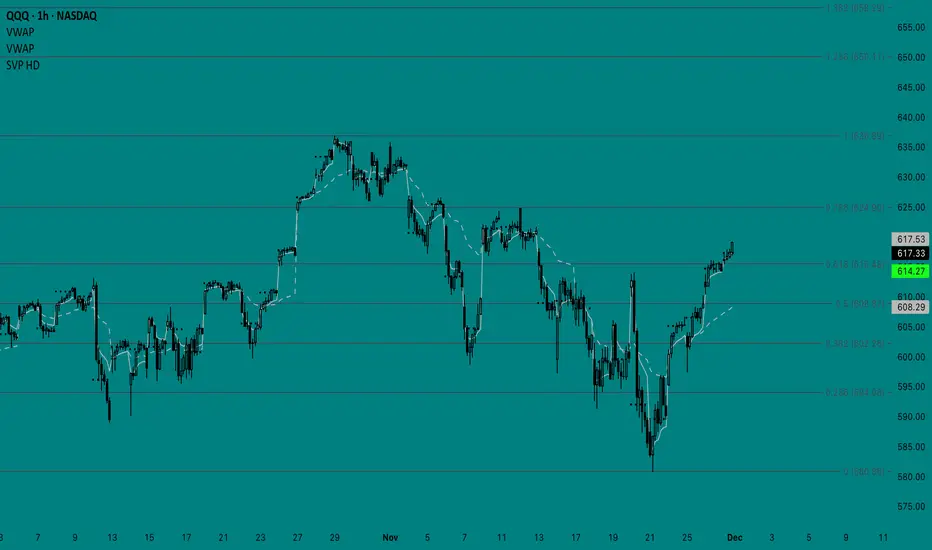
The market is back in a neutral position. It will be important to assess whether this is the end of a mean reversion or if macro conditions will continue to improve to support a risk-on bias that will likely take us through the end of the year. I’m considering the market to currently be at a point of maximum neutrality, however I lean on the side of the market continuing to seek risk. Time will tell.

1. Macro
We should begin to see more risk confirmation here early in the week. If the regime is risk-on, I think the Dollar will underperform some of the other funding currencies (JPY, EUR, and CHF), so I will be watching to see how treasury pricing US10 responds to a flat or falling dollar. I would want to see lower real yields DFII5 (or US05Y-T5YIE) so it would be preferable to see US10 remain flat or edge higher.

Breakevens are still very low, so the risk of real yields rising is high. I think bond volatility would also bring equity volatility since rising real yields amid slower growth is classic risk-off. Nominal yields will be important to watch.

2. FX
Since the start of November, the dollar has started to lose strength in relation to high-yielding currencies (NZD & AUD), so if we continue to see forex seek yield, that will add to the risk-on bias. I will be watching currency pairs that contain NZD and AUD as well as GB02Y-US02Y to see if US yields start to lose strength against Great Britain. I would like to see British yields rise in correlation to put further pressure on the dollar.
Currently neutral but I favor the risk-on side here based on what I’m seeing.

3. Risk
Option Adjusted Spreads (corporate bond yield pts above treasuries) are still historically low and are ticking back down, easing fears that corporate bonds are selling off. Private credit recovering also suggests that credit fears are easing across the board. This supports the risk-on bias.

4. Sector Comparison
Consumer Staples XLP started to weaken against
  SPX during last week’s recovery while tech
  XLK outperformed. As shown on the previous chart, it will be important to watch XXLK/XLP as a risk-on/risk-off bias indicator for equities. It will also be important to watch for signs that the market is rotating from healthcare
  XLV to tech $XLK. No important signals on this chart.

5. Bias
Last week’s recovery was confirmed by dealers taking short-volatility positions intraday and the price propelled past monthly VWAP (dashed). The price may revert back towards November’s VWAP level but as long as the level is not breached, it should favor the risk-on bias as well. The price has already retraced 61.8% of the downtrend.
+-+-+-+-+-+-+-+-+-+-+-+-+-+-+-+-+-+-+-+-
Conclusion: As I stated in my introduction, based on my macro indicators the market closed at a point of maximum neutrality on Friday. We will need to see nominal yields mostly flat or falling while VIX sells off to confirm risk-on positioning, however an earlier indicator will be found in Forex, where yield-seeking o aversion can be assessed in real time. With credit conditions also improving, I lean to the bullish side but will keep this Idea neutral to maintain my flexibility.
1. Macro
We should begin to see more risk confirmation here early in the week. If the regime is risk-on, I think the Dollar will underperform some of the other funding currencies (JPY, EUR, and CHF), so I will be watching to see how treasury pricing
US10 responds to a flat or falling dollar. I would want to see lower real yields DFII5 (or US05Y-T5YIE) so it would be preferable to see US10 remain flat or edge higher. Breakevens are still very low, so the risk of real yields rising is high. I think bond volatility would also bring equity volatility since rising real yields amid slower growth is classic risk-off. Nominal yields will be important to watch.
2. FX
Since the start of November, the dollar has started to lose strength in relation to high-yielding currencies (NZD & AUD), so if we continue to see forex seek yield, that will add to the risk-on bias. I will be watching currency pairs that contain NZD and AUD as well as
GB02Y-US02Y to see if US yields start to lose strength against Great Britain. I would like to see British yields rise in correlation to put further pressure on the dollar. Currently neutral but I favor the risk-on side here based on what I’m seeing.
3. Risk
Option Adjusted Spreads (corporate bond yield pts above treasuries) are still historically low and are ticking back down, easing fears that corporate bonds are selling off. Private credit recovering also suggests that credit fears are easing across the board. This supports the risk-on bias.
4. Sector Comparison
Consumer Staples
XLP started to weaken against SPX during last week’s recovery while tech XLK outperformed. As shown on the previous chart, it will be important to watch XXLK/XLP as a risk-on/risk-off bias indicator for equities. It will also be important to watch for signs that the market is rotating from healthcare XLV to tech $XLK. No important signals on this chart. 5. Bias
Last week’s recovery was confirmed by dealers taking short-volatility positions intraday and the price propelled past monthly VWAP (dashed). The price may revert back towards November’s VWAP level but as long as the level is not breached, it should favor the risk-on bias as well. The price has already retraced 61.8% of the downtrend.
+-+-+-+-+-+-+-+-+-+-+-+-+-+-+-+-+-+-+-+-
Conclusion: As I stated in my introduction, based on my macro indicators the market closed at a point of maximum neutrality on Friday. We will need to see nominal yields mostly flat or falling while VIX sells off to confirm risk-on positioning, however an earlier indicator will be found in Forex, where yield-seeking o aversion can be assessed in real time. With credit conditions also improving, I lean to the bullish side but will keep this Idea neutral to maintain my flexibility.

Disclaimer
The information and publications are not meant to be, and do not constitute, financial, investment, trading, or other types of advice or recommendations supplied or endorsed by TradingView. Read more in the Terms of Use.
Disclaimer
The information and publications are not meant to be, and do not constitute, financial, investment, trading, or other types of advice or recommendations supplied or endorsed by TradingView. Read more in the Terms of Use.