
Executive Summary:
Ferrari is one of the rare industrial businesses that economically behaves more like a luxury brand. The company produces exceptional margins, strong free cash flow, and enjoys unusually clear demand visibility thanks to a multiyear order backlog. At the same time, Ferrari deliberately restricts production in order to maintain exclusivity.
The challenge for investors is that the stock already reflects a great deal of this success. Ferrari trades at valuation levels that effectively assume these economics will continue indefinitely. Margin of safety verdict: Ferrari appears to be a remarkable business, but the current price leaves little protection if margins normalize or electrification increases capital intensity.
One Stock, Dozens of Voices:
This is not the view of a single analyst. CrowdWisdom aggregated 29 independent sources for RACE (3 professional trader videos (YouTube); 20 financial research articles (web); 1 live market intelligence feeds; 4 prior CrowdWisdom analysis snapshots (internal archive); 1 verified financial data checks (Yahoo Finance)) and synthesized the common threads across them. The goal was to identify where traders, investors, and researchers broadly agree, where their views diverge, and what the market may be overlooking.
The conclusions were then stress tested by putting opposing views against each other: a bull case, a bear case that challenges the consensus, and a review of what expectations appear embedded in the current share price. All financial metrics were cross validated against live market data.
What follows highlights where opinion converges, where it splits, and whether the stock offers a meaningful margin of safety at today’s valuation.
Business Quality and Moat Durability:
Ferrari is best understood not as a typical automaker, but as a luxury brand that happens to manufacture automobiles.
Most car companies compete on scale, cost efficiency, and technological capability. Ferrari deliberately operates outside that model. Production is capped at roughly 13,600 vehicles per year. That constraint keeps demand consistently above supply and reinforces the aura surrounding the brand.
The financial results are extraordinary for a manufacturing business. In fiscal 2025 Ferrari generated about €7.1 billion in revenue and roughly €2.11 billion in operating profit. Operating margins around 29 to 30 percent are far above the automotive norm, where margins often fall below 10 percent.
Several forces reinforce Ferrari’s moat.
First is brand equity built over decades of racing success and cultural symbolism. Ferrari’s identity is deeply tied to Formula 1 and endurance racing, both of which function as powerful global marketing engines.
Second is controlled scarcity. By limiting supply, Ferrari preserves pricing power and resale value. Waiting lists are not a problem for the brand; they reinforce desirability.
Third is personalization. Custom options and special edition models significantly raise the average selling price and carry very high margins. Personalization revenue now represents a meaningful share of overall car revenue.
Fourth is the collector ecosystem. Limited edition Ferraris often appreciate in secondary markets, reinforcing the perception that ownership represents both status and a potential asset.
Moat durability assessment: stable.
The most significant structural threat comes from technological change. Ferrari’s emotional appeal has historically been tied to internal combustion engines and the mechanical driving experience. Electrification risks diluting that identity if handled poorly. If Ferrari successfully translates its brand into the electric performance era, however, the moat could remain intact.
Return on Invested Capital (ROIC):
Precise ROIC figures are not available in the verified dataset, which limits exact measurement. Even so, Ferrari’s operating profile strongly implies historically high returns on capital.
A company generating nearly €2.1 billion in operating profit on €7.1 billion of revenue while operating at limited production scale is clearly extracting substantial value from intangible assets rather than heavy physical capital.
Industrial free cash flow reached about €1.54 billion in 2025, equivalent to roughly a 21 percent free cash flow margin. That level of cash generation suggests returns on invested capital well above the automotive sector average.
Historically Ferrari’s capital intensity was moderate. The company did not require massive factory expansion because growth was driven more by pricing and product mix than by volume.
Looking forward, the picture becomes less certain.
Electrification introduces a different capital structure. Electric vehicles require meaningful investment in battery integration, software capabilities, and updated manufacturing infrastructure. Ferrari has already constructed new facilities to support this shift and expects capital expenditures to rise modestly in the coming years.
If the capital required per vehicle increases substantially, future ROIC could decline even if revenue continues to grow.
The central question is whether Ferrari’s pricing power can offset a larger capital base. If the company can command a substantial premium for electric performance vehicles, incremental returns may remain attractive.
Quality of Earnings:
Ferrari’s reported earnings appear well supported by real cash generation.
Industrial free cash flow of about €1.538 billion in 2025 exceeded net income levels, which generally signals strong earnings quality. Unlike many capital intensive manufacturers, Ferrari converts a large share of its profits into cash.
Several structural factors help explain this.
First, the company largely builds vehicles against confirmed orders, reducing inventory risk and stabilizing working capital.
Second, Ferrari’s very high average selling prices allow development costs to be spread across premium margins.
Third, personalization and special editions add incremental profit with relatively modest additional capital requirements.
The main potential pressure point for cash conversion is rising capital expenditure tied to electrification and ongoing research and development.
For now, the relationship between earnings and free cash flow appears solid.
Capital Allocation Scorecard:
Ferrari’s capital allocation has generally been disciplined and shareholder friendly.
In 2025 the company completed about €2 billion in share buybacks and returned more than €1.3 billion to shareholders through dividends and repurchases combined. The dividend for the year was €2.50 per share.
These distributions occurred while maintaining a relatively conservative balance sheet. Net debt stood around €1.44 billion and leverage remains modest relative to operating profit.
Management has also continued to invest heavily in product development, racing programs, and brand building. Participation in Formula 1 in particular functions as a marketing platform that reinforces Ferrari’s premium positioning.
Capital allocation grade: strong.
The one potential concern relates to valuation discipline. Repurchasing shares at elevated earnings multiples may not create long term value if growth slows.
Customer and Revenue Concentration:
Ferrari does not face customer concentration in the traditional sense of relying on a few large buyers. Instead, the concentration risk lies in the type of customer it serves.
The company sells primarily to ultra high net worth individuals. With global production of roughly 13,600 cars per year, Ferrari ultimately depends on a relatively small pool of wealthy buyers.
Many of these customers are repeat buyers and collectors, which builds loyalty but also introduces sensitivity to broader economic conditions.
Luxury spending among the ultra wealthy often tracks asset prices such as equities, real estate, and private business valuations. A global downturn in asset values could reduce demand for high end discretionary purchases.
Ferrari’s order book currently extends into late 2027 and represents roughly €5 billion in confirmed orders, giving the company strong near term visibility. Even so, luxury demand has historically been cyclical.
Management Alignment:
Ferrari’s ownership structure reflects its history within the broader Exor industrial group.
Exor remains the largest shareholder and has historically emphasized long term brand preservation over short term volume growth. Ferrari’s deliberate decision to limit production suggests management incentives align with protecting the brand’s long term value.
Company leadership also consistently emphasizes product excellence and exclusivity rather than maximizing quarterly deliveries. This orientation is consistent with a luxury brand mindset rather than a traditional industrial growth model.
10-Year Durability Test:
For long term investors, the key question is whether the Ferrari of 2036 will resemble the Ferrari of today.
Several structural forces could reshape the business over the next decade.
The most obvious is electrification. Governments in Europe and elsewhere continue tightening emissions regulations, gradually pushing manufacturers away from internal combustion engines. Ferrari will need to launch electric models that maintain performance prestige without undermining the emotional appeal of the brand.
A second risk is technological commoditization. Electric drivetrains deliver instant acceleration even in relatively inexpensive vehicles. If performance advantages narrow across the industry, Ferrari will need to lean more heavily on design, exclusivity, and brand heritage.
Third is brand dilution risk. Expanding production too aggressively or introducing too many models could weaken the scarcity that supports Ferrari’s pricing power.
Fourth is luxury demand cyclicality. Ferrari’s customer base is small and closely tied to global wealth creation.
Despite these uncertainties, Ferrari’s brand equity remains unusually durable. Few automotive brands carry the same cultural resonance, and the competitive landscape in ultra luxury performance cars has remained relatively stable for decades.
Predicting the exact technological configuration of Ferrari’s vehicles ten years from now is difficult. Predicting that wealthy collectors will still want Ferraris is much easier.
Multi-Year Thesis (3 to 7 years):
Base Case (Probability 50 percent)
Assumptions:
Revenue grows roughly 6 to 8 percent annually through pricing power, personalization, and selective model expansion.
Operating margins remain near 28 to 30 percent.
Free cash flow grows broadly in line with revenue despite rising electrification investment.
Estimated intrinsic value: approximately $380 to $420 per share.
Bull Case (Probability 25 percent)
Assumptions:
Electric Ferrari models successfully extend the brand into the EV era without eroding demand.
Personalization and limited edition vehicles increase revenue per car significantly.
Margins expand slightly above 30 percent and free cash flow compounds strongly.
Estimated intrinsic value: roughly $450 to $520 per share.
Bear Case (Probability 25 percent)
Assumptions:
Electrification increases capital intensity and reduces incremental returns on invested capital.
Margins compress toward 20 to 22 percent as costs rise.
Luxury demand weakens due to macroeconomic conditions.
Estimated intrinsic value: approximately $200 to $260 per share.
Probability weighted intrinsic value clusters roughly around the high $300 range per share.
Margin of Safety Verdict:
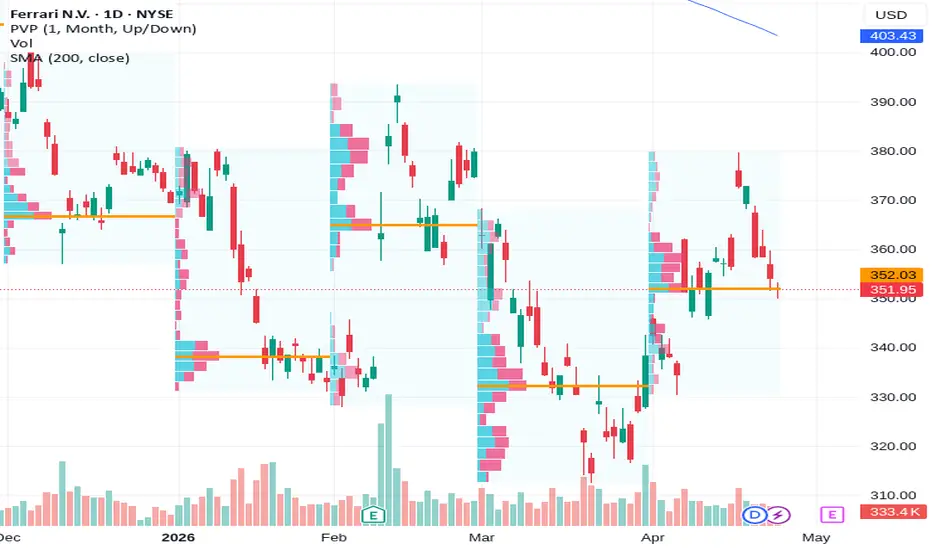
Ferrari shares recently trade around the mid $300 range with trailing earnings multiples above 30 times and enterprise value to EBITDA multiples above 25 times.
Intrinsic value estimates across models vary widely, ranging from roughly $200 in conservative scenarios to over $450 in optimistic ones. Even under favorable assumptions, the implied margin of safety rarely exceeds about 15 to 20 percent.
Traditional value investors generally require at least a 20 to 30 percent discount to intrinsic value before committing capital.
By that standard, Ferrari does not currently offer a sufficient margin of safety.
As a result, this analysis becomes more of an intellectual exercise in evaluating a remarkable business than a clear buy recommendation.
Peak Margin Stress Test:
Ferrari currently operates with EBIT margins near 29.5 percent.
For context, most premium automakers operate with margins between roughly 10 and 15 percent. Even successful luxury auto manufacturers rarely approach Ferrari’s level of profitability.
If Ferrari’s operating margin fell from roughly 29.5 percent to about 22 percent while revenue remained constant, operating profit would decline by roughly 25 to 30 percent.
If the market simultaneously re rated the stock from about 33 times earnings to something closer to 22 to 25 times earnings, the implied equity value could fall 40 to 50 percent despite the business remaining profitable.
This illustrates how much of Ferrari’s valuation depends on sustaining unusually high margins over time.
Valuation Framing:
Ferrari’s valuation reflects its hybrid identity as both a luxury brand and an industrial manufacturer.
Compared with automakers, Ferrari appears extremely expensive. Global auto companies often trade between 10 and 20 times earnings.
Compared with luxury goods companies, Ferrari appears somewhat less extreme. Luxury brands with strong pricing power sometimes command multiples above 30 times earnings.
The market is effectively valuing Ferrari as a luxury franchise rather than a conventional automaker.
For meaningful upside to materialize, several assumptions must hold simultaneously.
Ferrari must maintain operating margins close to current levels.
Electrification must not weaken pricing power.
Demand from ultra wealthy customers must remain resilient.
If any of these assumptions deteriorate, valuation compression becomes likely.
Perception vs Reality:
Perception: Ferrari is a premium automaker benefiting from strong luxury demand.
Reality: Ferrari behaves economically like a luxury brand that happens to produce automobiles.
At the same time, the market may be overly confident about the permanence of these economics. Manufacturing businesses rarely sustain operating margins near 30 percent indefinitely.
Why This May Be Misunderstood:
Many investors compare Ferrari with traditional automakers and conclude the stock deserves a premium multiple.
That comparison is reasonable but incomplete.
Ferrari’s true peer group may be closer to luxury houses like Hermès or LVMH. Those companies benefit from similar pricing power but operate in industries with far lower technological disruption risk.
Ferrari must preserve its brand while simultaneously navigating a significant technological transition in electrification.
Three Measurable Things to Watch Next Quarter:
Order backlog depth and cancellation trends.
Personalization revenue growth and average selling price per vehicle.
Capital expenditure trajectory related to electrification investment.
Historical Conviction Drift:
Investor conviction in Ferrari has remained relatively strong over the past decade as the company consistently delivered high margins and robust cash flow.
Sentiment has still moved with valuation cycles. As multiples expanded and later contracted, the stock experienced periods of enthusiasm followed by pullbacks.
Over longer horizons Ferrari shares have generated strong multi year returns, but shorter stretches have included meaningful declines when growth expectations moderated.
This pattern is common among high quality companies that trade at premium valuations.
Disconfirming Evidence:
The strongest argument against owning Ferrari centers on valuation combined with structural uncertainty.
The market already prices the company as though its current economic advantages will persist for decades. Any combination of margin compression, electrification challenges, or weakening luxury demand could trigger a significant re rating.
In addition, Ferrari’s production cap inherently limits volume growth. Revenue expansion must come primarily from pricing power and product mix rather than large increases in output.
Risks:
Electrification risk if Ferrari fails to maintain brand differentiation in electric vehicles.
Luxury demand cyclicality tied to global asset prices and wealth creation.
Margin compression from rising research and development or manufacturing costs.
Brand dilution if production limits are relaxed.
Currency fluctuations affecting profitability due to global sales exposure.
Summary:
Ferrari remains one of the most extraordinary franchises in global manufacturing.
Its mix of brand prestige, disciplined supply control, and pricing power produces margins and free cash flow rarely seen in the automotive industry.
But investment success depends not only on business quality. Price matters.
At current valuation levels Ferrari appears priced for near perfect execution. Investors buying today are effectively assuming the company maintains peak margins, successfully transitions into the electrified era, and continues compounding free cash flow at attractive rates.
Those outcomes are possible. The issue is that the current price leaves very little room for error.
Data Snapshot:
Ticker: RACE
Metric: Value
Current Price (RACE): $351.95
Market Capitalization: $62.99 billion
Shares Outstanding: 176,462,002
Trailing P/E: 33.46x
Forward P/E: 27.96x
Enterprise Value (EV): $64.27 billion
EV/EBITDA: 26.70x
Revenue (TTM): $7.15 billion
Gross Margin: 51.68%
Operating Margin: 28.62%
Free Cash Flow (FCF): $839.14 million
FCF Yield: 1.33%
52-Week Range: $312.51 to $519.10
Sector: Consumer Cyclical
Industry: Auto Manufacturers
References:
This analysis reviewed approximately 776 article sources and 80 video transcripts.
1. Yahoo Finance. Ferrari N.V. (RACE): A Bull Case Theory. finance.yahoo.com/news/ferrari-n-v-race-bull-182504835.html
2. Yahoo Finance. Ferrari N.V. (RACE): A Bull Case Theory. finance.yahoo.com/news/ferrari-n-v-race-bull-172150380.html
3. Yahoo Finance. Ferrari (RACE) Valuation Check As Long Term Returns Contrast With Recent Share Price Pullback. finance.yahoo.com/news/ferrari-race-valuation-check-long-081521673.html
4. Yahoo Finance. Is Ferrari N.V. (RACE) A Good Stock To Buy Now?. finance.yahoo.com/news/ferrari-n-v-race-good-213733881.html
5. Yahoo Finance. Ferrari N.V. (RACE): A Bull Case Theory. finance.yahoo.com/news/ferrari-n-v-race-bull-184130699.html
6. Yahoo Finance. Ferrari (NYSE:RACE) Valuation Check After Mixed Returns And Rich P/E Multiples. finance.yahoo.com/news/ferrari-nyse-race-valuation-check-011217864.html
7. Yahoo Finance. Should Ferrari’s Volume Cap and New Credit Facility Reshape Its Long Term Story for Investors?. finance.yahoo.com/news/ferrari-volume-cap-credit-facility-101314098.html
8. Yahoo Finance. Ferrari (NYSE:RACE) Valuation Check After Recent Pullback And Conflicting Fair Value Signals. finance.yahoo.com/markets/stocks/articles/ferrari-nyse-race-valuation-check-081105313.html
9. Yahoo Finance. Is Ferrari N.V. (NYSE:RACE) Potentially Undervalued?. finance.yahoo.com/news/ferrari-n-v-nyse-race-113756205.html
10. Quartr. Ferrari N.V. Company Financial Overview. quartr.com/companies/ferrari-n-v_5776
11. Seeking Alpha. Ferrari Balance Sheet Overview. seekingalpha.com/symbol/RACE/balance-sheet
12. YouTube Channel markets. Luxury sector commentary. youtube.com/watch?v=YyOXHrPX2Ww
13. YouTube Channel OscarRamos. Ferrari market analysis. youtube.com/watch?v=SGOjinJFClY
14. YouTube Channel OneOption. Market commentary referencing Ferrari. youtube.com/watch?v=tXFPrvUwtSg
Disclaimer:
This analysis is for informational and educational purposes only and does not constitute investment advice. Investors should conduct their own research and consider their financial situation before making investment decisions.

Disclaimer
The information and publications are not meant to be, and do not constitute, financial, investment, trading, or other types of advice or recommendations supplied or endorsed by TradingView. Read more in the Terms of Use.
Disclaimer
The information and publications are not meant to be, and do not constitute, financial, investment, trading, or other types of advice or recommendations supplied or endorsed by TradingView. Read more in the Terms of Use.