
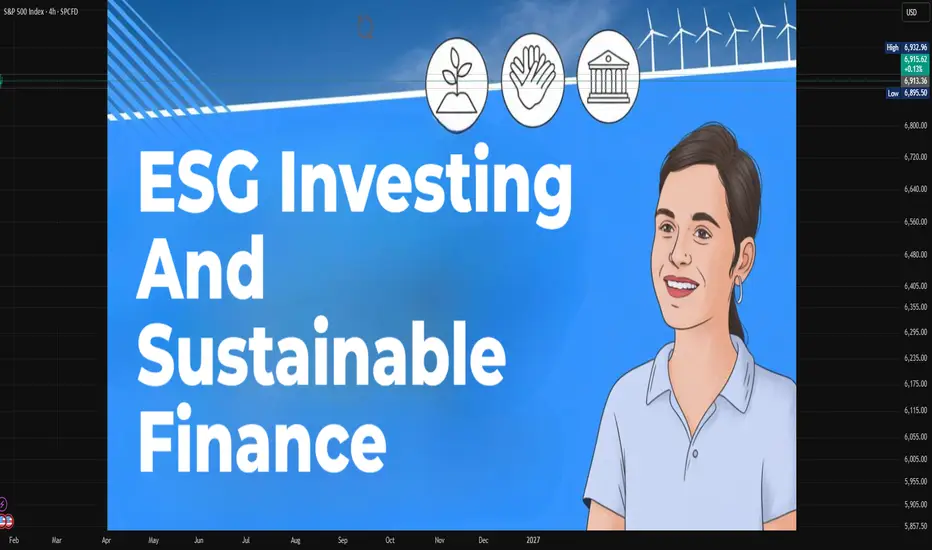
Understanding ESG Investing
ESG stands for Environmental, Social, and Governance, three broad categories used to assess a company’s non-financial performance and sustainability impact.
Environmental (E):
This dimension evaluates how a company interacts with the natural environment. Key factors include carbon emissions, energy efficiency, renewable energy usage, waste management, water conservation, pollution control, and climate risk exposure. Companies with strong environmental practices are generally better positioned to adapt to climate regulations, energy transitions, and resource constraints.
Social (S):
The social component focuses on how a company manages relationships with employees, customers, suppliers, and communities. It includes labor standards, employee health and safety, diversity and inclusion, data privacy, human rights, customer satisfaction, and community engagement. Strong social performance often leads to higher employee productivity, brand loyalty, and reduced reputational risk.
Governance (G):
Governance examines how a company is directed and controlled. It covers board structure, executive compensation, shareholder rights, transparency, ethical conduct, risk management, and anti-corruption practices. Good governance ensures accountability and alignment between management decisions and shareholder interests, reducing the risk of scandals and mismanagement.
ESG investing integrates these factors into investment analysis alongside traditional financial metrics such as revenue growth, profitability, and balance sheet strength.
What Is Sustainable Finance?
Sustainable finance is a broader concept that refers to financial activities that support long-term economic growth while reducing environmental pressures and addressing social challenges. It aims to channel capital toward projects, companies, and economic activities that contribute to sustainable development.
Sustainable finance includes:
ESG investing
Impact investing
Green finance
Social finance
Climate finance
The core objective of sustainable finance is to balance financial returns with positive environmental and social outcomes, ensuring that today’s investments do not compromise future generations.
Evolution and Drivers of ESG and Sustainable Finance
The roots of ESG investing can be traced back to ethical and socially responsible investing (SRI), where investors avoided sectors such as tobacco, weapons, or gambling. Over time, ESG evolved into a more data-driven and financially grounded approach.
Key drivers behind the growth of ESG and sustainable finance include:
Climate Change and Environmental Risks:
Increasing frequency of extreme weather events, carbon regulations, and global climate commitments have made environmental risks financially material.
Regulatory Pressure:
Governments and regulators worldwide are introducing ESG disclosure norms, carbon pricing mechanisms, and sustainability reporting standards, pushing companies to be more transparent.
Investor Demand:
Institutional investors, pension funds, and retail investors are demanding investments aligned with sustainability and long-term value creation.
Risk Management:
ESG factors help identify risks that traditional financial analysis may overlook, such as supply chain disruptions, labor disputes, or governance failures.
Corporate Accountability:
Companies are under increasing scrutiny from stakeholders, including consumers, employees, and civil society, to operate responsibly.
Approaches to ESG Investing
There are several strategies used in ESG investing:
Negative Screening:
Excluding companies or sectors that do not meet certain ESG criteria, such as fossil fuels or controversial weapons.
Positive Screening (Best-in-Class):
Investing in companies that perform better on ESG metrics compared to peers within the same industry.
ESG Integration:
Systematically incorporating ESG factors into traditional financial analysis to improve risk-adjusted returns.
Thematic Investing:
Focusing on sustainability themes such as renewable energy, clean water, electric vehicles, or healthcare access.
Impact Investing:
Targeting investments that generate measurable positive social or environmental impact alongside financial returns.
Financial Performance and ESG
One of the most debated questions is whether ESG investing sacrifices returns. Increasing evidence suggests that ESG-aligned investments can deliver competitive or even superior risk-adjusted returns over the long term.
Companies with strong ESG practices often benefit from:
Lower cost of capital
Better operational efficiency
Reduced regulatory and legal risks
Stronger brand reputation
Higher resilience during market stress
However, ESG performance does not guarantee short-term outperformance. The benefits are more pronounced over longer investment horizons, where sustainability factors play a larger role.
Sustainable Finance Instruments
Sustainable finance has given rise to new financial instruments, including:
Green Bonds:
Used to finance environmentally friendly projects such as renewable energy, energy efficiency, and sustainable infrastructure.
Social Bonds:
Fund projects that address social issues like affordable housing, education, and healthcare.
Sustainability-Linked Bonds and Loans:
Financial terms are linked to the issuer’s achievement of ESG performance targets.
ESG Funds and ETFs:
Investment funds that integrate ESG criteria into their portfolio construction.
These instruments allow investors to align their capital with sustainability goals while maintaining financial discipline.
Challenges and Criticisms
Despite its rapid growth, ESG investing faces several challenges:
Lack of Standardization:
ESG ratings and metrics vary widely across providers, leading to inconsistent assessments.
Greenwashing:
Some companies and funds exaggerate their sustainability credentials without meaningful action.
Data Quality and Transparency:
ESG data can be incomplete, self-reported, or backward-looking, limiting its reliability.
Trade-offs and Subjectivity:
ESG priorities can differ among investors, making universal definitions difficult.
Addressing these challenges requires stronger disclosure standards, improved data quality, and regulatory oversight.
Future of ESG Investing and Sustainable Finance
The future of ESG investing and sustainable finance looks increasingly integrated with mainstream finance. Sustainability considerations are shifting from being optional or niche to becoming a core component of investment decision-making.
Key trends include:
Greater regulatory harmonization of ESG reporting
Increased use of technology and data analytics for ESG measurement
Deeper integration of climate risk into financial models
Expansion of sustainable finance into emerging markets
As global capital markets evolve, ESG investing and sustainable finance are expected to play a crucial role in shaping a more resilient, inclusive, and sustainable economic system.
Conclusion
ESG investing and sustainable finance represent a fundamental shift in how financial success is defined and achieved. By integrating environmental, social, and governance factors into investment decisions, investors can better manage risks, identify long-term opportunities, and contribute to sustainable development. While challenges such as data inconsistency and greenwashing remain, the overall direction is clear: finance is increasingly being aligned with sustainability. In the long run, ESG investing and sustainable finance are not just about doing good—they are about building durable value in a rapidly changing world.

Related publications
Disclaimer
The information and publications are not meant to be, and do not constitute, financial, investment, trading, or other types of advice or recommendations supplied or endorsed by TradingView. Read more in the Terms of Use.
Related publications
Disclaimer
The information and publications are not meant to be, and do not constitute, financial, investment, trading, or other types of advice or recommendations supplied or endorsed by TradingView. Read more in the Terms of Use.