

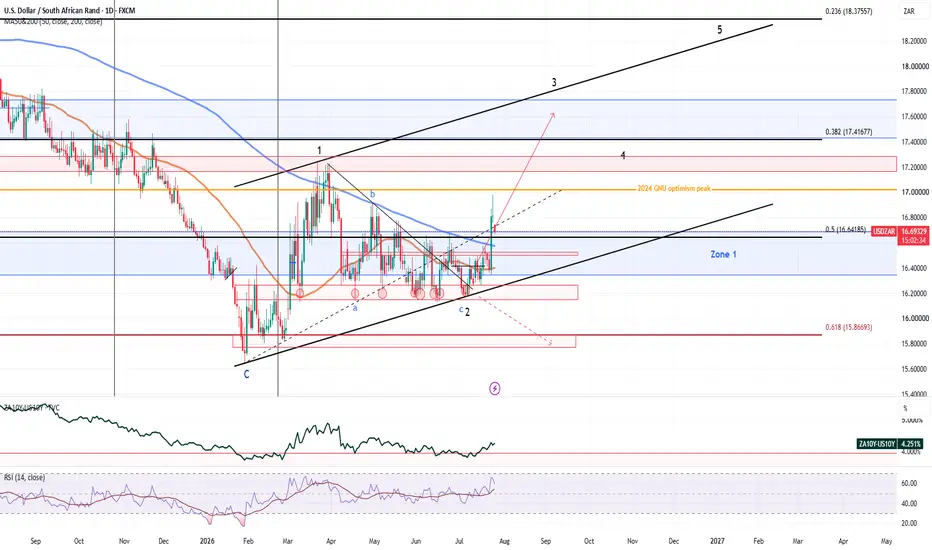
The pair managed to surge past the 200-day MA at 16.57 last week after the unexpected decision from the SARB to leave the repo rate unchanged at 7%.
The pair touched a 4-month high of 16.97 before consolidating to close the week at 16.81. The next critical support levels to watch are the 50% fibo at 16.65 and the 200-day MA at 16.57. I expect these levels to be tested over the coming trading sessions but a failed break the phycological 16.50 handle will support the bigger trend highlighted in the original idea.
Additionally, the ZA10-year minus the US10-year yield is climbing higher, just over 4.25% which is rand negative.
The fundamental analysis highlighted in the previous/linked idea remains broadly unchanged.
Note
The rand has managed to regain all its losses after the SARB rate pause and then some. The rand was afforded the room to move following the Yen-tervention last week coupled with a bout of risk-on sentiment in anticipation of a MOU between the US and Iran, which has weakened the broad-based dollar index. The pair has fallen below the critical support levels at 16.54 (200-day MA) and 16.41 (50-day MA) and has settled just above the 61.8% Fibo retracement of 16.25. Tomorrow's US non-farm payrolls for June could be a catalyst for another leg higher in the DXY which will see the USDZAR pair re-test the 16.50 handle as the 200-day MA and 50-day MA swings from a support to a resistance. The payroll print will have to be higher than expected for this move to play out as it will increase the bets for a possible Fed rate hike in September.
A weaker than expected payroll print will however allow the rand to re-test the red support range below 16.25 which has kept the rand at bay since March this year.

Related publications
Disclaimer
The information and publications are not meant to be, and do not constitute, financial, investment, trading, or other types of advice or recommendations supplied or endorsed by TradingView. Read more in the Terms of Use.
Related publications
Disclaimer
The information and publications are not meant to be, and do not constitute, financial, investment, trading, or other types of advice or recommendations supplied or endorsed by TradingView. Read more in the Terms of Use.