
Hello everyone,
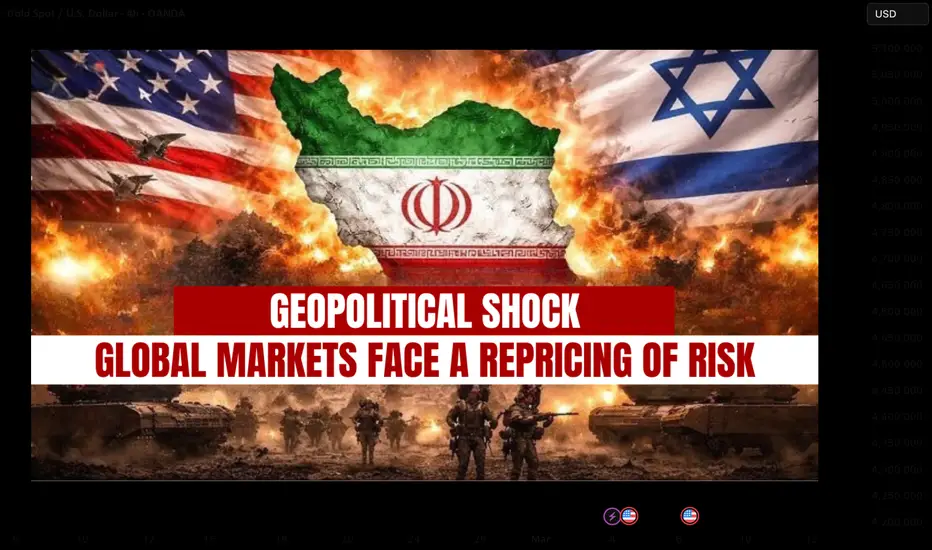
Rising tensions between the United States, Israel, and Iran are pushing financial markets into a new phase of sensitivity. This is no longer just a regional flashpoint; it is a variable capable of reshaping how risk is priced on a global scale. When instability emerges in strategically critical areas, markets typically react first not through economic data, but through adjustments in expectations around energy supply, inflation, and capital flows.
The Middle East sits at the center of the global energy system, particularly around the Strait of Hormuz — a maritime corridor through which roughly one-fifth of the world’s oil shipments pass each day. Even the mere threat of disruption in this region is often enough to trigger a preemptive response in energy markets before any actual supply constraint materializes. Historically, oil is the fastest asset to react to geopolitical shocks, with spillover effects then transmitted to broader financial markets via inflation expectations and growth outlook adjustments.
If tensions are contained quickly, energy prices may cool after the initial spike as risk premiums are gradually repriced lower. However, in a scenario of escalation or prolonged conflict, markets could enter a structurally higher energy price cycle. In that environment, pressure extends beyond crude oil costs into transportation, manufacturing, and consumer goods — all sensitive components within inflation baskets.
The complication lies in monetary policy. A renewed inflation impulse would disrupt the easing trajectory many central banks have been contemplating. An energy shock could force policymakers to maintain higher interest rates for longer than expected. That dynamic places downward pressure on equity valuations and risk assets, especially when the cost of capital remains elevated amid uncertain growth conditions.
Simultaneously, defensive capital flows tend to become more visible during periods of instability. Traditional safe-haven assets such as gold, government bonds, and the US dollar often attract demand as capital preservation takes precedence over yield generation. Gold, in particular — as a store of value not tied to any single sovereign issuer — tends to reflect geopolitical risk repricing with notable speed.
The impact of a conflict in this region rarely remains localized. Europe is highly sensitive to energy costs; major Asian importers feel the strain through input price channels; and emerging markets are often vulnerable to inflationary pressure and trade balance deterioration. When energy becomes the uncertain variable, the entire global cost structure can shift.
At this stage, markets are closely monitoring three key variables: the scope of escalation, the risk of transportation disruption in the Persian Gulf, and the prospects for diplomatic de-escalation among the involved parties. Each of these factors will determine whether the current shock remains temporary or evolves into a prolonged cycle of instability.
War, ultimately, is not merely a military event. It is a catalyst for risk repricing, capital reallocation, and macro expectation adjustment. For investors and traders, the priority is not emotional reaction to headlines, but recognizing the repricing process as it unfolds — typically beginning with energy, filtering into inflation expectations, and ultimately embedding itself in broader financial market structure.
In a period of heightened volatility like this, understanding that transmission cycle offers a clearer view of the macro landscape beyond short-term fluctuations. What signals are you watching most closely to assess systemic risk at this stage?

Join our group and unlock real-time Forex, gold, and crypto signals — sharp insights, fast alerts, and opportunities you don’t want to miss.
Join now: t.me/+dfxDTk_DRtg4Mzll
Join now: t.me/+dfxDTk_DRtg4Mzll
Related publications
Disclaimer
The information and publications are not meant to be, and do not constitute, financial, investment, trading, or other types of advice or recommendations supplied or endorsed by TradingView. Read more in the Terms of Use.