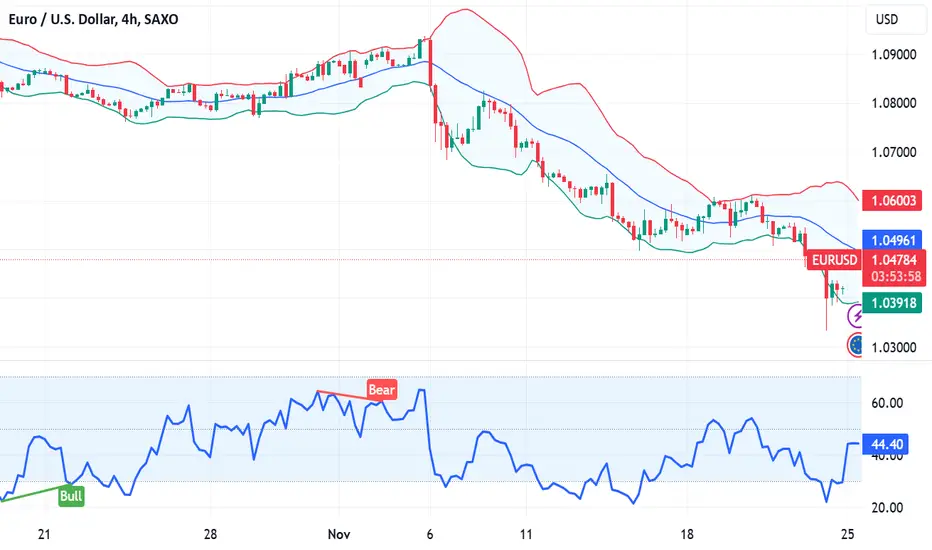
LONG ON EUR/USDEU has given us a nice bullish push from a demand zone. I will be buying EUR/USD looking to catch 50-80 pips. Longby BBIDF225
Fundamental Market Analysis for August 5, 2025 EURUSDEvent to pay attention to today: 17:00 EET. USD - ISM Services PMI EUR/USD continues to fall for the second day in a row, trading around 1.1560 during Tuesday's Asian session. The pair is devaluing amid the strengthening of the US dollar (USD) due to caution among traders caused by recent events in global trade and changes in expectations regarding monetary policy. Market sentiment is becoming cautious due to growing concerns about the independence of the Federal Reserve (Fed). On Monday, Fed board member Adriana Kugler unexpectedly resigned. This event gave US President Donald Trump the opportunity to influence the central bank earlier than expected. However, the US dollar may face difficulties amid growing chances of an interest rate cut by the US Federal Reserve (Fed) in September after weak labor market data reinforced concerns about the US economic outlook. Markets estimate the probability of a Federal Reserve rate cut next month at 91.6%. By comparison, the European Central Bank (ECB) is expected to keep rates unchanged, as annual inflation in the eurozone remained at 2.0% in July, slightly above the forecast of 1.9%. Meanwhile, traders are cautious amid the introduction of 15% US tariffs on goods imported from the European Union (EU). Trade recommendation: BUY 1.1580, SL 1.1500, TP 1.1685Longby Fresh-Forexcast20040
Should You Still Sell Your USD for EUR? A 2025 PerspectiveWith currency markets in constant flux, the decision to hold USD or convert to EUR carries major financial implications for investors, expatriates, businesses, and frequent travelers. As of July 29, 2025, the USD/EUR exchange rate is around 0.86–0.87, with $1 buying roughly €0.86. Is now the right time to sell your US dollars for euros? Here’s a balanced look at the latest data and forecasts. Current Market Context: Dollar Weakness and Euro Stabilization USD Slide in 2025: The US dollar has experienced its steepest decline in over three years, falling nearly 10% year-to-date. This sustained weakness is attributed to policy volatility, capital flowing out of the US, and narrowing interest rate differentials. Key Exchange Rate: Recent rates hover between 0.85 and 0.87, representing moderate stability following a period of volatility. Euro’s Resilience: While the euro has had its own struggles, from slower economic growth to political uncertainty in Germany and France, analysts forecast no major sustained fall for the euro through 2025. 2025 Forecasts: USD/EUR Direction—What Do the Experts Say? Year-End 2025 Outlook: Major banks and forecasting firms expect the EUR/USD rate could climb even higher by year-end, meaning the euro could gain modestly versus the dollar if current trends continue. Factors to Watch: Fed Rate Cuts: Potential US rate cuts in Q3–Q4 remain a key driver for further USD weakness. Trade & Tariff Uncertainty: Ongoing US tariff announcements and global trade tensions add volatility but also support safe haven flows to the dollar. Eurozone Politics: Any resolution of political uncertainty in Europe could buoy the euro. Most Important One: Fed's Money Printer... Strategic Considerations: Should You Sell Now? Locking in Current Rates: If you need euros to make payments, pay salaries, or make investments in the short term, converting a portion now could reduce your exposure to further USD downside. If You Can Wait: Analysts see some chance for USD recovery in late Q3 or early 2026, but this is contingent on US policy stability and Fed decisions. Averaging In: For larger transfers, consider splitting your transaction over time (also called dollar-cost averaging), which can help mitigate volatility. Bottom Line If you have an immediate need for euros, current rates present a reasonable opportunity. The dollar’s weakness throughout 2025 is well documented, but much of the pessimism may already be priced in. If you’re flexible with timing, monitor central bank policy signals throughout Q3/Q4, a more dovish Fed or unexpected eurozone stability could push rates further in your favor, but event risks remain elevated. Ultimately, a phased or hedged approach may offer both protection and potential upside *not investment advice* #forex #fx #dollar #usd #euro #eur #economy #trade #tariff #trading #indicator Longby signalgo2
Trump did it again!Donald Trump did exactly what he did in his previous term: Dollar Devaluation . Reason? Strengthening the US exports. Will it work? We'll see. What's your thoughts? #dollar #forex #euro #devaluation #trump #exports #trading #algo Longby signalgo3
Fundamental Market Analysis for June 18, 2025 EURUSDEvent to pay attention to today: 12:00 EET. EUR - Consumer Price Index 15:30 EET. USD - Unemployment Claims 21:00 EET. USD - FOMC Rate Decision Declining confidence in the US economy amid trade policy is undermining the US Dollar (USD) against the Euro (EUR). Data released by the US Census Bureau on Tuesday showed that US retail sales fell 0.9% m/m in May, compared to a 0.1% decline (revised from +0.1%) recorded in April. The figure was weaker than estimates of -0.7%. Meanwhile, US industrial production in May declined 0.2% m/m vs. 0.1% previously (revised from 0%), worse than expectations of 0.1%. Traders expect the US Federal Reserve to leave borrowing costs unchanged at its June meeting on Wednesday. Markets now estimate a nearly 80% chance that the Fed will cut rates in September and then another in October, according to Reuters. The mood of European Central Bank (ECB) policymakers is supportive of the common currency. ECB President Christine Lagarde said that rate cuts are coming to an end as the central bank is now in a “good position” to deal with the current uncertainty. Meanwhile, investors will keep an eye on geopolitical risks. Israel is set to step up strikes on Tehran, while the US is considering expanding its role amid rising tensions between Israel and Iran. Trade recommendation: SELL 1.1460, SL 1.1560, TP 1.1260Shortby Fresh-Forexcast20040
Goldman and BofA agree: The dollar is losing its edgeGoldman Sachs now expects the EUR/USD to hit 1.20 by the end of the year. While this prediction draws comparisons to the 2017 rally in the pair, Goldman notes a key difference. This time, the pricing reflects pessimism in the US dollar, rather than optimism in the euro. Bank of America seemingly agrees and warns that even a “hawkish” dot plot at this week’s FOMC meeting, where Fed officials signal fewer rate cuts, may only cause a brief bout of euro weakness against the dollar. EUR/USD has recently broken out of a long-term descending triangle pattern, which capped price action from mid-April through early June, aligning with Goldman Sachs’ and BofA’s view of a broad EUR strength/ USD weakness. This recent pullback to the 1.1480 area is a retest of former resistance turned support, suggesting a potential continuation pattern if buyers defend this level. by BlackBull Markets0
EURUSD: Detailed Support & Resistance Analysis For Next Week Here is my latest structure analysis and important supports and resistances for EURUSD for next week. Consider these structures for pullback/breakout trading. ❤️Please, support my work with like, thank you!❤️ I am part of Trade Nation's Influencer program and receive a monthly fee for using their TradingView charts in my analysis.Shortby VasilyTrader2221
EURUSD: Bearish Outlook Explained 🇪🇺🇺🇸 It feels like EURUSD may continue falling, following a strong bearish reaction to the underlined key daily/intraday resistance. A breakout of a neckline of a double top pattern on a 4H give a strong bearish confirmation. Next support - 1.0295 ❤️Please, support my work with like, thank you!❤️ Shortby VasilyTrader5534
EURUSD: Support & Resistance Levels For Next Week 🇪🇺🇺🇸 Here is my latest structure analysis and important supports and resistance for EURUSD for next week. Consider these structures for pullback/breakout trading. ❤️Please, support my work with like, thank you!❤️ Shortby VasilyTrader2223
EURUSD: One More Bullish Pair 🇪🇺🇺🇸 Similarly to EURCHF, EURUSD looks bullish to me. I see a confirmed breakout of a resistance line of a falling wedge pattern on an hourly. Goal - 1.0416 ❤️Please, support my work with like, thank you!❤️ Longby VasilyTrader2210
Fundamental Market Analysis for January 13, 2025 EURUSDData from the US Bureau of Labour Statistics (BLS) released on Friday reported that non-farm payroll employment (NFP) rose by 256k in December, exceeding market expectations of 160k and beating the revised November figure of 212k (previously reported at 227k). The unemployment rate fell to 4.1% in December from 4.2% in November. Annual wage inflation, as measured by the change in average hourly earnings, fell slightly to 3.9% from 4%. US labour market data for December is likely to reinforce the US Federal Reserve's (Fed) stance on keeping interest rates unchanged in January, which will support the dollar against other currencies. Markets expect the Fed to keep the benchmark overnight interest rate in the range of 4.25%-4.50% at its 28-29 January meeting. In addition, traders expect four interest rate cuts by the European Central Bank (ECB), which are expected to occur at each meeting through the summer. ECB policymakers seem to be comfortable with these expectations as inflationary pressures in the Eurozone remain largely under control. The head of the ECB and the Bank of France said that interest rates will continue to move towards a neutral rate ‘without slowing down by the summer’ if upcoming data confirm that ‘the pullback in price pressures does not remain in place’. Trade recommendation: Trading mainly with Sell orders from the current price level.Shortby Fresh-Forexcast20040
EUR/USD – Weak Start to the WeekEUR/USD – Weak Start to the Week The EUR/USD pair began the week with declines, driven by macroeconomic data releases and political tensions within the eurozone. --- Macroeconomic Data Impact On Monday, the final reading of the **HCOB Manufacturing PMI** for the eurozone in November was released, showing a figure of **45.2**, in line with expectations. This continues to signal weakness in the industrial sector, contributing to euro depreciation. --- Political Issues in France Political turbulence in France further weighed on the euro. Key developments included: - Budget Dispute: Prime Minister Michel Barnier faced potential no-confidence votes as the far-right National Rally (RN) party, led by Marine Le Pen, threatened to oppose the government’s budget proposal. - Concessions: The French government dropped plans to reduce medication reimbursements to secure RN support. - Market Reaction: French bond yields rose, with the 10-year yield briefly surpassing Greece’s. The CAC 40 stock index fell 1.1% in early trading. --- ECB Comments Statements from European Central Bank members also hinted at potential monetary easing: - Olli Rehn** and **Yannis Stournaras suggested further rate cuts are likely in December due to persistent inflation concerns. - Martin Kazaks mentioned the possibility of discussing larger rate cuts, though he acknowledged significant uncertainty. --- Seasonality and EUR/USD Historically, December has been a favorable month for the euro against the dollar, driven by reduced market liquidity and year-end position adjustments. However, under the current market conditions, with weak eurozone data and robust U.S. performance, seasonality may not be sufficient to reverse the prevailing bearish trend for EUR/USD. --- USD Stability The U.S. dollar remains relatively stable, supported by strong macroeconomic fundamentals and comments from Federal Reserve officials. - Fed Officials’ Remarks : - John Williams: The NY Fed President noted that monetary policy remains restrictive and emphasized data dependence. He expects inflation to gradually decline to 2% and forecasts U.S. GDP growth of around 2.5% in 2024. - Christopher Waller: The Fed Governor expressed support for a December rate cut, citing a balanced labor market and concerns about inflation stagnating above 2%. - Raphael Bostic: The Atlanta Fed President stated that inflation is on track to reach the 2% target and emphasized the strong footing of the U.S. economy while remaining open to future policy adjustments. - U.S. Economic Data : - ISM Manufacturing PMI (November): Increased to 48.4, above expectations but still indicating contraction. - Construction Spending (October): Rose by 0.4%. --- Outlook for EUR/USD Despite last week’s gains, the long-term trend for EUR/USD remains bearish. The eurozone's economic data continues to underperform, adding pressure on the ECB to accelerate rate cuts. Meanwhile, the U.S. economy is on a stable path toward a "soft landing," supported by strong labor markets and steady growth. While seasonal factors might provide temporary support for the euro, the current market dynamics suggest limited potential for sustained EUR/USD appreciation.Shortby InvestMate229
Fundamental Market Analysis for November 25, 2024 EURUSDThe US Dollar may strengthen as the latest US PMI data reinforces the likelihood that the Fed will slow the pace of rate cuts. The Euro faced challenges as the latest HCOB PMI data pointed to continued weakness in Eurozone business activity. EUR/USD recovered from the two-year low of 1.0332 recorded on Friday and traded near 1.0480 during Monday's Asian session. The rebound could be attributed to a correction in the US Dollar (USD) despite strong preliminary S&P Global US Purchasing Managers' Index (PMI) data released in the previous session. Meanwhile, the US Dollar Index (DXY), which tracks the performance of the USD against six major currencies, slipped to 107.00 after hitting a two-year high of 108.07 on Friday. However, downside risks to the U.S. dollar remain limited as recent economic data has reinforced expectations that the Federal Reserve (Fed) may slow the pace of rate cuts. The S&P Global US PMI composite index rose to 55.3 in November, indicating the strongest growth in private sector activity since April 2022. The US Services PMI rose to 57.0 from 55.0 in October and well above market expectations of 55.2, marking the sharpest growth in the services sector since March 2022. Meanwhile, the US manufacturing PMI rose to 48.8 from 48.5 in October, matching market forecasts. Trade recommendation: Watch the level of 1.0480, when fixing below consider Sell positions, when rebounding consider Buy positions.by Fresh-Forexcast2004111
EUR/USD: Euro Weakens as the US Dollar Gains StrengthEUR/USD: Euro Weakens as the US Dollar Gains Strength The EUR/USD pair continued to decline last week, losing 2.8%. This marks another week of euro weakness, driven by poor economic data from the eurozone and strong US indicators that underscore the resilience of the American economy and reduce expectations for Federal Reserve rate cuts. Strong US Data Bolsters the Dollar Key economic data from the US reinforced the dollar’s strength, reflecting the underlying robustness of its economy: - Initial Jobless Claims (Nov. 16): Reported at 213K, outperforming the 220K forecast, indicating a stable US labor market. - S&P Global Services PMI Flash (Nov.): Came in at 57.0, significantly above the 55.2 expectation, highlighting strong activity in the US services sector. These figures diminish the likelihood of imminent rate cuts by the Federal Reserve, maintaining the dollar’s attractiveness to investors. Weak Eurozone Data Pressures the Euro On the other hand, disappointing data from the eurozone added considerable pressure on the euro: - HCOB Composite PMI Flash (Nov.): Dropped to 48.1 (below the 50 threshold indicating contraction), missing the forecast of 50. - HCOB Manufacturing PMI Flash (Nov.): Fell to 45.2, underperforming the expected 46. - HCOB Services PMI Flash (Nov.): Declined to 49.2, well below the 51.6 forecast. The eurozone’s sluggish growth, coupled with inflation stabilizing around 2%, makes a strong case for the European Central Bank (ECB) to accelerate rate cuts. With eurozone rates at 3.4% compared to 4.75% in the US, the dollar’s yield advantage makes it more appealing to investors. Policy Divergence and Trade Risks The divergence in monetary policy between the US and the eurozone is a significant driver of EUR/USD’s weakness. While the ECB seems poised to continue cutting rates, the Federal Reserve may slow its actions or even pause. Further boosting the dollar is the potential for future President Donald Trump’s proposed tariffs on imported goods, which could strengthen the US economy and delay rate cuts. Seasonality: A Possible Lifeline for EUR/USD Despite the euro’s bearish outlook, seasonality could offer some support to EUR/USD. Historically, December has often been a favorable month for the pair, which might provide temporary relief for the euro in the coming weeks. Conclusion EUR/USD remains under significant pressure due to weak eurozone data, monetary policy divergence, and the dollar’s relative strength. Unless there’s a major shift in economic dynamics or central bank decisions, the euro is likely to stay on the defensive. Will seasonal trends be enough to support the euro, or will the downward trajectory continue? Share your thoughts in the comments! Shortby InvestMate116
Trade idea - EURUSD Long4H Corrective approach towards entry zone. = Confirmation to place Buy limit. 1.5% risk. Aiming to take full profit at Daily TP.Longby PipjagerUpdated 5
EURUSDEURUSD . Potential long opportunity. This is an adaptive analysis! Our idea for EURUSD is a long after the price has fallen to our PBA (Pull Back Area). With DXY showing weakness we do believe that EURUSD could rise to our target 1.11674 . Our SL is set at 1.10751 . In second scenario , we could see EURUSD make a deeper pullback down to 1.10500 which could be the second entry . Targets remain the same while SL would sit around 1.10150 . PARAMETERS - Entry: 1.11057 - SL: 1.10751 - TP1: 1.11363 - TP 2: 1.11674 KEY NOTES - EURUSD has fallen to our PBA. - Adaptive analysis. - DXY showing weakness. - EURUSD may make a deeper pullback to 1.10500. Happy trading! FxPocketLongby FxPocketUpdated 14
EURJPY : SELL SETUP IN 4HR CHARTSELL @ 160.10 Target : 158.40, 155.60 Stoploss : 161.60 JPY looks strong. EURJPY will fall...Shortby agnelpraveen5
EURUSD: Support and Resistance Levels For Next Week 🇪🇺🇺🇸 Here is my latest structure analysis and important support & resistance levels to pay close attention to on EURUSD next week. Consider these structures for pullback/breakout trading. ❤️Please, support my work with like, thank you!❤️ Longby VasilyTrader116
EURUSD 28/7/24This week in the EU, we are looking to meet a couple of key points. Overall, we are focusing on the price shifting back into the bearish higher timeframe trend. Currently, the price has been moving lower. We opened up a gap on the daily timeframe, indicating a likely drop. Since then, we have moved lower and created short-term liquidity lows, suggesting the price will sweep out these levels and continue its downward movement. The key points we want to see met this week are as follows: 1. Price to sweep out one of our short-term highs and create a BOS (Break of Structure) downwards, giving us a clean sweep and break move. 2. We have an area of supply that we may tap into. If we reach this high, it would be ideal for short moves and selling positions. 3. If we tap into this supply and break higher, I will look for the daily high to be reached. We are more inclined to see a sell move to follow the higher timeframe trend. The target for this short move is the demand zone marked in green and the liquidity low marked just above that zone. Ideally, this zone will fail, and the price will move lower. However, we may react at this zone and go higher. We will follow what the price shows us! Follow your rules and stick to your plan! Trade safe.by PipSurfingSociety6
EURUSD: Support & Resistance Levels For Next Week 🇪🇺🇺🇸 Here is my latest structure analysis, support and resistance levels on EURUSD pair on a daily time frame for next week. Consider these structures for pullback/breakout trading. ❤️Please, support my work with like, thank you!❤️ Shortby VasilyTrader116
EUR/USD - Forecasted Potential Setup for the Next Few DaysCurrently, the price is forming a descending triangle pattern. I expect it to take liquidity at the 1.07100 level before making another higher low. My focus is on the 1.07350 level as a potential entry point for short positions. Given that the price is down across all timeframes, I am not considering long positions at this moment. If the price breaks the daily highs, this setup will become invalid, and I will then look for long opportunities on a pullback. However, for now, my strategy is exclusively oriented towards shorts. Confluences: Forecast for negative DXY news on 27/06/2024, which is expected to cause a pullback. Anticipation of positive results in Friday's news, potentially causing a breakout in this pair and a test of the weekly highs for DXY. Like and comment if you agree with my setup idea.Shortby Ryan-L117
Eurusd analysis: rising wedge pattern Eurusd now trading at 1.0744 is now showcasing a rising wedge bearish pattern, the major resistance point of 1.0755-1.0765 can become a potential reversal point. the current economical crisis happening in Europe along with major financial scenario of petrodollar issue can make euro crumble a bit comparing to us dollar. we expect a bearish fall till 1.0720 and further down can go till 1.0680 area. Alternative scenario. a break above resistance point of 1.0770 can further enhance the upward correction of eurusd. for more such contents and market related updates boost follow and share us Shortby realmillionairefxUpdated 2210
EURUSD - 1H SellThe EURUSD chart indicates a potential bearish movement. The recent price action suggests that the pair is experiencing a weakening of the bullish momentum. After reaching a recent peak, the price is showing signs of a downward trend, indicating a possible decline towards the highlighted support zone around 1.08400. The price action around this level is crucial; if the support zone fails to hold, we could see a continuation of the downtrend. This setup aligns with the current market sentiment, pointing towards further selling pressure. Traders should watch for confirmations around the support zone to determine the next move.Shortby Sober_TradingUpdated 3