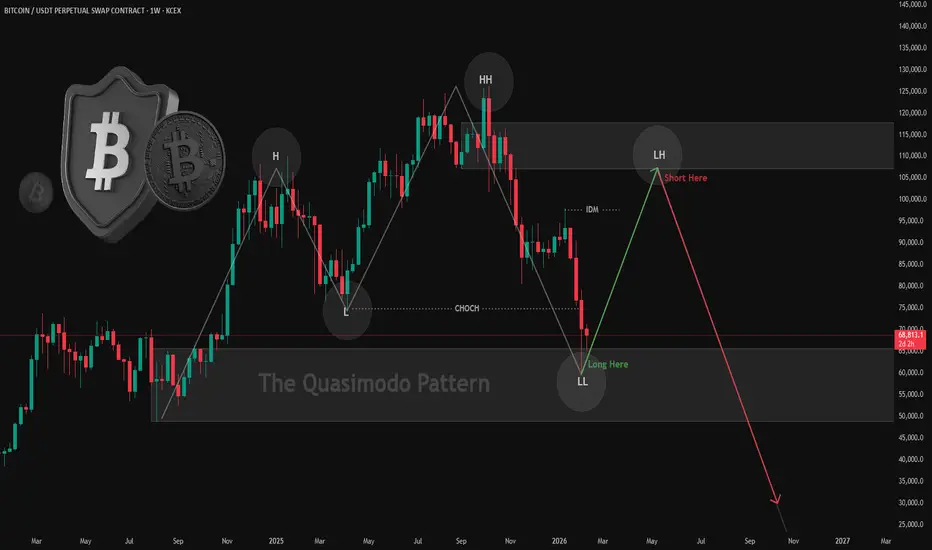
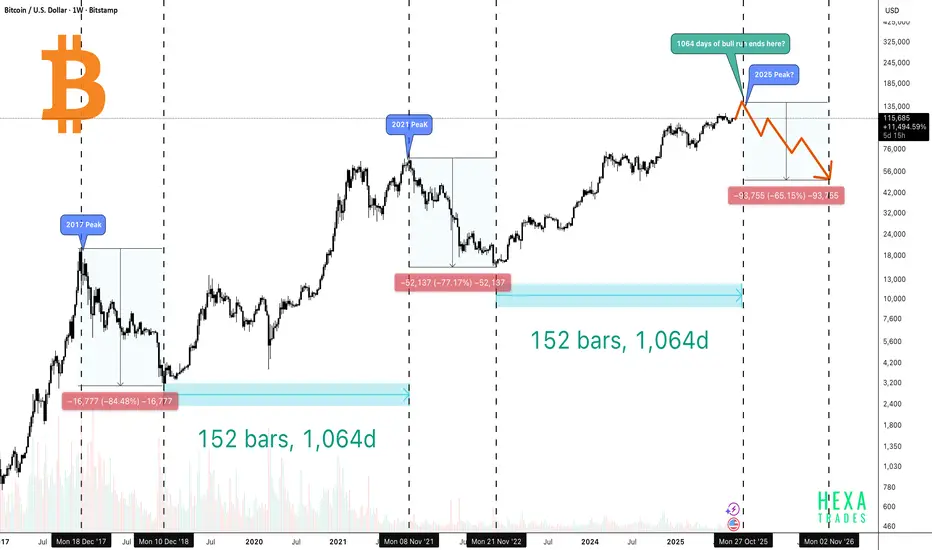
Bitcoin Breakdown Accelerates – ETF Outflows & Geopolitical RiskAs I expected in the previous idea , Bitcoin( BINANCE:BTCUSDT ) not only reached its target but even dropped further, surpassing all initial targets (full target and beyond).
In the past 24 hours, Bitcoin’s decline has been driven by several factors. First, the increasing tensions in the Middle East play a significant role. Second, over one billion dollars has been withdrawn from ETFs, which is not a positive sign for Bitcoin.
Currently, Bitcoin seems to have broken through the support zone($86,420-$83,820), and this break has been accompanied by high volume. It also appears to be in a pullback phase.
From an Elliott Wave perspective, we can anticipate that Bitcoin may begin a new five-wave decline. The intensity of this wave could vary depending on fundamental conditions and incoming news.
I expect that once Bitcoin enters Cumulative Short Liquidation Leverage($86,240-$84,850), it may drop to around $80,273. If the bearish momentum continues, we could see even lower targets.
Notes: Over the weekend, the possibility of increased tensions between the U.S. and Iran, as well as broader geopolitical issues, could impact Bitcoin’s movement. Also, given that trading volumes tend to drop on weekends, we shouldn’t expect massive price swings unless significant news breaks. Therefore, it’s crucial to manage your risk carefully.
First Target: $80,273
Second Target: $78,463
Stop Loss(SL): $86,756
Cumulative Long Liquidation Leverage: $81,000-$78,130
CME Gap: $93,060-$92,940
💡 Please respect each other's opinions and express agreement or disagreement politely.
📌Bitcoin Analysis (BTCUSDT), 1-hour time frame.
🛑 Always set a Stop Loss(SL) for every position you open.
✅ This is just my idea; I’d love to see your thoughts too!
🔥 If you find it helpful, please BOOST this post and share it with your friends.
BTCUSDTPERP
Bitcoin at High-Probability Reversal Zone – Long Setup in PlayAs I expected in the previous idea , Bitcoin( BINANCE:BTCUSDT ) started declining and reached its full target.
Right now, Bitcoin has entered the heavy support zone($78,260-$70,080). Generally, strong support and resistance zones don’t break with just one attempt. On a daily timeframe, this is the second attack, but on the 4-hour timeframe, this is the first. We can expect a corrective move upward before Bitcoin attempts another attack on this key zone.
From an Elliott Wave perspective, it appears that Bitcoin is completing wave 5.
Also, we can see a positive Regular Divergence (RD+) between two consecutive valleys.
I expect Bitcoin to start rising from the Potential Reversal Zone(PRZ) and Cumulative Long Liquidation Leverage ($75,000-$74,000) and fill the CME Gap($84,560-$--,---) that will be formed once financial markets open.
Note: If tensions escalate operationally in the Middle East, we could suddenly see Bitcoin sharply decline and lose its heavy support zone($78,260-$70,080).
What do you think—can Bitcoin drop below $70,000, or is this a good buying area?
Target: $78,614
Stop Loss(SL): $71,117
Cumulative Short Liquidation Leverage: $80,000-$79,260
Cumulative Short Liquidation Leverage: $86,170-$84,760
Points may shift as the market evolves
💡 Please respect each other's opinions and express agreement or disagreement politely.
📌Bitcoin Analysis (BTCUSDT), 4-hour time frame.
🛑 Always set a Stop Loss(SL) for every position you open.
✅ This is just my idea; I’d love to see your thoughts too!
🔥 If you find it helpful, please BOOST this post and share it with your friends.
$BTC Weekly Fractal Breakdown. Liquidity around 70k!CRYPTOCAP:BTC — Weekly Market Structure Overview
Bitcoin is currently following a price sequence that closely resembles the previous market cycle.
During the last major distribution phase, price topped, broke market structure, retraced, and then declined approximately 32% into a weekly Fair Value Gap (FVG).
In the current cycle, the same structural behaviour has occurred, with a larger drawdown of roughly 40%, bringing price directly into a comparable weekly FVG.
---
Current area of interest
Weekly Fair Value Gap: 70,000 – 80,000
Price has now reached this zone.
The next significant technical reference is the 185-week exponential moving average (EMA), currently located near 70,000.
---
Historical behaviour at these levels
When Bitcoin reaches a weekly FVG during a distribution phase, the market typically follows a three-step process:
1. An initial reaction bounce
2. A period of range development
3. A directional resolution, which is usually one of the following:
– Reclaim of market structure, leading to continuation
– Failure to hold the FVG, resulting in a deeper correction
---
Key technical levels
Resistance: 91,000 – 95,000
Short-term risk below: 76,000
Next major liquidity zone: 70,000
---
This behaviour reflects systematic market rebalancing after distribution, rather than random price movement.
Participants who understand a higher-timeframe structure are better positioned—those who do not often provide liquidity for stronger hands.
---
As outlined in my previous BTC analysis, a sustained loss of the 185-week EMA would likely pave the way for the 50,000 region, a move that historically unfolds over several months rather than occurring rapidly.
For now, Bitcoin is expected to consolidate around the 70,000 area. Until price can reclaim a higher-timeframe structure, the short-term bias remains to the downside.
DYOR | NFA
Please hit the like button if you like it. Do not forget to follow me!
If this chart crosses 200 likes, I'll cover altcoins in the coming week.
Thank. you.
Can Price Break Above $79,300 to Trigger the Bullish Move?Give this idea a thumbs up if you agree 👍
Here’s a 15min timeframe chart. The horizontal white line drawn is serving as a resistance hindering a bullish move. If price should break above it, we can expect a bullish move.
Not everyone will catch this at first glance, but a closer look tells the story.
Disclaimer: Ideas fail, DYOR!!!
BTCUSD intraday: rebound towards 80010The RSI is currently trading below the neutral 50 level, indicating that bearish momentum still dominates the market. This suggests that buyers lack sufficient strength to push prices into a clearly bullish zone, and selling pressure remains present.
The MACD remains in negative territory but is positioned above its signal line, which points to a possible short-term corrective rebound or a slowdown in bearish momentum. However, since the MACD is still below zero, the broader trend bias has not yet shifted to bullish.
Price action is trading below both the 20-period and 50-period moving averages, confirming that the short- to medium-term trend remains bearish. These moving averages are likely to act as dynamic resistance on any upward retracement.
Given this mixed configuration, the market remains vulnerable to further downside, and a continuation of the bearish move could open the way toward the 80112 target. Only a sustained recovery above the 20 and 50 moving averages, accompanied by an RSI move back above 50, would reduce the probability of a move toward this target and signal a more constructive outlook.
More Trading Analysis tool: www.mql5.com
When a step-down trend is occurring, you should trade more
Hello, fellow traders!
Follow me to get the latest information quickly.
Have a great day.
-------------------------------------
#BTCUSDT
The price is falling in the DOM(-60) ~ HA-Low range, increasing the likelihood of a step-down trend.
Therefore, the key question is whether it can rise above 84739.74.
If not,
1st: 79902.66 ~ 80999.68
2nd: 76787.43
You should check for support near the first and second levels above.
The most important range is 69000 ~ 73499.86. As the price approaches this range, you should observe whether trading volume increases and a trend toward an upward turn is observed.
The advantage of the coin market is that you can trade in decimal units.
This allows for a less burdensome trading environment.
If you sell when the price drops to 84739.74, you can buy back the same amount you sold at any point before the price rises above 84739.74, thereby increasing your coin (token) count.
Since the stock market trades in one-week increments, even if the price falls significantly, the number of shares sold remains constant. Therefore, the transaction is completed with a sell.
The coin market also allows for the purchase of decimals, even for the most expensive coins (tokens), making it easy to purchase the desired coin (token).
Therefore, holding a large number of coins (tokens) is crucial in the coin market.
Regardless of whether the price is rising or falling, you should strive to increase your holdings by any means necessary.
If your goal is day trading, you can trade similarly to how you would in a traditional stock market.
If, on the other hand, you want to increase your holdings while also generating cash profits, you should retain the coins (tokens) corresponding to your cash profits to increase your holdings.
When a cascading downtrend is observed, it's wise to make bold trades to increase the number of coins (tokens) corresponding to your profits.
This is because a cascading downtrend always ends in an uptrend.
-
Thank you for reading to the end.
We wish you successful trading.
--------------------------------------------------
- Here's an explanation of the big picture.
(3-year bull market, 1-year bear market pattern)
I'll explain more in detail when the bear market begins.
------------------------------------------------------
Pause, then drop — BTC won’t stop Back in October, I shared my view:
BTC below 81K, with a deeper move toward 60K.
So far, price action is following this path step by step.
After several days of strong selling pressure, Bitcoin is taking a technical pause — a normal cooldown before the next move.
What I’m watching right now 👀
• A short-term push into the 84,000–84,500 area
• This zone looks like a potential resistance
• From there, I expect continuation to the downside and a new local low
My downside targets 🎯
Breaking the move into clear steps:
• 🥇 Target 1: 80,000
• 🥈 Target 2: 78,000
• 🥉 Target 3: 73,000 and potentially lower
Between these levels, short consolidations are possible before the next leg down.
Trade idea (my personal plan) 🧠
• 📍 Short area: 84,000–84,500
• ⛔ Stop: 84,700
A move into this zone does not cancel the bearish structure,
but it defines risk and adjusts positioning.
Invalidation zone ⚠️
• ❌ 84,700
As long as price stays below this level, the bearish structure remains valid.
For now, momentum stays on the downside.
Watching reactions at resistance before the next impulse. 🐻📉
#BTC Not Breaking the Low?📊#BTC Not Breaking the Low?
🧠The support in the yellow support zone has been exhausted, and the rebound strength has not met my expectations, indicating that market sentiment is already very pessimistic. Therefore, I think there is a high probability that it will continue to fall below the low L, because referring to the development of ETH, it should also continue to decline from here.
➡️If it quickly breaks below the low L, then the short-term support level worth paying attention to is around 78715.
⚠️The extreme support level is around 74500.
🤜If you like my analysis, please like💖 and share💬 BITGET:BTCUSDT.P
GBTC is hinting a major bottom soon on BTC!AMEX:GBTC
– Elliott Wave Update (1H Chart)
The decline from the Wave B high continues to follow a clean 5-wave impulse. Current price action suggests we are inside Wave (iv) before the final flush.
🧩 Structure so far:
🔻 Wave (i)
• Initial sharp drop
• Set the tone for the entire downtrend
🔻 Wave (ii)
• Reactive bounce into the mid-channel
• Perfect retracement behaviour for an impulse
🔻 Wave (iii)
• Long, persistent decline
• Strongest momentum segment
• Clean subdivisions visible on lower timeframes
🔵 Wave (iv) now forming:
• Grinding upward inside the corrective channel
• Should remain below upper channel resistance
• Likely forming a flat / zigzag corrective before rollover
🔻 Wave (v) expected next:
• Final leg down to complete C
• Target = lower channel + 60–62 region
• Completion of the larger corrective cycle
🟢 After Wave C completes:
• Expect a medium-term trend reversal
• First target = reclaiming broken channel lines
• Bigger target = recovery toward prior structure above 90+
📌 Summary:
Wave (iv) = corrective bounce.
Wave (v) = final drop → then macro reversal likely. ⚡
I am overall bullish on CRYPTOCAP:BTC after this drop. Please check my
BTC update here.
#BTC Liquidity Request?📊#BTC Liquidity Request?
🧠From a structural perspective, after being resisted in the gray resistance zone (S/R), we quickly fell back. The yellow support zone also failed to provide the expected support, thus turning into a resistance zone. This area also has some attraction, so we need to be wary of a potential rebound.
➡️We tested the support level from two months ago. If it breaks below the low L, we'll likely see a rapid rebound, so shorting here is not recommended.
➡️If the low L is broken, it means we've continued the bearish trend. At that point, we need to pay attention to lower support levels, such as 70,000-745,000.
⚠️The new Fed chair will be announced today, so be prepared for potentially sharp fluctuations. Please manage your risk carefully.
🤜If you like my analysis, please like💖 and share💬
BITGET:BTCUSDT.P
#BTC support and resistance?📊#BTC support and resistance?
🧠From a structural perspective, it's reasonable for us to encounter resistance and pull back near the resistance zone. However, the fact that it fell back before reaching the 90599 resistance level I'm watching indicates that the volatility reaction occurred ahead of schedule. If we continue to rise according to the current structure, then the resistance levels we should pay attention to are around 91888 and 94000.
➡️If we fail to continue the bullish momentum and instead retest the yellow support zone below (85400-87300), then this will be a worthwhile area to consider for going long.
⚠️This week is the FOMC meeting, so rapid fluctuations are reasonable. Please be sure to manage your risk.
🤜If you like my analysis, please like💖 and share💬
BITGET:BTCUSDT.P
IMPORTANT BITCOIN ALERT! TRAP BEFORE THE CRASH? Jan 30 2026!!BTC IMPORTANT ALERT! Jan 29 2026.
I know you've been waiting for this update, but there's been a new development in the chart.
Data from 2014 to 2026, presented across multiple charts, suggests that we are approaching a major market crash. That said, there may still be short-term rallies in altcoins, while Bitcoin is likely to remain relatively muted. This final move could turn out to be the ultimate bull trap.
This is purely based on fractal analysis; it’s not a personal bias.
I expect Bitcoin to form a bottom somewhere between $44k and $54k over the coming months. I’ll be sharing a more detailed chart soon, including the projected timelines for potential bottoms in both BTC and altcoins.
I plan to position on the bearish side once the final bull trap is in. Until then, we will continue scalping on lower timeframes, primarily from the short side.
We will make money even if the market crashes.
This cycle hasn’t been the bull run we hoped for; it’s been brutal. But what defines us is that we never give up. We adapt, we fight back, and we keep going.
Hope this gets the point across.
In short, BTC could still push as high as $100k in the coming weeks as part of a final bull trap, even though the overall structure looks extremely ugly.
Please hit the like button if you like it.
Let me know what you think in the comments.
Thank you
#PEACE
Bitcoin Diverges From Gold, - 20% Downside Risk Ahead?Hey Realistic Traders!
“With Bitcoin down more than 30% from its all-time high, is a further 20% decline on the horizon?”
Let’s dive into the technical analysis to answer this question and see what the price action is actually signaling.
On the daily chart, BTCUSDT has consistently moved below the EMA200 line. Price has rarely even touched the EMA200, reinforcing the strength of the broader bearish trend.
During the Wave 4 formation, BTCUSDT consolidated and formed a rising wedge pattern, a corrective structure that typically appears as upside momentum weakens within a larger downtrend. A decisive breakdown from this pattern signals renewed bearish pressure and often marks the beginning of Wave 5 in Elliott Wave theory.
Following the breakdown, BTCUSDT retested the rising wedge pattern twice, forming a lower swing high. Furthermore, a stochastic crossover occurred, adding confirmation to the bearish bias.
This combination of signals strengthens the bearish outlook. We determined the target levels using Fibonacci ratios; we expect Wave 5 could extend toward the 0.786 Fibonacci level, aligning with the second downside target at 62,200 . Before reaching that level, the price may form a consolidation pattern around the first target at 69,676, or the 0.618 Fibonacci ratio.
This bearish wave count remains valid as long as the price stays below the stop-loss level at 94,789. A move above this level would invalidate the potential Wave 5 formation and shift the outlook back to neutral.
Support the channel by engaging with the content, using the rocket button, and sharing your opinions in the comments below 🚀
Disclaimer: Please note that this analysis is solely for educational purposes and should not be considered a recommendation to take a long or short position on Bitcoin.
BTC Faces Major Resistance Before FOMC – Breakdown or Breakout?As I expected in the previous idea , Bitcoin( BINANCE:BTCUSDT ) has followed the anticipated bullish and bearish trends and has reached all of its targets (full target).
Now, the question is whether Bitcoin can sustain above the $90,000 level. Stay tuned!
At the moment, Bitcoin is moving near the resistance zone($90,600-$89,300) and around the 50_SMA(Daily), and the resistance line.
From an Elliott Wave perspective, it seems that Bitcoin is completing a Double Three Correction(WXY) within the ascending channel.
I expect that Bitcoin might not break through this resistance zone($90,600-$89,300) on the first attempt and could start to decline, potentially dropping to around $88,133. If the bearish momentum continues, we might see even lower targets.
First Target: $88,133
Second Target: Cumulative Long Liquidation Leverage: $87,000-$85,630
Stop Loss(SL): $91,823(Worst)
Cumulative Short Liquidation Leverage: $92,000-$91,000
CME Gap: $93,060-$92,940
In the coming hours, markets face the Fed Funds Rate decision and Powell’s press conference, which typically bring elevated volatility. If the Fed holds rates at 3.75% as expected, the initial reaction may be muted, but real movement will depend on forward guidance. Historically, when outcomes align with expectations, gold tends to stay supported amid uncertainty, especially with U.S. government shutdown risks in the background, while Bitcoin remains sensitive to liquidity signals and risk sentiment. Any shift in Powell’s tone — whether more cautious or more hawkish — can quickly drive sharp moves.
⚠️ Traders should expect volatility both at the release and during the press conference, avoid impulsive entries, and prioritize risk management.
Note: Rising tensions in the Middle East could quickly intensify Bitcoin's downward trend
💡 Please respect each other's opinions and express agreement or disagreement politely.
📌Bitcoin Analysis (BTCUSDT), 1-hour time frame.
🛑 Always set a Stop Loss(SL) for every position you open.
✅ This is just my idea; I’d love to see your thoughts too!
🔥 If you find it helpful, please BOOST this post and share it with your friends.
Bitcoin - Creating another -30% correction!🤬Bitcoin ( CRYPTO:BTCUSD ) is still in a bearish market:
🔎Analysis summary:
Just a couple of months ago, Bitcoin created its expected bullmarket all time high. Since then, we already witnessed a correction of about -30%. But looking at higher timeframe structure, this correction is not over and we might see a final push of -30% lower soon.
📝Levels to watch:
$60,000
SwingTraderPhil
SwingTrading.Simplified. | Investing.Simplified. | #LONGTERMVISION
Bitcoin at Key Support – Correction Complete or Another Drop!?Bitcoin( BINANCE:BTCUSDT ) has continued its correction in recent days due to the following key reasons:
1. U.S. Government Shutdown Risk: Political deadlock over the federal budget deadline (January 30) has triggered a "risk-off" sentiment in global markets, pushing investors away from volatile assets like Bitcoin.
2. Trade Tensions and Tariff Threats: Trump's threats of 100% tariffs on Canadian imports have strengthened the U.S. dollar ( TVC:DXY DXY), acting as a headwind for Bitcoin and contributing to broader market declines.
3. ETF Outflows and Market Fundamentals: Net outflows of about $6.1B from Bitcoin spot ETFs over the past three months, combined with on-chain realized losses for holders and leveraged position liquidations, have intensified selling pressure.
4. Geopolitical Tensions in the Middle East: Escalating conflicts, including risks around Iran and oil( FX_IDC:USDBRO ) supply disruptions, have amplified global uncertainty and risk aversion, leading to further sell-offs in cryptocurrencies as investors seek safer assets.
Let’s dive into the technical analysis of Bitcoin on the 1-hour timeframe to see how it’s performing. Stay tuned!
As I expected in the previous idea , Bitcoin followed the anticipated bullish and bearish movements, reaching its targets (Targets Done).
Currently, Bitcoin is moving near a support zone($86,420-$83,820) and has also created a new CME Gap($89,205-$88,385) with the start of this trading week.
From an Elliott Wave perspective, it appears that Bitcoin has completed its main wave 5 near the support zone($86,420-$83,820) and support line, so we can now expect a corrective wave.
Additionally, we can observe a negative Regular Divergence (RD-) between two consecutive valleys.
I expect that after a correction, Bitcoin will resume its upward movement and potentially reach the first target of $88,667. With strong bullish momentum, we could see Bitcoin move even higher in the short term.
Note: Bitcoin, like other dollar-denominated assets, is influenced by various factors, including political statements and news. Therefore, it’s crucial to manage risk carefully and stay prepared for any scenario. Make sure to keep an eye on updates.
I’d love to hear your thoughts on Bitcoin. Do you think the downward trend will persist, and how far do you expect it to drop?
First Target: $88,667
Second Target: $89,401
Third Target: $90,231
Stop Loss(SL): $85,527(Worst)
Cumulative Long Liquidation Leverage: $86,450-$85,600
Cumulative Short Liquidation Leverage: $88,890-$88,400
💡 Please respect each other's opinions and express agreement or disagreement politely.
📌Bitcoin Analysis (BTCUSDT), 1-hour time frame.
🛑 Always set a Stop Loss(SL) for every position you open.
✅ This is just my idea; I’d love to see your thoughts too!
🔥 If you find it helpful, please BOOST this post and share it with your friends.
Bitcoin - This chart is not bullish yet!🎲Bitcoin ( CRYPTO:BTCUSD ) still remains beairsh:
🔎Analysis summary:
Bitcoin remains in an underlying bullish market. But looking at all the recent retests of resistance, it becomes quite likely that this is not the end of the bearmarket yet. Bitcoin will most likely create another move of -35% first in the next couple of weeks.
📝Levels to watch:
$65,000
SwingTraderPhil
SwingTrading.Simplified. | Investing.Simplified. | #LONGTERMVISION
#BTC/USDT Let Bitcoin make a new ATH#BTC
The price is moving within a descending channel on the hourly timeframe. It has reached the lower boundary and is heading towards a breakout, with a retest of the upper boundary expected.
The Relative Strength Index (RSI) is showing a downward trend, approaching the lower boundary, and an upward bounce is anticipated.
There is a key support zone in green at 92445. The price has bounced from this level several times and is expected to bounce again.
The indicator is showing a trend towards consolidation above the 100-period moving average, which we are approaching, supporting the upward move.
Entry Price: 89286
First Target: 90011
Second Target: 91141
Third Target: 92445
Stop Loss: Below the green support zone.
Don't forget one simple thing: Money Management.
For any questions, please leave a comment.
Thank you.
Example of How to Check Support
Hello, fellow traders.
By "Following," you'll always get the latest information quickly.
Have a great day.
-------------------------------------
How can we confirm that the price is supported at support and resistance levels?
While support can be determined over time, it's not always easy to tell when support is being tested.
The indicators we focus on are the HA-Low and HA-High indicators.
Then, in combination with the DOM(-60) and DOM(60) indicators, we identify low and high ranges and respond based on whether they are supported.
In other words, we can use the basic trading strategy of buying if support is found in the DOM(-60) to HA-Low range, and selling if resistance is found in the HA-High to DOM(60) range.
-
The current price is located near the DOM(-60) ~ HA-Low range.
The DOM(-60) indicator has been maintained since its creation.
Therefore, we can see that support is currently being tested near the DOM(-60) ~ HA-Low range.
So, how can we determine if support is found and an upward trend is possible?
This can be predicted by observing the movements of the OBV, StochRSI, and TC indicators.
Since the current price is located near the HA-Low indicator, for the HA-Low indicator to support the price and move upward, the StochRSI, TC, and OBV indicators must be trending upward.
If possible,
1. The StochRSI indicator should not have entered the overbought zone.
2. The TC indicator should remain above zero.
3. The OBV indicator should remain above the High Line.
Applying the above conditions, we can see that support is still present and the likelihood of an upward trend is low.
Even under these conditions, if the price remains near the DOM(-60) ~ HA-Low range, we can say that support is present.
-
To examine the situation in more detail, let's examine the movement on the 15m chart.
To determine whether support exists near the HA-Low indicator point on the 1D chart, I've marked the HA-Low indicator point on the 1D chart.
The DOM(-60) and HA-Low indicators are generated on the 15m chart, and the upward movement is testing support as it meets the DOM(60) indicator.
Therefore, even if the price declines from the HA-Low indicator point (87944.84) on the 1D chart, if it maintains around the DOM (-60) ~ HA-Low range on the 15m chart, it will likely attempt to rise again.
To achieve this, as mentioned earlier, we must monitor the movements of the StochRSI, TC, and OBV indicators.
If the StochRSI indicator enters the overbought zone, the upward movement may be limited.
Therefore, to sustain the uptrend, it is best to ensure the StochRSI indicator has not entered the overbought zone.
The TC indicator is a comprehensive evaluation of the OBV + PVT + StochRSI indicators. An increase above the zero point indicates that buying pressure is dominant, while a decrease indicates that selling pressure is dominant.
Therefore, even if the TC indicator shows an upward trend, the uptrend is likely to continue only if it rises above the zero point.
The OBV indicator should be divided into three sections:
1. Low Line ~ High Line
2. Above the High Line
3. Below the Low Line
1. Low Line ~ High Line
If the OBV indicator is within the Low Line ~ High Line range, it is best to assume that the price has entered a sideways trading range.
Whether this sideways trading range is bullish or bearish can be determined by examining the trend of the channel formed by the Low Line ~ High Line.
Since the channel formed by the Low Line ~ High Line is currently forming an upward channel, it should be interpreted as being within a bullish sideways trading range.
2. Above the High Line
For the price to break out of the sideways trading range and enter an uptrend, it must rise above the High Line.
3. Below the Low Line
For the price to break out of the sideways trading range and enter a downtrend, it must fall below the Low Line.
Therefore, based on the movements of the StochRSI, TC, and OBV indicators, we should consider the current price unlikely to continue its upward trend and develop a response strategy.
-
Support may require observing the price movement for 1 to 3 days.
However, the price has been held near the DOM (-60) ~ HA-Low range for over two months.
Therefore, it's correct to interpret the current price as being in an upward sideways range.
If the OBV indicator falls below the Low Line and then below the DOM (-60) indicator, it will break out of the sideways range and enter a downtrend.
This is the answer to the question of whether the current price is supported.
For the price to show an upward trend, it must rise above at least DOM(-60) to HA-Low.
To create a stepwise uptrend, or a full-blown uptrend, it must rise above HA-High to DOM(60).
Therefore, if the current price rises from the DOM(-60) to HA-Low range, the resistance zone will be the HA-High to DOM(60) range.
Since the HA-High and HA-Low indicators are the most important indicators, the price must rise above the HA-High indicator and remain there for a full-blown uptrend to occur.
-
Thank you for reading to the end.
I wish you successful trading.
--------------------------------------------------
Next Volatility Period: Around February 7th
Hello, fellow traders!
Follow us to get the latest information quickly.
Have a great day!
-------------------------------------
I believe BTC is currently at a critical crossroads, where it's either going to continue its uptrend or turn into a downtrend.
(BTCUSDT 1M Chart)
Therefore, support near the M-Signal indicator on the 1M chart is crucial.
Looking at this month's candlestick chart, the StochRSI 20 indicator appears to have formed a new point, rising from 37,155.0 to 87,550.43.
Therefore, caution is advised, as a decline below 87,550.43 could lead to a decline toward the next support and resistance level, near 73,499.86.
Even if the M-Signal indicator on the 1M chart rises above the OBV High indicator at 97,954.51, an uptrend is expected only if it rises above this level.
-
(1W chart)
The key is whether the price can rise along the rising trend line (1).
Furthermore, to maintain the price above the M-Signal indicator on the 1M chart, it is crucial to see if the price can rise above the 91013.65 level, which is the StochRSI 50 indicator point, to find support.
-
(1D chart)
The next volatility period is expected to begin around February 7th.
However, since the volatility period shown on the 1W chart is in April, the main volatility period is expected to occur in April.
As the next volatility period passes, the key point to watch is whether the price continues to rise along the rising trend line (1).
Therefore, the price must remain above 89524.74 at the very least.
Currently, the M-Signal on the 1W chart > M-Signal on the 1D chart > M-Signal on the 1M chart, so a complete reversal has not yet occurred.
Therefore, if support is found near the M-Signal indicator on the 1M chart this time, it is expected to move upwards above the M-Signal indicator on the 1W chart.
Considering these points,
1. Key areas to protect: Left Fibonacci ratio 2.618 (87814.27) ~ Left Fibonacci ratio 3.14 (93570.28)
To protect the first key area, support is needed around the 84739.74 ~ 87944.84 area.
To turn to an uptrend and continue the uptrend, the M-Signal indicator on the 1W chart must rise above this level. Based on the current position, this is expected to occur only if the price rises above 95330.17.
-
(15m chart)
For the Heikin-Ashi candlestick to turn bullish, it needs to rise near 92631.0. It's rising.
Based on the chart movement, I believe a rise above 92631.0 will signal a reversal.
Since the M-Signal indicator on the 1D chart is passing near 92631.0, we believe the price must ultimately rise above the M-Signal indicator to maintain its upward momentum.
My basic trading strategy is to buy in the DOM(-60) ~ HA-Low range and sell in the HA-High ~ DOM(60) range.
However, if the price rises from the HA-High to DOM(60) range, it could exhibit a step-like upward trend. If the price falls from the DOM(-60) to HA-Low range, it could exhibit a step-like downward trend.
Therefore, it's recommended to trade using a split trading method.
Looking at the current 15m chart, the DOM(-60) and HA-Low indicators were generated and then rose, but only slightly, generating the DOM(60) indicator.
Therefore, to sustain the upward trend, the DOM(60) indicator must break above the level.
Once you've identified a key point or range, you need to determine whether a break above that point or range can sustain the upward trend.
For this purpose, we use the StochRSI, TC, and OBV indicators.
The StochRSI, TC, and OBV indicators should all be showing upward trends.
If possible, the StochRSI indicator should not have entered an overbought zone. The TC indicator should remain at 0.
The OBV indicator should remain above the High Line.
If the above conditions hold when the DOM (60) indicator breaks above, an attempt to rise above 92631.0 is expected.
If not, a decline towards the HA-Low indicator is likely.
--------------------------------------------------
The final destination is likely to be near the 69K to 73499.86 range, as mentioned at the start of the decline.
However, as always, there is a possibility of a smaller decline and a subsequent rise. Therefore, we need to closely monitor the upward trend, especially when the price rises above the left Fibonacci 2.618 (87814.27) to left Fibonacci 3.14 (93570.28) range and sustains.
Every investor wants to buy at a lower price. However, caution is required, as buying when the price is in a downward trend can be extremely burdensome.
Currently, the price is near the HA-Low indicator on the 1D chart, so if the price falls, it is likely to experience a step-down trend.
This step-down trend ultimately signals a reversal to the upside, so aggressive buying is acceptable. However, investment allocation should be adjusted, as additional buying will be necessary when the HA-Low indicator is met again.
-
Thank you for reading to the end.
I wish you successful trading.
--------------------------------------------------