The Impact of Multinational Corporations (MNCs) on Global Trade1. Understanding Multinational Corporations
A multinational corporation (MNC) is a company that manages production or delivers services in more than one country. The defining features of MNCs include:
Global presence – Operations span multiple countries through subsidiaries, branches, or joint ventures.
Centralized control – Strategic decisions are made at the headquarters while local operations adapt to regional markets.
Large capital base – MNCs often possess vast financial resources that enable them to invest globally.
Technology and innovation leadership – Many MNCs are at the forefront of research and development (R&D), driving global innovation.
Examples include Apple, Microsoft, Toyota, Nestlé, Samsung, and Procter & Gamble, each influencing production, consumption, and trade across continents.
2. MNCs as Catalysts for Global Trade Expansion
MNCs are the engines of globalization. Their global operations facilitate the movement of goods, services, technology, and capital across borders. They act as bridges connecting developed and developing economies through trade networks, investment flows, and knowledge exchange.
a) Expansion of International Markets
MNCs expand their production and distribution networks into multiple countries to reach broader markets. For instance, Coca-Cola and McDonald’s have established a presence in over 100 countries, adapting products to local tastes but maintaining global brand consistency. This expansion boosts cross-border trade in goods and services.
b) Integration of Global Supply Chains
One of the most transformative impacts of MNCs is the creation of global value chains (GVCs)—complex networks of production that span multiple countries. A single product, such as an iPhone, might have components made in Japan, software from the U.S., assembly in China, and distribution worldwide. This interlinked production structure increases trade in intermediate goods and services and enhances efficiency through specialization.
c) Promotion of Foreign Direct Investment (FDI)
MNCs are the largest source of foreign direct investment, which directly influences global trade. By setting up subsidiaries, factories, or service centers in other countries, MNCs create trade linkages. FDI often complements trade by building local production for exports or substituting imports with local production.
3. MNCs and Economic Development
a) Technology Transfer
MNCs play a key role in transferring technology and managerial know-how to host countries. Developing economies benefit from modern production techniques, quality control, and innovative management practices. For example, when an automobile giant like Toyota establishes a plant in India, it not only creates jobs but also transfers skills and introduces advanced manufacturing technologies.
b) Employment Generation
MNCs generate employment both directly and indirectly. They hire local workers, utilize domestic suppliers, and stimulate service industries such as logistics, finance, and telecommunications. For developing countries, this employment generation can lead to skill enhancement and income growth.
c) Enhancing Export Capabilities
Many MNCs establish export-oriented industries in developing countries due to lower labor costs. This enhances the export potential of the host country, improves trade balances, and promotes industrial diversification. Countries like Vietnam, Mexico, and Bangladesh have benefited significantly from MNC-led export growth in sectors like textiles and electronics.
4. The Strategic Role of MNCs in Global Trade Patterns
MNCs do not just participate in trade—they actively shape its structure. Their strategies determine what is produced, where it is produced, and how it is traded.
a) Resource Optimization
MNCs strategically locate their production units in countries where resources—labor, raw materials, and energy—are most cost-effective. This optimization reduces production costs and influences global trade flows. For example, Intel manufactures semiconductors in regions where technical expertise and low-cost skilled labor are available.
b) Trade Diversification
Through their global reach, MNCs diversify trade by introducing new products, markets, and industries. They create cross-border linkages that integrate economies and make global trade more resilient to regional shocks.
c) Market Influence
Due to their large size and market power, MNCs often influence international prices, trade policies, and even consumer preferences. For instance, the decisions of energy MNCs like ExxonMobil or Shell can affect global oil trade and pricing.
5. MNCs and Globalization: A Two-Way Relationship
Globalization has facilitated the rise of MNCs, and MNCs, in turn, have accelerated globalization.
a) Liberalization and Market Access
The liberalization of trade and investment policies across the world—through organizations like the World Trade Organization (WTO)—has allowed MNCs to expand operations freely. They exploit opportunities in open markets and influence trade agreements.
b) Cultural Exchange and Global Brands
MNCs spread global brands and lifestyles across borders. Companies like Nike, Starbucks, and Amazon have created uniform consumption patterns and global consumer identities. This cultural globalization has both positive (cultural awareness) and negative (cultural homogenization) effects.
6. Challenges and Criticisms of MNCs in Global Trade
Despite their contributions, MNCs also face criticism for several adverse impacts on host and home countries.
a) Exploitation of Labor and Resources
MNCs are often accused of exploiting cheap labor and natural resources in developing countries. Low wages, poor working conditions, and environmental degradation have been reported in industries such as garment manufacturing and mining.
b) Economic Inequality
MNC operations can lead to uneven development. Profits are often repatriated to home countries, leading to capital outflows from developing economies. The benefits of FDI and trade may be concentrated among a few urban centers, widening inequality.
c) Monopoly and Market Power
Due to their size, MNCs can dominate markets, stifling competition from local firms. For example, small retailers may struggle to compete with giants like Walmart or Amazon. This dominance can reduce diversity and lead to market monopolization.
d) Political and Economic Influence
MNCs wield significant political influence, lobbying for favorable trade policies, tax breaks, or weaker labor and environmental regulations. This influence can distort democratic policymaking in host countries.
e) Cultural Erosion
Global brands and media spread Western consumption patterns, often at the expense of local cultures and traditions. This cultural homogenization raises concerns about loss of identity in many developing nations.
7. MNCs and Sustainable Global Trade
In recent years, the focus has shifted toward sustainable and ethical globalization, and MNCs are under growing pressure to adopt responsible practices.
a) Environmental Responsibility
Companies are now integrating green practices in production and logistics to reduce carbon footprints. For example, Tesla promotes renewable energy and electric mobility, while Unilever focuses on sustainable sourcing.
b) Fair Trade and Corporate Social Responsibility (CSR)
Many MNCs are adopting CSR initiatives, supporting local communities, improving labor standards, and engaging in fair trade practices. This builds brand trust and aligns with consumer demand for ethical products.
c) Digital Transformation and Global Connectivity
The digital era has enhanced MNC efficiency and global integration. E-commerce giants like Alibaba and Amazon have created platforms that connect millions of small businesses to international markets, democratizing trade access.
8. Case Studies: MNCs Shaping Global Trade
Case 1: Apple Inc. – The Global Supply Chain Model
Apple’s products are a perfect example of globalization driven by MNCs. Designed in California, components are sourced globally—from South Korea, Taiwan, and Japan—and assembled in China before being distributed worldwide. This model exemplifies how MNCs integrate multiple economies through trade and production.
Case 2: Toyota – Innovation and Localization
Toyota’s global strategy of “local production for local consumption” has strengthened its presence in markets like India, the U.S., and Europe. It sets up local manufacturing facilities to reduce trade barriers while maintaining export-oriented models, influencing both local employment and trade balances.
Case 3: Unilever – Sustainable Development and Global Reach
Operating in over 190 countries, Unilever integrates global trade with local adaptation. It promotes sustainability, fair trade, and rural development through localized sourcing while maintaining global brand consistency.
9. The Future of MNCs in Global Trade
a) Digital and Technological Transformation
Advances in artificial intelligence, automation, and blockchain are redefining how MNCs operate. Digital trade, e-commerce, and fintech platforms will further integrate global markets, making cross-border trade more efficient.
b) Decentralization and Regionalization
The COVID-19 pandemic and geopolitical tensions have prompted MNCs to diversify supply chains away from over-dependence on a single country. This shift toward regional trade hubs (e.g., ASEAN, EU, NAFTA) may reshape global trade geography.
c) Inclusive and Green Growth
Future trade policies and corporate strategies are expected to emphasize inclusivity, sustainability, and environmental accountability. MNCs that align with green trade practices and ESG (Environmental, Social, and Governance) standards will likely dominate global commerce.
10. Conclusion
Multinational corporations have become the backbone of the global trading system, transforming how nations interact economically. Their ability to connect markets, transfer technology, and create employment has made them indispensable to modern globalization. However, their growing power also raises challenges—inequality, environmental degradation, and monopolistic practices—that require balanced regulation and global governance.
To ensure a fair and sustainable global trade ecosystem, collaboration among governments, MNCs, and international institutions is essential. The future of global trade will depend not only on corporate innovation but also on ethical leadership, equitable wealth distribution, and environmental stewardship.
In essence, MNCs are both the architects and products of globalization. Their actions will continue to shape the trajectory of global trade, determining whether the world moves toward inclusive prosperity or deeper inequality. The challenge lies in harnessing their vast potential while ensuring that their influence benefits not just shareholders—but societies across the globe.
Globant
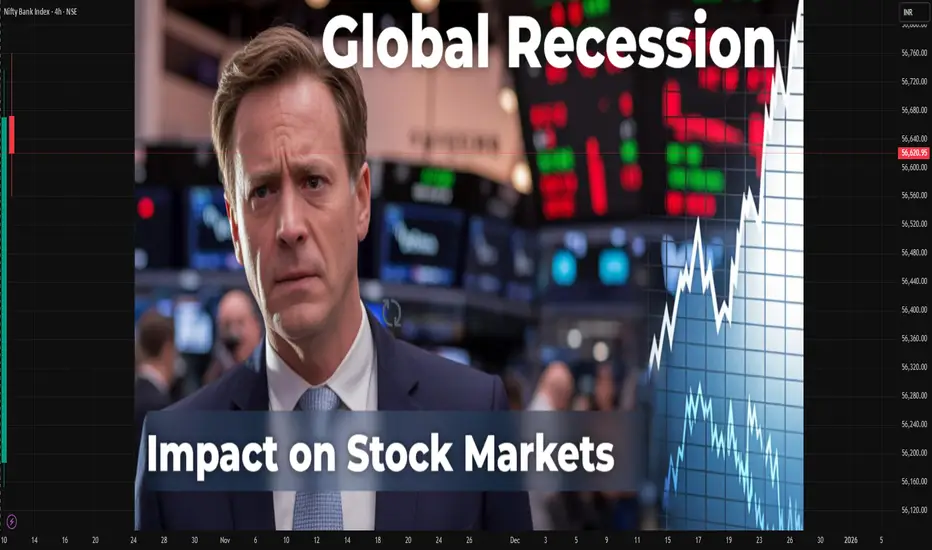
Global Recession and Its Impact on the Global Market1. Causes of a Global Recession
a. Financial Crises
One of the most common causes of global recessions is a financial system breakdown, often triggered by excessive borrowing, speculative investments, or asset bubbles. The 2008 financial crisis began with the collapse of the U.S. housing bubble and spread through interconnected global banking systems. As credit markets froze, liquidity dried up, leading to a synchronized economic downturn.
b. Geopolitical Tensions
Wars, trade conflicts, and political instability also play major roles in creating global recessions. For example, the Russia–Ukraine conflict disrupted energy and grain supplies, leading to global inflationary pressures. Trade wars between the U.S. and China have also strained global supply chains, dampening international investment.
c. Supply Chain Disruptions
The global economy relies on intricate networks of production and logistics. Disruptions in one part of the chain—such as factory shutdowns in Asia or port closures in Europe—can lead to shortages, inflation, and reduced production worldwide. The COVID-19 pandemic exposed the fragility of these systems.
d. Inflation and Monetary Tightening
When inflation rises sharply, central banks raise interest rates to control it. However, aggressive monetary tightening—as seen in 2022–2023—can choke business investments, increase debt burdens, and reduce consumer spending, collectively leading to a global slowdown.
e. Energy Price Shocks
A sharp rise in oil and gas prices increases production costs across industries. Historically, oil crises in the 1970s triggered worldwide recessions, as economies dependent on fossil fuels faced both inflationary and growth pressures.
2. Key Indicators of a Global Recession
Declining Global GDP Growth – A consistent drop in growth across multiple economies is a primary signal of a global recession.
Falling Trade Volumes – Reduced import/export activity reflects weakened global demand.
Stock Market Declines – Global equity indices such as the S&P 500, FTSE, and Nikkei often fall sharply during recessions.
Rising Unemployment – Companies cut costs by reducing staff, leading to lower household incomes and spending.
Currency Volatility – Investors flee risky assets and move to safe-haven currencies like the U.S. dollar or Swiss franc.
Declining Consumer and Business Confidence – Sentiment surveys show reduced optimism about future growth prospects.
3. Impact on Global Financial Markets
a. Stock Markets
During recessions, corporate profits shrink due to declining sales and rising costs. Investors sell off equities, causing sharp corrections or bear markets. Sectors like technology, consumer discretionary, and finance are often hit hardest. However, defensive sectors such as healthcare, utilities, and consumer staples tend to outperform during downturns.
b. Bond Markets
As investors seek safety, demand for government bonds increases. This leads to lower yields on U.S. Treasuries, German bunds, and other sovereign debt instruments. However, riskier corporate bonds may experience widening yield spreads as default fears rise.
c. Currency Markets
Currency movements become volatile during global recessions. Safe-haven currencies (USD, JPY, CHF) strengthen, while emerging market currencies weaken due to capital outflows and reduced export revenues. For example, during the 2008 crisis, the dollar surged as investors sought security in U.S. assets.
d. Commodity Markets
Demand for commodities like oil, copper, and agricultural products falls during recessions as industrial output and consumer demand decline. Energy markets are particularly sensitive, with crude oil prices often collapsing amid falling global demand.
e. Gold and Precious Metals
Gold acts as a safe-haven asset during economic uncertainty. Investors flock to gold, silver, and other precious metals to hedge against inflation, currency depreciation, and financial instability.
4. Sectoral Impact of a Global Recession
a. Manufacturing and Industry
Industrial production declines due to reduced global demand, supply chain disruptions, and tighter credit conditions. Auto manufacturing, electronics, and machinery sectors are among the hardest hit.
b. Technology Sector
Tech companies experience falling valuations as advertising, consumer spending, and venture capital funding decline. However, firms with strong cash reserves and recurring revenues, like software-as-a-service (SaaS) providers, tend to weather recessions better.
c. Energy and Commodities
Falling demand leads to lower energy prices. Oil-exporting countries face budget deficits, while importers temporarily benefit from lower fuel costs.
d. Real Estate and Construction
High interest rates and weak consumer sentiment reduce property demand. Real estate investment trusts (REITs) and construction companies experience revenue declines, though infrastructure-focused government projects may provide some support.
e. Banking and Financial Services
Recessions lead to higher loan defaults, reduced credit activity, and shrinking investment banking revenues. However, strong regulatory frameworks and capital buffers can mitigate systemic risk.
f. Retail and Consumer Goods
Consumers prioritize essentials, cutting back on luxury and discretionary spending. Discount retailers, supermarkets, and essential goods producers often perform better than premium brands.
5. Global Trade and Supply Chain Impacts
A recession causes a sharp contraction in global trade volumes. Export-oriented economies such as China, Germany, Japan, and South Korea face slower industrial output. Shipping costs and port activity decline, while multinational corporations reassess their supply chains for resilience rather than efficiency.
Additionally, protectionist policies tend to rise during recessions, as countries attempt to safeguard domestic industries. This leads to tariffs, export restrictions, and currency interventions, further dampening international cooperation.
6. Impact on Emerging and Developing Economies
Emerging markets are often the most vulnerable during global recessions. They face:
Capital outflows as foreign investors retreat to safer markets.
Currency depreciation that increases debt burdens on dollar-denominated loans.
Declining export revenues, especially for commodity-dependent nations.
Social and political unrest, as unemployment and inflation rise simultaneously.
Countries in Africa, Latin America, and South Asia often suffer deeper recessions due to weaker fiscal capacity and limited access to international credit lines.
7. Employment and Social Impact
The human cost of a global recession is immense. Rising unemployment leads to income inequality, poverty, and social instability. Small and medium-sized enterprises (SMEs) suffer the most as they lack access to capital. Women, youth, and informal workers are disproportionately affected. Governments often respond with fiscal stimulus and social welfare programs to stabilize demand and prevent widespread hardship.
8. Central Banks and Government Responses
To combat recessions, policymakers deploy a mix of monetary and fiscal tools:
Monetary Policy
Interest Rate Cuts: Central banks lower rates to stimulate borrowing and investment.
Quantitative Easing (QE): Purchase of government securities to inject liquidity.
Currency Interventions: To stabilize exchange rates and prevent capital flight.
Fiscal Policy
Government Spending: Infrastructure, healthcare, and defense projects to create jobs.
Tax Cuts or Rebates: To increase disposable income and consumption.
Corporate Support: Financial aid and low-interest loans to struggling businesses.
The coordination between central banks like the U.S. Federal Reserve, European Central Bank, and others is crucial for restoring global market confidence.
9. Long-Term Structural Effects
A global recession not only disrupts short-term growth but also reshapes the economic architecture of the world:
Shift Toward Automation: Companies invest in robotics and AI to reduce dependence on labor.
Deglobalization Trends: Nations prioritize self-reliance, local manufacturing, and “friend-shoring.”
Digital and Green Transition: Governments emphasize clean energy and digital innovation to drive post-recession recovery.
Inequality and Policy Reforms: Rising inequality sparks debates about tax reforms, social welfare, and labor rights.
Investment Reorientation: Investors favor sustainable sectors like renewable energy, healthcare, and technology infrastructure.
10. Historical Examples and Lessons
a. The Great Depression (1929–1939)
Triggered by the U.S. stock market crash, it led to massive unemployment, deflation, and global trade collapse. The lesson: overleveraged markets and lack of regulation can devastate the global economy.
b. The 2008 Global Financial Crisis
Caused by subprime mortgage defaults, it exposed systemic risks in the banking sector. The coordinated response by the G20, IMF, and central banks helped avert a complete collapse, teaching the importance of global financial cooperation.
c. The 2020 COVID-19 Recession
Triggered by a global health crisis, it caused the sharpest economic contraction since World War II. The recovery was led by massive fiscal stimulus and accelerated adoption of digital technologies and remote work.
Conclusion: Navigating the Future of Global Markets
The impact of a global recession is deep and multifaceted—affecting not only financial markets but also the very structure of global trade, employment, and policymaking. However, recessions also serve as catalysts for transformation. They expose economic vulnerabilities, encourage innovation, and reset market expectations.
In the coming years, the resilience of global markets will depend on how effectively nations coordinate monetary, fiscal, and trade policies, and how businesses adapt to new realities shaped by technology, sustainability, and shifting geopolitical dynamics. Investors and policymakers must embrace adaptability, transparency, and long-term thinking to ensure that future recessions become stepping stones toward a more stable and equitable global economy.
Globant | GLOB | Long at $55.00Globant NYSE:GLOB - an IT and software development specializing in AI-driven digital transformation and engineering. The company has partnerships with AWS, Google Cloud, Unity, and Slack, while collaborating with clients such as Google, Electronic Arts, Santander, and Rockwell Automation to deliver enterprise AI and custom software services.
Technical Analysis:
Price for NYSE:GLOB has fallen into my "crash" simple moving average zone. This often, but not always (still a "major" crash zone further down), signals a bottom. The current crash zone extends to $45 and there is a high possibility the price may dip that low in the near-term. Long-term, given the potential earnings and revenue growth, it looks undervalued at its current price.
Earnings and Revenue Growth Between 2025 & 2028
Projected Earnings Growth: ~17% increase (from ~$2.4B in 2025 to $2.8B in 2028)
Projected Revenue Growth: ~96% increase (from ~$157M in 2025 to $309M in 2028, at 28.7% CAGR).
Health
Debt-to-Equity: 0.25x (very good)
Altman's Z-Score/Bankruptcy Risk: 3.5 (excellent/very low risk)
Quick Ratio/Ability to pay current bills: 1.7 (great, low risk)
Action
Due to the good growth potential of NYSE:GLOB , the connections / partnerships it currently has with major companies, and solid financial health, I am personally going long at $55.00. More shares will be gathered if the price reaches the $40's and the fundamentals remain the same.
Targets in 2028
$75.00 (+36.7%)
$100.00 (+81.8%)
Globant 4H Double BottomGlobant posted a positive earnings report. On the 4-hour chart, a double bottom can be observed. Considering the recent decline in the stock, applying a Fibonacci retracement followed by an extension shows the lowest extension level at 1.618, which acted as support. Today, the price broke to the upside. It will be important to analyze with caution whether it starts gaining volume to return to previous levels, while adjusting the stop-loss as a precaution.
Globant, Bright Future or Total Darkness?📊 Technical Analysis – Globant (GLOB) – Weekly
The price of Globant (NYSE: GLOB) remains under strong bearish pressure, approaching a key long-term support area.
🔑 Fibonacci Levels
0.618 (61.55 USD): critical zone currently being tested. A clear breakdown could open the door to further declines.
0.5 (77.15 USD): first major resistance in case of a rebound.
0.382 (92.75 USD): secondary resistance, aligned with previous supply zones.
0.236 (112.04 USD): stronger resistance level; a breakout above would suggest a trend reversal.
📉 Support and Resistance
Main Support: 65–61 USD, which acted as a strong base during 2019–2020.
Immediate Resistance: 77 USD, followed by 93 USD.
🔄 Volume
Volume has increased significantly over the past weeks, indicating strong institutional activity around this support area. This could hint at a potential technical rebound if the level holds.
📌 Conclusion
As long as GLOB holds above 61 USD, there is room for a rebound toward 77–93 USD.
A breakdown below 61 USD would open a more bearish scenario with medium-term targets around 50–45 USD.
Current bias remains bearish, but we are at a key decision zone.