Elite | USDJPY – H1 | Range Compression & Key Decision ZoneFX:USDJPY
The pair remains range-bound between 157.75 resistance and 155.80–156.00 support. Current price action reflects equilibrium, with liquidity resting above range highs and below range lows. Directional bias will depend on confirmation, not anticipation.
Key Scenarios
✅ Bullish Case 🚀
– Hold above range mid + trendline
– H1 close above 157.75 → Bullish BOS
🎯 Target 1: 158.20
🎯 Target 2: 159.00
🎯 Target 3: 160.00 (HTF liquidity)
❌ Bearish Case 📉
– Failure at range mid
– Acceptance below 155.80
🎯 Downside Target: 154.35
Current Levels to Watch
Resistance 🔴: 157.75
Support 🟢: 156.00
Invalidation ❌: H1 close below 155.80
⚠️ Disclaimer: This analysis is for educational purposes only. Not financial advice.
Jpyusdneutral
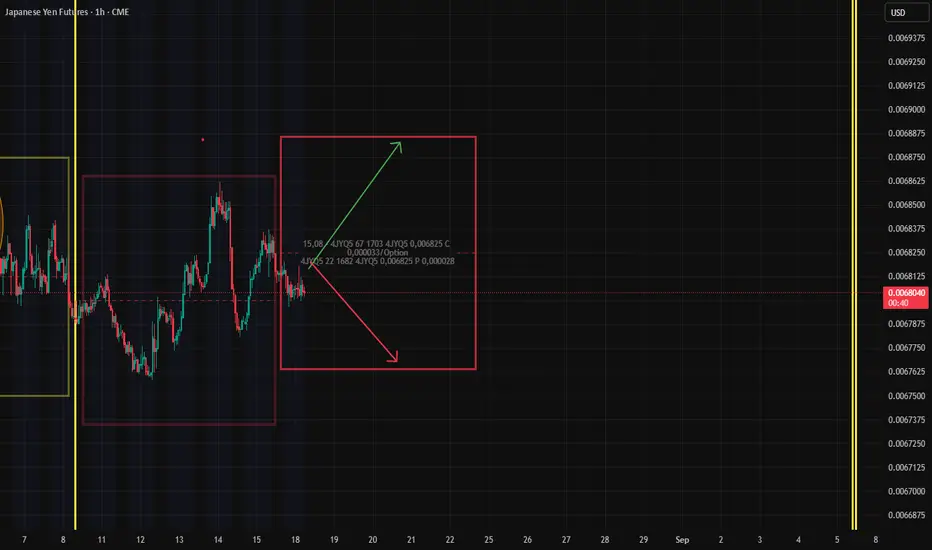
Very briefy: from Straddles to Spreads — What Options Are Saying📊 Market Pulse (CME data based): Key Flow Signals (15.08)
Gold (Oct series):
Spreads at 3650/3750 are being closed.
📉 Sentiment: moderately bearish — no strong upside expected.
AUD:
No major repositioning or fresh flow.
🟢 Sentiment remains bullish — quiet but intact.
EUR:
No insider-level activity or large block trades.
Neutral zone — no directional edge yet.
GBP:
Growing put interest at 1.35.
🟠 Sentiment: moderately bearish — but this level will act as local support IF reached.
JPY:
Another straddle live — expires Aug 22 (4-day life).
Boundaries set, setup familiar.
We know the drill: fade the edges, watch the break-even levels for LONG/SHORT opens
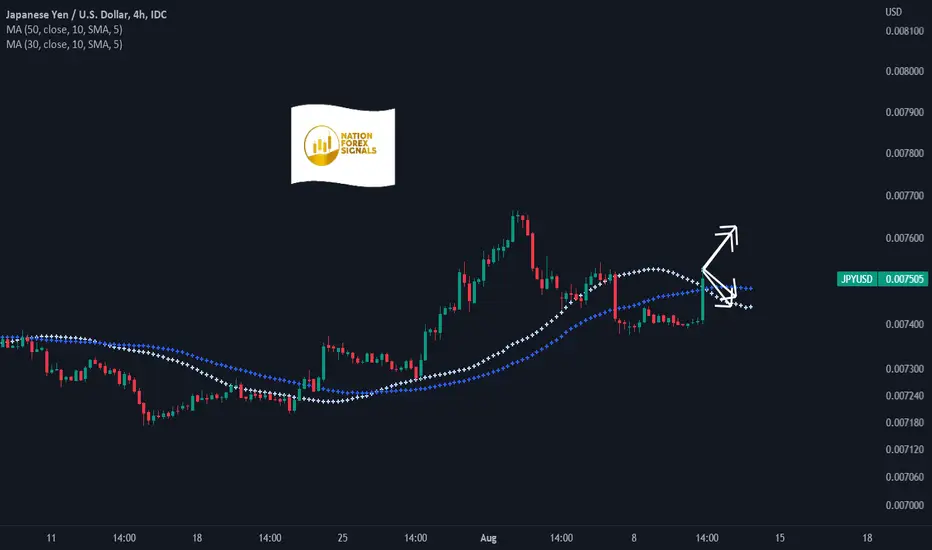
Japanese Yen's Caution Amid USD/JPY Trends and US PCE DataThe Japanese Yen continues to exhibit relative strength amid hawkish expectations from the Bank of Japan (BoJ). Bets on a series of Fed interest rate cuts in 2024 are dampening the USD and weighing on USD/JPY. Bearish speculators are becoming cautious, eagerly awaiting the release of the US Personal Consumption Expenditures (PCE) Index data later this Thursday for fresh market impetus.
From a technical perspective, USD/JPY has shown potential for a recovery below the 100-day Simple Moving Average (SMA), signaling caution for trend-following traders. This indicates that daily chart oscillators are deeply entrenched in negative territory but still far from oversold levels. Conversely, this suggests that the path of least resistance for spot prices remains downward, and any meaningful recovery attempts could be viewed as selling opportunities.
Meanwhile, Wednesday saw the USD/JPY touch multi-month lows around the 146.65 region, seemingly defending immediate weakness. Below this level, USD/JPY could swiftly push the downside momentum towards the psychological 146.00 mark. On the flip side, the 147.30-147.35 region may act as an immediate barrier ahead of the high overnight volatility, around the 147.90 area and the 148.00 mark. Any further upward movement may attract new sellers and remains constrained near the strong horizontal support-turned-resistance level at 148.30.
In summary, caution prevails in the face of the Japanese Yen's bullish trend, with the focus shifting to the US PCE data for potential market catalysts. Technical indicators suggest a bearish bias for USD/JPY, with key support and resistance levels influencing the near-term trajectory.
JPYIRR SHORT JPY weakness continues:Strong bearishIran’s currency hits record low amid tensions with the West
Depreciation of the rial comes amid boiling tensions with the West and continuing protests in Iran.
On Sunday, the United States dollar went past the 450,000-rial mark for the first time on the open market.
On Sunday, the central bank said it will soon raise the maximum amount of currency that can be sold to an individual annually from 2,000 euros ($2,176) to 5,000 euros ($5,439) in an apparent effort to show it has no shortage of currency.
The cap was introduced after the US unilaterally abandoned the 2015 Iran nuclear deal with world powers in 2018 and imposed harsh sanctions, triggering a new currency crisis in Iran.
To combat currency devaluation, Iran’s police force has periodically announced the arrest of dozens of currency speculators in recent months.
Japan's Finance Minister Shunichi Suzuki kept up verbal warnings on Tuesday against the yen's depreciation, saying he would respond appropriately if currency moves became excessive.
At the end the interest rates differential between 2 countries are important.
Which country offers more interest rates for your money? That currency is the winner