Can Moog Engineer Dominance in the New Defense Era?Moog Inc. has entered 2026 with transformative momentum, delivering record-breaking Q1 results that crushed analyst expectations by 19% with adjusted earnings per share of $2.63. Revenue surged 21% year-over-year to $1.1 billion, while the company's backlog exceeded $5 billion, providing unprecedented visibility into future revenue streams. This exceptional performance is driven by a global rearmament cycle, with management raising full-year 2026 EPS guidance to $10.20 and the stock soaring to new heights near $305.
Beyond financial metrics, Moog is strategically repositioning itself as a techno-industrial leader rather than a traditional manufacturer. The company's partnership with Niron Magnetics to develop rare-earth-free Iron Nitride actuators addresses critical supply chain vulnerabilities, as China controls approximately 90% of the global rare earth processing market. This move toward supply chain independence, combined with advanced systems integration through partnerships like the Echodyne collaboration for integrated weapon systems, demonstrates Moog's evolution from component supplier to full-spectrum defense technology provider. Every operating segment achieved record quarterly sales simultaneously, with Space and Defense leading at 31% growth.
The company is capitalizing on multiple tailwinds, including NATO's new 5% GDP defense spending targets, the U.S. Department of Defense's Acquisition Transformation Strategy, which favors high performers, and the shift toward AI-enabled defense systems. With C-130 Hercules modernization programs, hypersonic missile technology, and an aggressive patent portfolio spanning autonomous navigation and robotics, Moog is positioning itself at the intersection of mechanical precision and digital innovation. Despite tariff headwinds and inflationary pressures on fixed-price contracts, the company's 13.0% adjusted operating margin and conservative 2.0x leverage ratio provide the financial strength to sustain this technological transformation through 2026 and beyond.
Missiledefense
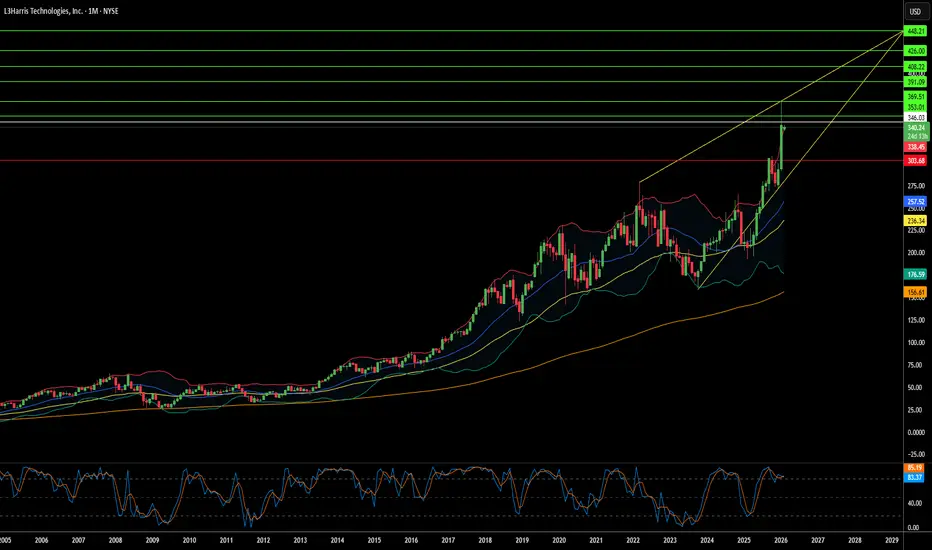
Can L3Harris Justify Its Nearly 40x Price-to-Earnings Premium?L3Harris Technologies has positioned itself as the "Trusted Disruptor" in the global defense landscape, bridging the gap between traditional aerospace giants and agile technology innovators. Operating across space, air, land, sea, and cyber domains, the company aligns with the most critical national security priorities at a time when global defense spending is projected to reach $2.6 trillion by the end of 2026, an 8.1% increase over 2025 levels. The geopolitical tailwinds are substantial: the war in Ukraine has prompted massive European rearmament, with Russia spending nearly $157 billion on defense in 2025 alone and NATO members targeting 5% of GDP for defense by 2035. Meanwhile, China's military expansion is driving unprecedented spending across the Indo-Pacific region, with Asia-Pacific defense budgets now exceeding $530 billion annually. L3Harris is strategically positioned to capture these opportunities through its global reach and technological edge, having recently secured a $2.2 billion contract for Korea's Airborne Early Warning & Control system.
The company reported that 2025 was a "clear inflection point" with full-year revenue of $21.9 billion, a 3% increase and even stronger organic growth of 5%. Its book-to-bill ratio of 1.3x signals a record order pipeline, and the company's aggressive cost management drove adjusted segment operating margins to 15.8% for the full year. However, fourth-quarter results revealed complexities: revenue of $5.6 billion missed forecasts by 2.95% due to a 43-day government shutdown that delayed contract awards and export approvals. Despite this, adjusted EPS of $2.86 beat consensus estimates, reflecting the success of the "LHX NeXt" operational excellence initiative. The stock slipped 3.7% following the earnings announcement, as management's 2026 guidance of $11.30-$11.50 per share fell below analyst expectations of $12.44, raising concerns about supply chain complications and program turbulence.
A transformative development emerged in early 2026 with the Department of War's launch of its "Acquisition Transformation Strategy." L3Harris became the first partner in this novel framework, receiving a $1 billion investment in its Missile Solutions business through a convertible preferred equity structure. The company plans to IPO this unit in the second half of 2026, creating a pure-play missile solutions provider focused on critical programs like PAC-3, THAAD, Tomahawk, and Standard Missile. Beyond munitions, L3Harris continues to advance cutting-edge aerospace and mission systems, including the AERIS next-generation AEW&C platform, the MC-55A Peregrine multi-intelligence aircraft, and autonomous systems ranging from the T7 unmanned ground vehicle to hybrid VTOL aircraft developed with Joby Aviation. With a global patent portfolio of 3,908 patents, over 36% currently active, and deep expertise in cybersecurity, space exploration, and counter-unmanned systems, L3Harris remains a cornerstone of the modern defense industrial base. However, investors must weigh the company's exceptional positioning against its rich valuation of nearly 40x P/E, which suggests the market has already priced in significant future success, leaving little room for execution missteps.
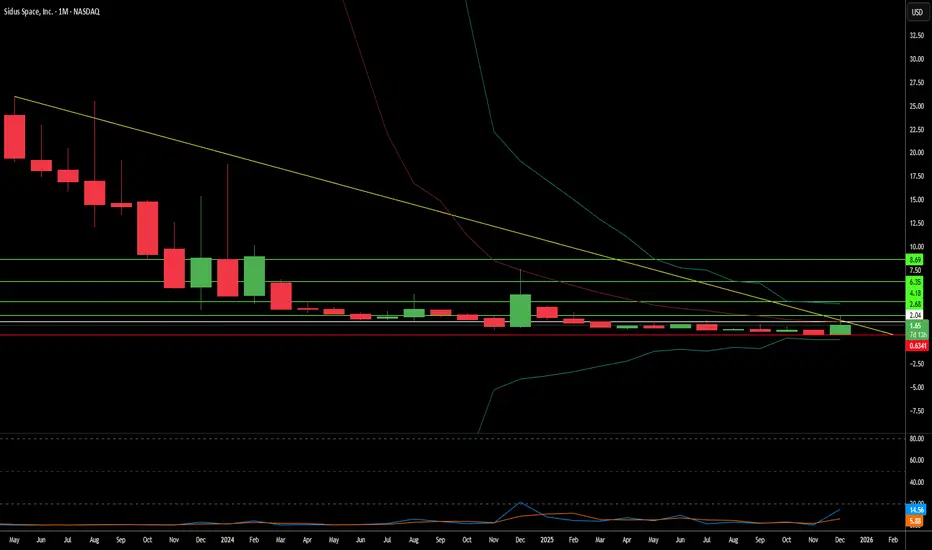
Can a $89M Company Execute on a $151B Defense Contract?Sidus Space (NASDAQ: SIDU) experienced a dramatic 97% stock surge following its selection for the Missile Defense Agency's SHIELD program, an Indefinite-Delivery/Indefinite-Quantity (IDIQ) contract with a staggering $151 billion ceiling. This represents an extraordinary valuation asymmetry—the contract ceiling is 1,696 times the company's current market capitalization of approximately $89 million. The SHIELD award validates Sidus's AI-enabled satellite technology as critical to America's "Golden Dome" missile defense strategy, positioning the micro-cap company alongside defense giants like Parsons Corporation to compete for task orders over the next decade.
The company's LizzieSat platform and FeatherEdge AI system address urgent national security needs, particularly the hypersonic missile threat from near-peer adversaries. By processing data at the edge in orbit rather than relaying it to ground stations, Sidus reduces the "kill chain" latency from minutes to milliseconds—a capability essential for tracking maneuvering hypersonic glide vehicles. The company's 3D-printed satellite manufacturing approach enables rapid 45-day production cycles, supporting the Pentagon's "Tactically Responsive Space" doctrine for quickly reconstituting destroyed assets in contested environments.
However, significant execution risks remain. Sidus currently generates under $5 million in annual revenue while burning approximately $6 million per quarter, with only $12.7 million in cash reserves as of Q3 2025. The company operates at negative gross margins and survives through dilutive equity raises. The SHIELD contract is not guaranteed revenue but rather a "hunting license" requiring successful competitive bidding on individual task orders. The path to profitability depends on winning sufficient task orders to achieve the scale needed to cover high fixed costs and transition to the high-margin Data-as-a-Service model. For investors, this represents a high-risk, asymmetric bet on whether a micro-cap can successfully navigate the "Valley of Death" to become a defense prime contractor.