Instruments for Global Trading: A Guide to Market Opportunities 1. Equities (Global Stocks)
Equities, commonly known as stocks or shares, represent ownership in publicly listed companies. Global equity trading allows investors to participate in companies across regions such as the US, Europe, Asia, and emerging markets. Major exchanges include the NYSE and NASDAQ (USA), LSE (UK), Euronext (Europe), NSE and BSE (India), and TSE (Japan).
Equities are used for long-term wealth creation, dividend income, and capital appreciation. Global equity exposure also enables portfolio diversification, reducing dependence on a single economy. However, equity trading involves risks related to market volatility, geopolitical developments, corporate earnings, and currency fluctuations.
2. Equity Indices
Equity indices track the performance of a group of stocks representing a market or sector. Examples include the S&P 500, Dow Jones, NASDAQ 100, FTSE 100, DAX, Nikkei 225, Hang Seng, and Nifty 50. These indices are widely traded globally through futures, options, ETFs, and CFDs.
Index trading is popular because it provides broad market exposure with lower company-specific risk. Traders use indices for hedging portfolios, macroeconomic bets, and trend-based strategies. Since indices respond strongly to economic data, interest rates, and global events, they are key instruments in global trading.
3. Foreign Exchange (Forex)
The forex market is the largest and most liquid financial market in the world, with daily turnover exceeding trillions of dollars. Forex instruments involve trading currency pairs such as EUR/USD, GBP/USD, USD/JPY, USD/INR, and EUR/JPY.
Forex trading is driven by interest rate differentials, central bank policies, inflation, trade balances, and geopolitical developments. It operates 24 hours a day, five days a week, making it highly accessible. Forex instruments are extensively used for speculation, international trade settlement, and currency risk hedging.
4. Commodities
Commodities are physical goods traded globally and categorized into energy, metals, and agricultural products. Key instruments include crude oil, natural gas, gold, silver, copper, aluminum, wheat, corn, coffee, and sugar.
Commodity trading plays a vital role in global markets because prices are influenced by supply-demand dynamics, weather conditions, geopolitical tensions, and economic growth. Commodities also act as inflation hedges and portfolio diversifiers. Gold, in particular, is considered a global safe-haven asset during times of uncertainty.
5. Bonds and Fixed Income Instruments
Bonds are debt instruments issued by governments, corporations, and institutions to raise capital. Global bond markets include US Treasuries, Eurobonds, Japanese Government Bonds (JGBs), and emerging market debt.
Fixed income instruments provide relatively stable returns and are crucial for income-focused investors and risk management. Bond prices are sensitive to interest rates, inflation expectations, and credit ratings. In global trading, bonds are used to balance portfolios, hedge equity risk, and express macroeconomic views.
6. Derivatives (Futures, Options, Swaps)
Derivatives derive their value from underlying assets such as equities, indices, commodities, currencies, or interest rates. The most common derivatives are futures and options, traded on exchanges like CME, ICE, Eurex, and NSE.
Futures are standardized contracts to buy or sell an asset at a future date.
Options give the right, but not the obligation, to buy or sell an asset.
Swaps involve exchanging cash flows, commonly used in interest rate and currency markets.
Derivatives are powerful instruments for hedging risk, enhancing returns, and leveraging capital, but they also carry higher complexity and risk.
7. Exchange-Traded Funds (ETFs)
ETFs are investment funds traded on exchanges that track indices, sectors, commodities, or themes. Examples include SPY (S&P 500), QQQ (NASDAQ 100), Gold ETFs, and emerging market ETFs.
ETFs combine diversification with liquidity and transparency, making them popular for global investors. They allow easy access to international markets without directly buying foreign securities. ETFs are widely used for asset allocation, hedging, and long-term investing.
8. Contracts for Difference (CFDs)
CFDs are leveraged instruments that allow traders to speculate on price movements without owning the underlying asset. They are commonly used to trade global stocks, indices, commodities, and forex.
CFDs offer flexibility and low capital requirements, but they involve high risk due to leverage and are not permitted in some jurisdictions. They are primarily used by active traders for short-term strategies.
9. Cryptocurrencies and Digital Assets
Cryptocurrencies such as Bitcoin, Ethereum, and stablecoins have emerged as new global trading instruments. They trade 24/7 across decentralized exchanges and centralized platforms worldwide.
Crypto instruments include spot trading, futures, options, and staking products. These assets are influenced by technology adoption, regulation, market sentiment, and macroeconomic trends. While offering high growth potential, cryptocurrencies are highly volatile and speculative.
10. Interest Rate and Money Market Instruments
Instruments such as Treasury bills, commercial papers, repos, and interest rate futures play a crucial role in global finance. They reflect central bank policies and liquidity conditions.
Traders and institutions use these instruments to manage short-term funding needs, hedge interest rate risk, and speculate on policy changes by central banks like the Federal Reserve, ECB, and RBI.
11. Alternative and Structured Instruments
Global markets also include instruments like real estate investment trusts (REITs), private equity funds, hedge funds, and structured products. These instruments provide exposure to non-traditional assets and customized risk-return profiles.
Although less liquid, they are used by sophisticated investors to enhance diversification and returns.
Conclusion
Instruments for global trading form a diverse and dynamic universe that caters to different objectives—growth, income, hedging, speculation, and diversification. From equities and forex to derivatives and digital assets, each instrument plays a unique role in the global financial system. Successful global trading requires not only knowledge of these instruments but also an understanding of macroeconomics, risk management, and regulatory environments. As markets continue to globalize and technology advances, the range and accessibility of trading instruments will only expand, offering new opportunities and challenges for participants worldwide.
Wormholeanalysis
Global IPO Trend and SME ListingIPO activity worldwide has been volatile, shaped by economic uncertainty, geopolitical events, and shifting investor sentiment. After periods of strong listing activity in 2021–2024, the global market experienced a slowdown in 2025. According to broad market data, total global IPO volumes declined in 2025 due to rising interest rates, heightened volatility, and trade uncertainties, marking the lowest fundraising totals in nearly a decade at that point.
However, this broad contraction masks regional differentiation:
Asia-Pacific markets, particularly China and India, showed resilience and even growth, buoyed by supportive policy measures and a strong pipeline of listings.
India, for instance, led global IPO volumes in November 2025, with strong capital mobilization that surpassed traditional markets like the United States.
Hong Kong demonstrated a strong rebound in the first half of 2025, reclaiming momentum as a premier listing hub supported by Chinese enterprises.
The broader IPO market recovery in late 2025 was also noted in quarterly and annual reports, with significant rebounds in the number of deals and capital raised, driven by renewed corporate confidence and improving market conditions.
Key macro drivers for the IPO environment include:
Monetary policy shifts — Higher interest rates had initially dampened IPO appetite but later adjustments helped restore some confidence.
Trade and geopolitical tensions — Tariff uncertainties and policy unpredictability impacted investor risk tolerance globally.
Private market maturity — The rise of robust private equity and venture capital ecosystems means that many startups delay public listings, focusing first on private growth funding.
Overall, global IPOs have entered a phase of selective revival, with market participants focusing on quality and sustainable growth narratives rather than sheer volume.
2. The Rise of SME Listings
In parallel to broad IPO trends, the SME listing segment has flourished, particularly in markets like India. By introducing specialized market platforms and streamlined regulations, exchanges have enabled smaller companies to access public equity capital more effectively.
2.1 SME Market Growth
In 2024 and 2025, SME IPO activity soared, with hundreds of companies listing on dedicated SME exchanges such as NSE Emerge and BSE SME in India. These platforms have helped SME listings grow substantially year-on-year.
Data shows that SME IPOs raised significant capital, often breaking previous records for funds mobilized. In 2024, SME listings raised over ₹9,000 crore, while in 2025 cumulative fundraising approached levels rivaling the prior record year.
Gujarat alone saw 57 SME listings raising ₹2,212 crore in 2025, indicating robust regional engagement from smaller firms.
This trend reflects growing entrepreneurial momentum, where smaller businesses increasingly view public listing as a viable route for expansion, governance enhancement, and investor visibility.
2.2 Drivers of SME IPO Adoption
Several factors have contributed to the SME IPO boom:
Regulatory Support and Market Access: Exchanges have simplified listing norms and offered dedicated SME platforms with bespoke requirements, lowering barriers to entry.
Investor Appetite: Retail and institutional investors have shown strong interest, often leading to oversubscription and strong early trading performance — though this has varied over time.
Economic Importance of SMEs: SMEs account for a large share of employment and economic activity globally, making them attractive vehicles for capital formation and long-term growth.
Strategic Expansion Needs: Many SME issuers see IPO proceeds as funds for expansion, innovation, and market diversification.
Together, these factors have reshaped how SMEs approach capital market access, transitioning many from purely private financing to broader public participation.
3. Benefits and Opportunities in SME Listings
For SMEs and the markets, the benefits of active SME IPO segments are substantial:
3.1 Growth Capital and Expansion
Raising capital publicly gives SMEs the financial horsepower to scale operations, invest in technology, expand into new geographies, and compete more effectively. Public listings open access to a wider investor base, including institutional pools.
3.2 Enhanced Visibility and Credibility
Being listed elevates a company’s profile, signaling regulatory compliance, transparency, and operational maturity. This can attract customers, suppliers, strategic partners, and new talent — all of which contribute to growth potential.
3.3 Liquidity for Shareholders
Public markets provide liquidity, creating exit routes for early investors and founders. Equity trading also makes it easier to use shares for strategic acquisitions or employee incentives.
4. Risks and Challenges Facing SMEs and Investors
Despite the upswing in SME listings, the segment is not without challenges:
4.1 Market Volatility and Performance Risks
Many SME IPOs have shown mixed post-listing performance. In 2025, average listing gains declined compared to the boom in prior years, reflecting caution amid broader market volatility.
Some SME listings have traded below their issue prices, leading to investor dissatisfaction and demonstrating the risks inherent in smaller, less liquid stocks.
4.2 Liquidity Constraints
SMEs often lack the trading liquidity of larger listings, making it harder for investors to enter and exit positions without significant price impact. This can deter institutional interest and amplify price swings.
4.3 Regulatory and Compliance Burdens
While dedicated SME platforms have eased listing requirements, post-IPO compliance — including disclosures, governance norms, and reporting obligations — can strain smaller firms with limited resources.
4.4 Oversubscription and Retail Dynamics
Extremely high retail oversubscription rates have occasionally led to allocation challenges, where individual investors secure minimal shares despite strong demand.
5. The Future Outlook: Integration and Innovation
Looking ahead, global IPO markets and SME listings are increasingly intertwined. While traditional IPOs remain concentrated among large corporations seeking substantial capital, SMEs are carving out a parallel growth pathway that broadens market participation and deepens equity markets:
Cross-border listings and dual IPOs may become more common as SMEs with international ambitions seek global capital pools.
Technology and fintech innovation could further streamline SME access and trading liquidity, attracting new segments of investors.
Regulatory frameworks will likely continue evolving to balance growth incentives with investor protection, ensuring a sustainable SME IPO ecosystem.
The Global Debt Crisis: Causes, Consequences, and the Road AheadThe global debt crisis has emerged as one of the most pressing economic challenges of the 21st century. Governments, corporations, and households across the world are burdened with unprecedented levels of debt, raising concerns about financial stability, economic growth, and social welfare. While debt can be a powerful tool to stimulate growth and manage economic cycles, excessive and poorly managed borrowing has pushed many countries to the brink of crisis. Understanding the origins, impacts, and possible solutions to the global debt crisis is essential for policymakers, investors, and citizens alike.
Understanding the Global Debt Crisis
The global debt crisis refers to a situation in which debt levels—particularly sovereign (government) debt—rise to unsustainable levels, making it difficult for borrowers to meet their repayment obligations without severe economic or social consequences. According to international financial institutions, global debt has crossed historic highs, driven by expansionary fiscal policies, low interest rates, and repeated economic shocks. This debt is not limited to developing economies; advanced nations also face mounting liabilities, often hidden in pension obligations, healthcare costs, and contingent guarantees.
Key Causes of the Global Debt Crisis
One of the primary drivers of the global debt crisis has been prolonged periods of low interest rates. Following the 2008 global financial crisis, central banks adopted ultra-loose monetary policies to stimulate growth. While this made borrowing cheaper and encouraged investment, it also incentivized excessive debt accumulation by governments and corporations.
Another major cause is repeated global shocks. Events such as the COVID-19 pandemic forced governments to increase spending dramatically to support healthcare systems, protect jobs, and stabilize economies. Emergency stimulus packages, though necessary, significantly expanded fiscal deficits. Similarly, geopolitical tensions, supply chain disruptions, and energy crises have added further strain on public finances.
Structural economic weaknesses also play a critical role, especially in developing and emerging economies. Many countries rely heavily on external borrowing denominated in foreign currencies. When local currencies depreciate, debt servicing costs rise sharply, increasing the risk of default. Weak tax systems, inefficient public spending, corruption, and poor governance further exacerbate debt problems.
Developed vs. Developing Economies: Different Challenges
While the global debt crisis affects all regions, its impact differs between developed and developing economies. Advanced economies such as the United States, Japan, and several European nations carry high debt-to-GDP ratios but often benefit from strong institutions, credible central banks, and the ability to borrow in their own currencies. This provides them with greater flexibility, though it does not eliminate long-term risks.
In contrast, developing countries face far more severe consequences. Limited access to capital markets, dependence on commodity exports, and vulnerability to external shocks make debt sustainability a constant challenge. Rising global interest rates, especially in the United States and Europe, have increased borrowing costs and triggered capital outflows from emerging markets. As a result, many low-income countries are now at high risk of debt distress or have already defaulted.
Economic and Social Consequences
The global debt crisis has wide-ranging economic implications. High debt levels constrain government spending, limiting investment in critical areas such as infrastructure, education, and healthcare. As more revenue is diverted toward interest payments, long-term growth prospects weaken.
Debt crises often lead to austerity measures, including spending cuts and tax increases, which can slow economic growth and increase unemployment. These policies disproportionately affect vulnerable populations, widening income inequality and fueling social unrest. In extreme cases, debt crises can destabilize political systems, leading to protests, government collapses, or policy paralysis.
Financial markets are also impacted. Sovereign debt stress can trigger banking crises, as banks often hold large amounts of government bonds. A loss of confidence in public finances can lead to higher borrowing costs, currency depreciation, and inflation, creating a vicious cycle that is difficult to escape.
The Role of Global Financial Institutions
International organizations such as the International Monetary Fund (IMF), World Bank, and regional development banks play a crucial role in managing the global debt crisis. They provide emergency funding, technical assistance, and policy guidance to countries facing financial distress. Debt restructuring initiatives, such as the G20’s Common Framework, aim to coordinate creditors and provide relief to heavily indebted nations.
However, these mechanisms face challenges. The growing role of private creditors and non-traditional lenders has made debt restructuring more complex and time-consuming. Additionally, IMF programs are often criticized for imposing strict conditions that may worsen social outcomes in the short term.
Long-Term Risks and Future Outlook
If left unaddressed, the global debt crisis poses serious long-term risks. High debt levels reduce governments’ ability to respond to future crises, whether economic, environmental, or geopolitical. Climate change, in particular, threatens to increase fiscal pressures as countries invest in adaptation, mitigation, and disaster recovery.
Rising interest rates globally could further aggravate the situation by increasing debt servicing costs. Countries with short-term or variable-rate debt are especially vulnerable. A wave of sovereign defaults could undermine global financial stability and slow international trade and investment.
Potential Solutions and Policy Responses
Addressing the global debt crisis requires a multi-pronged approach. Fiscal discipline and improved public financial management are essential to ensure that borrowing is used productively. Strengthening tax systems, reducing wasteful spending, and enhancing transparency can improve debt sustainability.
Debt restructuring and relief are crucial for countries already in distress. Coordinated efforts among governments, multilateral institutions, and private creditors can provide breathing space for economic recovery. At the same time, policies that promote sustainable economic growth—such as investment in human capital, technology, and green infrastructure—can help countries grow out of debt.
On a global level, reforms to the international financial architecture may be needed to better manage future crises. This includes improved debt monitoring, fairer restructuring mechanisms, and greater support for vulnerable economies.
Conclusion
The global debt crisis is not a single event but a complex and evolving challenge shaped by economic policies, global shocks, and structural weaknesses. While debt itself is not inherently harmful, excessive and poorly managed borrowing threatens economic stability and social progress. Tackling this crisis will require coordinated global action, responsible policymaking, and a long-term commitment to sustainable growth. The choices made today will determine whether global debt becomes a manageable tool for development or a persistent threat to the world economy.
Mechanisms, Opportunities, and Risks in Global MarketsCommodity Futures Trading:
Commodity futures trading is a vital component of the global financial system, serving as a bridge between producers, consumers, traders, and investors. At its core, commodity futures trading involves buying or selling standardized contracts that obligate the parties to transact a specific quantity of a commodity at a predetermined price on a future date. These commodities typically include agricultural products (such as wheat, corn, cotton), energy resources (crude oil, natural gas), metals (gold, silver, copper), and increasingly, environmental commodities. Over time, commodity futures markets have evolved from simple risk-management tools for farmers and merchants into sophisticated, globally interconnected platforms attracting institutional and retail participants alike.
Historical Background and Evolution
The origins of commodity futures trading can be traced back several centuries, when agricultural communities sought ways to manage price uncertainty caused by weather, harvest cycles, and transportation challenges. Early forward contracts allowed farmers and buyers to lock in prices in advance. Over time, these informal agreements became standardized and institutionalized through organized exchanges. Modern commodity futures exchanges introduced clearinghouses, margin systems, and standardized contract specifications, greatly reducing counterparty risk and enhancing market transparency.
Today, major global exchanges facilitate commodity futures trading, enabling participants from around the world to hedge risks or speculate on price movements. Technological advancements, electronic trading platforms, and real-time data have further increased market efficiency and accessibility.
How Commodity Futures Trading Works
A commodity futures contract specifies key details: the underlying commodity, quantity, quality standards, delivery location, and delivery month. Traders can take either a long position (agreeing to buy the commodity in the future) or a short position (agreeing to sell it). While contracts include delivery provisions, the vast majority are offset before expiration, meaning traders close their positions rather than taking or making physical delivery.
Margin plays a central role in futures trading. Instead of paying the full contract value, traders deposit an initial margin, a small percentage of the total contract value, as collateral. Profits and losses are settled daily through a process called mark-to-market, which adjusts account balances based on daily price movements. This leverage magnifies both potential gains and losses, making risk management essential.
Participants in Commodity Futures Markets
Commodity futures markets bring together a diverse set of participants, each with distinct motivations:
Hedgers
Hedgers use futures contracts to protect against adverse price movements. Farmers hedge against falling crop prices, while manufacturers hedge against rising raw material costs. For hedgers, futures trading is primarily a risk-management tool rather than a profit-seeking activity.
Speculators
Speculators aim to profit from price fluctuations. They assume risk in anticipation of favorable price movements, thereby providing liquidity to the market. Speculators range from individual traders to hedge funds and proprietary trading firms.
Arbitrageurs
Arbitrageurs exploit price discrepancies between related markets, such as spot and futures prices or across different exchanges. Their activities help align prices and improve overall market efficiency.
Key Drivers of Commodity Futures Prices
Commodity futures prices are influenced by a complex interplay of factors:
Supply and Demand Dynamics: Weather conditions, crop yields, mining output, and energy production levels directly affect supply, while economic growth and industrial activity shape demand.
Macroeconomic Factors: Inflation expectations, interest rates, currency movements, and geopolitical events can significantly impact commodity prices.
Seasonality: Many agricultural commodities exhibit seasonal price patterns linked to planting and harvesting cycles.
Speculative Activity and Market Sentiment: Trader expectations and positioning can amplify price movements, especially during periods of uncertainty.
Benefits of Commodity Futures Trading
Commodity futures trading offers several important benefits to both the real economy and financial markets:
Price Discovery: Futures markets aggregate information from a wide range of participants, helping establish transparent and forward-looking price benchmarks.
Risk Management: By allowing hedging against price volatility, futures markets stabilize incomes for producers and costs for consumers.
Liquidity and Efficiency: Active trading ensures that participants can enter and exit positions with relative ease, reducing transaction costs.
Portfolio Diversification: Commodities often exhibit low or negative correlation with traditional asset classes such as equities and bonds, making them attractive for diversification.
Risks and Challenges
Despite its advantages, commodity futures trading involves significant risks:
Price Volatility: Commodity prices can be highly volatile due to unpredictable factors like weather shocks, political conflicts, or sudden policy changes.
Leverage Risk: The use of margin means small price movements can lead to large losses, potentially exceeding initial investments.
Market Risk and Liquidity Risk: During periods of stress, liquidity may dry up, increasing bid-ask spreads and execution risk.
Regulatory and Operational Risks: Changes in regulations, position limits, or exchange rules can affect trading strategies and market dynamics.
Effective risk management—through stop-loss orders, position sizing, diversification, and disciplined strategies—is therefore critical for market participants.
Role of Regulation and Exchanges
Regulation plays a crucial role in maintaining the integrity of commodity futures markets. Exchanges and regulators establish rules governing contract specifications, margin requirements, position limits, and reporting standards. These measures aim to prevent excessive speculation, market manipulation, and systemic risk, while ensuring fair and orderly trading.
Clearinghouses act as intermediaries between buyers and sellers, guaranteeing contract performance and reducing counterparty risk. This infrastructure is fundamental to the stability and credibility of futures markets.
Commodity Futures Trading in the Modern Context
In recent years, commodity futures trading has expanded beyond traditional participants. Financialization of commodities has attracted institutional investors seeking inflation protection and diversification. At the same time, algorithmic and high-frequency trading have increased market speed and complexity. Environmental concerns have also led to the emergence of new commodity contracts linked to carbon credits and renewable energy inputs.
These developments reflect the dynamic nature of commodity futures markets and their growing integration with global financial systems.
Conclusion
Commodity futures trading is far more than speculative activity; it is a cornerstone of global trade, risk management, and price discovery. By enabling producers, consumers, and investors to manage uncertainty and express market views, futures markets contribute to economic stability and efficiency. However, the leverage and volatility inherent in these markets demand careful understanding, disciplined strategies, and robust risk controls. As global supply chains evolve and new economic and environmental challenges emerge, commodity futures trading will continue to play a pivotal role in shaping the future of global markets.
Role of the G7 and G20 in Shaping the Global MarketThe global market today is deeply interconnected, influenced not only by corporations and financial institutions but also by international groupings of major economies. Among the most influential of these are the Group of Seven (G7) and the Group of Twenty (G20). Though informal in structure and lacking binding authority, both forums play a crucial role in guiding global economic stability, trade flows, financial governance, and crisis management. Their collective decisions, policy coordination, and strategic dialogue significantly shape the direction of the world economy.
Understanding the G7 and G20
The G7 consists of seven advanced economies: the United States, Canada, the United Kingdom, France, Germany, Italy, and Japan, along with the European Union as a non-enumerated member. Formed in the mid-1970s in response to global economic turmoil, the G7 primarily represents developed nations with strong financial systems and high-income economies.
The G20, established in 1999 and elevated to leaders’ level after the 2008 global financial crisis, includes 19 countries plus the European Union. Unlike the G7, the G20 brings together both developed and emerging economies such as China, India, Brazil, South Africa, Indonesia, and Saudi Arabia. Collectively, the G20 accounts for around 85% of global GDP, 75% of world trade, and about two-thirds of the global population, making it a far more representative platform of the world economy.
Economic Coordination and Policy Stability
One of the most important roles of the G7 and G20 in the world market is economic policy coordination. In an interconnected global system, uncoordinated policies—such as aggressive interest rate hikes, trade barriers, or currency devaluations—can trigger volatility across borders.
The G7 often acts as a policy anchor among advanced economies. Through regular meetings of finance ministers and central bank governors, G7 countries coordinate on monetary policy outlooks, fiscal discipline, inflation control, and financial regulation. This coordination helps stabilize global capital markets and investor sentiment.
The G20 extends this coordination to a broader set of economies. By bringing emerging markets to the table, the G20 helps reduce policy mismatches between developed and developing nations. This inclusive dialogue is critical for managing global liquidity, capital flows, debt sustainability, and macroeconomic imbalances.
Crisis Management and Global Financial Stability
Both the G7 and G20 have played decisive roles during periods of global economic crisis. The 2008 global financial crisis marked a turning point for the G20, transforming it into the premier forum for international economic cooperation. G20 leaders coordinated massive fiscal stimulus packages, supported banking systems, and strengthened international financial institutions such as the International Monetary Fund (IMF).
The G7, meanwhile, has often acted more swiftly due to its smaller size and shared economic structures. During crises such as the COVID-19 pandemic, G7 nations coordinated emergency responses, vaccine funding, and economic relief measures that helped stabilize financial markets and global supply chains.
By promoting transparency, stress testing of banks, and stronger capital requirements, both groups contribute to reducing systemic risks and preventing future crises that could disrupt the global market.
Trade, Supply Chains, and Globalization
Global trade and supply chains are central to world markets, and the G7 and G20 play a key role in shaping trade norms. While neither group is a formal trade organization, their statements and commitments influence institutions like the World Trade Organization (WTO).
The G7 traditionally supports rules-based trade, open markets, and fair competition. It often addresses issues such as intellectual property protection, market distortions, and unfair subsidies. These discussions influence global trade policies and multinational corporate strategies.
The G20 focuses more on inclusive globalization, recognizing the needs of developing countries. It addresses supply chain resilience, trade financing for small economies, and reducing barriers that limit developing nations’ participation in global trade. In recent years, both forums have emphasized diversifying supply chains to reduce overdependence on single regions, a shift that is reshaping global manufacturing and logistics networks.
Financial Regulation and Capital Markets
The stability of global financial markets depends heavily on regulation and oversight. The G7 and G20 have been instrumental in shaping international financial standards. Through bodies such as the Financial Stability Board (FSB) and the Basel Committee on Banking Supervision, they promote stronger banking regulations, risk management practices, and transparency.
These reforms affect how banks lend, how capital flows across borders, and how investors assess risk. As a result, decisions taken within G7 and G20 frameworks directly influence stock markets, bond yields, currency movements, and investment patterns worldwide.
For emerging markets, G20 discussions on capital flow management and financial inclusion are particularly important, as they help balance growth with stability in volatile market conditions.
Development, Debt Relief, and Inclusive Growth
Another major contribution of the G20 is its focus on development and debt sustainability. Many low- and middle-income countries face rising debt burdens that threaten global economic stability. The G20 has led initiatives such as the Debt Service Suspension Initiative (DSSI) and the Common Framework for Debt Treatments, aimed at providing relief and restructuring options for distressed economies.
By addressing development financing, infrastructure investment, and financial inclusion, the G20 supports long-term global market expansion. Stronger developing economies create new consumers, producers, and investment opportunities, benefiting the global market as a whole.
The G7 complements this role through development aid, climate finance, and support for global institutions that promote economic growth and poverty reduction.
Climate Change and Sustainable Finance
In recent years, the role of the G7 and G20 has expanded beyond traditional economics to include climate change and sustainability, which now significantly influence global markets. Both forums promote green finance, renewable energy investment, and carbon reduction strategies.
These initiatives shape capital allocation by encouraging investors and corporations to prioritize sustainable projects. As a result, global markets are witnessing a rise in green bonds, ESG (Environmental, Social, and Governance) investing, and clean energy industries—trends strongly supported by G7 and G20 commitments.
Conclusion
The G7 and G20 play a pivotal role in shaping the global market by providing platforms for dialogue, coordination, and collective action among the world’s most influential economies. While the G7 offers leadership among advanced nations, the G20 brings inclusivity and broader representation, reflecting the realities of a multipolar global economy.
Through policy coordination, crisis management, trade discussions, financial regulation, development initiatives, and sustainability efforts, these groups help maintain global economic stability and guide long-term market trends. Although their decisions are not legally binding, their influence on investor confidence, government policies, and international institutions ensures that the G7 and G20 remain central pillars of the modern global market system.
Comprehensive Forex Market AnalysisStructure, Drivers, Strategies, and Future Outlook
The foreign exchange (forex) market is the largest and most liquid financial market in the world, with daily trading volumes exceeding trillions of dollars. It operates as a decentralized global marketplace where currencies are bought and sold, enabling international trade, investment, tourism, and capital flows. Forex market analysis is the systematic study of factors that influence currency price movements, helping traders, investors, corporations, and policymakers make informed decisions. This analysis combines economic theory, market psychology, technical tools, and geopolitical understanding to interpret currency behavior in a constantly evolving environment.
Structure and Nature of the Forex Market
The forex market operates 24 hours a day, five days a week, spanning major financial centers such as London, New York, Tokyo, and Sydney. Unlike centralized exchanges, forex trading occurs over-the-counter (OTC) through a network of banks, financial institutions, brokers, corporations, and individual traders. Major participants include central banks, commercial banks, hedge funds, multinational corporations, and retail traders. Currency pairs are categorized into major pairs (such as EUR/USD, USD/JPY), minor pairs, and exotic pairs involving emerging market currencies. Liquidity, volatility, and spreads vary significantly across these categories, influencing trading strategies and risk levels.
Fundamental Analysis in the Forex Market
Fundamental analysis focuses on macroeconomic, political, and social factors that affect a country’s currency value. Key economic indicators include interest rates, inflation, employment data, GDP growth, trade balances, and fiscal policy. Central banks play a crucial role, as their monetary policy decisions directly influence currency strength. For example, higher interest rates tend to attract foreign capital, increasing demand for the currency. Conversely, political instability, rising debt levels, or weak economic data can reduce investor confidence and weaken a currency. Forex analysts continuously assess economic calendars, central bank statements, and global news to anticipate currency trends.
Technical Analysis and Price Behavior
Technical analysis examines historical price data to forecast future movements. It is based on the belief that market prices reflect all available information and that patterns tend to repeat over time. Traders use charts, trendlines, support and resistance levels, moving averages, oscillators, and indicators such as RSI, MACD, and Bollinger Bands. Technical analysis is particularly popular in forex due to the market’s high liquidity and frequent price fluctuations. Short-term traders rely heavily on technical signals, while long-term traders often combine them with fundamental insights to confirm trade setups.
Sentiment Analysis and Market Psychology
Market sentiment reflects the overall attitude of traders toward a particular currency or the market as a whole. Sentiment analysis attempts to gauge whether traders are predominantly bullish or bearish. Tools such as commitment of traders (COT) reports, positioning data, risk-on/risk-off indicators, and volatility indices help analysts understand crowd behavior. Emotional factors like fear, greed, and herd mentality can cause prices to overshoot or deviate from fundamental values. Understanding sentiment allows traders to identify potential reversals and avoid common psychological traps.
Impact of Geopolitical and Global Events
Geopolitical developments significantly influence the forex market. Elections, wars, trade disputes, sanctions, and diplomatic relations can trigger sharp currency movements. Safe-haven currencies such as the US dollar, Swiss franc, and Japanese yen often strengthen during periods of global uncertainty. Conversely, risk-sensitive currencies like the Australian dollar or emerging market currencies may weaken. Forex market analysis must account for unexpected events, as they can override technical and fundamental signals in the short term.
Role of Emerging Markets and Global Capital Flows
Emerging market currencies are increasingly important in global forex analysis. Rapid economic growth, demographic advantages, and expanding trade links attract foreign investment, but these currencies are also more vulnerable to capital outflows, inflation, and political risks. Changes in global interest rates, especially in developed economies, can lead to sudden shifts in capital flows, impacting exchange rates. Understanding cross-border investment patterns and reveals how global liquidity conditions shape currency trends.
Risk Management and Volatility Considerations
Effective forex market analysis goes beyond predicting direction; it emphasizes risk management. Currency markets can be highly volatile, particularly during major economic releases or crises. Traders use stop-loss orders, position sizing, diversification, and hedging strategies to manage risk. Volatility analysis helps determine optimal entry and exit points, as well as appropriate leverage levels. Without disciplined risk control, even accurate analysis can result in losses.
Technology and Data in Modern Forex Analysis
Advancements in technology have transformed forex market analysis. Algorithmic trading, artificial intelligence, and big data analytics enable faster execution and deeper insights. Real-time data feeds, advanced charting platforms, and automated strategies allow traders to analyze multiple currency pairs simultaneously. However, increased automation also intensifies competition, making it essential for analysts to continuously refine their models and adapt to changing market dynamics.
Future Outlook of Forex Market Analysis
The future of forex market analysis will likely involve greater integration of quantitative models, machine learning, and alternative data sources such as social media sentiment and satellite data. Regulatory changes, digital currencies, and evolving global economic structures will also influence currency markets. Despite technological progress, human judgment remains vital, as interpretation of economic trends and geopolitical risks requires contextual understanding that models alone cannot fully replicate.
Conclusion
Forex market analysis is a multifaceted discipline that blends fundamental economics, technical tools, sentiment assessment, and global awareness. Its primary goal is not certainty, but probability—identifying high-quality opportunities while managing risk effectively. As the global economy becomes more interconnected, the importance of robust and adaptable forex analysis continues to grow. For traders and investors alike, mastering forex market analysis is essential for navigating one of the most dynamic and influential markets in the world.
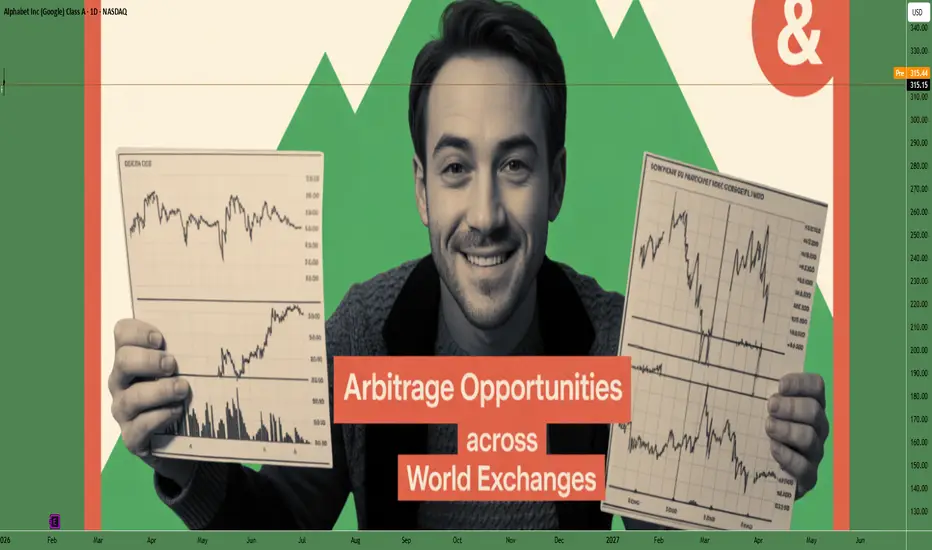
Arbitrage Opportunities Across World ExchangesUnderstanding Global Arbitrage
At its core, arbitrage is the practice of buying an asset in one market where it is undervalued and simultaneously selling it in another market where it is overvalued, locking in a risk-free or low-risk profit. When this activity occurs across different countries or exchanges, it is referred to as global or cross-border arbitrage.
World exchanges differ due to:
Time zone variations
Currency denominations
Regulatory frameworks
Market liquidity and participant behavior
Information dissemination speed
These differences create temporary inefficiencies that arbitrageurs seek to exploit.
Key Types of Arbitrage Across World Exchanges
1. Equity Cross-Listing Arbitrage
Many large corporations are listed on multiple exchanges across the world. Examples include companies listed both in their home market and overseas through American Depositary Receipts (ADRs) or Global Depositary Receipts (GDRs).
Price discrepancies can occur due to:
Exchange rate movements
Different demand-supply dynamics
Local investor sentiment
Arbitrageurs buy shares where they are cheaper and sell where they are more expensive, adjusting for currency conversion and transaction costs.
2. Currency (Forex) Arbitrage
The foreign exchange market is the largest global market and operates 24 hours a day. Arbitrage opportunities arise when exchange rates between three or more currencies are misaligned, commonly known as triangular arbitrage.
For example:
USD → EUR
EUR → JPY
JPY → USD
Even small pricing mismatches can be profitable when executed at large volumes and high speed. However, such opportunities are extremely short-lived due to intense competition and automation.
3. Interest Rate Arbitrage
Interest rates vary across countries due to differing monetary policies, inflation expectations, and economic conditions. Arbitrageurs exploit these differences through covered and uncovered interest rate arbitrage.
Covered interest arbitrage uses forward contracts to hedge currency risk.
Uncovered interest arbitrage takes exposure to currency movements in pursuit of higher yields.
Global bond markets, especially government securities, play a major role in these strategies.
4. Commodity Arbitrage
Commodities such as gold, crude oil, silver, and agricultural products trade on multiple global exchanges. Price differences may arise due to:
Transportation and storage costs
Regional supply-demand imbalances
Taxation and import-export regulations
For instance, gold prices may differ between London, New York, Dubai, and Shanghai markets. Arbitrageurs factor in logistics and financing costs before executing trades.
5. Derivatives and Futures Arbitrage
Futures and options linked to the same underlying asset often trade on multiple international exchanges. Arbitrage opportunities arise when futures prices deviate from their fair value based on spot prices, interest rates, dividends, and time to expiry.
Common strategies include:
Cash-and-carry arbitrage
Reverse cash-and-carry arbitrage
Index futures arbitrage across regions
These trades are popular among institutional players due to their scalability.
6. ETF and Index Arbitrage
Exchange-Traded Funds (ETFs) track indices that may include global securities. When ETF prices diverge from their Net Asset Value (NAV), arbitrageurs step in to profit from the difference.
Global index arbitrage also occurs when the same index futures trade in different time zones, such as Asian, European, and US market hours, leading to temporary mispricing.
7. Cryptocurrency Arbitrage
Digital assets trade on hundreds of exchanges worldwide, often with significant price differences due to:
Capital controls
Liquidity fragmentation
Exchange-specific demand
Regulatory restrictions
Crypto arbitrage can be:
Spatial (between exchanges)
Triangular (within one exchange)
Cross-border (fiat on-ramps and off-ramps)
While highly attractive, these opportunities carry operational, regulatory, and counterparty risks.
Drivers of Arbitrage Opportunities
Several factors contribute to the persistence of arbitrage opportunities across world exchanges:
Market Fragmentation – Different exchanges operate under unique rules and participant structures.
Information Asymmetry – News travels unevenly across regions and time zones.
Currency Volatility – Exchange rate movements distort price parity.
Regulatory Barriers – Capital controls, taxes, and settlement restrictions prevent instant alignment.
Liquidity Differences – Thinly traded markets adjust prices more slowly.
Role of Technology in Global Arbitrage
Modern arbitrage is dominated by technology-driven participants. High-frequency trading (HFT) firms and institutional desks use:
Ultra-low-latency networks
Algorithmic trading systems
Co-location near exchanges
Real-time global data feeds
As a result, simple arbitrage opportunities vanish within milliseconds, leaving retail traders with limited access to pure risk-free arbitrage.
Risks and Constraints
Despite its theoretical risk-free nature, global arbitrage involves several practical risks:
Execution risk due to latency
Currency conversion and hedging costs
Regulatory and compliance issues
Settlement and counterparty risk
Sudden liquidity evaporation
In stressed market conditions, arbitrage can fail, leading to losses instead of profits.
Impact on Global Financial Markets
Arbitrage plays a vital role in:
Enhancing price discovery
Improving market efficiency
Reducing regional price disparities
Integrating global financial systems
Without arbitrage, markets would remain fragmented, inefficient, and prone to persistent mispricing.
Conclusion
Arbitrage opportunities across world exchanges are a natural outcome of global market diversity. While advancements in technology and regulation have reduced the frequency and size of these opportunities, they have not eliminated them. Instead, arbitrage has become more complex, capital-intensive, and speed-dependent.
For institutional players, global arbitrage remains a cornerstone strategy. For individual investors, understanding arbitrage provides valuable insight into how global markets function and why prices converge over time. Ultimately, arbitrage is not just a profit-seeking activity—it is a stabilizing force that keeps the world’s financial markets connected, efficient, and aligned.
Comprehensive Financial Market CoverageScope, Importance, and Modern Dynamics
Financial market coverage refers to the systematic analysis, tracking, interpretation, and communication of developments across global and domestic financial markets. It includes equities, bonds, commodities, currencies, derivatives, alternative assets, and emerging financial instruments. In today’s interconnected and fast-moving economic environment, effective financial market coverage plays a critical role in informing investors, policymakers, institutions, and the general public. It bridges the gap between complex market activity and practical decision-making by transforming raw data into actionable insights.
Understanding Financial Market Coverage
At its core, financial market coverage involves monitoring market movements, economic indicators, corporate actions, policy changes, and geopolitical events that influence asset prices. It spans real-time news reporting, in-depth research, technical and fundamental analysis, macroeconomic commentary, and long-term thematic insights. Coverage may be delivered through financial news platforms, brokerage research reports, institutional notes, data terminals, social media channels, and independent analysts.
Financial market coverage is not limited to price reporting. It also explains why markets move, how different assets are interconnected, and what potential future scenarios may unfold. This interpretive layer is what differentiates meaningful coverage from mere information dissemination.
Key Segments of Financial Market Coverage
Equity Markets
Equity market coverage focuses on stock indices, individual companies, sectors, earnings results, valuations, corporate governance, and mergers and acquisitions. Analysts assess both fundamentals (revenues, profits, balance sheets) and technical factors (trends, volume, momentum). Equity coverage is essential for retail investors, portfolio managers, and traders seeking alpha or long-term growth.
Fixed Income and Debt Markets
Bond market coverage tracks government securities, corporate bonds, yield curves, credit spreads, and interest rate expectations. Since debt markets are closely tied to monetary policy, inflation, and fiscal conditions, their coverage is crucial for understanding economic health. Bond market signals often precede equity market trends, making this segment highly influential.
Currency and Forex Markets
Currency market coverage analyzes exchange rate movements driven by interest rate differentials, trade balances, capital flows, and geopolitical risks. Forex markets operate 24/5 and reflect real-time global sentiment. Coverage helps businesses manage currency risk and traders identify macro-driven opportunities.
Commodities and Real Assets
This segment includes energy (oil, gas), metals (gold, copper), agricultural products, and increasingly, carbon and environmental credits. Commodity coverage links supply-demand dynamics, weather patterns, geopolitical tensions, and industrial demand. It is vital for inflation analysis and global growth assessment.
Derivatives and Structured Products
Coverage of futures, options, swaps, and structured instruments focuses on hedging activity, leverage, volatility, and market expectations. Derivatives often reveal institutional positioning and risk appetite, making them an advanced but powerful area of market intelligence.
Role of Macroeconomic and Policy Coverage
A significant pillar of financial market coverage is macroeconomic analysis. This includes tracking GDP growth, inflation, employment data, central bank decisions, fiscal policies, and global economic cycles. Central banks such as the Federal Reserve, ECB, and RBI heavily influence markets through interest rates, liquidity measures, and forward guidance. Accurate coverage of policy signals helps investors anticipate shifts in capital flows and asset valuations.
Geopolitical developments—trade disputes, wars, sanctions, elections—also form a critical part of market coverage. In modern markets, political risk can move prices as strongly as economic fundamentals, making integrated analysis indispensable.
Technology and Data in Modern Coverage
Technology has transformed financial market coverage. High-frequency data, algorithmic analysis, artificial intelligence, and alternative data (satellite data, social media sentiment, supply-chain metrics) are now integral. Market coverage today combines traditional financial statements with real-time analytics and predictive modeling.
Digital platforms enable instant dissemination of insights, while dashboards and visualizations help users interpret complex information quickly. However, this abundance of data also increases noise, making credibility, context, and analytical rigor more important than ever.
Importance for Different Stakeholders
Investors and Traders: Financial market coverage guides asset allocation, risk management, and timing decisions.
Institutions and Corporates: It aids capital raising, hedging strategies, and strategic planning.
Policymakers and Regulators: Market coverage helps assess financial stability and systemic risks.
General Public: It improves financial literacy and awareness of economic trends impacting daily life.
Challenges in Financial Market Coverage
Despite its importance, financial market coverage faces several challenges. Information overload can overwhelm users, while short-termism and sensationalism may distort long-term perspectives. Bias, conflicts of interest, and misinformation—especially in the age of social media—pose risks to credibility. High-quality coverage must balance speed with accuracy, depth with clarity, and opinion with evidence.
The Future of Financial Market Coverage
Looking ahead, financial market coverage is likely to become more personalized, data-driven, and interactive. AI-generated insights, real-time scenario analysis, and cross-asset integration will enhance decision-making. At the same time, human judgment, ethical standards, and contextual understanding will remain irreplaceable.
Conclusion
Comprehensive financial market coverage is the backbone of informed participation in the global financial system. It connects data with insight, markets with the economy, and short-term movements with long-term trends. As markets grow more complex and interconnected, the value of accurate, unbiased, and insightful financial market coverage will only increase—making it an essential tool for navigating uncertainty and opportunity in the modern financial world.
The Global ESG TrendIntegrating Sustainability, Responsibility, and Long-Term Value Creation
Environmental, Social, and Governance (ESG) has evolved from a niche ethical concept into a central pillar of global economic, financial, and corporate decision-making. Across developed and emerging markets, ESG considerations now shape how companies operate, how investors allocate capital, and how governments design policies. The global ESG trend reflects a broader shift in mindset: long-term value creation is no longer measured purely by financial returns, but also by how responsibly organizations manage environmental risks, treat stakeholders, and uphold transparent governance. This transformation is redefining capitalism in the 21st century.
Understanding ESG: The Three Pillars
The ESG framework rests on three interconnected dimensions.
The Environmental pillar focuses on how organizations interact with the natural world. This includes climate change mitigation, carbon emissions, energy efficiency, renewable energy adoption, water usage, waste management, and biodiversity protection. Rising climate risks, extreme weather events, and resource scarcity have made environmental performance a strategic priority rather than a compliance exercise.
The Social pillar examines how companies manage relationships with employees, customers, suppliers, and communities. Issues such as labor standards, workplace diversity and inclusion, health and safety, data privacy, human rights, and community engagement fall under this category. Social performance has gained prominence as stakeholders increasingly expect businesses to contribute positively to society and avoid practices that exploit people or communities.
The Governance pillar relates to corporate leadership, ethics, and accountability. It includes board structure and independence, executive compensation, shareholder rights, audit quality, risk management, and anti-corruption practices. Strong governance is seen as the foundation that ensures environmental and social commitments are implemented effectively and not reduced to superficial branding.
Drivers of the Global ESG Momentum
Several powerful forces are driving the global ESG trend. One of the most important is climate change awareness. Scientific consensus and visible environmental damage have increased pressure on governments and corporations to reduce emissions and transition toward low-carbon economies. International agreements, such as climate accords, have reinforced this direction and encouraged regulatory action.
Another key driver is investor demand. Institutional investors, sovereign wealth funds, pension funds, and asset managers increasingly integrate ESG criteria into their investment processes. They view ESG not only as an ethical choice but also as a tool for risk management. Poor ESG performance is often associated with regulatory penalties, reputational damage, operational disruptions, and long-term financial underperformance.
Regulatory and policy initiatives have also accelerated ESG adoption. Governments across regions are introducing mandatory ESG disclosures, sustainability reporting standards, and stricter corporate governance rules. These measures aim to improve transparency, protect investors, and align capital flows with sustainable development goals.
Finally, consumer and societal expectations play a critical role. Consumers are more conscious of how products are made and how companies behave. Brands associated with sustainability, fairness, and transparency often enjoy stronger loyalty, while those linked to environmental harm or social injustice face boycotts and reputational risks.
ESG in Global Capital Markets
The rise of ESG has significantly reshaped global capital markets. Sustainable investing strategies—such as ESG integration, negative screening, best-in-class selection, and impact investing—have gained widespread acceptance. Assets under management in ESG-focused funds have grown rapidly, reflecting a shift in how capital is allocated.
Green bonds, social bonds, and sustainability-linked bonds have emerged as important financing instruments. These allow governments and corporations to raise capital specifically for projects related to renewable energy, clean transportation, affordable housing, healthcare, and social development. The growth of sustainable finance has helped channel funds toward projects that support long-term environmental and social objectives.
However, the ESG investment landscape also faces challenges. Differences in ESG rating methodologies, lack of standardized data, and concerns about “greenwashing” have raised questions about credibility and comparability. As a result, global efforts are underway to harmonize reporting standards and improve data quality.
Corporate Strategy and ESG Integration
For corporations, ESG is no longer a separate corporate social responsibility initiative; it is increasingly embedded into core strategy. Companies are setting net-zero targets, redesigning supply chains, investing in clean technologies, and strengthening governance frameworks. ESG considerations influence capital expenditure decisions, mergers and acquisitions, risk management, and executive incentives.
Leading companies recognize that ESG integration can drive competitive advantage. Energy efficiency reduces costs, strong labor practices improve productivity, and transparent governance enhances investor confidence. Over time, organizations that align profitability with sustainability are better positioned to navigate regulatory changes, technological disruptions, and shifting consumer preferences.
At the same time, ESG implementation requires cultural change. It demands long-term thinking, cross-functional collaboration, and accountability at the highest levels of leadership. Firms that treat ESG as a box-ticking exercise risk losing trust among investors and stakeholders.
ESG in Emerging and Developed Economies
The ESG trend manifests differently across regions. In developed markets, regulatory frameworks are more mature, and investor pressure is stronger. ESG disclosures, climate risk assessments, and governance reforms are increasingly standardized. These markets often lead innovation in sustainable finance and corporate sustainability practices.
In emerging markets, ESG adoption is accelerating but faces unique challenges. Issues such as data availability, regulatory enforcement, and developmental priorities can complicate implementation. However, emerging economies also present significant ESG opportunities, particularly in renewable energy, infrastructure development, financial inclusion, and social impact projects. As global investors seek diversification and growth, ESG performance in emerging markets is becoming a key differentiator.
Challenges and Criticisms of ESG
Despite its rapid growth, ESG is not without criticism. One major concern is the lack of universally accepted definitions and metrics. ESG scores from different providers can vary widely, creating confusion for investors. Another challenge is balancing short-term financial pressures with long-term sustainability goals, especially during periods of economic stress.
There is also debate about whether ESG should prioritize risk-adjusted returns or broader societal outcomes. Critics argue that ESG can be politicized or used for marketing rather than meaningful change. Addressing these concerns requires stronger standards, better disclosure, and greater accountability.
The Future of the Global ESG Trend
Looking ahead, the global ESG trend is likely to deepen and mature. Advances in data analytics, technology, and reporting frameworks will improve transparency and comparability. Climate transition planning, biodiversity protection, and social equity are expected to gain greater emphasis. Governance standards will continue to evolve as shareholders demand stronger oversight and ethical leadership.
Ultimately, ESG represents a fundamental shift in how value is defined and created. It reflects the recognition that economic growth, environmental sustainability, and social well-being are interconnected. As global challenges become more complex, ESG provides a framework for aligning capital, corporate behavior, and policy with a more resilient and inclusive future.
In conclusion, the global ESG trend is not a passing phase but a structural transformation of the global economy. By integrating environmental responsibility, social impact, and strong governance into decision-making, ESG is shaping a new model of sustainable capitalism—one that seeks to balance profit with purpose and short-term performance with long-term resilience.
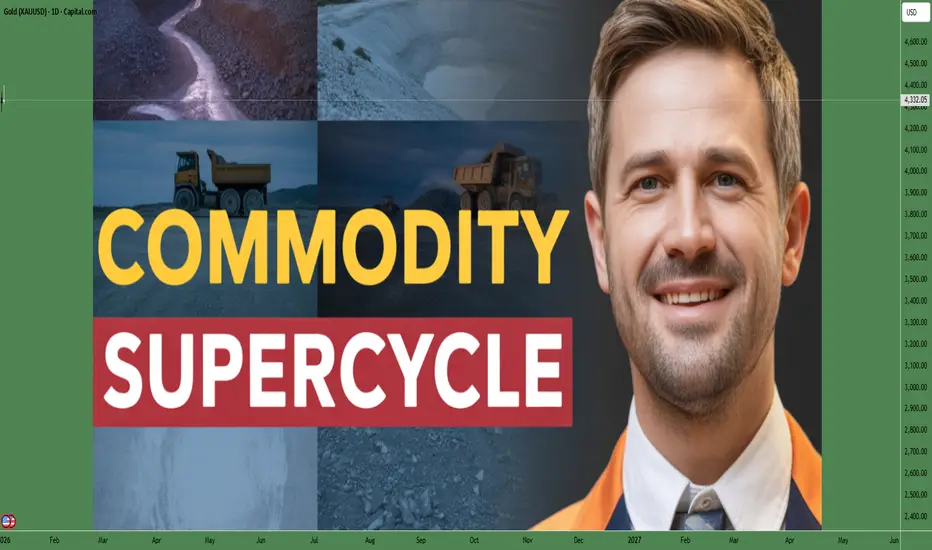
The Commodity Super Cycle: Long-Term Force Shaping Global MarketA commodity super cycle refers to a prolonged period—often lasting a decade or more—during which commodity prices move significantly above their long-term average due to strong, sustained demand driven by structural changes in the global economy. Unlike normal commodity cycles, which are short-term and influenced by seasonal factors or temporary supply disruptions, super cycles are rooted in deep economic, demographic, technological, and geopolitical transformations. Understanding commodity super cycles is critical for investors, policymakers, businesses, and economies that rely heavily on natural resources.
Understanding the Concept of a Commodity Super Cycle
At its core, a commodity super cycle emerges when demand growth persistently outpaces supply growth over an extended period. Commodities such as energy (oil, gas), metals (copper, iron ore, aluminum), agricultural products, and precious metals experience broad-based price appreciation. The key difference between a regular cycle and a super cycle is duration and breadth. While normal cycles may last a few years and affect specific commodities, super cycles span multiple commodities and can last 10–30 years.
Supply in commodity markets is often inelastic in the short to medium term. Mining projects, oil exploration, and agricultural expansion require significant capital investment and long gestation periods. When demand accelerates rapidly due to structural shifts, supply cannot adjust quickly, leading to prolonged price increases—an essential feature of a super cycle.
Historical Commodity Super Cycles
Historically, several major commodity super cycles can be identified:
The Industrial Revolution (late 19th to early 20th century): Rapid industrialization in Europe and the United States drove massive demand for coal, steel, and other raw materials.
Post–World War II Reconstruction (1940s–1960s): Rebuilding Europe and Japan, combined with U.S. infrastructure expansion, fueled demand for metals and energy.
China-Led Super Cycle (early 2000s–2010s): China’s entry into the World Trade Organization (WTO) and its infrastructure-heavy growth model caused an unprecedented surge in demand for iron ore, copper, coal, and oil.
Each of these cycles was powered by large-scale urbanization, industrialization, and capital formation, which fundamentally reshaped global commodity demand.
Key Drivers of a Commodity Super Cycle
Several structural forces typically drive a commodity super cycle:
1. Economic Development and Urbanization
Rapid growth in emerging economies increases consumption of commodities. Urbanization requires steel, cement, copper, energy, and agricultural products. As millions move from rural to urban areas, per-capita commodity consumption rises sharply.
2. Infrastructure and Industrial Investment
Large infrastructure programs—roads, railways, power plants, housing, and ports—are commodity-intensive. Government-led capital expenditure often plays a crucial role in sustaining demand over long periods.
3. Demographics and Population Growth
A growing population increases demand for food, water, energy, and housing. Younger populations in emerging markets tend to consume more resources as incomes rise.
4. Technological Transitions
Technological shifts can significantly alter commodity demand. For example, the transition toward renewable energy, electric vehicles, and battery storage has increased demand for copper, lithium, nickel, cobalt, and rare earth elements.
5. Monetary and Financial Factors
Loose global monetary policy, low interest rates, and currency debasement can fuel commodity investment. Commodities are often viewed as a hedge against inflation, attracting financial capital during periods of macroeconomic uncertainty.
6. Geopolitical and Supply Constraints
Geopolitical tensions, trade restrictions, sanctions, and underinvestment in supply capacity can exacerbate shortages. Environmental regulations and ESG considerations can further restrict supply growth, reinforcing long-term price pressures.
Phases of a Commodity Super Cycle
A commodity super cycle typically unfolds in four broad phases:
Early Recovery Phase: Prices are low due to prior oversupply. Investment in capacity is minimal.
Demand Acceleration Phase: Structural demand begins to rise, tightening markets and pushing prices higher.
Peak and Overinvestment Phase: High prices incentivize aggressive investment, leading to excess capacity.
Correction and Decline Phase: Supply eventually overshoots demand, prices fall, and weaker producers exit the market.
These phases can span many years, and timing them precisely is extremely challenging.
Impact on Economies and Markets
Commodity super cycles have profound economic and financial implications:
Commodity-exporting countries benefit from higher revenues, stronger currencies, improved fiscal balances, and increased foreign investment.
Commodity-importing countries face higher input costs, inflationary pressures, and potential trade deficits.
Equity markets often see strong performance in resource sectors such as metals, mining, energy, and agriculture.
Inflation dynamics are heavily influenced, as commodities are key inputs across the economy.
However, reliance on commodity booms can also create vulnerabilities, including fiscal mismanagement, asset bubbles, and long-term competitiveness issues—commonly referred to as the “resource curse.”
The Current and Future Outlook
Many analysts argue that the world may be entering—or already be in—the early stages of a new commodity super cycle driven by the energy transition, deglobalization, supply-chain reconfiguration, and infrastructure renewal. Decarbonization requires massive investment in renewable energy, power grids, electric vehicles, and energy storage—all of which are metal-intensive. At the same time, years of underinvestment in traditional energy and mining have constrained supply.
Additionally, geopolitical fragmentation and a shift toward domestic manufacturing and strategic stockpiling are increasing demand for critical commodities. These factors suggest that upward pressure on commodity prices could persist for an extended period, although volatility will remain high.
Conclusion
The commodity super cycle is a powerful framework for understanding long-term movements in commodity markets and their broader economic consequences. Driven by structural forces such as urbanization, technological change, demographics, and geopolitics, super cycles reshape global trade, investment flows, and macroeconomic stability. While they present significant opportunities for investors and commodity-producing nations, they also carry risks of inflation, volatility, and misallocation of capital. A disciplined, long-term perspective is essential to navigate and benefit from the complex dynamics of a commodity super cycle.
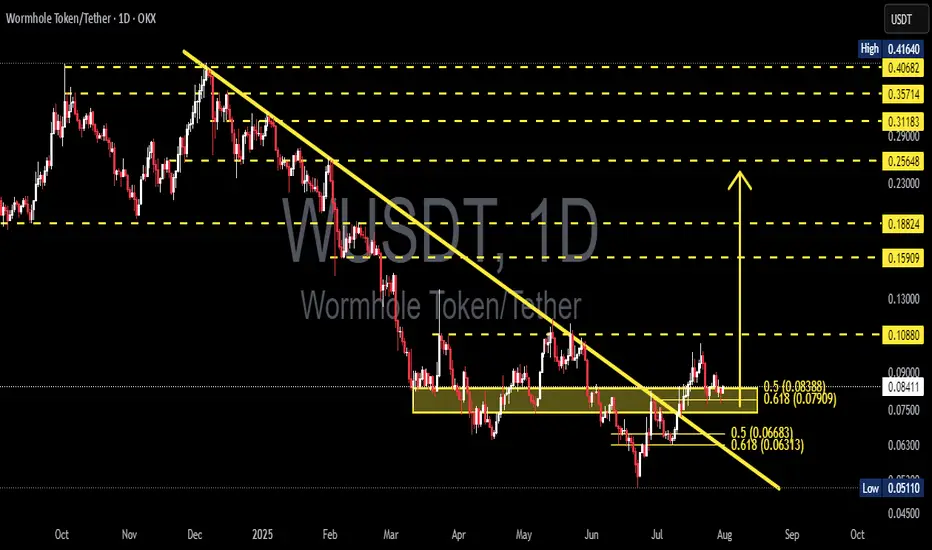
WUSDT Major Downtrend Break! Now Testing the Golden Pocket!🧩 Overview:
Wormhole Token (WUSDT) has finally broken out of a long-standing downtrend line that has been pressing the price down since February 2025. This breakout is a significant technical development and now the price is undergoing a critical retest phase — a moment that could mark the beginning of a major bullish reversal.
Price is currently consolidating around the Fibonacci 0.5–0.618 retracement zone (0.079–0.084), commonly known as the "Golden Pocket Zone" — a popular area for smart money accumulation.
---
🧠 Pattern & Structure:
📉 A long-term descending trendline was decisively broken, signaling a potential shift in market sentiment.
📦 A consolidation range is forming within a yellow support box — between 0.07909 and 0.08388, a prior resistance zone that is now being retested as support.
🔁 This is a classic breakout-retest structure, often seen before major price expansions.
---
🟢 Bullish Scenario (Reversal Potential):
If the price holds above the 0.079–0.084 support range, it sets the stage for a potential bullish continuation. Key upside targets include:
🔹 0.10880 – Previous distribution zone.
🔹 0.13000 – Psychological and structural resistance.
🔹 0.15909 – March resistance.
🔹 0.18824 – Measured move target from breakout.
🔹 0.23000–0.29000 – Expansion zone if momentum sustains.
A strong bullish candle closing above 0.09000 with increasing volume would strengthen this outlook.
---
🔴 Bearish Scenario (Failed Retest):
If the Golden Pocket fails to hold:
Price may retrace to lower supports:
🔻 0.07500 – Minor support zone.
🔻 0.06300 – Key support from June.
🔻 0.05110 – Yearly low and last line of defense. A breakdown below this level would revalidate the bearish trend.
Traders should be cautious if daily closes fall below the yellow zone with high selling volume.
---
💡 Conclusion & Strategy:
WUSDT is currently at a critical technical juncture. A confirmed breakout has occurred, but the retest phase is what will validate the strength of this move.
🎯 Swing traders may look for entries within the 0.079–0.084 range with invalidation below 0.075.
📉 Short-sellers might wait for a confirmed breakdown below this support with volume confirmation.
Momentum is building — the next move could define the mid-term trend.
---
📊 Chart Highlights:
✅ Downtrend Breakout: Confirmed
✅ Retesting Key Fibonacci Zone (0.5–0.618)
✅ Former Resistance → Becoming Support
🚨 Crucial Bullish-Bearish Decision Zone
#WUSDT #WUSDTAnalysis #WormholeToken #CryptoBreakout #GoldenPocket #PriceAction #FibonacciLevels #AltcoinReversal #TechnicalAnalysis
Wormhole (W): Is the Correction Over? Targeting $0.1700 and $0.2Greetings, fellow traders!
Following a significant rally that reached the $0.1300 resistance zone, Wormhole (W) is currently undergoing a corrective phase. This retracement is finding support near the key 0.50 and 0.618 Fibonacci levels, a common area for price consolidation before a potential trend continuation.
Anticipated Price Action:
Based on the current technical structure, a resumption of the upward trend towards the $0.1700 and $0.2000 resistance levels is anticipated. The timeframe for this projected move is estimated to be within the next 24 hours. However, this is a projection, and market conditions can change rapidly.
Trading Considerations:
Cautious Entry: While a continuation of the uptrend is likely, traders should exercise caution when initiating long positions. Confirmation of bullish momentum, such as a strong bullish candlestick pattern or a break above a short-term resistance level, is recommended before entry. Entering during a retracement carries increased risk.
Fibonacci Support: Monitor price action closely around the 0.50 and 0.618 Fibonacci levels. These levels may act as potential support and provide opportunities for entry, if accompanied by bullish confirmation signals.
Timeframe: Keep the projected 24-hour timeframe in mind, but remain adaptable to changing market dynamics.
Disclaimer:
This analysis is for informational purposes only and should not be considered financial advice. All trading decisions should be made after conducting thorough independent research, including a comprehensive risk assessment. Market conditions can be volatile, and past performance is not indicative of future results.
W - Memecoin With 15-30x Potential!Hello, Skyrexians!
In the era of memecoins when everyone is talking about PEPE, DOGE and HMSTR we have the quite meme BINANCE:WUSDT which is now at the very low prices with the almost clear Elliott waves structure.
Let's take a look at the weekly chart. The listing pump as usual we can count as the wave 1, after that we can see the wave 2 represented as a zigzag ABC. There are not so many candles on the chart, so using other indicators can't be so efficient. You shall understand that this coin is high risk, I personally have only 2% of deposit in this coin, but it has the huge potential to 1-1.61 Fibonacci Extensions. Final target is $1.9-$3.
Best regards,
Skyrexio Team
___________________________________________________________
Please, boost this article and subscribe our page if you like analysis!
Wormhole $W expecting ride in upcoming months - Hi 👋🏻 it's me your " Raj_crypt0 " once again back with potential growth coin ..... ✍🏻
• BINANCE:WUSDT / #w ( wormhole ) ... Analysis ⏰
🗝️ $0.45 is an important resistance expecting would be turn future support 💪🏻
🎯 $5 ...... ( Expecting 10X / +1000% from $0.45 confirmation zone )
__________________________________________________
🛑 Pls " DYOR " _ NOT A FINANCIAL ADVISOR 🚏
------------------------------------------------------------------------------
The FDV was sitting SEED_TVCODER77_ETHBTCDATA:4B around compared to present market cap it was 3 times ,
Expecting huge dollar in this project , circulation supply was around 3B / max supply was 10B
Presently they don't have much unlock 🔓 supply to the market....... ‼️
Easily expecting SEED_TVCODER77_ETHBTCDATA:10B - FWB:15B market cap .... Which can complete my target $5 .... 🎯
Hitting new low failure of my analysis ⏰ gradually...... 🛑
👉🏻 Follow me and my analysis for future content and updates ☝🏻
Incredible growth for Wormhole!The W token shows excellent activity from a blockchain perspective. Abnormally high activity of Wintermute and Flow Traders has been detected recently. This is the main reason for the imminent takeoff. Also on the current tokenomics we can notice that the main holders are funds, a couple of CEX and a large number of Flow Traders controlled wallets. My buy point at 0.2953 was made on December 30 and I will continue to hold my position until I reach the $5 per coin mark.
Horban Brothers.
$W #WORMHOLEAs you know, Ive been so bullish on accumulating great coins the previous quarters.
Wormhole is a unique utility in the crypto space due to its robust cross-chain interoperability features, which address the challenges of blockchain isolation and enable seamless communication between different blockchain networks. Here are some of its standout features:
Cross-Chain Messaging Protocol: Wormhole provides a secure, efficient messaging layer that allows decentralized applications (dApps) to operate across multiple blockchain ecosystems. This enables applications to leverage the unique strengths of various blockchains, like Ethereum's security and Solana's speed, without being siloed into a single network.
Asset Transfers: It simplifies the movement of tokens and NFTs across chains, ensuring high-speed, low-cost transfers. A notable example is the introduction of native USDT transfers using its infrastructure, allowing for gas-free transactions on destination chains and minimizing fees.
Developer-Friendly Ecosystem: Wormhole offers extensive tools, including SDKs, APIs, and integration options, to empower developers to build multichain applications. It supports over 30 blockchain networks, enabling use cases in DeFi, NFTs, and governance at scale.
Decentralized Security: A Guardian network validates and signs messages to ensure secure cross-chain interactions. This decentralized approach enhances trust and prevents single points of failure.
Not Just a Token Bridge: While it facilitates asset movement, Wormhole's primary role as a message-passing protocol makes it more versatile, powering innovations like cross-chain governance, treasury management, and dApp functionality.
As per chart, Volume supports the downtrend for long time post airdrop. Only a matter of weeks if not days to send this to more than billies
Just putting this in my publications in case we get the easiest 10x from here!
REAL BIG COOKING FOR Q1 2025 indeed!
Next unlock is by april 2025 so a run up is indeed is in waiting room!
Wormhole W price has a tough road aheadThey handed out that #Wormhole, then "locked" some holders from the market in the range of $0.52-0.72 and let the OKX:WUSDT price go into free fall.
💩 Instead of the promised “golden mountains”, we got the “Mariana Trench”)
The only “positive” thing on this chart is that a fairly large unlocking CRYPTOCAP:W coin occurred on 03/08 at the very bottom and holders no longer had the courage to pour them on the market. And the next one is in April 2025.
1️⃣ If the #WUSD price rises, the first portion of sales will be in the 0.33-0.36 zone
2️⃣ The real battles will begin above $0.52. We'll have to look at the market situation at the moment, but so far, it's hard to believe that the price will manage to shoot above $0.72
Wormhole: Potential Top 20 Contender for This Bull Run!Wormhole is a solid project with a good chance of being a top 20 project in this bull run. I own W and will accumulate more only if it drops below $0.30. The green-marked zones could be the bottom during this correction before reaching a new ATH. The red-marked zones might have a bigger impact, and we can talk about ATH only after it passes them.
Wormhole W price at consolidation, where next ?It's been 2 months since the #Wormhole airdrop and listing.
The price of #WUSDT has managed to drop significantly and move into a consolidation phase.
⁉️ Question:
1️⃣ will the NYSE:W price be accelerated now with a parabolic amplitude?
2️⃣ Do we need another correction to the $0.55 area and then growth according to the blue scenario?
What do you think?
It seems that in both cases, the #WUSD price should be accelerated to $1-1.10
_____________________
Did you like our analysis? Leave a comment, like, and follow to get more
Trade Idea for Wormhole (W) - Accumulation StrategyWormhole (W) is currently priced at approximately $0.65660, with a market cap of $1.19 billion. The token has shown some volatility, with a 24-hour low of $0.62410 and a high of $0.66720. This price action offers potential buying opportunities within a strategic trading plan.
Start by purchasing W at the current price of around $0.65660. This entry point lies near the lower end of the recent price range, potentially maximizing gains if the market rebounds.
If W's price further drops to around $0.62775, consider this a key level for additional purchases. This allows for averaging down the entry price and capitalizes on broader market movements.
Establish a series of take profit targets to capitalize on potential price recoveries. Begin taking profits at $1.05, followed by subsequent targets at $1.20, $1.40, $1.60, and $1.80. These targets are set to capture profits at key psychological levels as the market potentially appreciates in value.
The price performance of W over recent months has been subject to significant swings, indicative of both underlying volatility and active trading interest. Given Wormhole’s role as a prominent interoperability platform, it harnesses substantial utility within the blockchain ecosystem, which could drive its value upwards as cross-chain communication becomes increasingly pivotal.
This strategy suggests a higher risk tolerance, given the omission of a stop loss. It's suitable for investors with a longer-term horizon who can withstand potential downturns in price.
Wormhole's strategic significance in enabling interoperability across various blockchain networks, coupled with its current market valuation, presents a compelling case for accumulation. The staggered profit targets aim to optimize returns from volatility, capturing value as it accrues.
This trade idea is based on current market dynamics and the strategic role of Wormhole within the blockchain ecosystem as of May 2024. Cryptocurrency investments carry inherent risks, including the loss of principal. Investors should conduct their own research and consider their financial circumstances and risk appetite before engaging in cryptocurrency trading. This analysis is not financial advice.
Wormhole(W) is Ready to Pump🚀➕20%_40%🚀💡Today, I want to analyze the Wormhole(W) project for you, which has been listed in different exchanges for less than 3 days .
📚What Is Wormhole(W)❗️❓
🔸Wormhole is the leading interoperability platform that powers multichain applications and bridges at scale. Wormhole provides developers access to liquidity and users on over 30 of the leading blockchain networks, enabling use cases that span DeFi, NFTs, governance, and more.
🔸The wider Wormhole network is trusted and used by teams like Circle and Uniswap, and to date, the platform has facilitated the transfer of over 35 billion dollars through over 1 billion cross-chain messages.
🏃♂️ Wormhole(W) is currently moving near the 🔴 Resistance zone($1.050-$0.997) 🔴and Resistance lines ( the upper lines of the wedge pattern) .
📈From the point of view of Classical Technical Analysis , Wormhole(W) seems to have succeeded in forming a Falling Wedge Pattern .
🔔I expect Wormhole(W) to start going up (🚀40%🚀) to the 🔴 Resistance zone($1.280-$1.200) 🔴 after touching the 🟡 Potential Reversal Zone(PRZ) 🟡.
❗️⚠️Note⚠️❗️ : If Wormhole(W) breaks the 🟡 Potential Reversal Zone(PRZ) 🟡 , the analysis will fail (if Wormhole(W) breaks the 🔴 Resistance zone($1.050-$0.997) 🔴, it will be a more reliable entry point).
❗️⚠️Note⚠️❗️: An important point you should always remember is capital management and lack of greed.
Wormhole analysis (WUSDT), 1-hour time frame ⏰.
Do not forget to put Stop loss for your positions (For every position you want to open).
Please follow your strategy; this is just my Idea, and I will gladly see your ideas in this post.
Please do not forget the ✅' like '✅ button 🙏😊 & Share it with your friends; thanks, and Trade safe.