Netflix stock forecast analysis for the end of 2025Netflix stock end of 2025 forecast analysis.
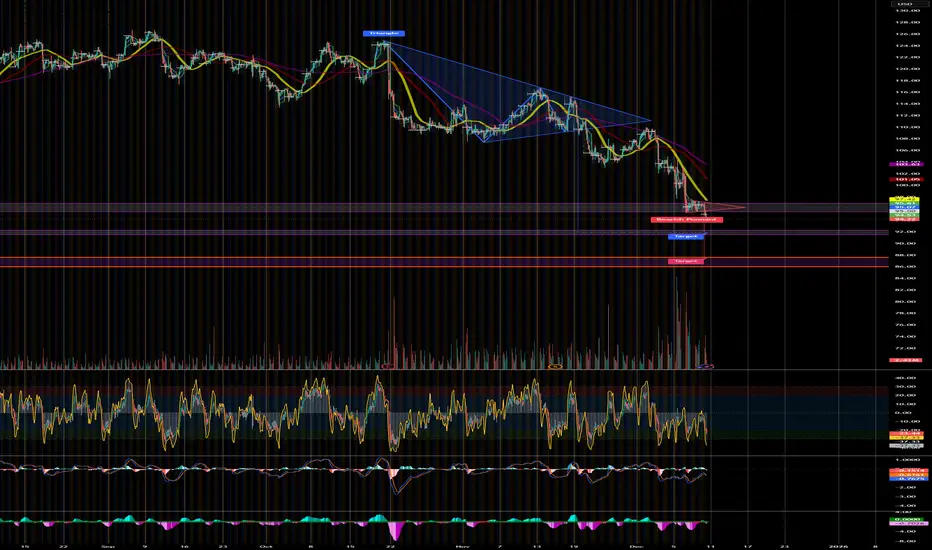
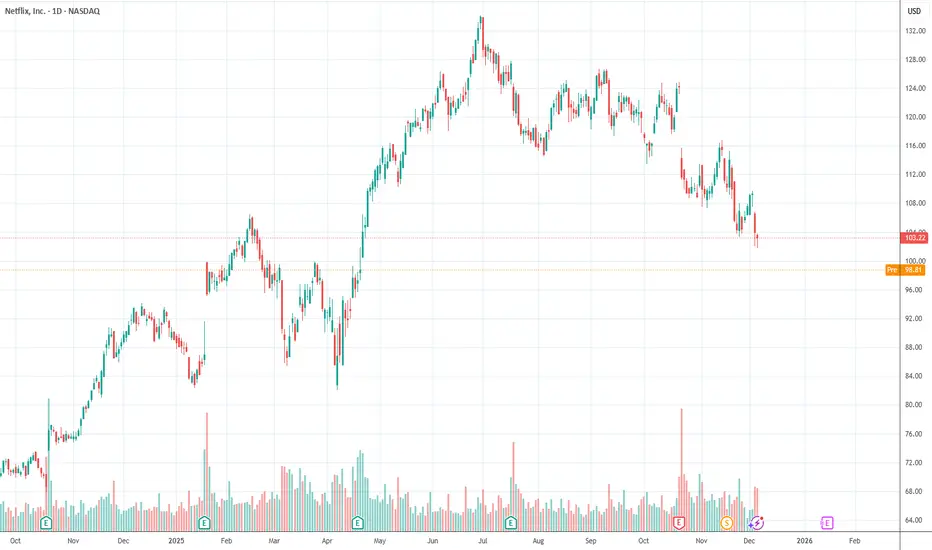
Netflix american stock has reached a decent and strong monthly imbalance trading at $98 per share. Let's see if the streaming company wants to move to higher prices before the end of 2025. The bullish impulse is made of strong bullish candlestick bodies created between April and June 2025. It took a few months to pull back but Netflix is there now.
Netflix, Inc. Shs ert Deposito Arg Repr 0.0208333 Sh
No trades
Market insights
OPEC Price Manipulation and Market Instability1. What Is OPEC and Why Does It Matter?
OPEC is a cartel of major oil-producing nations including Saudi Arabia, UAE, Iraq, Iran, Kuwait, Venezuela, and others. Together, OPEC members control:
Around 40% of world crude oil production
Nearly 80% of global proven oil reserves
Because oil is still the world’s most important energy resource, OPEC’s decisions have the power to shift global prices dramatically. Their strategy is simple: coordinate output to influence the supply side of the market. Since oil demand is relatively inelastic (people still need fuel, heating, transport), small changes in supply can create major price swings.
2. How OPEC Influences or “Manipulates” Oil Prices
OPEC does not directly set the market price. Instead, it manipulates supply, which indirectly manipulates price. The key tools include:
a) Production Cuts
When oil prices are falling due to weak demand or excess supply, OPEC often reduces output. By removing millions of barrels per day from the market, they tighten supply and push prices upward.
Example: In 2020 during the pandemic, OPEC+ cut nearly 10 million barrels/day to stop a price collapse.
b) Production Increases
When prices rise too sharply, OPEC can increase production to cool the market. However, OPEC often avoids aggressive increases because higher prices benefit member revenues.
c) Verbal Intervention (“Jawboning”)
Sometimes OPEC doesn’t act immediately but simply signals cuts or increases. Markets react instantly to statements from the Saudi oil minister or OPEC’s monthly outlook, causing speculative price moves.
d) Strategic Collaboration Through OPEC+
Since 2016, OPEC has partnered with other major producers such as Russia, forming OPEC+. This expanded group controls nearly 50% of global production, giving it even more power to influence prices.
The combination of coordinated supply management, strategic announcements, and alliances is often described as price manipulation, especially by countries that rely on OPEC oil.
3. Why OPEC Engages in Price Manipulation
OPEC’s actions are not random—they serve long-term and short-term goals:
a) Stabilizing Member Revenues
Oil exports are the backbone of many OPEC economies. Budget planning depends on a stable oil price range.
b) Preventing Price Crashes
Uncontrolled production could trigger price wars and economic instability.
c) Maintaining Political Leverage
Oil is a geopolitical tool. Countries with strong influence in OPEC—especially Saudi Arabia—use production control to strengthen their global bargaining power.
d) Supporting Long-Term Investment
Oil exploration and refining require billions in investment. Producers need predictable price ranges to justify projects.
While these goals benefit OPEC members, they can create volatility and uncertainty for consuming nations.
4. How OPEC Contributes to Market Instability
Although OPEC claims to promote market stability, its actions often do the opposite. Instability arises from several mechanisms:
a) Sudden Production Announcements
Unexpected production cuts or increases can cause immediate price shocks. Traders, speculators, and governments react instantly, amplifying volatility.
b) Geopolitical Tensions Among Members
Internal conflicts—such as tensions between Saudi Arabia and Iran or production disputes with Iraq—create unpredictable output behavior.
c) Dependency of Major Economies
Countries like India, China, Japan, and many European nations depend heavily on imported oil. Any OPEC action impacts:
Inflation
Currency value
Fiscal deficit
Energy costs
Stock markets
This dependency magnifies global instability.
d) Speculation in Oil Futures
When OPEC signals a supply cut, speculators rush into long positions in crude futures, pushing prices even higher. When OPEC signals oversupply, short sellers dominate. This creates price swings disconnected from fundamental supply-demand realities.
e) OPEC vs. Non-OPEC Rivalry
The rise of U.S. shale oil has challenged OPEC’s dominance. OPEC responses—like flooding markets to bankrupt shale producers (2014-2016)—cause multi-year instability.
5. Historical Examples of OPEC-Driven Instability
1) 1973 Oil Embargo
OPEC cut exports to the U.S. and Western Europe during the Yom Kippur War. Oil prices quadrupled, leading to global recession.
2) 2014 Price War
Saudi Arabia increased production aggressively to weaken U.S. shale producers. Oil prices crashed from $110 to $30, destabilizing markets worldwide.
3) 2020 Pandemic Crash
Disputes between Russia and Saudi Arabia led to overproduction during collapsing demand. Oil prices fell to historic lows (even negative in futures markets).
Each of these events shows how OPEC’s decisions can reshape the global economy.
6. Impact on Global Markets and Economies
a) Inflation
Higher oil prices directly increase transportation, manufacturing, and utility costs. Inflation rises globally, leading to higher interest rates.
b) Currency Volatility
Oil-importing countries see their currencies weaken when oil becomes expensive. Oil-exporting nations experience the opposite.
c) Stock Market Fluctuations
Sectors such as aviation, shipping, chemicals, manufacturing, and logistics react instantly to oil price changes.
d) Impact on GDP Growth
High oil prices slow global economic growth, reduce consumer spending, and increase production costs.
e) Fiscal Stress for Importing Nations
Countries like India face larger trade deficits when oil prices surge.
7. Is OPEC’s Price Manipulation Always Negative?
Not necessarily. Some analysts argue that OPEC actually prevents extreme instability.
Positive Roles
Prevents supply gluts
Maintains long-term price stability
Supports investment in oil infrastructure
Avoids destructive price wars
However, the challenge is that OPEC decisions are often politically motivated rather than economically balanced.
8. The Future of OPEC and Market Stability
As renewable energy adoption grows and electric vehicles expand, OPEC’s long-term dominance may weaken. Yet in the near future (2025–2040), oil will remain a core energy source. Hence:
OPEC will continue influencing prices
Market volatility will persist
Geopolitical tensions will amplify supply risks
Additionally, climate policies, U.S. shale production, and technological advances will shape future oil dynamics.
Conclusion
OPEC’s influence over global oil markets is undeniable. Through coordinated production strategies, strategic alliances, and political motivations, it often manipulates supply in ways that impact global prices. While OPEC claims to stabilize the market, its actions frequently generate uncertainty, volatility, and economic stress for oil-importing nations and financial markets.
Understanding OPEC’s behavior is essential for policymakers, traders, and investors who seek to navigate global market instability—because in the world of energy, a single announcement from OPEC can reshape the global economy within minutes.
Global Currency Strategies1. Hedging Strategies
Hedging is one of the most widely used global currency strategies. The purpose of hedging is to protect against adverse currency movements rather than generate profit.
a. Forward Contracts
A forward contract locks in an exchange rate today for a transaction that will take place later.
Example: An Indian importer due to pay USD in 3 months may lock the rate today to avoid future appreciation of USD.
b. Futures Contracts
Similar to forwards but traded on exchanges, making them standardized and more liquid.
c. Options Strategies
Currency options give traders the right (not obligation) to buy/sell a currency at a specific price.
Common strategies: Long Call, Long Put, Straddle, Strangle.
d. Natural Hedging
Businesses offset currency exposure by matching revenue and expenses in the same currency.
Why hedging matters:
It protects corporate profits, prevents losses during volatile periods, and ensures financial stability for global businesses.
2. Carry Trade Strategy
Carry trade is one of the most popular global currency strategies among professional traders.
It involves:
Borrowing in a low-interest rate currency → Investing in a high-interest rate currency.
How it works
Low-yield currency: JPY, CHF
High-yield currency: USD, AUD, INR, MXN (depending on economic cycles)
Example
Borrow Japanese Yen at 0.1% interest → Invest in an AUD bond yielding 3%.
Traders profit from the interest rate differential plus potential currency appreciation.
Risks
Carry trades unwind rapidly during global uncertainty because traders rush toward safe-haven currencies like USD and JPY, causing volatility.
3. Currency Arbitrage Strategies
Arbitrage involves exploiting price discrepancies across markets. Though opportunities are rare and short-lived, algorithmic traders and banks often use them.
a. Triangular Arbitrage
Uses three currency pairs to exploit price differences.
Example: USD/EUR, EUR/GBP, and USD/GBP mispricing.
b. Covered Interest Arbitrage
Traders lock in forward contracts to profit from interest rate deviations across currencies.
c. Statistical Arbitrage
Involves algorithms analyzing mean-reversion patterns.
Why arbitrage is important:
It helps maintain pricing efficiency and stability in global currency markets.
4. Fundamental Analysis Strategies
Fundamental currency strategies depend on macroeconomic and geopolitical factors affecting exchange rates.
Key Indicators Used
Interest rates (most powerful driver of FX)
Inflation levels
GDP growth
Employment data
Manufacturing PMI
Trade balance
Political stability
Central bank announcements
Strategies Based on Fundamentals
a. Interest Rate Differentials
Currencies with rising interest rates tend to appreciate because they attract foreign capital.
b. Inflation-Based Trading
Higher inflation typically weakens a currency because purchasing power declines.
c. Economic Divergence Strategies
Focus on differences between two economies.
Example: Strong U.S. growth vs. slow European growth may strengthen the USD against EUR.
d. Commodity-Linked Currency Strategies
Some currencies move with commodity prices:
CAD ↔ Crude Oil
AUD, NZD ↔ Gold, Iron Ore
NOK ↔ Oil
Traders exploit these relationships.
5. Technical Analysis Strategies
Technical analysis uses charting tools and price action patterns to predict currency movements.
Common Tools
Support & resistance zones
RSI, MACD, Stochastic Oscillator
Moving Averages (SMA, EMA)
Bollinger Bands
Fibonacci Retracement
Trendlines & channels
Chart patterns (Head & Shoulders, Flags, Wedges)
Technical-Based Strategies
a. Trend-Following
Traders identify long-term trends in currency pairs and follow the momentum.
Popular tools: 50-day and 200-day moving averages.
b. Range Trading
Many currency pairs consolidate in ranges for long periods.
Traders buy at support and sell at resistance.
c. Breakout Trading
When price breaks past a key level, it often triggers a directional move.
d. Algorithmic Technical Trading
Robots execute technical strategies automatically based on coded rules.
6. Safe-Haven Currency Strategies
Certain currencies are considered safe during crises:
USD (global reserve)
JPY (Japan’s stable economy & low yields)
CHF (Switzerland’s financial safety)
Strategy Approach
During global uncertainty—war, recession fears, geopolitical tension—traders shift their capital to safe-haven currencies.
Why It Works
Investors prioritize stability over return, causing demand for safe-haven currencies to rise.
7. Diversification Strategies
Diversification reduces risk by spreading exposure across multiple currencies, sectors, and regions.
Different Ways to Diversify
Holding a basket of currencies instead of one
Investing in multi-currency ETFs
Using managed futures
Building portfolios across emerging and developed markets
Why Diversification Matters
It protects traders from sudden shock events—economic downturns, political conflicts, and natural disasters.
8. Currency Correlation Strategies
Currencies are interlinked due to global trade and economic relationships.
Examples of Positive Correlations
EUR/USD and GBP/USD
AUD/USD and NZD/USD
USD/CAD moves inverse to Oil prices
How Traders Use Correlation
Identifying divergence opportunities
Hedging correlated currency pairs
Creating pair-trading strategies
9. Emerging Market Currency Strategies
Emerging markets like India, Brazil, Turkey, and South Africa offer high return potential but increased volatility.
Strategies
Investing in high-yield currencies (INR, BRL, MXN)
Using carry trade advantages
Trading volatility cycles
Avoiding periods of political risk or economic instability
10. Algorithmic and High-Frequency Strategies
Modern currency markets heavily rely on automation.
Types of Algo Strategies
Trend-following
Mean-reversion
Arbitrage
Market-making
Sentiment-based analysis using AI
Benefits
Speed, accuracy, and emotion-free trading
Ability to react instantly to global news
Conclusion
Global currency strategies are essential tools for navigating the world’s most liquid market. From hedging and carry trades to arbitrage, fundamentals, technicals, safe-haven flows, and algorithmic trading, each strategy serves a unique purpose. While hedging focuses on risk protection, carry trades aim for yield, and technical strategies find opportunities in price patterns. Understanding these concepts helps traders, investors, and businesses make informed decisions in an increasingly interconnected global economy.
Netflix Acquires Warner Bros.: The Birth of a Global Giant?Netflix Acquires Warner Bros.: The Birth of a Global Entertainment Giant?
By Ion Jauregui – Analyst at ActivTrades
On December 5, 2025, Netflix took a historic step by announcing the acquisition of Warner Bros., including its film and series catalog, HBO/HBO Max, and other strategic assets, in a deal valued at approximately $82.7 billion. The agreement, which combines cash and stock payments, promises to redefine the entertainment industry and competition in the global streaming market.
Warner Bros. shareholders will receive $23.25 in cash and $4.50 in Netflix stock per WBD share, valuing each share at $27.75. However, shortly after, Paramount Skydance launched a hostile $108.4 billion takeover bid for the entirety of Warner Bros. Discovery (WBD), offering $30 per share in cash, higher than Netflix’s offer.
Paramount’s proposal, backed by RedBird Capital, several Middle Eastern sovereign funds, and Affinity Partners (a firm linked to Jared Kushner), is presented as more attractive to shareholders and with lower regulatory risk, since Netflix’s plan involves separating the cable and streaming businesses. This offer expires on January 8, 2026, raising two critical issues: if Warner breaks its agreement with Netflix, a breakup fee could be triggered; and Paramount could alter the market landscape, potentially impacting competitors like Disney.
A Strategic Move of Massive Scale
The Netflix-Warner Bros. integration is more than a financial transaction: it is a merging of content and production capacity. The deal brings iconic franchises such as Harry Potter, DC Comics, and Game of Thrones, along with HBO, HBO Max, and WB Studios.
The objective is clear: to build a global entertainment platform capable of attracting new subscribers, retaining existing ones, and generating synergies that could translate into $2–3 billion in annual savings by the third year.
Risks and Opportunities
From a financial perspective, the deal involves significant challenges:
High debt load: Netflix assumes substantial leverage, which could pressure margins and cash flow.
Regulatory scrutiny: The market concentration will draw the attention of antitrust authorities.
Integration complexity: Merging two companies with different cultures, processes, and structures carries operational risks.
Nonetheless, the potential benefits are substantial: catalog expansion, greater bargaining power with distributors and creators, and revenue diversification through franchises, licensing, and merchandising.
Strategically, Netflix positions itself in a leadership role difficult for competitors to replicate, including Disney+, Amazon Prime Video, and Apple TV+. Combining traditional production with digital distribution strengthens its ability to attract and retain subscribers worldwide.
Technical Analysis (Ticker AT:NFLX)
Netflix shares have corrected from the summer highs ($134.12) down to the current $92.91. After the November 17 stock split, the adjusted price reflected increased volatility due to the Warner acquisition and Paramount’s hostile bid.
If the Warner deal is completed, the stock could rebound toward the previous accumulation range, between $134.12 and $134.31, with the Point of Control at $120. Conversely, if Paramount prevails, we could see a decline toward this year’s lows recorded in April.
Outlook and Conclusion
Netflix’s acquisition of Warner Bros. has the potential to reshape the global entertainment ecosystem. If executed effectively, Netflix could emerge as the industry’s leading player, with an unprecedented catalog and production capacity.
However, risks are real: high debt, complex integration, and regulatory scrutiny could limit short-term gains. For investors, analysts, and industry professionals, this deal marks the beginning of a new chapter in global competition, where innovation, strategy, and efficient management will determine the true scale of this emerging entertainment giant.
*******************************************************************************************
The information provided does not constitute investment research. The material has not been prepared in accordance with the legal requirements designed to promote the independence of investment research and such should be considered a marketing communication.
All information has been prepared by ActivTrades ("AT"). The information does not contain a record of AT's prices, or an offer of or solicitation for a transaction in any financial instrument. No representation or warranty is given as to the accuracy or completeness of this information.
Any material provided does not have regard to the specific investment objective and financial situation of any person who may receive it. Past performance and forecasting are not a synonym of a reliable indicator of future performance. AT provides an execution-only service. Consequently, any person acting on the information provided does so at their own risk. Political risk is unpredictable. Central bank actions can vary. Platform tools do not guarantee success.
NFLX📌 A real-life series has developed around the TV series production company.
December 5, 2025: Netflix formally agreed to acquire WBD's studio business and streaming service HBO Max for $82.7 billion (or $27.75 per WBD share). The deal is expected to close in the third quarter of 2026, pending regulatory approval.
December 8, 2025: Paramount Skydance made a hostile counteroffer directly to WBD shareholders. They want to buy the entire company, including cable channels (CNN, TNT Sports), for $108.4 billion ($30 per share).
This is $25-18 billion more than Netflix's offer.
Institutions Impact Stability1. Understanding Institutions and Stability
Institutions are not just buildings or government departments. They include formal systems like courts, central banks, legislatures, regulators, and law-enforcement bodies, as well as informal norms such as cultural values, social trust, and community expectations. Stability, on the other hand, means a condition where economic, political, and social systems operate smoothly without frequent shocks, conflicts, or disruptions.
Strong institutions create stability by:
Providing predictability
Reducing risk and uncertainty
Encouraging investment and innovation
Maintaining law and order
Ensuring fairness and accountability
Preventing fraud, corruption, and exploitation
Weak institutions produce the opposite: uncertainty, volatility, corruption, inequality, and conflict.
2. Political Institutions: The Foundation of Governance Stability
Political institutions include governments, parliaments, electoral systems, and administrative bodies. They shape how power is gained, exercised, and transferred.
Key Impacts on Stability:
a) Predictable Governance and Rule of Law
A stable political system enforces rules consistently. When laws apply equally to all—citizens, businesses, and politicians—confidence increases. Investors step forward, businesses expand, and citizens feel secure.
But when laws are arbitrary or frequently changed, societies experience unrest and economic stagnation.
b) Peaceful Power Transitions
Countries with strong electoral systems manage leadership changes smoothly. This reduces political shocks, coups, and civil unrest. Conversely, weak democratic mechanisms fuel instability, protests, and violence.
c) Reduced Corruption
Institutions like anti-corruption bureaus, independent media, and transparency laws help suppress misuse of power. Corruption erodes trust and creates social anger, which disrupts stability.
d) Effective Public Administration
Efficient bureaucracies ensure services like healthcare, education, infrastructure, and welfare programs reach people. When governments fail to deliver basic services, societies become vulnerable to crises and radicalization.
3. Economic Institutions: Ensuring Market Stability
Economic stability depends heavily on institutions like property rights frameworks, competition authorities, labour laws, taxation systems, and regulatory bodies.
a) Protection of Property Rights
When individuals and businesses are confident that their property, capital, and intellectual work will not be illegally taken or misused, they invest more. Secure property rights reduce uncertainty and support entrepreneurship.
b) Stable Regulatory Framework
Clear and consistent economic regulations prevent market manipulation and monopolistic practices. This protects consumers and ensures healthy competition, reducing economic volatility.
c) Sound Fiscal Policies
Institutions responsible for government budgeting and taxation maintain stability by controlling deficits, managing public debt, and preventing financial shocks. Mismanaged fiscal systems often lead to inflation, defaults, and economic collapse.
d) Labour and Employment Systems
Labour institutions—trade unions, employment laws, social security systems—balance the relationship between employers and workers. They protect workers from exploitation and ensure businesses retain flexibility.
4. Financial Institutions: Anchors of Economic and Market Stability
Financial institutions are the nerve centers of modern economies. They include central banks, commercial banks, securities markets, insurance regulators, and investment funds.
a) Central Banks: Guardians of Monetary Stability
A credible central bank ensures currency stability, controls inflation, and responds to financial crises. Predictable monetary policy boosts investor confidence and reduces economic shocks.
Weak central banks, on the other hand, create hyperinflation, currency collapse, and market panic.
b) Banking System Stability
Robust banking institutions maintain trust in the financial system. Strict regulations, risk-management standards, and deposit insurance prevent bank runs and protect savings.
c) Strong Capital Markets
Stock exchanges, bond markets, and mutual fund systems create liquidity and investment opportunities. Market regulators like SEBI, SEC, or FCA ensure transparency and prevent fraud, insider trading, and market manipulation—all essential for market stability.
d) Crisis-Management Institutions
Institutions such as financial-stability boards and resolution authorities help prevent systemic failures. They step in to support failing banks, restructure debt, and maintain market confidence during crises.
5. Legal Institutions: Protecting Rights and Ensuring Justice
The judiciary, law-enforcement agencies, arbitration systems, and dispute-resolution bodies form the core of legal institutions.
a) Contract Enforcement
A fair and efficient legal system enforces contracts reliably. Businesses operate smoothly when disputes are resolved quickly and justly, reducing uncertainty and transaction costs.
b) Human Rights Protection
Courts and constitutional bodies protect basic freedoms and prevent discrimination. A society with strong legal safeguards enjoys social stability because citizens feel protected from injustice.
c) Crime Control
Effective policing and law enforcement reduce crime, violence, and disorder. When legal institutions fail, societies experience insecurity, vigilantism, and social collapse.
6. Social Institutions: Strengthening Community and Cultural Stability
Social institutions include families, schools, religious organizations, community groups, media, and cultural norms.
a) Social Trust and Cohesion
Communities with high trust levels experience less crime, fewer conflicts, and stronger cooperation. Trust creates resilience during economic or political crises.
b) Education Systems
Educational institutions develop skilled individuals, reduce inequality, and support social mobility. A well-educated population is more productive and less vulnerable to manipulation or extremist ideologies.
c) Media and Information Institutions
Independent media promotes transparency, accountability, and informed citizenship. It exposes corruption and supports democratic stability. On the other hand, biased or captured media can spread misinformation, increasing polarization and instability.
7. Global Institutions and International Stability
Institutions like the IMF, World Bank, WTO, UN, and regional alliances promote global stability.
a) Financial Aid and Crisis Support
The IMF stabilizes currencies and helps countries overcome debt crises. The World Bank funds development, reducing poverty-related instability.
b) Trade Peace
WTO resolves trade disputes and ensures smooth global trade. Without such frameworks, global markets would face frequent conflicts and disruptions.
c) Peacekeeping Efforts
The UN and regional bodies prevent wars, mediate negotiations, and send peacekeeping forces to stabilize conflict zones.
These international institutions reduce systemic risk, promote cooperation, and maintain global economic and political stability.
8. How Institutional Weakness Leads to Instability
Weak or corrupt institutions cause:
High levels of corruption
Political turmoil
Currency devaluation
Investor flight
Poor economic growth
Civil unrest and riots
Social divisions and crime
Market collapses
Inefficient public services
Countries with weak institutions often experience recurring crises, regardless of their natural wealth or population size.
9. Conclusion: Institutions Are the Engines of Stability
Stability is not simply a product of strong leadership or economic growth; it is the result of robust, transparent, and accountable institutions that create order, protect rights, enforce laws, and support economic activity. From central banks to courts, from parliaments to schools, institutions shape the stability of nations.
Strong institutions create a cycle of:
Trust → Investment → Growth → Stability → Prosperity
Weak institutions generate the opposite:
Uncertainty → Corruption → Conflict → Instability → Decline
Therefore, the strength, credibility, and effectiveness of institutions are the single most important determinants of long-term stability in any society or economy.
Netflix Buys Warner Bros in Historic $82.7B TakeoverNetflix’s $82.7B Warner Bros Discovery Takeover Signals a Historic Power Shift in Hollywood
Netflix (NASDAQ: NFLX) has officially struck a landmark deal to acquire the film and streaming divisions of Warner Bros. Discovery (WBD) in a transaction valued at $82.7 billion, including debt — the biggest entertainment acquisition in modern history. The deal, approved unanimously by both boards, will hand Netflix ownership of HBO, Warner Bros studios, HBO Max’s extensive library, and key franchises like Harry Potter, Game of Thrones, and DC. The agreement excludes cable channels such as CNN and TNT, which WBD will spin off into a separate entity called Discovery Global before the sale is completed.
Netflix co-CEO Ted Sarandos emphasized that the merger is a “rare opportunity” to reshape content dominance for decades, projecting $2–$3 billion in synergies through operational efficiencies. HBO’s premium brand will remain intact, although Netflix hinted at future integration strategies. Meanwhile, Warner Bros executives noted that joining forces with Netflix ensures the industry’s most compelling storytelling remains globally accessible.
However, the acquisition is expected to face significant regulatory scrutiny. Analysts warn the merger could reduce industry-wide film and TV output, pressure cinemas, and eventually raise subscription costs for consumers. Despite these concerns, Netflix remains confident the deal will clear regulatory hurdles within 18 months.
Technical Outlook
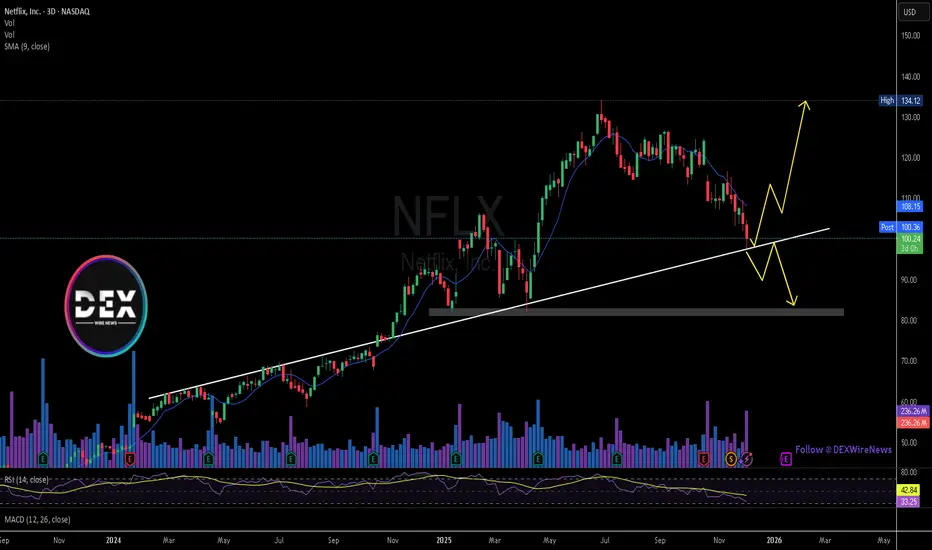
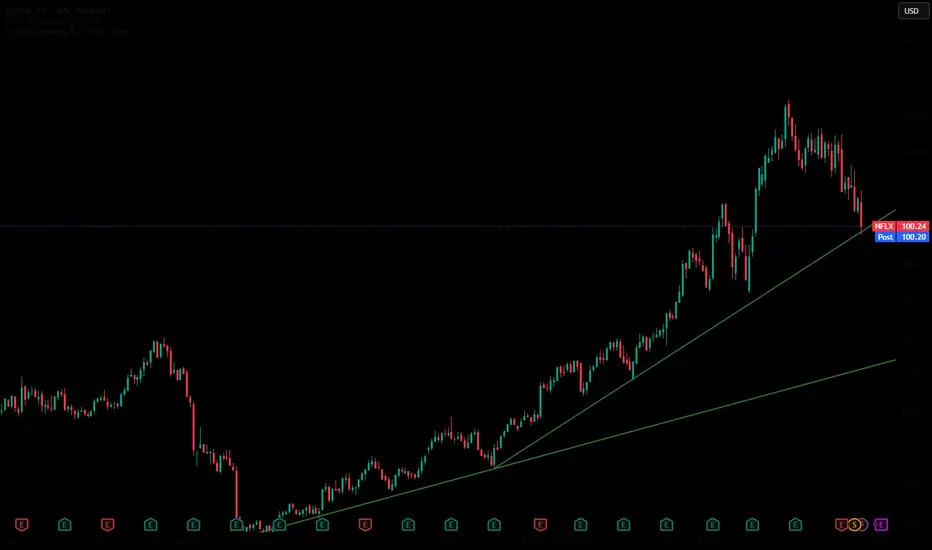
NETFLIX is currently trading near $100, sitting directly on a long-term ascending trendline that has acted as a major support for over a year. Price has retraced sharply from the $134 high and is now testing this structural trendline along with the 9-SMA overhead. Two key scenarios emerge:
• Bullish case: A bounce from $100–$103 could trigger a recovery back toward $120–$134, resuming the broader uptrend.
• Bearish case: A clean break below the trendline opens a drop toward the $82–$88 demand zone, where heavy accumulation previously formed.
RSI remains weak, suggesting momentum favors sellers until a strong reversal candle forms.
NFLX Swing Alert: High-Conviction Bearish Put OpportunityInstrument: NFLX
Trade Type: BUY PUTS (Bearish)
Confidence: 65% (Medium Conviction)
Horizon: 14 days (to 2025-12-19)
Strike Focus: $90.00 (Delta: -0.077)
Entry Price: $0.29 (mid of $0.26–$0.32)
Profit Target 1: $0.58 (100% gain)
Profit Target 2: $0.87 (200% gain)
Stop Loss: $0.15 (48% risk from entry)
Position Size: 2% of portfolio (moderate conviction, counter-trend risk)
Trend / Momentum:
Katy AI Signal: Bearish momentum toward $95–$97 support
Weekly Momentum: Neutral
Swing Range: $97.74 – $104.79
Current Price: $104.27 (trading below VWAP $104.17)
Options Flow / Market Context:
Put/Call Ratio: 2.74 → strong institutional bearish positioning
Recent catalyst: Major investor (Josh Brown) cut 85% of position; regulatory hurdles affecting acquisitions
Risk Level: Moderate; counter-trend trade against broad market bullishness
Competitive Edge / Notes:
Timing: Entry after technical rejection at $109.93 resistance + news catalyst
Risk Mitigation: Conservative $90 put selection provides buffer; tight stop limits losses
Expiry: 14-day window sufficient for bearish thesis with limited theta decay
Multi-Timeframe Confluence on NFLX – Trendline RespectI’m basing my decision on the confluence between the daily and weekly trendlines. Price is currently respecting both structures, which adds strong technical validity to the setup. When a ticker aligns on higher timeframes—especially the 1-day and 1-week—it usually signals a higher-probability move because these levels are watched by larger players and institutions.
For NASDAQ:NFLX around 100.07, the rejection and respect of these trendlines support the idea that the market is acknowledging these zones as meaningful levels. That’s the core reason behind my decision.
NETFLIX ($NFLX): Key Technical Zone With Strong ConfluenceNETFLIX ( NASDAQ:NFLX ): Key Technical Zone With Strong Confluence
Netflix has retraced to a notable support area after reaching an all-time high on June 30th, 2025. The current structure suggests a potential continuation of the long-term bullish trend, supported by technical and fundamental developments.
Why This Zone Matters
The current price region aligns with multiple significant technical factors:
1. Ascending Trendline Support
This trendline originated in mid-October 2023 and has repeatedly acted as a strong support throughout the uptrend.
2. $100 Psychological Price Level
Round numbers often serve as key decision zones for market participants, influencing order flow and trader sentiment.
3. Fibonacci 61.8% Retracement Zone
This level aligns closely with the trendline and psychological level, adding strength to the support.
4. Multi-Factor Confluence
The combination of the trendline, Fibonacci level, and psychological support creates a high-value technical confluence area, often associated with trend continuation or major reversals.
Market Catalyst
Recent reports of Netflix acquiring Warner Bros. Discovery add a potential fundamental driver supporting bullish momentum.
Trade Plan
Entry $100
Take Profit 1 $126
Take Profit 2 $133
Stop Loss $92
Risk-to-Reward (TP1) 1:3.3
Risk-to-Reward (TP2) 1:4
This trade plan is based on the TA that price respects the current support confluence and resumes upward momentum.
Trade with care. Please like, share your thoughts, and kindly follow me.
Netflix added to long account Finally an opportunity to get Netflix for my long term account. I have been working at diversifying away from mag 7 over time. I happily locked in some uber profits to add Netflix, I still hold uber. We are right at the golden pocket which is my favorite strategy for long term buys on high momentum stocks. I believe this Warner brothers acquisition would be a massive addition to their cash flows.
NETFLIX - Bottom is in?NASDAQ:NFLX
The bottom looks close based on this weekly chart.
- Deeply oversold RSI
- Bounced off the POC in anchored volume profile
- W%R deeply oversold and starting to curl up
Overall, the acquisition of WBD is expensive, but Netflix is playing the long game.
This provides content as far as the eye can see with the addition of DC, GoT series, and more.
Overall it's a blockbuster, but I feel NFLX reaching a $1T market cap is inevitable... currently sitting sub $500B.
Mechanical Selloff vs. Fundamentals: Gap-Fill Setup on the OpenThe pre-market drop appears driven more by mechanical algorithmic behavior than by true fundamental repricing. Fresh acquisition headlines create uncertainty that forces many systems to pull liquidity, widen spreads, and mark up short-term risk. In a thin pre-market tape, even modest selling pressure can push the stock several percent lower, exaggerating the impact of the news. The setup is a potential opportunity if regular-session liquidity normalizes the move. The immediate objective is a gap-fill on the open, with the possibility of extending the move further if momentum follows through.
Global Recession Impact on the Stock Market1. Decline in Corporate Earnings and Profit Margins
A recession directly reduces business activity. Companies face:
Lower consumer spending
Weak industrial output
Supply-chain disruptions
Reduced global trade
All these factors hurt corporate profits. Since stock prices are fundamentally based on future earnings, declining earnings expectations lead to falling stock valuations. Sectors dependent on discretionary spending—such as automobiles, luxury goods, travel, entertainment, and retail—tend to see the largest drops.
Industries like utilities, consumer staples, and healthcare experience comparatively less damage because demand remains steady even in downturns.
2. Sharp Stock Market Sell-Offs and Panic Reactions
Recessions amplify fear and uncertainty, triggering:
Panic selling
Liquidity crunches
Forced margin call selling
Flight to safety (bonds, gold, cash)
Investors prefer safe assets over risky equities. This results in broad market declines, often leading to bear markets—defined as a 20% or more drop in stock indices.
Historical patterns show:
2008 Global Financial Crisis: Markets fell 50–60%
2000 Dot-com Crash: Tech-heavy indices declined massively
2020 COVID Crash: Markets dropped 30% in weeks due to recession fears
Psychology plays a huge role. When investors anticipate economic pain, they exit the market rapidly, causing steep downward moves.
3. Rising Volatility and Unpredictable Market Behaviour
During a recession, stock markets experience extreme volatility. Indices can swing 3–8% in a single day as investors react to:
Policy announcements
Interest rate changes
Earnings warnings
Employment reports
Global news and geopolitical events
The VIX index, known as the “fear index”, typically shoots upward in recession periods, reflecting a sharp rise in market uncertainty.
4. Credit Tightening and High Borrowing Costs
Recessions often lead banks and financial institutions to become risk-averse. This causes:
Reduced lending activity
Higher interest rates for risky borrowers
Difficulty for companies to raise capital
Delayed expansion or investment projects
As finance becomes difficult to access, companies struggle to maintain operations, leading to declining stock prices. Financial sector stocks are heavily affected because loan defaults and credit stress increase during recessions.
5. Job Losses and Lower Consumer Spending Hit Market Sentiment
When unemployment rises, consumers reduce spending. This creates a chain reaction:
Lower sales → lower profits → lower stock prices
Businesses cut costs → more layoffs → weaker economy
Investor sentiment drops further
The stock market is extremely sensitive to consumer confidence. When the global population reduces spending, markets price in weaker future demand, causing indices to fall.
6. Currency Fluctuations and Emerging Market Instability
During global recessions:
Investors move money to safe-haven currencies like USD or CHF
Emerging market currencies weaken
Foreign investors withdraw capital
This capital outflow leads to:
Stock market declines in developing countries
Higher import costs
Interest rate hikes to stabilize currency
These factors further intensify stock market stress in regions dependent on foreign investment.
7. Commodity Price Crashes Hit Commodity-Based Markets
Demand for commodities—oil, metals, energy—drops sharply during recessions. This leads to:
Falling commodity prices
Significant declines in commodity-driven equity markets
Lower revenues for countries and companies dependent on raw materials
Energy and mining stocks especially suffer during global downturns.
8. The Role of Central Banks and Government Interventions
While recessions hurt markets, governments and central banks attempt to stabilize conditions using:
Interest rate cuts
Quantitative easing
Fiscal stimulus packages
Bank bailouts or liquidity injections
Such actions can provide temporary relief and may cause short-term market rallies, even during recessions. However, long-term recovery depends on the real economy improving.
Markets often respond positively to stimulus, but if the recession is deep, the rallies may be short-lived.
9. Shift from Growth Stocks to Value and Defensive Stocks
During recessions, investor preferences shift:
Growth Stocks (Tech, Startups, High-Risk Sectors)
Decline more sharply due to high valuations
Struggle with funding shortages
Reduced investor appetite for risk
Value and Defensive Stocks (FMCG, Utilities, Healthcare)
Hold value better
Provide dividends
Offer stability
Portfolio rotation becomes a major trend during recessions, influencing market behavior across sectors.
10. Long-Term Opportunities for Investors
While recessions cause fear and losses, they also create the best long-term investment opportunities. Historically:
Markets recover and hit new all-time highs after recessions
Quality stocks become undervalued
Long-term investors gain the most during recovery phases
Key benefits for disciplined investors include:
Lower entry prices
Higher future returns
Stronger long-term compounding
However, identifying fundamentally sound companies is crucial.
11. Slow and Uneven Recovery Across Sectors
Even after recession ends:
Some sectors recover quickly (technology, IT services, pharma)
Others take years (travel, real estate, heavy industries)
The recovery of stock markets does not always align with economic recovery. Markets often recover before the economy because they are forward-looking.
Conclusion
A global recession deeply affects stock markets through falling corporate earnings, reduced spending, rising job losses, tightening credit, and panic selling. Market volatility increases dramatically, and global liquidity dries up. Sectors linked to discretionary spending and commodities face the sharpest declines, while defensive sectors remain comparatively stable.
Although recessions cause fear and uncertainty, they also offer long-term buying opportunities. Markets eventually recover and grow beyond previous highs, rewarding patient, disciplined investors with strong returns.
Understanding these dynamics helps traders and investors navigate turbulent times with clarity, strategy, and confidence.
Netflix’s $70B Bid: The End of the Streaming Wars?Netflix (NASDAQ: NFLX) is rewriting the global media playbook. The streaming titan has submitted a binding, predominantly cash offer to acquire Warner Bros. Discovery (NASDAQ: WBD). This $70 billion maneuver marks a definitive pivot from disruptive builder to dominant consolidator. Management now signals that securing the next decade of dominance requires buying the industry’s most established moats.
Macroeconomics: The Power of Cash
Financial maturity drives this aggressive acquisition strategy. In a high-interest-rate environment, cash offers reign supreme. Netflix utilizes its fortress balance sheet to outmaneuver the rival Paramount Skydance consortium. While competitors propose complex stock swaps, Netflix offers WBD shareholders immediate liquidity and a defined exit price. With a projected Free Cash Flow of $9 billion for 2025, the company can service the necessary bridge loans without jeopardizing operations.
Geostrategy: The Regulatory Battlefield
The acquisition’s greatest threat lies in Washington, not Wall Street. White House officials have flagged concerns regarding media consolidation. However, Netflix utilizes a sophisticated geostrategic argument. The company contends it competes against trillion-dollar ecosystems like Apple and Amazon, not just legacy studios. By framing the merger as essential for surviving against Big Tech, Netflix aims to navigate the Department of Justice’s antitrust maze.
Industry Trends: Buying Cultural Infrastructure
Netflix is purchasing history, not just content. The deal secures the DC Universe, Harry Potter, and the historic Warner Bros. Studio lot. These assets represent "cultural infrastructure" that original production spend cannot replicate. Data from WBD’s Q3 2025 earnings confirms the value here: theatrical revenue surged 74% driven by franchise hits. This allows Netflix to diversify revenue streams into box office and merchandising at an unprecedented scale.
Technology & Cyber: The Traffic Signal
Platform stability remains a key indicator of consumer demand. The recent premiere of *Stranger Things* Season 5 crashed the platform, causing widespread outages. While technically a failure, Wall Street interprets this cyber-stress test as a bullish signal. It proves organic engagement is explosive. Integrating WBD’s library into this high-traffic ecosystem leverages Netflix’s proprietary delivery architecture to maximize viewership of dormant assets.
Management & Leadership: The Strategic Pivot
Netflix leadership is executing a calculated evolution. For 15 years, the strategy focused on building IP from scratch. Now, the C-suite recognizes that acquiring established franchises is the fastest route to a defensible moat. This assertiveness reflects confidence. With a market cap of roughly $460 billion, they are acquiring WBD because they can, not because they must to survive.
Data Science & Innovation: The Algorithmic Multiplier
The true value unlocked lies in data science. Netflix’s proprietary recommendation algorithms will likely revitalize WBD’s deep library. Merging WBD’s content with Netflix’s user data creates a powerful feedback loop. This "algorithmic multiplier" ensures that back-catalog titles achieve higher engagement on Netflix than they ever could on standalone platforms. This technological synergy justifies the premium paid for the assets.
Conclusion: A New Media Era
Netflix is positioning itself to own the entire entertainment ecosystem. The deal eliminates a key competitor and secures irrefutable IP dominance. While the $109 stock price held firm, the long-term thesis has shifted. Netflix is no longer just a tech platform; it is becoming the definitive media empire of the 21st century.
$NLFX Dead Cat Bounce NASDAQ:NFLX looks like a Dead cat 😿 📉 bounce on the 15 min TF.
Price is currently at the .382; Which is the 1st retest area. The .0618 is the golden retracement and the .786 is the absolute discount however price must resist this level and go in the opposite direction. Target Price 101.32. And the rest of the levels is that Put in the bagggg money. As soon as I see price start stalling or a wick forming in these retest areas; I enter. I'm either Right or Righhhhhhhh.
Alerts Set, Happy Trading!
Netflix: Long-Term Buy Zone in Focus Netflix shares have recently turned lower, moving towards our previously identified long-term entry zone between $96.27 and $75.19. Within this range, we expect the low of the turquoise wave 4 to form, setting the stage for the ongoing upward impulse in wave 5 to push past resistance at $134.11. In a new alternative scenario, there is a 30% probability that the beige wave alt.IV could establish a lower low below $81.27, though it would still remain within the long-term entry zone
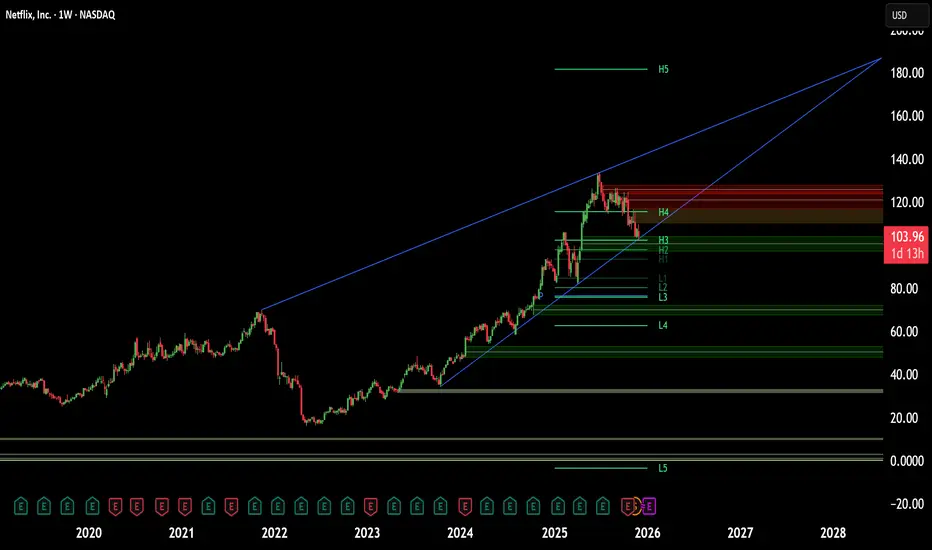
Eyes on NetflixAt the moment NASDAQ:NFLX , it is completing an ABC corrective pattern and has already tested and respected the major historical blue support line. Wave C is unfolding within a falling wedge, a structure that more often than not resolves to the upside and is typically bullish.
If the wedge breaks upward as expected, the stock should begin its move toward the upper trendline of the broader channel. Once price reaches that level, we will evaluate whether to take profits at resistance or anticipate a breakout above the channel, which would indicate a much larger bullish continuation.
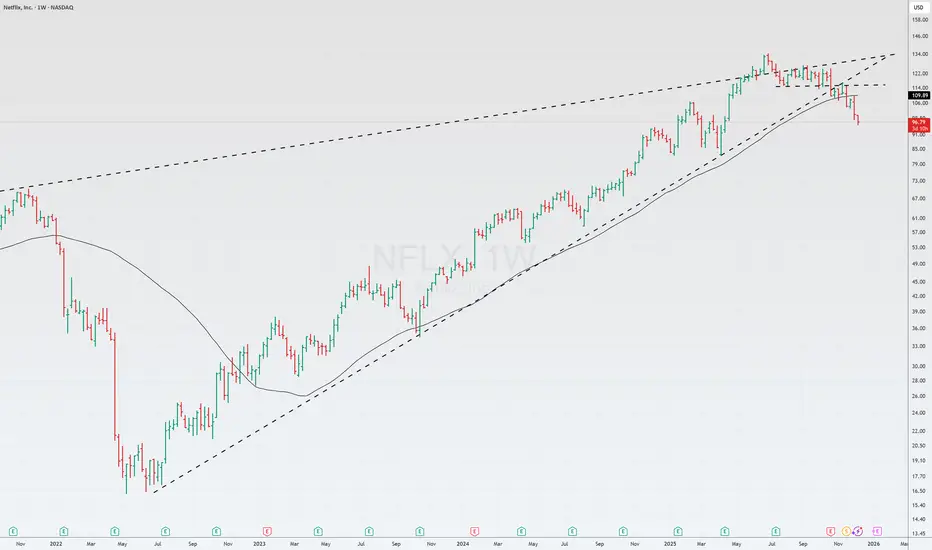
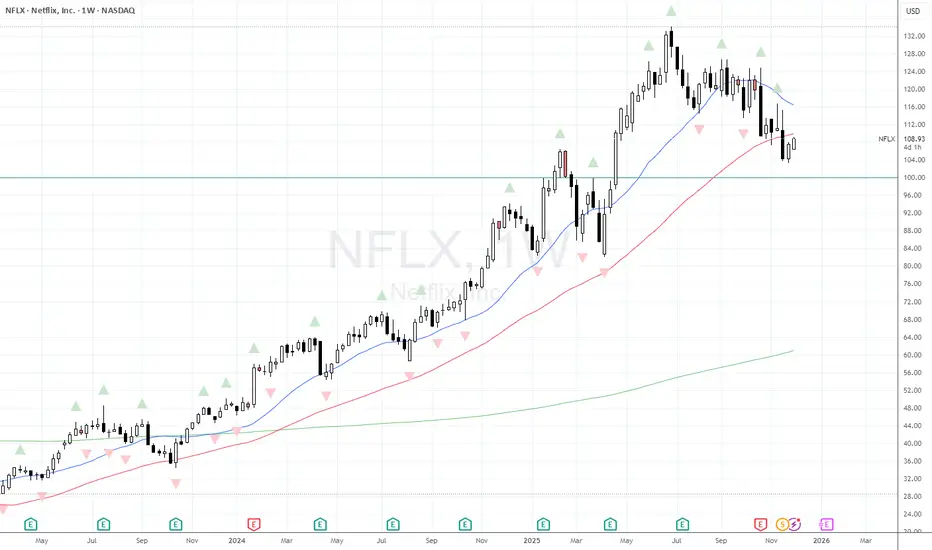
Next move for $NFLX down to $100?#NFLX had a great run until the summer of 2025 but has struggled since then. I'm sure there's many reasons for that - the concerns about the Warner Bros acquisition will undoubtedly be one of them. However from a technical standpoint the price has continued to make lower lows as it retreated from $132.
We know find ourself closing last week beneath the Weekly 50MA, which it hasn't done for approx 2 years. Is this an area for a bounce? There's been lots of positive news about the release of the final series of Stranger Things (I haven't watched it - but then I don't need to as I have a 14 year old niece who loves it, and insists on giving the family a complete run down of the show!)
Personally I would want to see price rally back into the area of the 20 & 50 Weekly MA's before rolling over and then moving lower to $100 - which could be a stronger level of support, and a real inflection point where price looks to make a decision.
NFLX — Bullish Structure Above 32.65 with Target at 154.29Summary:
Netflix (NFLX) maintains a broader bullish structure as long as price holds above the major key support at 32.65. Current retracement remains healthy within the Fibonacci levels, and buyers are still defending the mid-range supports.
Analysis:
Price is currently consolidating between the 0.5 Fib (85.28) and the 0.75 Fib (119.79) after a strong impulsive rally from the 32.65 base. The inability of bears to break below 32.65 confirms this zone as a long-term structural support. As long as price stays above this level, deeper bearish continuation remains unlikely.
A reclaim above 119.79 (0.75 Fib) would reopen the path toward 140.49 (0.9 Fib) and ultimately the major target at 154.29 (1.0 extension).
On the downside, a corrective pullback toward 71.48 (0.4 Fib) remains possible but does not invalidate the bullish macro trend unless 32.65 is broken.
Trading Strategies and Index Investment1. Introduction: Trading vs Index Investing
Trading involves buying and selling financial instruments in shorter timeframes to profit from price fluctuations. Index investing, on the other hand, focuses on long-term wealth creation by tracking the performance of a market index like the Nifty 50, Sensex, S&P 500, or NASDAQ 100.
While traders depend on market timing, momentum, volatility, and technical setups, index investors rely on discipline, low cost, and time-driven compounding. Both approaches serve different objectives and require different skill sets.
2. Major Trading Strategies Used in Financial Markets
A. Intraday Trading
Intraday trading refers to buying and selling within the same day. Traders aim to capture small price movements and typically close all positions before the market shuts.
Key techniques include:
Breakout Trading: Entering when the price breaks above resistance or below support.
Volume and Volatility Trading: Using spikes in volume or volatility to anticipate intraday trends.
Scalping: Making multiple quick trades to profit from tiny price changes.
Skill requirement: Strong technical analysis, risk control, and emotional discipline.
B. Swing Trading
Swing trading targets price moves spanning several days to weeks. This strategy is ideal for those who want to avoid the stress of intraday noise yet prefer active participation.
Popular tools include:
Trendlines and channels
Moving averages (20-, 50-, 200-day)
RSI, MACD, Stochastic
Support-resistance zones
Swing traders capitalize on market swings that occur within broader trends.
C. Position Trading
Position traders hold assets for weeks or months, combining technical triggers with macroeconomic analysis.
Key metrics:
Interest rates
Economic cycles
Earnings growth (for equities)
Commodity cycles
This strategy suits individuals seeking medium-term returns without daily monitoring.
D. Momentum Trading
Momentum traders buy assets that are rising and sell assets that are falling. The philosophy is simple: “the trend is your friend.”
Indicators include:
Relative Strength Index (RSI)
MACD
Rate of Change (ROC)
Volume analysis
Momentum strategies perform well during strong trending markets but can suffer in sideways markets.
E. Algorithmic and Quantitative Trading
Algo trading uses computer programs to execute trades based on mathematical models. Many institutions and advanced retail traders employ:
High-frequency trading (HFT)
Statistical arbitrage
Mean reversion models
Machine learning–based systems
Algo trading removes human emotions and allows ultra-fast executions.
F. Options Trading Strategies
Options expand trading flexibility through strategies like:
Buying Calls/Puts (directional bets)
Selling Options (income generation)
Spreads (Bull Call, Bear Put, Iron Condor)
Hedging portfolios
Options allow traders to manage risk, speculate, or generate regular income.
3. Core Principles Behind Successful Trading Strategies
Regardless of strategy, certain principles determine long-term success:
A. Risk Management
The most critical factor. Traders must fix:
Stop-loss levels
Position sizing
Maximum loss per trade
Daily loss limits
Without discipline, even the best strategy fails.
B. Psychology and Emotional Control
Fear, greed, and impatience lead to poor decisions. Professional traders emphasize:
Sticking to the plan
Avoiding revenge trading
Staying consistent
Recording trades and reviewing mistakes
C. Market Structure and Trend Recognition
Understanding trends, ranges, liquidity zones, and market phases helps traders avoid confusion and noise.
D. Backtesting and Strategy Optimization
Before risking real capital, strategies must be tested on historical data. Key evaluation metrics include:
Win rate
Average return per trade
Maximum drawdown
Risk-reward ratio
4. Introduction to Index Investing
Index investing involves buying a basket of securities that track a broad market index. It is a passive investment strategy, focused on long-term wealth building without frequent buying or selling.
Examples of popular indices:
India: Nifty 50, Sensex, Nifty Next 50, Nifty Bank
Global: S&P 500, Dow Jones, NASDAQ 100, FTSE 100
Index investing is typically done through:
Index funds
Exchange-Traded Funds (ETFs)
Index-based systematic investment plans (SIPs)
5. Why Index Investing Works
A. Broad Diversification
An index spreads investment across multiple sectors and companies, reducing single-stock risk.
B. Low Costs
Since there is no active fund manager, expense ratios are much lower.
C. Long-Term Compounding
Index investing leverages time rather than timing. Markets generally rise over the long run as economies expand.
D. Consistent Performance
Most actively managed funds fail to beat major indices over long periods. Index funds often outperform because they avoid high fees and complex decisions.
6. Popular Index Investment Strategies
A. Buy and Hold
Investing a lump sum or systematically and holding for decades. Suitable for retirement and long-term goals.
B. Systematic Investment Plans (SIP)
Investing fixed amounts regularly. Benefits:
Rupee cost averaging
Disciplined investing
Emotional neutrality
C. Smart Beta Strategies
Smart beta funds track indices based on factors like:
Value
Momentum
Low volatility
Quality
Equal weight
These offer a mix of passive and active management.
D. ETF Trading and Tactical Allocation
Some investors actively buy and sell index ETFs based on:
Market cycles
Interest rates
Sector rotations
This blends trading with index investing.
7. Combining Trading Strategies with Index Investing
Many professional investors use a hybrid approach:
Core Portfolio: 60–80% in index funds/ETFs for long-term stability
Satellites: 20–40% in active trading or high-conviction positions
This maintains balance between growth and risk.
8. Final Thoughts
Trading strategies and index investing represent two ends of the investment spectrum—one active and tactical, the other passive and long-term. Traders seek to capitalize on market inefficiencies, short-term momentum, or technical signals. Index investors rely on the power of diversification, low cost, and long-term market growth.
A smart market participant understands both worlds and uses them based on their financial goals, risk tolerance, and time availability. Successful wealth creation doesn’t depend on choosing one over the other, but on aligning them intelligently with one’s personal financial roadmap.