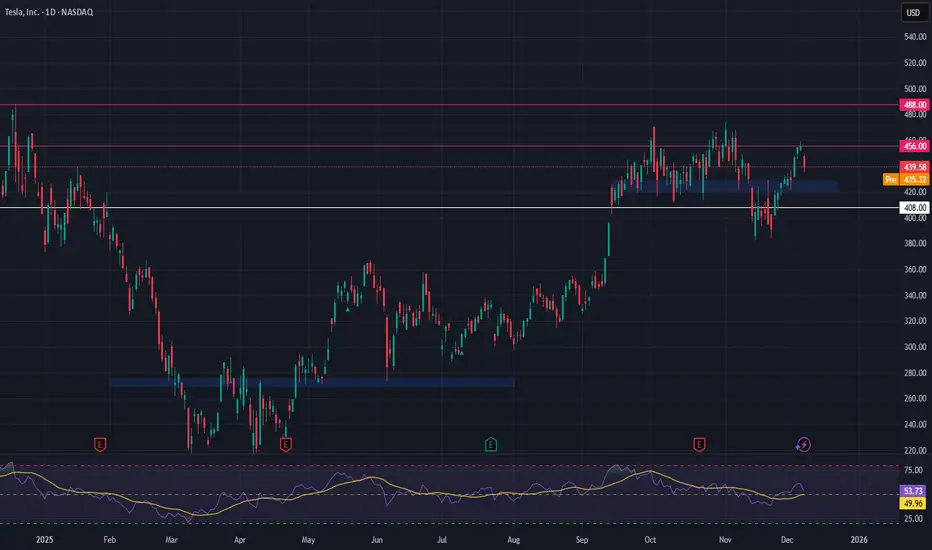
Tesla Rejected at Key Breakout — Bullish Structure Still Intact NASDAQ:TSLA just got rejected at a major breakout level, but the bigger picture remains bullish. Price action shows a healthy uptrend with momentum building, suggesting this could just be a pause before continuation. As volume trends higher on dips, it hints that buyers are still active—just waiting for cleaner levels.
📅 With the FOMC coming up, expect potential de-risking or volatility across markets. That could drag TSLA lower short term, but it also opens the door for a cleaner entry near strong support. Watching the $421–$428 range for signs of a bounce or consolidation.
🔽 Trade Plan
Entry Zone: $421 – $428
Take Profit 1: $456
Take Profit 2: $488
Stop Loss: $408
Market insights
The IMF and Currency Stabilization in Global Trade1. The Role of the IMF in Currency Stability
The IMF was established in 1944 during the Bretton Woods Conference to oversee the international monetary system and prevent the financial instability that contributed to the Great Depression. One of its key functions is to provide a framework where exchange rates can remain relatively stable. Stable currencies are essential for smooth global trade because fluctuations in exchange rates create uncertainty in import and export prices, impacting businesses, investors, and consumers alike.
By providing economic guidance, financial resources, and policy advice, the IMF helps member countries avoid currency crises, manage their monetary policies effectively, and maintain confidence in their national currencies.
2. Mechanisms of Currency Stabilization
The IMF uses a combination of financial tools, policy advice, and monitoring to stabilize currencies globally:
a. Financial Assistance Programs:
Countries experiencing balance of payments problems or facing a currency crisis can turn to the IMF for loans. These loans are often conditional upon implementing economic reforms that strengthen fiscal discipline, control inflation, and restore investor confidence. By providing temporary financial support, the IMF helps countries prevent devaluation of their currency, stabilize the economy, and protect trade flows. For instance, during the Asian Financial Crisis in 1997-1998, IMF assistance helped countries like South Korea and Thailand stabilize their currencies and restore market confidence.
b. Exchange Rate Surveillance:
The IMF monitors exchange rate policies of its member countries and evaluates whether they are consistent with economic fundamentals. Through its "Article IV Consultations," the IMF assesses macroeconomic policies, currency stability, and external sector performance. When misalignment or excessive volatility is detected, the IMF provides policy recommendations aimed at reducing speculative attacks and maintaining exchange rate stability.
c. Special Drawing Rights (SDRs):
SDRs are international reserve assets created by the IMF to supplement member countries' official reserves. SDRs can be exchanged for freely usable currencies and serve as a buffer during crises. By increasing global liquidity, SDRs help countries maintain currency stability without resorting to abrupt devaluations that could disrupt trade.
d. Technical Assistance and Capacity Building:
Beyond financial support, the IMF provides technical assistance in areas such as monetary policy, exchange rate management, and debt sustainability. By helping countries design better fiscal and monetary frameworks, the IMF enhances the resilience of national currencies against external shocks and speculative attacks.
3. Stabilizing Global Trade Through Currency Support
Currency stability is directly linked to the health of global trade. Stable currencies reduce uncertainty in import and export pricing, lower transaction costs, and attract foreign investment. When a country’s currency is volatile, it can lead to inflation or deflation in the domestic market, making trade agreements difficult to honor. The IMF’s interventions, therefore, play a crucial role in maintaining the predictability necessary for global commerce.
For example, if a developing country faces a sudden currency depreciation, the cost of imported goods rises sharply. This can lead to inflation, reduce purchasing power, and disrupt trade agreements. By providing IMF loans and policy guidance, the country can stabilize its currency, maintain international trade flows, and avoid a domino effect on regional economies.
4. Crisis Prevention and Management
The IMF is also central in crisis prevention. By monitoring global economic trends and exchange rates, the IMF can identify vulnerabilities before they escalate into full-blown currency crises. Early intervention may include policy recommendations, reserve support, or coordinated efforts with other international institutions.
A notable example is the European debt crisis in the early 2010s. Countries like Greece, Portugal, and Ireland received IMF support to stabilize their economies and prevent currency collapses. This intervention helped prevent broader disruption in the eurozone and protected trade relationships with other countries.
5. Promoting Confidence and Investor Trust
Currency stabilization is not only about technical support but also about psychological confidence. Investors and international traders are more likely to engage with a country that demonstrates stability in its currency. The IMF’s oversight and policy interventions signal to global markets that a country is taking steps to manage its monetary system prudently. This confidence reduces speculative attacks on currencies and lowers the risk premium on trade and investment, indirectly promoting a stable environment for global commerce.
6. Challenges in Currency Stabilization
Despite its efforts, the IMF faces challenges in stabilizing currencies:
Global Economic Interconnectedness: Currency crises in one country can quickly spread due to globalized trade and finance. Stabilizing one currency might not be enough if regional contagion occurs.
Domestic Policy Resistance: IMF programs often require austerity measures, monetary tightening, or structural reforms. These policies can be politically unpopular, leading to delays or partial implementation, which may reduce effectiveness.
Speculative Pressure: Even with IMF support, currencies are subject to market speculation, which can create volatility that is difficult to manage purely through policy interventions.
7. IMF’s Evolving Role in a Modern Context
In recent years, the IMF has adapted its role to address new challenges in currency stabilization:
Global Liquidity Support: During the COVID-19 pandemic, the IMF provided unprecedented liquidity support to member countries, allowing them to stabilize their currencies and maintain trade flows.
Debt Sustainability Focus: IMF programs now increasingly consider long-term debt sustainability to prevent future currency crises that might threaten global trade.
Collaboration with Other Institutions: The IMF often works alongside the World Bank, regional development banks, and central banks to coordinate policy responses to currency instability and trade disruptions.
8. Conclusion
In the complex ecosystem of global trade, currency stability is essential. Fluctuating exchange rates can disrupt trade agreements, create inflationary pressures, and deter investment. The IMF serves as a global stabilizer by providing financial assistance, monitoring exchange rates, issuing SDRs, and advising on economic policy. Its interventions not only stabilize individual currencies but also support the broader global trade environment by promoting confidence, predictability, and sustainable economic policies.
While challenges remain, including market speculation, domestic resistance, and regional contagion, the IMF’s role in currency stabilization is critical for the health of the global economy. By continuing to evolve and coordinate with other institutions, the IMF helps ensure that currencies remain reliable mediums of trade, facilitating economic growth, investment, and prosperity worldwide.
tsla will soon make a decision on the daily we are waiting for conformation to new all time highs.
we will either sweep the highs on October 03 and November 03 and spill and create a inverted head and shoulder.
or get a bull break out and never see 450 again
both scenarios are super bullish just need conformation on smaller times to play out and see what kind of candle we get on closing for the week.
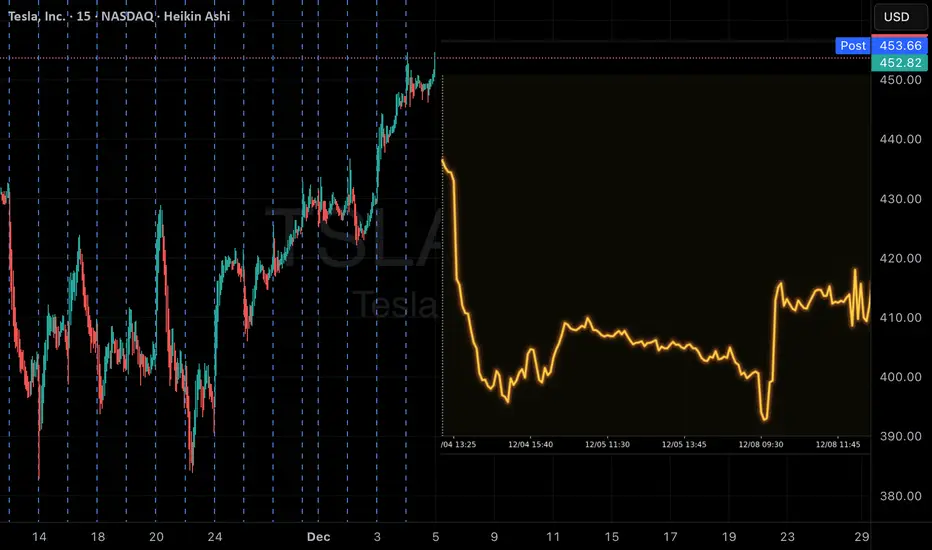
TSLA Market Preview – December 5TSLA is pushing into a major decision zone after a strong multi-day run. The structure is clean: higher highs, higher lows, and a steady grind along the rising trendline. But price is now pressing directly into a heavy supply area that has rejected TSLA multiple times in the past. The next move will be defined by whether buyers can absorb this overhead liquidity.
Structure Overview (1H)
The broader trend remains bullish. Buyers have been in control since reclaiming the $430s, and momentum has carried price straight into the $452–456 supply block — the same zone where sellers previously stepped in aggressively. TSLA is also riding a rising channel, and price is now hovering right at the upper trendline.
This is typically where you see either a breakout continuation… or the start of a pullback.
Below, the key demand sits at $445 → $438, with a deeper pocket near $424. These zones align with strong accumulation footprints and are where institutions previously positioned themselves.
Short-Term View (15M)
The 15M chart shows a clean BOS earlier in the day, followed by a controlled consolidation right under resistance. That’s what you usually see before one more push. But the red SMC sell zone overhead is rejecting each attempt to break through — that is the first sign of exhaustion.
You also have a CHoCH forming underneath, meaning the market is hinting at a shift in short-term momentum. If TSLA loses the 15M trendline, that shift becomes official and sellers will have the upper hand.
GEX Outlook for Tomorrow
Gamma tells a very simple story:
* Major CALL resistance / positive GEX: $455–$460
* Neutral magnet zone: $448–$452
* PUT support: $445 → $438 → $424
Dealers are positioned in a way that limits clean trending movement unless price escapes these ranges. A push above $456 could squeeze toward $460–462, but rejection here would force price back toward the magnet zone at $448–452.
What I Expect for Dec 5
My outlook leans neutral-to-bearish unless TSLA proves it can break and hold above $456. The move has been extended, momentum is slowing, and we’re sitting at the most crowded liquidity layer on the chart.
If buyers want higher, they must show:
* A clean breakout → retest → hold above $456
* Strong volume through the supply block
* A new BOS on lower timeframes to confirm continuation
If sellers take control:
* Losing the rising trendline opens the door to $448
* Below that, $445 becomes the first real bounce zone
* Deeper pullback targets sit at $438 and $424
Trade Thoughts
If bullish:
The only setup worth taking is the break and hold above $456, with room toward $460 → $462.
If bearish:
The best risk-reward is a rejection play from $454–$456, aligning with the SMC sell zone and GEX resistance.
Targets: $448 → $445 → $438 if momentum accelerates.
Avoid taking trades in the middle of the range — that’s where TSLA will chop.
Disclaimer
This outlook is for educational purposes only. It reflects personal analysis and opinions based on price action, structure, and GEX data. Always trade your own plan and manage risk carefully.
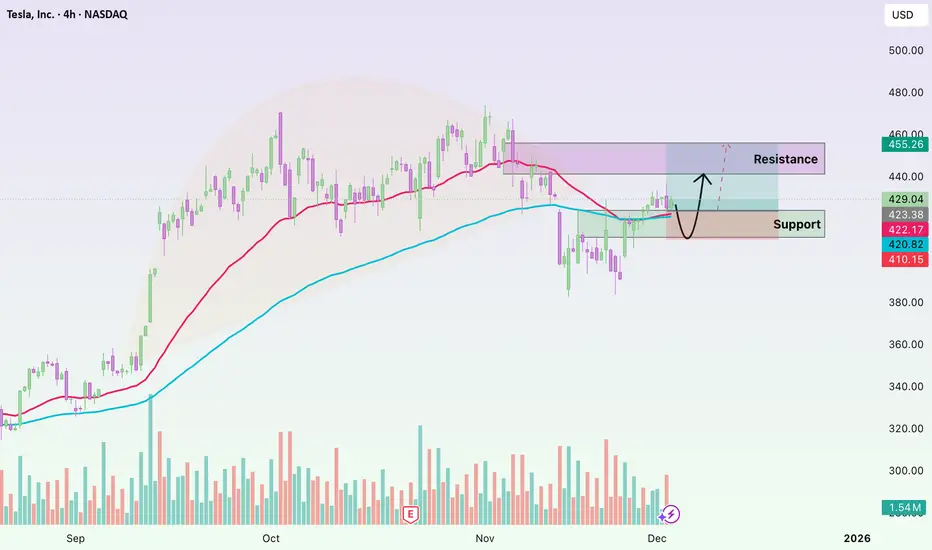
Tesla: Do Converging EMAs Signal a Decisive Moment?Hello everyone, looking at Tesla’s current rebound, my first impression is that the market is entering a rather sensitive “trend-defining zone.” After a strong decline since mid-November, TSLA has finally bounced and climbed above the EMA 34, moving straight into a test of the EMA 89 — where the two moving averages are creating a technically noteworthy confluence area.
In the past few weeks, Tesla consistently stayed below both the EMA 34 and EMA 89 , reflecting a clear and somewhat heavy downtrend. But the current recovery has partially changed the picture: buying momentum has returned strongly enough to push price above the EMA 34 and close in on the EMA 89. This is typically the moment when the market reveals its true intention — either continuing upward to confirm a phase shift, or pausing because buying pressure has not yet matured.
Volume has increased but remains relatively modest, indicating that large capital has not truly stepped in. This makes the 435–440 USD resistance zone a significant challenge: Tesla has been rejected here multiple times, and if buying power lacks depth, price may easily turn downward again.
Wishing everyone effective trading and resilience through every market movement!
Catching Trends Before They Run — JYL Trend Pro V1.0 BETA 1. What is JYL Trend Pro V1.0 BETA?
JYL Trend Pro is my personal trend‑following strategy built around a proprietary state engine I call JYL Trend.
Instead of staring at raw price bars and guessing “is this a real trend or just noise?”, the script translates price action into a clear sequence of states like:
“GO!” → first confirmation that a potential new long trend is starting
“GREEN LIGHT” → healthy bullish continuation
“BULLISH!” → aggressive momentum phase
“WATCH OUT!” → first warning that bullish conditions might be ending
“RED LIGHT” → sustained bearish pressure
“BEARISH!” → aggressive downside momentum
All of this happens automatically in the background. You don’t need to calculate anything or tweak formulas — you just read the states and trade your playbook.
Screenshot:
1drv.ms
1drv.ms
2. The 3 Modes: Stable / Impulsive / IMP+
JYL Trend Pro V1.0 BETA actually contains three personalities in one strategy.
You can switch between them with a single input depending on your style and market conditions.
🧊 2.1 Stable – “Let the trend breathe”
Stable mode is built for traders who prefer cleaner, slower signals:
Focus on the first strong trend confirmation (first “BULLISH!” or “BEARISH!” segment)
Avoids over‑trading inside choppy ranges
Takes partial exits when the trend starts weakening
Fully closes when the color flips (bullish → bearish or vice versa)
This is the “I don’t want to click too much, just ride the move and manage risk” profile.
⚡ 2.2 Impulsive – “Hit the gas when momentum appears”
Impulsive mode is more aggressive:
Allows earlier entries when the trend starts to accelerate
Adds to positions when new strong segments appear
Uses quick “fast exits” when the trend loses steam
Still keeps a safety net: color‑flip exits to avoid being stuck on the wrong side
If Stable is your cruise control, Impulsive is you manually stepping on the gas when you see an opportunity.
🚀 2.3 IMP+ – “Advanced scaling & risk logic on top of Impulsive”
IMP+ takes Impulsive logic and adds an advanced layer of:
Configurable early entries in strong moves (for traders who want a bit more “front‑running” of trends)
Smart adds inside the continuation zone
-After the BULLISH! / BEARISH! impulse, IMP+ looks for a specific type of continuation candle to add
-If you added early, it will skip the later add to avoid over‑leveraging the same move
Dynamic partial exits after big segments
-Scales out more as the move stretches, so you lock in profit without killing the entire trend
Open‑to‑open exhaustion exits
-After a strong trend leg (BULLISH! or BEARISH!), if the next candle opens too close to the previous one (configurable packages), IMP+ can treat it as exhaustion / hesitation and close the position — before the big reversal happens
In short: IMP+ is for traders who want the most “tactical” behavior — early entries, structured scaling, and more nuanced exit logic — while still being rules‑based, not discretionary.
3. How I Personally Use It
Everyone’s risk tolerance and timeframe are different, but here’s how I like to combine the modes:
On higher timeframes (4H / Daily):
→ I usually prefer Stable to catch the big swings and avoid noise.
On intraday momentum names:
→ I lean toward Impulsive or IMP+ to enter earlier and scale more actively.
When markets are clearly trending:
→ IMP+ is my “all tools unlocked” mode: early entries, adds after strong legs, and dynamic profit taking.
The trade direction filter lets me choose:
Only LONG
Only SHORT
Or both directions (for indices / futures / FX etc.)
That makes it flexible for different instruments and market regimes.
4. What this strategy is not
To keep this idea honest & within TradingView’s rules:
It is not a holy grail
It does not guarantee profit
Backtests do not equal future performance
You still need position sizing, risk management, and a plan
JYL Trend Pro is simply a framework that:
Structures entries (initial + adds)
Structures exits (partial + full)
Gives you consistent rules instead of emotional decisions
5. How to try it
This is the JYL Trend Pro V1.0 BETA version.
The strategy is available on TradingView as a protected / invite‑only script.
If you’d like to:
See how the different modes (Stable / Impulsive / IMP+) behave on your favorite tickers
Study the entry / add / reduce / exit logic on historical moves
Or just explore a different way to visualize trend sequences (“GO! / GREEN LIGHT / BULLISH! / WATCH OUT! / RED LIGHT / BEARISH!”)
👉 Check my profile for the script and more details.
If this idea helps you or gives you inspiration, I’d really appreciate a like, comment, or follow — it tells me to keep sharing more tools and improvements.
Trade safe & test everything before going live. 🙏
TSLA Weekly Alert: Katy AI Signals Puts Amid Bearish MomentumTSLA Weekly Trade Info – 2025-12-04
Instrument: TSLA
Trade Type: BUY PUTS (Katy AI Predicted)
Strike Focus: $395.00
Entry Range: $0.85
Target 1: $1.27 (≈50% gain)
Stop Loss: $0.63 (≈26% loss)
Expiry: 2025-12-12 (8 days)
Confidence: 58% (Speculative)
Weekly Momentum: NEUTRAL (-0.74% 1W)
Options Flow: Bearish, PCR 1.69 (strong institutional put positioning)
Analysis Summary:
Katy AI Signal: Bearish, predicts $447.54 → $435.96 (-2.59%) over 8 days
Technical: Resistance $454.26, support $422.12; multi-week bearish trend confirmed
News Sentiment: Mixed – EV leadership praised, but sector risks (AI correction, rate uncertainty)
Conflict Note: LLM suggests buy calls, but Katy AI predicts puts; follow Katy AI for direction
Risk: HIGH – low conviction, mixed signals, high PCR, speculative weekly trade.
Recommendation: Small position only due to high uncertainty.
TSLA — [2D] WEEK 49 TREND REPORT | 12/04/2025TSLA — WEEK 49 TREND REPORT | 12/04/2025
Ticker: NASDAQ:TSLA
Timeframe: 2D
This is a reactive structural classification of TSLA based on the weekly chart as of this timestamp. Price conditions are evaluated as they stand — nothing here is predictive or forward-assumptive.
⸻
1) Current Trend Condition [ Numbers to Watch ]
Current Price @ 447.66$
• Trend Duration : +7 Days (Bullish)
• Trend Reversal Level ( Bearish ): 418.70$
• Trend Reversal Level ( Bearish Confirmation ): 428.42$
• Pullback Support : 413.70$
• Correction Support : 354.94$
⸻
2) Structure Health
• Retracement Phase:
Uptrend (operating above 78.6%)
• Position Status:
Healthy (price above both structural layers)
⸻
3) Temperature :
Warming Phase
⸻
4) Momentum :
Bullish
⸻
Author’s Note
UPWARD STRUCTURAL ALIGNMENT
This mark reflects a point where market behavior supported the continuation of the existing upward direction. It does not imply forecasting or targets — it simply notes where strength became observable within the current trend. Its meaning holds only while price continues to respect the broader structural levels that define the trend.
⸻
Methodology Overview
This classification framework evaluates directional conditions using internal trend-interpretation logic that references price behavior relative to its structural layers. These relationships are used to identify when price movement aligns with the framework’s criteria for directional phases, transition points, or regime shifts. Visual elements or structural labels reflect these internal interpretations, rather than explicit trading signals or preset indicator crossovers. This framework is observational only and does not imply future outcomes.
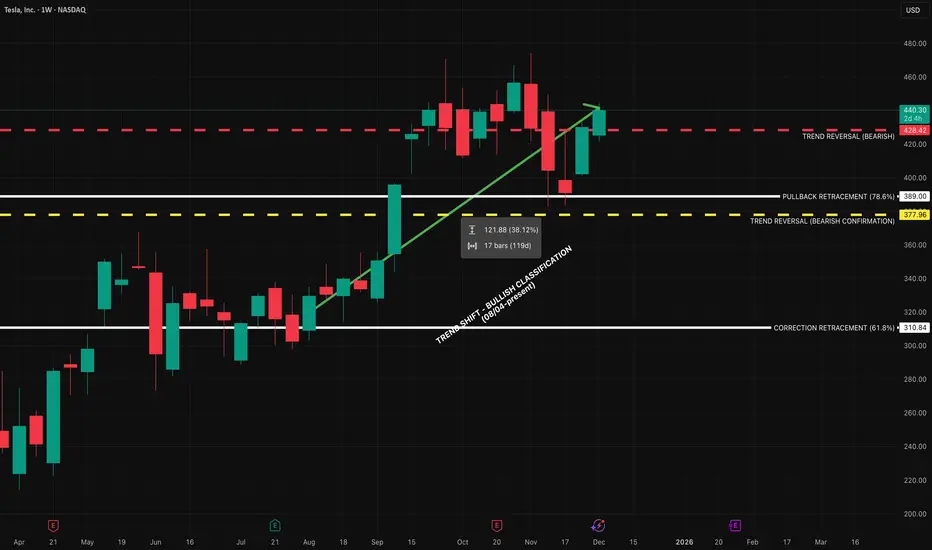
TSLA — WEEK 49 TREND REPORTTSLA — WEEK 49 TREND REPORT
Ticker: NASDAQ:TSLA — 12/03/2025 @ 440.31$
Timeframe: WEEKLY
This is a reactive structural classification of TESLA based on the weekly chart as of this timestamp. Price conditions are evaluated as they stand — nothing here is predictive or forward-assumptive.
⸻
1) Current Trend Condition
• Trend Duration: +17 weeks (Bullish)
• Trend Reversal Level (Bearish): 428.42$
• Trend Reversal Level (Bearish Confirmation): 377.96$
• Pullback Support : 389$
• Correction Support : 310.84$
⸻
2) Structure Health
• Retracement Phase:
Uptrend (operating above 78.6%)
• Position Status:
Healthy (price above both structural layers)
⸻
3) Temperature :
Cooling Phase
⸻
4) Momentum :
Bullish
⸻
5) Market Sentiment (RETAIL TRADER LINE)
Bullish
⸻
Author’s Note
This analysis is fully reactive, not predictive. Market conditions, trend structure, and behavior are classified as they appear in real time. The objective is to identify where directional shifts first occurred, where structural integrity remains intact, and where it would begin to weaken if key levels were breached.
Predictive analysis projects outcomes that do not exist yet. Without price confirmation, prediction is built on baseless assumptions. This framework avoids that entirely by responding only to verified structural changes and live conditions.
The levels shown simply identify where the current trend structure first shifted and where it would begin to lose integrity if breached. Recognizing these boundaries allows for clearer interpretation of market behavior without relying on forward guarantees, speculative projections, or unsupported assumptions.
⸻
Methodology Overview
This classification framework evaluates directional conditions using internal trend-interpretation logic that references price behavior relative to its structural layers. These relationships are used to identify when price movement aligns with the framework’s criteria for directional phases, transition points, or regime shifts. Visual elements or structural labels reflect these internal interpretations, rather than explicit trading signals or preset indicator crossovers. This framework is observational only and does not imply future outcomes.
TSLA Breakout Above $360 Opens Swing Trade SetupTesla broke the $360 resistance four days ago, a level that had been holding price down for the last 120 days. Once broken, price surged quickly toward the $420 zone.
In my view, if we get a chance to buy again near the 370 green support zone, it would be a great swing trade opportunity — especially with the rising trendline still intact.
🔍 Technical Analysis
Current Price: 420.95
360 acted as resistance for months, now flipped to strong support.
Green zone (360–375) aligns with the uptrend, key area to watch for re-entry.
🛡️ Support & SL
🟢 370 zone | SL: 345
🧭 Outlook
Bullish Case: Hold above 370 → continuation toward 450–475.
Bearish Case: Break below 345 → deeper correction.
Bias: Bullish while above 370.
🌍 Fundamental Insight
Valuation: Tesla trades at a relatively high P/E ratio (60–70 range) compared to traditional automakers, reflecting growth expectations rather than current earnings.
Revenue Growth: While margins have compressed due to price cuts, top-line growth remains supported by strong EV demand and expansion in new markets.
Innovation & AI: Tesla’s positioning in AI, autonomous driving, and energy storage continues to attract investor optimism beyond just vehicle sales.
Risks: Competition from other EV makers and margin pressure are key risks investors are watching.
✅ Conclusion
Tesla’s breakout above 360 ended months of pressure. A pullback into the green support zone would be a strong swing entry with trendline confluence. While valuation is stretched versus peers, bullish momentum and growth expectations continue to support the stock.
⚠️ Disclaimer
This analysis is for educational purposes only and does not constitute financial, investment, or trading advice.
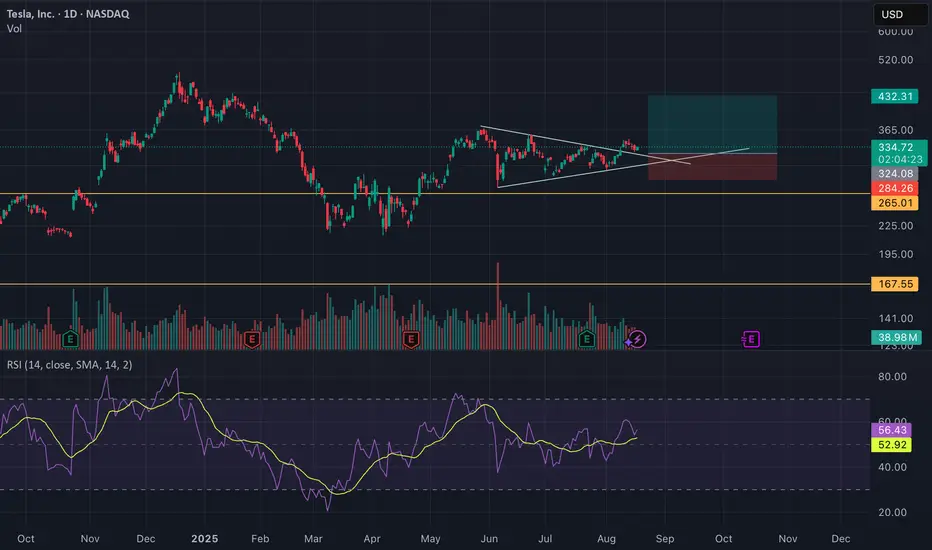
Going Short TESLA HereTrading Fam,
I'm taking my first ever short here since implementing my new indicator. It has been killing it on the long side. We've exited our last 17 trades, all for wins, with an average profit of 30% per trade and our portfolio is up over 86% on the year. Now, it's time to test the short signals. We received two here on TSLA. I've taken a small entry since this is my first short, representing around 9% of the portfolio total. I'm going to target $350 but will not take more than a 7% loss, thus my stops are set at $476 bring the rrr on this trade entry to 1:3. Let's see how this goes.
✌️Stew
Tesla May Have Charged its BatteriesTesla has chopped sideways for months, but some traders may think the EV maker is ready to start moving again.
The first pattern on today’s chart is the $420 level. TSLA held that price several times between mid-September and mid-November. It briefly became resistance when the stock dipped but now the shares are holding above it again.
Second, prices bounced slightly above $380 in two separate weeks last month. That double bottom could be viewed as a bullish reversal pattern.
Next, the 8-day exponential moving average (EMA) is nearing a potential cross above the 21-day EMA. MACD has also started rising. Those may signal improving short-term trends.
Finally, TSLA is a highly active underlier in the options market. (Its average volume of 2.3 million contracts ranks second in the S&P 500, according to TradeStation data.) That may help traders take positions with calls and puts.
TradeStation has, for decades, advanced the trading industry, providing access to stocks, options and futures. If you're born to trade, we could be for you. See our Overview for more.
Past performance, whether actual or indicated by historical tests of strategies, is no guarantee of future performance or success. There is a possibility that you may sustain a loss equal to or greater than your entire investment regardless of which asset class you trade (equities, options or futures); therefore, you should not invest or risk money that you cannot afford to lose. Online trading is not suitable for all investors. View the document titled Characteristics and Risks of Standardized Options at www.TradeStation.com . Before trading any asset class, customers must read the relevant risk disclosure statements on www.TradeStation.com . System access and trade placement and execution may be delayed or fail due to market volatility and volume, quote delays, system and software errors, Internet traffic, outages and other factors.
Securities and futures trading is offered to self-directed customers by TradeStation Securities, Inc., a broker-dealer registered with the Securities and Exchange Commission and a futures commission merchant licensed with the Commodity Futures Trading Commission). TradeStation Securities is a member of the Financial Industry Regulatory Authority, the National Futures Association, and a number of exchanges.
Options trading is not suitable for all investors. Your TradeStation Securities’ account application to trade options will be considered and approved or disapproved based on all relevant factors, including your trading experience. See www.TradeStation.com . Visit www.TradeStation.com for full details on the costs and fees associated with options.
Margin trading involves risks, and it is important that you fully understand those risks before trading on margin. The Margin Disclosure Statement outlines many of those risks, including that you can lose more funds than you deposit in your margin account; your brokerage firm can force the sale of securities in your account; your brokerage firm can sell your securities without contacting you; and you are not entitled to an extension of time on a margin call. Review the Margin Disclosure Statement at www.TradeStation.com .
TradeStation Securities, Inc. and TradeStation Technologies, Inc. are each wholly owned subsidiaries of TradeStation Group, Inc., both operating, and providing products and services, under the TradeStation brand and trademark. When applying for, or purchasing, accounts, subscriptions, products and services, it is important that you know which company you will be dealing with. Visit www.TradeStation.com for further important information explaining what this means.
TSLA Post-Earnings Momentum – Don’t Miss!TSLA QuantSignals V3 – Weekly Trade Alert (2025-12-02)
Trade Direction: BUY CALLS (Bullish)
Confidence: 65% | Conviction: Medium
Recommended Strike: $430.00
Entry Range: $7.35
Target 1: $11.68 | Target 2: $15.43
Stop Loss: $5.11
Expiry: 2025-12-05 (3 days)
Position Size: 2% of portfolio
⚠️ Risk & Conflict Notes
Katy AI shows neutral bias with subtle bearish trend (-0.89% predicted move, 50% confidence), conflicting with bullish weekly momentum.
RSI overbought at 74 → potential pullback risk.
Options flow bearish (PCR 1.60) suggests institutional hedging; size position carefully.
Moderate risk warning: trade requires monitoring due to conflicting signals and short expiry.
💡 Trade Insight
Weekly bullish momentum +1.65% with trending regime supports short-term upside potential.
Technicals: MACD histogram bullish, VWAP support at $428.73, price near 91.6% of weekly range.
Timing advantage: leverage short-term momentum with 3-day expiry options.
Balanced delta (0.515) and tight stop loss help mitigate downside risk.
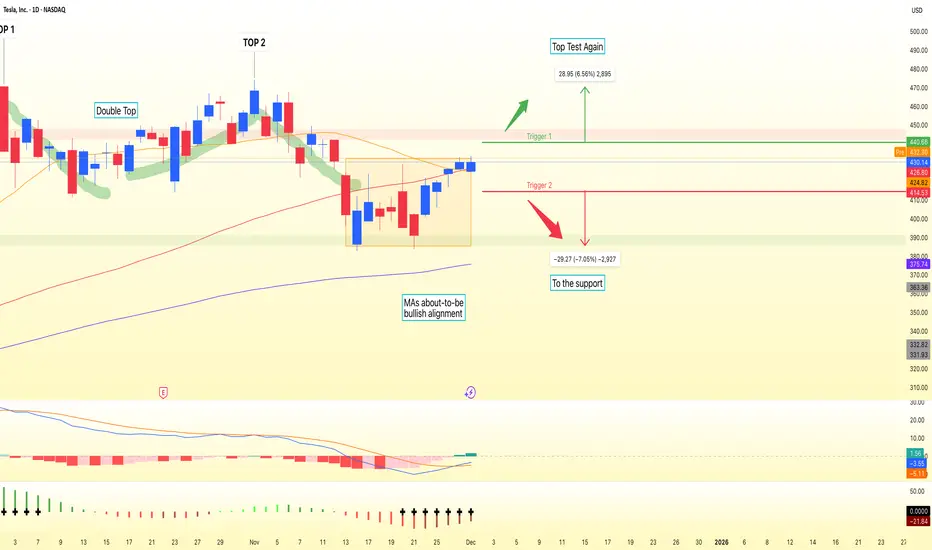
TSLA Range Breakout SetupTesla on the daily chart is stuck in a tight battleground between structure and momentum. Price is consolidating below the 20- and 60-day moving averages after a bearish Market Structure Shift in early November, while still holding above the long-term 120-day moving average. The result is a classic Bear Flag look: a sharp downside pole followed by a choppy, upward-sloping consolidation between the $400 demand zone and $440 supply zone.
As long as TSLA trades inside this band, it’s a range game. The primary path is continuation lower if the Bear Flag resolves as expected. A daily close below roughly $415 would put pressure on the $400 support and open the way toward the $385 area, aligning with the flag breakdown logic and recent downside momentum. For this bearish continuation view, a sustained close back above $430–440 would effectively invalidate the pattern and suggest sellers are losing control.
On the flip side, a clean daily close above $440 would flip the script, clearing both key moving averages and turning the zone into support. That breakout could unlock a move toward the prior October swing region around $470, with the idea invalidated if price drops back into the range and especially below $400. This is a study, not financial advice. Manage risk and invalidations.
Thought of the Day 💡: Often the edge is in letting the market show its hand at the extremes of the range, not in guessing the next candle.
-------------------------
Thanks for your support!
If you found this idea helpful or learned something new, drop a like 👍 and leave a comment, I’d love to hear your thoughts!
$TSLA: $350 Target - $380 Short (Support Breaking)The support for Tesla seems to be breaking, and the oscillators are due for a negative downtrend along with the RSI close being too high. The analysts at the same time are neutral and this has been given a buy over a strong buy target with catalysts like lower earnings in some countries and a lack of competitive advantage over BYD for actual output of vehicles produced and sold. Management is also unsure of Musk who has a huge multitrillion dollar pay package incentive which will make the company even lower on cash. Therefore, the next target for a NASDAQ:TSLA short in my opinion, is $380 or less within Q1 of 2026. As always, none of this is investment or financial advice. Please do your own due diligence and research.
TSLA Gamma Structure and Key Reaction ZoneTesla (TSLA) stock has roughly $100 million of positive gamma exposure at the $450 strike, meaning a large concentration of call options is forcing dealers to buy shares as price moves upward toward that level, potentially creating a feedback loop that accelerates upside momentum. This “gamma wall” can act as a short-term magnet where price is drawn higher as hedging intensifies, but the effect is typically strongest only as long as spot price approaches or trades into that strike before options expiration.
TSLA Weekly Trade Snapshot: Bullish MomentumTSLA Weekly Signal | 2025-12-01
Instrument: TSLA
Direction: CALL (LONG)
Strike Price: $430.00
Entry Price: $9.50
Profit Target 1: $15.20 (60% gain)
Profit Target 2: $19.00 (100% gain)
Stop Loss: $6.65 (30% loss)
Expiry: 2025-12-05 (4 days)
Position Size: 2% of portfolio
Confidence: 65%
Weekly Momentum: BULLISH (+1.07% 1W)
Flow Intel: Bearish, PCR 1.56
Katy AI Prediction: Neutral (-0.91% predicted move)
Risk Level: MEDIUM – conflicts between Katy AI neutral and bullish technicals