Gold Technical Outlook: Breakout or Breakdown Ahead?Market Context
Gold recently hit fresh all-time highs near $4,400 in mid-October after dovish comments from the Federal Reserve, but has since paused as traders digest the news. The price is consolidating around the $4,000 area, with bulls and bears locked in a tug-of-war, creating a crucial juncture for gold’s short-term trend.
Technical Breakdown
• Trend:
Gold had been climbing steadily along a rising support trendline , but that line has now been broken . This signals that the recent uptrend may be on hold or reversing in the near term.
• Resistances:
The chart shows a classic double-top pattern , with peaks around 4,210–4,225 . After retesting this zone and failing, sellers took control. There’s also a minor resistance zone near 4,040 , which capped a recent bounce.
In short, bulls must reclaim 4,040 first, a breakout above this would open the path toward 4,210–4,225 .
• Support:
Key support lies near 3,914 . This level held strong during earlier pullbacks even after the trendline broke.
If gold retests 3,914 and holds, it could provide a solid base for buyers, but a decisive break below it would confirm downside continuation.
• RSI (Momentum):
The 14-period RSI is hovering near 50 , showing a neutral stance. We can observe both bearish divergence (as price formed a double top while RSI made a lower high) and bullish divergence (as RSI formed higher lows while price dipped).
This mix of signals means momentum is indecisive , traders should wait for confirmation.
What to Watch Next
1. Price Reaction at Key Levels
Watch how price reacts around 4,040 and 3,914 .
A break and hold above 4,040 could shift short-term momentum bullish, targeting 4,210–4,225 .
A rejection or breakdown below 3,914 could trigger further selling pressure.
2. RSI Confirmation
A sustained move of RSI above 50 supports bullish momentum, especially if price also rises.
Conversely, a drop below 45–40 would reinforce bearish sentiment.
If price breaks above the double top and RSI makes a higher high , bearish divergence is invalidated, confirming strength.
But if price breaks below support and RSI follows with new lows , the bullish divergence fails, favoring sellers.
Summary
Gold’s short-term trend depends on how it reacts at these key levels (4,040 and 3,914) .
The market is at a decision point, either breakout or breakdown.
Combining price structure with RSI confirmation can help traders stay aligned with the next impulsive move.
Analysis by @TraderRahulPal | More analysis & educational content on my profile.
Disclaimer: This analysis is for educational purposes only and should not be considered financial advice. Trade responsibly with proper risk management.
Commoditymarkets
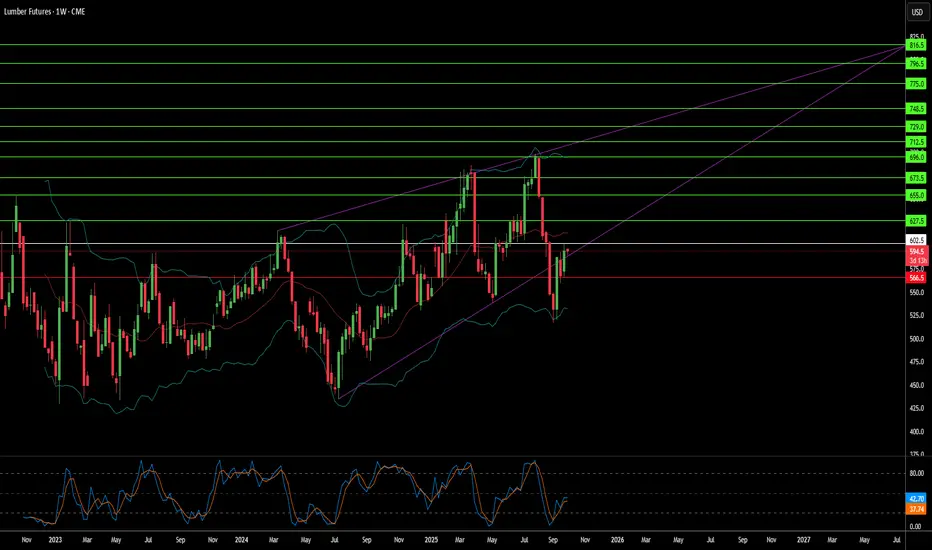
Why Did Cheap Lumber Become a National Security Issue?Lumber prices have entered a structurally elevated regime, driven by the convergence of trade policy, industrial capacity constraints, and emerging technological demand. The U.S. administration's imposition of Section 232 tariffs - 10% on softwood lumber and up to 25% on wood products like cabinets - reframes timber as critical infrastructure essential for defense systems, power grids, and transportation networks. This national security designation provides legal durability, preventing a quick reversal through trade negotiations and establishing a permanent price floor. Meanwhile, Canadian producers facing combined duties exceeding 35% are pivoting exports toward Asian and European markets, permanently reducing North American supply by over 3.2 billion board feet annually that domestic mills cannot quickly replace.
The domestic industry faces compounding structural deficits that prevent rapid capacity expansion. U.S. sawmill utilization languishes at 64.4% despite demand, constrained not by timber availability but by severe labor shortages—the average logging contractor age exceeds 57, with one-third planning retirement within five years. This workforce crisis forces expensive automation investments while climate-driven wildfires introduce recurring supply shocks. Simultaneously, cybersecurity vulnerabilities in digitized mill operations pose quantifiable risks, with manufacturing ransomware attacks causing an estimated $17 billion in downtime since 2018. These operational constraints compound tariff costs, with new home prices increasing $7,500 to $22,000 before builder markups and financing costs amplify the final impact by nearly 15%.
Technological innovation is fundamentally reshaping demand patterns beyond traditional housing cycles. Cross-laminated timber (CLT) markets are growing at 13-15% annually as mass timber products displace steel and concrete in commercial construction, while wood-based nanomaterials enter high-tech applications from transparent glass substitutes to biodegradable electronics. This creates resilient demand for premium-grade wood fiber across diversified industrial sectors. Combined with precision forestry technologies - drones, LiDAR, and advanced logistics software—these innovations both support higher price points and require substantial capital investment that further elevates the cost baseline.
The financialization of lumber through CME futures markets amplifies these fundamental pressures, with prices reaching $1,711 per thousand board feet in 2021 and attracting speculative capital that magnifies volatility. Investors must recognize this convergence of geopolitical mandates, chronic supply deficits, cyber-physical risks, and technology-driven demand shifts as establishing a permanently elevated price regime. The era of cheap lumber has definitively come to an end, replaced by a high-cost, high-volatility environment that requires sophisticated supply chain resilience and financial hedging strategies.
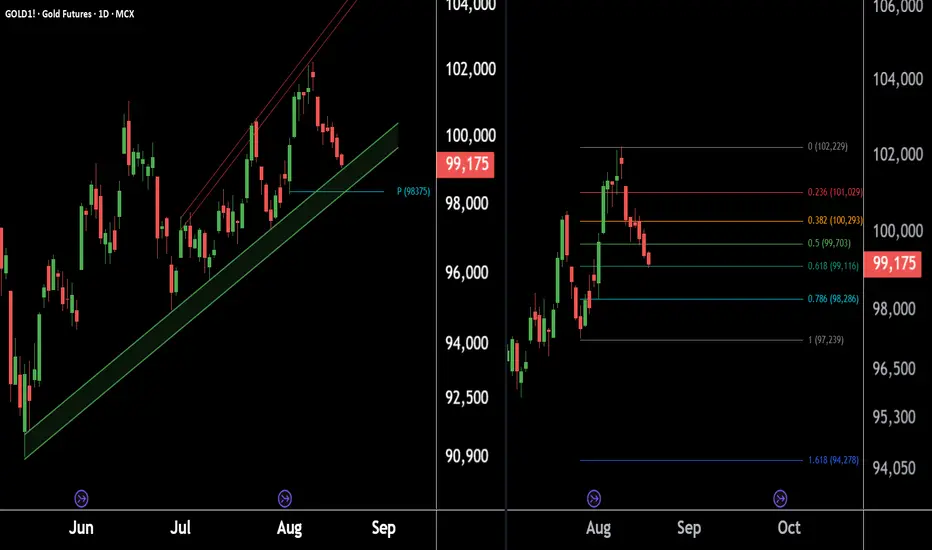
Gold is testing key levels – setup indicates a favorable buying.Here are 2 charts of Gold on the Daily Timeframe.
GOLD1! is approaching its support zone, with key levels at ₹98,200 and ₹98,800.
The Monthly Pivot at ₹98,375 also aligns with this zone, indicating a strong support area.
Fibonacci Golden Ratio is also indicating key support levels around ₹99,200 and ₹98,200, which may act as strong demand zones.
If respected, these levels could trigger a fresh upside move.
Thank You !!
Why the Sudden Surge in Soybean Oil Prices?Recent sharp increases in Chicago soybean oil prices reflect a confluence of dynamic global and domestic factors. Geopolitical tensions, particularly those impacting crude oil markets, have played a significant role, as evidenced by the recent surge in Brent crude futures following events in the Middle East. This volatility in the broader energy complex directly influences the cost and strategic value of alternative fuels, positioning soybean oil at the forefront of this market shift.
A primary driver of this ascent is the transformative policy initiatives from the U.S. Environmental Protection Agency (EPA). The EPA's proposed Renewable Fuel Standard (RFS) volume requirements for 2026 and 2027 represent an aggressive push towards increased domestic biofuel production. These mandates, significantly exceeding previous targets, aim to bolster U.S. energy security and provide substantial support for American agriculture by boosting demand for soybeans and their derivatives. Key changes, such as the transition to RIN equivalents and reduced RIN costs for imports, are designed to further incentivize domestic consumption and reshape market dynamics.
This policy-driven demand fundamentally reorients the U.S. soybean oil market, causing Chicago Board of Trade futures to increasingly reflect internal American forces rather than global trends. This necessitates a shift in focus for traders towards physical market prices in other regions for international insights. The market has reacted swiftly, with notable increases in futures prices, a surge in open interest, and record trading volumes, indicating strong investor confidence in soybean oil's role within this evolving landscape. Concurrently, the new mandates exert pressure on imported biofuel feedstocks, further solidifying the emphasis on domestic supply.
Ultimately, the rise of soybean oil prices signifies more than just market speculation; it marks a pivotal transformation. It positions soybean oil as an essential commodity within the U.S.'s energy independence strategy, where robust domestic demand, shaped by forward-looking policy, becomes the prevailing force. This transition underscores how intertwined agricultural markets now are with national energy objectives and global geopolitical stability.
Will Dry Soil Lift Wheat's Price?Global wheat markets are currently experiencing significant attention as traders and analysts weigh various factors influencing their future price trajectory. Recent activity, particularly in key futures markets, suggests a growing consensus towards potential upward price movements. While numerous elements contribute to the complex dynamics of the grain trade, current indicators highlight specific supply-side concerns as the primary catalyst for this outlook.
A major force behind the anticipation of higher wheat prices stems from challenging agricultural conditions in significant production areas. The United States, a crucial global supplier, faces concerns regarding its winter wheat crop. Persistent dryness across key growing regions is directly impacting crop development and posing a material threat to achieving expected yields. This environmental pressure is viewed by market participants as a fundamental constraint on forthcoming supply.
Further reinforcing these concerns, official assessments of crop health have underscored the severity of the situation. Recent data from the U.S. Department of Agriculture revealed a winter wheat condition rating below both the previous year's level and average analyst expectations. This shortfall in anticipated crop health indicates a less robust supply picture than previously factored into market pricing, thereby increasing the likelihood of price appreciation as supply tightens relative to demand, even as other global factors like shifts in export prices from other regions introduce different market crosscurrents.
Will Coffee Remain an Affordable Luxury?Global coffee prices are experiencing a significant upswing, driven primarily by severe supply constraints in the world's major coffee-producing regions. Adverse weather conditions, notably drought and inconsistent rainfall linked to climate change, have crippled production capacity in Brazil (the largest arabica producer) and Vietnam (the largest robusta producer). Consequently, crop yield forecasts are being revised downwards, export volumes are shrinking, and concerns over future harvests are mounting, putting direct upward pressure on both arabica and robusta bean prices worldwide.
Adding complexity to the situation are fluctuating market dynamics and conflicting future outlooks. While recent robusta inventories have tightened, arabica stocks saw a temporary rise, sending mixed signals. Export data is similarly inconsistent, and market forecasts diverge significantly – some analysts predict deepening deficits and historically low stocks, particularly for Arabica, while others project widening surpluses. Geopolitical factors, including trade tensions and tariffs, further cloud the picture, impacting costs and potentially dampening consumer demand.
These converging pressures translate directly into higher operational expenses for businesses across the coffee value chain. Roasters face doubled green bean costs, forcing cafes to increase consumer prices for beverages to maintain viability amidst already thin margins. This sustained cost increase is impacting consumer behaviour, potentially shifting preferences towards lower-quality coffee, and diminishing the price premiums previously enjoyed by specialty coffee growers. The industry faces significant uncertainty, grappling with the possibility that these elevated price levels may represent a new, challenging norm rather than a temporary spike.
Can Rice Solve Global Challenges?Rice, a staple that feeds half the world's population, is navigating through an era marked by market turbulence, international rivalries, and groundbreaking innovation. In Japan, an unprecedented governmental intervention has been enacted to stabilize soaring rice prices, showcasing the delicate balance between supply, demand, and consumer welfare. By releasing nearly 210,000 tonnes of rice reserves, Japan aims to quell the price surge exacerbated by climatic extremes and supply chain disruptions, reflecting a broader narrative on how nations can manage food security in the face of environmental challenges.
Meanwhile, the global rice landscape is being reshaped by geopolitical maneuvers, particularly in the contest over Basmati rice. Pakistan's recent diplomatic victories in securing recognition for its Basmati in key markets underline the economic and cultural significance of rice varieties, challenging us to reconsider how heritage, origin, and trade laws intertwine in modern commerce. This development affects market shares and prompts a reflection on the importance of intellectual property in agriculture.
On the technological frontier, Chinese scientists are redefining rice's nutritional profile through gene editing, introducing Coenzyme Q10 into this traditional grain. This leap forward in biofortification could revolutionize plant-based diets, offering a sustainable solution to nutritional deficiencies. It invites us to ponder how far science can go in enhancing our food's health benefits while maintaining its cultural essence.
Finally, Vietnam's volatile export market dynamics serve as a reminder of the commodity's cyclical nature. With prices falling from their peak, the industry's resilience is tested, pushing for strategic adjustments in market expansion and financial resilience. This scenario challenges stakeholders to innovate in market strategies and support systems, ensuring that rice continues to be a stable, accessible food source worldwide. Together, these narratives paint a picture of rice not just as a simple grain but as a complex player in global economics, politics, and science.
Are Global Coffee Markets Brewing a Crisis Beyond Price?In an unprecedented turn of events, the coffee industry faces its fifth consecutive season of demand surpassing production, driving prices to their highest levels in nearly half a century. This isn't merely a story of market dynamics – it's a complex narrative where climate change, shifting consumption patterns, and agricultural sustainability converge to reshape the future of the world's favorite beverage.
The situation has reached a critical juncture as major producing regions struggle with severe weather disruptions. Brazil's drought-stricken Arabica crops and Vietnam's weather-battered Robusta production have created a perfect storm in the market. Volcafe's dramatic reduction of its 2025/26 Brazilian production forecast by 11 million bags underscores the severity of these challenges. China's 60% surge in coffee consumption over five years adds pressure to an already strained supply chain.
Perhaps most concerning is the structural nature of these challenges. Traditional growing regions, from Kenya's prestigious AA bean farms to Brazil's vast coffee plantations, face existential threats from climate change. The delicate balance required for premium coffee production – specific humidity levels, temperature ranges, and rainfall patterns – is increasingly difficult to maintain. One industry expert notes that suitable growing areas continue to shrink, suggesting current market pressures may become the new normal rather than a temporary disruption.
This convergence of factors presents both challenges and opportunities for investors, industry stakeholders, and consumers alike. As major producers like Nestlé and J.M. Smucker announce price increases for 2025, the industry stands at a crossroads. The future of coffee will likely be defined not just by how we manage immediate supply challenges, but by how we adapt to an*56C3VFGBHd innovate within these new environmental and market realities.
Descending Triangle Setup on Wheat, Target at 525Overview
The main view of this trade idea is on the Daily Chart.
The commodity Wheat is in a descending triangle setup, with the resistance trend line at lower highs of 949.08 and 798.34. These lower highs occurred on 10th October 2022 and 30th December 2022 respectively. The support line is observed around the 730 price level. Expectations are for the support at the 730 price level to break and the commodity will decline towards 525. A negation of this view will result in Wheat rallying above 800.
Technical Indicators
Some technical indicators corroborate the chart pattern setup. The Supertrend indicator is in a sell mode and the Awesome Oscillator is below 0 and Red, indicating a downward trend. The RSI for the commodity is also below 50.
The intra-day trend following indicators of Wheat also show downtrends in the 15-Min, 2-Hr, 4-Hr and Daily timeframes. Short term resistance is observed around the 730-770 price range.
The longer-term view also show Wheat in a downtrend. It broke below trend in late June 2022 and has been below trend ever since. Indication of a downtrend has been utilized using the 28-Week Simple Moving Average. A change in the long term trend would occur, at the time of writing, with a weekly close above 805.
Recommendation
The recommendation will be to go short at market, with a stop loss at 800 and a target of 525. This produces a risk/reward ratio of 2.97.
Disclaimer
The views expressed are mine and do not represent the views of my employers and business partners. Persons acting on these recommendations are doing so at their own risk. These recommendations are not a solicitation to buy or to sell but are for purely discussion purposes.
At the time of writing, I have exposure to Wheat.