The Global Payments Revolution: How the World TransactsThe global payments landscape has undergone a profound transformation over the past two decades, fundamentally changing how individuals, businesses, and governments exchange value. What was once a slow, paper-driven, and geographically constrained system has evolved into a fast, digital, and increasingly borderless ecosystem. This revolution in global payments is not merely a technological upgrade; it represents a structural shift in economic behavior, financial inclusion, and global commerce. Driven by digital innovation, fintech disruption, regulatory reforms, and changing consumer expectations, the payments revolution is reshaping the global financial order.
From Cash and Checks to Digital Dominance
Historically, global payments were dominated by cash, checks, and traditional bank transfers. Cross-border transactions were expensive, slow, and opaque, often taking several days to settle and involving multiple intermediaries. The reliance on correspondent banking networks made international payments inefficient and inaccessible for many, particularly in developing economies.
The rise of digital banking, card networks, and electronic funds transfer systems marked the first major wave of modernization. Credit and debit cards expanded consumer convenience, while systems such as SWIFT standardized international financial messaging. However, these systems still relied heavily on legacy infrastructure and centralized intermediaries, leaving room for further disruption.
The Rise of Fintech and Real-Time Payments
The true acceleration of the global payments revolution came with the emergence of fintech companies. Leveraging mobile technology, cloud computing, and data analytics, fintech firms challenged traditional banks by offering faster, cheaper, and more user-friendly payment solutions. Mobile wallets, peer-to-peer (P2P) payment apps, and digital-only banks transformed everyday transactions, particularly among younger and digitally savvy populations.
Real-time payment systems have been a game changer. Platforms such as India’s Unified Payments Interface (UPI), the Faster Payments System in the UK, and similar instant payment networks worldwide have enabled near-instant money transfers at minimal cost. These systems have significantly reduced friction in domestic payments and are now influencing cross-border payment innovations as well.
Cross-Border Payments: Breaking Barriers
Cross-border payments lie at the heart of global trade, remittances, and investment flows. Traditionally plagued by high fees, currency conversion costs, and delays, this segment has been a major focus of innovation. Fintech firms, blockchain-based solutions, and new banking partnerships are addressing these inefficiencies.
Digital remittance platforms have reduced the cost of sending money internationally, benefiting migrant workers and emerging-market economies that rely heavily on remittance inflows. Meanwhile, blockchain and distributed ledger technologies promise faster settlement, greater transparency, and reduced reliance on intermediaries. Although still evolving, these technologies are challenging long-established models of international payments.
The Role of Big Tech and Digital Ecosystems
Large technology companies have also entered the payments space, integrating financial services into broader digital ecosystems. Payment functionality embedded within e-commerce platforms, social media apps, and ride-hailing services has blurred the lines between commerce, communication, and finance. This integration has enhanced convenience for users while generating valuable data that fuels personalized financial products.
However, the growing role of big tech raises concerns around data privacy, market concentration, and systemic risk. Regulators worldwide are grappling with how to balance innovation with consumer protection and financial stability in this rapidly evolving environment.
Financial Inclusion and Emerging Markets
One of the most transformative impacts of the global payments revolution has been its contribution to financial inclusion. In many developing countries, mobile-based payment systems have provided access to financial services for populations previously excluded from the formal banking system. With only a smartphone and internet access, individuals can now save money, make payments, receive wages, and access credit.
This inclusion has broader economic implications. Digital payments improve transparency, reduce the shadow economy, and enable governments to deliver subsidies and welfare benefits more efficiently. For small businesses and entrepreneurs, access to digital payments opens doors to new markets and growth opportunities.
Central Bank Digital Currencies (CBDCs)
Central banks are actively exploring and piloting Central Bank Digital Currencies as part of the payments revolution. CBDCs aim to combine the trust and stability of central bank money with the efficiency of digital payments. They have the potential to enhance payment resilience, reduce costs, and improve cross-border transactions.
At the same time, CBDCs raise complex questions about privacy, monetary policy transmission, and the role of commercial banks. Their eventual design and adoption will significantly influence the future structure of global payment systems.
Security, Regulation, and Trust
As payments become faster and more digital, issues of security and trust have become paramount. Cybersecurity threats, fraud, and data breaches pose significant risks to consumers and institutions alike. Payment providers are investing heavily in encryption, biometric authentication, and artificial intelligence-driven fraud detection to safeguard transactions.
Regulation plays a critical role in shaping the payments ecosystem. Policymakers must strike a delicate balance between fostering innovation and ensuring consumer protection, financial stability, and fair competition. Global coordination is increasingly necessary, as payment systems and digital currencies transcend national borders.
The Future of Global Payments
The global payments revolution is far from complete. The future points toward greater interoperability between payment systems, seamless cross-border transactions, and deeper integration of payments into everyday digital experiences. Artificial intelligence, open banking, and tokenization are likely to further transform how value is exchanged.
In the long term, payments may become almost invisible—embedded seamlessly into commerce and daily life. While challenges remain, particularly around regulation, security, and equity, the direction is clear: global payments are becoming faster, more inclusive, and more connected than ever before.
Conclusion
The revolution in global payments represents one of the most significant shifts in the modern financial system. By reducing friction, expanding access, and enabling real-time global connectivity, it is reshaping economic activity at every level. From individuals sending money across borders to multinational corporations managing complex supply chains, the way value moves around the world has fundamentally changed. As technology continues to evolve, the global payments ecosystem will remain a critical driver of economic growth, innovation, and inclusion in the 21st century.
Forextrade
Trading Secrets in the World Market1. Understanding Market Structure and Participants
One of the most important trading secrets is understanding who participates in the global market and why. Markets are driven by different players such as central banks, governments, institutional investors, hedge funds, commercial hedgers, proprietary traders, and retail traders. Each participant has different objectives. For example, central banks focus on inflation, interest rates, and currency stability, while institutions seek long-term returns and liquidity. Retail traders often chase short-term price movements.
Price movements are largely influenced by large institutions because of their capital size. Successful traders align themselves with institutional flows rather than trading against them. Recognizing accumulation, distribution, and liquidity zones allows traders to understand where big money is entering or exiting the market.
2. Trend Is the Core of Profitable Trading
A powerful secret in world markets is that trends exist across all time frames and asset classes. “The trend is your friend” is not a cliché; it is a survival principle. Most losing traders attempt to predict tops and bottoms, while successful traders follow trends and ride them as long as momentum remains intact.
Trends are driven by macroeconomic forces such as economic growth, interest rate cycles, inflation, geopolitical developments, and technological innovation. Identifying higher highs and higher lows in uptrends, or lower highs and lower lows in downtrends, provides a structural framework for decision-making. Trading in the direction of the dominant trend significantly increases probability and reduces emotional stress.
3. Risk Management Is More Important Than Strategy
Many traders search endlessly for the “perfect strategy,” but experienced professionals know that risk management is the true secret to longevity. No strategy wins all the time. What separates successful traders from failed ones is how they manage losses.
Professional traders define risk before entering a trade. They use stop-losses, position sizing, and predefined risk-to-reward ratios. A common rule followed globally is risking only 1–2% of trading capital on a single trade. This approach ensures that even a series of losses does not destroy the account. Capital preservation is the first objective; profits come second.
4. Psychology Drives Market Behavior
Markets are a reflection of human emotions such as fear, greed, hope, and panic. One of the deepest trading secrets is mastering trading psychology. Even with the best analysis, emotional decision-making can lead to failure.
Fear causes traders to exit profitable trades too early, while greed makes them overtrade or ignore risk limits. Professional traders develop discipline through rules, routines, and trading journals. They understand that losses are part of the game and do not seek revenge trades. Emotional neutrality allows traders to execute their plans consistently, regardless of market noise.
5. Importance of Macro and Fundamental Analysis
Global markets are interconnected. A change in interest rates in the United States can impact currencies, commodities, equities, and emerging markets worldwide. Successful traders pay close attention to macroeconomic indicators such as GDP growth, inflation data, employment reports, trade balances, and central bank policies.
Fundamental analysis helps traders understand the “why” behind price movements. For example, rising interest rates typically strengthen a currency but may pressure equity markets. Commodity prices often reflect supply-demand imbalances and geopolitical risks. By combining fundamentals with technical timing, traders gain a strategic edge.
6. Technical Analysis as a Timing Tool
While fundamentals explain long-term direction, technical analysis provides precise entry and exit points. Charts reveal price patterns, support and resistance levels, trendlines, and momentum indicators. These tools work because they represent collective market psychology.
Professional traders keep their charts simple. Instead of using too many indicators, they focus on price action, volume, and key levels. Repeated reactions at certain price zones indicate areas of high interest where decisions should be made carefully. Technical discipline helps traders avoid impulsive trades.
7. Liquidity and Volatility Awareness
Another key trading secret is understanding liquidity and volatility. Markets behave differently during high-liquidity periods compared to low-liquidity sessions. For example, forex markets are most liquid during London and New York overlaps, while commodities react strongly during major economic releases.
Volatility creates opportunity but also increases risk. Smart traders adjust position size and stop-loss levels based on market volatility. They avoid trading during unpredictable events unless they have a clear strategy. Adapting to market conditions is essential for consistent performance.
8. Patience and Selectivity
Overtrading is one of the biggest mistakes made by traders worldwide. Successful traders know that not trading is also a decision. They wait for high-probability setups that align with their strategy, trend, and risk parameters.
Patience allows traders to preserve capital and mental energy. Markets offer endless opportunities, but only a few are worth taking. Selectivity improves win rates and reduces emotional exhaustion.
9. Continuous Learning and Adaptability
Global markets evolve constantly due to technology, regulation, and changing economic dynamics. Strategies that worked in the past may stop working. One of the most valuable trading secrets is adaptability.
Professional traders continuously review their performance, study new market developments, and refine their methods. They understand that learning never ends. Flexibility ensures survival in changing market environments.
10. Long-Term Perspective and Discipline
Finally, the ultimate trading secret is thinking in probabilities and long-term outcomes. Individual trades do not matter; consistency over hundreds of trades does. Successful traders focus on process rather than short-term results.
Discipline, patience, and humility keep traders grounded. Markets reward those who respect risk, follow rules, and accept uncertainty.
Conclusion
Trading secrets in the world market are not hidden formulas or insider information. They are timeless principles practiced by professionals across generations. Understanding market structure, following trends, managing risk, controlling emotions, analyzing macro factors, timing trades effectively, and maintaining discipline form the foundation of successful trading. Those who internalize these secrets do not chase markets—they align with them. Over time, this approach transforms trading from speculation into a structured and sustainable profession.
Exotic Option Structured ProductsAdvanced Instruments for Customized Risk–Return Profiles
Exotic option structured products are sophisticated financial instruments designed by combining traditional securities with exotic derivatives to create customized payoff structures. Unlike plain vanilla options such as simple calls and puts, exotic options embed complex features—path dependency, multiple underlying assets, conditional triggers, or non-standard expiration rules. When these options are packaged into structured products, they offer tailored solutions to investors seeking specific risk–return outcomes, yield enhancement, capital protection, or exposure to particular market views.
Understanding Structured Products
Structured products are pre-packaged investment strategies, typically issued by banks or financial institutions, whose returns depend on the performance of one or more underlying assets such as equities, indices, interest rates, commodities, or currencies. They are usually composed of two main components:
A fixed-income element (such as a bond or zero-coupon bond) that provides capital protection or income stability.
A derivative component (options or swaps) that delivers market-linked returns.
When exotic options are used instead of standard options, the product becomes an exotic option structured product. These structures allow issuers to engineer highly specific payoff profiles that cannot be easily replicated through direct market trading.
What Makes an Option “Exotic”?
Exotic options differ from vanilla options in their payoff complexity and conditions. Some defining characteristics include:
Path dependency: Payoff depends on the entire price path of the underlying, not just the final price.
Conditional triggers: Activation or deactivation occurs if certain price levels are touched.
Multiple underlyings: Returns may depend on the worst-performing or best-performing asset in a basket.
Non-standard settlement: Payoffs may occur at multiple observation dates or vary dynamically.
Examples of exotic options include barrier options, digital options, Asian options, lookback options, and rainbow options.
Common Types of Exotic Option Structured Products
Barrier-Linked Structured Notes
These products embed barrier options, where the payoff depends on whether the underlying asset crosses a predetermined barrier level.
Knock-in structures activate only if the barrier is breached.
Knock-out structures terminate if the barrier is breached.
Such products are often used to enhance yield but expose investors to sudden changes in risk if the barrier is touched.
Autocallable Structured Products
Autocallables are among the most popular exotic structured products. They include periodic observation dates. If the underlying asset trades above a predefined level on any observation date, the product automatically redeems early, paying a fixed coupon.
These products are attractive in sideways or moderately bullish markets but can expose investors to significant downside risk in sharp market declines.
Range Accrual Notes
Returns accrue only when the underlying asset remains within a specified price range. The longer the asset stays within the range, the higher the coupon earned.
These products are sensitive to volatility and are suitable when investors expect stable market conditions.
Worst-of and Best-of Structures
These products depend on the performance of multiple underlying assets.
Worst-of structures base returns on the poorest-performing asset in the basket, increasing risk but offering higher coupons.
Best-of structures benefit from the strongest performer but usually offer lower yields.
Digital and Binary Payoff Products
Digital structures pay a fixed amount if a specific condition is met (for example, the index closes above a strike level at maturity), and nothing otherwise.
They provide clear outcomes but involve all-or-nothing risk profiles.
Why Investors Use Exotic Option Structured Products
Exotic option structured products are used for several strategic reasons:
Yield Enhancement: In low-interest-rate environments, these products offer higher potential returns than traditional bonds by selling optionality.
Market View Expression: Investors can express nuanced views such as range-bound markets, mild bullishness, or low volatility expectations.
Customization: Products can be tailored to specific investment horizons, risk tolerance levels, and underlying assets.
Capital Protection (Partial or Conditional): Some structures provide capital protection unless certain adverse conditions occur.
Risks Involved in Exotic Structured Products
Despite their attractiveness, exotic option structured products carry significant risks:
Complexity Risk
The payoff mechanics are often difficult to understand, making it hard for investors to assess true risk exposure.
Market Risk
Adverse movements in the underlying asset can lead to partial or full capital loss, especially in barrier or worst-of structures.
Issuer Credit Risk
Structured products are typically unsecured obligations of the issuing bank. If the issuer defaults, investors may lose their investment regardless of market performance.
Liquidity Risk
Secondary market liquidity can be limited. Exiting the product before maturity may result in unfavorable pricing.
Model and Volatility Risk
Exotic options are highly sensitive to volatility, correlation, and pricing models. Changes in these parameters can significantly affect valuation.
Pricing and Valuation Considerations
Pricing exotic option structured products involves advanced quantitative models. Unlike vanilla options, which can often be priced using closed-form solutions, exotic options typically require numerical methods such as Monte Carlo simulations or lattice models.
Key factors influencing pricing include:
Implied volatility and volatility skew
Correlation between multiple underlyings
Interest rates and dividend assumptions
Frequency of observation dates
Barrier proximity and probability of breach
Because of this complexity, investors often rely on issuer-provided pricing, which may include embedded margins.
Role in Portfolio Construction
Exotic option structured products are generally used as satellite investments rather than core holdings. They can complement a portfolio by:
Generating income during low-growth phases
Providing differentiated return streams
Enhancing yield without full equity exposure
However, prudent allocation sizing and diversification across issuers and structures are essential to manage concentration risk.
Regulatory and Suitability Aspects
Given their complexity, regulators in many jurisdictions require enhanced disclosure and suitability assessments before these products are sold to retail investors. They are more commonly used by high-net-worth individuals, institutional investors, and professional traders who understand derivatives and structured payoffs.
Conclusion
Exotic option structured products represent the intersection of financial engineering, derivatives pricing, and customized investment solutions. They offer powerful tools for tailoring risk and return, expressing precise market views, and enhancing yield. However, these benefits come with increased complexity, opacity, and risk. Successful use of exotic option structured products requires deep understanding of derivative mechanics, careful assessment of issuer creditworthiness, and disciplined risk management. For informed investors, they can be valuable instruments—but they demand respect, due diligence, and strategic intent rather than speculative use.
The Energy Transition Boom: Powering a Sustainable Global Future1. Understanding the Energy Transition
Energy transition refers to the long-term transformation of how energy is produced, distributed, and consumed. Historically, energy systems have shifted before—from biomass to coal, coal to oil, and oil to gas. Today’s transition, however, is unique in its speed, scale, and urgency, as it is driven by the need to combat climate change and reduce greenhouse gas emissions.
The current transition emphasizes:
Renewable energy sources such as solar, wind, hydro, and geothermal
Electrification of transport and industry
Energy efficiency and smart grids
Decarbonization of hard-to-abate sectors like steel, cement, and chemicals
2. Key Drivers of the Energy Transition Boom
a. Climate Change and Net-Zero Targets
Governments worldwide have committed to net-zero emissions targets, many by 2050. These commitments are backed by international agreements such as the Paris Agreement, creating long-term policy certainty that accelerates investment in clean energy.
b. Rapid Cost Declines in Renewables
The cost of renewable energy has fallen dramatically over the past decade. Solar and wind power are now among the cheapest sources of electricity globally, even without subsidies. This cost competitiveness has made renewables economically attractive, not just environmentally desirable.
c. Technological Innovation
Advancements in battery storage, hydrogen technology, carbon capture, and digital energy management systems are solving intermittency and reliability challenges. Innovation is enabling renewables to scale faster and integrate more effectively into existing grids.
d. Capital Reallocation and Investor Pressure
Global investors are increasingly shifting capital away from fossil fuels toward ESG-aligned assets. Sovereign wealth funds, pension funds, and asset managers now view clean energy as both a growth opportunity and a risk management necessity.
3. Renewable Energy at the Core
Solar and Wind Power
Solar and wind are the backbone of the energy transition boom. Utility-scale solar parks, offshore wind farms, and decentralized rooftop systems are expanding rapidly. Emerging markets, with abundant sunlight and land availability, are becoming major growth hubs.
Hydropower and Geothermal
Hydropower remains a stable baseload renewable source, while geothermal energy is gaining traction in regions with favorable geology. Together, they provide reliability and diversification within renewable portfolios.
4. Electrification and the Rise of Electric Mobility
One of the most visible aspects of the energy transition boom is the electrification of transportation. Electric vehicles (EVs) are rapidly gaining market share due to falling battery costs, government incentives, and expanding charging infrastructure.
Beyond passenger vehicles, electrification is extending to:
Buses and commercial fleets
Two-wheelers and three-wheelers in emerging markets
Railways and urban transit systems
This shift is increasing electricity demand while simultaneously reducing oil dependence and urban pollution.
5. Energy Storage and Grid Transformation
Renewable energy growth requires robust energy storage and grid modernization. Battery energy storage systems (BESS) are becoming essential for balancing supply and demand, stabilizing grids, and enabling higher renewable penetration.
Smart grids, powered by AI and digital technologies, are improving:
Demand forecasting
Real-time energy management
Integration of distributed energy resources like rooftop solar and EVs
6. Hydrogen and the Next Frontier
Green hydrogen—produced using renewable electricity—has emerged as a critical pillar of the energy transition boom. It offers a solution for decarbonizing sectors where direct electrification is difficult, such as:
Steel and cement production
Long-haul transport and shipping
Aviation and chemical manufacturing
Countries are racing to build hydrogen ecosystems, from electrolyzers to pipelines and export hubs, positioning hydrogen as a future global commodity.
7. Economic and Employment Impact
The energy transition boom is a major job creator. Renewable energy, EV manufacturing, grid infrastructure, and energy efficiency projects are generating millions of new jobs worldwide.
Key economic benefits include:
Reduced energy import bills for fossil-fuel-dependent countries
Improved energy security and price stability
Development of new industrial clusters and supply chains
For emerging economies, the transition presents a chance to leapfrog traditional energy models and build sustainable growth pathways.
8. Geopolitical and Strategic Shifts
The transition is reshaping global geopolitics. Energy power is shifting from fossil fuel–rich nations to countries with:
Strong renewable resources
Advanced clean-tech manufacturing
Access to critical minerals like lithium, cobalt, and rare earths
This is creating new strategic alliances, trade routes, and competition over clean energy supply chains.
9. Challenges and Risks
Despite its momentum, the energy transition boom faces challenges:
Intermittency of renewables and grid constraints
High upfront capital costs in developing countries
Supply chain bottlenecks for critical minerals
Policy inconsistency and regulatory delays
Managing a just transition—ensuring affordability, energy access, and workforce reskilling—is essential to maintain social and political support.
10. The Road Ahead
The energy transition boom is not a short-term trend; it is a multi-decade structural shift. As technology matures and policy frameworks strengthen, clean energy will become the dominant foundation of the global economy.
Success will depend on:
Continued innovation and cost reduction
Strong public–private collaboration
Scalable financing solutions
Global cooperation to ensure inclusive growth
Conclusion
The energy transition boom represents a historic transformation of the global energy system—one that aligns economic growth with environmental sustainability. It is redefining how nations power their economies, how industries operate, and how societies consume energy. While challenges remain, the momentum is unmistakable. Those who adapt early—governments, companies, and investors—stand to benefit most from this once-in-a-generation shift toward a cleaner, more resilient, and sustainable future.
Global Equity TrendsNavigating Growth, Volatility, and Structural Shifts in World Markets
Global equity markets represent the collective pulse of the world economy. They reflect not only corporate earnings and economic growth but also investor sentiment, geopolitical realities, technological disruption, and policy decisions taken by governments and central banks. Over the past few decades—and especially in recent years—global equity trends have undergone significant transformation. Understanding these trends is essential for investors, policymakers, and analysts seeking to navigate an increasingly interconnected and dynamic financial landscape.
1. Evolution of Global Equity Markets
Historically, global equity markets were dominated by developed economies such as the United States, Western Europe, and Japan. These markets benefited from stable institutions, deep capital pools, and mature corporate sectors. Over time, globalization, liberalization of capital flows, and technological advances enabled capital to move more freely across borders. This laid the foundation for the rise of emerging markets, which now play a crucial role in global equity performance.
Today, global equities are no longer driven by a single region. Instead, market leadership rotates across geographies depending on economic cycles, interest rate regimes, and structural reforms. This diversification has increased opportunities but has also introduced new layers of complexity and risk.
2. Dominance of the United States in Global Equities
The United States remains the most influential equity market globally. US equities account for more than half of global market capitalization, driven largely by innovation-led companies in technology, healthcare, and consumer sectors. The rise of mega-cap technology firms has reshaped global indices, making US market performance a key determinant of worldwide equity returns.
Strong corporate governance, deep liquidity, and a culture of innovation have allowed US companies to consistently attract global capital. However, this dominance has also raised concerns about valuation concentration and overreliance on a narrow set of stocks to drive global performance.
3. Shifting Role of Europe and Japan
European equity markets have shown moderate but uneven growth. Structural challenges such as aging populations, slower productivity growth, and political fragmentation have limited long-term returns compared to the US. However, Europe continues to offer opportunities in industrials, luxury goods, renewable energy, and financials, especially during cyclical recoveries.
Japan’s equity market has experienced a renaissance after decades of stagnation. Corporate governance reforms, shareholder-friendly policies, and improving profitability have attracted renewed foreign interest. While demographic challenges persist, Japan’s focus on efficiency, automation, and export competitiveness continues to support equity growth.
4. Rise of Emerging Markets
Emerging markets (EMs) have become a central theme in global equity trends. Countries across Asia, Latin America, Eastern Europe, and Africa have seen expanding equity markets driven by urbanization, rising incomes, and industrialization. China and India, in particular, have emerged as major equity market powerhouses.
EM equities often outperform during periods of global growth and weaker US dollar cycles. However, they are also more sensitive to external shocks, capital flow reversals, and domestic policy risks. As a result, global investors increasingly adopt selective and thematic approaches rather than broad EM exposure.
5. Sectoral Shifts and Thematic Investing
One of the most important global equity trends is the shift from traditional sectors to new-economy themes. Technology, artificial intelligence, renewable energy, electric vehicles, biotechnology, and digital finance are now major drivers of equity returns worldwide.
At the same time, traditional sectors such as energy, materials, and financials continue to play a cyclical role, often outperforming during inflationary or recovery phases. This has led to a growing emphasis on sector rotation strategies, where investors shift capital based on macroeconomic conditions.
Thematic investing has gained prominence, allowing investors to capture long-term structural trends that transcend geographic boundaries.
6. Impact of Monetary Policy and Interest Rates
Global equity trends are deeply influenced by central bank policies. Periods of low interest rates and abundant liquidity have historically supported higher equity valuations. Conversely, tightening monetary conditions often lead to market corrections, increased volatility, and a shift toward defensive stocks.
In recent years, the global fight against inflation has reintroduced interest rate sensitivity into equity markets. Growth stocks, which rely heavily on future earnings, have become more volatile, while value and dividend-paying stocks have regained relevance.
7. Geopolitics and Fragmentation of Globalization
Geopolitical tensions have become a defining feature of modern global equity trends. Trade disputes, sanctions, military conflicts, and strategic competition between major powers have increased uncertainty and market volatility.
As globalization evolves into a more fragmented system, companies are rethinking supply chains, production hubs, and market exposure. This has implications for equity markets, favoring regions and companies aligned with domestic manufacturing, energy security, and strategic independence.
8. Role of Technology and Digital Transformation
Technology has fundamentally transformed global equity markets, not just in terms of listed companies but also market structure. Algorithmic trading, digital exchanges, real-time data, and increased retail participation have changed how markets function.
Global equity performance is increasingly linked to innovation cycles. Companies that adapt quickly to digital transformation tend to attract premium valuations, while laggards face declining relevance.
9. Sustainability and ESG Influence
Environmental, Social, and Governance (ESG) considerations have become an integral part of global equity trends. Investors are increasingly factoring sustainability, climate risk, and corporate ethics into valuation and capital allocation decisions.
While ESG investing has faced periods of skepticism, the long-term shift toward sustainable business models continues to influence equity markets, particularly in developed economies and large institutional portfolios.
10. Volatility, Cycles, and Long-Term Outlook
Global equity markets move in cycles influenced by economic growth, earnings trends, and investor psychology. Short-term volatility is inevitable, especially in a world marked by rapid information flow and policy shifts. However, over the long term, equities remain one of the most effective tools for wealth creation.
Looking ahead, global equity trends are likely to be shaped by demographic changes, technological innovation, climate transition, and evolving global power dynamics. Investors who understand these structural forces—and diversify across regions, sectors, and themes—are better positioned to navigate uncertainty and capture long-term growth.
Conclusion
Global equity trends reflect a world in transition. From the dominance of US markets to the rising influence of emerging economies, from traditional industries to disruptive technologies, equities continue to adapt to changing realities. While risks such as volatility, geopolitical tension, and policy uncertainty persist, global equity markets remain a powerful engine of growth. A disciplined, informed, and long-term perspective is essential to successfully navigate the evolving global equity landscape.
Understanding CPI (Consumer Price Index)1. Headline CPI vs Core CPI
Headline CPI represents the total inflation, including all goods and services, such as food and energy. It is the most commonly cited figure in news reports.
Why headline CPI matters: It shows the immediate impact of inflation on consumers, reflecting changes in everyday expenses.
Core CPI excludes volatile items such as food and energy, which can fluctuate sharply due to seasonal changes or geopolitical events. Core CPI provides a clearer view of underlying, persistent inflation trends.
Why core CPI matters: Policymakers, especially central banks, prefer core CPI to guide interest rate decisions since it is less affected by short-term price swings.
For example, if headline CPI jumps due to a spike in oil prices, the core CPI may remain steady, indicating that the broader inflation trend is stable.
2. CPI Components and Categories
CPI is broken down into categories that reflect typical consumer spending patterns. These categories are weighted according to their importance in the average household budget. Common CPI components include:
Food and Beverages
Covers groceries, dining out, non-alcoholic beverages, and alcohol.
Highly sensitive to seasonal changes, supply chain disruptions, and agricultural output.
Housing
Includes rent, owners’ equivalent rent (OER), and utilities.
Often the largest component in CPI, reflecting the substantial share of housing in household budgets.
Transportation
Includes vehicle purchases, gasoline, public transit, and airline fares.
Sensitive to fuel prices, geopolitical risks, and transportation demand.
Medical Care
Covers health insurance, hospital services, and prescription drugs.
Price increases in healthcare can impact the middle and lower-income population disproportionately.
Education and Communication
Tuition, books, digital communication, and phone services.
Rising costs in education often drive broader inflation concerns.
Recreation
Includes leisure activities, electronics, and entertainment services.
Generally less volatile but contributes to long-term inflation trends.
Apparel
Clothing and footwear.
Seasonal sales and fashion trends influence price changes.
Other Goods and Services
Personal care, tobacco, and miscellaneous items.
Weighting in CPI: Each category is assigned a weight reflecting its share of total consumer spending. For example, in the US CPI, housing constitutes about 40% of the total index, making it the dominant driver of inflation changes.
3. Monthly vs Yearly CPI Changes
CPI reports provide two main types of comparisons:
Month-over-Month (MoM) Change:
Measures price changes compared to the previous month.
Useful for short-term analysis and monitoring immediate inflation trends.
Example: If CPI rises 0.5% MoM, it shows the average prices increased by half a percent in the last month.
Year-over-Year (YoY) Change:
Compares prices to the same month in the previous year.
Indicates long-term inflation trends.
Central banks often focus on YoY CPI for monetary policy decisions.
Seasonal Adjustments: CPI data is often seasonally adjusted to account for predictable price fluctuations, such as holiday shopping or harvest periods, making month-to-month comparisons more accurate.
4. CPI Report Breakdown – Detailed Analysis
A comprehensive CPI report provides multiple layers of information:
a) Overall Index and Percentage Change
Shows the headline CPI and core CPI.
Includes MoM and YoY percentage changes.
b) Sub-Index Analysis
Each category’s price change is reported separately.
Example: Food +0.4%, Housing +0.3%, Transportation +0.7%.
c) Contribution to Overall CPI
Categories are weighted to show their influence on the total CPI.
Example: Even if food prices rise sharply, their small weight in the index may result in a modest overall CPI increase.
d) Regional or Demographic Breakdown
Some countries provide CPI data by region or city.
Enables policymakers to assess localized inflation pressures.
e) Special Notes and Revisions
CPI reports include methodological notes, such as changes in survey methods, seasonal adjustments, or revisions to previous months.
5. CPI Interpretation for Policy and Investment
Central Banks and Monetary Policy:
CPI informs interest rate decisions to control inflation.
If CPI rises above the target range, central banks may increase rates to curb spending.
If CPI falls too low, it signals deflation, prompting rate cuts or stimulus.
Investors and Financial Markets:
Rising CPI may lead to higher bond yields and stock market volatility.
Traders monitor CPI closely for clues about inflation-driven asset performance.
Businesses and Wage Negotiations:
Companies use CPI to adjust pricing strategies, cost structures, and wages.
Labor unions and employees use CPI to negotiate cost-of-living adjustments (COLAs).
6. Limitations of CPI
Despite its importance, CPI has several limitations:
Does Not Capture All Consumer Experiences:
CPI represents an “average” basket and may not reflect specific household spending patterns.
Excludes Certain Goods:
Luxury goods, investment assets, and some services may not be fully included.
Quality Adjustments:
CPI tries to account for improvements in product quality, but this adjustment can be subjective.
Substitution Bias:
CPI assumes consumers purchase the same basket, even if prices change. In reality, people may substitute cheaper alternatives.
7. CPI and Inflation Trends
Monitoring CPI trends over time reveals the economy’s inflationary pressures:
Moderate CPI Increase: Healthy for economic growth, signaling rising demand and controlled inflation.
High CPI Increase: Indicates overheating economy, potential wage-price spirals, and higher interest rates.
Negative CPI: Signals deflation, reduced consumer spending, and economic slowdown.
Analysts often compare CPI to other indicators, such as Producer Price Index (PPI), wage growth, and commodity prices, to get a complete picture of inflation.
8. Example of CPI Report Interpretation
Imagine a CPI report shows:
Headline CPI YoY: +4.2%
Core CPI YoY: +3.5%
Food +2.0%, Energy +8.0%, Housing +4.0%
Interpretation:
The economy is experiencing moderate inflation, driven mainly by energy costs.
Excluding volatile items, the underlying inflation (core CPI) is more moderate.
Policymakers may consider gradual interest rate adjustments rather than aggressive hikes.
Consumers are feeling price pressures in daily essentials, especially fuel.
Conclusion
The CPI report is a vital tool for understanding inflation dynamics. Its detailed breakdown, including headline and core CPI, sub-indices, weights, and changes over time, allows stakeholders to assess economic conditions accurately. While it has limitations, when combined with other economic indicators, CPI provides invaluable insights for central banks, investors, businesses, and policymakers.
Understanding the CPI report is not just about numbers—it’s about interpreting how inflation impacts purchasing power, policy decisions, and overall economic health. Accurate analysis can guide investments, wage negotiations, and policy strategies, making it a cornerstone of economic literacy.
DXY Surges Explained1. What a DXY Surge Means
A surge in the DXY means the U.S. dollar is strengthening. This strengthening can come from:
Growing confidence in the U.S. economy
Rising U.S. interest rates
Investors seeking safety from global risks
Weakness in other major currencies
Changes in global trade flows
Shifts in central bank policies
When the DXY rises, it often signals that money around the world is flowing into the United States—either for safety, return on investment, or both.
2. Interest Rates: The Primary Driver of DXY Surges
The most influential factor behind a DXY surge is U.S. interest rates. The Federal Reserve has enormous influence on the dollar, as its decisions determine whether global investors find U.S. assets attractive.
Why Higher Rates Boost the Dollar
Higher rates increase the yield on U.S. Treasury bonds.
Investors around the world buy these bonds because they are considered safe and profitable.
To buy U.S. assets, investors must first convert their local currency to dollars.
This surge in demand strengthens the dollar and pushes the DXY upward.
Even expectations of future rate hikes can push the DXY higher. Traders often react not only to actual policy changes, but also to hints from the Federal Reserve.
3. Safe-Haven Demand During Uncertainty
The U.S. dollar is the world’s leading safe-haven asset. When global uncertainty rises—whether due to economic downturns, geopolitical tensions, war, or financial instability—investors flock to the dollar.
Examples of situations that cause safe-haven flows:
Global recessions
Banking crises
Declines in stock markets
Political instability in major economies
Currency crises in emerging markets
During such times, investors search for stability, and they often find it in U.S. Treasuries and other dollar-denominated assets. This buying pressure causes surges in the DXY.
4. Weakness in Other Currencies Helps Push the DXY Up
Because the DXY measures the dollar’s strength relative to other currencies, weakness in those currencies automatically pushes the index higher.
The Euro’s Role
The euro has the largest weight in the index—around 57%.
Therefore, when the euro weakens due to:
Slow European economic growth
Divergent interest rates
Political challenges
Energy crises
…the DXY often rises significantly.
The Japanese Yen Factor
The yen also plays a major role. When the Bank of Japan keeps interest rates low while the U.S. raises rates, investors shift funds into the dollar, causing the DXY to surge.
5. U.S. Economic Strength and Global Confidence
A strong U.S. economy typically results in a stronger dollar. Economic indicators that support a DXY surge include:
Higher GDP growth
Strong employment numbers
Rising consumer spending
Increasing business investment
Robust corporate earnings
These indicators attract global investors to U.S. assets such as stocks, bonds, and real estate. As foreign investors buy these assets, demand for dollars increases, pushing the DXY upward.
6. Global Trade and Dollar Demand
The U.S. dollar dominates international trade. Over 80% of global transactions, commodities, and trade settlements involve the dollar. This creates a structural, persistent demand for dollars.
Why global trade boosts the DXY:
Countries hold dollar reserves to pay for imports like oil, machinery, and technology.
Most global commodities—including gold, oil, and natural gas—are priced in dollars.
During periods of high commodity demand, nations often increase their dollar reserves.
All of this creates momentum for the DXY to strengthen when global trade dynamics shift.
7. Impact of DXY Surges on Global Markets
A. Impact on Commodities
When the dollar strengthens, commodities like oil, gold, silver, and metals generally become more expensive for buyers using other currencies. As a result, commodity prices often fall when the DXY surges.
B. Impact on Emerging Markets
DXY surges create challenges for emerging markets:
Their currencies weaken
Dollar-denominated debt becomes more expensive to repay
Foreign investment outflows increase
Import costs rise
Some nations experience financial stress during strong dollar periods.
C. Impact on U.S. Corporations
A stronger dollar can hurt U.S. exporters because their products become more expensive internationally. Companies such as technology firms, industrial manufacturers, and consumer goods exporters often feel the pressure of a rising DXY.
8. Market Psychology and Speculative Trading
Financial markets react not just to economic data, but also to sentiment and speculation. Traders in the forex market often accelerate moves in the DXY by:
Betting on future interest rate changes
Reacting to central bank statements
Anticipating geopolitical shifts
Speculating on currency volatility
When sentiment aligns strongly toward a stronger dollar, DXY surges can become sharp and rapid.
9. Are DXY Surges Long-Lasting or Short-Term?
DXY surges can be:
Short-term
Driven by market speculation, sudden news events, or temporary crises.
Long-term
Driven by structural trends such as:
Prolonged interest rate cycles
Shifting global trade patterns
Long-term weakness in other currencies
Robust U.S. economic outperformance
The duration of a surge depends on the underlying forces.
Conclusion
A DXY surge reflects a combination of economic strength, monetary policy decisions, global risk sentiment, and comparative currency performance. When the index rises, it signals confidence in the U.S. economy, but also can indicate stress in global markets. The effects are far-reaching: commodities tend to fall, emerging markets can struggle, and U.S. exporters may face headwinds. Yet for investors seeking safety and stable returns, a surging dollar is often a sign of global capital flowing into the United States.
Understanding why the DXY surges helps traders, policymakers, and investors navigate global markets with greater clarity and insight.
Trends You Must Know1. Artificial Intelligence and Automation
Artificial Intelligence (AI) continues to dominate global technological advancements. AI-driven solutions are transforming industries ranging from healthcare to finance, logistics, and marketing. Machine learning algorithms can analyze massive datasets to provide insights, detect patterns, and automate decision-making. In business, AI-powered chatbots, virtual assistants, and predictive analytics tools are becoming indispensable for efficiency and customer engagement.
Automation extends beyond digital processes into physical systems. Robotics and smart manufacturing have revolutionized production lines, improving productivity while reducing human error. The growing adoption of AI in creative industries, like AI-generated content, design, and music, is redefining the boundaries of human-machine collaboration. For professionals, understanding AI trends and developing AI literacy has become crucial.
2. Green Technology and Energy Transition
Climate change concerns are accelerating the shift toward renewable energy and sustainable technologies. Governments and corporations are heavily investing in solar, wind, hydro, and hydrogen energy. Energy storage solutions, like next-generation batteries, are crucial for mitigating the intermittent nature of renewables.
Electric vehicles (EVs) are another hallmark of this trend. Automotive giants and startups alike are transitioning from internal combustion engines to fully electric fleets. Beyond transport, green technology extends to sustainable agriculture, water management, and circular economy models where waste is minimized, and resources are reused efficiently.
Companies that adopt sustainable practices often gain market credibility, attract investment, and comply with tightening environmental regulations. For consumers, supporting green products is both a personal choice and a statement on social responsibility.
3. Digital Currency and Blockchain Technology
Cryptocurrencies and blockchain technology have moved from speculative assets to core components of global finance. Central Bank Digital Currencies (CBDCs) are being explored by multiple countries as a means of faster, more secure, and transparent financial transactions. Cryptocurrencies, despite volatility, continue to influence global markets, especially in decentralized finance (DeFi) applications like lending, borrowing, and smart contracts.
Blockchain technology extends beyond finance. Supply chain management, healthcare records, intellectual property, and voting systems are being reimagined with decentralized, tamper-proof ledgers. Understanding blockchain trends is critical for businesses seeking security, transparency, and efficiency in a connected world.
4. Remote Work and the Future of Work
The COVID-19 pandemic permanently altered the work landscape. Remote work, hybrid offices, and digital nomadism are no longer temporary arrangements but standard practices in many sectors. Organizations are adopting digital collaboration tools, cloud platforms, and virtual meeting technologies to support distributed teams.
Alongside this, skills development is evolving. There’s a rising emphasis on digital literacy, adaptability, creativity, and emotional intelligence. AI and automation are also reshaping job roles, eliminating repetitive tasks while creating demand for high-level cognitive skills. Employees and organizations must continuously upskill to remain competitive.
5. Health and Wellness Revolution
The health and wellness industry is undergoing significant transformation. Personalized healthcare, driven by genomics, AI diagnostics, and wearable devices, is empowering individuals to monitor and manage their health proactively. Telemedicine has made healthcare accessible beyond traditional clinic walls, especially in remote areas.
Mental health awareness has gained unprecedented recognition. Companies are investing in employee well-being programs, and wellness apps offering meditation, sleep tracking, and stress management are booming. Nutrition, fitness, and preventive medicine are now integral to lifestyle choices, reflecting a global shift toward holistic health management.
6. Data Privacy and Cybersecurity
As digitalization increases, so does the threat of cyberattacks and data breaches. Consumers and regulators are demanding greater accountability for how personal information is collected, stored, and used. Laws like GDPR in Europe and similar regulations worldwide have raised the stakes for data privacy compliance.
Cybersecurity trends include AI-driven threat detection, zero-trust architectures, and blockchain-based security solutions. Organizations that fail to prioritize cybersecurity risk reputational damage, financial loss, and regulatory penalties. Being aware of these trends helps businesses and individuals protect sensitive information in an interconnected world.
7. Social Media Evolution and Content Consumption
Social media platforms continue to evolve, influencing communication, marketing, politics, and culture. Video content, short-form stories, and live streaming dominate user engagement. Platforms leveraging AI for personalized recommendations enhance content discoverability but also raise concerns about algorithmic biases and misinformation.
Influencer marketing, creator economies, and subscription-based content models are redefining digital entrepreneurship. Brands and individuals must adapt to constantly changing algorithms, user behaviors, and monetization models to stay relevant.
8. Global Economic Shifts and Geopolitics
The global economy is undergoing significant transformations. Emerging markets are growing faster than developed economies, creating new opportunities and risks. Currency fluctuations, trade wars, and supply chain disruptions highlight the importance of geopolitical awareness for businesses and investors.
The de-dollarization trend, with countries exploring alternatives to the US dollar for international trade, signals a possible shift in global financial dominance. Understanding macroeconomic trends, international relations, and regional power dynamics is vital for making informed business and investment decisions.
9. Education and Lifelong Learning
Education is no longer confined to classrooms. Online platforms, micro-credentials, and skill-based courses are democratizing learning worldwide. AI-driven personalized learning systems are improving engagement and outcomes, while virtual and augmented reality tools are making immersive education possible.
Lifelong learning is becoming a necessity rather than a choice. Rapid technological changes require individuals to continuously acquire new skills to remain employable and competitive. Understanding the evolving educational landscape is critical for students, professionals, and educators alike.
10. Cultural and Lifestyle Trends
Cultural shifts influence consumer behavior, workplace dynamics, and social interactions. Minimalism, conscious consumption, and the pursuit of experiences over material possessions are gaining traction. The global rise of diverse and inclusive representation in media, fashion, and corporate policies reflects a broader societal trend toward equity and awareness.
Travel, entertainment, and leisure industries are also evolving with digital experiences, augmented reality gaming, and metaverse explorations. Being aware of cultural and lifestyle trends helps businesses align their offerings with the values and expectations of modern consumers.
Conclusion
Staying ahead of trends is crucial for individuals, businesses, and governments in a world defined by rapid technological, economic, and cultural shifts. From AI and green technology to digital currencies, health innovations, and global economic transformations, these trends are reshaping how we live, work, and interact. Those who understand and adapt to these changes are more likely to thrive in a complex, interconnected future. Knowledge of trends isn’t just about keeping up—it’s about positioning oneself strategically in a world of constant evolution.
AUDJPY 1D: breakout toward 100–105AUDJPY has confirmed an inverse head and shoulders breakout on the daily chart, with a strong move above the neckline. All key moving averages, including MA50 and MA200, remain below the current price — confirming bullish momentum. Volume increased on the breakout, and price has held above the 95.6 neckline zone. As long as that level holds, the setup remains valid. Targets are set at 100.36 (1.618 Fibo) and 105.19 (2.0 Fibo).
Market next move
🔁 Disruption of the Current Analysis
1. False Breakout Scenario
The chart assumes a bullish move breaking resistance before a bearish reversal.
Disruption: This could be a false breakout, where the price appears to break above resistance but lacks strong volume and momentum. Traders get trapped long, and the price quickly reverses below resistance, invalidating the bullish leg entirely.
2. Stronger Uptrend Continuation
Despite calling for a bearish target, the overall trend appears strong with higher highs and higher lows.
Disruption: Instead of a retracement, EUR/USD could break through the resistance zone convincingly, possibly reaching 1.1750–1.1800, supported by:
Increasing volume
Bullish candles closing above resistance
No signs of bearish divergence on RSI/MACD (if added)
3. Fundamental Factors
The chart ignores macro data.
Disruption: If upcoming EU economic data is stronger than expected, or if US data disappoints, the euro could strengthen further.
Upcoming events with the euro and US flags suggest possible volatility.
4. Volume Contradiction
Recent bullish candles are supported by strong volume, suggesting accumulation.
Disruption: If smart money is accumulating positions, this would support further bullish continuation, not reversal.
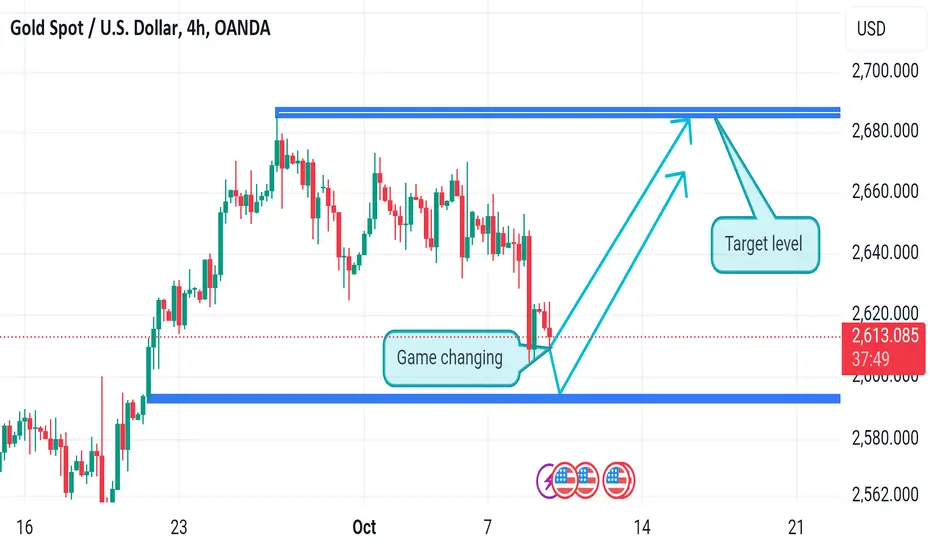
Gold move range higher read the caption Tomorrow, we have the US CPI report and that could be a catalyst for either a rally or a selloff. If we get an upside surprise in the data, then we will likely see new lows in gold. Conversely, a very soft report might trigger another rally and take us to a new all-time high
AUD/CAD Sell Setup Active - Trendline Break / MA Crossover 1HRI am in a beautiful sell position on AUD/CAD.
As we can see from the chart a quite significant trendline has been broken in conjunction with the MA 50 / 20 crossing over nicely on the 1HR timeframe.
Also if you go to the daily timeframe the previous candle low has been traded through confirming potential downside.
I will be targeting the asia low that I have mapped out which would be a 2% Risk to Reward trade.
USD/JPY contrarian trade to the upsideI'm just shooting a guess here.
During consolidation downtrends, we expect the price to touch the downtrend and come down.
But the price action is seemiling quite bullish.
The last couple of candles formed have established somewhat a strong support with a potential W FOrmation...
So if the price breaks above the neckline, we could see a bit of strength for the USD.
That is not good for stocks and markets, so I hope I am wrong.
Target 152.54
EUR/AUD broken below the M Formation - Havoc to go to 1.5819M Formation has formed over the last month with the EUR/AUD.
If you saw the last trade analysis, you'll see the EUR is showing downside on all large currencies.
We've now had a breakout below the neckline of the M formation, which means there is downside to come.
21>7
Price is testing the 200MA. So only once it breaks below will it give a stronger indications of further downside to come.
Target 1 will be at 1.5819.
USD/CAD short emerging from Rev Inv C&H with target 1.2900There are many different variations of patterns showing.
And they are all leading to downside.
We have small Rounding Tops, small Inverse Cup and Handles.
We have a break in the most recent uptrend line..
But I am focusing more on the bigger picture.
There is a solid Reverse Inv Cup and Handle forming since 10 August 2023.
The price has almost completed the final Inverse Cup and is approaching the brim level.
We have other indicators confirming with 21>7 - Bearish in the short term.
We also have the price coming down to test and mighty 200MA.
Break below, and it'll give us more confirmation of downside to come.
RSI is falling below 50 like a knife, showing downside momentum.
All in all, my first target will be at 1.2900
PS: This also goes in line with the overall DOllar weakness that has helped boost the stock markets world wide and the indication of a slow down in interest rate hikes.
Great for stocks not great for the US dollar.
Text Book Cup and handle for CAD JPY- Nice buy soon!Notice I said the word SOON.
There has been a text book cup and handle formed on the CAD/JPY/
It's just about to complete the handle forming its brim (resistance).
Now only once the price breaks out, closes above and opens above the brim - will it signal a decent long.
Until then, I'm waiting.
We have other bullish signs along the way.
7>21>200
RSI >50
Target 123.20
Inv Head and Shoulders on EUR/AUD ready to spike up 1.7265Inverse Head and Shoulders is clearly forming on the daily.
We see additional indicators confirming upside.
7>21 and price is above 200MA - Bullish
RSI>50 - Momentum is up.
Target 1 will be at 1.7265
Below the Right Shoulder there is a Sell Side Liquidity Order Block.
Smart Money buys into positions (and sweeps liquidity) from traders who are long (get stopped) and for short traders who enter into their trades.