SLV vs. IAU: Why Silver Is Crushing Gold ETFsMarket Performance: The Silver Surge
The iShares Silver Trust (SLV) is significantly outperforming its gold counterpart. Over the past year, SLV delivered a staggering 98.9% return. In contrast, the iShares Gold Trust (IAU) posted a respectable but lower 60.2% gain. Investors focused solely on safety often miss this growth engine. While gold acts as a stable store of value, silver behaves aggressively. This dynamic has resulted in SLV turning a $1,000 investment into $2,532 over five years. Gold generated $2,322 over the same period. The data confirms silver’s dominance in the current bull market.
High-Tech and Science: The Industrial Driver
Silver is not just a currency; it is a critical industrial component. Science dictates this market reality. Silver possesses the highest electrical and thermal conductivity of all metals. Consequently, the high-tech sector drives massive demand. Manufacturers require silver for 5G networks, advanced electronics, and medical devices. Unlike gold, which sits in vaults, industry consumes silver. This consumption creates a fundamental scarcity that drives price appreciation during economic expansions.
Green Tech and Patent Analysis
The global shift toward renewable energy directly benefits SLV. Patent filings for photovoltaic (solar) technologies have surged globally. Silver is the primary conductive element in solar panels. As the world transitions to net-zero emissions, solar demand creates a price floor for silver. Furthermore, electric vehicle (EV) patents increasingly rely on silver for contacts and circuitry. This structural trend ensures that SLV tracks the green energy boom, not just monetary policy.
Geopolitics and Geostrategy: Critical Minerals
Geopolitical tensions are reshaping the precious metals landscape. Nations now view silver as a strategic material rather than just a luxury good. Governments are securing supply chains for critical minerals to ensure technological sovereignty. This geostrategic hoarding reduces global supply elasticity. As major powers decouple their economies, control over silver mining and refining becomes a national security issue. Investors in SLV profit from this heightened competition for physical resources.
Macroeconomics: The Inflation Hedge
Both trusts capitalize on global debt concerns. Sovereign debt levels are rising uncontrollably across major economies. Investors traditionally use precious metals to hedge against currency debasement. However, silver offers a "high beta" play on inflation. When inflation expectations rise, silver typically rises faster than gold due to its smaller market size. Current macroeconomic conditions favor this volatility. The market anticipates continued currency devaluation, fueling inflows into hard assets like SLV.
Business Models and Fund Structure
The iShares business model focuses on accessibility. Both SLV and IAU allow investors to bypass the costs of storing physical bars. However, their cost structures differ. IAU charges a lean 0.25% expense ratio, appealing to cost-conscious holders. SLV charges 0.50%. Investors pay this premium for silver’s explosive growth potential. The fund structure is a grantor trust, meaning it holds physical bullion. This protects investors from counterparty risks associated with futures contracts or derivatives.
Risk Management and Volatility
High returns come with higher risk. SLV carries a beta of 0.18, indicating positive correlation with equity volatility. IAU holds a beta of -0.06, acting as a true diversifier. Consequently, SLV suffered a maximum drawdown of nearly 39% over five years. Gold dropped only 21.8% in the same period. Management of portfolio risk requires understanding this difference. Aggressive traders prefer SLV for its torque; conservative savers choose IAU for stability.
Conclusion: The Strategic Choice
The iShares Silver Trust offers superior leverage to the global industrial recovery. While IAU remains the safer, cheaper hedge, SLV is the growth leader. The combination of green technology demand and monetary debasement creates a perfect storm for silver. Investors willing to tolerate higher fees and deeper drawdowns have reaped larger rewards. As long as the precious metals bull market persists, silver’s dual nature ensures it will continue to outpace gold.
Greentech
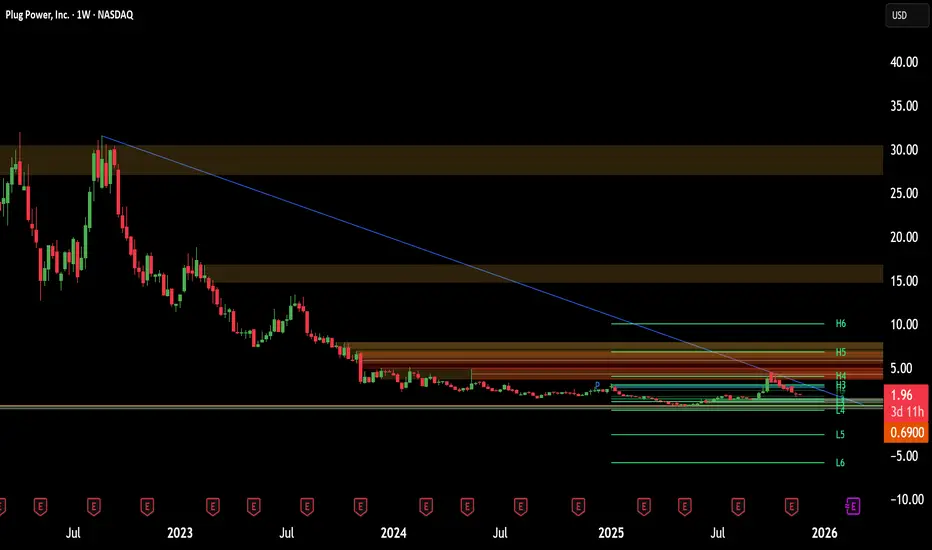
Plug Power's AI Pivot: A Strategic RechargePlug Power is executing a high-stakes pivot from government-backed green hydrogen to the booming AI infrastructure market. We analyze the strategic, industrial, and technological drivers behind this potential turnaround.
A Strategic Pivot Amidst Headwinds
Plug Power (PLUG) has long promised a "green hydrogen revolution," but its stock performance tells a different story—plummeting 99% since its 1999 debut. Facing a cash crunch and a $364 million quarterly loss, management is now steering the company toward a new, voracious customer: Artificial Intelligence data centers .
This move is not merely opportunistic; it is a survival imperative. With the Trump administration recently canceling a vital $1.7 billion Department of Energy (DOE) loan, Plug Power has halted capital-intensive green hydrogen projects. Instead, it is monetizing assets to survive, signaling a shift from government-subsidized dreams to immediate commercial reality.
Geostrategy: Adapting to Policy Shifts
The cancellation of the DOE loan reflects a broader geopolitical shift. The new administration prioritizes immediate energy availability over subsidized decarbonization. By pivoting to the private sector, Plug Power is reducing its exposure to political risk.
This aligns with a "geostrategy of resilience." Data centers are a national critical infrastructure. By offering independent power generation, Plug positions itself as a guarantor of digital sovereignty, insulating tech giants from an increasingly fragile U.S. power grid.
Industry Trends: The AI Energy Crunch
The timing of this pivot addresses a critical market failure. Major analysts project that data center electricity demand will grow 16% in 2025 and double by 2030. AI-optimized servers consume nearly five times the power of standard racks, creating a bottleneck that utility companies cannot resolve quickly.
Plug’s recent letter of intent to sell electricity rights for $275 million confirms this demand. Tech giants are desperate for power *now*. Plug is capitalizing on this by selling its grid interconnection queue spots—effectively selling "time" to power-starved hyperscalers.
Innovation & Tech: PEM Fuel Cells vs. Diesel
Technologically, Plug holds a distinct advantage. Traditional data centers rely on diesel generators for backup, which are dirty, noisy, and maintenance-heavy. Plug’s **Proton Exchange Membrane (PEM) fuel cells** offer a superior alternative:
Instant Response: PEM cells ramp up power in seconds, matching the uptime requirements of mission-critical AI workloads.
Zero Emissions: This allows data centers to operate in urban zones with strict air quality mandates.
Energy Density: Hydrogen offers higher energy density than batteries, essential for facilities with limited real estate.
Business Models: Asset Monetization & Liquidity
Management is restructuring the business model from "build-and-own" to "asset-light." The $275 million liquidity injection from selling electricity rights provides a crucial runway. Rather than burning cash to build massive hydrogen plants, Plug is leveraging its existing technology stack—GenSure and ProGen systems—to generate immediate revenue.
This shift improves the cash conversion cycle. Selling backup power hardware to well-capitalized tech firms offers faster payment terms and lower capital risk than long-term utility projects.
Management & Leadership: A Decisive Course Correction
CEO Andy Marsh’s decision to suspend DOE-related activities demonstrates decisive leadership. A rigid adherence to the original "green hydrogen" roadmap would have been fatal without federal backing. By pivoting to the "AI trade," leadership is aligning the company with the only sector currently enjoying unlimited capital expenditure: Big Tech.
Conclusion: A Speculative Renaissance?
Plug Power remains a high-risk investment, but the investment thesis has fundamentally improved. The company is trading a dependency on government policy for a dependency on AI infrastructure growth—a far more robust driver. If Plug can successfully deploy its fuel cells as the standard for data center backup, it will transition from a speculative energy play to an essential component of the AI economy.
75: BYD to Open Major Electric Vehicle Factory in TurkeyExciting times for BYD as the company announces a significant $1 billion investment to establish a major electric vehicle factory in Turkey. This strategic move is set to help BYD circumvent the recent EU tariffs on Chinese electric cars, creating 5,000 jobs and enhancing their production capabilities to 150,000 vehicles annually. This development not only strengthens BYD's foothold in the European market but also showcases their adaptability and long-term growth strategy.
The chart is currently indicating an uptrend, which began after the price successfully reclaimed the $54.80 level. This reclamation has set a strong foundation for the current upward momentum.
The price has also sustained above the high of $58.01, further solidifying this bullish trend. Holding above this level is crucial for the next phase of the uptrend.
The immediate target for BYD’s stock is the $64.91 price level. Reaching this level will confirm the strength of the current trend and open up possibilities for further gains.
Once the stock achieves the $64.91 mark, we can set our sights on the next significant target at $76.75. Breaking through this level could lead to even higher valuations, reflecting continued investor confidence and market strength. On the flip side, if the stock loses its grip on the $58.01 level, it could signal a reversal, with the next major support found around $43.48. Monitoring these levels is essential for adjusting trading strategies accordingly.
Flag forming in Gold. $2,200 possible within the yearGold has been consolidating and retracting in volume. It looks coiled to break-out past previous resistance. The 50,100, and 200-day moving averages are on the verge of intersecting and hopefully reversing course in a more bullish direction.
Signal to buy should be when shorter-term MA's breakthrough 200-day.
RSI, MACD, and Gold spot prices have been declining in unison. RSI signals it is not overbought and MACD is signaling buy which gives this trade some legs and breathing room.
On the fundamental side, gold is the most resistant to rust and corrosion, making it the most reliable and durable electrical conductor. It is key for computer and satellite technology. If Starlink is going to become a reality, regardless of whether or not it does so under the umbrella of Tesla or by IPO'ing, they will need a lot of gold to make those satellites low maintenance.
Gold is also essential in the production of green technology and it is essential for healthcare and our digital world.
I expect spot prices of $2,200 within the year and at least $2,500 by 2022.
Meyer Burger - following business pivot and stock splitMeyer Burgers pivots from solar cell eqiupment supplier to maker of solar cell modules. Next gen photovoltaic breakthrough kept close to the chest.
Tech lead
Merger Burgers has a portfolio of leading tech setting the standard for equipment used by many of the world’s PV manufacturers. Meyer Burger is also credited with introducing efficiency-boosting PERC architecture into the solar market.
Arbitrages of perception, liquidity and possibly price
Perception and pivot: Stock split and full go ahead from shareholders, 81,4% approving capital increase and tranfsormation to a manufacturer of solar cells to solar modules.
Liquidity: In an obviously good trend where states are willing to finance next gen solar. A clear strategic commitment of German and European politics. Tax breaks will probably continue to be generous. The trend is becoming stronger all over the world. Solar together with new tech for storing electricity as well as hydrogen and hydrogen transformation will be part of the solution. There won't be one technological winner. We need many. Batteries are quite problematic for many reasons, minerals being one.
Price: stock split might provide a momentum - recent data seem to suggest this in my opinion - peoples perception of price history is not completely rational. There is a strong tendency to misread the graphs here for non instituional investors/retail investors.
Sources
Shareholder decision
www.meyerburger.com
Comeback for german solar cell production
www.meyerburger.com
Mission/pivot
www.meyerburger.com
PERC
www.meyerburger.com