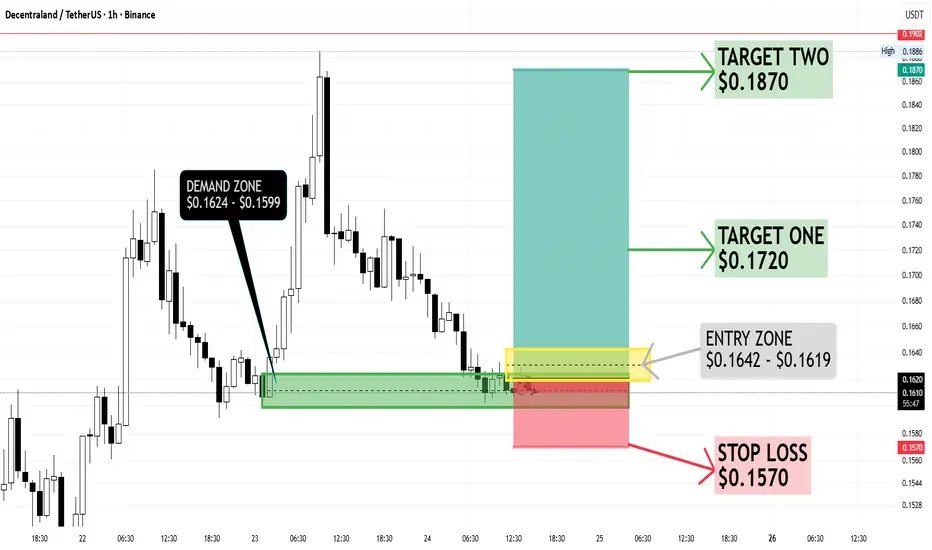
LSKUSDT Forming Falling WedgeLSKUSDT is forming a clear falling wedge pattern, a classic bullish reversal signal that often indicates an upcoming breakout. The price has been consolidating within a narrowing range, suggesting that selling pressure is weakening while buyers are beginning to regain control. With consistent volume confirming accumulation at lower levels, the setup hints at a potential bullish breakout soon. The projected move could lead to an impressive gain of around 190% to 200% once the price breaks above the wedge resistance.
This falling wedge pattern is typically seen at the end of downtrends or corrective phases, and it represents a potential shift in market sentiment from bearish to bullish. Traders closely watching LSKUSDT are noting the strengthening momentum as it nears a breakout zone. The good trading volume adds confidence to this pattern, showing that market participants are positioning early in anticipation of a reversal.
Investors’ growing interest in LSKUSDT reflects rising confidence in the project’s long-term fundamentals and current technical strength. If the breakout confirms with sustained volume, this could mark the start of a fresh bullish leg. Traders might find this a valuable setup for medium-term gains, especially as the wedge pattern completes and buying momentum accelerates.
✅ Show your support by hitting the like button and
✅ Leaving a comment below! (What is your opinion about this Coin?)
Your feedback and engagement keep me inspired to share more insightful market analysis with you!
Harmonic Patterns
ORCAUSDT Forming Falling WedgeORCAUSDT is forming a clear falling wedge pattern, a classic bullish reversal signal that often indicates an upcoming breakout. The price has been consolidating within a narrowing range, suggesting that selling pressure is weakening while buyers are beginning to regain control. With consistent volume confirming accumulation at lower levels, the setup hints at a potential bullish breakout soon. The projected move could lead to an impressive gain of around 90% to 100% once the price breaks above the wedge resistance.
This falling wedge pattern is typically seen at the end of downtrends or corrective phases, and it represents a potential shift in market sentiment from bearish to bullish. Traders closely watching ORCAUSDT are noting the strengthening momentum as it nears a breakout zone. The good trading volume adds confidence to this pattern, showing that market participants are positioning early in anticipation of a reversal.
Investors’ growing interest in ORCAUSDT reflects rising confidence in the project’s long-term fundamentals and current technical strength. If the breakout confirms with sustained volume, this could mark the start of a fresh bullish leg. Traders might find this a valuable setup for medium-term gains, especially as the wedge pattern completes and buying momentum accelerates.
✅ Show your support by hitting the like button and
✅ Leaving a comment below! (What is your opinion about this Coin?)
Your feedback and engagement keep me inspired to share more insightful market analysis with you!
ACEUSDT Forming Falling WedgeACEUSDT is forming a clear falling wedge pattern, a classic bullish reversal signal that often indicates an upcoming breakout. The price has been consolidating within a narrowing range, suggesting that selling pressure is weakening while buyers are beginning to regain control. With consistent volume confirming accumulation at lower levels, the setup hints at a potential bullish breakout soon. The projected move could lead to an impressive gain of around 90% to 100% once the price breaks above the wedge resistance.
This falling wedge pattern is typically seen at the end of downtrends or corrective phases, and it represents a potential shift in market sentiment from bearish to bullish. Traders closely watching ACEUSDT are noting the strengthening momentum as it nears a breakout zone. The good trading volume adds confidence to this pattern, showing that market participants are positioning early in anticipation of a reversal.
Investors’ growing interest in ACEUSDT reflects rising confidence in the project’s long-term fundamentals and current technical strength. If the breakout confirms with sustained volume, this could mark the start of a fresh bullish leg. Traders might find this a valuable setup for medium-term gains, especially as the wedge pattern completes and buying momentum accelerates.
✅ Show your support by hitting the like button and
✅ Leaving a comment below! (What is your opinion about this Coin?)
Your feedback and engagement keep me inspired to share more insightful market analysis with you!
ARPAUSDT Forming Bullish WaveARPAUSDT is forming a clear bullish wave pattern, a classic bullish reversal signal that often indicates an upcoming breakout. The price has been consolidating within a narrowing range, suggesting that selling pressure is weakening while buyers are beginning to regain control. With consistent volume confirming accumulation at lower levels, the setup hints at a potential bullish breakout soon. The projected move could lead to an impressive gain of around 90% to 100% once the price breaks above the wedge resistance.
This falling wedge pattern is typically seen at the end of downtrends or corrective phases, and it represents a potential shift in market sentiment from bearish to bullish. Traders closely watching ARPAUSDT are noting the strengthening momentum as it nears a breakout zone. The good trading volume adds confidence to this pattern, showing that market participants are positioning early in anticipation of a reversal.
Investors’ growing interest in ARPAUSDT reflects rising confidence in the project’s long-term fundamentals and current technical strength. If the breakout confirms with sustained volume, this could mark the start of a fresh bullish leg. Traders might find this a valuable setup for medium-term gains, especially as the wedge pattern completes and buying momentum accelerates.
✅ Show your support by hitting the like button and
✅ Leaving a comment below! (What is your opinion about this Coin?)
Your feedback and engagement keep me inspired to share more insightful market analysis with you!
Gold Price Trading Strategy Analysis for Next MondayGold Price Trading Strategy Analysis for Next Monday
As shown in the chart: Gold prices formed a false breakout on Friday, ultimately finding perfect resistance around 4160.
Given Friday's weakening volatility, gold prices are currently showing signs of a pullback, stabilizing around $4200.
This week, my free channel achieved a total profit of 83 points per lot, with a win rate of 85%.
All data is truthfully disclosed in my channel.
Current Gold Price Strategy:
1: As long as gold prices remain above $4190-$4200, the view is that the market is consolidating, and the possibility of an upward breakout remains.
Trading Strategy:
BUY: 4190-4200
SL: 4180
TP: 4230-4250---4280
2: If gold prices fall below $4190, given the false breakout on Friday, a drop below $4190-$4180 would be considered a high-probability oversold condition. Therefore, the predicted price of gold is $4150-$4100, or even lower.
The trading strategy is as follows:
SELL: $4180-$4190
SL: $4205
TP: $4150-$4100-$4000
This is the trading strategy for next Monday. If you feel confused and still can't grasp the rhythm of trading, you can wait for my guidance and advice in my public channel. Everything I share is my most genuine trading strategy.
Unfortunately, my channel was hacked last week, causing many fans to be unable to effectively contact me. But believe me, if you stay in my channel for a week, you will fully understand my trading strategy and logic, and you will become completely addicted.
Thank you for your attention.
If you have any questions, please leave a message or send me a private message.
Bitcoin – Trendline Break & Bearish Continuation SetupBITSTAMP:BTCUSD
After sweeping liquidity at 94,175, BTC broke the bullish trendline structure and shifted to a distribution phase. Current price action shows weakness below 92,900 with a clean downside imbalance.
Bearish Scenario 📉
Entry: 92,500 – 92,900 retest
🎯 Target 1: 88,538
🎯 Target 2: 86,440
🎯 Extended Target 3: 84,000
Market Structure
Liquidity grab at the top 🟡
Market range at the highs → distribution
Trendline broken → bearish continuation likely
❌ Invalidation: Close back above 93,500 (bullish shift)
⚠️ Disclaimer: Educational analysis only — NOT financial advice.
BTC Trade Plan 06/12/2025Dear Traders,
appears to be a corrective bullish channel within a larger downtrend. This channel likely represents a pullback, increasing the probability of a downside continuation. The 94,500 – 98,500 zone is a major supply area that has acted as resistance multiple times and may trigger another rejection or fake breakout if retested. Should the price get rejected from this zone, the potential downside targets are 83,000, followed by 78,000 and 75,000. A bullish scenario becomes valid only if BTC closes a daily candle above 100,000, which could open the path toward the 105,000 – 110,000 resistance range. This is a market outlook and not financial advice — proper stop-loss and risk management are strongly recommended.
If this post helped you, consider boosting and sharing it. Thank you for the support.
Alireza!
The gold price trend is unstoppable.Pricing Logic: U.S. Treasury Yield Anchor Fails, Central Bank Gold Purchases Become Core Driver
Old Framework Collapses, New Logic Establishes
The traditional pricing anchor of "gold’s negative correlation with U.S. Treasury yields" has collapsed. A rare phenomenon of "synchronized rally in gold prices and 10-year U.S. Treasury yields" has emerged over the past three weeks. The core driver lies in the declining credibility of the global monetary system and the demand for "de-dollarization," which have promoted the restructuring of the pricing framework.
Currently, gold’s trend is more susceptible to the influence of "central bank gold purchase scale, changes in U.S. dollar credit, and the degree of spot shortage." This transformation has reduced gold’s sensitivity to U.S. Treasury yield fluctuations by more than 30%, significantly enhancing its resilience during pullbacks.
Central Bank Gold Purchases Exceed Expectations
Global central bank gold purchases have exceeded 1,000 tons for three consecutive years, reaching 1,045 tons in 2024. The People’s Bank of China (PBoC) has increased its gold reserves for three consecutive months, with holdings rising to 73.45 million ounces by the end of January. The demand for asset diversification among emerging market central banks has formed a rigid support.
The $4,180–$4,200 range is not only a technical support level but also the core cost zone for global central bank gold purchases, establishing a strong bottom logic of "official buying interest emerging once prices fall below this range."
Gold trading strategy for next week
buy:4180-4190
tp:4200-4220-4250
sl:4170
Bitcoin long position strategy1. Macroeconomic Policy: Unabated Rate Cut Expectations, Liquidity Easing Underpins Markets
With the Federal Reserve’s December FOMC meeting approaching, market expectations for a rate cut have surged to a high of 89.2%. Major investment banks including Bank of America and Goldman Sachs have successively raised their rate cut forecasts. Key Fed officials continue to release dovish signals, which, combined with a weak U.S. labor market, provide real-world support for a rate cut.
Bitcoin has a -0.75 negative correlation with the U.S. Dollar Index (DXY) — a weaker dollar directly benefits crypto assets. Previous policy uncertainties have been fully digested amid sustained pullbacks. Currently, the "exhaustion of bearish factors + easing expectations" forms the core macro logic for bullish positions.
2. Capital Flows: Institutional Bottom-Hunting + Dwindling Selling Pressure, Optimized Capital Structure
Capital markets are showing clear bottoming characteristics:
- Institutions maintain continuous accumulation via ETFs, with the institutional ownership ratio of U.S. spot Bitcoin ETFs climbing to a new high of 40%.
- Exchanges recorded a 24-hour net outflow of over 4,200 BTC, pushing tradable supply to a six-year low as chips concentrate in the hands of long-term holders.
- Off-exchange (OTC) large-value order volume has increased significantly. Whales are actively absorbing selling pressure around the $89,000 level, in stark contrast to retail panic selling, indicating that selling pressure has entered a state of exhaustion.
Bitcoin trading strategy
buy:88500-89500
tp:91000-92000
sl:87500
XAUUSD – Sideways Ahead of the CPI CatalystGold is currently in a “holding pattern” as the market waits for the U.S. CPI data on December 5. Rising U.S. Treasury yields are putting pressure on prices, but the USD dropping to a 1-month low is helping to cushion the downside. At the same time, labor data remains mixed — initial jobless claims fell sharply , while ADP reported a steep decline in private employment — leaving traders without a clear directional bias. As a result, XAUUSD is stuck in a sideways phase.
On the chart, gold is ranging between 4,200 – 4,280:
4,200 → strong support, aligned with the ascending trendline and Ichimoku cloud base.
4,280–4,300 → strong resistance where sellers consistently appear.
Price action shows buyers holding a slight advantage: candles repeatedly bounce from support, the trendline remains intact, and the Ichimoku cloud supports price like a cushion. However, bullish momentum is still not strong enough to break through 4,280 as the market remains cautious ahead of CPI.
Likely scenario: XAUUSD will continue oscillating within this sideways box — retesting 4,200 then moving back toward 4,280. A clear breakout will depend entirely on the CPI release:
Break above 4,280 → opens the path to 4,300+
Break below 4,200 → signals a deeper correction
For now, the best approach is range trading and waiting for a decisive signal after CPI.
BTC/USD📈 BTCUSD – Trading Plan Summary (Breakout Setup)
🔍 Market Context
Bitcoin has successfully broken above the major descending trendline, which has rejected price multiple times in the past. This breakout signals a potential shift in momentum from bearish → bullish.
📌 Trade Setup
🎯 Entry
$87,600
Confirmed breakout of the downtrend line with bullish follow-through.
🛡️ Stop-Loss
$80,000
Placed below key structural support to protect against a false breakout.
🎯 Take Profit Targets
TP1: $97,800
TP2: $103,000
This zone represents a major supply area and previous consolidation region before the breakdown.
📊 Technical Reasons for the Trade
Multi-touch downtrend line break, indicating a shift in market structure.
Formation of a higher low, supporting bullish reversal potential.
Clean momentum candles breaking away from resistance.
Target zone aligns with strong historical supply.
📉 Risk Management
Risk remains defined with SL at $80,000.
If price closes back below the broken trendline, bullish structure becomes invalid.
📌 Summary
Bitcoin is presenting a high-probability breakout setup with clear risk and well-defined upside targets.
Holding above $87,600 keeps momentum bullish toward $97.8K–$103K.
the Big Picture, and the next Friday weekly HammerFrom a technical perspective, Natural Gas is nearing a high-conviction inflection point. The weekly hammer that will be formed into Friday’s close (12.12.2025) indicates a potential shift in market structure following the optimal accumulation zone around 4.9. This configuration favors a sharp, impulsive rally over the next 2–3 weeks, with a likely target at the long-term channel resistance near 6.4. The emerging double-top formation suggests a setup for a notable momentum reversal.
On the macroeconomic side, the ongoing “Great Reset” is expected to exert downward pressure across major risk assets over the next six months. Volatility is rising, and global markets are entering a corrective phase.
BIG Clue: USOIL Price Compressing Above ResistancePrice is currently compressing, and suggests that a strong impulsive move is likely once price strongly escapes the structure.
See how price has been pressing directly against the upper trendline. This is an area to pay close attention to because repeated tests of this descending resistance can weaken it over time. The recent bullish candles approaching the trendline show growing buying pressure, which increases the probability of an upside continuation.
So for me, a move toward the 62.00 level would be technically well justified and achievable.
The support zone below is a structural base for the entire formation. Price remained above this zone. The failed bearish attempts to push price back into this zone further support the idea that sellers are losing control.
The key confirmation for the bullish scenario is a successful retest of that same trendline as support. If price holds above it and prints continuation strength, a move toward 62.00 becomes the dominant scenario.
But if price instead gets sharply rejected and falls back inside the formation, another rotation toward the lower boundary of the triangle would become likely before any breakout attempt.
This chart is currently in a classic pre-expansion phase. The next impulsive candle will likely define the direction for the next big move.
NZDUSD: Expecting Retracement after impulsive leg upPrice is currently in a short-term bullish structure after a strong impulsive leg.
And price has now reached a clear resistance zone. After such an expansion, the market often requires a "breather" to rebalance.
As price reached this zone, momentum has visibly decelerated. This behavior cleanly suggests that sellers are starting to step in. What is typical when price revisits a well-defined area like this one, that it often leads to either a deep pullback or a trend reversal.
My target would be around the 0.5747 level, a healthy, achievable pullback and technically well aligned with normal market behavior.
So for me, the market is in a decision area. If price fails to break, the probability favors a corrective drop. That move would be considered a healthy pullback within a bullish trend rather than an immediate trend reversal.
Another possible scenario is that price breaks through the zone with strong momentum and then successfully retests it as support, after which bullish continuation is likely to follow.
This is not the spot to chase long positions, and it is also not the place to short blindly without clear confirmation.
BTC Buy Setup 6 Dec 2025 12HBTC Buy Setup
Market is pulling back from the recent swing high and heading toward a bullish support zone. If price dips into that demand area and shows a stable reaction, it can form a new dealing range. From there, a clean shift in structure on the lower timeframe can open a long opportunity.
The idea is to let price tap the demand zone, hold it, and then catch the move as it expands back toward the upper boundary of the ascending channel. The overall bias stays bullish as long as the trendline and support zone remain protected.
XPTUSD – Distribution Under Supply: Compression Before ExpansionTimeframe: 1H
Instrument: Platinum vs USD (XPTUSD)
Bias: Short, while price holds below descending trendline and HTF supply
🧭 Idea Summary
Price is trading directly beneath a higher-timeframe supply zone (around 1,680–1,700 on this chart).
Since that rejection, the 1H chart has printed a sequence of lower highs capped by a multi-touch descending trendline.
Multiple demand zones below price have been tested and weakened, showing absorption rather than strong rejection.
This creates a compression pattern under supply – a structure that often resolves with a downside expansion if buyers fail to break the trendline with conviction.
This idea is not a signal, only a structured way to frame risk and probability.
🔍 Technical Breakdown
1. Higher-Timeframe Context
The highlighted red band near the top of the chart marks a strong supply area that previously triggered a sharp sell-off.
Current price action is unfolding below that zone, suggesting that larger players may be distributing positions rather than accumulating.
2. 1H Market Structure
After the late-November impulsive rally, price failed to sustain above the highs and rolled over.
Since then, it has formed:
A clear lower-high structure, and
A downward-sloping trendline containing each new rally.
As long as that trendline holds, the path of least resistance is down, not up.
3. Demand Zones & Absorption
Several green demand blocks are drawn beneath price.
Initial reactions from demand were strong; recent reactions are shallow and short-lived.
This pattern suggests resting buy orders are being consumed, not defended – consistent with a potential continuation lower.
4. Price Compression
Candles near the current region are getting smaller, with overlapping wicks.
This is a classic volatility compression between:
Overhead supply / trendline resistance, and
Fading demand below.
Compression typically precedes an expansion; the structure currently favours a downside break unless buyers take control decisively.
📌 Trade Plan (Conceptual)
Direction: Short
Context: Compression under supply within a lower-high structure
Entry Zone: Near the descending trendline, within or just below the latest red supply block on the chart.
Stop-Loss (Invalidation for the idea):
Above the most recent swing high and above the descending trendline.
A strong 1H close above this area would:
Break the short-term bearish structure, and
Signal that supply is no longer dominant.
⚠️ Risk Management Notes
This is one timeframe and one pattern, not a complete trading system.
No single setup is guaranteed; even clean structures fail.
Position sizing should be based on a fixed % of account risk per trade, not on conviction level.
If price action becomes choppy around the entry (multiple back-and-forth wicks through the trendline), the setup is likely degrading and may not be worth holding.
🧾 Final Take
As long as XPTUSD remains:
Below the HTF supply, and
Contained under the descending trendline,
the evidence favours a bearish continuation driven by distribution and demand absorption.
A clean break and hold above that structure is the line in the sand where this idea stops making sense.
XAUUSD Analysis TodayXAUUSD Analysis Today – Key Levels, Liquidity Map and High-Probability Trading Plan
Gold is currently retracing after a clear fake breakout on the intraday structure, showing strong rejection from the extended premium zone. Price action on H1 reflects a shift from bullish exhaustion to short-term corrective movement, with liquidity sitting below the most recent swing low. Today’s session will likely revolve around sweeps, mitigation, and a return to discounted zones before any meaningful continuation.
1. Market Structure Overview
The H1 chart shows:
A completed ascending channel with a clear BOS followed by a liquidity sweep.
Price rejecting from the upper imbalance and returning toward equilibrium.
A notable Fake Breakout around 4214–4218 where liquidity was engineered before the sell-off.
The current decline is forming a corrective leg aimed toward the demand range.
This price behavior confirms a move into the BUY ZONE 4168–4186, aligning with Fibonacci retracement and trendline confluence.
2. Important Support & Resistance Levels
Key Resistance
4252–4257: Major supply and premium zone, strong rejection expected on first touch.
4220–4225: Reaction zone where the fake breakout occurred; a retest here may create another liquidity hunt.
Key Support
4201–4208: First reaction demand zone, shallow pullback potential.
4186–4174: Deep discount area, Fibonacci confluence, major BUY ZONE.
4168: Strong low protected by higher-timeframe liquidity.
3. Indicator Confluence
EMA Cluster (20/50/100) is compressing downward, confirming short-term correction.
RSI shows no bullish divergence yet, meaning the sweep of liquidity is still incomplete.
Fibonacci 61.8–78.6% aligns with the 4174–4168 zone, increasing probability of bullish reversal.
4. Expected Price Behavior Today
Scenario A (High Probability):
Price continues toward 4174–4168, sweeps liquidity, then forms a bullish CHoCH on lower timeframe before aiming for 4208 → 4220 → 4252.
Scenario B (Moderate Probability):
Price rejects early at 4201, retraces into 4220 supply, then drops again to deeper levels before reversing.
Scenario C (Low Probability):
Immediate bullish break above 4225 without retesting deeper zones.
5. Trading Strategy (High-Probability Setups)
Buy Strategy – Preferred Setup
Entry: 4174–4168 (Fibonacci + strong demand)
Stop Loss: Below 4160
Take Profit:
TP1: 4208
TP2: 4220
TP3: 4252–4257
This zone is optimal due to liquidity, trendline tap, and deep retracement discount.
Sell Strategy – Counter-trend Short
Entry: 4220–4225 (fake breakout zone retest)
SL: Above 4232
TP: 4205 → 4186
This trade targets the inevitable sweep to the BUY ZONE.
6. Summary
Gold is in a short-term corrective phase inside a larger bullish macro sentiment. Key liquidity remains below, and the most effective strategy today is waiting for deeper discount zones before looking for strong buys.
The Role of WTO, IMF, and World Bank in the Global Trade Market1. World Trade Organization (WTO)
The WTO is the central global institution responsible for regulating international trade. Established in 1995, it succeeded the General Agreement on Tariffs and Trade (GATT) and currently has 164 member countries. Its primary objective is to ensure that trade flows as smoothly, predictably, and freely as possible.
a. Promoting Trade Liberalization:
The WTO facilitates trade by reducing barriers such as tariffs, quotas, and subsidies that hinder international commerce. Through multilateral negotiations, the organization encourages countries to open their markets and adopt fair trade practices. By providing a platform for dialogue, the WTO helps resolve disputes over trade policies, preventing protectionist measures that could disrupt global commerce.
b. Trade Rules and Agreements:
WTO members agree to a set of binding rules that govern trade in goods, services, and intellectual property. Key agreements include the General Agreement on Tariffs and Trade (GATT), the General Agreement on Trade in Services (GATS), and the Agreement on Trade-Related Aspects of Intellectual Property Rights (TRIPS). These rules create a predictable trade environment, reducing uncertainty for businesses engaged in international trade.
c. Dispute Resolution Mechanism:
One of the WTO’s most significant roles is its dispute settlement system. When countries believe their trade rights are violated, the WTO provides a legal framework for resolving conflicts. This mechanism prevents trade wars and encourages compliance with agreed trade norms.
d. Capacity Building and Technical Assistance:
The WTO supports developing and least-developed countries (LDCs) by offering training and technical assistance to enhance their ability to participate in the global trade system. This fosters inclusivity and helps emerging economies integrate more effectively into international markets.
Impact on Global Trade:
By promoting open and rules-based trade, the WTO reduces transaction costs, fosters competition, and stimulates innovation. Countries that comply with WTO agreements gain access to broader markets, which boosts exports, employment, and economic growth. For example, WTO agreements have played a pivotal role in facilitating the globalization of supply chains, which are essential for sectors like electronics, automobiles, and agriculture.
2. International Monetary Fund (IMF)
The IMF, established in 1944, is primarily a financial institution designed to ensure global monetary stability. While its core mandate is not trade per se, its role is critical in maintaining conditions conducive to international trade.
a. Financial Stability and Crisis Prevention:
The IMF monitors the global economy and provides early warning signals about financial imbalances that could disrupt trade. Countries experiencing balance-of-payments crises—when imports exceed exports and foreign reserves dwindle—can seek assistance from the IMF. By offering short-term financial support, the IMF stabilizes exchange rates, ensuring that trade transactions are not adversely affected by currency volatility.
b. Policy Advice and Economic Surveillance:
The IMF conducts regular assessments of member countries’ macroeconomic policies through its “Article IV consultations.” It advises governments on fiscal, monetary, and exchange rate policies to promote sustainable growth. Sound economic policies foster investor confidence, which is crucial for trade and capital flows.
c. Lending Programs:
IMF lending programs, such as Stand-By Arrangements and the Extended Fund Facility, help countries manage economic shocks. For instance, during the 1997 Asian Financial Crisis, IMF interventions provided liquidity and policy guidance, helping affected countries restore trade and investment flows. Similarly, during the COVID-19 pandemic, the IMF offered emergency financing to stabilize economies and prevent global trade collapse.
d. Technical Assistance and Capacity Development:
The IMF provides training in public finance, monetary management, and financial regulation. These initiatives help member countries maintain stable macroeconomic environments, which are essential for smooth trade operations.
Impact on Global Trade:
By ensuring macroeconomic stability, the IMF indirectly supports global trade. Stable currencies and balanced budgets reduce transaction risks and encourage cross-border investment. Countries that manage economic volatility effectively are more attractive trade partners, thereby strengthening the global trade network.
3. World Bank
The World Bank, formed alongside the IMF in 1944, focuses on long-term economic development and poverty reduction. Its activities complement the trade-facilitating functions of the WTO and the stability-focused interventions of the IMF.
a. Infrastructure Development:
One of the World Bank’s key roles in trade promotion is financing infrastructure projects, such as ports, roads, railways, and logistics hubs. Efficient infrastructure reduces transportation costs, shortens delivery times, and enhances trade competitiveness. For example, improved port facilities in countries like Vietnam and Kenya have significantly boosted export-oriented industries.
b. Development Projects and Industrial Policy Support:
The World Bank provides technical and financial assistance to promote industrialization, agricultural productivity, and trade-related sectors. By enhancing the production capacity of developing nations, it helps them integrate into global supply chains. Programs targeting small and medium-sized enterprises (SMEs) and export-oriented industries have facilitated greater participation in international trade.
c. Poverty Alleviation and Inclusive Growth:
The World Bank’s initiatives in education, health, and social protection indirectly affect trade. A skilled, healthy workforce increases productivity, enabling countries to produce goods efficiently and compete in international markets. Inclusive growth ensures that the benefits of trade are widely shared, reducing social tensions that could disrupt trade relations.
d. Policy and Regulatory Support:
The World Bank advises governments on trade policies, regulatory frameworks, and investment climate reforms. Simplified customs procedures, better trade facilitation, and improved investment regulations help reduce barriers to cross-border commerce.
Impact on Global Trade:
By enhancing infrastructure, productivity, and institutional capacity, the World Bank creates an environment conducive to trade. Countries supported by the World Bank can export more competitively, attract foreign investment, and engage more effectively in global markets.
Interconnected Roles in Global Trade
While each institution has a specific mandate, their functions often intersect in shaping global trade:
The WTO establishes the rules and ensures fair trading practices.
The IMF ensures that economic and financial systems remain stable so countries can trade without disruption.
The World Bank strengthens the structural and institutional capacity of countries to produce and trade goods efficiently.
For example, a developing country may receive World Bank funding to upgrade port infrastructure, IMF advice to stabilize its currency, and WTO support to access global markets under favorable trade agreements. Together, these institutions create a framework where trade can flourish sustainably.
Challenges and Criticisms
Despite their significant contributions, these institutions face challenges. The WTO has struggled with stalled negotiations and criticism from countries feeling disadvantaged by liberalization. The IMF is sometimes criticized for imposing austerity measures that can hurt social welfare. The World Bank faces scrutiny for environmental and social impacts of large projects. Nonetheless, their roles in promoting trade, stability, and development remain indispensable.
Conclusion
The WTO, IMF, and World Bank are pillars of the global trade system. By facilitating trade liberalization, ensuring financial stability, and supporting development, these institutions create an ecosystem where international commerce can thrive. While their mandates differ, their collective impact strengthens economic growth, reduces poverty, and fosters international cooperation. In an increasingly interconnected world, the effectiveness of these organizations is central to sustaining the momentum of global trade, enhancing prosperity, and building resilient economies.