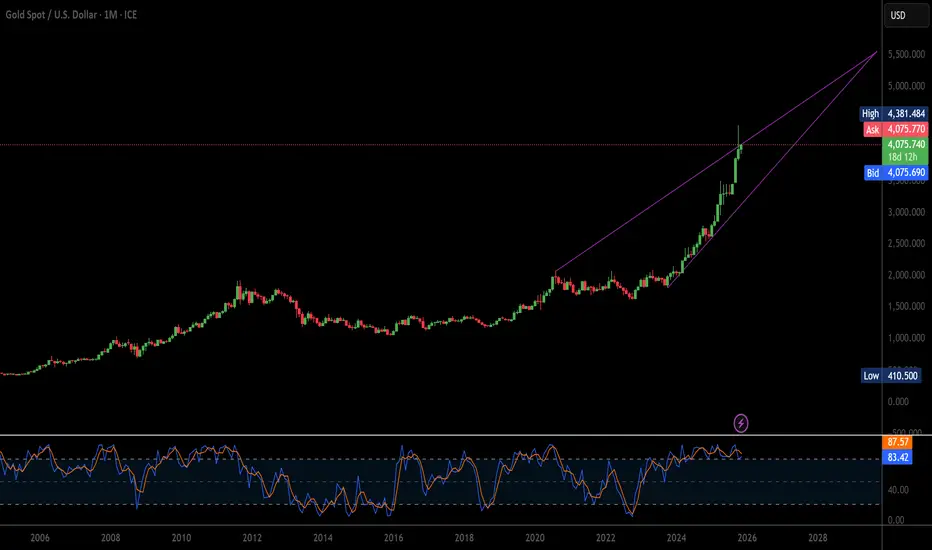
Golden Anchor: The Multi-Domain Resilience of BullionThe price of gold recently surged past $4,045 per ounce, cementing its role as a strategic global asset. This upward trend, pushing the year-to-date gain above 50%, is not merely speculative. It reflects deeply rooted structural forces across multiple global domains, from macroeconomics to high-tech demand. Investors are proactively using gold as a vital hedge against accelerating global uncertainty and fiat currency debasement.
Geopolitics & geostrategy: The De-Dollarization Hedge
Persistent geopolitical tensions drive sustained demand for gold's safe-haven status. Heightened conflict risks and unpredictable US tariff policies create global market volatility. In this fragmented landscape, gold acts as a politically neutral reserve asset, mitigating counterparty risk. Central banks globally are strategically accumulating gold to diversify away from the US dollar, accelerating the de-dollarization trend. This shift enhances national economic sovereignty, fueling gold's ascent.
Macroeconomics: Fiscal Dominance and Rate Cuts
Weakening US economic indicators directly reinforce gold’s appeal. A dip in the University of Michigan’s Consumer Sentiment Index signals broad economic unease. This fragility increases market bets on an earlier and more aggressive Federal Reserve rate-cutting cycle. Lower interest rates reduce the opportunity cost of holding non-yielding gold, boosting its price. Furthermore, the fiscal dominance prevalent in developed economies promotes gold as a critical hedge against the debasement of G7 fiat currencies.
Central Bank & Investment Demand Dynamics
Central bank purchases provide a formidable structural floor for gold prices. Despite the recent price correction, global central banks remain net buyers. They added 220 tonnes in Q3 2025 alone, representing a strategic, long-term commitment to gold. Poland, Kazakhstan, and Azerbaijan are notable accumulators. Retail and institutional investors are also turning to gold ETFs and physical bullion, viewing gold as essential financial insurance during systemic shocks.
Technology, Science, and High-Tech Demand
Technological advancements, particularly the boom in Artificial Intelligence, subtly support gold demand. While gold's main drivers remain macroeconomic, the high-tech sector consumes gold in electronic components and specialized circuits. Industrial demand remains resilient, offsetting a decline in jewelry consumption due to high prices. The massive, energy-intensive growth of AI and data centers indirectly creates a strategic need for high-value, reliable assets like gold to back infrastructure growth and hedge associated capital risks.
Technical Outlook and Consolidation Phase
Gold exhibits high long-term conviction but faces short-term consolidation after its historic rally. The price peaked at over $4,380 per ounce in mid-October before profit-taking began. Analysts expect the price to remain range-bound in the near term, with a maximum pullback risk around the strong $3,500/oz support level. Key technical resistance levels above the current peak are seen at $4,420/oz and $4,500/oz. Investors should utilize short-term dips as strategic long-term accumulation opportunities.
Havenassets
Could Silver's Price Soar to New Heights?In the realm of precious metals, silver has long captivated investors with its volatility and dual role as both an industrial staple and a safe-haven asset. Recent analyses suggest that the price of silver might skyrocket to unprecedented levels, potentially reaching $100 per ounce. This speculation isn't just idle talk; it's fueled by a complex interplay of market forces, geopolitical tensions, and industrial demand that could reshape the silver market landscape.
The historical performance of silver provides a backdrop for these predictions. After a notable surge in 2020 and a peak in May 2024, silver's price has been influenced by investor sentiment and fundamental market shifts. Keith Neumeyer of First Majestic Silver has been an outspoken advocate for silver's potential, citing historical cycles and current supply-demand dynamics as indicators of future price increases. His foresight, discussed across various platforms, underscores the metal's potential to break through traditional price ceilings.
Geopolitical risks add another layer of complexity to silver's valuation. The potential for an embargo due to escalating tensions between China and Taiwan could disrupt global supply chains, particularly in industries heavily reliant on silver like technology and manufacturing. Such disruptions might not only increase the price due to supply constraints but also elevate silver's status as a safe-haven investment during times of economic uncertainty. Moreover, the ongoing demand from sectors like renewable energy, electronics, and health applications continues to press against the available supply, setting the stage for a significant price rally if these trends intensify.
However, while the scenario of silver reaching $100 per ounce is enticing, it hinges on numerous variables aligning perfectly. Investors must consider not only the positive drivers but also factors like market manipulation, economic policies, and historical resistance levels that have previously capped silver's price growth. Thus, while the future of silver holds immense promise, it also demands a strategic approach from those looking to capitalize on its potential. This situation challenges investors to think critically about market dynamics, urging a blend of optimism with strategic caution.
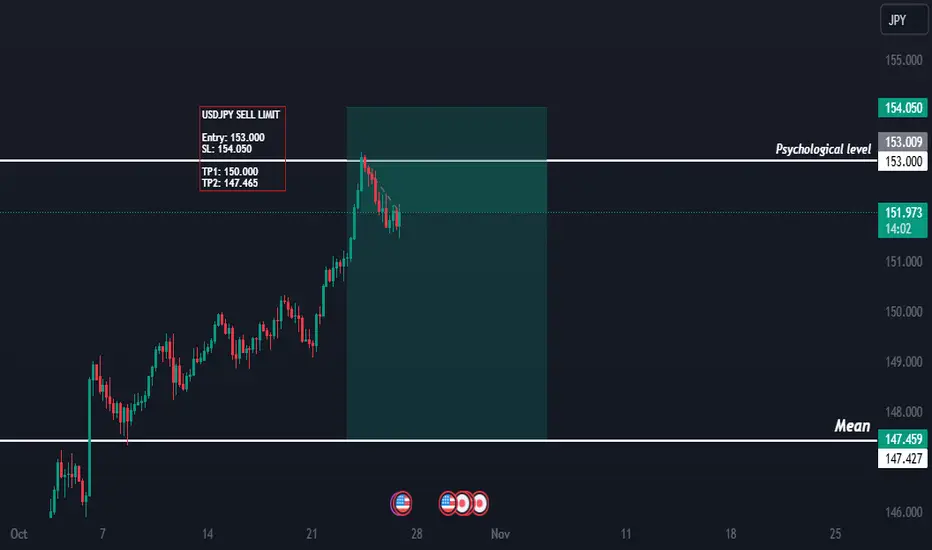
USDJPY: Potential for a Slight Bearish Bias Amid Key FundamentalUSDJPY: Potential for a Slight Bearish Bias Amid Key Fundamental Drivers (25/10/2024)
Today, the USDJPY currency pair could experience a slight bearish bias, driven by recent shifts in both the Japanese and U.S. economic landscape. Here’s a breakdown of the factors contributing to this potential trend, along with insights into what traders should watch as the day unfolds.
1. Bank of Japan’s Potential Shift in Policy
The Bank of Japan (BoJ) has maintained its ultra-loose monetary policy stance for years, but recent signals suggest a possible move towards tightening. Japanese inflation rates have gradually risen, and with core inflation holding steady above target levels, the BoJ may finally consider adjusting its dovish stance. Any indication of a shift toward a more hawkish BoJ, even if gradual, could support the JPY, creating downward pressure on the USDJPY pair.
2. US Dollar Weakness on Federal Reserve Pause Speculation
The US Dollar (USD) has softened recently as speculation grows that the Federal Reserve may pause rate hikes. U.S. economic data has shown signs of cooling inflation, and Fed officials have hinted that a pause could be on the horizon, given recent macroeconomic indicators. A dovish tone from the Fed typically weakens the USD, thus enhancing the relative strength of the JPY. This potential softening in the dollar is an essential factor in the slight bearish bias for USDJPY.
3. Market Sentiment Shifting Towards Safe-Haven Assets
Investor sentiment is currently tilted toward safe-haven assets, largely due to ongoing geopolitical tensions and uncertain global economic conditions. While the USD is also a safe-haven currency, the Japanese Yen (JPY) often gains favor when there’s heightened uncertainty in markets, especially in Asia. This risk-averse sentiment is driving investors to seek the JPY, which could contribute to additional downward momentum in the USDJPY pair today.
4. Technical Indicators Suggest Resistance for USDJPY
From a technical perspective, USDJPY is encountering resistance around the 150.00 level. This is a critical psychological threshold, and the pair’s failure to break above this level reinforces a potential bearish sentiment. With Relative Strength Index (RSI) levels approaching overbought territory, a bearish correction might be anticipated. Additionally, a dip below the 149.00 support level could confirm this outlook and signal further downside potential.
Summary: Slight Bearish Bias for USDJPY
Today’s fundamental factors suggest a slight bearish bias for USDJPY, largely due to potential changes in Bank of Japan policy, a softer US Dollar from Federal Reserve pause speculation, and increased demand for safe-haven assets. Technical resistance at key levels also reinforces the likelihood of a bearish tilt for the pair.
Traders should watch for real-time updates on BoJ announcements, Fed commentary, and any developments in geopolitical news that could impact USDJPY direction.
---
Keywords
1. USDJPY forecast
2. Bank of Japan policy
3. US Dollar analysis
4. Fed rate pause
5. USDJPY bearish trend
6. Forex trading insights
7. Safe-haven assets
8. Japanese Yen strength
9. USDJPY technical levels
$USDJPY Is the dollar flying against yen?The pair is currently moving into the channel and above 105.500 due to the dollar trying to regain some ground after a mood for risk appetite. However, the reality of slowing economic data and rising virus cases around the world is an almost unavoidable and hard reality.
About technical terms, this pair is struggling to keep an upward pressure because it's in the channel and it could lead the price down again, but this time is too close of the 200 DMA at 106.883 which is calling for retesting and coincidentally was my short position target from 112.100. Let's take a look at what it does but in my case I'm still short.
You have to be careful with the dollar and typical safe-haven assets because the "gold standard" it will be a reality pretty soon as 2021, perhaps you shouldn't be trading forex in the long run but buying physical GOLD. Stay tuned on my gold idea I'd be posting within coming days.
Have a good and profitable trading week.
Creamlivetrading