DJ30 – HTF Bias AnalysisHTF Protected Low: 48,740 HTF Liquidity Draw: 49,715 Bias: Bullish Execution depends on lower timeframe confirmation. Bias only. by self_taught_trader3
Making HH HL.OGDC Analysis Closed at 287.82 (01-01-2026) Making HH HL. Now at Very Strong Resistance Zone (288 - 292). If this Zone is Crossed with Good Volumes & Sustained, we may witness New Highs around 350+ Cup & Handle Pattern has also appeared. However, resistance remains the same.by House-of-TechnicalsUpdated 8
Recently made HHFFL Analysis CMP 22.84 (23-01-2026) Recently made HH & at rejected from Strong Resistance level around 23 - 24. Bullish on Bigger time frames. Now monthly closing above 23.50 would be a positive sign. Important Support seems to be around 20 - 22 Breaking 18 this time may bring more selling pressure.by House-of-Technicals1
Making HH HL.GCIL Analysis Closed at 35.21 (21-01-2026) Making HH HL. Currently at Channel Bottom. Sustaining this range (around 34) may lead it towards 40 & then around 45. However, breaking 33 may bring more selling Pressure.by House-of-Technicals1
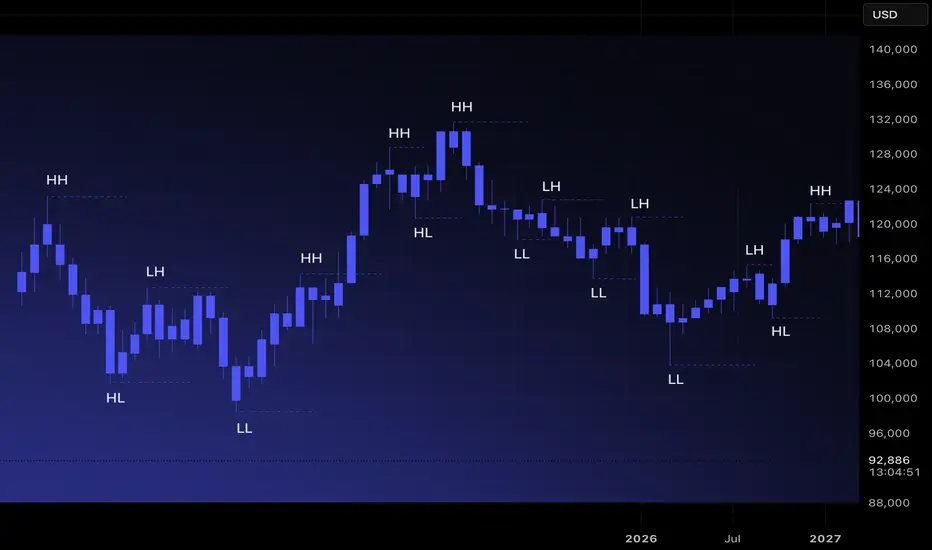
Market Structure 101: Navigating Price ActionMost traders jump directly into indicators, oscillators, or patterns. Yet every chart has a deeper foundation that determines direction long before any tool is applied. Market structure is that foundation. When you understand how price forms highs, lows, and transitions between them, you stop reacting to noise and start reading the market’s intent. It is the base layer that allows you to build a clear, consistent bias. Price moves because buyers and sellers interact around key levels. Structure highlights where momentum strengthens, weakens, or reverses. By tracking how highs and lows evolve, you can identify trend, consolidation, and shifts in direction with far more clarity than any indicator can offer. Market structure is objective. It gives you a rule-based lens to interpret movement across all timeframes. Understanding Highs and Lows There are four structural components every trader must recognize. Higher High (HH): Price breaks above a previous high, showing buyers in control. Higher Low (HL): Price pulls back but stays above the prior low, confirming trend continuation. Lower High (LH): Price rallies but fails to reach previous highs, indicating weakening demand. Lower Low (LL): Price breaks below the previous low, signaling sellers taking control. These sequences are the building blocks of trend identification. When mapped correctly, they remove guesswork and reveal underlying momentum. Identifying Uptrends and Downtrends Uptrend: A sequence of HHs and HLs. Buyers consistently push price higher and defend higher floors. Downtrend: A sequence of LHs and LLs. Sellers control direction, rejecting higher prices and driving the market downward. A trend remains intact until structure breaks. This is why experienced traders avoid predicting reversals and instead follow structural evidence. When the market prints new HHs and HLs, the bias remains long. When LLs and LHs appear, the bias rotates short. Ranges and Consolidation Markets do not trend all day. Much of the time, they move sideways. A range occurs when highs and lows stay relatively equal, creating a horizontal zone with equal highs and equal lows. This is where compression happens. Liquidity builds above the range highs and below the range lows, and trend often resumes only after one side of the range is taken. In ranges, structure becomes neutral. Bias is formed only when price breaks out and retests with confirmation. Break of Structure(BOS) and Trend Shift A break of structure occurs when the market violates the pattern of the existing trend. In an uptrend, a break occurs when price prints an LL. In a downtrend, a break occurs when price forms an HH. This signals a potential shift in momentum. Breaks of structure matter because they identify turning points without relying on subjective signals. They show where one side loses control and the other gains traction. They also create clear invalidation points for risk management. How to Read Structure Across Timeframes Market structure becomes even stronger when used across multiple timeframes. The higher timeframe sets the primary bias. The lower timeframe provides entry precision. Weekly or Daily: Structural trend and major zones. 4H or 1H: Execution windows and key shifts. 15m and 5m: Entry confirmation. When all levels of structure align, the probability of a clean move increases significantly. Avoiding Common Mistakes Many traders misread structure by focusing on every small fluctuation. Structure is defined by meaningful swings, not micro noise. Another common error is assuming a single HH or LL immediately reverses a trend. Context matters. Breaks followed by continuation and retests confirm the shift. A disciplined trader waits for structure to become clear instead of acting on isolated candles. Turning Structure Into a Bias Structure simplifies decision-making. If the market is printing HH and HL formations, you prioritize longs. If it is printing LH and LL formations, you seek shorts. If highs and lows are equal, you wait for a breakout. Educationby HyroTrader202030
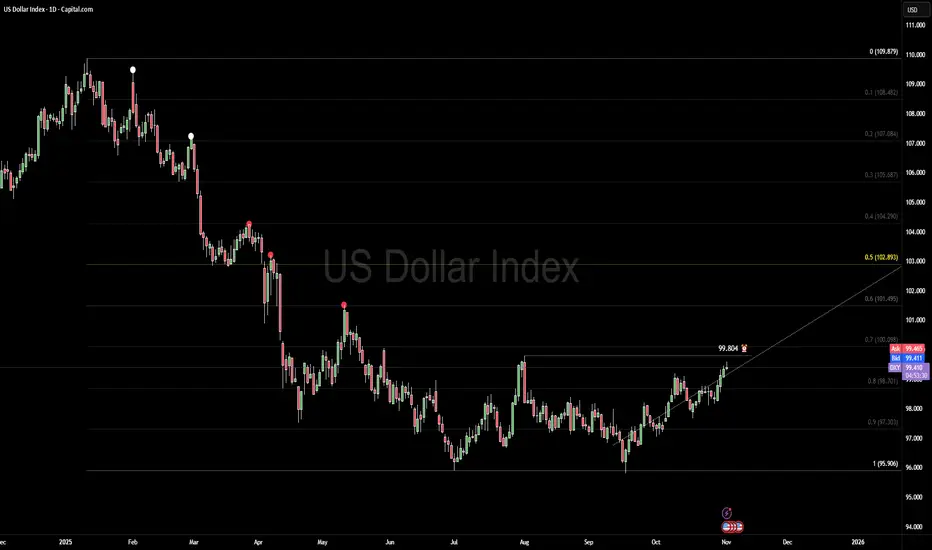
US DOLLAR — Structure Shift in Motion🧭 Context The dollar continues to push higher while major crosses weaken. Risk sentiment remains defensive as traders lean toward safety going into the new week. 📈 Technical POV We’re trading into the structural pivot at 99.804, not above it yet. The daily chart shows stretched momentum — near +2 deviation — but buyers still control the short-term rhythm. The broader weekly bias remains bearish, so this move likely forms a counter-rally within the larger range. 🌍 Macro View Currency Index: DXY advancing toward 100.00, driven by steady demand for USD amid uncertain global data. Central Bank: The Fed’s 25 bps cut came with a neutral tone, signaling a pause — enough to keep the dollar firm. Yields: U.S. 10-year yields hover near 4%, maintaining the yield advantage over Europe and Japan. Seasonality: Early November often favors USD flows as funds rebalance into year-end positioning. 📊 Volume / Order Flow Liquidity behavior remains balanced near current levels. No clear exhaustion yet — market is simply rotating into the key 99.804 zone, waiting for confirmation before expansion. 🎯 Plan If we close above 99.804, it could unlock a move toward the weekly discount-zone liquidity, potentially sparking strong reactions across major cross pairs. If rejected, expect short-term pullback before any renewed strength. 🧠 CORE5 Note Professional traders don’t predict — they prepare. Let price prove conviction before you act. Institutional Logic. Modern Technology. Real Freedom.Longby DanelFadejev2
Next Stop: 8K? Ethereum’s Big Breakout LoadingEthereum has been building a clean bullish structure for years and right now it’s standing right at the edge of a major breakout. If ETH manages to hold above the 4K zone, the 6K–8K targets are just the beginning. Above that, we enter the FOMO Zone, and a move toward 13K is totally on the table. As long as price stays above 2.75K, the bullish structure remains solid.Longby Breakout_Alert9
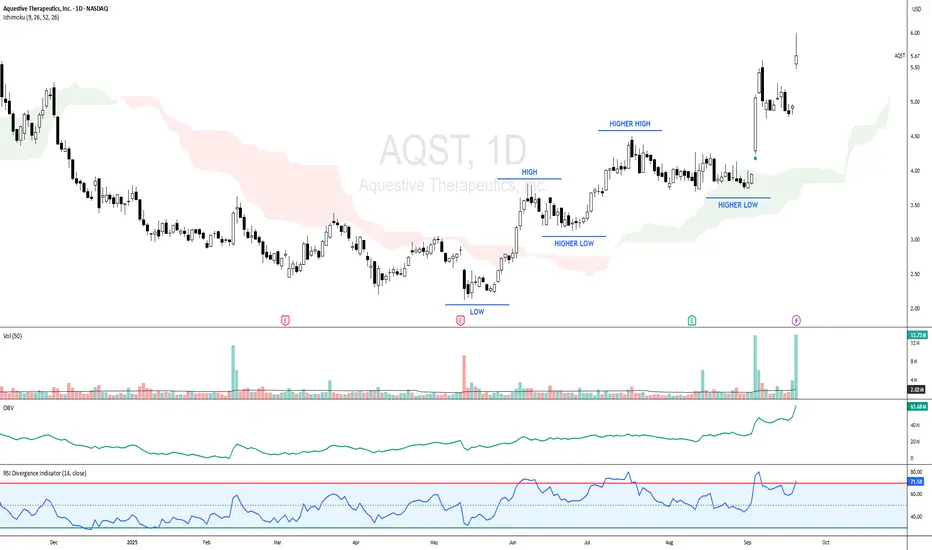
AQST - RISING PRICES is supported by INCREASING VOLUMEAQST - CURRENT PRICE : 5.67 Key Observations : Uptrend Structure – The chart shows a clear uptrend where both highs and lows are moving higher, confirming bullish price action. Volume Confirmation – Rising prices are supported by increasing trading volume, which validates the strength behind the uptrend. OBV Indicator – On-Balance Volume line is trending upward, confirming strong accumulation and participation from buyers. RSI Momentum – RSI is above 70, reflecting strong bullish momentum with no immediate signs of weakness. Overall, the combination of higher highs & higher lows, volume confirmation, and bullish indicators (OBV & RSI) suggest that AQST (Aquestive Therapeutics, Inc.) is well-positioned for further upside in the short to medium term. ENTRY PRICE : 5.47 - 5.67 FIRST TARGET : 6.40 SECOND TARGET : 7.90 SUPPORT : 4.97 Longby IMRAN_96Updated 8
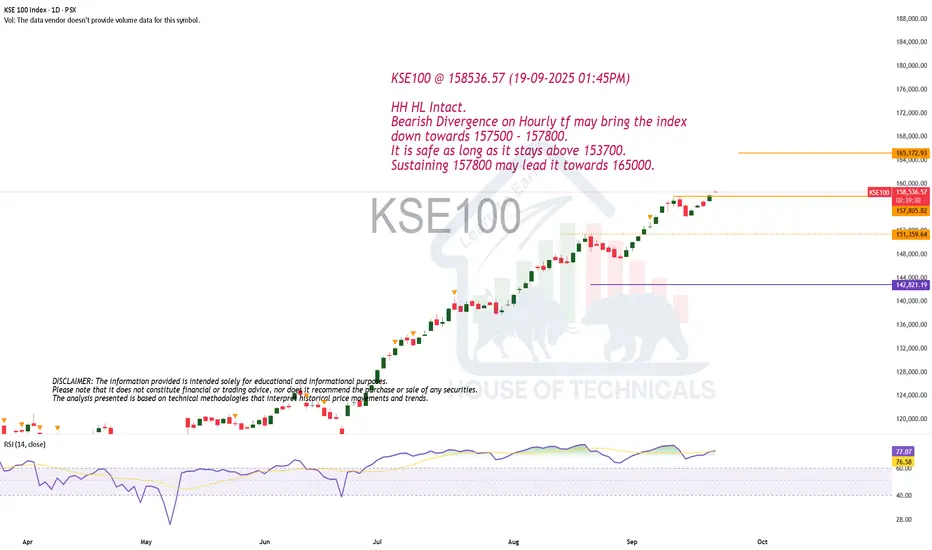
HH HL Intact.KSE100 @ 158536.57 (19-09-2025 01:45PM) HH HL Intact. Bearish Divergence on Hourly tf may bring the index down towards 157500 - 157800. It is safe as long as it stays above 153700. Sustaining 157800 may lead it towards 165000.by House-of-Technicals5
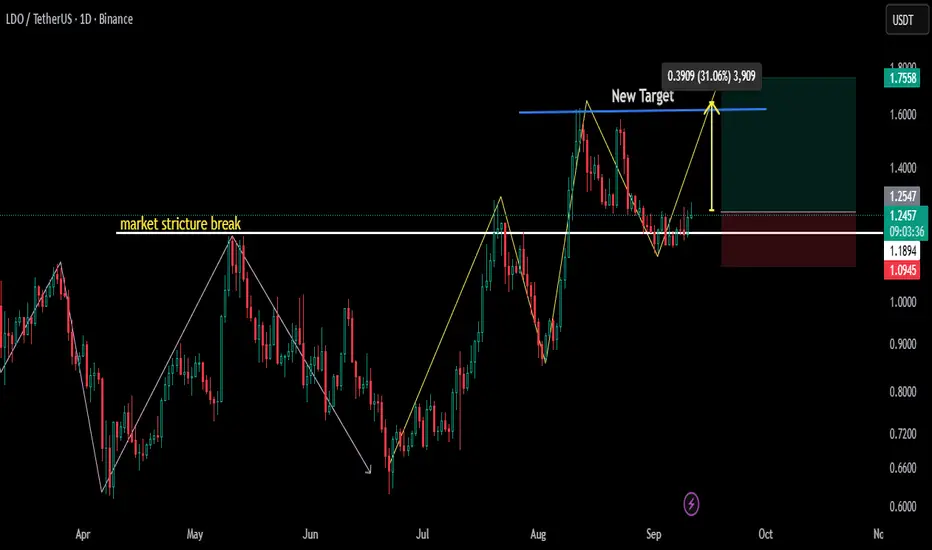
Market Structure Breaks LDOUSDT 1Day charts time for bullsPreviously market are in down trend in daily charts lower highs and lower lows now market structure breaks and time for uptrend .. STOPLOSS .. Below higher low PAIR... LDOUSDT TREND,, Market structure BreaksLongby karimdanish303
Gold XAUUSD Buy SetupGold is forming a potential buy setup. If price reaches the FVG zone and the M15 candle closes above the 50% level, a buy entry can be considered. ⚠️ Always wait for candle confirmation and manage risk properly. Entry Zone: FVG 50% level Trade: 3430+ Stop Loss: Below FVG zone Risk/Reward: High probability setup"Longby Clarainsights111
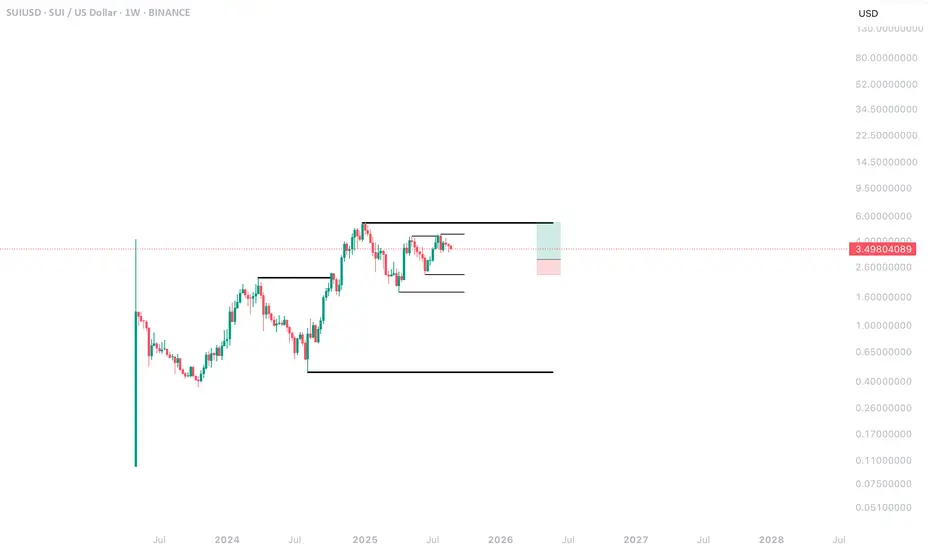
SUI Weekly AnalysisBeen following SUI for a while now and bullish formation still intact. Being patient for the “right” trade. What does the “right” trade look like? I’m looking for price to enter or come close to the last higher low in the most recent fractal. You can see me tracing HH & HL within a higher timeframe to verify direction. To be more specific, I’m looking to enter around the last sell (supply) on the 4HR/1HR. I should see either a BOS or no new lows being made inside my defined range. An analogy I like to use is I must trade like Jerome Powell cuts rates. I need to first see evidence that the “economy” (price) is changing. Risk management is rule #1. If it doesn’t fit, be patient. There will always be another opportunity. ALWAYS!!!Longby Venture133
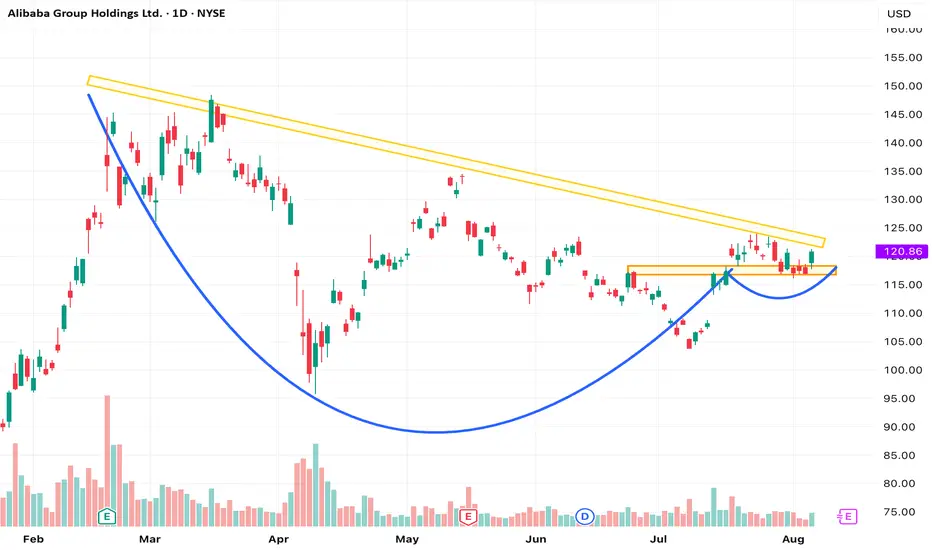
BABA – Cup and Handle Breakout with First HH/HLNYSE: BABA is forming a cup and handle pattern, with price breaking above the previous lower high, marking the first higher high and higher low in this potential trend reversal. Structure is turning bullish with momentum building. Longby qhinvestment5
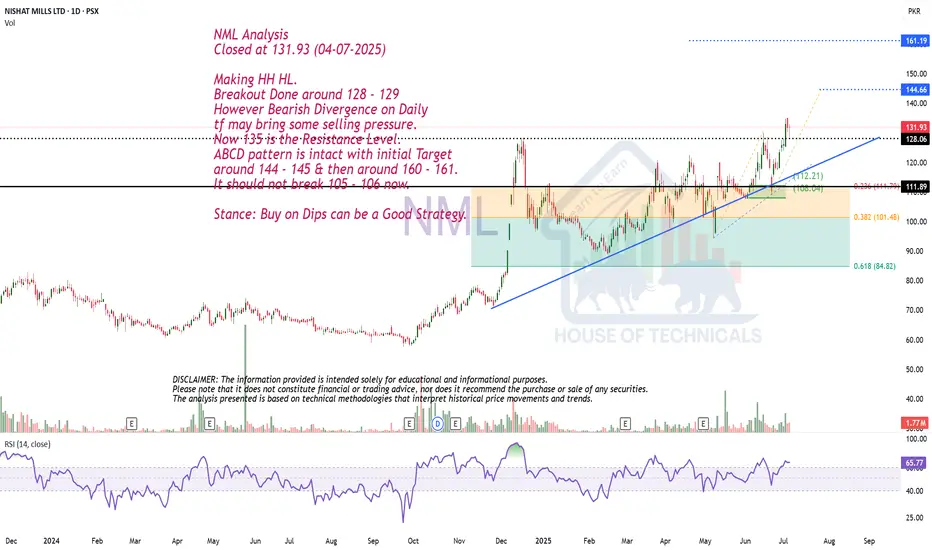
Making HH HL.NML Analysis Closed at 131.93 (04-07-2025) Making HH HL. Breakout Done around 128 - 129 However Bearish Divergence on Daily tf may bring some selling pressure. Now 135 is the Resistance Level. ABCD pattern is intact with initial Target around 144 - 145 & then around 160 - 161. It should not break 105 - 106 now. Stance: Buy on Dips can be a Good Strategy.by House-of-TechnicalsUpdated 8
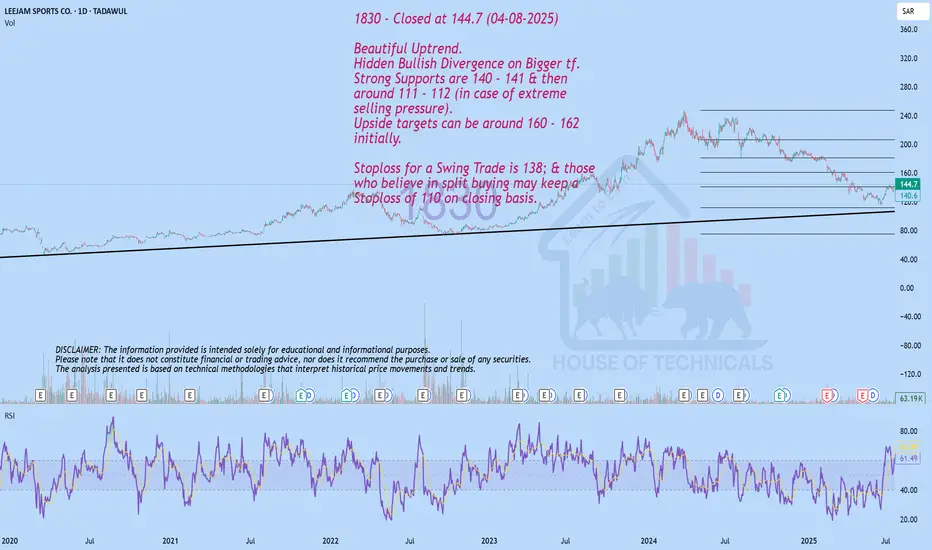
Beautiful Uptrend.1830 - Closed at 144.7 (04-08-2025) Beautiful Uptrend. Hidden Bullish Divergence on Bigger tf. Strong Supports are 140 - 141 & then around 111 - 112 (in case of extreme selling pressure). Upside targets can be around 160 - 162 initially. Stoploss for a Swing Trade is 138; & those who believe in split buying may keep a Stoploss of 110 on closing basis.by House-of-Technicals0
Wait for HL to Print.BFAGRO Closed at 40.95 (30-06-2025) Now wait for HL to print. First support is around 40 and next one is around 38 - 38.50by House-of-Technicals7
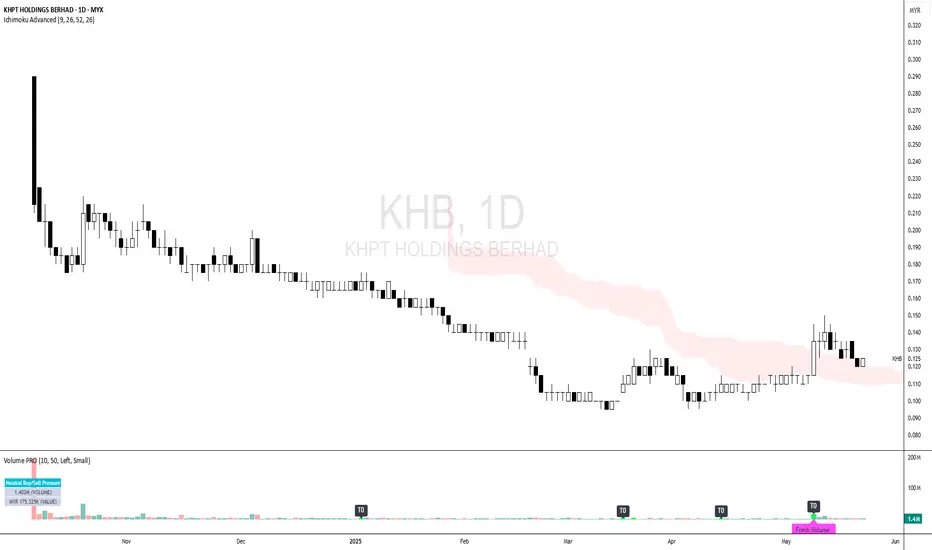
KHB - Downtrend Phase is FINISHED ?KHB - CURRENT PRICE : RM0.125 KHB was in downtrend since its listing day on 08 OCTOBER 2024. Recently the stock price rise with a bullish candlestick on 09 MEI 2025. The stock is making higher high and higher low. This indicates that the downtrend may end. At current price, it gives an attractive RISK REWARD RATIO. ENTRY PRICE : RM0.125 TARGET PRICE : RM0.140 (+12%) and RM0.150 (+20) SUPPORT : RM0.115 (-8%) --- The low of long white candle Longby IMRAN_96Updated 0
Seems like it has printed HL. Closed at 51.77 (05-06-2025) Seems like it has printed HL around 50.50 - 51.50 However, if 50.20 is broken, it may test 48 again. It has the potential to move up towards 55 , 58 & then 60+ But should not break 44 even in extreme selling pressure.by House-of-Technicals118
Making HH HL. Closed at 40.45 (04-06-2025) Making HH HL. Bearish Divergence played well & dragged the price from 44 - 45 to around 33. Printed HL & started moving upside. If 45 is Crossed & Sustained, we may witness new Highs around 55 - 57. However this time, Stoploss should be 33.50 on Closing basis.Longby House-of-Technicals3
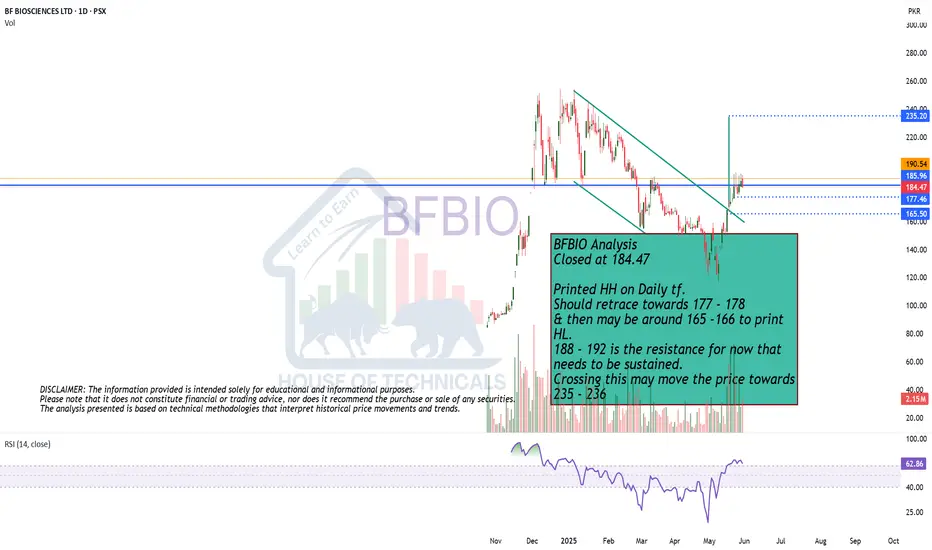
Printed HH on Daily tf. Closed at 184.47 Printed HH on Daily tf. Should retrace towards 177 - 178 & then may be around 165 -166 to print HL. 188 - 192 is the resistance for now that needs to be sustained. Crossing this may move the price towards 235 - 236by House-of-Technicals1
Play on LevelsGGL - Closed at 15.67 (23-05-2025) Ideal Support levels: S1 around 15.07 - 15.15 S2 around 13.86 - 14 S3 around 12.80 - 13 Upside targets can be around 17-18 if these supports are respected.by House-of-Technicals0
HFCLHFCL showing trendline breakout with higher high pattern. Market participation has also increased since few sessions. Probability of new momentum rally is quite higher. It has also booked highest weekly volume since last 7-8 months. by vinithshah93