EURAUD: Long Signal with Entry/SL/TP
EURAUD
- Classic bullish formation
- Our team expects growth
SUGGESTED TRADE:
Swing Trade
Buy EURAUD
Entry Level - 1.7713
Sl - 1.7703
Tp - 1.7731
Our Risk - 1%
Start protection of your profits from lower levels
Disclosure: I am part of Trade Nation's Influencer program and receive a monthly fee for using their TradingView charts in my analysis.
❤️ Please, support our work with like & comment! ❤️
M-forex
FED-BOJ and Yields DivergingUSDJPY momentum seems to be easing after testing the 158.50 resistance. The Takaichi trade has gone on a bit too long in our view, pushing the yen into intervention territory. It may be early to say it is finished, but fundamental signs are showing more and more yen-positive hints.
Recent remarks from Bank of Japan (BOJ) governor Ueda increased the odds of a rate hike at the December meeting. Ueda said they will look at the pros and cons of a rate move and make an appropriate decision, adding that even with a hike, monetary policy would still remain on the accommodative side. Market pricing now shows rate hike odds at 80 percent.
On the US side, despite many members speaking against a cut, recent data and comments from Waller and Williams pushed market expectations back in favor of a December cut, with odds at 91 percent.
The BOJ and the Fed are moving in different directions, and although the rate gap is still very wide, it is slowly narrowing.
The bond market reflects these diverging paths as well. US 10-year yields have fallen to 4 percent from 4.80 percent since the start of 2025, while Japanese yields have risen to 1.82 percent from 1.10 percent. At least on the Japan side, the yield rally is expected to continue with new fiscal measures and persistently high inflation.
The spread between US and Japanese yields is narrowing, just like the gap between their central bank rates. Will this trigger a reverse carry trade in 2026? It is hard to say, but it is a real possibility and could be an additional positive factor for the Japanese yen.
For the moment, USDJPY’s upside potential is limited because the threat of intervention is so close, while the downward potential extends below 140. The diverging directions of the Federal Reserve and the Bank of Japan, along with the opposite moves in their yields, all support a downward move.
The question is when and where the trend change will begin. With USDJPY, it is very difficult to predict how long extreme moves can continue, but the 158.50 resistance was one of the levels that could stop the advance, and yen bulls may have already started the move.
$EUIRYY- E.U CPI (November/2025)ECONOMICS:EUIRYY 2.2%
November/2025
source: EUROSTAT
- The annual inflation rate in the Eurozone edged up to 2.2% in November from 2.1% in October, slightly above expectations of 2.1%.
Prices grew faster in the services sector, while energy costs continued to decline but at a slower pace.
Meanwhile, core inflation held steady at 2.4%.
USOIL Is Bearish! Sell!
Here is our detailed technical review for USOIL.
Time Frame: 4h
Current Trend: Bearish
Sentiment: Overbought (based on 7-period RSI)
Forecast: Bearish
The price is testing a key resistance 59.116.
Taking into consideration the current market trend & overbought RSI, chances will be high to see a bearish movement to the downside at least to 58.630 level.
P.S
Overbought describes a period of time where there has been a significant and consistent upward move in price over a period of time without much pullback.
Like and subscribe and comment my ideas if you enjoy them!
NZDUSD Under Pressure! SELL!
My dear subscribers,
NZDUSD looks like it will make a good move, and here are the details:
The market is trading on 0.5745 pivot level.
Bias - Bearish
My Stop Loss - 0.5751
Technical Indicators: Both Super Trend & Pivot HL indicate a highly probable Bearish continuation.
Target - 0.5733
About Used Indicators:
The average true range (ATR) plays an important role in 'Supertrend' as the indicator uses ATR to calculate its value. The ATR indicator signals the degree of price volatility.
Disclosure: I am part of Trade Nation's Influencer program and receive a monthly fee for using their TradingView charts in my analysis.
———————————
WISH YOU ALL LUCK
EURJPY What Next? BUY!
My dear followers,
I analysed this chart on EURJPY and concluded the following:
The market is trading on 180.19 pivot level.
Bias - Bullish
Technical Indicators: Both Super Trend & Pivot HL indicate a highly probable Bullish continuation.
Target - 180.71
About Used Indicators:
A super-trend indicator is plotted on either above or below the closing price to signal a buy or sell. The indicator changes color, based on whether or not you should be buying. If the super-trend indicator moves below the closing price, the indicator turns green, and it signals an entry point or points to buy.
Disclosure: I am part of Trade Nation's Influencer program and receive a monthly fee for using their TradingView charts in my analysis.
———————————
WISH YOU ALL LUCK
EURNZD: Bullish After the News 🇪🇺🇳🇿
EURNZD formed an inverted head & shoulders pattern
on a key daily support cluster.
We see a bullish breakout of its neckline and a strong bullish momentim
after EU inflation data today.
Odds are high that the pair will rise at least to 2.0335 level.
❤️Please, support my work with like, thank you!❤️
I am part of Trade Nation's Influencer program and receive a monthly fee for using their TradingView charts in my analysis.
XAUUSD - The Golden Retest Zone!📈Gold remains overall bullish , respecting its rising structure and printing higher lows along the way. Each corrective dip has been met with strong buying pressure, keeping the broader trend intact.
📉As price pulls back, it is now approaching a key blue structure zone that aligns perfectly with the lower blue trendline. This intersection forms a high-confluence area where we will be looking for trend-following longs.
⚔️As long as Gold holds this zone, the bullish scenario remains dominant, with the next potential push targeting the previous ATH highlighted on the chart.
🏹A clean reaction here could be the catalyst for the next leg of the uptrend.
Will the bulls defend the golden zone again? 🤔
⚠️ Disclaimer: This is not financial advice. Always do your own research and manage risk properly.
📚 Stick to your trading plan regarding entries, risk, and management.
Good luck! 🍀
All Strategies Are Good; If Managed Properly!
~Richard Nasr
NZDUSD: Retracement Continues 🇳🇿🇺🇸
There is a high probability that NZDUSD will retrace more
from the underlined key daily resistance.
A double top pattern on a 4H and a formation of a bearish
imbalance candle with London session opening provide
strong confirmations.
Goal for sellers - 0.5709
❤️Please, support my work with like, thank you!❤️
I am part of Trade Nation's Influencer program and receive a monthly fee for using their TradingView charts in my analysis.
EURCHF: Bears Will Push
It is essential that we apply multitimeframe technical analysis and there is no better example of why that is the case than the current EURCHF chart which, if analyzed properly, clearly points in the downward direction.
Disclosure: I am part of Trade Nation's Influencer program and receive a monthly fee for using their TradingView charts in my analysis.
❤️ Please, support our work with like & comment! ❤️
Global Market ParticipantsIntroduction
Global financial markets are vast, interconnected systems where capital flows across borders in search of returns. These markets are populated by a diverse set of participants, each with unique objectives, strategies, and resources. Understanding the various players in these markets is essential for analyzing market dynamics, price movements, and risk management. Global market participants can range from individual retail investors to massive institutional investors and sovereign entities. Their interactions determine liquidity, volatility, and the overall efficiency of the markets.
Types of Global Market Participants
Global market participants can be broadly classified into several categories based on their size, purpose, and behavior in the market. These include retail investors, institutional investors, hedge funds, sovereign wealth funds, central banks, commercial banks, investment banks, and market intermediaries. Each plays a distinct role in the global financial ecosystem.
1. Retail Investors
Retail investors, often referred to as individual investors, are non-professional market participants who invest their personal funds in various financial instruments such as stocks, bonds, mutual funds, and derivatives. Their primary motivation is wealth accumulation, retirement planning, or speculation. While retail investors are generally smaller in scale compared to institutional players, collectively they contribute significantly to market liquidity and price formation.
Behaviorally, retail investors are often influenced by psychological factors such as herd mentality, fear, and greed, leading to volatile trading patterns. They tend to follow trends or news-driven movements rather than fundamental analysis, making them more reactive than proactive in market participation.
2. Institutional Investors
Institutional investors include pension funds, insurance companies, mutual funds, endowments, and large asset management firms. These participants manage large pools of capital on behalf of their clients or beneficiaries and are typically focused on long-term investment objectives. Institutional investors influence market pricing and liquidity due to the size of their transactions, which can be in millions or even billions of dollars.
They utilize sophisticated investment strategies, including quantitative analysis, algorithmic trading, and risk management models. Unlike retail investors, institutional investors tend to focus on fundamentals, macroeconomic trends, and corporate earnings to drive their investment decisions. Their presence in the market ensures stability to some extent, though their large trades can also create temporary volatility.
3. Hedge Funds
Hedge funds are private investment partnerships that employ aggressive and often complex strategies to achieve high returns. They invest in equities, derivatives, commodities, currencies, and alternative assets. Hedge funds differentiate themselves from traditional institutional investors through their use of leverage, short selling, arbitrage, and high-frequency trading.
These funds are highly influential in global markets due to their capacity to move prices with large trades, exploit inefficiencies, and engage in speculative activities. Hedge funds often operate with shorter time horizons and are more willing to take concentrated risks compared to pension funds or mutual funds. Their trading strategies can impact liquidity, volatility, and market sentiment, particularly in niche or less liquid markets.
4. Sovereign Wealth Funds (SWFs)
Sovereign wealth funds are government-owned investment vehicles that manage the surplus wealth of a nation, typically derived from foreign reserves, commodity exports, or budget surpluses. Examples include Norway’s Government Pension Fund Global and the Abu Dhabi Investment Authority. SWFs are long-term investors focused on preserving national wealth while achieving sustainable returns.
These funds invest across asset classes globally, including equities, bonds, real estate, infrastructure, and private equity. Their significant capital allows them to influence global financial markets, attract co-investors, and stabilize capital flows during economic uncertainty. Unlike hedge funds, SWFs are not primarily driven by short-term gains; their strategy emphasizes long-term growth and stability.
5. Central Banks
Central banks, such as the U.S. Federal Reserve, European Central Bank, and Bank of Japan, are regulatory institutions responsible for managing a nation’s monetary policy and financial stability. Central banks are critical participants in global currency, bond, and interbank markets.
Their interventions, such as adjusting interest rates, conducting open market operations, or engaging in quantitative easing, directly influence liquidity, currency valuations, and risk premiums in financial markets. Central banks often act as market stabilizers, providing liquidity during crises and guiding macroeconomic expectations, making them pivotal in shaping global market trends.
6. Commercial Banks
Commercial banks play a dual role as financial intermediaries and market participants. They provide credit to corporations, governments, and individuals while also investing in securities and derivatives for proprietary trading or asset management. Their activities impact interest rates, credit spreads, and overall market liquidity.
Large international banks, like JPMorgan Chase or HSBC, participate in forex markets, capital markets, and global debt issuance. Their transactions, often in large volumes, affect market prices and liquidity conditions. Additionally, banks facilitate the flow of capital for other participants, making them central to market functioning.
7. Investment Banks
Investment banks serve corporations, governments, and institutions by providing advisory services for mergers, acquisitions, and capital raising. They underwrite securities, engage in trading and market-making, and offer structured products to clients.
Through underwriting and trading, investment banks influence asset prices, yield curves, and market sentiment. Their research departments also shape investor expectations and decisions by providing market analyses, forecasts, and strategic insights.
8. Market Intermediaries
Other participants include brokers, dealers, exchanges, and clearinghouses. Brokers facilitate transactions between buyers and sellers, while dealers trade on their own accounts, providing liquidity. Exchanges offer organized marketplaces with regulatory oversight, ensuring transparency, fair pricing, and efficiency. Clearinghouses mitigate counterparty risk, guaranteeing settlement and reducing systemic risk.
Although intermediaries may not be final investors, their role is essential in enabling seamless market operations and maintaining investor confidence.
Behavioral Dynamics of Market Participants
The interaction among global market participants is driven by diverse motives:
Speculation: Hedge funds and retail traders often engage in short-term profit-seeking activities.
Hedging: Corporations and institutional investors use derivatives to mitigate financial risks related to interest rates, currencies, or commodity prices.
Investment: Pension funds, SWFs, and insurance companies focus on long-term capital appreciation.
Policy Intervention: Central banks manage macroeconomic objectives through monetary policy tools.
These behaviors contribute to market liquidity, price discovery, and volatility. The balance between speculative and long-term investment behavior often determines the resilience or fragility of markets during stress periods.
Impact on Global Markets
The diverse activities of market participants collectively shape global financial markets. Large trades by institutional investors can move prices and influence market trends, while retail investors contribute to sentiment-driven volatility. Central banks and SWFs provide stability, while hedge funds exploit inefficiencies and enhance liquidity in certain sectors. Investment banks and intermediaries ensure markets function efficiently through research, advisory services, and trade facilitation.
During crises, the behavior of market participants can amplify or dampen shocks. For example, coordinated central bank actions can restore confidence, while mass liquidation by hedge funds or retail investors can exacerbate volatility. Understanding these participants’ roles helps analysts, policymakers, and investors navigate complex global markets.
Conclusion
Global market participants form a complex and interconnected ecosystem where diverse actors with varying objectives interact. Retail investors, institutional investors, hedge funds, sovereign wealth funds, central banks, and financial intermediaries collectively determine liquidity, volatility, and price formation in financial markets. Their behavior is influenced by economic trends, policy changes, technological advancements, and psychological factors.
A nuanced understanding of these participants is crucial for anyone seeking to navigate global financial markets successfully. Recognizing the motivations, strategies, and potential market impact of each participant allows investors and policymakers to anticipate market movements, manage risk, and make informed decisions in an increasingly interconnected global economy.
In essence, global market participants are the lifeblood of financial markets, and their coordinated and competitive interactions shape the dynamics of capital flows, investment opportunities, and financial stability worldwide.
Carry Trade Profits in the Global Market1. Fundamentals of Carry Trade
The carry trade is essentially a form of arbitrage. Traders exploit the differences in interest rates between countries to generate profit. Typically, investors borrow money in a currency considered “cheap” — usually from countries with low-interest rates like the Japanese yen (JPY) or the Swiss franc (CHF) — and convert it into a currency with higher interest rates, such as the Australian dollar (AUD), New Zealand dollar (NZD), or emerging market currencies like the Brazilian real (BRL) or Turkish lira (TRY).
The profitability of carry trades comes in two forms:
Interest Rate Differential (Carry): The primary profit is derived from the interest rate spread between the funding currency and the target currency. For instance, if an investor borrows 1 million JPY at an interest rate of 0.1% and invests in AUD at 5%, the net interest profit before costs is substantial, particularly on leveraged positions.
Currency Appreciation: In addition to the interest rate differential, carry trade profits can be enhanced if the higher-yielding currency appreciates against the funding currency. This combination of yield and potential capital gains makes carry trade highly attractive during periods of global economic stability and low volatility.
2. Mechanics of the Carry Trade
Carry trades are typically executed through foreign exchange (FX) markets. The process involves:
Funding Position: Borrowing a currency with low-interest rates, often through short-term instruments like FX swaps, forward contracts, or interbank loans.
Investment Position: Converting the borrowed funds into a higher-yielding currency and investing in instruments such as government bonds, corporate bonds, or high-interest savings accounts denominated in that currency.
Leverage Utilization: Many carry trades employ leverage to magnify returns. Borrowing multiple times the invested capital can substantially increase profits, though it also escalates risk.
The net profit is calculated as the difference between the earned interest and the cost of borrowing, adjusted for currency fluctuations and transaction costs.
3. Historical Context and Global Examples
Historically, carry trades gained prominence in the late 20th and early 21st centuries when global financial markets became increasingly integrated. The Japanese yen became the quintessential funding currency due to Japan’s long-standing low-interest-rate policies. For example, in the early 2000s, investors borrowed cheap yen to invest in Australian and New Zealand assets, reaping significant profits from both interest rate differentials and currency appreciation.
Emerging market currencies have also been frequent targets for carry trades. High yields in countries like Brazil, Mexico, and South Africa attracted global capital inflows, driving short-term currency strength. Similarly, during periods of monetary easing in developed economies, the differential widened, boosting carry trade attractiveness.
4. Profitability Drivers
Several factors determine carry trade profitability:
Interest Rate Differentials: Larger differentials increase potential returns. Central bank policies directly impact these spreads. For example, aggressive rate hikes in emerging markets can widen the gap with developed markets’ low rates, fueling carry trade activity.
Currency Stability: Stable currencies reduce the risk of adverse exchange rate movements, making the strategy more predictable.
Global Liquidity: Ample liquidity in global markets facilitates smooth execution of carry trades, lowering transaction costs.
Investor Sentiment and Risk Appetite: Carry trades tend to thrive in risk-on environments. Investors’ willingness to seek higher returns in emerging markets or higher-yield currencies directly influences profitability.
5. Risks Associated with Carry Trades
Despite their profitability, carry trades are inherently risky due to leverage and exposure to multiple market factors:
Currency Risk: A sudden depreciation of the target currency against the funding currency can quickly erase interest gains. For instance, if the Australian dollar falls against the yen, the initial investment converts back into fewer yen, causing losses.
Interest Rate Risk: Unexpected central bank decisions can reverse the interest rate advantage, reducing or eliminating carry trade profits.
Market Volatility: Financial crises or geopolitical events can trigger rapid unwinding of carry trades, leading to sharp losses. The 2008 global financial crisis exemplified this, as leveraged carry trades collapsed, causing massive currency swings.
Liquidity Risk: In times of market stress, exiting positions can be costly due to reduced liquidity, amplifying losses.
Professional traders mitigate these risks through hedging strategies, stop-loss orders, and diversification across multiple currency pairs and maturities.
6. Modern Developments in Carry Trades
In recent years, the carry trade landscape has evolved due to changes in monetary policy, technological advancements, and global market dynamics:
Low-Interest Rate Environment: Prolonged low rates in developed economies have compressed traditional interest rate differentials, reducing carry trade opportunities.
Algorithmic Trading: Automated strategies and algorithmic trading systems now dominate carry trade execution, improving efficiency but also increasing susceptibility to rapid market corrections.
Emerging Market Volatility: While high-yield currencies remain attractive, political instability and economic shocks introduce heightened risk, demanding more sophisticated risk management.
Diversification Across Asset Classes: Modern carry trades often integrate multi-asset approaches, including bonds, equities, and commodities, to enhance returns while mitigating currency risk.
7. Global Implications of Carry Trade Activity
Carry trades influence global financial markets beyond individual investor profits. Large-scale capital flows can impact exchange rates, interest rates, and liquidity conditions in emerging and developed markets alike. For example, heavy inflows into a high-yield currency can appreciate it significantly, affecting export competitiveness. Similarly, sudden unwinding of carry trades can trigger “flash crashes” in currency markets, as seen during past financial crises.
Central banks monitor carry trade activity carefully, as massive leveraged positions can exacerbate financial instability. This interplay between market participants and monetary authorities makes carry trade both a source of profit and a systemic consideration.
8. Conclusion
Carry trade profits in the global market emerge from exploiting interest rate differentials and potential currency appreciation. While historically lucrative, the strategy carries substantial risks, particularly during periods of economic uncertainty or market volatility. Successful carry trading requires a combination of careful analysis, risk management, and timely execution, often leveraging modern financial technologies.
Despite challenges, carry trades remain a vital component of the global financial landscape, influencing capital flows, currency valuations, and investment strategies worldwide. As central banks adjust monetary policies and global markets continue to integrate, carry trades will evolve, offering opportunities and risks that reflect the ever-changing dynamics of the global economy. Investors who understand these mechanisms and manage risks effectively can continue to profit from carry trades while navigating the complex landscape of international finance.
EURGBP Set To Fall! SELL!
My dear subscribers,
My technical analysis for EURGBP is below:
The price is coiling around a solid key level - 0.8786
Bias - Bearish
Technical Indicators: Pivot Points Low anticipates a potential price reversal.
Super trend shows a clear sell, giving a perfect indicators' convergence.
Goal - 0.8764
About Used Indicators:
By the very nature of the supertrend indicator, it offers firm support and resistance levels for traders to enter and exit trades. Additionally, it also provides signals for setting stop losses
Disclosure: I am part of Trade Nation's Influencer program and receive a monthly fee for using their TradingView charts in my analysis.
———————————
WISH YOU ALL LUCK
GOLD Trading Opportunity! BUY!
My dear friends,
My technical analysis for GOLD is below:
The market is trading on 4192.2 pivot level.
Bias - Bullish
Technical Indicators: Both Super Trend & Pivot HL indicate a highly probable Bullish continuation.
Target - 4210.4
Recommended Stop Loss - 4182.6
About Used Indicators:
A pivot point is a technical analysis indicator, or calculations, used to determine the overall trend of the market over different time frames.
Disclosure: I am part of Trade Nation's Influencer program and receive a monthly fee for using their TradingView charts in my analysis.
———————————
WISH YOU ALL LUCK
USDJPY: Short Trading Opportunity
USDJPY
- Classic bearish setup
- Our team expects bearish continuation
SUGGESTED TRADE:
Swing Trade
Short USDJPY
Entry Point - 156.06
Stop Loss - 156.38
Take Profit - 155.51
Our Risk - 1%
Start protection of your profits from lower levels
Disclosure: I am part of Trade Nation's Influencer program and receive a monthly fee for using their TradingView charts in my analysis.
❤️ Please, support our work with like & comment! ❤️
EURUSD Uptrend Intact: Price Approaches Major 1.1650 ResistanceHello traders! Here’s my technical outlook on EUR/USD based on the current market structure. After breaking out of the Buyer Zone near 1.1600–1.1610, the price pushed higher and re-entered the ascending channel, continuing to form higher highs and higher lows along the channel’s Support Line. Buyers managed to defend the zone after a fake breakout, confirming strong demand within this area. Currently, EUR/USD is approaching the 1.1650–1.1660 Resistance Level, where the previous rejection occurred. As the pair moves within the rising channel, bullish momentum remains intact, but the structure also suggests that the market may slow down as it nears this overhead resistance. As long as the price holds above the Buyer Zone and continues respecting the channel’s Support Line, the bullish scenario remains valid. A short pullback toward the channel’s midline is possible before buyers attempt another push upward. A continuation of this upward movement may drive EUR/USD toward the TP1 target at 1.1650–1.1660, aligning with the major Resistance Level. A clean breakout above this level would open the door for further bullish expansion. However, a breakdown below the Support Line or a return into the Buyer Zone could weaken the current bullish structure and expose the pair to deeper corrective movement. Please share this idea with your friends and click Boost 🚀
Gold Slows at Channel Top — Market Targets 4,150 Before Move UpHello traders! Here’s my technical outlook on XAU/USD based on the current market structure. After breaking out of the broader consolidation phase, gold continued to move within a rising channel, forming consistent higher highs and higher lows along the Support Line. Buyers maintained strong momentum as the price pushed toward the Resistance Line, which aligns with the major Resistance Level near 4,240. However, after reaching this upper boundary, the market showed clear signs of exhaustion, indicating that buyers are struggling to push further into the resistance zone. This reaction suggests that the price may soon initiate a corrective move. At the moment, XAU/USD is trading inside a narrowing rising structure, with the Support and Resistance Lines converging, creating compression. As long as the price holds above the local Support Level around 4,150, the bullish structure remains intact. A pullback from the Resistance Line toward this area is the most likely short-term scenario before buyers attempt another push. This zone aligns with the first target TP1, which also acts as a key reaction zone from previous price behavior. A successful rebound from support could allow bulls to regain strength and attempt another test of the 4,240 resistance. If a breakout occurs, it would open the door for further bullish continuation. However, if the price fails to hold the Support Line or breaks back below the 4,150 zone, the structure may shift to a deeper correction, exposing gold to lower support areas. Please share this idea with your friends and click Boost 🚀
GBP/USD 1H chart:GBP/USD 1H chart:
---
📉 Analysis – Bearish Setup
My chart shows:
Trendline break ✔
Price retesting the broken trendline + cloud resistance
Clear supply zone above: 1.3260 – 1.3280
Bearish continuation arrow marked on my chart
This setup is valid bearish as long as price stays below 1.3280.
---
🎯 Targets (1H)
Entry Zone
🔻 1.3220 – 1.3240
---
🎯 TARGET 1
➡️ 1.3160 – 1.3140
(First demand zone – shown on your chart)
---
🎯 TARGET 2
➡️ 1.3080 – 1.3060
(This is my second target in the screenshot)
---
🎯 TARGET 3 (Extended)
➡️ 1.3020
(If strong selling continues – optional swing target)
---
❌ Invalidation Level
If GBP/USD closes above 1.3285 (1H candle)
👉 Trend turns bullish and targets are invalid.
---
📌 Summary (Quick)
Sell below: 1.3280
TP1: 1.3160
TP2: 1.3060
SL: 1.3290/1.3300
BTC/USD 1H chart..BTC/USD 1H chart:
📉 Current Market Structure (Bearish)
Price has broken the uptrend line clearly.
Strong impulse sell candle from 91,000 → 86,000.
Price retested the supply zone (87,300 – 87,900) and got rejected.
Ichimoku cloud also showing strong bearish pressure.
🎯 Targets (Downside)
As per My chart, price is likely forming a continuation move.
Entry Zone:
🔻 86,400 – 86,900 (current retest area)
Targets:
1️⃣ TP1 → 85,200 (nearest demand zone)
2️⃣ TP2 → 83,800 (liquidity zone under last swing)
3️⃣ TP3 → 81,000 – 81,300 (My chart’s marked target zone)
📌 Notes
Main target highlighted in My analysis chart = 81,000
This target is valid as long as BTC stays below 87,900 supply.
⚠️ Invalidation
❌ If BTC closes above 88,000 on 1H, bearish setup invalid.
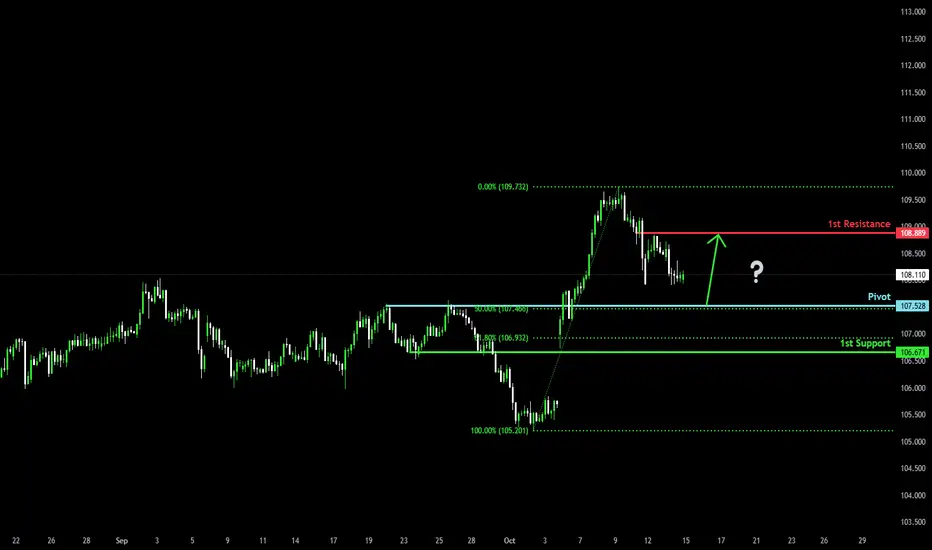
Bullish continuation setup?GBP/JPY has bounced off the pivot, which is a pullback suppor,t and oculd rise to the 1st resistanc,e which acts as a swing high resistance.
Pivot: 205.30
1st Support: 204.27
1st Resistance: 207.15
Disclaimer:
The opinions given above constitute general market commentary and do not constitute the opinion or advice of IC Markets or any form of personal or investment advice.
Any opinions, news, research, analyses, prices, other information, or links to third-party sites contained on this website are provided on an "as-is" basis, are intended to be informative only, and are not advice, a recommendation, research, a record of our trading prices, an offer of, or solicitation for, a transaction in any financial instrument and thus should not be treated as such. The information provided does not involve any specific investment objectives, financial situation, or needs of any specific person who may receive it. Please be aware that past performance is not a reliable indicator of future performance and/or results. Past performance or forward-looking scenarios based upon the reasonable beliefs of the third-party provider are not a guarantee of future performance. Actual results may differ materially from those anticipated in forward-looking or past performance statements. IC Markets makes no representation or warranty and assumes no liability as to the accuracy or completeness of the information provided, nor any loss arising from any investment based on a recommendation, forecast, or any information supplied by any third party.