Trader vs Gambler: Why Trading Isn’t GamblingThe Trader vs The Gambler: Why Trading Isn’t Gambling
“Trading is gambling.”
You’ve probably heard it before — from friends, family, or strangers who’ve seen a few flashy headlines, red charts, and crypto hype videos and decided: “It’s all luck.”
To most outsiders, the markets look like chaos — numbers flashing, candles flying, influencers shouting “BUY!” and “SELL!” as emotions run high.
It’s understandable that they think it’s all random chance.
But here’s the truth:
Trading can look like gambling when it’s done like gambling.
When done properly — with education, discipline, and structured risk — trading is a profession built on probability, process, and data.
What Trading Actually Is
Trading is the art and science of buying and selling assets — currencies, commodities, crypto, or stocks — to profit from price movements.
But unlike gambling, trading involves skill, timing, and measurable probabilities.
Professional traders don’t rely on hope — they rely on edges.
An edge is a repeatable setup or condition that statistically produces profits over time.
A real trader studies and uses:
- Price Action & Market Structure: Recognizing higher highs, liquidity zones, supply and demand, and where big players enter or exit.
- Technical Analysis : Tools like moving averages, Fibonacci retracements, volume profiles, VWAP, trendlines, and fair value gaps.
- Fundamental Analysis: Macro data, interest rates, inflation, earnings, tokenomics, project development, and regulatory events.
- Sentiment & Flow: Gauging crowd emotion, open interest, whale activity, and on-chain data.
- Risk Management: Strict position sizing, stop-loss placement, and capital preservation.
- Statistics & Journaling: Tracking setups, win rates, risk-to-reward, and performance over hundreds of trades.
- Discipline & Emotional Control: The ability to not trade when conditions aren’t right.
A trader doesn’t ask, “Will it go up?”
They ask, “If it goes up, what’s my risk? What’s my probability? What’s my plan if I’m wrong?”
That’s not gambling — that’s probability management.
What Gambling Actually Is
Gambling is risking money on an uncertain outcome without any control, edge, or process.
You rely purely on luck — a spin of a wheel, a flip of a card, a random move in a market you don’t understand.
The outcome is fixed against you. In a casino, the house always wins.
A gambler thinks emotionally:
“I have a feeling it’ll go up.”
“My mate said this coin’s going to explode.”
“I’ll double my bet to win it back.”
No analysis. No backtesting. No data. No control.
Just hope — the same force that keeps casinos rich and players broke.
When someone dumps $10,000 into a random altcoin because they saw a tweet or meme, that’s not trading — that’s emotional speculation.
They’re not following a plan; they’re following a crowd.
The Trader’s Mindset vs The Gambler’s Mindset
TRADER:
- Decision Basis: > Data probabilities, confluences
- Goal: > Consistent Long-term growth
- Risk Control: > Defined, Limited, Pre-set
- Emotional State: > Patient, Detached, Focused
- Reaction to loss: > Reviews plan, learns, adjusts
- Education: Studies psychology, risk, analysis
- Funding approach: > Scales up, uses funded accounts
GAMBLER:
- Decision basis:> Emotion, impulse, hype
- Goal: > Quick jackpot
- Risk control: > Undefined, often all-in
- Emotional state: > Fearful, greedy, erratic
- Reaction to loss : > Doubles down or quits
- Education: > Follows noise & influencers
- Funding approach: > Risks personal savings recklessly
A gambler sees “one trade” as the make-or-break moment.
A trader sees “one trade” as part of a thousand trades that define their edge.
Example: The Math of a Trader vs a Gambler
Trader:
Win rate: 55%
Risk-to-reward: 1:2
Risking 1% per trade
After 100 trades, they’re up roughly +55R - 45R = +10R (10% growth).
Their plan, consistency, and edge made it possible.
Gambler:
Win rate: Random, maybe 45%.
Risk-to-reward: 1:1 or worse.
Risking 10–20% per “bet.”
After a handful of losses, they’re wiped out.
There’s no math, no longevity — just emotional chaos.
This is why traders survive, gamblers vanish.
Why Trading Is Not Gambling
1. Trading Has Positive Expected Value (EV)
Gamblers play games with negative EV — odds mathematically stacked against them.
Traders create systems with positive EV by identifying patterns that statistically outperform random chance.
Example:
If your setup wins 55% of the time and earns twice what it risks, your long-term outcome will always be positive.
That’s not luck — that’s math.
2. Trading Has Risk Management
In gambling, you can lose everything on one hand.
In trading, you risk a small percentage per trade.
Professionals risk 0.5–2% of their account per setup.
That’s why they can lose 10 trades in a row and still be in the game.
Gamblers can’t — they blow up because they never manage risk.
3. Trading Uses Control and Data
You can’t “analyze” a roulette spin. You can’t manage risk at a blackjack table.
But in trading, you can backtest, strategize, and control your exposure.
Markets may be uncertain, but traders control their actions within that uncertainty.
Gambling has no such control — it’s fixed odds, rigged in favor of the house.
4. Trading Rewards Skill and Experience
The more you study, journal, and refine your process, the better you get.
No amount of practice makes you better at roulette — the wheel doesn’t care.
But trading rewards time, reflection, and discipline.
Skill matters. Patience matters. Data matters.
5. Trading Has Funding Opportunities
No casino will give you $50,000 to “gamble responsibly.”
But trading firms will give you a $50K, $100K, or $200K funded account — if you prove consistency and discipline.
Funded trading isn’t luck; it’s a business.
You’re rewarded not for profits alone, but for following rules:
- Max daily drawdown
- Overall drawdown limits
- Minimum trading days
- Profit targets
That’s structure — something gambling never has.
Why Use a Funded Account Instead of Your Own $50K?
Because professional trading is not about flexing capital — it’s about proving control.
Funded accounts are training grounds for serious traders:
- You trade with someone else’s capital.
- You’re held accountable to strict limits.
- You’re paid for consistency, not luck.
That’s professionalism.
Gambling is the opposite — no structure, no accountability, and no risk control.
A gambler risks $50K of their own money and hopes for a jackpot.
A trader risks 0.5% of a $50K funded account with a defined plan.
One burns out in a week.
The other builds a track record and earns a living.
The Reality Check: When Trading Does Become Gambling
Trading becomes gambling when:
- You trade without a plan.
- You follow hype or influencers blindly.
- You over-leverage.
- You revenge-trade.
- You skip journaling and analysis.
- You ignore stop losses.
The activity isn’t gambling — the mindset is.
A professional can take the same tool a gambler uses — the same chart, same exchange, same coin — and produce consistent returns, because their intent, process, and control are different.
Real-World Example
Two people open Bitcoin trades at $60,000.
- Trader A: Risks 1%, sets stop at $59,000, target $62,000. Reviews structure, confluences, and volume.
- Trader B: Risks 100% of his savings because “it’ll go up for sure.”
Same entry, same price.
One plays a game of probability, the other a game of hope.
One grows, one disappears.
The chart doesn’t decide who wins — their mindset does.
The Trader’s Mindset
A real trader thinks like a scientist:
- Hypothesis: If price rejects support and volume confirms, it may move up .
- Experiment: Enters small, stops defined.
- Result: Win or loss logged.
- Iteration: Reviews data, improves setup.
Gamblers don’t have hypotheses — they have feelings.
The trader’s mindset is structured:
- Plan before execution.
- Accept losses as data.
- Control risk religiously.
- Focus on consistency over excitement.
Detach emotionally from outcomes.
That’s why traders survive long-term while gamblers chase short-term highs.
“But Crypto Is Just Gambling!”
Crypto can look like gambling — because most people in it treat it like one.
They buy hype, ignore fundamentals, and chase every new shiny coin.
That’s not trading.
Real crypto traders:
- Study tokenomics, development teams, and market sentiment.
- Use technical levels and liquidity maps.
- Manage position sizes and hedge exposure.
- Treat it like a business, not a casino.
The asset class doesn’t make it gambling — your approach does.
Final Thoughts
Yes — both trading and gambling involve risk.
But risk ≠ gambling.
Risk, when managed correctly, equals opportunity .
The difference is control, process, and purpose.
A trader plays the long game with discipline and math.
A gambler plays for emotion and chance.
Anyone can click Buy.
But not everyone can manage risk, follow process, and think in probabilities.
So next time someone says:
“Trading is gambling.”
Show them this:
🎲 Gambling is random.
📊 Trading is calculated.
One depends on luck .
The other depends on discipline .
Thank you all so very much for reading this article, I enjoyed creating it and I hope it becomes of use too you.
If you have any requests on strategies, articles or would like charting done, drop a comment below.
Mindset
Why Most Prop Traders Fail (Even the Skilled Ones)When speaking with Prop Traders, we have found the issue was not about
bad setups; it’s emotions under pressure that is the problem
Fear after a loss. Greed after a win.
That’s when discipline slips and accounts die.
Here’s what helps:
Before each session, ask ?
“Would I take this trade if I weren’t trying to prove something?”
This one question has saved more accounts than any indicator
I’ve been helping traders stay calm when it matters most.
If you’ve ever blown up knowing exactly what you should’ve done, DM me and I’ll show you what’s been working.
Why Most Traders Blow Their Accounts?
It’s not bad strategy; it’s bad risk.
Most traders break before their accounts do. They revenge trade, double down, or skip stops because they can’t stand being wrong.
Here’s the truth: Discipline beats setups every time in my perspective.
Try this today →
Risk 0.5% per trade for one week.
If you can’t follow that rule, it’s not the market that’s broken; it’s your system of control.
I’ve been testing something that helps traders stay inside their limits when emotions spike.
Want me to share how it works?
Buy On Dippers Beware: The Identify TrapNOTE – This is a post on mindset and emotion. It is not a trade idea or system designed to make you money. My aim here is to help you preserve your capital, energy, and focus so you can execute your own trading system with calm and confidence.
“Buy the dip” has become part of trading folklore.
But for many, it’s not just a strategy, it's a statement of self.
You’ve been rewarded for it before.
You’ve built confidence on seeing value where others saw panic.
Each time it worked, it reinforced a powerful story:
“This is what I do. This is who I am.”
So when price drops, that instinct fires fast.
You tell yourself you’re being disciplined - waiting for the next opportunity.
But often, something deeper is happening.
THE IDENTITY BEHIND THE DIP BUYER
Surface story:
“I’m the one who spots opportunity when others panic.”
“I’m disciplined. I buy when others are afraid.”
It sounds like confidence. But beneath that surface sits a hidden driver…
“I am only good when I’m right.”
“I am valuable because I can see what others can’t.”
“If this doesn’t work, what does that say about me?”
What's going on here is ego preservation .
WHAT’S REALLY DRIVING IT
Emotion: Defiance a need to prove that you know what you’re doing, and that you’re right.
Impulse: Reclaim certainty through action.
Underlying belief: “I know how this game works. I’ve done this before.”
It feels like conviction, but it’s really an attempt to confirm that as a trader you are generally always right. Remember though, markets broadly trend only 30% of the time so the chances of being wrong may be higher.
THE RISK
When markets shift regime, identity-based trading becomes dangerous.
You stop trading what’s in front of you and start defending the idea of you
Overconfidence, stubbornness, refusal to adapt can all be disguised as “discipline.”
The more attached you are to the identity , the harder it becomes to see the reality of what is.
THE REFRAME
Next time you feel the pull to “buy the dip,” pause and ask:
“Am I trading what I see or am I trading what I want to happen?
REFLECTION
If this feels familiar, take a moment to notice what being right means to you.
For some, it’s safety.
For others, it’s significance.
Either way awareness is where change begins.
By the way - since Non Farm is still scheduled to be released tomorrow (10th October) here's a link to the most recent post on preparing your mindset for NFP for anyone that's curious.
I also just noticed after posting this that the there's a great post on buy the dip from TradingView itself - for anyone wanting to get into the technicals a bit more
Giving Back Profits - The Trap of 'Just One More'NOTE : This is a post on Mindset and emotion. It is NOT a Trade idea or strategy designed to make you money. If anything, I’m posting this to help you preserve your capital, energy and will so you can execute your own trading system with calm, patience and confidence.
The trouble doesn’t start with the win.
It’s what happens after the win that sets the course for the unwind.
Take this scenario as an example.
You finish the morning well in the green.
You are focused, composed in flow
And then the thought creeps in:
“Just one more”
“I’m on fire.”
“Let's make it count”.
That’s when strong sessions turn into regret.
What’s really happening inside you:
Thoughts: “If I’d sized bigger earlier, I’d have more.” “Stopping now is leaving money on the table.”
Feelings: Euphoria, Invincibility. Subtle disbelief that this winning streak could end.
Behaviours: Taking marginal setups, holding too long, over-sizing.
Body cues: Elevated energy, buzzing restlessness, almost addictive “high.”
Trigger: A profitable trade or session - the buzz of winning.
This isn’t opportunity. It’s the discomfort of stopping.
Your brain has just been flooded with dopamine - the chemical of reward and anticipation.
When you stop, that rush fades fast.
The body doesn’t like the drop, so it urges you to keep going.
It’s not greed - it’s biology.
Your system is craving the stimulation that came with the win.
The mind interprets that craving as “one more setup.”
But what it’s really chasing… is the feeling of being alive in the action.
Learning to sit with that energy, without acting on it is emotional mastery.
Mastery isn’t about cutting winners it’s about knowing the difference between pressing your edge and chasing the feeling.
One comes from clarity and alignment with your plan.
The other comes from chemistry and compulsion.
Both feel powerful in the moment but only one keeps you in the game.
Once you can see that impulse for what it is a chemical pull, not true opportunity the next step is learning how to regain control before it takes you off plan.
How to shift it:
Define the finish line: set a daily stop time or target and honour it. End when you said you would. Winning traders know when to walk away.
Reframe the win: Booked profits aren’t ‘missed opportunity’. They’re proof that you’ve followed your process and protected your edge.
Closure ritual: write: “Today I protected my edge.” Train your body and mind to link stopping with success, balance and composure.
👉 The market always offers “just one more.” The pros know: the real edge is keeping what you’ve earned.
Highlighting once again the post on Non Farm for anyone that missed it. The announcement is currently rescheduled for Friday 10th (due to the US Government Shut Down). Link below:
FOMO - The Urge That Costs You TwiceNOTE: This is a post on Mindset and emotion. It is NOT a Trade idea or strategy designed to make you money. I’m posting this to help you preserve your capital, energy and will so you can execute your own trading system with calm, patience and confidence.
So here we are, Gold kissing 4000.
It’s been on a tear and hasn’t looked back.
Relentless. Higher, higher, higher.
Now imagine being the trader who stalked this setup… but missed the entry.
The setup was clean. The context made sense.
But you hesitated. You wanted confirmation.
And now it’s gone.
At first, you tell yourself you’re fine.
You’ll wait for the pullback.
But the longer you watch, the more unsettled you become.
Your legs bounce.
Your breath shortens.
Price rips higher without you.
And the thought slips in…
“I can’t miss this.”
Before you know it, your hand hovers over the button
ready to break your own rules just to feel part of the move.
What’s really happening inside you:
Thoughts:
“Argghh… I knew it. Ok, it’s moving. Wait for the pullback.”
“Urgh… another headline, it keeps moving up… everyone else is in.”
“It’s not pulling back. This is the move I’ve been waiting for. Missing out is worse than losing.”
“I’ll never forgive myself if I just watch this go without me.”
Feelings: Restlessness. Envy. Urgency.
Behaviours: Dropping timeframes, chasing moves, flipping charts, forcing setups.
Body cues: Buzzing energy in chest or stomach, jittery hands, shallow breath, can’t sit still.
The Trigger:
Watching a move take off without you, especially after hesitation stopped you last time. Watching price rise without a look back. Everyone's talking about it. It’s on the newsfeed. ‘Record highs’. ‘Biggest day ever’.
Why it feels so powerful:
FOMO isn’t about the market. it’s about survival wiring.
Your brain equates “missing out” with exclusion, being left out.
So urgency feels safer than patience.
Acting now, even without an edge, feels like relief, because at least you’re doing something.
The real cost:
FOMO makes you chase highs and sell lows.
It costs you twice.
Once when you chase the move and lose.
And again when you lose faith in your own process.
Each time you act on urgency, you train your nervous system to link tension with execution.
That’s how confidence quietly drains away.
How to shift it:
Pause & name it: say out loud, “This is FOMO.” Awareness loosens its grip.
Breathe into it: slow your breath until your body settles. Teach your system that calm not chaos precedes execution.
Anchor: remind yourself the market is infinite. “It takes a second to wreck it… it takes time to build.” Beastie Boys
Reset: ask, “If I hadn’t seen that move, would I still take this setup?” If not, stand down.
Missing a move hurts but chasing it turns one mistake into two.
Discipline pays you back; impulse never does.
The market will always offer another opportunity.
Your edge is keeping your nerve, calm and self-control until it does.
By the way, for those that missed the Non Farm post last week. Turns out that Non Farm has been re-scheduled for this Friday... (but they can always reschedule again). Check this link out for anyone lining up for Non Farm this week.
Cutting Losses is an Art – and the Trader is the Artist.🎨 Cutting Losses is an Art – and the Trader is the Artist.
Why Traders Struggle with Losses
In theory: cut your losses early, let your winners run.
In practice? It's an art – forged through discipline, experience, and the battle within.
Many enter the market quickly, full of hope, with no plan or risk awareness.
One wrong click – and they rely on luck instead of a system.
Anyone who trades without a setup or stop-loss isn't playing the game –
they're gambling.
Stop-Loss Isn’t Just Technical – It’s a Mirror of Your Discipline
It should be placed where your idea is objectively invalidated,
not where it just "feels okay."
Why is that so hard?
Because money is emotional
Because losses feel like personal failure
Because the market teaches you with pain if you don’t learn
🧠 “You should consider the money gone the moment you enter a trade.”
That’s not cynicism – it’s psychological armor.
If the trade fails, your self-worth and peace of mind remain intact.
That’s how you protect your mental capital and stay in the game – in trading and in life.
Technical Control + Psychological Honesty = Survival
Ask yourself:
Where is my personal pain threshold?
When do my hands start to sweat?
What is “a lot of money” – to me, objectively and emotionally?
Can I lose without falling apart emotionally?
Because the market will test you.
📉 It will test your ego.
💸 It will take without giving – if you're not prepared.
⏳ Patience is your sharpest weapon.
⚔️ And your greatest enemy? Greed, fear, hope.
A Pro Cuts Losses Mechanically – Not Emotionally
Every trade is just a try – with risk, with expectation, but no guarantee.
In the end, it’s not about how often you win –
it’s about how little you lose when you’re wrong.
📊 Chart Examples: Real-World Loss Management in Action
✅ Disciplined Exit
Clean stop-loss executed as planned. No hesitation, no hope.
“My setup was invalidated. The loss was expected, sized correctly, and accepted.”
❌ Emotional Hold
Ignored the stop-loss, hoping for a reversal.
“I hoped instead of acted. This was costly and unnecessary.”
⚖️ Clean Loss Despite Perfect Setup
All rules followed – but still hit the stop.
“Good trade, bad outcome. Still the right decision. Long-term edge remains.”
💬 How do YOU handle losses? Share your thoughts in the comments below.
🔔 Follow me for more on trading psychology, risk management & real chart breakdowns.
Non-Farm Payrolls: Do You Trade the Print or Let It Pass?NOTE – This is a post on Mindset and emotion. It is NOT a Trade idea or strategy designed to make you money. If anything, I’m posting this to help you preserve your capital, energy and will so you can execute your own trading system with calm, patience and confidence.
Every first Friday, the market braces for NFP.
For some, it’s a chance to catch a big move.
For others, it’s a day to protect capital and energy.
The real question isn’t just what’s the number?
It’s: What’s your process around events like this?
Here’s the work to do before Friday:
1. Define your approach
Are you trading the release, fading the first spike, or waiting until the dust settles? Write it down before the event - don’t decide in the heat of the moment.
2. Check what’s pulling you in
Is it part of your tested edge, or are you driven by FOMO, the rush of adrenaline, or the feeling that you “should” trade it?
3. Notice your body’s signals Faster breathing or shallow breaths
Shoulders tightening
Heart rate climbing
Narrowed focus on the screen
Fingers itching to click
These are not just “nerves” they are signals. Use them as feedback, not fuel.
4. Review the impact afterwards
Did trading the news leave you calm, in control and aligned with your plan?
Or did it drain your energy, push you into overtrading, or spark regret?
The point isn’t whether NFP is an opportunity or a trap . It can be either.
The edge comes from knowing yourself, deciding ahead of time and sticking to a process that matches both your system and your psychology.
So before the number drops, get clear:
- Do you have a defined playbook?
- Or are you letting the market and your body pull you into one?
If you’re contemplating trading at any point around the NFP number you might want to check out @JeffBoccaccio’s posts on ES range expectations around the release for some idea on how he frames the news event. Start here but check out the linked video post for a walk-through explanation:
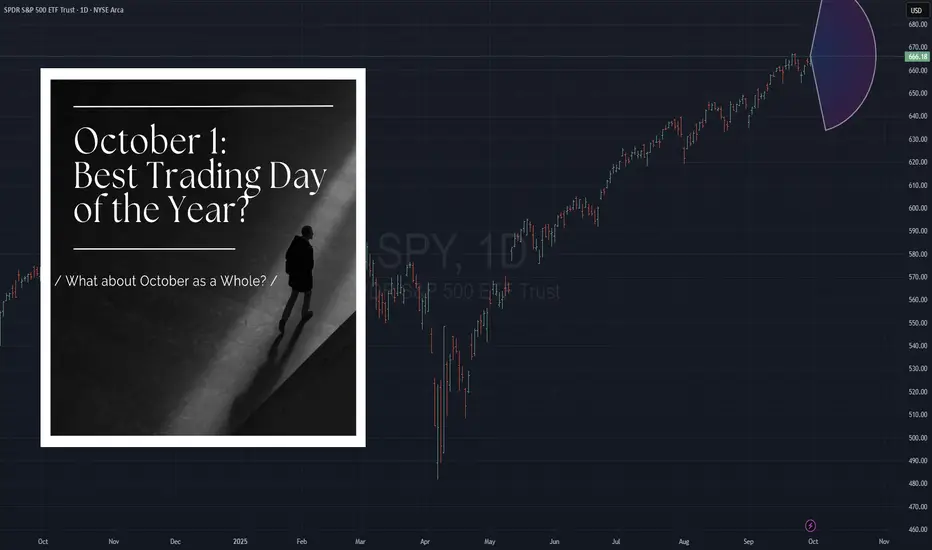
October 1st. Best Trading Day of the Year?NOTE: This is a post on Mindset and emotion. It is NOT a Trade idea or strategy designed to make you money. If anything, I’m posting this to help you preserve your capital, energy and will so you can execute your own trading system with calm, patience and confidence.
I was told yesterday that October 1 is historically a great trading day.
What does that mean?
That we buy? That we sell?
Or as traders, do we simply lean into the expected volatility in both directions, regardless of how it ends?
Is it really about direction or is it more about volatility itself?
And then I wondered, what about October as a whole?
We’ve just come through a really strong September. That alone puts expectations on edge. Do we continue higher? Or do we fall off in line with October’s reputation?
Because if you ask most people, October is “that scary crash month.”
1929. 1987. 2008.
Big events that seared into collective memory.
But the data tells a different story.
Seasonality studies show October has often been one of the stronger months for the S&P 500.
Yes, it tends to be more volatile with more big moves up and down.
But zoom out and October often finishes in positive territory. Many times it has even marked the end of declines and the start of new rallies.
So why does the “October crash” narrative persist?
Because our brains are wired to latch onto the dramatic, painful events more than steady gains. We remember the sting of a crash, not the quiet consistency of recovery.
That’s the mindset piece here.
Markets are not just numbers, they’re stories. The ones we tell ourselves, and the ones that echo across generations of traders.
If you believe October is dangerous, you’ll find evidence everywhere to confirm it.
If you believe October is an opportunity, you’ll see that too.
What matters is not October itself.
It’s your relationship with volatility and how you meet uncertainty. Both in the markets and in your own mental state.
Your ability to hold perspective in a month where the swings may be larger, the headlines louder and the ghosts of market history come knocking.
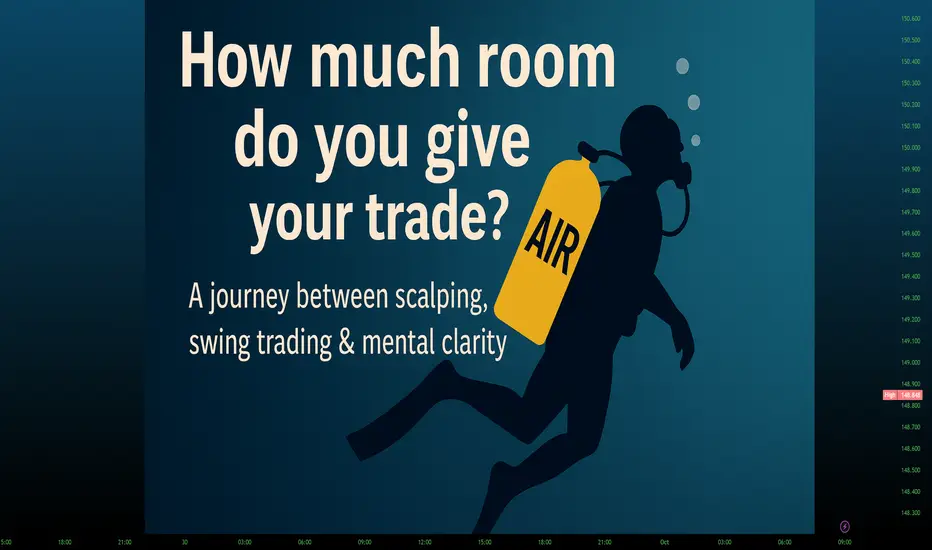
Hedging, Scalping & Swingtrading – was passt zu dir?🧠 How much air do you give your trade?
A journey between scalping, swing trading & mental clarity
📝 Summary
Scalper → tight SL, little room, many stop-outs
Swing trader → wide SL, more room, more patience
Hedging → tool, not a substitute for discipline
In the end → your rules & mindset decides
1. The core question
👉 How much air do you give your trade?
Tight Stop-Loss (SL) → tool of the scalper
✔️ Quick execution, defined risk
❌ High chance of being stopped out by small moves
Wide SL → typical for swing traders
✔️ More breathing room, more time for observation
❌ Higher emotional & financial cost
It’s about more than numbers – it’s about your nerves, your setup understanding & your rulebook.
🎯 Hedging & trend structure
Not every trade needs to be forced – sometimes securing is smarter than hoping.
👉 I use hedges, but only within a precise plan.
📌 Rule: I only hedge when pullbacks within the trend structure are likely.
➡️ No hedging against every pullback
➡️ No knee-jerk actions
➡️ Only with plan & confirmation
❌ Back and forth – pockets empty.
(Note: Hedging is optional – more complex than a stop, but a powerful tool for experienced traders.)
🧱 Trend structure is everything
Swing traders look for setups with fundamental and technical confirmation.
Example: USDJPY during times of large interest rate differentials:
📊 Rate advantage → long trades earn positive swaps
💡 Strategy: Swing trade + passive income through swaps
🔹 The scalper chases the move
🔹 The swing trader plans his income
💼 The mindset difference
A hedge is not retreat, but tactical protection, when:
The market ranges
Pullbacks are likely
R:R no longer fits
🔥 But: a hedge also ties up capital – it must be integrated wisely.
2. My journey
👉 Trading is not gambling – it’s a profession.
At first, I searched for the “holy grail”. Soon I realized:
➡️ Profit doesn’t come from clickbait gurus – but from discipline + your own rules.
Just like in the gold rush: it wasn’t the seekers who got rich – but the shovel sellers.
3. The “stingy” trader
Many traders set their SL so tight the market can’t breathe.
❌ Result: lots of small losses, frustration, overtrading.
✔️ Advantage: fast loss-cuts.
📌 BUT:
How often has the market “breathed out” your money, even though your setup was still intact?
4. The swing trader
Swing trading = building a house:
🏡 Plot = foundation
🧱 House = setup
💰 Sale = take profit
Based on highs/lows, order blocks & Fibonacci levels.
➡️ SLs must fit structure – not emotion.
5. The mental side
Tight SL → doesn’t kill your account, but your head.
Wide SL → doesn’t kill your head, but maybe your account.
👉 Losing streaks with tight SLs trigger revenge trading & self-doubt.
➡️ Find your way to avoid chasing illusions in small timeframes.
6. The middle way
🌓 It’s never black or white – it’s balance.
Practical tools:
⟳ ATR-Stops (adapt to volatility)
⚖️ Fixed risk limits (1–2% per trade)
🧠 SL = airbag, not enemy
7. Lose consciously
❌ Repeating mistakes = poison.
❗ Fear of new setups = time for a break.
🔀 Return with a clear head – your rules are your shield.
🔚 Conclusion
Scalper → tight SL, little room, many trades
Swing trader → wide SL, more room, fewer trades
⚠️ Danger comes when your SL doesn’t fit your strategy, timeframe & position size.
👉 In the end, it’s not the market that decides –
but your rules and your mindset.
“The market always breathes – the only question is whether your SL breathes with it or kicks you out.”
Revenge Trading – The Loop That Drains YouNOTE: This is a post on Mindset and emotion. It is NOT a Trade idea or strategy designed to make you money. If anything, I’m posting this to help you preserve your capital, energy and will so you can execute your own trading system with calm, patience and confidence.
Momentum and trend are in play and you’re lining up for the next opportunity to join the trend up.
Diligently - you follow your rules and get in when the ‘stars align’ and when the indicators you’ve chosen give you the confirmation you’re looking for to get in.
And then you’re stopped out.
“I’ll get it back on the next one.” It starts as a whisper in your head right after a loss.
"Is it a false breakout? Is it noise? "
You don’t even consider ‘chop’ right now.
You re-enter
Stopped again and again.
This is starting to feel personal.
What’s really happening inside you:
Thoughts: “The market took from me.” “I’ll show it.”
Feelings: Anger, injustice, shame.
Behaviours: Increasing size, doubling down, moving stops.
Body cues: Racing heart, clenched jaw, tunnel vision.
Trigger: A loss that feels unfair or personal.
This is anger disguised as trading. You have been triggered.
How to take control of this:
Name it: Say out loud “I’m acting out here.” Ask yourself - ‘Do I really want to do this, is this part of the plan or am I honestly revenge trading?’. Asking these questions at least stops the automatic reaction of just jumping in and brings awareness to the situation. It’s a breaker switch that interrupts the loop.
Ground yourself: notice your breath, your heart, your body. It’s likely that your biology is reacting to the loss which means hormones such as [adrenaline and cortisol are racing through you. Step away until the adrenaline settles.
Reframe the loss: remind yourself: The win I’m chasing won’t undo the loss. Only discipline will. Losses in this game are a cost of doing business. I accept that there are costs and I am in control of my spend as any successful business owner does.
Losing isn’t the problem. How you react to the loss defines your career.
If you found this useful, also have a look at a previous post I’ve put up on revenge trading. Here’s the link.
I also offered some reflections on a trade post sent to me by another TradingView user. The topic wasn’t revenge, but the challenge presented by the market wasn't too dissimilar.
p.s. Apols if anything is odd in this post, I have had to repost it.
Exit Psychology – Reflections On The SeriesNOTE – This is a post on Mindset and emotion. It is NOT a Trade idea or strategy designed to make you money. If anything, I’m taking the time here to post as an effort to help you preserve your capital, energy and will so that you are able to execute your own trading system as best you can from a place of calm, patience and confidence.
Over the last few posts we’ve walked through the psychology behind many exits. Here on this chart, you can see how they all might have played out on a single trade.
One trade, four different exits. Whichever you choose to implement isn’t just a technical decision - it’s a psychological mirror.
Taking each in turn:
The initial stop: the line where you admit, “The trade idea didn’t work”
The break-even stop: the comfort of “I can’t lose now.”
The trailing stop: the wrestle between protecting gains and letting them run.
The profit target: the choice between certainty and potential.
Put them all on the same chart and you’ll notice something: none of them are just about price. Each is a reflection of the trader making the call.
What we’ve uncovered in this series:
The initial stop tests whether you can accept being wrong on a trade idea without making it personal.
The break-even stop shows how much discomfort you’re willing to tolerate before reaching for relief.
The trailing stop mirrors your balance between fear of giving back and trust in your process.
The profit target surfaces your relationship with certainty versus possibility.
And tight vs. loose? That isn’t just a preference. It begins with trader type: your personality, values and beliefs set a natural baseline. It’s shaped further by how well your strategy fits that style. And in the moment, emotion (fear or hope) nudges you tighter or looser than planned.
The bigger reflection:
Exits reveal more than entries. They show how you handle:
Loss and regret.
Control and uncertainty.
Trust and identity.
Comfort and growth.
But reflection alone isn’t enough. To turn insight into progress, you need practical ways to anchor behaviour:
Pre-commit in writing: Note where you’ll exit before you enter, it closes the door to mid-trade negotiation.
Separate outcomes from emotions: Journal not just where you exited, but how you felt in the moment. Patterns emerge quickly.
Differentiate protecting vs. controlling: Ask yourself, “Am I moving this stop to protect the plan, or because I’m uncomfortable right now?”
Train the nervous system: Notice the physical urge to act and how it shows up in the body (ex: shallow breath, tense shoulders). Pause before execution and breathe. Slow down the ‘urge’ and re-train self trust.
These small practices are how you build the consistency to stay aligned with both your system and your psychology.
Closing thought:
The market doesn’t care where you exit. But your mindset does - and so does your account.
Clarity in those decisions is where growth begins and where your odds of staying in the game increase.
In the end, your edge isn’t only your system. It’s your state of mind - before, during and after engaging with the market.
I hope you’ve enjoyed this series. If so would love to hear in the comments.
Here’s a recap of the entire Psychology of Exits series in case you’d like to check out the details of each:
Exit Psychology 1/5 : The Initial Stop
Exit Psychology 2/5 : The Break-Even Stop - Comfort or Illusion?
Exit Psychology 3/5: The Trailing Stop – Patience vs Protection
Exit Psychology 4/5 : The Profit Target – Certainty vs. Potential
Exit Psychology 5/5: Tight vs. Loose
And finally here is the link to the original article by TradingView that inspired this series as promised:
p.s. Apols if anything is odd in this post, I have had to repost it.
Exit Psychology 5/5: Tight vs. LooseNOTE – This is a post on Mindset and emotion. It is NOT a Trade idea or strategy designed to make you money. If anything, I’m taking the time here to post as an effort to help you preserve your capital, energy and will so that you are able to execute your own trading system as best you can from a place of calm, patience and confidence.
This 5-part series on the Psychology of Exits is inspired by TradingView’s recent post “The Stop-Loss Dilemma.” Link to the original post at the end of this article.
Here’s a scenario:
Two traders, same setup. One uses a tight stop. One sets it loose.
The first gets stopped out quickly - several scratches in a row. Frustration builds: “The market keeps hunting me.”
The second holds through the noise, but watches a small loss balloon. Self-talk creeps in: “If I’d cut it sooner, I’d be fine.”
Same market. Different styles. Each trader convinced the other way might be better.
How behaviour shows up with tight vs. loose stops:
Tight stops: Often chosen by traders who value precision and control. The mindset is “I’d rather be wrong small and often than wrong big.” The cost? A series of small cuts that can erode confidence.
Loose stops: Favoured by traders who value patience and the bigger picture. The mindset is “give the trade room to breathe.” The cost? Larger drawdowns and the risk of turning manageable losses into emotional ones.
Neither is inherently better. The choice often begins with trader type - your personality, values and beliefs shape a natural preference for precision (tight) or patience (loose). The trap isn’t in the preference itself it’s when short-term emotions hijack that baseline.
The psychology underneath:
Your baseline style comes from deeper beliefs and tendencies:
Tight stop traders often believe:
“If I’m precise, I can avoid being wrong.”
“Smaller losses hurt less.”
“Control comes from minimising risk quickly.”
Loose stop traders often believe:
“The market needs space to prove me right.”
“One big win will pay for the rest.”
“Patience will protect me from being shaken out.”
But when stress or excitement kicks in, those baseline tendencies can distort:
Tight traders over-tighten - cutting winners short out of fear.
Loose traders loosen further - holding too long out of hope.
The key is to know the difference between what reflects your style and what reflects an emotional trigger.
Why context matters:
Timeframe: Scalpers naturally need tighter stops; swing traders can afford looser ones.
Volatility: Calm markets tolerate precision; wild ones punish it.
Strategy: Breakout systems often need wider buffers; mean reversion thrives on tight control.
Your stop isn’t just about the chart. It’s about who you are, the system you run and the market you’re in.
Practical tips … the How:
Notice your natural bias: Do you lean toward safety through control (tight) or safety through space (loose)? Awareness matters more than labels.
Align your stop style with both your timeframe and your temperament. A system that grinds against your personality will drain your energy.
Review your data: Do tight stops cut you out too soon? Do loose stops bleed too much? Your history holds the clues.
Separate outcome from process: A stop-out isn’t failure - it’s feedback. Tight or loose, consistency beats reaction.
Reframe:
It’s not about tight versus loose. It’s about congruence, between your strategy, the market context and your personality. When those three line up, stops become less about fear and more about discipline.
Closing thought:
Every stop: initial, break-even, trailing, or profit target is really a mirror. It reflects not only your strategy, but also your relationship with uncertainty, control and trust in yourself.
The market doesn’t care how you exit. But your mindset does… as does your account.
Every adjustment, every shift of a stop, every decision to hold or cut, carries both a financial cost and an emotional cost. Learning to see those decisions clearly, is where growth begins and where your odds of staying in the game increase.
A link to Exit Psychology 4/5 : The Profit Target – Certainty vs. Potential
A link to the original article as promised:
This is Part 5 of the Psychology of Exits series.
👉 Thanks for following along ... and for those who have stayed the course with me, there's a bonus wrap up that I'll be writing up today and releasing tomorrow. Stay tuned.
p.s. Apologies if the chart on this post is a little odd. I had to repost this.
Exit Psychology 4/5: The Profit Target - Certainty vs. PotentialNOTE – This is a post on Mindset and emotion. It is NOT a Trade idea or strategy designed to make you money. If anything, I’m taking the time here to post as an effort to help you preserve your capital, energy and will so that you are able to execute your own trading system as best you can from a place of calm, patience and confidence.
This 5-part series on the Psychology of Exits is inspired by TradingView’s recent post “The Stop-Loss Dilemma.” Link to the original post at the end of this article.
A familiar scenario:
Price is moving your way. You’re edging closer to your profit target. An internal debate begins:
“Should I book it now? What if it turns?” . Your pulse quickens. Thoughts circle:
“What if it turns now?”
“Should I take it here? It’s good enough…”
“But what if I exit and it keeps running?”
One voice says “bank it before it disappears.” Another whispers “hold, the real move is still ahead.”
You exit early, relief for a moment - until you watch the chart run far beyond where you got out. Next time, you hold on longer… only to see your winner evaporate.
Most traders know this dance. It’s not about charts. It’s about the pull between certainty and potential.
How behaviour shows up with profit targets:
The way we take profits tells us more about our beliefs than about the market itself. :
Cutting trades too early: The belief that profit can vanish at any moment, so you must grab it while it’s there.
Holding too long: Rooted in the hope that “one big trade will make the month.” or erase prior losses.
Moving targets mid-trade: Reflects the belief that adjusting = control, even if it means inconsistency.
Ignoring targets entirely: Suggests discomfort with closure - “If I don’t exit, I haven’t missed out yet.”
The psychology underneath:
What looks like “profit management” is often emotional management in disguise:
Loss aversion in reverse: Protecting unrealised gains feels safer than risking them for more.
Regret aversion: The fear of “what if”- too soon or too late - shapes every decision.
Scarcity belief: “Opportunities are rare - I must squeeze every drop.”
Over-attachment: Treating one trade as if it carries all the weight, rather than one of many in a series.
Identity layer: For some, banking profit = validation; missing the bigger move = failure.
At the heart of it is this tension: Do you seek the certainty of closing now, or the potential of holding on? And which one do you believe defines your worth as a trader?
Why traders use profit targets:
Pre-defined targets do have value.
They provides clarity, structure and reduce decision fatigue.
Locks in gains and avoids paralysis at turning points.
They allow for consistent risk-reward planning.
But the challenge is sticking to those targets without rewriting them mid-trade based on emotion. That’s where the psychology is tested.
Practical tips … the How:
The aim is to separate strategy-based exits from emotion-based exits, namely to exit in line with your plan, while conserving psychological capital for the next trade: A few ways traders manage this:
Define profit targets in advance - structure, measured move, or R-multiple and write them down before entry so you are not improvising mid-trade.
Consider scaling out: partial profits banked, partial profits to satisfy the need for certainty, while leaving a portion to capture potential.
Journal post-trade: Did you exit where planned, or did emotion intervene? Track the pattern across multiple trades.
Build awareness: notice the urge to “grab it” or “stretch it.” Pause and label the feeling (fear/greed/doubt) before acting on it. Naming the emotion can reduce its grip on you.
Reframe:
A profit target isn’t a ceiling. It’s a decision point. The skill isn’t in guessing the high it’s in exiting consistently in line with your plan, while protecting your psychological capital for the next trade.
Closing thought:
Every profit exit is a mirror. It reflects not only what the market offered, but also how you relate to certainty, potential, and trust in your own process.
A link to Exit Psychology 3/5 : The Trailing Stop – Patience vs. Protection
A link to the original article as promised:
This is Part 4 of the Psychology of Exits series .
👉 Follow and stay tuned for Part 5: Tight vs. Loose - Personality, Context, and the Real Trap.
DXY | Bullish Reversal from IFVG – Targeting 99.50 Supply ZoneHello Billionaires!!
In DXY D1 Projection we know The US Dollar Index has tapped into the Imbalance/Fair Value Gap (IFVG) and shown signs of bullish reaction after sweeping Sell-Side Liquidity (SSL). This aligns with a potential reversal model aiming towards higher liquidity levels.
🔹 Key Points:
SSL swept, confirming liquidity grab.
Price reacting from IFVG as demand zone.
Short-term retracement expected, followed by continuation.
Targeting the BPR supply zone around 99.50 and eventually Buy-Side Liquidity (BSL) above 100.00.
As long as DXY holds above the IFVG zone, bullish continuation remains the primary outlook.
Exit Psychology 3/5: The Trailing Stop – Patience vs ProtectionNOTE – This is a post on Mindset and emotion. It is NOT a Trade idea or strategy designed to make you money. If anything, I’m taking the time here to post as an effort to help you preserve your capital, energy and will so that you are able to execute your own trading system as best you can from a place of calm, patience and confidence.
This 5-part series on the Psychology of Exits is inspired by TradingView’s recent post “The Stop-Loss Dilemma.” Link to the original post at the end of this article.
Consider this next scenario:
You’re in a trade and it’s working. Price is moving in your favour. You trail your stop in line with your plan. The trade moves your way and your trailing stop has started to lock in profit. Relief washes over you for a moment. Then price pulls back, tags your stop by a fraction and runs again without you on board.
Frustration rises: you protected your gains, but cut your winner short.
How behaviour shows up with trailing stops:
Trailing stops can be powerful, but the way we use them often reveals our mindset:
Moving the stop up too quickly : Driven by the belief that profit isn’t real until it’s banked.
Keeping it too loose : Rooted in the hope that one big win will make the difference.
Adjusting based on emotion rather than structure : Reflects the belief that constant management equals control.
Using the trail as a safety net when confidence fades: “I don’t trust myself to exit well without this crutch.”
The psychology underneath:
These surface behaviours are often driven by deeper beliefs and biases - the silent programs running in the background:
Scarcity belief : “If I don’t protect every dollar now, it will disappear.” This drives over-tightening.
Illusion of control: Adjusting the trail gives the feeling of mastery, even if it undermines expectancy.
Hero trade belief : The idea that one outsized win can “fix” everything encourages overly loose trails.
Identity fusion : For some, holding onto profit = being a “good” trader; giving it back = failure.
Comfort-seeking : The nervous system experiences unrealised gains as already “yours,” so trailing becomes a way to protect identity as much as capital.
Why traders use trailing stops:
There are good reasons too. Trailing stops can:
Protect profits without fully closing the position.
Allow participation in bigger trends without micromanaging.
Reduce stress when you can’t watch the screen constantly.
But just like initial and break-even stops, the challenge isn’t the tool, it’s the psychology behind how and when we use it.
Practical tips … the How:
The point isn’t the exact method you use, but whether your adjustment comes from structure or from stress. A few ways to build awareness:
Define in advance what conditions justify moving the stop - structure, ATR, trend shift - not just feelings.
Notice the difference between protecting and controlling. One preserves edge, the other chokes it.
Journal: How many times has moving the trail early cost you a bigger win? Seeing patterns reduces self-deception.
Practice nervous system awareness : when you feel the urge to “lock in,” pause and observe the sensation in your body before acting. Sometimes that’s enough to prevent a premature cut.
Reframe:
A trailing stop isn’t a way to eliminate uncertainty. It’s a tool to balance patience with protection. Used well, it keeps you in the move long enough to benefit, while still defining where you’ll step aside.
Closing thought:
The art of the trailing stop isn’t about perfection. It’s about holding the tension between fear of giving back and faith in your process and learning to stay in that space without over-managing.
A quick note to those who have signed up to the free newsletter on our website: please be sure to check your spam folder in case it’s found its way there.
A link to the previous post in this series - Exit Psychology 2/5 : The Break-Even Stop – Comfort or Illusion
A link to the original article as promised:
This is Part 3 of the Psychology of Exits series .
👉 Follow and stay tuned for Part 4: The Profit Target – Certainty vs. Potential .
Exit Psychology 2/5 : The Break-Even Stop - Comfort or Illusion?NOTE – This is a post on Mindset and emotion. It is NOT a Trade idea or strategy designed to make you money. If anything, I’m taking the time here to post as an effort to help you preserve your capital, energy and will so that you are able to execute your own trading system as best you can from a place of calm, patience and confidence.
This 5-part series on the Psychology of Exits is inspired by TradingView’s recent post “The Stop-Loss Dilemma.” Link to the original post at the end of this article.
Here’s another scenario:
Your trade starts working in your favour. You feel relief. Within minutes, you move the stop to break-even. “Now I can’t lose.”
But the market breathes back, tags your new level by a whisker and then runs in your original direction. You’re flat, frustrated and watching from the sidelines.
How behaviour shows up with break-even stops:
For many traders, the urge to move to break-even comes quickly. It’s a way of taking risk off the table but often at the cost of cutting trades short. Typical behaviours include:
Locking in break-even as soon as price moves a little in your favour.
Using break-even as a substitute for taking partial profits.
Feeling “safe” after the adjustment and disengaging from trade management.
Why traders choose this approach:
There are rational reasons for going break-even:
Protecting capital in volatile conditions.
Reducing stress when multiple trades are open.
Creating a sense of progress after a string of losses.
These can all make sense in context. But the challenge is that moving too soon to break-even can turn a promising trade into repeated small scratches leaving you exhausted, under-confident and questioning your method. And … you’re still taking full losses for those trades that go immediately against you.
The psychology underneath:
At break-even, traders aren’t usually optimising expectancy; they're seeking emotional relief. The pull comes from:
Fear of loss: Wanting to avoid the pain of turning a winner back into a loser.
Need for certainty : A break-even stop feels like control in an uncertain environment.
Regret avoidance : Scratches hurt less than watching profit evaporate into loss.
Anchoring bias : Once price moves your way, the mind treats that unrealised gain as already yours. Giving it back feels like losing more than it is.
Identity narrative : Moving to break-even can reinforce the self-image of being disciplined or “safe” even if it’s cutting potential edge.
Control vs. trust : The break-even adjustment is often less about the market and more about soothing the discomfort of waiting. It’s easier to do something than to trust the original plan.
Short-term comfort over long-term edge : The relief of “no risk” overrides the patience needed to let the trade develop.
Physiology : Heart rate settles, shoulders relax, the nervous system rewards the move with immediate calm, even if expectancy drops.
Practical tips … the How:
If you use break-even stops, the work is about applying them intentionally rather than reflexively. A few ways to manage the psychological side:
Define in advance: When will you move to break-even? After it moves a pre-defined amount in your favour ( X ATRs)? After a structure shift? Make it rule-based.
Consider scaling out partial size instead of rushing to break-even. Bank some, let the rest breathe.
Journal whether break-even stops are improving or reducing expectancy across 50–100 trades.
Train your nervous system: stay with mild discomfort instead of rushing to neutralise it. For instance: notice the physical tension that arises (tight chest, shallow breath, clenched jaw) when your trade pulls back. Instead of reacting on the chart, take one slow, deliberate breath and simply observe that feeling before deciding.
Reframe:
A break-even stop isn’t wrong. It can be useful in the right context. But when used as a reflex, it’s more about managing feelings than managing risk.
Closing thought:
Break-even can feel like safety. But safety and growth don’t always align. The real edge comes from knowing when you’re protecting wisely and when you’re just buying short-term comfort at the expense of long-term results.
A link to Exit Psychology 1/5 : The Initial Stop
A link to the original article as promised:
This is Part 2 of the Psychology of Exits series .
👉 Follow and stay tuned for Part 3: The Trailing Stop - Patience vs. Protection out next week .
Exit Psychology 1/5 : The Initial StopNOTE – This is a post on Mindset and emotion. It is NOT a Trade idea or strategy designed to make you money. If anything, I’m taking the time here to post as an effort to help you preserve your capital, energy and will so that you are able to execute your own trading system as best you can from a place of calm, patience and confidence.
This 5-part series on the psychology of exits is inspired by TradingView’s recent post “The Stop-Loss Dilemma.” Link to the original post at the end of this article.
Here’s a scenario:
You set a clean initial stop beneath structure. Price drives down, tags just above it, hesitates… Your chest tightens. Thoughts race: “It’s just noise… give it room.” You widen it. Minutes later you’re out with a larger loss, shaken confidence and a strong urge to make it back.
How behaviour shows up with initial/safety stops:
When discomfort builds, many traders start negotiating with themselves. This often leads to small adjustments that feel harmless in the moment, but gradually undermine the original plan:
Widening the stop as price approaches (turning limited risk into larger or open-ended risk).
Nudging to break-even too soon (seeking relief more than edge).
Cancelling the hard stop and promising a “mental stop” (self-negotiation begins).
When traders choose not to place hard stops:
Not every trader chooses to place a hard stop in the market. For some, it’s a deliberate decision, part of their style:
They want to avoid being caught in stop-hunts around key levels.
They prefer to manage risk manually, based on discretion and market feel.
They use options, hedges, or smaller size as protection instead of stops.
They accept gap/slippage risk as part of their style.
These can all be valid approaches. But avoiding a fixed stop doesn’t remove the psychological pressures it simply shifts them:
Discipline under stress : Without an automatic exit, you rely entirely on your ability to act quickly and decisively in real time. Stress can delay action.
Mental drift : A “mental stop” is easy to move when pressure builds. The more you rationalize, the further you drift from your plan.
Cognitive load : Constant monitoring and decision-making can create fatigue and reduce clarity.
Risk of paralysis : In fast markets, hesitation or second-guessing can lead to missed exits or larger losses.
What’s really underneath (the psychology-layer):
So why do these patterns repeat, regardless of style? It’s rarely about the chart itself. It’s about how the human mind responds to risk and uncertainty:
Loss aversion : Losses hurt ~2x more than equivalent gains feel good which leads to an impulse to delay the loss (widen/erase stop).
Regret aversion : After a few “wick-outs,” the mind protects against future regret by avoiding hard stops or going break-even too early.
Ego/identity fusion : “Being wrong” feels like I am wrong and then to protect self-image one moves the line.
Illusion of control : Tweaking the stop restores a feeling of agency, even if it reduces expectancy.
Sunk-cost & escalation : More time/analysis invested makes it that much harder to cut.
Time inconsistency : You planned rationally; you execute emotionally in the moment (state shift under stress).
Physiology : Stress narrows perception (tunnel vision, shallow breath, tight jaw), pushing short-term relief behaviors over long-term edge.
Reframe:
The initial stop isn’t a judgment on you. It’s a premeditated boundary that keeps one trade from becoming a career event. It’s not about being right; it’s about staying solvent long enough to let your edge express itself.
Practical tips … the How:
Turning insight into action requires structure. A few ways to anchor the stop as your ally, not your enemy:
Pre-commit in writing : “If price prints X, I’m out. No edits.” Put it on the chart before entry.
Size from the stop, not the other way around : Position size = Risk per trade / Stop distance. If the size feels scary, the size is wrong, not the stop. Do not risk what you can not afford on any one trade / series of trades.
Use bracket/OCO orders to reduce in-the-moment negotiation. If you insist on mental stops, pair them with a disaster hard stop far away for tail risk.
Tag the behaviour : In your journal, checkbox: “Did I move/delete the stop? Y/N.” Review weekly; if you track the behaviour consciously you will be more likely to respect your stops.
Counter-regret protocol : After a stop-out, don’t chase a re-entry for 15 minutes. Breathe, review plan, then act.
For those that choose not to place stops in the market, but use mental stops instead, I’d offer the following thoughts to help manage the shift from automation to discipline.
Define exit conditions before entry (levels, signals, timeframes) and write them down.
Pair mental stops with “disaster stops” in the system, far enough away to only trigger in extreme cases.
Size positions conservatively so you can tolerate wider swings without emotional hijack.
Use check-ins (timers, alerts) to prevent emotional drift during the trade.
Build routines that reduce decision fatigue so you can act clearly when the market turns.
Closing thought:
A stop isn’t a punishment; it’s tuition. Pay small, learn quickly and keep your psychological capital intact for the next high-quality decision. One of my favourite sayings told to me by a trader many years ago stands true even to this day. Respect your capital and ‘live to trade another day’.
This is Part 1 of the Exit Psychology series .
👉 Follow and stay tuned for Part 2: The Break-Even Stop - Comfort or Illusion?
A link to the original article as promised:
System Hopping - The Hidden Cost of Self-DoubtNOTE – This is a post on Mindset and emotion. It is NOT a Trade idea or strategy designed to make you money. If anything, I’m taking the time here to post as an effort to help you preserve your capital, energy and will so that you are able to execute your own trading system as best you can from a place of calm, patience and confidence.
Here’s a scenario:
You take a loss.
Then another.
Suddenly, the system you trusted yesterday feels broken today.
On this chart of Solana, imagine you were trading a breakout system. You may have had four false breaks that didn’t really follow through before the market finally broke higher. When do you give up on the idea or the system altogether?
How self-doubt shows up:
You start thinking: “Maybe another system would have worked better…”
You switch, tweak, reinvent mid-cycle.
You lose patience with the method you worked so hard to design.
You are in danger of system hopping.
Emotional side:
Self-doubt often disguises itself as “rational analysis,” but underneath it’s uncertainty, frustration, even a tightening in the chest. You hesitate to pull the trigger, second-guess your plan, or overcorrect with a brand-new approach.
It’s rarely your system that’s broken.
It’s the lack of trust in yourself to see it through.
Shift your mindset
Every system has drawdowns. If you abandon yours too soon, you never let it prove itself. So the task really is to find a way to collect the data without blowing out / over extending yourself.
Practical tips … the How:
Write down your system rules and keep them visible, so you trade what’s planned, not what you feel.
Track results over a proper sample size (50–100 trades) before judging performance.
Make sure you are position sizing sensibly. This is an art in and of itself. The key being - do not risk what you can not afford on any one trade / series of trades. Paper trade if you need to to start with just to collect the data on the system.
Journal emotions separately from trade outcomes — so you see when doubt is about you, not the system.
Set a “no system changes” rule during drawdowns. Only review at scheduled intervals.
Closing thought:
Your edge doesn’t come from finding the perfect system.
It comes from trusting a good one long enough to let it work.
Overtrading - The Trap of 'One More Trade'....NOTE – This is a post on Mindset and emotion. It is NOT a Trade idea or strategy designed to make you money. If anything, I’m taking the time here to post as an effort to help you preserve your capital, energy and will so that you are able to execute your own trading system as best you can from a place of calm, patience and confidence.
Here’s a scenario:
You’ve had a good trade. Maybe two.
The system is working. The market is flowing.
But instead of stopping… you keep clicking.
You chase another setup. And another.
Soon the edge is gone and so is the self control!
Overtrading is one of the fastest ways to drain not just your account, but your energy and confidence too. I’ve been there (especially as I've dropped down to lower timeframes). I know how quickly it can creep in.
So here are some thoughts for you. Please take what resonates and ignore what doesn’t.
How overtrading shows up:
– You take trades outside your plan just to stay in the action.
– You increase size because you feel “in the zone.”
– You keep trading after losses to “win it back.”
– You tell yourself the market is full of opportunity and you don’t want to miss out.
– Your screen time becomes endless, even when setups are poor.
Emotional side:
Overtrading often hides a deeper need: For excitement, for control, for certainty. Your body feels restless, your mind convinces you there’s always another trade and your emotions swing between euphoria and regret. It’s not lack of knowledge that fuels this. It’s the inner pressure to do something.
So how can we get hold of this before it sabotages our intentions?
Shift your mindset
See discipline not as restriction, but as protection. Every trade you don’t take is just as important as the ones you do. Passing on noise preserves your edge for the moments that really count.
Practical tips … the How:
When you notice the urge to keep trading:
– Ask yourself: Would I take this trade if it were my first of the day?
– Set a daily trade limit and respect it.
Remind yourself: Staying in cash is a position too.
I hope this helps. Interested in hearing how do you recognise and manage overtrading when it creeps in?
Patience: Is a virtue but it's damn hard...NOTE - This is a post on Mindset and emotion. It is NOT a Trade idea or strategy designed to make you money. If anything, I'm taking the time here to post as an effort to help you preserve your capital, energy and will so that you are able to execute your own trading system as best you can from a place of calm, patience and confidence'.
Here's a scenario:
You want the trade to hurry up… but the market has no reason to move on your timeline.
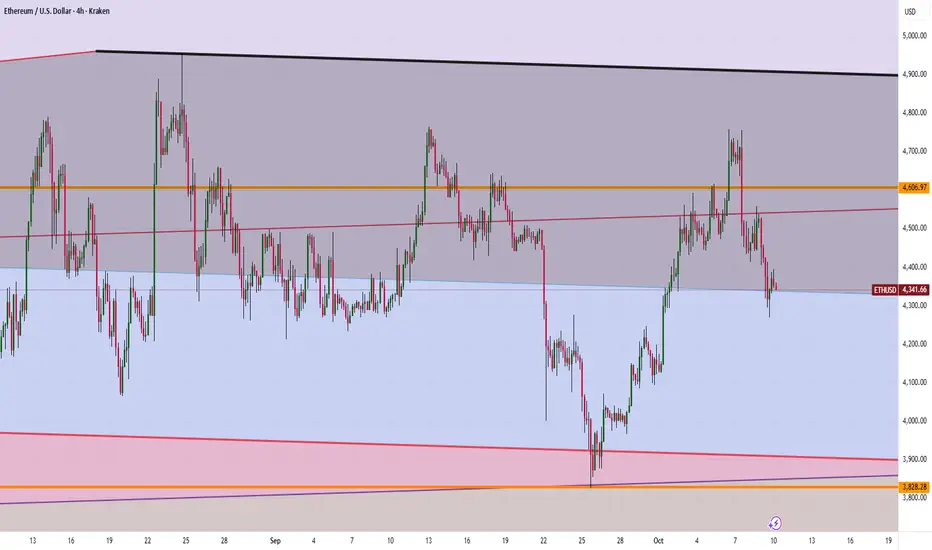
Here on Ethereum we see consolidation.
We can imagine traders framing for a break in either direction.
There will certainly be plenty trying their hand at getting ahead of the move and getting chopped.
Patience is one of the hardest skills for traders to master. The market doesn’t reward impatience it punishes it. If I'm honest, when I first started out, I certainly didnt think of patience as a 'skill' - but it's certainly essential. Without it, I've either wasted a lot of 'ammunition' in trying - or missed the whole point of a trade once I was depleted of will.
So offering some thoughts for you. Please take what resonates and ignore what doesn't work for you:
How impatience shows up:
You close trades too early because the profit feels “good enough.”
You jump into setups that haven’t confirmed because you’re tired of waiting.
You watch price drift sideways and feel an urge to “make something happen.”
You start to entertain thoughts that undermine your confidence.
You get distracted and do something else entirely risking missing the signal all together.
Emotional side:
Impatience often hides anxiety the need for relief, action, or certainty. Your body feels restless, your mind races with “what ifs,” and you start convincing yourself to bend your rules.
This is not 'woo'. It's an actual internal angst that causes one to act / behave in a way and at a time that is against ones intention. Ironically - as much as we ignore it - it' drives our behaviour.
So how can we get ahold of this to try and ensure it doesn't sabotage our intentions?
Consider the following and see if it works for you.
Shift your mindset
See patience as an active discipline and not just something that's passive. If we practice and nurture patience with mindfulness, the stronger the muscle to holding your ground, sticking to your process and letting the probabilities play out on their own clock not yours.
Practical tips .. the How ..:
When you feel that urge rising:
- notice where in your body you're feeling impatience.
- recognise how it's showing up for you (tension, irritation, restlessness - something else)
- notice what you are saying to yourself
- consider and assess : when was the last time I had a drink of water, had something to eat?
- do something physical to diffuse the feeling and get some energy back in the body:
stretch, breathe, walk away from the screen for a moment
put some music on and dance your ass off, do some burpees
set an alert on your screens, phone etc
Reminder yourself ... 'Waiting is a position too'.
I hope this helps. Interested in hearing what you do to instill and respect your patience
Chopped into Indecision - Some Thoughts on jacesabr_real's queryIf you’ve even felt chopped up with your trading, particularly with a situation where no matter what you do you ‘feel like your stop is getting picked off’ then you would not be alone.
jacesabr_real reached out with such a challenge last week and so I’ve offered to share a few thoughts for what they're worth. Please feel free to take what resonates and ignore the rest.
here's the original idea post :
There are 3 areas a trader needs to understand and align with in order to be able to trade successfully:
Market - The market condition: Bull, Bear, Sideways, Quiet Volatile, etc
Method - Your process/strategy for engaging with the market (breakout, mean revert, etc)
Mindset
- The emotional state of the trader throughout the lifecycle of the trade
These 3 areas overlap and despite being last in the list, I suggest that Mindset is the most important as it underpins everything. The late (great) Dr Van Tharp (featured in the original Market Wizards book) used to say that Mindset accounted for 80% of performance but later amended that to 100%.
So I’ll address this from that focal point. The reason? It’s the mind from which the process/strategy is selected, the ‘impulse’ to trade emanates and then the lived experience resides.
If a trader is having challenges with being stopped out frequently - it can result in a trader feeling like…
‘They’re picking me off’
'I was ticked out'
'The idea hasn’t failed, I’m just going to get back in again'
And it's easy to get into a revenge cycle of ‘doing the right thing’ but suffering fractional loss accumulation that adds up to a decent sized (even catastrophic) loss.
Which can lead to a loss in confidence, energy and discipline.
It’s a slippery slope. Which can lead to behaviours such as moving stops, sizing up bigger to make back, taking stops off entirely - continuing to take more trades as one is feeling ‘invested’ in the idea by sheer virtue of time spent in the process. Continue like this - maybe we get lucky and get the odd win to flatten out. Over time however, the risk is Tilt.
As you will likely understand, this is a massive area, so, a few general points that I’ll invite you to consider:
Approach your trading in this order: Mindset → Market → Method
Your Mindset may start out strong but the Market will try to wear it down
Protect your Mindset at all costs
Build steps into the process to simplify decision making.
Be clear on your rules for entry, management and exit. If you're unclear - you'll ask questions of yourself in the moment of the trade when it's hard to think clearly.
Ensure there are rules around capital preservation.
Some Suggestions:
Don’t allow revenge trading to take over… create breaker switches. (i.e. walk away!, take breaks)
Allow a re-entry of the same idea as part of your Method… but cap the number of attempts at the same trade idea to preserve capital and sanity (to perhaps 2 or 3 attempts).
Don’t remove (or move) stops… ever. Always have a worst case stop for risk management
If you’re getting stopped out frequently but the trade idea ultimately goes in your favour then your stop may be too tight (more to do with Market & Method)
Use a larger worst-case stop… and reduce position size if necessary
Monitor changes in volatility for your market (the Market condition may have changed and require an adaptation to your stop sizing to accommodate
With regards to your specific questions the following thoughts came up for me.
Many of your what if scenarios suggest that you may still need to look at your method. Pick an exit mechanism and stick with it. Collect the data points that will help inform whether your strategy is positive expectancy or not. If you keep changing the variables its really tough to track what works and what doesn't.
Get to understand your strategy and the stats around it. What is ‘normal’ in the way of number of losses. I’d suggest that seeing 4-5 losses of the same trade type a number of times a week might be a lot.
Consider the language that you are using. I notice the phrase ‘suicide stop’. Consider what that does to psychology subliminally. Perhaps use something like ‘hard stop’ or ‘capital preservation stop’ to keep your emotional balance and professionalism in your craft.
I hope this is helpful.
Certainly Uncertain - How Much Confirmation Do You Need?So ... you have what looks like a set up.
"Just one more bar"
"Just wait for the close"
"Wait for this indicator to align"
"Watch for the next to align"
"Ensure this filter shows ‘green lights go’"
But by the time everything lines up
The move has gone.
The horse has bolted
You fumble to enter - all fingers and thumbs
You ‘feel’ like you’re chasing
Perhaps the moment has passed.
Flummoxed - you wonder - what the heck happened here?
Feel familiar?
The search for absolute certainty shows up in subtle ways:
Emotions:
Anxiety builds. A conflict between wanting to act and restraining the impulse. Applying self control with will … but the body and mind unsettled.
Thoughts:
Endless “what if” scenarios.
What if I miss it.
What if it goes without me
What if I just try and get ahead of this at a better price
Physical Cues:
Tension rises in the body showing up as a hand hovering over the mouse, heart rate climbing - eyes fixated on the screens, backside glued to the seat (for fear of missing it).
If you’ve ever experienced this, you may recognise it as feeling cautious or disciplined.
In the pursuit of being disciplined and true to your rules you feel out of alignment and hesitant.
Markets are uncertain by nature.
If we choose to engage with uncertainty, then surely the job is to create a sense of certainty within ourselves.
The question is how do you do this currently?
A coping mechanism that might help:
Breathe.
Centering your breath is one of the most under rated and effective ways to calm ones nervous system.
Reframe your entry as a probability, not a verdict.
Before you click, remind yourself: This trade doesn’t have to be certain, it just has to meet my criteria. Then execute and let the outcome be data - not proof of your worth. Adopt the mantra… ‘ This is one trade in a 1000’
Cultivate the state of certainty in uncertain environments one trade at a time.