Revenge on the mind? The Most Expensive Trade You'll Ever TakeThe most expensive trade isn’t that first loss of the session.
It’s the second one, the one you took trying to get it back.
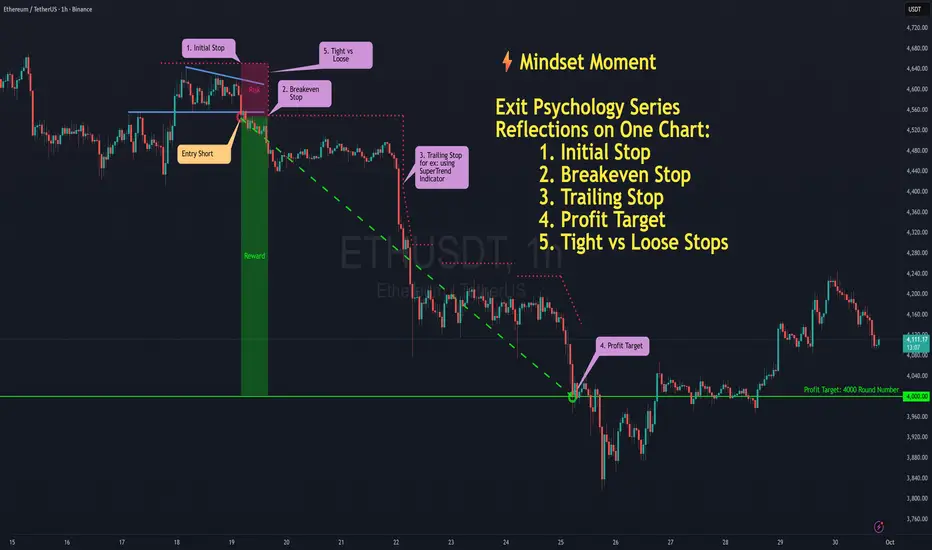
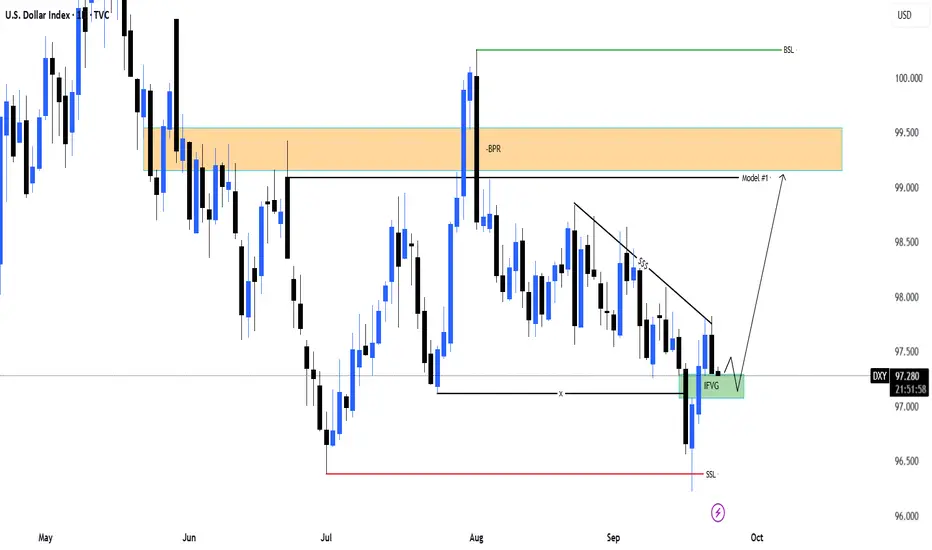
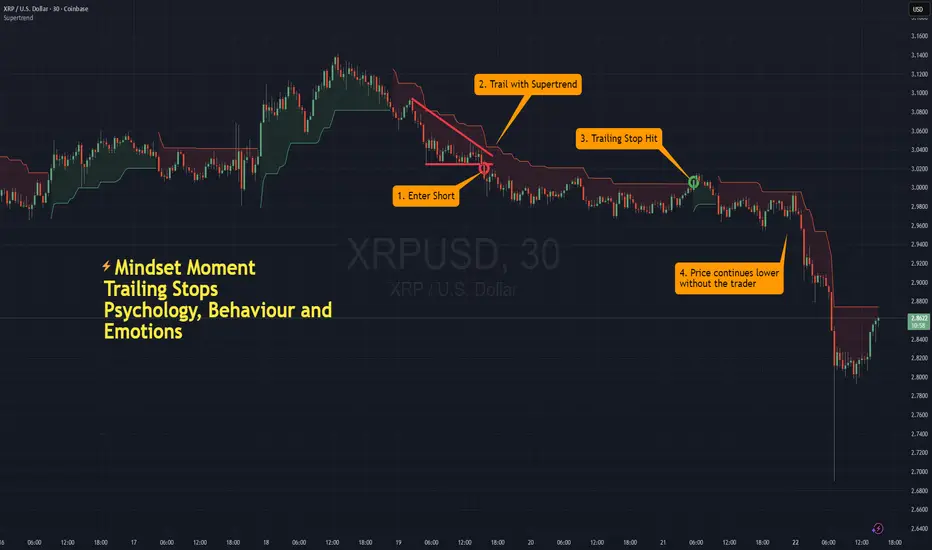
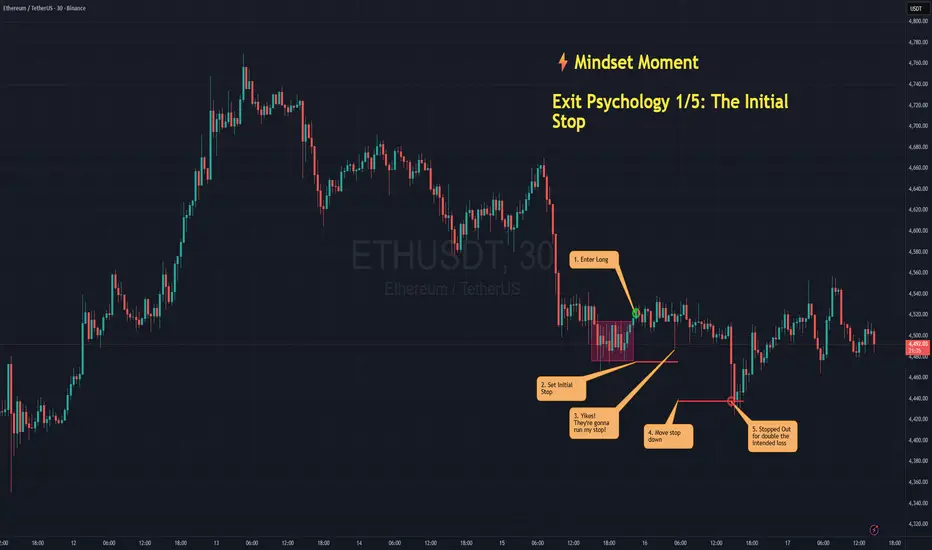
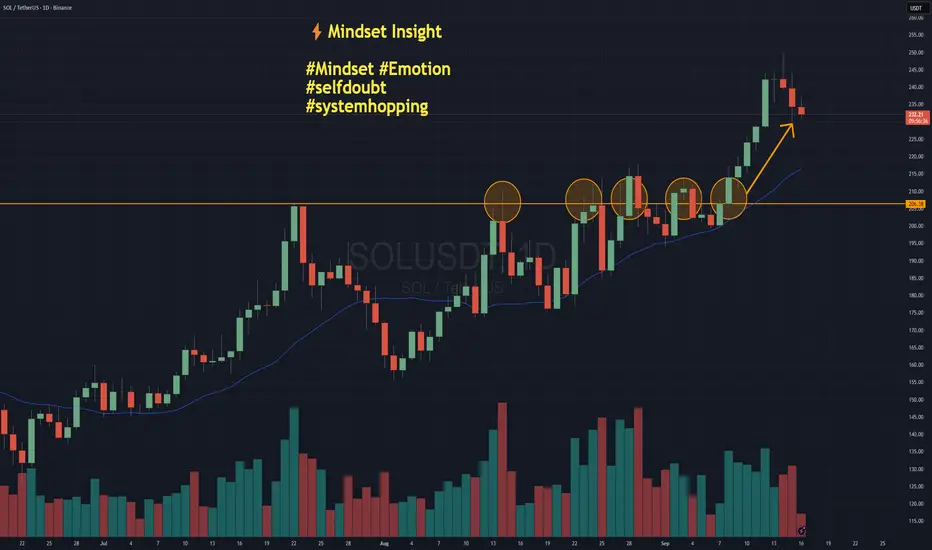
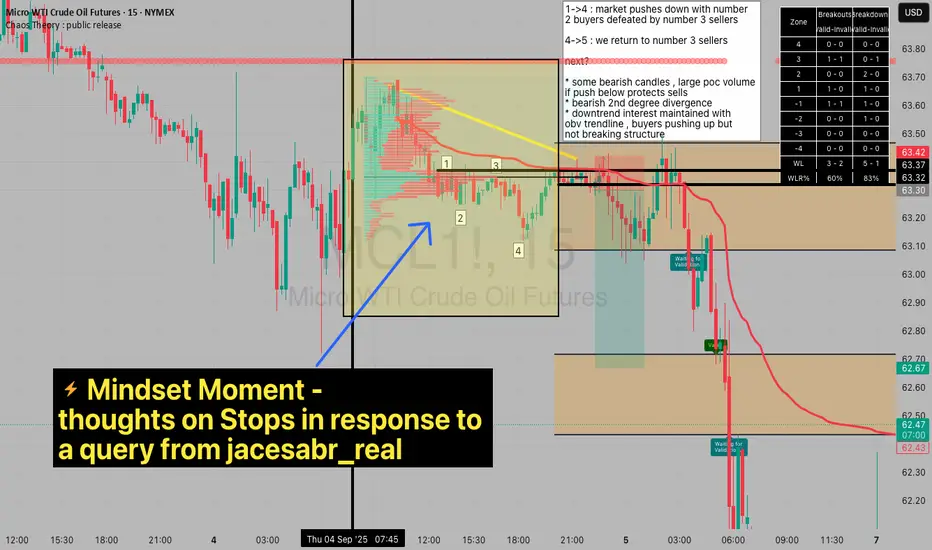
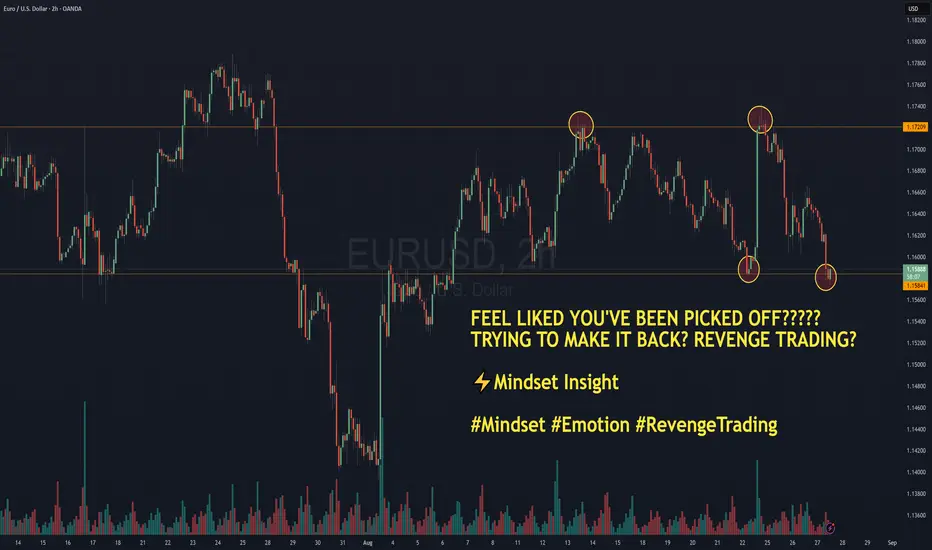
The chart here is one of a sideways consolidation. Easy in hindsight right? But if you're a break out trader, or one that is looking to get involved but is caught in the noise - it's easy to get collected and feel irritated and out of sorts. How it shows up in behaviour is that one might increase size - double down - move stops (to name but a few examples).
That moment of being picked off feels electric:
You’re angry at the market.
You want to erase the red.
You convince yourself the setup is “still good.”
But it isn’t trading anymore. It’s revenge.
I’ve seen traders burn accounts this way.
It doesn’t matter whether you’re trading a $1k retail account or a $10M book, the loop looks the same.
Here’s the truth most won’t admit:
👉 Losing isn’t the problem.
👉 How you react to the loss defines your career.
So how do you break the loop? Three quick checks:
The Pause Rule : After a loss, step away for 5 minutes. If you feel an urge to “get it back,” you’re not trading you’re reacting. Take a walk. Breathe. Let that urge simmer down.
The Red Line: Decide before you start how many trades or a max loss per session you’ll allow. Hit that line? Walk away. Live to trade another day.
The Reset: Write down what just happened, in one sentence. Putting it on paper shifts you out of the emotional loop and back into analysis.
If you’ve felt the pull of revenge trading, hit follow this is where we break down the emotional traps behind every chart. Let me know if you've experienced this too.
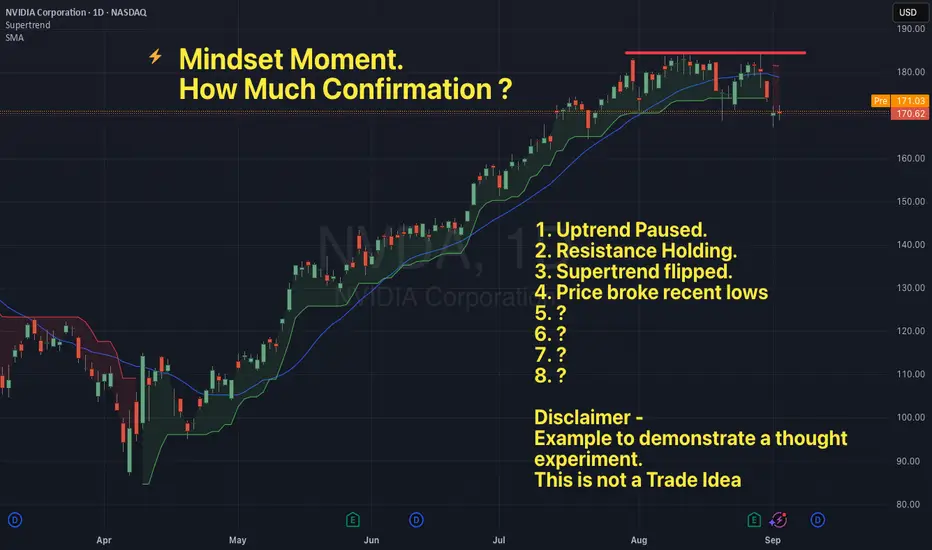
Please note - this is not a Trade Idea. I'm exploring the mindset behind trading using this chart as an example.
Mindset
Rebuilding Confidence After LossesSomething that losses can really impact is our confidence.
After a loss or a losing streak, it’s so easy to get caught up in self-criticism and doubt. Closing yet another red trade can feel crushing. Frustration, discouragement, even sadness… it all piles up.
Suddenly, you don’t feel motivated to step back into the market. You start questioning your skills, your edge, maybe even yourself.
We hope that one day we’ll wake up feeling positive and confident. We wait for motivation to magically return. We wait for confidence to “show up.”
But here’s the truth: confidence isn’t a feeling you wait for.
👉 Real confidence comes from taking action—even when you feel doubt.
👉 It’s about trusting yourself enough to follow your process, even with nerves and self-criticism whispering in the background.
It’s about trusting yourself to do what’s important in your trading. To reconnect with how you want to show up as a trader.
Because research is clear: taking steps toward what matters (your process, your long-term trading success) is what quiets the inner critic.
Not affirmations. Not waiting for the “right mood.”
The best way to get your motivation back after losses is to move. One step. One action. Back toward your process.
Ask yourself:
👉How do I want to show up as a trader?
👉How can I act in line with my strategy today?
👉How do I want to look back on my trading journey?
It won’t always feel great in the moment. But small, consistent steps create the positive spiral you need.
And maybe one day, you’ll be proud that you kept going—not because you felt confident, but because you acted with courage despite the doubt.
💡 Pro tip:
After a losing streak, give yourself space to reset. Then choose one step—just one—that aligns with the trader you want to be. That’s how you rebuild.
Happy compassionate trading! 💙
/ Tina the Trading Psychologist
USDJPY Long Setup – Liquidity Sweep + Manipulation Zone EntryUSDJPY created a clean opportunity after sweeping liquidity below a major support zone. Price briefly broke lower, collecting stops and breakout entries, before rejecting strongly from a manipulation area. This rejection signals smart money involvement and provides a solid long entry.
The stop is placed just beneath the manipulation zone for clear invalidation. The upside targets are mapped at key resistance and imbalance areas above, where the market is likely to rebalance. By scaling out at multiple levels, the trade secures profit while leaving room to capture the larger move.
This setup works because liquidity is predictable. Retail traders place stops in obvious spots, and once that liquidity is taken, institutions move the market the other way. By waiting for the sweep and entering on rejection, we align with that flow instead of being trapped.
Risk-to-reward is favorable, and management is simple: cut losses if price breaks the manipulation zone, and ride the move toward imbalance levels if momentum continues.
If you enjoy trade breakdowns like this, please like this post and follow for more setups, insights, and price action strategies.
#USDJPY #forex #priceaction #smartmoneyconcepts #liquiditysweep #daytrading #tradingviewideas
Unlocking the Power of ORB (Opening Range Breakout)Unlocking the Power of ORB (Opening Range Breakout): A Proven Strategy for Intraday Traders
In the fast-paced world of intraday trading, simplicity and structure can often outperform complexity. One such time-tested strategy is the Opening Range Breakout (ORB) — a method favored by both discretionary and system traders for its clarity and adaptability.
📌 What is ORB (Opening Range Breakout)?
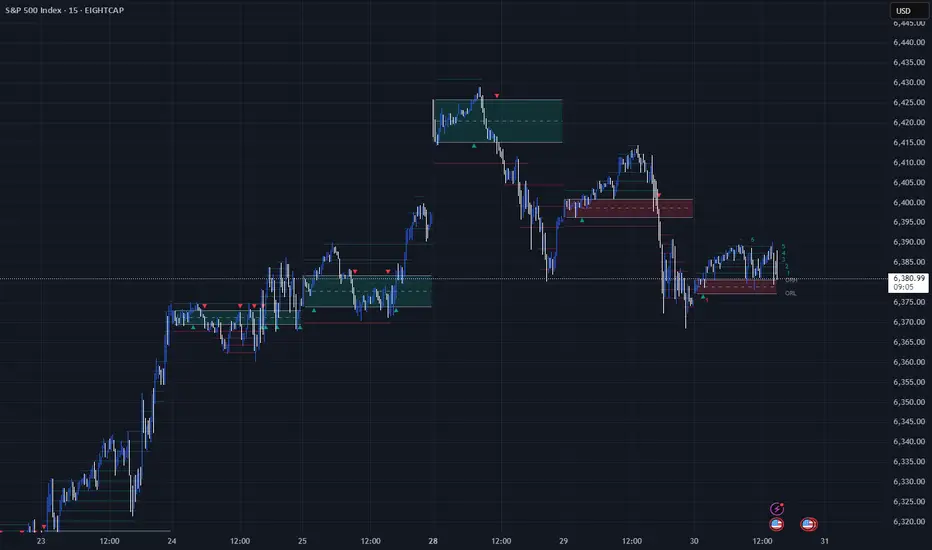
ORB refers to the price range (high and low) formed during the first few minutes (typically 5, 15, or 30) after the market opens. Traders look for a breakout above or below this range, anticipating strong momentum in that direction.
🧠 Why ORB Works
Volume Surge: The opening minutes see high institutional activity, creating genuine demand/supply signals.
Market Psychology: ORB captures trader sentiment as news digests overnight and is priced in at the open.
Defined Risk: The high/low of the range becomes a natural stop-loss area, allowing clean setups.
✅ Entry and Exit Rules for the ORB Strategy
Having a consistent framework helps you avoid emotional decisions. Here’s how you can structure your trades using ORB:
🔹 Entry Criteria:
Timeframe: Define your ORB window — e.g., first 15-minute candle.
Bullish Breakout Entry:
Enter long when price closes above the ORB high with volume confirmation.
Bearish Breakdown Entry:
Enter short when price closes below the ORB low with volume confirmation.
⚠️ Avoid entering on the first breakout candle. Wait for a close and retest, or a strong momentum candle for higher confidence.
🔹 Stop-Loss Placement:
For Long Trades: Place SL just below ORB low
For Short Trades: Place SL just above ORB high
🔹 Target/Exit Options:
Fixed RR Target: Aim for 1.5–2x your risk as initial target.
Mid/Outer Bands: Use indicator-drawn breakout bands (like those in LuxAlgo script) as profit zones.
Time-based Exit: Close position by end of session if price stalls or consolidates.
Trailing Exit: Trail your stop behind higher lows (long) or lower highs (short) after breakout.
📊 ORB in Action
You can explore this ready-to-use TradingView indicator to visualize ORB levels in real-time:
🔍 Indicator: Opening Range with Breakouts & Targets (by @LuxAlgo) Thanks to @LuxAlgo team to make this indicator available.
🛠️ Highlights:
Automatically marks the opening range
Plots breakout zones and targets
Ideal for intraday strategies
Works across indices, forex, and crypto
📓 Integrating ORB into Your Trading Journal App
If you're journaling ORB trades, consider logging:
✅ Symbol & timeframe
✅ ORB range (high/low)
✅ Breakout direction (long/short)
✅ Entry time & price
✅ Exit reason (target hit, SL hit, time-based exit)
✅ Notes: market sentiment, news drivers, volume confirmation
Over time, this data will help you:
🔍 Identify which assets respect ORB best
📈 Tune your RR ratio and stop placements
🧠 Reduce decision fatigue by automating setups
🧪 Want to Automate It?
Our trading journal app is ready with 🧠 AI-based journaling for feedback and refinement
🎯 Final Thoughts
ORB is a classic — not because it’s flashy, but because it offers structure, risk control, and repeatability. Whether you're a price action purist or using smart indicators, ORB can provide a disciplined edge — especially when integrated into a journaling and feedback loop.
📌 Start small. Track results. Tune your edge.
Why emotionless trading is out (and what to do instead)Curious about what self-compassionate trading really means?
Let’s do a little thought experiment together. Imagine you just closed a losing trade. You’re feeling disappointed and unmotivated. You invite two friends over to your home and tell them what happened. Which friend would you rather talk to?
🙋🏽♀️ Friend 1 says:
"What a failure you are. Why were you even stressed out? That’s so silly. Couldn’t you see this trade was going to be a loss? You should just give up—what’s the point of trying? I don’t understand how you could mess up the way you did. Let’s spend the afternoon going through everything you did wrong."
...Or would you prefer:
🙋🏽♀️ Friend 2 who says:
"I can see you’re feeling sad and disappointed about that last trade. I’m really sorry it didn’t go your way. But you know what? Losses are a part of trading—we all go through them. You’ll have another chance tomorrow. I can tell you’re doing your best. Let’s do something kind for ourselves today, and tomorrow you’ll get back to it. Don’t give up—I’m proud of you for chasing your dreams."
🤔 So, who would you choose?
I know this little experiment might sound a bit dramatic—but be honest, wouldn’t we all prefer Friend 2 ? And isn’t Friend 1 sounding suspiciously like that inner critic of yours?
For the longest time, trading advice has told us to "get rid of emotions" and stay completely “stress-free.” I wish it were that simple…
The truth is, trying to trade without emotions is like talking to yourself like Friend 1 . Not only is it impossible —it also builds a harsh, critical inner dialogue that damages both your confidence and motivation.
The reality is: we don’t have full control over our thoughts and emotions. They show up whether we want them to or not. If we could choose our emotional state, we’d all stay calm and focused every time we trade. But that’s not how the human mind works.
Instead of fighting our emotions, we can learn to open up to them—without judgment.
Self-compassionate trading means treating yourself like Friend 2 . It’s about acknowledging when things are tough, and being kind to yourself when stress or anxiety shows up. It’s about replacing harsh self-talk with encouragement, warmth and understanding.
👩🏽🔬 Some people think self-compassion is soft, ”girly”, or even “too emotional.” But guess what? It’s backed by tons of solid research. Studies show that self-compassion helps reduce self-criticism and improve motivation. It’s also an effective tool for managing tough emotions and reducing stress and anxiety.
Self-compassionate trading is a win-win approach—it helps you stay grounded and resilient while building a meaningful trading journey. So why not give it a try? 👇
💡 Pro Tip:
Next time you close a losing trade, find yourself in a losing streak, or just feel anxious about your performance—ask yourself:
“What would I say to a good friend who’s going through the same thing?”
Then offer that same kindness and support to yourself.
Happy (self-compassionate) trading! 💙
/ Tina the Trading Psychologist
4 Powerful, Daily Affirmations for Faith-Based TradersAffirmations make a huge difference.
But why?
It's because they shape our beliefs.
Whatever we think, affects what we say.
Whatever we say, affects what we do.
Whatever we do, is who we become and what our life actual looks like.
Repeat these affirmations daily and watch your life change before your eyes.
Wealth flows to me with ease as I walk in purpose.
I reject scarcity and embrace Kingdom abundance.
I am open to divine provision in expected and unexpected ways.
I have more than enough to thrive and to give.
Happy trading!
For those of you who are trading to make a bigger impact in the world, I am praying for you!
Most Traders Want Certainty. The Best Ones Want Probability.Hard truth:
You’re trying to trade like an engineer in a casino.
You want certainty in an environment that only rewards probabilistic thinking.
Here’s how that kills your edge:
You wait for “confirmation” — and enter too late.
By the time it feels safe, the market has moved.
You fear losses — but they’re the cost of data.
Good traders don’t fear being wrong. They fear not knowing why.
You need to think in bets, not absolutes.
Outcomes don’t equal decisions. Losing on a great setup is still a good trade.
🎯 Fix it with better framing.
That’s exactly what we designed TrendGo f or — to help you see trend strength and structure without delusions of certainty.
Not perfect calls. Just cleaner probabilities.
🔍 Train your brain for the game you’re playing — or you’ll keep losing by default.
Behind the Numbers : Meet Your Dark SideIn the heart of every trader lies an unspoken duality—a relentless pursuit of precision battling against a ravenous hunger for chaos.
It begins innocuously enough: the first trade, the first click, the first taste of triumph. But beneath the surface, hidden in the shadows of spreadsheets and tickers, a darker force stirs. It’s cunning, calculating, and seductive—a predator dressed in the guise of ambition.
You meet this dark side not in moments of triumph, but in the haunting seconds between fear and greed. It whispers to you as the market turns against you, as the screens bleed red and your pulse quickens. It watches as your composure fractures, as your carefully laid plans buckle under the weight of desperation. It thrives in the silence, in the endless ticking of the clock as you hesitate, second-guess, and linger on the edge of ruin.
The dark side is not an external force; it is you. It is your impatience when the chart doesn’t move fast enough, your overconfidence when the numbers briefly tilt in your favor. It is the knot in your stomach, the feverish obsession, the siren call of doubling down when you know you shouldn’t. It is your recklessness disguised as boldness and your hesitation masked as strategy.
You don’t fight the dark side.
You negotiate with it.
You confront it, standing toe-to-toe, dissecting its motives and unmasking its lies.
To do otherwise is to surrender—becoming a puppet to your own fear, enslaved to the same impulses that destroy those who lack the discipline to conquer themselves.
In trading, the battlefield is not the market. It’s the war within you. And to emerge victorious, you must first meet your adversary:
YOURSELF.
Craft
The Hot Seat: Adapt or BurnSo, you've found yourself squarely in the hot seat.
Welcome to the Trading Trail, Dorothy—except this isn’t Kansas, and you’re lightyears from home.
This is new terrain, uncharted and merciless. In prior episodes, I barely skimmed over the dark side of trading—the facets of your psyche that stealthily pilot your decisions. Perhaps it left you sighing, unsure of where to begin. Let's change that today.
Consider this a no-frills exposé into the abyss—the countless unseen facets of your being that dictate your behavior on autopilot. As traders, many scream manipulation as markets sway violently against their carefully plotted plans. Yet, all the market truly does is wield a figurative hot pogo stick, jabbing precisely where your weak points lie—not maliciously, but with unerring precision.
Let’s be honest.
Western Hollywood scripts spoon-feed us formulaic redemption arcs. Fifteen minutes in, the hero lands their mission. Fifteen minutes before the credits roll, the final showdown begins.
Tomato, tomahto—it’s predictable fluff.
But real life doesn’t stick to screenplay rules. It’s jagged, it’s raw, and the narrative rarely ties up neatly. If you’re seeking depth, you won’t find it in blockbuster tropes—you’ll find it by doxxing your own dark side.
That’s right—exposing the facets of yourself you don’t even realize exist. It’s intense, it’s uncomfortable, but it’s transformative.
Here's a quick roll call of scenarios you might recognize:
- You close your trade prematurely due to impatience and wavering conviction.
- You've DCA'd your account into oblivion, clutching blind hope from a TA analysis you were too stubborn to question—aka Disney goggles.
- Revenge trading—you've been there, too. We all have.
Here’s the brutal truth: every “loss” is nothing more than the market holding up a mirror to your imbalances. Every poke, every jab, is a lesson about you.
Your job isn’t to whine about manipulation, but to analyze yourself. Figure out where you are falling short, because the longer you deny your flaws, the deeper that pogo stick sears into your psyche. Embrace the battlefield; don’t cower. The market is your adversary, yes—but it’s also your greatest teacher.
Now, the million-dollar question—where do you begin?
Start by delving into the layers of yourself.
Explore tools like the Myers-Briggs personality test—it’s one type of gateway to understanding your cognitive tendencies.
Answer impulsively, not meticulously, to ensure untainted results.
Once you unearth your MBTI type, dive deeper. YouTube has a treasure trove of creators offering insights, and here’s a quirky trick: pay attention to the memes that resonate with your dark humor—if it makes you laugh, it may hold clues to your personality type.
Go further. Unearth whether you align with alpha, beta, gamma, or sigma archetypes. And don’t cheat—being an alpha isn’t necessary for trading success. Honesty is paramount. The market will sniff out dishonesty like a bloodhound.
Are you a Heyoka empath? Research it thoroughly, as such individuals often absorb and act under external influences. Understanding this facet could shield your portfolio from emotional sway.
Perhaps astrology speaks to you.
If it does, approach it with sophistication—understanding your sun, moon, and ascendant sign is merely scratching the surface.
True mastery lies in uncovering the full depth of your natal chart through the myriad systems that exist.
Trading and astrology, though seemingly worlds apart, share a startling resemblance: both rely heavily on indicators, and both are prone to human inconsistency.
Ultimately, explore yourself as though you’re reconstructing a high-performance machine.
What happens when your rev limiter is in the red, the tires gripping the pavement at 144mph—do you fishtail with control or spin into oblivion?
That’s trading in its essence, but you’re motionless in a chair, adrenaline pumping, palms sweating.
The goal?
Serenity.
No matter whether you rake in gains or cut losses, your micro-expression remains unchanged—
neutral and poised. Not numb or robotic, but wholesome and unshakeable.
When you embrace this awareness, you transform. You shed skin like a serpent, emerging sharp, agile, and complete.
Suddenly, the market loses its fangs.
You dodge the pogo stick like a lethal machine, executing trades with finesse.
You stop being a victim, instead becoming a warrior.
The market ceases to intimidate, recognizing you as an equal contender.
There are countless tools to learn more about yourself. Skip the IQ tests—this isn’t about being book-smart.
Explore psychological tests, data intake styles, and sensory preferences.
What works for others may not work for you, and that’s okay. Clarity is the key.
And before you dive in each day, try the Human Benchmark website—a simple way to check your mental acuity.
If you’re off your game, sleep.
The trade can wait.
Finally, ponder the Dark Triad—a concept that brushes against psychopathy, narcissism, and Machiavellianism. It’s not just a speculative theory—it exists all around us.
Are you one?
Are you dealing with one?
Knowing yourself will sharpen your moral compass and guide your decisions in the battlefield.
Trading isn’t just a skill.
It’s an intimate confrontation with your entire self—the good, the bad, and the shadowy. And like any great narrative, the real depth doesn’t come from shortcuts—it comes from the untamed, unvarnished truth.
Craft
Trader’s Metabolism : “Dragon, Well Done… Please”Trading isn’t just skill.
It’s survival.
And survival isn’t a phase—it’s a permanent residency. It’s 90% of the job. The other 10%?
We’ll get to that when you’ve stopped bleeding.
Because when the market burns you down, it doesn’t just torch your wallet.
It leaves a mark. Personal. Intimate.
Like an ex who knew your passwords and your childhood traumas.
You don’t just lose money—parts of you are marked with an invisible highlighter and then used against you. That is the feeling. No specific term for it—it’s different for everyone, but it’s there.
A delayed punch. The shock hits first, then the sting.
You thought you were unfazed? Cute. It always hits.
Every loss leaves a signature.
You’re basically a walking hall of fame. Who’s fame though?
The market makers, the "manipulators" as some may say?
Of course there are traders who rise. It’s not because they cracked the code.
It’s because they paid the maintenance fee.
Not in dollars—but in discipline.
And the only way to pay that? You keep your trading metabolism in check—at all costs.
That spark of momentum?
Momentum doesn’t arrive in grand gestures.
It sneaks in through the absurd:
• Scrubbing your stove like it insulted your ancestors.
• Folding socks with military precision.
• Blending kale and chia like it’s alchemical fuel that could summon capital gains.
It’s ridiculous.
But it’s survival.
These micro-wins? They’re dopamine.
Pure. Primal.
When the market denies you progress, you hunt that feeling down elsewhere. Anywhere.
Invisible anchors.
Here’s the con:
You set a goal—“By this day, I’ll hit X and I’ll buy Y.”
Sounds motivational. Feels empowering.
It’s not. It’s a booby-trap with your name on it.
You just promised your nervous system salvation through consumerism. And when the market delays the payout?
That thing you prescribed? It becomes poisonous.
You’re not chasing gains—you’re fleeing your own unmet expectations. It drags. It suffocates. It taunts.
Euphoria’s Dark Side:
Dopamine doesn’t care if you’re building an empire or torching it.
You set a magic number. You dream about the condo. You think shiny gear will fix your edge.
Sure. Until it doesn’t. Then what?
You start resenting dreams you haven’t bought. Blaming the strategy that wasn’t the problem. Watching motivation rot into mockery.
Your trading plan looked good—right up until your emotions co-signed the exit.
That trade wasn’t bad.
You were.
And that’s the part we don’t backtest.
The Metabolic Reset:
How do you fight back?
You stop begging the market for meaning.
You stop trading for things.
You start building systems for hardcore exposure and unkind weather.
Discipline becomes your operating system—one that doesn’t crash, only upgrades.
We tend to address and slay the exterior dragons first:
Habits.
Routines.
Appearance.
Our environment.
Don’t get me wrong, they are an absolute must.
The acrobatic part is to turn inward—face the lurking dragons hidden beneath layered gates of facade in your psyche:
It’s typically titled, “This is how I am”.
The market doesn’t see you, let alone your dreams.
However it will mirror your chaos back to you, with laser precision. Like a funhouse reflection—only it costs real money and sanity.
This 2D screen you look at was built on leveraging you against yourself. Whoever made it is a sick genius who carved a niche in demand. Props to them. Diabolical. Elegant.
Honestly, deserves a Netflix origin story.
Maybe call it:
"The Algorithm: A Love Letter to Human Delusion. Starring you… as every character.”
The Fuel. This is your metabolism.
Messy. Brutal. Relentless.
But it’s also the separator. Between those who stay the same—and those who evolve.
So kill the fantasy.
Drop the anchors.
Burn the wishlist.
And if you ever do buy that yacht? Do Keep the AC running. Because the second you slack on overhead maintenance cost—you’re not sailing, you’re renovating… again.
So when you rebuild yourself for the ninth, twentieth, seventy-fifth time…thinking, “Surely this is it. I’m done now.”
You’re not.
It’s infinite.
Like they say, “More money, more problems…”
Well, more experience? More sophisticated problems.
The only thing left to do…is see yourself clearly enough that the market can’t use you against you anymore.
Keep slaying.
The tides do turn.
Just don’t forget: dragons respawn.
Craft
Why Traders Chase — and Always LoseHard truth:
You don’t miss opportunities. You chase noise.
Let’s break down the real reason you keep “missing moves”:
1. FOMO is not urgency — it’s confusion.
When you enter because “everyone’s talking about it,” you’re not trading a setup. You’re reacting to social proof.
2. Volatility ≠ opportunity.
Big moves look attractive, but if they’re not in your plan — they’re distractions, not trades.
3. The market rewards patience, not activity.
Every click, every chart, every refresh feeds your dopamine — not your edge.
🚫 Solution?
Stop scanning. Start filtering.
Use tools that prioritize structure over noise. That’s why we built TrendGo — to give clarity in chaos and help you avoid traps masked as opportunity.
📌 Don’t chase. Build your edge.
Books on Trading PsychologyHello Tradingview Community, I'm right in the beginning of my Trading Journey.
Which books helped you with your Mindset/Psychologie?
I have a few Classics for now:
The Intelligent Investor, Trading in the Zone, The Disciplined Trader,
Psychologie of Money & Reminiscences of a Stock Operator.
I'm trading Forex & Commodities for now, Stocks and Crypto will come the better i get.
I wish you all a happy Easter and happy trading.
Have added in the Background a Goldtrade i might take on the Leap.
Trading Mindset
I Am a Software Developer and a Passionate Trader
Over the past five years, I have explored nearly every aspect of trading—technical analysis, intraday trading, MTF, pre-IPO investments, options selling, F&O, hedging, swing trading, long-term investing, and even commodities like gold and crude oil.
Through this journey, I realized that **technical analysis is only about 20% of the equation**. The real game is **psychology and mindset**.
I have distilled my learnings into concise points below—insights that have shaped my approach and will continue to guide me in my version 2.0 of trading. I hope they prove valuable to you as well.
---
### **Position Sizing**
One of the most important aspects of trading is choosing the right position size. Your trade should never be so large that it causes stress or worry. Keep it at a level where you can stay calm, no matter how the market moves.
### **Set Stop-Loss and Target Before Placing a Trade**
Decide in advance when you will exit a trade—both at a loss (**stop-loss**) and at a profit (**target**). This helps maintain emotional balance, preventing extreme excitement or frustration.
### **How to Calculate Position Size**
- Use **technical analysis** to identify your **stop-loss** and **target**.
- Example: If CMP is ₹100 and your stop-loss is at ₹94 (₹6 risk per share), determine your risk tolerance:
- ₹3,000 risk ➝ **500 shares** (₹3,000 ÷ ₹6)
- ₹1,200 risk ➝ **200 shares** (₹1,200 ÷ ₹6)
- Adjust quantity based on how much you're willing to risk.
### **Setting Target Price & Risk-Reward Ratio**
The most important factor in setting a target is the **risk-reward ratio**. If your stop-loss is ₹6, your target should be at least **₹6, ₹9, or ₹12**.
### **Why Is Risk-Reward Important?**
Let’s say you take **10 trades**—5 go in your favor, and 5 go against you. If your risk-reward ratio isn’t favorable, you could end up in a loss.
Example:
- You **lose ₹6** in two trades → ₹12 total loss
- You **gain ₹3** in three trades → ₹9 total profit
- **Net result: -₹3 loss**
To ensure profitability, your **reward should be equal to or greater than your risk**. A **1.5x or 2x risk-reward ratio** is ideal.
### **Flexibility in Targets**
Even when the price reaches **Target 1**, you can **book partial profits** and let the rest run with a **trailing stop-loss**.
---
### **Managing Multiple Trades**
This is **very important**. If you're a beginner, **limit yourself to 2 trades**, and even if you're a pro, **avoid more than 3-5 positions**.
**Example:** If you have **₹2 lakh**, make sure you have **only 2 trades open at a time**. Add a third stock **only when you close another position**.
---
### **How to Deploy Capital**
Patience is key. If you have **₹1 lakh**, **divide it into 4-5 parts** and buy **in small chunks over time**.
**Why?**
The **nature of stocks** is to move in waves—rising, facing profit booking, then breaking previous highs. Instead of investing everything at once, **buy in staggered amounts** to ensure your **average price stays close to CMP**.
---
### **Avoid Market Noise**
When trading, **stay in your zone**.
Social media posts can make you feel **slow compared to others**, but they don't show the full picture. Avoid distractions like:
- Direct stock tips from **news channels**
- P&L snapshots from traders
- Following too many **analysts on social media**
Instead, **listen to expert views**, but stay disciplined with **your own strategy**.
---
### **Stock Selection**
Stock selection has **two elements—technical and fundamental** (I'll write a separate post on this).
Always **buy a stock that you can hold even in your darkest times**.
**Example:**
- Choose **blue-chip stocks** with **high market caps & strong promoter holdings**
- Never **buy a stock just because it’s in momentum**
- If a stock **turns into a forced SIP**, it’s not a good buy
Pick stocks with **a long-term story**—even if you fail to exit at the right time, you should be comfortable holding them.
---
### **Accept That It’s the Market, Not You**
Many traders fail because they **don’t admit that the market is unpredictable**.
Losses happen because of volatility, not necessarily poor strategy. **Example:**
- You lose a trade and **try improving your method** but face another hit
- Some losses **are simply beyond your control**
Most of what happens in the market is **not in your hands**—including stop-loss triggers. **Accept this reality,** and focus on **risk management** instead of revenge trading.
---
### **Keep Separate Trading & Investment Accounts**
Trading and investing **are different**. If you keep them **in the same account**, you’ll:
- **Book small profits** on investments
- **Hold short-term trades in losses**
Having **separate accounts** keeps **your goals clear**.
---
### **Don’t Let the Market Dominate You**
Even full-time traders **shouldn’t obsess over the market**.
Limit your **screen time to 2-3 hours during market hours**.
**Why?**
- You can’t **act on global markets until 9:15 AM IST**
- Even if a **war or tariff issue** arises, **you can’t do anything until market open**
- Overthinking leads to **over-trading**, which drains money
Instead, **invest time in developing new skills**.
---
### **Do What Suits You, Not Others**
If you're good at **swings, stick to swings**. If you're good at **intraday, do intraday**.
Don't follow **what works for a friend—trade based on what suits you**.
---
### **Avoid FOMO**
Don't **stress** if a stock jumps **20% in a day**.
Stock **accumulation zones, demand/supply areas, profit booking**, and **retests** happen **regularly**—opportunities will always come.
Even traders who claim they made **20% in a day** **don’t share how often they got trapped chasing stocks**.
---
### **Stop-Loss Is Your Best Friend**
No, stop-loss is your **best friend for life**.
**Example:**
- Suppose you **enter 10 trades in a month**.
- **6 do well** and you book profits.
- **4 go against you**, but instead of exiting, **you hold** because you believe they’ll recover.
- Next month, you **repeat this cycle**—adding more positions.
Over time, **this builds a portfolio of lagging stocks**, and suddenly, **your losses dominate your portfolio**.
---
Even Experts Face Losses
Even professionals with **advanced research teams lose money**.
Retail traders often **believe they can avoid losses by analyzing a few ratios**, but **losses are part of trading**.
A stop-loss ensures **you stay in the game long-term**—instead of holding onto losing trades indefinitely.
---
Take a Break & Restart
Taking breaks is **crucial**. If everything is going wrong, **don’t hesitate to press the reset button**—step back, analyze, and refine your approach. A fresh mindset leads to better trading decisions. (I’ll write a detailed post on this soon.)
SILVER at a CROSSROADS: Bounce or CRASH to $28?🔹 General Context
Silver has shown a strong bullish reaction from the lows around $28, later reaching a key monthly supply area between $34 and $35. However, this zone has once again been firmly rejected, leaving room for a potential deep retracement.
🟥 Key Zones
🔴 Monthly Supply Zone (34.00 - 35.00 USD): Strong resistance already tested multiple times. Candlesticks show strong rejections and long upper wicks.
🟥 Weekly Supply Zone (33.00 - 34.00 USD): Breaker block or mitigation area that triggered a strong bearish move.
⬛ Current Weekly Support Zone (32.00 - 31.90 USD): Price is currently testing this area. A new impulse could arise here — or we may witness a breakdown.
🟦 Monthly Demand Zone (28.20 - 29.20 USD): The last area defended by buyers in the mid-term. A realistic target in case of breakdown.
📊 Price Structure
The short- to medium-term trend remains bearish, with lower highs and strong rejection candles.
Current price action shows indecision, with lower wicks on recent weekly candles but smaller bullish bodies — a sign of potential accumulation... or just a pullback?
📉 RSI (Relative Strength Index)
RSI is in the neutral-high zone, not yet overbought, but in a downward phase → more room for downside if buyers don’t step in soon.
No clear divergences visible, but watch for signals on the daily timeframe.
🧭 Possible Scenarios
✅ BULLISH Scenario:
Condition: Support holds between 32.50 and 31.90 USD with a clear reversal candle.
Target: Move back toward the supply zone at 33.80 – 34.90 USD.
Confirmation: Break above 33.00 USD with increasing volume.
❌ BEARISH Scenario:
Condition: Weekly close below 31.90 USD → sign of weakness.
Target: Zone between 29.20 – 28.20 USD, a potential new institutional buy area.
Confirmation: Strong bearish break with follow-through and lack of buying reaction.
🧠 Operational Conclusion
Silver is at a critical decision point: bearish pressure from the monthly zones is evident, but as long as the 31.90/32.00 zone holds, buyers may still defend. A clean breakdown would open the door for a drop below $30.
A Bitcoin Fib-Time Based Cycle (Concept #4)In this chart we see the 4th Fib-Time based concept for Bitcoin. We take a simple approach in this chart, in comparison to my other concepts which are linked below. I published this chart because the results suggested that we are currently in the DCA out phase and that it ends in 30 weeks, somewhere around Oct 2025. The placement of these fib times are in pre ATH peaks, that start from 2012 pre launch into 2013 ATH and they continue again into 2016 pre launch of 2017's ATH and so on.
Without going to in-depth the signposts label DCA in and out phases. For 3 cycles they have been decently placed. However, we cannot discount that we do not need to repeat this pattern, we could be on the road to something very different. Although, the low in 2022 did fall within this period yet again.
Importantly, this is not a price prediction or estimation, nor does it offer an overall bearish or bullish take. Although the outlook seems bullish (short-term), cycles can play out over the years, and we may not have seen Bitcoin's final cycle just yet. This is why this is an alternative concept to others I have been exploring.
This merely presents a conceptual analysis of Bitcoin's time and cycles to date, highlighting key pivotal points worth watching for. Timing can be just as crucial as managing risk. Having a plan to correlate these factors allows you to spend less time watching charts and more time enjoying whatever you want.
Key Takeaways:
- It appears that in times to DCA out, the price exhausts towards the end of the signposts. Where as for times of DCA in, the price typically has made its low right from the start of the signpost.
- Both zones are about a year in time, but the bear market extends much longer during the peak bullish periods.
- We are currently reaching the 0.272 in a the next few weeks, which is the fib-time between where we are now. This could cause some volatility.
This is purely a concept and not financial advice. I apologise for the resolution. A screenshot can be viewed here:
The Power of a Trading System with the Right Mental State
📅 April 3, 2025
Over the years, I’ve learned that discipline in trading isn’t just about having a system — it’s about being in the right state of mind to follow that system. 🧘♂️📈
You can have the cleanest rules, the best strategy, and solid backtests … but if your mindset is off, none of it matters. That’s when hesitation creeps in. Or worse — revenge trades, FOMO, or doubt.
So I started focusing on one thing: my internal state before and during a trade. 🧭
🔄 How I Manage My Mindset
✅ 1. Pre-Trade Check-In
Before I trade, I ask:
How do I feel right now?
If I’m not grounded, I don’t trade. Simple. I’ve learned the hard way that it’s not worth it.
🔥 2. Anchoring a Disciplined State
I recall moments where I executed perfectly — calm, focused, in control. I mentally step into that version of myself before every session.
🧩 3. Staying Congruent
During a trade, I pay attention to my behavior. If I notice myself drifting from my plan — I pause, breathe, and realign.
🎯 Why This Works
A trading system gives structure.
But structure means nothing without mental discipline.
By mastering my emotional state, I stopped sabotaging my own edge.
No more reacting from fear. No more chasing. Just clean, committed execution. 🧘♂️✅
💬 Final Thought
Consistency doesn’t come from the market — it comes from me.
So now, before I look at the chart, I check in with myself first.
Because when my state is right, my trading flows. ⚖️✨
If this resonates, drop your thoughts below — let’s grow together.
Trading Minest. Welcome to the most difficult game in the worldUnfortunately, you will be playing against some of the sharpest, fastest, smartest, most intelligent, well-informed, irrational, and, in many cases, unethical intellects in the world.
You are fighting a computer that reacts faster than you.
A trader who has more experience than you.
A fund that has more money than you.
An insider who has more information than you.
Others who misinform you.
An inner voice that will do everything it can to stop you.
So, give up your dreams of making a quick and easy buck.
Your first goal is survival.
Your first absolute goal is to learn how to stay in the game.
You can only do this by marking your territory.
By understanding how the competition thinks and acts.
By having a clear game plan.
And by choosing your attacks very, very carefully.
I've been sharing my knowledge on TradingView for years, but I'm sure this post will help you, too.
I want to talk about Trading Minest. After I set up a trading firm, I realized that this is the knowledge that most traders lack.
1. Survive at all costs
The higher your survival rate, the better trader you'll be.
If you disagree with that, you better give your money to me.
You don't have a survival instinct.
A strong survival instinct is an essential personal quality you must possess.
It teaches you to jump out of losing deals and hold on to winning ones with a dead grip.
That's what your inner attitude should be. It's essential because trading is all about survival.
It's also the essence of our lives.
2. You must be constantly afraid
You have to evaluate the opponent. If he is a stone, be water; if he is water, I will be a stone.
Maximize objective assessment of your opponent and adapt to him, but most people lack enough fear.
And if we don't have fear, we can open any trade.
And we won't use stop losses.
We're gonna do everything wrong.
And lose.
I want you to be afraid.
Example: If you are not afraid to lose, and we have the same trade, who will choose the more defensive tactic?
Whoever thinks I'm not afraid of all this nonsense, I have plenty of money. With that attitude, you will lose.
But if I am scared to death, I will use stops, watch what is happening in the market, and calculate my actions. But if a person has no fear, he will act recklessly, and then all of a sudden, bam, bam, and disaster will happen.
Many traders have lost money and committed suicide because they had no fear.
3.The ability to win when things aren't going well for you
The most essential quality of an athlete is the ability to score points when they need to catch up.
You should be able to win when you fall behind or have four losing trades; that is the difference between good traders and bad traders.
You say to yourself, "I'm behind; I'm not doing well."
And you have a choice to throw up the white flag and give up.
Or you can say, "To hell with it. I'm just gonna grit my teeth and get back in the ring and give it my best."
That's what your inner attitude should be.
You have to be able to win when you're behind.
You have to learn how to win when you're in a losing position.
That's how you have to set yourself up.
Otherwise, you will be in big trouble because no one can avoid losses in market trading.
And at some point, you are guaranteed to have a losing trade.
Only optimists can trade.
You're all so damn optimistic.
Because you think you can win a game, many people believe it's impossible. Many people say how much they lost in the market, but if they failed, someone made millions of dollars every year waiting for me to take money from the dealing. You're donating money to people who don't know the basic rules.
4. Use only proven methods
Do what works and don't do what doesn't work.
Reinforce the strong.
Best Regards, EXCAVO
_____________________
Disclosure: I am part of Trade Nation's Influencer program and receive a monthly fee for using their TradingView charts in my analysis.
Trading Psychology or Technical Analysis—When Mind Meets MatterThere’s an age-old battle in trading that makes the bull vs. bear debate look like a game of pickleball (no offense, finance bros). It’s the clash between the traders who swear by their charts and the ones who insist it’s all about mindset.
The technicals versus the psychologicals. Fibonacci retracements versus fear and greed. RSI versus your racing heart.
TLDR? Both matter—a lot. But knowing when to trust your indicators, when to trust yourself, and when to blend both is the fine line that separates those who thrive from those who rage-quit.
⚔️ The Cold, Hard Numbers vs. the Soft, Messy Brain
Think of technical analysis as your sometimes inaccurate GPS in trading. It’s structured, predictable, and gives you clear entry and exit points—until it doesn’t. Because markets, much like a GPS in a tunnel, don’t always cooperate.
That’s where psychology creeps in. Your mind is the ultimate trading algorithm, but it’s often running outdated software. Fear of missing out? That’s just your brain throwing a tantrum. Revenge trading? A glitch in emotional processing. Overconfidence after three wins in a row? Well done, you genius.
Technical analysis gives you signals, but trading psychology determines how you act on them.
🤷♂️ When the Chart Says One Thing, and Your Brain Says Another
Picture this: You’ve mapped out the perfect setup. The moving averages align, volume confirms the breakout, and everything screams BUY .
But then your brain whispers, What if it reverses? What if this is a trap? What if I’m about to donate my account balance to the market gods?
You hesitate. The price moves without you. Now, frustration kicks in, and suddenly, you’re clicking BUY at the worst possible moment—just in time for a pullback.
Sometimes, the best trade is the one you don’t take. And sometimes, trusting the chart over your overthinking brain is the only way forward.
🔥 The Big Guys and Their Choices
Legendary investors have picked their sides in this debate. Howard Marks, the co-founder of Oaktree Capital, has long been a big believer in market psychology. He argues that understanding investor sentiment is more valuable than any chart pattern because markets are driven by cycles of greed and fear.
On the other hand, Paul Tudor Jones—one of the greatest traders of all time—leans on technicals, famously saying, “The whole trick in investing is: ‘How do I keep from losing everything?’ If you use the 200-day moving average rule, you get out. You play defense.”
Both approaches work. The question is: Are you the type who deciphers market mood swings, or do you trust that a well-placed moving average will tell you when to cut and run?
🌀 Overtrading: The Technical Trap and the Psychological Spiral
Overtrading usually starts with a good trade, a small win, and a rush of dopamine that convinces you you’ve cracked the code. So, you take another trade. Then another. And before you know it, you’re firing off entries like a caffeinated gamer, except your PnL is the one taking the damage.
Technical traders fall into this trap because they see too many setups. Every candlestick pattern, every little bounce, every “potential” breakout becomes a reason to trade.
Psychological traders, on the other hand, may overtrade out of boredom, frustration, or the need to “make back” losses.
The result? An emotional rollercoaster that ends with an account balance you don’t want to check the next morning.
The fix? Trade selectively. The best setups don’t come every five minutes, and forcing trades is like forcing a bad joke—it just doesn’t land.
💪 Fear, Greed, and the Art of Holding Your Ground
Every trader knows the feeling: You’re in profit, but instead of letting the trade play out, you close early because profit is profit, right?
Wrong.
Fear of losing profits is what keeps traders from maximizing their wins. And greed—the evil twin of fear—is what makes traders hold losing trades, hoping for a miracle. It’s the classic “let winners run, cut losers short” rule in reverse.
Technical traders know where their stops and targets are. The problem? They often ignore them when emotions take over. Psychological traders “feel” the market but get crushed when that gut feeling betrays them.
The best traders find the balance—using technicals to set logical targets and psychology to actually stick to the plan.
🤝 The Solution? A System That Checks Both Boxes
So, what’s the verdict? Do you put matter over mind or mind over matter?
The truth is, great traders do both. They develop strategies based on technicals but manage execution with discipline. They respect risk management rules not just because the chart says so, but because they know how destructive emotions can be.
Here’s what the best do differently:
✅ They journal trades —not just the setups but how they felt during the trade.
✅ They stick to a trading plan so they can trust their system over impulse.
✅ They set rules that help them to properly bounce back from losses .
✅ They know the value of knowledge and never stop learning. (We’ve got you covered here, too. Go check the Top Trading Books if you’re a trader and stop by the Top Books on Investing if you’re an investor).
💚 Final Thoughts: Mind and Market in Harmony
In the end, trading is never just one or the other. It’s not pure math, and it’s not pure mindset. It’s a dance between structure and instinct, strategy and psychology. The ones who get it right aren’t just great at reading charts—they’re great at reading themselves.
RAREUSDT showing strength in a bearish marketBYBIT:RAREUSDT.P
I always like to see businesses or "coins" showing strength over BTC when it's in a bearish state... it excites me to research the good doings and actions of a business (I look at the long run and I invest if the shoe fits) although this has nothing to do with me day in day out strategy I have in place.
The best thing to do here with my system is wait for a 4HR correction and then take what's mine on the 15M.
Ill update on entry!
Vine trade update!BYBIT:VINEUSDT.P
So, vine made the bottom I suspected and took the turn... so now I would be looking to snipe my entry also as you can see these bars are on the 4HR charts therefore there should be more than enough time to snipe with ease on the 15M... the charts don't stop. trades are there all day every day it's just on you.
either way I'm doing what I said!
Build a system that you believe.
MINDSET: Trading is The Only True Path to Financial FreedomFinancial freedom—it’s the goal everyone chases but few ever reach. The world sells you a million ways to get rich: grinding a 9-to-5, climbing the corporate ladder, starting a business, investing in real estate. But the truth? Trading is the only path that offers complete financial autonomy. No bosses, no employees, no overhead—just you, the markets, and the ability to scale your wealth indefinitely.
The Illusion of Traditional Wealth-Building
People spend decades in careers that leave them dependent on someone else’s paycheck. Even business owners and investors face external risks—regulations, economic downturns, and unpredictable market shifts that limit their control.
Trading, however, is a pure meritocracy. The market doesn’t care about your background, degrees, or connections. It rewards skill, discipline, and adaptability.
Why Trading Stands Alone
Unlimited Earning Potential – Unlike a job, where your salary is capped, trading offers the ability to scale indefinitely.
Complete Time Freedom – Once profitable, you decide when and how much you work. A few well-placed trades can replace weeks of grinding at a traditional job.
No Middlemen – You don’t need clients, customers, or employees. Your success is fully in your hands.
Geographical Independence – As long as you have an internet connection, you can trade from anywhere in the world.
The Harsh Reality: Trading Isn’t Easy
Now, let’s be real—most traders fail because they treat it like a lottery ticket instead of a skill.
They chase signals, blow accounts, and then blame the markets. But those who master the psychological and technical aspects of trading gain something no job or business can provide: total financial sovereignty.
Are You Ready to Take Control?
Trading is the only financial vehicle where you set the rules and have the power to create generational wealth—without relying on an employer, a system, or a customer base.
The real question is: Are you willing to put in the work to claim that freedom?
Let’s talk in the comments.
#TradingFreedom #NoMore9to5 #FinancialIndependence
$ETH Price LONG setup 2025 | 4H | ETHUSDTSee or Chart, From Recently News - Ethereum eyes $3000 resistance level – why investors are accumulating this presale gem
Ethereum Price Confirms Bullish Reversal
After facing increased volatility due to broader market trends, Ethereum's price has broken a critical resistance level around the $2,727-$2,730 range. The large-cap altcoin might retest this zone, confirming it as the new support before its next leg up. Notably, Ethereum's price has been consolidating near recent highs and has formed a potential bullish continuation pattern. If the altcoin’s retest holds, the price of ETH could surge towards $2,769 and beyond.
The price has rebounded off a crucial support level at $2,503, which aligns with previous demand zones. Its relative strength index (RSI) reading on the daily time frame has been hovering around the neutral zone, neither overbought nor oversold, indicating room for movement in either direction. The next significant test of the ETH coin could be reclaiming the $3,349 level, which might signal bullish momentum returning.
A confirmed close above $3,349 could trigger a rally toward higher values. However, if the price of Ethereum fails to hold above the $2,700 level, it could set the stage for a deeper correction, pulling back the price towards the $2,503 and $2,125 support levels. Ethereum’s RSI on the 1-hour chart suggests mild bullish divergence, hinting at a potential upside, but confirmation is needed through increased volume and sustained price movement above $2,881.
Disclaimer: This article is for informational purposes only and does not constitute financial advice. Always conduct your own research before making any investment decisions. Digital asset prices are subject to high market risk and price volatility. The value of your investment may go down or up, and you may not get back the amount invested. You should only invest in products you are familiar with and where you understand the risks. You should carefully consider your investment experience, financial situation, investment objectives and risk tolerance any investment.
NZDUSD GARTLEYHarmonic Pattern Trading Strategy:
1. Combine patterns with 2-3 confirmations (e.g., MA, BB, RSI, Stoch) for increased accuracy.
2. Implement proper risk management.
3. Limit exposure to 3% of capital per trade.
4. Exercise caution: Not every Harmonic Pattern presents a good trading opportunity.
5. Conduct thorough diligence and analysis before trading.
Disciplined approach = Enhanced edge.