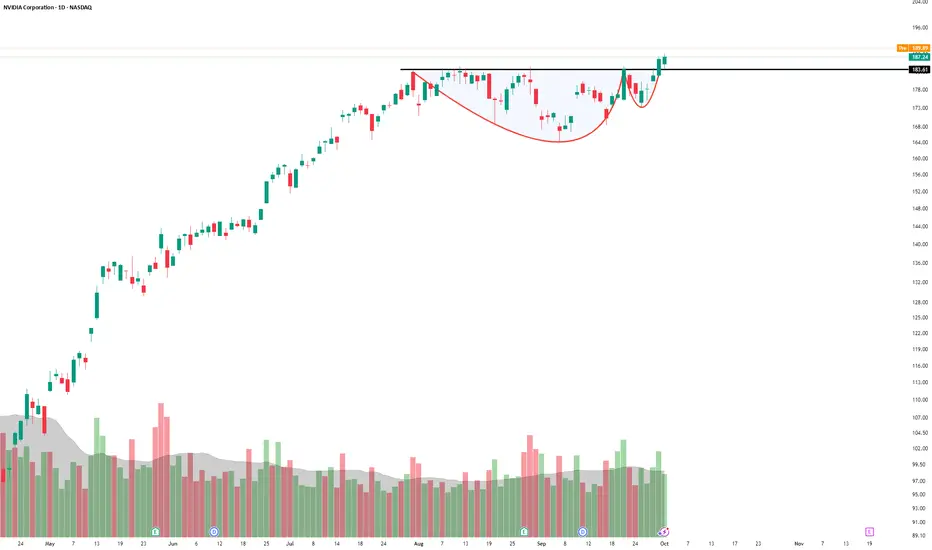
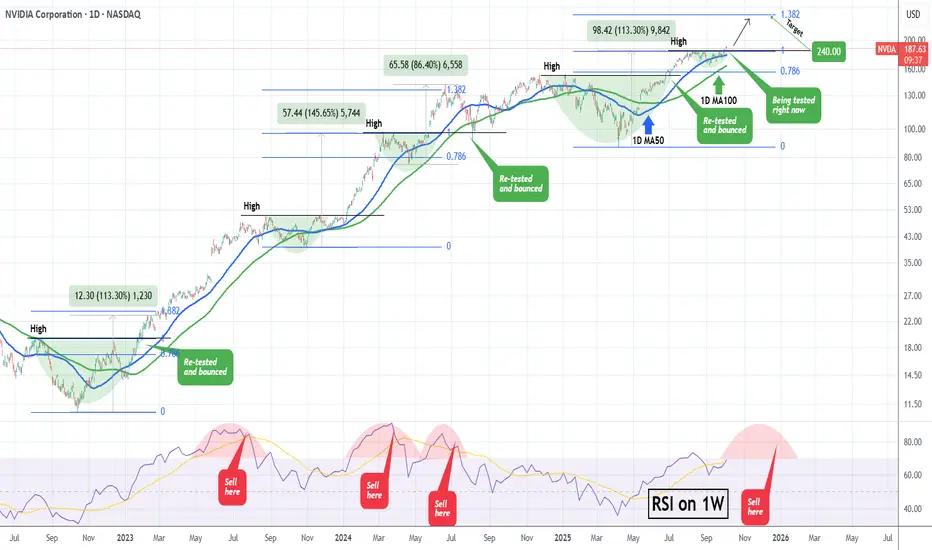
NVIDIA What happens when it retests a Resistance after a break?NVIDIA Corporation (NVDA) has been on a strong rise since the mid-term September 05 Low and this week finally broke above its previous $184 High. During the current Bull Cycle (since the October 2022 bottom), every time the price broke above a previous High and re-tested it as a Support, it started a secondary rally to new Highs.
Technically, as long as the 1D MA100 (green trend-line) holds, we should see at least a 1.382 Fibonacci extension test, similar to the February 2023 and June 2024 Highs. As a result, once the current former High / Resistance level finishes getting re-tested, we expect an end-of-the-year rally to $240.
Additionally, we will keep an eye on the 1W RSI. Typically, once it gets massively overbought above 85.00 and then starts to decline within an Arc peak formation, the time to Sell is after the middle of that Arc.
-------------------------------------------------------------------------------
** Please LIKE 👍, FOLLOW ✅, SHARE 🙌 and COMMENT ✍ if you enjoy this idea! Also share your ideas and charts in the comments section below! This is best way to keep it relevant, support us, keep the content here free and allow the idea to reach as many people as possible. **
-------------------------------------------------------------------------------
💸💸💸💸💸💸
👇 👇 👇 👇 👇 👇
NVDA
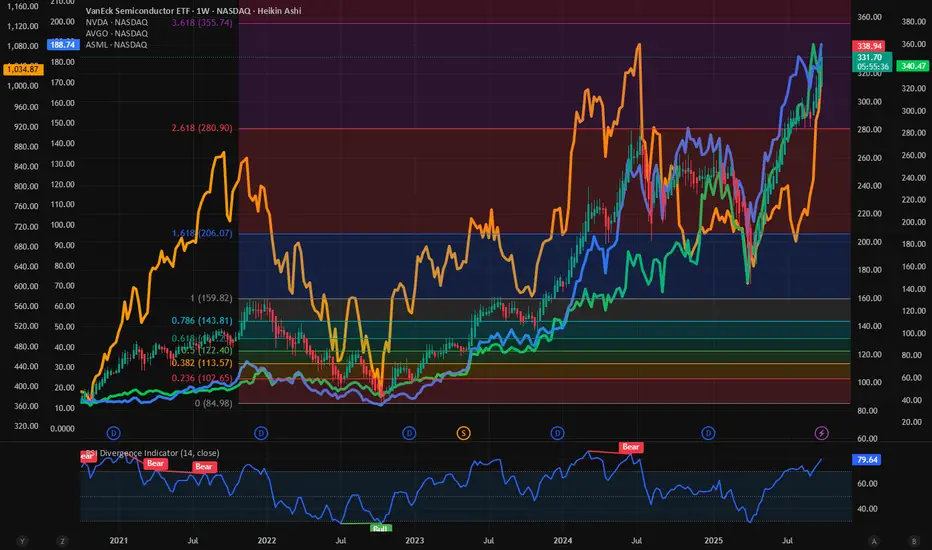
$NVDA & $AVGO powering higher. $ASML to 1000 $. $SMH has wings.A quick update on our favorite sector and the favorite stocks within the sector before we go to the weekend. Previously in this space multiple times we have provided price targets on the Semiconductor sector ETF NASDAQ:SMH and the individual stocks like $NVDA. NASDAQ:AVGO and $ASML. We have reiterated our targets for NASDAQ:SMH and the stocks multiple times. In fact, NASDAQ:SMH is above my long term target which is bullish.
NASDAQ:NVDA rolling over. NASDAQ:SMH looks vulnerable for NASDAQ:NVDA by RabishankarBiswal — TradingView
NASDAQ:AVGO above its previous ATH and holding on. 400 $ reachable. for NASDAQ:AVGO by RabishankarBiswal — TradingView
NASDAQ:ASML : Is the stock primed for upside? Indicators are aligned. for EURONEXT:ASML by RabishankarBiswal — TradingView
We stick to our targets from the posts above. NASDAQ:NVDA to 250 $. AVGO to 400 $ and ASML to 980 $ - 1000 $. New target NASDAQ:SMH to 360 $ to 3.618 Fib level.
Verdict: Semis have a good momentum. Stay long and strong. NASDAQ:SMH to 360 $ before year end.
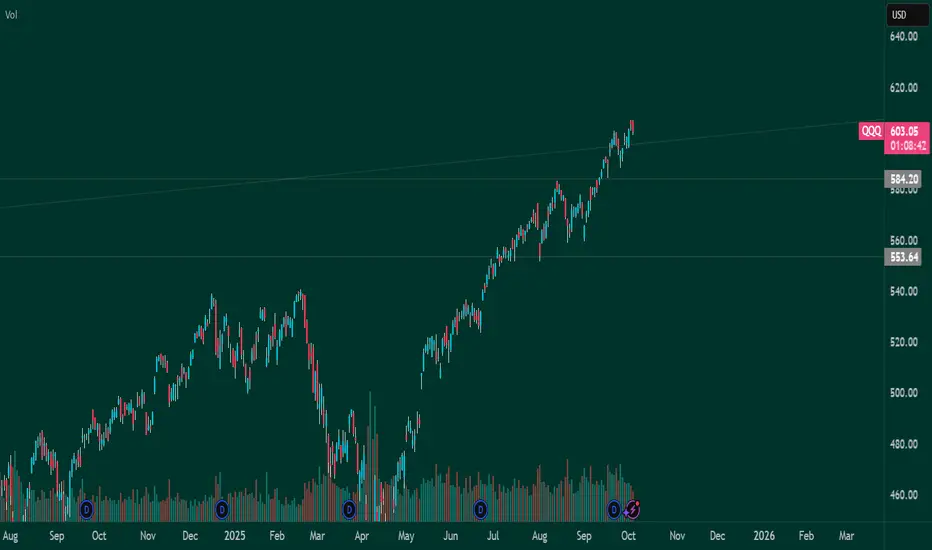
Exness: The Convergence of Tech GiantsThe initial phase of the artificial intelligence (AI) rebound was driven by narrative and momentum; merely being associated with AI was enough to push up valuations. Now, we are entering a more mature phase where investors will demand tangible results and will penalize specific strategic missteps or unmitigated risks.
Although the AI theme remains dominant, news from specific companies is now triggering significant and differentiated reactions. For example, Apple is adjusting its entire AR/VR strategy due to product-specific difficulties, while Meta is grappling with an existential regulatory battle unrelated to its AI development. This differentiation means the market is beginning to distinguish between "AI beneficiaries" and "AI players who need to prove themselves."
Simply being among the "Magnificent Seven" is no longer enough; companies must now demonstrate their ability to navigate their unique challenges—be they competitive, regulatory, or operational.
Therefore, the next phase of the Nasdaq 100's performance will depend on how these individual giants execute their specific strategies, making company-level analysis more critical than ever.
NVIDIA's AI Empire: Solidifying the Moat or Building a House of Cards?
Nvidia recently announced a strategic cooperation intent, planning to invest up to $100 billion in OpenAI. This investment is closely linked to the deployment of at least 10 gigawatts of Nvidia systems, aimed at supporting OpenAI's next-generation AI infrastructure, with the first phase using its Vera Rubin platform by 2026. This is not just an investment; it's a self-reinforcing business cycle. Nvidia provides funding to OpenAI, and OpenAI then uses these funds to purchase Nvidia's core products (GPUs, networking systems), thereby effectively securing a large and long-term order channel, injecting strong momentum into both parties' revenue growth.
However, this arrangement has also drawn critical perspectives, arguing that it constitutes "The Infinite Money Glitch." Analysts have compared it to Cisco Systems' practices during the dot-com bubble, when Cisco provided funding to telecom companies to purchase its routers, a strategy that amplified the subsequent market collapse.
The risk is that Nvidia may be artificially inflating its own demand, which would make it very vulnerable if the AI capital expenditure boom slows down or OpenAI's business model encounters problems.
This investment can also be seen as a defensive move, aimed at preventing OpenAI from developing its own custom chips or deepening its cooperation with competitors like Broadcom, with whom OpenAI has already signed a $10 billion order.
Apple's Pragmatic Shift: From Vision to Sight
Recent reports confirm that Apple is pausing its planned overhaul of the Vision Pro headset to reallocate resources and accelerate the development of AI-powered smart glasses. The logic behind this strategic shift is that the Vision Pro, launched in February 2024, has struggled to maintain sales momentum due to its high price of $3,499, physical weight, and limited content ecosystem, leading to waning consumer interest.
This shift is a pragmatic admission by Apple that the path to the mass market lies in a different product form factor. According to the new roadmap, Apple is reportedly developing at least two models: a simpler display-less version (N50) that connects to the iPhone, and a more advanced version with an integrated display that directly competes with Meta's products. The development timeline is being accelerated, with a possible release as early as next year.
This strategic shift is less about abandoning spatial computing and more about finding a viable mass-market vehicle to counter its "AI laggard" label and establish a new, Apple-controlled AI platform.
Despite the launch of "Apple Intelligence," Apple is still widely considered to be playing catch-up in the generative AI field compared to Google and OpenAI.
Meta's Ambitious: Software to hardware while defending the core.
In this race, Meta is clearly in the lead. It has collaborated with Ray-Ban to launch multiple generations of smart glasses, and has introduced the $800 Ray-Ban Display, its first consumer model with a built-in screen. They are setting the pace, forcing Apple to react. However, at the same time, Meta's core advertising business is facing unprecedented and escalating legal attacks in the EU. This includes a €550 million lawsuit filed by over 80 Spanish media organizations, accusing it of unfair competition; similar lawsuits exist in France; and its "consent or pay" model faces fundamental challenges under GDPR and the Digital Services Act (DSA).
Meta's aggressive push in smart glasses and the metaverse is not just a pursuit of new growth, but a strategic necessity driven by the existential threat to its underlying advertising business model. Meta's primary revenue and profit engine – personalized advertising based on user data – is facing fundamental, systemic challenges in one of its largest markets (the EU). This regulatory pressure creates a powerful incentive for it to develop new platforms (such as smart glasses operating systems) where Meta can control the ecosystem, set data collection rules, and build new, diversified revenue streams (e.g., hardware sales, AR app stores).
Therefore, succeeding in this new hardware race is not only an offensive growth strategy, but also a crucial defensive move to reduce the company's reliance on a business model that is increasingly untenable from a regulatory perspective.
Microsoft's Quiet Restructuring for the Future of its AI Center
Microsoft has undergone a major internal reorganization to strengthen its focus on AI. This includes the appointment of Judson Althoff as CEO of the commercial business, a move explicitly aimed at allowing CEO Satya Nadella to focus on high-level technical work in AI, data center architecture, and product innovation. Meanwhile, the company has for the first time since 2018 unified its Windows engineering division under one leader, Pavan Davuluri. The clear goal is to accelerate the realization of Windows as an "Agentic OS" – an AI-driven operating system that can proactively perform tasks for users.
Microsoft's strategy is fundamentally different from Apple's and Meta's. Instead of chasing new consumer hardware categories, Microsoft is doubling down on its existing enterprise and operating system strongholds, deeply integrating AI into the fabric of its core products to increase user engagement and drive consumption within its ecosystem. Recent news from Microsoft is not about novel gadgets, but about organizational structure and a long-term operating system vision. The changes in commercial leadership are to optimize the sales process for AI-enhanced enterprise services (such as Azure AI and Microsoft 365 Copilot). The changes in Windows are to redefine the core PC experience in the age of AI.
This is a lower-risk, more defensive strategy. They are not trying to create a new market from scratch, but rather are using AI to fortify their existing multi-trillion-dollar enterprise and consumer software moats. The measure of Microsoft's success will not be hardware sales units, but rather Azure consumption growth, Copilot subscription numbers, and increased enterprise license value.
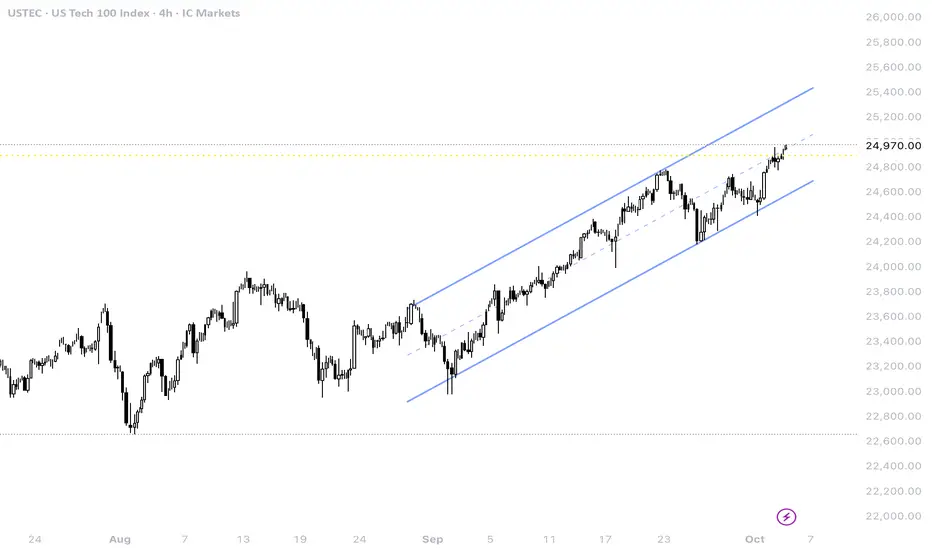
USTEC reached the 100% Fibonacci Extension at around 24955 before retracing. The index awaits a potential breakout from the range of 24800-24955.
If USTEC breaks above 24955, the index may test the 161% Fibonacci Extension at around 25265.
Conversely, returning below 24700-24800 may lead to a retest of EMA21 and the channel’s lower bound.
Combining the above analysis, the performance of the Nasdaq 100 index will be the ultimate resultant force of these competing powers. This ecosystem is interconnected: Nvidia's ability to execute its large-scale infrastructure construction is the foundation for the AI ambitions of companies like Microsoft and Meta. The success of Apple's and Meta's hardware battle will define the next major consumer computing platform and create new ecosystems. Microsoft's solid position in the enterprise sector provides a stabilizing force, while Meta's regulatory battles in Europe remain the most significant idiosyncratic risk facing a major component of the index.
This is not a prediction, but a guide to what matters most in the coming quarters:
For Nvidia: Track gross margins for its Blackwell and upcoming Vera Rubin platforms and any comments on pricing power. Watch for any official regulatory investigations initiated by the US or EU regarding its partnership with OpenAI and its ecosystem impact.
For Apple and Meta: Sales data in the first 6-12 months after the launch of any new smart glasses, and more importantly, user engagement metrics will be crucial. The quality and capability of Apple's revamped Siri (Project Linwood) upon full release will be a key leading indicator of its AI competitiveness.
For Meta (EU): Rulings in media lawsuits in Spain and France will be key (the trial in Spain is scheduled for October 2025). Any decision invalidating the "consent or pay" model would force a fundamental restructuring of its European operations and could have significant financial implications.
For the Macro Environment: Monthly non-farm payroll reports are key data points. A sustained trend below expectation would significantly increase the probability of a recession and could outweigh the positive sentiment from potential interest rate cuts, shifting market focus from valuation support to fundamental earnings risk.
By Eric Chia, Financial Market Strategist at Exness
Gold Sell Cont.Gold reached a low of 3819 yesterday during NY opening. Gold rebounded to a critical resistance zone at 3864. Bulls seem to be struggling as an instance rejection occurred. I believe gold will continue lower to the support zone of 3800 where I will look for a break downward. Or a rebound back towards 3880 if the 3800 support fails. If 3750 fails we may see a dramatic increase in sell pressure.
- Goodluck, this is not financial advice.
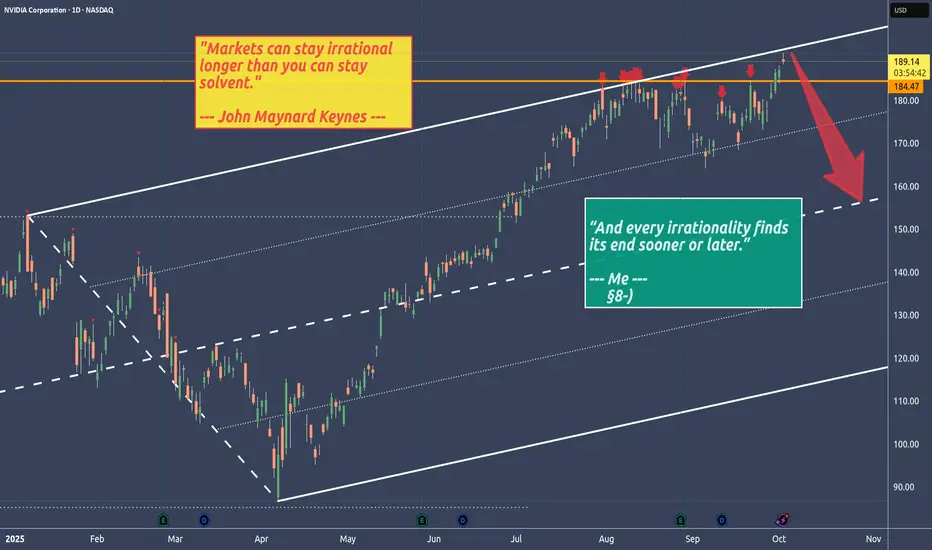
NVIDIA - Stalking NVDA with a short trade in mind🔱 Second approach to crack the U-MLH 🔱
No matter how irrational markets get, sooner or later the Black Bird strikes them down.
We’re back at the U-MLH where price is stretched.
Could it trade through it?
Absolutely.
Even better would be if price trades above the U-MLH and then falls back into the fork — that would be a strong confirming short signal.
But a turn right at the U-MLH would also be a heads-up for me.
👉 Stalking NVDA with a short trade in mind.
The AI Bubble's Final Act II: The Convergence TightensRetail flushed. Institutions trapped. The Fed flying blind. Welcome to October.
The AI Bubble's Final Act II: The Convergence Tightens
Why the AI Bubble Narrative Just Got Its Lehman Moment
This post is a direct sequel to my September thesis: If you haven’t read that, start there⬇️ - this builds on the trigger map 🗺️.
The BLUEBERRY:SP500 continues hovering near cycle highs at 6,700, but structural cracks are widening beneath the surface. The AI-led rally driven by NASDAQ:NVDA $100 billion commitment to OpenAI shows classic signs of saturation: volume decay, RSI divergence, and what analysts are now calling "circular financing." Nvidia invests $100 billion in OpenAI, which then turns around and spends it back on Nvidia chips - this is the capex circularity that marks bubble peaks.
With the U.S. government shutdown now confirmed as of October 1, 2025, macro liquidity stress adds a critical new layer of fragility. This aligns perfectly with our thesis: August CME:BTC1! top + September 30 shutdown = narrative inflection zone. I remain cautious on TVC:SPX upside and alert for volatility expansion.
Cycle echoes from 2007-2008 are in play. The boom is fragile. The Fed now faces a critical blindfold - key data streams are frozen mid-cycle. Without payrolls, inflation prints, or consumer metrics during the shutdown, policy decisions risk catastrophic miscalibration at the exact moment when precision matters most.
🧭 Why This Convergence Matters
I am not claiming that IG:BITCOIN and SP:SPX are traditionally correlated - even though the chart shows an eerily close alignment over the past decade. I'm mapping trigger timing across asset classes - the simultaneous exhaustion of different market participants:
BTC top (August 2025) = Retail exhaustion. The most speculative, leveraged traders have already been flushed out. When crypto peaks first, it signals risk appetite is rolling over.
SPX stall (September 2025) = Institutional fragility. The "smart money" that rotated from crypto into AI stocks is now trapped at peak valuations with nowhere left to rotate.
Shutdown (October 1, 2025) = Macro blindfold. Just as markets need maximum visibility, the government turns off the economic data dashboard. The Fed is flying blind.
Together, they form a convergent signal - just like Lehman + SP:SPX top + credit freeze in September 2008 . These weren't correlated, they were coincidental triggers that revealed the same underlying disease: excess leverage meeting liquidity shock.
📌 The Three Inflection Markers
🔹 Nvidia's $100B Commitment to OpenAI
📆 Date: September 22, 2025
Details: NASDAQ:NVDA pledged up to $100 billion to deploy 10 gigawatts of AI infrastructure for OpenAI progressively, marking peak capex saturation in the AI infrastructure buildout.
The Circular Financing Problem: Think of it like a closed-loop economy where the same money keeps circulating without creating real external demand. NASDAQ:NVDA invests $100 billion in OpenAI, which OpenAI then gives back to NASDAQ:NVDA for chips and infrastructure. This isn't wealth creation, it's musical chairs with capital. When the music stops, the question becomes: who's actually making money selling AI services to end customers?
Echo: Mirrors NASDAQ:CSCO dot-com era infrastructure frenzy, when telecom companies borrowed billions to buy Cisco equipment, creating the illusion of sustainable demand until the debt bubble popped.
🔹 The Cisco Precedent: When Infrastructure Investment Becomes Speculation
📆 Date: March 27, 2000
Peak Valuation: ~$550 billion - briefly the most valuable company in the world
The Story: During the dot-com boom, everyone "knew" the internet would change everything. They were right. But NASDAQ:CSCO still crashed 70%+ and never regained its 2000 peak even 25 years later.
Why? Capex-driven euphoria created demand that didn't exist organically. Telecom companies and startups borrowed money to build infrastructure faster than actual usage could justify. When funding dried up, demand evaporated overnight, leaving NASDAQ:CSCO with inventory, overcapacity, and shocked investors.
2025 Parallel: Everyone "knows" AI will change everything. They're probably right. But that doesn't mean NASDAQ:NVDA at current valuations survives the transition. The infrastructure buildout is running ahead of monetizable demand - classic late-cycle behavior.
🔹 U.S. Government Shutdown - The Macro Blindfold
📆 Start Date: October 1, 2025 at 12:01 AM
Trigger: Congressional deadlock over partisan spending bill and healthcare provisions
The Economic Data Blackout: During shutdowns, critical federal data releases get delayed or suspended:
Bureau of Labor Statistics (jobs reports, unemployment, wage data)
Bureau of Economic Analysis (GDP, consumer spending, inflation components)
Census Bureau (retail sales, construction, housing data)
Federal Reserve inputs for policy decisions
Why This Is Catastrophic Timing: The Fed is trying to navigate a soft landing while cutting ECONOMICS:USINTR rates with unemployment ECONOMICS:USUR rising. That requires precise, real-time data. Instead, they're getting a multi-week (or multi-month) information blackout at the exact moment when leading indicators are rolling over. It's like turning off your GPS while driving through a construction zone at night.
Historical Parallel - 2008: Bear Stearns collapsed in March 2008, but the Fed thought they'd contained it. Lehman failed in September because policymakers were operating on lagged, incomplete data about how quickly the contagion was spreading. The shutdown creates a similar fog of war.
The Convergence Thesis: Three Dominoes, One Direction
These three events aren't causing each other - they're revealing the same underlying condition: peak leverage meeting exhaustion.
1️⃣ Stage 1 (August): Retail speculators in crypto get wiped out first. BTC tops at $109K, starts rolling over. This is the canary in the coal mine - the most risk-seeking capital runs out of buyers.
2️⃣ Stage 2 (September): Institutional money realizes the AI trade is overcrowded. Nvidia's circular financing deal with OpenAI triggers analyst warnings about an AI bubble. Smart money starts quietly rotating to cash and defensives, but the indexes stay elevated due to passive flows and concentration in mega-caps.
3️⃣ Stage 3 (October): Government dysfunction removes the Fed's ability to respond quickly or accurately. Markets lose confidence that policymakers can even see the problems, let alone fix them. Volatility expands as uncertainty compounds.
Think of it like a forest fire. INDEX:BTCUSD was the dry brush catching first. The AI stocks are the trees - bigger, but still combustible. The government shutdown is the wind that accelerates the spread. You don't need correlation between brush, trees, and wind to know the conditions are perfect for disaster.
What Happens Next: The Three Scenarios
🟠 Scenario 1: Controlled Decline (45% probability)
Shutdown resolved within 2-3 weeks
SP:SPX corrects to 6,400-6,200 range (-5 to -10%)
Fed pauses cuts, reassesses within Q4
Market stabilizes but stays defensive through year-end
This is the "best case" - pain, but manageable
🔵 Scenario 2: Accelerated Unwind (40% probability)
Shutdown extends 4+ weeks, economic data gap widens
SPX breaks 6,000, triggers algorithmic selling cascade
Target: 5,200-5,500 range (-20 to -25%)
Credit spreads widen, corporate debt refinancing concerns emerge
This is my base case - the scenario I'm positioned for
🔴 Scenario 3: Systemic Event (15% probability)
Shutdown coincides with unexpected credit event (corporate default, regional bank stress)
Multiple margin calls and forced liquidations
SPX crashes to 4,500-4,800 range (-30 to -35%)
Fed emergency intervention required (rate cuts, QE restart)
Low probability, but non-zero - the true "black swan" outcome
📊 Technical Setup: The Chart Doesn't Lie
Current Level: 6,700 (near all-time highs)
Key Support Levels:
6,200: Previous resistance turned support - first real test
5,800: 200-day moving average - psychological line in sand
5,200: Fibonacci 38.2% retracement - institutional rebalancing zone
4,500: 2024 breakout level - panic capitulation target
⚠️ Warning Signals Already Visible:
Market breadth deteriorating (fewer stocks making new highs)
Defensive sectors outperforming (utilities, healthcare, staples)
Credit spreads starting to widen (HYG/TLT ratio declining)
VIX base level rising from 12 to 16+ (fear premium expanding)
The Bottom Line: Risk/Reward Is Clear
At SP:SPX 6,700 with the Fed flying blind, AI capex circularity exposed, and retail already flushed from crypto CRYPTOCAP:TOTAL , the risk/reward for long positions is terrible. You're risking 10-15% to potentially gain what - another 3-5% before reality hits?
Smart money is raising cash, buying volatility, and preparing shopping lists for when quality names trade at distressed prices. The convergence of COINBASE:BTCUSD top, NASDAQ:NVDA circular financing peak, and government shutdown isn't causing a crisis - it's revealing that we're already in the early stages of one.
August was the warning. September was the setup. October is the trigger.
The market doesn't need to crash tomorrow, but the margin of safety has disappeared. When the next shoe drops - earnings disappointment, credit event, geopolitical shock, employment spike - there's no cushion left. Only air.
Position accordingly.
Until the next trigger - Nicholas.
Disclaimer: This post reflects my personal views and analysis. It is not financial advice. Please do your own research and manage risk accordingly.
NVIDIA – From Thesis to Profits: How Fundamentals & Technicals 📚💡 NVIDIA – From Thesis to Profits: How Fundamentals & Technicals Aligned 🚀🧠
This isn’t just a trade —it’s a lesson in how conviction, timing, and structure come together when you truly understand what you're investing in.
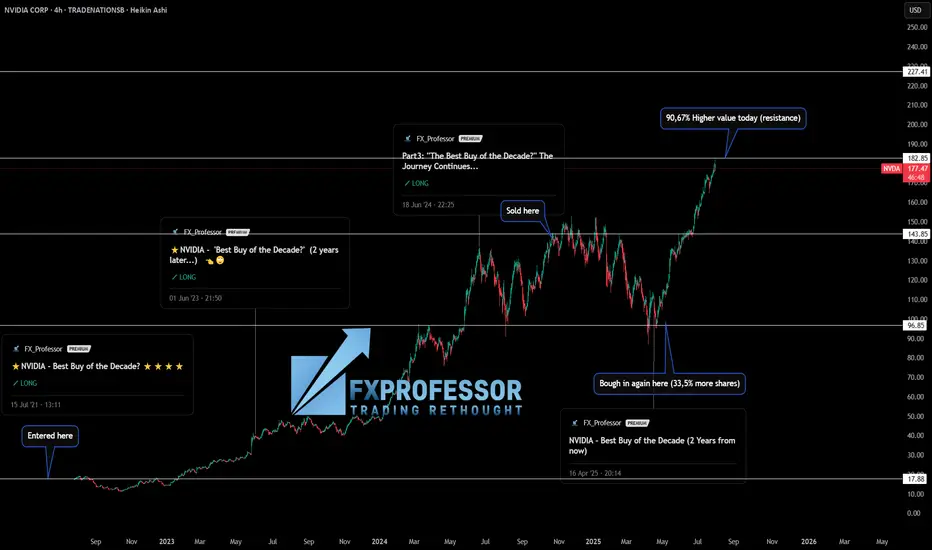
I’ve been publicly calling NASDAQ:NVDA the “Best Buy of the Decade” since July 2021 when the price was around $18. Why? Because I’m a gamer, I understand chips, and I knew exactly what NVIDIA was building long before AI became a buzzword. From graphics cards to data centers and AI compute, the fundamentals were solid.
But let me be clear: I’m not a holder forever. I use technical analysis to manage entries and exits. And that’s where the real edge comes in. 🎯
Here’s how the trade evolved:
✅ Initial entry: $17.88 (2021)
✅ First target hit: $143.85 → Took profits
✅ Re-entry: $96.85 → Got 33.5% more shares for the same money
✅ Today’s value (July 31st): Up +90.67% in just 100 days
📅 That’s from April 23rd to today.
(and it was ALL publicly posted here, for You!)
This is what happens when macro conviction meets micro execution.
🧠 The key takeaways:
Fundamentals gave me the why.
Technicals gave me the when.
And risk management gave me more shares for free.
That’s not luck —it’s structure, patience, and doing the work. If you’re just “HODLing” and hoping, consider learning how to work the chart instead of letting the chart work you.
Let me know in the comments—did you catch this move? Are you in, or waiting for the next entry?
One Love,
The FX PROFESSOR 💙
ps. in this case i did not sell many shares today i hedged with a short on SP500. Nvidia might correct a bit
Disclosure: I am happy to be part of the Trade Nation's Influencer program and receive a monthly fee for using their TradingView charts in my analysis. Awesome broker, where the trader really comes first! 🌟🤝📈
Gold Double Top ATHThe all-time high forecast earlier this year by Goldman Sachs was 3,700 with an exhaust level of 3,880. I believe we will see a double top formation around 3,871 and 3,880. I do think we will see resolve before a government shutdown and this is a buy the rumor sell the news event on most USDATA coming this week. Good luck!
-This is not financial advice
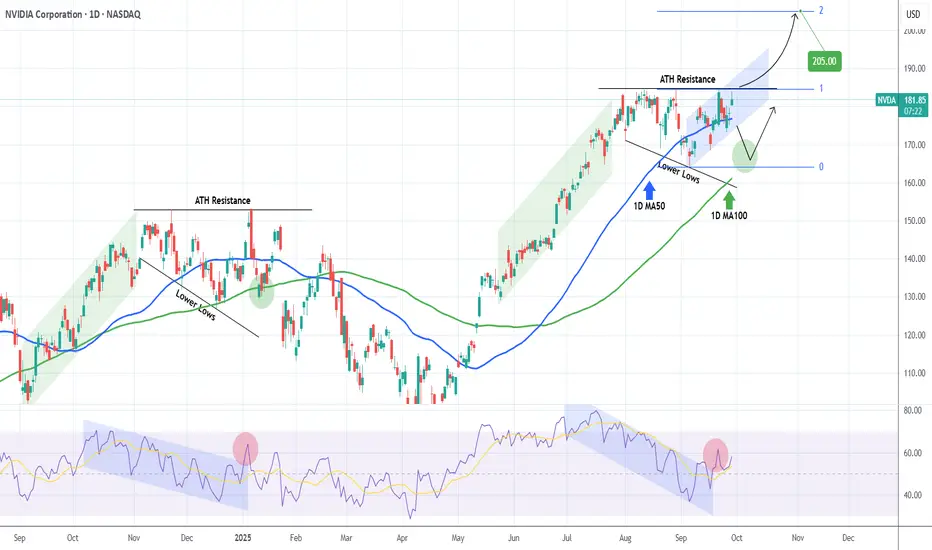
NVIDIA Will it finally make a new ATH?NVIDIA Corporation (NVDA) almost hit today its All Time High (ATH), which is currently its Resistance level. That is technically the top of a Descending Triangle pattern that the stock has been trading in since the start of August.
The last time we saw a similar pattern was during NVDA's previous ATH formation in November 2024 - January 2025. Identical price actions as well as 1D RSI sequences among the two fractals.
Based on that, we should be past a January 07 2025 ATH Resistance rejection, which targeted the 1D MA100 (green trend-line) before the next bounce. As a result, until the current ATH Resistance breaks, we should technically see a pull-back towards $166/67.
This time however, there is a strong case for a ATH break-out as the price is trading within a short-term (blue) Channel Up. As long as this holds, it can keep making Higher Highs, with the next one technically aiming above the ATH Resistance.
In any case, if that level breaks, we expect the price to target the 2.0 Fibonacci extension at just above $200.
-------------------------------------------------------------------------------
** Please LIKE 👍, FOLLOW ✅, SHARE 🙌 and COMMENT ✍ if you enjoy this idea! Also share your ideas and charts in the comments section below! This is best way to keep it relevant, support us, keep the content here free and allow the idea to reach as many people as possible. **
-------------------------------------------------------------------------------
💸💸💸💸💸💸
👇 👇 👇 👇 👇 👇
NVIDIA – Enormous Pressure After Reaching the Stretch LevelBetween July 31 and August 13, price kept nagging at the white U-MLH,
but there wasn’t enough strength to break through.
From there, price began to drift lower, pressing against the red U-MLH.
The close last Friday failed to break below the red U-MLH –
a clear sign of weakness!
If the green mini-trendline gives way and the white ¼-Line moves above price as well,
NVDA could be ripe for a short setup.
Let’s stalk the trade.
NVDA: Undervalued AI Chip Leader Amid #YoungInvestorPortfolio?NVDA: Undervalued AI Chip Leader Amid #YoungInvestorPortfolio? $209 Target in Sight? 🚀
NVDA trades at $178.19 (+1.45%), undervalued with dominant AI GPU demand tying into Reddit young investor buzz on portfolios—analysts forecast average $209 target, 17% upside from robust data center growth, questioning if Blackwell rollout sparks breakout. 📈
**Fundamental Analysis**
EPS $3.51 ttm with revenue $165.218B and 71.55% YoY growth; P/E 52.56 reflects relative undervaluation in high-growth tech, DCF models indicate 15-20% intrinsic premium on AI expansions.
- **Positive:** Leading AI market share; strong cash flow generation.
- **Negative:** High capex demands; supply chain vulnerabilities.
**SWOT Analysis**
**Strengths:** Innovative GPU technology; data center dominance.
**Weaknesses:** Valuation sensitivity to growth slowdowns.
**Opportunities:** Expanding AI adoption; strategic partnerships.
**Threats:** Regulatory scrutiny; intensifying competition.
**Technical Analysis**
Chart in uptrend with strong volume support. Price: $178.19, VWAP $177.
Key indicators:
- RSI: 53 (neutral, upside potential).
- MACD: Positive signal line.
- Moving Averages: Above 50-day $170, 200-day $150 (bullish).
Support/Resistance: $170/$185. Patterns/Momentum: Ascending triangle targeting $200. 📈 Bullish.
**Scenarios and Risk Management**
- **Bullish:** AI demand surge to $200; DCA on pullbacks below $175 for averaged gains.
- **Bearish:** Chip shortages drop to $160.
- **Neutral:** Consolidates at $180 awaiting earnings.
Risk Tips: Stops at 5% below entry, limit to 2% portfolio, diversify tech exposure, DCA to handle volatility. ⚠️
**Conclusion/Outlook**
Bullish if AI trends accelerate. Watch Q3 earnings. Fits tech theme with #YoungInvestorPortfolio upside. Take? Comment!
But Ser, Wen Moon? Wen Alt Season?But Ser, Wen Moon? Wen Alt Season?
Why 2024 Was Your Alt Season (And Why the Next One Is Years Away)
The Uncomfortable Truth: Alt Season Already Happened
Everyone’s still asking “wen alt season?” The painful reality: it already came and went in 2024.
The Altcoin Season Index hit 88 in Dec 2024 - its highest since 2021 - before collapsing to 12 by April 2025 - that was your alt season. The memecoin mania, the AI‑narrative pumps, the handful of legitimate winners like CRYPTOCAP:HBAR , CRYPTOCAP:SOL (at the time of writing still up 10x from 2023 lows), CRYPTOCAP:SUI , COINBASE:SEIUSD , CRYPTO:INJUSD , CRYPTO:RENDERUSD and a few others - that was it.
CRYPTOCAP:TOTAL3ES It peaked symbolically when the President of the United States launched his own memecoin $BINANCE:TRUMPUSDT.
Pause and think about that for a minute: when the most powerful person on earth is shilling crypto memes, you’re not early anymore - you’re late.
Most people missed it because they were waiting for a 2017‑style blow‑off where everything pumped indiscriminately. Instead, 2024 was surgical: only the strongest assets with real utility or meme community power survived. The rest 95-99% of the market - stayed the same laughable junk it’s always been. This wasn’t broad‑based euphoria; it was natural selection.
Why Traditional Finance Beat Crypto This Cycle
Here’s the overlooked truth: the AI rally happened at the same time as Bitcoin’s halving rally.
Faced with a choice between dead altcoins hoping for a 2021 revival or BIVA:NVDA and BMV:MSFT printing real revenue, smart money chose AI and equities over dead altcoins. Retail followed. The AI trade sucked the oxygen out of crypto, leaving most alts gasping for liquidity.
NASDAQ:NVDA added $2.2 trillion in market cap in 2024.
NASDAQ:APP surged +758%.
NASDAQ:PLTR and NASDAQ:MSFT rode AI adoption to record highs.
INDEX:ETHUSD path tells the story: it clawed back to its 2021 highs - just enough for whales to exit three years of underwater bags. Mission accomplished. Retail still waiting for $10K ETH? Game over.
In September alone, COINBASE:ETHUSD saw it largest ETF NASDAQ:ETHA outflow and this money didn't go to alts it was out of the market - Institutions don’t rotate into alts - they rotate out of crypto entirely...
The Institutional Playbook vs. Retail Delusion
The 2024–25 rally was institutional, not retail.
BlackRock’s iShares Bitcoin Trust NASDAQ:IBIT has seen $60B+ inflows since Jan 2024, holding ~756,000 BTC.
Fidelity’s CBOE:FBTC holds ~$22B.
Together, they dominate >70% of U.S. ETF flows.
When Blackrock NYSE:BLK and Fidelity CFI:FBTC buy billions in Bitcoin ETFs, they’re not chasing 100x moonshots. They’re happy with 2–3x on massive positions. In institutional terms, a 5x is a career‑making home run.
This isn’t 2017 or 2013 anymore. Crypto is a multi‑trillion dollar ecosystem where retail’s few thousand dollars are statistical noise. The old playbook - “Bitcoin pumps, then alts follow” - is dead - it assumed retail drove the cycle. Today, institutions hold the keys, and like i said they don’t rotate into your favorite altcoin. They rotate into other asset classes entirely.
The Timing Mismatch: Why Q4 Narratives Are Dead Wrong
Veterans keep calling for a Q4 2025 blow‑off top, stuck on the 2013/2017 template. But this cycle is different:
The 4th halving was April 19, 2024 - not May.
IG:BITCOIN typical 1.5‑year post‑halving peak landed in Q3 2025 (~$124K), not Q4.
The cycle is already complete.
Altcoins only thrive when IG:BITCOIN highs are fueled by retail FOMO and leverage. This cycle was powered by measured institutional accumulation. Without retail mania, alts had no fuel. The few that did pump ( CRYPTOCAP:HBAR , CRYPTOCAP:SUI , CRYPTOCAP:SOL , BINANCE:RENDERUSDT ) had real narratives or tech advantages. In a mature market, only quality survives.
The Next Real Alt Season: Q4 2026 and Beyond
Here’s the contrarian call: the next true alt season won’t arrive until Q4 2026 at the earliest.
Why? Because it will take a global financial crisis bottom, central banks printing like mad, and risk appetite returning before crypto regains its role as the speculative playground. That’s when we’ll see a decade‑long melt‑up that makes 2017 look quaint.
By then, 95% of today’s projects will be gone. Regulation will be clearer. Infrastructure will be mature. The survivors of this purge will form the foundation of the next supercycle. But first, the forest fire has to clear the dead wood.
What This Means for Your Bags
If you’re still holding 2021 altcoins waiting for a miracle, you’re fighting the last war. Smart money has rotated out. Retail is exhausted. Institutions aren’t coming to save your bags.
Most alts will bleed slowly into irrelevance - not with dramatic crashes, but with grinding decline as liquidity and attention flow elsewhere. The few survivors will be those with genuine utility, strong teams, and institutional interest. Everything else is destined for zero.
The New Playbook: Cash Is King
For the next 12–18 months, the winning strategy isn’t catching falling knives. It’s preservation of capital and patience. Hold cash. Maybe some Bitcoin as a hedge. Wait for the real bottom - when fear replaces hope and quality trades at fire‑sale prices.
The casino days are over. The market has grown up. And grown‑up markets don’t hand out infinite money glitches to anyone with an internet connection. The future belongs to those who adapt to the new rules - not those who keep playing by the old ones.
Bottom line: Alt season already happened in 2024. The next one won’t come until 2026+. Plan accordingly.
EUR USD AUD NVDA MSFT AVGO S&P500 BTC XRP Weekly InsightsIn this video, we dive into the key market movements and outlooks for major financial instruments over the past week. Highlights include:
Analysis of currency pairs: EUR/USD and AUD
Trends and technical setups for leading tech stocks: NVDA, MSFT, AAPL, AVGO
The S&P 500’s performance and what it suggests about broader market direction
Developments in cryptocurrency, with a focus on BTC and XRP
Whether you’re a trader, investor, or just interested in macro markets, this video gives you a consolidated, data-driven snapshot of where things stand and what to watch next.
NVDA NVIDIA Corporation Options Ahead of EarningsIf you haven`t bought NVDA before the previous earnings:
Now analyzing the options chain and the chart patterns of NVDA NVIDIA Corporation prior to the earnings report this week,
I would consider purchasing the 150usd strike price Calls with
an expiration date of 2025-9-19,
for a premium of approximately $13.35.
If these options prove to be profitable prior to the earnings release, I would sell at least half of them.
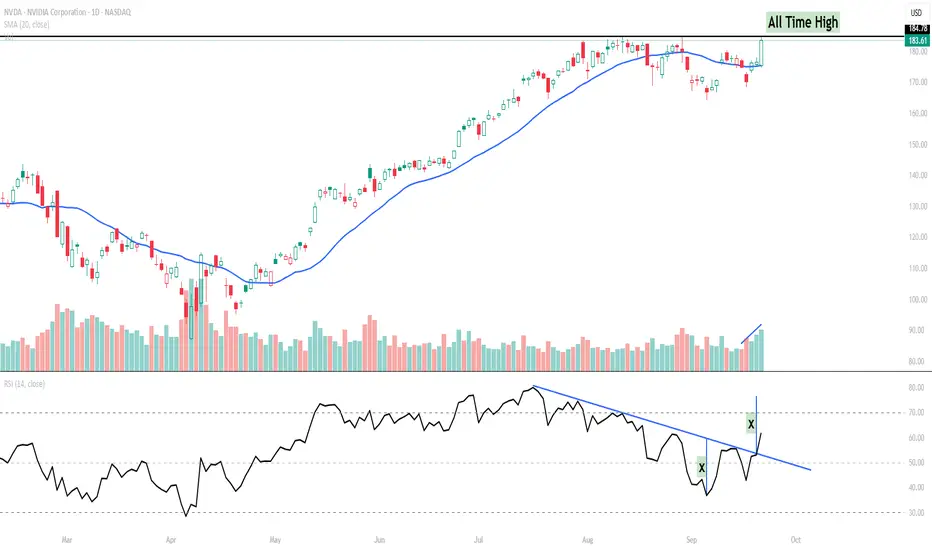
NVIDIA (NVDA) – RSI Trendline Breakout Signals Momentum Shift NVIDIA has staged a sharp move higher, reclaiming momentum after weeks of sideways-to-lower action. What makes this setup notable is not just the price, but the RSI trendline breakout.
Key Points:
RSI Trendline Breakout: The RSI broke above a descending trendline, suggesting momentum is shifting back in favour of buyers.
Volume Confirmation: The breakout coincided with a strong volume spike – often an early tell that institutions are stepping in.
Price Action: Price is now retesting the all-time high zone (~$184–185). A sustained close above this level could open the door for further upside.
Short-Term View: As long as NVDA holds above the $175–177 support zone, the bias remains bullish with potential for acceleration if RSI pushes toward the overbought zone.
Watchlist Levels:
Upside breakout trigger: $185+ (new all-time high)
Immediate support: $175
Momentum invalidation: Below $175
This is a classic case of how RSI trendline analysis can provide an early signal, often before price fully confirms the breakout.
The rocket has lifted offWith Nvidia’s investment in OpenAI, Supermicro (SMCI) is expected to benefit from increased equipment purchases, which will boost its sales and help it recover the value lost due to unfounded rumors from certain fund managers. An initial recovery of 32% is projected, with a price target of up to $100 area.
Now we have a huge Symmetrical triangle pointing to 116