
Report summary
Markets are trading a “policy-and-geopolitics” crosscurrent. On the policy side, the Fed is set up for a quarter-point cut to 3.50%–3.75% amid unusually public internal dissent, with Chair Powell aiming to minimize dissents via a “cut-and-cap” signal that raises the bar for further easing. Futures and press reporting frame this as the base case into Wednesday. Meanwhile, Kevin Hassett, now a leading candidate to replace Powell—said there is “plenty of room” to cut and that he wouldn’t bow to political pressure if he becomes Fed chair, comments that lubricate the market’s easing narrative even as they raise governance optics questions.
On the geopolitics side, the EU agreed to permanently ban Russian gas by 2027 (LNG phased out by end-2026; pipelines by Sept. 30, 2027), a structurally bullish pivot for non-Russian gas and European energy security. At the same time, Ukraine widened its strikes from refineries to Russia-linked tankers and a Black Sea export terminal that handles >1% of global flows, incrementally lifting shipping risk premia in the basin.
A third swing factor is tech policy: the White House move to let Nvidia ship high-end AI chips to China (paired with a U.S. “take” on sales) supports capex and earnings for U.S. semis but loosens a key export control, potentially accelerating Chinese AI progress and adding a strategic wrinkle for long-duration tech valuations.
Immediate market reaction and setup
Dollar gauges remain soft into the meeting: the ICE U.S. Dollar Index (DXY) March contract traded 98.85 and the front December at 99.20 on Tuesday’s close, while CME euro futures settled near $1.1632, both consistent with markets leaning dovish. Equity index futures were marginally lower on the day but near cycle highs; the S&P 500 mini closed 6,865 and the Nasdaq-100 mini 25,700 area. Barron’s notes the S&P ended last week up 0.3% with implied odds of a cut around the high-80s.
Front-end money market references also reflect an easier stance already in the price: effective fed funds around 3.89% with T-bill auctions stepping down, and the prime rate steady at 7%.
Strategic forecast (3–6 months)
The modal path is a one-and-pause profile that keeps financial conditions easy without promising a sequence of cuts. Powell’s communication objective is to bank insurance now while stressing data-dependence later, which historically tempers the dollar and supports risk until the growth or inflation data force a repricing. Internal opposition (as many as five voters leaning against a cut) limits how far the market can front-run a full easing cycle; that constraint reduces the risk of a sharp “over-easing” rally and instead argues for a grind higher in U.S. stocks and a controlled drift lower in the dollar.
In Europe, the 2027 gas ban codifies the post-’22 energy pivot; it implies higher medium-term EU investment in LNG regasification, storage and renewables, with a modest structural uplift to European industrial input costs versus pre-war norms. If Kyiv’s tanker/terminal strikes persist, Black Sea freight and insurance premia should stay elevated, nudging seaborne crude differentials and introducing episodic upside tails for Brent.
In tech, the Nvidia-to-China opening mechanically boosts near-term revenue visibility for U.S. semis and data-center supply chains but narrows the “policy risk discount” investors had assigned to China-exposed AI demand—supportive for multiples now, with longer-run strategic competition risk relocated to Washington/Beijing policy channels rather than corporate execution.
Fiscal and political implications
A Fed cut lowers the Treasury’s interest burden at the margin, but the larger story is governance optics: Hassett’s comments reinforce the Administration’s desire for lower rates while asserting central-bank independence—messaging designed to calm markets even as it underscores that personnel choices (chair succession in May) could re-tilt the reaction function. Expect Congress and oversight committees to probe any perception of political influence, especially if inflation stalls above 2%.
In the EU, the gas ban and the revised Ukraine financing plan (≈€90bn lent against frozen Russian assets over two years with guarantees) mean the Commission is taking on larger coordination and credit-risk roles. That supports defense/energy capex and preserves leverage over Moscow in parallel U.S.-Russia-Ukraine talks, but it also embeds fiscal trade-offs for member states if growth underperforms.
Risks
The near-term macro risk is a policy error on either side: cutting into sticky inflation (Dollar rebound + long rates up + equities de-rate), or signaling too hawkishly and tightening financial conditions into softening labor data. Internally divided FOMCs can amplify market volatility around each data print. Geopolitically, a prolonged Ukrainian campaign against the shadow fleet raises the probability of an insurance/liquidity shock in specific sea lanes, a risk that can leap into headline crude curves. Policy toward China’s AI ecosystem could also re-politicize tech valuations if Congress or security agencies push back.
Opportunities
For multi-asset portfolios, a “soft cut” backdrop with a weak dollar and contained energy shocks tends to favor quality U.S. equities with AI leverage, EU energy transition beneficiaries, and selectively EM FX/credit with low external funding needs. European utilities/midstream with credible capex plans into the 2027 ban, and U.S. data-center/logistics names geared to AI capex, screen well if the Fed successfully caps easing expectations rather than launching a cycle.
Asset-by-asset take
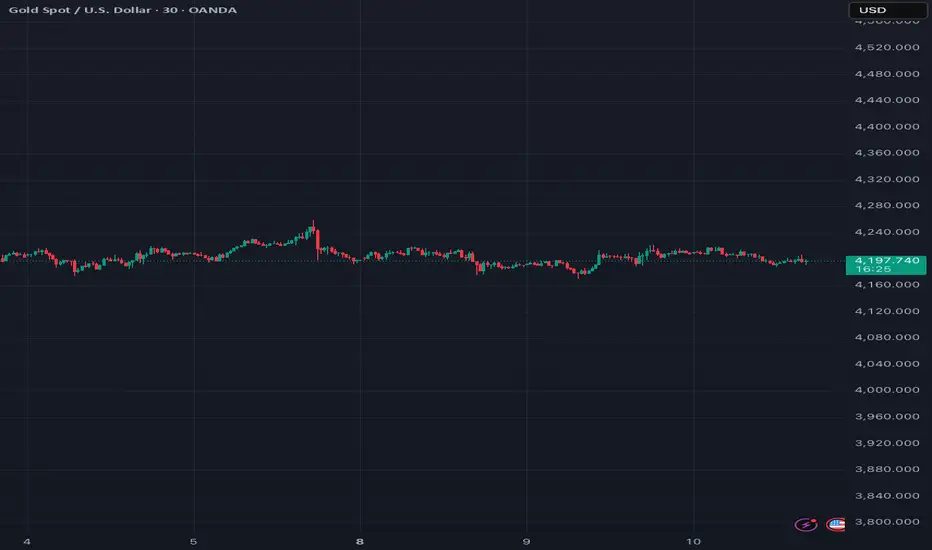
XAUUSD (Gold). A weaker DXY into a one-and-pause cut plus steady real-rate compression is supportive. With the DXY December at ~99.2 and euro futures >$1.16, gold’s upside skew remains intact provided inflation doesn’t re-accelerate post-cut. Black Sea risk adds a mild safe-haven bid. Base case: constructive with dips bought.
S&P 500. Earnings visibility improves if the cut reduces discount-rate pressure while AI capex remains robust; Barron’s shows the index near highs with a modest weekly advance. Watch for “buy the cut, fade the path” behavior if Powell pushes back on serial cuts. Quality growth and AI infrastructure remain the leadership.
Dow Jones. Cyclical tilt benefits from easier financial conditions and capex tailwinds tied to energy infrastructure and AI supply chains. Less sensitive to export-control volatility than Nasdaq; vulnerable if Fed leans hawkish and long rates back up.
USDJPY. Direction hinges on the front-end spread. A clean cut with softer guidance should pressure the dollar broadly; however, if the statement leans restrictive for subsequent meetings, the dollar could bounce. Base case: drift lower in USDJPY alongside DXY unless U.S. data re-firm. (Data backdrop: DXY sub-100; euro >$1.16.)
DXY. The path of least resistance is lower into and right after a single cut, especially with several voters already on record as uneasy—language that typically reduces the odds of a rapid easing cycle and flattens rate-vol turns. A hawkish tweak in the statement would cap downside but likely not reverse the trend unless inflation re-accelerates.
Crude oil. Kyiv’s campaign against tankers/terminals and the EU’s gas ban add modest, recurring upside tails to seaborne risk premia. Expect choppy upside in Brent/WTI led by insurance and routing costs in the Black Sea and by longer-dated demand from EU re-gas and storage projects, tempered by global growth concerns.
Markets are trading a “policy-and-geopolitics” crosscurrent. On the policy side, the Fed is set up for a quarter-point cut to 3.50%–3.75% amid unusually public internal dissent, with Chair Powell aiming to minimize dissents via a “cut-and-cap” signal that raises the bar for further easing. Futures and press reporting frame this as the base case into Wednesday. Meanwhile, Kevin Hassett, now a leading candidate to replace Powell—said there is “plenty of room” to cut and that he wouldn’t bow to political pressure if he becomes Fed chair, comments that lubricate the market’s easing narrative even as they raise governance optics questions.
On the geopolitics side, the EU agreed to permanently ban Russian gas by 2027 (LNG phased out by end-2026; pipelines by Sept. 30, 2027), a structurally bullish pivot for non-Russian gas and European energy security. At the same time, Ukraine widened its strikes from refineries to Russia-linked tankers and a Black Sea export terminal that handles >1% of global flows, incrementally lifting shipping risk premia in the basin.
A third swing factor is tech policy: the White House move to let Nvidia ship high-end AI chips to China (paired with a U.S. “take” on sales) supports capex and earnings for U.S. semis but loosens a key export control, potentially accelerating Chinese AI progress and adding a strategic wrinkle for long-duration tech valuations.
Immediate market reaction and setup
Dollar gauges remain soft into the meeting: the ICE U.S. Dollar Index (DXY) March contract traded 98.85 and the front December at 99.20 on Tuesday’s close, while CME euro futures settled near $1.1632, both consistent with markets leaning dovish. Equity index futures were marginally lower on the day but near cycle highs; the S&P 500 mini closed 6,865 and the Nasdaq-100 mini 25,700 area. Barron’s notes the S&P ended last week up 0.3% with implied odds of a cut around the high-80s.
Front-end money market references also reflect an easier stance already in the price: effective fed funds around 3.89% with T-bill auctions stepping down, and the prime rate steady at 7%.
Strategic forecast (3–6 months)
The modal path is a one-and-pause profile that keeps financial conditions easy without promising a sequence of cuts. Powell’s communication objective is to bank insurance now while stressing data-dependence later, which historically tempers the dollar and supports risk until the growth or inflation data force a repricing. Internal opposition (as many as five voters leaning against a cut) limits how far the market can front-run a full easing cycle; that constraint reduces the risk of a sharp “over-easing” rally and instead argues for a grind higher in U.S. stocks and a controlled drift lower in the dollar.
In Europe, the 2027 gas ban codifies the post-’22 energy pivot; it implies higher medium-term EU investment in LNG regasification, storage and renewables, with a modest structural uplift to European industrial input costs versus pre-war norms. If Kyiv’s tanker/terminal strikes persist, Black Sea freight and insurance premia should stay elevated, nudging seaborne crude differentials and introducing episodic upside tails for Brent.
In tech, the Nvidia-to-China opening mechanically boosts near-term revenue visibility for U.S. semis and data-center supply chains but narrows the “policy risk discount” investors had assigned to China-exposed AI demand—supportive for multiples now, with longer-run strategic competition risk relocated to Washington/Beijing policy channels rather than corporate execution.
Fiscal and political implications
A Fed cut lowers the Treasury’s interest burden at the margin, but the larger story is governance optics: Hassett’s comments reinforce the Administration’s desire for lower rates while asserting central-bank independence—messaging designed to calm markets even as it underscores that personnel choices (chair succession in May) could re-tilt the reaction function. Expect Congress and oversight committees to probe any perception of political influence, especially if inflation stalls above 2%.
In the EU, the gas ban and the revised Ukraine financing plan (≈€90bn lent against frozen Russian assets over two years with guarantees) mean the Commission is taking on larger coordination and credit-risk roles. That supports defense/energy capex and preserves leverage over Moscow in parallel U.S.-Russia-Ukraine talks, but it also embeds fiscal trade-offs for member states if growth underperforms.
Risks
The near-term macro risk is a policy error on either side: cutting into sticky inflation (Dollar rebound + long rates up + equities de-rate), or signaling too hawkishly and tightening financial conditions into softening labor data. Internally divided FOMCs can amplify market volatility around each data print. Geopolitically, a prolonged Ukrainian campaign against the shadow fleet raises the probability of an insurance/liquidity shock in specific sea lanes, a risk that can leap into headline crude curves. Policy toward China’s AI ecosystem could also re-politicize tech valuations if Congress or security agencies push back.
Opportunities
For multi-asset portfolios, a “soft cut” backdrop with a weak dollar and contained energy shocks tends to favor quality U.S. equities with AI leverage, EU energy transition beneficiaries, and selectively EM FX/credit with low external funding needs. European utilities/midstream with credible capex plans into the 2027 ban, and U.S. data-center/logistics names geared to AI capex, screen well if the Fed successfully caps easing expectations rather than launching a cycle.
Asset-by-asset take
XAUUSD (Gold). A weaker DXY into a one-and-pause cut plus steady real-rate compression is supportive. With the DXY December at ~99.2 and euro futures >$1.16, gold’s upside skew remains intact provided inflation doesn’t re-accelerate post-cut. Black Sea risk adds a mild safe-haven bid. Base case: constructive with dips bought.
S&P 500. Earnings visibility improves if the cut reduces discount-rate pressure while AI capex remains robust; Barron’s shows the index near highs with a modest weekly advance. Watch for “buy the cut, fade the path” behavior if Powell pushes back on serial cuts. Quality growth and AI infrastructure remain the leadership.
Dow Jones. Cyclical tilt benefits from easier financial conditions and capex tailwinds tied to energy infrastructure and AI supply chains. Less sensitive to export-control volatility than Nasdaq; vulnerable if Fed leans hawkish and long rates back up.
USDJPY. Direction hinges on the front-end spread. A clean cut with softer guidance should pressure the dollar broadly; however, if the statement leans restrictive for subsequent meetings, the dollar could bounce. Base case: drift lower in USDJPY alongside DXY unless U.S. data re-firm. (Data backdrop: DXY sub-100; euro >$1.16.)
DXY. The path of least resistance is lower into and right after a single cut, especially with several voters already on record as uneasy—language that typically reduces the odds of a rapid easing cycle and flattens rate-vol turns. A hawkish tweak in the statement would cap downside but likely not reverse the trend unless inflation re-accelerates.
Crude oil. Kyiv’s campaign against tankers/terminals and the EU’s gas ban add modest, recurring upside tails to seaborne risk premia. Expect choppy upside in Brent/WTI led by insurance and routing costs in the Black Sea and by longer-dated demand from EU re-gas and storage projects, tempered by global growth concerns.

Disclaimer
The information and publications are not meant to be, and do not constitute, financial, investment, trading, or other types of advice or recommendations supplied or endorsed by TradingView. Read more in the Terms of Use.
Disclaimer
The information and publications are not meant to be, and do not constitute, financial, investment, trading, or other types of advice or recommendations supplied or endorsed by TradingView. Read more in the Terms of Use.