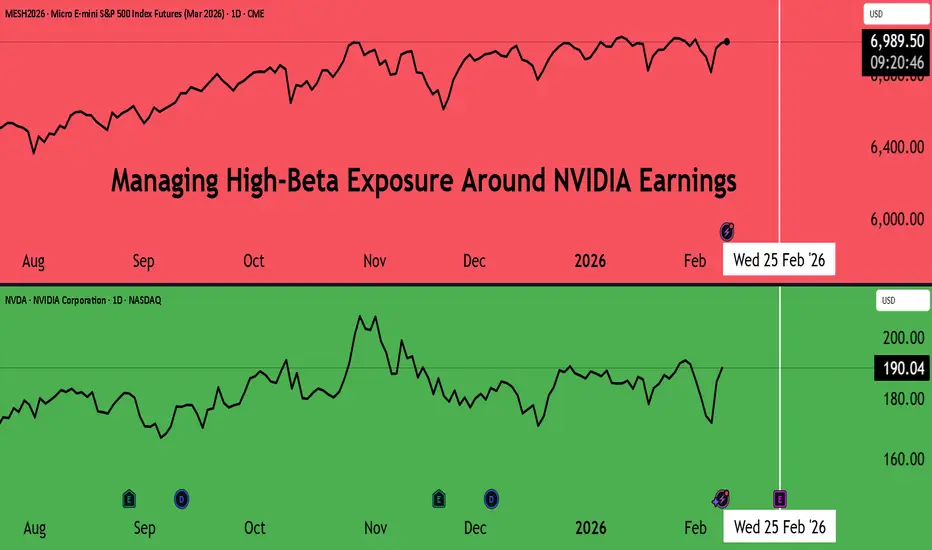
Opening (IRA): SPY January 30th 605/615/730/740 Iron Condor... for a 1.25 credit.
Comments: Structuring the setup such that the credit received is about 1/10th the width of the wings which results in the short option legs being at about their respective 10 delta strikes.
Metrics:
Max Profit: 1.25 ($125)
Max Loss/Buying Power Effect: 8.75 ($875)
ROC at Max: 14.28%
ROC at 50% Max: 7.14%
Will generally look to adjust on side test or on side approaching worthless. Am looking to take profit at .25, resulting in a 1.00 ($100) realized gain.
Beyond Technical Analysis
Can Silver Become the Most Critical Metal of the Decade?The iShares Silver Trust (SLV) stands at the convergence of three unprecedented market forces that are fundamentally transforming silver from a monetary hedge into a strategic industrial imperative. The November 2025 designation of silver as a "Critical Mineral" by the USGS marks a historic regulatory shift, activating federal support mechanisms including nearly $1 billion in DOE funding and 10% production tax credits. This designation positions silver alongside materials essential for national security, triggering potential government stockpiling that would compete directly with industrial and investor demand for the same physical bars held by SLV.
The supply-demand equation reveals a structural crisis. With 75-80% of global silver production coming as a byproduct of other mining operations, supply remains dangerously inelastic and concentrated in volatile Latin American regions. Mexico and Peru account for 40% of global output, while China is aggressively securing direct supply lines in early 2025. Peru's silver exports surged 97.5%, with 98% flowing to China. This geopolitical repositioning leaves Western vaults increasingly depleted, threatening SLV's creation-redemption mechanism. Meanwhile, chronic deficits persist, with the market balance projected to worsen from -184 million ounces in 2023 to -250 million ounces by 2026.
Three technological revolutions are creating inelastic industrial demand that could consume entire supply chains. Samsung's silver-carbon composite solid-state battery technology, planned for mass production by 2027, requires approximately 1 kilogram of silver per 100 kWh EV battery pack. If just 20% of the 16 million annual EVs adopt this technology, it would consume 62% of the global silver supply. Simultaneously, AI data centres require silver's unmatched electrical and thermal conductivity for reliability, while the solar industry's shift to TOPCon and HJT cells uses 50% more silver than previous technologies, with photovoltaic demand projected to exceed 150 million ounces by 2026. These converging super-cycles represent a technological lock-in where manufacturers cannot substitute silver without sacrificing critical performance, forcing a historic repricing as the market transitions silver from a discretionary asset to a strategic necessity.
Aggressive Entry → SL Hit → Patience Test → Trader's Reality.Today was a classic reminder of why trading is more psychology than charts.
I started the morning with an aggressive entry.
It was technically valid but not the kind of entry I usually take and it cost me a small SL.
No excuses. I took it, accepted it, moved on.
My second trade was the real setup: a clean structure breakdown.
I entered exactly as per my system… and then came the hard part: waiting.
The market went into a long consolidation.
Zero momentum.
Uncertainty everywhere.
My patience got tested, emotions kicked in, and finally when momentum came…
it tagged my break-even before running straight toward my target.
But there’s no regret.
A break-even is a win if the psychology stays intact.
I didn’t chase, I didn’t revenge trade, I didn’t lose control.
I recovered most of the morning loss and closed the day with a small hit but a stronger mind.
Some days your job is not to make money
it’s to protect your capital and your mind.
Back again tomorrow with clarity.
Gold prices adjust downwards - further consolidation.⭐️GOLDEN INFORMATION:
US officials indicated on Monday that a framework agreement with Ukrainian President Volodymyr Zelenskyy aimed at ending the war with Russia is close to completion, though key obstacles remain, including unresolved territorial issues and the absence of firm security guarantees from the US and European allies.
On the monetary front, New York Fed President John Williams said that policy is well calibrated heading into next year following last week’s rate cut, noting persistent downside risks to employment alongside easing inflation pressures, according to Bloomberg. Separately, Fed Governor Stephen Miran reiterated that current monetary settings remain overly restrictive, adding that he is likely to stay at the central bank beyond the end of his term until a successor is formally confirmed.
⭐️Personal comments NOVA:
Gold prices are consolidating and correcting around 4300 - the market is awaiting today's NFP data; the more consolidation, the greater the volatility.
⭐️SET UP GOLD PRICE:
🔥SELL GOLD zone: 4381 - 4384 SL 4388
TP1: $4370
TP2: $4355
TP3: $4340
🔥BUY GOLD zone: 4242 - 4240 SL 4235
TP1: $4255
TP2: $4270
TP3: $4285
⭐️Technical analysis:
Based on technical indicators EMA 34, EMA89 and support resistance areas to set up a reasonable SELL order.
⭐️NOTE:
Note: Nova wishes traders to manage their capital well
- take the number of lots that match your capital
- Takeprofit equal to 4-6% of capital account
- Stoplose equal to 2-3% of capital account
XAU/USD Facing Decision Time – Volatility AheadThe Gold chart shows that the price is trading near a strong resistance zone after completing several impulsive waves inside an upward channel. The structure suggests Gold is likely finishing a Wave (3) or Wave (5) near the top, where selling pressure usually appears. The recent sideways-to-down movement looks like a developing Wave (4) correction, which could lead to a deeper pullback before the next big move. If the price fails to break and hold above the resistance zone, Gold may continue lower toward the lower channel support. However, if buyers push the price higher and break above the resistance cleanly, one more upside leg could form before a larger correction. Overall, the chart signals short-term weakness inside a bigger bullish structure, so caution is needed near the highs.
Stay tuned!
@Money_Dictators
Thank you :)
Bearish Trap or Real Breakdown?Right now, we are sitting at $87,158, which puts us smack in the middle of equilibrium between the recent swing high at $94,555 and the swing low at $85,073. This isn’t just a random spot on the chart; it’s a critical decision point where the market structure is giving us distinct clues. The big development here is the CHoCH Bearish that just confirmed. For those tracking Smart Money Concepts, that is a Change of Character to the downside, meaning we have broken the sequence of higher lows. The bullish structure that held for weeks has flipped, and we need to adjust our playbook accordingly.
Let’s talk technical confluence, because when you layer the indicators, the story gets very specific. Price is trading below all three major EMAs (20, 50, and 200), creating a bearish alignment across the board. When you are below your moving average stack like this, the path of least resistance is typically down. The MACD confirms this with a deeply bearish reading of -1087, and the gap between the signal lines is widening—momentum is pointing south with conviction.
However, this is where the setup gets tricky and why you need to think two moves ahead. The RSI is hovering around 34, approaching oversold territory, and the most recent candle printed a massive 64.5% lower wick. That tells us someone stepped in to buy "fair value" with size. We are not quite at panic levels, but we are close enough that a relief bounce is absolutely on the table.
This creates a tension in the market: The structure says "sell," but the immediate momentum says "bounce." The tie-breaker here is the ADX, which is sitting at 62.7. This signals a powerful trending environment. This isn't choppy, directionless price action; when ADX is above 60, trends tend to persist. So, while the RSI warns of a bounce, the ADX says do not fight the trend without clear confirmation.
So, here is the roadmap.
The primary scenario favors a rejection at resistance. Any relief bounce from here likely runs straight into the Bearish Order Block (Supply Zone) between $89,429 and $90,617. This area is stacked with confluence: it contains unfilled sell orders, a bearish FVG, and sits just below the premium zone threshold. If we see price rally into that $89k–$90k region, it becomes a high-probability short opportunity. We would be looking for rejection signals there to target the swing low at $85,073. Break that level, and we are looking at the Bullish Order Block demand zone between $83,786 and $86,625, where I’d expect serious buying interest to finally emerge.
If you are looking to take a trade, patience is your edge here. Shorting into the hole at $87k with an oversold RSI is risky. The better risk-adjusted play is waiting for that bounce into the $88,500–$90,000 range. Your invalidation level (stop loss) is a 4H close above $90,617. If price closes above that level, it negates the bearish order block and invalidates the supply thesis.
On the flip side, if the bulls manage to reclaim $91,066 (the premium zone threshold), it triggers a CHoCH Bullish reversal. That would flip the entire structure back in favor of the bulls, targeting $94,185. But right now, with the volume running 2x the average and the internal bias sitting at neutral/bearish, that is the lower probability path.
Bottom line: The structure favors downside continuation, but only after a potential relief bounce. We have a confirmed trend shift, bearish EMA stacks, and strong volume on the decline. Don't get trapped shorting the bottom of the range, and don't get trapped longing a "dead cat" bounce. Wait for the test of supply at $90k, watch for the rejection, and trade the path of least resistance.
Confidence is sitting at roughly 75% on the bearish continuation due to the structural damage, but the oversold conditions demand we wait for better entry prices.
The Psychology of Trading in ProgressOver time, I’ve realized that having a 'great' strategy doesn’t automatically translate into money making. Focusing on strategies, tweaking rules, and searching for better setups may help, but that alone never solved the problem.
➡ BIAS
What made a bigger difference for me was understanding market bias.
Building a bias is no rocket science until we keep it simple.
In my case it is 'the simplest'.
If the market is making higher highs and higher lows, I treat my bias as bullish.
If it’s making lower highs and lower lows, I treat it as a bearish bias.
Once I started respecting this bias, trade identification became clearer- planning entries in the direction of the trend, defining my stop loss, and knowing where my targets should be. Although this part is structured, logical and I had learned to trust it, the real struggle began after that.
➡ WAITING
I have personally found waiting to be the hardest part of trading. When a few good setups pass-by without me getting filled, the mind starts forcing trades. I begin seeing opportunities that don’t fully meet my criteria, just to stay involved.
I have taken trades with wider stop losses or weaker candle structures simply because I didn’t want to miss the next move. Looking back, those trades usually weren’t necessary.
I’ve also experienced how difficult it is to sit tight once I’m in a trade. Every new candle seems to tell a different story. Small pullbacks trigger fear, and the brain’s safety mechanism kicks in, urging me to exit early or interfere with the plan.
What this experience has taught me is that every part of trading carries its own importance-building bias, planning entries, defining stop loss and targets.
But equally important is something far less visible and often ignored: the psychological side.
➡ THE PSYCHOLOGY
From my own experience, I have learnt that the psychology is often where the real edge and the real struggle actually lie.
◻ What helped me first was accepting that this problem doesn’t disappear by finding a better strategy. I tried that. Each new strategy gave temporary confidence, but the same mistakes kept repeating- early exits, forced trades, hesitation, and over-management. That’s when it became clear that the issue wasn’t on the chart, but in my response to it.
◻ One thing I consciously started doing is pre-defining everything before the trade. Once I enter, the decision-making part is already over. My stop loss and target are fixed, and I remind myself that the market is now in control, not me. This doesn’t eliminate emotions, but it reduces the damage emotions can do.
◻ I have also learnt to treat waiting as part of the strategy, not as idle time. Earlier, waiting felt unproductive, almost like I was missing out. Now, I try to see it as a filter. Every trade I don’t take is capital and mental energy preserved for a better opportunity.
◻ Another shift for me was changing how I look at missed trades. Missing a move used to feel painful, like a mistake. Over time, I’ve started telling myself that I didn’t miss the trade- the trade simply didn’t meet my conditions. This small mental reframe has helped reduce the urge to chase the next setup.
◻ During open trades, I’ve realized how noisy candles can be. Every candle can suggest a different outcome if you stare at it long enough. To deal with this, I have stopped micro-managing trades candle by candle. Instead, I focus only on invalidation levels. If price has not hit my stop or target, nothing has changed.
◻ Finally, I have learnt that psychological strength doesn’t mean being emotionless. Fear, doubt, and excitement still show up, and they probably always will. The improvement comes from not acting on them immediately. Even a short pause before making a decision has helped me stick to my plan more often than not.
In my humble opinion we all keep on working on this part, and I don’t see it as something to 'solve' once and for all. But with time, repetition, and awareness, we may learn that managing ourselves is as important as reading the market and most of the times, that’s where the real progress happens.
Have you also faced these problems in past or still struggling with them. Share your experiences in the comment section.
AVGO Threw a Party and Forgot the Guests 🚀 AVGO Threw a Party and Forgot the Guests 🚨
Hello team,
We are going to dive into one of the deepest and most counterintuitive secrets of technical analysis.
The sacred relationship between price and volume.
This connection is not just a metric, it is the voice of the market. And sometimes, it screams a warning at us just when we think everything is rosy.
📉 The Deception of the All-Time High with Low Volume
Look closely at the image accompanying us. Observe that All-Time High (ATH), the peak of the mountain, marked with the phrase, ATH with the LOWEST volume.
What does this mean?
Think of a party.
An ATH is the biggest party, the most anticipated event. If the price rises to a new peak (the ATH), but the volume (the number of people trading, the "guests") is the lowest we have seen in a long time, what does it tell us?
Lack of Wholesaler Conviction: There is not enough enthusiasm and participation from the big players, the Smart Money, to validate that movement. Few people wanted to buy.
An ATH with low volume is often an alarm signal, the rise is fueled by the optimism of a few, not by the collective power of the masses.
✅ The High-Volume Drop
Now, look at what happens right after. The price drops, and look at the volume bar, it's huge!
Here is the key lesson:
If a low-volume rally is dangerous, a HIGH-VOLUME drop is often the process that cleanses and resets the market.
All that volume is the result of the capitulation (panic and selling) of late buyers and the profit-taking of those who bought lower.
This strong, voluminous drop flushes out the weakness in the market. It is redistributing assets, moving from weak hands (those selling out of fear) to strong hands (those buying for the long term in value zones). This, paradoxically, can be the prelude to a healthier base.
🎯 The Strategy: Support and Accumulation Zones
Now, let's talk about strategy, because in trading, it's not just about understanding, but about acting!
Observing the chart, we see the importance of key support zones . A critical area to defend is the $325 mark.
If the $325 support fails, It is our signal that the market has decided to continue its correction . The next natural and highly interesting target, where volume accumulates significantly again, is around $250.
This $250 area is a volume accumulation level (the histogram on the right side confirms it). High prior volume at a price level indicates that a major battle occurred there, and therefore, it is a very strong support/resistance zone.
⚔️ My Battle Plan
Enter short only if the price breaks and confirms the loss of the $325 area. This would give us an impulse trade with a clear target in the $250 zone, an area where historical demand has proven to be strong.
🎯 Take Profit: $250 | > 20% Potential
🛡️ Stop Loss: $342 Zone (Above the breakout) | ~ 5% Risk
⚖️ Risk/Reward: 4:1 Ratio
We could also anticipate a bounce at the $325 support, aiming for a new wave back to All-Time Highs. However, the volume pattern suggests we should be cautious. A dynamic strategy here would be to attempt the long position, but remain agile: if the $325 support breaks, honor your stop loss and immediately flip the position to join the short movement. This ability to pivot is a common and powerful tool in the market.
🎁 Let’s make a simple deal.
I will handle the heavy lifting to find the top 1% of setups like this, and you just HIT the 🚀 Rocket, Follow and Enjoy.
🤝 Deal?
TSLA – Dec. 17 | Momentum Still Alive, But This Is the Real TestTSLA is still holding bullish structure on the intraday, but price is now pushing into a decision area where both structure and GEX matter.
From the 15-minute chart, the trend remains intact with higher lows after the earlier pullback. Price respected the lower trendline support near the mid-480s and quickly reclaimed the intraday range, which tells me buyers are still active on dips. As long as TSLA holds above the 480–485 zone, the structure favors continuation rather than breakdown.
That said, price is now sitting just below a key supply / resistance pocket, and this is where GEX adds important context.
On the GEX side, the data is clearly skewed bullish:
* Calls dominate the chain (over 70% call flow).
* The highest positive NETGEX / call wall sits near the 495–500 area, which explains why price keeps stalling as it approaches that zone.
* Dealers are likely short gamma above, meaning upside can grind but may struggle to accelerate unless that wall breaks cleanly.
This sets up a very clear map for the session:
* As long as TSLA holds above 480–485, dips are still being absorbed and continuation toward 490 → 495 remains the primary path.
* A clean acceptance above 495 opens the door for a gamma-assisted push toward 500+, where the next major resistance sits.
* Failure to hold 480 flips the tone short-term and exposes a retrace toward 465–455, where PUT support and negative GEX start to thicken.
Right now, this is not a “chase” environment. TSLA is strong, but it’s pressing into a gamma ceiling, which usually means patience pays better than aggression. Either we get a clean breakout with volume and dealer unwind, or we get another rotation back into support before the next attempt higher.
Bottom line:
Bullish bias remains intact, but TSLA is at a level where structure and GEX must align for the next leg. Above 495 = expansion. Below 480 = reset.
This analysis is for educational purposes only and does not constitute financial advice. Always do your own research and manage risk accordingly.
NAS100 Preparing for Wave 3 Rally After Healthy PullbackThe NAS100 chart shows that a larger corrective move has likely finished at the (Y) / C low, after which price started a new upward impulsive structure. The recent decline looks like a normal Wave 2 pullback, which has already reacted from the 0.5–0.618 Fibonacci support zone, a common area for corrections to end. This suggests buyers are stepping back in and the market is preparing for Wave 3, which is usually the strongest upward move. As long as price stays above the invalidation level near 23,836, the bullish Elliott Wave setup remains valid. Overall, the structure favors further upside toward new highs once Wave 3 gains momentum.
Stay tuned!
@Money_Dictators
Thank you :)
SPY at a Decision Point. Price Compression Heavy on GEX. Dec. 17
SPY remains under pressure after failing to reclaim the upper range, but downside momentum is slowing. Price is now compressing inside a descending channel, with volatility tightening — a classic setup where options positioning (GEX) often dictates the next directional move more than pure price action.
Rather than chasing direction, this is a reactionary market where levels matter more than bias.
Price Action Breakdown (15m)
SPY is trading below prior intraday resistance, respecting the descending trendline while forming higher lows short-term. The structure shows controlled selling, not panic — suggesting sellers are active, but buyers are defending key levels.
Key observations:
* Repeated rejection near 680–681
* Higher lows forming above 675
* No clean breakdown yet — sellers lack follow-through
This type of structure often resolves only when price reaches high-interest option zones.
GEX & Options Positioning (Key Driver)
Options data provides clarity where price alone looks indecisive.
* Strong negative GEX cluster between 674–676
* This zone represents PUT dominance and dealer hedging
* Historically acts as support, not acceleration
* CALL resistance stacked at 681–684
* Dealers remain short gamma above this zone
* Rallies into this area are likely to stall unless volume expands
Current options flow shows:
* PUTS heavily dominant
* Elevated IV, but stabilizing
* Dealers incentivized to keep price range-bound unless forced
This creates a pinning effect between support and resistance.
Key Levels to Watch
* Support: 676 → 674
(Major GEX support — breakdown only if this fails decisively)
* Resistance: 680 → 682
(CALL wall / gamma resistance)
* Expansion levels:
* Above 682 → opens path toward 684–686
* Below 674 → risk of accelerated sell toward 670
Scenarios
Bullish Case:
If SPY holds above 676 and reclaims 680 with acceptance, dealers may be forced to unwind short gamma, allowing a push into the 682–684 zone. This would require real volume, not just short covering.
Bearish Case:
A clean loss of 674 invalidates the support cluster and could trigger fast downside toward 670 as dealer hedging flips.
Base Case (Most Likely):
Continued chop and compression between 676–681, frustrating both sides until one side of the GEX wall breaks.
Over All: This is not a trend market — it’s a positioning market.
SPY is currently being controlled by options exposure, not momentum. Until price escapes the 674–682 range, patience and level-to-level trading remains the highest-probability approach.
The next real move begins only after GEX levels are violated — not before.
This analysis is for educational purposes only and does not constitute financial advice. Always manage risk and confirm setups with your own strategy.
When All Timeframes Align: Weekly to 15m High-Probability SetupMain Timeframe — Weekly (Directional Bias)
Back-to- back wide divergence (very rare occurrence)
Long-term trendline break , shifting market structure
Provides the primary bearish directional bias
🔹 Higher Confirmation — Daily
Rising wedge breakdown
Pullback into the broken wedge structure
Confirms the Weekly bearish bias
🔹 Trade Setup — 2H
Strong resistance zone
--> Multiple rejections (3 clear touches)
--> Recently formed, clearly visible on the left
--> Obvious reaction area (high-probability zone)
Candlestick context
--> Inside bar at resistance
Confluence
--> 50–61.8% Fibonacci retracement
--> Broken trendline acting as resistance
🔹 Entry Timeframe — 15-Minute
Trendline break
Symmetrical triangle breakdown
Entry only after structure confirmation
🛑 Risk Management
Stop-loss above:
Resistance zone
EMA 50
Fibonacci 61.8%
Broken trendline
Descending trendline
➡️ Multi-layer protection
🎯 Target
Minimum R:R = 1:3
Justified by full top-down alignment across all timeframes
💬 Final Note
If you appreciate clean, rule-based, and well-explained market analysis , feel free to follow.
Your thoughts and alternative perspectives are always welcome in the comments.
⚠️ DISCLAIMER
This analysis is provided for educational purposes only and does not constitute financial advice.
Trading involves risk — always conduct your own analysis.
I am not responsible for any decisions or losses based on this idea.
How to Use Candlesticks in a High-Probability Way | Tutorial #3📊 Market Context: Ranging Market
This tutorial completes the trilogy of market conditions:
Trending (Uptrend & Downtrend) → Ranging Market.
From the next tutorials, we move into advanced concepts , where candlesticks are placed into proper context and combined with the most important element in trading — Support & Resistance .
🕯 Candlestick Types Covered in This Tutorial (Ranging Market)
Shrinking Candlesticks
➡️ Loss of momentum and reduced participation — balance, not an automatic reversal.
Inside Bar
➡️ Compression and consolidation inside the range, often before expansion.
Takuri Line
➡️ Strong rejection from range support — buyers stepping in.
Hanging Man
➡️ Context matters. In a range, it highlights supply — not a sell signal by itself.
Inverted Hammer
➡️ Buyer response after downside pressure within the range.
Spinning Top
➡️ Indecision between buyers and sellers.
Spinning Bottom
➡️ Temporary hesitation near range extremes.
Engulfing Candle
➡️ Strong participation when aligned with location and context.
Momentum Candlestick
➡️ Large-bodied candle showing aggressive participation.
Change Color Candle
➡️ After a sequence of same-colored candles, a color change may signal pause or shift.
🧠 Best Practice
Candlesticks should be read as clusters and sequences , not isolated signals.
This tutorial focuses on how candles stack together inside a ranging market to tell the full story.
⚠️ Important
Candlesticks alone are NOT enough .
High-probability setups come from combining them with:
Support & Resistance
Areas of Confluence
Chart Patterns
Trendlines
Indicators
Multi-timeframe context
This is how high-probability trading is built.
👉 Want Part 4?
From the next phase, we move into advanced trading :
combining candlesticks with Support & Resistance — this is where the real edge begins .
📈 Follow to catch the next tutorial.
⚠️ DISCLAIMER
This content is for educational purposes only and does not constitute financial advice.
Trading involves risk — always conduct your own analysis.
I am not responsible for any decisions or losses based on this material.
GJ | Hourly OutlookWe had a MSS on the hourly so I will be interested in buys if price retraces to this HTF demand zone without taking out the current highs first. Hourly liquidity resting right above a clear fvg imbalance and demand. If price does end up retracing down to the zone before pushing, I will enter based off lower timeframe confirmation.
Trade Safe -Remzy
NIFTY 50 Index — Intraday Technical Analysis for 18-Dec-2025NIFTY 50 Index — Chart Pathik Intraday Levels for 18-Dec-2025
(If these levels add value to your trades, a quick boost or comment goes a long way in supporting this free content and keeping our trading community thriving!)
Nifty 50 is trading near 25,823, attempting a mild bounce but still compressing right at the zero line of 25,823 after a sustained down-move, making this band the key intraday battleground between a relief rally and trend continuation. Price has repeatedly stalled below the 25,850–25,868 supply zone, so reactions there will be crucial.
Bullish Structure
Longs activate above the Long Entry level at 25,868 once price sustains above the zero line and holds dips into the Add Long Pos. zone around 25,850.
Targets: 25,917 (Long Target 1 / primary booking zone) and 25,977 (Long Target 2 / extended move if buyers gain control).
Control: Stops or trailing risk can be managed near 25,819–25,816 (Long Exit band) to avoid being trapped if the bounce fails and selling resumes.
Bearish Structure
Shorts remain favoured while price stays below 25,850–25,868 and especially on rejection from the Short Exit at 25,884.
Fresh shorts open below the Short Entry at 25,831 or on failed pushes above the zero line that quickly reverse back under 25,823.
Targets: 25,720 (Short Target 1 / first profit zone) and 25,660 (Short Target 2 / extended downside if trend continues).
Neutral Zone
25,823 is today’s inflection—expect noisy, stop-hunting trade while Nifty fluctuates between roughly 25,819 and 25,831 without decisive 15‑minute closes beyond either side.
Every setup is designed for structure, plan, and logic—let the chart work for you, not your emotions.
Boost or comment if these levels help your preparation—help Chart Pathik keep delivering quality analysis to more intraday traders!
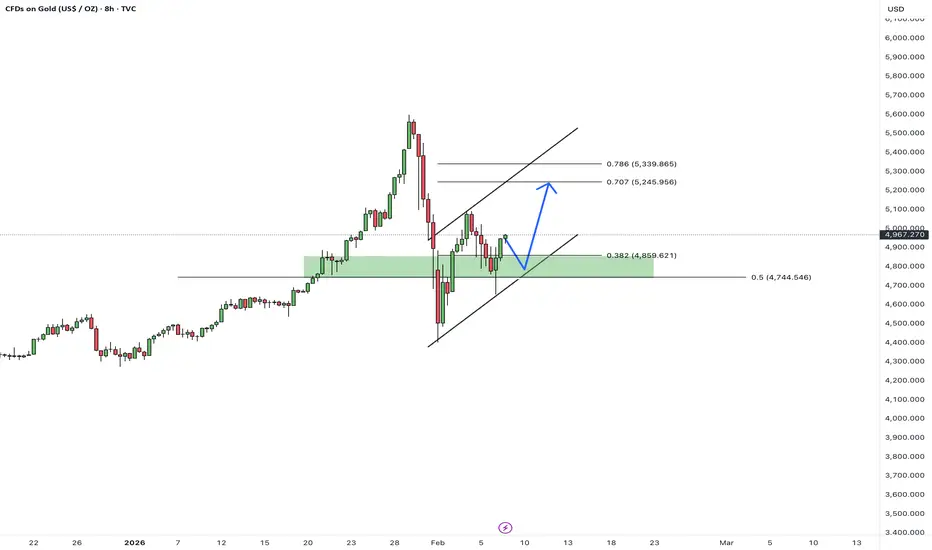
XAUUSD 2026!Report of the past three years of analysis
All analyses were based on Ichimoku.
The trend over these three years was forecasted as bullish,
which resulted in three consecutive green annual candles, exactly as expected.
(Tradable levels were announced every week)
Now, the new year analysis: 2026
Based on Ichimoku, the annual trend of gold will remain bullish in 2026.
Contrary to my presonal intention, new all-time highs will be formed.
Fibonacci provides levels of these highs, as shown on the chart.
XAUUSD | 1H | Market Structure UpdateGold remains in a high-timeframe bullish structure, but price is currently pausing within a key consolidation range after the impulsive move higher. This consolidation is forming just below the all-time high (ATH), suggesting the market is building orders rather than reversing.
Price has already swept prior sell-side liquidity, and the current range appears to be a re-accumulation phase. As long as price holds above the previous breakout base, bullish continuation remains the higher-probability scenario.
A clean breakout and close above the consolidation high is required to confirm strength and open the path toward a ATH expansion. Without that confirmation, price may continue ranging or perform a deeper retracement into demand before the next leg higher.
Bias: Bullish continuation
Confirmation: Strong close above consolidation resistance
Target: All-Time High and potential price discovery
Invalidation: Sustained acceptance below the consolidation support
Patience is key here — let the market show its hand before committing.
GBP/USD short trade ideaBased on the latest USD and GBP economic data:
USD indicators show weakness in labor and inflation metrics (e.g., -105k vs 64k jobs, 4.4%-4.6% inflation) and slightly lower yields (2.9%-3.0%), signaling a dovish stance.
GBP data shows relative strength in labor and yield spreads (3.6%-3.2% vs prior 3.4%-3.2%, policy rate at 4.00%), indicating stability or mild tightening.
The USD appears weaker compared to GBP on the latest figures, suggesting potential short-term retracement for GBP/USD.
Given the relative shifts and positioning, I am opening a GBP/USD short, aiming to capitalize on potential USD strength reversal and GBP slowing momentum.
GOLD Consolidation within a bullish momentumGold is currently showing healthy consolidation within a bullish market structure. Price action suggests a possible retest of the support region, which could provide an opportunity for renewed bullish momentum if buyers remain in control.
Gold prices are rising on expectations of further interest rate cuts by the U.S. Federal Reserve next year. This follows the latest U.S. employment data, which showed the unemployment rate climbing to its highest level in more than four years. As a result, investors are adopting a cautious stance and are now awaiting the U.S. CPI inflation report, scheduled for Thursday, which is expected to influence the Fed’s next policy moves.
Additionally, ongoing geopolitical risks continue to support gold as a safe-haven asset the overall trend remains bullish, supported by favourable fundamentals. If bulls successfully defend the support zone, price may resume upward momentum, with potential upside targets in the 4355 – 4380 range.
You may find more details in the chart,
Trade wisely best of luck buddies.
Ps; Support with like and comments for better analysis thanks for supporting.
EURUSD Analysis : Bullish Bias Setup + Demand Zone + ReversalEURUSD – 30 Minute Chart Analysis
Market Structure Overview
EURUSD initially moved in a strong bullish trend, creating higher highs and higher lows. This impulsive rally shows aggressive buying pressure and momentum expansion. However, after reaching the recent high, price failed to sustain upside continuation and started showing loss of bullish strength.
This shift marked the beginning of a distribution phase, where smart money began offloading positions rather than pushing price higher.
Breakdown from Consolidation
After the top formation, price entered a tight consolidation / triangle structure, signaling indecision and compression. This pattern acted as a continuation structure to the downside. Once price broke below the triangle, it triggered a strong bearish continuation, confirming that sellers had taken control.
The breakdown was clean, impulsive, and backed by strong candle bodies — a clear sign of bearish displacement.
Liquidity Sweep & OPL Reaction
Following the breakdown, price aggressively moved lower, sweeping liquidity below recent lows. The OPL level acted as a minor pause point but failed to hold, confirming that buyers were weak and stops were being consumed.
This move was necessary to clean out weak longs before price reached a more meaningful demand area.
Reversal Zone (Demand Area)
The highlighted Reversal Zone at the bottom is a key demand / accumulation area, where price previously showed strong bullish reactions. As price entered this zone, selling pressure slowed, and small bullish candles began to appear, signaling potential absorption of sell orders.
This behavior suggests that smart money may be accumulating long positions at discounted prices.
Potential Recovery Scenario
If price continues to hold above the reversal zone and forms:
Higher lows
Bullish engulfing candles
Strong rejection wicks
Then a corrective bullish move becomes likely. The projected path shows a step-by-step recovery rather than an aggressive reversal, which is typical after a sharp sell-off.
Bearish Invalidation
If price closes decisively below the reversal zone with strong momentum, this bullish recovery idea becomes invalid. In that case, the market may continue lower toward deeper liquidity zones.
Trader’s Mindset
This is a reaction-based setup, not a prediction. The best trades will come only after confirmation inside the reversal zone. Patience here separates disciplined traders from emotional ones.
Key reminders:
Zones are areas, not exact prices
Confirmation > early entry
Protect capital first
Final Thoughts
EURUSD is currently trading at a high-decision demand zone after a strong bearish move. The next candles will be crucial in defining whether this is just a pause or the beginning of a meaningful recovery. Let price confirm before committing to a trade.