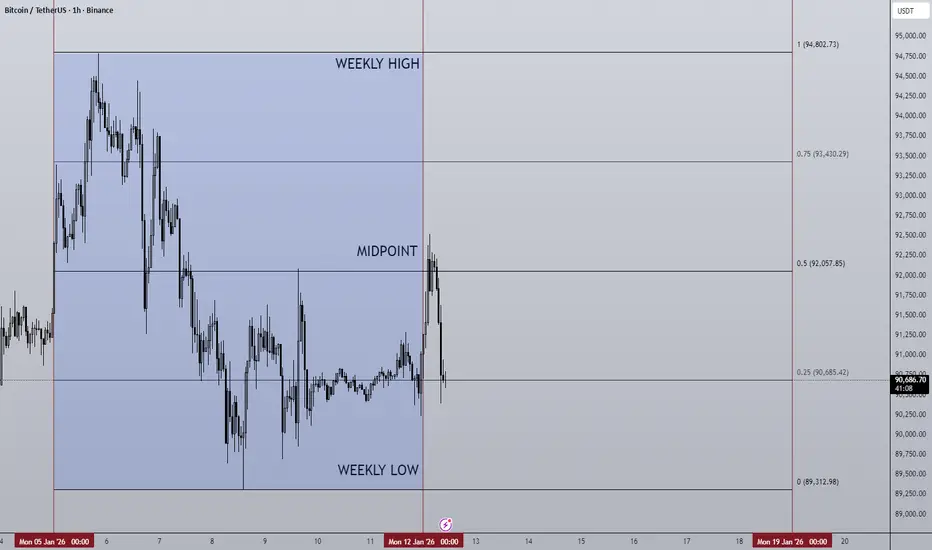
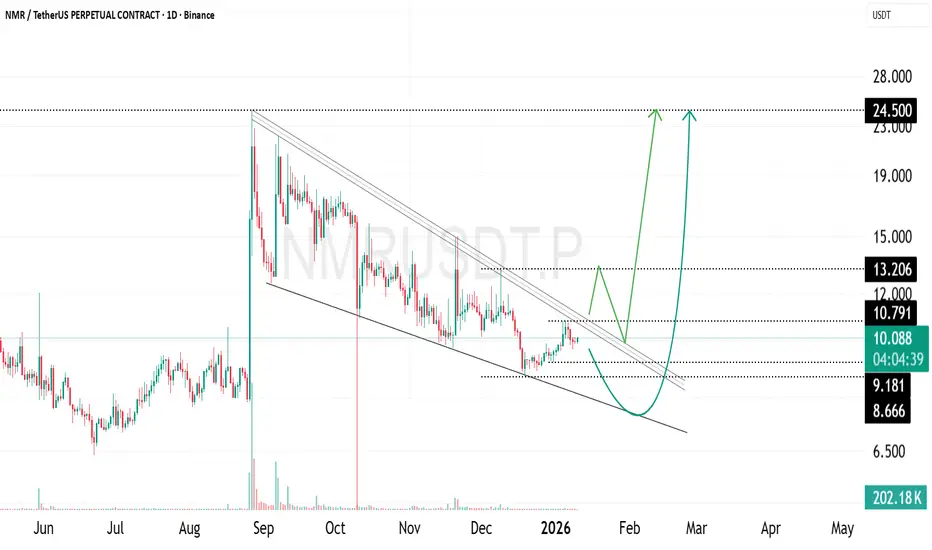
A retest framework is a processMost traders know support and resistance, but few have a rule set for when those levels become tradable. In crypto, levels are breached constantly. What matters is not the breach. What matters is what the market accomplishes by breaching it and how it behaves once it returns.
The framework starts by defining a clear swing high and swing low. These are the most recent meaningful extremes where price demonstrably changed direction, not intraday noise. The midpoint between them becomes equilibrium, your objective reference for premium versus discount within that swing. This midpoint is not predictive. It simply organizes the playing field.
Next comes liquidity. Equal highs, equal lows, and inefficient consolidation clusters are not decorations on the chart. They are incentives. Stops pool there. Traders position emotionally there. The market goes there to transact. When price moves into that pocket and leaves a wick that is quickly reclaimed, you have the sweep. This is the first proof that the breakout traders were the liquidity, not the beneficiaries.
A sweep alone is not structure. So the next requirement is transition. In an uptrend, buyers defend higher lows. When the last defended low is violated after a sweep, you get the break of micro-structure. In a downtrend, sellers defend lower highs. When the last supplied high is reclaimed after liquidity is taken below, you have transition in reverse. This is where narrative changes from continuation to rotation.
Then comes displacement. This is the market proving participation through momentum. A structural transition followed by compressed candle ranges or low-volume drift lacks authority. But a transition followed by clean directional movement shows that the opposing side stepped in with urgency. This is not retail FOMO. This is participation.
The retest becomes the execution filter. Price returns to the broken zone or swept liquidity level. It interacts there without hesitation, without sweeping back through the same side, and without expanding candle ranges against the narrative you built. This is where professionals position. Not because it is perfect timing, but because it is permissioned timing. The stop goes beyond the narrative fracture point, not a generic percent. The target goes toward the next liquidity incentive in line, not a vague R:R fantasy.
This sequencing matters even more inside funded evaluations. Prop traders fail most often when they cluster mistakes. A retest framework reduces mistake clustering because it forces the trade to form a story before it forms exposure. It narrows invalidation distance, improves average R:R, and protects daily drawdown math naturally. It also gives you neutrality after streaks. The framework does not amplify confidence.
It anchors confidence to conditions.
The retest framework does not promise that a trade works. It promises that a trade has a reason to work. And having reasons before exposure is the edge that compounds careers in crypto, especially when liquidity and volatility drain fast.
Crypto
TOTAL MARKET CAP 1hr UPDATEPrice is still reacting within the expected range, but new information has entered the chart.
A bearish MSS has formed on the 1H, suggesting the current push may be a lower-timeframe retracement, not strength.
This opens the door for a move back into the 3.11T area, before any continuation lower.
Key context:
HTF target 3.22T remains untouched
1H structure is now bearish
Current move can be corrective unless invalidated
Because of this, I’m shifting focus to lower timeframes to read intent:
Acceptance above 3.11T → continuation scenario stays alive
Rejection + displacement down → confirms deeper pullback
No assumptions, no anticipation.
Let the lower TFs show their hand first.
What are you watching here — reclaim and continuation, or distribution into continuation lower?
MrC
BTCUSDT: Bullish Structure Intact - Targeting 93K ResistanceHello everyone, here is my breakdown of the current BTCUSDT setup.
Market Analysis
BTCUSDT previously traded inside a well-defined consolidation range, where price moved sideways and volatility was compressed, showing balance between buyers and sellers. During this phase, multiple internal swings failed to establish a clear trend direction. Before the range, price experienced several fake breakouts near the upper highs, highlighting strong selling pressure inside the 93,000 Resistance Zone, where buyers repeatedly failed to gain acceptance.
Currently, price is trading above the support zone and consolidating below the key 93,000 Resistance, where selling pressure previously emerged. The structure remains constructive, with higher highs and higher lows still intact, suggesting the move is corrective rather than a full reversal.
My Scenario & Strategy
My primary scenario: as long as BTCUSDT holds above the 90,800 Support Zone and respects the rising trend line, the bullish bias remains valid. I expect price to consolidate and potentially push higher toward the 93,000 Resistance, which acts as the next major upside objective (TP1). A clean breakout and acceptance above the resistance zone would confirm bullish continuation and open the door for further upside expansion.
However, a decisive breakdown below support and the trend line would invalidate the long setup and signal a return to range behavior or deeper correction. For now, buyers remain in control while support holds.
That's the setup I'm tracking. Thank you for your attention, and always manage your risk.
Bitcoin Stalls Between Supply and DemandBitcoin continues to trade within a broader bullish context after a strong impulsive advance, but current price action on the H1 timeframe shows clear hesitation as the market compresses between a defined supply zone above and a demand zone below. This type of behavior typically signals a decision phase, where the market is balancing recent buying pressure against emerging profit-taking and short-term distribution.
At present, price is rotating around the 92,800 area, unable to generate sustained momentum toward the upper supply zone near 94,400–94,500. Previous reactions from this region highlight active seller interest, making it a key level that must be reclaimed with acceptance for bullish continuation to unfold. As long as price remains capped below this supply zone, upside attempts are vulnerable to rejection rather than clean continuation.
From a corrective perspective, failure to build acceptance above current levels increases the probability of a pullback toward the 91,400 demand zone. This area previously acted as a strong base before the impulsive rally and is likely to attract responsive buyers on a first test. A clean reaction here would support the view of a healthy higher low within the broader uptrend.
However, if demand around 91,400 fails to hold, the structure opens the door for a deeper retracement toward the 89,500 region. A move into this zone would represent a more significant liquidity sweep and reset, yet would still remain technically corrective rather than trend-breaking, provided the higher-timeframe structure remains intact.
Alternatively, a decisive breakout and sustained acceptance above the 94,500 supply zone would invalidate the corrective outlook. In that scenario, Bitcoin would likely transition back into expansion mode, targeting the 95,500 region and potentially extending further as fresh upside liquidity is unlocked.
EURUSD Defends Demand — Is a Bullish Reversal Setting Up?EURUSD on H1 has been trading under sustained bearish pressure, forming a clear descending trendline that has capped price action over the past sessions. Lower highs remain intact, confirming that sellers are still in control of the broader short-term structure.
However, the recent sell-off has now pushed price into a well-defined support zone around 1.1665–1.1680, where downside momentum has started to slow. The sharp reaction from this area suggests active buyer participation and hints at a potential short-term corrective rebound rather than immediate continuation lower.
At the moment, price is consolidating just above this support zone, while still trading below the descending trendline. This creates a compression scenario: buyers are defending demand from below, while sellers remain positioned at trendline resistance.
This is a key decision area. As long as the support zone holds, the market has room to attempt a recovery toward the upper structure. A failure here, however, would reopen downside risk.
Bullish scenario: If price holds above the 1.1665–1.1680 support zone and breaks above the descending trendline with acceptance, a corrective move toward 1.1720, followed by 1.1760–1.1770, becomes likely.
Bearish scenario: A confirmed breakdown and close below the support zone would invalidate the bullish recovery idea and expose further downside toward 1.1630 and potentially 1.1600.
For now, patience is essential. The market is sitting at a high-impact support level, and the next high-probability trade will come from confirmation, not anticipation.
Scaling a small account is not a strategy problem It is a sequencing and behavior problem. Most traders assume that growth comes from new methods or more trades. The data shows that small accounts grow fastest when they remove the hidden tax that drains them: emotional sizing, poor invalidation placement, and trading inside volatility expansion instead of liquidity alignment.
The most common failure point is position size volatility. When volatility expands, candle ranges widen, liquidity thins, and invalidation distance increases. This is the worst moment to increase size, yet this is when most traders do it—after a streak of wins or boredom-induced impulsive entries. A small account does not fail because the market moved against it. It fails because it increased exposure when the market removed fuel.
Professionals scale differently. They anchor size when volatility expands and only scale when volatility compresses, liquidity is swept cleanly, and structure transitions. This shift protects capital durability first so compounding becomes mathematically possible second.
The framework begins with a volatility budget. Every asset has a typical invalidation distance on each timeframe. BTCUSDT and SOLUSDT behave with wider ranges than mid-cap pairs, and their liquidity pockets are tested more aggressively during overlap sessions. Your account must size exposure based on what the market historically allows a setup to absorb without forcing premature liquidation.
Liquidity mapping is the next step. Equal highs, equal lows, and inefficient consolidation clusters are not entry signals. They are incentives. Price moves there to transact, collect stops, and reposition larger capital. The first proof of intention is the sweep. Price breaches liquidity and reclaims back inside the swing. This tells you that breakout traders provided the orders, not continuation. A small account compounds faster when it waits for the sweep to finish rather than entering into it.
From there, structure must transition. In an uptrend, the market protects higher lows. In a downtrend, it protects lower highs. When price violates the last defended point after liquidity is taken, you have a control handover. This is not a guess. It is a behavioral change in price organization. But structure alone is still incomplete. It requires displacement.
Displacement is momentum proving participation. A structural break followed by thin, drifting candles is not authority. A structural break followed by clean directional movement is participation. This shows urgency from the opposing side. This is where narratives change and capital begins positioning for the next impulse.
The retest becomes the execution filter. Price returns to the broken or swept zone, interacts without hesitation, and respects the new bias built from liquidity and structure. The retest reduces invalidation distance, tightens risk, and improves reward asymmetry naturally without needing to increase leverage or complexity. The best retest is not the fastest one. It is the one that proved permission through sequence.
Micro-scaling compounds edge without compounding risk. Extracting 1–3% per trade on confirmed retests with 2.5:1 or better R:R compounds a small account more efficiently than trying to extract 10% during unconfirmed expansion phases. High-quality trades reduce mistake frequency, which matters more than win rate when capital is small and feedback is fast.
Time is also a filter. Crypto liquidity behaves differently by session. The most stable participation for BTC and SOL historically occurs during London–NY overlap, where bid depth is higher, sweeps are cleaner, and structural transitions show more authority. Dead-zone hours widen noise and compress clarity. Scaling requires knowing when participation is probable, not forcing participation when it is absent.
The final rule is process-first validation. A trade that works without a reason is not scale permission. A trade that works because it followed the sequence is. The market does not reward perfection. It rewards traders who stay calibrated to structure, volatility, and liquidity long enough to compound the value of participation when conditions finally agree.
Scaling is not about catching the entire move.
It is about surviving long enough to participate in the right side of the next move with defined risk and conditional exposure. Small accounts grow when traders stop scaling emotion and start scaling conditions.
Has BTC Completed Its Bullish CycleBitcoin has completed a full bullish cycle and is now transitioning into a post-distribution corrective phase. After a clear accumulation base, price delivered a strong impulsive expansion (Phase 2), printing a clean sequence of higher highs and higher lows. This bullish leg peaked inside the Phase 3 distribution zone, where upside momentum stalled and selling pressure began to dominate.
The failure to hold above the last key higher low marked a structural shift. What initially appeared as a healthy pullback has now evolved into a deeper correction, with price accelerating lower and respecting a newly formed bearish structure.
Price is currently trading below the former bullish mid-range and is being capped by a descending trendline, which is acting as dynamic resistance. The prior “mid-pullback inside bullish structure” zone has failed, confirming that buyers are no longer in control at that level.
The market is now respecting a series of lower highs, while bearish impulses are stronger and cleaner than bullish reactions a key sign that momentum has flipped.
Resistance:
91,200 – 91,400 (broken structure / supply reaction)
Descending trendline resistance
Support:
89,000 – 89,200 (minor reaction level)
86,800 – 87,200 (major downside target / structural support)
➡️ Primary Scenario:
Price continues to respect the descending trendline and forms another lower high. A rejection from the 91.2k–91.4k zone would confirm bearish continuation, opening the path toward the 89k level first, followed by a deeper move into the 86.8k–87.2k support zone.
⚠️ Risk Scenario:
If price reclaims and accepts back above the broken mid-structure zone, the bearish continuation would be invalidated. In that case, BTC could transition into a broader range rather than immediate continuation lower.
EURUSD Rejection From Key Resistance, Target 1.1640Hello traders! Here’s a clear technical breakdown of EURUSD (1H) based on the current chart structure. After a strong bullish impulse earlier, EURUSD transitioned into a corrective phase and started trading inside a well-defined descending channel, indicating controlled bearish pressure rather than an aggressive sell-off. Price respected both the channel resistance and channel support, confirming the validity of this corrective structure. On the left side of the chart, we can see a breakout from a prior consolidation, followed by an impulsive bullish move. This rally eventually stalled and turned around near the upper highs, where selling pressure emerged and pushed price into the descending channel. During this phase, multiple reactions from the channel boundaries showed balanced participation from both buyers and sellers. As price moved lower, it approached the highlighted Seller Zone / Resistance Level around 1.1680. A short-term fake breakout above channel resistance occurred, but buyers failed to hold acceptance above it, signaling that sellers are still active at higher levels. Price then continued lower within the channel. The primary bearish scenario comes into play if EURUSD fails to hold above the 1.1680 Resistance / Seller Zone and shows clear rejection from this area. This zone aligns with the descending channel resistance, making it a high-probability area for sellers to step in. If price retests the 1.1680–1.1700 resistance area and forms bearish rejection signals (long upper wicks, bearish engulfing candles, or failure to hold above channel resistance), it would confirm that the move higher is corrective in nature. In this case, sellers are likely defending the structure and maintaining overall bearish control. Once rejection is confirmed, I expect price to resume its move lower inside the descending channel, targeting the 1.1640 Buyer Zone / Support Level as the first downside objective (TP1). A clean break and acceptance below this support would strengthen bearish momentum and open the path toward lower support levels, extending the correction further. However, if price breaks and holds above the descending channel resistance and the 1.1700 level, the short scenario becomes invalid, signaling a potential trend shift or deeper bullish continuation. For now, the market remains in a corrective bearish structure, and shorts are favored on pullbacks into resistance, as long as price stays below the key resistance zone. Please share this idea with your friends and click Boost 🚀
MAV Retesting Descending Resistance After Base FormationMAV is currently trading inside a corrective structure, with price compressing between a descending resistance trendline and a rising base support on the 4H timeframe.
After forming a local base near the lower support zone, price attempted a breakout but is now retesting the descending resistance area, which also aligns with a key short-term reaction level. This makes the current zone a clear decision area.
If buyers manage to reclaim and hold above the descending resistance, MAV could see continuation toward the next upside liquidity levels around the previous range high. A clean breakout would confirm a short-term trend shift.
Failure to hold this area keeps price vulnerable to another move back toward the lower support zone, where buyers previously stepped in strongly.
50 DAY $BTC WHALE FARM IN PROGRESS 50 Day Whale Farm, Community Challenge in Progress.
- Since the 30% decline from the October 2025 Bulltrap (See Sunday Oct 12th to Sunday October 26 Closers for reference)
BTCUSD has been in a 50 day whale farm with an average catch floor of 85k with a low of 81,600k.
This has been an endurance test by whales to see if the community can push past resistance without assistance from traditional finance. IMO I don't see many of them cashing out their gains to turn around and chase this market. This is a War between the 7% majority and it's OG Whales. I would rather have the floor break and continue a full -70% reduction from the top than let Corporations and Monopolies like MicroStrategy control the market with their Moby Dick Whale Size Bags this early in BTCUSD life cycle.
#NFA
CRYPTO:BTCUSD BITSTAMP:BTCUSD BINANCE:BTCUSDT COINBASE:BTCUSD
$BTC 2026 Wide Divergence Prediction 2026CRYPTO:BTCUSD
This prediction is simple, and based on the only Wide Divergence visible on the Weekly Candle chart through out the life span of CRYPTOCAP:BTC , which occurred roughly from June 2022 to December 2022 for an estimate of 203 days and is directly responsible for the price action that followed over the next 2.7 years.
- I believe that every crypto moves at its own individual rate depending on age, mcap, token circulation, holder count, ect... and that Bitcoin is the slowest moving of all.
- It is also my belief the 3x Meme Coin Pump is not only a naturally occurring phenomenon in Memes, But also Bitcoin. And we have just watched it unfold in real time over the last 2.7 years and are are in the -70% reversal from top right now.
3x Pump Date Range
- Start Date : 11/20/22 CRYPTOCAP:BTC @ 16k
- 1x Date : 3/10/24 CRYPTOCAP:BTC @ 70k
- 2x Date : 1/0/25 CRYPTOCAP:BTC @ 105k
- 3x Date : 11/5/25 CRYPTOCAP:BTC @ 125k
Start to 1x = 468 days / 1x - 2x Pump = 293 Days / 2x to 3x Pump = 249 Days
- For the last 50 days we have been tested in a whale farm with a 85k bottom and a 94k top, we are currently in the down trend from the third and final swing as the community was not able to break past the 93500k Resistance zone during this time. In the upcoming weeks we will see a sharp decline in price action breaking the 85k and create a new floor at 68k for a shorter period of time before finally completing our decent to roughly 55k.. This final bottom will be the start indicator for the next 200 day (estimated) Wide Divergence Set Up, before resetting the next 3x Pump.
Thank you for time, Hope for feedback!!
Profit > Cost Average
CRYPTO:BTCUSD
BITCOIN PREDICTION / WIDE DIVERGENCE 2026This prediction is simple, and based on the only Wide Divergence visible on the Weekly Candle chart through out the life span of CRYPTOCAP:BTC , which occurred roughly from June 2022 to December 2022 for an estimate of 203 days and is directly responsible for the price action that followed over the next 2.7 years.
- I believe that every crypto moves at its own individual rate depending on age, mcap, token circulation, holder count, ect... and that Bitcoin is the slowest moving of all.
- It is also my belief the 3x Meme Coin Pump is not only a naturally occurring phenomenon in Memes, But also Bitcoin. And we have just watched it unfold in real time over the last 2.7 years and are are in the -70% reversal from top right now.
3x Pump Date Range
- Start Date : 11/20/22 CRYPTOCAP:BTC @ 16k
- 1x Date : 3/10/24 CRYPTOCAP:BTC @ 70k
- 2x Date : 1/0/25 CRYPTOCAP:BTC @ 105k
- 3x Date : 11/5/25 CRYPTOCAP:BTC @ 125k
Start to 1x = 468 days / 1x - 2x Pump = 293 Days / 2x to 3x Pump = 249 Days
- For the last 50 days we have been tested in a whale farm with a 85k bottom and a 94k top, we are currently in the down trend from the third and final swing as the community was not able to break past the 93500k Resistance zone during this time. In the upcoming weeks we will see a sharp decline in price action breaking the current 85k floor and will create a new floor at 68k for a shorter period of time before finally completing our decent to roughly 55k.. This final bottom will be the start indicator for the next 200 day (estimated) Wide Divergence Set Up, before resetting the next 3x Pump.
Thank you for time, Hope for feedback!!
Profit > Cost Average
-MikeyLikesDips707
SOL - tiny upward wiggle detected Alright folks, here’s the tea: BTC is still dreaming of that sweet 100K, and I’m not planning any panic moves downward… but hey, the market can be spicy, so don’t quote me.
SOL, on the other hand, looks like that snack you didn’t know was in the fridge—juicy and ready to be devoured. 🥤
• Support is chilling right beneath us like a comfy couch.
• Quick bounce off the 50 EMA, because SOL apparently likes to stretch in the morning.
Could this work? Maybe. Could it go sideways like my motivation on Monday? Also maybe.
TL;DR: SOL doing a mini dance, BTC still dreaming big, and we all hold onto hope (and stop-losses). 💃📈
HBAR – Rejected at Key Resistance, Retracement Entry OpportunityHBAR recently rejected hard at the $0.135 resistance zone, showing sellers still dominate at that level. However, a breakout and successful flip of $0.135 into support could ignite the next leg upward. With price currently retracing, this sets up a solid opportunity for a spot long position on the dip.
📍 Entry Zone: $0.1175 – $0.1243
🛑 Stop-Loss: Just below $0.1125
🎯 Take Profits:
• TP1: $0.135
• TP2: $0.15 – $0.165
• TP3: $0.19 – $0.21
If the $0.135 level flips cleanly with volume, expect bulls to regain momentum. As always, manage risk accordingly and monitor how price reacts at these zones.
AVAX Update – Watch for Pullback to Key SupportAVAX has rallied nearly +23% since our last trade idea and is now facing strong resistance. The move has been sharp, but price is showing signs of exhaustion here, and we expect a pullback before any further upside. This creates a solid opportunity to position for the next wave.
🔍 We're targeting a long spot entry around $13.30, which lines up with a previous support zone. This level offers a good risk/reward window, especially with confirmation from past price structure.
📌 Trade Plan:
Long Entry: ~$13.30
Take Profit Targets: $15.00 – $17.10, $18.50 – $21.00
Stop Loss: Below $12.70
ETH/USDT | From this FVG to the other! (READ THE CAPTION)By analysing the 2h chart of ETHUSDT, we can see that 3308, it dropped in price all the way down to the lower FVG's high, showing an initial reaction before dropping in the FVG zone yet again. It is currently being traded at 3109. I expect it to hit the Consequent Encroachment of the FVG and then going back up to test the high of the FVG again.
Current targets: 3113, 3124, 3136, 3148 and 3160.
$ZEC 1D update: The trend has been bucked, monitoring... ZEC has now dumped back down decisively, and attention shifts straight back to the $300 level.
The recent breakdown from the rising channel confirms that the prior uptrend leg has been interrupted. What initially looked like consolidation has resolved lower, with expanding volatility and an impulsive move down, which usually signals unfinished business to the downside rather than an immediate reversal.
The $300–310 zone is once again the key level that matters. This area previously acted as a major demand base and launch point for the last expansion. A controlled move into that region with slowing momentum would still fit a broader bullish digestion narrative. However, a fast loss of $300 on a daily closing basis would materially weaken the structure and open the door to deeper retracement.
From a market behavior standpoint, this type of flush is not unusual for ZEC. It tends to overshoot, shake out late positioning, and only then form a more durable base. For now, I’m treating this as a volatility phase rather than assuming the larger trend has already resumed.
Bias here is cautious and reactive. I’m watching how price behaves as it approaches $300, not trying to front-run a bounce. The reaction at that level will determine whether this is just another reset before continuation, or something that requires more time to rebuild structure.
BTC - Demand Did Its Job. Now Watching the ChannelBTC reacted exactly where it was supposed to... the blue demand zone held, and buyers stepped in!
Since that reaction, price has started to shift short-term momentum to the upside, forming a rising channel. Nothing aggressive yet, but structure is slowly improving.
From here, my focus is simple:
as long as BTC keeps trading within this blue channel, I’ll be patiently looking for pullbacks toward the lower bound, and from there, trend-following long setups.
The natural upside magnet remains the orange structure zone, which is still acting as the key decision area.
⚠️ Disclaimer: This is not financial advice. Always do your own research and manage risk properly.
📚 Stick to your trading plan regarding entries, risk, and management.
Good luck! 🍀
All Strategies Are Good; If Managed Properly!
~Richard Nasr
EURUSD: Fake Breakdown from Support Signals Potential ReversalHello everyone, here is my breakdown of the current EURUSD setup.
Market Analysis
EURUSD previously traded inside a clearly defined range, where price moved sideways and showed equilibrium between buyers and sellers. From this range, price attempted a bullish breakout, but the move resulted in a fake breakout into the upper area, signaling strong selling pressure inside the Resistance Zone around 1.1750–1.1760. This zone was tested multiple times, and each attempt to hold above it failed, confirming it as a strong supply area.
Currently, price is trading below the key resistance and remains structurally bearish. The highlighted move suggests a potential corrective pullback from support toward the descending channel resistance, which aligns closely with the horizontal resistance zone around 1.1750.
My Scenario & Strategy
My primary scenario: as long as EURUSD holds above the 1.1680 Support Zone and no strong bearish acceptance occurs below it, the bullish bias is favored in the short term. I expect buyers to push price higher toward the descending channel resistance and horizontal Resistance Zone around 1.1740, which acts as TP1. A clean breakout and acceptance above the 1.1750 Resistance Zone would confirm stronger bullish continuation and open the door for a move toward higher highs.
However, a decisive breakdown and close below the support zone would invalidate the long scenario and signal renewed bearish continuation. For now, the market is at a key reaction area, and the long setup depends on buyers continuing to defend support.
That's the setup I'm tracking. Thank you for your attention, and always manage your risk.
SOL/USDT | Back to the demand zone (READ THE CAPTION)As you can see in the 4H chart of SOLUSDT, After an initial run to 143.48 level, Solana has dropped in price again, reaching the demand zone it was stuck to for a matter of weeks at 133.79 level, it is currently being traded at 134.80, barely above the demand zone.
It is expected for it to retest the IFVG.
For the time being, Bullish targets: 136, 137.20, 138.40 and 139.60.
Bearish targets: 133.80, 132.65, 131,50 and 130.35.
Bitcoin - Weekly Trend Holds, $146K Fib Extension NextBitcoin Weekly Structure Intact: $90K Support Holding, $146K Extension Target
Bitcoin is respecting the weekly uptrend structure with current consolidation around the $90K zone.
The 0.618 Fibonacci retracement at $72,395 held as support during the recent correction, and price is now positioned for the next leg higher targeting the -0.618 Fibonacci extension at $146,676. Historical precedent from August 2024 suggests this pattern could repeat.
📊 Current Technical Picture:
Weekly Trend: The ascending trendline from the 2023 lows remains intact. Price is consolidating above the 0.5 Fibonacci retracement at $79,487, showing the correction has found support.
Multiple weekly closes above $90K would confirm continuation setup.
Key Fibonacci Levels: The 0.618 retracement at $72,395 acted as strong support during the pullback.
Current price around $90K sits between the 0.5 Fib ($79,487) and the 0.382 Fib ($86,578). The 0.236 Fib at $95,383 is the next resistance to clear.
Upside Target: The -0.618 Fibonacci extension projects to $146,676, representing 63% upside from current $90K levels.
🔄 August 2024 Precedent:
What Happened Then: In August 2024, Bitcoin consolidated at the 0.5 Fibonacci level around $49,366. After confirming support, price launched into a powerful rally that extended to the previous all-time high zone near $73,000. The move delivered approximately 48% gains in just a few months.
The Pattern: Consolidation at mid-range Fibonacci level. Weekly trend confirmation with higher lows. Breakout above resistance. Extension to Fibonacci projection target. Volume expansion on the move higher.
Why It Matters: The current setup mirrors August 2024 structure. Bitcoin is consolidating at a key Fibonacci support zone with the weekly trend intact. If the pattern repeats, the measured move targets the $146K extension level.
📈 Why $146K Target:
Fibonacci Extension Math: From the cycle low to the previous high, the -0.618 extension projects to $146,676. This isn't arbitrary, it's based on the golden ratio mathematical relationship that Bitcoin has respected throughout its history.
Market Cap Context: $146K Bitcoin equals approximately $2.9 trillion market cap. While this seems aggressive, it represents similar percentage gains to previous bull cycle extensions. The 2020-2021 cycle saw Bitcoin go from $10K to $69K, a 590% gain. From current $90K to $146K is 63%, conservative by historical standards.
Institutional Backdrop: Spot ETF inflows, corporate treasury adoption, and nation-state interest provide fundamental support for the technical projection. The infrastructure for six-figure Bitcoin now exists.
🎯 The Setup:
Support Zone: $90K holding as current consolidation floor. Deeper support at $79,487 (0.5 Fib) and $72,395 (0.618 Fib) if needed.
Resistance to Clear: $95,383 (0.236 Fib) is immediate resistance. Break above this level with volume confirms the next leg up is beginning.
Target: $146,676 (-0.618 Fibonacci extension). This represents the measured move if the weekly trend continues and Bitcoin follows the August 2024 playbook.
Timeframe: If the pattern mirrors August 2024, the move could take 3-6 months to fully develop. Expect consolidation periods along the way.
📊 Weekly Trend Analysis:
Trendline Intact: The ascending trendline from 2023 lows has not been violated. Every test of this trendline has resulted in continuation higher. Current price action is respecting this structure.
Higher Lows Pattern: Bitcoin continues to form higher lows on the weekly timeframe. The recent low around $90K is above the previous correction low. This is textbook uptrend behavior.
Volume Profile: The consolidation at $90K is occurring on declining volume, typical of healthy corrections. When the breakout occurs, volume expansion should confirm the move.
Moving Averages: Weekly 21 EMA and 50 EMA are both rising underneath price, providing dynamic support. Price has remained above these key moving averages throughout the trend.
🔄 August 2024 Comparison:
Then: Consolidated at $49K after pullback. Tested 0.5 Fibonacci support multiple times. Weekly trend remained intact. Launched to $73K (48% gain).
Now: Consolidating at $90K after pullback. Testing 0.5 Fibonacci area. Weekly trend remains intact. Targeting $146K (63% gain projected).
The Parallel: Same Fibonacci retracement level. Same weekly trend structure. Same consolidation behavior. If history repeats, similar explosive move higher.
🚀 Catalysts for the Move:
Spot ETF Flows: Institutional accumulation continues through Bitcoin ETFs. Daily inflows provide consistent buying pressure that supports upward momentum.
Halving Cycle: The April 2024 halving historically leads to bull market peaks 12-18 months later. We're now 9 months post-halving, entering the typical acceleration phase.
Macro Environment: Potential Fed rate cuts in 2025 would benefit Bitcoin as a scarce asset. Liquidity conditions improving supports risk assets.
Nation-State Adoption: Countries and corporations continue adding Bitcoin to treasuries. This long-term HODLing reduces available supply.
⚠️ What Could Invalidate:
Weekly Close Below $72K: If Bitcoin closes a weekly candle below the 0.618 Fibonacci at $72,395, the trend structure is compromised. This would suggest the correction is deeper than anticipated.
Trendline Break: A decisive break below the ascending weekly trendline would indicate trend failure. This is the critical support that must hold for the bullish thesis.
Macro Shock: Recession, financial crisis, or major risk-off event could override technical structure. Bitcoin still correlates with broader risk sentiment.
Volume Failure: If Bitcoin attempts to break $95K without volume expansion, it suggests lack of conviction. Sustainable moves require volume confirmation.
🧠 Why Most Will Miss This:
At $90K Now: "It's already up so much from $16K, too risky to buy here."
At $110K: "Should have bought at $90K, I'll wait for a pullback."
At $130K: "This is a bubble, it's going to crash."
At $146K: "Why didn't I buy at $90K when it was obvious?"
The Pattern: Early entries feel uncomfortable. Confirmation feels late. Obvious is actually late. Right now, at $90K with weekly trend intact, is still early for the $146K target.
⚠️ Important Disclaimers:
This analysis is for educational purposes and reflects a technical view based on Fibonacci extensions, historical pattern recognition, and weekly timeframe structure. It is not financial advice or a recommendation to buy or sell Bitcoin or any cryptocurrency.
Cryptocurrency investing carries extreme risk. Bitcoin can experience 20-30% corrections even during bull markets. The $146K target is a mathematical projection based on Fibonacci ratios, not a guaranteed outcome.
The August 2024 comparison is based on similar technical setups, but past patterns do not guarantee future results. Each market phase has unique characteristics and risks.
Weekly trend analysis provides structure but can fail during major market dislocations. The 0.618 Fibonacci support could break, invalidating the bullish thesis.
Position sizing must account for Bitcoin's volatility. Never invest more than you can afford to lose completely. Cryptocurrency should represent only a portion of a diversified portfolio.
Always conduct independent research, manage risk appropriately, and consider your investment timeframe and risk tolerance. All cryptocurrency trading involves substantial risk of loss.
Ethereum Holds Its Trendline — Is ETH Preparing for the BreakoutEthereum (ETHUSD) on H1 remains in a strong bullish structure, printing a clear sequence of higher highs and higher lows after the impulsive rally from the lower base. Momentum remains constructive, with buyers continuing to defend pullbacks rather than allowing deep retracements.
Price is currently consolidating above a rising trendline, which has acted as dynamic support throughout the move. This consolidation suggests healthy digestion of gains, not a reversal, as volatility compresses ahead of the next expansion.
On the upside, ETH is capped by a well-defined horizontal resistance zone around 3,300, where previous supply has entered the market. Multiple reactions from this level confirm it as the key barrier for bullish continuation.
At present, price is holding above the 3,220–3,240 support region, aligned with trendline support. As long as this zone remains intact, the bullish structure stays valid.
Bullish scenario: A clean break and acceptance above 3,300, followed by a pullback holding above this level, would confirm bullish continuation toward 3,380–3,420.
Bearish scenario: A decisive breakdown below the rising trendline and loss of the 3,220 support would signal a deeper correction, exposing downside targets toward 3,150–3,100.
For now, ETH remains in trend continuation mode. Patience is key — the highest-probability setups will come from confirmed breakouts or trendline retests, not from chasing price inside consolidation.