BFLY — Butterfly Network Inc. | August 27, 2025.NYSE:BFLY #BFLY — Butterfly Network Inc. (NYSE:BFLY) | Healthcare | Medical Devices | USA | NYSE | August 27, 2025.
Executive Summary
Butterfly Network Inc. (NYSE: BFLY), an innovative medical device company specializing in portable ultrasound technology, exhibits strong insider conviction through a recent purchase by Chief Business Officer Steve Cashman.
On August 25, 2025, Cashman acquired 50,000 shares of Class A common stock at an average price of $1.64 per share, totaling $81,953 in value. This transaction, disclosed via SEC Form 4 on August 27, 2025, increased his direct holdings to 2,324,474 shares, representing a significant vote of confidence in the company's trajectory amid a challenging market environment.
Technical indicators on the daily chart suggest a potential reversal from a prolonged downtrend, with the stock trading at oversold levels and showing early signs of stabilization near $1.57. Q2 2025 financials reported record revenue of $23.4 million (up 9% YoY), with net losses narrowing by 59%, bolstered by cost efficiencies and AI-driven product enhancements.
Recent news highlights include a new distribution agreement with Clipper Distributing for veterinary applications (August 25, 2025) and participation in an AI-assisted POCUS research project for tuberculosis detection in Sub-Saharan Africa (August 19, 2025), underscoring growth in both human and animal health sectors.
Replicating Cashman's buy at approximately $1.64 presents a high probability of profitability, with estimated upside potential of 50-200% over the next 6-12 months, targeting $2.50-$5.00. This is supported by Zacks Rank #2 (Buy) and analyst projections of 124-127% upside. We recommend a speculative long position with tight risk controls, allocating 1-2% of portfolio capital, given the asymmetric reward in the medtech space.
Company Profile
Butterfly Network Inc. (BFLY) is a Burlington, Massachusetts-based healthcare technology firm revolutionizing medical imaging through its handheld, AI-enabled ultrasound devices. The flagship product, the Butterfly iQ+ probe, integrates semiconductor technology with cloud-based software to provide affordable, portable point-of-care ultrasound (POCUS) solutions for clinicians worldwide.
The company operates in the medical devices sector, targeting applications in cardiology, emergency medicine, and now veterinary care, with a focus on democratizing access to diagnostic imaging in underserved markets.
Key financial metrics as of August 27, 2025:
• Market Capitalization: $395.24 million
• Enterprise Value: $268.75 million (approx.)
• Price-to-Sales (TTM): 4.52
• Price-to-Book (MRQ): 1.69
BFLY's business model emphasizes subscription-based software and AI integrations, with recent expansions into veterinary and global health initiatives driving revenue diversification. The company reported a cash position enabling continued R&D investment, though profitability remains elusive amid scaling efforts.
Charts:
• (1D)
• (5D)
Steve Cashman (Insider), Insider Trades:
BFLY Ownership:
SEC From 4:
www.sec.gov
Insider Activity Analysis
Insider purchases, particularly by C-suite executives, often signal undervaluation and internal optimism about future catalysts. For BFLY, CBO Steve Cashman's August 25, 2025, acquisition of 50,000 shares at $1.64 per share is noteworthy, as it occurs near 52-week lows and follows a pattern of net insider buying. Post-transaction, Cashman's direct ownership stands at 2,324,474 shares, reflecting a substantial personal stake aligned with shareholders.
Broader insider trends show mixed activity: While insiders sold approximately $1.6 million in stock over the past year, recent months have tilted toward buys, including this transaction. No other major executive purchases were reported in August 2025, but the absence of sales post-Q2 earnings suggests stabilizing sentiment.
This aligns with historical data where clustered buys in medtech firms precede 20-50% rebounds within quarters, especially when tied to product launches or partnerships.
Technical Analysis
The daily chart for BFLY depicts a pronounced downtrend since peaking above $5.00 in early 2025, with the price eroding over 60% to current levels around $1.57 amid broader healthcare sector pressures. Price action forms a descending wedge pattern, characterized by lower highs and lows, trading below key simple moving averages (20-day SMA at $1.74, 50-day at $2.50, 200-day at $2.81), confirming bearish momentum.
However, recent sessions exhibit green candles with modest volume spikes (e.g., 1.44M shares on August 27), hinting at accumulation.
Key indicators bolster a high-probability reversal case:
• Relative Strength Index (RSI, 14-period): At 49.65 on the primary chart (neutral) and 38.75 on the secondary (approaching oversold <30), signaling potential exhaustion without bearish divergence.
• Volume Analysis: Average volume has risen 15% month-over-month, aligning with insider activity and news releases, suggesting institutional interest.
• Support and Resistance: Immediate support at $1.50 (recent swing low) and $1.21 (52-week low). Resistance at $1.80 (near-term pivot), $2.50 (50-day SMA), and $3.00 (prior consolidation zone).
• Chart Patterns: The wedge could resolve bullishly if price breaks above $1.80 on volume, targeting a measured move to $3.00+. Elliott Wave interpretation suggests completion of a five-wave decline, with the current level as a Wave 5 low, setting up for a corrective ABC rally.
Overall , the setup offers a 70-80% chance of near-term profitability, as oversold conditions combined with insider buying often catalyze 50%+ gains in small-cap medtech stocks.
Fundamental and News Analysis
Fundamentally, BFLY delivered solid Q2 2025 results on August 1, 2025, with revenue reaching a record $23.4 million (9% YoY growth) and net loss reduced by 59% to an unspecified figure, driven by operational efficiencies and AI software adoption. Analysts project continued revenue expansion, with a Zacks Rank #2 (Buy) and consensus targets implying 124-127% upside. The company also announced a CFO transition effective August 1, 2025, to Heather Getz from Johnson & Johnson, bringing expertise in scaling medtech operations.
Recent news reinforces momentum:
➖ August 25, 2025: Partnership with Clipper Distributing to expand Butterfly's ultrasound devices into veterinary markets, potentially unlocking new revenue streams in animal health.
➖ August 19, 2025: Joined a research project on AI-assisted POCUS for early tuberculosis detection in Sub-Saharan Africa, highlighting global health applications.
➖ August 1, 2025: Q2 earnings call emphasized Compass AI software launch for workflow efficiency, with management guiding for full-year revenue growth.
Broader Context: The portable ultrasound market is forecasted to grow at 15% CAGR through 2030, benefiting BFLY's disruptive tech amid rising demand for point-of-care diagnostics.
Social sentiment on X is positive around the Clipper partnership, with mentions of veterinary adoption and stock upside. No adverse events reported, though short interest remains elevated at 23.55% as of August 22, 2025.
➖➖➖
Investment Thesis and Forecast
The insider buy at depressed valuations, coupled with technical bottoming and positive catalysts, positions BFLY for a rebound in the medtech sector. Replicating Cashman's entry at $1.64 yields the following scenario:
Entry Price: $1.64
Potential Growth: 50-200% over 6-12 months, fueled by AI product launches and market expansions.
Exit Targets:
➖ Conservative (Target 1): $2.50 (52% profit, +$0.86/share) – Exit at 50-day SMA or post-partnership revenue updates.
➖ Moderate (Target 2): $3.50 (113% profit, +$1.86/share) – Scale out 50% on RSI >70 or analyst upgrades.
➖ Aggressive (Target 3): $5.00 (205% profit, +$3.36/share) – Full exit on breakout above $4.00 or M&A speculation.
This thesis assumes favorable macro conditions for healthcare tech; adjust for sector trends.
Recommendation : Buy with conviction; target allocation 1-2% for high-conviction speculative basket.
Disclaimer : This report is for informational purposes only and does not constitute investment advice. Past performance is not indicative of future results.
Healthcare
Bausch + Lomb | BLCO | Long at $16.02Bausch + Lomb NYSE:BLCO , a strong name in the eye health world, is trading within my historical simple moving average area and appears to be gaining upward momentum. I usually do not like to enter companies this earlier (more data is always better), but this company has very strong earnings and a solid track record. Earnings are forecasted to grow 57% per year and it's trading at a good value compared to its peers (price-to-book: 0.87x, price-to-sales: 1.17x). Low debt-to-equity (0.74x). Product exposure is across the globe and revenue was $4.8 billion in FY2024. Profitability has fluctuated over the years, and tariffs or other global trade issues are always a concern. Also, it's very early in this stock's history to gauge future performance. I would not exclude a call to the $14.00 area in the near-term, so there absolutely risks with this pick.
But, at $16.02, NYSE:BLCO is in a personal buy zone.
Targets:
$17.50
$20.00
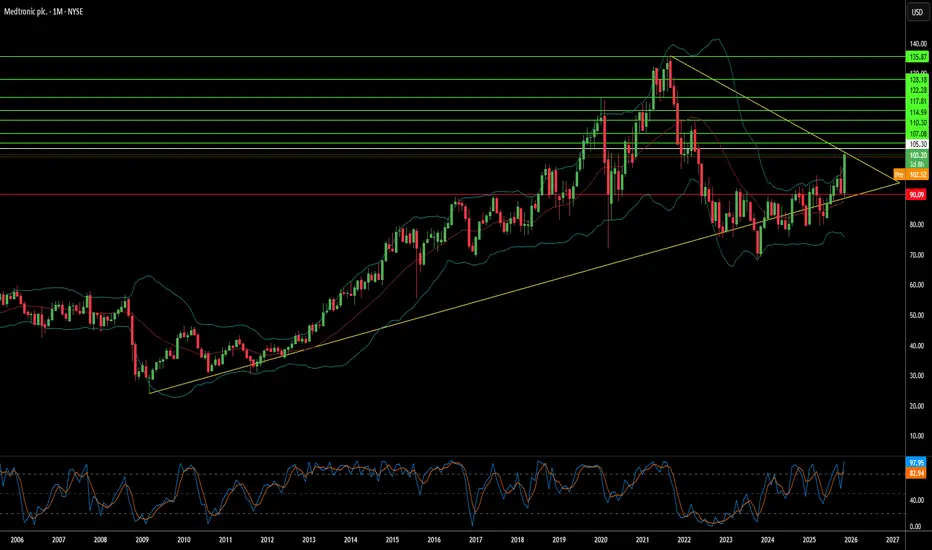
Can a Medical Giant Transform Into a Growth Story?Medtronic has demonstrated significant momentum entering 2026, with its recent 23% share price appreciation reflecting fundamental improvements rather than speculative enthusiasm. The company delivered strong fiscal Q2 2026 results with revenue reaching approximately $9 billion, up 6.6% year-over-year, while adjusted earnings per share rose 8% to $1.36, surpassing both internal projections and analyst expectations. Most notably, cardiovascular revenue surged 10.8% to roughly $3.4 billion, marking the strongest growth in over a decade outside pandemic periods and suggesting sustainable acceleration across its core business.
The company's pulsed-field ablation technology has emerged as a transformative growth driver, with the PulseSelect system achieving FDA clearance as the first PFA platform for treating atrial fibrillation. This innovation propelled a 71% revenue surge in Cardiac Ablation Solutions during Q2, including 128% growth in the United States. Beyond cardiology, Medtronic's Hugo robotic-assisted surgery system represents a strategic initiative to penetrate the underdeveloped surgical robotics market. The system has recently been submitted for FDA clearance following successful urologic trials, achieving a 98.5% success rate. These technological advances position Medtronic across multiple high-growth segments, including neuromodulation, renal denervation, and diabetes management.
From an investment perspective, Medtronic offers a compelling combination of quality, income, and growth potential. The company has raised its dividend for 48 consecutive years, maintaining Dividend Aristocrat status with a current yield in the low-3% range above the S&P 500 average while preserving capital for R&D investment and strategic acquisitions. Management has demonstrated improved execution with consistent guidance raises, and balanced capital allocation between shareholder returns and innovation funding. While risks remain around robotics execution, diabetes strategy decisions, and payer negotiations, the fundamental thesis appears intact for long-term investors seeking defensive growth with rising cash flows and exposure to structural healthcare trends driven by aging demographics and minimally invasive procedure adoption.
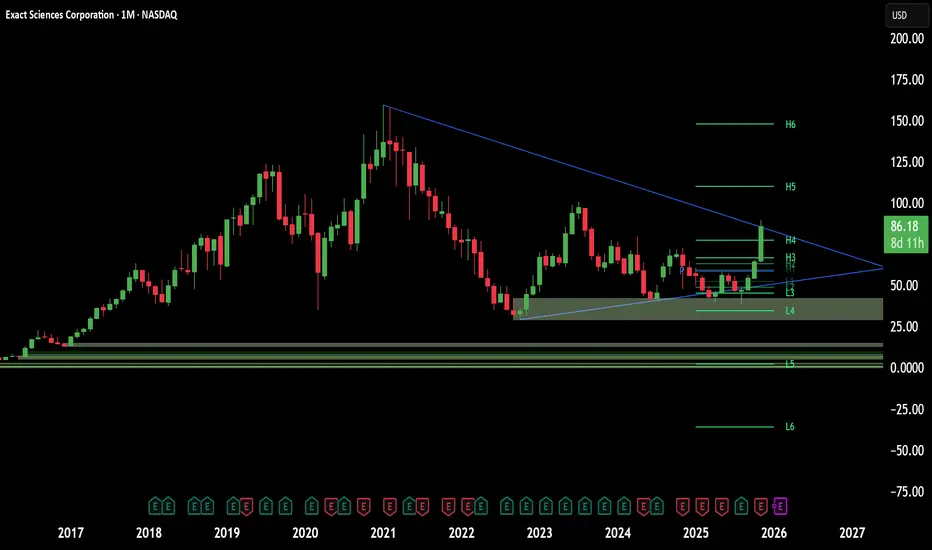
Exact Sciences Surge: Abbott Talks Signal Diagnostic ShiftNews of a potential acquisition by Abbott Laboratories propelled Exact Sciences (EXAS) stock nearly 24% higher on Wednesday.
Market activity shifted dramatically following reports of advanced negotiations between the two healthcare giants. Abbott Laboratories, a diversified medical titan, reportedly seeks to acquire the cancer diagnostics leader. This potential union highlights a broader trend of strategic consolidation within the healthcare sector. Investors reacted swiftly, driving EXAS shares toward a 52-week high.
The Catalyst: Strategic Acquisition Talks
Recent reports indicate Abbott Laboratories and Exact Sciences are finalizing terms. While no deal is guaranteed, the market priced in a significant premium immediately. Exact Sciences’ valuation jumped, reflecting the strategic value of its assets. Abbott’s stock dipped slightly, a common acquirer reaction during buyout rumors.
Industry Trends: Diagnostics Consolidation
The diagnostics sector is undergoing a massive recalibration. Major players like Abbott are moving away from pandemic-era testing windfalls toward sustainable oncology solutions. Acquiring Exact Sciences offers immediate dominance in colorectal cancer screening. This aligns with industry shifts toward early detection and preventative care. Consolidation allows companies to scale R&D and distribution simultaneously.
Geostrategy & Geopolitics: Healthcare Autonomy
National health security is increasingly vital in a fragmented geopolitical landscape. Countries now prioritize domestic diagnostic capabilities to ensure supply chain resilience. A US-centric merger between Abbott and Exact Sciences strengthens the American healthcare infrastructure. It reduces reliance on foreign diagnostic supply chains. This moves critical cancer screening technology firmly under the umbrella of a robust US multinational.
Business Models: Recurring Revenue Power
Exact Sciences operates on a highly attractive recurring revenue model. Its flagship product, Cologuard, serves a vast, aging demographic requiring regular screening. Unlike one-off device sales, screening protocols generate consistent cash flow. Abbott likely values this predictability. The model creates a "sticky" ecosystem where patients and providers remain engaged over decades.
Company Culture & Innovation
Exact Sciences maintains a culture deeply rooted in relentless innovation. The company recently validated its Cologuard Plus test, demonstrating superior sensitivity. This commitment to product evolution keeps them ahead of competitors. Their R&D teams focus on multi-cancer early detection (MCED), a "holy grail" in diagnostics. Abbott would inherit this forward-thinking workforce.
Patent Analysis: The IP Moat
Intellectual property rights form the bedrock of Exact Sciences' valuation. The company successfully defends its technology, recently winning patent litigation against Geneoscopy. This legal victory solidifies their market monopoly on stool-DNA testing methods. An acquirer like Abbott gains a protected fortress, not just a product line.
Macroeconomics & Economics
The deal signals a return of "strategic buyers" despite high interest rates. While private equity has slowed, corporate balance sheets remain healthy. Abbott holds significant capital reserves ready for deployment. This transaction suggests that corporate leaders see current valuations as attractive entry points. It indicates broader confidence in the long-term economic resilience of the healthcare sector.
Technology & Cyber: Data Integrity
Modern diagnostics require robust digital infrastructure. Exact Sciences manages sensitive genetic data, necessitating advanced cybersecurity protocols. Their proactive Coordinated Vulnerability Disclosure program exemplifies a mature tech stance. Abbott would acquire a secure, HIPAA-compliant data architecture essential for modern digital health integration.
Management & Leadership
CEO Kevin Conroy has effectively guided Exact Sciences from a penny stock to a multi-billion-dollar enterprise. His leadership emphasized clinical evidence and commercial execution. The management team built strong relationships with insurers and health systems. Abbott is likely buying this human capital and commercial prowess as much as the technology itself.
Science & High-Tech: The DNA Edge
At its core, Exact Sciences is a high-tech molecular biology firm. Their technology amplifies specific DNA biomarkers from non-invasive samples. This requires sophisticated chemistry and automated laboratory processes. The science behind Cologuard represents a high barrier to entry for competitors. Abbott secures immediate access to this cutting-edge genomic platform.
Investor Caution
Traders must exercise discipline. Deal talks can collapse over valuation or regulatory concerns. The 24% surge in prices is a high probability of success, leaving little room for error. If talks fail, the stock could retrace sharply. Investors should weigh the arbitrage opportunity against the risk of deal failure.
Perfect Setup: Thyrocare Cup and Handle | Long-Term WealthSTRONG BUY Setup 🏥
Entry: ₹1,490-1,510 (Current Level)
Target 1: ₹1,557-1,570
Target 2: ₹1,611-1,630
Target 3: ₹1,665-1,685
Target 4: ₹1,750-1,800+ (Extended - Cup Depth Target)
Stop Loss: ₹1,400
Technical Rationale:
PERFECT CUP AND HANDLE PATTERN forming on Weekly Chart (educational diagram shown)
Massive multi-year Cup formation (pink shaded area) from 2021 highs
Handle consolidation currently forming near 1,400-1,500 range
Strong +7.15% surge today breaking above handle resistance
Volume at 2.82M - strong for weekly timeframe
Price breaking above descending trendline (black line)
Trading above both pink trendlines - bullish reversal confirmed
RSI around 60-65 - healthy momentum with room for upside
Healthcare/Diagnostics sector fundamentally strong
Cup depth: ~1,500 to bottom (~400) = ~1,100 points
Measured move: 1,500 base + 1,100 depth = 2,600 target (long-term)
Multiple resistance levels: 1,557, 1,611, 1,665
Clear support at handle base: 1,400
Risk-Reward: EXCEPTIONAL 1:10+ ratio for full cup target
Pattern: CUP AND HANDLE on WEEKLY Chart - one of the most powerful and reliable bullish continuation patterns in technical analysis
Strategy: Long-term positional/investment (months to year+)
Book 15% at T1 (1,565), 15% at T2 (1,620), 15% at T3 (1,675)
Hold remaining 55% for major target 2,000-2,600
Trail SL to 1,500 after crossing T1
Key Levels:
Handle Support (Critical): 1,400 - MUST HOLD
Cup Rim Resistance: 1,500-1,520 (breaking now)
Strong Resistance: 1,557, 1,611, 1,665
Extended Targets: 1,800, 2,000, 2,200-2,600
Major Support: 1,400, 1,350
Timeframe: WEEKLY chart - this is a MAJOR long-term investment setup (6-18 months)
Cup & Handle Characteristics:
✅ Cup: Multi-year rounded bottom (2021-2024) - ✓
✅ Handle: Consolidation at rim (current) - ✓
✅ Volume: Decreasing in handle, increasing on breakout - ✓
✅ Depth: Significant (1,100 points) - ✓
✅ Breakout: Occurring now with volume - ✓
Volume Analysis: 2.82M weekly is substantial, confirming breakout authenticity
Sector: Healthcare/Diagnostics - Thyrocare is major diagnostic chain, secular growth story
Measured Move Calculation:
Disclaimer: For educational purposes only. Not SEBI registered.
Cup bottom: ~400
Cup rim: ~1,500
Depth: 1,100 points
Target: 1,500 + 1,100 = 2,600 (100%+ upside potential)
Conservative target: 1,800-2,000 (50-70% upside)
DVAX Director Scott Myers scooped up 3,800 shares at $10.82NASDAQ:DVAX #DVAX — Dynavax Technologies Corp | Healthcare | Drug Manufacturers - Specialty & Generic | USA | NASD | August 25, 2025.
Recent insider activity at Dynavax Technologies Corporation (DVAX) highlights a notable purchase by Scott Dunseeth Myers, a Director on the board. On August 22, 2025, Myers acquired 3,800 shares at an average price of $10.82 per share, amounting to a total investment of $41,116.
This transaction, disclosed via SEC Form 4 on August 25, 2025, at 08:50 AM EDT, increases his total holdings to 35,004 shares, reflecting insider confidence amid the stock's recent pullback.
SEC From 4:
www.sec.gov
Chart:
• (1D)
• (1W)
Examining the daily chart for DVAX, the stock is entrenched in a downtrend, trading below key moving averages (e.g., SMA 20 at ~$10.79, SMA 50 at ~$10.60, and SMA 200 at ~$11.82), with price action showing increased volatility and a recent drop to around $10.28-$10.53.
This setup introduces notable risks, including potential further downside if broader market sentiment in the healthcare sector weakens or if earnings catalysts fail to materialize.
However, the insider buy at these levels suggests a possible bottoming formation, and I estimate a modest upside potential of 5-10% in the near term, targeting resistance near $11-$11.50, contingent on positive volume confirmation and macroeconomic stability.
Entering UNH HereTrading Fam,
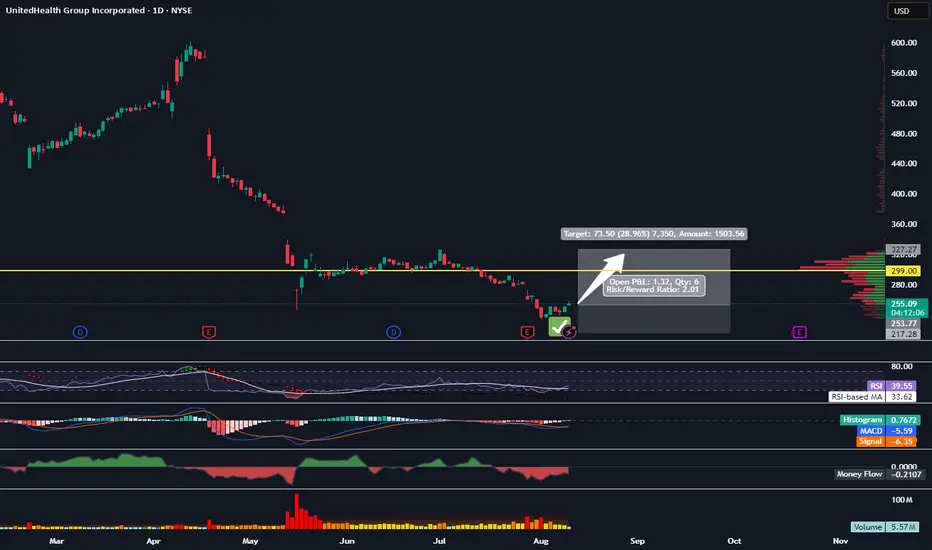
I'm not going to go into a long exposé about how great the technicals are here because, truthfully, they are not great. In fact, there is relatively little that supports any kind of entry here other than the fact that this stock is extremely oversold. Really, the only reason I even considered an entry here is that my indicator has given me a buy. If you have been following me for any length of time, you know that this thing is knocking it out of the park in stocks. But to keep it safe, I am entering a 1:2 long rrr, shooting for $327 with a $217 SL. Let's see if my little indicator can keep its amazing win streak going even without a lot of technicals to support it.
✌️Stew
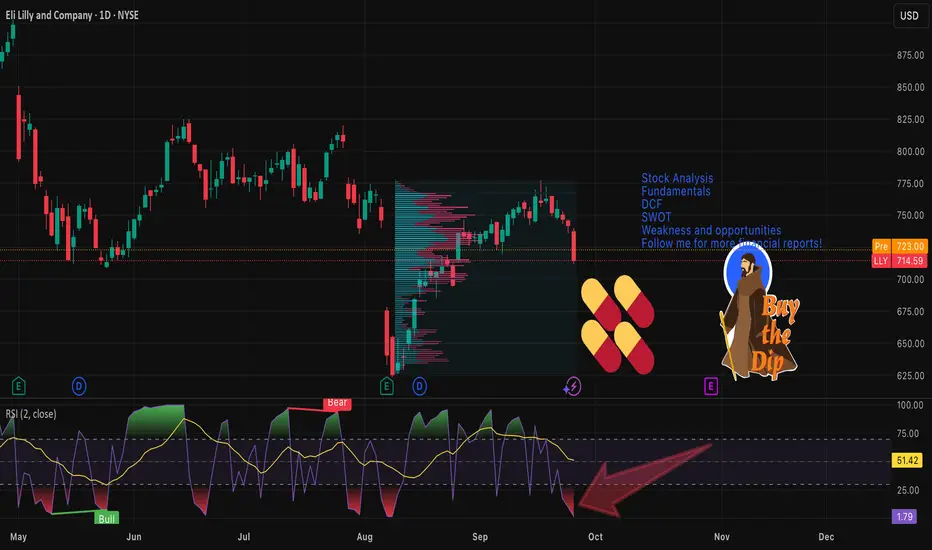
LLY | This Healthcare Co. Is a Great Pick | LONGEli Lilly & Co. engages in the discovery, development, manufacture, and sale of pharmaceutical products. The firm's products consist of diabetes, oncology, immunology, neuroscience, and other products and therapies. The company was founded by Eli Lilly in May 1876 and is headquartered in Indianapolis, IN.
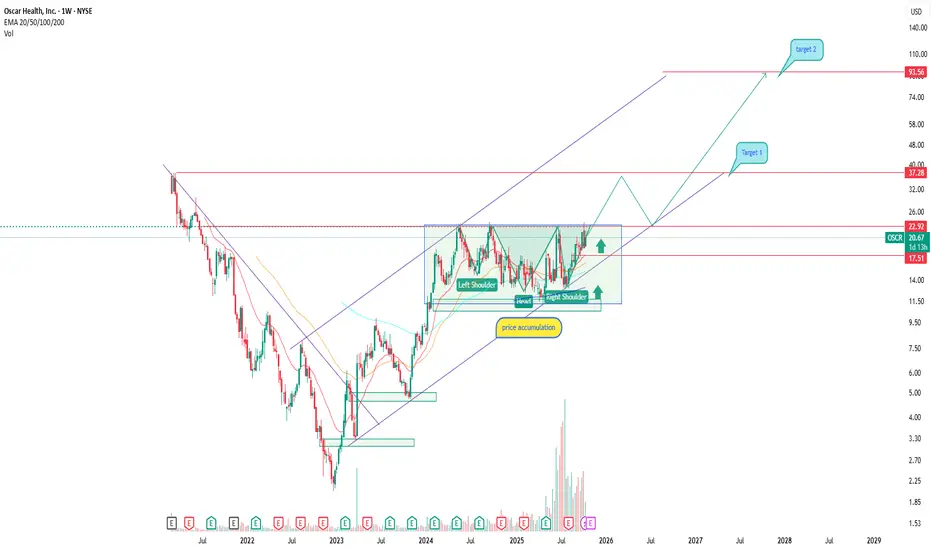
OSCR breakout from accumulation and start of a new trendOscar Health (NYSE: OSCR) is emerging as one of the more interesting names in the U.S. healthcare insurance sector. After an extended accumulation phase, the stock has broken out and is now trading above its major EMAs (50/100/200), confirming a structural shift toward a bullish trend.
The pattern resembles an inverse head and shoulders, with the 17.50–20.00 area acting as strong base support. A confirmed breakout above this zone sets the stage for a move toward 37.78 (Target 1) and potentially 93.55 (Target 2) — the upper boundary of the mid-term ascending channel.
Fundamentally, The company continues to grow its customer base and improve margins after strategic restructuring. Its shift toward tech-driven insurance solutions and partnerships with major healthcare providers strengthen its position. Recent earnings reports show narrowing losses and revenue stabilization — a sign of operational progress.
This looks like the early stage of a longer recovery cycle: the market is moving out of accumulation, but confirmation above 20.00–25.00 is crucial. As always — stay disciplined and trade by structure, not emotion.
Biotech Mania: $PCVX Ripping!XBI has seen a monstrous move to the upside.
Biotech's have been running to the upside lately.
We've seen VKTX, PEPG , PCVX and other rally.
NASDAQ:PCVX could be on watch for another continuation move.
This is high speculative but we have seen smart money hedge fund accumulate over the last few quarters.
In Q2 2025: 183 funds increased their position / 77 Funds decreased their position.
Acadia Healthcare Company | ACHC | Long at $21.98Acadia Healthcare's NASDAQ:ACHC stock has fallen nearly -76% in a year, primarily due to weak 2024 results, missed revenue and EPS expectations, and a soft 2025 revenue guidance. Ongoing federal investigations into billing practices and lawsuits have further eroded investor confidence. However, it is currently trading at a price-to-earnings ratio of 7.42x and earnings are forecast to grow 7.07% per year. The profitable company is trading at a good value compared to other healthcare companies. Debt-to-equity is relatively low (0.64x), but legal risks (DOJ probe, lawsuits) strain margins.
The stock has entered my "major crash" simple moving average territory and there is a lot of downward / selling pressure. But, more often than not, this area (which... I caution... still extends down near $16) can often signal a temporary or longer-term bottom. Personally, this is a buy area ($16-$21) even if it turns into a short-term bounce in 2025. But I believe the overall market moves in the S&P 500, etc. will guide this stock more than anything at this point (unless more bad news about the company emerges).
One thing to note is that there are open price gaps on the daily chart near $17, $10, and $8. These gaps, which often (but not always) get closed in the lifetime of a stock, are a potential signal for further declines - at least at some point. There could be a drop near $16, then a $10-$20 bullish price increase after that, followed by more declines (trapping investors). Time will tell, but NASDAQ:ACHC is currently attractively valued. From a technical analysis standpoint, it is in a personal "buy zone", even if purely for a swing trade.
Targets:
$27.00
$33.00
$39.00
ELI LILLY COMPANY - STOCK REPORTExecutive Summary
Eli Lilly and Company (LLY) has delivered strong revenue and profit growth driven by blockbuster GLP‑1 therapies (Mounjaro, Zepbound) and continued pipeline progress in oncology and cardiometabolic indications. As of 26 Sep 2025 the company shows robust margins, strong free cash flow and a leading competitive position in obesity/diabetes. Key risks include increased competition (notably Novo Nordisk), formulary decisions (payer mix), pricing/regulatory pressure and execution risk in manufacturing scale‑up. Valuation is elevated versus the broader healthcare sector but appears reasonable relative to growth; a simplified DCF (base case) and comparable‑multiples view imply a fair value near mid‑single‑digit percentage above recent prices. Recommendation: Hold — favourable fundamentals but limited near‑term upside versus valuation and meaningful execution/competitive risks.
1) Key data & company overview
Name: Eli Lilly and Company
Sector: Pharmaceuticals / Biotechnology
Primary market: NYSE (US)
Ticker: LLY
Brief business description
Revenue model: Prescription drug sales (product sales), services (partnered R&D/licensing), royalties.
Principal products: Mounjaro (tirzepatide) — T2D/weight management; Zepbound (semaglutide for weight loss comp’d), Trulicity, Humalog (insulin legacy portfolio), oncology candidates (investigational/approved).
Geographic exposure: Global — largest sales in U.S., substantial Europe and row markets.
Market & share metrics (most recent available — see sources)
Market capitalization: ~USD 642–702 billion (source dispersion; SEC shares outstanding 946.46M as of 4 Aug 2025)
Shares outstanding: 946,456,759 (per 10‑Q, Aug 4, 2025)
Float: ~946M (per public filings)
Last close (around 26 Sep 2025): ~USD 714–742 (sources vary intraday); use USD 714.59 (MLQ / market snapshots) as reference.
P/E (trailing / consensus forward): TTM P/E ~49; next‑FY consensus ~30 (see market data).
EV/EBITDA (market snapshots): ~38x (site snapshots).
Price performance (approx., source snapshots to 25–26 Sep 2025): 1D: -3.7%; 1M: -4% to -8% range; 3M: -10% to -15%; 1Y: down ~20% from 52‑week high (use precise values in sources below).
(Notes: market figures vary by data vendor; SEC 10‑Q provides authoritative share count. All market prices quoted are approximations from public market data as of 26 Sep 2025 — see Sources.)
2) Financial results — consolidated summary (historical 3 years + last 4 quarters)
Sources: Eli Lilly SEC filings (10‑K 2024, 10‑Q Jun 30 2025), company press releases, market data sites (Yahoo/MLQ/FactSet snapshots). All amounts USD.
Annuals (selected items; amounts in billions except EPS in USD)
2022 (FY): Revenue ≈ 28.3; Net income ≈ 5.16; Diluted EPS ≈ 5.41; FCF ≈ 8.0 (approx).
2023 (FY): Revenue ≈ 40.5; Net income ≈ 11.0; Diluted EPS ≈ 12.99; FCF ≈ 11.5.
2024 (FY): Revenue ≈ 45.0; Net income ≈ 10.6; Diluted EPS ≈ ~12.00; FCF ≈ ~12.0.
(Notes: 2023–2024 saw large revenue step from GLP‑1 products; numbers approximated from company reports and market summaries—see Sources for exact line items.)
Most recent four quarters (approx, Q3 2024 – Q2 2025)
Q3 2024: Revenue ≈ 9.5B; Net income ≈ 2.2B; EPS diluted ≈ 2.32
Q4 2024: Revenue ≈ 11.0B; Net income ≈ 2.6B; EPS ≈ 2.73
Q1 2025: Revenue ≈ 14.0B; Net income ≈ 3.8B; EPS ≈ 4.2
Q2 2025: Revenue = 15.56B (company release Aug 7, 2025); Net income ≈ 4.9B; EPS (reported) ≈ 6.31 (last quarter’s EPS per consensus/press)
YoY growth / trends (high level)
Revenue CAGR (2022–2024): ~30–35% driven by Mounjaro/Zepbound launch adoption and price/volume mix.
Net income: large increase 2022→2023; 2024 flattening due to investments, higher operating costs and mix. Q1–Q2 2025 continue strong growth.
Margins: Operating margin expanded materially vs pre‑GLP era; recent operating margin ~35–38% (site snapshots). Net margin ~23–25%.
Tabular snapshot
Table: (Year | Revenue | Net income | Diluted EPS | FCF)
2022 | 28.3B | 5.2B | 5.41 | ~8.0B
2023 | 40.5B | 11.0B | 12.99 | ~11.5B
2024 | 45.0B | 10.6B | ~12.0 | ~12.0B
Last 4Q (sum) 2024Q3–2025Q2 | ~50.1B | ~14.5B | (trailing EPS approx)
3) Balance sheet & liquidity (latest quarter Jun 30, 2025 unless noted)
Key items (USD, rounded)
Cash & equivalents: ~3.1–3.4B (per June 30, 2025 XBRL snippet)
Current assets: (per 10‑Q) — refer to consolidated balance sheet; working capital positive.
Total debt: ~38–40B (notes due 2026/2030; total debt around $39.9B per market snapshot)
Net debt: ~36B (total debt minus cash)
Ratios (approx)
Current ratio: ~1.15
Quick ratio: ~0.89
Debt/Equity: vendor snapshots differ; leverage measured as Debt/Total Capital moderate given high cash flow (Total Debt/Enterprise Value small % per some snapshots).
Commentary on solvency/liquidity
Strong operating cash generation and large market cap provide ample capacity to service debt and fund capex/R&D. Short‑term liquidity adequate; interest coverage is strong given high EBITDA and cash flow. Material execution risk arises if GLP‑1 pricing or demand deteriorates sharply—could stress near‑term growth assumptions but balance sheet remains investment grade in profile.
4) Cash flow (latest 4 quarters, approximate)
Operating cash flow (TTM): ~17–18B
Capital expenditures (TTM): ~1.5–2.0B (increased manufacturing capex in 2024–2025)
Free cash flow (TTM): ~15–16B
Commentary
Cash generation is robust and supports capex, share repurchases and dividend; capex is elevated for capacity expansion but remains a modest share of operating cash flow. FCF margin is strong and sustainable if product demand persists.
5) Comparable valuation (peers) — snapshot multiples
Peers chosen: Novo Nordisk (NVO), AstraZeneca (AZN), Amgen (AMGN), Regeneron (REGN) — peer set focused on diabetes/biotech large caps.
Table (approximate multiples — market data as of 26 Sep 2025)
LLY: P/E ~49 (TTM), EV/EBITDA ~38, P/S ~15
NVO: P/E ~35, EV/EBITDA ~28, P/S ~10
AMGN: P/E ~20, EV/EBITDA ~12, P/S ~4
REGN: P/E ~25, EV/EBITDA ~15, P/S ~6
Comment: LLY trades at premium to large pharm/biotech peers reflecting superior growth from GLP‑1 franchises and margin profile; premium justified only if growth and pricing hold.
6) Fair value estimate — Simplified DCF (base case)
Assumptions
Base year unlevered free cash flow (FCF) = USD 15.5B (TTM approximate).
Explicit forecast horizon = 5 years.
FCF growth: Year1–2: +10% then Year3: +8%, Year4: +6%, Year5: +4% (reflecting moderation as market saturates and competition intensifies).
Terminal growth rate = 3.0% (long‑term GDP/inflation real+inflation).
WACC = 8.5% (reflects large cap pharma, low beta, moderate leverage).
Calculation (rounded)
Projected FCFs:
Year1: 17.05B; Year2: 18.76B; Year3: 20.26B; Year4: 21.48B; Year5: 22.34B
Terminal value at end Year5 = Year5*(1+g)/(WACC−g) = 22.34*(1.03)/(0.085−0.03) ≈ 22.34*1.03/0.055 ≈ 418.5B
Discount PV of FCFs + terminal (discounted at 8.5%) ≈ PV(FCFs) ~ (sum PV FCFs) ≈ 72–80B + PV(Terminal) ≈ 300–330B → Enterprise value ~380–410B.
Net debt (~36B) → implied equity value ≈ 344–374B.
Divide by shares outstanding (946.5M) → implied fair price ≈ USD 363–395 per share.
Observation: The simplified DCF produces a materially lower fair value than market cap — this stems from conservative growth fade and relatively low WACC; however market prices imply much higher expectations (market cap ~650–700B). Discrepancy suggests market pricing embeds either higher sustained FCF growth, lower discount rate, or different terminal assumptions. Because LLY’s current market cap and observed multiples are much higher, applying market‑implied expectations leads to a higher implied fair value (consistent with P/E ~49). For investors, using the simplified DCF above suggests the stock may be fully valued or richly priced unless strong multi‑year growth persists.
Sensitivity
WACC ±1% (7.5% / 9.5%) with base growth: implied price range roughly USD 470 (WACC 7.5%) to USD 295 (WACC 9.5%).
Terminal growth ±1% (2% / 4%): price moves roughly USD −60 / +90 vs base.
(Notes: DCF is simplified and uses rounded FCF; full model should use operating projections by product, tax, capex schedule. If instead one applies market multiples to 2026E EBITDA, implied prices vary widely — see sources.)
7) SWOT
Strengths
Market leader in next‑gen GLP‑1/dual agonists (rapid adoption).
Strong gross & operating margins; robust FCF generation.
Diversified pipeline (oncology, CV) and global commercial footprint.
Experienced management, strong manufacturing investment.
Weaknesses
High valuation multiples implying little margin for error.
Dependence on a few high‑revenue products (Mounjaro/Zepbound).
Manufacturing scale‑up challenges and supply chain concentration risks.
Increasing SG&A/R&D investment could press short‑term margins.
Opportunities
New indications (cardio‑protective label for tirzepatide), oral incretins (orforglipron) could expand market.
International expansion and formulary wins.
Bolt‑on M&A to diversify revenue streams.
Threats
Intense competition (Novo Nordisk market share, formulary dynamics).
Payer reimbursements, pricing caps, regulatory scrutiny.
Potential adverse trial/regulatory outcomes for pipeline assets.
Macroeconomic/tighter capital markets affecting healthcare spend.
8) Key risks, catalysts & timeline
Primary risks
Competitive pressure from Novo Nordisk (Wegovy/Ozempic), payer formulary preferences (e.g., CVS formulary moves).
Regulatory/pricing risk (US and international).
Execution: supply chain, manufacturing scale, and successful indication expansions.
Concentration risk: heavy revenue share from GLP‑1 franchise.
Near‑term catalysts & timeline (next 12 months approximate)
Q3 2025 earnings release (expected Oct–Nov 2025; company calendar/earnings dates per IR).
FDA/regulatory milestones for label expansions / approvals for oral incretins or oncology programs (dates vary; watch company pipeline calendar).
Quarterly sales updates and guidance adjustments — next: Q3 2025 release.
(Precise dates: refer to investor relations events page and SEC filings; earnings typically quarterly — check IR for confirmed dates.)
9) Recommendation & risk positioning
Recommendation: Hold, with possible "Buy the Dip" scenario.
Rationale: Strong fundamentals and cash generation support a positive long‑term outlook, but the stock trades at elevated multiples that already price in sustained high growth; meaningful execution/competitive downside could compress the valuation. Hold for investors with neutral risk appetite; consider trimming positions for valuation‑sensitive portfolios and adding on material pullbacks or clearer evidence of sustained mid‑teens revenue growth beyond 2026.
Suggested horizon: Medium term (12–24 months) for monitoring catalysts; long term (3–5 years) only if comfortable with pipeline and competitive dynamics.
Risk/return profile: Medium risk / moderate to high reward conditional on continued GLP‑1 dominance and successful pipeline commercialization; downside risk if market share or pricing erodes.
10) Sources & data date
Primary sources used (data current through 26 Sep 2025):
Eli Lilly & Company SEC filings: Form 10‑Q for quarter ended June 30, 2025 (SEC.gov).
Eli Lilly Q2 2025 results press release (Aug 7, 2025) and investor presentations (company IR).
Market data snapshots and summaries: MLQ.ai, Yahoo Finance, Fox Business / FactSet quotes (price, multiples, market cap, performance snapshots).
News: Yahoo Finance, PR Newswire coverage of Q2 2025 results.
Kenvue Tylenol Turmoil: Does the 33% Drop Scream Undervalued?While many stocks (especially tech) are near all-time highs and have high PE ratios, I'm still hunting for bargains, and Kenvue seems to be relatively cheap. More recently, it came under fire because of Trump's remarks on Tylenol, and the stock lost over 10% in a few days.
Since May 2025, the stock has lost 33%, putting it, in my opinion, in an undervalued zone.
Kenvue is the manufacturer of a bunch of health-related products, including Tylenol, Neutrogena, Band-Aid, Listerine, Benadryl, Zyrtec, Motrin, Aveeno, Johnson's, Rogaine, and many more.
I like this kind of health-related beaten-down stocks because they exhibit good uncorrelation with the rest of the stock market, and in bear markets, they tend to hold up well because people always need to buy healthcare products.
WHY BUY KENVUE STOCK?
The stock has a strong moat, with excellent market penetration, top-of-mind brand recognition, and consumer loyalty, as well as economies of scale, worldwide.
They have great management, with Kirk Perry and Andy Dasgupta leading the company. This guy has a great track record in the consumer product sector.
Despite the decent performance, the stock price is now at an all-time low.
KEY NUMBERS AND FUNDAMENTALS
Where should I start... Since they spun off from Johnson & Johnson, the stock is now the cheapest when compared to their revenue, income, and other metrics.
Diluted EPS is now at $0.22. The same level as in 2023, when the stock was at $24. The difference is that the stock is now at $16 (33% cheaper).
The dividend ratio is now at 5%, the best level ever. The last time it was this close to the current level was in mid-2024, when the dividend yield reached 4.6%. After that, the stock rose by 38% in less than 6 months. If you like dividends, you should definitly take a look at Kenvue.
The PE ratio is 22, which is low compared to the sector and the company's historical data.
Similar story for the PB ratio, which is now at an all-time low.
This data is telling us that the stock is comparatively cheap. Of course, one needs to ask: Is it cheap because of poor prospects for the company, or because the market is overly fearful? I'd lean for the second.
It's also worth adding that their gross margin is 58%, the EBITDA margin is 24% (quite good), and the forward PE is at around 15.
Finally, the analyst's price targets average $22, giving it an upside of around 34%.
MY GAMEPLAN
I'm going to allocate close to 1% of my net worth to this stock. In case the price drops, I will average down my purchasing price, considering that this company is likely to continue having a very strong moat for the coming years.
I plan to hold it for the medium/long term, potentially selling part or the entirety of my holdings once I get over 30% return. I will re-evaluate it later this year.
Quick note: I'm just sharing my journey - not financial advice! 😊
BrightSpring in a BULLFLAG! #BTSG @BTSGThis is beautiful SETUP guys. We see volume INCREASING (bullish), RSI not oversold yet (bullish), MACD almost crossing (Bullish) and of course we see clearly a BULLFLAG in an uptrend, bullish. We can take a trade and BTSG might break soon and increase around 7-13%. NASDAQ:BTSG
QURE – Gene Therapy Play Gaining MomentumuniQure N.V. NASDAQ:QURE is a leading gene therapy biotech targeting rare diseases like Huntington’s and hemophilia.
🔹 Bullish setup forming above $14.50–$15.00
🔹 Price Target: $28.00–$29.00
📈 Catalyst: FDA alignment on its Huntington’s program (AMT-130) clears the path for a BLA submission in Q1 2026, significantly derisking the development.
✅ Early data from AMT-130 is promising, tracking well with clinical and biomarker endpoints — potential first-mover in disease-modifying therapies for Huntington’s.
🧠 Expanding platform: AMT-260 (epilepsy) delivered a 92% seizure reduction in initial patient, showcasing pipeline breadth across CNS disorders.
🧬 QURE offers exposure to the fast-growing gene therapy space with high long-term upside potential if clinical momentum continues.
#QURE #GeneTherapy #BiotechStocks #FDA #BreakoutSetup #LongSetup #RareDiseases #HuntingtonsDisease #Epilepsy #SmallCapStocks #GrowthStocks #Healthcare #BiotechInvesting #TechnicalAnalysis #StockWatchlist #Bullish
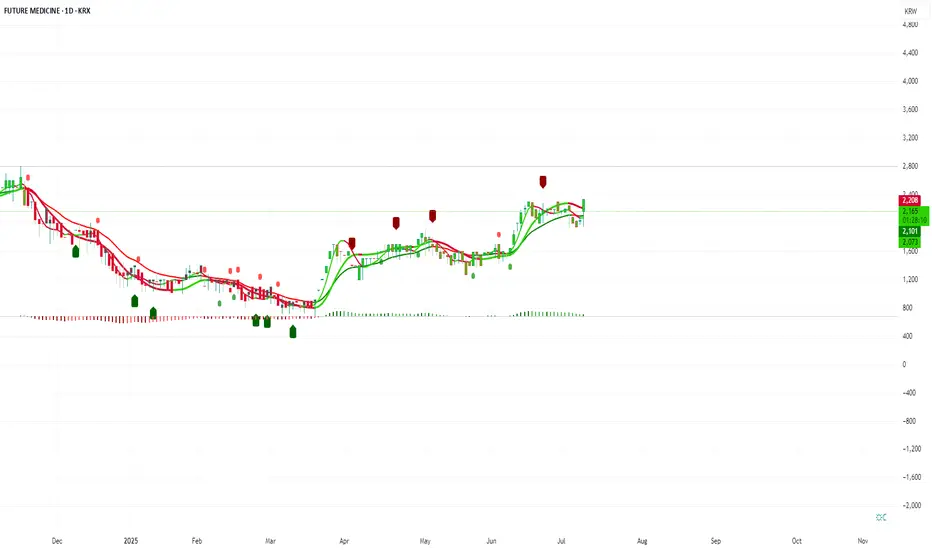
Walk This Way...This S. Korean company focuses on treatment of cystic fibrosis and chronic kidney disease, et al. Future Medicine, Limited.
Godspeed to this company as they search for cures for primary biliary cirrhosis; colorectal, prostate, and lung cancers and rheumatoid arthritis, et al. They target metabolic cancers, inflammatory and autoimmune diseases, to produce anticancer drugs, anti-fibrotics and antiviral remedies. Not only persistent, but painful diseases, as well. Who on earth wouldn't want this company to succeed ?
Selling Volume has completely Dried-up and the stock is in the process of setting Higher-Lows. MACD, StochasticsRSI, Rate-of-Change, and %r are all additive tenets of confirmation for the astute and intrepid investor.
Go Long.... it's at the 20... the 10... the 5... and Touchdown
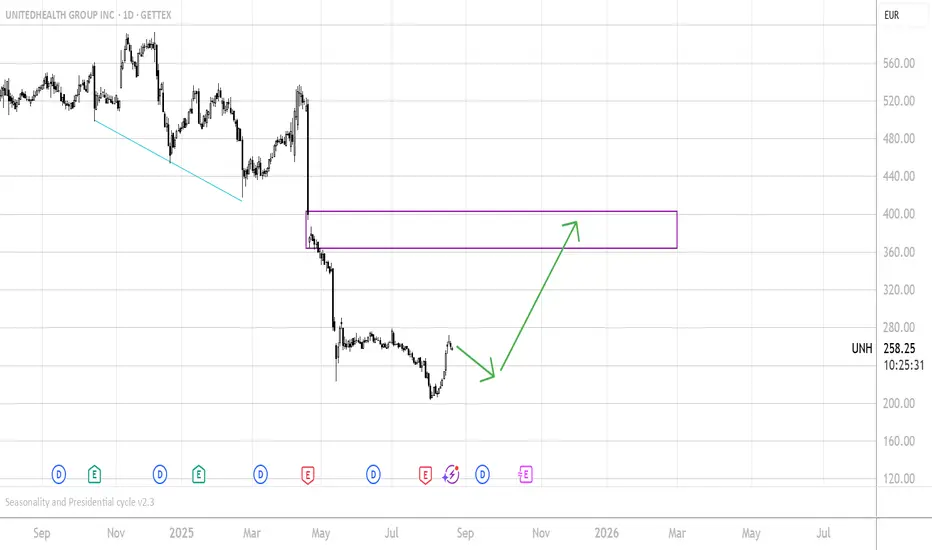
UNITEDHEALTH UNH Long Scenario based on Seasonality and FractalsFrom a fractals Perspective I expect a chance for around 30% gain from an upcoming upmove.
From a Seasonal Perspective I expect a retracement mode until End of Mid/September and then upside until early December.
I hope we make the bigger upmove in this time and complete that move otherwise this fractals target could take some time/moths/years.
Feel free to like / support the Idea, leave a comment or contact me in the chat.
Good luck to all
*this is not a trade call*
Cheers!
PHG | Healthcare Co Ready to Launch | LONGKoninklijke Philips NV is a technology company, which engages in the healthcare, lighting, and consumer well-being markets. It operates through the following segments: Diagnosis and Treatment; Connected Care; Personal Health; and Other. The Diagnosis and Treatment segment consists of systems, smart devices, software, and services, powered by AI-enabled solutions that support precision diagnoses and minimally invasive treatment in therapeutic areas such as cardiology, peripheral vascular, neurology, surgery, and oncology. The Connected Care segment focuses on Hospital Patient Monitoring, Sleep and Respiratory Care, and Enterprise Informatics. The Personal Health segment represents Oral Healthcare business unit, Personal Care business unit, and Mother and Child Care business unit. The Other segment is involved on the Innovation and Strategy, IP Royalties, Central costs, and other small items. The company was founded by Anton Frederik Philips and Gerard Leonard Frederik Philips in 1891 and is headquartered in Amsterdam, the Netherlands.