LiamTrading - $XAUUSD$: Second Scenario – BUY Priority After...LiamTrading - OANDA:XAUUSD $: Second Scenario – BUY Priority After BREAKING $4002$
With Support from the U.S. Treasury Secretary
Hello traders community, LiamTrading is back with a detailed analysis of OANDA:XAUUSD $ for the start of the week!
The Gold market is receiving strong support from policy: U.S. Treasury Secretary Scott Bessent calls on the Fed to continue cutting interest rates as PCE inflation is currently at $2.7\%$.
This call, aimed at reducing mortgage rates and supporting the housing market, strengthens the long-term outlook for Gold.
Technical Analysis: We prioritize continuing to buy in line with the main trend. The best strategy is to enter at strong resistance/support zones to ensure the lowest risk.1.
📰 MACRO FUNDAMENTALS: CALL FOR RATE CUT
Impact: The Treasury Secretary's statement on cutting interest rates to support the "transitioning" economy increases expectations for policy easing, which is a strong support factor for Gold (though not yet an official decision).
Suitable Strategy: Market sentiment is being driven by expectations of policy easing, reinforcing the priority for a BUY (Long) position.
📊 TECHNICAL ANALYSIS: IMPORTANT PIVOT POINT
Resistance Zone $4002$: This area acts as an important pivot point.
Buy Entry will be activated after the price breaks $4002$ and retests.
Sell Entry: Look for short-term scalping at the resistance zone $4030$ to secure profits. Highlighted Zone: Prioritize entries at confirmed Trendline zones.
🎯 DETAILED TRADING PLAN (ACTION PLAN)
We will wait for Gold to break structure and create a BUY setup.
🟢 Main BUY Scenario (BUY Break & Retest)
Logic: Buy at $4002$ after breaking resistance and retesting, leveraging new upward momentum.
Entry (BUY): $4002$
SL: $3995$ (tight SL)
TP1/TP2: $4020$ | $4035$
TP3: $4070$
🔴 SCALPING SELL Scenario (SELL Scalping)
Logic: Short-term scalping at the strong resistance zone $4030$ (near Sell Liquidity zone).
Entry (SELL): $4030$
SL: $4038$
TP1/TP2: $4015$ | $4004$
TP3: $3990$4.
📌 SUMMARY & DISCIPLINE (Liam's Note)
Our BUY strategy is reinforced by policy outlook and technical breakout at $4002$. Strictly adhere to SL $3995$ to manage risk before the upward structure is confirmed.
Are you ready for Gold's movement at $4002$? Please LIKE and COMMENT!
Tradingforex
LiamTrading - $XAUUSD$: NEW WEEK TRADING SCENARIO...LiamTrading - OANDA:XAUUSD $: NEW WEEK TRADING SCENARIO – PRIORITIZE SELLING After BREAKING THE TRENDLINE
Hello traders community,
The new week opens with a clear strategy: Prioritize SELLING after Gold has broken the previous upward trendline.
Although fundamental economic news (such as interest rate policies and politics) supports Gold potentially reaching $5,000$ USD, we must trade according to
current Price Action. Technical selling pressure is strong. We will SELL at key resistance areas and continue SELLING when the price breaks the downward structure.
📰 FUNDAMENTALS & LONG-TERM OUTLOOK
Prospect of $5,000$: Fundamental and political factors still support the scenario of Gold reaching $5,000$ USD in the long term (due to geopolitical risks and the potential loss of Fed's independence).
Short Term 🔴: Gold is under technical selling pressure after breaking through the $4,000$ USD mark.
📊 TECHNICAL ANALYSIS: BREAKING THE TRENDLINE
Structure: Gold has exited the upward price channel and is retesting the broken trendline.
Priority: SELL at the retest resistance area of $4024$.
🎯 DETAILED TRADING PLAN (ACTION PLAN)
🔴 SELL Scenario (SELL Primary) - Preemptive Resistance
Entry 1: $4024$ (Sell retest trendline area)
SL: $4032$
TP1/TP2: $4012$ | $4000$
TP3: $3989$
Entry 2 (Continued SELL): When the price breaks the next trendline at $3992$
SL: $4000$
TP: $3940$
🟢 BUY Scenario (BUY Reversal) - Buy at Strong Support
Logic: Only buy when the price hits a strong liquidity support area, potential for short-term recovery.
Entry (BUY): Around $3960$ (Buy Scalping area)
SL: $3954$
TP1/TP2: $3972$ | $3988 FWB:TP3 : $4000$
📌 SUMMARY & DISCIPLINE (Liam's Note) Don't let the $5,000$ USD prospect affect short-term risk management. Trade according to Price Action. Adhere to SL and prioritize SELL positions at resistance areas.
Are you ready for the SELL strategy at the start of this week?
LiamTrading - XAUUSD: Dual Strategy Ahead of FOMCLiamTrading - XAUUSD: Dual Strategy Ahead of FOMC - Prioritise Buying the Retracement at $3914
Hello trading community,
Following a significant sell-off, Gold is showing signs of a slight uplift, forming an upward structure. We continue to prioritise buying the recovery, viewing this as an intermediate correction within the larger downtrend. High volatility is imminent as the FOMC decision approaches.
📰 MACRO CONTEXT & FUNDAMENTAL FLOW
The market is displaying clear hesitation before the FED announcement:
Technical Recovery 🟢: Gold reversed its decline during Asian trading, recovering slightly from a three-week low as traders anticipate the FOMC interest rate decision.
Headwinds 🔴: Despite the recovery, optimism over US-China trade and a slight lift in the USD are acting as a barrier, limiting further buying momentum.
📊 TECHNICAL ANALYSIS & ACTION PLAN
Based on the current market structure, the strategy involves trading high-probability liquidity zones:
🟢 Primary BUY Recovery Scenario (BUY Primary)
We are looking for price to test the crucial Buy zone Liquidity to initiate the recovery wave.
Entry Zone (BUY): $3914
Stop Loss (SL): $3906 (Tight SL required)
Take Profit (TP): TP1: $3933 | TP2: $3956
🔴 SELL Continuation Scenario (SELL Retest/Scalping)
Using the broken trend area for short-term selling opportunities:
Entry Zone (SELL): $4048
Stop Loss (SL): $4056
Take Profit (TP): TP1: $4035 | TP2: $4022
SUMMARY & DISCIPLINE (Liam's Note)
Gold is in a decision zone. This is the time to apply a disciplined strategy: only enter at identified liquidity areas, and Always adhere to your Stop Loss (SL). Capital management is the number one priority before the FOMC event.
Wishing all traders a successful and disciplined trading session!
Investors, Traders, and Policy Makers in the World MarketImportance and Difference.
Introduction
The global financial market is an intricate ecosystem where capital flows seamlessly across borders, industries, and sectors. Within this ecosystem, three fundamental participants play distinct yet interconnected roles — investors, traders, and policy makers. Each group contributes to the market’s structure, functioning, and stability in different ways.
Investors provide the long-term capital necessary for growth and innovation; traders ensure market liquidity and efficiency through short-term operations; and policy makers establish the regulatory and economic framework that governs both.
Understanding their importance and differences is essential for comprehending how the world market operates and responds to global financial dynamics.
1. Role and Importance of Investors
1.1 Who are Investors?
Investors are individuals or institutions that allocate capital to assets such as stocks, bonds, mutual funds, real estate, or startups with the expectation of earning long-term returns. Unlike traders, who focus on short-term market fluctuations, investors emphasize fundamental value and sustainability.
Investors can be categorized into:
Retail investors – individual participants investing personal funds.
Institutional investors – entities such as pension funds, insurance companies, mutual funds, and sovereign wealth funds managing large capital pools.
1.2 Importance of Investors in the Global Market
Capital Formation:
Investors are the backbone of economic growth. Their funds are used by corporations for expansion, innovation, and employment generation. When investors purchase shares or bonds, they provide the necessary capital for companies to operate and expand.
Long-term Stability:
Investors bring stability to the market through their long-term orientation. Unlike traders, they are less influenced by daily market volatility, ensuring that companies have a reliable source of capital even during uncertain times.
Corporate Governance:
Institutional investors often influence corporate governance by voting on important issues, promoting transparency, ethical conduct, and accountability. This oversight helps maintain investor confidence in global markets.
Economic Growth and Development:
By channeling savings into productive investments, investors drive infrastructure development, technological advancement, and job creation. Their confidence can determine the economic trajectory of entire nations.
Wealth Creation:
Investors benefit from dividends, interest, and capital appreciation, which enhances individual and institutional wealth. This wealth accumulation fuels consumption and savings, further stimulating the economy.
2. Role and Importance of Traders
2.1 Who are Traders?
Traders are market participants who buy and sell financial instruments — such as equities, commodities, currencies, or derivatives — to profit from short-term price movements. Their approach is usually technical, relying on charts, patterns, and market sentiment rather than long-term fundamentals.
Traders can be classified as:
Day traders: Execute multiple trades within a single day.
Swing traders: Hold positions for days or weeks.
Arbitrage traders: Exploit price differences across markets.
Algorithmic or high-frequency traders: Use computer algorithms to execute rapid trades.
2.2 Importance of Traders in the Global Market
Market Liquidity:
Traders enhance liquidity by constantly buying and selling assets, ensuring that other market participants can enter or exit positions easily. A liquid market reduces transaction costs and improves efficiency.
Price Discovery:
Through continuous trading activity, traders help establish fair market prices. Their collective actions reflect real-time market sentiment, economic data, and investor expectations, making markets more transparent.
Market Efficiency:
Traders exploit inefficiencies and arbitrage opportunities, which helps align prices with intrinsic value. This process of correcting mispriced assets contributes to overall market efficiency.
Risk Management and Hedging:
Traders also play a role in managing financial risks through derivative instruments. For instance, commodity traders help producers hedge against price volatility in oil, metals, or agricultural goods.
Economic Signaling:
The behavior of traders can act as a signal of market health. Sharp price movements or heavy trading volumes often indicate changes in investor sentiment, guiding policy makers and long-term investors in their decisions.
3. Role and Importance of Policy Makers
3.1 Who are Policy Makers?
Policy makers are government officials, central banks, and regulatory authorities responsible for shaping the financial, monetary, and fiscal policies that govern the global market. Their actions influence interest rates, inflation, exchange rates, taxation, and capital flow regulations.
Key examples include:
Central Banks (like the U.S. Federal Reserve, European Central Bank, Reserve Bank of India)
Financial Regulators (like SEBI, SEC, FCA)
Government Ministries and Economic Councils
3.2 Importance of Policy Makers in the Global Market
Economic Stability:
Policy makers ensure macroeconomic stability through monetary and fiscal policies. By adjusting interest rates and money supply, central banks can control inflation, manage unemployment, and stabilize currencies.
Regulation and Oversight:
Regulatory bodies protect investors and maintain market integrity by enforcing laws against fraud, insider trading, and market manipulation. Effective regulation enhances investor confidence and market credibility.
Crisis Management:
During financial crises, policy makers implement interventions such as bailouts, stimulus packages, or liquidity support to prevent systemic collapse. For example, central banks’ coordinated actions during the 2008 crisis prevented a global depression.
Trade and Capital Flow Management:
Policy makers influence global trade through tariffs, exchange rate policies, and cross-border investment regulations. Their decisions can encourage or restrict foreign investment and affect global capital mobility.
Long-term Economic Planning:
Governments design long-term economic strategies to promote sustainable development, technological innovation, and social welfare, ensuring that the market supports inclusive growth.
4. Interrelationship Between the Three Groups
Although their goals and methods differ, investors, traders, and policy makers are interdependent within the world market:
Investors and Traders:
Traders provide liquidity that allows investors to buy or sell assets without major price disruptions. Meanwhile, investors create long-term value that traders can speculate on in the short term.
Traders and Policy Makers:
Traders respond immediately to policy announcements — such as interest rate changes or fiscal packages — influencing market volatility. Policy makers, in turn, observe trader behavior as a barometer for market sentiment.
Investors and Policy Makers:
Investors rely on stable and predictable policies to make long-term decisions. Conversely, governments depend on investor confidence to finance public debt and stimulate economic growth.
This cyclical relationship ensures that each participant supports the other, maintaining balance within the global financial ecosystem.
5. Global Examples and Case Studies
2008 Financial Crisis:
The crisis highlighted how interconnected these three groups are. Excessive risk-taking by traders and institutions led to a collapse in investor confidence, prompting massive interventions by policy makers through quantitative easing and stimulus measures.
COVID-19 Pandemic (2020):
During the pandemic, investors sought safe assets, traders reacted to volatility, and policy makers injected liquidity and cut interest rates to stabilize economies. The coordinated response prevented a deeper global recession.
Inflation Control by Central Banks (2022–2023):
Central banks worldwide raised interest rates to combat inflation. Traders responded with shifts in bond and currency markets, while investors adjusted portfolios toward defensive assets, showing the dynamic interplay between all three.
6. Challenges Faced by Each Group
Investors: Face risks from inflation, policy uncertainty, and geopolitical tensions. Their challenge lies in maintaining returns amid market volatility.
Traders: Confront high competition, algorithmic dominance, and unpredictable market swings. Risk management and speed are critical to survival.
Policy Makers: Must balance economic growth with financial stability while avoiding overregulation or political interference. Global coordination remains a persistent challenge.
7. The Future of Their Roles in the Global Market
The future of the world market will be shaped by technology, globalization, and sustainability.
Investors are increasingly prioritizing ESG (Environmental, Social, Governance) principles.
Traders are adopting AI-driven and algorithmic systems to enhance speed and accuracy.
Policy Makers are developing frameworks for digital currencies, blockchain regulation, and climate finance.
This evolution will demand greater cooperation among all three to ensure inclusive and resilient global markets.
8. Conclusion
The global financial market is a dynamic system where investors, traders, and policy makers each play indispensable roles. Investors provide long-term capital and stability; traders inject liquidity and efficiency; and policy makers maintain order and economic balance.
Their interactions create a complex yet balanced ecosystem that fuels global economic growth, innovation, and development. Recognizing the distinctions and synergies among these three groups helps one appreciate the mechanisms that sustain the world market and the challenges that lie ahead in maintaining its stability and inclusiveness.
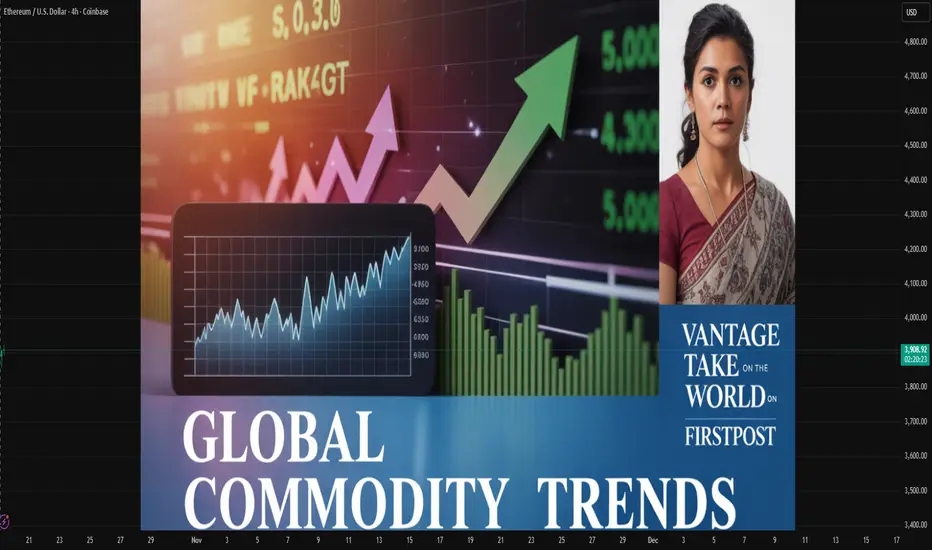
Global Commodity Trends: An In-Depth Analysis1. Overview of Commodity Categories
Commodities can broadly be categorized into three segments:
Energy Commodities – including crude oil, natural gas, coal, and renewable energy components.
Metal Commodities – comprising precious metals (gold, silver, platinum) and industrial metals (copper, aluminum, nickel, lithium).
Agricultural Commodities – such as grains, oilseeds, coffee, cotton, and sugar.
Each sector operates under different economic drivers but shares common threads: cyclical demand, global trade dependency, and vulnerability to geopolitical and climatic disruptions.
2. Energy Commodities: Shifting Power Dynamics
Oil Market Evolution
Crude oil remains the most influential commodity, dictating the rhythm of the global economy. After years of volatility, oil prices in 2025 have stabilized between $75–$90 per barrel, balancing between OPEC+ production controls and demand recovery in post-pandemic industrial economies. Key trends influencing the oil market include:
Geopolitical Tensions: Conflicts in the Middle East, Russia-Ukraine tensions, and sanctions have repeatedly disrupted supply routes and reshaped trade alliances.
Energy Transition: Many nations are reducing fossil fuel dependence, creating dual effects—investment withdrawal from oil projects and short-term supply tightness.
US Shale Resurgence: Technological improvements have revived U.S. shale production, moderating price spikes and diversifying global supply sources.
Natural Gas and LNG Boom
The liquefied natural gas (LNG) market has become a critical player in global energy security. Europe’s pivot away from Russian pipeline gas has spurred demand for LNG imports from the U.S., Qatar, and Australia. Asian markets—particularly India, Japan, and South Korea—are also expanding their LNG infrastructure. Prices remain elevated due to limited shipping capacity and long-term contract negotiations.
Renewable Commodities
The renewable sector is emerging as a commodity class of its own. Materials essential for wind turbines, solar panels, and batteries—like lithium, cobalt, and rare earth elements—are now strategically significant. Nations rich in these resources, such as Chile (lithium), the Democratic Republic of Congo (cobalt), and China (rare earths), have gained economic leverage in the green transition era.
3. Metal Commodities: Industrial and Technological Backbone
Copper: The ‘New Oil’ of Electrification
Copper is a vital indicator of global industrial health and the clean energy revolution. With rising demand from electric vehicles (EVs), grid expansion, and renewable infrastructure, copper prices have remained strong, hovering near $9,000–$10,000 per metric ton in 2025. However, supply shortages from major producers like Chile and Peru continue to pressure the market. Technological exploration and recycling have become key to meeting demand sustainably.
Aluminum and Steel: Industrial Expansion
Global infrastructure projects—particularly in India, Southeast Asia, and Africa—have driven demand for aluminum and steel. China’s gradual construction slowdown has been offset by growth in emerging markets. Decarbonization efforts have also led to “green steel” innovations, with major producers investing in hydrogen-based smelting technologies.
Precious Metals: Inflation Hedges
Gold remains a preferred hedge against inflation, currency devaluation, and financial instability. In 2025, gold prices are resilient around $2,100 per ounce, supported by central bank purchases and investor uncertainty about global debt sustainability. Silver, platinum, and palladium also benefit from industrial use in electronics, solar energy, and automotive catalysis.
Critical Minerals and Rare Earths
The rise of electric mobility and digital technologies has made critical minerals central to geopolitical competition. Nations are now securing mineral supply chains to reduce dependence on single-country producers. The U.S. and EU have launched strategic mineral alliances to diversify sourcing and encourage domestic mining.
4. Agricultural Commodities: Weather, Demand, and Technology
Food Security Challenges
Global food prices have experienced volatility due to extreme weather, conflict disruptions, and changing consumption patterns. Droughts in key grain-producing regions (such as North America and Australia) have tightened wheat and corn supplies, while El Niño weather patterns have affected rice production in Asia.
Grains and Oilseeds
Wheat and Corn: Prices remain firm as global demand for animal feed and biofuels continues to grow.
Soybeans: Driven by rising protein consumption in developing economies and biofuel production in the U.S. and Brazil, soybean demand remains robust.
Rice: Export restrictions by major producers like India in 2024–25 have kept rice prices elevated, intensifying food inflation pressures in Africa and Asia.
Soft Commodities: Coffee, Cocoa, and Cotton
Coffee and cocoa markets face supply disruptions due to unpredictable weather and labor shortages. Meanwhile, cotton prices have stabilized as global textile demand recovers post-pandemic. However, sustainability standards and organic production are reshaping trade patterns, with premium pricing for ethically sourced materials.
Technological Innovation in Agriculture
Precision farming, AI-driven weather forecasting, and genetically resilient crops are transforming agricultural productivity. These innovations aim to balance yield improvements with sustainability and environmental preservation, reducing the carbon footprint of global agriculture.
5. Geopolitical and Economic Influences
Global commodity trends are closely tied to geopolitics and macroeconomics. Several key developments have reshaped the landscape:
Trade Wars and Sanctions: The U.S.–China trade rivalry and sanctions on Russia and Iran have disrupted traditional commodity flows, leading to new alliances among BRICS nations.
Currency Movements: A strong U.S. dollar often suppresses commodity prices by making them costlier for non-dollar economies. However, increasing talk of “de-dollarization” could redefine commodity pricing in the long term.
Global Inflation and Interest Rates: Higher interest rates have tempered speculative investments in commodities, yet inflationary pressures from supply chain disruptions continue to sustain price floors.
Environmental Regulations: Climate policies and carbon taxes are influencing production costs and trade competitiveness, particularly in energy and metals sectors.
6. Technological and Structural Shifts
Digitalization and Smart Commodities
Blockchain and AI technologies are revolutionizing commodity trading systems. Digital platforms now enable transparent pricing, efficient logistics, and reduced transaction costs. Smart contracts in blockchain-based trade reduce fraud and enhance traceability from mines to markets.
Green Commodities and ESG Investments
Investors increasingly favor environmentally and socially responsible commodities. ESG (Environmental, Social, and Governance) frameworks are pushing companies to disclose emissions data, human rights practices, and sustainability metrics. This shift is influencing how commodity-backed financial instruments are structured and traded.
Automation in Mining and Logistics
Robotics, automation, and remote monitoring have transformed mining and shipping operations, reducing costs and improving safety. Autonomous drilling and AI-based maintenance systems enhance operational efficiency across industries dependent on raw materials.
7. Regional Insights
Asia-Pacific
Asia remains the largest consumer of commodities, with China and India leading demand for energy, metals, and food. India’s industrial expansion and renewable energy programs are reshaping regional trade flows. Southeast Asian nations are emerging as key exporters of palm oil, rubber, and rare earths.
North America
The U.S. and Canada benefit from abundant energy and agricultural resources. The shale industry revival and strategic mineral exploration position North America as a stable supplier amidst global uncertainty.
Europe
Europe’s energy diversification post-Ukraine war has accelerated investment in renewables, hydrogen, and circular economy practices. High carbon pricing has also made European industries more sustainable but less cost-competitive globally.
Africa and Latin America
These regions are rich in untapped resources, from lithium in Chile and Argentina to cobalt in the DRC and oil in Nigeria. However, political instability and infrastructure challenges hinder full potential. Strategic partnerships with China and Western investors aim to modernize extraction and processing industries.
8. Challenges Ahead
Despite progress, several structural challenges persist in global commodity markets:
Supply Chain Fragmentation: Geopolitical rivalries threaten trade connectivity.
Climate Risks: Extreme weather events continue to impact yields, mining operations, and energy supply.
Resource Nationalism: Governments are asserting greater control over natural resources, imposing export restrictions or windfall taxes.
Market Volatility: Speculative trading and financial derivatives amplify short-term price fluctuations, complicating investment planning.
Sustainability Pressure: Transitioning to low-carbon operations requires significant capital and policy alignment across nations.
9. The Future of Commodity Markets
Looking ahead to 2030 and beyond, the global commodity landscape is expected to be shaped by four major forces:
Energy Transition Acceleration: The world will see greater integration of renewables, hydrogen, and energy storage, reducing fossil fuel dependency but increasing demand for critical minerals.
Technological Integration: AI, blockchain, and predictive analytics will dominate commodity trading, making markets more transparent and efficient.
Sustainable Agriculture: Climate-resilient crops and smart irrigation will redefine global food systems.
Geopolitical Realignment: Multipolar trade networks among BRICS+ nations will challenge traditional commodity pricing systems dominated by Western economies.
Conclusion
Global commodity trends in 2025 reveal a dynamic interplay of energy transformation, technological evolution, and geopolitical recalibration. While oil and gas remain vital to short-term stability, the long-term trajectory points toward green minerals, digital commodities, and sustainable agriculture. The world is navigating a complex transition where supply chains, trade policies, and investment strategies must adapt to environmental and political realities. In essence, commodities have evolved from mere tradable goods into strategic instruments of power, policy, and progress. Managing this transformation with foresight, equity, and sustainability will define the resilience of the global economy in the years ahead.
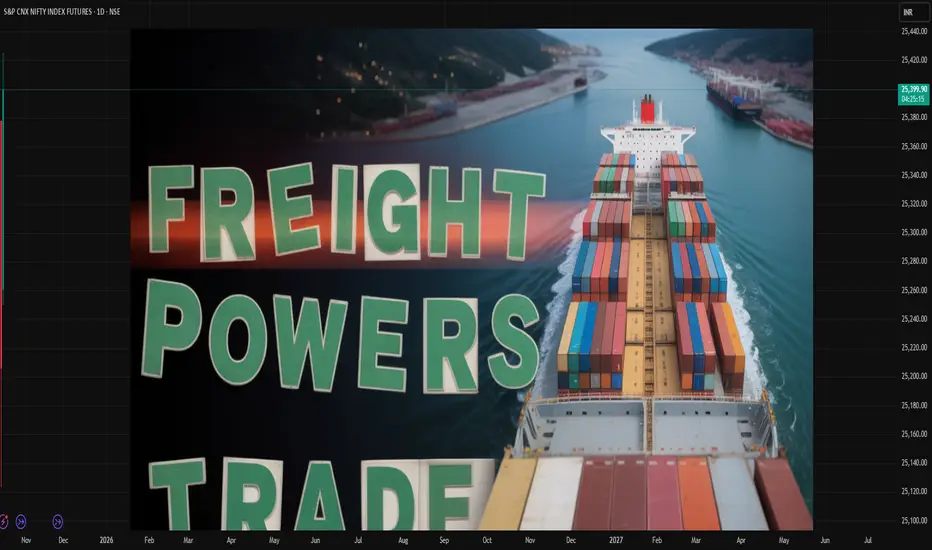
How Freight Powers International Trade Flows1. Freight as the Foundation of Global Commerce
Freight transportation is the essential mechanism that makes global trade possible. Every product traded internationally — from electronics to food grains — must move through freight networks. Whether through container ships, cargo planes, or freight trains, these modes connect producers in one part of the world to consumers in another. Approximately 90% of global trade by volume moves via maritime freight, highlighting its dominance. The efficiency of freight systems determines how smoothly global trade operates and influences everything from delivery speed to product pricing.
2. Integration of Global Supply Chains
Freight is at the heart of global supply chain integration. Modern supply chains are complex networks where raw materials, components, and finished goods move between multiple countries before reaching the end consumer. For example, a smartphone may have chips from Taiwan, displays from South Korea, and assembly in China before shipping to global markets. Freight systems synchronize these movements, ensuring that production timelines are maintained and inventory flows efficiently. The coordination between shipping, warehousing, and logistics creates a seamless global trade structure that supports industries worldwide.
3. Maritime Freight: The Engine of Bulk Trade
The shipping industry is the most significant segment of freight transportation in international trade. Containerization — the use of standardized containers — revolutionized the way goods are transported, allowing easy transfer between ships, trucks, and trains. Bulk carriers transport essential commodities like oil, coal, iron ore, and grains that sustain global industries. Ports such as Singapore, Rotterdam, and Shanghai are critical trade hubs facilitating the majority of maritime trade. The cost-effectiveness of sea freight enables developing nations to participate in global trade by exporting raw materials and importing manufactured goods efficiently.
4. Air Freight: Speeding High-Value Trade
While maritime freight dominates in volume, air freight leads in value and speed. It is essential for transporting perishable goods, electronics, luxury items, and pharmaceuticals. Global courier companies such as FedEx, UPS, and DHL operate vast networks connecting continents within hours. Air freight supports industries where time-sensitive delivery is crucial, such as e-commerce and medical supply chains. During global crises — like the COVID-19 pandemic — air freight played a vital role in distributing vaccines, medical equipment, and emergency goods worldwide. Its ability to reduce transit time makes it indispensable to modern trade flows.
5. Rail and Road Freight: Connecting Landlocked Economies
Not all countries have direct access to seaports. For landlocked nations like Nepal, Afghanistan, or Switzerland, rail and road freight are critical for connecting to global markets. Rail freight offers cost-effective long-distance land transport, particularly across continents such as Europe and Asia. The Trans-Eurasian Railway, linking China to Europe, is a prime example of how rail corridors enhance international trade efficiency. Road freight complements rail by providing “last-mile” connectivity between ports, warehouses, and distribution centers. Together, these modes ensure that even remote regions can participate in the global trade network.
6. Technological Advancements in Freight Logistics
Modern freight systems are becoming increasingly digitalized, boosting the speed and reliability of trade flows. Automation, artificial intelligence (AI), GPS tracking, and blockchain are transforming freight logistics. Smart ports use automated cranes and drones to monitor cargo, while AI optimizes shipping routes to reduce fuel costs and emissions. Blockchain enhances transparency by providing real-time tracking of goods and verifying trade documents securely. Technologies such as the Internet of Things (IoT) allow constant monitoring of temperature, humidity, and location, which is vital for sensitive cargo like pharmaceuticals and food. These innovations make freight operations more efficient, resilient, and sustainable.
7. Freight Infrastructure as a Trade Enabler
Robust infrastructure development is a major driver of trade competitiveness. Ports, airports, railways, highways, and logistics hubs form the physical foundation of global freight systems. Countries investing heavily in infrastructure — such as China’s Belt and Road Initiative (BRI) — are reshaping global trade corridors. Improved infrastructure reduces transit times, minimizes delays, and cuts transportation costs. Additionally, intermodal terminals allow seamless transfer of cargo between different transport modes, ensuring efficiency throughout the trade journey. Well-developed freight infrastructure attracts foreign investment and strengthens a nation’s position in global trade networks.
8. Freight Costs and Trade Competitiveness
Freight costs significantly influence the pricing and competitiveness of goods in international markets. High transportation costs can make exports less attractive and imports more expensive. For instance, small island nations often face higher freight charges, limiting their trade potential. Conversely, countries with efficient freight systems enjoy lower trade costs and increased global competitiveness. Reductions in freight costs — through containerization, fuel efficiency, and digital logistics — have helped lower global trade barriers. Economists often consider freight efficiency as a key indicator of a country’s ability to compete in the international market.
9. Environmental Impact and the Push for Green Freight
Freight transportation, while essential for trade, also contributes to carbon emissions and environmental pollution. The maritime industry alone accounts for nearly 3% of global CO₂ emissions. As a result, there is growing emphasis on green freight initiatives, such as cleaner fuels, electric vehicles, and energy-efficient logistics. Organizations like the International Maritime Organization (IMO) are enforcing stricter emission standards to ensure sustainable shipping. Rail and electric freight options are gaining popularity as eco-friendly alternatives. Sustainable freight systems not only protect the environment but also align with global trade’s shift toward ESG (Environmental, Social, and Governance) goals.
10. Freight Resilience and Global Trade Stability
Recent global events — from the COVID-19 pandemic to the Suez Canal blockage — have underscored the importance of freight system resilience. Disruptions in major shipping routes or shortages of containers can cause ripple effects across industries and economies. Strengthening freight resilience through diversification of trade routes, building buffer capacities, and adopting digital logistics solutions has become a global priority. Resilient freight networks ensure the uninterrupted flow of goods, stabilize supply chains, and maintain economic balance. Nations that invest in flexible and adaptive freight infrastructure are better equipped to handle future global disruptions.
Conclusion
Freight is more than just the movement of goods — it is the lifeline of international trade. It connects nations, drives industrial growth, and enables global economic interdependence. From the vast ocean shipping routes to the rapid air cargo lanes and the expanding rail corridors, freight systems form the invisible network sustaining global commerce. As technology advances and sustainability becomes a priority, the future of freight lies in smarter, greener, and more resilient systems. Efficient freight operations will continue to power global trade flows, shaping the next era of globalization and economic progress.
Impact of Central Bank Policies on Global Indices1. Interest Rate Decisions and Stock Market Valuations
One of the most direct ways central banks affect global indices is through interest rate policy. When a central bank such as the U.S. Federal Reserve, European Central Bank (ECB), or Bank of Japan changes benchmark interest rates, it impacts corporate profitability and investor sentiment.
Rate cuts make borrowing cheaper, stimulating business expansion and consumer spending. This boosts earnings expectations, leading to higher stock prices and rising indices such as the S&P 500 or FTSE 100.
Rate hikes, on the other hand, increase borrowing costs, reduce spending, and pressure profit margins, leading to a bearish sentiment across global markets.
Thus, the direction of central bank rates often sets the tone for short- to medium-term movements in global indices.
2. Quantitative Easing (QE) and Liquidity Injection
During economic downturns, central banks often implement Quantitative Easing (QE)—the purchase of government and corporate bonds to inject liquidity into the financial system.
This policy increases the money supply, lowers long-term interest rates, and encourages investment in riskier assets like equities.
For example, the Federal Reserve’s QE programs after the 2008 financial crisis and during the COVID-19 pandemic led to massive rallies in global indices such as the NASDAQ, Dow Jones, and MSCI World Index.
Increased liquidity often pushes investors toward stocks, resulting in higher valuations and stronger index performance globally.
3. Tapering and Liquidity Withdrawal
Conversely, when central banks begin tapering QE or reducing asset purchases, it signals a tightening monetary stance. Markets perceive this as a withdrawal of easy money, often leading to volatility.
The “Taper Tantrum” of 2013, when the Federal Reserve hinted at slowing its bond purchases, caused global bond yields to spike and emerging market indices to decline sharply.
Tapering reduces the availability of cheap capital, which can deflate overvalued markets and cause corrections across global indices.
4. Currency Exchange Rate Impacts
Central bank actions significantly influence foreign exchange rates, which in turn affect multinational companies and stock market indices.
For instance, a strong U.S. dollar resulting from higher Federal Reserve interest rates can hurt U.S. exporters, leading to declines in indices such as the Dow Jones and S&P 500.
Conversely, a weaker yen due to the Bank of Japan’s accommodative policy benefits Japanese exporters, pushing the Nikkei 225 higher.
Exchange rate movements impact global trade competitiveness, profits, and valuations—key factors in index performance.
5. Inflation Control and Market Stability
A central bank’s mandate often includes maintaining price stability. When inflation rises beyond targets, banks respond by tightening policy (raising rates or reducing liquidity).
High inflation reduces purchasing power and increases input costs for companies, which negatively impacts profit margins and stock valuations.
For example, aggressive rate hikes by the Federal Reserve in 2022–2023 to combat inflation led to declines in major indices like the NASDAQ Composite and S&P 500.
Conversely, successful inflation management fosters confidence, encouraging investors to re-enter equity markets.
Thus, inflation control directly affects both short-term volatility and long-term market stability.
6. Impact on Bond Yields and Equity Valuation Models
Central bank policy decisions influence bond yields, which are critical to equity valuation models.
When central banks lower rates, bond yields fall, and the discount rate used in valuing future corporate earnings decreases. This leads to higher present values of future cash flows, making equities appear more attractive.
In contrast, rising yields due to policy tightening make bonds more competitive with stocks, often prompting a rotation from equities to fixed income.
This dynamic is visible across global indices, where valuation multiples (like P/E ratios) expand or contract depending on central bank yield policies.
7. Investor Sentiment and Global Risk Appetite
Central bank communication—through forward guidance and policy statements—greatly influences investor sentiment and global risk appetite.
Dovish statements (indicating a preference for low rates and economic support) often boost investor confidence and lead to index rallies.
Hawkish tones (signaling tightening or rate hikes) can trigger sell-offs as investors anticipate slower growth.
Markets often react more to the tone and outlook of central bank meetings than to the actual rate changes. The Federal Reserve’s or ECB’s policy stance thus sets the mood for global equity performance.
8. Global Spillover Effects and Policy Synchronization
In today’s interconnected world, central bank actions have global spillover effects.
For instance, when the U.S. Federal Reserve raises rates, capital often flows from emerging markets to the U.S. in search of higher returns. This leads to depreciation of emerging market currencies and declines in their stock indices.
On the other hand, synchronized easing policies—as seen during the 2020 pandemic—can drive global liquidity surges and push indices across continents to record highs.
Thus, the coordination (or lack thereof) among major central banks—Fed, ECB, BoJ, and PBoC—affects not just domestic markets but global equity trends.
9. Sectoral Impacts within Indices
Central bank policies impact different sectors of an economy unevenly, influencing the composition of index performance.
Financial sector stocks (banks and insurers) generally benefit from higher interest rates as they improve lending margins.
Technology and growth stocks, however, tend to perform better in low-rate environments where borrowing is cheap and future growth is highly valued.
Therefore, changes in monetary policy can shift the leadership within global indices, with cyclical or defensive sectors taking turns depending on policy stance.
10. Long-Term Structural Implications
Finally, central bank policies have long-term structural effects on market valuation, risk perception, and investor behavior.
Prolonged periods of ultra-low interest rates can lead to asset bubbles, excessive leverage, and distortions in capital allocation.
On the other hand, consistent and transparent policy frameworks strengthen financial stability, foster sustainable growth, and create confidence in long-term investments.
For example, the credibility of the U.S. Federal Reserve’s inflation targeting has historically anchored investor trust, supporting steady growth in indices like the S&P 500 over decades.
Thus, beyond short-term volatility, central bank credibility shapes the very foundation of global financial markets.
Conclusion
The impact of central bank policies on global indices is profound and multifaceted. From influencing interest rates and liquidity to shaping investor psychology and cross-border capital flows, central banks are the key architects of modern financial stability. Their actions ripple through bond, currency, and equity markets—driving both short-term volatility and long-term trends.
Ultimately, understanding central bank policy decisions is essential for investors, traders, and analysts seeking to interpret the movement of global indices. In an interconnected global economy, the pulse of equity markets beats in rhythm with central bank policy shifts—making monetary policy one of the most powerful forces in global finance.
Future Trends in Global Index Trading1. Expansion of Thematic and Sector-Based Indices
Traditional indices like the S&P 500 or FTSE 100 are giving way to thematic indices that focus on specific industries or megatrends such as artificial intelligence, green energy, cybersecurity, biotechnology, and space technology.
Investors are increasingly allocating capital toward sectors that align with technological innovation or sustainability goals. This evolution will diversify index offerings and allow traders to gain exposure to cutting-edge sectors without needing to pick individual stocks.
For example, ESG and renewable energy indices are expected to attract major institutional inflows as global decarbonization policies intensify. Similarly, AI-focused indices will become a major attraction as machine learning reshapes corporate productivity.
2. Rise of AI and Algorithmic Trading in Index Management
Artificial Intelligence (AI) and algorithmic models are transforming index trading by enhancing speed, accuracy, and decision-making.
Advanced algorithms analyze massive data sets in real time, predicting market sentiment, volatility, and correlations between global indices. These tools enable traders to rebalance portfolios instantly and exploit arbitrage opportunities.
In the future, AI-driven “smart indices” could automatically adjust their weightings based on macroeconomic conditions, geopolitical risk, or investor sentiment — creating dynamic, self-optimizing benchmarks rather than static ones.
3. Increased Popularity of Passive Investing and ETFs
Over the past decade, passive index funds and exchange-traded funds (ETFs) have outperformed most active managers. This trend will continue as investors seek low-cost, diversified exposure to global markets.
Global ETF assets are projected to surpass $20 trillion by 2030, largely fueled by index-linked strategies. As more retail and institutional investors favor passive investing, liquidity in major indices like the MSCI World, NASDAQ-100, and Nifty 50 will deepen.
Moreover, fractional and automated ETF investing platforms will make index exposure more accessible, further democratizing global market participation.
4. Integration of ESG (Environmental, Social, and Governance) Criteria
Sustainability will be one of the defining features of future global index construction. Regulators and investors alike are demanding transparency, ethical governance, and environmental accountability.
ESG indices will not only track performance but also quantify corporate sustainability using measurable metrics such as carbon footprint, social equity, and board diversity.
In the next decade, “green indices” may become a mainstream benchmark, influencing capital allocation toward responsible corporations. Investors will increasingly use carbon-adjusted indices or climate risk-weighted indices to mitigate environmental exposure.
5. Real-Time Global Connectivity and 24/7 Trading
With technology reducing barriers between global markets, the concept of 24/7 trading across indices is becoming a reality.
Cryptocurrency markets already operate continuously, setting the precedent for traditional markets to follow. Index futures and global ETFs may soon be traded around the clock, allowing traders to react instantly to geopolitical or economic developments in any region.
Enhanced inter-market connectivity among exchanges in Asia, Europe, and North America will ensure smoother liquidity flow and minimize regional trading gaps.
6. Blockchain and Tokenization of Indices
Blockchain technology will revolutionize how indices are built, traded, and settled. Through tokenization, entire indices could be represented as digital tokens, allowing investors to buy fractional shares of global market indices seamlessly.
This innovation will make global index trading more transparent, secure, and accessible, particularly for retail investors.
Smart contracts could automate dividend distribution, rebalancing, and settlement, while decentralized finance (DeFi) platforms may introduce index-backed synthetic assets, enabling trading beyond traditional market hours.
The fusion of blockchain and finance will create a borderless, low-cost trading environment.
7. Customizable and Personalized Index Products
Investors of the future will demand customized indices that align with their personal risk tolerance, ethical values, or investment objectives.
Through AI-based portfolio construction, traders could create personal indices tracking specific sets of companies, sectors, or regions — effectively blending active and passive investing.
Robo-advisors and fintech platforms are already offering custom index portfolios that automatically rebalance based on user preferences, risk profiles, or global market movements.
This personalization trend will redefine how investors interact with global indices, making index trading both dynamic and individual-centric.
8. Data-Driven Trading and Predictive Analytics
The future of global index trading will rely heavily on big data, alternative data, and predictive analytics.
Beyond financial metrics, traders will analyze satellite imagery, shipping data, internet traffic, and sentiment analysis from social media to anticipate index trends.
Predictive models powered by machine learning will improve timing, reduce drawdowns, and identify early signals of macroeconomic shifts.
For example, sentiment data from millions of online sources could forecast the next market correction or bull run before it appears in traditional indicators.
Data-driven decision-making will become the cornerstone of competitive index trading.
9. Geopolitical and Economic Diversification
Global index traders must increasingly account for geopolitical risk, trade tensions, and currency fluctuations.
The rise of regional economic blocs — such as BRICS expansion, Asian market integration, and European green reforms — will lead to new regional index compositions.
Diversification across multiple regions will become essential to hedge against localized shocks like war, inflation, or policy shifts.
Future indices will incorporate multi-currency and multi-region components, helping investors reduce exposure to any single market’s volatility.
This diversification will also open opportunities for cross-border arbitrage and currency-hedged index products.
10. Regulatory Evolution and Market Transparency
As global index trading expands, regulatory oversight will strengthen. Authorities such as SEBI, SEC, and ESMA are developing frameworks to ensure data integrity, transparency, and investor protection in index creation and trading.
Future regulations will likely require disclosure of index methodologies, weighting criteria, and data sources, ensuring fairness and accountability.
Moreover, with the rise of AI and algorithmic trading, governments will impose ethical and operational standards to prevent manipulation and systemic risk.
Enhanced transparency will foster trust, attract more institutional participation, and create a stable global trading ecosystem.
Conclusion
The future of global index trading will be defined by technology-driven transformation, investor empowerment, and sustainable innovation.
AI, blockchain, ESG integration, and data analytics will reshape how indices are constructed, traded, and understood. The line between active and passive investing will blur as markets evolve toward automation, customization, and inclusivity.
As global economies become more interconnected, traders who embrace these trends — combining digital intelligence with strategic diversification — will thrive in the next generation of financial markets.
Carbon Credits and ESG Futures in Trading1. Understanding Carbon Credits
1.1 What Are Carbon Credits?
A carbon credit represents a certificate that allows the holder to emit one metric ton of carbon dioxide (CO₂) or its equivalent in other greenhouse gases (GHGs). The system emerged under the Kyoto Protocol (1997) and later expanded through the Paris Agreement (2015), as nations agreed to cap emissions and trade carbon units as a market-based solution to climate change.
There are two main types of carbon markets:
Compliance Markets: Regulated by national or regional governments, where entities must adhere to emission caps. Examples include the EU Emissions Trading System (EU ETS) and California Cap-and-Trade Program.
Voluntary Markets: Corporations and individuals purchase carbon credits to offset their emissions voluntarily. These markets are less regulated but rapidly growing, driven by corporate net-zero commitments.
Each carbon credit signifies a verified reduction or removal of greenhouse gases—achieved through reforestation, renewable energy projects, carbon capture, or energy efficiency programs.
1.2 The Mechanics of Carbon Trading
Carbon trading operates on a “cap-and-trade” principle. Governments or international bodies set a limit (cap) on total emissions allowed. Companies receive or buy emission allowances and can trade them based on their performance:
Emit less than their allowance: The company can sell excess credits for profit.
Emit more than their allowance: The company must buy additional credits or face penalties.
This mechanism incentivizes industries to innovate, cut emissions, and invest in green technologies. Market prices fluctuate based on supply, demand, and policy shifts—similar to commodities or financial assets.
1.3 Growth of Carbon Credit Markets
Global carbon markets have grown exponentially. According to the World Bank’s State and Trends of Carbon Pricing 2024, over 73 carbon pricing initiatives are now in operation worldwide, covering 23% of global emissions. The EU ETS remains the largest, with carbon prices crossing €80 per ton in 2024.
Meanwhile, voluntary carbon markets (VCMs) are expanding, with corporate demand driven by sustainability commitments from firms like Microsoft, Amazon, and Shell. VCMs surpassed $2 billion in annual value by 2024, with projections suggesting potential growth to $50 billion by 2030.
2. ESG Futures: A New Dimension in Sustainable Trading
2.1 Defining ESG Futures
ESG futures are derivative contracts that allow investors to gain or hedge exposure to companies or indices with high ESG ratings. These futures mirror traditional equity index futures but are based on ESG-screened indices, such as the S&P 500 ESG Index or MSCI ESG Leaders Index.
By trading ESG futures, investors can align portfolios with sustainability values while maintaining liquidity and risk management capabilities. These instruments also encourage companies to improve ESG performance to attract capital.
2.2 Evolution of ESG Derivatives
The concept of ESG-linked derivatives emerged in the late 2010s. The Eurex Exchange launched the first ESG futures in 2019, tracking the STOXX Europe 600 ESG-X Index. Since then, exchanges like CME Group, NASDAQ, and ICE have introduced ESG-linked futures and options.
These products have gained momentum as global investors, including pension funds and sovereign wealth funds, prioritize sustainability. By 2024, ESG derivative volumes exceeded $200 billion, reflecting strong institutional demand for green financial instruments.
2.3 Mechanics of ESG Futures
ESG futures function similarly to equity index futures:
Underlying Asset: ESG-screened index or basket of sustainable companies.
Contract Size: Typically based on a fixed multiple of the index level.
Settlement: Usually cash-settled at contract expiration.
Trading Purpose: Speculation, hedging, or portfolio alignment with ESG principles.
Traders can go long on ESG futures to express bullish sentiment on sustainable companies or short to hedge existing ESG exposures. They offer transparency, liquidity, and alignment with responsible investment mandates.
3. Intersection of Carbon Credits and ESG Futures
The convergence of carbon credits and ESG futures represents a powerful evolution in sustainable finance. While carbon credits directly incentivize emission reduction, ESG futures provide a broader investment framework that integrates environmental responsibility into financial markets.
Investors are increasingly using carbon intensity metrics within ESG models, linking corporate emission performance to financial instruments. Companies that effectively manage carbon risks often score higher on ESG indices, thereby influencing their inclusion in ESG futures benchmarks.
Moreover, hybrid instruments such as “carbon-neutral futures” are emerging—contracts that offset trading emissions through carbon credit purchases, symbolizing the fusion of environmental and financial innovation.
4. Role of Financial Institutions and Exchanges
4.1 Exchange Innovations
Major exchanges are leading the charge in green trading:
CME Group launched Nature-Based Global Emissions Offsets (N-GEO) and Global Emissions Offset (GEO) futures.
Eurex expanded its ESG product suite to include ESG-X and Low Carbon Index futures.
ICE (Intercontinental Exchange) operates one of the largest carbon trading platforms, integrating compliance and voluntary markets.
These platforms enhance price discovery, transparency, and global participation in carbon and ESG markets.
4.2 Institutional Involvement
Institutional investors are pivotal in driving demand for sustainable instruments. Asset managers, insurers, and pension funds are integrating ESG futures and carbon pricing mechanisms into their asset allocation models.
For instance, BlackRock, Vanguard, and UBS have expanded ESG investment portfolios that utilize derivatives for risk management and exposure optimization. Banks, including Goldman Sachs and HSBC, now facilitate carbon trading desks to meet corporate demand for offset solutions.
5. Benefits of Carbon and ESG Trading
Environmental Impact: Encourages carbon reduction and sustainable practices across industries.
Market Efficiency: Introduces price signals for emissions and sustainability, guiding capital allocation.
Portfolio Diversification: Provides new asset classes and hedging opportunities.
Corporate Accountability: Promotes transparency in reporting and responsible governance.
Economic Opportunity: Creates green jobs, investment opportunities, and technology innovation.
6. Challenges and Criticisms
Despite their promise, carbon and ESG markets face significant challenges:
Greenwashing: Some firms exaggerate sustainability credentials to attract investment.
Standardization Issues: Lack of uniform ESG metrics complicates index construction and comparability.
Verification and Integrity: In carbon markets, concerns persist about double-counting and unreliable offsets.
Market Volatility: Regulatory shifts and geopolitical tensions can cause price instability.
Accessibility: Developing nations often struggle to access or benefit equally from carbon finance.
Regulatory bodies such as the International Organization of Securities Commissions (IOSCO) and the Task Force on Climate-related Financial Disclosures (TCFD) are working to address these gaps by promoting transparency and accountability.
7. Global Policy and Regulatory Landscape
The regulatory framework supporting carbon and ESG trading is expanding globally:
European Union: The EU ETS remains the backbone of global carbon pricing, complemented by the Corporate Sustainability Reporting Directive (CSRD).
United States: The CFTC and SEC are enhancing ESG disclosure requirements, while regional carbon markets continue to grow.
Asia-Pacific: China’s national carbon market, launched in 2021, now covers over 4 billion tons of emissions annually.
India: Introduced a Carbon Credit Trading Scheme (CCTS) in 2023, marking a major step in sustainable finance integration.
These initiatives ensure that markets remain transparent, fair, and aligned with climate commitments.
8. The Role of Technology in ESG and Carbon Trading
Digital innovation is revolutionizing sustainable finance. Blockchain ensures traceability of carbon credits, preventing fraud and double-counting. Platforms such as KlimaDAO and Toucan Protocol are tokenizing carbon credits, enabling decentralized trading.
Artificial Intelligence (AI) and Big Data enhance ESG scoring accuracy and climate risk modeling. Meanwhile, satellite monitoring verifies emission reductions from forestry and land-use projects, improving credit integrity.
Such technologies are vital for scaling carbon and ESG markets while maintaining credibility.
9. Future Outlook: The Path Toward Sustainable Markets
The future of trading will be deeply intertwined with sustainability principles. As the global push toward net-zero intensifies, carbon credits and ESG futures are expected to become mainstream financial instruments.
Experts forecast that by 2030, carbon prices may exceed $100 per ton, making emissions a significant financial consideration. Similarly, ESG-linked derivatives are projected to grow tenfold, as investors demand transparency and alignment with global sustainability goals.
Financial systems are transitioning from short-term profit maximization to long-term value creation, balancing climate impact with economic growth. This shift signifies a new era where environmental performance becomes a financial advantage.
10. Conclusion
The fusion of carbon credits and ESG futures represents a defining transformation in global trading. No longer are sustainability and finance separate domains; they are now deeply interconnected. Carbon markets internalize the cost of pollution, while ESG futures reward ethical, responsible behavior.
As nations, corporations, and investors rally behind net-zero ambitions, these markets will play a pivotal role in reallocating capital toward green growth. Challenges remain—standardization, transparency, and global equity—but innovation and regulation are steadily bridging these gaps.
Ultimately, the rise of carbon credits and ESG futures marks the dawn of sustainable capitalism—where financial prosperity and planetary well-being move hand in hand. The traders and investors who embrace this paradigm will not only capture economic returns but also contribute to the preservation of the planet for future generations.
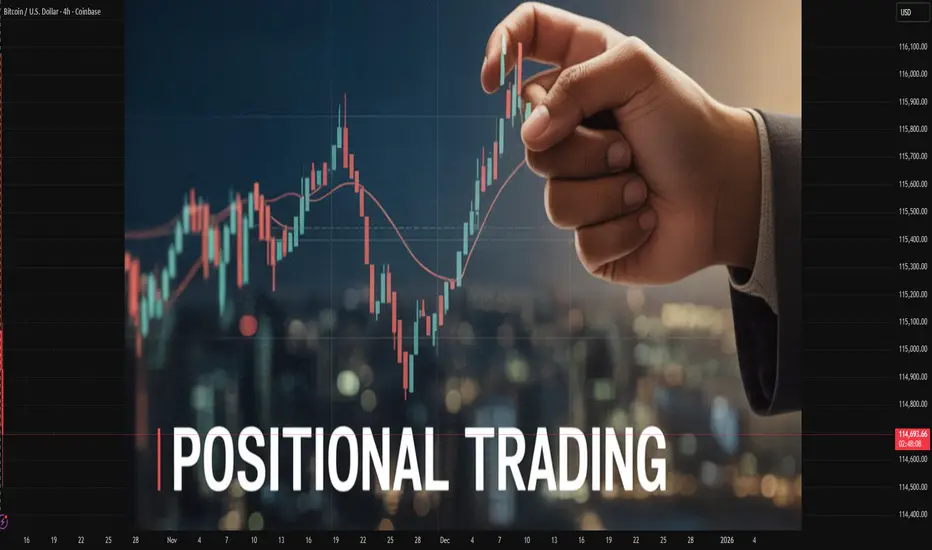
Positional Trading Globally1. Understanding Positional Trading
Positional trading is a strategy where a trader or investor takes a long-term position in an asset with the expectation that its price will move substantially in their favor over time. The trader ignores short-term volatility and focuses on the broader market trend.
Unlike day trading, which relies on short-term price fluctuations, positional trading depends on macro-level factors such as economic cycles, interest rates, corporate earnings, and geopolitical developments. The key objective is to ride a major trend until there are clear signs of reversal.
Key Characteristics of Positional Trading:
Holding period: Several weeks to years
Focus: Long-term trends and fundamentals
Tools used: Technical charts (weekly/monthly), fundamentals, macroeconomic indicators
Risk tolerance: Moderate to high
Goal: Capture large market movements rather than frequent small profits
Positional traders are patient and strategic, often viewing the market through a broad lens. They are less concerned about daily market noise and more focused on trend confirmation and momentum.
2. The Global Perspective on Positional Trading
Positional trading is practiced worldwide, from Wall Street to Dalal Street, and across all asset classes — equities, forex, commodities, and cryptocurrencies. Each global market has its own rhythm and volatility, which influences how positional traders operate.
a. United States
In the U.S., positional trading has deep roots due to the stability and liquidity of markets like the New York Stock Exchange (NYSE) and NASDAQ. Traders often rely on fundamental indicators such as earnings growth, Federal Reserve policies, and GDP trends.
Prominent examples include:
Warren Buffett, who epitomizes long-term positional investing with his buy-and-hold philosophy.
Ray Dalio, whose macro-trading strategies focus on long-term global economic shifts.
b. Europe
European positional traders pay close attention to interest rates, ECB policies, and energy prices, given the region’s sensitivity to commodities and geopolitical issues. The FTSE 100, DAX, and CAC 40 indices are common targets for positional plays.
c. Asia
In Asia, markets like India, Japan, and China have seen a surge in positional trading, especially among retail investors. India’s Nifty 50 and Sensex are popular for medium-to-long-term positions, supported by strong corporate growth and favorable demographics.
d. Middle East & Africa
In emerging economies, positional trading often centers on commodities like oil and gold. Traders focus on global demand-supply trends, OPEC decisions, and currency movements.
e. Global Commodities & Forex
In the forex market, positional traders bet on long-term currency trends based on interest rate differentials, inflation, and trade balances. Similarly, in commodities, traders analyze seasonal cycles, geopolitical tensions, and global demand patterns to hold long-term positions in assets like crude oil, gold, or copper.
3. Core Principles of Positional Trading
1. Trend Following
The foundation of positional trading lies in identifying and following trends. Traders use tools like:
Moving Averages (50-day, 200-day)
MACD (Moving Average Convergence Divergence)
ADX (Average Directional Index)
to determine whether a market is trending upward or downward.
2. Fundamental Analysis
Fundamentals play a critical role. Traders assess:
Earnings reports
Debt levels
Economic growth rates
Inflation and interest rates
Industry trends
A fundamentally strong company or economy provides the confidence to hold a position long-term.
3. Technical Confirmation
Even long-term traders use charts to find ideal entry and exit points. Weekly and monthly charts reveal major trend lines, support/resistance levels, and volume patterns that help refine timing.
4. Patience and Discipline
The hallmark of successful positional trading is patience. Traders must tolerate drawdowns and avoid reacting to short-term volatility. Emotional stability and adherence to a well-defined plan are essential.
5. Risk Management
Despite being long-term in nature, positional trading requires proper stop-loss levels, position sizing, and portfolio diversification to protect against adverse movements.
4. Strategies Used in Positional Trading
Positional traders globally use several strategic approaches depending on their risk appetite and market conditions:
a. Trend Following Strategy
This involves entering positions aligned with the prevailing trend — buying during uptrends and shorting during downtrends. Indicators like moving averages or trendlines confirm direction.
b. Breakout Strategy
Traders enter when the price breaks out of a major resistance or support zone, signaling the start of a strong trend. This is effective in markets with high momentum.
c. Fundamental Positioning
Based on long-term macroeconomic or corporate fundamentals. For example, investing in renewable energy stocks anticipating global energy transition trends.
d. Contrarian Strategy
This involves going against prevailing sentiment, buying undervalued assets when the majority are bearish, and selling overvalued ones during excessive optimism.
e. Global Macro Strategy
Positional traders adopt a macroeconomic approach — investing based on factors like interest rates, inflation, or geopolitical shifts. Hedge funds like Bridgewater Associates employ this strategy.
5. Tools and Indicators for Positional Traders
Successful positional trading depends on combining technical and fundamental tools. Key instruments include:
Moving Averages (SMA & EMA): To identify long-term trends
Relative Strength Index (RSI): To gauge overbought or oversold levels
MACD: To spot trend reversals
Fibonacci Retracement: For long-term entry levels
Volume Analysis: Confirms the strength of price movements
Economic Calendars: To track interest rate decisions, GDP data, inflation, etc.
Earnings Reports: For stock-specific decisions
Globally, platforms like TradingView, MetaTrader, and Bloomberg Terminal help traders analyze data across markets.
6. Global Examples of Successful Positional Trades
Apple Inc. (AAPL):
Long-term investors who held Apple since the early 2000s have seen massive returns as the company evolved into a global tech giant.
Gold (2008–2020):
Investors who entered during the 2008 financial crisis captured a multiyear bull run as central banks pursued monetary easing.
Bitcoin (2015–2021):
Early positional holders witnessed exponential gains as digital assets gained mainstream acceptance.
Indian IT Sector (2020–2023):
Traders who held positions in Infosys, TCS, or HCL Tech benefited from the global digital transformation wave.
These examples highlight how patience, conviction, and timing define the success of positional trading globally.
7. Advantages of Positional Trading
Lower Stress:
Since positions are held long-term, traders avoid the daily pressure of short-term fluctuations.
Time Efficiency:
Positional trading doesn’t require constant market monitoring.
Tax Efficiency:
In many countries, long-term capital gains are taxed at lower rates than short-term profits.
Compounding Growth:
The longer an investor holds a quality asset, the more compounding enhances returns.
Reduced Transaction Costs:
Fewer trades mean lower brokerage and slippage costs.
Ability to Capture Major Trends:
Long-term positioning allows traders to benefit from large, sustained price movements.
8. Challenges and Risks in Global Positional Trading
While rewarding, positional trading isn’t without challenges:
Market Volatility: Unexpected geopolitical events can disrupt long-term trends.
Interest Rate Changes: Central bank policies directly impact valuations.
Psychological Pressure: Holding during drawdowns tests emotional discipline.
Global Uncertainty: Economic downturns, wars, or pandemics can distort fundamentals.
Currency Fluctuations: For cross-border positions, forex risk can erode returns.
Hence, diversification, hedging, and dynamic risk management are crucial for sustainability.
9. Technology’s Role in Modern Positional Trading
Technology has revolutionized global positional trading. AI-driven analytics, big data, and automated alerts now help traders identify long-term opportunities more efficiently.
AI Algorithms: Analyze large datasets to detect emerging macro trends.
Machine Learning Models: Forecast long-term price behavior using pattern recognition.
Robo-Advisors: Assist in portfolio rebalancing based on market shifts.
Blockchain Transparency: Provides secure and traceable data for crypto positional traders.
Digital platforms also allow traders to participate globally, accessing assets across continents with minimal friction.
10. The Psychology of a Positional Trader
A successful positional trader embodies:
Patience: Understanding that wealth grows over time.
Conviction: Confidence in research-backed positions.
Resilience: Ability to withstand market corrections.
Discipline: Avoiding impulsive reactions to short-term volatility.
In essence, positional trading blends the mindset of an investor with the agility of a trader — creating a balanced approach to long-term wealth creation.
11. The Future of Global Positional Trading
As global markets evolve, positional trading is set to become even more strategic. Factors shaping its future include:
AI-based analytics that enhance long-term forecasting
Global capital flow integration allowing cross-border investments
Sustainable investing trends, as ESG factors drive long-term positions
Decentralized finance (DeFi) creating new asset classes for positional exposure
With increasing financial literacy and access to digital platforms, positional trading is becoming more democratized — accessible to both institutional and retail participants worldwide.
Conclusion
Positional trading globally stands at the crossroads of patience, knowledge, and vision. It requires understanding not only technical charts but also the economic heartbeat of nations and industries. In a world of constant volatility and noise, positional traders remain the calm strategists — those who see beyond the day-to-day chaos and focus on the long-term direction of progress.
By combining global market awareness, disciplined strategy, and emotional control, positional traders harness the true potential of markets — turning time into their greatest ally.
CBDCs in Global TradeThe Digital Currency Revolution Transforming International Commerce.
1. Understanding CBDCs: The Foundation of Digital Sovereign Money
A Central Bank Digital Currency (CBDC) is a digital form of a nation’s fiat currency issued directly by its central bank. Unlike cryptocurrencies such as Bitcoin or stablecoins like USDT, CBDCs are fully backed by the state and have legal tender status. They combine the stability of fiat currency with the efficiency of digital payment systems.
CBDCs can be retail (for everyday citizens and businesses) or wholesale (for banks and large financial institutions engaged in cross-border or interbank transactions). The core idea is to modernize money itself, bringing central bank-backed currency into the digital age.
Types of CBDCs:
Retail CBDC: Used by individuals and businesses for daily transactions, similar to digital cash.
Wholesale CBDC: Used for interbank settlements and large-scale trade or financial transactions.
For global trade, wholesale CBDCs play a more critical role, as they directly impact cross-border payments, trade financing, and settlements between international companies and governments.
2. The Need for CBDCs in Global Trade
The current global trade payment system relies heavily on a network of correspondent banks, SWIFT messaging systems, and foreign exchange intermediaries. While effective, it is slow, expensive, and prone to compliance and settlement risks. For example, an international trade transaction can take several days to complete, with high transaction fees and exchange rate fluctuations eroding profit margins.
CBDCs are designed to eliminate these inefficiencies. They enable instant settlement, reduce transaction costs, and allow for direct currency swaps between trading nations without the need for third-party intermediaries. This has massive implications for both developed and emerging markets.
Current Pain Points in Global Trade Payments:
High transaction fees due to multiple intermediaries.
Delays caused by time zone differences and banking hours.
Currency conversion risks and volatility.
Compliance and anti-money laundering (AML) challenges.
Limited access for smaller businesses in developing nations.
CBDCs aim to solve these challenges by creating a seamless, transparent, and programmable payment ecosystem that functions in real time.
3. How CBDCs Transform Cross-Border Trade
CBDCs can fundamentally change how imports, exports, and settlements occur between nations. By connecting central banks directly through digital networks, countries can bypass traditional systems and conduct instant, low-cost international settlements.
a) Faster Settlements
With blockchain or distributed ledger technology (DLT), CBDC transactions can be completed in seconds instead of days. This speed reduces liquidity needs and increases operational efficiency for exporters, importers, and financial institutions.
b) Reduced Currency Conversion Costs
CBDCs can enable direct currency exchange between two national digital currencies without involving an intermediary like the US dollar. For example, a trade between India and Singapore could use the digital rupee (e₹) and digital Singapore dollar (eSGD) for direct settlement.
c) Enhanced Transparency and Security
Every transaction made with CBDCs can be recorded on a secure digital ledger, ensuring full traceability and reducing the risk of fraud, money laundering, or trade-based financial crimes.
d) Programmable Smart Contracts
CBDCs integrated with smart contracts can automate payments upon fulfillment of trade conditions—such as delivery of goods, verification of documents, or customs clearance. This reduces disputes and increases trust in trade relationships.
4. CBDC Pilot Projects in Global Trade
Many nations are experimenting with CBDCs for cross-border trade. Some of the most advanced projects include:
a) China’s Digital Yuan (e-CNY)
China is leading the CBDC race with its digital yuan. It aims to internationalize its currency and reduce dependence on the US dollar in trade settlements, especially within the Belt and Road Initiative (BRI). The e-CNY has already been tested in Hong Kong and is being explored for cross-border trade in Asia and Africa.
b) Project Dunbar (BIS Initiative)
The Bank for International Settlements (BIS) collaborated with the central banks of Singapore, Malaysia, South Africa, and Australia to test a multi-CBDC platform. Project Dunbar demonstrated that multiple central banks could share a single platform for cross-border payments without needing intermediaries.
c) India’s Digital Rupee (e₹)
India’s Reserve Bank of India (RBI) launched pilots for the digital rupee, focusing on wholesale trade settlements between banks. In the future, India aims to use the e₹ for trade with friendly nations in Asia and the Middle East, reducing dependency on the US dollar.
d) Project mBridge
A collaboration between China, Thailand, Hong Kong, and the UAE, Project mBridge is one of the most promising multi-CBDC platforms. It aims to facilitate instant cross-border trade settlements among participating countries.
These experiments signal a major shift toward CBDC interoperability, where different nations’ digital currencies can seamlessly interact within a shared technological framework.
5. Geopolitical Implications: Redefining Economic Power
CBDCs have deep geopolitical consequences. For decades, the US dollar has dominated global trade and finance, giving the United States immense influence over international monetary policy and sanctions enforcement. However, with CBDCs, nations now have a tool to bypass the dollar-based system, reducing US leverage.
a) De-dollarization
Countries like China and Russia are exploring CBDCs to conduct trade directly with partners, avoiding SWIFT and dollar settlement systems. This could accelerate de-dollarization, reshaping global financial power dynamics.
b) Regional Trade Blocks
CBDCs could strengthen regional trade blocs like ASEAN, BRICS, and the EU, as members adopt interoperable digital currencies. For example, BRICS nations (Brazil, Russia, India, China, South Africa) are considering a common digital settlement platform for trade within the group.
c) Financial Sovereignty
CBDCs give countries more control over their monetary policy and international transactions, especially against the backdrop of sanctions, currency manipulation, and capital flight.
6. The Role of CBDCs in Trade Finance
Trade finance involves providing credit and payment guarantees to importers and exporters. Currently, it’s a complex system involving multiple banks, documentation, and intermediaries. CBDCs can simplify this by enabling instant, transparent, and programmable transactions.
Benefits in Trade Finance:
Real-time verification of documents and goods through blockchain.
Reduced paperwork via smart contracts and digital documentation.
Lower default risks due to traceable payment flows.
Easier compliance with KYC (Know Your Customer) and AML (Anti-Money Laundering) norms.
Financial institutions could use CBDCs to streamline letters of credit, escrow arrangements, and payment guarantees, making international trade faster and more reliable.
7. Challenges in Implementing CBDCs for Global Trade
Despite the immense potential, CBDCs also face several hurdles before they can become the backbone of international commerce.
a) Lack of Global Standards
Different countries are developing CBDCs using various technologies and regulatory frameworks, making interoperability a major challenge. A lack of common standards could lead to fragmentation in the digital currency ecosystem.
b) Cybersecurity Risks
CBDCs operate on digital infrastructure that is susceptible to hacking, cyberattacks, and data breaches. Ensuring strong cybersecurity measures is essential to protect national monetary systems.
c) Privacy Concerns
CBDCs can enable governments to monitor transactions in real-time, raising privacy and surveillance concerns among citizens and businesses.
d) Technological and Infrastructure Gaps
Developing countries with limited digital infrastructure may face difficulties in adopting CBDCs efficiently, creating digital inequality in global trade participation.
e) Monetary Policy Impacts
Widespread use of CBDCs could impact traditional monetary policy tools and potentially alter interest rate transmission and capital flows across borders.
8. The Road to Interoperability: A Global CBDC Network
The long-term goal of CBDC adoption in global trade is to achieve cross-border interoperability—the ability of one nation’s digital currency to transact seamlessly with another’s. Central banks and institutions like the BIS, IMF, and SWIFT are working on frameworks to make this possible.
Key Developments:
Multi-CBDC platforms such as mBridge and Dunbar.
Interlinking payment systems, like India’s UPI connected with Singapore’s PayNow.
Digital identity systems integrated with CBDCs for seamless verification.
A future global CBDC network could enable trade settlements that are instant, transparent, and secure, reducing friction and creating new efficiencies across supply chains.
9. The Future of CBDCs and Global Trade Dynamics
As CBDCs mature, we could see the birth of a new global payment architecture—one that is digital-first, decentralized, and less dependent on legacy banking systems. The implications will be profound:
Trade settlements could shift from the US dollar to regional CBDC pairs.
Emerging markets could gain greater participation in global trade.
Smart trade contracts could automate international logistics and compliance.
Real-time trade data could enhance transparency for governments and corporations alike.
Over the next decade, CBDCs could become as central to trade as shipping containers were to the globalization era.
10. Conclusion: A New Era of Digital Trade
CBDCs represent the next frontier of global finance and trade. They hold the power to make international commerce more efficient, inclusive, and transparent, while also challenging existing geopolitical and financial structures.
For businesses, this means faster payments, lower costs, and more predictable trade settlements. For governments, it means enhanced control and sovereignty over cross-border transactions. And for the world, it signifies the dawn of a digitally interconnected economy, where trade flows as seamlessly as information.
The rise of CBDCs is not just a technological evolution—it’s a monetary revolution. As nations continue to pilot and deploy these digital currencies, global trade is poised to enter a new era defined by speed, security, and sovereignty.
Understanding the Carry Trade Strategy1. The Core Concept of Carry Trade
The essence of carry trade lies in exploiting interest rate differentials between two countries. Every currency has an interest rate attached to it—set by its central bank. For instance, if the interest rate in Japan is 0.1% and in Australia is 4.5%, a trader can borrow Japanese yen at the lower rate and invest in Australian dollars to earn the higher rate.
The formula for expected profit in a simple carry trade is:
Carry Trade Profit = Interest Rate Differential + Currency Appreciation (or - Depreciation)
Thus, profits come from two sources:
Interest income from the higher-yielding currency.
Exchange rate gains if the invested currency appreciates relative to the funding currency.
2. Real-World Example of Carry Trade
Consider the USD/JPY carry trade—a classic example often used by traders.
Suppose the U.S. interest rate is 5% and Japan’s is 0.1%.
A trader borrows ¥10 million (Japanese yen) at 0.1% and converts it into U.S. dollars.
The trader then invests that money in a U.S. bond or other instrument yielding 5%.
Annual Profit (approx.):
Interest differential = 5% - 0.1% = 4.9%
If the USD/JPY exchange rate remains stable, the trader earns nearly 4.9% as profit. If the dollar appreciates against the yen, profits rise further when converting back to yen. However, if the dollar weakens, part of the profit—or even all of it—can be wiped out.
3. Historical Perspective: The Rise of Carry Trades
Carry trades gained prominence in the 1990s and early 2000s, driven by globalization and massive liquidity in global markets.
One of the most famous examples was the Japanese Yen Carry Trade. Japan’s ultra-low interest rates encouraged global investors to borrow yen cheaply and invest in higher-yielding assets across the world—especially in emerging markets and commodities.
Between 2003 and 2007, this strategy helped fuel asset bubbles in stocks, real estate, and commodities. Investors were earning attractive returns as long as volatility remained low. But when the 2008 Global Financial Crisis hit, markets turned risk-averse, and carry trades were rapidly unwound. The yen surged as traders rushed to repay yen loans, resulting in sharp losses for many.
4. The Mechanics of Carry Trade Profits
Carry trade profits can be broken down into three main elements:
A. Interest Rate Differential
This is the basic profit component. The greater the difference between the two countries’ interest rates, the higher the potential return.
B. Exchange Rate Movements
The real profit or loss depends heavily on how exchange rates move during the investment period. If the high-yield currency strengthens, profits increase; if it weakens, losses mount.
C. Leverage
Forex markets allow high leverage—sometimes up to 100:1 or even higher. This means traders can amplify returns (and risks) substantially. A small interest rate difference can produce significant profits when multiplied by large positions.
5. Factors Influencing Carry Trade Returns
Several macroeconomic and market factors determine how profitable carry trades can be:
1. Central Bank Policies
Changes in interest rates by central banks directly impact carry trade returns. If a central bank raises rates, its currency becomes more attractive for investment; if it cuts rates, the currency weakens.
2. Inflation Expectations
High inflation can erode real returns, making a high-yield currency less appealing. Traders prefer stable economies with manageable inflation.
3. Market Volatility
Carry trades thrive in periods of low volatility. When markets are calm, traders are more willing to take on risk. During crises, investors rush to safe-haven currencies like the U.S. dollar, Swiss franc, or Japanese yen, often leading to large carry trade losses.
4. Global Risk Sentiment
Carry trades are often referred to as “risk-on” trades. They perform well when global markets are optimistic and fail when fear dominates. This is why equity market trends, bond yields, and commodity prices all indirectly affect carry trade profitability.
5. Currency Liquidity
Major currencies like USD, EUR, JPY, and GBP are highly liquid and preferred for carry trades. Emerging market currencies may offer higher yields but also carry higher volatility and default risk.
6. Popular Carry Trade Currency Pairs
Some of the most widely used carry trade pairs include:
AUD/JPY (Australian Dollar / Japanese Yen) – Classic pair due to Australia’s historically high rates and Japan’s near-zero rates.
NZD/JPY (New Zealand Dollar / Japanese Yen) – Similar to AUD/JPY, with higher yield differentials.
USD/CHF (U.S. Dollar / Swiss Franc) – Used when U.S. rates are higher than Switzerland’s.
TRY/JPY (Turkish Lira / Japanese Yen) – Extremely high yields but high volatility.
BRL/JPY (Brazilian Real / Japanese Yen) – Popular during commodity booms, but risky during downturns.
7. Risks in Carry Trade Strategy
While carry trades can generate steady profits in stable times, they are not risk-free. Major risks include:
A. Exchange Rate Risk
The biggest danger. A sudden appreciation in the funding currency or depreciation in the target currency can erase profits instantly.
B. Interest Rate Changes
Unexpected central bank decisions can sharply change interest rate differentials, hurting carry positions.
C. Market Sentiment Shifts
During global crises or geopolitical tensions, investors rush to unwind carry trades, leading to rapid currency reversals.
D. Leverage Risk
Because carry trades often use high leverage, even small currency moves can cause large losses.
E. Liquidity Risk
In volatile markets, traders might face liquidity shortages, making it difficult to close positions at desired prices.
8. Modern Trends in Carry Trades
In today’s financial environment, carry trade strategies have evolved beyond simple currency pairs. Institutional investors use derivatives, swaps, and ETFs to implement sophisticated carry trade structures.
Post-2020, as global central banks diverged in their policy responses, carry trades returned in new forms:
U.S. Dollar Carry Trades (2022–2024): As the U.S. Federal Reserve raised rates, investors borrowed in low-yielding currencies (like yen) to invest in dollar assets.
Emerging Market Carry Trades: Countries like Mexico, Brazil, and India offered high returns due to elevated interest rates, attracting foreign capital.
Crypto Carry Trades: Some investors even use stablecoins and crypto lending platforms to earn yield differentials, though with added risks.
9. Carry Trade and Global Financial Stability
Carry trades play a crucial role in global capital flows. When investors move funds across borders seeking yield, they influence exchange rates, bond yields, and asset prices.
However, this can create instability:
A large unwinding of carry trades can trigger currency crashes.
It can fuel asset bubbles in emerging markets.
It may distort monetary policy transmission in developing economies.
For example, during the 2008 crisis, the yen surged as carry trades unwound, destabilizing global markets. Similarly, during 2020’s COVID panic, the rapid appreciation of the dollar caused liquidity stress worldwide.
10. Managing Risks and Enhancing Carry Trade Profits
Successful carry traders don’t rely solely on interest differentials—they actively manage risk through various techniques:
A. Hedging
Using options and forward contracts to protect against adverse currency moves.
B. Diversification
Spreading investments across multiple currency pairs reduces exposure to a single market shock.
C. Monitoring Economic Data
Keeping track of inflation, central bank meetings, GDP growth, and unemployment helps anticipate policy changes.
D. Using Technical Analysis
Identifying strong trends and key support/resistance levels can optimize entry and exit points.
E. Position Sizing
Maintaining disciplined position sizes relative to account equity prevents catastrophic losses during unexpected events.
11. Carry Trade in the Post-Interest Hike World
After years of ultra-low rates, the world entered a new monetary era post-2022, where inflation surged and central banks tightened policies. This reshaped carry trade dynamics:
The U.S. Dollar became the favored investment currency due to its high yields.
The Japanese Yen and Swiss Franc again became popular funding currencies.
Emerging markets like India, Indonesia, and Brazil attracted carry flows due to strong domestic demand and stable growth.
However, volatility remains high. With central banks recalibrating rates, traders must remain agile, adapting strategies to shifting yield curves.
12. The Psychology Behind Carry Trades
Carry trades are as much about psychology as economics. When markets are optimistic (“risk-on”), investors believe currencies with higher yields will remain stable, leading to self-reinforcing inflows. But once fear sets in (“risk-off”), the same investors rush for safety, causing violent reversals.
This herd behavior explains why carry trades often “grind higher slowly” but “crash quickly.”
13. Carry Trade and Macroeconomic Indicators
Certain indicators provide clues about carry trade potential:
Interest Rate Differentials: The larger the spread, the greater the opportunity.
Volatility Index (VIX): Low VIX values favor carry trades; high VIX signals danger.
Commodity Prices: For countries like Australia or Brazil, commodity booms strengthen their currencies, enhancing carry returns.
Current Account Balance: Surplus nations have more stable currencies, reducing depreciation risk.
14. Example: The AUD/JPY Case Study
Let’s revisit the Australian Dollar / Japanese Yen pair—a carry trade classic.
Between 2003 and 2007:
Australia’s interest rate averaged around 6%, while Japan’s was near 0%.
Investors borrowing yen and investing in AUD earned a 6% interest differential plus additional currency gains as AUD appreciated.
However, during the 2008 financial crisis, the AUD/JPY pair fell nearly 40% in months as investors fled to safety. This demonstrated the twin-edged nature of carry trades—profitable during stability but dangerous in turmoil.
15. The Future of Carry Trade Profits
Looking ahead, carry trades will continue to evolve with shifting global monetary landscapes. Key trends shaping their future include:
AI-driven Forex Trading: Algorithms now optimize carry strategies based on real-time data, volatility signals, and machine learning models.
Decentralized Finance (DeFi): On blockchain platforms, yield differentials between tokens and stablecoins mimic traditional carry trades.
Diverging Monetary Cycles: With some central banks cutting rates while others hike, new opportunities will emerge across regions.
However, geopolitical uncertainty, inflationary pressures, and climate-related disruptions will keep volatility elevated—testing even the most sophisticated carry traders.
Conclusion: The Double-Edged Sword of Carry Trade Profits
Carry trades remain one of the most powerful yet perilous tools in global finance. They thrive in stability and crumble in panic. At their best, they provide consistent yield and drive cross-border investment; at their worst, they amplify global financial shocks.
For modern traders and investors, understanding the mechanics, risks, and psychology behind carry trade profits is essential. Success lies not merely in spotting interest differentials but in anticipating the shifts in market sentiment and monetary cycles that dictate when the trade will shine—or collapse.
Ultimately, carry trade profits are not just a measure of financial skill—they reflect the pulse of the global economy itself, balancing between the search for yield and the instinct for safety.
Currency Shifts and Their Impact on Global Trade1. Understanding Currency Shifts
A currency shift refers to a change in the value of one nation’s currency relative to another in the foreign exchange (forex) market. This movement is driven by multiple factors including interest rates, inflation, fiscal policies, political events, and market psychology.
The value of a currency is typically measured against others through exchange rates — for instance, 1 U.S. Dollar equals ₹83 Indian Rupees. If the rupee weakens to ₹85 per dollar, it means the rupee has depreciated; conversely, if it strengthens to ₹80, it has appreciated.
Key Drivers of Currency Shifts:
Interest Rate Differentials: Higher interest rates attract foreign capital, boosting demand for that currency.
Inflation: Low inflation generally strengthens a currency; high inflation erodes purchasing power.
Economic Growth: Strong GDP growth signals a healthy economy, attracting investment.
Political Stability: Investors prefer stable nations with predictable economic policies.
Trade Balances: Countries with large trade surpluses tend to have stronger currencies due to export demand.
Market Sentiment: Traders’ expectations often move currencies even before data confirms trends.
2. The Mechanics of Currency Appreciation and Depreciation
When a currency appreciates, it gains value relative to others. For example, if the euro strengthens against the dollar, European goods become more expensive for U.S. buyers, potentially reducing exports. On the other hand, depreciation makes exports cheaper and imports more expensive, often improving trade balances for export-heavy economies.
Currency Appreciation:
Exports become costlier, reducing demand abroad.
Imports become cheaper, increasing domestic consumption of foreign goods.
Inflationary pressures ease due to cheaper imports.
Tourism becomes costlier for foreign visitors.
Currency Depreciation:
Exports become cheaper and more competitive globally.
Imports become expensive, raising domestic inflation.
Foreign investors may hesitate due to reduced returns in depreciated terms.
Tourism becomes attractive to foreign travelers.
These movements create ripple effects in trade balances, corporate earnings, and even employment rates in export-dependent industries.
3. Currency Shifts and Export Competitiveness
The direct relationship between currency values and export competitiveness is one of the most crucial aspects of international trade.
When a nation’s currency weakens, its goods and services become more affordable to global buyers. This often leads to:
Increased export volumes.
Higher revenues for export industries.
Improved trade balance.
For example, China’s export boom in the 2000s was partly supported by a deliberately undervalued yuan, which kept Chinese products inexpensive in global markets.
Conversely, a strong currency can hurt exporters. Japan’s experience in the 1990s and early 2000s is a classic case — a strong yen made Japanese goods costly overseas, slowing growth and triggering deflationary pressures.
Example: The Indian Perspective
A weaker Indian Rupee benefits textile and IT exporters, as they earn in dollars but pay costs in rupees. However, it hurts oil importers and increases domestic inflation — showing how currency shifts can have both winners and losers within the same economy.
4. Impact on Imports and Domestic Consumption
Currency shifts don’t just affect exports — they deeply influence imports and consumer prices.
When a country’s currency depreciates, imported goods become more expensive. This can drive up prices of:
Crude oil and energy.
Machinery and electronics.
Raw materials for manufacturing.
As import costs rise, domestic inflation tends to follow, reducing the purchasing power of consumers.
On the other hand, currency appreciation makes imported goods cheaper. This benefits consumers and import-heavy industries but can also weaken domestic producers who face tougher competition from foreign suppliers.
Example: The U.S. Dollar’s Global Role
A strong U.S. dollar makes imports cheaper for Americans — from electronics to automobiles — but can hurt U.S. exporters like Boeing or Caterpillar, as their goods become more expensive abroad.
5. Balance of Payments and Trade Deficits
Currency shifts are closely tied to a country’s balance of payments (BoP) — the record of all transactions between residents of a country and the rest of the world.
A depreciating currency can reduce trade deficits by boosting exports and curbing imports.
An appreciating currency can widen trade deficits as imports rise and exports fall.
However, this relationship isn’t always linear. Sometimes, despite a weaker currency, exports may not rise if:
Global demand is weak.
Supply chains are disrupted.
Exporters rely on imported raw materials (which become costlier).
Case Example: The U.S. Trade Deficit
Despite periodic dollar weakness, the U.S. maintains a persistent trade deficit because of its reliance on imports and strong consumer demand. The dollar’s status as a global reserve currency also keeps it artificially strong, sustaining the deficit.
6. Currency Shifts and Multinational Corporations (MNCs)
For multinational corporations, currency shifts are a constant strategic concern. A company earning revenue in multiple currencies faces exchange rate risk, which can affect profits when converting earnings into the home currency.
Impact Areas:
Revenues: Exporters gain from weaker home currencies, while importers benefit from stronger ones.
Costs: Companies sourcing materials abroad face rising costs when their home currency weakens.
Profits: Fluctuating exchange rates can distort earnings reports and shareholder returns.
Example: Apple and the Dollar
Apple earns a major portion of its revenue overseas. When the U.S. dollar strengthens, Apple’s international earnings, once converted into dollars, decline — even if sales volumes remain constant. Hence, large firms use hedging instruments like forward contracts and options to manage this risk.
7. Currency Wars: Competitive Devaluation and Trade Tensions
At times, nations deliberately weaken their currencies to gain a trade advantage — a phenomenon known as a currency war. By devaluing their currency, they make exports cheaper and imports costlier, spurring domestic production and employment.
However, this often leads to retaliatory devaluations and trade frictions.
For instance:
The 1930s Great Depression saw major economies engage in competitive devaluation, worsening global instability.
The 2010s U.S.-China tensions reignited accusations of “currency manipulation” as China kept the yuan undervalued to boost exports.
Currency wars can escalate into trade wars, where countries impose tariffs or restrictions to counter perceived unfair advantages.
8. Currency Shifts and Commodity Trade
Commodities like oil, gold, and agricultural products are traded globally in U.S. dollars. Therefore, currency shifts — especially movements in the dollar — significantly affect commodity prices.
Strong Dollar:
Commodities become more expensive in other currencies, reducing demand.
Oil and gold prices typically fall.
Weak Dollar:
Commodities become cheaper for foreign buyers.
Prices of oil, metals, and gold usually rise.
This dynamic explains why emerging markets, which rely on commodity exports, are highly sensitive to dollar strength. For example, when the dollar weakens, countries like Brazil, Russia, and Indonesia benefit from higher export revenues.
9. Managing Currency Risks in Global Trade
Given the unpredictability of exchange rates, businesses and governments employ various strategies to manage currency risk.
For Businesses:
Hedging Instruments: Using forward contracts, futures, and options to lock in exchange rates.
Currency Diversification: Operating in multiple markets to balance currency exposure.
Natural Hedging: Matching revenues and expenses in the same currency to minimize conversion losses.
For Governments:
Foreign Exchange Reserves: Central banks hold large reserves to stabilize their currencies.
Monetary Policy Interventions: Adjusting interest rates or directly buying/selling currencies in forex markets.
Trade Policy Adjustments: Imposing tariffs or export incentives to offset currency shifts.
Example: India’s RBI Strategy
The Reserve Bank of India often intervenes to smooth excessive volatility in the rupee, buying or selling dollars to maintain stability. This ensures predictability for exporters and importers alike.
10. The Future of Currency and Global Trade
The 21st century is witnessing rapid shifts in the global currency landscape. The rise of digital currencies, blockchain-based settlements, and central bank digital currencies (CBDCs) may reshape how trade is conducted and how exchange rates are managed.
Key Future Trends:
De-dollarization: Countries are gradually reducing dependence on the U.S. dollar in global trade, using local currencies or alternatives like the yuan.
Digital Payments Revolution: Instant cross-border settlements via blockchain can reduce currency conversion costs.
Geopolitical Realignment: Emerging economies, especially in Asia and Africa, are forming regional trade blocs with local currency trade mechanisms.
AI-Driven Forex Models: Advanced algorithms are increasingly predicting and managing exchange rate risks for corporations and funds.
In the coming decade, the line between traditional currency systems and digital ecosystems may blur, making global trade faster but also more complex to regulate.
Conclusion: The Currency-Trade Equation in a Globalized World
Currency shifts are not mere financial statistics; they are powerful forces shaping the destinies of nations, industries, and individuals. From determining the price of crude oil to influencing job growth in export sectors, exchange rate movements ripple through every layer of the global economy.
A weaker currency can boost exports and employment but risk inflation. A stronger one may curb inflation but dampen competitiveness. Striking the right balance is a constant challenge for policymakers and traders alike.
In today’s interconnected world, understanding the interplay between currency shifts and trade is essential not only for economists and governments but also for investors, businesses, and consumers.
As technology, geopolitics, and digital finance redefine global commerce, the ability to adapt to currency movements will determine who thrives — and who struggles — in the ever-evolving landscape of international trade.
Hedge Against Inflation in the Global Market1. Gold: The Timeless Inflation Hedge
Gold has historically been one of the most reliable hedges against inflation. Its value tends to rise when paper currencies lose value, making it a safe haven during times of economic uncertainty.
Why gold works: Gold is a tangible asset that isn’t tied to the performance of any single currency or government policy. When inflation increases, investors often flock to gold as a store of value, pushing prices higher.
Global impact: Central banks around the world—especially in emerging economies—have increased their gold reserves to protect against currency volatility and inflation in the dollar-dominated global trade system.
Forms of investment: Investors can choose physical gold (bars, coins), gold ETFs, gold mining stocks, or gold mutual funds. Each offers different liquidity and risk profiles.
However, gold doesn’t generate income like dividends or interest, so it’s best used as part of a diversified inflation hedge strategy rather than the sole protection.
2. Real Estate: Tangible Asset with Rising Value
Real estate is another traditional inflation hedge because property values and rents tend to rise when the cost of living increases.
Why it works: Inflation pushes up the cost of construction materials and labor, leading to higher property prices. Meanwhile, landlords can increase rent, which enhances returns.
Global examples: Real estate in countries with growing urbanization—such as India, Indonesia, and Brazil—often outpaces inflation. In developed markets like the U.S. and Europe, real estate investment trusts (REITs) offer investors exposure to property markets without owning physical property.
Best strategies: Diversify across sectors—residential, commercial, and industrial properties—and across regions to minimize local market risks.
However, real estate can be illiquid, and property taxes or maintenance costs may rise with inflation, so it’s essential to balance exposure carefully.
3. Commodities: Riding the Price Surge
Commodities such as oil, natural gas, agricultural products, and metals are directly linked to inflation because they form the foundation of production and consumption costs globally.
How they hedge: When inflation rises, commodity prices often surge due to increased demand or reduced supply. Investing in commodities allows investors to benefit from this upward price pressure.
Investment methods: Commodity futures, ETFs, and mutual funds offer exposure without the need for physical ownership.
Global relevance: The Russia-Ukraine war highlighted how energy and food prices can spike globally, influencing inflation everywhere—from Europe’s energy bills to Asia’s food markets.
Yet commodities can be volatile, influenced by weather, political instability, and global trade dynamics, so they are best used as part of a diversified inflation-protection portfolio.
4. Inflation-Protected Bonds (TIPS and Global Equivalents)
Governments issue inflation-linked bonds to protect investors’ purchasing power. In the U.S., these are known as Treasury Inflation-Protected Securities (TIPS). Other countries have similar instruments, such as the UK’s Index-Linked Gilts or India’s Inflation-Indexed Bonds.
How they work: The principal value of these bonds adjusts according to inflation, measured by a consumer price index (CPI). Interest payments are based on the adjusted principal, preserving real returns.
Benefits: They provide stable, government-backed protection against inflation with predictable income streams.
Limitations: They may underperform in deflationary periods or when interest rates rise sharply.
For globally diversified investors, combining TIPS with foreign inflation-linked bonds can smooth out regional inflation differences.
5. Equities: Long-Term Growth Against Inflation
Stocks, especially in sectors that can pass on rising costs to consumers, can also serve as an effective inflation hedge.
Why equities help: Over the long term, companies that maintain profitability and pricing power can outpace inflation.
Best-performing sectors: Energy, consumer staples, healthcare, and industrials tend to perform well in inflationary periods.
Global exposure: International diversification—investing in both developed and emerging markets—can protect against regional inflation and currency depreciation.
However, short-term market volatility can be significant during inflation spikes, so equities are most effective for investors with a long-term perspective.
6. Cryptocurrencies: The New-Age Hedge?
Digital currencies like Bitcoin have often been promoted as “digital gold,” appealing to investors looking for decentralized alternatives to fiat currencies.
Inflation argument: Bitcoin’s fixed supply of 21 million coins theoretically protects against currency devaluation caused by excessive money printing.
Global adoption: Some countries, such as El Salvador, have even adopted Bitcoin as legal tender. Many investors worldwide view crypto assets as protection from central bank policies.
Risks: Cryptocurrencies are highly volatile and influenced by market sentiment, regulation, and technology adoption. While they can act as an inflation hedge, they require a high-risk tolerance.
For balanced portfolios, a small allocation (typically 2–5%) may provide potential upside without excessive risk exposure.
7. Foreign Currencies and Global Diversification
Investing in foreign currencies or assets denominated in stable currencies can reduce exposure to domestic inflation.
Example: If the U.S. dollar weakens due to high inflation, holding assets in currencies like the Swiss franc, Japanese yen, or Singapore dollar can protect value.
Currency ETFs and forex trading: These allow investors to gain exposure to different currencies and hedge against inflation-driven devaluation.
Caution: Currency markets can be complex, requiring expertise to navigate geopolitical and economic factors.
Diversification across multiple economies helps smooth out the effects of localized inflationary pressures.
8. Alternative Investments: Private Equity, Infrastructure, and Art
Alternative assets are increasingly used by institutional and high-net-worth investors to hedge against inflation.
Private equity and venture capital: These investments can generate high returns through business growth that outpaces inflation.
Infrastructure investments: Assets like toll roads, utilities, and renewable energy projects often have inflation-linked revenue streams.
Collectibles and art: Tangible, scarce assets like fine art, vintage cars, and luxury watches can appreciate as the value of money declines.
Though less liquid, these assets provide diversification and long-term inflation protection, especially in global portfolios.
9. The Role of Central Banks and Policy in Inflation Control
Central banks play a key role in influencing inflation through interest rate policies and monetary tightening.
When inflation rises: Central banks often increase interest rates to reduce money supply and demand. This can strengthen currencies but also slow economic growth.
Global coordination: The U.S. Federal Reserve, European Central Bank, and Bank of Japan set policy directions that ripple through global markets.
Investor impact: Understanding these policies helps investors adjust their hedge strategies—shifting from growth assets to income or inflation-protected securities when rates rise.
10. Building a Diversified Inflation-Hedging Portfolio
The most effective way to hedge against inflation is through diversification. No single asset class can perfectly offset inflation under all conditions. A well-structured global portfolio may include:
25% Equities (with inflation-resistant sectors)
20% Real estate and REITs
15% Commodities and natural resources
15% Inflation-protected bonds
10% Gold and precious metals
10% Global currencies and foreign assets
5% Alternative investments (crypto, art, etc.)
This diversified mix balances risk and return while providing resilience against inflationary shocks.
11. The Future of Inflation Hedging: Technology and Innovation
The global market is evolving rapidly, and so are the tools to combat inflation.
Tokenized assets: Blockchain technology enables fractional ownership of real estate, commodities, and art—making inflation hedging more accessible.
AI-driven investing: Machine learning models analyze inflation data and market movements to adjust portfolios dynamically.
Green investments: Renewable energy, carbon credits, and ESG-focused funds are emerging as inflation-resilient assets due to global policy support.
As innovation continues, investors have more opportunities than ever to protect wealth in a changing world.
Conclusion: Preparing for the Inflationary Future
Inflation is an unavoidable part of the global economic cycle, but its impact doesn’t have to erode wealth. By understanding the drivers of inflation and strategically allocating assets across gold, real estate, commodities, equities, bonds, and alternative investments, individuals and institutions can safeguard purchasing power and even profit from global inflationary trends.
In a world where markets are interconnected, global diversification is the ultimate hedge. Whether through traditional assets like gold or modern options like digital currencies and AI-powered portfolios, the key lies in proactive and adaptive financial planning.
Inflation is inevitable — but with the right global strategy, your wealth doesn’t have to lose its value.
International Finance TransformedNavigating the New Era of Global Economic Integration.
1. The Evolution of International Finance
International finance traditionally referred to cross-border trade in capital, foreign exchange, and investment. Its foundations were built on fixed exchange rate systems, gold standards, and government-managed monetary frameworks. But with globalization, deregulation, and digitalization, this landscape has evolved beyond recognition.
The late 20th century saw the liberalization of capital markets—countries began dismantling barriers to trade and investment, allowing free flow of capital and fostering multinational growth. Simultaneously, technological innovation revolutionized communication and transaction systems, enabling real-time trading across continents.
By the early 21st century, financial globalization had reached new heights. Institutions like the International Monetary Fund (IMF), World Bank, and World Trade Organization (WTO) played pivotal roles in creating standardized policies for global trade and finance. Today, international finance is not just about currency exchange or capital movement—it encompasses digital finance, cryptocurrency markets, sovereign debt, climate finance, and even artificial intelligence-driven economic modeling.
2. Drivers of Transformation
Several key forces have fueled the transformation of international finance:
a. Technological Innovation
Technology has redefined the financial world. The rise of fintech, blockchain, and digital payment systems has altered how nations conduct cross-border transactions. Decentralized finance (DeFi) and cryptocurrencies challenge traditional banking, while artificial intelligence and big data analytics enhance risk management and financial forecasting.
The introduction of central bank digital currencies (CBDCs) is another monumental shift. Nations like China, India, and the European Union are experimenting with digital versions of their currencies to make international trade faster, safer, and more transparent.
b. Globalization and Trade Liberalization
Globalization remains a fundamental pillar of international finance. As trade barriers diminished, supply chains became more integrated, and capital markets opened, global financial interdependence deepened. Investments from institutional players now span multiple continents, linking the fortunes of economies like never before.
However, this interdependence also makes the world more vulnerable to shocks. A financial crisis in one region can quickly become a global contagion—just as the 2008 financial crisis demonstrated.
c. Geopolitical Realignment
Geopolitics plays a defining role in shaping international finance. The ongoing tensions between major economies—like the U.S. and China—have shifted the dynamics of global trade, currency valuation, and capital flow. Sanctions, tariffs, and shifting alliances constantly influence investment sentiment and financial stability.
Moreover, emerging economies have gained prominence. Countries like India, Brazil, Indonesia, and Nigeria are now key players in global financial discussions, representing the voice of the Global South in institutions traditionally dominated by Western powers.
d. Sustainability and Green Finance
Climate change has introduced a new dimension to finance: sustainability. Governments and corporations alike are now integrating environmental, social, and governance (ESG) criteria into investment decisions. Green bonds, carbon credits, and climate finance mechanisms have become critical tools in combating environmental challenges.
The shift toward sustainable finance is not only ethical but also strategic. Investors increasingly demand transparency and accountability from corporations, and green investments are proving to be both profitable and future-proof.
3. The Rise of Digital and Decentralized Systems
The 21st century has ushered in a financial revolution powered by digital innovation. The emergence of blockchain technology, cryptocurrencies, and decentralized finance (DeFi) has disrupted traditional banking and monetary systems.
Bitcoin’s inception in 2009 marked a turning point. Initially dismissed as a fringe experiment, it evolved into a multi-trillion-dollar market influencing global investment portfolios and central bank policies. Blockchain technology, the backbone of cryptocurrencies, enables transparent, tamper-proof financial transactions without intermediaries.
Moreover, fintech startups have democratized finance by offering mobile-based solutions for lending, insurance, and remittances. This financial inclusion movement has empowered millions in developing economies, bridging gaps left by conventional banking systems.
Cross-border transactions have become more efficient through systems like SWIFT gpi, Ripple, and stablecoins. Traditional remittance systems that once took days now execute transfers in seconds. Digitalization has effectively transformed the speed, accessibility, and inclusiveness of international finance.
4. The Role of Global Institutions and Policies
Despite decentralization, global financial institutions remain central to international finance. The International Monetary Fund (IMF) manages monetary stability and provides support to countries facing balance-of-payment crises. The World Bank continues to fund development projects, while the Bank for International Settlements (BIS) coordinates central bank cooperation.
Recently, new alliances and institutions have emerged—like the Asian Infrastructure Investment Bank (AIIB) and BRICS New Development Bank—offering alternatives to traditional Western-led financial structures. These new institutions reflect the shifting balance of power in global finance, where emerging economies seek greater representation and influence.
International agreements, such as Basel III norms, ensure global financial stability by setting capital adequacy and risk management standards for banks. Similarly, organizations like the Financial Stability Board (FSB) monitor vulnerabilities in the global financial system.
5. Challenges in the New Financial Era
While international finance has advanced dramatically, it faces significant challenges that require urgent attention.
a. Financial Volatility
Rapid capital movement can destabilize economies. Currency fluctuations, speculative trading, and interest rate disparities often trigger volatility in global markets. The U.S. Federal Reserve’s monetary decisions, for instance, can cause ripple effects in emerging markets—strengthening or weakening local currencies and affecting capital inflows.
b. Inequality and Financial Inclusion
Despite globalization, financial benefits are unevenly distributed. Many developing nations still struggle with debt burdens, currency depreciation, and limited access to credit. Digital finance offers solutions, but it also risks excluding those without digital literacy or access to technology.
c. Regulation and Security
The expansion of digital finance introduces cybersecurity risks and regulatory dilemmas. Ensuring financial security in an era of crypto transactions, online trading, and AI-driven investments requires international cooperation. Regulatory frameworks must balance innovation with stability to prevent misuse and fraud.
d. Climate and Sustainability Risks
Climate change presents both economic and financial threats. Extreme weather events disrupt supply chains and increase insurance costs, while the transition to green energy requires massive financial restructuring. Investors and governments must align financial strategies with sustainable growth goals to ensure long-term stability.
6. The Future Landscape of International Finance
Looking ahead, international finance will continue to evolve, driven by innovation, policy reform, and global cooperation. The coming decades will see a fusion of finance and technology unlike anything before.
a. Digital Currency Dominance
Central bank digital currencies (CBDCs) are expected to become mainstream, offering faster and more secure global transactions. China’s digital yuan and India’s digital rupee could challenge the dominance of the U.S. dollar in international settlements.
b. Artificial Intelligence and Predictive Analytics
AI will play a crucial role in financial modeling, risk assessment, and portfolio management. Machine learning algorithms will enable smarter decision-making and real-time monitoring of financial health across institutions and nations.
c. Decentralized and Tokenized Assets
The tokenization of real-world assets—like real estate, art, or commodities—will make global investment more accessible. Decentralized finance will continue to expand, reducing reliance on traditional intermediaries while increasing transparency and efficiency.
d. New Financial Power Centers
Emerging markets are set to become the growth engines of the world economy. Asia, Africa, and Latin America will lead the next phase of financial expansion, supported by digital innovation, youthful populations, and rapid industrialization.
e. Sustainable Global Finance
Sustainability will be the cornerstone of future financial systems. Green investments, renewable infrastructure, and ESG-focused portfolios will shape investor preferences. Financial institutions will prioritize ethical responsibility alongside profitability.
7. Conclusion: The New Age of Global Finance
International finance has truly been transformed—from a slow, bureaucratic system confined by national borders into a dynamic, interconnected web of innovation, opportunity, and complexity. The fusion of digital technology, policy reforms, and global collaboration has redefined how money moves, how businesses operate, and how nations prosper.
However, with great transformation comes great responsibility. As we embrace financial globalization, we must ensure that inclusivity, sustainability, and stability remain at the forefront. The next phase of international finance will not only be measured by profitability or speed—but by its ability to create equitable growth, empower nations, and safeguard the future of our planet.
The transformation of international finance is not just a story of economic evolution—it’s a testament to human adaptability, innovation, and the relentless pursuit of progress. We are living in an era where finance is not just global—it is universal, transcending boundaries, currencies, and even traditional definitions of money itself.
Master Correlation StrategiesUnlocking the Power of Inter-Market Relationships in Trading.
1. Understanding Correlation in Trading
Correlation refers to the statistical relationship between two or more financial instruments — how their prices move relative to each other. It is expressed through a correlation coefficient ranging from -1 to +1.
Positive Correlation (+1): When two assets move in the same direction. For example, crude oil and energy sector stocks often rise and fall together.
Negative Correlation (-1): When two assets move in opposite directions. For instance, the U.S. dollar and gold often have an inverse relationship — when one rises, the other tends to fall.
Zero Correlation (0): Indicates no consistent relationship between two assets.
Understanding these relationships helps traders predict how one market might respond based on the movement of another, enhancing decision-making and portfolio design.
2. Why Correlation Matters
In modern financial markets, where globalization links commodities, equities, currencies, and bonds, no asset class operates in isolation. Correlation strategies allow traders to see the “bigger picture” — understanding how shifts in one area of the market ripple across others.
Some key reasons why correlation is vital include:
Risk Management: Diversification is only effective when assets are uncorrelated. If all your holdings move together, your portfolio is not truly diversified.
Predictive Analysis: Monitoring correlated assets helps anticipate price moves. For example, a rally in crude oil might foreshadow gains in oil-dependent currencies like the Canadian Dollar (CAD).
Hedging Opportunities: Traders can offset risks by holding negatively correlated assets. For instance, pairing long stock positions with short positions in an inverse ETF.
Market Confirmation: Correlations can validate or contradict signals. If gold rises while the dollar weakens, the move is more credible than when both rise together, which is rare.
3. Core Types of Correlations in Markets
a. Intermarket Correlation
This examines how different asset classes relate — such as the link between commodities, bonds, currencies, and equities. For example:
Rising interest rates typically strengthen the domestic currency but pressure stock prices.
Falling bond yields often boost equity markets.
b. Intra-market Correlation
This focuses on assets within the same category. For example:
Technology sector stocks often move together based on broader industry trends.
Gold and silver tend to share similar price patterns.
c. Cross-Asset Correlation
This involves analyzing relationships between assets of different types, such as:
Gold vs. U.S. Dollar
Crude Oil vs. Inflation Expectations
Bitcoin vs. NASDAQ Index
d. Temporal Correlation
Certain correlations shift over time. For instance, the correlation between equities and bonds may be positive during economic growth and negative during recessions.
4. Tools and Techniques to Measure Correlation
Correlation is not merely an observation—it’s a quantifiable concept. Several statistical tools help traders measure and monitor it accurately.
a. Pearson Correlation Coefficient
This is the most widely used formula to calculate linear correlation between two data sets. A reading close to +1 or -1 shows a strong relationship, while values near 0 indicate weak correlation.
b. Rolling Correlation
Markets evolve constantly, so rolling correlation (using moving windows) helps identify how relationships shift over time. For example, a 30-day rolling correlation between gold and the USD can show whether their inverse relationship is strengthening or weakening.
c. Correlation Matrices
These are tables showing the correlation coefficients between multiple assets at once. Portfolio managers use them to construct diversified portfolios and reduce overlapping exposures.
d. Software Tools
Platforms like Bloomberg Terminal, TradingView, MetaTrader, and Python-based tools (like pandas and NumPy libraries) allow traders to calculate and visualize correlation efficiently.
5. Applying Correlation Strategies in Trading
a. Pair Trading
Pair trading is a market-neutral strategy that exploits temporary deviations between two historically correlated assets.
Example:
If Coca-Cola and Pepsi usually move together, but Pepsi lags temporarily, traders may go long Pepsi and short Coca-Cola, betting the relationship will revert.
b. Hedging with Negative Correlations
Traders can use negatively correlated instruments to offset risk. For instance:
Long positions in the stock market can be hedged by taking positions in safe-haven assets like gold or the Japanese Yen.
c. Sector Rotation and ETF Strategies
Investors track sector correlations with broader indices to identify leading and lagging sectors.
For example:
If financial stocks start outperforming the S&P 500, this could signal a shift in the economic cycle.
d. Currency and Commodity Correlations
Currencies are deeply linked to commodities:
The Canadian Dollar (CAD) often correlates positively with crude oil prices.
The Australian Dollar (AUD) correlates with gold and iron ore prices.
The Swiss Franc (CHF) is often inversely correlated with global risk sentiment, acting as a safe haven.
Traders can exploit these relationships for cross-market opportunities.
6. Case Studies of Correlation in Action
a. Gold and the U.S. Dollar
Gold is priced in dollars; therefore, when the USD strengthens, gold usually weakens as it becomes more expensive for other currency holders.
During 2020’s pandemic uncertainty, both assets briefly rose together — a rare situation showing correlation can shift temporarily under stress.
b. Oil Prices and Inflation
Oil serves as a barometer for inflation expectations. When crude prices rise, inflation fears grow, prompting central banks to tighten policies.
Traders who monitor this relationship can anticipate policy shifts and market reactions.
c. Bitcoin and Tech Stocks
In recent years, Bitcoin has shown increasing correlation with high-growth technology stocks. This suggests that cryptocurrency markets are influenced by risk sentiment similar to the equity market.
7. Benefits of Mastering Correlation Strategies
Enhanced Market Insight: Understanding inter-market dynamics reveals the underlying forces driving price movements.
Stronger Portfolio Construction: Diversify effectively by choosing assets that truly offset one another.
Smarter Risk Control: Correlation analysis highlights hidden exposures across asset classes.
Improved Trade Timing: Correlation signals help confirm or challenge technical and fundamental setups.
Global Perspective: By studying correlations, traders gain insight into how global events ripple through interconnected markets.
8. Challenges and Limitations
Despite its power, correlation analysis is not foolproof. Traders must be aware of its limitations:
Changing Relationships: Correlations evolve over time due to policy changes, crises, or shifting investor sentiment.
False Correlation: Sometimes two assets appear correlated by coincidence without a fundamental link.
Lag Effect: Correlation may not capture time delays between cause and effect across markets.
Overreliance: Correlation is one tool among many; combining it with technical, fundamental, and sentiment analysis produces more reliable outcomes.
9. Advanced Correlation Techniques
a. Cointegration
While correlation measures relationships at a moment in time, cointegration identifies long-term equilibrium relationships between two non-stationary price series.
For example, even if short-term correlation fluctuates, two assets can remain cointegrated over the long run — useful in statistical arbitrage.
b. Partial Correlation
This method isolates the relationship between two variables while controlling for others. It’s particularly helpful in complex portfolios involving multiple correlated instruments.
c. Dynamic Conditional Correlation (DCC) Models
These advanced econometric models (used in quantitative finance) measure time-varying correlations — essential for modern algorithmic trading systems.
10. Building a Correlation-Based Trading System
A professional correlation strategy can be structured as follows:
Data Collection: Gather historical price data for multiple assets.
Statistical Analysis: Calculate correlations and rolling relationships using software tools.
Strategy Design: Develop pair trades, hedges, or intermarket signals based on correlation thresholds.
Backtesting: Validate the system across different market phases to ensure robustness.
Execution and Monitoring: Continuously update correlation data and adjust positions as relationships evolve.
Risk Control: Implement stop-loss rules and diversification limits to prevent overexposure to correlated positions.
11. The Future of Correlation Strategies
In an era of high-frequency trading, AI-driven analytics, and global macro interconnectedness, correlation strategies are evolving rapidly. Machine learning models now identify non-linear and hidden correlations that traditional statistics might miss.
Furthermore, as markets integrate further — with crypto, ESG assets, and alternative data sources entering the scene — understanding these new correlations will be crucial for maintaining an edge in trading.
12. Final Thoughts
Mastering correlation strategies isn’t just about mathematics — it’s about understanding the language of global markets. Every movement in commodities, currencies, and indices tells a story about how capital flows across the world.
A trader who comprehends these relationships gains not only analytical power but also strategic foresight. By mastering correlation analysis, you move beyond isolated price charts and see the interconnected web that drives the global financial ecosystem.
In essence, correlation strategies are the bridge between micro-level technical trades and macro-level economic understanding. Those who can navigate this bridge with confidence stand at the forefront of modern trading excellence — armed with knowledge, precision, and an unshakable sense of market direction.
Currency Convertibility Issues in the Global MarketIntroduction
Currency convertibility is one of the fundamental pillars of the global financial system. It determines how freely a nation’s currency can be exchanged for foreign currencies, influencing trade, investment, and international economic stability. In a world increasingly interconnected through globalization, the concept of currency convertibility is central to understanding how nations engage in global commerce and finance. However, the issue of currency convertibility is complex and often tied to a country’s monetary policy, balance of payments, capital control measures, and overall economic health.
This essay explores the concept of currency convertibility in the global market, its types, significance, challenges, and the major issues that affect countries’ decisions to make their currencies fully convertible. It also examines case studies of economies that have struggled or succeeded with convertibility and provides an outlook on how currency convertibility impacts the global financial ecosystem.
1. Meaning of Currency Convertibility
Currency convertibility refers to the ease with which a country’s currency can be converted into another currency or gold. It represents the degree of freedom that individuals, businesses, and investors have in exchanging domestic currency for foreign currencies for trade, investment, or travel purposes.
Essentially, convertibility is an indicator of how open an economy is to international financial flows. When a currency is fully convertible, it can be freely exchanged without restrictions for any purpose. When it is partially convertible, certain limitations exist—usually to control capital outflow or to stabilize the domestic economy.
2. Types of Currency Convertibility
Currency convertibility is generally categorized into two main types:
a. Current Account Convertibility
This allows the exchange of domestic currency for foreign currency for trade in goods and services, interest payments, and remittances. It ensures smooth international trade and reflects a country’s openness to global commerce.
Most nations, including India, have achieved current account convertibility. This means residents can pay for imports or receive export payments in foreign currencies freely.
b. Capital Account Convertibility
This involves the freedom to convert domestic financial assets into foreign assets and vice versa. It allows unrestricted movement of capital across borders—such as investment in foreign stocks, bonds, real estate, or repatriation of profits.
While this form of convertibility attracts foreign direct investment (FDI) and portfolio flows, it can also expose the domestic economy to external shocks and speculative capital movements.
3. Importance of Currency Convertibility in the Global Market
Currency convertibility plays a vital role in integrating national economies into the global system. Its importance can be highlighted through several key dimensions:
Facilitating International Trade:
Convertibility enables smooth cross-border transactions, reducing transaction costs and delays. Exporters and importers can easily settle payments in international currencies like the US dollar or euro.
Encouraging Foreign Investment:
Foreign investors prefer investing in economies where they can easily convert their earnings into other currencies. Full convertibility signals economic openness and financial maturity.
Enhancing Market Confidence:
A convertible currency reflects the stability and credibility of a nation’s monetary policy. It builds confidence among traders, investors, and international partners.
Improving Resource Allocation:
When funds can flow freely across borders, resources are allocated more efficiently, and economies can tap into global capital pools.
Promoting Globalization:
Convertibility supports global integration, allowing citizens and companies to participate more actively in the international economy.
4. Challenges and Risks of Currency Convertibility
While currency convertibility brings several advantages, it also presents significant challenges and risks, especially for developing economies.
a. Exchange Rate Volatility
Full convertibility can expose a nation’s currency to global market fluctuations. Speculative attacks and sudden changes in capital flows can destabilize the exchange rate, leading to inflationary pressures or currency depreciation.
b. Capital Flight
When investors lose confidence in a country’s economy, unrestricted capital convertibility can lead to massive capital outflows. This can drain foreign exchange reserves and weaken the domestic currency.
c. Loss of Monetary Control
With full capital account convertibility, central banks may find it difficult to manage monetary policy effectively, as large inflows and outflows can disrupt domestic liquidity and interest rates.
d. External Shocks
Global crises, such as the 2008 financial meltdown, highlight how interconnected financial markets can transmit risks rapidly. Countries with fully convertible currencies may face contagion effects more severely.
e. Inflation and Economic Instability
Sudden currency depreciation due to speculative pressures can raise import costs, leading to inflation and economic instability, particularly in countries dependent on imports for essential goods.
5. Case Studies: Global Experiences with Currency Convertibility
a. India
India has achieved current account convertibility since 1994 but still maintains partial capital account convertibility. The Reserve Bank of India (RBI) exercises control over capital flows to prevent volatility and speculative attacks. The cautious approach helped India withstand crises such as the Asian Financial Crisis (1997) and the Global Financial Crisis (2008).
b. China
China’s yuan (CNY) has been gradually moving toward greater convertibility. While trade-related transactions are largely convertible, capital account restrictions remain. China maintains tight control over capital flows to manage its exchange rate and protect economic stability.
c. Argentina
Argentina’s experience serves as a cautionary tale. In the 1990s, it adopted full convertibility by pegging its currency to the US dollar. While initially stabilizing inflation, it later led to economic collapse due to inflexible policies, capital flight, and loss of competitiveness.
d. Developed Economies (U.S., U.K., Eurozone)
Fully convertible currencies like the US Dollar, Euro, and British Pound dominate global trade and finance. Their stable economies, robust institutions, and deep financial markets enable them to sustain full convertibility with minimal disruption.
6. The Role of International Institutions
International organizations like the International Monetary Fund (IMF) and the World Bank play crucial roles in guiding countries toward managed currency convertibility.
The IMF’s Article VIII encourages member nations to remove restrictions on current account transactions but advises caution regarding capital account liberalization. It promotes gradual, sequenced reforms to avoid destabilizing the economy.
7. Factors Influencing a Country’s Currency Convertibility Decision
A nation’s decision to move toward full convertibility depends on several economic and political factors:
Macroeconomic Stability:
Low inflation, sustainable fiscal deficits, and stable growth are prerequisites for safe convertibility.
Foreign Exchange Reserves:
Adequate reserves ensure that the country can handle fluctuations in capital flows.
Financial Market Depth:
Developed financial markets can absorb capital movements efficiently without destabilizing the economy.
Exchange Rate Regime:
Flexible exchange rate systems are generally better suited for managing convertibility risks.
Institutional Strength and Governance:
Transparent regulatory systems and strong institutions reduce corruption and speculative behavior.
8. The Debate: Full vs. Partial Convertibility
Economists often debate whether developing nations should pursue full convertibility.
Proponents argue that it boosts foreign investment, promotes efficiency, and integrates the economy globally.
Critics warn that premature convertibility can expose the economy to crises, as seen in Latin America and Southeast Asia during the late 20th century.
The consensus among policymakers today is that gradual liberalization, backed by strong macroeconomic fundamentals, is the safest path.
9. The Future of Currency Convertibility in the Global Market
As the world moves toward digital currencies, blockchain, and fintech innovations, the landscape of currency convertibility is rapidly evolving. Central Bank Digital Currencies (CBDCs), for instance, could simplify cross-border transactions and make convertibility more efficient and transparent.
Moreover, the rise of the Chinese yuan and the decline of dollar dominance could reshape how currencies are exchanged globally. Emerging markets are also exploring regional payment systems and currency swap agreements to reduce dependency on traditional reserve currencies.
However, the fundamental challenge remains the same: balancing openness with stability. Policymakers must ensure that liberalization does not come at the cost of economic security.
10. Conclusion
Currency convertibility is a cornerstone of international economic integration, enabling trade, investment, and global cooperation. Yet, it remains a double-edged sword. While full convertibility symbolizes economic maturity and confidence, it also requires strong institutions, sound fiscal management, and robust financial systems.
For developing economies, the path toward full convertibility must be gradual, strategic, and supported by macroeconomic stability. India, China, and several other emerging markets demonstrate that measured liberalization, rather than abrupt openness, provides the best results.
In the evolving global financial landscape—marked by digital transformation, shifting geopolitical alliances, and economic uncertainty—understanding and managing the issues surrounding currency convertibility will continue to be a defining factor in shaping the world’s economic future.
U.S. Federal Reserve Policy and Interest RatesThe Backbone of Global Economic Stability.
Introduction
The United States Federal Reserve (commonly known as the Fed) stands as one of the most influential institutions in the global financial system. Its policies, particularly regarding interest rates, have far-reaching consequences — not only for the U.S. economy but also for financial markets, currencies, trade flows, and economic stability across the world. The Fed’s ability to adjust interest rates and implement monetary policies allows it to control inflation, influence employment levels, and stabilize economic growth.
In this essay, we will explore in detail the evolution, mechanisms, tools, and impacts of the Federal Reserve’s policy decisions, with a special focus on interest rates — their role, rationale, and implications for both domestic and international economies.
1. The Role and Structure of the U.S. Federal Reserve
The Federal Reserve System was established in 1913 through the Federal Reserve Act, in response to recurring financial panics and instability in the U.S. banking system. Its primary mission is to promote a stable monetary and financial environment.
The Fed operates through three key entities:
The Board of Governors – Located in Washington, D.C., consisting of seven members appointed by the President and confirmed by the Senate.
Twelve Regional Federal Reserve Banks – These regional banks represent different districts and carry out the Fed’s policies locally.
The Federal Open Market Committee (FOMC) – Comprising the Board of Governors and five Reserve Bank presidents, this committee is the primary decision-making body for setting interest rates and implementing monetary policy.
The Fed’s dual mandate is to achieve:
Maximum employment, and
Stable prices (low and predictable inflation).
In addition, the Fed seeks to moderate long-term interest rates and maintain the stability of the financial system.
2. The Tools of Federal Reserve Monetary Policy
To achieve its goals, the Federal Reserve uses several key tools:
a. Open Market Operations (OMO)
This is the primary tool for controlling short-term interest rates. The Fed buys or sells government securities (like U.S. Treasury bonds) in the open market.
Buying securities increases money supply, lowers interest rates, and stimulates economic activity.
Selling securities decreases money supply, raises interest rates, and curbs inflationary pressure.
b. The Discount Rate
This is the interest rate the Fed charges commercial banks for short-term loans through its discount window. Lowering this rate encourages banks to borrow more and lend to businesses and consumers, while increasing it discourages lending and cools the economy.
c. Reserve Requirements
This refers to the percentage of deposits that banks must hold as reserves. Lowering reserve requirements increases available funds for lending, boosting liquidity and credit growth. Raising them does the opposite, restricting credit.
d. Interest on Reserve Balances (IORB)
The Fed pays interest on reserves that banks hold at the central bank. Adjusting this rate influences how much banks lend versus how much they keep in reserves, indirectly impacting money supply.
e. Quantitative Easing (QE) and Tightening (QT)
In extraordinary circumstances, such as the 2008 financial crisis or the 2020 pandemic, the Fed uses QE to purchase long-term securities, injecting liquidity into the economy. Conversely, Quantitative Tightening (QT) involves selling assets or allowing them to mature to reduce liquidity and combat inflation.
3. Interest Rate Policy: The Core of Monetary Control
Interest rates lie at the heart of the Federal Reserve’s monetary policy. The Federal Funds Rate — the rate at which banks lend reserves to each other overnight — is the most critical benchmark.
When the Fed changes the target range for this rate, it indirectly affects:
Consumer borrowing costs (credit cards, mortgages, auto loans),
Business investment decisions,
Government borrowing costs, and
The valuation of financial assets globally.
a. When the Fed Raises Interest Rates
Inflation Control: Higher rates make borrowing more expensive, slowing spending and investment, thereby cooling inflation.
Currency Appreciation: The U.S. dollar strengthens as higher rates attract foreign investors seeking better returns.
Stock Market Impact: Equity prices often fall due to higher discount rates and reduced profit expectations.
Global Ripples: Emerging markets may face capital outflows as investors shift to U.S. assets.
b. When the Fed Lowers Interest Rates
Stimulating Growth: Cheaper credit encourages consumption, business expansion, and investment.
Weakening of Dollar: A lower yield reduces demand for the U.S. dollar, making exports more competitive.
Boost to Financial Markets: Lower discount rates increase asset valuations, benefiting equity and bond markets.
Support During Crises: Rate cuts are often used during recessions to stimulate economic recovery.
4. Historical Perspective: Major Fed Rate Cycles
a. The Volcker Era (Late 1970s–1980s)
Inflation had surged due to oil shocks and loose monetary policy. Chairman Paul Volcker implemented drastic rate hikes, pushing the federal funds rate above 20% in 1981. This aggressive stance broke the back of inflation but triggered a short-term recession.
b. The Greenspan Era (1987–2006)
Under Alan Greenspan, the Fed emphasized gradualism and market-friendly communication. It managed crises like the 1987 stock market crash, the dot-com bubble, and early 2000s recessions through strategic rate adjustments.
c. The Bernanke and Yellen Years (2006–2018)
The 2008 Global Financial Crisis marked a shift to unconventional tools. The Fed slashed rates to near zero and launched Quantitative Easing to revive the economy. Later, under Janet Yellen, gradual normalization began.
d. The Powell Era (2018–Present)
Jerome Powell has faced extraordinary challenges: trade tensions, the COVID-19 pandemic, and post-pandemic inflation. After slashing rates to zero in 2020, the Fed initiated its most aggressive tightening cycle in decades starting in 2022 to combat inflation exceeding 9%, raising rates to over 5% by 2023.
5. Impact of Fed Interest Rate Decisions on the U.S. Economy
a. Inflation Control
Rising rates slow consumer and corporate spending, helping control inflation by cooling demand. Conversely, rate cuts stimulate demand and can raise inflation expectations.
b. Employment and Wages
As borrowing costs rise, companies may delay hiring or expansion. High rates can increase unemployment in the short run, but the Fed’s goal is to maintain long-term price stability, which supports sustainable employment.
c. Housing Market
Mortgage rates move closely with the Fed’s actions. A rate hike can significantly slow housing demand, reduce affordability, and depress home prices.
d. Business Investment
When borrowing becomes costly, companies cut capital expenditure. Sectors such as manufacturing, technology, and real estate often feel the strongest impact.
e. Consumer Behavior
Interest rate changes directly affect credit cards, auto loans, and savings yields, influencing household spending patterns and savings rates.
6. Global Implications of U.S. Interest Rate Policy
The Federal Reserve’s decisions ripple through the global economy because the U.S. dollar is the world’s dominant reserve currency.
a. Capital Flows
When U.S. rates rise, capital often flows from emerging markets to the U.S. in search of higher returns. This can weaken developing economies’ currencies and strain their debt servicing.
b. Exchange Rate Volatility
Higher U.S. yields strengthen the dollar, making imports cheaper but hurting exports. For other countries, a strong dollar raises the cost of dollar-denominated debt.
c. Commodity Prices
Commodities like oil and gold are priced in dollars. A stronger dollar typically depresses commodity prices, affecting global trade balances.
d. Global Stock Markets
U.S. rate hikes often lead to a decline in global equity valuations as risk-free yields become more attractive compared to stocks.
7. Challenges in Monetary Policy Implementation
Despite its tools and experience, the Fed faces several challenges:
a. Balancing Inflation and Growth
The dual mandate creates trade-offs. Tightening to control inflation may harm employment, while loosening to support jobs risks fueling inflation.
b. Time Lags
Monetary policy operates with delays — it can take months for rate changes to influence inflation, employment, and GDP.
c. Global Linkages
The interconnected global economy means domestic policy changes can trigger unintended international consequences, such as currency depreciation or capital flight in other nations.
d. Market Expectations
The Fed’s credibility and communication are vital. Miscommunication or unexpected decisions can cause financial volatility.
8. The Role of Forward Guidance and Communication
In modern monetary policy, communication is as powerful as action. Through forward guidance, the Fed provides information about its future policy intentions to shape market expectations.
For instance, during periods of uncertainty, clear communication can stabilize bond markets and prevent panic. Conversely, unexpected policy shifts — often referred to as “Fed shocks” — can cause sharp asset price movements.
9. The Future of Fed Policy and Interest Rates
The future of Federal Reserve policy will likely be shaped by new economic realities:
Digital Currency and Technology: The rise of digital payments and discussions on a Central Bank Digital Currency (CBDC) could redefine how monetary policy is transmitted.
Climate Risk and Sustainability: The Fed is beginning to factor climate-related risks into its analysis, recognizing their long-term economic impact.
Geopolitical Uncertainty: Global tensions, trade wars, and supply chain disruptions can complicate inflation dynamics and policy effectiveness.
Data-Driven Policy: The increasing use of real-time data and AI-driven forecasting tools will make policy more responsive and precise.
In coming years, the Fed must navigate between promoting growth and preventing inflation resurgence — a balancing act made harder by evolving global economic dynamics.
Conclusion
The U.S. Federal Reserve’s policy and interest rate decisions lie at the center of global economic stability. Through meticulous management of the federal funds rate and other instruments, the Fed influences inflation, employment, and investment patterns across the world.
While its actions are designed primarily for the U.S. economy, the ripple effects extend to every major financial center and emerging market. In an era of globalization, digital transformation, and persistent uncertainty, the Fed’s challenge is to maintain credibility, transparency, and flexibility.
Ultimately, effective Federal Reserve policy ensures not only the health of the American economy but also the broader balance of the global financial system — a responsibility that underscores its position as one of the most powerful economic institutions in the world.
Exchange Rate StrategiesIntroduction
Exchange rates play a central role in international economics, influencing trade balances, capital flows, inflation, and monetary policy. The exchange rate refers to the price of one currency in terms of another — a measure of how much one nation’s money is worth compared to another’s. It affects every aspect of an open economy: from exporters and importers to investors, policymakers, and consumers. Therefore, the management of exchange rates — known as exchange rate strategies — is one of the most crucial components of economic policy.
Countries adopt various exchange rate strategies depending on their economic goals, structural conditions, and level of integration with the global economy. Some nations prefer fixed exchange rates to maintain stability, while others choose floating systems to allow market forces to determine currency values. Between these two extremes lie hybrid or managed systems designed to balance stability and flexibility.
This essay explores the different exchange rate strategies, their mechanisms, advantages and disadvantages, the rationale behind policy choices, and their implications for economic performance and global financial stability. It also examines the evolution of exchange rate regimes in both developed and developing economies, including contemporary challenges like currency wars, speculative attacks, and digital currency impacts.
1. Understanding Exchange Rates
1.1 Definition and Importance
An exchange rate determines how much one currency can be exchanged for another. For example, if 1 U.S. dollar equals 83 Indian rupees, the exchange rate is 1 USD = ₹83. Exchange rates affect:
Trade Competitiveness: A stronger domestic currency makes exports more expensive and imports cheaper.
Inflation: A depreciating currency raises import prices, leading to inflationary pressures.
Investment Decisions: Investors seek markets with stable currencies and predictable returns.
Monetary Policy Transmission: Exchange rates influence interest rates, money supply, and economic growth.
1.2 Determinants of Exchange Rates
Key factors influencing exchange rate movements include:
Interest Rate Differentials – Higher interest rates attract foreign capital, leading to currency appreciation.
Inflation Rates – Countries with lower inflation typically experience currency appreciation.
Current Account Balances – Persistent deficits weaken a currency, while surpluses strengthen it.
Political Stability and Economic Performance – Confidence in governance and growth prospects attracts investment.
Speculation – Traders’ expectations can drive short-term currency fluctuations.
2. Types of Exchange Rate Strategies
Exchange rate strategies can be broadly divided into three categories: fixed, floating, and hybrid (intermediate) regimes.
2.1 Fixed Exchange Rate Strategy
Mechanism
Under a fixed exchange rate system, a country’s currency value is tied (“pegged”) to another major currency such as the U.S. dollar or a basket of currencies. The central bank intervenes in the foreign exchange market to maintain the target rate.
Examples
The Hong Kong dollar is pegged to the U.S. dollar at around HK$7.8 = US$1.
The Gulf Cooperation Council (GCC) countries peg their currencies to the dollar to stabilize oil revenues.
Advantages
Stability and Predictability: Businesses can plan international transactions without fear of volatile currency swings.
Inflation Control: Pegging to a stable currency can help import monetary discipline.
Investor Confidence: Predictable exchange rates attract foreign investors.
Disadvantages
Loss of Monetary Independence: Domestic monetary policy is constrained to maintain the peg.
Speculative Attacks: Fixed regimes are vulnerable if markets perceive the peg as unsustainable.
External Shocks: The economy becomes sensitive to fluctuations in the anchor currency.
Case Study: The Bretton Woods System
After World War II, the Bretton Woods Agreement (1944) established a system of fixed exchange rates where the U.S. dollar was pegged to gold, and other currencies were pegged to the dollar. It created post-war economic stability but collapsed in 1971 when the U.S. suspended the dollar’s convertibility into gold due to inflationary pressures and trade imbalances.
2.2 Floating Exchange Rate Strategy
Mechanism
In a floating exchange rate system, currency values are determined by market forces — the supply and demand for currencies in foreign exchange markets. Central banks do not fix or peg the rate, though they may occasionally intervene to curb volatility.
Examples
The U.S. dollar, euro, Japanese yen, and British pound are under floating regimes.
Advantages
Monetary Policy Independence: Central banks can adjust interest rates freely to target inflation or growth.
Automatic Adjustment: Trade imbalances adjust naturally through currency movements.
Resilience to External Shocks: The exchange rate acts as a buffer against global volatility.
Disadvantages
Volatility: Exchange rates may fluctuate widely, affecting trade and investment.
Uncertainty: Businesses face exchange risk, increasing hedging costs.
Speculative Flows: Short-term capital movements can destabilize markets.
Case Study: The U.S. Dollar System
Since the 1970s, the U.S. has maintained a floating exchange rate. This system allows the Federal Reserve to pursue independent monetary policies but sometimes results in large currency fluctuations affecting trade competitiveness.
2.3 Managed Floating (Hybrid) Strategy
Mechanism
A managed float or dirty float combines market determination with occasional government intervention. Central banks may buy or sell currencies to smooth excessive volatility or maintain competitiveness without a strict target.
Examples
India, China, and Singapore follow managed floating regimes.
The People’s Bank of China allows the yuan to move within a set band around a reference rate.
Advantages
Flexibility with Stability: Allows adjustment to shocks while avoiding extreme volatility.
Competitiveness: Authorities can influence the exchange rate to support exports.
Policy Balance: Combines elements of autonomy and stability.
Disadvantages
Lack of Transparency: Market participants may find policy motives unclear.
Limited Discipline: Interventions can delay necessary adjustments.
Potential for Manipulation: Other countries may accuse managed regimes of currency manipulation.
3. Factors Influencing Exchange Rate Strategy Choice
Countries choose their exchange rate strategies based on multiple economic and political factors.
Economic Structure:
Open economies dependent on exports (e.g., Singapore) may prefer stable or managed rates.
Large economies (e.g., the U.S., Japan) favor floating rates.
Inflation History:
Nations with a history of high inflation may peg to a stable currency to build credibility.
Financial Market Development:
Advanced markets can handle floating rates, while emerging markets may need managed systems.
Capital Mobility:
With free capital flows, maintaining a fixed rate becomes challenging (as per the “impossible trinity” principle).
Political Considerations:
Governments may prefer stable exchange rates for political stability and investor confidence.
4. The Impossible Trinity (Trilemma)
A central theory in exchange rate economics is the impossible trinity, or Mundell-Fleming trilemma, which states that a country cannot simultaneously achieve:
A fixed exchange rate,
Free capital mobility, and
Independent monetary policy.
A nation can only choose two out of three. For instance:
A fixed rate + free capital flow requires surrendering monetary policy (e.g., Hong Kong).
A floating rate + free capital flow allows monetary independence (e.g., the U.S.).
A fixed rate + monetary independence requires capital controls (e.g., China).
This trade-off explains why exchange rate strategies differ globally.
5. Exchange Rate Policy Tools
Central banks employ several instruments to implement their chosen strategies:
Foreign Exchange Intervention:
Buying or selling foreign currencies to influence the rate.
Interest Rate Policy:
Adjusting domestic interest rates to attract or repel capital flows.
Capital Controls:
Restricting cross-border capital movements to maintain stability.
Foreign Reserve Management:
Accumulating reserves to defend against volatility or speculative attacks.
Communication and Forward Guidance:
Managing market expectations through official statements.
6. Exchange Rate Strategies in Practice
6.1 Developed Economies
The U.S., UK, Eurozone, and Japan largely follow floating regimes.
The European Central Bank (ECB) manages a shared currency (the euro), emphasizing stability within the Eurozone.
Japan’s frequent interventions (e.g., yen weakening) show that even floating systems are occasionally managed.
6.2 Emerging Economies
China employs a managed float tied loosely to a basket of currencies.
India follows a flexible inflation-targeting framework with periodic interventions to avoid sharp rupee movements.
Brazil, South Africa, and Indonesia adopt hybrid systems balancing stability and autonomy.
6.3 Dollarization and Currency Boards
Some nations abandon independent currency management altogether:
Ecuador, El Salvador, and Panama use the U.S. dollar.
Hong Kong operates a currency board, fully backing its money supply with foreign reserves.
These strategies provide credibility and stability but at the cost of policy flexibility.
7. Challenges in Managing Exchange Rate Strategies
Global Capital Flows: Sudden inflows or outflows can disrupt stability.
Speculative Attacks: Overvalued pegs attract speculative pressure (e.g., 1997 Asian Financial Crisis).
Currency Wars: Competitive devaluations can trigger trade tensions.
External Shocks: Commodity price swings and geopolitical crises impact currency performance.
Digital Currencies and Crypto-assets: The rise of cryptocurrencies challenges traditional exchange rate control mechanisms.
8. Case Studies of Exchange Rate Strategy Outcomes
8.1 The Asian Financial Crisis (1997)
Many East Asian economies maintained fixed or semi-fixed exchange rates pegged to the U.S. dollar. When investors lost confidence due to large current account deficits and excessive short-term debt, massive capital flight occurred. Countries like Thailand, Indonesia, and South Korea were forced to devalue their currencies, leading to deep recessions. The crisis highlighted the risks of rigid exchange rate commitments amid open capital markets.
8.2 China’s Managed Exchange Rate System
China’s exchange rate policy has evolved from a strict peg to a managed float. By maintaining a relatively undervalued yuan for years, China boosted exports and industrial growth. However, global criticism of “currency manipulation” led to gradual liberalization. Today, the yuan’s value is guided by a reference rate within a limited daily band, reflecting both market forces and state control.
8.3 The Eurozone Experience
The Eurozone represents a unique fixed exchange rate system — a monetary union. Member states share a common currency and monetary policy but retain independent fiscal policies. This setup offers stability but can cause imbalances, as seen in the European debt crisis (2010–2012), where weaker economies like Greece couldn’t devalue their currencies to restore competitiveness.
9. Modern Developments in Exchange Rate Management
9.1 Floating with Inflation Targeting
Many central banks now combine floating exchange rates with inflation targeting. For instance, the Reserve Bank of India (RBI) targets inflation around 4%, using exchange rate flexibility as a stabilizer.
9.2 Role of Derivatives and Hedging
The growth of financial markets has introduced instruments like futures, forwards, and swaps to manage currency risk. Corporates and investors use these tools to hedge against volatility, complementing official exchange rate policies.
9.3 Central Bank Digital Currencies (CBDCs)
The introduction of digital currencies may reshape exchange rate dynamics by altering cross-border payments, capital mobility, and monetary control mechanisms. Central banks worldwide, including the RBI and PBOC, are exploring digital currency frameworks.
10. Conclusion
Exchange rate strategies lie at the heart of global financial stability and economic performance. The choice of an exchange rate regime reflects a delicate balance between stability, flexibility, and sovereignty. While fixed systems offer predictability and control, they expose economies to speculative pressures and loss of autonomy. Floating regimes allow market efficiency and independent policy-making but come with volatility and uncertainty. Managed floats, the most common modern arrangement, attempt to blend the best of both worlds.
In the era of globalization, where capital flows and digital finance transcend borders, no exchange rate strategy remains permanently optimal. Countries must adapt dynamically, ensuring that their policies support long-term growth, competitiveness, and resilience against global shocks. The evolution of exchange rate strategies — from Bretton Woods to blockchain — illustrates the ongoing quest for balance between economic discipline and financial freedom in an interconnected world.
The Dynamics of the Global Metals MarketIntroduction
The metals market plays a fundamental role in the global economy, serving as the backbone of industrial production, infrastructure development, technological innovation, and trade. From construction and automotive manufacturing to electronics and renewable energy systems, metals such as iron, copper, aluminum, nickel, and precious metals like gold and silver are indispensable. The metals market operates through a complex network of producers, traders, investors, and consumers, driven by global supply-demand dynamics, price fluctuations, and geopolitical influences.
Understanding how the metals market works requires examining the intricate mechanisms that govern mining, refining, pricing, trading, and consumption. This essay explores the structure, participants, and economic functions of the global metals market, with special emphasis on commodity exchanges, price formation, market trends, investment dynamics, and the influence of global factors such as industrialization, technological change, and sustainability transitions.
1. Structure of the Global Metals Market
1.1 Primary and Secondary Metals Markets
The metals market can be broadly categorized into two segments — the primary market, which deals with newly mined and refined metals, and the secondary market, which focuses on recycled or scrap metals.
Primary Metals Market:
The primary market begins with mining operations where raw ores are extracted from the earth. These ores undergo processing and refining to produce pure metals or alloys. The primary market includes large-scale mining corporations such as BHP, Rio Tinto, and Vale, which dominate global production of metals like iron ore, copper, and aluminum.
Secondary Metals Market:
The secondary market handles recycling and reprocessing of scrap metals. It plays a critical role in promoting sustainability and reducing the carbon footprint of the metals industry. For example, recycled aluminum requires only about 5% of the energy needed to produce new aluminum from bauxite ore.
1.2 Classification by Metal Type
Metals are also classified into three categories based on their properties and uses:
Base Metals: Common metals such as copper, aluminum, zinc, lead, and nickel. These are widely used in construction, manufacturing, and energy.
Precious Metals: Metals like gold, silver, platinum, and palladium, valued for rarity, aesthetic appeal, and use as a store of value.
Ferrous and Non-Ferrous Metals: Ferrous metals contain iron (e.g., steel, cast iron), while non-ferrous metals do not (e.g., copper, aluminum, tin). Ferrous metals dominate in heavy industries, while non-ferrous metals are vital in electrical and transportation sectors.
2. Key Participants in the Metals Market
The metals market involves diverse participants with different roles, motivations, and time horizons. These include:
2.1 Producers
Producers are mining and refining companies responsible for the extraction and processing of metal ores. They include global giants like Glencore, Rio Tinto, BHP, and Norilsk Nickel. Producers influence market supply levels, production costs, and long-term investment trends.
2.2 Consumers
Consumers of metals include manufacturing industries such as:
Construction (steel, aluminum)
Automotive (steel, nickel, aluminum)
Electronics (copper, gold, silver)
Energy (copper, nickel, lithium for batteries)
China is the world’s largest consumer of metals, accounting for over 50% of global demand for key industrial metals due to its rapid industrialization and urbanization.
2.3 Traders and Intermediaries
Traders facilitate the buying and selling of metals on global commodity exchanges. They include physical traders (handling actual shipments) and financial traders (speculating through derivatives such as futures and options). Major trading hubs include London, New York, Shanghai, and Singapore.
2.4 Investors and Speculators
Investment funds, hedge funds, and retail investors participate in metals markets for diversification or speculative purposes. They use financial instruments such as exchange-traded funds (ETFs), futures contracts, and options to gain exposure to metal prices.
2.5 Governments and Regulators
Governments play a key role through regulation, taxation, export controls, and strategic reserves. For example, China’s control over rare earth metals impacts global supply chains, while the U.S. maintains a strategic stockpile of critical minerals for defense and technology.
3. Mechanisms of Metal Trading
3.1 Physical Market vs. Paper Market
The metals market operates through two interconnected segments:
Physical Market: Involves the actual buying, selling, and shipment of metals in various forms — ingots, sheets, rods, or concentrates. Pricing is based on spot market rates.
Paper Market: Involves financial contracts such as futures, forwards, and options that represent a promise to deliver or receive a metal at a future date. These are traded on exchanges like the London Metal Exchange (LME), Chicago Mercantile Exchange (CME), and Shanghai Futures Exchange (SHFE).
3.2 Commodity Exchanges
The London Metal Exchange (LME) is the world’s largest market for base metals trading. It sets global benchmark prices for metals such as copper, aluminum, and zinc. Trading occurs through:
Ring trading (open outcry),
Electronic trading, and
Over-the-counter (OTC) contracts.
Each exchange provides transparency, liquidity, and standardized contracts that enable producers, consumers, and investors to hedge against price risks.
3.3 Price Discovery and Benchmarking
Metal prices are determined by global supply and demand but are standardized through benchmark pricing. LME prices often serve as global benchmarks. Prices are influenced by:
Mining output
Industrial demand
Energy costs
Inventory levels
Geopolitical events
Currency fluctuations (especially the U.S. dollar)
4. Price Formation and Market Influences
4.1 Supply-Side Factors
Mining Output and Reserves: Mining disruptions due to strikes, natural disasters, or regulatory issues can reduce supply.
Energy Costs: Metal production is energy-intensive; fluctuations in oil and electricity prices directly affect costs.
Technological Advancements: Innovations in mining and recycling improve efficiency and lower production costs.
4.2 Demand-Side Factors
Industrialization and Infrastructure: Economic growth in developing countries increases demand for steel, copper, and aluminum.
Technology and Electrification: The rise of electric vehicles (EVs) and renewable energy systems has boosted demand for copper, nickel, and lithium.
Consumer Preferences: Shifts toward sustainable and green technologies influence metal consumption patterns.
4.3 Macroeconomic and Financial Factors
Interest Rates and Inflation: Metals often serve as inflation hedges; high inflation or low interest rates drive investment demand.
Currency Movements: Metals are priced in U.S. dollars, so a weaker dollar generally boosts metal prices.
Global Trade Policies: Tariffs, export bans, and sanctions can distort trade flows and pricing.
4.4 Geopolitical and Environmental Influences
Geopolitical Tensions: Conflicts or trade wars can disrupt supply chains. For example, sanctions on Russian nickel and aluminum affected global markets.
Environmental Regulations: Stricter emissions standards and sustainability targets affect mining operations and recycling initiatives.
5. Metals as Investment Assets
5.1 Precious Metals as Safe Havens
Gold and silver are traditional safe-haven assets. During economic uncertainty or financial crises, investors turn to these metals to preserve value. Central banks also hold gold reserves as part of their monetary policy tools.
5.2 Industrial Metals and Economic Growth
Industrial metals such as copper, aluminum, and nickel are considered barometers of global economic health. Rising prices often signal industrial expansion, while declining prices indicate economic slowdown.
5.3 Investment Instruments
Investors can gain exposure to metals through:
Physical bullion and coins
Exchange-Traded Funds (ETFs)
Mining company stocks
Futures and options
Commodity index funds
5.4 Hedging and Risk Management
Manufacturers and producers use metal derivatives to hedge against price fluctuations. For example, an airline company may hedge aluminum prices to stabilize aircraft production costs.
6. Sustainability and the Future of Metals
6.1 Green Transition and Critical Minerals
The global shift toward renewable energy and electric vehicles has created unprecedented demand for critical minerals such as lithium, cobalt, nickel, and rare earth elements. These metals are vital for batteries, solar panels, and wind turbines.
6.2 Circular Economy and Recycling
Recycling metals reduces environmental impact, lowers production costs, and supports the circular economy. Technological advances in metal recovery are making recycling increasingly efficient and profitable.
6.3 ESG and Responsible Mining
Environmental, Social, and Governance (ESG) principles are reshaping the metals industry. Investors now demand transparency on carbon emissions, labor practices, and biodiversity impacts. Companies failing to meet ESG standards face reputational and financial risks.
6.4 Technological Innovations
Automation and AI in mining enhance safety and efficiency.
Blockchain technology is improving supply chain traceability.
Hydrogen-based steel production promises low-carbon alternatives to traditional blast furnaces.
7. Case Studies in the Metals Market
7.1 Copper Market Dynamics
Copper is known as “Dr. Copper” because its price movements reflect global economic health. The rise of electric vehicles and renewable infrastructure has significantly increased copper demand. Supply bottlenecks in Chile and Peru, which together account for nearly 40% of world production, often create price volatility.
7.2 Aluminum and Energy Dependence
Aluminum smelting is highly energy-intensive, making it sensitive to electricity prices. Energy crises, such as the one in Europe in 2022, led to major production cuts and higher aluminum prices worldwide.
7.3 Gold and Monetary Policy
Gold prices are heavily influenced by monetary policy, particularly interest rate decisions by the U.S. Federal Reserve. During periods of economic uncertainty, investors move from equities to gold, driving up demand.
7.4 Rare Earth Metals and Geopolitics
China’s dominance in rare earth metal production (over 80% of global supply) gives it strategic leverage in global technology and defense industries. The U.S. and EU have since accelerated efforts to diversify supply sources.
8. Challenges and Risks in the Metals Market
8.1 Price Volatility
The metals market is inherently volatile due to its sensitivity to macroeconomic and geopolitical developments. Sudden price swings can affect profitability for producers and manufacturers.
8.2 Environmental Concerns
Mining and metal processing contribute to deforestation, water pollution, and greenhouse gas emissions. Transitioning to sustainable mining practices is both a challenge and necessity.
8.3 Resource Nationalism
Countries rich in mineral resources often impose export restrictions or higher taxes to retain more value domestically. This can disrupt global supply chains.
8.4 Technological Disruption
Advances in materials science, such as graphene or alternative composites, may reduce reliance on certain metals, altering long-term demand patterns.
9. The Future Outlook of Metals Markets
The coming decades are expected to bring profound shifts in the metals industry:
Electrification and Energy Transition: Demand for copper, lithium, nickel, and cobalt will continue to soar as the world moves toward clean energy systems.
Digitalization: AI, IoT, and blockchain will enhance transparency and efficiency in metal trading and logistics.
Supply Chain Diversification: Countries will seek to reduce dependence on single suppliers, leading to new mining projects in Africa, South America, and Southeast Asia.
Recycling Revolution: Technological innovation in recycling will make secondary metal markets increasingly competitive.
Carbon Neutrality Goals: The push toward net-zero emissions will reshape production methods and pricing structures across the industry.
Conclusion
The metals market is a dynamic and essential component of the global economy. It integrates the forces of production, consumption, finance, and geopolitics into a vast network that underpins industrial and technological progress. Understanding how the metals market works requires a comprehensive view of its structure, participants, pricing mechanisms, and global interdependencies.
As the world transitions toward a sustainable and digital future, the metals market faces both immense challenges and opportunities. The rise of renewable energy, electric mobility, and green technologies will redefine demand for critical minerals. Meanwhile, innovations in recycling, ESG governance, and digital trading platforms promise to make the industry more efficient and transparent.
Ultimately, the metals market is not merely a trading arena but a mirror of human progress — reflecting the evolution of civilization, the rhythm of industrial growth, and the aspirations of a planet striving toward sustainability and prosperity.
The U.S.–China Trade WarIntroduction
The U.S.–China trade war, one of the most significant economic confrontations in modern history, represents far more than a dispute over tariffs and trade imbalances. It is a geopolitical and economic conflict between the two largest economies in the world—one an established superpower, the United States, and the other, China, an emerging global powerhouse. At its core, the trade war reflects deeper struggles over technology, global influence, intellectual property rights, and the future architecture of the global economy.
Beginning officially in 2018 under the administration of U.S. President Donald Trump, the trade war disrupted global supply chains, affected billions of consumers, and redefined international trade relations. The tariffs imposed by both sides reshaped business decisions, investment patterns, and economic strategies across the globe. Although several rounds of negotiations and partial deals have attempted to ease tensions, the rivalry persists, influencing trade policy, economic planning, and diplomacy even into the mid-2020s.
This essay explores the origins, dynamics, and far-reaching consequences of the U.S.–China trade war. It examines the historical background, economic and political motivations, key developments, global reactions, and long-term implications for international trade and economic order.
1. Background: U.S.–China Economic Relations Before the Trade War
1.1 The Rise of China as a Global Economic Power
Over the past four decades, China’s economic transformation has been nothing short of remarkable. Following economic reforms initiated by Deng Xiaoping in 1978, China transitioned from a centrally planned system to a market-oriented economy. The nation’s entry into the World Trade Organization (WTO) in 2001 marked a turning point, integrating China into the global trading system and allowing it to become the “world’s factory.”
China’s GDP grew at an average of 9–10% annually for decades, lifting hundreds of millions out of poverty. Its exports—ranging from low-cost manufactured goods to high-tech products—flooded global markets. By 2010, China surpassed Japan to become the world’s second-largest economy.
1.2 The U.S.–China Trade Relationship
For decades, the U.S. and China maintained a mutually beneficial, though increasingly unbalanced, trade relationship. The United States became China’s largest export market, while American companies gained access to cheap Chinese manufacturing and labor. However, this relationship created large trade imbalances. By 2017, the U.S. trade deficit with China exceeded $375 billion, the largest bilateral trade deficit in the world.
While American consumers benefited from lower prices, U.S. policymakers and industries grew concerned about lost manufacturing jobs, intellectual property theft, and China’s alleged unfair trade practices. These issues planted the seeds of economic confrontation that would later erupt into a full-scale trade war.
2. Causes of the U.S.–China Trade War
2.1 The Trade Imbalance
A central grievance of the U.S. was the massive trade deficit with China. The Trump administration viewed this imbalance as evidence that trade relations were unfair and that China was manipulating the system to its advantage. While economists argue that trade deficits are not inherently harmful, politically, the deficit symbolized lost jobs and weakened American industries.
2.2 Intellectual Property and Technology Theft
Another major factor was the alleged theft of intellectual property (IP). The U.S. accused China of forcing American companies operating in China to transfer technology as a condition of market access. Reports suggested that Chinese firms benefited from stolen U.S. trade secrets, patents, and software, particularly in advanced sectors like aerospace, semiconductors, and biotechnology.
2.3 “Made in China 2025” Strategy
China’s “Made in China 2025” initiative, launched in 2015, aimed to transform the country into a global leader in advanced manufacturing and high-tech industries such as robotics, AI, and renewable energy. The U.S. perceived this policy as a direct challenge to American technological dominance and economic leadership. Washington feared that China’s state-led industrial policies would tilt global competition unfairly.
2.4 Currency Manipulation Accusations
The U.S. also accused China of artificially devaluing the yuan to make Chinese exports cheaper and imports more expensive, thereby maintaining its export competitiveness. Although this accusation has been debated, it contributed to the perception that China was manipulating market dynamics to gain an advantage.
2.5 Political and Strategic Rivalry
Beyond economics, the trade war was deeply rooted in strategic competition. The U.S. viewed China’s growing influence in Asia, its Belt and Road Initiative, and its military modernization as a challenge to American global dominance. Thus, the trade conflict became a proxy for broader geopolitical rivalry.
3. Timeline of Key Events
3.1 2018: The War Begins
March 2018: The U.S. imposed tariffs on steel (25%) and aluminum (10%) imports, targeting China among other nations.
April 2018: China retaliated with tariffs on $3 billion worth of U.S. goods, including agricultural products.
July 2018: The U.S. imposed 25% tariffs on $34 billion worth of Chinese goods. China responded in kind.
September 2018: The U.S. levied tariffs on $200 billion worth of Chinese imports, prompting further Chinese retaliation.
3.2 2019: Escalation and Negotiations
May 2019: Trade talks broke down, and the U.S. increased tariffs on $200 billion of Chinese goods from 10% to 25%.
August 2019: The U.S. labeled China a “currency manipulator.”
December 2019: Both nations agreed on a “Phase One” trade deal, easing tensions.
3.3 2020: The Phase One Deal
The Phase One Agreement, signed in January 2020, required China to purchase an additional $200 billion in U.S. goods over two years and improve intellectual property protections. However, the COVID-19 pandemic disrupted trade flows, and China failed to meet its purchase commitments.
3.4 2021–2024: Lingering Tensions
Even after President Joe Biden took office, most tariffs remained in place. The administration maintained a tough stance on China, focusing on strategic decoupling, technology restrictions, and alliances with other democratic nations to counter China’s rise. The U.S. CHIPS and Science Act (2022) and export controls on semiconductors further intensified competition.
4. Economic Impact of the Trade War
4.1 Impact on the U.S. Economy
The trade war had mixed effects on the American economy.
Manufacturing and Agriculture: U.S. manufacturers faced higher input costs due to tariffs on Chinese components, while farmers suffered from China’s retaliatory tariffs on soybeans, pork, and corn. The U.S. government provided billions in subsidies to affected farmers.
Consumers: American consumers paid higher prices for goods such as electronics, clothing, and furniture. Studies by the Federal Reserve and academic institutions found that most tariff costs were passed on to U.S. consumers.
Employment: While some domestic industries benefited from tariff protections, others faced uncertainty, layoffs, and reduced investment.
4.2 Impact on the Chinese Economy
China also faced significant challenges:
Export Decline: Chinese exports to the U.S. fell, forcing many manufacturers to seek alternative markets.
Economic Slowdown: China’s GDP growth slowed from over 6% in 2018 to around 5% in 2020.
Currency Fluctuations: The yuan depreciated during the height of the trade war, cushioning export losses but signaling instability.
Policy Response: China implemented fiscal stimulus measures and accelerated domestic innovation to reduce reliance on U.S. technologies.
4.3 Global Impact
The trade war had global ripple effects:
Supply Chains: Many multinational companies diversified production away from China to countries like Vietnam, India, and Mexico.
Commodity Markets: Global demand fluctuations affected prices for oil, metals, and agricultural goods.
Stock Markets: Trade tensions fueled market volatility and investor uncertainty.
Global Growth: The International Monetary Fund (IMF) estimated that the trade war shaved 0.8% off global GDP by 2020.
5. Technological Competition and Decoupling
5.1 The Technology Frontline
Technology became the heart of the trade war. The U.S. targeted Chinese tech giants like Huawei and ZTE, citing national security concerns. Restrictions were imposed on the export of American semiconductors, software, and equipment to Chinese firms. The U.S. also pressured allies to exclude Huawei from 5G networks.
5.2 Semiconductor and AI Race
Semiconductors emerged as the most critical battleground. The U.S. sought to limit China’s access to advanced chips used in artificial intelligence and defense systems. In response, China invested heavily in building its domestic semiconductor capabilities, aiming for technological self-sufficiency.
5.3 Digital Decoupling
The concept of “decoupling”—separating U.S. and Chinese technological ecosystems—gained traction. This shift included restrictions on data sharing, investment screening, and the creation of alternative technology supply chains. While full decoupling remains unlikely, the trend has reshaped the global tech landscape.
6. Political and Strategic Dimensions
6.1 Nationalism and Domestic Politics
In both countries, nationalism played a major role. In the U.S., the trade war was framed as a battle to protect American jobs and sovereignty. In China, the government used the conflict to rally domestic support and promote economic self-reliance under slogans like “dual circulation” and “national rejuvenation.”
6.2 Global Alliances and Power Shifts
The trade war pushed countries to reassess alliances and trade policies. The European Union, Japan, India, and ASEAN nations found themselves balancing relations between the U.S. and China. Many nations benefited from supply chain diversification, attracting new investments as companies sought alternatives to China.
6.3 The New Cold War Narrative
Many analysts have described the trade war as part of a broader “New Cold War”—an ideological, technological, and strategic struggle between democratic capitalism and authoritarian state capitalism. Unlike the U.S.–Soviet Cold War, however, the U.S. and China remain economically intertwined, creating a complex interdependence.
7. Lessons Learned and the Future of Global Trade
7.1 The Limits of Tariffs
The trade war demonstrated that tariffs alone cannot resolve complex structural issues. While they exerted pressure, they also harmed domestic stakeholders and disrupted global commerce. Both economies remained resilient but not without cost.
7.2 The Shift Toward Protectionism
The conflict accelerated a broader global shift toward economic nationalism and protectionism. Countries began to prioritize domestic production, strategic autonomy, and resilience over globalization. The COVID-19 pandemic further reinforced this trend.
7.3 The Redefinition of Global Supply Chains
Multinational corporations began adopting a “China + 1” strategy—maintaining operations in China while expanding production elsewhere. This diversification has benefited emerging economies like Vietnam, India, and Indonesia.
7.4 The Rise of Technological Sovereignty
Both nations are pursuing technological sovereignty—control over critical technologies like semiconductors, 5G, and AI. This race will define future power dynamics more than traditional trade measures.
8. The Way Forward
8.1 Diplomatic Engagement and Cooperation
Despite tensions, cooperation remains essential on global issues like climate change, cybersecurity, and pandemic response. Constructive dialogue and adherence to multilateral institutions such as the WTO can prevent further escalation.
8.2 Economic Rebalancing
Both nations must address the structural causes of imbalance. The U.S. should invest in innovation, education, and industrial competitiveness, while China should open markets, reform state enterprises, and enhance transparency.
8.3 The Role of Multilateralism
Global trade institutions need reform to reflect modern economic realities. A rules-based system that ensures fair competition and technological collaboration is crucial for global stability.
Conclusion
The U.S.–China trade war is more than a dispute over tariffs or trade deficits—it is a defining conflict of the 21st century that encapsulates the struggle for global leadership in economics, technology, and ideology. While both nations suffered short-term losses, the deeper consequence has been a reconfiguration of the global economic order.
The trade war accelerated shifts toward protectionism, technological nationalism, and supply chain diversification. It exposed vulnerabilities in global interdependence and highlighted the need for a balanced approach between competition and cooperation. As both the U.S. and China continue to shape the post-globalization era, the rest of the world watches closely, adapting to the new reality of multipolar economic power.
Ultimately, the future of global prosperity depends not on economic warfare but on how effectively the two giants can coexist—balancing competition with collaboration, and rivalry with responsibility. Only through a stable and fair trade environment can sustainable global growth be achieved in the decades ahead.
Global Equities Under PressureIntroduction
Global equity markets have long served as the pulse of the world economy, reflecting investor sentiment, corporate performance, and macroeconomic stability. Yet, in recent years, equities have come under immense pressure due to a combination of economic uncertainties, geopolitical tensions, inflationary trends, and shifting monetary policies. From Wall Street to emerging markets in Asia and Latin America, investors are grappling with heightened volatility and declining valuations. The phrase “global equities under pressure” encapsulates a broader narrative — one that intertwines economic cycles, policy shifts, and behavioral finance in a world increasingly influenced by interconnected risks.
This essay explores the multiple dimensions behind the sustained pressure on global equities. It examines macroeconomic factors such as inflation and interest rates, geopolitical instability, technological disruption, and investor psychology. It also discusses the impact on different regions, sectors, and investment strategies, before concluding with insights on the long-term outlook and possible recovery paths.
1. Understanding Global Equities and Market Dynamics
Equity markets represent ownership in publicly traded corporations, and their prices are primarily influenced by expectations of future earnings and overall economic performance. Global equity markets include major indices such as the S&P 500 (U.S.), FTSE 100 (U.K.), DAX (Germany), Nikkei 225 (Japan), Shanghai Composite (China), and NIFTY 50 (India).
When equities are “under pressure,” it means that broad indices are declining, investor confidence is weakening, and risk appetite is diminishing. Pressure on equities often arises when macroeconomic and geopolitical uncertainties cloud future earnings visibility or when liquidity conditions tighten due to changes in central bank policy.
The modern global equity landscape is also highly interconnected. With the expansion of cross-border capital flows, what happens in the U.S. Federal Reserve or the Chinese property market can have ripple effects across continents. This interdependence amplifies both growth opportunities and systemic risks.
2. Key Drivers of Pressure on Global Equities
2.1 Rising Inflation and Tightening Monetary Policies
One of the most prominent factors pressuring global equities in recent years has been persistent inflation. Post-pandemic economic recovery led to strong demand, while supply chain bottlenecks and commodity price shocks—particularly in energy and food—drove inflation to multi-decade highs.
Central banks responded with aggressive interest rate hikes. The U.S. Federal Reserve, the European Central Bank (ECB), and the Bank of England all shifted from near-zero rates to the highest levels in over a decade. Higher interest rates raise borrowing costs for companies, reduce consumer spending, and lower the present value of future corporate earnings—all of which weigh heavily on equity valuations.
In emerging markets, the situation has been even more acute. Countries with large dollar-denominated debt faced increased repayment burdens as the U.S. dollar strengthened. This led to capital outflows and further declines in local stock markets.
2.2 Geopolitical Tensions and Global Fragmentation
The world has witnessed heightened geopolitical instability: the Russia-Ukraine conflict, tensions between the U.S. and China, and conflicts in the Middle East have all disrupted global trade and energy markets. Sanctions, supply chain realignments, and military uncertainties have created a complex investment environment.
For example, the war in Ukraine triggered a surge in oil and natural gas prices, increasing input costs for manufacturing companies and reducing profitability. Similarly, U.S.-China tensions over technology exports and semiconductor supply chains have pressured tech stocks globally.
Geopolitical risk also undermines investor sentiment, leading to “risk-off” behavior, where investors pull money from equities and move to safe-haven assets like U.S. Treasuries, gold, or the Swiss franc.
2.3 Economic Slowdown and Recession Fears
As interest rates rise, economic growth slows. Many advanced economies are teetering on the edge of recession. Lower consumer spending and weaker industrial activity reduce corporate revenues and profit margins.
In the U.S., for example, fears of a “hard landing” have led analysts to cut earnings forecasts for major corporations. In Europe, energy costs and sluggish demand have hit industrial output. Meanwhile, China’s post-COVID recovery has been uneven, with the property sector crisis and deflationary pressures dampening market confidence.
The synchronized slowdown across major economies has contributed to a global equity selloff, as investors anticipate lower earnings growth worldwide.
2.4 Technological and Sectoral Realignments
Technology stocks, which led the equity rally during the 2010s and the pandemic years, have come under pressure as valuations corrected. Companies like Apple, Amazon, and Meta faced investor scrutiny as their price-to-earnings ratios soared to unsustainable levels.
The rise of artificial intelligence (AI) has provided new momentum to some tech firms, yet concerns about regulatory oversight, data privacy, and job displacement have introduced new volatility. Additionally, sectors like renewable energy, fintech, and biotech—once considered future growth engines—are now facing profitability challenges amid tighter financial conditions.
2.5 Currency Volatility and Global Capital Flows
Currency movements play a critical role in global equity performance. When the U.S. dollar strengthens, it becomes more expensive for foreign investors to buy American stocks, and it erodes earnings for multinational companies that earn revenue abroad. Conversely, emerging markets often experience capital flight during periods of dollar strength, leading to double pressure on equities and currencies.
For instance, investors withdrawing capital from developing markets to invest in higher-yielding U.S. assets can trigger sharp declines in those markets’ equity indices. Countries like Turkey, Argentina, and South Africa have experienced such cycles repeatedly.
2.6 Investor Sentiment and Behavioral Factors
Equity markets are not only driven by fundamentals but also by psychology. During periods of uncertainty, investors tend to react emotionally—selling in panic or buying on speculative hope. Behavioral finance suggests that herd behavior, loss aversion, and confirmation bias often amplify market volatility.
Institutional investors, hedge funds, and retail traders increasingly rely on algorithmic and high-frequency trading, which can exacerbate short-term swings. Social media and online trading platforms have also democratized participation but sometimes fuel irrational exuberance or fear.
3. Regional Impact Analysis
3.1 United States
The U.S. remains the world’s largest equity market. Its indices, particularly the S&P 500 and Nasdaq, are heavily influenced by mega-cap technology firms. The Federal Reserve’s monetary tightening and persistent inflation have led to valuation corrections, though AI-driven optimism has created pockets of resilience.
Earnings growth has slowed, with many firms facing margin pressure from rising labor costs. However, the U.S. market retains structural strengths such as innovation capacity, deep liquidity, and institutional trust.
3.2 Europe
Europe’s equity markets face a unique combination of challenges—energy dependency, demographic aging, and slow productivity growth. The Euro Stoxx 50 index has remained volatile, with energy and banking sectors performing relatively better than technology and industrials.
The ECB’s delayed but determined tightening cycle, combined with fiscal constraints in countries like Italy and France, has weighed on growth expectations. Moreover, political uncertainty—from Brexit aftermath to nationalist movements—continues to cloud long-term investment confidence.
3.3 Asia-Pacific
Asia’s equity landscape is diverse. China’s markets have suffered from the property sector collapse, weak consumer demand, and regulatory crackdowns on technology firms. Japan’s equities have seen renewed foreign investor interest amid corporate governance reforms and yen weakness. India, however, has emerged as a bright spot, with strong GDP growth, domestic liquidity, and digital transformation driving equity resilience.
Southeast Asia and Australia are also facing mixed conditions—benefiting from commodities demand but vulnerable to global trade disruptions.
3.4 Emerging Markets
Emerging markets have been hit hardest by global equity pressures. Capital outflows, debt burdens, and political instability have combined to reduce valuations. However, selective opportunities remain in markets with strong domestic demand, stable governance, and commodity exports.
Countries like Brazil and Indonesia, rich in natural resources, have benefited from the green transition and commodity upcycles, while others like Turkey and Argentina struggle with inflation and currency instability.
4. Sectoral Breakdown
Technology: Under pressure due to regulatory scrutiny and valuation corrections. AI is a bright spot but concentrated in few companies.
Energy: Oil and gas companies have benefited from supply constraints but face long-term sustainability questions.
Financials: Banks enjoy higher interest margins but face credit risks as economies slow.
Healthcare: Remains defensive amid uncertainty, supported by aging populations.
Consumer Goods: Facing cost pressures and reduced discretionary spending.
Industrial & Manufacturing: Impacted by supply chain realignment and higher input costs.
Real Estate: One of the most affected sectors due to rising interest rates and declining property valuations.
5. Broader Consequences of Equity Market Pressure
5.1 Wealth Effect and Consumer Confidence
Falling stock prices reduce household wealth and investor confidence, leading to lower consumption. This “negative wealth effect” can slow economic recovery and deepen recessions.
5.2 Corporate Financing Challenges
Lower valuations restrict companies’ ability to raise capital via equity issuance. Firms may resort to debt financing, which becomes more expensive in a high-rate environment, further pressuring balance sheets.
5.3 Pension Funds and Institutional Investors
Pension funds rely on equity returns to meet long-term liabilities. Sustained declines threaten their solvency and may push them toward riskier investments in search of yield.
5.4 Policy Implications
Persistent equity weakness can influence central bank decisions, as policymakers weigh financial stability alongside inflation control. Governments may introduce fiscal measures or stimulus programs to support growth.
6. Strategic Responses and Investor Adaptation
Investors are adapting to the new environment in several ways:
Diversification: Expanding portfolios across asset classes, including commodities, bonds, and alternative investments.
Value Investing Revival: Renewed interest in companies with strong cash flows, dividends, and low debt.
Focus on Quality: Preference for firms with resilient balance sheets, competitive advantages, and pricing power.
Sustainability and ESG: Increased focus on long-term sustainability, ethical governance, and climate resilience.
Geographic Rotation: Shifting capital from developed markets to select emerging markets with favorable demographics.
7. The Road Ahead: Outlook for Global Equities
While the current environment is challenging, it also presents opportunities for long-term investors. Historically, equity markets recover from downturns stronger than before, driven by innovation, productivity gains, and cyclical rebounds.
Short-Term (1–2 years): Continued volatility expected as inflation moderates but remains above target, and geopolitical risks persist.
Medium-Term (3–5 years): Stabilization likely as interest rates plateau and corporate earnings adjust to new realities.
Long-Term (5+ years): Structural shifts such as AI adoption, green energy transition, and emerging market growth will redefine equity leadership.
However, investors must prepare for a more fragmented world economy, where regional blocs, supply chain diversification, and economic nationalism alter traditional correlations.
Conclusion
The phrase “global equities under pressure” captures more than a market trend—it reflects a paradigm shift in global finance. The combined forces of inflation, monetary tightening, geopolitical instability, and technological realignment have created one of the most complex environments for investors in decades.
Yet, history shows that periods of pressure often precede renewal. As economies adjust, inflation subsides, and innovation continues, equities will likely regain their footing. For prudent investors, this period offers a chance to reassess risk tolerance, strengthen diversification, and align portfolios with the structural forces shaping the next global economic cycle.
In essence, the current equity downturn is not an endpoint but part of the continuous evolution of global capitalism—one that rewards resilience, adaptability, and long-term vision.
Emerging Markets Exploding1. Understanding Emerging Markets: The Powerhouses in the Making
Emerging markets are economies that are transitioning from developing to developed status. They are characterized by:
Rapid GDP growth
Expanding industrial and service sectors
Rising foreign investments
Improving infrastructure and governance
The International Monetary Fund (IMF) identifies more than 20 major emerging economies, including India, China, Brazil, Mexico, Turkey, Indonesia, Thailand, South Africa, and Malaysia. Collectively, these countries represent over 50% of global GDP (PPP terms) and are home to nearly 85% of the world’s population.
Their growth trajectory is remarkable — between 2000 and 2024, emerging markets contributed over 70% of global economic expansion. This dominance is set to deepen in the coming decades.
2. The Core Engines Driving the Explosion
a. Demographic Dividend
One of the most powerful growth levers is the young and expanding population.
India, for example, has a median age of just 28, compared to 39 in the U.S. and 48 in Japan.
Africa’s population is expected to double by 2050, creating a vast labor pool and consumer base.
This youth-driven energy fuels entrepreneurship, consumption, and technological adoption — key catalysts for explosive economic growth.
b. Digital Transformation
The digital revolution is democratizing opportunities. From mobile banking in Kenya to digital ID systems in India, technology is bypassing traditional infrastructure limitations.
India’s UPI system handles more than 12 billion monthly transactions, revolutionizing financial inclusion.
Indonesia’s e-commerce sector is expected to cross $100 billion by 2025.
Emerging markets are becoming testbeds for innovation — and often exporting those innovations globally.
c. Industrial Shift and Supply Chain Realignment
Global companies are diversifying away from China, giving rise to the “China+1 strategy.” Nations like Vietnam, Mexico, and India are absorbing this manufacturing shift.
This has led to massive infrastructure development and FDI inflows.
Vietnam’s exports surged by over 250% in a decade, largely due to electronics manufacturing.
India’s “Make in India” initiative has attracted global giants like Apple, Samsung, and Tesla.
d. Financial Market Maturity
Emerging nations have reformed capital markets, improved transparency, and opened doors for global investors.
The MSCI Emerging Markets Index now captures some of the most dynamic companies globally — including Taiwan Semiconductor, Infosys, and Tencent.
Private equity and venture capital flows into emerging markets have more than tripled since 2010, showing growing global confidence.
3. Regional Growth Hotspots: The Epicenters of the Boom
a. Asia – The Economic Supercontinent
Asia remains the beating heart of the emerging market explosion.
India is now the fastest-growing major economy, expanding at over 7% annually.
Vietnam, Indonesia, and Bangladesh are rapidly industrializing.
China, despite maturing, continues to play a vital role in regional supply chains.
These nations are integrating trade through platforms like RCEP (Regional Comprehensive Economic Partnership), forming the largest free-trade bloc in the world.
b. Africa – The Next Billion Consumers
Africa is the world’s youngest continent, brimming with untapped potential.
With 1.5 billion people, it’s expected to add another billion by 2050.
The African Continental Free Trade Area (AfCFTA) is unlocking intra-African commerce.
Nations like Nigeria, Kenya, and Egypt are emerging as fintech and startup powerhouses.
Africa’s future lies in transforming its natural resource wealth into manufacturing and service-sector growth.
c. Latin America – Resources and Reform
Latin America’s story is evolving beyond commodities.
Brazil and Mexico are expanding tech and renewable energy sectors.
Chile and Argentina are becoming critical in the global lithium race, vital for EV batteries.
While political volatility remains a concern, institutional reforms and trade partnerships are gradually stabilizing the region.
4. Investment Flows and Opportunities
Global investors are reallocating capital to capture emerging market potential.
According to the World Bank, FDI into emerging economies crossed $1.2 trillion in 2024, with a strong tilt toward manufacturing, clean energy, and technology.
Top sectors attracting global investors:
Renewable Energy: Solar, wind, and hydro projects across Asia and Africa.
Technology and AI: Startups leveraging AI for finance, healthcare, and logistics.
Consumer Markets: Expanding middle-class populations driving demand for goods and services.
Infrastructure: Roads, ports, data centers, and smart cities reshaping economic connectivity.
For investors, the long-term opportunity lies not just in growth rates but in structural transformation — the shift from low-income to middle-income economies.
5. Challenges Amid the Explosion
Despite the optimism, emerging markets face significant hurdles that could slow or disrupt progress:
a. Political Instability and Governance
Frequent policy changes, corruption, and weak institutions can deter long-term investment.
Examples include currency crises, sudden taxation shifts, and populist economic policies.
b. Debt Burdens and Currency Volatility
Many emerging markets borrowed heavily during low-interest eras. Rising global rates have increased debt servicing costs.
Currencies like the Turkish lira and Argentine peso have seen steep devaluations, testing investor confidence.
c. Income Inequality
Rapid growth often benefits urban elites while rural and informal sectors lag behind. Social inequality can spark unrest, threatening stability.
d. Environmental Pressure
Industrial growth comes with rising pollution and resource depletion. Balancing economic expansion with sustainability is crucial for long-term resilience.
6. The Role of Technology and Innovation
Technology isn’t just enabling growth — it’s redefining it.
Fintech: Africa’s M-Pesa and India’s Paytm have revolutionized mobile banking.
EdTech & HealthTech: Startups are providing education and healthcare to millions without traditional infrastructure.
AI & Automation: Emerging economies are building data-driven ecosystems to boost productivity.
By leapfrogging legacy systems, emerging markets are crafting new economic models — decentralized, digital-first, and inclusive.
7. The Global Impact: Power Shift in Progress
The explosion of emerging markets is transforming global power structures.
Trade Power: South-South trade (emerging nations trading among themselves) now accounts for over 30% of global commerce.
Financial Power: The BRICS nations (Brazil, Russia, India, China, South Africa — now joined by others) are building alternative financial frameworks like the New Development Bank.
Geopolitical Power: Emerging markets are asserting influence in global forums like the G20, WTO, and UN.
This shift marks the beginning of a multi-polar economic order — one not dominated by the West, but shared among diverse, dynamic nations.
8. The Road Ahead: Forecasts for 2030 and Beyond
Experts predict that by 2035, emerging markets will account for nearly two-thirds of global GDP.
India is projected to become the third-largest economy after the U.S. and China.
Africa’s GDP could double within 15 years.
Southeast Asia’s digital economy is expected to cross $1 trillion by 2030.
However, sustainable progress depends on:
Strengthening governance and institutions.
Deepening regional integration.
Investing in education, infrastructure, and innovation.
Emerging markets are no longer “the future” — they are the present and the driving force of the next global economic chapter.
Conclusion: The Rise of the New Titans
The explosion of emerging markets is reshaping the architecture of the global economy. These nations are not merely catching up — they’re creating their own pathways, driven by demographic strength, digital disruption, and resource innovation.
While challenges remain, the momentum is undeniable. The next century will not be defined by a handful of Western economies but by a mosaic of emerging powers across Asia, Africa, and Latin America.
For investors, policymakers, and entrepreneurs, this is a historic inflection point — one that demands vision, agility, and a willingness to engage with the new frontiers of growth.
In every sense, emerging markets are exploding — and the world will never be the same again.