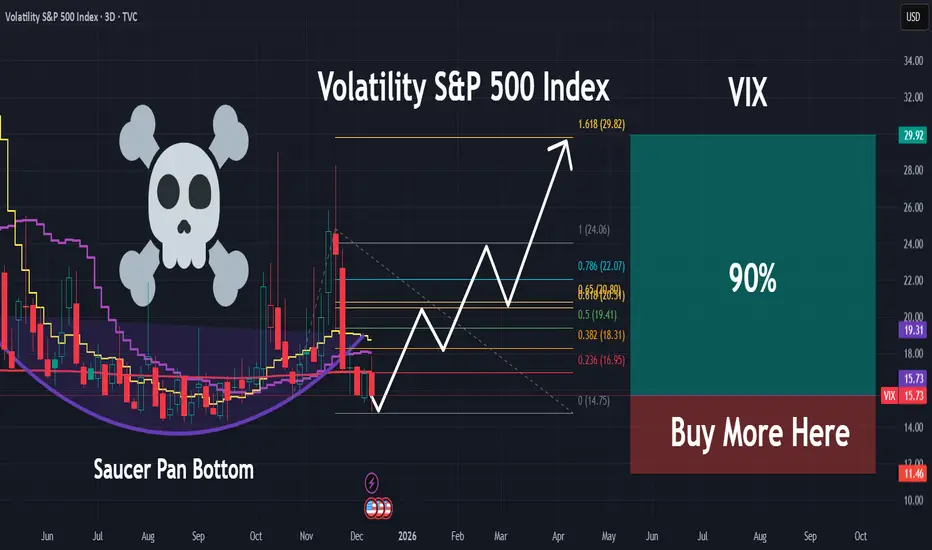
VIX | Major Volatility and Market Correction Incoming | LONGThe VIX Index, formally known as the Cboe Volatility Index, is a real-time market index that represents the market's expectation of 30-day forward-looking volatility for the S&P 500 index. It is widely known as the "fear gauge" because it tends to rise sharply during periods of increased investor fe
About Volatility S&P 500 Index
VIX is the trademarked ticker symbol for the CBOE Volatility Index, a popular measure of the implied market volatility of S&P 500 index options. The VIX index has been calculated by the Chicago Board Options Exchange (CBOE) since 1993.
It is often referred to as the fear index or the fear gauge. The VIX projects a range of the expected stock market volatility over the next 30-day period. It is used by traders, institutional investors, and hedge fund managers to diversify portfolios and correlate returns.
Related indices
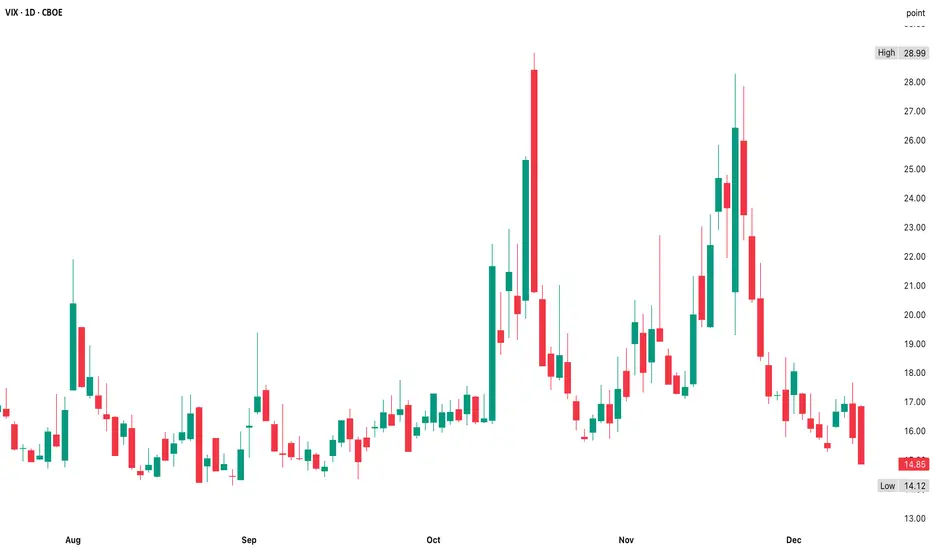
VIX Maybe Too Relaxed?When the VIX is sitting around 15, it usually signals a low-volatility, risk-on environment, but with some nuances that traders often forget
1. Options market is pricing in calm conditions
A VIX of 15 corresponds to ~15% implied volatility for S&P 500 options over the next 30 days
Historically,
VIX Levels I Watch for Market TimingA simple, repeatable framework I use:
• When the VIX spikes into the 28–32 zone, I start adding equities.
• When the VIX sinks back into the 12–14 zone, I trim or take profit.
This range has been reliable all year. Not financial advice—just sharing what’s been working for me.
All Aboard the Aussie Train Aussie yields remain elevated relative to other developed countries. VIX has remained very soft over the past few weeks supporting the AUD’s higher yields. Contextually, this environment supports AUD/JPY the most. However, if the DXY is unable to recover despite the FED’s open market operations
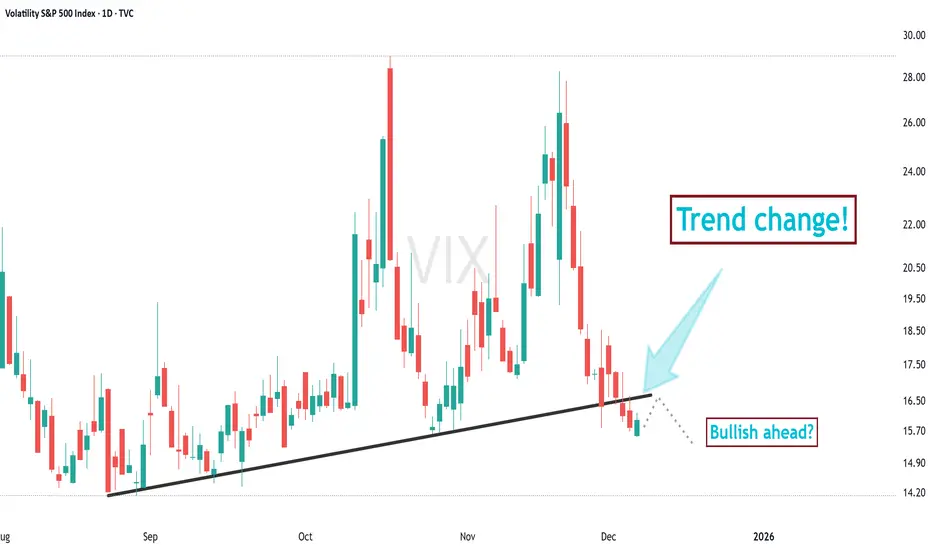
The VIX flipping bullishThe past three days shows something we haven't seen in months: a break of the support trendline. This means two things: first, a bullish indication; second, a decrease of volatility pricing heading into the FOMC meeting next week. The market is signaling it is becoming less afraid of the FOMC meetin
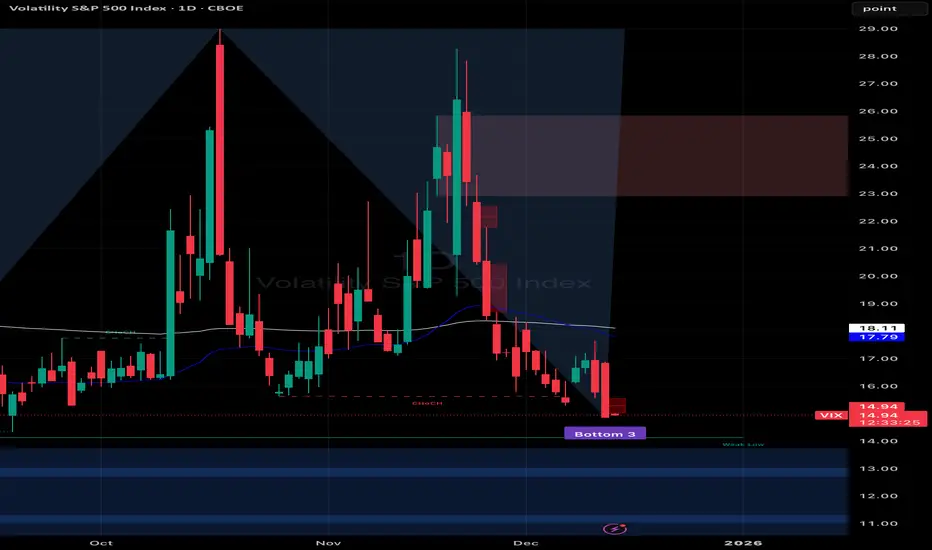
Vix Index, about to bounce?It’s got a clear pathway upwards, any significant bounce could drive the dollar-index over its high today, a big range today.
DXY or DIXY as it’s also known, is at a 50% retrace level from its low set a few months ago and it’s push just breaking parity only a couple weeks back.
Its found support
See all ideas
Summarizing what the indicators are suggesting.
Oscillators
Neutral
SellBuy
Strong sellStrong buy
Strong sellSellNeutralBuyStrong buy
Oscillators
Neutral
SellBuy
Strong sellStrong buy
Strong sellSellNeutralBuyStrong buy
Summary
Neutral
SellBuy
Strong sellStrong buy
Strong sellSellNeutralBuyStrong buy
Summary
Neutral
SellBuy
Strong sellStrong buy
Strong sellSellNeutralBuyStrong buy
Summary
Neutral
SellBuy
Strong sellStrong buy
Strong sellSellNeutralBuyStrong buy
Moving Averages
Neutral
SellBuy
Strong sellStrong buy
Strong sellSellNeutralBuyStrong buy
Moving Averages
Neutral
SellBuy
Strong sellStrong buy
Strong sellSellNeutralBuyStrong buy
Displays a symbol's value movements over previous years to identify recurring trends.
Frequently Asked Questions
The current value of Volatility S&P 500 Index is 17.63 USD — it has risen by 5.89% in the past 24 hours. Track the index more closely on the Volatility S&P 500 Index chart.
Volatility S&P 500 Index reached its highest quote on Oct 23, 2008 — 96.40 USD. See more data on the Volatility S&P 500 Index chart.
The lowest ever quote of Volatility S&P 500 Index is 8.56 USD. It was reached on Nov 24, 2017. See more data on the Volatility S&P 500 Index chart.
Volatility S&P 500 Index value has increased by 2.95% in the past week, since last month it has shown a −10.93% decrease, and over the year it's increased by 17.69%. Keep track of all changes on the Volatility S&P 500 Index chart.
Volatility S&P 500 Index is just a number that lets you track performance of the instruments comprising the index, so you can't invest in it directly. But you can buy Volatility S&P 500 Index futures or funds or invest in its components.