
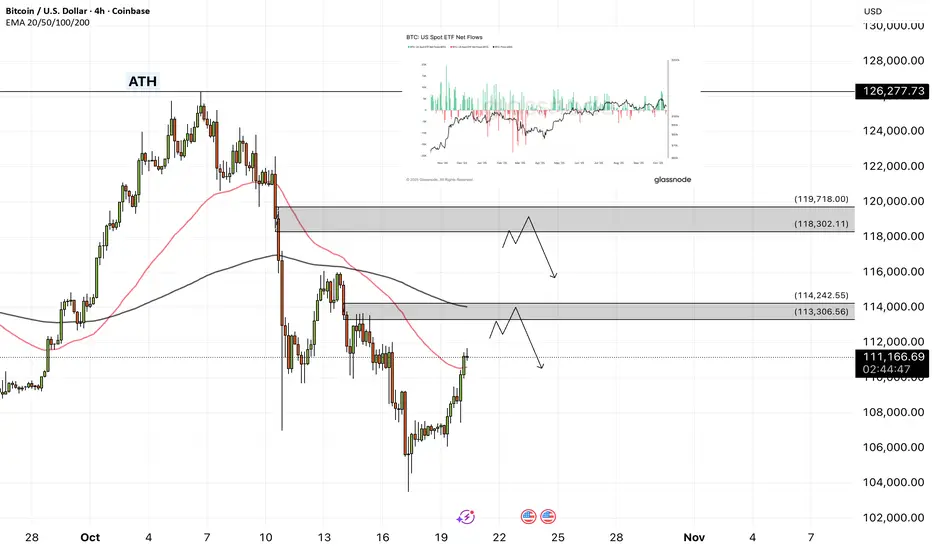
Bitcoin is located between EMA50 and EMA200 on the four-hour timeframe and is in its medium-term ascending channel. In case of an upward correction towards the specified supply range, it is possible to sell Bitcoin with a better risk-reward.
It should be noted that there is a possibility of heavy fluctuations and shadows due to the movement of whales in the market and compliance with capital management in the cryptocurrency market will be more important. If the downward trend continues, we can buy within the demand range.
Bitcoin’s recent rally has stalled under macroeconomic pressures, marking one of the most significant events in the asset’s history. With capital inflows into ETFs slowing and volatility spiking, the market has entered a recalibration phase—characterized by deleveraging, cautious investor sentiment, and a reliance on new demand to reignite the bullish trend.
This latest price decline is particularly concerning, as it marks the third time since late August that Bitcoin has fallen below roughly $117,000, a zone where most large holders are now underwater.
Following the largest liquidation cascade in Bitcoin’s history, capital inflows into U.S. spot ETFs have weakened alongside price declines. At the same time, the derivatives market has seen a sharp reduction in leverage, while ETF investors have shown mild selling pressure, resulting in a net outflow of about 2.3K BTC so far this week.
Unlike previous capitulation phases, where outflows typically accelerated price drops, the current slowdown reflects hesitation rather than panic. However, if weakness persists or ETF inflows take longer to recover, it could signal fragility on the demand side, undermining one of the core drivers behind Bitcoin’s past rallies.
During the recent liquidation wave, spot trading volumes surged to some of the highest levels of the year, reflecting intense market activity as traders rapidly adjusted their positions amid heightened volatility.
...دادهاند
In Q3 of this year, the number of publicly traded companies holding Bitcoin on their balance sheets hit a new record — despite ongoing market turbulence. According to data from Bitwise Asset Management, the number of listed firms with Bitcoin holdings grew by nearly 40% in just three months, reaching 172 companies.
Still, a recent October survey by Bank of America shows that 76% of investors currently hold no exposure to cryptocurrencies, up from 67% in September. Even among those with some allocation to digital assets, exposure remains minimal:
• 3% of investors hold only 2% of their portfolios in crypto.
• 1% allocate around 4% to cryptocurrencies.
• 3% have 8% or more of their portfolios invested in digital assets....
It should be noted that there is a possibility of heavy fluctuations and shadows due to the movement of whales in the market and compliance with capital management in the cryptocurrency market will be more important. If the downward trend continues, we can buy within the demand range.
Bitcoin’s recent rally has stalled under macroeconomic pressures, marking one of the most significant events in the asset’s history. With capital inflows into ETFs slowing and volatility spiking, the market has entered a recalibration phase—characterized by deleveraging, cautious investor sentiment, and a reliance on new demand to reignite the bullish trend.
This latest price decline is particularly concerning, as it marks the third time since late August that Bitcoin has fallen below roughly $117,000, a zone where most large holders are now underwater.
Following the largest liquidation cascade in Bitcoin’s history, capital inflows into U.S. spot ETFs have weakened alongside price declines. At the same time, the derivatives market has seen a sharp reduction in leverage, while ETF investors have shown mild selling pressure, resulting in a net outflow of about 2.3K BTC so far this week.
Unlike previous capitulation phases, where outflows typically accelerated price drops, the current slowdown reflects hesitation rather than panic. However, if weakness persists or ETF inflows take longer to recover, it could signal fragility on the demand side, undermining one of the core drivers behind Bitcoin’s past rallies.
During the recent liquidation wave, spot trading volumes surged to some of the highest levels of the year, reflecting intense market activity as traders rapidly adjusted their positions amid heightened volatility.
...دادهاند
In Q3 of this year, the number of publicly traded companies holding Bitcoin on their balance sheets hit a new record — despite ongoing market turbulence. According to data from Bitwise Asset Management, the number of listed firms with Bitcoin holdings grew by nearly 40% in just three months, reaching 172 companies.
Still, a recent October survey by Bank of America shows that 76% of investors currently hold no exposure to cryptocurrencies, up from 67% in September. Even among those with some allocation to digital assets, exposure remains minimal:
• 3% of investors hold only 2% of their portfolios in crypto.
• 1% allocate around 4% to cryptocurrencies.
• 3% have 8% or more of their portfolios invested in digital assets....

Disclaimer
The information and publications are not meant to be, and do not constitute, financial, investment, trading, or other types of advice or recommendations supplied or endorsed by TradingView. Read more in the Terms of Use.
Disclaimer
The information and publications are not meant to be, and do not constitute, financial, investment, trading, or other types of advice or recommendations supplied or endorsed by TradingView. Read more in the Terms of Use.