
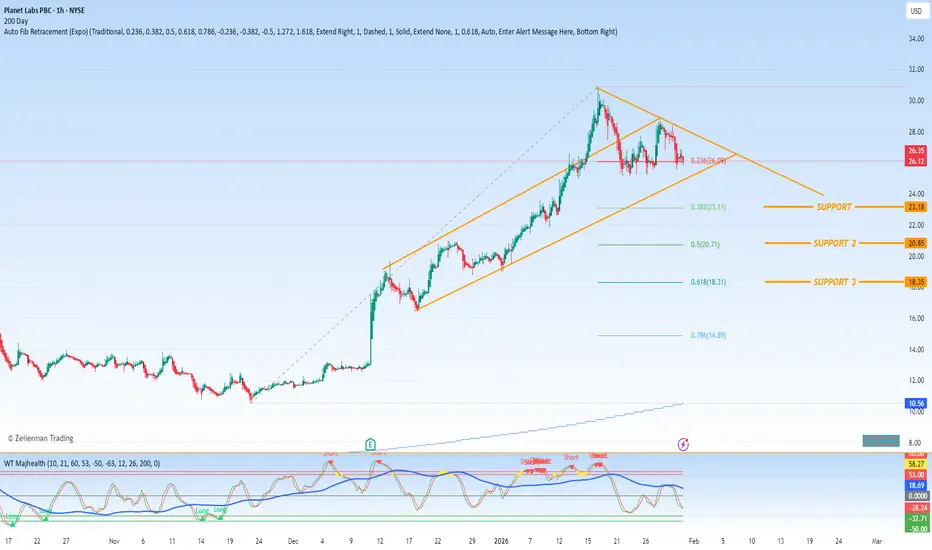
This reported merger proposal between SpaceX and xAI, along with the broader industry moves toward orbital AI data centers, represents a bold and high-stakes strategic gambit in the escalating global AI infrastructure race. Here’s a structured analysis of the implications, motivations, and challenges.
1. Strategic Rationale: Why Merge SpaceX and xAI?
Vertical Integration of AI and Infrastructure:
By merging, Musk would create a unified entity that controls both the AI models (via xAI’s Grok) and the physical infrastructure to run them (via SpaceX’s launch and satellite capabilities). This mirrors the vertical integration seen in tech giants like Google (TPU chips + data centers + AI models) but extends it into space.
Funding and Scale:
SpaceX’s potential IPO could raise massive capital. Merging with xAI would channel those funds directly into building orbital data centers, giving xAI a unique competitive edge in computing capacity without relying on third-party cloud providers like AWS or Azure.
Synergies with Starlink:
Starlink’s existing low-Earth orbit (LEO) constellation provides a ready-made network for data relay, latency reduction, and global coverage. AI satellites could integrate into or augment this network, creating an interconnected orbital ecosystem for communication and computation.
2. The Orbital Data Center Vision: Promise and Problems
Potential Advantages:
Nearly Unlimited Solar Power: In orbit, solar panels can generate power continuously (except during brief eclipses), eliminating a major constraint of terrestrial data centers.
Free Cooling: In the vacuum of space, heat can be radiated away passively, avoiding the enormous energy costs of cooling on Earth.
Global Low-Latency Access: Orbital data centers could serve AI applications anywhere on Earth with minimal latency, especially if networked with LEO satellite constellations.
Major Technical and Economic Hurdles:
Radiation Hardening: Space radiation can degrade electronics rapidly. AI chips and memory systems need robust shielding or fault-tolerant designs.
Space Debris and Reliability: Collision risks are real. Redundancy and repair strategies (like robotic maintenance) are unproven at scale.
Launch Costs: Despite SpaceX’s reductions, launching thousands of heavy compute satellites remains prohibitively expensive for now.
Data Transmission Limits: Moving vast datasets to and from orbit requires enormous bandwidth, which could become a bottleneck.
3. Competitive Landscape: Who Else Is Playing?
Blue Origin (Bezos): Also eyeing orbital data centers, leveraging Amazon’s cloud expertise and deep pockets. Bezos has stated a 10–20 year timeline for economic viability.
Starcloud (Nvidia-backed): Already testing AI chips in orbit (Starcloud-1 with an Nvidia H100). Their modular “hypercluster” vision is one of the most concrete near-term plans.
Google (Project Suncatcher): Partnering with Planet Labs for prototype launches around 2027, using custom TPUs.
China’s “Space Cloud” Plan: State-backed effort to deploy AI data centers in space within five years, indicating this is now a geostrategic priority.
The race is no longer just about building better AI models—it’s about securing sovereign control over the next-generation computational infrastructure.
4. Musk’s Timetable: Ambitious or Overoptimistic?
Musk claims space will be “the lowest-cost place to put AI within two years, three at the latest.” Most experts and rivals see this as extremely aggressive.
Deutsche Bank’s forecast (small-scale deployments in 2027–28, scaling in the 2030s) aligns more closely with industry consensus.
The challenge isn’t just launching one satellite with an AI chip (Starcloud already did); it’s deploying hundreds or thousands of them reliably and cost-effectively.
5. Broader Implications
AI Nationalism and Security: If orbital AI infrastructure becomes viable, it could redefine global tech sovereignty. Nations may seek to control their own orbital compute clusters for security and economic advantage.
Environmental Impact: Could reduce terrestrial data centers’ energy and water usage, but might increase launch activity and space debris.
Market Disruption: Companies that master orbital AI infrastructure could undercut terrestrial cloud providers on cost and performance, reshaping the $1T+ cloud computing market.
Conclusion
The reported SpaceX-xAI merger is less about immediate AI model competition and more about positioning for the next frontier of computing itself. Musk is betting that the future of AI scalability lies in space, and he wants to own both the rockets and the AI that runs on them.
While the engineering and economic hurdles are immense, the breadth of investment—from Musk and Bezos to Google and China—suggests this is more than science fiction. It may well become the next great infrastructure battleground of the 2030s.
The key questions remain:
Can radiation-hardened, high-performance computing be reliably deployed at scale in orbit?
Will launch costs fall enough to make this economically viable?
Who will establish the first mover advantage—and will it be decisive?
For now, the race to build the AI backbone in space is officially on.
1. Strategic Rationale: Why Merge SpaceX and xAI?
Vertical Integration of AI and Infrastructure:
By merging, Musk would create a unified entity that controls both the AI models (via xAI’s Grok) and the physical infrastructure to run them (via SpaceX’s launch and satellite capabilities). This mirrors the vertical integration seen in tech giants like Google (TPU chips + data centers + AI models) but extends it into space.
Funding and Scale:
SpaceX’s potential IPO could raise massive capital. Merging with xAI would channel those funds directly into building orbital data centers, giving xAI a unique competitive edge in computing capacity without relying on third-party cloud providers like AWS or Azure.
Synergies with Starlink:
Starlink’s existing low-Earth orbit (LEO) constellation provides a ready-made network for data relay, latency reduction, and global coverage. AI satellites could integrate into or augment this network, creating an interconnected orbital ecosystem for communication and computation.
2. The Orbital Data Center Vision: Promise and Problems
Potential Advantages:
Nearly Unlimited Solar Power: In orbit, solar panels can generate power continuously (except during brief eclipses), eliminating a major constraint of terrestrial data centers.
Free Cooling: In the vacuum of space, heat can be radiated away passively, avoiding the enormous energy costs of cooling on Earth.
Global Low-Latency Access: Orbital data centers could serve AI applications anywhere on Earth with minimal latency, especially if networked with LEO satellite constellations.
Major Technical and Economic Hurdles:
Radiation Hardening: Space radiation can degrade electronics rapidly. AI chips and memory systems need robust shielding or fault-tolerant designs.
Space Debris and Reliability: Collision risks are real. Redundancy and repair strategies (like robotic maintenance) are unproven at scale.
Launch Costs: Despite SpaceX’s reductions, launching thousands of heavy compute satellites remains prohibitively expensive for now.
Data Transmission Limits: Moving vast datasets to and from orbit requires enormous bandwidth, which could become a bottleneck.
3. Competitive Landscape: Who Else Is Playing?
Blue Origin (Bezos): Also eyeing orbital data centers, leveraging Amazon’s cloud expertise and deep pockets. Bezos has stated a 10–20 year timeline for economic viability.
Starcloud (Nvidia-backed): Already testing AI chips in orbit (Starcloud-1 with an Nvidia H100). Their modular “hypercluster” vision is one of the most concrete near-term plans.
Google (Project Suncatcher): Partnering with Planet Labs for prototype launches around 2027, using custom TPUs.
China’s “Space Cloud” Plan: State-backed effort to deploy AI data centers in space within five years, indicating this is now a geostrategic priority.
The race is no longer just about building better AI models—it’s about securing sovereign control over the next-generation computational infrastructure.
4. Musk’s Timetable: Ambitious or Overoptimistic?
Musk claims space will be “the lowest-cost place to put AI within two years, three at the latest.” Most experts and rivals see this as extremely aggressive.
Deutsche Bank’s forecast (small-scale deployments in 2027–28, scaling in the 2030s) aligns more closely with industry consensus.
The challenge isn’t just launching one satellite with an AI chip (Starcloud already did); it’s deploying hundreds or thousands of them reliably and cost-effectively.
5. Broader Implications
AI Nationalism and Security: If orbital AI infrastructure becomes viable, it could redefine global tech sovereignty. Nations may seek to control their own orbital compute clusters for security and economic advantage.
Environmental Impact: Could reduce terrestrial data centers’ energy and water usage, but might increase launch activity and space debris.
Market Disruption: Companies that master orbital AI infrastructure could undercut terrestrial cloud providers on cost and performance, reshaping the $1T+ cloud computing market.
Conclusion
The reported SpaceX-xAI merger is less about immediate AI model competition and more about positioning for the next frontier of computing itself. Musk is betting that the future of AI scalability lies in space, and he wants to own both the rockets and the AI that runs on them.
While the engineering and economic hurdles are immense, the breadth of investment—from Musk and Bezos to Google and China—suggests this is more than science fiction. It may well become the next great infrastructure battleground of the 2030s.
The key questions remain:
Can radiation-hardened, high-performance computing be reliably deployed at scale in orbit?
Will launch costs fall enough to make this economically viable?
Who will establish the first mover advantage—and will it be decisive?
For now, the race to build the AI backbone in space is officially on.

Disclaimer
The information and publications are not meant to be, and do not constitute, financial, investment, trading, or other types of advice or recommendations supplied or endorsed by TradingView. Read more in the Terms of Use.
Disclaimer
The information and publications are not meant to be, and do not constitute, financial, investment, trading, or other types of advice or recommendations supplied or endorsed by TradingView. Read more in the Terms of Use.