Quantitative Analysis of Algorithmic Candlestick Pattern● Quantitative Analysis of Algorithmic Candlestick Pattern Recognition: Code Logic, Statistical Reliability, and Market Psychology
● Introduction: The Intersection of Algorithmic Logic and Behavioral Finance
The digitization of financial markets has catalyzed a paradigm shift in technical analysis, moving from subjective visual interpretation to rigorous, rule-based algorithmic detection. Candlestick charting, a methodology with roots in 18th-century Japanese rice trading, serves as the foundational language for reading price action. However, in the context of modern high-frequency and systematic trading, the "art" of reading candles must be translated into the "science" of boolean logic, threshold ratios, and trend filters.
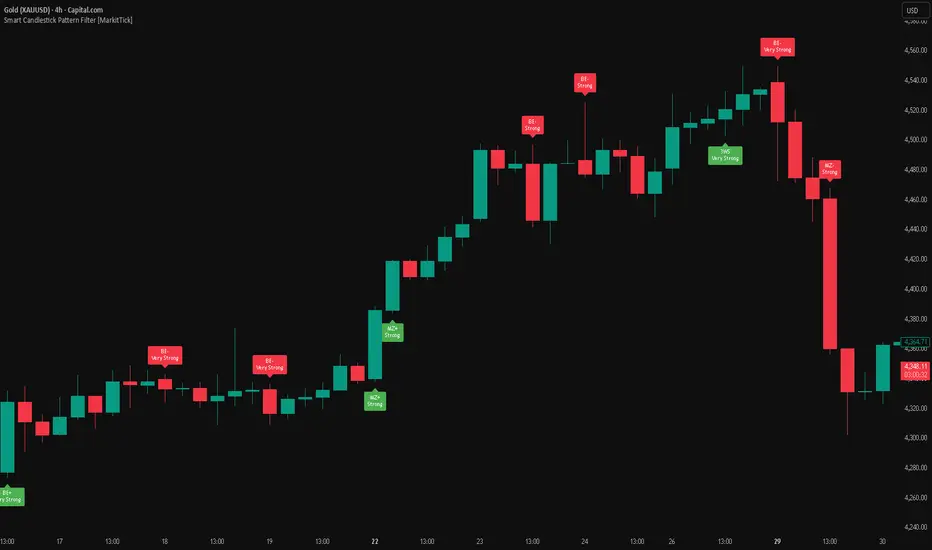
This report provides an exhaustive analysis of the 40+ candlestick patterns identified within the proprietary "Smart Candlestick Pattern Filter" indicator. By dissecting the source code, we isolate the specific mathematical conditions—such as the DOJI_RATIO of 0.05 or the SHADOW_MULT of 2.0—that determine pattern validity. Furthermore, we juxtapose these rigid algorithmic definitions against the theoretical underpinnings of market psychology and the statistical reliability data compiled by researchers such as Thomas Bulkowski.
The patterns are categorized by their signal strength (1 through 5), a hierarchical system inherent to the algorithm that attempts to filter market noise from actionable signal. This classification provides a structured framework for understanding how single-bar indecision evolves into complex, multi-bar reversal or continuation structures. The analysis reveals critical insights into the discrepancies between traditional textbook definitions and their code-based implementations, particularly regarding trend context and gap requirements, offering a nuanced perspective for professional traders deploying automated recognition systems.
• Methodological Framework of the Indicator
The analyzed script operates on a sophisticated logic engine that calculates candle metrics relative to trend context. Before individual patterns are detected, the system establishes a baseline for trend direction using a Simple Moving Average (SMA), defined by the input trendPeriod (default 20). This allows the algorithm to filter patterns contextually—for instance, a "Hanging Man" is only valid if detected within a mathematically defined uptrend ( trendUpCond ), while an "Inverted Hammer" requires a downtrend ( trendDownCond ).
This pre-processing step is critical. Traditional visual analysis often fails because traders identify reversal patterns in sideways markets. By enforcing boolean constraints such as close > trendSMA the algorithm attempts to solve the problem of false positives inherent in manual charting. Furthermore, the script utilizes dynamic variables for body size body_size = math.abs(c - o) and shadows ( upper_shadow , lower_shadow ), standardizing pattern recognition across varying asset classes and volatility regimes.
● Strength 1: The Architecture of Indecision and Volatility Compression
The first tier of patterns identified by the algorithm represents market indecision. While assigned the lowest strength rating, these patterns are statistically significant as precursors to volatility expansion. They signify a state of equilibrium where supply meets demand, often marking the calm before a breakout.
• The Doji: The Keystone of Equilibrium
The Doji is the most fundamental single-candle pattern, representing a total stalemate between bulls and bears.
Algorithmic Definition: The code defines a Doji not by a perfect equality of open and close, but by a specific ratio. The isDoji boolean variable returns true if the body_ratio (body size divided by high-low range) is less than or equal to DOJI_RATIO , which is set to 0.05. This quantitative threshold allows for "near-doji" candles to be recognized, accommodating the noise of modern electronic markets where exact price matches are rare due to micro-volatility.
Market Psychology: The formation of a Doji indicates that the conviction driving the prior trend has evaporated. If appearing in an uptrend, it suggests that buyers are no longer willing to bid prices higher, and sellers have found a price level they deem fair. It is a sign of hesitation. The market opens, explores a range, and closes virtually unchanged, signaling that the net result of the trading session was zero directional progress. This "tug-of-war" psychology is crucial; it does not guarantee a reversal but screams that the current trend is vulnerable.
• The Dragonfly Doji: Bullish Rejection
Algorithmic Definition: The Dragonfly Doji is a specialized Doji detected when the open and close occur at the session's high. The script's logic ( isDragonflyDoji ) is rigorous:
It must first satisfy the isDoji condition.
The upper shadow must be negligible, defined as
(h - c) <= ohlc_range * EDGE_RATIO
and
(h - o) <= ohlc_range * EDGE_RATIO
(where EDGE_RATIO is 0.1).
The total range must be substantial, specifically greater than three times the body size ohlc_range > body_size * 3
Psychology and Reliability: Visually appearing as a "T," the Dragonfly indicates that sellers dominated the early session, driving prices to a low. However, by the close, buyers resurged to push the price back to the opening high. This rejection of the lower prices is significantly bullish, especially at support levels. Bulkowski's research suggests that the Dragonfly Doji performs best as a reversal signal in bear markets, acting as a setup for a bullish breakout. The long lower shadow represents a "check" of liquidity at lower levels, which was found lacking, forcing price back up.
• The Gravestone Doji: Bearish Exhaustion
Algorithmic Definition: The inverse of the Dragonfly, the Gravestone Doji forms when the open and close are at the session low. The code checks isGravestoneDoji by ensuring the lower shadow is within the EDGE_RATIO (bottom 10% of the range) and the total range is significant.
Psychology and Reliability: Resembling an inverted "T," this pattern signifies a failed rally. Bulls attempted to drive the price up but were met with overwhelming supply, forcing the price back to the open by the close. It serves as a visual testament to the graves of the bulls who died defending the highs. In an uptrend, this is a distinct warning of overhead resistance and buyer exhaustion.
• The Long-Legged Doji: High Volatility Indecision
Algorithmic Definition: The isLongLeggedDoji pattern is identified when a Doji has massive shadows in both directions. The code requires both the upper and lower shadows to be greater than the body size multiplied by SHADOW_MULT (2.0).
Psychology: Unlike the standard Doji, which might indicate a quiet market, the Long-Legged Doji (or "Rickshaw Man") indicates violent indecision. The market traded significantly higher and significantly lower, yet closed unchanged. This reflects a market searching for value and finding none at the extremes. It is often a precursor to a major volatility breakout as the compression of the close belies the intraday chaos.
• Spinning Tops: The Pause
Spinning tops are defined by small bodies that are slightly larger than a Doji but still indicative of indecision.
Bullish Spinning Top ( isSpinTopBull ): A green candle where the body_ratio is less than SPIN_TOP_RATIO (0.4), and shadows are present.
Bearish Spinning Top ( isSpinTopBear ): A red candle with the same ratio constraints.
Algorithmic Note: The code ensures the shadows are prominent by checking (h - c) > body_size (upper shadow > body) and (o - l) > body_size (lower shadow > body)
Psychology: Spinning tops represent a "loss of steam." In a strong trend, the appearance of a spinning top suggests that the dominant group (bulls or bears) is losing control, and the opposing force is gaining ground. While not immediate reversal signals, they are critical components of larger patterns like Morning or Evening Stars. Bulkowski notes that spinning tops have a reversal success rate of approximately 48% when viewed in isolation, reinforcing the algorithm's decision to categorize them as low-strength indecision markers rather than actionable signals.
● Strength 2: Weak Reversal and Continuation Signals
Strength 2 patterns introduce directional bias but lack the conviction of multi-candle confirmations. They are often "setup" candles that require a subsequent trigger.
• The Hammer and Hanging Man: Context is King
These patterns share an identical shape—small bodies near the top of the range with long lower shadows—but their implications are diametrically opposed based on the prior trend.
The Hanging Man ( isHangingMan )
Algorithmic Validation: The code enforces strict geometry:
Shadows: lower_shadow >= body_size * SHADOW_MULT (2.0) and upper_shadow <= ohlc_range * EDGE_RATIO
Context: It must occur in an uptrend ( trendUpCond is true).
Position: The high must be greater than the previous high h > h1
Psychology: The Hanging Man appears at the peak of an uptrend. The long lower shadow indicates that for a portion of the session, sellers were able to drive the price significantly lower. Although buyers recovered the price by the close, the sell-off is a warning that bullish control is becoming fragile. The "hanging" nature suggests bulls are left dangling with positions at highs. Reliability statistics suggest a 59% accuracy for bullish continuation in some datasets, which is counter-intuitive and highlights why this is a Strength 2 pattern requiring confirmation (a lower close the next day).
The Inverted Hammer ( isInvHammer )
Algorithmic Validation: The mirror of the Hanging Man, validated by a long upper shadow (>= 2x body) and minimal lower shadow. Must occur in a downtrend ( trendDownCond ).
Psychology: Appearing at a bottom, the Inverted Hammer suggests that buyers attempted a rally (long upper shadow) but failed to hold it. However, the mere presence of buying pressure in a downtrend signals that sellers are losing their grip. It is a "testing of the waters" by bulls. Bulkowski estimates a 60% success rate for reversals when confirmed.
• Belt Hold Lines: The Yorikiri
Bullish Belt Hold ( isBullishBelt ): A candle that opens at its low (no lower shadow) and closes near its high, occurring in a downtrend. Code checks: math.abs(l - o) <= TOLERANCE * c
Bearish Belt Hold ( isBearishBelt ): A candle that opens at its high (no upper shadow) and closes near its low in an uptrend.
Psychology: Derived from the sumo term "Yorikiri" (pushing out), the Belt Hold signifies unidirectional dominance from the opening bell. A Bullish Belt Hold indicates that sellers were exhausted at the open, and buyers immediately took control, never allowing the price to dip. This abrupt shift in sentiment acts as a localized support level. Statistical analysis suggests a 71% success rate for bullish reversals, though the pattern is prone to failure in highly volatile markets without volume confirmation.
• The Neckline Continuation Series: On-Neck, In-Neck, and Thrusting
This trio of bearish continuation patterns is frequently confused. They all feature a bearish candle followed by a smaller bullish candle, distinguished solely by the depth of the bullish candle's close into the previous bearish body.
On-Neck ( isOnNeck ): The most bearish of the three. The second candle opens lower and rallies, but closes at or near the previous candle's low math.abs(c - l1) <= TOLERANCE * c It fails to enter the previous body. The buyers' attempt to rally is pathetic; they cannot even push the price back into the previous day's trading range.
In-Neck ( isInNeck ): The second candle closes slightly higher than the On-Neck, penetrating the previous body but staying within the bottom 10% of the range c <= c1 - (c1 - o1) * 0.1 Similar to On-Neck, but with slightly more buying pressure.
Thrusting ( isThrusting ): The bullish candle thrusts deeper into the bearish body but fails to close above the midpoint c < c1_midpoint . This is the strongest of the weak patterns but still a continuation signal. The failure to cross the equilibrium point (midpoint) of the previous sell-off implies that the bears still control the dominant trend.
● Strength 3: Moderate Reversal and Confirmation Patterns
Strength 3 patterns involve interaction between two or more candles, creating a "setup" and "trigger" dynamic that enhances reliability.
• The Harami: The Insider
Algorithmic Validation:
Bearish Harami ( isBearHarami ): Preceded by a bullish candle ( isBullish_1 ), the current bearish candle's body is completely engulfed by the previous body .
o <= c1 and o1 <= c
.
Bullish Harami ( isBullHarami ): A bearish candle followed by a smaller bullish candle inside its body.
The code enforces that body_size < body_size_1 .
Psychology: "Harami" means "pregnant" in Japanese. The large first candle is the mother, the small second candle is the baby. This pattern represents a sudden contraction in volatility. After a strong trend, the market stalls. In a downtrend (Bullish Harami), the small second candle indicates that selling pressure has dried up. While not a forceful reversal like an Engulfing pattern, it signals that the trend has hit a wall. Bulkowski rates the Bullish Harami with a 54% reversal success rate, suggesting it is better used as a "take profit" signal than an entry signal.
• Penetration Patterns: Piercing Line and Dark Cloud Cover
These patterns are stronger than Haramis because they involve a test and rejection of price extremes.
Piercing Line ( isPiercing ):
Gap: The second (bullish) candle must open below the previous low ( o < l1 ).
Penetration: It must rally to close above the midpoint of the previous bearish body c > c1 + body_size_1 * 0.5
Psychology: This is a panic-induced reversal. The gap down at the open signals capitulation by bulls. However, "smart money" steps in to buy the deep discount, driving prices up aggressively. The close above the midpoint is crucial—it signifies that the buyers have erased more than 50% of the previous day's losses.
Dark Cloud Cover ( isDarkCloud ):
Gap: Opens above the previous high/close.
Penetration: Closes below the midpoint of the previous bullish candle c < c1_midpoint
Psychology: A gap-up opening (greed) is met with heavy institutional selling. The failure to hold the highs and the subsequent collapse below the midpoint signals a "cloud" forming over the uptrend.
• Tweezer Tops and Bottoms
Algorithmic Validation: The code identifies Tweezers by matching extremes on adjacent candles.
Tweezer Bottom ( isTweezerBottom ): math.abs(l - l1) <= TOLERANCE * c
Tweezer Top ( isTweezerTop ): math.abs(h - h1) <= TOLERANCE * c
Psychology: Tweezers represent a "double tap" rejection of a price level. The market tested a specific low (or high) twice and failed to break it both times. This reinforcement of support/resistance suggests that the barrier is solid. In technical terms, it is a micro double-bottom or double-top forming on a lower timeframe.
• Matching Low and Matching High
Algorithmic Validation:
Matching Low ( isMatchingLow ): Two bearish candles in a downtrend with identical closing prices math.abs(c - c1) <= TOLERANCE * c
Matching High ( isMatchingHigh ): Two bullish candles in an uptrend with identical closes.
Psychology: The Matching Low is a unique and subtle bullish reversal signal. The market sells off on day one. On day two, it opens higher, attempts to rally, fails, and sells off again, but—crucially—closes at the exact same level as day one. The failure to make a new closing low despite the selling pressure indicates that support is forming. It differs from the "On-Neck" pattern because the second candle here is bearish, yet the implication is bullish reversal due to the support validation at the close. Bulkowski notes a 61% accuracy for this pattern.
• Separating Lines and Counterattack Lines
Separating Lines ( isSeparatingLinesBull/Bear ): A continuation pattern where two candles of opposite colors share the same opening price math.abs(o - o1) <= TOLERANCE_2 In an uptrend, a red candle forms. The next day, price opens at the same level as the red candle's open (erasing the red candle's impact immediately) and rallies. The prices "separate" in opposite directions from a common origin. It signals that the correction was a one-day fluke and the trend is resuming.
Counterattack Lines ( isCounterattackBull/Bear ): A reversal pattern where two candles of opposite colors share the same closing price math.abs(c - c1) <= TOLERANCE_2 . Also known as "Meeting Lines." The market gaps in the direction of the trend but reverses to close unchanged from the prior day. The gap has been neutralized, indicating momentum exhaustion.
● Strength 4: Strong Reversal and Momentum Patterns
Patterns at Strength 4 typically involve confirmation candles or massive momentum shifts, significantly increasing their statistical reliability.
• Engulfing Patterns: The Outside Bar
Algorithmic Validation:
Basic Logic: The current body completely overlaps the previous body c >= o1 and c1 <= o for bullish).
Smart Filter: The algorithm includes a loop for i = 1 to maxCheck to calculate bullEngulfCount . If the engulfing candle is large enough to engulf the range of multiple previous candles, its strength is upgraded to 5. This dynamic sizing is a significant improvement over standard definitions.
Psychology: An Engulfing pattern represents a total eclipse of the previous market sentiment. A Bullish Engulfing acts as a key reversal signal with a 63% success rate.
• Morning and Evening Stars: The Three-Act Play
Algorithmic Validation:
Morning Star: Long Bearish Candle -> Gap Down Small Candle -> Bullish Candle closing above midpoint of Candle 1.
Evening Star: Long Bullish Candle -> Gap Up Small Candle -> Bearish Candle closing below midpoint of Candle 1.
Psychology: These patterns visually depict a transfer of power over three periods: Dominance (Long Body), Equilibrium (Star/Doji), and Reversal (Third Candle). The Evening Star has a documented 72% accuracy rate, making it one of the most reliable top reversal patterns.
• Three Outside/Inside Up/Down: Confirmed Patterns
Algorithmic Validation:
Three Inside Up: A Bullish Harami followed by a third candle that closes higher than the Harami's top.
Three Outside Up: A Bullish Engulfing followed by a third candle that closes higher than the Engulfing candle's close.
Psychology: These are "confirmed" versions of the 2-candle patterns. The third candle provides the proof that the reversal signaled by the Harami or Engulfing was valid. The Three Outside Up is generally more reliable (approx. 70-75% success) than the Three Inside Up because the base pattern (Engulfing) is stronger than the Harami.
• Abandoned Baby: The Rare Island
Algorithmic Validation: A variation of the Morning/Evening Star where the middle "star" is a Doji that is completely separated by gaps from both the preceding and succeeding candles. The code checks h1 < low (gap down) and h1 < l (gap up) relative to the Doji.
Psychology: This is a rare and powerful "Island Reversal." The Doji is left "abandoned" in isolation. It represents a total dislocation of price. The gaps indicate extreme emotional shifts—panic selling to create the island, followed by panic buying to leave it. With a 70% accuracy rate, it is a high-conviction signal.
• Marubozu: Momentum Unleashed
Defined by a body_ratio >= MARUBOZU_RATIO (0.9) A candle with virtually no shadows. A Bullish Marubozu opens at the low and closes at the high. Buyers controlled every tick of the session. There was no hesitation at the open and no profit-taking at the close. It signals maximum conviction and often initiates or confirms a breakout.
● Strength 5: Very Strong Patterns and Anomalies
These patterns represent the highest tier of algorithmic confidence. They are rare, structurally complex, or represent violent market shocks.
• Three White Soldiers and Three Black Crows
Algorithmic Validation:
Three White Soldiers: Three consecutive bullish candles. The code requires each to open within the previous body o > o1, o < c1 and close higher (c > c1) This "stairstep" logic ensures a steady trend rather than a gap-driven spike.
Three Black Crows: Three consecutive bearish candles with the same overlapping logic.
Psychology: This pattern represents a sustained, methodical shift in capital flow. Three Black Crows indicates a collapse in buyer confidence; each day opens slightly higher (attempting to stabilize) but is crushed to a new low by the close. Reliability is exceptionally high, around 78-83% for reversals.
• The Kicker Pattern: The Shock Event
Algorithmic Validation: The Kicker is unique because it ignores the prior trend context in many interpretations, focusing on the immediate shock.
Bullish Kicker: A bearish candle followed by a bullish candle that opens at or above the previous open o >= o1
Bearish Kicker: A bullish candle followed by a bearish candle that opens at or below the previous open.
Psychology: The Kicker represents a violent repricing, usually driven by overnight news. The market gaps up above the previous day's open (erasing the entire previous bearish session instantly) and rallies. Short sellers are trapped with massive immediate losses, forcing a short squeeze. It is considered one of the most powerful reversal signals (Strength 5).
• The Three Line Strike: Continuation or Reversal?
Algorithmic Validation:
Bearish Three Line Strike: Three bearish candles (trend) followed by a massive bullish candle that engulfs all three previous candles c > o3
Bullish Three Line Strike: Three bullish candles followed by a massive bearish candle engulfing them.
Analysis of Conflict: Here lies a critical divergence between traditional theory and modern statistical analysis. The code logic labels this as a "Continuation" pattern (Strength 5). Traditional theory suggests the "strike" is merely deep profit-taking. However, Thomas Bulkowski's extensive backtesting reveals that the Bearish Three Line Strike actually functions as a Bullish Reversal 84% of the time.
Trader Implication: While the code flags this as isThreeLineStrikeBear , traders should treat the pattern (big green candle after three reds) as a high-probability Buy Signal (Reversal).
• Rising and Falling Three Methods
Algorithmic Validation: A 5-candle continuation pattern.
Rising: Long Bullish Candle -> Three small bearish candles holding within the first body -> Long Bullish Candle closing above the first. The code rigorously checks that the inner candles h3, l3, etc. do not breach the extremes of the first candle.
Psychology: This is a "Bull/Bear Flag" on a candlestick chart. The market explodes up (Candle 1), then consolidates on profit-taking. The fact that bears cannot push the price below the low of Candle 1 despite three days of trying proves selling pressure is weak. Candle 5 confirms the resumption. It is a highly reliable trend continuation signal (74-79% accuracy).
• Tasuki Gaps and Gap Three Methods
Upside Tasuki Gap: Bullish Candle -> Gap Up Bullish Candle -> Bearish Candle that opens inside the second body and closes inside the gap but does not close the gap completely c > h2
Psychology: The pattern tests the validity of a gap. In an uptrend, the market gaps up (strength). Profit-taking creates a red candle (Candle 3). Crucially, this red candle fails to "fill the gap." If the gap remains open, it is confirmed as support.
• Breakaway Patterns
Algorithmic Validation: A rare 5-candle reversal pattern. Example: Bearish Breakaway: Uptrend -> Long Bullish Candle -> Gap Up -> Three small candles continuing up but losing momentum -> Bearish candle closing inside the gap between Candle 1 and 2.
Psychology: This pattern captures the "exhaustion" phase of a trend. The gap accelerates the trend into an overbought state (climax). The subsequent small candles show that while price is drifting higher, momentum is dying (divergence). The final candle confirms the reversal by closing the initial gap.
● Comparative Analysis: Reliability and Performance
Using data from Thomas Bulkowski's Encyclopedia of Candlestick Charts, we can rank the reliability of the patterns detected by the algorithm. This helps traders prioritize which "Strength 5" signals are truly superior.
Three Line Strike (Bearish) - Bullish Reversal
Strength: 5 (Labeled Continuation) | Success Rate: 84%
Note: Top performer. Code labels as continuation; stats say reversal.
Three Black Crows - Bearish Reversal
Strength: 5 | Success Rate: 78%
Note: Highly reliable, especially in high volatility.
Evening Star - Bearish Reversal
Strength: 4 | Success Rate: 72%
Note: The most reliable 3-candle top reversal.
Abandoned Baby - Bullish Reversal
Strength: 4 | Success Rate: 70%
Note: Rare but exceptionally accurate due to gap structure.
Two Black Gapping - Bearish Continuation
Strength: 5 (Tasuki Variant) | Success Rate: 68%
Note: Strong continuation signal.
Inverted Hammer - Bullish Reversal
Strength: 2 | Success Rate: 65%
Note: Surprisingly high reliability for a single candle (needs confirmation).
Bearish Engulfing - Bearish Reversal
Strength: 2-5 | Success Rate: 79%
Note: Performs better than Bullish Engulfing (63%).
Rising Three Methods - Bullish Continuation
Strength: 5 | Success Rate: 74%
Note: Reliable flag pattern analog.
● Conclusion
The "Smart Candlestick Pattern Filter" script provides a robust, mathematically rigorous framework for identifying market sentiment. By establishing strict ratios for Dojis (0.05), enforcing trend context ( trendPeriod=20 ), and distinguishing between nuanced patterns like On-Neck vs. In-Neck, it filters out the noise that plagues manual analysis.
For the professional trader, the value lies not just in detection, but in understanding the specific logic constraints:
Context is Enforced: The code prevents "Hanging Man" signals in downtrends, a common amateur mistake.
Size Matters: The dynamic scaling of Engulfing patterns ( bullEngulfCount ) allows the system to weigh the magnitude of a reversal.
The Continuation Trap: Traders must be vigilant with the Three Line Strike. While the code identifies it as a continuation, empirical data suggests it is often a terminal blow-off move leading to a sharp reversal.
Ultimately, this algorithmic tool serves as a high-fidelity scanner. It effectively automates the recognition of complex structures like the Rising Three Methods and Kicker, which are statistically proven to offer an edge, allowing the trader to focus on secondary confirmations such as volume and market structure.
Candlestickpattern
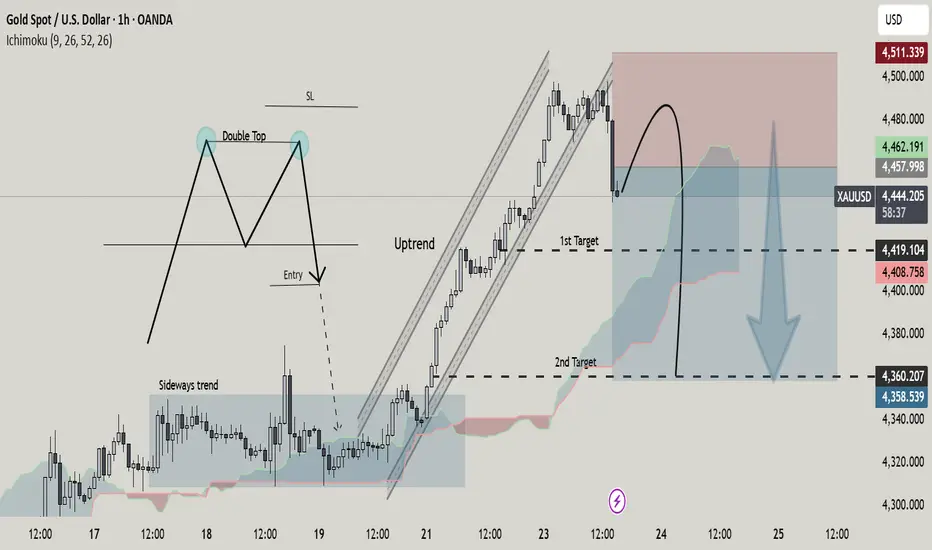
Double Top Reversal Signals End of Bullish MomentumPrice was in a strong bullish channel (uptrend), making higher highs and higher lows. A Double Top formed near the highs, signaling buyer exhaustion and a potential trend reversal.Price failed to hold above resistance and showed rejection near the top, aligning with the Ichimoku resistance / cloud reaction. After the double top, momentum weakens → bearish pullback / correction expected. 1st Target: Prior structure support (mid-range level)
2nd Target: Deeper support aligned with Ichimoku cloud base Invalidation is above the double-top highs (SL zone).
Below that, sellers remain in control.
Overall:
This chart illustrates a classic trend exhaustion → reversal setup, ideal for traders watching price action + Ichimoku confluence.
ETH/USD 1 HOUR LONG POSITION CHART SETUPETH/USD struggling in middle point it's may a major break through to continues bullish momentum here is chart setup for 1 hour
Market Structure
Price is in a short-term uptrend, forming higher highs and higher lows.
A bullish channel is drawn, and price is currently holding inside it momentum favors buyers.
Key Zones
Support: Around 3,000 – 3,020 (previous consolidation & demand zone).
Entry Area: Near 3,040 – 3,050 (retest of breakout / channel support).
Resistance / Supply: Around 3,120 – 3,150, then higher near 3,180 – 3,200.
“calling buyers mode” because:
Breakout above prior resistance.
Successful pullback and continuation pattern.
Strong bullish candles inside the rising channel.
Targets
TP1: ~3,120 (first resistance / prior high).
TP2: ~3,170 – 3,180 (next supply zone).
Final Target: ~3,200+ if momentum continues.
Stop Loss
Below demand & channel support: ~2,970 – 2,990.
A break below this would invalidate the bullish structure.
If ETH holds above 3,020–3,040, buyers remain in control.
Strong rejection near 3,120 could cause a pullback.
A clean break above 3,150 opens room toward 3,180–3,200.
Bullish continuation
Strategy: Buy on pullbacks above 3,020–3,040, target higher resistances while
How to Read Candlestick Charts: The Complete Beginner’s Guide 1What is a Japanese Candlestick?
Before you can trade patterns, you must understand the "DNA" of a single candlestick. Unlike a
simple line chart that only shows the closing price, a Japanese candlestick tells you the
complete story of price action over a specific time period using four data points:
1. Open: The opening price.
2. High: The highest price reached during the period.
3. Low: The lowest price reached during the period.
4. Close: The closing price.
How to Read the "Body" and "Wicks"
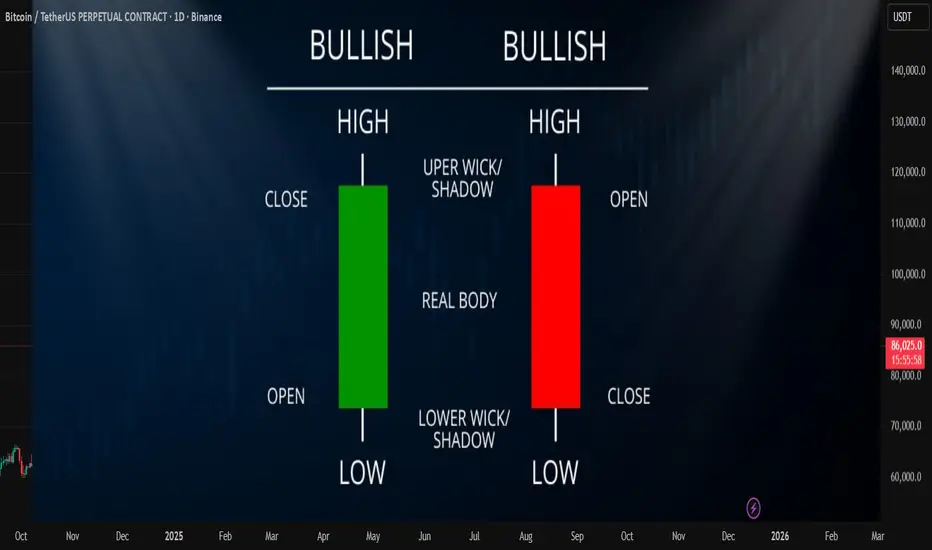
● Bullish Candle: The Open is BELOW the Close. This means buyers won the session.
● Bearish Candle: The Open is ABOVE the Close. This means sellers won the session.
● The Wicks (Shadows): The thin lines above and below the body represent the extreme
high and low prices, showing price rejection.
The Top 5 Bullish Reversal Patterns
A bullish reversal pattern signifies that buyers are momentarily taking control, usually forming
after a price decline.
1. The Hammer The Hammer is a 1-candle pattern that signifies rejection of lower prices.
● Recognition: Little to no upper shadow. The lower shadow is about 2–3 times the length
of the body.
● Meaning: Sellers pushed price down at the open, but huge buying pressure stepped in
to close the price near the highs.
2. Bullish Engulfing Pattern A 2-candle pattern where buyers completely overwhelm sellers.
● Recognition: The first candle is bearish. The second candle is bullish and its body
completely "covers" (engulfs) the body of the first candle.
● Meaning: Buyers have won the battle emphatically.
3. Piercing Pattern Similar to the Engulfing pattern but slightly weaker.
● Recognition: The second bullish candle closes above the 50% mark (halfway point) of
the previous bearish candle.
4. Tweezer Bottom A 2-candle pattern indicating the market is struggling to trade lower.
● Recognition: The first candle shows rejection of lower prices. The second candle
re-tests that exact low and closes higher.
5. Morning Star A powerful 3-candle reversal pattern.
● Recognition:
1. A long bearish candle.
2. A small-bodied candle (indecision).
3. A strong bullish candle closing more than 50% into the first candle's body.
● Meaning: Sellers are exhausted, and buyers have taken control.
Next lesson will be posted on next week
stay connected
-TuffyCalls (Team Mubite)
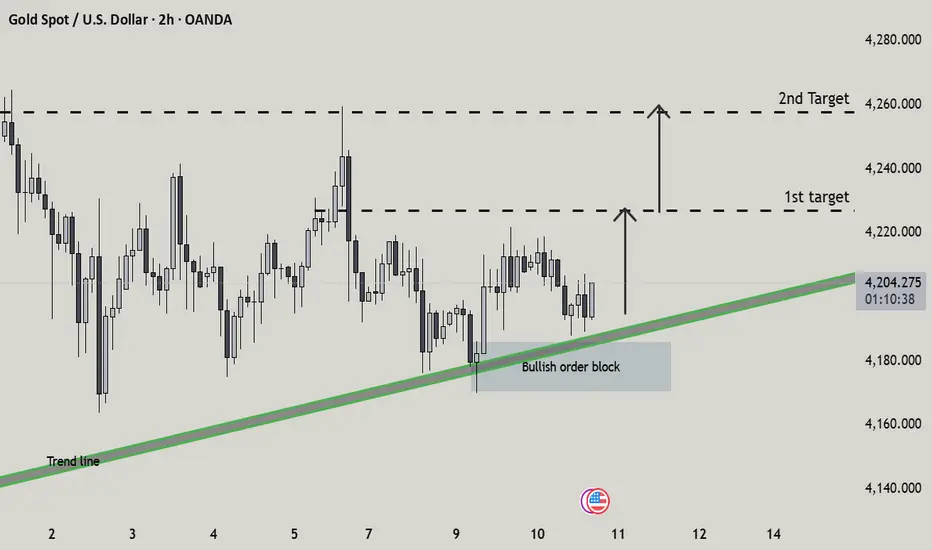
Gold Poised for a Breakout? Trendline Support + OBThis chart shows Gold respecting a strong ascending trendline while also tapping into a clearly defined bullish order block, suggesting a potential upward reaction. Price is hovering near support with projections toward the first target around 4,220 and a second target near 4,260 if momentum continues. The setup highlights a classic confluence of structure, demand, and breakout potential—often a precursor to strong moves in trending markets.
Do you think Gold will break above the first target zone, or will it reject and fall back to the trendline again?
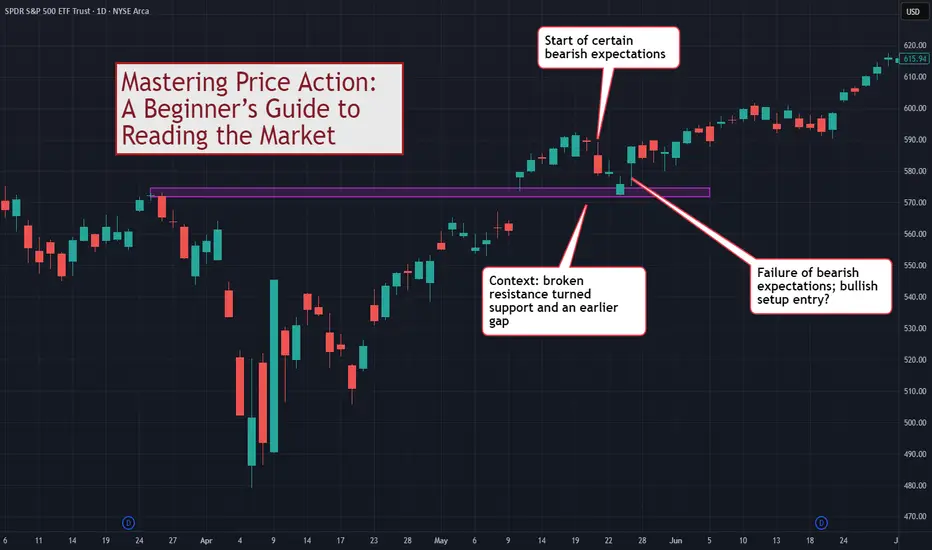
Mastering Price Action: A Beginner’s Guide to Reading the MarketThis discussion goes beyond the basic idea of "memorizing candlestick names." If you want to truly master price action as a tool for reading the market and understanding it as a basis for trading, this guide is for you.
Disclaimer:
The information provided in this tutorial is intended solely for educational purposes. Nothing in this material should be interpreted as financial, investment, or trading advice. Any strategies, methods, tools, or concepts discussed are presented for learning and demonstration only. You are responsible for evaluating your own decisions and risks. Always conduct independent research and consult a qualified professional before making financial or investment choices.
⚠️ WHY MOST TRADERS MISUSE PRICE ACTION
Most traders use price action in a simplistic way:
See a Pin Bar = Buy
See a Doji = Indecision
See an Engulfing = Reversal
The problem with this approach is that you are trading shapes instead of market dynamics.
Price action is not merely pattern recognition. It is a language.
To master price action, you must understand:
Volatility (Range)
Conviction (Body)
Buying/Selling Pressure (Shadows)
Context (Relative performance)
Expectation vs. Reality (Market Inertia)
Price action tells you the story of the battle between buyers and sellers.
📊 1. DECODING THE SINGLE BAR (THE DNA)
Before you can read a chart, you must be able to read a single bar.
Although a single bar is created from Open/High/Low/Close, it gives you critical information beyond that.
🕯️Range = Volatility
The distance between High and Low.
Wide Range: Active market, high volatility.
Narrow Range: Dead market, low volatility.
This chart shows the low volatility period transitioning to the high volatility prior to a major reversal.
🕯️Body = Conviction
Large Body: The market conquered territory. Strong conviction (Bullish or Bearish).
Small/No Body (Doji): The market is undecided. A battle with no winner.
This chart points out two bullish bars, one with weaker conviction than the other.
🕯️Shadows = Pressure
Upper Shadow: Selling Pressure. The market tried to go higher but was rejected.
Lower Shadow: Buying Pressure. The market tried to go lower but was rejected.
This chart shows how we can observe the shifting of buying/selling pressure by observing the wicks (tails/shadows) of candlesticks.
TIP: For examining shadows, focus on the shadows (wicks) that take up around at least 50% of the bar range.
📊 2. CONTEXT IS KING (TWO-BAR ANALYSIS)
Now, let’s go on to two-bar analysis.
Nothing works in isolation. A "wide" bar is only wide(r) if its range is larger than the previous bar.
The key here is to use the first bar to set the context for the second.
Volatility Check: Is the range expanding (market waking up) or contracting (market resting)?
The "Test": Every bar's High and Low are natural support and resistance levels.
- If Bar 2 breaks Bar 1's Low and closes lower → Bearish Victory .
- If Bar 2 breaks Bar 1's Low but reverses to close higher → Bullish Rejection (False Break) .
This chart focuses on one specific bar and compares it with the previous bar. Our observation produces no conclusion, only more questions.
📊 3. THE EXPECTATION GAME (THREE-BAR ANALYSIS)
This is the secret sauce of price action readers, forming expectations and observing. The market has inertia , for e.g. bullishness should follow bullishness.
This chart extends our earlier two-bar analysis. The third bar is a Doji, confirming uncertainty on the side of the bulls.
The Basic Analytical Framework For Close Price Action Analysis:
Read Bars 1 & 2: Form an expectation. (e.g., "Strong bearish bars, I expect Bar 3 to go down.")
Watch Bar 3: Does it confirm or fail your expectation?
Confirmation: Market moves as expected (Trend continues).
Failure: Market defies expectation (Potential Reversal).
📊 4. PATTERNS ARE JUST LABELS
Stop looking for "Pin Bars" or "Engulfing patterns" by name. Look for the behavior.
Pin Bar: Essentially a bar where the market tested a support/resistance level and was violently rejected (Long Shadow).
Outside Bar: A bar where volatility expanded and totally overwhelmed the previous session.
When you read the story, you don't need the labels.
📊 EXAMPLE TRADING FRAMEWORK
From the above, we can build a simple trading framework based on identifying context, forming expectations, and trading the failure of expectations . This is not the only framework but one of the many possible.
Bullish Setup
Context: Price tests a support level or previous low.
The Trigger: A bar shows a failure of bearish expectation (e.g., tries to go lower but closes high).
Bearish Setup
Context: Price tests a resistance level or previous high.
The Trigger: A bar shows a failure of bullish expectation (e.g., tries to break out but slams back down).
This chart shows a example leading to a potential long setup.
⚠️ COMMON MISTAKES
Trading in a Vacuum: Taking a "Pin Bar" signal without checking if the market is trending or ranging.
Ignoring the Body: A long shadow means nothing if the body shows the other side still has control.
Fixating on Names: Worrying if it's a "Harami" or an "Inside Bar" instead of asking "Who is winning?"
🎯 CONCLUSION
Reading price action is about knowing what the market has done and what it is doing now . It increases your chances of predicting what it will do .
Forget the fancy names.
Focus on the OHLC relationship.
Trade the failure of expectations.
Master this microscopic view, and then combine it with macroscopic market structure for the ultimate edge.
How do you read price action? Do you use patterns or read the flow? Share your approach below!
Candlestick Patterns That Actually MatterTraders often approach candlestick patterns by memorizing long lists instead of understanding the behaviour behind them. Crypto moves aggressively, hunts liquidity, and punishes textbook interpretations unless they occur at meaningful locations. The goal is not pattern collection. The goal is to recognize the few formations that consistently reveal intention when aligned with structure, liquidity, and context.
Engulfing Candles, Displacement and Control
What it shows: a clear shift where one side fully absorbs the other. This is participation, not random volatility.
When it matters: after impulses, at support or resistance, during liquidity sweeps, or when confirming a trend shift.
Why it’s valuable: engulfing candles often provide the first structural evidence that control has changed hands.
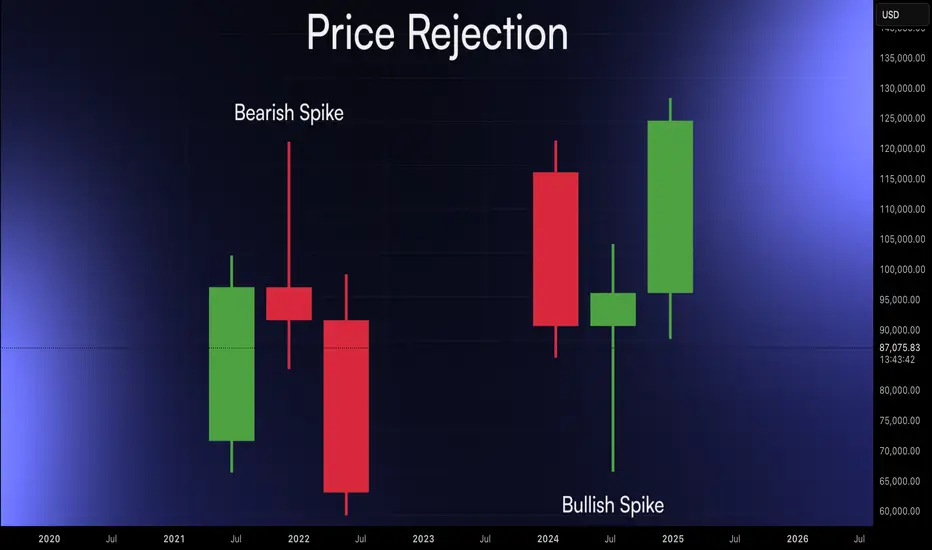
Rejection Wicks, Liquidity Taken, Pressure Reverses
What it shows: price tapped a high or low, triggered stops, and immediately met stronger opposing orders. This is how sweeps appear on a single candle.
When it matters: at equal highs/lows, session extremes, failed breakouts, and major swing points.
Why it’s valuable: wicks expose trapped traders and reveal where true supply or demand sits. They are early indicators of shifting intent.
Inside and Outside Bars, Compression and Expansion
Inside Bar: compression, tighter ranges, and reduced volatility ahead of expansion.
Outside Bar: immediate expansion where one side overwhelms both directions.
When they matter: at key levels before breakouts, during corrective legs, at consolidation boundaries, and after liquidity events.
Why they’re valuable: inside bars show preparation; outside bars show decision.
Treat these signals as behavioural information. Their value increases when combined with higher timeframe structure, liquidity mapping, momentum, volume, and session context.
3rd time lucky? (EUR/JPY)Setup
Bullish trend is overbought - short term bearish
Bearish Shooting star pattern on weekly chart (this is the 3rd one - the previous two didn't work out - 3rd time lucky?)
Bearish Evening star pattern on daily chart
Daily RSI down from very overbought reading
Price well above 20/50 day moving average zone
Commentary
There have been no meaningful corrections since the bullish trend began at 155. A large reversal from above 180 could be the start of one.
Strategy
Sell rebound towards supply zone starting at 182
Sell on break below last week’s low price (179.80)
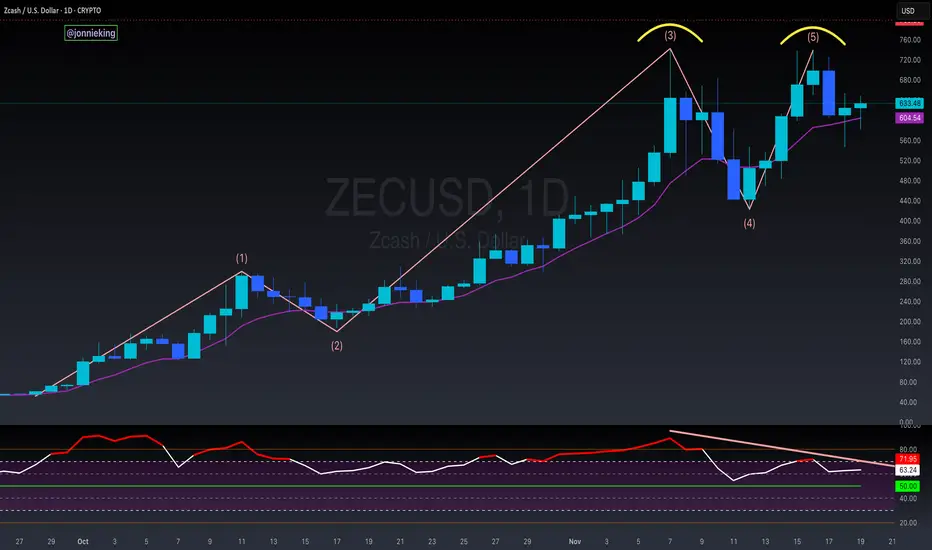
$ZEC 5-Wave Impulsive End of MoveZcash is one of those things that has thrown me off the most these past couple months.
Everything else including CRYPTOCAP:BTC has been nuking, but CRYPTOCAP:ZEC has shown insane strength.
It now appears this dino-coin is nearing the end of its run.
🚩 Double Top formed after impulsive 5-wave move.
🚩 Doji Candle followed by Bearish Engulfing on the Daily
🚩 Exaggerated Bearish Divergence on the RSI
🚩 Euphoria has been diminishing from the TL
⚠️ If it loses the 9EMA, this should confirm the next corrective wave down.
I like the ideology behind Zcash and what it offers to the market, but it has no right to be pumping with ₿itcoin nuking.
Evening Doji Star Sets On USDCHF, Price To FollowOn Wednesday, November 5th, Price on OANDA:USDCHF rose and tested the Resistance Level that's been overhead since August. Today with the decline in price on the Daily, suggests that we are looking at a very strong 3 Candlestick Pattern, the Evening Star Doji!
The Evening Star Doji is a Bearish Reversal Candlestick Pattern consisting of 3 candles: first being a large Bullish candle, second is a Doji candle representing the indecision between Bulls and Bears then followed by the 3rd candle being a large Bearish Candle, meaning Bears have overcome the Bulls.
Now if Price really is to reverse, the following candle after this pattern is formed should be a Bearish one, considering the Confirmation candle will confirm the reversal in price and continue to fall!
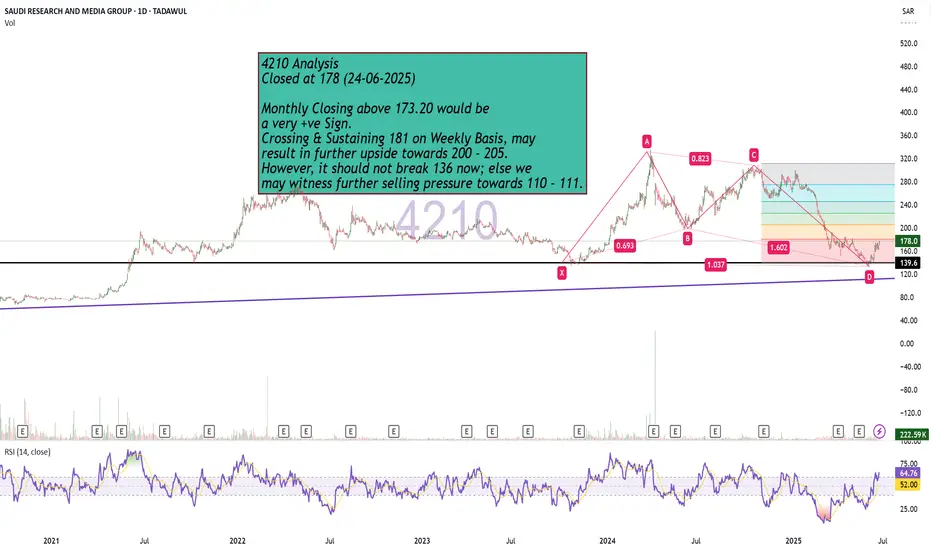
Bullish Monthly Candle Expected?4210 Analysis
Closed at 178 (24-06-2025)
Monthly Closing above 173.20 would be
a very +ve Sign.
Crossing & Sustaining 181 on Weekly Basis, may
result in further upside towards 200 - 205.
However, it should not break 136 now; else we
may witness further selling pressure towards 110 - 111.
Mind the Gap! The Euro's Waiting GameShadows and Gaps: The Market’s Inside Joke
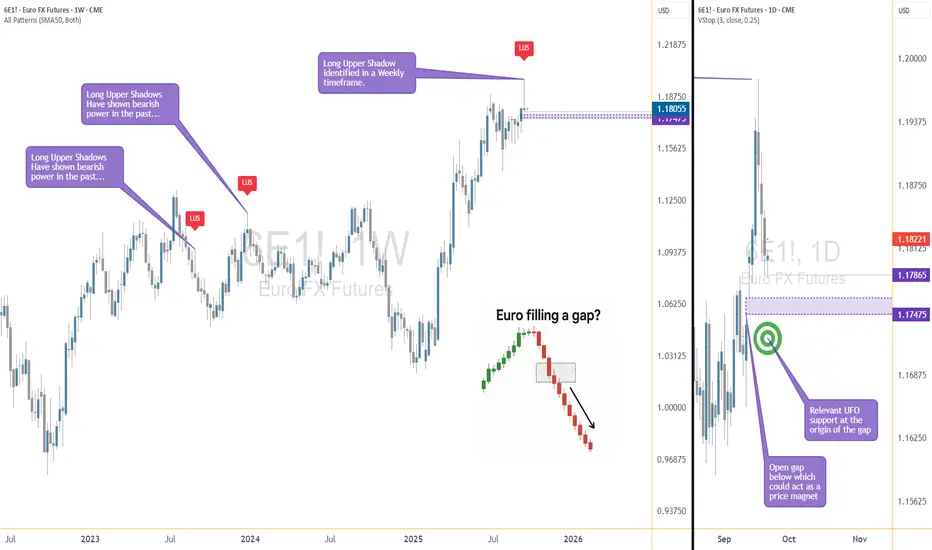
Euro FX Futures (6E, M6E) are doing that thing again… you know, when the chart leaves a Long Upper Shadow (LUS) on the weekly candle and basically whispers, “Don’t get too comfortable up here, bulls.”
Shadows this long usually mean buyers tried to party at higher levels, but sellers crashed the event and sent everyone home early. And just to make life interesting, the daily chart left an open gap below — like an unfinished side quest in a video game. Gaps are notorious for pulling price back, sooner or later, because the market hates leaving things undone.
The Setup: Simple but Sweet
Here’s how the trade idea shapes up:
Trigger: Wait for a break below 1.17865 (prior low).
Target: 1.17475 — the “gap magnet” zone.
Stop: 1.18090, based on volatility so it isn’t just a random guess.
Reward-to-Risk: Around 2:1. Clean, balanced, and not too shabby.
⚠️ Quick heads-up: right under that gap sits a support zone. Translation? Don’t overstay your welcome. Get in, fill the gap, and don’t go fishing for extra ticks where a bounce might kick you out.
Why This Combo Works
This setup is a little like peanut butter and jelly — two different flavors that just click.
Weekly chart = a big ol’ rejection shadow.
Daily chart = a gap that’s basically screaming, “Fill me!”
Put them together, and you’ve got multi-timeframe confluence — a fancy way of saying “both charts agree.” And when charts agree, traders pay attention.
Big vs. Mini: Futures Contract Fun
6E (Euro FX Futures): Big contract, €125,000. Each tick = $6.25. Great for heavy hitters.
M6E (Micro Euro FX Futures): Mini-me version, 1/10th the size. Each tick = $0.625. Perfect if you’d rather test the waters than dive headfirst.
Micros make scaling in and out a breeze, and honestly, they’re underrated for learning without risking the farm.
The Takeaway
The Euro is caught between rejection above and a magnet below. No downside break yet, but once 1.17865 goes, the path to 1.17475 could be quick.
Moral of the story? Candlestick shadows troll the highs, gaps tempt the lows, and patience is the secret sauce.
Want More Depth?
If you’d like to go deeper into the building blocks of trading, check out our From Mystery to Mastery trilogy, three cornerstone articles that complement this one:
🔗
🔗
🔗
When charting futures, the data provided could be delayed. Traders working with the ticker symbols discussed in this idea may prefer to use CME Group real-time data plan on TradingView: www.tradingview.com - This consideration is particularly important for shorter-term traders, whereas it may be less critical for those focused on longer-term trading strategies.
General Disclaimer:
The trade ideas presented herein are solely for illustrative purposes forming a part of a case study intended to demonstrate key principles in risk management within the context of the specific market scenarios discussed. These ideas are not to be interpreted as investment recommendations or financial advice. They do not endorse or promote any specific trading strategies, financial products, or services. The information provided is based on data believed to be reliable; however, its accuracy or completeness cannot be guaranteed. Trading in financial markets involves risks, including the potential loss of principal. Each individual should conduct their own research and consult with professional financial advisors before making any investment decisions. The author or publisher of this content bears no responsibility for any actions taken based on the information provided or for any resultant financial or other losses.
BTCUSD: Rally Back to 116000 ResistanceHello everyone, here is my breakdown of the current Bitcoin setup.
Market Analysis
The market for Bitcoin has seen a structural shift after breaking down from its prior Upward Channel. This event signaled a loss of bullish momentum and led to a sharp decline down to the major horizontal Support at the 112000 level.
Currently, the price has found significant support in the 111500 - 112000 Support zone and has initiated a bounce. The market is now in a potential reversal phase, but I believe the conviction of the buyers still needs to be confirmed with one final test.
My Scenario & Strategy
My scenario is built on the idea that the 112000 Support is a major area of demand that will ultimately hold. I'm looking for a strong and confirmed bounce from Support zone. This would be the key signal that the corrective low is in place and the market is ready to reverse its course and begin a new rally.
Therefore, the strategy is to watch for this successful retest. It would validate the long scenario, with the price then expected to rally back up to the point of the initial breakdown. The primary target for this move is the 116000 Resistance level, which also aligns with the Resistance Zone.
That's the setup I'm tracking. Thank you for your attention, and always manage your risk.
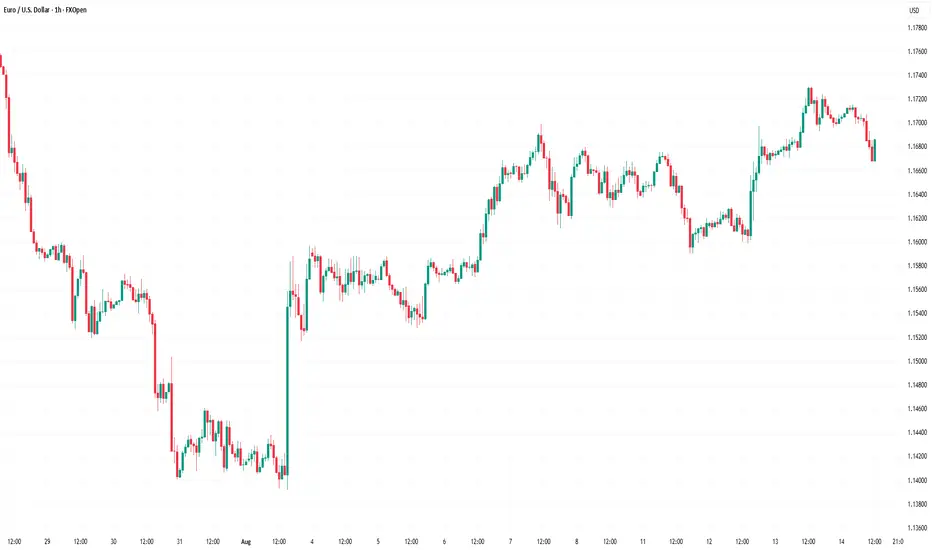
EURUSD Long: Rally Continues in Ascending ChannelHello, traders! The prior price auction for EURUSD was dominated by a wide consolidation range, bounded by the demand zone 2. Within this range, a new bullish structure began to form as an ascending channel, which eventually gathered enough momentum to break out and confirm a new uptrend, shifting market control to the buyers.
Currently, the price action continues to be guided by this ascending channel. Following a recent test of the upper price levels, the market has entered a corrective phase. The auction is now pulling back towards a significant confluence of support, located near the 1.1740 DEMAND level, which also aligns with the channel's dynamic support line.
My scenario for the development of events is a continuation of the uptrend after this correction completes. I expect the price to find strong support at the confluence of the channel's demand line and the 1.1740 - 1.1760 DEMAND ZONE. In my opinion, a confirmed bounce from this area will signal the end of the pullback and trigger the next impulsive move higher. The take-profit is therefore set at 1.1865, an intermediate target within the channel's structure. Manage your risk!
Gap-Fill Watch: Euro FX Futures React to Weekly RejectionIntroduction
When analyzing futures markets, one of the most compelling signals arises when higher timeframe candlestick rejection aligns with lower timeframe price imbalances. That is exactly what we see in Euro FX Futures (6E, M6E). On the weekly chart, long upper shadows (LUS) have historically marked turning points, reflecting exhaustion of bullish pressure. On the daily chart, an open gap below current price offers a potential magnetic pull. Together, these elements provide a textbook technical case study of how price can align across timeframes.
This article explores the educational insights behind candlestick rejection and gap mechanics, then applies them to a concrete trading scenario in 6E and its micro equivalent, M6E.
Weekly Chart: The Long Upper Shadow (LUS)
Long Upper Shadows appear when a market tests higher levels but fails to sustain them, leaving sellers in control by the close. They are one of the clearest visual expressions of rejection.
In Euro FX Futures, past long upper shadows have preceded significant bearish moves. Each instance reflects an imbalance where buyers were unable to absorb selling pressure at higher prices. The most recent weekly candlestick shows another long upper shadow forming near resistance. For technically minded traders, this is an early warning sign of potential downside ahead.
Daily Chart: The Open Gap Below Price
Price gaps occur when markets open significantly away from the prior session’s close. In futures, gaps often act like magnets—price tends to revisit them over time as liquidity seeks balance.
Currently, Euro FX Futures show an unfilled gap just below the market. Historically, such gaps in 6E have attracted price action, especially when combined with bearish rejection signals from higher timeframes. The combination of a weekly LUS above and a daily gap below paints a picture of imbalance: rejection at the highs, unfinished business at the lows.
Trade Setup
A structured trade idea emerges from this technical alignment:
Entry condition: Short position if 6E breaks below the prior day’s low at 1.17865. This ensures price is moving in line with bearish continuation before entry.
Target: 1.17475, the origin of the open gap. This is where the “magnet effect” is expected to complete.
Stop-loss: 1.18090, derived from a 2-day ATR calculation and adjusted to 25%. This keeps risk tight but accounts for minor noise.
Reward-to-Risk Ratio: With entry near 1.17865, risk is around 22 ticks while potential reward is about 39 ticks, yielding a favorable R:R of almost 2:1.
Risk caveat: Right below the gap origin lies a UFO support area. This means price may stall or reverse after the gap is filled. Being conservative with the target is wise—seeking deeper downside could run into structural support.
Contract Specs and Margin Notes
Understanding the contract structure is vital when applying risk management.
o Euro FX Futures (6E):
Contract size = €125,000
Tick size = 0.00005 USD per euro = $6.25 per tick
Initial margin (approximate, varies daily): ~$2,500–$3,000
o Micro EUR/USD Futures (M6E):
Contract size = €12,500 (1/10th of 6E)
Tick size = 0.0001 USD per euro = $1.25 per tick
Initial margin (approximate, varies daily): ~$300–$400
Application: Traders with smaller accounts can use M6E to size positions more precisely, while larger participants may choose 6E for liquidity. Micros provide flexibility to scale in/out of trades while maintaining strict risk per trade.
Risk Management Essentials
Risk management is not about avoiding losses—it is about ensuring that any loss remains controlled relative to potential reward. This trade idea highlights three core principles:
Stop placement by ATR: Volatility-based stops adjust naturally to current market conditions. Using 25% of a 2-day ATR prevents overexposure while respecting noise.
Position sizing: Traders should calculate how many contracts (6E or M6E) align with their personal risk tolerance.
Target discipline: While tempting to aim lower than the gap origin, technical evidence suggests price may encounter support there. Conservative targeting avoids overstaying a move.
Educational Takeaway
This setup demonstrates the power of multi-timeframe confluence. A weekly rejection signal provides context, while a daily gap gives tactical direction. Traders often gain an edge when higher timeframe sentiment (bearish rejection) aligns with lower timeframe imbalances (gap fill).
For students of price action, this is a reminder that candlestick patterns should never be taken in isolation. Instead, they should be validated by market structure, liquidity imbalances, or other confirming signals.
Conclusion
Euro FX Futures present a case study in how weekly rejection and daily gaps can combine to create a structured opportunity. While no outcome is certain, the confluence of signals here underscores the educational value of analyzing shadows and gaps together.
Traders can study this setup not only as a potential trade but also as a lesson in disciplined multi-timeframe analysis.
When charting futures, the data provided could be delayed. Traders working with the ticker symbols discussed in this idea may prefer to use CME Group real-time data plan on TradingView: www.tradingview.com - This consideration is particularly important for shorter-term traders, whereas it may be less critical for those focused on longer-term trading strategies.
General Disclaimer:
The trade ideas presented herein are solely for illustrative purposes forming a part of a case study intended to demonstrate key principles in risk management within the context of the specific market scenarios discussed. These ideas are not to be interpreted as investment recommendations or financial advice. They do not endorse or promote any specific trading strategies, financial products, or services. The information provided is based on data believed to be reliable; however, its accuracy or completeness cannot be guaranteed. Trading in financial markets involves risks, including the potential loss of principal. Each individual should conduct their own research and consult with professional financial advisors before making any investment decisions. The author or publisher of this content bears no responsibility for any actions taken based on the information provided or for any resultant financial or other losses.
XAUUSD: Bounce from 3615 Support LevelHello everyone, here is my breakdown of the current Gold setup.
Market Analysis
From a broader perspective, after a strong run-up within a prior Upward Channel, the price action for Gold has transitioned into a horizontal consolidation Range. This shift from a trending to a ranging market indicates a period of balance as buyers and sellers digest the previous impulsive move.
Currently, the price is in a corrective phase within this Range. After recently failing to break above the Resistance Zone, sellers have pushed the price down, and it is now approaching the major horizontal support at the bottom of the consolidation, near the Support 1 level.
My Scenario & Strategy
I think that this Range structure will continue to hold for now. The lower boundary, which aligns with Support 1 at 3615, is a significant area of historical support. This Support zone represents a high-probability area for buyers to step in and defend, just as they have in the past.
My scenario is that Gold will complete its drop to the lower part of the consolidation, testing the Support 1 level. Therefore, I expect that a successful defense of this support will lead to a rally back across the Range. My target for this move is 3700, which is placed within the major Resistance Zone at the top of the consolidation.
That's the setup I'm tracking. Thank you for your attention, and always manage your risk.
EURUSD: Correction will ContinuesHello everyone, here is my breakdown of the current Euro setup.
Market Analysis
From a broader perspective, we saw a significant bullish impulse on EURUSD after the price broke out of a multi-week upward wedge. This breakout carried the price well above the Support 1 level at 1.1780, culminating in a new local All-Time High before entering a corrective phase.
Following that peak, the market has pulled back and is now consolidating. Currently, it appears that the price is attempting to build support for another move higher, likely to re-challenge the recent highs.
My Scenario & Strategy
My scenario is a bearish one, built on the expectation of a failed retest of the recent ATH. I'm looking for the price to make one more push upwards towards the recent ATH. The key signal for this short idea would be a clear and strong rejection from that high, showing that buyers no longer have the strength to continue the trend.
Therefore, the strategy is to watch for this failure at the highs. A confirmed reversal would validate the short scenario. The primary target for the subsequent decline is the 1.1795 support zone, which aligns with the Support zone 1 area.
That's the setup I'm tracking. Thank you for your attention, and always manage your risk.
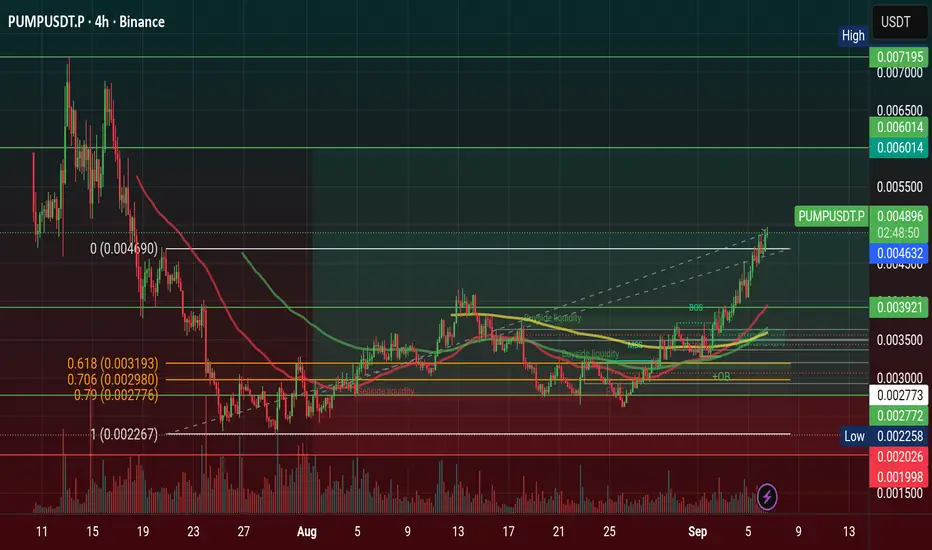
$PUMP Parabolic Starting & if Break ATH price hit $0.011 in 2026🚀 NYSE:PUMP Parabolic Starting & if Break ATH price hit $0.011 in 2026
IN 2026 PUMP will be happened break ATH and my Prediction $0.006 price area will be breaks after Price will stay accumulation in previous ATH areas. In 2026 price could hit $0.011 and 0.008 areas.
Pump.fun Executes $62M Token Buyback as Class-Action Lawsuit Looms
The platform generated more than $775 million in revenue since launch, according to DefiLlama, though income briefly slumped in late July, when weekly revenue fell to $1.72 million- its lowest lev el since March 2024. At its peak in May, weekly revenue topped $56 million, coinciding with a surge of Solana memecoins that briefly pushed SOL itself above $200, its highest level since late 2021.
Market Impact and User Growth
The buybacks appear to be lifting sentiment. PUMP has gained 12% in the past month and 9% in the past week, trading at $0.003522 — up 54% from an August low of $0.002282. The number of unique PUMP holders has climbed to more than 70,800, with smaller accounts holding under 10,000 tokens now making up nearly half of distribution, pointing to stronger retail participation. Blockchain explorer Solscan shows wallet activity on Pump.fun has nearly doubled since May, with daily active users averaging 48,000 compared with 25,000 earlier in the year.
#Write2Earn #PUMP #TrumpTariffs #highlight #SUBROOFFICIAL
Disclaimer: This article is for informational purposes only and does not constitute financial advice. Always conduct your own research before making any investment decisions. Digital asset prices are subject to high market risk and price volatility. The value of your investment may go down or up, and you may not get back the amount invested. You are solely responsible for your investment decisions and Binance is not available for any losses you may incur. Past performance is not a reliable predictor of future performance.
How to Trade Morning Star and Evening Star Candlestick Patterns Learn to identify and trade Morning Star and Evening Star candlestick formations using TradingView’s charting tools in this detailed tutorial from Optimus Futures.
Morning and Evening Stars are powerful reversal patterns that often mark turning points in the market. Recognizing them can help you anticipate when momentum is about to shift—and take advantage of new trading opportunities.
What You’ll Learn:
• How Morning Stars signal bullish reversals at the end of a downtrend
• How Evening Stars indicate bearish reversals after extended uptrends
• The three-candle structure of each pattern and what it means for trader psychology
• Why indecision candles (like dojis) play a critical role in confirming momentum shifts
• Using volume confirmation to validate Morning and Evening Star setups
• The importance of context: spotting these patterns at major support and resistance levels
• Setting effective stop losses at the high/low of the pattern for risk control
• Advanced entry tactic: waiting for retracement after confirmation to optimize risk/reward
This tutorial may help futures traders and technical analysts who want to harness candlestick reversal signals to identify potential market turning points.
The strategies covered could assist you in creating structured setups when strong buying or selling pressure appears at key chart levels.
Learn more about futures trading with TradingView:
optimusfutures.com
Disclaimer:
There is a substantial risk of loss in futures trading. Past performance is not indicative of future results. Please trade only with risk capital. We are not responsible for any third-party links, comments, or content shared on TradingView. Any opinions, links, or messages posted by users on TradingView do not represent our views or recommendations. Please exercise your own judgment and due diligence when engaging with any external content or user commentary.
This video represents the opinion of Optimus Futures and is intended for educational purposes only. Chart interpretations are presented solely to illustrate objective technical concepts and should not be viewed as predictive of future market behavior. In our opinion, charts are analytical tools—not forecasting instruments. Market conditions are constantly evolving, and all trading decisions should be made independently, with careful consideration of individual risk tolerance and financial objective
ETHUSD
📈 Conditional Trade Setup – ETHUSD (Long)
🔹 Bias: Bullish (Trendline Break)
🔹 Signal: Bullish divergence spotted ✅
🔹 Condition: Wait for 📦 Rectangle Breakout
🔹 Confirmation: A strong bullish candle must close above the Lower High
📊 Trade Plan (on chart):
🟢 Entry (EP): Marked on chart
🔴 Stop Loss (SL): Marked on chart
🎯 Take Profit (TP): Levels highlighted
⚠️ Patience: Only execute once breakout candle confirms above LH.
CRWV recap... high volume movethat earnings drop was absolutely amazing. I know it's not amazing to shareholders, but the volume move was swift and hit targets.
That buy today looks like a pop incoming at least. But do play with caution as the company sold off for a reason. The company is new & volatile so play the swings. Let's see if we can get 105-110 next week if catastrophe stays at bay over the weekend.
The kicker candlestick pattern is a great reversal pattern. Google it and check to see if trading view has more education and examples.
A Kicker Candlestick pattern consists of 2 candles to reverse the current trend. There must be space between the candles. continuation is below the kicking candle.
Enjoy
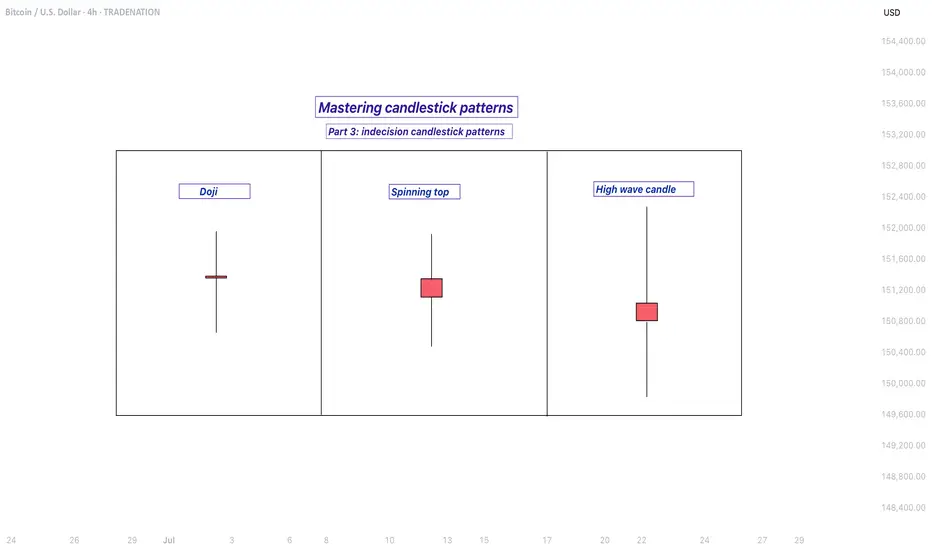
Mastering indecision candlestick patterns - How to use it!In this guide I will explain the indecision candlestick patterns. The next subjects will be discussed:
- What are indecision candlestick patterns?
- What is the doji?
- What is the spinning top?
- What is the high wave candle?
What are indecision candlestick patterns?
Indecision candlestick patterns are formations on a price chart that suggest uncertainty in the market. They appear when neither buyers nor sellers have full control, meaning the price moves up and down during the trading period but closes near where it opened. This creates a candle with a small real body and often long wicks on either side, showing that the market explored both higher and lower prices but ended up not committing strongly in either direction. These patterns are often seen during periods when traders are waiting for more information before making bigger moves.
What is the doji?
One of the most well-known indecision candles is the doji. A doji forms when the opening price and the closing price are almost identical, resulting in a very thin body. The wicks, which show the highest and lowest prices of the period, can be long or short depending on market activity. A doji tells us that buying and selling pressure were almost equal, which can happen during pauses in trends or before major reversals.
What is the spinning top?
Another type is the spinning top. A spinning top also has a small body, but unlike the doji, the open and close are not exactly the same. The wicks on both sides are typically of similar length, indicating that the market moved both up and down significantly before settling close to the starting point. This pattern reflects hesitation and a balanced struggle between bulls and bears.
What is the high wave candle?
The high wave candle is a more dramatic version of indecision. It has a small real body like the other patterns but features very long upper and lower shadows. This means the market swung widely in both directions during the period, but ultimately closed without making strong progress either way. The high wave candle signals strong volatility paired with uncertainty, which can often precede sharp moves once the market chooses a direction.
When you see these types of candles, they are essentially the market saying “I’m not sure yet.” They often appear at turning points or before big news events and can warn that the current trend may be losing strength. However, they are not guarantees of reversal or continuation on their own. Traders usually combine them with other technical signals or chart patterns to confirm whether the market will break out in one direction or the other.
-------------------------
Disclosure: I am part of Trade Nation's Influencer program and receive a monthly fee for using their TradingView charts in my analysis.
Thanks for your support. If you enjoyed this analysis, make sure to follow me so you don't miss the next one. And if you found it helpful, feel free to drop a like 👍 and leave a comment 💬, I’d love to hear your thoughts!
What Is the Evening Star Candlestick Pattern?What Is the Evening Star Candlestick Pattern?
Candlestick patterns offer traders a way to read price action and spot potential changes in momentum. One notable pattern is the evening star, a three-candle formation that signals the start of a possible downtrend. This article breaks down what the evening star looks like, how it works, and how traders typically use it.
What Is the Evening Star Candlestick Pattern?
The evening star is a three-candle pattern that traders watch for after a strong upward move. It’s considered a bearish reversal pattern, signalling that bullish momentum is fading. The setup consists of three candles:
- The first candle is a large bullish candle—it shows a clear upward direction.
- The second is much smaller. This middle candle—the star—reflects hesitation. Buyers and sellers are more balanced, and the market’s pace slows.
- The third candle acts as confirmation. It’s a solid bearish candle that closes deep into the body of the first.
The middle candle also often gaps up from the first, especially in stocks or indices, but gaps aren’t essential. What matters is the sequence: strength, indecision, reversal. The further the final candle closes into the body of the first, the stronger the pattern is considered.
Evening stars can appear on any timeframe, but many traders look for them on the daily chart where the signals tend to be clearer. It’s not a pattern to act on blindly—but in the right context, such as after a sustained bullish trend, it’s a useful sign that buyers might be losing control.
The Psychology Behind the Evening Star
It may be always useful to frame the formations like the evening star candle pattern in the context of market psychology.
Here, the first bullish candle signals buyer confidence. They drive prices higher and the candle closes strongly. The next candle is smaller, suggesting that momentum is slowing. Buyers aren’t pushing as hard, and sellers start to step in.
When the third candle closes strongly bearish, it confirms that sentiment is changing. Sellers are now in control, and previous buying strength fades. This shift often happens at the end of an extended upward movement, where fewer buyers are willing to bid the price up and begin closing positions.
How Traders May Use the Evening Star Candlestick Formation
The evening star may be a useful part of a trader’s toolkit, especially when it lines up with other pieces of analysis.
Opening and Closing a Trade
The evening star pattern candlesticks become more meaningful when they appear around known areas of resistance or previous swing highs. If the market’s been edging closer to a clear level—like a horizontal resistance line, Fibonacci retracement, or trendline—and then an evening star forms, it can add weight to the idea that the rally is weakening. Some traders also watch for patterns forming near round numbers or psychological price points.
If traders notice an evening star pattern occurring at a resistance level, they typically look for confluence using another indicator. The RSI might signal a bearish divergence, the price may be piercing an upper Bollinger Band, or it could also be bouncing from a 200-period EMA. Volume can be another factor—rising volume on the third candle can signal more participation behind the selling.
Once a trader has confidence that a bearish reversal is likely underway, they often use the candles following the third candlestick as an entry trigger. A stop loss might be set above the middle candle’s high, while take-profit targets might be placed at an area where a bullish reversal might occur, like a support level. Some might simply trail a stop to take advantage of the strong downtrend or exit when an indicator/candlestick pattern signals that bearish momentum is fading.
Marking Potential Trend Shifts
Some traders use the evening star to flag potential trend exhaustion. While they may not act on the signal (e.g. they are bullish overall and not willing to take shorts yet), the presence of an evening star can suggest the uptrend is vulnerable. They may prepare to buy a pullback, partially close an existing long position, or start watching for further bearish signals.
Example Trades
In the example above, we see a slight rally in AUD/USD in a broader downtrend (off-screen). Price initially pierces the upper Bollinger Band, with slight rejections visible in the upper wicks. After a brief dip, the market retests highs and finds resistance. At this point, the pattern forms, with confirmation coming from relatively weak candles afterwards. Price then closes through the midline of the Bollinger Bands, providing full confirmation of a bearish reversal.
In this second example, we can see a failed evening star. Here, Amazon (AMZN) gaps up over two consecutive days. That leads the 50-period EMA to slope up and cross above its 200-period counterpart—a clear bullish signal.
In this context, it may be better to ignore the signal. The market continues to move higher in an uptrend with consecutive bullish gaps, confirmed by the EMA crossover, indicating a lower probability the pattern will work successfully. Like any pattern, the evening star is expected to be more reliable when contextual factors align, such as in the AUD/USD example.
Strengths and Limitations of the Evening Star
The evening star has its strengths and limitations. To rely on the evening star in trading, it’s worth being aware of both sides.
Strengths
- Clear visual structure: The three-candle formation is straightforward, especially on higher timeframes.
- Logical: The pattern reflects an evident change in momentum that shifts from buying to selling pressure.
- Useful in a wider toolkit: When combined with other forms of analysis (resistance levels, overbought signals, strong volume), it can help traders pinpoint potential turning points and offer an entry.
Limitations
- Requires confirmation: On its own, the pattern doesn’t confirm a downtrend. It’s a potential signal, but not a guarantee.
- Less reliable in choppy markets: In sideways or low-volume markets, evening stars usually produce false signals.
- Subject to interpretation: Candle size, wicks, and placement can vary, which means not every setup is clean or tradable.
The Bottom Line
The evening star pattern offers traders a structured way to identify potential turning points in the market. Its three-candle formation makes it popular among those seeking greater confirmation than single-candle patterns.
FAQ
What Does an Evening Star Candle Pattern Mean?
It’s a three-candle formation that appears at the end of a solid uptrend. An evening star in trading indicates a potential bearish reversal or a short-term downward movement depending on market conditions and the timeframe used.
Is the Evening Star Bullish or Bearish?
The evening star is considered a bearish pattern that shows buyer exhaustion. A third long bearish candle reflects a change in the market sentiment.
How Do an Evening Star and a Hanging Man Differ?
The evening star is a three-candle pattern showing a gradual change in momentum. The hanging man is a single-candle pattern, with a small body and long lower wick. Both are bearish reversal signals, but the hanging man typically requires greater confirmation.
How Do a Shooting Star and an Evening Star Differ?
The shooting star is a one-candle pattern with a long upper wick and a small body that signals rejection at higher prices. The evening star is a three-candle pattern. Both formations reflect a shift from bullish to bearish sentiment.
This article represents the opinion of the Companies operating under the FXOpen brand only. It is not to be construed as an offer, solicitation, or recommendation with respect to products and services provided by the Companies operating under the FXOpen brand, nor is it to be considered financial advice.