USD/INR at 90: Can the RBI Halt the Rupee’s Slide in 2026?The Indian rupee stands at a historic crossroads. As 2025 concludes, the currency hovers precariously near the 90.00 psychological barrier. While the Reserve Bank of India (RBI) maintains a defensive posture, a combination of record capital flight and geopolitical friction creates a challenging environment for the year ahead.
Geopolitics and the Tariff Storm
Trade tensions between Washington and New Delhi have intensified throughout 2025. The re-imposition of tariffs climbing as high as 50% on key Indian exports has strained the bilateral trade balance. Major sectors like jewellery, automotive parts, and electronics now face shrinking margins and reduced global demand.
This protectionist environment discourages foreign direct investment (FDI). Investors remain cautious as they await a potential trade deal. Without a diplomatic breakthrough, the "tariff overhang" will continue to pressure the rupee toward weaker levels in early 2026.
Record Capital Flight: The FII Exodus
The year 2025 marked a historic turning point for Indian capital markets. Foreign Institutional Investors (FIIs) pulled a record ₹1.58 lakh crore ($18 billion) from Indian equities. High domestic valuations and rising US Treasury yields prompted this massive rotation of capital back toward developed markets.
While Domestic Institutional Investors (DIIs) provided a cushion through steady SIP inflows, they could not fully offset the currency impact. This exodus has effectively removed a primary source of dollar supply, leaving the rupee vulnerable to every spike in global volatility.
Management & Leadership: The RBI’s Defensive Play
The Reserve Bank of India has adopted a "controlled depreciation" strategy. RBI leadership intervened frequently near the 90.00 mark, selling dollars through state-run banks to prevent a chaotic collapse. This proactive management provides the market with a "tacit floor."
Traders now view the 90 level as a critical pivot point. The central bank's leadership must balance currency stability with the need to keep Indian exports competitive. If the RBI softens its stance, the path of least resistance leads toward 91.50 by mid-2026.
Macroeconomics: A Tale of Two Central Banks
The Federal Reserve and the RBI are navigating diverging paths. In December 2025, the Fed delivered its third consecutive interest rate cut to 3.5%–3.75%. However, hawkish language in the Fed minutes suggests a slower pace of cuts for 2026.
In contrast, the RBI’s recent 25 basis point cut aims to boost domestic growth (forecast at 7.3% for FY26). This narrowing interest rate differential often makes the rupee less attractive for "carry trades," further supporting a bullish USD/INR trend.
Indicator Current Status Impact on Rupee
Oil Prices $61.70 (Brent) Positive (Lower import costs)
US Tariffs Up to 50% Negative (Export pressure)
FPI Flows Record Outflow Negative (Dollar scarcity)
GDP Growth 7.3% (Projected) Positive (Long-term resilience)
Technology and the Future of Trade
Innovation in "Cyber-traceability" and blockchain-based supply chains is becoming vital for Indian exporters. These technologies help firms bypass some regulatory hurdles by proving compliance with global standards.
Patent analysis reveals that Indian firms are rapidly filing for high-tech manufacturing processes. This shift toward high-value, patent-protected exports could eventually reduce India's structural trade deficit. However, the currency benefits of these innovations will take years to materialise.
2026 Prediction: Consolidation Before Clarity
The USD/INR pair will likely consolidate between 89.50 and 91.00 in the first quarter of 2026. The "invisible hand" of the RBI will prevent a vertical spike, but the lack of foreign inflows remains a major hurdle.
Smart traders should watch for the signing of a US-India trade deal. A successful agreement would act as the ultimate "Buy" signal for the rupee, potentially triggering a sharp recovery toward the 88.00 handle.
Emergingmarkets
USD/ARS Outlook: Milei’s Inflation-Linked PivotArgentina has officially changed how it manages the Peso. President Javier Milei’s government introduced a new currency band tied to inflation. This move replaces the old fixed system. The goal is to stop the Peso from becoming too expensive. Markets reacted calmly, with the Peso shifting slightly. This analysis explores why this matters for the USD/ARS pair.
Macroeconomics: The Inflation Link
The Central Bank of Argentina (BCRA) changed its trading rules. Previously, the Peso devalued by a fixed 1% monthly. Now, the trading band adjusts based on official inflation data. This prevents the currency from lagging behind real prices. The bank aims to build $17 billion in reserves. This liquidity is vital for stabilizing the economy. GDP is forecast to grow 3.5% next year, signaling a recovery.
Geopolitics & Strategy: Pleasing the IMF
This monetary shift is a strategic diplomatic move. The International Monetary Fund (IMF) openly urged Argentina to rebuild reserves. By loosening controls, Milei aligns with Western financial standards. This compliance is crucial for regaining access to international debt markets. It signals to global investors that Argentina is serious about paying its debts. This reduces the risk of default and attracts foreign capital.
Management & Leadership: The "Turnaround CEO"
View Milei’s administration as a corporate restructuring team. He acts like a CEO saving a bankrupt company. The "culture" has shifted from spending to austerity. He prohibited the Central Bank from printing money to fund the government. This is a massive leadership change. It forces the public sector to manage budgets strictly. This discipline builds trust in the management of the Argentine economy.
Industry Trends: The Tourism Flip
Currency value dictates tourism flow. A strong Peso made Brazil cheap for Argentines. Record numbers flocked to Brazilian beaches, spending money abroad. Conversely, foreign tourism to Argentina dropped 14% because it became too expensive. The new policy corrects this. A weaker Peso makes Argentina attractive to visitors again. This supports local hotels and restaurants that were losing business to neighbors.
Business Models: Exporters vs. Importers
The previous rigid exchange rate hurt Argentine exporters. Their costs rose with inflation, but their revenue stayed flat due to the currency peg. The new inflation-linked band fixes this broken business model. Farmers and manufacturers can now predict margins accurately. They no longer fear that inflation will eat their profits. This stability encourages them to sell goods abroad, bringing dollars into the country.
Technology & Cyber: Fintech Stability
A predictable currency is essential for the technology sector. Volatile exchange rates force tech companies to focus on financial hedging rather than product innovation. Stability allows fintech startups to plan long-term. It also reduces the need for citizens to use complex crypto-channels to hide wealth. A normalized economy reduces the incentive for digital black markets and cyber-financial crimes.
Science & Patent Analysis
Scientific progress requires long-term investment. Investors tend to avoid funding research in countries with unstable currencies. Milei’s push for a market-based currency helps value intellectual property (IP) correctly. International firms can now assess the value of Argentine patents without currency risk. This clarity could boost foreign direct investment (FDI) into Argentina’s scientific and biotech sectors.
Conclusion
The USD/ARS pair is entering a phase of controlled adjustment. The government will let the Peso weaken, but only to match inflation. This is a smart, calculated decline. It protects reserves and supports local industry. For traders, this means the trend is predictable. The volatility of the past may be replaced by a steady, managed trend.
USD/CLP Plunges: Kast Victory & AI Copper BoomMarket Reaction to Political Shift
The Chilean peso has surged following José Antonio Kast’s decisive presidential victory. Markets reacted instantly to the news. The USD/CLP exchange rate dropped to 913.58, strengthening significantly against the dollar. Kast secured 58% of the vote in the December 14 runoff. This marks Chile’s sharpest shift to the political right in decades. Investors view his platform as highly business-friendly. Consequently, capital inflows have accelerated, driving the peso’s value upward. The local stock index, S&P CLX IPSA, also hit record highs. Financial markets clearly favour this new political direction.
Geopolitics and Geostrategy: A New Stance
Kast’s victory signals a major geostrategic pivot for Chile. He campaigned on strict border controls and mass deportations. This focus on security addresses voter frustration with rising violence. However, these policies carry geopolitical risks. Aggressive border measures could strain diplomatic relations with neighbouring countries. Geostrategically, a stable Chile attracts foreign direct investment. Yet, potential social tensions from strict policing could rattle investors later. The administration must balance domestic security with regional stability to maintain market confidence.
Macroeconomics: Fiscal Discipline Returns
The new administration promises aggressive fiscal tightening. Kast plans to cut public spending by roughly $6 billion. He aims to achieve this by eliminating "political waste." This contrasts sharply with the previous administration's approach. Critics argue these cuts endanger social programs like state pensions. Supporters view them as essential for economic health. This proposed fiscal discipline reduces the risk of sovereign debt expansion. Consequently, bond yields have compressed, and credit risks have lowered. Markets interpret these moves as positive for the Chilean peso’s long-term stability.
Industry Trends: The AI and Copper Connection
Global technology trends are inadvertently boosting the Chilean peso. The Artificial Intelligence (AI) boom requires massive data processing capacity. Building data centres demands significant amounts of copper. Chile is the world’s leading copper exporter. Copper prices have rallied to near $12,000 per tonne due to this surging demand. Supply bottlenecks further drive up prices. This "science of scarcity" directly benefits Chile’s trade balance. High-tech industries effectively subsidise the Chilean peso through their raw material needs.
Technology and Innovation: Powering the Future
The intersection of high-tech innovation and mining is critical here. Clean energy infrastructure also relies heavily on copper. As patents for green technologies expand, copper demand grows structurally. Projections indicate this investment cycle will persist for years. This provides a long-term floor for the peso. The mining sector may see increased demand for advanced extraction technologies. Innovation in mining efficiency will be key to meeting global supply needs. Chile sits at the centre of this technological resource war.
Leadership and Business Models
Kast proposes a CEO-style approach to governance. His "emergency" government aims to slash bureaucracy and jump-start growth. He plans to deregulate key sectors and lower taxes. This suggests a shift toward neoliberal business models in government operations. However, management challenges loom. Kast lacks a congressional majority. He must build cross-party coalitions to pass laws. Leadership success depends on negotiation, not just executive orders. Failure to unite Congress could dilute his ambitious economic reforms.
Technical Analysis: Key Levels to Watch
Traders should monitor specific technical thresholds for USD/CLP. The 910 level acts as immediate support. Resistance sits between 945 and 965. Momentum indicators currently suggest the peso is overbought. This means the currency might weaken slightly in the short term. Global factors are expected to resume dominance soon. Once the "election euphoria" fades, U.S. interest rates will drive the pair. Traders must remain vigilant for a potential reversal.
Conclusion: A Delicate Balance
The USD/CLP outlook remains cautiously optimistic. Kast’s win provides a short-term confidence boost. Simultaneously, the global AI boom supports copper prices. These factors combine to strengthen the Chilean currency. However, governance risks persist due to a divided Congress. The administration faces a difficult balancing act between reform and social stability. For now, the trend favours the peso, but volatility remains a threat.
USD/ZAR Outlook: Strategic Stability vs. Structural RisksThe US Dollar to South African Rand (USD/ZAR) exchange rate remains a critical barometer for emerging market sentiment, closing recently around 17.32. While UBS forecasts "limited upside" for the pair, implying Rand resilience, strategic analysis across multiple domains reveals a complex tug-of-war between fiscal consolidation and persistent structural headwinds.
Macroeconomics: The Fiscal Anchor
South Africa’s 2025 Medium Term Budget Policy Statement signaled a turning point in fiscal management. The National Treasury projected a consolidated budget deficit of 4.7% of GDP, a figure better contained than earlier fears suggested. This improved discipline, driven by solid revenue collection, supports the Rand by reducing sovereign risk premiums. Furthermore, the decision to lower the inflation target to 3% demonstrates the Reserve Bank’s assertive commitment to price stability, theoretically strengthening the currency's purchasing power parity over the long term.
Geopolitics and Geostrategy: The FATF Catalyst
A pivotal geostrategic victory was South Africa’s removal from the Financial Action Task Force (FATF) grey list in October 2025. This milestone reduces transaction costs for cross-border capital flows and reintegrates domestic financial institutions into the global high-trust network. Consequently, the risk premium embedded in the USD/ZAR exchange rate has diminished, limiting the Dollar’s upside potential. However, global trade fragmentation and protectionist policies in major trading partners (the US, China) remain latent geopolitical risks that could swiftly reverse these gains.
Industry Trends and Patent Analysis: Mining Innovation
The Rand’s performance is inextricably linked to the mining sector. Recent patent trends in Platinum Group Metals (PGM) extraction technologies indicate a shift toward more efficient, lower-energy recovery processes. As global demand for green hydrogen technologies—reliant on PGMs—accelerates, South African mines are positioning themselves to capitalize on this secular trend. UBS notes that the fiscal benefits of higher metal prices have yet to fully materialize, suggesting a delayed but potentially potent tailwind for the Rand heading into 2026.
Cyber Resilience and Financial Infrastructure
In the digital domain, the integrity of South Africa's financial infrastructure is paramount. The South African Reserve Bank’s cyber-resilience frameworks have fortified the banking sector against an escalating threat landscape, including ransomware and state-sponsored actors. This robust cyber-defense posture maintains foreign investor confidence in the JSE (Johannesburg Stock Exchange), preventing capital flight that would otherwise weaken the Rand.
Management and Leadership: Governance of National Unity
The formation of the Government of National Unity (GNU) has introduced a new dynamic in public sector leadership. The shift toward "coalition management" has enforced stricter checks and balances on public spending, mirroring corporate governance best practices. This cultural shift within government departments is reducing wasteful expenditure, directly supporting the Treasury’s deficit reduction goals, and stabilizing the currency.
Conclusion: Limited Upside for USD
UBS tactically favors selling USD/ZAR upside, viewing the pair as capped near current levels. The confluence of fiscal discipline, geostrategic reintegration (FATF), and resilient mining exports creates a formidable defense for the Rand. Unless global risk sentiment deteriorates sharply, the structural improvements in the South African economy suggest the path of least resistance for USD/ZAR is sideways to lower.
USD/BRL: Is the Real’s High Yield a Trap?The Brazilian Real (BRL) stands at a paradox in late 2025. Local innovation thrives, yet the currency weakens against the US Dollar (USD). UBS analysts forecast the USD/BRL exchange rate will hit 5.50 by mid-2026. This analysis explores the hidden friction points driving this forecast.
Macroeconomics: The Deficit Reality
Brazil’s fiscal health remains the primary drag on the currency. The Central Bank is expected to hold rates at 15% through 2025. This creates a lucrative "carry trade" for foreign investors. However, high yields cannot mask the growing deficit. UBS calculates the true current account deficit at 4.2% when including stablecoin flows. This figure reveals deeper structural fragility than official headline numbers admit.
Geopolitics: The BRICS Dilemma
Brazil’s strategic maneuvering within the BRICS alliance complicates the Real’s outlook. The administration actively pushes to reduce reliance on the US Dollar. This political stance introduces significant market volatility. Furthermore, potential US tariffs on emerging markets create a "risk-off" environment. Investors retreat to the Dollar's safety, adding downward pressure on the BRL. Brazil must balance trade with China against the necessary US investment.
Fintech & Business Models
Brazil’s financial sector provides a critical defense for the currency. The Pix payment system has revolutionized money velocity and reduced transaction costs. Fintech giants are exporting this low-cost banking model globally. These successes prove Brazilian firms can compete internationally. Such innovation attracts essential foreign venture capital, sustaining investment flows that support the Real.
Agri-Tech & Patent Analysis
Agriculture remains the backbone of the economy. Recent patent data ranks Brazil fourth globally in harvesting technology innovations. Biotechnology advancements are boosting crop yields significantly. These scientific breakthroughs lower production costs and improve terms of trade. Efficient agricultural exports provide a vital floor for the currency against external shocks.
Cyber Security & Digital Risk
The digital economy introduces new vulnerabilities. Huge financial flows are now linked to stablecoins and crypto assets. This surge demands a robust cybersecurity infrastructure. Brazil is rapidly expanding its "Cyber-Defense" capabilities to protect these digital assets. This industry maturation reassures global investors. It lowers the perceived risk of deploying capital into the country's digital infrastructure.
Leadership & Corporate Culture
Brazilian corporate culture is maturing rapidly. Executives are moving away from improvisation toward rigorous, data-driven compliance. Banks now aggressively employ AI for precise credit risk management. This shift aligns management practices with strict global standards. It reduces the "governance discount" often applied to Brazilian assets, instilling greater confidence in institutional investors.
Conclusion: A Complex Outlook
The USD/BRL trajectory represents a clash of opposing forces. High interest rates and a booming tech sector support the Real. However, fiscal debt and geopolitical friction pull it down. Traders must tread carefully. The yield is high, but the structural risks are rising.
Is South Korea Financing Its Own Currency Collapse?The South Korean Won (KRW) is unraveling. Trading at 1,465.5 against the US Dollar (USD), the currency has shed over 7% of its value in the second half of 2025. While Finance Minister Koo Yun-cheol publicly vowed stability this Wednesday, his "bland" delivery and lack of concrete policy measures sent a chilling signal to global investors: Seoul is out of ammunition. The forces driving the USD/KRW pair higher are no longer just macroeconomic—they are structural, geopolitical, and deeply rooted in the technology sector.
Macroeconomics & Policy: The "Bland" Defense
Minister Koo’s refusal to implement tax benefits for repatriating exporter earnings exposes a critical policy gap. Koo admitted that the market reacts hypersensitively to global uncertainty, yet his proposed solution—a consultative body with the National Pension Service (NPS)—lacks immediate bite. The NPS, the world's third-largest pension fund, is ostensibly a stabilizing force. However, its mandate to maximize returns drives it to aggressively accumulate dollar-denominated assets, exacerbating the very weakness the government seeks to curb. The Bank of Korea’s expected decision to hold interest rates on Thursday further cements the paralysis, trapped between a volatile currency and an overheating housing market.
Geopolitics & Geostrategy: The Cost of Alliances
The Won’s depreciation is the collateral damage of South Korea’s geostrategic pivot. A looming trade deal with the United States includes a massive investment package requiring Korean conglomerates to deploy capital into American soil. This structural capital outflow creates persistent demand for dollars that no short-term intervention can offset. Simultaneously, regional tensions with North Korea and trade disputes involving China have eroded the Won’s status as a stable proxy for Asian growth. Investors are pricing in the risk of South Korea becoming an economic frontline state.
Industry Trends & Business Models: The Export Paradox
South Korean industry is decoupling its success from its currency. The traditional model—weak currency boosts exports—is failing. While orders for transport equipment and machinery have risen, the value is captured in rising manufacturing costs driven by tariffs on imported raw materials. Major conglomerates (Chaebols) are shifting from "Made in Korea" to "Made by Korea in the USA." This business model evolution means record corporate profits no longer translate into domestic currency demand, as earnings are increasingly retained offshore to fund global operations.
Technology & Science: The Innovation Deficit
Despite South Korea’s reputation as a high-tech powerhouse, the underlying mechanics of its innovation sector hurt the currency.
High-Tech Arbitrage: Korean firms are aggressively acquiring US-based AI and biotech startups to bypass domestic regulatory hurdles. This M&A activity requires selling Won to buy Dollars.
Science & R&D: While domestic R&D spending is high, the commercialization of breakthrough science increasingly relies on global supply chains priced in USD.
Patent Analysis & Cyber Landscape
A deep dive into 2025 patent filings reveals a disturbing trend for the Won. While the volume of patents filed by Korean entities remains high, the citation impact—a proxy for value—is highest in software and cybersecurity technologies dominated by US firms.
Intellectual Property: Korean tech giants are paying record licensing fees for American foundational AI models and cybersecurity protocols.
Cyber Defense: Escalating state-sponsored cyber threats have forced Korean financial institutions to upgrade infrastructure using imported, dollar-priced security solutions, further draining foreign reserves.
Management, Leadership & Company Culture
A cultural shift in corporate leadership is accelerating capital flight. A new generation of Chaebol management prioritizes global diversification over national loyalty. Unlike their predecessors, who repatriated earnings to build domestic empires, today’s leaders view the US market as the safest harbor for capital. This "herd-like behavior," which Minister Koo criticized, is a rational response to perceived domestic stagnation. Even retail investors are abandoning local equities for US tech stocks, signaling a total loss of confidence in the domestic market's growth potential.
Conclusion: No Floor in Sight
The USD/KRW increase is not a temporary fluctuation; it is a structural repricing of South Korea's economic future. Without a radical shift in policy that incentivizes capital repatriation or a sudden geopolitical thaw, the path of least resistance is higher. Traders should ignore the rhetoric from Sejong City and focus on the flows: money is leaving the peninsula, and it isn't coming back soon.
Hungary's Interest Rate Decision: The Fight Against InflationThe National Bank of Hungary (NBH) is expected to maintain the European Union's highest key interest rate, currently at 6.5% , for the 14th consecutive month. This decision underscores the NBH's commitment to prioritizing financial stability and currency support over stimulating immediate economic growth. Keeping the rate high is the primary tool policymakers use to manage above-target inflation and anchor the Forint (HUF) .
Monetary Policy and Inflation Focus
The decision to hold the benchmark rate at 6.5% aligns with the consensus of financial experts, reflecting a cautious, tight monetary policy. This high rate makes borrowing expensive, curbing demand and consequently helping to cool inflation , which stood at 4.3% annually in October. This figure remains outside the central bank's targeted 3% range (with a 1% tolerance band). The NBH maintains this stance despite political pressure from Prime Minister Viktor Orban, who advocates for rate cuts to boost faltering economic performance. Governor Mihaly Varga's focus on price stability confirms the central bank's independence in prioritizing its core mandate.
Currency Strength and Market Implications
The sustained high rate is a significant factor in the strength of the forint. The substantial rate premium attracts foreign investors engaging in carry trades , where they borrow in a low-interest-rate currency (like the Euro) and invest in the high-yielding forint. This demand has led to the forint gaining over 7% against the Euro year-to-date. For bond markets, the high rate environment is challenging; the yield on the 10-year government forint bond recently climbed past 7%, reflecting increased risk related to pre-election spending and loosened fiscal targets. Money market forward rate agreements indicate that investors don't anticipate a rate reduction before the next elections in April.
Political and Geopolitical Backdrop
Political dynamics also influence market sentiment. The government's recent pre-election fiscal loosening has constrained the central bank's room for maneuver, adding risks to the country's economic stability. In a move to shield Hungarian assets, Prime Minister Orban claimed to have secured an undisclosed US financial backstop to protect the currency and bond markets following a meeting with President Donald Trump. While the US government has not confirmed this arrangement, the statement reflects the government's concern about maintaining market confidence. This geopolitical angle adds a layer of complexity for investors monitoring the Hungarian market.
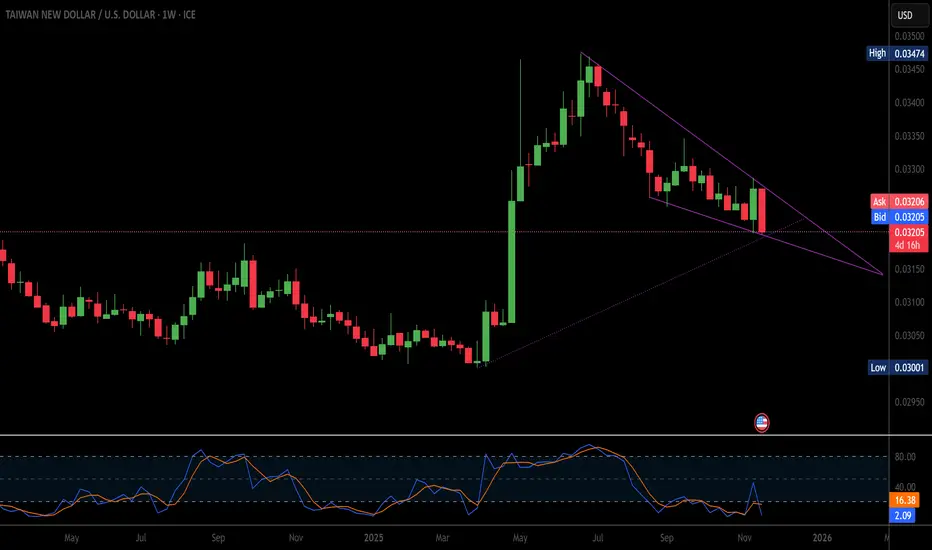
Outflows Over Optimism: Analyzing TWD/USD WeaknessThe Taiwan Dollar (TWD) recently erased its sharpest advance in weeks against the U.S. Dollar (USD). This shift occurred despite the central bank's commitment against currency manipulation. A critical analysis reveals that equity outflows are outweighing exchange rate pledges. This TWD/USD decrease results from multi-domain forces, encompassing geopolitics, macroeconomics, and technological shifts. We must examine these intertwined factors to understand the currency's directional momentum.
Geopolitical and Geostrategic Pressures
Geopolitical tensions between mainland China and Taiwan generate significant investment uncertainty. Heightened cross-strait risk directly impacts investor confidence in Taiwanese assets. Foreign investors frequently exhibit risk-off behavior, prompting capital repatriation and increasing USD demand. This continuous, underlying geostrategic friction acts as a structural headwind for the TWD. Moreover, global economic fragmentation encourages supply chain "near-shoring" away from Asia. This shift potentially reduces Taiwan's export-driven trade surpluses over the long term.
Macroeconomics and Capital Flight
The core cause of TWD depreciation remains foreign capital outflows from the equity market. Foreign institutional investors hold a substantial share of the Taiwan stock market (TAIEX). Their net selling of Taiwanese stocks creates a massive demand for the USD to repatriate capital. This overpowers the TWD-supportive effects of the central bank's non-manipulation commitment. Furthermore, U.S. Federal Reserve policy drives the USD strength. Higher U.S. interest rates increase the yield spread against Taiwan, attracting capital to U.S. dollar-denominated assets.
Technology, Cyber, and High-Tech Dynamics
Taiwan's economy depends heavily on the high-tech and semiconductor industries. Slowing global demand for electronics has recently impacted Taiwan's export performance. Although the long-term trend remains strong, cyclical downturns in the Information and Communications Technology (ICT) sector directly weaken the TWD. Cyber-related risks also contribute to corporate concerns. Supply chain vulnerabilities and intellectual property threats necessitate expensive global diversification. This increased cost structure affects corporate profitability and, indirectly, investor appetite for local equities.
Science and Patent Analysis Trends
Taiwan maintains a strong position in high-tech innovation, evidenced by patent filings from giants like TSMC. However, the economic benefits of this technological edge are changing. Increased foreign investment by Taiwanese high-tech companies in the U.S. and Japan diverts capital. This outward Foreign Direct Investment (FDI), intended for supply chain resilience, reduces domestic TWD demand. While the science sector remains robust, its financial flows are now shifting toward a more global footprint. This global realignment acts as a brake on local currency strength.
Conclusion: Managing Structural Weakness
The TWD/USD decrease reflects structural pressures transcending temporary market noise. Geopolitics drives capital repatriation, while U.S. monetary policy strengthens the rival currency. Technology's global expansion now distributes Taiwan's capital abroad, reducing domestic TWD demand. Authorities must manage these intertwined forces to stabilize the currency. The immediate market focus remains on foreign equity flows as the primary determinant of TWD direction.
Nu Holdings (NU) AnalysisCompany Overview:
NYSE:NU is Latin America’s largest digital bank, offering mobile banking, credit cards, and investments—direct exposure to the region’s booming fintech market.
Key Highlights:
Scale & Growth: 123M customers (+18M YoY), adding ~1.5M/month.
Financial Momentum (Q2’25): Revenue $2.9B (+40% YoY); net income $487M (+143%)—driven by credit, investments, and cross-sell.
Geographic Expansion: Mexico (13M customers) and Colombia underscore a highly scalable, repeatable growth model.
Investment Outlook:
Bullish above: $13.50–$14.00
Target: $22.00–$23.00 — supported by accelerating monetization, market expansion, and category leadership.
#NuHoldings #Fintech #DigitalBanking #LatinAmerica #Stocks #Earnings #GrowthStock #EmergingMarkets #NU #Investing #FintechRevolution
DLO: updates on trend structure alternativesPrice has followed the upside potential outlined in the September and October updates. However, the structure since the October bottom can also be interpreted as a running flat correction within a larger degree consolidation.
If price moves below the 21dEMA, more downside potential is likely in the coming weeks — with a possible retest of the February and May tops to complete the consolidation phase.
Conversely, closing above the 21dEMA would favor continuation of upside momentum toward the 20–22 resistance zone.
Chart:
Previously:
• On local support (Oct 8):
See Weekly review:
• On pullback potential (Sep 22):
and
• On downside potential and support (Sep 3)
and www.tradingview.com
Emerging Markets Exploding1. Understanding Emerging Markets: The Powerhouses in the Making
Emerging markets are economies that are transitioning from developing to developed status. They are characterized by:
Rapid GDP growth
Expanding industrial and service sectors
Rising foreign investments
Improving infrastructure and governance
The International Monetary Fund (IMF) identifies more than 20 major emerging economies, including India, China, Brazil, Mexico, Turkey, Indonesia, Thailand, South Africa, and Malaysia. Collectively, these countries represent over 50% of global GDP (PPP terms) and are home to nearly 85% of the world’s population.
Their growth trajectory is remarkable — between 2000 and 2024, emerging markets contributed over 70% of global economic expansion. This dominance is set to deepen in the coming decades.
2. The Core Engines Driving the Explosion
a. Demographic Dividend
One of the most powerful growth levers is the young and expanding population.
India, for example, has a median age of just 28, compared to 39 in the U.S. and 48 in Japan.
Africa’s population is expected to double by 2050, creating a vast labor pool and consumer base.
This youth-driven energy fuels entrepreneurship, consumption, and technological adoption — key catalysts for explosive economic growth.
b. Digital Transformation
The digital revolution is democratizing opportunities. From mobile banking in Kenya to digital ID systems in India, technology is bypassing traditional infrastructure limitations.
India’s UPI system handles more than 12 billion monthly transactions, revolutionizing financial inclusion.
Indonesia’s e-commerce sector is expected to cross $100 billion by 2025.
Emerging markets are becoming testbeds for innovation — and often exporting those innovations globally.
c. Industrial Shift and Supply Chain Realignment
Global companies are diversifying away from China, giving rise to the “China+1 strategy.” Nations like Vietnam, Mexico, and India are absorbing this manufacturing shift.
This has led to massive infrastructure development and FDI inflows.
Vietnam’s exports surged by over 250% in a decade, largely due to electronics manufacturing.
India’s “Make in India” initiative has attracted global giants like Apple, Samsung, and Tesla.
d. Financial Market Maturity
Emerging nations have reformed capital markets, improved transparency, and opened doors for global investors.
The MSCI Emerging Markets Index now captures some of the most dynamic companies globally — including Taiwan Semiconductor, Infosys, and Tencent.
Private equity and venture capital flows into emerging markets have more than tripled since 2010, showing growing global confidence.
3. Regional Growth Hotspots: The Epicenters of the Boom
a. Asia – The Economic Supercontinent
Asia remains the beating heart of the emerging market explosion.
India is now the fastest-growing major economy, expanding at over 7% annually.
Vietnam, Indonesia, and Bangladesh are rapidly industrializing.
China, despite maturing, continues to play a vital role in regional supply chains.
These nations are integrating trade through platforms like RCEP (Regional Comprehensive Economic Partnership), forming the largest free-trade bloc in the world.
b. Africa – The Next Billion Consumers
Africa is the world’s youngest continent, brimming with untapped potential.
With 1.5 billion people, it’s expected to add another billion by 2050.
The African Continental Free Trade Area (AfCFTA) is unlocking intra-African commerce.
Nations like Nigeria, Kenya, and Egypt are emerging as fintech and startup powerhouses.
Africa’s future lies in transforming its natural resource wealth into manufacturing and service-sector growth.
c. Latin America – Resources and Reform
Latin America’s story is evolving beyond commodities.
Brazil and Mexico are expanding tech and renewable energy sectors.
Chile and Argentina are becoming critical in the global lithium race, vital for EV batteries.
While political volatility remains a concern, institutional reforms and trade partnerships are gradually stabilizing the region.
4. Investment Flows and Opportunities
Global investors are reallocating capital to capture emerging market potential.
According to the World Bank, FDI into emerging economies crossed $1.2 trillion in 2024, with a strong tilt toward manufacturing, clean energy, and technology.
Top sectors attracting global investors:
Renewable Energy: Solar, wind, and hydro projects across Asia and Africa.
Technology and AI: Startups leveraging AI for finance, healthcare, and logistics.
Consumer Markets: Expanding middle-class populations driving demand for goods and services.
Infrastructure: Roads, ports, data centers, and smart cities reshaping economic connectivity.
For investors, the long-term opportunity lies not just in growth rates but in structural transformation — the shift from low-income to middle-income economies.
5. Challenges Amid the Explosion
Despite the optimism, emerging markets face significant hurdles that could slow or disrupt progress:
a. Political Instability and Governance
Frequent policy changes, corruption, and weak institutions can deter long-term investment.
Examples include currency crises, sudden taxation shifts, and populist economic policies.
b. Debt Burdens and Currency Volatility
Many emerging markets borrowed heavily during low-interest eras. Rising global rates have increased debt servicing costs.
Currencies like the Turkish lira and Argentine peso have seen steep devaluations, testing investor confidence.
c. Income Inequality
Rapid growth often benefits urban elites while rural and informal sectors lag behind. Social inequality can spark unrest, threatening stability.
d. Environmental Pressure
Industrial growth comes with rising pollution and resource depletion. Balancing economic expansion with sustainability is crucial for long-term resilience.
6. The Role of Technology and Innovation
Technology isn’t just enabling growth — it’s redefining it.
Fintech: Africa’s M-Pesa and India’s Paytm have revolutionized mobile banking.
EdTech & HealthTech: Startups are providing education and healthcare to millions without traditional infrastructure.
AI & Automation: Emerging economies are building data-driven ecosystems to boost productivity.
By leapfrogging legacy systems, emerging markets are crafting new economic models — decentralized, digital-first, and inclusive.
7. The Global Impact: Power Shift in Progress
The explosion of emerging markets is transforming global power structures.
Trade Power: South-South trade (emerging nations trading among themselves) now accounts for over 30% of global commerce.
Financial Power: The BRICS nations (Brazil, Russia, India, China, South Africa — now joined by others) are building alternative financial frameworks like the New Development Bank.
Geopolitical Power: Emerging markets are asserting influence in global forums like the G20, WTO, and UN.
This shift marks the beginning of a multi-polar economic order — one not dominated by the West, but shared among diverse, dynamic nations.
8. The Road Ahead: Forecasts for 2030 and Beyond
Experts predict that by 2035, emerging markets will account for nearly two-thirds of global GDP.
India is projected to become the third-largest economy after the U.S. and China.
Africa’s GDP could double within 15 years.
Southeast Asia’s digital economy is expected to cross $1 trillion by 2030.
However, sustainable progress depends on:
Strengthening governance and institutions.
Deepening regional integration.
Investing in education, infrastructure, and innovation.
Emerging markets are no longer “the future” — they are the present and the driving force of the next global economic chapter.
Conclusion: The Rise of the New Titans
The explosion of emerging markets is reshaping the architecture of the global economy. These nations are not merely catching up — they’re creating their own pathways, driven by demographic strength, digital disruption, and resource innovation.
While challenges remain, the momentum is undeniable. The next century will not be defined by a handful of Western economies but by a mosaic of emerging powers across Asia, Africa, and Latin America.
For investors, policymakers, and entrepreneurs, this is a historic inflection point — one that demands vision, agility, and a willingness to engage with the new frontiers of growth.
In every sense, emerging markets are exploding — and the world will never be the same again.
The Role of Developed and Emerging Markets in the World Bank’s Introduction: A Tale of Two Worlds in One Financial Institution
The World Bank stands as one of the most influential international financial institutions in the modern era — a cornerstone of global economic stability and development. Since its establishment in 1944 at the Bretton Woods Conference, the World Bank has evolved from a post-war reconstruction lender to a powerhouse for global poverty reduction, infrastructure development, and economic reform.
At its heart, the World Bank is not merely a bank — it is a bridge between developed and emerging markets. Developed nations bring capital, expertise, and governance, while emerging economies bring growth, opportunities, and development challenges. Together, these two groups form the backbone of the institution’s structure, mission, and functioning.
This intricate partnership shapes the global economy, influences international policy, and determines the future of sustainable development. Understanding their respective roles within the World Bank reveals how global economic cooperation works — and sometimes, where it struggles.
1. The World Bank: Structure and Objectives
The World Bank Group (WBG) consists of five institutions:
International Bank for Reconstruction and Development (IBRD) – lends to middle-income and creditworthy low-income countries.
International Development Association (IDA) – provides concessional loans and grants to the poorest nations.
International Finance Corporation (IFC) – focuses on private sector development.
Multilateral Investment Guarantee Agency (MIGA) – offers political risk insurance and credit enhancement.
International Centre for Settlement of Investment Disputes (ICSID) – handles investment disputes between governments and foreign investors.
Together, they aim to reduce poverty, promote sustainable development, and enhance living standards across the world. But the direction of these goals and their implementation depend largely on the interplay between developed and emerging markets within the institution.
2. Developed Markets: The Pillars of Financial Strength
Developed economies — primarily the United States, Japan, Germany, France, and the United Kingdom — are the largest shareholders and financial contributors to the World Bank. Their roles are multifaceted and deeply rooted in both economic capacity and geopolitical influence.
A. Capital Contribution and Voting Power
The World Bank operates on a shareholding system where financial contributions determine voting power. Developed countries hold the majority of votes — for example, the U.S. alone has around 16–17% of voting rights, giving it significant influence over key decisions.
This capital infusion ensures the World Bank’s ability to provide loans at favorable rates to developing nations, maintain creditworthiness, and attract investors from international capital markets.
B. Policy Influence and Governance
Developed nations also shape the strategic priorities of the World Bank. They influence policy directions on:
Climate change initiatives
Good governance and anti-corruption frameworks
Debt sustainability
Gender equality and education programs
However, critics argue that this dominance can sometimes lead to policies that reflect the interests or economic ideologies of the developed world — particularly the neoliberal approach of privatization and deregulation.
C. Technical Expertise and Innovation
Developed economies contribute advanced research, technology, and institutional know-how to World Bank projects. For instance:
The U.S. contributes technological expertise in energy transition and innovation financing.
European countries drive climate adaptation, green infrastructure, and human rights frameworks.
Japan often supports disaster resilience and urban infrastructure development.
This infusion of expertise helps ensure that World Bank-funded projects are not only financially viable but also sustainable and modern in design.
3. Emerging Markets: The Engines of Growth and Development
Emerging economies — such as India, China, Brazil, Indonesia, and South Africa — play an equally vital yet distinct role within the World Bank. Once the primary recipients of development aid, many have now evolved into both borrowers and contributors.
A. Borrowers and Beneficiaries
Historically, emerging markets have been the primary recipients of World Bank loans and grants aimed at:
Building infrastructure (roads, dams, energy grids)
Expanding access to education and healthcare
Promoting agricultural and rural development
Strengthening governance and public institutions
For example:
India has been one of the largest recipients of World Bank loans, supporting rural electrification, sanitation, and digital finance initiatives.
China, before transitioning to an upper-middle-income economy, utilized World Bank funds to modernize infrastructure and improve poverty reduction programs.
These investments have had a profound multiplier effect — accelerating economic growth, improving living standards, and positioning these countries as regional powerhouses.
B. Emerging Donors and Shareholders
In recent years, several emerging economies have transitioned from aid recipients to development partners.
China has become a major shareholder and now contributes to World Bank financing pools.
India and Brazil participate in knowledge-sharing programs and South-South cooperation.
This evolution symbolizes a more balanced and inclusive global development model, where emerging economies not only receive aid but also help shape and fund development efforts in poorer nations.
C. Field Implementation and Local Innovation
Emerging markets also serve as testing grounds for innovative development models. Their on-ground experiences in poverty alleviation, microfinance, digital inclusion, and renewable energy provide blueprints for other developing nations.
For example:
India’s Aadhaar digital identity program inspired similar digital inclusion models across Africa.
Brazil’s Bolsa Família program influenced social welfare strategies in multiple countries.
Thus, emerging economies bring the voice of practicality, representing real-world development challenges and scalable solutions.
4. Collaboration Between Developed and Emerging Markets
The partnership between developed and emerging markets within the World Bank framework is both strategic and symbiotic.
A. Funding and Execution
Developed nations provide capital and governance, while emerging markets provide execution capacity and local insight.
This balance ensures that funds reach where they’re needed most and are used effectively for on-ground transformation.
B. Knowledge Transfer
The World Bank acts as a platform for knowledge exchange — developed countries share technical know-how, while emerging economies share policy lessons and innovations that work in resource-constrained environments.
C. Sustainable Development Goals (SDGs)
Both blocs are integral to achieving the United Nations’ 2030 SDGs. Developed nations finance and design global frameworks, while emerging markets implement and test these goals in diverse contexts — from renewable energy transitions to healthcare reforms.
5. Challenges in the Relationship
Despite mutual benefits, the relationship between developed and emerging markets in the World Bank is not without friction.
A. Governance Imbalance
Developing and emerging economies have long called for greater voting representation. Although reforms have been introduced, developed countries still dominate decision-making — limiting the voice of fast-growing economies like India or Brazil.
B. Policy Conditionalities
Many emerging nations criticize the World Bank’s loan conditions, which often require structural reforms like privatization or fiscal tightening. These can conflict with domestic socio-economic priorities and sometimes exacerbate inequality.
C. Geopolitical Tensions
The rise of China and the creation of the Asian Infrastructure Investment Bank (AIIB) has challenged the World Bank’s dominance, signaling emerging economies’ desire for alternative frameworks that better represent their interests.
D. Climate Finance Divide
Developed countries advocate for rapid green transitions, but emerging markets argue they need more time and support, as their economic growth still relies on energy-intensive sectors. Balancing development and decarbonization remains a key tension point.
6. The Evolving Role of Emerging Markets in the 21st Century
Emerging economies are no longer passive participants — they are increasingly shaping the World Bank’s agenda.
India champions digital public infrastructure and inclusive finance.
China promotes infrastructure-led growth and south-south cooperation.
Brazil emphasizes social protection and sustainable agriculture.
These nations push for a development model that blends economic growth with social inclusion, moving beyond the purely economic paradigms of the past.
Furthermore, as emerging markets contribute more financially and intellectually, the World Bank’s governance structure is slowly evolving toward greater inclusivity.
7. The Road Ahead: Toward a Balanced Global Partnership
For the World Bank to remain relevant in an increasingly multipolar world, it must strengthen the partnership between developed and emerging markets.
Key future directions include:
Reforming voting rights to reflect modern economic realities.
Enhancing transparency and accountability in project selection and implementation.
Promoting green finance and climate-resilient infrastructure, especially in the Global South.
Expanding digital transformation programs, leveraging emerging market innovation.
Encouraging co-financing and joint initiatives between developed and emerging nations.
The ideal future for the World Bank is not dominated by one group over another — but one where mutual respect, shared responsibility, and equitable participation drive global development.
8. Conclusion: A Shared Mission for Global Prosperity
The World Bank’s success depends on how effectively it balances the strengths of both developed and emerging markets. Developed countries provide stability, financial capacity, and institutional frameworks, while emerging economies bring energy, growth potential, and real-world experience.
Together, they represent the two engines of global progress — one supplying resources, the other driving innovation and execution.
As the 21st century unfolds, the collaboration between these two worlds within the World Bank will determine not only the institution’s future but also the fate of global development itself. The mission is clear: to bridge divides, foster inclusivity, and ensure that prosperity is not the privilege of a few nations — but the shared heritage of all.
How and why Silver May Overshoot Well Beyond 50 by 2026A description of silver price anomalies. Info is in video-only thing to add is we are going onour 6th consecutive year of silver structural demand deficits. The odds of a massive upside move intensify exponentially day to day at this point.
Do your own research
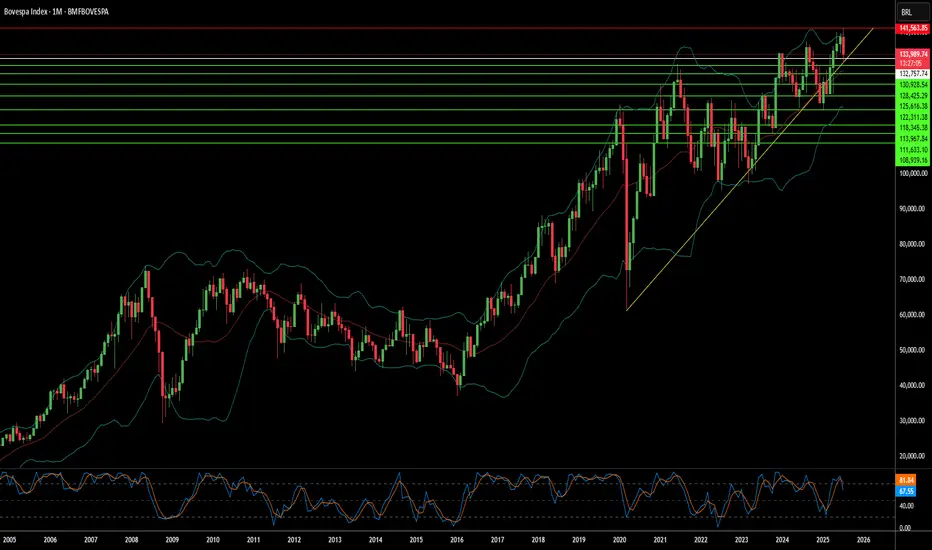
Has Geopolitics Clouded Brazil's Market Horizon?The Bovespa Index, Brazil's benchmark stock market index, faces significant headwinds from an unexpected source: escalating geopolitical tensions with the United States. Recent decisions by the US administration to impose a steep 50% tariff on most Brazilian imports, citing the ongoing prosecution of former President Jair Bolsonaro, have introduced considerable uncertainty. This move, framed by the US as a response to perceived "human rights abuses" and an undermining of the rule of law in Brazil's judiciary, marks a departure from conventional trade disputes, intertwining economic policy with internal political affairs. Brazilian President Luiz Inácio Lula da Silva has firmly rejected this interference, asserting Brazil's sovereignty and its willingness to negotiate trade, but not judicial independence.
The economic repercussions of these tariffs are multifaceted. While key sectors like civil aircraft, energy, orange juice, and refined copper have secured exemptions, critical exports such as beef and coffee face the full 50% duty. Brazilian meatpackers anticipate losses exceeding $1 billion, and coffee exporters foresee significant impacts. Goldman Sachs estimates an effective tariff rate of around 30.8% on total Brazilian shipments to the US. Beyond direct trade, the dispute dampens investor confidence, particularly given the US's existing trade surplus with Brazil. The threat of Brazilian retaliation looms, potentially exacerbating economic instability and further impacting the Bovespa.
The dispute extends into the technological and high-tech realms, adding another layer of complexity. US sanctions against Brazilian Supreme Court Justice Alexandre de Moraes, who oversees Bolsonaro's trial, directly link to his judicial orders against social media companies like X and Rumble for alleged disinformation. This raises concerns about digital policy and free speech, with some analysts arguing that regulating major US tech companies constitutes a trade issue given their economic significance. Furthermore, while the aerospace industry (Embraer) received an exemption, the broader impact on high-tech sectors and intellectual property concerns, previously highlighted by the USTR regarding Brazilian patent protection, contribute to a cautious investment environment. These intertwined geopolitical, economic, and technological factors collectively contribute to a volatile outlook for the Bovespa Index.
Is Mexico's Peso at the Crossroads?The recent imposition of U.S. sanctions on three Mexican financial institutions - CIBanco, Intercam Banco, and Vector Casa de Bolsa - has ignited a crucial debate over the Mexican peso's stability and the intricate dynamics of U.S.-Mexico relations. Washington accuses these entities of laundering millions for drug cartels and facilitating fentanyl precursor payments, marking the first actions under new anti-fentanyl legislation. While these institutions collectively hold a relatively small portion of Mexico's total banking assets (less than 3%), the move carries significant symbolic weight and prompts a re-evaluation of the peso's outlook. The Mexican government, under President Claudia Sheinbaum, swiftly rejected the allegations, demanding concrete evidence and initiating its investigations, including the temporary regulatory intervention of CIBanco and Intercam to safeguard depositors.
Economically, the peso faces a nuanced landscape. Before the sanctions, the Mexican peso (MXN) demonstrated remarkable resilience, appreciating significantly against the dollar, bolstered by Mexico's comparatively higher interest rates and robust trade flows with the U.S. However, the recent divergence in monetary policy, with **Banxico** easing rates while the U.S. Federal Reserve maintains a hawkish stance, now presents a potential headwind for the peso. While analysts generally suggest limited systemic risk to Mexico's broader financial system from these targeted sanctions, the action introduces an element of uncertainty. It raises concerns about potential capital flight, increased compliance costs for other Mexican financial institutions, and a possible erosion of investor confidence, factors that could exert downward pressure on the peso.
Geopolitically, these sanctions underscore the escalating U.S. campaign against fentanyl trafficking, now intricately linked with broader trade and security tensions. President Donald Trump's past threats of punitive tariffs on Mexican imports - aimed at curbing drug flows - highlight the volatile nature of this bilateral relationship. The sanctions serve as a potent political message from Washington, signaling its resolve to combat the fentanyl crisis on all fronts, including financial pipelines. This diplomatic friction, coupled with the ongoing complexities of migration and security cooperation, creates a challenging backdrop for the USD/MXN exchange rate. While the U.S. and Mexico maintain a strong intergovernmental relationship, these pressures test the limits of their collaboration and could influence the peso's trajectory in the medium term.
$DXY weakness and EM markets: $NIFTY more upside? The recent weakness in TVC:DXY is well documented. We have analyzed it here in detail in our blogs. This weakness is giving wings to all kinds of risk assets including Ems. One of our favorite EM in this space has been India and NSE:NIFTY index for quiet some time. It is the only EM which is close to beating S&P 500 over the last 5-year period. We have been recently bullish at NSE:NIFTY and published new targets on June 6. Please check the post in the link here.
NSE:NIFTY : New highs incoming; 27500 can be cycle highs for NSE:NIFTY by RabishankarBiswal — TradingView
The road to the medium-term target of 27500 on NSE:NIFTY has to do with the weakness of $DXY. As we see, lower lows and lower highs in the Dollar index TVC:DXY provides the required boost to risky assets like Stocks, Crypto and EMs. Even if we have some recent choppiness in the market the upward momentum will continue. By the end of July, we might see TVC:DXY at 96 up 2.5% and NSE:NIFTY @ 26000 up 5%.
Verdict : Pair Trade : Short TVC:DXY to 96 and Long NSE:NIFTY to 26000.
Nu Holdings: Is Latin America's Fintech Star Sustainable?Nu Holdings Ltd. stands as a prominent neobank, revolutionizing financial services across Latin America. The company leverages the region's accelerating smartphone adoption and burgeoning digital payment trends, offering a comprehensive suite of services from checking accounts to insurance. Nu's impressive trajectory includes acquiring 118.6 million customers, accumulating $54 billion in assets, and consistently demonstrating robust revenue and net income growth, primarily driven by its strong presence in Brazil, Mexico, and Colombia; - this strategic alignment with digital transformation positions Nu as a significant player in the evolving financial landscape.
Despite its remarkable expansion and optimistic projections for continued customer and asset growth, Nu faces notable financial headwinds. The company experiences an erosion in its net interest margin (NIM), influenced by increased funding costs from attracting new, high-quality customers and a strategic shift towards lower-yield, secured lending products. Furthermore, the depreciation of the Brazilian Real and Mexican Peso against the US dollar impacts their reported earnings. Nu's ambitious ventures, such as the NuCel mobile phone service, require substantial capital investments, introducing execution risks and demanding efficient capital allocation.
Beyond internal financial dynamics, a significant, albeit external, geopolitical risk looms: a potential Chinese invasion of Taiwan. This event would trigger a global embargo on China, leading to unprecedented supply chain disruptions, widespread stagflation, and hyperinflation worldwide. Such a catastrophic economic cascade would profoundly impact Nu Holdings, even given its regional focus. It would likely result in drastically reduced consumer spending, a surge in loan defaults, severe challenges in accessing funding, further currency devaluations, and soaring operational costs, thereby threatening the company's stability and growth prospects.
Ultimately, Nu Holdings presents a compelling growth narrative rooted in its innovative model and strong market penetration. However, internal pressures from evolving interest margins and high capital expenditure, combined with the low-probability but high-impact global economic upheaval stemming from geopolitical tensions, necessitate a cautious and comprehensive assessment. Investors must weigh Nu's demonstrated success against these complex, intertwined risks, acknowledging that its future prosperity is inextricably linked to both regional economic stability and the broader global geopolitical climate.
Taiwan Dollar Weakens Past 30 per USD Amid Trade Rumors and CentThe Taiwanese dollar weakened past 30 per USD on Tuesday, reversing a two-day rally and retreating from its strongest level in nearly three years.
📉 Recent gains in Asian currencies like the TWD and MYR were fueled by speculation over regional support for U.S. trade talks. However, Taiwan’s central bank denied any such coordination, stating the U.S. made no formal request. President Lai Ching-te also warned against spreading misinformation.
🔧 As a key player in global chip production, Taiwan remains highly exposed to shifts in trade dynamics and geopolitical risks.
Non-US ETFs outperform during trade warNon-US markets are showing resilience during this year's remarkable volatility.
While NASDAQ:QQQ and AMEX:SPY are down more than 10%, AMEX:VEA (non-U.S. Developed Markets ETF) is up nearly 5%...
AMEX:IEMG (tracking Emerging Markets) is negative so far, but less severe than others. Will Trump's volatile trade war lead to further outflow from the U.S. financial system?
Meanwhile, gold has been rallying to record highs as the world seeks an alternative to the dollar.
UPDATE I was wrong with USD/ZAR - Now it's undecidedWith trading it's not about certainties but probabilities.
And in this case I was soo optimistic about the rand breaking its Inverse Cup and Handle and heading to R16.50.
But instead the USD/ZAR rallied to R19.74.
Apart from the negativity kicking in with the US, there is one thing I didn't really consider. And that is the US Dollar is going to hurt - no doubt.
But the rand and emerging economies will more likely hurt even worse. Because despite it all we still follow the big boys (DOw, SP500, UK100)
Hence when the US sneezes, the world catches a cold.
But then we have other reasons for the rand weakening
1. 🗳️ Political Uncertainty in SA
Coalition tensions and governance concerns are making investors nervous, pushing money out of SA.
2. 📉 Lower SARB Interest Rates
South Africa cut rates again, making the rand less attractive to yield-seeking investors.
3. 🌍 Global Risk-Off Mode
Traders are fleeing emerging markets amid global tensions—hurting the rand, boosting the dollar.
4. 💼 Weak SA Economic Outlook
Low growth, high unemployment, and power issues reduce confidence in South Africa’s economy.
5. 🇺🇸 Stronger Dollar Demand
U.S. dollar gaining strength globally due to safe-haven demand and higher relative rates
So, yes - We are seeing some rand strength now and we are back to R18.88.
We will need to wait for the next formation before we make any deductions on where it is likely to go.
It could break up with the Falling Flag and run up to R20.00.
Or it could stabilise and form an Inverse Cup and Handle again and drop to R17.50.
We need to wait and see. I can't always post my winners - or else I wouldn't be an actual trader.
Disclosure: I am part of Trade Nation's Influencer program and receive a monthly fee for using their TradingView charts in my analysis.
HAL NV: Unlocking Hidden Value in a Discounted InvestmentCurrent Price: Approximately €117.40 per share
Target Price: €150 per share
HAL NV (traded via HAL Trust) has long been recognized as a unique investment vehicle, thanks to its diversified portfolio of high-quality assets. Despite a current trading level around €117.40, a closer look at the underlying holdings and operational performance reveals a significant value gap—one that suggests the stock should be priced nearer to €150.
Key Holdings and Their Strengths
Boskalis – A Fully Owned Flagship
• 100% Ownership: HAL NV owns Boskalis outright, giving it full exposure to the maritime and offshore construction market.
• Robust Order Books: Boskalis benefits from a full order book, which not only secures future revenues but also demonstrates strong market positioning.
• Operational Efficiency: With steady execution in its core business, Boskalis adds both resilience and growth potential to HAL’s overall portfolio.
SBM Offshore – Secure Order Pipeline
• Substantial Stake (22.9%): While not fully owned, SBM Offshore represents a key component in HAL’s strategy.
• Solid Order Books: Like Boskalis, SBM Offshore’s strong order backlog underscores its ability to generate future cash flow.
• Strategic Exposure: The offshore energy market, driven by both traditional and renewable energy projects, positions SBM Offshore for long-term growth.
Vopak – Consistent Performer with Upward Trends
• Major Stake (51.4%): HAL’s significant interest in Vopak captures exposure to the global tank storage and logistics sector.
• Earnings Fluctuation, But Upward Trend: Although Vopak’s earnings can fluctuate year over year, the overall trend has been strongly positive, reinforcing its role as a reliable income generator.
Additional Growth Catalysts
• Coolblue (56.4%) & TKH Group (5.2%): These holdings further diversify HAL’s portfolio, offering exposure to high-growth sectors such as retail technology and industrial services.
The Valuation Gap: NAV vs. Market Price
One of the most compelling aspects of HAL NV is the notable discrepancy between its Net Asset Value (NAV) and its market capitalization:
NAV Insight: Recent reports and annual filings suggest that the NAV per share of HAL’s underlying assets is approximately €165.95.
Market Discount: Trading at around €117.40, HAL NV is effectively offered at a significant discount. This “hidden value” implies that the market has yet to fully recognize the aggregate worth of its high-quality investments.
Equity vs. Market Cap: With the equity value of its portfolio (including fully consolidated companies like Boskalis and the robust valuations from quoted holdings such as Vopak and SBM Offshore) substantially higher than the current market cap, the potential for upward re-rating is evident.
Hal NV is poised for robust long‐term growth, with annual rates expected to reach around 15%. This optimism is driven by strong demand for the services of Boskalis and SBM Offshore, both of which continue to benefit from substantial order books. Additionally, the accelerated growth of Coolblue and the steady, consistent performance of Vopak—bolstered by emerging opportunities in India—further enhance the outlook. Coupled with a conservative balance sheet that ensures a low cost of capital, these factors collectively support the company’s promising growth trajectory.
Catalysts for Price Convergence
Several factors support the rationale for a price target of €150:
Strong Order Books: Both Boskalis and SBM Offshore are backed by extensive order books, which not only secure future revenue streams but also reduce operational risks.
Consistent Growth Trends: Vopak, despite some earnings volatility, has demonstrated a significant long-term upward trend in earnings—enhancing the overall stability of HAL’s portfolio.
Undervalued Underlying Assets: The current market price does not fully reflect the NAV derived from HAL’s diverse investments. As market sentiment improves and the intrinsic value becomes more widely recognized, a re-rating toward the NAV is likely.
Favorable Valuation Metrics: HAL NV’s relatively low Price/Earnings ratio compared to its growth prospects and asset quality makes it an attractive buy for value-oriented investors.
Conclusion
HAL NV represents an intriguing investment opportunity—a trust whose market price currently undervalues a robust portfolio of operationally strong and strategically significant companies. With full control over Boskalis and solid stakes in SBM Offshore and Vopak, combined with additional growth prospects from Coolblue and TKH Group, the underlying equity far exceeds the current market valuation. In essence, if the market were to recognize the full value of these assets, a price target of €150 per share appears not only justified but highly attainable.
Investors looking for a value play in the industrial and investment holding space should keep a close eye on HAL NV, as the convergence of market price to NAV could deliver significant upside potential.
Note: The analysis above is based on current market data (price ≈ €117.40) and recent annual reports, and reflects the author’s view on the intrinsic value of HAL NV. Investors should perform their own due diligence before making any investment decisions.
Emerging Markets Are Breaking Higher; Be Aware Of Lower USDollarEmerging markets, represented by the EEM chart, have been trending lower since October 2024 in what appears to be a complex W-X-Y corrective pattern. Meanwhile, the US Dollar Index (DXY) experienced a strong rally, driven by Trump’s victory in the US elections. However, the rally formed a wedge pattern, which suggests that its upside momentum may be coming to an end.
Why is the correlation between EEM and DXY important? If the Trump administration pushes oil prices lower, inflation expectations could also decline. This would likely lead to lower interest rates, which in turn could weigh on the USD. In such a scenario, capital may flow out of the US and into emerging markets.
Now that EEM is recovering and breaking above a key channel resistance, it signals that bullish momentum is returning. If this trend continues on EEM to 2024 highs, then DXY could decline to the 105–103 range—or possibly even as low as 100.