Trade With Real Estate Globally1. What Is Global Real Estate Trading?
Global real estate trading means buying, selling, leasing, or investing in property across international borders. This includes:
Direct property purchases (homes, villas, commercial buildings, land).
Indirect investments such as Real Estate Investment Trusts (REITs).
Development partnerships with foreign builders.
Short-term rentals (Airbnb-style international properties).
Institutional investments where large funds buy foreign property portfolios.
The goal is to generate returns through:
Capital appreciation
Rental income
Diversification
Currency gains
Access to emerging market opportunities
2. Why Investors Trade Real Estate Globally
a. Higher Returns in Foreign Markets
Real estate returns vary widely from country to country. For example:
Dubai and UAE offer high rental yields (6%–10%).
European capitals give stable appreciation over time.
The U.S. offers powerful mortgage systems with low interest.
Investors chase these global advantages.
b. Diversification Against Domestic Risk
If one country faces inflation, recession, or political issues, the investor’s global property helps balance the risk. For example, an Indian investor with U.S. REITs is less affected by Indian market fluctuations.
c. Stronger Currency Gains
Buying property in a stronger currency like USD, AED, EUR, or GBP can increase overall wealth. When the home currency depreciates, global property appreciates in value.
d. Investment Visas & Residency Benefits
Many countries offer residency or citizenship on property purchase:
Portugal Golden Visa
Greece Residency by Investment
UAE 10-year Golden Visa
Turkey Citizenship by Property
This makes global real estate even more attractive.
e. Digitalization & Transparency
Earlier global real estate trading involved huge paperwork and physical visits. Today:
Virtual property tours
Online documentation
International real estate platforms
Global developers
have made the process fast and transparent.
3. Types of Global Real Estate Investments
a. Residential Properties
These include apartments, villas, condos, holiday homes, etc. Investors prefer:
Dubai
London
Singapore
New York
Australia
because of high demand and liquidity.
b. Commercial Properties
These include office buildings, retail shops, warehouses, and logistics centers. Commercial investment is popular because it offers:
Higher rental yield
Long-term leases (5–10 years)
Corporate tenants
Markets like the UAE, USA, Germany, and Netherlands are top choices.
c. Industrial Real Estate
Warehouses, fulfillment centers, manufacturing parks are booming due to:
E-commerce expansion
Supply chain globalisation
Countries like China, India, Vietnam, and Mexico attract global industrial investors.
d. Hospitality Real Estate
Hotels, resorts, service apartments—these gain from tourism growth. Investors choose places like:
Maldives
Thailand
Bali
Dubai
for hospitality trading.
e. REITs (Real Estate Investment Trusts)
REITs allow investors to buy shares of global property portfolios without owning physical buildings. They offer:
Low investment entry
High liquidity
Professional management
Examples: U.S. REITs, Singapore REITs, Dubai REITs, Indian REITs.
4. Key Drivers of Global Real Estate Trade
a. Economic Growth
Countries with fast-growing GDP naturally attract property investors. More jobs = more housing and commercial demand.
b. Urbanization
Cities expanding create strong real estate opportunities in:
Infrastructure
Residential
Transportation-linked developments
c. Foreign Direct Investment (FDI) Policies
Countries encouraging foreign investment—like UAE, Singapore, Portugal—get massive global capital in their property markets.
d. Tax Benefits
Countries offer:
Lower property tax
Zero capital gains tax
Tax-free rental income
This motivates global investors.
e. Currency Strength
Properties in strong-currency countries are seen as wealth preservers. Investors diversify to protect against local currency inflation.
5. Risks in Global Real Estate Trading
Like any investment, global property trading also has risks:
a. Currency Risk
If the foreign currency weakens, property returns fall when converted back.
b. Legal and Regulatory Challenges
Different countries have:
Different ownership laws
Restrictions on foreigners
Complex registration rules
Investors must understand these rules before buying.
c. Political and Economic Uncertainty
War, elections, sanctions, recession—these can affect property values.
d. Market Liquidity
Some markets don’t have fast buyers. Selling global property may take time.
e. Management Issues
If buying a property abroad, maintenance and tenant management can be challenging. Most investors hire property managers.
f. Taxation Complexity
Owning property abroad may mean paying taxes in both the foreign country and the home country.
6. How Global Real Estate Trading Works
Step 1: Market Research
Investors research:
GDP trends
Political stability
Rental yields
Transaction costs
Legal regulations
Step 2: Property Selection
They choose:
Residential, commercial, or industrial
Developed or emerging market
High-growth or high-yield area
Step 3: Legal & Documentation
Involves:
KYC
Property agreements
Notary procedures
Taxes
Some countries require local lawyers or brokers.
Step 4: Financing
Options:
Self-funded purchase
International mortgages
Developer financing
Step 5: Rental Management
To earn steady income, investors hire:
Property managers
Rental agents
Facility teams
Step 6: Exit Strategy
Investors must plan when to:
Sell the property
Reinvest in another market
Convert currency profits
7. Best Countries for Global Real Estate Trade in 2025
High-Yield Markets
Dubai (UAE)
Indonesia
Vietnam
Turkey
Stable and Safe Markets
USA
Canada
UK
Germany
Australia
Emerging Opportunity Markets
India
Philippines
Mexico
Saudi Arabia
8. Future of Global Real Estate Trading
Global property trading will grow rapidly due to:
Digital platforms
Blockchain-based property titles
Tokenization (fractional property ownership)
International mobility
Increased foreign investments
Investors will increasingly diversify across countries rather than depending on just one local market.
Conclusion
Global real estate trading has become a powerful way to build wealth, diversify risk, and take advantage of global economic growth. It offers opportunities in residential, commercial, industrial, and hospitality segments, supported by rising urbanization, open investment policies, and financial globalization. While it brings risks like legal challenges, currency fluctuations, and management issues, the rewards—high returns, global diversification, and strong-currency appreciation—make it a preferred choice for smart investors.
Global
Investing Worldwide: A Comprehensive Guide1. Why Invest Globally?
Global investing provides several advantages:
Diversification: Investing across different countries reduces the impact of localized economic downturns. For instance, if the U.S. market declines due to domestic issues, gains in Asian or European markets can offset losses.
Growth Opportunities: Emerging markets often exhibit higher economic growth rates than developed markets, providing potential for significant capital appreciation. Countries such as India, China, and Brazil have rapidly growing middle classes and expanding consumer markets, offering unique investment opportunities.
Currency Exposure: Investing internationally introduces currency diversification. A strengthening foreign currency against the investor’s home currency can amplify returns, although it can also magnify losses.
Access to Global Innovation: Many groundbreaking technologies, sustainable energy solutions, and healthcare advancements originate outside domestic markets. By investing globally, investors can participate in these high-growth sectors.
2. Types of Global Investments
Global investing can take various forms, each with distinct risk-return profiles:
Equities (Stocks):
Direct investment in foreign companies via local exchanges or American Depositary Receipts (ADRs).
Stocks offer growth potential but are susceptible to market volatility, political instability, and currency fluctuations.
Bonds:
Government and corporate bonds from different countries offer fixed income. Developed markets provide safety, while emerging markets often offer higher yields with increased risk.
Currency risk and interest rate differences are important considerations.
Mutual Funds and Exchange-Traded Funds (ETFs):
These pooled investment vehicles provide diversified exposure to international equities and bonds.
Specialized funds can target specific regions, sectors, or themes, such as technology in Asia or renewable energy in Europe.
Real Estate:
International property investments include commercial and residential real estate or Real Estate Investment Trusts (REITs).
Real estate offers income through rent and potential appreciation, but it requires awareness of local regulations and market dynamics.
Commodities and Natural Resources:
Investing in oil, gold, or agricultural commodities allows participation in global supply-demand trends.
Commodities are influenced by geopolitical events, weather conditions, and currency movements.
Alternative Investments:
Private equity, hedge funds, and venture capital provide access to high-risk, high-reward opportunities worldwide.
These typically require larger capital and a higher risk tolerance.
3. Key Factors Influencing Global Investing
Investing internationally requires analyzing factors that impact financial performance beyond domestic borders:
Economic Indicators: GDP growth, inflation, employment rates, and consumer spending patterns indicate a country’s economic health.
Political Stability and Governance: Elections, regulations, trade policies, and geopolitical tensions can significantly affect market confidence and investment returns.
Monetary Policy: Central bank policies on interest rates and liquidity influence investment decisions, particularly for bonds and currency-sensitive assets.
Currency Fluctuations: Currency appreciation or depreciation can enhance or reduce returns. Hedging strategies are often employed to mitigate currency risk.
Market Liquidity and Accessibility: Some markets, especially in emerging economies, may have lower liquidity or restrictions on foreign ownership, affecting entry and exit strategies.
Cultural and Social Factors: Consumer behavior, labor practices, and technological adoption can influence the success of sector-specific investments.
4. Investment Strategies for a Global Portfolio
A global portfolio requires careful allocation and strategic planning:
Geographical Diversification:
Spread investments across developed, emerging, and frontier markets to balance risk and opportunity.
For example, an investor may allocate 50% to developed markets (USA, UK, Japan), 30% to emerging markets (India, China, Brazil), and 20% to frontier markets (Vietnam, Nigeria).
Sector Diversification:
Allocate across industries such as technology, healthcare, energy, and consumer goods to mitigate sector-specific risks.
Currency Hedging:
Use financial instruments like forwards, options, or ETFs to protect against adverse currency movements.
Active vs. Passive Management:
Active management involves selecting individual securities and timing market entry/exit, aiming for superior returns.
Passive strategies, like investing in global index funds, provide broad market exposure with lower costs.
Thematic and ESG Investing:
Investors can focus on global themes such as clean energy, artificial intelligence, or sustainable development.
ESG (Environmental, Social, and Governance) investing is growing worldwide, attracting capital towards responsible companies.
5. Risks Associated with Global Investing
While global investing offers diversification and growth potential, it also introduces unique risks:
Market Volatility: International markets may experience higher volatility due to political events, economic crises, or natural disasters.
Currency Risk: Investments denominated in foreign currencies can fluctuate in value when converted to the investor’s home currency.
Regulatory Risk: Differences in taxation, securities regulations, and legal systems can impact returns and exit strategies.
Liquidity Risk: Some international markets may have limited liquidity, making it challenging to buy or sell assets quickly.
Geopolitical Risk: Trade wars, conflicts, sanctions, and terrorism can affect investment performance.
6. Global Investment Trends
Emerging Market Growth: Asia, Africa, and Latin America continue to attract capital due to high growth potential.
Technology and Innovation: Investments in AI, biotechnology, fintech, and electric vehicles are reshaping global markets.
Sustainable Investing: ESG and impact investing are becoming mainstream, reflecting investor preference for socially responsible strategies.
Digital Assets and Fintech: Cryptocurrencies, blockchain, and online trading platforms have increased access to global investments.
7. Practical Steps for Global Investors
Assess Risk Tolerance: Determine how much exposure to foreign markets aligns with your financial goals and risk appetite.
Research Markets: Analyze economic indicators, political stability, and sector potential.
Diversify: Avoid over-concentration in a single country or asset class.
Consider Costs: Factor in transaction fees, taxes, and currency conversion costs.
Use Professional Help: Global investing can be complex; financial advisors, international brokers, or global fund managers can provide valuable guidance.
Monitor Regularly: Global markets evolve rapidly; continuous monitoring and rebalancing are essential to optimize returns.
Conclusion
Investing worldwide offers immense opportunities for growth, diversification, and participation in global innovation. While the potential rewards are significant, investors must navigate risks associated with currency fluctuations, political instability, regulatory differences, and market volatility. By adopting a well-researched, diversified, and disciplined approach, global investors can enhance portfolio resilience, capture emerging opportunities, and achieve long-term financial goals. As globalization continues to deepen economic interconnections, international investing is no longer a niche strategy—it is increasingly essential for those seeking to maximize returns while managing risk in a complex, interconnected world.
Inflation and Interest Rates in the Global Market1. Understanding Inflation in the Global Economy
What is Inflation?
Inflation refers to the sustained increase in the general price level of goods and services in an economy. When inflation rises, the purchasing power of money declines—meaning the same amount of money buys fewer goods.
Inflation is typically classified into several types:
Demand-pull inflation: Occurs when demand for goods and services exceeds supply.
Cost-push inflation: Happens when production costs rise (e.g., higher wages, raw materials), forcing companies to increase prices.
Built-in inflation: Caused by a cycle of rising wages and prices driven by expectations.
Imported inflation: Arises when global commodity prices, especially oil and food, rise and countries import more expensive goods.
Global Factors Driving Inflation
In today’s globalized world, inflation isn’t limited to domestic conditions. It can escalate due to:
Energy price fluctuations
Oil and gas prices significantly impact inflation. When energy becomes expensive, transportation and manufacturing costs rise worldwide.
Supply chain disruptions
Events like pandemics, geopolitical tensions, and port congestions reduce supply, raising global prices.
Currency depreciation
When a nation’s currency weakens, imports become costlier, increasing domestic inflation.
Geopolitical conflicts
Wars or sanctions impact commodities like oil, wheat, and metals, triggering inflation globally.
Monetary easing
Excessive money supply from prolonged low interest rates can push global inflation higher.
Thus, inflation is no longer just a local phenomenon—it is deeply tied to global economic dynamics.
2. Role of Central Banks in Controlling Inflation
Central banks like the Federal Reserve (US), European Central Bank (ECB), Bank of England, and Reserve Bank of India manage inflation primarily through monetary policy, which includes adjusting interest rates and controlling money supply.
Tools Central Banks Use
Policy interest rates
The main tool. Raising rates cools inflation; lowering rates stimulates growth.
Open market operations
Buying or selling government securities to manage liquidity.
Reserve requirements
Setting how much banks must hold as reserves.
Forward guidance
Communicating future policy direction to stabilize markets.
Central banks aim to maintain inflation near a target, often around 2%, which supports stable economic growth.
3. Interest Rates and Their Global Implications
What are Interest Rates?
Interest rates represent the cost of borrowing money. When central banks increase rates, loans become more expensive and savings more attractive. When they decrease rates, borrowing becomes cheaper, stimulating spending and investment.
Why Interest Rates Matter Globally
Interest rate decisions by major central banks, especially the US Federal Reserve, influence global capital flows. Higher rates in one country attract foreign investors looking for better returns, strengthening that country’s currency and affecting financial markets worldwide.
Global Effects of Rate Hikes
Stronger currency in the rate-hiking country
This makes imports cheaper but exports more expensive.
Capital outflows from emerging markets
Investors pull out money to invest in safer, higher-yield markets.
Higher borrowing costs
Countries with high external debt suffer when global interest rates rise.
Drop in global stock markets
Investors shift from stocks to bonds when interest rates rise.
Global Effects of Rate Cuts
Weaker currency
Supporting exports but making imports costlier.
Increase in global liquidity
Encourages investment in emerging markets and riskier assets.
Stock market rally
Lower borrowing costs stimulate corporate profits and valuations.
4. The Inflation–Interest Rate Relationship
Inflation and interest rates have a direct but inverse relationship:
When inflation rises, central banks raise interest rates to cool the economy.
When inflation falls, central banks lower rates to encourage borrowing and spending.
How Higher Rates Reduce Inflation
Reduced consumer spending
Loans become expensive; people delay home, car, and personal purchases.
Lower business investment
High borrowing costs discourage expansion.
Decreased money supply
Slows down economic flow of money.
Strengthened currency
Reduces import costs, lowering overall inflation.
How Lower Rates Increase Inflation
Boosted borrowing and spending
Increased business investment
Weaker currency makes exports competitive
Economic growth accelerates
Central banks must carefully balance controlling inflation without pushing economies into recession.
5. Impact on Global Financial Markets
1. Stock Markets
High inflation and interest rates usually lead to falling stock prices because:
Corporate profits shrink due to higher costs.
Consumers spend less.
High rates reduce the present value of future earnings.
Conversely, low rates often trigger stock market rallies.
2. Bond Markets
Bonds are extremely sensitive to interest rates.
Rates up → Bond prices down
Rates down → Bond prices up
Global investors closely watch central bank decisions to adjust bond portfolios.
3. Currency Markets (Forex)
Interest rates drive forex movements.
High rates → currency strengthens.
Low rates → currency weakens.
Countries with hyperinflation experience rapid currency depreciation.
4. Commodity Markets
Inflation pushes commodity prices higher, especially gold, which is considered a hedge. Rising interest rates, however, often reduce demand for commodities by slowing the global economy.
6. Global Trade and Economic Growth
Inflation and interest rate changes significantly impact world trade:
High inflation weakens export competitiveness
High interest rates reduce global demand
Lower interest rates stimulate trade and cross-border investments
Differences in inflation and interest rates across nations also create arbitrage opportunities, influencing the flow of goods, capital, and currencies.
7. Challenges for Emerging Markets
Developing nations face greater risks from global inflation and interest rate changes. Issues include:
Debt crises due to higher repayment costs.
Capital flight when investors move to safer markets.
Currency depreciation causing imported inflation.
Pressure on central banks to increase rates even if local economic conditions are weak.
8. The Road Ahead: A Changing Global Landscape
As global uncertainties—such as geopolitical tensions, technological disruptions, and climate-driven supply shocks—continue, inflation is becoming more volatile. This forces central banks to adopt more dynamic and data-driven policies. The future global market will be defined by:
Rapid policy adjustments
Digital currencies influencing inflation and money supply
Greater coordination among nations
A stronger focus on supply chain diversification
Conclusion
Inflation and interest rates are core pillars of the global economic system. Inflation affects everything—from household budgets to multinational strategies—while interest rates determine the cost of money worldwide. The balance between these forces dictates growth, stability, and investment flows in the global market. As economies become more interconnected, local inflation or rate changes can instantly impact the entire world. Mastering this relationship helps investors, policymakers, and businesses navigate an increasingly complex global economy with clarity and confidence.
Types of Trading in the World Market1. Equity (Stock) Trading
Stock trading is one of the most popular forms of trading globally. Traders buy and sell shares of publicly listed companies on exchanges such as NYSE, NASDAQ, London Stock Exchange, Tokyo Stock Exchange, and NSE/BSE in India.
Types of Stock Trading
Intraday Trading:
Buying and selling within the same trading day. Traders use technical analysis, chart patterns, and indicators to exploit short-term price movements.
Swing Trading:
Positions are held for several days or weeks. Swing traders focus on medium-term trends and market cycles.
Position Trading:
Long-term trading, where traders hold stocks for months or years based on fundamentals, economic outlook, and company growth.
Momentum Trading:
Traders enter stocks showing strong upward or downward movement with high volume, aiming to profit from continued momentum.
Equity markets are influenced by earnings reports, corporate news, economic data, interest rates, and geopolitical events.
2. Forex (Foreign Exchange) Trading
The Forex market is the largest and most liquid financial market in the world, with daily turnover exceeding $7 trillion. Traders buy and sell currency pairs such as EUR/USD, GBP/JPY, USD/INR, etc.
Key Features
Market remains open 24 hours, five days a week.
Influenced by macroeconomic indicators, central bank policy, and global events.
Types of Forex Trading
Scalping:
Ultra-short-term trading where traders make dozens of trades in a day for small profits.
Day Trading:
Similar to intraday trading in stocks but applied to currency markets.
Carry Trade:
Traders borrow in low-interest currencies and invest in high-interest currencies to profit from rate differences.
Algorithmic Forex Trading:
Automated systems trade based on programmed strategies.
3. Commodity Trading
Commodities include gold, silver, crude oil, natural gas, wheat, coffee, copper, and more. These are traded on global exchanges like the Chicago Mercantile Exchange (CME), London Metal Exchange (LME), and Multi Commodity Exchange (MCX) in India.
Two Types of Commodity Trading
Spot Trading:
Immediate purchase and delivery of commodities.
Futures Trading:
Buying and selling commodity futures contracts, where traders speculate on future prices rather than owning the physical commodity.
Commodity prices are influenced by weather, supply-demand dynamics, geopolitical tensions, and macroeconomic trends.
4. Derivatives Trading
Derivatives derive their value from underlying assets like stocks, indices, commodities, interest rates, or currencies. The most common derivatives are Futures and Options.
Futures Trading
A legally binding agreement to buy or sell an asset at a predetermined price on a future date. Traders use futures for speculation and hedging.
Options Trading
Options give traders the right, but not the obligation, to buy or sell an asset at a certain price.
Two types:
Call Option – right to buy
Put Option – right to sell
Common option strategies include straddle, strangle, iron condor, and covered call.
Index Trading
Indices like S&P 500, NASDAQ 100, NIFTY 50, FTSE 100, and DAX are traded via futures and ETFs.
5. Cryptocurrency Trading
Crypto trading has become a major global phenomenon. Traders buy and sell digital currencies like Bitcoin, Ethereum, Solana, XRP, Dogecoin, and thousands of altcoins on exchanges such as Binance, Coinbase, and Kraken.
Types of Crypto Trading
Spot Crypto Trading:
Actual buying and selling of coins.
Margin Trading:
Using borrowed funds to amplify returns (high risk).
Futures and Perpetual Swaps Trading:
Popular for leveraged speculation without owning crypto.
Arbitrage Trading:
Profiting from price differences across exchanges.
Crypto markets operate 24/7 and are influenced by global sentiment, technological innovations, regulations, and market cycles.
6. Bond and Fixed-Income Trading
Bonds are debt instruments issued by governments, corporations, and municipal bodies. They are traded mostly in OTC markets.
Major Types of Bond Trading
Government bonds (U.S. Treasuries, Indian G-Secs)
Corporate bonds
Municipal bonds
High-yield bonds
Bond traders focus on interest rates, inflation data, monetary policy, and credit ratings.
7. ETF and Mutual Fund Trading
Exchange-Traded Funds (ETFs) trade like stocks but represent a basket of assets such as indices, sectors, commodities, or bonds.
ETF Trading Types
Index ETFs: Track major indexes
Sector ETFs: Technology, banks, energy
Commodity ETFs: Gold ETF, oil ETF
Leveraged ETFs: 2x or 3x exposure
Mutual fund trading is not intraday; purchase and redemption occur at day-end NAV.
8. Algorithmic & High-Frequency Trading (HFT)
Algorithmic trading uses automated computer programs to execute trades based on predefined rules. High-Frequency Trading focuses on extremely fast trades using powerful servers and low-latency connections.
Common Algo Strategies
Market making
Statistical arbitrage
Trend-following
Mean reversion
These strategies dominate global equity and forex markets.
9. Social & Copy Trading
Platforms like eToro allow traders to copy the strategies of top-performing traders. New traders benefit by following experienced professionals.
10. Dark Pool Trading
Dark pools are private exchanges where large institutional investors trade without publicly revealing their orders. This prevents price distortion caused by large trades.
11. OTC (Over-the-Counter) Trading
OTC trading happens directly between parties rather than on centralized exchanges. It is common in:
Forex
Bonds
Derivatives
Small-cap stocks
OTC trading provides flexibility but may involve higher counterparty risk.
Conclusion
The world market offers a wide spectrum of trading types, each with unique characteristics, risk levels, and opportunities. From stock and forex trading to advanced derivatives and algorithmic trading, the global financial landscape is vast and dynamic. Traders choose their preferred style based on time availability, capital, market knowledge, and psychological comfort. Understanding the various types of trading is the first step toward developing a strategy aligned with personal goals. As markets continue to evolve with technology and globalization, traders have more tools and asset classes than ever before, making the world of trading accessible and full of potential.
Global Currency Shifts1. The Foundations of Currency Movements
A currency’s value is determined by supply and demand in the foreign exchange (forex) market. Factors influencing this include:
Interest rates: Higher rates attract foreign capital, strengthening a currency.
Inflation: Lower inflation preserves purchasing power, boosting currency value.
Economic growth: Strong GDP performance increases investor confidence.
Trade balances: Surpluses strengthen currencies; deficits weaken them.
Political stability: Nations with transparent governance attract safer inflows.
Market sentiment: Sometimes fear and speculation drive rapid shifts.
Because all major economies interact, a shift in one currency often provokes adjustments in others.
2. Historical Context of Currency Shifts
Global currencies have never been static—they evolve with economic power. For instance:
The British pound dominated the 19th and early 20th centuries, supported by Britain’s status as the global industrial and colonial power.
The U.S. dollar emerged post-World War II, formalized through the Bretton Woods system in 1944. The U.S.’s economic scale, gold reserves, and geopolitical influence made the dollar the primary reserve currency.
Floating exchange rates began in the 1970s after the collapse of Bretton Woods, allowing currencies to fluctuate more freely.
Since then, currency power has correlated strongly with economic dominance, financial innovation, and political alliances.
3. The Current Dollar-Dominated Landscape
Today, the U.S. dollar is the world’s anchor currency. It is:
The primary reserve currency, held by central banks globally.
The default currency for international trade, especially in commodities like oil.
The most liquid financial currency, underpinning capital markets, bonds, and global banking.
Because of this dominance, shifts in the dollar—strengthening or weakening—ripple across the world. A strong dollar hurts emerging markets by increasing borrowing costs, while a weak dollar boosts global liquidity and risk assets.
However, the dollar’s dominance is increasingly challenged.
4. Drivers Behind Modern Global Currency Shifts
a. Economic Power Shifts
As nations rise economically, their currencies gain relevance. China’s rapid ascent over the past three decades has positioned the renminbi (yuan) as a serious contender, particularly in Asia and among emerging economies.
b. Trade Realignments
As supply chains become more regional (e.g., India, Vietnam, ASEAN), local currencies gain usage in trade settlements. The shift away from China-centric manufacturing has also influenced currency dynamics.
c. De-dollarization Efforts
Countries facing geopolitical tensions with the U.S.—Russia, Iran, parts of Africa, Middle East, and even groups within BRICS—are exploring non-dollar trade settlements.
This is driven by:
U.S. sanctions exposure
Desire for economic autonomy
Rising multipolar geopolitics
While de-dollarization is gradual, it reflects a broader shift toward diversified currency use.
d. Central Bank Digital Currencies (CBDCs)
Digital versions of national currencies are reshaping cross-border payments. China’s e-CNY is the most advanced CBDC globally, potentially accelerating yuan adoption. Many countries are experimenting with CBDCs to reduce reliance on traditional dollar-based settlement systems like SWIFT.
e. Global Debt Dynamics
Countries with high external debt are sensitive to currency depreciation. When global rates rise (like the U.S. Fed hikes), currencies of indebted nations weaken simultaneously, shifting the global balance.
f. Commodity Cycles
Resource-rich nations benefit during commodity booms. For example:
Australian and Canadian dollars strengthen during metal and energy upcycles.
Middle Eastern currencies benefit from oil price surges.
Commodity cycles are a repeating driver of currency shifts.
5. The Rise of New Currency Blocs
The world is gradually moving toward a multipolar currency environment, defined by:
a. The Dollar Bloc
Comprising the U.S., Europe, Japan, South Korea, and much of the global financial system.
The dollar remains the backbone due to trust, technology, liquidity, and stability.
b. The Renminbi Bloc
Centered on China’s trade relationships.
China is:
Leading in manufacturing
Expanding Belt and Road investments
Signing bilateral currency swap agreements
This increases RMB usage in Asia, Africa, and Latin America.
c. Regional Digital and Trade Currencies
Efforts like:
Gulf Cooperation Council (GCC) unified currency proposals
Africa’s AfriExIM settlement systems
India’s rupee-based trade settlement agreements
These signify regional alternatives gaining traction.
6. Impacts of Currency Shifts on the Global Economy
a. Trade Competitiveness
Currency appreciation makes exports expensive, hurting trade balance.
Depreciation boosts exports but increases import costs.
Governments often intervene to stabilize such effects.
b. Inflation and Purchasing Power
Weakening currencies raise the price of imported goods, fueling inflation.
Countries dependent on energy or food imports are particularly vulnerable.
c. Fiscal and External Debt Pressure
Nations with dollar-denominated debt face larger repayments when their currency weakens, triggering financial stress.
This dynamic has played out repeatedly in:
Latin America
Turkey
Sri Lanka
Sub-Saharan Africa
d. Global Investment Flows
Currency expectations shape capital movement:
Strong currencies attract foreign investment
Weak currencies lead to capital flight
Portfolio flows respond quickly to perceived risk.
e. Geopolitical Influence
Currencies are not just economic tools—they are instruments of power.
The ability to:
enforce sanctions
influence global lending
set financial rules
gives reserve-currency nations significant geopolitical leverage.
7. The Future of Global Currency Shifts
Several trends are set to define the next decade:
a. A Gradually Declining U.S. Dollar Share
Not a collapse, but a slow reduction as alternatives emerge.
b. Yuan Becoming a Trade and Commodity Settlement Currency
China’s influence continues to grow, but capital controls limit full convertibility.
c. Digital Currencies Reshaping Payments
Cross-border CBDC platforms may reduce costs and bypass the dollar-centric network.
d. Strengthening of Regional Currencies
As countries diversify supply chains and rewire trade, local currencies gain influence.
e. Increased Volatility
Geopolitical polarization, climate risk, and faster economic cycles will likely cause more frequent currency swings.
8. Conclusion
Global currency shifts are deep, complex, and constant. They reflect changes in economic strength, political alignments, technological progress, and global trade structures. While the U.S. dollar remains dominant, the world is clearly moving toward a more diversified, multipolar currency landscape. China’s rising economic power, the adoption of digital currencies, and regional cooperation are slowly reshaping how nations transact and interact. These shifts will continue to influence global markets, investment flows, and geopolitical strategies in the decades ahead.
Case Studies of High-Growth Emerging EconomiesIntroduction
Emerging economies play a pivotal role in shaping global economic dynamics. Characterized by rapid industrialization, increasing integration into global markets, and significant socio-economic transformation, these countries often exhibit higher growth rates compared to developed economies. Understanding their trajectories offers critical insights into developmental strategies, policy formulation, and investment opportunities. This case study analysis focuses on select high-growth emerging economies, examining the factors that fueled their rise, challenges they faced, and lessons that can inform other countries.
1. China: The Manufacturing Giant
Economic Transformation:
China’s growth story is one of the most studied among emerging economies. Since the late 1970s, China transitioned from a centrally planned economy to a market-oriented one. Reforms, such as the establishment of Special Economic Zones (SEZs) and liberalization of trade, catalyzed manufacturing and exports, positioning China as the “world’s factory.”
Key Growth Drivers:
Export-Led Growth: China leveraged low-cost labor and improved infrastructure to dominate global manufacturing.
Investment in Infrastructure: Massive investments in roads, ports, and energy supported industrial expansion.
Technology Adoption: China strategically invested in technology transfer, innovation, and R&D, gradually moving from low-end manufacturing to high-tech industries.
Challenges:
Environmental degradation due to rapid industrialization.
Rising labor costs leading to the relocation of manufacturing to other emerging markets.
Increasing reliance on debt-financed infrastructure projects.
Lessons Learned:
China’s model illustrates the effectiveness of phased liberalization, export-driven strategies, and strategic government intervention in catalyzing rapid growth.
2. India: Services-Led Growth
Economic Transformation:
India represents a contrasting high-growth model driven predominantly by services rather than manufacturing. Since economic liberalization in 1991, India’s GDP has grown steadily, propelled by information technology (IT), software services, and business process outsourcing (BPO).
Key Growth Drivers:
Human Capital: A large, young, and English-speaking workforce facilitated the IT and services boom.
Policy Reforms: Liberalization, privatization, and deregulation attracted foreign investments and promoted entrepreneurship.
Global Integration: India leveraged globalization to become a hub for IT exports, serving international markets.
Challenges:
Infrastructure bottlenecks, particularly in transport and energy, limit manufacturing growth.
Income inequality and regional disparities pose social and political challenges.
Dependence on global demand for IT services makes the economy vulnerable to international shocks.
Lessons Learned:
India’s case underscores the potential of services-led growth and the importance of investing in human capital and digital infrastructure.
3. Vietnam: Export-Oriented Manufacturing
Economic Transformation:
Vietnam’s growth trajectory has been remarkable, with GDP expanding rapidly over the past two decades. Economic reforms under Đổi Mới in 1986 shifted Vietnam from a centrally planned to a market-oriented economy, stimulating private enterprise, foreign investment, and export-led manufacturing.
Key Growth Drivers:
Foreign Direct Investment (FDI): Incentives and trade agreements attracted global manufacturers in electronics, textiles, and footwear.
Competitive Labor Costs: Vietnam’s young workforce and low wages made it a preferred alternative to China for global supply chains.
Trade Liberalization: Membership in the World Trade Organization (WTO) and bilateral trade deals integrated Vietnam into global markets.
Challenges:
Overreliance on FDI and exports exposes the economy to external shocks.
Environmental concerns due to industrialization and urban expansion.
Need for skilled labor and innovation to move up the value chain.
Lessons Learned:
Vietnam highlights the effectiveness of combining market reforms with targeted FDI policies to achieve rapid industrial growth.
4. Ethiopia: Agriculture and Industrial Parks
Economic Transformation:
Ethiopia’s growth story differs from East Asian models, as it relies heavily on agriculture and government-led industrialization. Over the past decade, Ethiopia has been one of Africa’s fastest-growing economies, with infrastructure projects and industrial parks driving development.
Key Growth Drivers:
Agricultural Reforms: Modernizing agriculture through irrigation, mechanization, and value-chain development.
Industrial Parks: Establishment of textile and garment industrial parks attracted foreign investment.
Infrastructure Development: Roads, energy projects, and telecom expansion improved productivity and connectivity.
Challenges:
Political instability and regional conflicts have hampered sustained growth.
Heavy reliance on donor funding and external loans poses debt sustainability risks.
Climate vulnerability affects agricultural output.
Lessons Learned:
Ethiopia demonstrates how strategic public investment in infrastructure and industrial policy can drive growth, even in low-income economies, but highlights the importance of political stability.
5. Brazil: Resource-Led Growth and Diversification
Economic Transformation:
Brazil’s growth has been fueled by abundant natural resources, agricultural exports, and a diversified industrial base. The country emerged as a key player in commodities such as soybeans, iron ore, and oil.
Key Growth Drivers:
Natural Resources: Exploitation of oil, minerals, and agricultural commodities drove export revenues.
Social Programs: Initiatives like Bolsa Família improved human development indicators, supporting domestic consumption.
Industrial Diversification: Investment in automotive, aerospace, and manufacturing sectors reduced dependency on raw materials.
Challenges:
Volatile commodity prices exposed the economy to global shocks.
Political corruption and policy inconsistency hindered long-term growth.
Structural inequality and inflationary pressures remained persistent challenges.
Lessons Learned:
Brazil’s experience underscores the importance of diversifying growth drivers and managing the resource curse through effective policies.
Comparative Analysis
Across these case studies, several common patterns emerge:
Policy Reforms Matter: Successful emerging economies implemented liberalization, trade openness, and regulatory reforms to attract investment.
Human Capital is Key: Education, skill development, and labor force quality are crucial for sustaining growth.
Infrastructure Investment: Physical and digital infrastructure accelerates industrialization and trade integration.
Global Integration: Leveraging globalization through exports and FDI is a consistent growth enabler.
Challenges Remain: Environmental sustainability, inequality, and political stability are recurring constraints that need continuous attention.
While the paths differ—China’s manufacturing-led growth, India’s service-led expansion, Vietnam’s FDI-driven industrialization, Ethiopia’s public-sector infrastructure model, and Brazil’s resource-led diversification—they all highlight that a combination of strategic policies, investments in human and physical capital, and integration into global markets drives high growth.
Conclusion
High-growth emerging economies offer valuable lessons in economic transformation. Their experiences demonstrate that while growth strategies can differ based on comparative advantages, consistent factors such as policy reforms, human capital development, infrastructure investment, and global engagement are universally critical. However, challenges such as inequality, environmental sustainability, and political stability must be addressed to ensure long-term, inclusive growth.
Understanding these cases equips policymakers, investors, and scholars with insights on how emerging economies can navigate the complexities of globalization, industrialization, and socio-economic development, while providing a roadmap for other developing nations aspiring for rapid and sustainable growth.
Global Trade Vulnerabilities1. Geopolitical Tensions and Trade Conflicts
One of the most significant vulnerabilities in global trade stems from geopolitical conflicts. Trade relations are deeply influenced by political relationships between countries. Disputes over territories, strategic resources, or political ideologies often result in sanctions, tariffs, and trade restrictions. For example, tensions between major economies such as the United States and China have led to trade wars, with tariffs impacting billions of dollars of goods. Similarly, regional conflicts in the Middle East can disrupt oil exports, affecting global energy markets.
Geopolitical uncertainties make supply chains unpredictable. Companies often face sudden restrictions on exports or imports of critical materials, affecting production schedules and increasing costs. Moreover, nations that rely heavily on a few trading partners become particularly vulnerable if diplomatic relations sour.
2. Supply Chain Dependencies
Modern global trade is heavily reliant on intricate and interconnected supply chains. While these networks allow businesses to reduce costs and improve efficiency, they also create vulnerabilities. Over-reliance on specific regions for raw materials or manufacturing can lead to major disruptions if those regions face natural disasters, political unrest, or economic instability.
For instance, the COVID-19 pandemic exposed the fragility of global supply chains. Lockdowns and factory shutdowns in Asia, particularly in China, disrupted the production of electronics, medical supplies, and automotive components worldwide. Similarly, the Suez Canal blockage in 2021 highlighted how a single chokepoint in global shipping can halt trade for weeks, affecting industries across continents.
3. Economic Imbalances
Global trade is also susceptible to macroeconomic vulnerabilities. Countries with large trade deficits, overreliance on a single export commodity, or excessive foreign debt are at higher risk of experiencing trade shocks. Economic instability can lead to currency fluctuations, inflation, or sudden capital flight, which in turn disrupt trade flows.
For example, developing economies that depend heavily on commodity exports, such as oil, metals, or agricultural products, are vulnerable to global price volatility. A sharp drop in commodity prices can severely impact national revenue, reduce imports, and trigger social and political instability, creating a feedback loop that further hampers trade.
4. Technological Risks and Cyber Threats
Global trade increasingly depends on digital infrastructure for communication, logistics, and financial transactions. While technology improves efficiency and transparency, it also exposes trade networks to cyber risks. Cyberattacks on ports, shipping companies, or payment systems can disrupt trade flows, cause financial losses, and compromise sensitive data.
For instance, ransomware attacks targeting global shipping lines or logistics companies can halt operations for days, creating ripple effects across industries. Moreover, reliance on automated systems and digital platforms makes trade more vulnerable to technical failures or software glitches, highlighting the need for robust cybersecurity measures.
5. Regulatory and Policy Vulnerabilities
Trade policies, regulations, and compliance requirements differ across countries, creating complexity for global businesses. Sudden changes in tariffs, quotas, or standards can disrupt established trade flows. For example, stricter environmental regulations in major economies may increase the cost of imports or exports, affecting competitiveness.
Additionally, protectionist policies, such as import restrictions or domestic preference rules, can undermine global trade agreements and create uncertainty for multinational corporations. Companies that fail to anticipate regulatory shifts may face penalties, delays, or loss of market access.
6. Environmental and Climate Risks
Environmental factors increasingly pose significant risks to global trade. Natural disasters such as hurricanes, floods, earthquakes, and wildfires can damage infrastructure, disrupt transportation, and reduce production capacity. Rising sea levels and extreme weather events threaten ports, roads, and rail networks essential for trade.
Climate change also affects agriculture, fisheries, and resource availability, leading to fluctuations in commodity supply. For instance, droughts in major grain-producing regions can disrupt food exports, affecting both global markets and local food security. Companies that rely on climate-sensitive raw materials need to incorporate environmental risk management into their trade strategies.
7. Energy and Resource Vulnerabilities
Energy and resource dependencies are critical factors in global trade vulnerability. Countries and industries reliant on imported oil, gas, or rare minerals face exposure to supply shocks and price volatility. Political instability in resource-rich regions, combined with logistical challenges, can disrupt global energy trade.
For example, disruptions in oil supply from the Middle East often lead to global price spikes, affecting transportation costs, manufacturing, and inflation. Similarly, shortages of critical minerals such as lithium, cobalt, and rare earth elements—essential for electronics and renewable energy—can hamper production and trade across multiple sectors.
8. Global Health Crises
The COVID-19 pandemic highlighted how health crises can significantly disrupt trade. Widespread illness and movement restrictions can slow production, interrupt logistics, and reduce consumer demand. Countries may impose export restrictions on essential goods such as medical supplies or food, further straining global trade networks.
Global health crises also expose vulnerabilities in labor-intensive industries. Factory shutdowns, travel restrictions, and workforce shortages can halt production and disrupt international supply chains, demonstrating the interdependence of global trade and public health systems.
9. Financial System Vulnerabilities
Global trade relies heavily on financial systems for payments, credit, and risk management. Disruptions in banking, foreign exchange markets, or trade finance mechanisms can hinder the movement of goods across borders. Financial crises in one region can have cascading effects on trade partners worldwide.
For example, the 2008 global financial crisis led to a sharp decline in international trade due to reduced credit availability and heightened economic uncertainty. Companies with limited access to trade financing are particularly vulnerable to such disruptions.
10. Mitigating Global Trade Vulnerabilities
Addressing global trade vulnerabilities requires a combination of strategic, technological, and policy measures. Diversifying supply chains, investing in resilient infrastructure, strengthening cybersecurity, and developing contingency plans are essential steps. Countries can also negotiate trade agreements that include dispute resolution mechanisms and risk-sharing arrangements.
Additionally, businesses need to adopt scenario planning and risk assessment practices to anticipate potential disruptions. Leveraging technology such as blockchain for supply chain transparency, predictive analytics for demand forecasting, and alternative sourcing strategies can improve resilience. Collaboration among governments, international organizations, and private companies is critical to ensuring that trade networks can withstand shocks and continue to support global economic growth.
Conclusion
Global trade is inherently complex and interconnected, making it susceptible to a wide range of vulnerabilities. Geopolitical tensions, supply chain dependencies, economic imbalances, technological risks, environmental challenges, and financial disruptions all contribute to the fragility of international trade networks. Recent events, from pandemics to shipping crises and geopolitical conflicts, underscore the importance of proactive risk management. By understanding and addressing these vulnerabilities, nations and businesses can create more resilient trade systems capable of sustaining economic growth in an increasingly uncertain world.
Trading Strategies and Index Investment1. Introduction: Trading vs Index Investing
Trading involves buying and selling financial instruments in shorter timeframes to profit from price fluctuations. Index investing, on the other hand, focuses on long-term wealth creation by tracking the performance of a market index like the Nifty 50, Sensex, S&P 500, or NASDAQ 100.
While traders depend on market timing, momentum, volatility, and technical setups, index investors rely on discipline, low cost, and time-driven compounding. Both approaches serve different objectives and require different skill sets.
2. Major Trading Strategies Used in Financial Markets
A. Intraday Trading
Intraday trading refers to buying and selling within the same day. Traders aim to capture small price movements and typically close all positions before the market shuts.
Key techniques include:
Breakout Trading: Entering when the price breaks above resistance or below support.
Volume and Volatility Trading: Using spikes in volume or volatility to anticipate intraday trends.
Scalping: Making multiple quick trades to profit from tiny price changes.
Skill requirement: Strong technical analysis, risk control, and emotional discipline.
B. Swing Trading
Swing trading targets price moves spanning several days to weeks. This strategy is ideal for those who want to avoid the stress of intraday noise yet prefer active participation.
Popular tools include:
Trendlines and channels
Moving averages (20-, 50-, 200-day)
RSI, MACD, Stochastic
Support-resistance zones
Swing traders capitalize on market swings that occur within broader trends.
C. Position Trading
Position traders hold assets for weeks or months, combining technical triggers with macroeconomic analysis.
Key metrics:
Interest rates
Economic cycles
Earnings growth (for equities)
Commodity cycles
This strategy suits individuals seeking medium-term returns without daily monitoring.
D. Momentum Trading
Momentum traders buy assets that are rising and sell assets that are falling. The philosophy is simple: “the trend is your friend.”
Indicators include:
Relative Strength Index (RSI)
MACD
Rate of Change (ROC)
Volume analysis
Momentum strategies perform well during strong trending markets but can suffer in sideways markets.
E. Algorithmic and Quantitative Trading
Algo trading uses computer programs to execute trades based on mathematical models. Many institutions and advanced retail traders employ:
High-frequency trading (HFT)
Statistical arbitrage
Mean reversion models
Machine learning–based systems
Algo trading removes human emotions and allows ultra-fast executions.
F. Options Trading Strategies
Options expand trading flexibility through strategies like:
Buying Calls/Puts (directional bets)
Selling Options (income generation)
Spreads (Bull Call, Bear Put, Iron Condor)
Hedging portfolios
Options allow traders to manage risk, speculate, or generate regular income.
3. Core Principles Behind Successful Trading Strategies
Regardless of strategy, certain principles determine long-term success:
A. Risk Management
The most critical factor. Traders must fix:
Stop-loss levels
Position sizing
Maximum loss per trade
Daily loss limits
Without discipline, even the best strategy fails.
B. Psychology and Emotional Control
Fear, greed, and impatience lead to poor decisions. Professional traders emphasize:
Sticking to the plan
Avoiding revenge trading
Staying consistent
Recording trades and reviewing mistakes
C. Market Structure and Trend Recognition
Understanding trends, ranges, liquidity zones, and market phases helps traders avoid confusion and noise.
D. Backtesting and Strategy Optimization
Before risking real capital, strategies must be tested on historical data. Key evaluation metrics include:
Win rate
Average return per trade
Maximum drawdown
Risk-reward ratio
4. Introduction to Index Investing
Index investing involves buying a basket of securities that track a broad market index. It is a passive investment strategy, focused on long-term wealth building without frequent buying or selling.
Examples of popular indices:
India: Nifty 50, Sensex, Nifty Next 50, Nifty Bank
Global: S&P 500, Dow Jones, NASDAQ 100, FTSE 100
Index investing is typically done through:
Index funds
Exchange-Traded Funds (ETFs)
Index-based systematic investment plans (SIPs)
5. Why Index Investing Works
A. Broad Diversification
An index spreads investment across multiple sectors and companies, reducing single-stock risk.
B. Low Costs
Since there is no active fund manager, expense ratios are much lower.
C. Long-Term Compounding
Index investing leverages time rather than timing. Markets generally rise over the long run as economies expand.
D. Consistent Performance
Most actively managed funds fail to beat major indices over long periods. Index funds often outperform because they avoid high fees and complex decisions.
6. Popular Index Investment Strategies
A. Buy and Hold
Investing a lump sum or systematically and holding for decades. Suitable for retirement and long-term goals.
B. Systematic Investment Plans (SIP)
Investing fixed amounts regularly. Benefits:
Rupee cost averaging
Disciplined investing
Emotional neutrality
C. Smart Beta Strategies
Smart beta funds track indices based on factors like:
Value
Momentum
Low volatility
Quality
Equal weight
These offer a mix of passive and active management.
D. ETF Trading and Tactical Allocation
Some investors actively buy and sell index ETFs based on:
Market cycles
Interest rates
Sector rotations
This blends trading with index investing.
7. Combining Trading Strategies with Index Investing
Many professional investors use a hybrid approach:
Core Portfolio: 60–80% in index funds/ETFs for long-term stability
Satellites: 20–40% in active trading or high-conviction positions
This maintains balance between growth and risk.
8. Final Thoughts
Trading strategies and index investing represent two ends of the investment spectrum—one active and tactical, the other passive and long-term. Traders seek to capitalize on market inefficiencies, short-term momentum, or technical signals. Index investors rely on the power of diversification, low cost, and long-term market growth.
A smart market participant understands both worlds and uses them based on their financial goals, risk tolerance, and time availability. Successful wealth creation doesn’t depend on choosing one over the other, but on aligning them intelligently with one’s personal financial roadmap.
The World Economy’s Journey in the Trading Market1. Early Foundations: The Birth of Global Trade
Modern world trade began centuries ago with land routes, maritime exchanges, and colonial expansions. However, true economic globalization began after the Industrial Revolution.
Factories produced goods at scale, and countries required raw materials, capital, and new markets. This interdependence set the foundation for a global trading web.
Key Features of Early Global Trade
Simple Trading Infrastructure: Telegraphs, ships, and railways connected markets but at slow speeds by today’s standards.
Commodity Dominance: Coal, textiles, metals, and agricultural products drove trade volumes.
Gold Standard: Most countries pegged their currencies to gold, stabilizing international trade.
Though primitive compared to today, these early systems planted the seeds for a unified world economy.
2. Post-War Growth and the Era of Financial Globalization
After World War II, nations realized that economic cooperation was essential for peace and progress. This launched institutions like:
IMF (International Monetary Fund)
World Bank
GATT → WTO (World Trade Organization)
These bodies shaped trade rules, stabilized currencies, and opened markets.
The Bretton Woods System
The global economy operated under a fixed exchange-rate regime led by the U.S. dollar pegged to gold. This stable environment helped:
Facilitate international trade
Increase capital flows
Rebuild war-torn economies
When the system collapsed in 1971, floating exchange rates emerged, giving birth to modern currency trading.
3. Rise of Capital Markets: Stocks, Commodities, and Currencies Go Global
From the 1980s onward, deregulation and technology transformed world markets.
Key Milestones
Electronic trading platforms replaced floor trading.
Multinational corporations expanded production globally.
Derivatives markets (futures, options, swaps) exploded in size.
Hedge funds, investment banks, and pension funds became major market players.
Oil, gold, and commodity futures shaped inflation and energy policies.
This period marked a fundamental shift:
Trade was no longer limited to goods; money itself became the most traded commodity.
Foreign exchange (forex) grew into a $7-trillion-a-day market, making it the largest financial market in the world.
4. Digital Revolution: The 21st Century Trading Landscape
With the rise of the internet and high-speed computing, the early 2000s launched the digital trading era.
What changed?
Algorithmic trading (algo trading) began executing trades in milliseconds.
Online brokerages democratized market access.
Financial information became instant and global.
High-frequency trading (HFT) reshaped liquidity and market volatility.
Cryptocurrencies emerged as a parallel financial system.
Mobile trading apps made stock participation mainstream.
The world economy became deeply connected: A policy change in China or a tweet from a global leader could move markets worldwide.
Key Drivers of Modern Global Trade
Technology
Capital mobility
Global supply chains
Central bank policies
Cross-border investments
This phase also brought unprecedented speed—capital could fly across continents in seconds, impacting currencies, equities, commodities, and bond markets simultaneously.
5. The Shockwaves: Crises That Reshaped Global Markets
Major global events redefined the world economy’s trading journey:
2008 Global Financial Crisis
Triggered by U.S. mortgage collapse
Nearly crashed global banking
Led to quantitative easing (QE) era
Pushed interest rates to near zero
This event emphasized how interconnected global markets had become.
COVID-19 Pandemic (2020)
Disrupted supply chains
Crashed global demand initially
Fuelled the greatest monetary stimulus in history
Caused inflation waves across the world
Financial markets experienced extreme volatility, while digital and retail trading boomed.
Russia–Ukraine Conflict
Massive impact on energy, oil, natural gas, and wheat prices
Reshaped Europe’s energy landscape
Elevated geopolitical risk across global markets
Each crisis reshaped trading behavior, capital flows, risk perception, and investor psychology.
6. The Shift to Multipolar Trading: De-globalization Begins
From 2020 onwards, a new phase began: geoeconomic fragmentation.
The world is slowly drifting away from a U.S.-centric model into a multipolar system with major players like:
United States
China
India
European Union
Middle East (as energy and investment hubs)
Emerging Trends
Friend-shoring and reshoring of supply chains
Rise of regional trade blocs
Energy transition reshaping commodity markets
Local currency trade agreements (INR, yuan, ruble)
Digital currency experimentation by central banks (CBDCs)
Countries are building self-reliance while still operating within global markets—a hybrid model of globalization.
7. The Future: Where the World Economy and Trading Market Are Heading
The journey continues as new forces redefine global trade:
A. Rise of AI-Driven Markets
Artificial Intelligence is changing how markets function:
Real-time market prediction
Automated portfolio rebalancing
Sentiment analysis through big data
Algorithmic hedging strategies
Ultra-fast execution
Trading is becoming more data-driven, precise, and automated.
B. Green Energy and Commodity Supercycles
The global shift toward renewable energy is reshaping:
Lithium
Copper
Nickel
Rare earth metals
Natural gas
These commodities are becoming the new strategic assets of the 21st century.
C. Battle of Currencies: USD vs New Regional Powers
The U.S. dollar still dominates global trade, but new challenges are rising:
China promoting yuan settlement
India increasing INR trade agreements
Middle East exploring oil trade in non-USD currencies
Digital currencies becoming part of financial networks
While the dollar remains strong, the future will likely see multiple important currencies power trade.
D. Digital Assets and Blockchain
Crypto, tokenization, and blockchain-based systems are reshaping:
Settlement speed
Transparency
Cross-border payments
Decentralized finance (DeFi)
Tokenized commodities and real-world assets
This could become the next major phase of global trading.
Conclusion: A Journey That Never Stops
The world economy’s journey in the trading market is a story of continuous evolution—driven by technology, politics, crises, and the collective ambitions of nations and markets.
From simple trade routes to AI-based trading desks, from gold-backed currencies to digital assets, and from regional markets to global interdependence—the world of trade has expanded beyond imagination.
Today’s global economy is:
Faster
More interconnected
More competitive
More volatile
More data-driven
And the journey ahead promises even greater transformation as nations redefine alliances, technology reshapes markets, and investors navigate an increasingly complex global landscape.
The Energy Transition Boom: A Global Shift in PowerDrivers of the Energy Transition Boom
Climate Change and Environmental Pressures
The primary driver of the energy transition is the urgent need to combat climate change. Rising global temperatures, extreme weather events, and the growing awareness of environmental degradation have compelled governments, corporations, and societies to rethink energy production and consumption. International agreements, notably the Paris Agreement of 2015, set ambitious goals for reducing carbon emissions, pushing nations to accelerate the adoption of renewable energy sources. The global push for net-zero emissions by 2050 has fueled unprecedented investment in clean technologies.
Technological Advancements
The boom in renewable energy has been facilitated by significant technological breakthroughs. The cost of solar photovoltaic (PV) panels has dropped by over 90% in the past decade, while wind turbine efficiency has increased dramatically. Advances in energy storage, particularly lithium-ion and emerging solid-state batteries, have mitigated the intermittency issues associated with renewable energy, making it a more reliable alternative to fossil fuels. Smart grids, digital energy management systems, and artificial intelligence in energy optimization are also enabling more efficient and resilient energy networks.
Economic Incentives and Investment Flows
Governments worldwide are offering tax incentives, subsidies, and regulatory support to promote renewable energy. Simultaneously, private capital is flooding into clean energy projects. Investment in renewable energy reached over $500 billion globally in recent years, encompassing solar, wind, battery storage, and green hydrogen projects. The economic logic is compelling: renewable energy has low operational costs, scalability, and long-term price stability compared to volatile fossil fuel markets.
Energy Security and Geopolitical Factors
The energy transition is also influenced by energy security considerations. Countries seeking to reduce dependence on imported oil and gas are increasingly investing in domestic renewable energy infrastructure. Geopolitical conflicts and energy price shocks have underscored the vulnerability of traditional fossil fuel supplies. This has reinforced the urgency of diversifying energy sources to ensure stable, resilient, and locally controlled energy systems.
Key Sectors Driving the Boom
Solar Energy
Solar energy is at the forefront of the energy transition. Utility-scale solar farms and distributed rooftop installations have proliferated globally. Countries such as China, India, the United States, and Germany are leading in installed solar capacity. The combination of declining panel costs, government incentives, and the push for decentralized energy production is driving massive adoption. Innovations such as floating solar farms, solar windows, and bifacial panels are expanding the potential applications of solar technology.
Wind Energy
Wind power, particularly offshore wind, is experiencing rapid growth. Offshore wind farms offer higher and more consistent wind speeds, enabling greater energy output. Technological improvements, including larger turbines and floating platforms, are opening new regions for wind development. Europe, China, and the U.S. are investing heavily in offshore wind, with gigawatt-scale projects now feasible. Wind energy not only contributes to carbon reduction but also creates significant employment opportunities in manufacturing, construction, and maintenance.
Energy Storage and Grid Modernization
As renewable energy generation increases, so does the need for effective energy storage solutions. Batteries, pumped hydro storage, and emerging hydrogen storage technologies are essential for balancing supply and demand. Smart grid technologies, which integrate distributed energy resources, real-time monitoring, and predictive analytics, ensure efficient energy distribution. These innovations are critical to making renewable energy reliable and commercially viable.
Electric Vehicles and Electrification
The transition extends beyond power generation. Transportation, responsible for a significant share of global emissions, is undergoing electrification. Electric vehicles (EVs), supported by extensive charging infrastructure, are transforming automotive markets. Global EV sales have surged, driven by declining battery costs, government incentives, and rising consumer awareness. Electrification is also occurring in industrial processes, heating, and building systems, further boosting electricity demand from clean sources.
Hydrogen and Emerging Technologies
Green hydrogen, produced via electrolysis using renewable energy, is emerging as a key solution for decarbonizing hard-to-electrify sectors such as heavy industry, shipping, and aviation. Investments in hydrogen infrastructure, fuel cells, and storage are growing rapidly. Other emerging technologies, including carbon capture and storage (CCS) and next-generation nuclear power (e.g., small modular reactors), complement renewable energy deployment, expanding the toolbox for a sustainable energy future.
Economic and Societal Impacts
Job Creation and Industrial Growth
The energy transition boom is generating millions of jobs worldwide. Manufacturing, installation, operations, and maintenance of renewable energy assets require skilled labor. Research and development in clean technologies are fostering innovation hubs and boosting high-tech sectors. Economies embracing the transition are positioning themselves as leaders in the next industrial revolution.
Energy Access and Equity
Renewable energy offers opportunities for energy access in remote and underserved regions. Decentralized solar and wind projects can provide reliable electricity to rural communities, reducing dependence on centralized fossil-fuel grids. This contributes to socioeconomic development, education, and improved quality of life.
Market Disruption and Investment Opportunities
Traditional energy markets are being disrupted as renewable energy costs continue to fall. Fossil fuel companies are adapting by diversifying portfolios into renewables, while investors are reallocating capital toward sustainable assets. Green bonds, carbon credits, and ESG-focused investments are reshaping global finance, making sustainability a key driver of economic growth.
Challenges and Considerations
Despite its promise, the energy transition boom faces several challenges:
Intermittency of Renewable Energy: Solar and wind are weather-dependent, necessitating robust storage and grid management solutions.
Resource Constraints: The production of batteries and renewable infrastructure requires critical minerals such as lithium, cobalt, and rare earth elements, creating supply chain challenges.
Policy and Regulatory Uncertainty: Inconsistent policies and subsidies can slow investment and deployment.
Social and Environmental Concerns: Large-scale renewable projects must navigate land use, ecological impacts, and community acceptance.
The Future Outlook
The energy transition boom is expected to accelerate in the coming decades. Analysts predict that renewables could supply more than 50% of global electricity by 2050, with electrification of transport and industry driving further demand. Digitalization, artificial intelligence, and blockchain technologies will enhance grid management, energy trading, and efficiency. Investment in hydrogen, carbon removal, and advanced nuclear will provide complementary solutions for a fully decarbonized energy system.
In conclusion, the energy transition boom represents a historic opportunity for humanity to redefine how we produce, distribute, and consume energy. It is driven by environmental imperatives, economic incentives, technological innovation, and societal demand for sustainable growth. While challenges remain, the momentum is undeniable. Countries, corporations, and individuals who embrace this transformation stand to benefit from cleaner energy, economic growth, job creation, and long-term resilience. The energy transition is not just a shift in power—it is a paradigm shift that promises to reshape our economies, societies, and planet for generations to come.
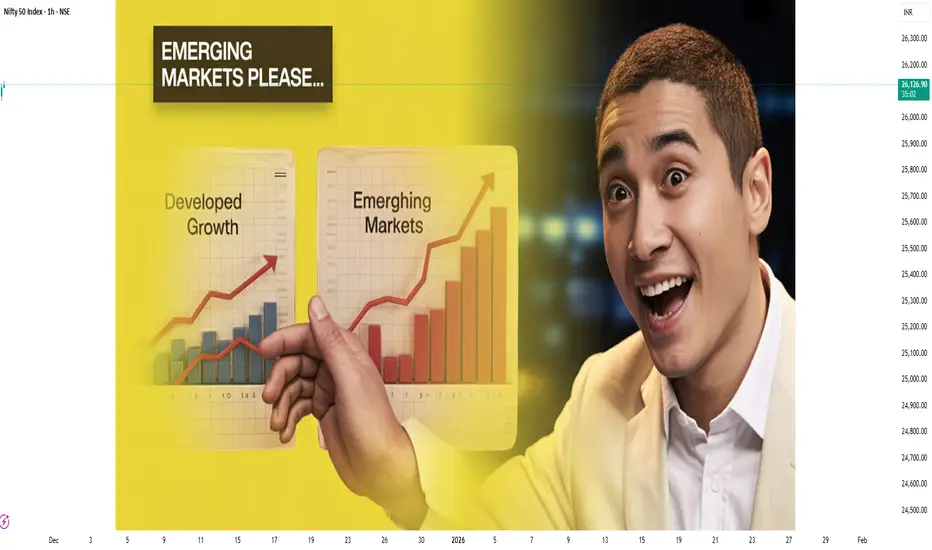
Understanding Developed Markets and Emerging Markets1. Definition of Developed Markets
Developed markets, also known as advanced economies, refer to countries with highly industrialized and diversified economies, sophisticated financial markets, and high standards of living. These markets are characterized by well-established infrastructure, robust institutions, and stable political environments. The Organization for Economic Cooperation and Development (OECD) often includes countries like the United States, Germany, Japan, and the United Kingdom under developed markets.
Key characteristics of developed markets include:
High per capita income: Citizens enjoy high living standards, reflecting strong purchasing power.
Mature financial markets: Stock exchanges are well-regulated, transparent, and liquid. Examples include the New York Stock Exchange (NYSE) and London Stock Exchange (LSE).
Political and economic stability: Governments maintain consistent policies that foster investor confidence.
Advanced infrastructure: Transportation, energy, and telecommunications networks are highly developed.
High human development index (HDI): Education, healthcare, and overall quality of life are significant indicators of development.
These markets often attract risk-averse investors due to their predictability and relatively low market volatility.
2. Definition of Emerging Markets
Emerging markets are nations experiencing rapid industrialization, economic growth, and modernization but have not yet achieved the full maturity of developed markets. Examples include India, Brazil, South Africa, and Indonesia. Emerging markets are often referred to as growth markets, offering higher potential returns but with greater investment risk.
Key characteristics of emerging markets include:
Rapid economic growth: GDP growth rates are typically higher than in developed markets, driven by industrialization, urbanization, and foreign investment.
Developing financial systems: Stock exchanges exist, but they may lack the liquidity, transparency, and regulation seen in developed markets.
Political and regulatory volatility: Policy changes, corruption, or political instability can impact investor confidence.
Lower per capita income: While economic growth is high, income levels and living standards are generally lower than in developed nations.
Infrastructure challenges: Transportation, energy, and communication networks are improving but remain underdeveloped in many regions.
Investors are drawn to emerging markets for the potential of higher returns due to the rapid expansion of industries, rising consumer demand, and favorable demographics.
3. Economic Indicators and Market Characteristics
3.1 Developed Markets
GDP per capita: High, reflecting wealth and consumption capacity.
Market capitalization: Large and diversified, with major corporations dominating global trade.
Inflation rates: Generally stable and low due to strong monetary policies.
Interest rates: Often moderate to low, reflecting stable financial conditions.
Debt levels: While government debt may be high, investor confidence remains strong due to political stability and a track record of debt repayment.
3.2 Emerging Markets
GDP per capita: Lower than developed countries but rising rapidly.
Market capitalization: Smaller, less liquid markets with fewer multinational corporations.
Inflation rates: Can be volatile due to supply-demand mismatches and currency fluctuations.
Interest rates: Often higher to attract investment and manage inflation.
Debt levels: Can be a concern, especially if external debt is high, but growth prospects attract foreign investment.
4. Investment Opportunities and Risks
4.1 Developed Markets
Opportunities:
Stable returns due to mature industries.
Low volatility in equities and bonds.
Advanced financial instruments like derivatives, ETFs, and index funds.
Risks:
Slower growth compared to emerging markets.
Market saturation can limit extraordinary returns.
Interest rate changes and inflation shocks still affect investment.
4.2 Emerging Markets
Opportunities:
High growth potential in sectors like technology, infrastructure, and consumer goods.
Diversification benefits for global investors.
Favorable demographics, such as young and growing populations, driving consumption.
Risks:
Political instability can disrupt markets.
Currency volatility can affect returns for foreign investors.
Regulatory frameworks are often evolving and less predictable.
5. Market Development and Global Influence
Developed markets have historically been the engines of global finance. The United States, European Union, and Japan have significant influence over global trade, currency stability, and interest rate policies. Their financial institutions often set benchmarks for international lending, investment, and economic governance.
Emerging markets, however, are becoming increasingly influential due to their rapid economic expansion and integration into global trade. Countries like China, India, and Brazil play critical roles in commodities, manufacturing, and services. As these markets mature, they can challenge the dominance of developed economies by reshaping trade patterns and capital flows.
6. Role of Technology and Innovation
Developed markets often lead in technological innovation, from software and aerospace to advanced manufacturing and healthcare. They invest heavily in research and development, supporting sustainable growth and high-value industries.
Emerging markets, while sometimes lagging in technological sophistication, have opportunities to leapfrog older infrastructure with digital solutions. For instance, mobile banking and fintech in Africa and Asia have expanded financial access far faster than traditional banking models.
7. Social and Environmental Considerations
Developed markets tend to have strong environmental regulations and social safety nets, contributing to sustainable development. Environmental, Social, and Governance (ESG) standards are widely adopted, influencing corporate behavior and investor preferences.
Emerging markets face challenges such as environmental degradation, income inequality, and labor rights issues. However, many are adopting sustainability initiatives to attract global investment and improve living standards.
8. Comparative Summary
Feature Developed Markets Emerging Markets
GDP per capita High Moderate, rising
Market maturity Advanced Developing
Growth rate Moderate High
Political stability High Moderate to low
Inflation Low and stable Higher, volatile
Investment risk Low High
Potential returns Moderate High
Infrastructure Advanced Developing
Technology Leading Emerging, innovative
Global influence High Increasing
9. Conclusion
Understanding the distinction between developed and emerging markets is critical for global investors and policymakers. Developed markets provide stability, predictability, and established returns but may lack rapid growth potential. In contrast, emerging markets offer high growth opportunities, diversification benefits, and access to new industries but come with higher volatility and political risk.
Investors often adopt a balanced approach, combining the stability of developed markets with the growth potential of emerging markets. Economic policies, technological adoption, demographic trends, and global trade patterns will continue to shape the trajectory of both market types, influencing the flow of capital and shaping the global economy in the decades to come.
In essence, developed markets are about stability and consolidation, while emerging markets are about growth and opportunity. Strategic participation in both allows investors to optimize risk-adjusted returns while contributing to global economic integration.
Are Derivatives Powerful in the Global Trade Market?1. What Are Derivatives?
A derivative is a financial contract whose value is derived from an underlying asset. This asset could be:
Commodities like crude oil, gold, wheat, natural gas
Currencies such as USD, EUR, JPY
Equity indices like Nifty 50, S&P 500
Interest rates such as LIBOR or government bond yields
Credit instruments like corporate bonds
The most common derivatives include:
Futures
Options
Swaps
Forward contracts
In the global trade market, derivatives’ primary purpose is risk transfer, although they are also used for speculation and arbitrage.
2. The Global Influence of Derivatives
Risk Management Backbone of Global Trade
Global trade is full of uncertainties—currency fluctuations, commodity price volatility, geopolitical tensions, supply chain disruptions, and interest rate changes. Derivatives serve as insurance-like tools that allow participants to lock in future prices, hedge risks, or stabilize cash flows.
For example:
An airline company hedges jet fuel futures to protect against rising crude prices.
An importer hedges currency risk using forex forwards to avoid losses if the dollar rises.
Exporters use options to protect against weakening foreign currencies.
Without derivatives, global trade would be significantly more dangerous and unpredictable.
3. Derivatives and Commodity Markets
Commodity derivatives such as oil futures, agricultural futures, and metal contracts are essential in global trade.
Why are commodity derivatives powerful?
Price Discovery
Derivatives markets reflect real-time global supply and demand conditions. Oil prices, for example, are heavily influenced by futures traded on major exchanges.
Stabilizing Prices for Producers and Consumers
Farmers hedge crop prices to secure income; manufacturers lock in raw material prices to control costs.
Enhancing Global Trade Flows
Multinational companies plan procurement and distribution based on futures price signals.
Reducing Market Manipulation
Transparent derivative markets help in curbing cartel behavior and monopolistic pricing.
Thus, commodity derivatives are one of the strongest tools that keep global trade systems efficient and predictable.
4. Currency Derivatives – The Engine of Cross-Border Commerce
In global trade, currency fluctuations can make or break profitability. A stable currency environment is a dream, but not the reality. Hence, forex derivatives are widely used.
How currency derivatives empower global trade?
Hedging exchange rate risks
Importers/exporters use forwards, futures, and options to secure exchange rates.
Supporting multinational operations
Corporations manage exposure across dozens of currencies simultaneously.
Providing liquidity to global markets
Forex derivatives markets are the largest in the world, with trillions traded daily.
Enhancing financial stability
Countries with export-driven economies rely on currency derivatives to prevent economic shocks.
Currency derivatives act as the hidden shield that protects companies and nations from unpredictable foreign exchange swings.
5. Interest Rate Derivatives – The Heart of Financial Stability
Because interest rates influence the cost of borrowing globally, interest rate swaps and futures form the backbone of global financial markets.
Their key powers include:
Helping governments manage debt.
Allowing banks to hedge interest rate exposure.
Enabling corporations to stabilize borrowing costs.
Ensuring smoother global credit flow.
Without interest rate derivatives, global financing would be far riskier, costlier, and more unstable.
6. Derivatives as Speculative and Profit-Making Instruments
While derivatives are risk-management tools, their power also comes from:
Speculation
Traders take positions on future market movements to earn profits. This:
Increases market liquidity
Enhances price discovery
Draws global capital into trade markets
However, speculation can also increase volatility if unchecked.
Arbitrage Opportunities
Derivatives allow traders to exploit price differences in different markets:
Spot vs futures
Domestic vs international exchanges
Currency arbitrage
Commodity pricing discrepancies
Arbitrage ensures that global markets remain efficient and interconnected.
7. How Derivatives Strengthen Global Market Efficiency
Derivatives contribute to global trade in several powerful ways:
A. Increased Liquidity
Markets with high liquidity:
Reduce transaction costs
Facilitate smoother trade
Attract global investors
Improve pricing accuracy
Derivative markets like CME, ICE, NSE, LME, and SGX provide massive liquidity to commodities, currencies, and equities.
B. Better Price Stability
Derivatives reduce sharp price swings, especially in commodities and currencies. This is essential for long-term contracts and procurement.
C. Improved Risk Sharing
Derivatives distribute risks across participants:
Hedgers transfer risk
Speculators accept risk
Arbitrageurs eliminate inefficiencies
This creates a smooth ecosystem for global trade.
D. Facilitation of Global Investments
Investors use derivatives to:
Hedge portfolio risks
Gain exposure to foreign markets
Manage geopolitical risks
This flow of capital boosts global trade volumes.
8. Challenges and Risks of Derivatives
Even though derivatives are powerful, they also have downsides:
1. High leverage risk
Small price movements can cause large profits or losses.
2. Systemic risk
Excessive derivatives trading contributed to crises such as:
2008 Global Financial Crisis
LTCM collapse
Oil futures flash crashes
3. Complexity
Sophisticated instruments like credit default swaps (CDS) are difficult to understand.
4. Counterparty risk
Failure of one party can create a chain reaction.
Despite these risks, regulatory reforms and clearinghouses have made derivative markets safer and more transparent.
9. The Future of Derivatives in Global Trade
Derivatives are becoming more powerful due to:
Digital platforms and electronic trading
AI-driven risk models
Expansion of global markets (India, China, ASEAN)
Growth in commodity and currency volatility
Rise of ESG and carbon credit derivatives
The next decade will see derivatives become even more integrated with global supply chains, energy markets, and financial systems.
Conclusion
Yes, derivatives are extremely powerful in the global trade market. They are not merely financial instruments but essential tools that support world commerce by:
Managing risks
Stabilizing prices
Enhancing liquidity
Improving efficiency
Supporting international investments
Strengthening financial stability
From farmers to oil companies, from banks to governments, derivatives underpin decisions and strategies across the global trade ecosystem. Without them, global markets would be less predictable, less efficient, and far more vulnerable to shocks.
Types of Trade War and Their Impacts1. Types of Trade Wars
Trade wars arise in multiple forms, depending on the methods nations use to restrict trade and retaliate against partners. Below are the major types:
1.1 Tariff-Based Trade War
This is the most common type of trade war. Countries increase taxes on imported goods from specific nations to protect domestic industries or retaliate against protectionist policies.
Characteristics
Imposition of additional tariffs (5%, 10%, 25%, even 100%).
Target industries typically include steel, automobiles, electronics, food products, or raw materials.
Often politically motivated.
Example
The US–China trade war (2018–2020), where the US imposed tariffs on $360 billion worth of Chinese goods, and China retaliated.
1.2 Non-Tariff Barrier (NTB) Trade War
Instead of tariffs, countries create regulatory barriers to discourage imports.
Types of NTBs
Strict product standards.
Licensing requirements.
Complex customs procedures.
Environmental restrictions.
Safety certifications.
Impact
These barriers indirectly make foreign goods less competitive.
1.3 Currency Manipulation or Currency-Based Trade War
A currency war occurs when a country deliberately devalues its currency to make its exports cheaper and imports expensive.
Why Countries Do This
Boost export competitiveness.
Reduce trade deficits.
Example
Allegations of China undervaluing the yuan to support export-driven growth.
Currency wars often escalate into trade wars when other nations impose tariffs in response.
1.4 Subsidy-Based Trade War
Governments provide financial support to domestic industries, giving them an unfair competitive advantage.
Forms of Subsidies
Direct financial aid.
Cheap loans.
Tax exemptions.
Export incentives.
Common Sectors
Agriculture.
Renewable energy.
Automotive.
Aviation (e.g., Airbus vs. Boeing dispute between EU and US).
Subsidy wars lead to complaints at the World Trade Organization (WTO) and retaliatory measures.
1.5 Technology or Digital Trade War
Modern trade conflicts increasingly involve technology dominance, including:
Semiconductor supply chains.
AI and data regulations.
5G and communication technology.
Cybersecurity restrictions.
Examples
US banning Huawei from 5G networks.
Restrictions on microchip exports to China.
This type of trade war influences global innovation and digital sovereignty.
1.6 Resource and Commodity Trade War
Countries may block or restrict exports of essential raw materials, such as:
Oil and gas.
Rare earth metals.
Food grains.
Lithium and cobalt.
Purpose
Gain bargaining power.
Protect strategic industries.
A notable example is China's restrictions on rare earth exports, crucial for electronics and defense manufacturing.
1.7 Sanction-Based Trade War
Economic sanctions act as a political trade weapon.
Types of Sanctions
Bans on imports/exports.
Restrictions on banking access.
Freezing of assets.
Banning technology transfer.
These measures often escalate into broader trade wars, especially in geopolitically sensitive regions.
2. Impacts of Trade Wars
Trade wars create ripple effects across economies, businesses, global supply chains, and consumer markets. The impacts can be economic, political, social, and geopolitical.
2.1 Economic Impacts
2.1.1 Higher Prices for Consumers
Tariffs increase the cost of imported goods, leading to:
Higher retail prices.
Reduced purchasing power.
Inflationary pressure.
Essential goods like automobiles, electronics, and household appliances often become costlier.
2.1.2 Declining International Trade Volumes
When countries restrict imports and exports, global trade flows decline.
WTO forecasts often show lower trade growth during trade war periods.
Export-oriented economies face revenue loss.
2.1.3 Slower GDP Growth
Trade wars reduce business investment and consumer spending due to uncertainty.
This leads to:
Lower industrial output.
Slump in manufacturing.
Reduced global GDP growth.
For example, the US–China trade war slowed global growth by nearly 0.5% during 2019.
2.1.4 Disruption of Global Supply Chains
Companies dependent on global sourcing face:
Increased production costs.
Delayed shipments.
Need to relocate factories (e.g., from China to Vietnam or India).
Industries most affected:
Electronics.
Pharmaceuticals.
Automobiles.
Textiles.
2.2 Impact on Businesses
2.2.1 Reduced Profit Margins
Higher import tariffs increase input costs, squeezing margins for manufacturers and retailers.
2.2.2 Uncertainty in Investment Decisions
Companies delay:
Capital expenditure.
Expansion plans.
Hiring.
Financial markets often respond with volatility.
2.2.3 Changing Trading Partners
Businesses may switch:
Suppliers,
Export markets,
Manufacturing locations.
This creates long-term realignment in global trade patterns.
2.3 Impact on Global Markets and Investors
2.3.1 Stock Market Volatility
Trade tensions can cause:
Sudden market dips.
Sector-specific crashes (especially tech and manufacturing).
Investor risk aversion.
2.3.2 Commodity Price Fluctuations
Conflicts between major producers/consumers influence:
Oil prices.
Metals like copper, aluminum.
Agricultural commodities.
For example, soybean prices collapsed during US–China tariff clashes.
2.3.3 Currency Market Movements
Trade wars cause currency instability as investors shift to:
Safe-haven assets (gold, USD, JPY).
Government bonds.
2.4 Social and Domestic Impacts
2.4.1 Job Losses
Export-dependent industries may lay off workers due to declining demand.
Examples:
Steel and automotive sectors.
Electronics manufacturing.
2.4.2 Reduced Consumer Confidence
People spend less during uncertain times, slowing economic recovery.
2.4.3 Inequality
Higher prices affect low-income households most, widening the economic divide.
2.5 Geopolitical Impacts
Trade wars often spill over into diplomatic disputes.
2.5.1 Strengthening Alliances
Countries may form new economic partnerships to counter rivals:
India, Japan, Australia collaboration.
EU strengthening trade agreements.
2.5.2 Rise of Protectionism
Trade wars encourage more nations to adopt:
Tariffs.
Border controls.
Localization policies.
Globalization weakens, shifting toward regional trade blocs.
2.5.3 Shift in Power Balance
When major powers clash, emerging economies like India, Vietnam, and Mexico may benefit by attracting companies shifting supply chains.
Conclusion
Trade wars are powerful economic conflicts that take many forms—from tariffs and subsidies to technology restrictions and sanctions. While countries may initiate trade wars to protect domestic industries or assert geopolitical influence, the impacts are often negative and widespread. They lead to higher consumer prices, reduced trade volumes, supply chain disruptions, stock market volatility, and slower economic growth. Businesses face uncertainty and declining profits, while workers may lose jobs due to falling exports. At a global level, trade wars reshape alliances, alter global value chains, and influence the balance of economic power.
Investors, Traders, and Policymakers in the Global Market1. Investors in the Global Market
Investors are individuals or institutions that allocate capital with the expectation of earning returns over time. They play a crucial role in providing long-term funds for companies, governments, and global economic growth.
Types of Investors
Retail Investors – Individuals investing in stocks, bonds, mutual funds, ETFs, or real estate. Their participation has increased globally due to online trading platforms and financial awareness.
Institutional Investors – Large entities such as:
Pension funds
Sovereign wealth funds
Insurance companies
Mutual funds
Hedge funds
Endowments
These investors manage trillions of dollars and have significant influence on asset prices.
Foreign Institutional Investors (FIIs) – Non-local institutions investing in global markets. FIIs affect exchange rates, liquidity, and capital flows.
Angel Investors & Venture Capital Firms – Provide capital to startups, influencing innovation and technological development.
Role of Investors
Capital Formation: Investors provide long-term capital that fuels business expansions, infrastructure projects, and technological advancement.
Market Depth and Liquidity: Institutional investors add liquidity, allowing efficient price discovery.
Risk Distribution: Through diversified portfolios, investors help redistribute economic and financial risks across the market.
Corporate Governance: Large shareholders influence company management and strategic decisions.
Economic Growth: Investments create jobs, improve productivity, and stimulate economies.
Investor Behaviour
Investor decisions are influenced by:
Expected returns
Interest rates
Geopolitical conditions
Macroeconomic indicators (GDP, inflation, fiscal policies)
Corporate earnings
Risk appetite
Long-term investors focus on stability and compounding, while others maximize returns through active asset allocation.
2. Traders in the Global Market
Traders are market participants who seek short-term profits from price movements of financial assets. Unlike investors who focus on long-term value, traders capitalize on volatility and momentum.
Types of Traders
Day Traders – Open and close trades within the same day.
Swing Traders – Hold positions for days to weeks based on trend patterns.
Scalpers – Execute dozens or hundreds of trades daily for small price differences.
Algorithmic & High-Frequency Traders – Use automated systems to trade large volumes within milliseconds.
Prop Traders – Trade using a firm’s capital to generate profits.
Arbitrage Traders – Exploit price differences between markets or assets.
Role of Traders
Providing Liquidity: Traders keep markets fluid, enabling buyers and sellers to transact easily.
Efficient Pricing: They quickly incorporate new information into asset prices.
Market Discipline: Through speculation and short selling, traders expose weak companies and overpriced assets.
Market Support During Volatility: During high volatility, traders provide counter-orders that reduce extreme price swings.
Tools Traders Use
Technical analysis (charts, indicators, patterns)
Fundamental analysis (earnings, news, macro data)
Algo-trading systems
Options, futures, commodities, currencies, crypto
Global market correlations (oil, gold, dollar index, bond yields)
Behavioural Aspects of Traders
High risk tolerance
Dependence on market psychology
Quick decision-making
Emphasis on timing rather than long-term value
Traders thrive on volatility; hence global uncertainties often create profitable opportunities.
3. Policymakers in the Global Market
Policymakers include governments, central banks, regulatory bodies, and international economic institutions. Their decisions shape the macroeconomic environment and influence market behaviour worldwide.
Key Policymakers
Central Banks – Such as the Federal Reserve (US), ECB (Eurozone), RBI (India), Bank of Japan, etc.
Government Fiscal Authorities – Ministries of finance, treasury departments.
Market Regulators – SEBI (India), SEC (USA), FCA (UK).
International Institutions – IMF, World Bank, BIS, WTO, OECD.
Trade and Commerce Departments – Regulate tariffs, quotas, and trade agreements.
Major Roles of Policymakers
Monetary Policy: Managing interest rates, money supply, and inflation.
Fiscal Policy: Government spending, taxation, incentives, or austerity measures.
Financial Regulation: Ensuring market transparency, stability, and investor protection.
Currency Management: Adjusting exchange rate policies to support trade competitiveness.
Crisis Management: Responding to recessions, banking failures, or market crashes.
Trade Policies: Deciding tariffs, sanctions, treaties, and economic partnerships.
Impact of Policymakers on Global Markets
Interest Rate Decisions: Affect borrowing costs, investment activity, and global capital flows.
Inflation Control: Rising inflation leads to tight monetary policy and volatility.
Geopolitical Policies: Sanctions, wars, and trade agreements influence commodities, currencies, and stock markets.
Regulatory Changes: New rules can attract or restrict investment.
Stimulus Packages: Boost consumption and liquidity during downturns.
Policymakers set the environment within which investors and traders operate.
4. Interactions Between Investors, Traders, and Policymakers
The global market functions through dynamic interactions among these three groups.
How Policymakers Influence Investors
Lower interest rates make equities and riskier assets attractive.
Fiscal stimulus boosts corporate earnings prospects.
Regulatory stability attracts long-term capital.
How Policymakers Influence Traders
Economic data releases (CPI, GDP, employment numbers) trigger high volatility.
Monetary policy decisions create price movements that traders profit from.
Unexpected announcements (rate hikes, sanctions) cause sharp market reactions.
How Investors Influence Policymakers
Large institutional investors can lobby governments for favorable tax laws or policies.
How Traders Influence Markets
Heavy trading can increase liquidity and drive short-term price trends, which investors may consider in their decisions.
Conclusion
Investors, traders, and policymakers form the backbone of the global financial system. Investors provide essential long-term capital and stability, traders add liquidity and efficiency through rapid transactions, and policymakers create the economic framework and maintain stability. Their combined actions shape global economic growth, determine market cycles, and influence asset prices worldwide. Understanding their roles helps anyone—from beginners to professionals—grasp how the global market operates and how financial decisions ripple across countries and economies.
Banks and Global Markets: Their Crucial Role in World Trade1. Banks as the Financial Backbone of Global Trade
Banks have always played a central role in international commerce. From early merchant banking in medieval Europe to today’s digital global banking networks, banks provide the essential functions that allow trade to happen smoothly and safely.
1.1 Facilitating International Payments
The most basic function of banks in world trade is cross-border payments.
Exporters often demand payment certainty, and importers want delivery assurance. Banks bridge this trust gap using instruments such as:
SWIFT-based international transfers
Letters of Credit (LCs)
Bills of exchange
Bank guarantees
Documentary collections
A Letter of Credit, for example, ensures the exporter receives payment once shipment documents are provided and verified. This reduces default risk significantly and increases trade participation, especially in emerging markets where trust and creditworthiness are uncertain.
1.2 Financing Trade Operations
Trade finance is one of the oldest and largest banking activities. Banks provide capital for:
Pre-shipment finance (raw materials, manufacturing)
Post-shipment finance (waiting for payment)
Export credit from export-import banks
Foreign currency loans to purchase goods
Supply chain financing
Global trade is a long cycle—goods take time to produce, ship, and sell. Banks keep the cycle running by injecting liquidity, enabling even small companies to engage in large transactions.
1.3 Currency Exchange and Forex Operations
Every international transaction involves at least two currencies. Banks:
convert currencies for exporters and importers
provide hedging instruments (forwards, futures, swaps)
stabilize businesses against currency volatility
Since foreign exchange markets trade over $7 trillion per day, banks play a large role in making global trade more predictable by protecting businesses from sudden currency swings.
1.4 Risk Management and Trade Insurance
Trade naturally involves:
political risk
credit risk
transport risk
currency risk
legal and regulatory risk
Banks partner with insurers, export credit agencies, and global institutions to reduce these risks. For example, an exporter doing business in a politically unstable country may rely on export credit insurance provided through banks. Without such risk-mitigation tools, global trade flows would shrink dramatically.
2. The Role of Global Markets in World Trade
Beyond banks, global markets — stock markets, bond markets, commodity markets, and currency markets — form the infrastructure that supports the expansion of world trade.
2.1 Financial Markets Provide Capital for Expansion
Stock exchanges and global bond markets give companies the ability to raise funds for:
international expansion
building factories and export infrastructure
acquiring foreign companies
research and development
modernizing supply chains
Multinational corporations like Toyota, Apple, or Tata operate globally because they access international investors who fund their growth.
2.2 Commodity Markets Set Global Prices
International trade depends heavily on commodities—oil, metals, food grains, energy, chemicals, and more. Commodity exchanges like:
NYMEX (oil and gas)
LME (metals)
CME (agriculture, energy)
help determine global benchmark prices.
These markets:
ensure price transparency
reduce volatility through futures contracts
allow producers and buyers to hedge price risks
influence shipping routes and logistics costs
For example, when crude oil prices rise, global transportation and manufacturing costs increase, directly affecting trade flows.
2.3 Foreign Exchange Markets Enable Global Pricing
The global forex market ensures that:
companies can price goods in stable currencies
exchange rates remain liquid
central banks can stabilize currency movements
investors can allocate capital globally
Because of forex markets, a business in India can export to Japan, price goods in USD, hedge currency risk, and receive converted INR payments seamlessly.
2.4 Global Bond Markets Support Government Trade Infrastructure
Governments borrow from global investors to build:
ports
highways
airports
logistics parks
customs facilities
These projects reduce trade barriers and enhance a country’s export competitiveness. Countries with better credit ratings borrow at cheaper rates, giving them an advantage in global trade.
3. Banks and Markets Work Together to Power World Trade
Banks and financial markets are deeply interconnected. Their cooperation harmonizes global trade flows.
3.1 Banks Operate Inside Global Markets
Banks participate in:
currency markets
commodity trading
government and corporate bond markets
derivatives markets
This allows them to provide hedging and financing services to customers engaged in international trade.
3.2 Capital Markets Reduce Dependence on Bank Loans
When companies raise equity or issue bonds, they reduce stress on banks, freeing up bank capital for trade finance. This creates a balanced financial ecosystem.
3.3 Digital Platforms and Fintech Strengthen the Relationship
New technologies are transforming global trade:
Blockchain-based trade finance reduces fraud
Digital LCs speed up transactions
Fintech exporters’ platforms simplify international payments
Cross-border instant payment networks lower costs
Banks and fintech firms are creating a more transparent, faster, and more inclusive global trade system.
4. The Global Role of Banks and Markets in Shaping World Trade Patterns
Financial systems do more than facilitate trade—they influence who trades, what is traded, and how trade grows.
4.1 Emerging Markets Gain Access to Global Buyers
Banks in developing countries partner with global institutions to integrate local businesses into world supply chains.
4.2 Financial Markets Boost Competition
Open global capital markets allow companies from any country to compete on equal terms. For example:
Indian IT firms
Chinese manufacturing companies
Southeast Asian textile exporters
grew faster due to access to foreign investment.
4.3 Crisis Management and Global Stability
During crises (like 2008 or 2020), central banks and global markets stabilize economies by:
injecting liquidity
reducing interest rates
supporting currency stability
protecting banks and trade credit
This support keeps world trade from collapsing.
Conclusion: Banks and Markets Are the Lifeblood of Global Trade
World trade depends fundamentally on the smooth functioning of banks and global markets. Banks provide the trust, credit, payment systems, and risk management essential to international transactions. Global markets supply capital, set global prices, enable hedging, and ensure liquidity across borders.
Together, they form the invisible infrastructure powering globalization. Without banks and markets, trade would be slow, risky, and extremely limited. With them, businesses of all sizes—from small exporters to multinational giants—can participate confidently in the world economy.
Geopolitical Risks: US-China, Middle East, and Russia-Ukraine1. US–China Strategic Rivalry
The US–China geopolitical competition is the single most important strategic rivalry of the 21st century. It extends far beyond military issues and deeply penetrates technology, supply chains, trade policies, cyber security, and political influence.
A. Trade and Economic Decoupling
Since 2018, the US and China have been locked in a trade war that has evolved into a broader process of economic decoupling. The US seeks to reduce its dependency on China in areas such as:
Semiconductors
Critical minerals
Electric vehicle batteries
Pharmaceuticals and APIs
Artificial intelligence and telecommunications
Tariffs, sanctions, and export controls have disrupted global supply chains. Many companies are pursuing “China+1” strategies by shifting production to India, Vietnam, and Mexico. However, true decoupling remains complicated because China is deeply integrated into global manufacturing.
B. Technology War and the AI Race
Technology is at the core of the rivalry. The US is restricting China’s access to:
Advanced semiconductor equipment
AI chips
Quantum computing technologies
Meanwhile, China accelerates investment in self-sufficiency through initiatives like “Made in China 2025” and its national AI strategy. The global tech ecosystem is splitting into two competing blocs, affecting equipment standards, supply networks, and cybersecurity frameworks.
C. Taiwan and Military Tensions
Taiwan remains the most explosive flashpoint. China considers Taiwan a breakaway province and has intensified military activities around the island. The US supports Taiwan’s defense through arms sales and political backing. Any major escalation could disrupt:
Global semiconductor supply (TSMC)
East Asian shipping lanes
Global equity markets
Even minor incidents raise volatility across global markets.
D. Geopolitical Influence in Asia and the Global South
Both nations compete for influence:
The US strengthens alliances through Quad, AUKUS, NATO partners, and Indo-Pacific initiatives.
China expands influence via Belt and Road (BRI) investments, infrastructure financing, and strategic partnerships with Africa, the Middle East, and Latin America.
This rivalry affects voting patterns at the UN, trade agreements, and global governance systems.
Overall, the US–China rivalry increases strategic uncertainty, reshapes supply chains, and compels nations to navigate between two superpowers.
2. Middle East Geopolitical Risks
The Middle East remains a region of enduring conflict, energy dependency, and shifting alliances. Three major developments define current risks:
A. Israel–Palestine and Regional Escalations
The conflict between Israel and Palestinian groups has intensified after recent escalations. The risk lies in the potential regionalization of the conflict involving:
Hezbollah (Lebanon)
Iran
Syria
US interests in the region
Any escalation could disrupt vital energy corridors, oil shipments, and global market stability.
B. Iran–US Tensions and the Gulf
Iran’s nuclear ambitions and proxy networks in Iraq, Yemen, and Lebanon create persistent risk. The Strait of Hormuz—through which 20% of global oil passes—remains one of the most vulnerable chokepoints in the world. Threats to tanker traffic can cause immediate spikes in oil prices.
The US maintains its military presence to secure maritime routes, while Gulf states diversify politically and economically to reduce vulnerability.
C. Saudi Arabia’s Strategic Realignment
Under Vision 2030, Saudi Arabia is diversifying its economy and recalibrating its global alliances:
Improving ties with China
Balancing relations with the US
Leading OPEC+ production strategies
Mediating regional disputes
Saudi Arabia’s decisions on oil output influence global energy markets and inflation trends.
D. Fragmentation and New Alliances
The Middle East is witnessing a major geopolitical reconfiguration:
Abraham Accords brought some Arab countries closer to Israel.
Turkey is becoming more assertive in the Eastern Mediterranean.
China has brokered surprise diplomatic agreements (e.g., Saudi–Iran rapprochement).
These shifts illustrate rising multipolarity, reducing the dominance of Western diplomatic frameworks.
In short, the Middle East remains a source of energy risk, regional power struggles, and global market volatility.
3. Russia–Ukraine War
The Russia–Ukraine conflict is the largest military confrontation in Europe since World War II and has deep global consequences.
A. Energy Shock and Global Commodity Markets
The war triggered massive disruptions in:
Natural gas supply to Europe
Crude oil markets
Fertilizer exports
Grains (Ukraine and Russia are major wheat exporters)
Europe accelerated its shift toward renewables and alternative gas supplies, but global energy markets remain sensitive to military developments.
B. Sanctions and Financial Fragmentation
The US, EU, and allies have imposed comprehensive sanctions on Russia. This has:
Restricted Russia’s access to global banking networks
Frozen central bank assets
Limited technology and military imports
Forced Russia to redirect oil to China and India
Global finance has become more fragmented, accelerating the creation of alternative payment systems such as:
China’s CIPS
Russia’s SPFS
Local-currency trade agreements
This undermines the dominance of the US dollar over the long term.
C. Military Escalation and NATO Expansion
The conflict has reshaped European security:
Finland and Sweden joined NATO
Eastern Europe increased defense budgets
The US reinforced military presence in Europe
Russia has strengthened ties with China, Iran, and North Korea, forming an alternative geopolitical camp.
D. Long-Term Economic Impact
Ukraine’s infrastructure has suffered devastating damage, while Russia faces prolonged isolation. Global investors now factor geopolitical risk into investment decisions, especially in Europe.
The war also accelerates trends such as:
Defense industry investment boom
Energy transition
Rerouting of global commodity flows
The Russia–Ukraine war marks a major shift toward long-term confrontation between Russia and Western powers.
Conclusion
US–China rivalry, Middle East volatility, and the Russia–Ukraine conflict collectively define a new era of global uncertainty and multipolar competition. These conflicts disrupt supply chains, raise commodity prices, accelerate military spending, and reshape global alliances. The world is transitioning from unipolarity (US dominance) to a multipolar order where regional powers assert greater influence. Nations and businesses must navigate these risks carefully, as geopolitics will continue to drive market behavior, trade flows, and strategic decisions in the decade ahead.
The U.S.–China Trade War1. Background: Why the Trade War Started
a. Massive Trade Imbalance
For decades, the United States imported far more goods from China than it exported. By 2017, the U.S. trade deficit with China exceeded $375 billion, which American policymakers viewed as evidence of unfair trading practices.
b. Intellectual Property (IP) Theft and Technology Transfer
U.S. companies complained that China forced foreign firms to share technology in exchange for market access. Additionally, the U.S. accused China of:
Stealing intellectual property through cyber intrusions
Subsidizing state-owned enterprises with cheap credit
Dumping low-cost goods in global markets
These practices, according to the U.S., distorted global competition.
c. China’s Rise as a Technological Power
China’s “Made in China 2025” strategy aimed to dominate high-tech industries such as robotics, AI, aerospace, and semiconductors. The U.S. viewed this as a threat to its long-term technological leadership.
d. National Security Concerns
American officials argued that Chinese tech companies like Huawei could pose espionage threats. The trade war soon blended with a tech war and a strategic rivalry.
2. The Escalation Phase: Tariffs and Counter-Tariffs
a. Initial U.S. Tariffs (2018)
The U.S. imposed tariffs on $50 billion worth of Chinese goods, targeting machinery, electronics, and industrial components. China responded with tariffs on American agricultural products like soybeans, pork, and dairy.
b. Expansion to Consumer Goods
As tensions escalated, the U.S. placed tariffs on an additional $200 billion worth of Chinese goods, including consumer items such as:
Furniture
Electronics
Clothing
Household items
China retaliated with tariffs on $60 billion of U.S. goods.
c. Final Wave and “Phase One Deal”
By late 2019, almost two-thirds of U.S.–China trade was under tariffs. In January 2020, both countries signed the Phase One Agreement, where China agreed to purchase more American goods and strengthen intellectual property protection. However, the deal did not address deeper structural issues.
3. Beyond Tariffs: The Technology and Investment War
a. Restrictions on Chinese Tech Firms
The U.S. restricted Huawei, ZTE, and other Chinese companies from accessing:
U.S. semiconductor technology
5G infrastructure equipment
Key software like Google services for Android
Huawei was placed on the “Entity List,” preventing American firms from supplying critical components.
b. Semiconductor War
Semiconductor technology became the center of conflict. The U.S. banned China from acquiring advanced chips and restricted chip manufacturing equipment from being exported to Chinese firms. This was aimed at slowing China’s progress in AI, quantum computing, and advanced communications.
c. Investment Restrictions
Both countries tightened rules on foreign investment:
The U.S. restricted Chinese investments in critical technologies.
China increased control over foreign companies through cybersecurity and data-security laws.
This created a decoupling of financial and technological systems.
4. Impact on China
a. Economic Slowdown
China’s export-led growth model faced challenges. Although China remained a major global exporter, companies diversified supply chains away from China toward countries like:
Vietnam
India
Bangladesh
Mexico
b. Pressure on Manufacturing and Technology
Restrictions on semiconductors severely affected high-tech sectors. China accelerated self-reliance strategies by investing heavily in domestic chip production and R&D.
c. Weakening Consumer Confidence and Capital Outflows
Uncertainty caused foreign investors to move capital out of China, affecting markets, real estate, and currency stability.
5. Impact on the United States
a. Higher Costs for Consumers
Tariffs on Chinese goods raised prices for U.S. households. Since many consumer electronics, clothing items, and household goods came from China, Americans faced higher inflationary pressure.
b. Pain for U.S. Farmers
China’s tariffs on American soybeans and agricultural products hit U.S. farmers hard. The U.S. government provided billions of dollars in subsidies to offset losses.
c. Supply Chain Disruptions
U.S. companies relying on Chinese manufacturing—such as Apple, automakers, and retail brands—faced rising production costs and logistical complexities.
d. Push for Manufacturing Reshoring
The U.S. government increased incentives to bring manufacturing back home or shift it to allied countries like Mexico, India, and Vietnam.
6. Global Impact: Redefining Global Supply Chains
a. Rise of “China+1” Strategy
Companies worldwide began reducing dependence on China by diversifying production. India, Vietnam, and Southeast Asia gained momentum as alternatives.
b. Fragmentation of Global Trade
The world economy became more regionalized:
U.S.-led trade blocs (USMCA, Indo-Pacific Economic Framework)
China-led initiatives (RCEP, Belt and Road Initiative)
c. Impact on Emerging Markets
Some countries benefited from shifting supply chains, while others faced instability due to global uncertainty.
d. Inflation and Global Slowdown
Tariffs increased global costs, contributing to inflation across multiple sectors such as electronics, textiles, and consumer goods.
7. Strategic Competition: Trade War → Tech War → Cold War 2.0
The conflict has transformed into a broader geopolitical rivalry. It now includes:
AI competition
Military modernization
Spy balloon and cyber espionage disputes
Competing global standards
Tech alliances and sanctions
Both nations are preparing for long-term strategic competition.
8. Current Status and Future Outlook
a. Tariffs Largely Remain
Despite leadership changes in the U.S., most tariffs are still in place.
b. De-risking, Not Full Decoupling
The world is moving toward reducing reliance on China without a complete separation.
c. Semiconductor restrictions will intensify
The chip war is expected to become the central battlefield for technological dominance.
d. Global trade order is shifting
The WTO’s influence is weakening as bilateral trade battles rise.
e. Possibility of Future Negotiations
Although tensions are high, economic interdependence means negotiations remain possible.
Conclusion
The U.S.–China trade war is far more than a dispute over tariffs. It is a historic economic and geopolitical struggle that reflects a deeper rivalry between the world’s two largest powers. What began as a disagreement over trade imbalances and intellectual property has expanded into technology, security, and global influence. Its ripple effects have transformed global supply chains, increased geopolitical divisions, and ushered in a new era of strategic competition. As both countries continue to assert their economic and technological ambitions, the trade war is likely to remain a defining feature of international relations for years to come.
Global Trade Imbalance1. Why Do Trade Imbalances Occur?
1.1 Differences in Savings and Investments
A fundamental reason for trade imbalance is the difference between a country’s savings and investment levels.
Countries like China, Germany, and Japan tend to save more than they invest domestically. The excess savings flow into international markets and allow these countries to run large surpluses.
Countries like the United States, the U.K., and India generally invest more than they save, leading to deficits.
In simple terms:
A country with low savings must borrow from abroad, financing imports and creating a trade deficit.
This relationship between savings, investment, and trade is at the heart of global imbalances.
1.2 Cost Competitiveness and Productivity Differences
Countries with high productivity, strong manufacturing bases, and efficient logistics tend to export more.
For example:
China has a massive manufacturing ecosystem, leading to high export capacity.
Vietnam and Bangladesh excel in low-cost manufacturing such as textiles.
Germany dominates premium engineering goods like automobiles and industrial machinery.
Countries that cannot compete in global manufacturing rely on imports, causing deficits.
1.3 Exchange Rates and Currency Policies
Exchange rates influence trade flows significantly.
If a country’s currency is undervalued, its exports become cheaper and more competitive, boosting surpluses.
If a country’s currency is overvalued, imports become cheaper and exports fall, increasing deficits.
Some countries intentionally manage their currencies to maintain export competitiveness. For instance, China has often been accused of keeping the yuan undervalued in the past to support exports.
1.4 Global Supply Chains
Modern production is globally fragmented. One product may involve dozens of countries.
Example:
An iPhone assembled in China contains parts designed in the U.S., Japan, Taiwan, Korea, and Germany. The final assembly stage inflates China’s export numbers even though value is created elsewhere.
This creates distorted imbalances, where the country doing final assembly appears to run a huge surplus, even if the true value-added is smaller.
1.5 Commodity Dependency
Countries that rely heavily on imported commodities (oil, gas, metals, food) often run deficits.
India imports crude oil, gold, and electronics, contributing to its trade deficit.
Saudi Arabia and UAE export oil and run large surpluses.
Commodity price swings can dramatically shift trade balances.
2. How Trade Imbalances Persist
Trade imbalances are not always corrected naturally. Several mechanisms reinforce them.
2.1 Capital Flows
Countries with deficits attract foreign capital to finance them.
The U.S. attracts investment due to its dollar dominance and strong financial markets.
Developing countries attract foreign investment when their markets offer higher returns.
These capital inflows allow deficits to persist for decades.
2.2 Reserve Accumulation and Export-Led Growth
Surplus countries sometimes accumulate massive foreign exchange reserves to stabilize their currencies and maintain export competitiveness.
China and Japan hold trillions of dollars in foreign reserves.
This allows them to keep exporting and running surpluses without strong currency appreciation.
2.3 Structural Economic Factors
Long-term differences in:
demographics
technology
industrial structure
labor productivity
consumption patterns
can keep trade imbalances persistent. For example, aging populations in Europe and Japan reduce consumption and increase savings, maintaining surpluses.
3. Effects of Global Trade Imbalance
3.1 Currency Pressure
Large deficits tend to weaken a country’s currency over time.
Weak currencies make imports more expensive and exports more competitive, which eventually corrects imbalances—but often slowly.
Surplus countries face pressure for their currencies to appreciate, reducing competitiveness.
3.2 Debt Accumulation
Countries with long-term trade deficits may accumulate foreign debt.
The U.S. is the world’s largest debtor, financing its trade deficit through global capital inflows.
Some developing countries face crises when deficits become unsustainable, leading to IMF bailouts.
3.3 Global Financial Instability
Large imbalances can contribute to global economic crises.
Example:
Before the 2008 financial crisis, the U.S. ran huge deficits while China, Japan, and oil-rich nations accumulated surpluses. The recycled surplus money flowed into U.S. financial markets, creating bubbles.
3.4 Trade Wars and Protectionism
Persistent imbalances can lead to political and strategic tensions.
The U.S.–China trade war was partly driven by the U.S.’s large deficit with China.
Tariffs, quotas, and trade barriers are often introduced to address imbalances, but they may worsen global growth.
3.5 Impact on Employment and Manufacturing
Large deficits can result in:
loss of manufacturing jobs
deindustrialization
unemployment in certain sectors
widening wage inequality
Meanwhile, surplus nations often experience booming export industries and rising employment.
4. Are Trade Imbalances Always Bad?
Trade imbalances can be harmful or perfectly healthy, depending on their nature.
Healthy Imbalances
Fast-growing countries import more machinery and capital goods.
Countries with young populations naturally consume more.
Surplus countries save more due to aging demographics.
Unhealthy Imbalances
Caused by currency manipulation
Resulting from weak domestic demand
Leading to excessive indebtedness
Triggering geopolitical tensions
The key is whether the imbalance is sustainable.
5. Solutions to Reduce Global Trade Imbalances
5.1 Exchange Rate Adjustments
Allowing currencies to move freely can naturally reduce imbalances.
5.2 Increasing Domestic Consumption in Surplus Countries
Surplus economies like China and Germany can:
strengthen social welfare systems
encourage investment
reduce reliance on exports
5.3 Boosting Domestic Production in Deficit Countries
Deficit nations can:
invest in manufacturing
support high-tech industries
reduce import dependency
5.4 Balanced Global Financial Flows
Reforms in global financial markets can reduce unnecessary capital movements that fuel imbalances.
5.5 Trade Agreements and Cooperation
Fair trade rules, tariff reductions, and collaboration through bodies like the WTO can help ensure more balanced trade.
Conclusion
Global trade imbalances are a natural part of the international economic system, but large and persistent imbalances can create economic, political, and social challenges. They reflect deeper structural factors like savings levels, competitiveness, exchange rates, demographics, and financial flows. While not inherently harmful, imbalances must be managed carefully to avoid instability, reduce inequality, and sustain long-term global growth.
Central Bank Policies for Beginners in the World Trade Market1. What Is a Central Bank?
A central bank is a government-backed financial institution that manages a nation’s money supply, inflation, currency value, interest rates, and financial stability.
Examples:
Federal Reserve (USA)
European Central Bank (ECB)
Reserve Bank of India (RBI)
Bank of Japan (BoJ)
Bank of England (BoE)
People’s Bank of China (PBoC)
Central banks are not profit-making bodies. Their job is to maintain economic health, ensure stable currency, and create a predictable environment for businesses and international trade.
2. Why Central Banks Matter in Global Trade
Global trade involves buying and selling goods/services across borders. Every trade transaction depends on:
currency exchange rates,
interest rates,
credit availability,
inflation levels,
and economic stability.
All of these variables are either controlled or influenced by central bank policies.
For example:
If the US Federal Reserve hikes interest rates → the US dollar strengthens → emerging markets face currency pressure → global commodities like gold and oil react immediately.
If the RBI cuts interest rates → exports may become more competitive → imports become relatively expensive → affecting India’s trade balance.
In short, central banks shape the macroeconomic environment in which international trade operates.
3. The Core Goals of Central Banks
Central bank policies revolve around achieving major economic goals:
a) Controlling Inflation
High inflation weakens purchasing power and disrupts trade.
Low inflation or deflation slows economic activity.
Central banks aim for a moderate inflation level (usually 2%).
b) Stabilizing the Currency
A stable currency creates smooth international trade.
Fluctuations can cause:
export/import price shocks,
higher hedging costs,
volatility in forex markets.
c) Managing Economic Growth
Central banks cool the economy when it's overheated and support it during recessions.
d) Ensuring Financial Stability
They monitor banks, credit markets, and liquidity to avoid crises.
4. Key Central Bank Tools (Beginner-Friendly Breakdown)
1) Policy Interest Rates
Interest rates are the most powerful tool.
Central banks raise or cut the repo rate, federal funds rate, or benchmark rate to control the economy.
When interest rates go UP:
Loans become expensive.
Businesses slow down expansion.
Consumer spending declines.
Currency strengthens.
Imports become cheaper.
Stock markets usually fall.
Bond yields rise.
When interest rates go DOWN:
Loans become cheaper.
Businesses borrow and expand.
Consumer spending grows.
Currency weakens.
Exports become more competitive.
Stock markets often rise.
Gold and commodities gain.
Interest rate decisions heavily affect global forex and equity markets, often leading to immediate volatility.
2) Open Market Operations (OMO)
These are buying or selling government bonds to regulate liquidity.
Buying bonds → injects money → increases liquidity
Selling bonds → removes money → reduces liquidity
OMOs are crucial during crises (like 2008 or COVID-19) to prevent market freezing.
3) Quantitative Easing (QE)
QE is an advanced form of OMO.
The central bank purchases large amounts of financial assets to pump liquidity into the economy.
Effects:
Lower long-term interest rates
Higher stock prices
Weaker currency
Increased global capital flow into emerging markets
Example:
The Federal Reserve used QE in 2008 and 2020, sending global markets into strong bullish phases.
4) Foreign Exchange (FX) Intervention
Central banks sometimes buy or sell their own currency to stabilize it.
Example:
RBI sells dollars to strengthen the rupee.
Bank of Japan buys yen to prevent excessive weakness.
Such interventions affect:
import prices
export competitiveness
forex trading
global capital flows
5) Reserve Requirements
This is the percentage of deposits that banks must keep without lending.
Higher reserve ratio → less lending → slower economy
Lower reserve ratio → more lending → faster economy
China’s PBoC frequently uses reserve requirement changes to manage its massive trade-driven economy.
5. How Central Bank Policies Impact the Global Trade Market
1) Currency Value and Exchange Rates
Exchange rates directly influence global trade profitability.
Example:
Weak local currency → exports rise, imports fall
Strong local currency → exports fall, imports rise
Central bank policies are the number one driver of currency strength.
Forex traders follow every speech, statement, and interest rate decision like a catalyst event.
2) Commodity Prices
Most global commodities—oil, gold, copper—are priced in USD.
When the Federal Reserve changes policy:
USD strengthens → commodities fall
USD weakens → commodities rise
Central banks indirectly influence:
international oil trade
gold reserves management
industrial metal pricing
shipping and freight rates
3) Stock Markets
Interest rate decisions immediately move global equities.
Rate hikes cause downgrades in growth forecasts, hurting stock markets.
Rate cuts encourage risk-on behavior, pushing equities higher.
Emerging markets like India, Brazil, and Indonesia react strongly to US Fed and ECB policies due to foreign institutional investment (FII) inflows/outflows.
4) Global Capital Flows
Capital moves across borders depending on interest rate differences.
If US rates are high, global money flows back to the US, weakening emerging markets.
If US rates fall, capital flows into Asia, boosting markets like India.
Central banks shape these flows through rate decisions and liquidity tools.
5) Trade Balances
A nation’s export–import performance changes with:
currency valuation
inflation levels
credit availability
interest rate environment
Example:
If RBI reduces rates → rupee weakens → Indian exports like textiles, IT services, and chemicals become more competitive.
This shapes global supply chains.
6. How Traders Use Central Bank Signals
Professional traders track every macro clue, such as:
FOMC minutes
RBI MPC meeting notes
Inflation reports
GDP forecasts
Central bank speeches
Market participants try to predict whether central banks will be:
Hawkish (favor rate hikes)
Dovish (favor rate cuts)
This sentiment often moves markets even before the actual decision is taken.
7. Central Bank Policy Cycles
Policies move in cycles depending on the economy:
Tightening Cycle (Hawkish)
Higher rates
Reduced liquidity
Strong currency
Lower inflation
Lower equity prices
Easing Cycle (Dovish)
Lower rates
More liquidity
Weaker currency
Higher inflation risk
Higher equity prices
World trade flows change direction with each cycle.
8. Central Banks During a Crisis
In crises, central banks:
inject massive liquidity
cut interest rates
support banks
stabilize currency
buy government and corporate bonds
This prevents:
trade collapse
credit freeze
currency crashes
COVID-19 is the best example: global central banks coordinated huge rate cuts and QE to revive world trade and markets.
Conclusion
Central bank policies act like the command center for global financial systems. Their decisions shape interest rates, inflation, currency strength, commodity prices, trading volumes, capital flows, and international trade dynamics. For beginners in the world trade market, understanding central bank behavior is essential because macro fundamentals drive long-term market trends.
If you follow central bank statements and policy cycles closely, you will gain a powerful edge in forex trading, commodity analysis, equity market positioning, and global economic forecasting.
Master Correlation Strategies: Types, Tools and Strategies1. What is Correlation and Why It Matters?
Correlation measures how two instruments move relative to each other.
It ranges from –1 to +1:
+1 (Perfect Positive Correlation): Both move in the same direction consistently.
–1 (Perfect Negative Correlation): They move in opposite directions consistently.
0 (No Correlation): Movements are unrelated.
Traders use correlation for:
Predicting asset behavior
Avoiding overexposure
Finding intermarket confirmation
Enhancing risk-reward
Detecting market sentiment shifts
Building multi-asset strategies
If you’re a short-term, positional, or intraday trader, correlation can help filter false signals and improve decision accuracy.
2. Types of Correlation Used in Trading
A) Direct Correlation
Two assets move together.
Example: Nifty and Bank Nifty, Crude Oil and Oil & Gas stocks, US Dollar vs USDINR.
This helps in confirmation:
If Nifty is bullish but Bank Nifty lags, the market may be weak.
B) Inverse Correlation
Assets move opposite.
Example:
Gold vs Equity markets
Bond yields vs Stock indices
VIX vs Nifty
Useful for hedging and identifying risk-off sentiments.
C) Rolling Correlation
Correlation changes over time.
Markets evolve, so a dynamic (rolling) view helps traders understand whether relationships are strengthening or weakening.
D) Lead-Lag Correlation
One asset moves first, another follows.
Example:
US markets lead Indian markets
Dollar Index moves before major commodities
US 10-year bond yields lead global risk sentiment
This helps predict future price behavior.
3. Tools to Measure and Apply Correlation
1. Correlation Matrix
Used to check correlations among multiple instruments.
Especially handy for portfolio traders and sector-based strategies.
2. Scatter Plots
Used to visualize relationships and identify the strength and slope of correlation.
3. Rolling Correlation Charts
Shows how correlation changes over time.
4. Heat Maps
Popular in institutional trading to track multi-asset relationships quickly.
5. Market Internals Data
Such as advance-decline ratio, VIX, bond yields, and sector performance.
4. Master Correlation Strategies for Traders
Strategy 1: Multi-Index Confirmation Strategy
Before entering a trade on Nifty, check:
Bank Nifty
FINNIFTY
India VIX
USDINR
If Nifty gives a breakout but Bank Nifty and FINNIFTY remain weak, avoid the trade.
This reduces false breakouts dramatically.
How it works:
Strong correlation improves accuracy
Weak/negative correlation signals uncertainty
VIX acts as a sentiment filter
Great for positional and intraday index traders.
Strategy 2: Sector-Based Correlation Mapping
Most big moves in indices come from sector rotation.
Check:
IT Sector correlation with NASDAQ
Bank Nifty correlation with bond yields
Energy stocks with global crude oil
Pharma with USDINR
Example:
If crude oil falls, OMC stocks like IOC/HPCL/BPCL tend to rise.
If NASDAQ is weak, Indian IT stocks generally face pressure.
Sector correlation helps traders anticipate moves before they appear on charts.
Strategy 3: Risk-On vs Risk-Off Correlation Strategy
Use inverse correlations to identify sentiment shifts.
Risk-On Indicators:
Nifty up
USDINR down
VIX down
Crude oil stable
Bond yields stable
Risk-Off Indicators:
Gold up
Dollar index up
Bond yields up
Equities fall
VIX spikes
When 3–4 indicators align, the market enters a clear sentiment phase.
Traders use this to:
Avoid contra-trend trades
Catch early reversal signals
Manage position sizing
Strategy 4: Pair Trading with Correlated Assets
Pairs trading works best when you find strongly correlated instruments.
Example:
HDFC Bank vs ICICI Bank
TCS vs Infosys
SBI vs Bank Baroda
If correlation is 0.85+, and one stock rises while the other lags, traders take:
Long position in the undervalued one
Short position in the overvalued one
Profit comes when correlation returns to normal.
This is a favorite hedge-fund strategy because:
Low risk
Market-neutral
Works in all market conditions
Strategy 5: Currency-Commodity Correlation Strategy
Many commodities move based on currency trends.
Key correlations:
USDINR vs Gold
DXY vs Crude Oil
DXY vs Metals (Copper, Silver, Aluminium)
If DXY rises sharply, commodities generally fall.
Traders use this to create multi-market confirmation:
If DXY is bullish → Crude sells off → OMC stocks rise
If USDINR spikes → IT stocks gain strength
This strategy links currency, commodities, and equities in one structure.
Strategy 6: Global Market Correlation Strategy
Indian markets follow global cues.
Check:
US Futures (Dow, S&P, Nasdaq)
Asian Markets (Nikkei, HSI, Shanghai)
European Futures (DAX, FTSE)
US Bond Yields
Dollar Index
If global sentiment is aligned (e.g., all red), avoid long trades even if Nifty supports.
This strategy prevents trading against the global flow, reducing risk significantly.
Strategy 7: Time-Frame Correlation Strategy
Correlations differ across timeframes.
For example:
Intraday correlation between Nifty and Bank Nifty is strong
Weekly/monthly correlation may differ
Traders use multi-timeframe correlation to confirm:
Trend
Volume flow
Breakout strength
Retracement quality
If daily correlation is strong but intraday weak, market may be choppy.
5. Advantages of Master Correlation Strategies
✔ Improved accuracy in signals
✔ Prevents overexposure
✔ Filters out false breakouts
✔ Better understanding of market sentiment
✔ Identifies leading indicators early
✔ Helps in constructing diversified portfolios
✔ Offers hedge-based safety during volatile times
6. Common Mistakes Traders Make
Relying on static correlation values
Ignoring rolling correlation changes
Overtrading based on correlation alone
Assuming correlation means causation
Ignoring news events that break correlations temporarily
Always combine correlation with price action, volume profile, and market structure.
7. Final Conclusion
Master correlation strategies allow traders to see the market as a connected ecosystem instead of isolated assets. By studying how indices, sectors, currencies, commodities, and global markets move together, you gain a powerful advantage. Correlation is not about predicting the future but understanding context, filtering noise, and increasing conviction. When correlation aligns with market structure analysis and volume behavior, you unlock the highest probability trades with lower emotional stress.
Global Equity Under Pressure1. The Macroeconomic Storm: Growth and Inflation Cycles
One of the strongest forces behind equity pressure is the macroeconomic environment. Stocks are nothing but claims on future earnings; when global growth slows, those earnings come under threat. Economic cycles typically rotate between expansion, peak, contraction, and recovery. During the contraction phase, investors re-price risk assets.
Key macro triggers
Slowing GDP growth
When multiple major economies — especially the US, China, and the EU — show signs of slower economic output, it signals weaker corporate revenues and profits. Global markets respond with defensive positioning.
High inflation
Persistently high inflation reduces corporate margins, forces central banks to hike interest rates, and raises the cost of money. This tightens financial conditions and automatically compresses valuations, especially in growth and tech sectors.
Interest rate hikes
Rising rates change everything in equity markets. Higher rates mean:
more expensive borrowing for companies
slower consumer spending
lower discounted cash-flow valuations
higher returns in bonds, drawing capital away from equities
As a result, global indexes like the S&P 500, STOXX 600, Nikkei, and emerging market indices face systematic selling.
2. Liquidity Tightening: The Silent Market Killer
Liquidity is the oxygen of markets. When central banks tighten liquidity, equities suffocate.
How liquidity tightening pressures markets
Quantitative tightening (QT) reduces overall money supply.
Lower liquidity increases volatility because fewer buyers are available when sellers rush out.
Global funds reduce leverage when liquidity shrinks.
Dollar strengthening — a classic result of tightening — creates pressure on emerging markets and commodities.
In simple terms: when money becomes expensive or scarce, equities fall.
3. Geopolitical Tensions: The Fear Premium
Markets hate uncertainty. Geopolitical risks push traders into safe-haven assets like gold, bonds, and the US dollar.
Major geopolitical pressure points
War or military conflicts
Oil supply disruptions
Trade wars or sanctions
Political instability in major economies
Global supply-chain disruptions
Even the threat of geopolitical escalation can trigger volatility across global equities. When investors believe global stability is at risk, they rush out of equities, especially cyclical sectors like financials, manufacturing, shipping, and industrials.
4. Corporate Earnings Stress
Equity valuations depend on future earnings. When earnings weaken, markets correct sharply.
Earnings-related triggers
Lower revenue due to weak global demand
Shrinking profit margins due to inflation or rising input costs
Missed quarterly earnings
Downward revisions of future guidance
Sector-specific slowdowns (tech, banking, energy, manufacturing)
When multiple sectors report earnings pressure simultaneously, the market interprets it as a systemic problem rather than a company-specific one.
5. Technology and High-Growth Stocks Lose Momentum
Global equities often rely heavily on tech giants and high-growth sectors. When these leaders correct, it drags entire indices down.
Why tech comes under pressure
High valuation sensitivity to interest rates
Regulatory scrutiny
Slowing innovation cycles
Reduced consumer spending
Competition pressures (AI, chips, software)
A sell-off in large-cap tech — such as FAANG, semiconductor majors, or Asian tech conglomerates — triggers a global ripple effect. Emerging markets with tech exposure (Taiwan, South Korea, China) feel this impact even more.
6. Strong US Dollar: A Global Headwind
A strengthening dollar is one of the most powerful negative forces for global equities.
Why a strong USD hurts global markets
Commodities become expensive for non-US countries
Emerging market currencies weaken
Dollar-denominated debt becomes costlier
Foreign institutional investors pull money out of global equities
A strong USD often signals risk-off sentiment, and historically, global equities perform poorly during prolonged dollar strength cycles.
7. Institutional Behaviour & Algorithmic Selling
Modern financial markets are largely driven by:
hedge funds
proprietary trading desks
pension funds
algorithmic and high-frequency traders
passive index funds
When selling begins, algorithms accelerate the move by triggering:
stop-loss levels
momentum-based sell signals
volatility-linked de-risking
risk-parity adjustments
This creates a self-reinforcing cycle where selling attracts more selling.
8. Bond Market Signals: The Macro Warning System
The bond market is often the first to flash warning signals.
When the bond market pressures equities
Yield curve inversion signals recession
Rising bond yields compete with equity returns
Credit spreads widen, indicating risk stress
Corporate borrowing costs rise
If the bond market is stressed, equities react almost instantly.
9. Investor Sentiment & Fear Cycles
Markets are emotional systems. Fear, panic, and crowd psychology can push equities under pressure, even without major fundamental triggers.
Sentiment indicators that fall during pressure
VIX volatility index spikes
Put–call ratios rise
Consumer confidence falls
Fund managers cut equity exposure
Retail traders reduce risk
Periods of high fear create sharp, fast sell-offs across all global markets, especially in high-beta and emerging sectors.
10. Global Interlinkages: When One Market Sneezes, Others Catch a Cold
In today's hyper-connected markets:
US markets influence Asian and European markets
China’s slowdown affects commodities and emerging markets
European banking stress impacts global financials
Oil price shocks impact energy-heavy economies
This interconnectedness amplifies pressure. If one major region weakens, it often triggers a chain reaction across global equities.
Conclusion: Understanding Pressure Helps You Trade Better
Global equity pressure is rarely caused by one factor. It’s usually a convergence of macroeconomic stress, liquidity tightening, geopolitical fears, corporate earnings challenges, and behavioural shifts. For traders and investors, the key is not to fear pressure but to understand it.
Periods of global equity pressure often create:
attractive long-term buying opportunities
sharp volatility for short-term traders
rotations into safer or value-driven sectors
reduced liquidity but increased mispricing
By understanding the macro drivers, sentiment indicators, sectoral behaviour, and global linkages, traders can navigate pressure periods with more clarity and confidence.
Carbon Credit Secrets: Market Opportunity, Gobal Economic Shift1. What Carbon Credits Actually Represent (The Real Meaning)
A carbon credit is 1 metric ton of CO₂ (or equivalent greenhouse gas) reduced, captured, or avoided.
But the secret is: it’s not just a certificate—it’s a transferable promise of environmental impact.
Industries that produce high emissions (oil, steel, cement, power) must offset their pollution by purchasing these credits from companies that reduce emissions (solar farms, reforestation projects, biogas plants, green tech).
This creates a supply–demand tension, which becomes the heart of the carbon market.
2. The Two Carbon Markets (Most People Don’t Know the Difference)
Carbon credits exist in two major forms, and understanding them is crucial:
(A) Compliance Market (Regulated Market)
Managed by governments.
Mandatory for polluting industries.
Prices are higher because companies have no choice but to buy.
Examples:
EU ETS (European Union Emissions Trading System)
California Cap-and-Trade
China National ETS
This market is worth hundreds of billions of dollars globally.
(B) Voluntary Carbon Market (VCM)
Companies buy credits voluntarily to appear green.
Tech companies, airlines, luxury brands often participate.
Price varies widely (₹200 to ₹2,000 per credit).
The secret here is: the voluntary market is expected to grow 15x–20x in the next decade because nearly every large corporation has signed a "Net Zero by 2050" pledge.
This massive corporate pressure will create explosive demand.
3. How Carbon Credits Are Created (The Hidden Engine Behind Supply)
A carbon credit is not just printed—it must be generated, verified, and issued based on real climate impact.
There are four main sources:
1. Nature-Based Solutions
Reforestation
Mangrove restoration
Soil carbon storage
Avoided deforestation
These projects create long-term, high-quality credits.
2. Renewable Energy
Solar farms
Wind farms
Hydro projects
Earlier common, but now some countries limit renewable credits because it’s becoming the norm.
3. Waste & Methane Reduction
Landfill methane capture
Biogas projects
Improved cookstoves
These are cheap to generate and highly scalable.
4. Technology-Based Solutions
Carbon capture & storage (CCS)
Direct air capture (DAC)
Low-carbon manufacturing
This is the future of premium credits.
4. The Secret Behind Carbon Credit Prices (Why They Vary So Much)
Carbon credit prices depend on:
Project type
Country
Verification body
Demand pressures
Market perception
Co-benefits (biodiversity, community development)
But the biggest secret:
High-quality credits can sell for 5x–20x the price of low-quality credits.
Example:
A basic renewable credit may sell at ₹200–₹500
A genuine rainforest preservation credit can sell at ₹2,000–₹10,000
The market rewards authenticity and long-term climate impact.
5. The Verification Game (Where the Real Power Lies)
Carbon credits are only valuable if verified by third-party bodies:
Verra
Gold Standard
ACR
CAR
GCC
These agencies act like credit rating agencies in financial markets.
Their approval means a project is legitimate.
Secret:
In carbon markets, verification = value.
Without verification, the credit is worthless.
This creates a competitive advantage for projects that follow strict rules.
6. Why Carbon Credits Are Becoming a Trading Market
Carbon credits are now:
Tokenized
Traded on exchanges
Stored on blockchain
Sold in futures & forwards
Bundled into ETFs
This financialisation of carbon credits is transforming them from environmental tools to investable commodities, similar to oil, gold, or energy futures.
Even large financial institutions like JPMorgan, BlackRock, and Standard Chartered are entering the carbon markets.
Hidden secret:
Companies hoard carbon credits today expecting prices to rise sharply in the future.
This creates scarcity.
7. The Global Push That Will Explode Carbon Credit Demand
There are six megatrends driving the carbon boom:
1. Over 5,000 companies have net-zero commitments.
They must buy credits.
2. International aviation (CORSIA) mandates offsetting.
Airlines are huge buyers.
3. Countries are adding carbon taxes.
Businesses pay if they don’t reduce emissions.
4. ESG investing pressures all listed companies.
Investors prefer greener companies.
5. More countries joining Emissions Trading Schemes (ETS).
China, India, Brazil, Middle East expanding systems.
6. Public pressure forces companies to go green.
Brand image depends on carbon neutrality.
Demand will outpace supply, causing prices to rise.
8. India’s Role – The Quiet Giant
India is becoming one of the world’s biggest carbon credit suppliers because of:
Massive renewable energy growth
Agriculture-based carbon projects
Biogas & waste management projects
Reforestation potential
Low project development cost
In 2023, India restarted its voluntary carbon market, and soon a regulated national ETS will launch.
Secret:
India may become the Saudi Arabia of carbon credits
due to its high-volume, low-cost production capability.
9. Carbon Credits as a Trading Opportunity (The Insider View)
Carbon trading is becoming a hot space for:
Hedge funds
Commodity traders
Energy companies
Environmental firms
Retail investors (via funds or platforms)
The real trading profits come from:
1. Forward contracts (pre-purchase deals)
Buying credits early at low price and selling once verified.
2. Vintage trading
Older credits often sell cheaper; traders buy and resell.
3. Quality arbitrage
Spotting underpriced premium credits.
4. Tokenized credits
Blockchain carbon projects allow fractional ownership.
5. Exchange-traded carbon allowances
Like EU ETS futures.
10. The Biggest Secret – Carbon Credits Will Become Scarcer
Global climate goals require:
45% emission reduction by 2030
Net zero by 2050
But current carbon credit supply covers less than 5% of the needed reduction.
This gap is the biggest secret opportunity:
**Carbon credits will get more valuable every year.
Scarcity will drive long-term price appreciation.**
Some experts predict a 500%–1000% rise in premium credit prices within a decade.
11. The Dark Side – Fraud & Low-Quality Credits
Yes, carbon markets have flaws:
Overestimated emission reduction
Fake tree plantations
Double counting
Poor verification standards
Greenwashing by big brands
This is why transparency, digital MRV (monitoring-reporting-verification), and blockchain solutions are becoming essential.
Smart investors focus only on:
Verified
Transparent
High-quality
Long-term
Durable carbon removal credits
Final Takeaway
Carbon credits are not just an environmental tool—they are becoming:
A global commodity
A future trading instrument
A corporate necessity
An economic climate currency
Understanding carbon credits today gives you a powerful advantage in:
Trading
Investing
Business strategy
Sustainability consulting
The biggest secret is simple:
As carbon limits tighten, the value of every real carbon credit will rise sharply.
Trade and Its Impact on Economics1. The Fundamentals of How Trade Affects Economics
Trade affects economic performance through the principles of comparative advantage, resource specialization, and market efficiency. Nations produce goods for which they are most efficient and trade them for goods that others produce more efficiently. This specialization boosts productivity, lowers costs, and expands consumer choices.
Trade influences economics through multiple channels:
a. GDP Growth
Exports contribute directly to a country’s gross domestic product (GDP). The more a nation exports high-value products, the faster its economy tends to grow. Weekly export orders, new shipping data, and port activity often give early signs of GDP trends.
b. Employment and Industrial Development
Trade expands industries that are competitive internationally. For example, countries with strong textile or automobile sectors benefit from higher employment, foreign investment, and supply-chain expansion. At the same time, weaker industries may contract if they cannot compete globally.
c. Consumer Welfare
Trade reduces prices, increases product variety, and improves quality due to global competition. Weekly changes in import costs—such as falling crude oil prices—can reduce inflation pressure in importing nations.
d. Technological Transfer and Innovation
Countries gain access to foreign technologies and advanced machinery via trade. Regular shifts in semiconductor, electronics, and machinery trade flows can influence domestic productivity.
e. Currency Strength and Balance of Payments
International trade impacts a nation’s currency value. A trade surplus strengthens the currency; a deficit weakens it. Weekly foreign exchange movements are closely tied to changes in import and export demand.
2. Weekly Dynamics: What Drives International Trade Movements?
Weekly trade analysis observes short-term shifts that affect long-term economic trends. Several global factors influence trade every week:
a. Commodity Price Movements
Prices of crude oil, gold, natural gas, and agricultural goods often fluctuate weekly.
Oil-importing countries benefit when crude prices fall, reducing inflation and supporting growth.
Commodity-exporting countries—such as Brazil, Saudi Arabia, and Australia—see weekly revenue changes due to price volatility.
b. Currency Exchange Rate Movements
A stronger domestic currency makes imports cheaper and exports more expensive.
For instance, if the Indian Rupee strengthens against the USD in a particular week, India may see cheaper imports of crude oil, electronics, and commodities.
c. Supply Chain Disruptions
Events such as port congestion, strikes, storms, or geopolitical tensions can cause weekly disruptions that affect global trade routes. The Red Sea, Suez Canal, and Taiwan Strait are common areas where disruptions impact trade flow.
d. Trade Policies and Government Announcements
Tariff changes, export restrictions, and free-trade agreements directly affect trade. Weekly policy updates from the US, EU, China, and India often move global markets.
e. Global Demand Cycles
A weekly slowdown in retail sales or industrial production in major economies—such as the US, China, Europe—can reduce demand for imports, influencing global prices and shipment volumes.
3. Weekly International Trade Analysis: What Typically Happens in a Week?
A weekly trade overview helps understand real-time economic conditions. Here's how international trade patterns typically evolve in a week:
a. Export and Import Data Releases
Many countries release weekly trade metrics, including:
cargo volumes
port container movements
shipping freight rates
export order books
commodity inventory levels
These indicators show which industries are expanding or slowing.
b. Shipping and Logistics Trends
Weekly changes in:
freight charges
vessel availability
port turnaround time
affect trade costs. High freight rates usually slow trade; low rates encourage more shipments.
c. Commodity Market Volatility
Global commodity exchanges like NYMEX, LME, and ICE influence trade flows weekly.
For example:
A rise in metal prices boosts export revenue for miners.
A fall in food grain prices affects agricultural exporters.
d. Supply and Demand Imbalances
Each week, new data about crop yields, factory output, or consumer demand shifts global trade flows. If China announces weak factory activity, metal and energy shipments fall globally.
e. Global Trade Sentiment
Market participants watch weekly events like:
central bank speeches
geopolitical developments
economic data releases
These influence the willingness to trade and invest across borders.
4. Impact on Emerging and Developed Economies
Trade affects economies differently depending on their industrial structure, currency position, and dependence on imports.
a. Developed Economies
Countries such as the US, Germany, and Japan rely on:
high-value exports (technology, automobiles)
stable supply chains
diversified trade partners
Weekly trade data in these nations signals global economic direction.
b. Emerging Economies
Countries like India, Brazil, Indonesia, and Vietnam are more sensitive to:
commodity price shifts
currency fluctuations
changes in global consumption
Weekly export performance in textiles, chemicals, IT services, and agriculture significantly shapes economic conditions.
c. Least Developed Economies
These countries rely heavily on a few products (mining, agriculture). Weekly price shifts in commodities can greatly affect national revenue.
5. Trade Challenges Observed in Weekly Trends
a. Protectionism
Increasing tariffs and export controls from major economies create weekly uncertainty.
b. Geopolitical Tensions
Conflicts and sanctions disrupt weekly trade flows, affecting currencies and commodity prices.
c. Supply Chain Vulnerabilities
Still recovering from the pandemic, global logistics systems remain fragile.
d. Inflation and Cost Pressures
Rising freight costs or supply shortages can lead to weekly price fluctuations internationally.
6. Conclusion: Why Weekly Trade Analysis Matters for Economics
International trade is a dynamic system that directly influences global economic health. Weekly fluctuations in shipping rates, commodity prices, policy announcements, and currency movements have both short-term and long-term impacts on national economies. These weekly movements help analysts forecast inflation, GDP growth, and investment sentiment.
Understanding these patterns is essential for:
investors
businesses
policymakers
traders
economic researchers
In an interconnected world, weekly international trade developments provide early, real-time insights into economic direction, making trade one of the most critical components of modern economic analysis.