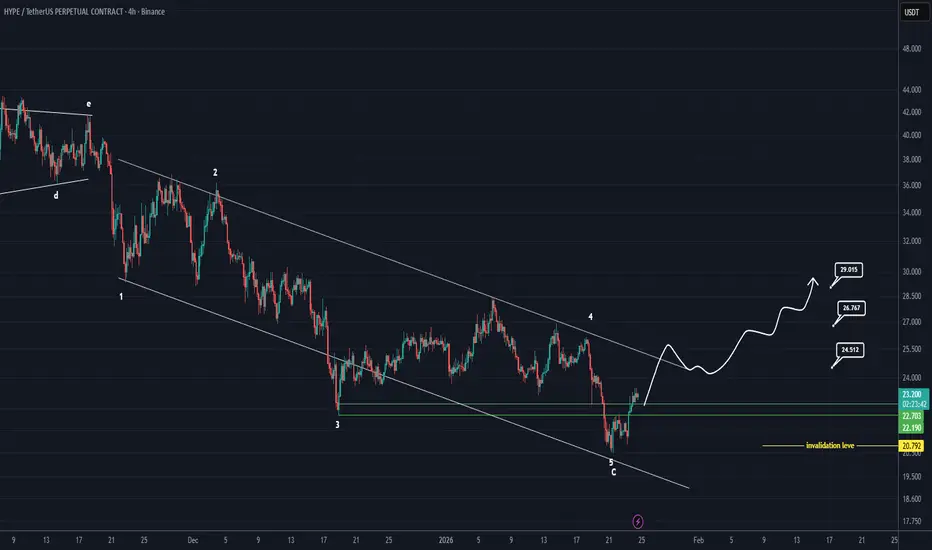
Wave Analysis
Shorting Gold. ReentryYesterday, we had a clear setup showing accumulation, manipulation, and distribution everything lined up for a sell opportunity. The initial entry was valid, but it looks like there wasn’t enough volume in the market, so price consolidated and eventually knocked us out of the position.
So I waited, reassessed, and made a reentry at a better level to fill in the sells properly. Right now, price has been consolidating for a while, which again shows that volume is still weak, so movement is not as aggressive as expected.
Let’s see what happens next I'm in the sell, positioned correctly this time, and waiting for volume to kick in so the move can play out.
$MSFT double top into resistance is a loud sell signalGM traders — just re-entered a NASDAQ:MSFT short. The double top into resistance was a loud “sell” signal for me.
Fundamental backdrop is lining up too: several outlets citing Reuters/enterprise checks say Microsoft cut AI sales growth targets after reps missed quotas and customers were slower to adopt “AI agents.” That reads as near-term demand friction for parts of Copilot/agent monetization.
Even if Azure remains strong, this kind of headline is a sentiment hit — it suggests the AI revenue ramp may be bumpier than bulls were pricing in.
FCPO - A high probably setupSince the last posting on November 25 2025, the market posed another interesting set up which infer a probable wave 3 developing to the upside if the reading is right.
The price movement displayed retracements and wave relationships are just to befitting to ignore. If this plays out to the guidelines in the principle of the wave theory, then we should expect some form of impulsive upside movement with a caveat below 3968.
NG1! - correctionWe are currently correcting the impulsive move in Natural Gas.
First, we expect a pullback toward 4.850 (a move that is already in progress), followed by a continuation down into the 4.480 area.
---
Please subscribe and leave a comment.
You’ll get new information faster than anyone else.
---
BTC/USD (Bitcoin) LONG AND SHORT SET UPLong set up
Entry Price 1: $90,500
Entry Price 2: $86,500
Stop Loss: $83,500
Take Profit 1: $94,500 (Close 25%)
Take Profit 2: $97,500 (Close 50%)
Take Profit 3: $100,500 (Close 75%)
Take Profit 4: $110,500 (Close 100%)
Status: ACTIVE
Short set up
Entry Price 1: $92,500
Entry Price 2: $94,500
Stop Loss: $97,500
Take Profit 1: $90,500 (Close 25%)
Take Profit 2: $88,500 (Close 50%)
Take Profit 3: $86,500 (Close 75%)
Take Profit 4: $83,500 (Close 100%)
Status: ACTIVE
Derivatives and Hedging1. What Are Derivatives?
A derivative is a financial contract whose value is “derived” from an underlying asset.
The underlying can be:
Stocks
Indices (Nifty, Sensex, Dow Jones)
Currencies (USD/INR)
Commodities (gold, oil, silver)
Interest rates
Bonds
Cryptocurrencies
A derivative’s price depends on the price movement of these underlying assets.
Example:
If you buy a derivative contract on crude oil, the value of the contract changes with crude oil prices.
Derivatives are used for:
Hedging (reducing risk)
Speculation (betting on price movement)
Arbitrage (risk-free profit between markets)
Leverage (control large positions with small capital)
2. Why Derivatives Exist
Every market has uncertainty. Prices rise and fall due to:
Supply and demand
Economic conditions
Inflation
Geopolitical tensions
Monetary policies
Weather conditions (important in agriculture)
Derivatives allow traders and businesses to lock in costs and revenues, giving certainty and stability.
Example:
An airline uses derivatives to lock oil prices because fuel cost is a major expense.
A jeweller uses gold futures to secure gold price months in advance.
Thus, derivatives reduce uncertainty and protect profitability.
3. Major Types of Derivatives
There are four major types of derivatives:
3.1 Futures
A future is a legally binding contract to buy or sell an asset at a fixed price on a future date.
Features:
Traded on exchanges (NSE, BSE, CME)
Standardized contracts
Requires margin (not full payment)
Daily mark-to-market adjustments
Example:
Buying Nifty Futures at 24,000 means you commit to buy it on expiry at that price.
If Nifty rises to 24,500, you gain.
If falls to 23,500, you lose.
3.2 Options
An option gives you the right but not the obligation* to buy or sell an asset at a pre-decided price (strike price).
Two types:
Call Option – Right to buy
Put Option – Right to sell
Options buyers pay a premium, while sellers (writers) receive premium.
This is the most popular derivative instrument for hedging and speculation.
Example:
Buying a put option protects your stocks if the market falls.
This acts like an insurance policy.
3.3 Forwards
A forward contract is like a futures contract but traded privately (OTC – over the counter).
Features:
Custom agreements
Not exchange traded
Higher counter-party risk
Flexible terms
Used widely in:
Export/import business
Banks
Corporates managing currency and interest rate risk
3.4 Swaps
A swap is an agreement to exchange cash flows.
Most common types:
Interest Rate Swaps
Currency Swaps
Commodity Swaps
Example:
A company with a floating interest loan can swap it with a fixed rate to reduce risk.
4. What Is Hedging?
Hedging = Reducing or managing financial risk.
It involves taking a position in the derivative market opposite to your existing exposure.
The purpose is not to make profit, but to protect against loss.
Example:
If a farmer expects wheat prices to fall, he sells wheat futures to lock a price.
If a stock investor fears market correction, he buys put options for insurance.
Hedging is like:
Wearing a helmet while riding
Buying fire insurance for a factory
Airbags in a car
You hope not to use it, but you are protected when something goes wrong.
5. How Hedging Works (With Examples)
5.1 Stock Market Hedging
Suppose you have a portfolio worth ₹10 lakh and fear a short-term correction.
You buy a Nifty Put Option.
If the market falls:
Your portfolio loses value
But your put option gains
Losses get balanced
Your overall impact becomes minimal
This is called portfolio insurance.
5.2 Commodity Hedging
A gold exporter wants to lock selling price.
He sells gold futures at ₹62,000 per 10g.
If gold falls to ₹60,000:
He loses in physical market
Gains in future market
Net impact = protected revenue
5.3 Currency Hedging
An importer has to pay USD 1 million after 3 months.
He fears USD may rise and increase his cost.
He buys a USD/INR futures contract.
If USD rises:
He pays more in real world
Gains from USD futures
Total cost remains stable
5.4 Interest Rate Hedging
A company with floating-rate loans fears interest rates will rise.
Solution: Interest Rate Swap
They swap floating rate with fixed rate.
If rates rise, their cost stays fixed.
6. Why Hedging Is Important
Hedging ensures:
Stability of business profits
Predictable cash flows
Protection from catastrophic losses
Avoiding market shocks
Better planning and forecasting
In global markets, companies face:
Exchange rate volatility
Commodity price swings
Inflation
Interest rate fluctuations
Hedging becomes essential for survival.
7. Hedging vs Speculation
Aspect Hedging Speculation
Purpose Reduce risk Make profit
Risk Low High
Approach Opposite market position Same direction market bet
Used by Corporates, exporters, investors Traders
Profit Expectation Limited or none Unlimited potential
Hedgers use derivatives to protect themselves.
Speculators use derivatives to make gains.
Both together create market liquidity.
8. Advantages of Derivatives
Risk management
Price discovery
High liquidity
Low cost trading
Leverage enables big trades with small capital
Opportunity to short market easily
Global market linkage
Derivatives make markets more efficient and enable smoother functioning of financial systems.
9. Risks of Derivatives
While powerful, derivatives carry risks:
Leverage amplifies losses
High volatility
Complex structures
Counter-party risk in forwards
Regulatory risk
Potential for misuse
Over-speculation causing market stress
This is why exchanges enforce:
Margin systems
Position limits
Daily settlement
Strict surveillance
10. Role of Derivatives in Global Markets
Derivatives are vital for:
Managing global trade risks
Stabilizing prices for commodities like oil, gold, wheat
Supporting financial institutions
Allowing global investors to hedge international exposure
Facilitating cross-border capital flow
Every major economy relies on derivatives to maintain financial stability.
Conclusion
Derivatives and hedging are core pillars of modern finance.
Derivatives derive value from underlying assets and are used for hedging, speculation, and arbitrage.
Hedging protects against adverse price movements, offering stability to investors and businesses.
Though derivatives involve risks, proper use creates balance, efficient markets, and reduced uncertainty.
Whether you are an investor, trader, or business, understanding derivatives and hedging is essential for navigating today’s dynamic financial environment.
New Energy Market Trends1. Rapid Growth of Renewable Energy Capacity
One of the most dominant trends in the new energy sector is the unprecedented expansion of renewable power capacity—mainly solar, wind, and hydropower. Solar energy is leading the transition due to plummeting module costs, scalable technology, and supportive government policies. Large-scale solar parks, rooftop installations, and floating solar plants are becoming mainstream. Wind power, especially offshore wind, is growing rapidly thanks to improved turbine technology, higher capacity factors, and falling installation costs.
Developing countries, particularly India, China, and parts of Southeast Asia, are experiencing the fastest renewable capacity growth due to rising electricity demand and favorable national policies. Many countries are committing to Net Zero targets and increasing their proportion of renewable energy in the grid-mix. This shift is also being supported by private players, as corporate Power Purchase Agreements (PPAs) gain popularity for decarbonizing operations.
2. Energy Storage Becomes Essential for Grid Stability
With renewable energy’s intermittent nature, energy storage systems—especially lithium-ion batteries—have become critical. Storage allows solar and wind energy to be stored during peak production and used during high demand or low generation hours. This enhances grid reliability and reduces blackout risks.
Battery storage prices have been falling consistently, supported by innovation in lithium-ion chemistry, solid-state battery development, and economies of scale in production. Grid-scale battery farms, home energy storage, and industrial storage systems are growing globally. Additionally, alternative storage technologies like pumped hydro storage, flow batteries, and thermal energy storage are emerging as powerful solutions for long-duration needs.
Countries with high renewable penetration, such as Australia, Germany, and the United States, are heavily investing in hybrid renewable-plus-storage projects, which combine solar/wind with batteries to stabilize supply. This trend will continue as more renewable energy is integrated into power grids worldwide.
3. Green Hydrogen Gains Global Attention
Green hydrogen—produced using renewable energy through electrolysis—is becoming a key pillar of the clean energy transition. It provides a decarbonization pathway for hard-to-abate sectors like steel, cement, fertilizers, shipping, and heavy industries.
Major economies such as the European Union, Japan, South Korea, India, and China are investing heavily in national hydrogen strategies. Electrolyzer prices are expected to fall significantly as production scales up, similar to the trend seen in solar panels. Industrial clusters across the world are piloting hydrogen-based steel production, hydrogen fuel cells for vehicles, and hydrogen-powered power plants.
Hydrogen also acts as an energy storage medium, helping balance renewable power supply. The future will likely see widespread hydrogen hubs, export-import corridors, and integration with heavy industries.
4. Growth of Electric Vehicles (EVs) Reshapes Energy Demand
Electric mobility is one of the biggest disruptors in the energy market. EV adoption is accelerating due to falling battery costs, government incentives, improving charging infrastructure, and increasing environmental awareness. With automotive giants transitioning to all-electric fleets, EVs are reshaping the demand for electricity, metals, energy storage, and charging technology.
Charging infrastructure is becoming more widespread—public stations, fast chargers, home charging units, and battery swapping stations (popular in Asia) are expanding rapidly. Vehicle-to-grid (V2G) technology, which allows EVs to feed energy back into the grid, is another emerging innovation that may stabilize electricity networks.
The shift from internal combustion engines to EVs also affects the oil and gas industry, reducing long-term demand for petrol and diesel while increasing dependence on electricity and battery raw materials.
5. Digitalization and Smart Grid Technologies Transform Energy Systems
Smart grids and digital energy solutions are essential for managing the growing complexity of modern power systems. Real-time data, automation, smart meters, IoT-connected devices, and AI-driven energy management platforms are dramatically improving energy efficiency.
Smart grids help utilities balance demand and supply more effectively, reduce transmission losses, and manage decentralized renewable resources. Consumers also benefit through smarter home energy devices, solar-plus-storage systems, and real-time consumption insights.
AI and machine learning are being used for:
Predicting energy demand patterns
Optimizing renewable generation
Monitoring grid assets
Reducing energy waste
Enhancing power trading
Blockchain-based energy trading is also emerging, allowing peer-to-peer power purchase in local microgrids, making energy more democratized.
6. Carbon Markets and ESG Investing Accelerate Clean Energy Adoption
Global carbon markets—both compliance and voluntary—are growing as companies and nations commit to decarbonization. By putting a price on carbon emissions, governments incentivize cleaner technologies and penalize polluting industries. This pushes industries toward renewable energy, energy efficiency, and sustainable operations.
ESG (Environmental, Social, Governance) investing has gained tremendous momentum, with institutional investors increasingly allocating funds to companies with strong sustainability practices. Renewable energy companies, green bonds, and climate-focused funds are benefiting from this capital inflow.
Carbon credit trading, carbon offset projects, and nature-based solutions are becoming new investment categories. Companies are adopting internal carbon pricing to make environmentally conscious decisions and prepare for stricter regulations in the future.
7. Energy Transition Metals See Rising Demand
Clean energy technologies rely heavily on specific metals—lithium, cobalt, nickel, graphite, copper, and rare earth elements. As EVs, batteries, solar panels, and wind turbines scale up, demand for these minerals is surging.
This has triggered investments in sustainable mining, recycling technologies, and alternative materials to avoid supply chain bottlenecks. Countries are also exploring domestic mineral reserves to reduce dependence on dominant exporters. Circular economy initiatives—battery recycling, solar panel reuse, rare metal recovery—are gaining traction globally.
8. Distributed Energy and Microgrids Expand
Distributed energy resources (DERs) such as rooftop solar, small wind systems, home batteries, and local microgrids are becoming popular for both residential and commercial users. These systems reduce dependence on central grids and improve energy resilience.
Microgrids are particularly valuable for remote regions, military bases, industrial facilities, and disaster-prone areas. They can operate independently during grid failures, providing reliable and clean power.
DERs and microgrids help reduce transmission losses, lower consumer bills, and decentralize energy production—making energy more democratic and community-driven.
Conclusion
The new energy market is evolving faster than any previous phase in global energy history. Renewable power growth, battery storage, green hydrogen, EVs, smart technologies, and carbon markets are fundamentally reshaping how the world generates, distributes, and consumes energy. Innovations in digitalization, materials science, and policy frameworks further accelerate this transformation.
As nations pursue sustainability and energy security, the new energy sector will continue attracting massive investments and technological advancements, unlocking long-term economic, environmental, and social benefits. The coming decade marks a decisive shift towards decentralized, digital, and decarbonized energy systems—defining the future of global markets.
Emerging Market vs Developed Market1. Definitions
Developed Markets
Developed markets are countries with high economic maturity, advanced financial systems, strong institutions, and stable political environments. Their characteristics include high GDP per capita, industrial sophistication, deep capital markets, and steady (though slower) economic growth. Examples include USA, UK, Canada, Japan, Germany, France, Australia, and Singapore.
Emerging Markets
Emerging markets are economies transitioning from developing to developed status. They show rapid industrialization, expanding middle-class populations, improving institutions, and increasing integration with global markets. Examples include India, China, Brazil, Indonesia, South Africa, Mexico, Turkey, and Vietnam.
2. Key Characteristics
2.1 Economic Growth
Emerging Markets:
Faster GDP growth, driven by urbanization, industrial expansion, rising consumption, digital adoption, and favorable demographics. Annual growth often ranges from 4–7%.
Developed Markets:
Slower but stable growth, typically 1–3%, due to market maturity, ageing demographics, and saturated industries.
Implication: EMs offer growth potential; DMs offer stability.
2.2 Income Levels and Living Standards
Developed Markets:
High income, advanced infrastructure, strong social welfare systems, high productivity.
Emerging Markets:
Lower but rapidly rising incomes, infrastructure still developing, large segments transitioning to formal economy.
2.3 Financial Markets and Institutions
Developed Markets:
Deep, liquid, and highly regulated financial markets. Stock exchanges (e.g., NYSE, NASDAQ, LSE) exhibit high transparency and strong corporate governance.
Emerging Markets:
Growing markets but with lower liquidity, higher volatility, and varying investor protections. Institutional reforms are ongoing.
2.4 Currency Stability
Developed Markets:
Stable currencies, low inflation, credible central banks.
Emerging Markets:
More prone to currency fluctuations, inflation spikes, and external shocks due to reliance on imported commodities and foreign capital.
2.5 Political and Regulatory Environment
Developed Markets:
Predictable policies, rule of law, strong regulatory systems.
Emerging Markets:
More political uncertainty, policy shifts, regulatory inconsistencies. However, some EMs like India are rapidly improving regulatory transparency.
2.6 Demographics
Emerging Markets:
Young, expanding populations — a positive for long-term consumption and labor supply.
Developed Markets:
Ageing populations — leading to higher healthcare spending, slower consumption growth, and labor shortages.
3. Opportunities in Emerging vs Developed Markets
3.1 Investment Opportunities
Emerging Markets
Higher returns due to rapid growth.
Sectors like technology, fintech, manufacturing, renewable energy, and infrastructure show exceptional potential.
Underpenetrated markets allow companies to grow at scale.
Developed Markets
Stable and predictable returns.
Strong corporate governance and reduced risk of fraud or systemic failures.
Advanced industries like AI, biotechnology, cloud computing, clean tech, and high-end manufacturing.
3.2 Consumer Market Potential
EMs have massive, growing middle classes. Consumption is expected to double in many EMs in the next two decades.
DMs have saturated markets, with growth reliant on innovation rather than new customers.
3.3 Capital Flows
Investors often chase high growth in EM equities, debt, and startups.
DMs attract long-term, stable institutional capital due to reliability of returns.
4. Risks in Emerging vs Developed Markets
4.1 Market Volatility
Higher in EMs, due to currency risks, political events, commodity dependence, and lower liquidity.
DMs show lower volatility thanks to robust financial systems.
4.2 Geopolitical and Policy Risks
EMs often face elections, reforms, or geopolitical pressures that can shift markets abruptly.
DMs are more predictable, although events like Brexit or US political gridlocks still create uncertainty.
4.3 Currency and Inflation Risks
EM currencies can depreciate sharply in global stress periods.
DMs maintain low inflation and strong central bank credibility.
4.4 Structural Challenges
EMs face challenges like corruption, weak judiciary, infrastructure gaps, and bureaucratic hurdles.
DMs deal with challenges like high public debt, low productivity growth, and ageing populations.
5. Comparative Overview
5.1 Growth vs Stability
Emerging markets = growth, opportunity, volatility
Developed markets = stability, safety, lower returns
5.2 Innovation and Technology Adoption
DMs lead in innovation due to research ecosystems.
EMs leapfrog technology — e.g., India’s digital payments boom, China’s e-commerce leadership.
5.3 Trade and Globalization
EMs are increasingly integrated into global supply chains.
DMs dominate global trade policies, IMF, World Bank, and monetary influence (USD, Euro, Yen).
5.4 Corporate Structures
DMs have multinationals with global footprints.
EMs are producing new giants (e.g., Reliance, Tata, Alibaba, BYD, Samsung).
6. Examples
Emerging Markets
India: Fastest-growing major economy, tech innovation, digital transformation.
China: Manufacturing hub, consumption growth.
Brazil: Natural resources, agriculture economy.
Indonesia & Vietnam: Manufacturing and consumption boom.
Developed Markets
USA: World’s largest and most innovative economy.
Japan: High-tech industries, strong institutions.
Germany: Industrial powerhouse.
UK & Canada: Stable financial systems.
7. Which Is Better for Investors?
Emerging Markets Are Ideal If You Want:
High long-term growth potential
Exposure to rising consumption
High-return equity opportunities
Portfolio diversification
Developed Markets Are Ideal If You Want:
Safety and predictability
Lower volatility
Strong governance
Blue-chip stability
Best Strategy:
A balanced portfolio that mixes both — e.g., EM for growth + DM for stability — provides optimal long-term results.
8. Conclusion
Emerging and developed markets represent two ends of the global economic spectrum. Emerging markets offer high growth, rising consumer demand, innovation, and long-term opportunities, but with higher risks and volatility. Developed markets deliver stability, security, and robust institutions, though with slower growth.
Understanding the differences helps investors, businesses, and policymakers choose the right strategies. In today’s interconnected world, both market types are essential components of global economic progress. A combination of the dynamism of emerging markets and the reliability of developed markets provides a balanced and powerful approach to global investment and economic engagement.
Domestic Market vs Global Market1. Meaning of Domestic Market
The domestic market, also known as the internal market or home market, refers to the economic environment within a specific country. All transactions—production, distribution, marketing, buying, and selling—take place inside national borders. Participants operate under the country’s laws, currency, taxation, and business culture.
Key Characteristics of Domestic Markets
** Single Currency:** All trade happens in the nation’s currency (e.g., INR for India).
** Local Regulation:** Businesses follow national laws, taxation, and safety standards.
** Known Consumer Preferences:** Companies understand local culture, tastes, and purchasing power.
** Lower Risk:** No foreign exchange fluctuation, geopolitical uncertainty, or cross-border compliance.
** Easier Market Entry:** Setting up operations, distribution, and marketing is simpler compared to international expansion.
Advantages of Domestic Markets
Lower cost of operations.
Predictable demand patterns.
Better regulatory familiarity.
Local brand loyalty.
Smaller logistical and transportation challenges.
Limitations
Limited customer base.
Growth potential capped by domestic economic conditions.
High competition if the market is saturated.
Vulnerable to local inflation, interest rate changes, and policy shifts.
2. Meaning of Global Market
The global market (or international market) refers to buying and selling across multiple countries worldwide. Companies sell products, raise capital, and source raw materials internationally. Global markets connect nations, businesses, and consumers across borders through trade, investment, and technology.
Key Characteristics of Global Markets
Multiple Currencies: Trade involves forex markets (USD, EUR, JPY, etc.).
Global Consumer Base: Millions of potential customers worldwide.
Complex Regulations: Different countries have different laws on product standards, taxes, and business operations.
Increased Competition: Competing with international brands and multinational corporations.
High Growth Opportunity: Access to huge markets, new segments, and diverse demand.
Advantages of Global Markets
Unlimited expansion potential.
Higher profit margins due to scale.
Ability to diversify business risk across countries.
Access to cheaper raw materials and skilled labour.
Enhanced brand value and global recognition.
Limitations
Complex logistics and supply chain challenges.
Exposure to currency fluctuations.
Geopolitical risks (wars, sanctions, trade barriers).
Cultural and language barriers.
High cost of marketing, compliance, and international operations.
3. Key Differences: Domestic vs Global Market
1. Scale of Operation
Domestic: Operates within one country.
Global: Operates across several countries or continents.
2. Consumer Base
Domestic: Limited to local population.
Global: Millions of global customers with different needs and purchasing behaviours.
3. Currency
Domestic: One currency.
Global: Multiple currencies and exposure to forex volatility.
4. Competition
Domestic: Compete with local businesses.
Global: Compete with global giants such as Apple, Tesla, Samsung, etc.
5. Regulation
Domestic: One set of national laws.
Global: Must comply with customs, trade agreements, tariffs, and legal systems of many countries.
6. Risks
Domestic: Political instability, inflation, taxation.
Global: Geopolitics, supply chain disruptions, currency risk, global recessions.
7. Logistics
Domestic: Simple networks within the country.
Global: Shipping, customs clearance, warehousing, and international transport.
8. Marketing Strategy
Domestic: Fixed strategy based on local culture.
Global: Localization required—adapt product names, pricing, packaging, promotions, and language.
4. Why Companies Expand from Domestic to Global Markets
Businesses often start in domestic markets to build a stable foundation. Once they achieve brand recognition and financial strength, they expand into global markets for:
1. Growth and Scalability
The domestic market may become saturated. Going global allows businesses to tap into new customer segments.
2. Diversification
Expanding globally helps protect companies from domestic economic downturns.
3. Cost Efficiency
Countries like India, Vietnam, and Bangladesh offer affordable labour and production costs, reducing overall expenses.
4. Competitive Advantage
Companies that operate globally often achieve technological, financial, and operational superiority.
5. Resource Access
Global markets provide access to:
Rare minerals
High-end technology
Skilled talent
Advanced manufacturing hubs
5. Impact on Investors: Domestic vs Global Markets
Investors also benefit differently from domestic and global markets.
Domestic Investing
Less complex.
Lower risk.
Better understanding of companies and regulations.
Global Investing
Exposure to fast-growing economies.
Diversification across countries.
Opportunities to invest in global companies like Apple, Google, or Amazon.
However, global investing involves:
Currency risk
Higher brokerage costs
Taxation complexity
6. Impact on the Economy
Domestic Market’s Role
Creates employment.
Strengthens local industries.
Helps the government generate tax revenue.
Global Market’s Role
Boosts exports.
Improves foreign exchange reserves.
Promotes technological advancement through global competition.
Encourages multinational companies (MNCs) to invest locally.
A strong global presence can elevate a country’s economic status.
7. Examples for Better Understanding
Domestic Market Examples
Patanjali selling products primarily within India.
Local Kirana stores and regional brands.
India-focused stock exchanges like NSE and BSE (though they attract global money indirectly).
Global Market Examples
Apple selling products worldwide.
Tata Motors operating in 100+ countries.
Amazon’s global e-commerce network.
Reliance exporting petrochemicals to several continents.
These comparisons show how companies leverage both markets depending on their goals.
8. Conclusion
The domestic market forms the foundation of any business, offering stability, low risk, and predictable demand. It is ideal for startups and companies building brand loyalty. On the other hand, the global market presents massive opportunities for scale, profit, innovation, and diversification—but requires deep resources, compliance capability, and adaptability.
In today’s interconnected world, businesses and investors increasingly balance both domestic and global markets. Companies begin locally, refine operations, and gradually expand internationally. Investors diversify across borders to reduce risk and capture global growth.
Understanding the distinctions between these two markets helps businesses design better strategies, investors make smarter decisions, and policymakers create more balanced, growth-focused economic policies.
Interest Rates and Inflation in the Global Market What Is Inflation?
Inflation is the rate at which the general level of prices for goods and services rises over time. When inflation increases, each unit of currency buys fewer goods and services, reducing purchasing power.
Types of inflation
Demand-pull inflation – When demand exceeds supply (e.g., strong economy, rising consumption).
Cost-push inflation – When production costs rise (e.g., higher crude oil, raw materials, wages).
Built-in inflation – Workers demand higher wages because they expect prices to rise, leading to a wage-price spiral.
Moderate inflation is considered normal and even healthy for economic growth. Extremely high inflation erodes savings and investment confidence, while very low or negative inflation (deflation) can damage economic momentum.
What Are Interest Rates?
Interest rates represent the cost of borrowing money. Central banks such as the Federal Reserve (US), RBI (India), ECB (Europe), and others set benchmark policy rates that influence lending rates, deposit rates, loans, mortgages, and corporate borrowing.
Types of interest rates
Policy rate (Repo/interest rate by central bank)
Interbank rates (e.g., LIBOR, SOFR)
Commercial lending rates (bank loans, mortgages)
Bond yields (returns on government securities)
When interest rates rise, borrowing becomes costlier. When they fall, liquidity increases and borrowing becomes more attractive.
The Relationship Between Interest Rates and Inflation
Interest rates and inflation are closely linked by the monetary policy of central banks.
When inflation is high, central banks typically increase interest rates to slow the economy.
When inflation is low, central banks reduce interest rates to stimulate spending and investment.
This relationship is known as the interest rate–inflation trade-off.
Why central banks raise rates during high inflation
Higher interest rates reduce borrowing.
Consumers spend less; businesses delay expansion.
Demand slows → price pressure cools → inflation moderates.
Why central banks cut rates in low inflation
Cheaper loans boost economic activity.
Consumers buy more; businesses invest more.
Demand rises → inflation increases gradually to healthy levels.
How Inflation Impacts Financial Markets
1. Stock Markets
Inflation affects corporate profits, valuation multiples, and investor sentiment.
High inflation: negative or volatile for markets
Higher costs → lower margins.
Reduced consumer spending.
Higher interest rates lower PE ratios.
Uncertainty leads to volatility.
Sectors that perform better during high inflation:
Energy
Commodities
Metals
FMCG (Pricing power stocks)
Banks (during rate hikes)
Low inflation: supportive for equity markets
Stable costs create predictable earnings.
Low interest rates boost valuations (higher PE).
Liquidity flows into equities.
Sectors that perform strongly:
Tech
Real estate
Automobiles
Growth stocks
2. Bond Markets
Bond prices and interest rates have an inverse relationship.
When rates rise
Existing bonds lose value.
New bonds offer higher yields.
Long-duration bonds fall the most.
When rates fall
Bond prices rise.
Investors earn capital gains.
Borrowing increases, boosting credit growth.
Inflation reduces the real return of bonds, making inflation-indexed bonds (like India’s inflation-linked government securities) attractive.
3. Currency Markets
Inflation and interest rates heavily influence currency strength.
High interest rates → stronger currency
Because:
Higher yields attract foreign investment.
Carry trades favor high-interest-rate currencies.
High inflation → weaker currency
Because:
Purchasing power declines.
Foreign investors lose confidence.
For example:
US dollar strengthens when Fed hikes rates.
Emerging market currencies weaken when global inflation rises.
4. Commodity Markets
Inflation and interest rates influence commodities like gold, crude oil, and metals.
Inflation impact
Inflation pushes commodity prices up (raw materials cost more).
Gold rises as a hedge against inflation.
Interest rate impact
High rates strengthen USD → commodities fall.
Low rates weaken USD → commodities rise.
How Interest Rates Influence Markets
1. Equity Markets
Interest rates directly impact corporate earnings and valuations.
Rate hikes
Increase borrowing costs → lower profits.
Reduce liquidity → markets correct.
PE multiples shrink → growth stocks fall.
Sectors that benefit:
Banking
Insurance
Sectors that suffer:
IT/Tech
Real estate
Consumer durables
Rate cuts
Cheaper loans → higher demand.
Economic activity increases.
Stock markets rally.
Growth stocks and sectors like tech, auto, and real estate benefit the most.
2. Real Estate Markets
High interest rates make home loans expensive → real estate slows.
Low rates boost property demand.
Real estate cycles closely follow monetary cycles.
3. Banking and Financial Sector
Banks gain when rates rise gradually, because:
Net interest margins (NIMs) increase.
Deposit rates lag lending rates.
But rapid rate hikes can hurt banks if loan defaults increase.
4. Consumer Behavior
Interest rates influence how households spend money.
High interest rates
People save more, spend less.
Home, auto, and consumer loans drop.
Discretionary consumption declines.
Low interest rates
Consumers borrow more.
Spending rises.
Economic growth increases.
Central Bank Policies and Their Role
Central banks use monetary tools to balance inflation and economic growth:
Key tools
Policy rates (Repo, Federal Funds Rate)
Open market operations (buying/selling bonds)
Cash reserve ratio (CRR)
Quantitative easing/tightening
Central banks must maintain:
Price stability
Economic growth
Currency stability
Mistimed rate decisions can trigger recessions or hyperinflation.
Global Impact of Inflation and Interest Rate Cycles
1. Emerging Markets
Countries like India, Brazil, or Indonesia are sensitive to:
US interest rate cycles
Dollar strength
Commodity prices
When the Fed hikes rates:
Foreign money exits emerging markets.
Stock markets correct.
Currencies weaken.
2. Developed Markets
Low inflation and low rates often lead to:
High equity valuations
Growth in tech and innovation investments
High inflation and high rates often trigger:
Bond market stress
Housing market corrections
Why Tracking These Indicators Matters
For investors and traders, monitoring inflation and interest rates helps in:
Identifying market cycles
Building sector-focused strategies
Adjusting risk in portfolios
Understanding currency and commodity trends
Making informed decisions in equity, debt, and forex
Conclusion
Interest rates and inflation form the backbone of global market dynamics. Their relationship influences everything from stock prices and bond yields to consumer spending and currency strategies. When inflation rises, central banks tighten rates, slowing economic activity but stabilizing prices. When inflation falls, rate cuts stimulate growth and liquidity. For investors, understanding these movements is crucial for timing market cycles, selecting the right sectors, and reducing risk. Ultimately, mastering the interplay between inflation and interest rates leads to smarter investment decisions and long-term wealth creation.
Hedge Fund Secrets in the World Trade Market 1. Information Advantage: The Core Hedge Fund Secret
The biggest hedge fund edge is not insider information (illegal), but information asymmetry—getting better data faster.
A. Alternative Data
Top funds purchase high-quality alternative datasets that retail traders don’t have access to:
Satellite imagery (counting cars in parking lots to estimate retail sales)
Shipping and cargo movement data
Social media sentiment analysis using AI
Credit card transaction data
Web-scraping of e-commerce prices
Weather and climate analytics (commodity trading)
These datasets reveal market trends weeks before they appear in official reports.
B. Faster News Pipelines
Whether through Bloomberg terminals, machine-reading of news, or proprietary data feeds, hedge funds receive market-moving information seconds or minutes before the public, increasing their edge in fast-moving markets.
2. Quantitative Models: The Math Behind Market Domination
Hedge funds rely heavily on quantitative trading, using statistical models to predict price movements across global markets.
A. Statistical Arbitrage
This method identifies price imbalances between related assets:
Pair trading (e.g., Coke vs Pepsi)
Mean reversion strategies
Baskets of correlated stocks
When prices deviate from historical relationships, quant funds place trades based on probability, not emotion.
B. Machine Learning Models
ML models recognize patterns invisible to human eyes:
Trend prediction using neural networks
Volatility forecasting
Natural language processing to analyze corporate statements
Large funds like Renaissance Technologies, Two Sigma, and DE Shaw have entire teams dedicated to maximizing machine intelligence.
C. High-Frequency Trading (HFT)
Some hedge funds use HFT to execute trades in microseconds using:
Colocated servers (physically placed next to stock exchange servers)
Ultra-low latency networks
Algorithmic order-routing
This allows them to profit from tiny price discrepancies millions of times per day.
3. Global Macro Strategy: Understanding Forces That Move the World
Global macro hedge funds study worldwide events to position trades across currencies, commodities, bonds, and equities.
A. Interest Rate Differentials
Funds constantly monitor central bank actions (Fed, ECB, BOJ, RBI).
For example:
If the US Federal Reserve is expected to cut rates → hedge funds buy risk assets.
If Japan keeps rates ultra-low → funds borrow yen and invest in higher-yielding currencies (carry trades).
B. Geopolitical Intelligence
Hedge funds track:
Elections
Wars and conflicts
Trade agreements
Economic sanctions
Oil supply disruptions
A sophisticated geopolitical model helps them anticipate market shocks before they fully unfold.
C. Commodity Cycles
Macro funds monitor:
OPEC decisions (oil)
Global demand–supply balance (metals)
Weather-based agricultural forecasts
They position trades in futures and options accordingly.
4. Liquidity Hunting: How Hedge Funds Trap Retail Traders
A key secret: hedge funds focus not on price, but on liquidity pools—areas in the chart where clusters of stop-losses and pending orders accumulate.
A. Stop-Loss Hunting
Retail traders place predictable:
Stop losses below support
Stop losses above resistance
Hedge funds accumulate positions by pushing price temporarily beyond these levels to capture liquidity before reversing the trend.
B. Fake Breakouts (Bull & Bear Traps)
Institutions intentionally create:
False breakouts above resistance
False breakdowns below support
This triggers retail entries, then the price sharply reverses.
C. Volume Absorption
When price stays flat but volume is high, hedge funds often absorb supply quietly before initiating a strong directional move.
5. Short Selling: Turning Market Fear into Profit
Hedge funds master the art of short selling—not just betting against stocks, but strategic short positioning.
A. Identifying Weakness
They analyze:
High debt companies
Fraud-suspected firms
Overvalued growth stocks
Firms with deteriorating fundamentals
B. Activist Short Selling
Some funds publish detailed reports exposing:
Accounting manipulation
Governance issues
Unsustainable debt structures
This causes panic selling and boosts their short-side profits.
C. Hedging Long Positions
Short positions often act as insurance against market crashes.
6. Multi-Asset Diversification: Trading Across the Entire World
The world market is not just stocks. Hedge funds trade:
Equities
Bonds
FX
Commodities
Crypto
Real estate derivatives
Volatility indices (VIX)
Carbon credits
Diversification allows them to profit in multiple sectors simultaneously, regardless of market direction.
7. Risk Management: The Most Important Hedge Fund Secret
Retail traders lose money because of emotional decisions. Hedge funds dominate because they follow rigorous risk frameworks.
A. Position Sizing Based on Volatility
Hedge funds adjust trade size based on:
Implied volatility
Historical volatility
Correlation risk
B. Stop-Loss Structures
They use algorithmically calculated stop levels, not emotional ones.
C. Scenario Analysis
Risk teams run simulations:
What if interest rates spike?
What if oil collapses?
What if a war breaks out?
Positions are adjusted long before crises occur.
D. Portfolio Hedging
They hedge portfolios using:
Options strategies
Futures contracts
Cross-asset hedges (e.g., long gold when equities look risky)
8. Leverage and Derivatives: Multiplying Profits
Hedge funds frequently use leverage in a controlled manner.
A. Using Derivatives for Exposure
Instead of buying stocks outright, they use:
Futures
Options
Swaps (especially total return swaps)
These instruments offer:
Higher leverage
Lower capital requirement
Tax advantages
B. Liquidity Leverage
Banks extend credit to hedge funds at low interest rates, allowing them to scale positions.
9. Behavioral Finance: Exploiting Human Emotions
Hedge funds track psychological patterns in retail traders:
Fear of missing out (FOMO)
Panic selling
Herd mentality
Overconfidence after a winning streak
Algorithms quantify these emotional patterns and trade against them.
10. Speed of Execution and Adaptive Strategy
The final hedge fund secret is adaptability. Retail traders stick to fixed systems, but hedge funds continuously:
Update models
Add new datasets
Monitor global correlations
Adjust stop losses based on volatility
Shift strategies when patterns stop working
Their flexibility allows them to thrive in constantly changing global conditions.
Conclusion
Hedge funds dominate the world trade market through a combination of:
Information advantage
Quantitative models
High-frequency trading
Global macro analysis
Liquidity manipulation
Derivatives mastery
Sophisticated risk management
Psychological understanding of retail traders
These are not illegal secrets—they are strategic, highly advanced methods enabled by money, technology, and expertise. By understanding these concepts, everyday traders can become smarter, avoid traps, and align their strategies with institutional thinking.
Gold HTF–LTF Liquidity Flow BreakdownPrice delivered exactly as anticipated.
We had a clear sweep of the upper liquidity (SSS), followed by a clean mitigation inside the Order Block (OB) and our defined Entry Zone.
The reaction from that premium zone confirmed the bearish intent, and price began its displacement toward internal liquidity.
Targets were marked based on:
Liquidity resting below internal structure
Previous swing lows
HTF inefficiencies waiting to be filled
Continuous lower-timeframe orderflow confirming bearish continuation
Price has already tapped into Target 1 and is pushing deeper toward Target 2 with strong bearish momentum. If structure continues to break cleanly, the Final Target remains highly probable.
This breakdown shows how identifying liquidity, understanding premium/discount pricing, and aligning OB mitigation can give extremely high-accuracy setups.
Remember:
This isn’t just analysis — this is disciplined practice, precision, and consistency.
If you want to learn, grow, and trade with clarity… stay connected, keep watching these breakdowns, and make sure you follow for more powerful insights.
Join the journey — let’s level up together.
Unlocking Global Market Potentiality1. Understanding Global Market Potentiality
Global market potentiality refers to the capacity of a business, sector, or economy to expand internationally by tapping into new customer segments, geographic regions, or emerging market trends. It includes evaluating:
Market size and future growth trajectory
Consumer behaviour, demographics, and purchasing power
Technological readiness and adoption
Competitive intensity and entry barriers
Regulatory environments and trade policies
Economic cycles and geopolitical stability
The core idea is to identify where the next wave of demand will arise and position your business to serve it early.
2. Why Global Expansion Matters More Than Ever
Several structural shifts make global expansion a necessity rather than an option:
a) Saturation in Domestic Markets
Many industries face slow growth at home due to mature consumption patterns. Global markets offer fresh demand and diversification.
b) Rising Middle Class in Emerging Economies
Asia, Africa, the Middle East, and Latin America are witnessing unprecedented income growth. This expands consumer demand for retail, financial services, healthcare, and technology.
c) Digital Connectivity
E-commerce, online services, fintech, and automation allow a business to reach global customers without heavy physical infrastructure.
d) Supply-Chain Diversification
Businesses can optimize costs, reduce risk, and improve efficiency by sourcing and manufacturing across multiple regions.
e) Competitive Advantage
Companies operating globally gain exposure to innovation, talent, and ideas—accelerating long-term competitiveness.
3. Key Pillars to Unlock Global Market Potentiality
a) Deep Market Research & Intelligence
The first step is thorough market analysis:
TAM, SAM, SOM evaluation
Demand forecasting
Cultural insights and consumer behaviour
Competitor benchmarking
Pricing and localization requirements
Tools such as data analytics, AI-driven forecasting, and global market databases help businesses identify high-potential regions with precision.
b) Understanding Local Regulations
Every market has unique legal requirements:
Import/export rules
Trade agreements and tariffs
Licensing and certifications
Data privacy and digital compliance
Taxation and repatriation of profits
Compliance reduces risk and prevents costly delays. Successful companies take a proactive approach through local legal teams or partnerships.
c) Building a Localized Strategy
A global strategy succeeds only when it feels local. Localization can include:
Tailored product designs
Customized marketing messages
Local languages and cultural alignment
Region-specific pricing
Local payment systems and logistics
For example, payment adoption differs widely—UPI in India, Alipay in China, and card-heavy systems in Europe.
d) Strong Global Brand Positioning
A credible global brand signals trust. Brand positioning should combine universal values (quality, reliability, innovation) with tailored regional messaging.
e) Digital-First Global Entry
Technology accelerates international growth:
E-commerce platforms
Social media for global brand visibility
Cloud-based operations
AI-driven customer segmentation
Cross-border digital payments
SaaS distribution models
Digital entry reduces costs and creates scalable access to multiple markets.
f) Strategic Partnerships & Alliances
Local partners accelerate learning and reduce risk:
Distributors and channel partners
Local manufacturers
Franchise operators
Government or regulatory coordination
Joint ventures for shared expertise
These partnerships help companies navigate cultural, legal, and logistical challenges.
g) Flexible Global Supply Chain & Operations
Operational excellence is key to serving global demand:
Multi-country manufacturing
Nearshoring or friend-shoring
Smart warehousing
Real-time logistics tracking
Vendor diversification
Resilient supply chains protect a business against disruptions like political instability, pandemics, and climate events.
4. Emerging High-Potential Global Markets
Several regions now present outsized opportunities:
1. Asia-Pacific
India, China, Indonesia, Vietnam, Philippines → Rapid urbanization and digital-first consumers.
2. Middle East & GCC
Saudi Arabia & UAE → Economic diversification, luxury demand, infrastructure investment.
3. Africa
Kenya, Nigeria, South Africa → Rising digital adoption, youthful population, fintech growth.
4. Latin America
Brazil, Mexico, Chile → Expanding middle class and commodity-driven growth.
Each region offers distinct opportunities in sectors like fintech, renewable energy, EVs, healthcare, edtech, logistics, and consumer goods.
5. Industry Sectors with the Highest Global Potential
a) Technology & Digital Services
AI, cloud computing, cybersecurity, automation, SaaS, digital payments.
b) Healthcare & Pharmaceuticals
Demand increasing due to aging populations, chronic diseases, and biotechnology.
c) Renewable Energy
Solar, wind, hydrogen, green technology, EV ecosystem.
d) Consumer Goods & Retail
Apparel, FMCG, lifestyle products, luxury retail.
e) Infrastructure & Real Estate
Smart cities, construction, urban development.
f) Agriculture & Food Processing
Global food security and supply chain modernization.
g) Financial Services
Fintech, insurance, wealth management, cross-border investing.
6. Risks in Global Expansion & How to Mitigate Them
Unlocking global potential also involves addressing risks:
a) Geopolitical Instability
Use diversified markets and supply chains to minimize exposure.
b) Currency Volatility
Hedge using forex instruments or multi-currency accounts.
c) Cultural Misalignment
Invest in localization and local leadership teams.
d) Regulatory Complexity
Maintain compliance through legal counsel and continuous monitoring.
e) Competitive Pressure
Innovate faster, build brand loyalty, and offer differentiated value.
f) Operational Challenges
Adopt scalable digital infrastructure and supply-chain automation.
7. The Role of Innovation in Global Success
Innovation is the engine that unlocks global potential:
AI-driven product development
Manufacturing automation
Sustainability and green innovation
Data-led decision-making
Digital-first customer interfaces
Companies that innovate grow faster, capture new segments, and outperform global competitors.
8. Building a Future-Ready Global Strategy
A strong global strategy includes:
Vision: Clear long-term goals
Market Prioritization: Choosing high-ROI markets
Execution Framework: Market entry → expansion → consolidation
Resource Allocation: Capital, talent, technology
Continuous Learning: Monitoring trends and adapting
This ensures that the business remains resilient, competitive, and scalable across markets.
Conclusion
Unlocking global market potentiality is not a one-time decision—it is a continuous strategic journey. Companies that successfully globalize benefit from expanded customer bases, diversified revenue streams, innovation exposure, and long-term resilience. With the right combination of market research, localization, regulatory alignment, digital strategy, partnerships, and supply chain strength, businesses can turn global opportunities into sustainable success. The future belongs to companies that think internationally, act strategically, and adapt quickly to global change.
BTCUSD Long Setup: Demand Zone Retest with High R:R PotentialThis setup highlights a potential long opportunity on BTCUSD following a clean retest of a key demand zone. After a sharp impulse move upward, price pulled back into a previously established support block, confirming it as a valid re-accumulation area. The market respected this zone with multiple rejections, signaling buyer interest.
The entry is positioned directly on the retest of the demand zone, aligning with structure and maintaining a favorable risk-reward profile. The stop loss is placed safely below the zone to account for volatility and prevent premature invalidation. The target aims for a continuation toward the next liquidity pocket above, reflecting the expectation that buyers will reclaim control and push price higher.
This idea leverages market structure, zone retest, and momentum recovery to outline a disciplined, high-probability long setup