Trump & The Eighth (8): The Millennium S&P500 Long Deal!For friends and Donald Trump the Magnificent (Trump).
Friends, based on analysis of data from the S&P 500 index, Trump's visible activity, and the Federal Reserve's aggressive interest rate cutting cycle - the conclusion is obvious. The US economy, and therefore the global economy, is transitioning from stagnation to recession. Consequently, the S&P 500 will first enter a correction, then experience a severe crash in 2026.
However, there exists an algorithm that can soften this collapse and save the global economy. This is the exact algorithm Trump intends to execute through a deal with Russia, achieved via a Russia-Ukraine ceasefire. This must become more than a temporary truce - it must be peace for generations to come.
To save millions of lives, to rescue the global economy and US markets, the Eighth (8) will come:
The Eighth (8) - the man who, through agreements with both Putin and Trump, will provide security guarantees and immunity for Putin, his inner circle, and their capital.
The Eighth (8) will sign a peace agreement with Zelenskyy based on a 50-year lease of territories along the current front lines. Using unfrozen Russian sovereign assets, he will restore both Russian and Ukrainian territories and pay all due compensations to victims' families.
The Eighth (8) will make a deal with Trump ensuring complete cooperation, mutual understanding, and prosperity for Russia, Ukraine, and the United States.
These three steps will enable comprehensive resolution of both regional and international issues, which in turn will sustain the global economy and US market indices.
Best regards,
VinterFrank (8)
Crisis
2008 Crisis and How the Banking System Has Changed Since:
⚠️These headlines serve as a reminder that despite the Basel I, II, and III global banking regulations, we have not been spared from systemic risks originating within the financial system itself
🏦After the 2008 crisis, banks became heavily overregulated. As a result, many of their most lucrative investment and financing activities shifted into affiliated offshore hedge funds — entities that remain very much part of the same global financial machinery. They are simply no longer called “banks,” and therefore escape almost all regulation.
💵These hedge funds lend, repackage loans, buy and sell exotic financial instruments, re-hypothecate, and re-collateralize. They use questionable collateral to issue risky loans , which are then resold, repackaged, and used again as collateral again.
💰 Exotic derivatives, curreny swaps, REPO operations, outright fraud,risky options market-making, — you name it — all thrive offshore , far from regulatory oversight yet just a click away for clients. And make no mistake: these so-called “non-banks” are deeply interconnected with the global financial system. If they fail, the shockwaves will be felt everywhere.
📈 The next financial tsunami will begin offshore — but it’s the onshore world that will be hit the hardest . So don’t keep large sums of money in the bank, guys. Once your funds are in the bank, they’re no longer truly yours — they belong to the bank. Your account can be frozen, blocked, seized, taxed, or even converted into shares (as happened in Spain in 2011).
⚠️And remember: banks can fail. They will fail. And when they do — the government won’t save you.
Yours truly,
Greg🌹
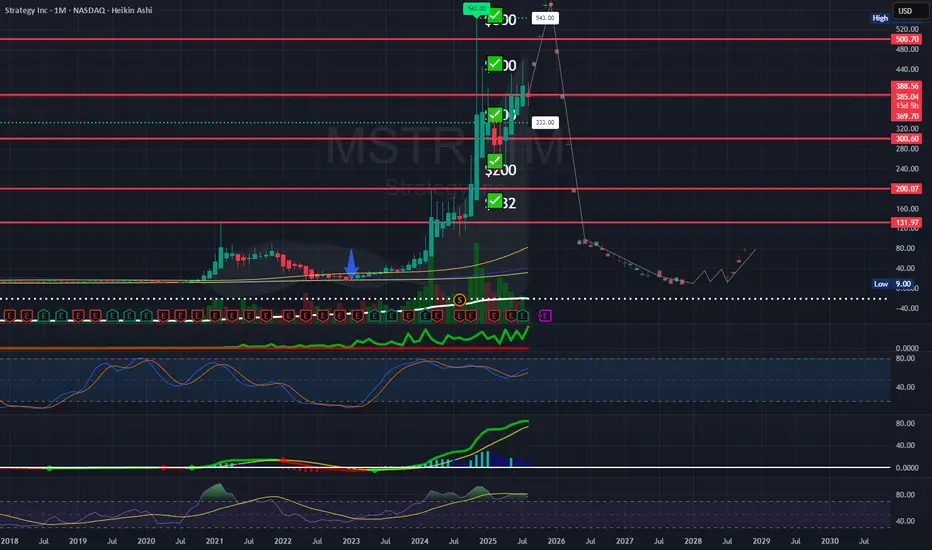
Strategy: The Convertible Trap
The Convertible Trap
Part One: The Architecture
December 2024
Marcus Chen stood before the floor-to-ceiling windows of his corner office on the 47th floor of One Manhattan West, watching the city blur into twilight. The Bloomberg terminal on his desk glowed with a constellation of green numbers—Bitcoin had just crossed $110,000, and MicroStrategy's stock was up another 15% for the day. As Chief Investment Officer at Sovereign Capital Management, overseeing $480 billion in assets, he'd seen every financial instrument imaginable. But what Michael Saylor and MicroStrategy were building was something else entirely.
"Marcus, you need to see this." Sarah Kozlowski, his senior analyst, burst through his door without knocking—a breach of protocol that meant something significant. She spread a series of charts across his Italian marble desk, her usually steady hands trembling slightly with excitement. "I've been modeling MSTR's convertible bond strategy for three weeks. It's not just clever—it's architecturally perfect."
Marcus studied the papers. MicroStrategy had issued another $2 billion in convertible bonds at 0.875% interest, due 2029. The bonds could convert to MSTR shares if the stock hit $1,000—currently trading at $450. The company would use every dollar to buy more Bitcoin.
"Explain it to me like I'm a client," Marcus said, though he understood perfectly well. He wanted to hear her reasoning.
Sarah pulled up a chair, her Princeton MBA and MIT engineering background evident in how she structured her explanation. "Think of it as a three-layer cake. Layer one: Institutions like us, State Street, Vanguard—we're legally restricted from holding Bitcoin directly. Our charters, our compliance departments, our insurance policies—they all prohibit direct cryptocurrency exposure."
"But they don't prohibit holding equities or corporate bonds," Marcus interjected.
"Exactly. Layer two: MicroStrategy becomes our proxy. They hold Bitcoin, we hold them. But here's where it gets beautiful—they've promised publicly, legally, repeatedly, that they will never sell a single Bitcoin. It's their core value proposition. They're a Bitcoin black hole."
Marcus walked to his window, processing. Twenty-three floors below, he could see the evening rush beginning on the Hudson River Greenway. Cyclists and joggers, oblivious to the financial architecture being constructed above them.
"Layer three?" he asked.
"The convertible bonds. We're calling them STRK internally—Saylor's Trap, Really, Kid—" Sarah smiled at the trader slang. "These aren't normal corporate bonds. They're a bet on MSTR reaching specific price targets. If MSTR hits $1,000, bondholders convert to equity. If not, they get their money back plus interest."
"And MicroStrategy uses the bond proceeds to buy more Bitcoin," Marcus said slowly, "which drives up their stock price because they're leveraged to Bitcoin's movement, which makes the conversion more likely, which attracts more institutional money to the bonds..."
"Which they use to buy more Bitcoin," Sarah finished. "It's a perpetual motion machine powered by institutional FOMO and regulatory arbitrage."
Part Two: The Believers
March 2025
The Sovereign Capital Management quarterly board meeting took place in the firm's pristine boardroom, with its Rothko paintings and panoramic views of the Hudson. Marcus presented to twelve board members, each representing different institutional stakeholders—pension funds, sovereign wealth funds, university endowments.
"We're recommending a $3 billion position," Marcus said, clicking through his presentation. "Split between MSTR equity and the convertible bonds."
Board member Patricia Thornton, former Federal Reserve governor, raised a manicured hand. "What's our downside protection?"
"The bonds provide a floor," Marcus explained. "Even if Bitcoin crashes, MicroStrategy owes us the principal plus interest. They have Bitcoin reserves worth $30 billion against $8 billion in convertible debt."
"Unless Bitcoin falls more than 70%," Patricia noted.
"Which has happened before," added James Park, representing the California State Teachers' Retirement System. "2022, Bitcoin fell from $69,000 to $16,000."
Marcus nodded. "True. But MicroStrategy's strategy has evolved. They're not just holding Bitcoin—they're the primary institutional gateway to Bitcoin. Every major fund that wants crypto exposure but can't hold it directly comes through them. They've become systemically important."
"Too big to fail?" Patricia's tone was skeptical.
"Too interconnected to fail," Marcus corrected. "State Street has $2 billion in MSTR. Vanguard has $3 billion. BlackRock, $4 billion. If MSTR fails, it takes down every institution's crypto allocation."
The board voted 10-2 to approve the investment.
That evening, Marcus met his old friend David Kim for drinks at The Campbell, a cocktail bar in Grand Central Terminal. David ran crypto strategy for Bridgewater Associates, the world's largest hedge fund.
"You're buying MSTR?" David asked, swirling his $30 Old Fashioned.
"Everyone is," Marcus replied. "You?"
"Ray Dalio thinks it's the greatest example of reflexivity he's ever seen. George Soros's theory made real—market participants' biased views shape market fundamentals, which shape views, which shape fundamentals..."
"Until?" Marcus prompted.
David was quiet for a moment, watching commuters rush past the bar's entrance. "Until the only way to maintain the reflexivity is to never sell. Ever. Saylor's created a roach motel for capital. Money checks in, but it can't check out."
Part Three: The Prophets
June 2025
The "Bitcoin Miami 2025" conference was a spectacle of excess. Marcus attended reluctantly, sent by his board to "understand the ecosystem." The Miami Beach Convention Center pulsed with electronic music, laser lights, and the energy of 50,000 true believers.
Michael Saylor's keynote was scheduled for prime time. Marcus found himself in the VIP section, surrounded by institutional investors trying to look casual in their business-casual interpretation of Miami wear—khakis and polo shirts that still screamed "Wall Street."
Saylor took the stage to thunderous applause. At 60, he looked energized, evangelical. Behind him, a giant screen showed MicroStrategy's Bitcoin holdings: 423,000 BTC, worth $52 billion at current prices.
"We are not a company," Saylor declared. "We are a Bitcoin bank for the institutional world. Every corporation, every pension fund, every sovereign wealth fund that cannot or will not hold Bitcoin directly—we are their bridge to the future."
The crowd roared. Marcus noticed Sarah in the row ahead, frantically taking notes.
"We will never sell," Saylor continued, his voice rising. "Not at $100,000. Not at $1 million. Not at $10 million per Bitcoin. MicroStrategy is where Bitcoin goes to live forever. We are the event horizon—once Bitcoin enters our treasury, it never leaves."
After the speech, Marcus found himself at an exclusive rooftop party, hosted by Galaxy Digital. The Miami skyline glittered around them, Biscayne Bay stretching to the dark Atlantic beyond.
"It's a cult," said a familiar voice. Marcus turned to find Christine Walsh, chief economist at the Federal Reserve Bank of New York, holding a mojito and looking deeply uncomfortable.
"Christine? What brings the Fed to Bitcoin Miami?"
"Systemic risk assessment," she said quietly. "We're tracking institutional exposure to crypto through MSTR. It's... significant."
"How significant?"
She glanced around, ensuring they weren't being overheard. "If you aggregate all the convertible bonds, equity holdings, and derivative exposure, the street has about $200 billion tied to MicroStrategy. That's not a company anymore, Marcus. It's a synthetic crypto ETF with no exit door."
"The SEC approved actual Bitcoin ETFs last year," Marcus pointed out.
"Which hold actual Bitcoin they can sell," Christine countered.
"MicroStrategy holds Bitcoin it claims it will never sell. What happens when bondholders want their money back, but selling Bitcoin would break the company's core promise?"
Before Marcus could answer, fireworks erupted over the bay, spelling out "BITCOIN" in golden sparks. The crowd cheered. Christine shook her head and disappeared into the party.
Part Four: The Mechanics
September 2025
Sarah's desk had become a command center for tracking the MSTR phenomenon. Six monitors displayed real-time data: Bitcoin price, MSTR stock, convertible bond prices, institutional holdings, social media sentiment, and blockchain analytics.
"Look at this," she called Marcus over one morning. "MSTR's beta to Bitcoin is now 2.8x. When Bitcoin moves 1%, MSTR moves 2.8%."
"That's the leverage," Marcus said. "They've borrowed to buy Bitcoin, so they're magnifying the moves."
"But watch this," Sarah pulled up a correlation chart. "The convertible bonds are creating a feedback loop. When Bitcoin rises, MSTR rises faster, making conversion more likely, so bond prices rise, so MicroStrategy can issue more bonds at better terms—"
"So they buy more Bitcoin," Marcus finished. "Show me the sensitivity analysis."
Sarah clicked through her models. "If Bitcoin hits $200,000, MSTR goes to approximately $2,000 per share. Every convertible bondholder converts to equity. MicroStrategy can issue new bonds against the higher equity value."
"And if Bitcoin falls to $50,000?"
Sarah's expression darkened. "MSTR drops to around $150. They'd owe $15 billion in bond principal against Bitcoin holdings worth $20 billion. Still solvent, but barely."
"What about $30,000?"
"Then they're underwater. They'd have to sell Bitcoin to pay bondholders, but—"
"But they've promised never to sell," Marcus said. "So they can't. They'd default instead?"
Sarah nodded. "Or find another way. Issue equity at crushed prices. Negotiate with bondholders. But once they break the 'never sell' promise, the entire thesis collapses."
Marcus studied the screens. Something felt familiar—dangerously familiar. He'd seen this kind of financial engineering before, in 2008, when mortgage-backed securities created similar feedback loops.
"Sarah, model one more scenario for me. What happens if several major institutions try to exit simultaneously?"
Her fingers flew across the keyboard. The model ran for several minutes, then displayed results that made them both step back.
"Cascade failure," Sarah whispered.
"If institutions holding 20% of MSTR try to exit, the selling pressure drops MSTR by 60%, triggering bond covenants, forcing Bitcoin sales, creating more selling pressure..."
"Print that out," Marcus ordered. "And schedule a meeting with risk management. Today."
Part Five: The Momentum
December 2025
Bitcoin crossed $200,000 on December 15th, 2025. The financial media called it the "Saylor Singularity"—MicroStrategy's holdings were worth $100 billion, making it one of the most valuable companies in the S&P 500 despite having only 2,000 employees and minimal revenue outside of Bitcoin appreciation.
Marcus watched the celebration from his office. On CNBC, analysts debated whether MSTR could reach $5,000 per share. On Bloomberg, Michael Saylor announced another $10 billion convertible bond offering—the largest in corporate history.
"The institutional demand is insatiable," Saylor told the interviewer. "We're giving the world's largest financial institutions what they want—Bitcoin exposure with a corporate wrapper. We're the bridge between the old financial system and the new."
Marcus's phone buzzed. David Kim from Bridgewater.
"You seeing this?" David asked without preamble.
"Watching Saylor on Bloomberg right now."
"No, check the blockchain. Someone just moved 50,000 Bitcoin from a wallet dormant since 2010."
Marcus pulled up the blockchain explorer. Sure enough, an ancient wallet—one of the original Bitcoin miners—had awakened. Fifty thousand Bitcoin, worth $10 billion at current prices, on the move.
"Satoshi?" Marcus asked, referring to Bitcoin's pseudonymous creator.
"Or someone from that era. Marcus, if original holders start selling into this rally..."
"They sell into MSTR's buying," Marcus said. "MicroStrategy is the buyer of last resort. They have to be—they've promised to buy Bitcoin with every dollar they raise."
"What if that's the point?" David's voice was strange. "What if the early Bitcoin holders have been waiting for someone like Saylor? Someone who would create a mechanism to buy their coins at any price, no questions asked?"
Marcus felt a chill despite his office's warmth. "You're suggesting this was planned?"
"I'm suggesting that anyone smart enough to create Bitcoin was smart enough to anticipate how institutions would eventually need to access it. And what better way to cash out tens of billions in Bitcoin than to create a buyer who publicly promises to never stop buying?"
Part Six: The Warning Signs
February 2026
The first crack appeared, as they often do, in an unexpected place. Turkey's central bank, facing a currency crisis, announced it would sell its Bitcoin reserves—50,000 coins accumulated since 2024. The market absorbed the selling initially, but then Iran announced similar plans, followed by Argentina.
Marcus convened an emergency meeting with his team.
"Sovereign sellers," he said, addressing the twelve analysts and traders gathered in the conference room. "We didn't model for this."
"MicroStrategy is buying," one trader reported. "They're deploying their latest bond proceeds. Taking everything the sovereigns are selling."
"At what price?" Marcus asked.
"Bitcoin's down to $180,000. MSTR is at $1,400, off 30% from the peak."
Sarah pulled up her models. "The February 2027 convertibles are now at risk. Strike price is $1,500. If MSTR doesn't recover, those bondholders will want cash, not equity."
"How much?"
"$4 billion in principal due."
Marcus did quick math.
"MicroStrategy would need to sell 22,000 Bitcoin to raise that cash."
"Which they won't do," Sarah said. "Can't do. The moment they sell a single Bitcoin, their stock goes to zero. Every institutional holder exits. The thesis breaks."
Patricia Thornton from the board called Marcus directly. "Are we hedged?"
"We've bought put options on MSTR," Marcus confirmed. "But Patricia, if MSTR fails, those puts might not pay. The counterparties are the same institutions that own MSTR. It's all interconnected."
"Systemic risk," Patricia said quietly.
"Like 2008."
"Worse," Marcus replied. "In 2008, the bad assets were mortgages on real houses. Here, the asset is Bitcoin—purely digital, purely psychological. If confidence breaks..."
He didn't need to finish.
Part Seven: The Unraveling
May 2026
The Bloomberg headline was stark: "MicroStrategy Bonds Trading at 70 Cents on Dollar as Bitcoin Slides."
Bitcoin had fallen to $120,000, down 40% from its peak. MSTR was at $800, down 60%. The mathematics were brutal and simple—leverage that magnified gains also magnified losses.
Marcus attended an emergency meeting at the Federal Reserve Bank of New York. The room was filled with the who's who of American finance—CEOs of major banks, heads of regulatory agencies, senior government officials.
Christine Walsh from the Fed led the meeting. "Total institutional exposure to MicroStrategy: $380 billion. That's direct holdings. Indirect exposure through derivatives and linked products: another $200 billion."
"They can just hold the bonds to maturity," suggested the CEO of JPMorgan. "Get paid back in cash."
"With what cash?" Christine asked. "MicroStrategy's business generates $500 million in annual revenue. They have $20 billion in convertible bonds outstanding. The only way they can pay is—"
"Selling Bitcoin," finished the Treasury Secretary. "Which they've promised never to do."
Michael Saylor appeared on the conference room screen via secure video link. Even through the pixelated connection, Marcus could see the strain on his face.
"Gentlemen, ladies," Saylor began, "MicroStrategy remains committed to our strategy. We will not sell Bitcoin. We have alternative financing options—"
"What options?" the JPMorgan CEO interrupted. "Your stock is down 60%. You can't issue equity at these levels. No one will lend to you."
"We're in discussions with sovereign wealth funds—"
"Who are selling Bitcoin themselves," the Treasury Secretary said. "Michael, the music has stopped. You need to sell Bitcoin to meet your obligations."
Saylor's jaw clenched. "The moment we sell, we destroy $380 billion in institutional value. Every fund that bought MSTR as a Bitcoin proxy loses everything. Is that what you want?"
The room fell silent. It was the ultimate prisoner's dilemma—everyone would be better off if MicroStrategy held, but MicroStrategy would be better off if it sold.
Part Eight: The Cascade
June 2026
The end came not with a bang, but with a spreadsheet.
MicroStrategy's CFO, under pressure from bondholders and facing personal liability, leaked an internal document showing the company's true financial position. Without Bitcoin sales, they could operate for three more months. The convertible bonds due in August couldn't be paid without liquidating Bitcoin.
The leak hit Reddit first, then Twitter, then the financial press. Within hours, MSTR was down 40%. Bitcoin, sensing weakness, fell 20%.
Marcus watched from his office as the cascade began. Funds that had bought MSTR on leverage faced margin calls. To meet them, they sold MSTR, pushing it down further, triggering more margin calls.
"It's 1987, 2008, and 2020 combined," Sarah said, standing beside him. "But faster. Everything's algorithmic now. The selling is automated."
By noon, MSTR was down 70% for the day. Trading was halted seventeen times. Each halt only increased the panic—buyers disappeared, knowing more selling was coming.
Then, at 2:47 PM Eastern Time, the announcement came:
"MicroStrategy Announces Strategic Bitcoin Sales to Ensure Financial Stability."
The press release was corporate speak for capitulation. They would sell 100,000 Bitcoin—roughly 20% of their holdings—to pay off near-term debt and establish a cash cushion.
The market's reaction was swift and brutal. If MicroStrategy was selling, everyone would sell. Bitcoin fell from $100,000 to $70,000 in an hour. MSTR stock, briefly halted, reopened down 85% from the morning.
Part Nine: The Reckoning
July 2026
The congressional hearing was held in the Rayburn House Office Building, the same room where they'd grilled bank CEOs after 2008. Michael Saylor sat alone at the witness table, facing forty-three members of the House Financial Services Committee.
"Mr. Saylor," the committee chair began, "your company's failure has resulted in over $400 billion in losses to institutional investors, pension funds, and retirement accounts. How do you explain this?"
Saylor leaned into the microphone. "MicroStrategy didn't fail. We adapted to market conditions. We still hold 400,000 Bitcoin—"
"Worth $30 billion at current prices," the chair interrupted. "Down from $100 billion. Your stockholders have lost everything. Your bondholders are being paid back at 30 cents on the dollar."
"The strategy was sound," Saylor insisted. "We created a mechanism for institutions to gain Bitcoin exposure—"
"You created a trap," the ranking member interjected. "A financial weapon of mass destruction, as Warren Buffett might say. Institutions couldn't buy Bitcoin directly, so they bought your promises. And when those promises broke..."
Marcus watched the hearing from his office—one of the few he still had. Sovereign Capital had survived, barely, by selling their MSTR position in January before the worst of the collapse. They'd lost $800 million but avoided the complete wipeout that befell others.
State Street: $2 billion loss.
Vanguard: $3 billion loss.
Various pension funds: $50 billion combined.
The numbers were staggering, but the second-order effects were worse. The collapse in Bitcoin and MSTR had triggered a broader market selloff.
Crypto-correlated stocks crashed.
Tech stocks, seen as speculative, fell 30%. Credit markets froze as institutions faced massive losses.
Part Ten: The Revelation
September 2026
Marcus met David Kim at a coffee shop in Greenwich Village, far from their usual Wall Street haunts. Both men had left their firms—Marcus to start a small advisory business, David to teach at Columbia.
"I've been analyzing the blockchain," David said, sliding a tablet across the table. "Look at this."
The screen showed Bitcoin wallet analytics—flows, timing, amounts.
"Remember those early wallets that woke up during the boom? They sold perfectly into MicroStrategy's buying. Almost like they knew exactly when and how much MSTR would buy."
Marcus studied the data. "You're suggesting coordination?"
"I'm suggesting something more elegant. What if Satoshi—or whoever created Bitcoin—understood that institutional adoption would require an intermediary? A bridge between the anarchist vision of cryptocurrency and the regulatory reality of institutional finance?"
"MicroStrategy," Marcus said slowly.
"Not specifically MicroStrategy, but something like it. Some entity that would promise to never sell, becoming a one-way valve for institutional capital. The early holders could sell into institutional buying, cashing out billions, while institutions got exposure to an asset they couldn't directly hold."
Marcus sat back. "But that would mean—"
"That Bitcoin was designed from the beginning as history's greatest liquidity extraction mechanism. Not a conspiracy, exactly. More like... intelligent design. Create a scarce digital asset, wait for institutional FOMO, provide a mechanism for them to buy but never sell, then cash out into their buying."
"That's insane," Marcus said.
"Is it?" David pulled up another chart. "Look at the net flows. Early Bitcoin holders—the ones from 2009 to 2013—cashed out $500 billion during the MicroStrategy boom. That money came from institutions, pension funds, retirement accounts. It was the greatest wealth transfer in history, from institutional capital to anonymous early adopters."
Marcus stared at the data. The pattern was undeniable.
Part Eleven: The New Normal
December 2026
Bitcoin stabilized around $50,000. MicroStrategy, restructured through bankruptcy, emerged as a small software company again, its Bitcoin holdings liquidated to pay creditors. Michael Saylor stepped down, his fortune evaporated, his legacy complicated.
The congressional committee issued a 400-page report recommending new regulations on corporate cryptocurrency holdings and convertible bond issuances. The SEC implemented strict rules on institutional crypto exposure. The era of financial engineering through crypto proxies was over.
Marcus stood in his new office—smaller, simpler, with a view of the East River instead of the Hudson. He was writing a book about the MicroStrategy phenomenon, trying to capture the madness and brilliance of it all.
His phone buzzed. Sarah, now running her own research firm.
"You see the news?" she asked.
"What now?"
"Some company in Singapore is issuing Bitcoin-backed bonds. They promise to hold Bitcoin forever, never sell. Institutions are interested."
Marcus laughed, dark and knowing.
"Different verse, same song."
"You think it'll happen again?"
Marcus looked out at the river, watching a container ship navigate toward the Atlantic. "The names change, the instruments evolve, but the pattern remains. Someone creates a mechanism to concentrate wealth while appearing to democratize it. Investors, driven by greed and FOMO, pile in. The machine runs until it can't. Then it collapses, and we promise never again."
"Until the next time," Sarah said.
"Until the next time."
Epilogue: The Historian
2030
Professor Marcus Chen stood before his graduate finance class at Columbia Business School. On the screen behind him: a chart of Bitcoin's price from 2009 to 2030, with the MicroStrategy era highlighted in red.
"The MicroStrategy collapse of 2026," he began, "represents a unique moment in financial history. It wasn't fraud, exactly—everything was disclosed. It wasn't illegality—regulators had approved it all. It was something more subtle: a system designed to fail profitably."
A student raised her hand. "Professor, do you think it was intentional? The whole Bitcoin-to-institutional-capital pipeline?"
Marcus considered the question he'd been pondering for four years. "Intent is hard to prove. But consider this: Bitcoin was created by someone or some group brilliant enough to solve the double-spending problem that had plagued digital currency for decades. They created a system that survived every attack, scaled beyond anyone's imagination, and eventually attracted trillions in institutional capital."
He clicked to the next slide, showing fund flows from 2024 to 2026.
"Is it so hard to believe they also anticipated how institutions would need to access Bitcoin? That they understood regulatory constraints would require intermediaries? That those intermediaries would create the perfect exit liquidity for early holders?"
The class was silent, absorbing the implications.
"The MicroStrategy story isn't just about one company or one man's obsession with Bitcoin. It's about how financial innovation can become financial extraction. How complexity can hide simple wealth transfers. How the promise of democratization can enable unprecedented concentration."
He clicked to his final slide: a quote from Satoshi Nakamoto's original Bitcoin whitepaper: "The traditional banking model achieves a level of privacy by limiting access to information to the parties involved and the trusted third party. The necessity to announce all transactions publicly precludes this method, but privacy can still be maintained by breaking the flow of information in another place: by keeping public keys anonymous."
"Perhaps," Marcus said, "the real innovation wasn't the anonymity of transactions, but the anonymity of the architects. They built a machine that would inevitably create its own exit liquidity, then disappeared before anyone understood what they'd built."
A student in the back called out, "So it was all a scam?"
Marcus smiled, the same ambiguous smile he'd worn since 2026. "No, not a scam. Something more elegant and more troubling. A system working exactly as designed, just not as advertised. The greatest magic trick in financial history—making institutional wealth disappear into anonymous wallets, and making everyone applaud the innovation while it happened."
The bell rang. Students filed out, discussing the lecture in hushed tones. Marcus remained, staring at the Bitcoin price chart, still wondering if he was seeing patterns that weren't there or missing patterns that were.
His phone buzzed. A news alert: "New DeFi Protocol Promises Institutional Gateway to Cryptocurrency 2.0."
Marcus shook his head and smiled. The machine was starting up again, with new gears, new levers, but the same essential mechanism—a one-way valve for institutional capital, a promise of revolution that delivered extraction.
He gathered his papers and left the classroom. Outside, New York hummed with its eternal energy, fortunes being made and lost, the next financial innovation always just around the corner.
In his pocket, his phone buzzed again. He didn't check it. He knew what it would say—someone, somewhere, was building the next MicroStrategy, the next bridge between institutional capital and digital assets. The next trap.
The cycle continued.
Nasdaq Signals Economic Instability – Are You Watching CloselyDear traders,
You may be witnessing a “first” — a pivotal moment right before things begin to spiral.
We’re not fortune tellers. We don’t claim to predict the future.
But what you’re about to read is based entirely on publicly available data, interpreted not through speculation, but through a deep, rational analysis of interconnected facts — the kind of connections that most overlook, and few dare to question.
We may not know how the future is being orchestrated behind the scenes...
But one thing seems certain: crisis always comes first... and then we are given a narrative to justify it — be it war, a pandemic, or a "global emergency."
This is the correct sequence... and it’s the one they never teach you.
Yet for those of us who navigate the financial markets, one question matters more than all others:
How do we profit from this?
We recently shared an important setup on the Nasdaq index, the benchmark that reflects — to a large extent — the true state of the U.S. economy.
As a proxy for the 100 largest American corporations, the Nasdaq plays a critical role in signaling macro trends.
And while some are just now waking up to the storm ahead, our outlook has been clear since October 2022:
A major economic crisis was not only probable… it was inevitable.
Some analysts chalk this up to uncontrolled money printing post-2019 as governments tried to patch the damage from the COVID-19 crisis. That’s one explanation.
But at Glich, our vision is different.
More complex.
And for now… not something we can fully release.
For years, strong correlations between risk markets — especially U.S. equities and crypto — held firmly in place.
But something changed on May 30th, 2025. Completely and unmistakably.
The link was severed.
Now ask yourself:
Why was Bitcoin created in the first place?
It wasn’t just digital money.
It was a bold, revolutionary idea. A system designed for a future economy no longer shackled by inflation, central banking failures, or hidden agendas.
A fluid, transparent, and secure network for a world in desperate need of change.
The current financial model is obsolete. It’s no longer evolving — just surviving.
And it can no longer answer the challenges of what's to come.
2008 was not the collapse; it was the setup. A convenient pretext to slowly roll out something new.
And "Satoshi Nakamoto"? Well, let’s just say...
That name means more than you think.
"HIDDEN INFORMATION" 👁️
What does NEO mean when he says:
"This has all happened before… yet it’s happening for the first time"?
And what does that have to do with us?
This analysis is not just about charts or setups.
It’s a hidden message — a spotlight on a once-in-a-generation opportunity lying in plain sight.
But not everyone is trained to read between the lines.
Let us ask:
Why was Donald Trump specifically pushed into position?
Why is crypto — after being suppressed, banned and attacked worldwide — now being quietly promoted and fast-tracked in legislation during 2024 and 2025?
Something’s moving beneath the surface.
🔍 In summary:
Expect a tidal wave of global crypto legislation to pass in the coming days/weeks/months.
Crypto — particularly BTC and ETH — will become silent stores of value during the economic storm.
Expect record-breaking levels:
400
K
f
o
r
B
i
t
c
o
i
n
∗
∗
,
∗
∗
400KforBitcoin∗∗,∗∗40K for Ethereum.
Yes, this may sound like science fiction…
But keep your eyes and ears wide open. 👁️
And brace yourself for a historic collapse in U.S. equities. Possibly… something we’ve never seen before.
The show is starting.
And we won’t spoil the ending — because watching it unfold is part of the experience.
But here’s what we can say, thanks to our proprietary algorithmic system:
The U.S. economy will bleed.
And crypto will blow past expectations — fulfilling the very purpose it was built for.
🛒 Load your bags in the coming days...
Because when this train leaves the station —
It won't be stopping for anyone.
DXY 1W Forecast until the end of MAY 2025Up-trend will resume and last until the end of February 2025 topping no higher than 114. Current bottom is in at 105.9
Hence, it shouldn't fall below.
After February a consolidation period of 1,5 months will trap price action between the bottom of 122.16 and upper level of 114.9
The spring squeezed during consolidation will provide enough energy for further upwards movement starting in the end of April 2025. This will ignite a chain of devaluation of national currencies followed by epidemic inflation across the globe. This will finish/cool-down at DXY reaching the mark of 148.
New reality after May 2025?
Gold Hits Fibonacci 3.618! What’s Next?GOLD (XAU/USD) Quick Analysis – April 2025
Gold just surged to $3,329/oz, reaching the Fibonacci 3.618 extension around $3,338 🚀
The trend remains strongly bullish, but the price is now extended far above key moving averages – signaling potential exhaustion.
Key Levels:
Support: $2,856 (Fibo 2.618)
Next Resistance: $3,635 (Fibo 4.236)
🧭 Outlook:
As long as price holds above $2,856 → the bullish structure remains intact
🎯 Strategy:
Wait for a healthy pullback → buy the dip near support
Or enter on a breakout-retest above $3,338 for potential continuation
US Small Companies Index ‘Russell 2000’ in Critical Trend!US Small Companies Index ‘Russell 2000’ in Critical Trend!
Let's take a look from a Fundamental and Technical perspective;
In 2020, the middle band (main trend line) of the logarithmic rising channel was broken and the upward movement had continued since then. Today, however, the same critical support level is being tested again.
If it cannot hold at this level, a long-term trend break may occur. This would significantly increase the risk perception in Russell 2000 companies.
What is Russell 2000?
It does not include large technology giants such as Nasdaq or S&P 500, but small and medium-sized companies that hold the real pulse of the US economy.
These companies are more fragile and more vulnerable to economic fluctuations.
The spread of anti-Trump protests shows that small businesses are starting to be affected both physically and economically.
The prospect of no interest rate cut by the Federal Reserve (FED) is crushing these companies under high borrowing costs.
The contraction in consumer spending can directly hit the profits of these companies because they are dependent on the domestic market.
Possible Scenarios for This Week:
🔴 If the protests deepen and the market panics:
If a break below $180 comes, the $170 support level is tested.
With panic sales, the $150 - $160 region, which is the lower band of the channel, may come to the agenda.
🟢If the environment calms down and economic data signals a recovery:
Strong purchases come from the middle trend line.
$200 - $210 band can be targeted.
In short, support is now being tested, if it breaks, the risk of serious decline is on the table.
Is the Euro's Stability a Mirage?The Euro Currency Index stands at a crossroads, its future clouded by a confluence of political, economic, and social forces that threaten to unravel the very fabric of Europe. Rising nationalism, fueled by demographic shifts and economic fragility, is driving political instability across the continent. This unrest, particularly in economic powerhouses like Germany, triggers capital flight and erodes investor confidence. Meanwhile, geopolitical realignments—most notably the U.S.'s strategic pivot away from Europe—are weakening the euro's global standing. As these forces converge, the eurozone's once-solid foundation appears increasingly fragile, raising a critical question: is the stability of the euro merely an illusion?
Beneath the surface, deeper threats loom. Europe's aging population and shrinking workforce exacerbate economic stagnation, while the European Union's cohesion is tested by fragmentation risks, from Brexit's lingering effects to Italy's debt woes. These challenges are not isolated; they feed into a cycle of uncertainty that could destabilize financial markets and undermine the euro's value. Yet, history reminds us that Europe has weathered storms before. Its ability to adapt—through political unity, economic reform, and innovation—could determine whether the euro emerges stronger or succumbs to the pressures mounting against it.
The path forward is fraught with complexity, but it also presents an opportunity. Will Europe confront its demographic and political challenges head-on, or will it allow hidden vulnerabilities to dictate its fate? The answer may reshape not only the euro's trajectory but the future of global finance itself. As investors, policymakers, and citizens watch this drama unfold, one thing is clear: the euro's story is far from over, and its next chapter demands bold vision and decisive action. What do you see in the shadows of this unfolding crisis?
Tracking Crisis with Stocks/Gold RatioGold Surges with Three Major Crises
Over the past 25 years, we have witnessed three significant financial crises: the Dot-Com Bubble, the 2008 Financial Crisis, and the recent 9% inflation crisis. In each of these events, a distinct pattern emerged—gold surged before the crisis reached its full intensity.
Historically, gold's price has experienced notable gains before economic downturns:
• Dot-Com Bubble: +34% surge
• 2008 Financial Crisis: +89% surge
• Inflation Crisis (2022): +24% surge
Currently, gold has surged 83% from its trough in November 2022. Given this historical correlation, could we be on the verge of another financial crisis?
Why Are Central Banks Stockpiling Gold?
This current gold rally bears similarities to past surges but also has a crucial distinction. While demand for gold remains strong, this time around, central banks are leading the charge in purchasing gold at an unprecedented rate since 2022.
Gold serves a dual function:
1. Inflation Hedge – A safeguard against inflation.
2. Currency Hedge – Protection against currency devaluation.
Central banks' aggressive gold acquisitions suggest expectations of prolonged inflation and currency instability. As fiat currencies weaken, inflationary pressures mount, reinforcing gold’s attractiveness as a safe haven asset.
Fundamental Indicators Paint a Cautionary Picture
A deeper dive into key economic indicators suggests a challenging outlook. Here are some red flags:
• Treasury Bonds in a Downtrend – Indicating a loss of confidence in long-term debt
securities.
• Interest Rates Remain High – Despite inflation cooling from 9% to 3%, borrowing
costs remain significantly higher than pre-2022 levels. Elevated interest rates place
pressure on businesses and, eventually, stock prices.
• Inflation Remains Stubborn – The lowest recorded inflation since the peak was 2.4%,
but it has now ticked back up to 3%. With ongoing tariff escalations, inflation could
reignite.
These fundamental factors indicate that financial markets remain vulnerable to shocks, reinforcing the case for cautious positioning.
The Technical Outlook: A Bullish Trend Still Holds
Despite fundamental concerns, technical analysis suggests that the current AI-driven market rally, which began after the introduction of ChatGPT, remains intact. A strong uptrend line connecting all major troughs continues to act as a support level.
Timing the Bear with the Crisis
The bond market is already signaling distress. If equity markets break below this well-established uptrend line, my strategy will shift dramatically. Instead of looking for buying opportunities on dips, I will pivot to selling on strengths, anticipating a market downturn.
My Trading Strategy: Still Buying on Dips
I have provided a daily chart with updated trendlines, marking key support and resistance levels. My trading approach will be guided by these levels to manage risk effectively.
Preferred Instruments: Outright futures and call options.
Market Outlook: Cautiously bullish.
While economic conditions warrant vigilance, technical indicators suggest that the bullish trend remains intact—until proven otherwise. Happy trading!
Please see the following disclaimer and information that you may find useful:
E-mini Nasdaq Futures & Options
Ticker: NQ
Minimum fluctuation:
0.25 index points = $5.00
Micro E-mini Nasdaq Futures & Options
Ticker: MNQ
Minimum fluctuation:
0.25 index points = $0.50
Disclaimer:
• What presented here is not a recommendation, please consult your licensed broker.
• My mission is to create lateral thinking skills for every investor and trader, knowing when to take a calculated risk with market uncertainty and a bolder risk when opportunity arises.
Trading competition: www.tradingview.com
Trading the Micro: www.cmegroup.com
CME Real-time Market Data help identify trading set-ups in real-time and express my market views. If you have futures in your trading portfolio, you can check out on CME Group data plans available that suit your trading needs www.tradingview.com
Tracking Crisis with This Ratio – US Markets vs GoldThese are the 3 major crisis over the last 25 years. The dot com, 08 and the recent 9% inflation crisis.
Before each crisis get into its full swing, I have observed there was a surge in gold.
In this tutorial, I will share:
1) Why a surge in gold before each crisis?
2) What are the key variables that we should be looking out for this year? and
3) I hope I don’t sound too ambitious in discussing how to time this move?
E-mini Nasdaq Futures & Options
Ticker: NQ
Minimum fluctuation:
0.25 index points = $5.00
Micro E-mini Nasdaq Futures & Options
Ticker: MNQ
Minimum fluctuation:
0.25 index points = $0.50
Disclaimer:
• What presented here is not a recommendation, please consult your licensed broker.
• Our mission is to create lateral thinking skills for every investor and trader, knowing when to take a calculated risk with market uncertainty and a bolder risk when opportunity arises.
Trading the Micro: www.cmegroup.com
CME Real-time Market Data help identify trading set-ups in real-time and express my market views. If you have futures in your trading portfolio, you can check out on CME Group data plans available that suit your trading needs www.tradingview.com
Fartcoin/UsdtBITGET:FARTCOINUSDT
🚨 **Fartcoin Price Update**:
Currently, **Fartcoin** is holding support at **0.4000** and **0.4764**. These levels are crucial for the price to stay above in order to maintain its momentum. 📉
⏳ **Wait for Retest**:
If you're interested in trading, it might be wise to wait for a **retest** of these support levels. If the price holds at these levels and doesn’t fall through, it could be a good entry point. 📊
🔮 **Future Resistance Levels**:
Once Fartcoin tests and confirms support, we can look out for **resistance levels** to be posted later, similar to how **Degen Coin** behaves. 🚀 These resistance levels will be important to monitor as the price moves upward. 📈
⚠️ **Not Financial Advice**:
Remember, this is not financial advice, just sharing insights. Always do your own research before making any decisions. 💡
DXY 1W Forecast until March 2025Consolidation below 106 will last until October 2024.
Breakout will happen in October peaking at 111-112 followed by a retest (mid November 2024 - January 2025).
Further upward movement + correction will happen in January-March 2025 between the top of 113-114 and the bottom of 105-ish.
Consecutive HH and HL will be followed by rapid increase in pace of changes: time will shrink and levels will expand.
This will mark the start of hard times of Greatest Depression in March 2025 sending all markets down and making USD the king.
When Do Breaking ATMs Signal More Than Just Technical Failure?In a fascinating twist of economic irony, Turkey's banking system faces a crisis not from a shortage of money, but from an overwhelming abundance of near-worthless banknotes. This peculiar situation, where ATMs physically break down from dispensing too many low-value bills, serves as a powerful metaphor for the broader economic challenges facing emerging markets in an era of hyperinflation.
The numbers tell an extraordinary tale: a 700% currency depreciation since 2018, 80% of circulating notes being the highest denomination available, and a stark disparity between official inflation rates of 49% and independent estimates of 89%. Yet perhaps most intriguing is the government's reluctance to print larger denominations – a psychological barrier rooted in the traumatic memory of million-lira notes from the 1990s. This resistance to adaptation, despite the obvious operational strain on the banking system, raises profound questions about the role of political psychology in economic policy-making.
What emerges is a complex narrative about the intersection of technological capacity, monetary policy, and human psychology. As Turkish banks spend entire days counting money for simple transactions and regulators continuously delay implementing hyperinflationary accounting standards, we witness a unique case study of how modern financial systems can be overwhelmed not by sophisticated cyber threats or market crashes, but by the sheer physical weight of devalued currency. This situation challenges our traditional understanding of banking crises and forces us to reconsider the practical limits of monetary policy in an increasingly digital age.
Is Gold signalling a crisis? Gold is going parabolic and typically that doesnt mean a good thing.
Now there are many reasons this could be rallying and likely a combination of the few.
- Fed Rate Cut
- Geo political tension
- Weak Fiat currencies
- Currency Crisis
- Weakening economies
In a time where gold enters these monthly extreme RSI moves it typically signals a good time to start trimming.
Gold usually goes through a multi month correction but this could also spill into other asset classes.
As the steepening effect on the 10y/2y finally was confirmed today, large macro implications could follow and this is exactly what Gold confirmed this week.
England's Economic Crossroads and Banking ResilienceEngland’s economy is facing a complex array of challenges, driven by domestic social unrest, geopolitical tensions, and evolving labor dynamics. Recent riots, sparked by both marginalized Muslim communities and extreme right-wing groups, highlight deep-seated socio-economic issues. These tensions have been exacerbated by international events, such as the October 7, 2023, incident in Israel, which reverberated through England's Muslim community.
In addition to these social and geopolitical pressures, the economic indicators present a mixed picture. Inflation, unemployment, and a housing crisis have strained the economy, while regional conflicts, such as the Middle East and Russia-Ukraine wars, pose further risks to energy prices, trade, and security.
Amidst this backdrop, the Bank of England’s recent declaration that top UK lenders can be dismantled without taxpayer bailouts is a significant milestone. This statement reflects the progress made since the 2008 financial crisis in enhancing the resilience of the UK banking system through stricter capital requirements and resolvability assessments. However, emerging risks such as climate change, cyberattacks, and global financial interconnectedness require continuous vigilance and robust regulation.
Inspiration and Challenge:
As traders and investors, understanding the interplay between social dynamics, geopolitical tensions, and financial stability is crucial. England’s current economic state challenges us to think beyond traditional metrics and consider the broader implications of regional conflicts and social unrest on financial markets. The resilience of the UK banking system offers a glimmer of stability, but it also calls for ongoing scrutiny of emerging risks. Engage with this analysis to deepen your strategic insights and navigate the complexities of the global economic landscape.
#NIKKEI 225 - Is a world economic crisis coming?#NI225 #NIKKEI 225 Japan Stock Exchange
First of all, let me start by stating that the graph is based on 3-Month data
I have detailed all the necessary notes on the chart.
The white trend line is the balance zone. Below and above it caused completely different reasons as can be seen.
With the beginning of 2024, the mismatch on the RSI side signaled that it would fall. Therefore, a serious profit was realized.
Perhaps the first steps of a major crisis may have been taken as Japan raised interest rates for the first time since 1997 and the Japanese Yen was recalled to the country.
Is the crash here?Throughout all of social media and YouTube I've been seeing many people panicking if weather or not we have topped and should start selling. One thing that I've learned predicting mayor world events is to: always play it on the safe side when dealing with uncertainty. Instead of shorting the market, I prefer reducing my exposure, as short trades are extremely risky, and I've personally learned that the hard way. It is true that price action is now at an infliction point. With a vast amount of stocks entering a downtrend in such a harsh manner. It is not hard to see why everyone is panicking. Do I think this is the crash we've been waiting for? Perhaps it is, but I can't tell with certainty because even tough price is over extended, it does have a lot of structure supporting it.
The reason we are at an infliction point is due to the price action reaching the 25MA which many times is used as support or resistance and going below this threshold would for sure confirm a downtrend and with my Mean Returns indicator the story is the same. We are seeing a loss in momentum after having a very bullish push in the last years.
With all the recent news in the U.S. election, it is fascinating to see the market react to these mayor events. These do change the scope of how the market should behave, as a lot of uncertainty has just been introduced to the U.S. population in general. This lack of knowing what the future hold in store is what I believe to be the driving force of this recent downtrend. Combined with increasingly worsening economic fundamentals is what will give us the crash we are waiting for. But before making a decision on how to trade, it's important to consider all possible outcomes. Which is exactly what you can see in the graph. Where I've marked what different price action would mean to the economy and the market in general, as well as setting a trading plan for all of these outcomes.
This type of panicking is what leads me away from using stop losses. People panic and push prices violently. However, many times the analysis was correct from the start but hitting a stop loss gets you to close your position prematurely. That's why I define several entry levels and dollar cost average since the beginning. Using an equation to determine how much should I invest, at which levels to determine the correct amount of exposure to avoid missing out and to always have a favorable average price.
A cyclical historyWe have all heard that the economy works in cycles, and so does the market. But what does this truly mean? Has anyone actually been able to show you where you can see these cycles occur? Well, here is a great graph that will show you how. By looking at the 6-month time frame, the percentages of stocks above the 20 daily MA, you are achieving 2 things.
Seeing price action at the timeframe used to declare technical recessions
Seeing the percentage of stocks in a short term uptrend or downtrend as the complement is also true
Here it's quite easy to see how an important world event unfolded with a clear, repeatable pattern. When the percentage oscillates heavily, it allows for many technical resets, causing a healthy uptrend when the percentage returns to above 50% by the end of the semester. Another patter is that after a period of over-performance, a period of under-performance is followed and vice versa.
When looking at world events, just remember at the end of the day we are all a number in a larger scheme. And the laws of statistics will end up controlling our outcomes, as there must be balance in all binomial systems. Even when biases can be present in distributions, the more we generalize and zoom out, the more we can see the statistical convergences in human behavior. At the end of the day, our lives are influenced by fractals, some of which we are not even aware exist.
DXY 1W long-term view for future referenceCurrently Dollar is expected to grow for 2 consecutive weeks up to the level of 107 followed by a cooldown period and classic correction ending in the last week of October 2023 at level 100-101.
Starting from November 2023 Dollar seems to be having a powerful boost rising for 5 months up to 113 in mid March 2024.
Something is going to happen in November, isn't it?
DAX, will the next crisis end the current phase?Hello everyone,
this is not a usual trading analysis. So don't take any trades from monthly levels, as you can't manage the risk at all. What you can see is my try to figure out how the DAX went through different states of price development and really interesting to see is, that every big crisis ended one phase and opened a new one.
In my point of view we are currently at the way to the upper boundary of the recent phase and should reach it within the next year. The question is, where will the price finally find a solid ATH and start to correct? According to my last daily analysis a strong zone could be around 17.600, but if the economy is holding really strong into next years, higher prices are possible of course.
If you want to be in the big short trade, that I'm anticipating from the upper boundary, you have to wait patiently for a fundamental crisis, which has more impact than the banking crisis, energy crisis or the current wars, as they didn't stop the price for a long time.
The only reason I can anticipate for now is a comeback of high inflation with even higher interest rates, that end up in a big recession and the consequences for the banking and financial system. I will monitor this scenario next year, especially the month february and march are likely to offer crisis potential.
Hut 8 Shuts Down Alberta Bitcoin Mine Amid Energy CrisisHut 8 Mining Corp ( NASDAQ:HUT ), a prominent player in the cryptocurrency mining industry, faces the harsh reality of the energy crisis as it announces the immediate closure of its Bitcoin mining facility in Drumheller, Alberta, Canada. The decision, driven by escalating energy costs and power disruptions, underscores the challenges confronting miners in today's volatile market environment.
The Drumheller site, once a cornerstone of Hut 8's ( NASDAQ:HUT ) operations, now symbolizes the struggle against the mounting pressures of the energy crisis. CEO Asher Genoot's acknowledgment of elevated energy costs and voltage issues reflects the harsh economic realities that have forced the company's hand in shutting down operations. In a strategic pivot, Hut 8 plans to relocate its Bitcoin miners to its Medicine Hat facility, seeking refuge in a more stable operating environment.
The closure of the Drumheller site echoes broader trends in Alberta's energy landscape, characterized by soaring electricity prices and regulatory scrutiny over cryptocurrency mining projects. The province's 1,000% increase in electricity prices since 2017, coupled with government concerns over power usage, has cast a shadow over the viability of mining operations. The looming Bitcoin halving event adds another layer of complexity, further dampening profitability prospects for miners already grappling with market uncertainties.
Hut 8's ( NASDAQ:HUT ) financial woes mirror the challenges confronting the cryptocurrency market at large. A 57% decline in revenue for the first nine months of 2023 reflects the downward pressure exerted by falling Bitcoin prices. Despite these setbacks, Hut 8 ( NASDAQ:HUT ) remains a formidable presence in the Bitcoin network, contributing significantly to its processing power.
In addition to operational challenges, Hut 8 ( NASDAQ:HUT ) has weathered scrutiny in the financial markets. Allegations of legal issues involving its partner, USBTC, in a $725 million merger deal rattled investor confidence, leading to a sharp decline in the company's stock. Hut 8 ( NASDAQ:HUT ) has vehemently refuted these claims, emphasizing its commitment to transparency and integrity amidst turbulent times.
As Hut 8 ( NASDAQ:HUT ) navigates the tumultuous waters of the energy crisis and regulatory challenges, resilience and adaptability emerge as crucial survival traits. The closure of the Drumheller site marks a strategic retreat in the face of adversity, but the company remains poised to overcome obstacles and seize opportunities in the evolving cryptocurrency landscape. With a steadfast commitment to innovation and sustainability, Hut 8 charts a course towards a brighter, more resilient future in the world of digital mining.