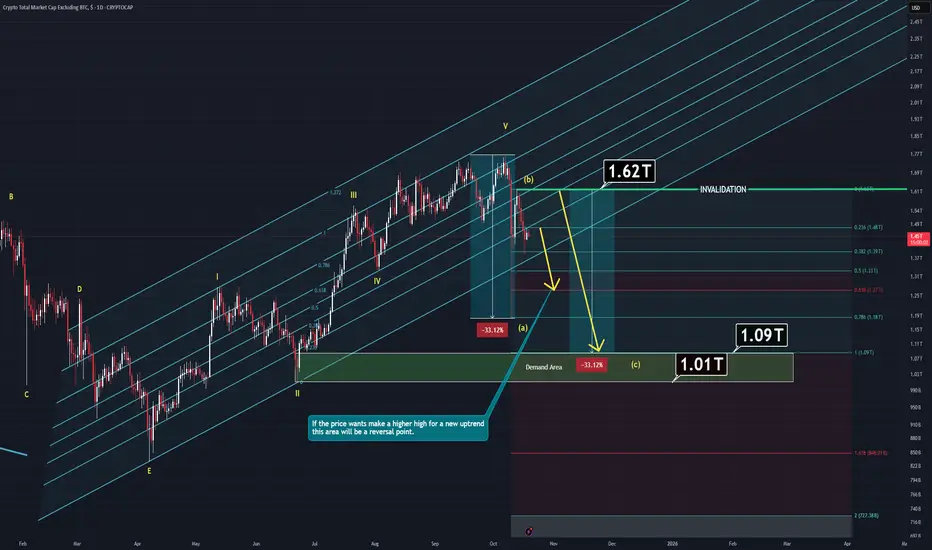
FinEco For Dummies | The Economic Eco-System Simplified🟢 Intro For Financial Economics & The Financial Eco-Sytem For Dummies
This little book is not about predictions or strategies.
It’s about understanding how financial markets connect, interact, and move together.
If you can read capital flows, risk appetite, and macro relationships,
markets stop feeling random and start making sense.
Financial markets are a system.
Money flows between assets based on risk, growth, inflation, and policy.
This book explains those relationships in simple terms,
so you can understand the environment before making decisions.
Most traders focus on charts.
Few understand the environment those charts live in.
This little book lays out a simple framework for reading market conditions,
capital rotation, and risk behavior, without strategies or hype.
This is a foundation, not a strategy.
A simple guide to how stocks, bonds, currencies, commodities, and crypto
fit together inside the global financial system.
Markets are not random.
They react to incentives, risk, and expectations.
This book helps you see those forces clearly.
🟢 1 - The Big Picture: Markets as a Flow System
Before charts, indicators, or trades, financial markets should be understood as a system of flows, not isolated instruments. Every market, stocks, bonds, currencies, commodities, crypto, etc is simply capital moving between buckets. Nothing trades in a vacuum. When money flows into one place, it must flow out of another.
-
➡️ The Core Idea
Markets are a constant process of:
- Allocation
- Re-allocation
- Risk assessment
Investors are always asking, consciously or not:
“Where do I want my money to park right now?”
The answer changes with:
- Economic expectations
- Central bank policy
- Inflation / deflation fears
- Financial stability
- Geopolitical stress
- Liquidity conditions
Price is just the result of those decisions.
Risk Is the Organizing Principle
At the highest level, all markets organize around risk.
Capital rotates between:
- Risk-on assets → growth, leverage, expansion
- Risk-off assets → safety, preservation, defense
This is not emotional.
It is structural.
Institutions manage:
- Mandates
- Drawdowns
- Volatility targets
- Capital requirements
They must rotate.
-
➡️ The Two Master Regimes
Most market behavior can be simplified into two regimes:
➡️ 1. Risk-On Environment
Characteristics:
- Optimism about growth
- Liquidity is abundant
- Credit flows easily
- Volatility is tolerated
Money prefers:
- Equities (especially growth)
- High beta sectors
- Small & mid caps
- Emerging markets
- Cyclical commodities
➡️ 2. Risk-Off Environment
Characteristics:
- Uncertainty or stress
- Liquidity tightens
- Credit risk rises
- Volatility is avoided
Money prefers:
- Government bonds
- Strong reserve currencies
- Defensive equities
- Gold
- Cash equivalents
Most of the time, markets live between these two, rotating, not flipping instantly.
➡️ Why This Matters for Trading
If you don’t know which regime you’re in, technical setups lose meaning.
A perfect long breakout:
- Works beautifully in risk-on
- Fails constantly in risk-off
A short breakdown:
- Accelerates in risk-off
- Gets absorbed in risk-on
Your job is not to predict the future.
Your job is to identify the current state.
-
🟢 2 - Capital Rotation: How Money Actually Moves
Markets do not rise or fall as one unified object.
They rotate.
Capital is constantly shifting between:
- Sectors
- Asset classes
- Regions
- Risk profiles
This rotation is not random. It follows incentives.
-
➡️ Rotation vs Direction
A common beginner mistake is thinking:
“The market is bullish or bearish.”
In reality, markets are often:
- Bullish somewhere
- Bearish somewhere else
While headlines say “stocks are flat,” money may be:
- Leaving defensives
- Entering growth
- Rotating from large caps into small caps
- Moving from bonds into equities
- Or the opposite
Understanding where money is going matters more than knowing the index direction.
-
➡️ Why Rotation Exists
Large institutions:
- Cannot move all at once
- Cannot hold everything
- Must rebalance constantly
They rotate because of:
- Changing growth expectations
- Interest rate shifts
- Inflation outlook
- Volatility targets
- Risk management rules
This creates waves, not straight lines.
-
➡️ The Economic Cycle (Simplified)
While real life is messy, capital often behaves as if it follows a loose cycle:
Early Expansion
- Rates low or falling
- Liquidity improving
- Confidence returning
Capital prefers:
- Small caps
- Cyclicals
- Growth sectors
- High beta assets
Mid-Cycle
- Growth strong
- Earnings expanding
- Rates stable or slowly rising
Capital prefers:
- Large caps
- Technology
- Industrials
- Consumer discretionary
Late Cycle
- Inflation concerns
- Rates restrictive
- Margins pressured
Capital rotates into:
- Energy
- Materials
- Value
- Financials (if yield curve allows)
Stress / Contraction
- Growth uncertainty
- Credit risk rising
- Liquidity tightening
Capital hides in:
- Defensives
- Bonds
- Gold
- Cash (Liquidity tightening)
This is not a checklist, it’s a lens.
-
➡️ Why Broad Sector ETFs Matter
Broad ETFs allow you to:
- Observe rotation in real time
- See what is being rewarded
- Identify what is being abandoned
They act as market thermometers.
A single stock can lie.
A sector rarely does.
-
➡️ Relative Strength Is the Tell
The most important question is not:
“Is this going up?”
But:
“Is this outperforming other places capital could go?”
Outperformance = demand
Underperformance = avoidance
This relative behavior often appears before major market pivots.
-
➡️ Setting the Stage
From here, we’ll start breaking the market into functional blocks:
- Broad indices
- Sector ETFs
- Bonds
- Currencies
- Hard assets
- Others
Each block tells a different part of the story.
-
🟢 3 - Broad Market Structure: Who Leads, Who Follows
Before zooming into sectors, it’s critical to understand the hierarchy of the equity market itself.
Not all stocks matter equally.
Not all indices send the same signal.
Markets have leaders and followers.
-
➡️ The US Equity Market as a Pyramid
At the top of the pyramid sit the largest, most liquid companies.
At the bottom sit smaller, more fragile, higher-risk firms.
Large Caps
- Highly liquid
- Globally owned
- Institutional core holdings
They represent:
- Stability
- Capital preservation with growth
- Confidence in the system
Mid Caps
- More domestic exposure
- More growth-sensitive
- Less balance-sheet protection
They represent:
- Expansion
- Risk tolerance
- Economic optimism
Small Caps
- Least liquid
- Most rate-sensitive
- Highly dependent on credit conditions
They represent:
- Risk appetite
- Liquidity abundance
- Speculation tolerance
-
➡️ Why Size Matters
When confidence rises:
- Capital flows down the pyramid
- Large → Mid → Small
When stress appears:
- Capital flows up the pyramid
- Small → Mid → Large → Cash
This movement often happens before headlines change.
➡️ Reading the Market Through Indices
Broad indices act as regime filters:
SPY (S&P 500)
Represents large-cap US equity exposure
- Dominated by mega-cap tech and financials
Strength here means:
- Core capital is comfortable staying invested
- The system is stable enough to hold risk
RSP (Equal-Weight S&P 500)
Removes mega-cap dominance
- Shows participation breadth
If SPY rises but RSP lags:
- Leadership is narrow
- Risk is concentrated
- The rally is fragile
If RSP leads:
- Participation is broad
- Confidence is healthy
- Moves are more sustainable
-
➡️ Breadth Is Not a Detail - It’s a Warning System
Strong markets:
- Many stocks participating
- Many sectors contributing
- Leadership rotates smoothly
Weak markets:
- Few leaders
- Defensive hiding
- Sudden rotation spikes
Breadth deterioration often appears long before price collapses.
-
➡️ Why This Matters for Everything Else
Equity leadership sets the tone for:
- Sector performance
- Currency flows
- Bond behavior
- Commodity demand
If equities are unhealthy internally, risk assets elsewhere struggle to hold gains.
-
➡️ Key Takeaway
Markets don’t break all at once.
They weaken from the inside out.
If you learn to read:
- Size
- Breadth
- Leadership
You stop reacting and start anticipating.
-
🟢 4 - Sector ETFs: Reading the Economy Through Capital
KRE — Regional Banks
US regional banks, credit-sensitive, domestic lending.
Best in: Early recovery, rate cuts, steepening yield curve.
Struggles in: Tight liquidity, stress, rising defaults.
ITB — Homebuilders
US residential construction and housing demand.
Best in: Falling rates, easing financial conditions.
Struggles in: Rising yields, affordability stress.
SMH — Semiconductors
Global chipmakers, cyclical growth, capex-driven.
Best in: Expansion, liquidity growth, tech-led cycles.
Struggles in: Hard slowdowns, demand shocks.
XME — Metals & Mining
Steel, miners, raw materials.
Best in: Reflation, infrastructure cycles, USD weakness.
Struggles in: Deflation, global slowdown.
XLRE — Real Estate
REITs, income and rate-sensitive assets.
Best in: Falling yields, stable growth.
Struggles in: Rising rates, credit stress.
XLY — Consumer Discretionary
Non-essential spending (retail, autos, leisure).
Best in: Strong consumer, expansion phases.
Struggles in: Recessions, confidence drops.
EBIZ — E-Commerce / Digital Consumption
Online retail and digital consumer platforms.
Best in: Growth + digital shift, USD weakness.
Struggles in: Consumer pullbacks, tightening liquidity.
XLK — Technology
Large-cap US tech, growth and duration exposure.
Best in: Liquidity expansion, falling rates.
Struggles in: Tight policy, rising real yields.
XLE — Energy
Oil & gas producers and services.
Best in: Reflation, supply constraints, USD weakness.
Struggles in: Demand destruction, growth shocks.
XLB — Materials
Chemicals, construction materials, inputs.
Best in: Early-cycle recovery, reflation.
Struggles in: Late-cycle slowdowns.
RSP — Equal-Weight S&P 500
Broad market without mega-cap dominance.
Best in: Healthy, broad-based expansions.
Struggles in: Narrow leadership, defensive markets.
SPY — S&P 500
US large-cap benchmark.
Best in: Most regimes, reflects overall risk appetite.
Struggles in: Systemic shocks.
XLI — Industrials
Manufacturing, transport, capital goods.
Best in: Expansion, infrastructure, global growth.
Struggles in: Recessions, trade slowdowns.
XLF — Financials
Banks, insurers, financial services.
Best in: Steep yield curve, economic growth.
Struggles in: Credit stress, inverted curves.
XLC — Communication Services
Media, telecom, platforms.
Best in: Growth environments, ad spending cycles.
Struggles in: Economic slowdowns.
IGV — Software
Enterprise software and digital services.
Best in: Liquidity expansion, productivity cycles.
Struggles in: Rate shocks, valuation compression.
XLV — Healthcare
Pharma, biotech, medical services.
Best in: Defensive regimes, late cycle.
Struggles in: High-risk-on rotations.
XLU — Utilities
Regulated utilities, income-focused.
Best in: Risk-off, falling yields.
Struggles in: Rising rates, strong growth cycles.
XLP — Consumer Staples
Essentials (food, household goods).
Best in: Defensive, late-cycle, risk-off.
Struggles in: Strong risk-on rotations.
Once you understand broad market structure, the next layer is sectors.
Sector ETFs are not just industries.
They are expressions of economic belief.
Each sector answers a different question:
- Growth or safety?
- Inflation or deflation?
- Rates up or rates down?
- Confidence or caution?
By watching sector behavior, you can see what investors are preparing for, not what they are reacting to.
-
➡️ Sectors as Economic Sensors
Sectors move differently because:
- They respond differently to rates
- They depend differently on credit
- They react differently to inflation and demand
This makes them ideal tools for:
- Identifying rotation
- Confirming or rejecting index moves
- Spotting regime changes early
➡️ 1. Risk-Oriented Sectors (Risk-On)
These sectors perform best when:
- Liquidity is abundant
- Growth expectations are rising
- Investors are willing to take risk
Technology - XLK / IGV / EBIZ
- Growth-driven
- Highly rate-sensitive
- Dependent on future earnings
Strength implies:
- Falling or stable rates
- Confidence in innovation and growth
- Risk-on environment
Weakness implies:
- Rising real yields
- Liquidity stress
- De-risking behavior
Consumer Discretionary - XLY
- Depends on consumer confidence
- Sensitive to employment and credit
Strength implies:
- Healthy consumers
- Economic expansion
- Optimism about income growth
Weakness implies:
- Caution
- Demand slowdown
- Household stress
➡️ Cyclical / Expansion Sectors
These sectors benefit from economic activity itself.
Industrials - XLI
- Linked to manufacturing and infrastructure
- Sensitive to growth and capex cycles
Strength implies:
- Expansion
- Business investment
- Trade and logistics activity
Materials - XLB / Metals & Mining - XME
- Sensitive to inflation and construction
- Linked to global demand
Strength implies:
- Rising inflation expectations
- Commodity demand
- Late-cycle or reflation themes
Energy - XLE
- Tied to inflation and geopolitics
- Sensitive to supply constraints
Strength implies:
- Inflation pressure
- Tight energy markets
- Often late-cycle behavior
-
➡️ 2. Defensive Sectors (Risk-Off)
These sectors attract capital when:
- Growth is uncertain
- Volatility rises
- Preservation matters more than return
Healthcare - XLV
- Inelastic demand
- Stable cash flows
Strength implies:
- Defensive rotation
- Risk reduction
- Uncertainty ahead
Consumer Staples - XLP
- Everyday necessities
- Low growth but high stability
Strength implies:
- Capital hiding
- Caution
- Late-cycle or stress environment
Utilities - XLU
- Yield-oriented
- Rate-sensitive
Strength implies:
- Demand for safety and income
- Falling rates or risk-off mood
-
➡️ Interest-Rate Sensitive Sectors
Some sectors are less about growth and more about rates.
Real Estate - XLRE
- Highly sensitive to interest rates
- Dependent on financing costs
Strength implies:
- Falling or stabilizing rates
- Yield-seeking behavior
Weakness implies:
- Rising rates
- Credit stress
Financials - XLF / KRE
- Banks reflect system health
- Credit creation and yield curve dependent
Strength implies:
- Healthy lending environment
- Confidence in the financial system
Weakness implies:
- Credit stress
- Yield curve pressure
- Systemic caution
-
➡️ Breadth and Rotation Inside Sectors
A healthy market:
- Multiple sectors leading
- Smooth rotation
- No single sector carrying the index
An unhealthy market:
- Narrow leadership
- Defensive outperformance
- Violent sector rotations
-
➡️ Key Takeaway
Sectors tell you why the market is moving.
Index price tells you that it moved.
Sector behavior tells you what investors believe.
-
➡️ Market Regime Cheat-Sheet
How to Read Sector ETFs in Context
🟢 Risk-On / Expansion
Liquidity flowing, growth rewarded
SMH — Semiconductors (cyclical tech leadership)
XLK — Technology (liquidity + duration)
IGV — Software (productivity, growth)
XLY — Consumer Discretionary (strong consumer)
EBIZ — E-Commerce (digital spending)
XLC — Communication Services (ads, platforms)
Macro backdrop:
- Falling or stable rates
- Easy financial conditions
- Weak or stable USD
- Strong equity breadth
-
🟡 Reflation / Early Cycle
Growth + inflation expectations rising
XLE — Energy (oil, supply constraints)
XME — Metals & Mining (raw materials)
XLB — Materials (inputs, construction)
XLI — Industrials (capex, infrastructure)
ITB — Homebuilders (rate relief + demand)
Macro backdrop:
- Inflation stabilizing or rising
- USD weakness
- Yield curve steepening
- Commodity strength
-
🔵 Broad & Healthy Market
Participation matters more than leaders
RSP — Equal-Weight S&P 500
SPY — Market benchmark
Macro backdrop:
- Balanced growth
- No extreme policy pressure
- Internal market strength
- Rotation instead of liquidation
-
🟠 Financial Sensitivity
Rates, credit, curve shape matter
XLF — Financials (steep curve, growth)
KRE — Regional Banks (credit health)
XLRE — Real Estate (rate sensitivity)
Macro backdrop:
Rate cuts help
Credit stability required
Stress shows early here
-
🔴 Defensive / Risk-Off
Capital preservation, not growth
XLV — Healthcare
XLP — Consumer Staples
XLU — Utilities
Macro backdrop:
- Tight liquidity
- Economic uncertainty
- Rising volatility
- Capital rotates, doesn’t disappear
How to Use This Cheat-Sheet:
- Leadership = regime signal
- Rotation ≠ crash
- Defensives leading = caution
- Cyclicals + tech leading = expansion
- Banks & housing weaken first in stress
-
🟢 5 - Bonds and Central Banks: The Gravity of Markets
If equities are the expression of confidence,
bonds are the constraint.
No market ignores bonds for long.
Interest rates determine:
- The cost of money
- The price of leverage
- The value of future cash flows
- The tolerance for risk
This makes bonds the gravitational force of financial markets.
-
➡️ Why Bonds Matter More Than Headlines
Stocks can stay irrational for a while.
Bonds can not.
Bond markets are dominated by:
- Institutions
- Governments
- Pension funds
- Central banks
They reflect:
- Inflation expectations
- Growth expectations
- Trust in policymakers
When bonds move, everything else eventually follows.
-
➡️ US Treasuries - The Global Benchmark
US Treasuries are the foundation of:
- Global pricing
- Risk-free rates
- Collateral systems
Rising yields mean:
- Tighter financial conditions
- Higher discount rates
- Pressure on growth assets
Falling yields mean:
- Easier conditions
- Support for risk-taking
- Relief for leveraged assets
-
➡️ Short-Term vs Long-Term Yields
The shape of the yield curve matters.
Rising short-term yields:
- Reflect central bank tightening
- Increase funding stress
- Pressure equities and credit
Rising long-term yields:
- Reflect inflation or growth expectations
- Hurt duration-sensitive assets
- Strengthen the currency
Falling long-term yields:
- Signal slowing growth or stress
- Support defensives and gold
-
➡️ The Federal Reserve - Liquidity Manager
The Fed does not control markets directly.
It controls liquidity conditions.
Through:
- Policy rates
- Balance sheet operations
- Forward guidance
The Fed influences:
- Risk appetite
- Credit creation
- Volatility tolerance
Markets often move in anticipation of Fed actions, not after them.
-
➡️ Japan: The Silent Anchor (BoJ & JGBs)
Japan plays a unique role in global markets.
- Ultra-low rates
- Yield curve control history
- Massive domestic savings
Japanese bonds (JGBs) act as:
- A funding benchmark
- A pressure valve for global yields
When Japanese yields rise:
- Global yields tend to follow
- Yen strengthens
- Risk assets feel pressure
This is why Japan matters even if you don’t trade it directly.
-
➡️ Fed vs BoJ - A Critical Relationship
When:
- US rates rise
- Japanese rates stay suppressed
Capital flows:
- Into USD
- Out of JPY
- Into risk assets funded by cheap yen
When that gap narrows:
- Carry trades unwind
- Volatility increases
- Risk assets struggle
-
➡️ Key Takeaway
Bonds tell you:
- How tight or loose the system is
- Whether risk-taking is rewarded or punished
- When markets are approaching stress
Ignore bonds, and everything else becomes noise.
-
🟢 6 - Currencies and FX Indexes: The Language of Capital Flows
Currencies are often misunderstood as “forex trades.”
In reality, currencies are statements of preference.
They show:
- Where capital feels safest
- Where returns are most attractive
- Which economies are trusted
- Which risks are being avoided
Currencies don’t move because of opinions.
They move because of flows.
-
➡️ Why Currencies Matter Even If You Don’t Trade FX
Every asset is priced in a currency.
That means:
- Stocks
- Bonds
- Commodities
- Crypto (later)
Are all influenced by currency strength and weakness.
If you ignore currencies, you miss:
- Hidden tailwinds
- Silent headwinds
- False breakouts caused by FX pressure
-
➡️ The US Dollar (DXY) - Global Liquidity Thermometer
The US dollar is:
- The world’s reserve currency
- The primary funding currency
- The denominator for global trade
A rising USD usually means:
- Tighter global liquidity
- Pressure on risk assets
- Stress for emerging markets
- Headwinds for commodities
A falling USD usually means:
- Easier financial conditions
- Support for equities
- Tailwinds for commodities and risk assets
The dollar is not “bullish” or “bearish.”
It is restrictive or permissive.
-
➡️ Safe-Haven Currencies - JPY and CHF
Some currencies strengthen not because of growth, but because of fear.
Japanese Yen (JPY)
- Historically used for funding
- Ultra-low rate environment
JPY strength implies:
- Risk-off behavior
- Carry trade unwinds
- Stress in global markets
JPY weakness implies:
- Risk-on
- Leverage expansion
- Yield chasing
Swiss Franc (CHF)
- Capital preservation currency
- Financial system trust play
CHF strength implies:
- Capital hiding
- Defensive positioning
- Systemic caution
Risk-Sensitive Currencies
Other currencies strengthen when:
- Growth is strong
- Commodities are in demand
- Risk appetite is healthy
These act as confirmation tools, not drivers.
Weakness here alongside strong equities is often a warning sign.
-
➡️ Currency Indexes as Regime Filters
Watching individual FX pairs can be noisy.
Indexes simplify the message.
Currency indexes help you:
- Identify broad strength or weakness
- Avoid pair-specific distortions
- See regime shifts early
If:
- USD strengthens
- JPY strengthens
- CHF strengthens
That combination rarely supports sustained risk-on behavior.
➡️ Currencies and Equity Behavior
Healthy risk environments usually show:
- Weak or stable USD
- Weak JPY
- Broad equity participation
Stress environments often show:
- Strong USD
- Strong JPY or CHF
- Narrow or defensive equity leadership
Currencies often lead equities, not the other way around.
➡️ Key Takeaway
Currencies are the nervous system of global markets.
They transmit:
- Stress
- Confidence
- Liquidity shifts
If you listen to them, markets stop surprising you.
-
➡️ Currency Regime Cheat-Sheet
*How to Read XY Indices in a Macro Context
-
USDX / DXY — US Dollar Index
Global reserve, liquidity gauge
Strong DXY → global liquidity tightens
Weak DXY → risk assets breathe
Strength signals:
- Risk-off
- Higher real yields
- Global stress
Weakness signals:
- Risk-on
- Commodity support
- EM + crypto tailwind
-
JXY — Japanese Yen Index
Carry trade & volatility trigger
Weak JPY → leverage, risk-taking
Strong JPY → carry unwind, stress
Watch for:
- USDJPY turning points
- BoJ policy shifts
- Global volatility spikes
Yen strength often precedes:
- Equity pullbacks
- Tech weakness
- Crypto drawdowns
-
CXY — Canadian Dollar Index
Commodity & energy proxy
Tracks oil, metals, global growth
Pro-cyclical currency
Strength signals:
- Risk-on
- Commodity demand
- Inflation expectations
Weakness signals:
- Growth slowdown
- Commodity pressure
-
EXY — Euro Index
Growth vs stability balance
Sensitive to global trade
Often moves opposite DXY
Strength signals:
- Global growth optimism
- Risk-on rotation
Weakness signals:
Fragmentation risk
- Banking stress
- Energy shocks
-
BXY — British Pound Index
High beta developed-market currency
Volatile, sentiment-driven
Sensitive to rates & growth
Strength signals:
- Risk-on
- Hawkish BoE expectations
Weakness signals:
- Risk-off
- Political or fiscal stress
-
AXY — Australian Dollar Index
China & global growth barometer
Closely tied to commodities & China
One of the best early growth signals
Strength signals:
- Expansion
- Commodity demand
- Risk-on
Weakness signals:
- China slowdown
- Risk aversion
-
NXY — New Zealand Dollar Index
Pure risk appetite signal
Thin liquidity, high beta
Amplifies global sentiment
Strength signals:
- Risk-on extremes
- Yield-seeking behavior
Weakness signals:
- Flight to safety
- Liquidity stress
-
➡️ How to Read *XYs Together
DXY + JXY rising → risk-off, deleveraging
DXY down + CXY / AXY up → reflation, commodities
JPY leading strength → early warning
AUD / CAD leading → growth confidence
Currencies move first.
Assets react later.
-
➡️ Key Takeaway
XY indices are not trades.
They are context engines.
If you know which currencies are gaining strength,
you know where capital is moving — and why.
Context first.
Positioning second.
-
🟢 7 - Gold and Hard Assets: Trust, Fear, and Real Value
Gold is not a growth asset.
It is not a risk asset.
It is not a productive asset.
Gold is a belief asset.
It reflects:
- Trust in money
- Confidence in institutions
- Fear of debasement
- Desire for permanence
➡️ Why Gold Exists in Modern Markets
Gold does not compete with stocks.
It competes with currencies and bonds.
Gold becomes attractive when:
- Real yields fall
- Currency purchasing power is questioned
- Financial stability is doubted
It is an alternative to:
- Paper promises
- Credit systems
- Central bank credibility
-
➡️ Gold vs Nominal Yields (Coupon rate on a bond)
A common mistake is watching gold against nominal rates.
Gold responds primarily to:
- Real yields (rates minus inflation)
- Currency strength, especially USD
Rising real yields:
- Pressure gold
- Favor cash and bonds
Falling real yields:
- Support gold
- Signal hidden stress or easing
Gold often rises before inflation becomes obvious.
- Gold and the US Dollar
- Gold and USD often move inversely.
Strong USD:
- Makes gold expensive globally
- Reduces gold demand
Weak USD:
- Supports gold
- Signals easier financial conditions
When gold rises despite a strong USD:
- That is a warning signal
- Stress or distrust is increasing
-
➡️ Gold as a Stress Barometer
Gold strength often appears when:
- Financials weaken
- Credit risk rises
- Volatility increases
- Central banks lose control narratives
Gold does not panic.
It prepares.
-
➡️ Hard Assets Beyond Gold
Other hard assets (commodities, metals) behave differently:
- They depend on demand
- They are growth-sensitive
- They can fall in deflationary stress
Gold is unique because:
- It does not depend on growth
- It does not default
- It does not dilute
-
➡️ Gold in a Healthy Market
In strong risk-on environments:
- Gold often lags
- Capital prefers productive assets
In unstable or late-cycle environments:
- Gold begins to lead
- Quietly at first
Gold strength during equity rallies is often a yellow flag.
-
➡️ Key Takeaway
Gold measures confidence in the system itself.
It does not chase returns.
It waits for doubt.
If gold starts outperforming while risk assets struggle, the market is telling you something important.
-
🟢 8 - Silver, Copper, and Oil: The Economy’s Lie Detectors
If gold measures trust,
Industrial commodities measure reality.
Silver, copper, and oil don’t care about narratives.
They respond to:
- Demand
- Production
- Energy use
- Industrial activity
They tell you whether the economy is actually functioning, not whether markets hope it is.
-
➡️ Silver - The Hybrid Asset
Silver sits between two worlds:
- Monetary metal
- Industrial commodity
Because of this, silver often behaves as:
- A leveraged version of gold when confidence is high
- An industrial proxy when growth is strong
Silver strength implies:
- Inflation expectations
- Manufacturing demand
- Liquidity abundance
Silver weakness implies:
- Industrial slowdown
- Deflationary pressure
- Liquidity stress
Silver usually:
- Lags gold in early stress
- Leads gold in reflation
Gold moves on fear.
Silver moves when fear meets demand.
-
➡️ Dr. Copper - The Doctor of the Economy
Copper is often called:
“The metal with a PhD in economics”
That’s because copper demand is tied directly to:
- Construction
- Infrastructure
- Manufacturing
- Electrification
Copper strength implies:
- Real economic activity
- Capital investment
- Expansionary conditions
Copper weakness implies:
- Demand destruction
- Growth slowdown
- Recession risk
Copper rarely lies.
If equities rally while copper falls, something is off.
-
➡️ Copper vs Equities
Healthy expansions usually show:
- Rising equities
- Rising copper
- Rising industrial demand
Danger zones appear when:
- Equities rise
- Copper falls
- Liquidity-driven rallies dominate
That divergence often precedes:
- Growth disappointments
- Equity corrections
- Risk repricing
-
➡️ Oil - The Lifeblood of the System
Oil is not just a commodity.
It is energy, and energy underpins everything.
Oil prices reflect:
- Global demand
- Transportation activity
- Industrial throughput
- Geopolitical stress
Rising oil can mean:
- Strong demand
- Inflation pressure
- Supply constraints
Falling oil can mean:
- Demand destruction
- Economic slowdown
- Deflationary forces
Context matters more than direction.
-
➡️ Oil and Inflation
Oil spikes often:
- Pressure consumers
- Hurt margins
- Force central bank responses
Sustained high oil prices:
- Act like a tax on growth
- Accelerate late-cycle dynamics
Oil collapses often:
- Signal recession
- Precede central bank easing
Putting Them Together
- Gold asks: Do you trust the system?
- Silver asks: Is inflation and demand building?
- Copper asks: Is the economy actually growing?
- Oil asks: Can the system afford this energy cost?
When all agree, markets trend smoothly.
When they diverge, volatility follows.
-
➡️ Key Takeaway
Commodities expose the difference between financial optimism and economic reality.
Equities can float on liquidity.
Commodities need demand.
If hard assets stop confirming financial markets, risk is being mispriced.
-
🟢 9 - Volatility and Options: Stress Beneath the Surface
Price tells you where markets go.
Volatility tells you how they feel about it.
The VIX and the options market are not predictors.
They are emotion and insurance markets.
They show:
- Fear
- Complacency
- Protection demand
- Risk tolerance
-
➡️ What the VIX Actually Is
The VIX measures:
- Expected volatility in the S&P 500
- Derived from option prices
- Forward-looking, not historical
Think of the VIX as:
- The price of fear
- The cost of insurance
High fear = expensive protection
Low fear = cheap protection
-
➡️ What High and Low VIX Mean
Low VIX
- Complacency
- Confidence
- Cheap leverage
- Risk-taking encouraged
This usually aligns with:
- Risk-on environments
- Strong equity trends
- Narrow pullbacks
But extremely low VIX can mean:
- Fragility
- Overconfidence
- Vulnerability to shocks
High VIX
- Fear
- Demand for protection
- Forced hedging
This usually aligns with:
- Risk-off environments
- Equity stress
- Violent price moves
But high VIX can also mean:
- Capitulation
- Opportunity
- Panic already priced in
-
➡️ Context matters.
Why VIX Is a Confirmation Tool, Not a Signal
The VIX should not be traded as a direction indicator.
Instead, it helps answer questions like:
- Is fear rising or falling?
- Is this move relaxed or stressed?
- Are investors hedging or chasing?
Examples:
- Rising equities + rising VIX = unhealthy
- Falling equities + falling VIX = complacent risk
- Falling equities + spiking VIX = stress or panic
-
➡️ Broad Options Market: Insurance Demand
Options markets reflect:
- Where traders fear losses
- Where institutions hedge exposure
- Where risk is concentrated
Heavy put demand implies:
- Protection seeking
- Defensive positioning
Heavy call demand implies:
- Speculation
- Momentum chasing
You don’t need details.
You just need to know which side is desperate.
-
➡️ Volatility and Market Regimes
Healthy markets usually show:
- Moderate or declining volatility
- Predictable rotations
- Orderly pullbacks
Unhealthy markets show:
- Volatility spikes
- Sudden regime shifts
- Failed breakouts
Volatility often changes first, price follows later.
-
➡️ Why This Belongs in the Foundation
VIX and options help you:
- Avoid false confidence
- Recognize fragile rallies
- Respect stressed markets
- Adjust expectations
They don’t tell you what to trade.
They tell you how careful to be.
-
➡️ Key Takeaway
Volatility measures psychology under pressure.
When price and volatility agree, trends persist.
When they diverge, caution is warranted.
Used simply, volatility adds clarity, not noise.
-
🟢 10 - Crypto: Liquidity, Speculation, and Confidence
Crypto is not a replacement for money.
It is not a hedge like gold.
It is not a stock.
Crypto is a reflection of liquidity, trust, and speculative appetite.
To understand crypto, you must stop asking:
“Is it valuable?”
And start asking:
“Why does capital flow here now?”
-
➡️ What Crypto Represents in the Financial Ecosystem
Crypto sits at the edge of the system.
It attracts capital when:
- Liquidity is abundant
- Trust in traditional systems weakens
- Speculation is rewarded
- Regulation feels distant
It loses capital when:
- Liquidity tightens
- Risk appetite falls
- Funding costs rise
- Fear replaces optimism
Crypto does not create liquidity.
It absorbs excess liquidity.
-
➡️ Crypto Is a Risk-On Asset
Despite its narratives, crypto behaves mostly as:
- High beta (volatile)
- Leverage-sensitive
- Confidence-dependent
Strong crypto markets usually align with:
- Weak or falling USD
- Easy financial conditions
- Tech leadership
- High risk tolerance
Weak crypto markets usually align with:
- Strong USD
- Rising yields
- Liquidity stress
- Risk aversion
Crypto exaggerates what markets already feel.
-
➡️ Bitcoin vs the Rest
Bitcoin often behaves differently from smaller crypto assets.
Bitcoin represents:
- The most liquid crypto asset
- A proxy for crypto confidence
- A store of belief, not value
Smaller crypto assets represent:
- Speculation
- Excess risk appetite
- Leverage
In stress:
- Bitcoin holds better
- Smaller assets collapse
This mirrors:
- Large caps vs small caps in equities
-
➡️ Crypto and Trust
Crypto rallies often coincide with:
- Distrust in institutions
- Banking stress
- Monetary uncertainty
- Policy confusion
But unlike gold:
- Crypto requires liquidity
- Crypto requires participation
- Crypto collapses without buyers
Gold survives fear.
Crypto needs belief and liquidity.
-
➡️ Crypto as a Timing Tool
Crypto often:
- Moves early in risk-on phases
- Peaks before broader markets
- Collapses faster in risk-off events
This makes crypto useful as:
- A sentiment amplifier
- A liquidity stress detector
Crypto rarely causes market turns.
It reveals them.
-
➡️ Why Crypto Should Be Side-eyed as Traditional Investor
Crypto helps answer:
- Are people willing to speculate?
- Is liquidity leaking out of the system?
- Is confidence rising or cracking?
Crypto is not the center of the system.
It is the canary at the edge.
-
➡️ Key Takeaway
Crypto measures belief under abundance.
When money is cheap and confidence is high, crypto thrives.
When money tightens or fear rises, crypto breaks first.
It is not a leader.
It is a mirror.
-
🟢 11 - High Impact News & The Weekly Economic Calendar
Financial markets don’t move randomly.
They move around expectations and those expectations are challenged by scheduled news.
High impact news is not about surprise headlines.
It’s about known events that can change how markets price the future.
-
➡️ What Is “High Impact” News?
High impact news is data or events that can:
- Shift central bank policy expectations
- Reprice interest rates
- Change currency flows
- Alter risk-on / risk-off behavior
Traders don’t trade the number itself.
They trade the difference between expectations and reality.
-
➡️ Why the Weekly Calendar Matters
The economic calendar tells you:
- When volatility risk is highest
- When trends can accelerate or break
- When fakeouts are more likely
Markets are often quiet before big releases
and violent after them.
Knowing the calendar helps you:
- Avoid bad timing
- Size risk correctly
- Understand sudden moves
-
➡️ Tier 1 - The Market Movers
These events can move everything at once.
Central Bank Rate Decisions (Fed, ECB, BoJ, etc.)
What they control:
- Interest rates
- Liquidity conditions
- Financial stability
Why they matter:
- Rates affect currencies
- Rates affect bonds
- Rates affect equity valuations
Markets react more to:
- Forward guidance
- Tone of communication
- Changes in wording
Rates don’t need to change for markets to move.
-
➡️ Non-Farm Payrolls (NFP)
What it measures:
- US job creation
- Labor market strength
Why it matters:
- Direct input for Fed policy
- Strong labor supports higher rates
Key components:
- Wage growth
- Participation rate
- Unemployment rate
Typical reactions:
- Strong NFP → USD up, yields up
- Weak NFP → USD down, yields down
Equities react based on what it means for rates, not jobs.
-
➡️ CPI / Inflation Data
What it measures:
- Price pressure in the economy
Why it matters:
- Determines rate direction
- Affects real yields
- Impacts purchasing power
Typical reactions:
- Hot CPI → bonds down, USD up, equities pressured
- Cool CPI → bonds up, USD down, equities supported
Inflation surprises ripple across all markets.
-
➡️ Tier 2 - Growth & Activity Signals
These shape the broader macro narrative.
➡️ PMI / ISM Data
What it measures:
- Business activity
- Economic momentum
Key level:
- Above 50 = expansion
- Below 50 = contraction
Implications:
- Strong PMI → cyclicals, commodities, equities benefit
- Weak PMI → defensives, bonds, safe havens benefit
-
➡️ Retail Sales
What it measures:
- Consumer demand
Why it matters:
- Consumption drives growth
- Confirms economic strength or slowdown
Strong sales support growth narratives
Weak sales raise recession risk.
-
➡️ GDP
What it measures:
- Overall economic output
Why it matters:
- Confirms trends already in motion
GDP rarely shocks markets.
Markets usually price it before it’s released.
➡️ Tier 3 - Context & Confirmation
These rarely move markets alone but add depth.
Includes:
- Housing data
- Consumer sentiment
- Trade balance
- Regional surveys
Useful for:
- Macro confirmation
- Long-term assessment
- Narrative validation
-
➡️ How Traders Actually Use High Impact News
Professionals focus on:
- Expectations vs outcomes
- Market reaction, not logic
- Yield and currency response first
They often:
- Reduce risk before events
- Wait for post-news structure
- Trade continuation, not the spike
-
➡️ Key Takeaways
High impact news:
- Sets volatility windows
- Tests market narratives
- Exposes weak positioning
The calendar doesn’t tell you what to trade.
It tells you when risk is highest.
If you know:
- What’s coming
- Why it matters
- Who it affects
You’re already ahead of most participants.
-
🟢 12 - Politics & Policy (For Dummies)
Politics matters to markets only when it affects:
- Growth
- Inflation
- Liquidity
- Confidence
Markets do not care about ideology.
They care about impact.
-
➡️ The Three Policy Buckets That Move Markets
1. Monetary Policy (Central Banks)
Handled by:
- Federal Reserve (US)
- ECB (Europe)
- BOJ (Japan)
- Others
Main tools:
- Interest rates
- Balance sheet size (QE / QT)
- Forward guidance
Typical market reactions:
- Rate cuts → risk-on, weaker currency, bonds up
- Rate hikes → risk-off, stronger currency, bonds down
- Dovish tone → equities up
- Hawkish tone → equities down
-
➡️ This is the most powerful policy lever.
2. Fiscal Policy (Governments)
Handled by:
- Governments
- Parliaments
- Treasuries
Includes:
- Government spending
- Tax cuts or hikes
- Stimulus packages
- Infrastructure plans
- Defense budgets
Typical market reactions:
- Stimulus → growth assets up, inflation expectations up
- Austerity → growth slows, defensive assets favored
- Large deficits → bond supply pressure, currency sensitivity
Fiscal policy works slower than monetary policy but lasts longer.
-
➡️ 3. Regulatory & Geopolitical Policy
Includes:
- Trade policy
- Sanctions
- Industrial policy
- Energy policy
- Tech regulation
Typical reactions:
- Protectionism → inflation risk, supply chain stress
- Deregulation → sector-specific rallies
- Geopolitical tension → commodities, defense, USD strength
- Stability → risk assets favored
Markets price uncertainty, not morality.
-
➡️ Key Takeaway
Politics matters only through:
- Rates
- Spending
- Rules
- Stability
Ignore the noise.
Track the economic consequences.
-
🟢 13 - Transmission Channels (Final)
Now you understand the engine.
This section explains where the effects show up.
-
➡️ Housing Markets
Sensitive to:
- Interest rates
- Credit availability
- Employment
Why it matters:
- Major household asset
- Wealth effect on consumption
- Banking system exposure
Typical signals:
- Falling housing → economic slowdown
- Rising housing → consumer confidence
-
➡️ Pensions & Long-Term Capital
Sensitive to:
- Bond yields
- Equity performance
- Demographics
Why it matters:
- Forces long-term asset allocation
- Drives demand for bonds and equities
- Creates slow, structural flows
Pensions don’t trade headlines.
They rebalance trends.
-
➡️ Government Debt
Sensitive to:
- Rates
- Inflation
- Confidence in institutions
Why it matters:
- Competes with private capital
- Influences currency credibility
- Affects future policy flexibility
Debt becomes a problem when:
- Growth < interest costs
- Confidence weakens
-
➡️ Trade & Global Capital Flows
Sensitive to:
- Currency strength
- Relative growth
- Yield differentials
Why it matters:
- Explains currency trends
- Explains sector winners
- Explains regional outperformance
Money flows where:
- Returns are higher
- Risk is perceived lower
-
➡️ Putting It All Together
Markets are not random.
They are a feedback system between:
- Policy
- Growth
- Inflation
- Risk appetite
- Capital flows
If you understand:
- Who controls liquidity
- Where growth is accelerating
- Which assets signal stress
You don’t need predictions.
You read the system!
The end.
 Education