Market Noise That Traps Retail Traders1. What Is News Trading?
News trading is a strategy where traders take positions based on the expected market reaction to economic events or announcements. These events can be:
Economic data (GDP, inflation, interest rates, unemployment)
Central bank decisions (RBI, Fed, ECB meetings)
Corporate earnings and guidance
Mergers, acquisitions, buybacks
Global geopolitical developments
Commodity reports (OPEC meetings, inventory data)
Government policies and regulations
News changes market expectations, and markets move on expectations — that’s the core idea behind news trading.
2. What Is “Noise” and Why Is It Dangerous?
Noise is any information that creates confusion without adding value.
Examples of noise:
Clickbait headlines (“Market to crash 20%?”)
Social media hype (Twitter/X rumors)
WhatsApp university “insider news”
Delayed news after the market has already reacted
TV channel opinions that change every minute
Over-analysis without data
Emotional panic or euphoria from retail traders
Noise causes wrong decisions, late entries, and over-trading.
Professional traders avoid it by sticking to verified, timely, and market-moving information.
3. Why Most Retail Traders Fail in News Trading
Retail traders often:
React after the move has already happened
Trade based on emotions, not data
Follow misleading social media posts
Don’t understand whether news is actually important
Lack a prepared plan before events
Cannot interpret the deviation between expected and actual data
Professional traders, on the other hand, plan days ahead and execute in seconds.
4. How to Trade News Without Noise – The Clean Process
The core idea is: Be prepared before the news, respond instantly to real numbers, avoid emotional reactions.
Here’s the step-by-step process:
Step 1: Know Which News Actually Matters
Not all news moves markets. Learn to classify news into:
High Impact News
RBI policy meetings
US Federal Reserve meetings
Inflation data (CPI, WPI)
GDP growth numbers
Employment data
Major earnings announcements
Geopolitical tensions (war, sanctions, oil shocks)
Medium Impact News
Industrial production
Services PMI, Manufacturing PMI
Consumer sentiment
Smaller corporate updates
Low Impact News
Minister speeches
General opinions
Minor announcements
Over-analyzed TV commentary
Rule: Focus only on news with real economic consequences.
Step 2: Prepare a News Calendar
Before the week starts, create a watchlist of events:
Date
Time
Expected numbers
Previous numbers
Expected market reaction
Tools to use:
Economic calendars
Earnings calendars
OPEC & inventory calendars
RBI/Fed meeting schedules
Preparation removes confusion and reduces noise.
Step 3: Understand “Expectations vs Reality”
Markets don’t react to news itself; they react to the difference between expected and actual results.
Example:
If inflation is expected at 5% but comes at 5.4%, markets fall.
If it comes at 4.7%, markets rise.
This deviation is called “surprise factor.”
Professional traders instantly measure this deviation and take positions.
Step 4: Use the 10-Second Rule During News
During major announcements:
Avoid trading in the first 10 seconds
Let the initial volatility settle
Watch the direction that forms after the first burst
This protects you from:
Whipsaws
False breakouts
High spreads
Stop-loss hunting
Clean news trading happens when you allow the dust to settle.
Step 5: Read Market Reaction, Not Headlines
Instead of reacting to headlines, look at:
Price action
Volume
Market structure
Order flow
Option chain (PCR, IV crush, delta shift)
Markets sometimes reverse the initial move when the news is already priced in.
Price is the real truth.
Step 6: Have a Pre-Defined Plan
Before the news releases, decide:
If number is better → buy or go long
If number is worse → sell or go short
If number meets expectations → avoid trading
This clarity eliminates emotional decisions.
Step 7: Avoid Social Media & TV Noise
Once news is released, social feeds explode with:
Panic
Rumors
Emotional reactions
Incorrect interpretations
Professionals ignore all this and stick to data and price.
5. Tools and Indicators to Reduce Noise in News Trading
These tools help you filter real movements from noise:
1. Volume Profile
Shows if the move has real institutional participation or just retail panic.
2. Market Structure
Identifies:
break of structure (BOS)
change of character (CHOCH)
real trend direction
3. Volatility Indicators
ATR (Average True Range)
Implied volatility (IV)
They help you avoid fake spikes.
4. Liquidity Zones
News often sweeps liquidity before moving in the real direction.
5. Option Chain Analysis
IV Crush
Rapid delta movement
Change in OI
PCR shift
This gives instant information on institutional positioning.
6. Best Markets for News Trading
Forex Market
Most sensitive to:
interest rate decisions
inflation
employment data
Stock Market
Most sensitive to:
earnings
M&A news
regulatory changes
Commodity Market
React to:
crude oil inventory
OPEC decisions
weather reports (for agri commodities)
Index Futures (Nifty, Bank Nifty)
React strongly to:
RBI policy
global cues
geopolitical risk
These markets give clean opportunities during news.
7. Common Mistakes to Avoid
Trading BEFORE the news – high risk
Entering too late AFTER the move – trap
Following hype and rumors
Not using stop-loss
Taking too large position sizes
Over-trading due to excitement
Ignoring the bigger trend
Avoiding these mistakes helps you trade news without getting caught in noise.
8. Risk Management for News Trading
News trading is profitable only with strict risk rules:
Keep position size small (1–2%)
Use stop-loss every time
Avoid averaging losers
Take profits quickly
Never hold weak trades through big events
News moves fast; your risk control must be even faster.
9. How Professionals Maintain Clarity
Top traders follow this checklist:
They prepare for news
They track expectations, not opinions
They avoid emotions
They follow price action
They execute as per plan
They ignore noisy sources
They use data, not predictions
This is why their entries are clean and exits are disciplined.
Conclusion
Trading news without noise is all about clarity, preparation, discipline, and data-based decisions.
Instead of reacting to hype, you follow a structured process:
Identify high-impact news
Study expectations
Wait for real numbers
Confirm with price action
Execute clean trades
Manage risk tightly
When done properly, news trading can give some of the best and fastest profits in the market. When done emotionally, it becomes the fastest way to lose money.
Community ideas
Global Equity Under Pressure1. The Macroeconomic Storm: Growth and Inflation Cycles
One of the strongest forces behind equity pressure is the macroeconomic environment. Stocks are nothing but claims on future earnings; when global growth slows, those earnings come under threat. Economic cycles typically rotate between expansion, peak, contraction, and recovery. During the contraction phase, investors re-price risk assets.
Key macro triggers
Slowing GDP growth
When multiple major economies — especially the US, China, and the EU — show signs of slower economic output, it signals weaker corporate revenues and profits. Global markets respond with defensive positioning.
High inflation
Persistently high inflation reduces corporate margins, forces central banks to hike interest rates, and raises the cost of money. This tightens financial conditions and automatically compresses valuations, especially in growth and tech sectors.
Interest rate hikes
Rising rates change everything in equity markets. Higher rates mean:
more expensive borrowing for companies
slower consumer spending
lower discounted cash-flow valuations
higher returns in bonds, drawing capital away from equities
As a result, global indexes like the S&P 500, STOXX 600, Nikkei, and emerging market indices face systematic selling.
2. Liquidity Tightening: The Silent Market Killer
Liquidity is the oxygen of markets. When central banks tighten liquidity, equities suffocate.
How liquidity tightening pressures markets
Quantitative tightening (QT) reduces overall money supply.
Lower liquidity increases volatility because fewer buyers are available when sellers rush out.
Global funds reduce leverage when liquidity shrinks.
Dollar strengthening — a classic result of tightening — creates pressure on emerging markets and commodities.
In simple terms: when money becomes expensive or scarce, equities fall.
3. Geopolitical Tensions: The Fear Premium
Markets hate uncertainty. Geopolitical risks push traders into safe-haven assets like gold, bonds, and the US dollar.
Major geopolitical pressure points
War or military conflicts
Oil supply disruptions
Trade wars or sanctions
Political instability in major economies
Global supply-chain disruptions
Even the threat of geopolitical escalation can trigger volatility across global equities. When investors believe global stability is at risk, they rush out of equities, especially cyclical sectors like financials, manufacturing, shipping, and industrials.
4. Corporate Earnings Stress
Equity valuations depend on future earnings. When earnings weaken, markets correct sharply.
Earnings-related triggers
Lower revenue due to weak global demand
Shrinking profit margins due to inflation or rising input costs
Missed quarterly earnings
Downward revisions of future guidance
Sector-specific slowdowns (tech, banking, energy, manufacturing)
When multiple sectors report earnings pressure simultaneously, the market interprets it as a systemic problem rather than a company-specific one.
5. Technology and High-Growth Stocks Lose Momentum
Global equities often rely heavily on tech giants and high-growth sectors. When these leaders correct, it drags entire indices down.
Why tech comes under pressure
High valuation sensitivity to interest rates
Regulatory scrutiny
Slowing innovation cycles
Reduced consumer spending
Competition pressures (AI, chips, software)
A sell-off in large-cap tech — such as FAANG, semiconductor majors, or Asian tech conglomerates — triggers a global ripple effect. Emerging markets with tech exposure (Taiwan, South Korea, China) feel this impact even more.
6. Strong US Dollar: A Global Headwind
A strengthening dollar is one of the most powerful negative forces for global equities.
Why a strong USD hurts global markets
Commodities become expensive for non-US countries
Emerging market currencies weaken
Dollar-denominated debt becomes costlier
Foreign institutional investors pull money out of global equities
A strong USD often signals risk-off sentiment, and historically, global equities perform poorly during prolonged dollar strength cycles.
7. Institutional Behaviour & Algorithmic Selling
Modern financial markets are largely driven by:
hedge funds
proprietary trading desks
pension funds
algorithmic and high-frequency traders
passive index funds
When selling begins, algorithms accelerate the move by triggering:
stop-loss levels
momentum-based sell signals
volatility-linked de-risking
risk-parity adjustments
This creates a self-reinforcing cycle where selling attracts more selling.
8. Bond Market Signals: The Macro Warning System
The bond market is often the first to flash warning signals.
When the bond market pressures equities
Yield curve inversion signals recession
Rising bond yields compete with equity returns
Credit spreads widen, indicating risk stress
Corporate borrowing costs rise
If the bond market is stressed, equities react almost instantly.
9. Investor Sentiment & Fear Cycles
Markets are emotional systems. Fear, panic, and crowd psychology can push equities under pressure, even without major fundamental triggers.
Sentiment indicators that fall during pressure
VIX volatility index spikes
Put–call ratios rise
Consumer confidence falls
Fund managers cut equity exposure
Retail traders reduce risk
Periods of high fear create sharp, fast sell-offs across all global markets, especially in high-beta and emerging sectors.
10. Global Interlinkages: When One Market Sneezes, Others Catch a Cold
In today's hyper-connected markets:
US markets influence Asian and European markets
China’s slowdown affects commodities and emerging markets
European banking stress impacts global financials
Oil price shocks impact energy-heavy economies
This interconnectedness amplifies pressure. If one major region weakens, it often triggers a chain reaction across global equities.
Conclusion: Understanding Pressure Helps You Trade Better
Global equity pressure is rarely caused by one factor. It’s usually a convergence of macroeconomic stress, liquidity tightening, geopolitical fears, corporate earnings challenges, and behavioural shifts. For traders and investors, the key is not to fear pressure but to understand it.
Periods of global equity pressure often create:
attractive long-term buying opportunities
sharp volatility for short-term traders
rotations into safer or value-driven sectors
reduced liquidity but increased mispricing
By understanding the macro drivers, sentiment indicators, sectoral behaviour, and global linkages, traders can navigate pressure periods with more clarity and confidence.
Quantitative and Algorithmic Trading1. What Is Quantitative Trading?
Quantitative trading, often called quant trading, is a method of making trading decisions using mathematical models, statistical techniques, and historical data analysis. Instead of relying on gut feeling, quant traders rely on:
Patterns in price movements
Probability models
Market microstructure data
Statistical relationships between assets
Economic indicators
Machine learning models
The core idea is simple:
Identify predictable, repeatable patterns in financial data and build trading rules around them.
Quantitative trading strategies can range from extremely short-term (like high-frequency mean reversion lasting seconds) to long-term (such as factor investing over months).
Some popular quantitative strategies include:
Statistical Arbitrage
Exploits pricing inefficiencies between correlated assets.
Mean Reversion
Assumes that prices move back toward an average.
Momentum Trading
Buys strong markets and sells weak markets based on trend continuation.
Factor Investing
Uses long-term factors like value, size, momentum, or quality.
Pairs Trading
Trades price divergence between two historically related instruments.
In quant trading, the key inputs are data and models. Traders continuously test hypotheses using historical price data to see whether a pattern exists. If the pattern seems consistent, statistically significant, and robust, it becomes a trading strategy.
2. What Is Algorithmic Trading?
Algorithmic trading—often shortened to algo trading—is the automated execution of trading decisions using computer programs. Once a strategy is designed, an algorithm handles the operational part:
When to enter a trade
When to exit
How much quantity to buy or sell
How to minimize the impact on market prices
How to handle slippage and transaction costs
How to manage order speed and execution
Algo trading makes markets more efficient because computers can react quicker than humans and execute complex rules without emotional bias.
Some algorithmic trading systems operate on microsecond-level decision making, especially in markets like equities, currencies, and futures.
3. How Quantitative Trading and Algorithmic Trading Work Together
A powerful trading system combines both:
Quantitative = Strategy Design
Finding patterns → building models → testing → optimizing.
Algorithmic = Automated Execution
Turning strategy rules into code → placing trades → real-time monitoring.
Modern prop firms, hedge funds, and HFT firms rely on this combination. A quant may design a statistical arbitrage model, while an algorithm engineer builds a low-latency system to execute the model automatically.
4. Components of a Quantitative Trading System
A. Data Collection
Quant traders use massive datasets, such as:
Price data (tick, minute, hour, daily)
Order-book data (depth, bids, offers)
Fundamental data (balance sheets, cash flows)
Alternative data (satellite imagery, web traffic, sentiment)
Macroeconomic data
The quality of data often determines the quality of the strategy.
B. Data Cleaning
Data errors—like missing values, wrong timestamps, corporate actions—must be cleaned. A small error can destroy a strategy.
C. Feature Engineering
Quant traders transform raw data into useful indicators:
Moving averages
Volatility bands
RSI, MACD
Custom statistical signals
Machine learning features
D. Model Development
Models can range from:
Simple regressions
Probability models
Bayesian models
Machine learning models (Random Forests, XGBoost, Neural Networks)
Reinforcement learning
E. Backtesting
This is the backbone of quant trading:
Testing the strategy on historical data to see how it might have performed.
Good backtesting requires:
Realistic assumptions
Handling slippage
Considering trade costs
Avoiding overfitting
Out-of-sample testing
F. Risk Management
Every model must account for risks:
Maximum drawdown
Position sizing
Portfolio diversification
Stop-loss and target rules
Correlation of strategies
G. Live Deployment
Once ready, the strategy is coded into an algorithm and executed live in the market. Continuous monitoring ensures the strategy behaves correctly.
5. Types of Algorithmic Trading Strategies
1. High-Frequency Trading (HFT)
Trades executed in microseconds to capture tiny inefficiencies.
2. Arbitrage Algorithms
Exploiting price differences between exchanges or instruments.
3. Trend-Following Algorithms
Based on moving averages, breakouts, or momentum.
4. Market-Making Algorithms
Providing continuous bid-ask quotes, profiting from spreads.
5. Execution Algorithms
Designed to reduce market impact:
VWAP, TWAP, POV (percent of volume).
6. Machine Learning Algorithms
Use AI models to detect patterns humans cannot see.
6. Advantages of Quant & Algo Trading
1. Higher Speed
Computers analyze thousands of data points in real time.
2. Zero Emotion
Algorithms never feel fear, greed, stress, or hesitation.
3. Better Accuracy
Rules execute exactly as programmed—no human errors.
4. Backtested Confidence
You know how a strategy performed historically.
5. Scalability
A single system can run hundreds of strategies simultaneously.
6. Lower Costs
Automated systems reduce manpower and execution cost.
7. Risks and Challenges
Despite the advantages, quant and algorithmic trading have risks:
A. Overfitting
When a model fits the past too perfectly but fails in the future.
B. Market Regime Changes
Strategies stop working when market behavior shifts.
C. Technical Failures
Bugs, hardware failures, internet outages can cause huge losses.
D. Liquidity Risk
Algorithms may fail in low-volume markets.
E. Flash Crashes
Excessive automation can cause sudden, extreme price moves.
Risk control and continuous monitoring are essential for survival.
8. Real-Life Examples
1. Renaissance Technologies
A legendary quant fund using statistical patterns to deliver unmatched returns.
2. Two Sigma & Citadel
Use machine learning, massive compute power, and big data to build sophisticated trading models.
3. HFT Firms like Jump Trading & Virtu
Specialize in high-speed arbitrage and market making.
These firms prove that data + math + automation = powerful trading edge.
9. The Future of Quant and Algorithmic Trading
The future will see:
More use of AI and deep learning
Alternative datasets (credit card data, GPS data, social sentiment)
Faster execution speeds with improved technology
More retail access to algo tools
Blockchain-based decentralized trading algorithms
Better risk models to manage market volatility
Quant trading is becoming more democratized, with platforms allowing even retail traders to run automated strategies.
Conclusion
Quantitative and algorithmic trading represent the modern foundation of global markets. Quantitative trading focuses on discovering patterns using mathematics, statistics, and data, while algorithmic trading focuses on executing those strategies automatically with speed and precision. Together, they remove emotional biases, increase efficiency, and allow traders to compete in markets that operate at lightning speed. As technology advances—through AI, big data, and automation—the future of trading will continue to shift toward more sophisticated, data-driven, and algorithmic systems.
Carbon Credit Secrets: Market Opportunity, Gobal Economic Shift1. What Carbon Credits Actually Represent (The Real Meaning)
A carbon credit is 1 metric ton of CO₂ (or equivalent greenhouse gas) reduced, captured, or avoided.
But the secret is: it’s not just a certificate—it’s a transferable promise of environmental impact.
Industries that produce high emissions (oil, steel, cement, power) must offset their pollution by purchasing these credits from companies that reduce emissions (solar farms, reforestation projects, biogas plants, green tech).
This creates a supply–demand tension, which becomes the heart of the carbon market.
2. The Two Carbon Markets (Most People Don’t Know the Difference)
Carbon credits exist in two major forms, and understanding them is crucial:
(A) Compliance Market (Regulated Market)
Managed by governments.
Mandatory for polluting industries.
Prices are higher because companies have no choice but to buy.
Examples:
EU ETS (European Union Emissions Trading System)
California Cap-and-Trade
China National ETS
This market is worth hundreds of billions of dollars globally.
(B) Voluntary Carbon Market (VCM)
Companies buy credits voluntarily to appear green.
Tech companies, airlines, luxury brands often participate.
Price varies widely (₹200 to ₹2,000 per credit).
The secret here is: the voluntary market is expected to grow 15x–20x in the next decade because nearly every large corporation has signed a "Net Zero by 2050" pledge.
This massive corporate pressure will create explosive demand.
3. How Carbon Credits Are Created (The Hidden Engine Behind Supply)
A carbon credit is not just printed—it must be generated, verified, and issued based on real climate impact.
There are four main sources:
1. Nature-Based Solutions
Reforestation
Mangrove restoration
Soil carbon storage
Avoided deforestation
These projects create long-term, high-quality credits.
2. Renewable Energy
Solar farms
Wind farms
Hydro projects
Earlier common, but now some countries limit renewable credits because it’s becoming the norm.
3. Waste & Methane Reduction
Landfill methane capture
Biogas projects
Improved cookstoves
These are cheap to generate and highly scalable.
4. Technology-Based Solutions
Carbon capture & storage (CCS)
Direct air capture (DAC)
Low-carbon manufacturing
This is the future of premium credits.
4. The Secret Behind Carbon Credit Prices (Why They Vary So Much)
Carbon credit prices depend on:
Project type
Country
Verification body
Demand pressures
Market perception
Co-benefits (biodiversity, community development)
But the biggest secret:
High-quality credits can sell for 5x–20x the price of low-quality credits.
Example:
A basic renewable credit may sell at ₹200–₹500
A genuine rainforest preservation credit can sell at ₹2,000–₹10,000
The market rewards authenticity and long-term climate impact.
5. The Verification Game (Where the Real Power Lies)
Carbon credits are only valuable if verified by third-party bodies:
Verra
Gold Standard
ACR
CAR
GCC
These agencies act like credit rating agencies in financial markets.
Their approval means a project is legitimate.
Secret:
In carbon markets, verification = value.
Without verification, the credit is worthless.
This creates a competitive advantage for projects that follow strict rules.
6. Why Carbon Credits Are Becoming a Trading Market
Carbon credits are now:
Tokenized
Traded on exchanges
Stored on blockchain
Sold in futures & forwards
Bundled into ETFs
This financialisation of carbon credits is transforming them from environmental tools to investable commodities, similar to oil, gold, or energy futures.
Even large financial institutions like JPMorgan, BlackRock, and Standard Chartered are entering the carbon markets.
Hidden secret:
Companies hoard carbon credits today expecting prices to rise sharply in the future.
This creates scarcity.
7. The Global Push That Will Explode Carbon Credit Demand
There are six megatrends driving the carbon boom:
1. Over 5,000 companies have net-zero commitments.
They must buy credits.
2. International aviation (CORSIA) mandates offsetting.
Airlines are huge buyers.
3. Countries are adding carbon taxes.
Businesses pay if they don’t reduce emissions.
4. ESG investing pressures all listed companies.
Investors prefer greener companies.
5. More countries joining Emissions Trading Schemes (ETS).
China, India, Brazil, Middle East expanding systems.
6. Public pressure forces companies to go green.
Brand image depends on carbon neutrality.
Demand will outpace supply, causing prices to rise.
8. India’s Role – The Quiet Giant
India is becoming one of the world’s biggest carbon credit suppliers because of:
Massive renewable energy growth
Agriculture-based carbon projects
Biogas & waste management projects
Reforestation potential
Low project development cost
In 2023, India restarted its voluntary carbon market, and soon a regulated national ETS will launch.
Secret:
India may become the Saudi Arabia of carbon credits
due to its high-volume, low-cost production capability.
9. Carbon Credits as a Trading Opportunity (The Insider View)
Carbon trading is becoming a hot space for:
Hedge funds
Commodity traders
Energy companies
Environmental firms
Retail investors (via funds or platforms)
The real trading profits come from:
1. Forward contracts (pre-purchase deals)
Buying credits early at low price and selling once verified.
2. Vintage trading
Older credits often sell cheaper; traders buy and resell.
3. Quality arbitrage
Spotting underpriced premium credits.
4. Tokenized credits
Blockchain carbon projects allow fractional ownership.
5. Exchange-traded carbon allowances
Like EU ETS futures.
10. The Biggest Secret – Carbon Credits Will Become Scarcer
Global climate goals require:
45% emission reduction by 2030
Net zero by 2050
But current carbon credit supply covers less than 5% of the needed reduction.
This gap is the biggest secret opportunity:
**Carbon credits will get more valuable every year.
Scarcity will drive long-term price appreciation.**
Some experts predict a 500%–1000% rise in premium credit prices within a decade.
11. The Dark Side – Fraud & Low-Quality Credits
Yes, carbon markets have flaws:
Overestimated emission reduction
Fake tree plantations
Double counting
Poor verification standards
Greenwashing by big brands
This is why transparency, digital MRV (monitoring-reporting-verification), and blockchain solutions are becoming essential.
Smart investors focus only on:
Verified
Transparent
High-quality
Long-term
Durable carbon removal credits
Final Takeaway
Carbon credits are not just an environmental tool—they are becoming:
A global commodity
A future trading instrument
A corporate necessity
An economic climate currency
Understanding carbon credits today gives you a powerful advantage in:
Trading
Investing
Business strategy
Sustainability consulting
The biggest secret is simple:
As carbon limits tighten, the value of every real carbon credit will rise sharply.
Green Energy Trading🔋 1. What is Green Energy Trading?
Green energy trading involves a system where renewable electricity is produced, tracked, valued, and sold. Unlike traditional energy trading, green energy trading requires verifying that the electricity comes from renewable sources. This is done through certificates, audits, and digital tracking systems.
In simple terms:
A solar or wind plant generates electricity.
That electricity is sent into the grid.
A certificate is issued verifying that this electricity came from renewable resources.
Traders, companies, or utilities buy this certificate or the actual power to meet sustainability goals or sell further in the market.
This creates a transparent pipeline where clean power can be monetized and traded like any commodity.
🔄 2. Key Components of Green Energy Trading
(A) Renewable Energy Certificates (RECs)
One of the most important trading instruments.
A REC represents proof that 1 megawatt-hour (MWh) of electricity was produced from a renewable source.
There are two main types of RECs:
Solar RECs (S-RECs) – generated from solar projects
Non-Solar RECs (N-SRECs) – generated from wind, hydro, biomass, etc.
Corporates and institutions buy RECs to meet renewable purchase obligations (RPOs) or sustainability targets.
(B) Green Power Exchanges
Countries now have dedicated trading markets for renewable energy. For example:
India operates green energy segments on IEX and PXIL.
Europe trades green power on EPEX, Nord Pool, and others.
At these exchanges, renewable energy is bought and sold through:
Day-ahead markets
Term-ahead markets
Real-time markets
Green day-ahead markets (GDAM)
Green term-ahead markets (GTAM)
This ensures transparent price discovery and fair competition.
(C) Power Purchase Agreements (PPAs)
A PPA is a long-term contract between a green power generator and a buyer.
Large companies like Google, Amazon, Meta, Reliance, and Tata Steel use PPAs to directly procure renewable energy at fixed prices for many years.
This helps companies reduce electricity cost volatility and carbon footprint.
(D) Carbon Credits & Emission Trading
Although not the same as green energy trading, carbon credit trading supports the green energy ecosystem.
Every ton of CO₂ emission reduced can be converted into a credit and sold to polluting industries.
This system incentivizes renewable projects financially.
⚙️ 3. How Green Energy Trading Works (Step-by-Step)
Step 1: Generation
A renewable energy plant (solar park, wind farm, hydro station) produces electricity and injects it into the power grid.
Step 2: Certification
An agency verifies the energy source and issues RECs or other green certificates.
Step 3: Listing on Exchanges
Producers list their green power or certificates on:
Indian Energy Exchange (IEX)
Power Exchange India Limited (PXIL)
European or American energy markets
Step 4: Bidding & Trading
Buyers such as:
Utility companies
Industries
Corporates
Traders
Distribution companies (DISCOMs)
place bids to purchase renewable energy or certificates.
Step 5: Settlement
Traded units are delivered based on contract type — real-time, day-ahead, or long-term.
🧩 4. Why Green Energy Trading Is Growing
(A) Climate Change Awareness
Countries have committed to reducing carbon emissions under the Paris Agreement.
Green energy trading supports clean energy targets.
(B) Corporate Sustainability (ESG Goals)
Companies now have strict Environmental, Social, and Governance reporting mandates.
Purchasing green energy helps them meet ESG scores.
(C) Falling Renewable Energy Costs
Solar and wind generation costs have dropped drastically in the past decade.
This makes green energy competitive with fossil-based electricity.
(D) Government Regulations
Governments worldwide mandate renewable purchase obligations (RPOs).
Industries must buy a certain percentage of energy from renewable sources.
📉 5. Price Dynamics in Green Energy Trading
Green energy prices depend on:
Seasonal variations (wind peaks in monsoon, solar peaks in summer)
Grid congestion
Demand–supply imbalances
Policy changes
REC market demand
Fuel costs for backup systems
In markets like India, green prices sometimes fall below conventional electricity prices due to oversupply during peak renewable generation hours.
📈 6. Opportunities for Traders
Green energy markets offer multiple trading opportunities:
(A) Volatility-Based Trading
Prices fluctuate across day-ahead, real-time, and intraday markets.
(B) Arbitrage Opportunities
Traders capitalize on:
Time-based price difference
Region-based differences
Certificate value fluctuations
(C) PPA Trading
Some economies allow secondary trading of PPAs.
(D) REC Speculation
RECs can be bought low and sold high as demand increases.
🏭 7. Opportunities for Businesses
Industries Benefit Through:
Lower energy costs
Reduced carbon footprint
Compliance with RPO
Long-term price stability via PPAs
Improved corporate sustainability ratings
Many companies adopt green energy to reduce electricity bills by 20–40%.
🌍 8. Global Growth of Green Energy Trading
Countries leading the growth are:
India
Germany
USA
China
UK
Nordic countries
India’s green day-ahead market (GDAM) and green term-ahead market (GTAM) are among the fastest-growing segments in the energy space.
🤖 9. Digital Transformation in Green Energy Trading
Modern green energy trading uses:
AI-based forecasting
Blockchain for energy certificates
IoT-based smart meters
Cloud-based energy management systems
Virtual power plants (VPPs)
Blockchain ensures transparency, preventing fraud in RECs and PPAs.
🔮 10. Future of Green Energy Trading
(A) Green Hydrogen Trading
Hydrogen produced using renewable energy will form a major trading market.
(B) Battery Energy Storage (BESS) Integration
Stored renewable energy will be traded during peak demand.
(C) Peer-to-Peer Energy Trading
Consumers will directly buy and sell energy through digital platforms.
(D) Carbon-Free 24/7 Markets
Companies will match energy consumption with renewable generation every hour.
🧠 Conclusion
Green energy trading is transforming the global energy landscape. It enables renewable energy producers to monetize their power, provides companies a way to meet sustainability goals, and offers traders new opportunities through certificates, markets, and contracts. As renewable energy grows, green energy trading will continue to expand, becoming one of the most important components of the future energy economy.
The Future of the Global Trading Market1. Technology Will Drive Every Aspect of Global Markets
a) Artificial Intelligence & Algorithmic Trading Dominate
The rise of AI is set to completely redefine market participation. In today’s markets, more than 65–70% of global trades are already executed by automated algorithms. As AI improves, algorithms will:
Process massive data sets in real time
Identify micro-opportunities across markets
Execute trades within microseconds
Predict market sentiment using machine learning models
Human traders will increasingly shift toward strategic decision-making, leaving execution and calculations to machines. The future trader will be more like a “data analyst + financial strategist.”
b) Quantum Computing Will Accelerate Market Speed
Quantum computing—still in its early phase—promises to handle calculations millions of times faster than current computers. When applied to trading:
Risk modelling will become extremely accurate
Portfolio optimization will happen instantly
Predictive analytics will become far more reliable
This will change how large institutions like hedge funds, sovereign wealth funds, and investment banks compete globally.
c) Blockchain & Digital Ledgers Transform Settlement
The current global settlement system (T+1 or T+2) will likely become T+0, meaning instant clearing and settlement of trades.
Blockchain enables:
Real-time settlement
Reduced brokerage and clearing fees
Lower fraud or manipulation
Transparent trade history
Stock exchanges across the world—from NASDAQ to NSE—are already testing blockchain-based clearing mechanisms.
2. The Rise of Digital and Tokenized Assets
a) Tokenization of Real Assets
In the future, almost anything can become tradable through digital tokens on blockchain:
Real estate
Gold and commodities
Art and collectables
Carbon credits
Infrastructure projects
This will open investment opportunities to small investors globally. Imagine buying a ₹500 token of a $10 million building in Dubai. That will be normal.
b) CBDCs (Central Bank Digital Currencies) Become Mainstream
More than 100 countries are experimenting with CBDCs. They will:
Make cross-border transactions instant
Reduce currency conversion costs
Improve global liquidity flows
Control inflation and monetary policy more efficiently
The digital yuan, digital euro, and digital rupee will play a major role in reshaping forex markets.
c) Crypto Markets Become Regulated & Institutionalized
While cryptocurrencies are volatile, institutional investors are adopting them slowly. In the future:
Crypto ETFs will become normal
Regulated crypto exchanges will emerge in major countries
Stablecoins will be used for cross-border trade
Crypto will not replace traditional markets, but it will become a key asset class.
3. Globalization Will Evolve into “Smart Regionalization”
Global trade is not disappearing—but changing form. Instead of full globalization, we are moving towards regional trading blocs.
a) Asia Will Become the New Global Growth Engine
Asia, led by India, China, Indonesia, Vietnam, and the Gulf nations, will dominate:
Manufacturing
Technology
Energy production
Consumer demand
This shift will reshape global stock markets and trading volumes. India and Southeast Asia will attract record FDI and become top investment destinations.
b) Supply Chains Will Become Decentralized
COVID-19 taught the world that over-dependence on one nation is risky. Global companies now adopt:
China+1 strategy (India, Vietnam, Mexico, Indonesia)
Multi-country supply chains
Local production for regional markets
This will create new trading hubs and new opportunities in logistics, shipping, and commodity markets.
c) Geopolitics Will Influence Markets More Than Ever
Tensions between major powers—US-China, Russia-Europe, Middle-East conflicts—will create:
Commodity price swings
Currency volatility
Defensive investment themes
New strategic alliances
Markets of the future will react to geopolitics as fast as they react to earnings reports.
4. ESG, Green Energy, and Sustainability Will Drive Trade
a) Carbon Emission Trading Will Become a Major Market
Countries will trade carbon credits globally to meet climate commitments. Carbon markets could become:
A trillion-dollar opportunity
A new asset class
A driver of corporate sustainability strategies
b) Renewable Energy Will Redefine Commodity Markets
Solar, hydrogen, EV batteries, and wind power will reduce dependence on oil. As renewable energy scales:
Oil demand will plateau
Lithium, cobalt, and rare earth metals will rise in value
Energy trading will shift toward green sources
Energy trading systems will evolve to include renewable energy credits and green bonds.
5. Retail Participation Will Surge Worldwide
a) Democratization of Trading
Thanks to low-cost brokers and mobile apps, millions of new traders are joining markets globally. In the future:
More people will invest in global stocks
International diversification will become common
Retail trading volumes will cross institutional volumes in some markets
This will bring greater liquidity and volatility.
b) Social Trading & Community-Based Investing
Platforms that enable copy-trading and collective strategies will emerge. AI will offer personalized trading assistants for every user.
6. Global Derivatives and Commodity Markets Will Expand
a) More Hedging Tools for Every Industry
As supply chains get more complex, companies will need advanced futures, options, and hedging tools to protect themselves from price movements in:
Oil
Agricultural commodities
Electricity
Shipping costs
Interest rates
Currency fluctuations
b) New Exotic Derivatives Will Emerge
Risk-based products tied to climate, geopolitical events, and global logistics will create entirely new markets.
7. The Future Market Will Be Faster, Smarter, and More Inclusive
The next decade of global trading will be defined by:
Speed (AI, automation, instant settlement)
Transparency (blockchain, regulatory oversight)
Global access (retail investors joining across borders)
New assets (tokenization, crypto, carbon credits)
Regional balance (Asia rising, diversified supply chains)
In summary, the global trading market is moving toward a world where capital flows seamlessly across borders, assets are digitized, systems are automated, and decisions are increasingly data-driven. The future belongs to investors and traders who adapt to technology, understand global shifts, and stay ahead of innovation.
The 3 Pillars of Dow Theory – Break One and the Trend FailsMost traders hear about Dow Theory but don’t truly understand that:
A trend only truly exists when all three pillars agree.
Break just one pillar, and the “trend” you see on the chart may be nothing more than an illusion.
Here are the three “holy pillars” that determine every trend:
1. First Pillar: Price Trend – Price Action as the Foundation
Dow made it very clear:
“The market discounts everything.”
Meaning every piece of news, expectation, fear, and sentiment is already reflected in price action.
To identify the trend:
Uptrend when: Higher Highs – Higher Lows (HH–HL)
Downtrend when: Lower Highs – Lower Lows (LH–LL)
If there’s no HH–HL or LH–LL?
→ No trend exists.
→ Any buy/sell decision is basically guessing.
2. Second Pillar: Volume – The Confirmation of a “Real” Trend
A rising trend with weak volume → fake rally, pushed by “echoes,” not real money.
A falling trend with exhausted volume → high risk of an aggressive reversal.
Volume is the fingerprint of real capital flow.
Strong uptrend → volume must rise
Strong downtrend → volume must expand
Weak trend → volume gradually decreases → early reversal warning
If price moves one way but volume moves another → One of them is lying. And price usually ends up turning around.
3. Third Pillar: Inter-Market Confirmation – “No Market Moves Alone”
This is the part most traders ignore.
Dow believed:
A trend is only valid when confirmed from multiple perspectives.
In Dow’s era, this meant:
– Transportation Index
– Industrial Index
Today, we interpret it more broadly:
BTC rising? → Midcap altcoins or on-chain metrics must confirm.
SP500 rising? → Nasdaq or the Dow Jones should move in the same direction.
XAUUSD rising? → DXY or yields must show weakness.
If one index rises while its “siblings” stay flat or move opposite →The trend is unreliable.
WHY ALL 3 PILLARS MUST ALIGN
Think of a trend as a house:
- Price Action → the foundation
- Volume → the steel structure
- Cross-index confirmation → the supporting walls
Missing 1 element → the house stands, but very weakly.
Missing 2 → it collapses for sure.
Have all 3 → the trend becomes strong, durable, and hard to break.
Equilibrium Zones: The Power of the 50% (Part 1)An equilibrium zone is a price level or range where supply and demand are momentarily balanced. These zones create big price swings while acting like magnets in the market, drawing investors' attention.
Today I'm sharing one of the most useful equilibrium zones for spotting and capitalizing on major opportunities: the 50% of large-body candles.
What are large-body candles?
Large-body candles (or those with a long real body) feature a significant distance between open and close compared to the preceding candles. These patterns show strong directional momentum from bulls or bears.
As Steve Nison—who brought Japanese candlestick patterns to the West—notes, some Japanese traders consider the real body meaningful only if it's at least three times longer than the previous day's body.
The 50% of large-body candles
When a large-body candle forms, price has made a fast, impulsive move. In lower timeframes, this leads to overbought (bullish candle) or oversold (bearish candle) conditions. This imbalance often triggers a natural reaction: a pullback or profit-taking by early participants.
The midpoint of the large candle's body serves as a value or psychological equilibrium point in the momentum. The pullback lets investors join the strong impulse at a much better price than the candle's close, maximizing risk-reward.
In higher timeframes like daily or weekly, the pattern is more reliable due to greater institutional presence and consistent data.
Practical examples
To boost entry effectiveness, I recommend aligning the zone near the 50% (it's a zone, not a precise line) of impulse candles with other equilibrium zones or price action structures.
In figure 1, you'll see how the 50% zone of an engulfing candle on a 4-hour chart lines up with the EMA 20—a key moving average for investors in strong trends. You can explore new applications in my article: Double Pressure: The Key to Good Breakout Trading (El Especulador magazine, issue 01).
Figure 1
BTCUSDT (4-hour chart)
In figures 2 and 2.1, check out how multi-timeframe alignment of equilibrium zones can deliver excellent setups. Here, the 50% of a large-body candle on weekly is a spot to watch closely—especially if lower-timeframe price action confirms investor entry.
Figure 2
BTCUSDT (Weekly chart)
Figure 2.1
BTCUSDT (Daily chart)
A similar example in figures 3 and 3.1: the 50% of a large-body candle on weekly clearly coincided with a daily equilibrium point (EMA 20). Price action, backed by a large gap and an island gap reversal, would have justified a long entry.
Figure 3
Tesla (Weekly chart)
Figure 3.1
Tesla (Daily chart)
Additional note
Some modern educators have popularized concepts based on phenomena like the one described here. The standout case is Michael Huddleston and his Inner Circle Trader (ICT) methodology.
I recommend caution with narratives inspired by classic knowledge—studying investor psychology should stay free of biases and beliefs without solid evidence.
Long before heated debates on the reliability of Fair Value Gaps (FVG) , classic price action already viewed the 50% of impulse or large-body candles as opportunity zones.
The phenomenon was popularized by Steve Nison in the early 90s through his book, Japanese Candlestick Charting Techniques .
Don’t Miss the Wave: Navigating the Markup & Acceleration PhasesEvery strong rally begins with a period of quiet buildup. The price moves sideways, creating a base, while smart money quietly accumulates. Then, at a certain point, something shifts. The Markup Phase begins, and soon after, the market enters the Acceleration Phase — a fast-paced, FOMO-driven surge that catches everyone’s attention. Understanding these phases is key to riding the wave before it crashes.
How to Trade the Markup and Acceleration Phases?
During the Markup Phase, many traders look for opportunities to enter positions gradually, avoiding the temptation to chase after the rapid price movement. A more strategic approach is to scale in on retests of breakout zones or key support levels, which can provide better entry points with lower risk.
As the market moves into the Acceleration Phase, the price tends to surge rapidly, often with little to no pullback. At this stage, it's crucial to protect profits and manage risk. Traders often trail stop-loss orders to lock in gains or take partial profits as the price continues to climb. Parabolic moves are thrilling, but they don't last forever — it's important to stay alert and ready for a reversal or correction when the momentum starts to fade.
🔑 Key Indicators to Watch
During the markup phase, technical signals can help confirm that the move is real. Look for:
Rising volume — confirms genuine interest behind the breakout;
Higher highs and higher lows — a clear sign of trend formation;
Moving averages (20/50-day) — the price staying above these lines often signals trend strength;
RSI and MACD — momentum indicators showing acceleration or potential exhaustion;
Open interest and funding rates — rising figures suggest growing trader participation and leverage.
As the rally gains traction, the market enters the Acceleration Phase. This is where hype replaces logic — the charts go parabolic, social media buzzes, and new traders rush in driven by FOMO. Price action becomes almost vertical, and corrections get instantly bought up. Typical signs of this stage include overbought RSI, spiking volumes, and extreme funding rates — all pointing to overheated market sentiment. Find out what drives the market in our article here .
🪤Common Traps to Avoid
The biggest mistake traders make during these phases is confusing momentum with sustainability. Entering too late, ignoring overheated sentiment, or overleveraging during acceleration can quickly turn profits into losses. Always check whether volume supports the move and watch for sudden spikes in funding rates — they often signal that the trend is near exhaustion.
🏁Final Thoughts
Understanding where the market stands in this cycle helps traders make smarter decisions. The markup and acceleration phases can bring big opportunities, but also major risks for those entering too late. Always rely on your own analysis and use proper risk management. The market doesn’t reward emotions; it rewards patience and discipline.
#AN029: USA, Shutdown Ended, Trump Signs the Deal.
After 43 days of total federal government shutdown, the longest shutdown in US history, the government is officially back in business. Hello, I'm Forex Trader Andrea Russo, an independent trader and prop trader, as well as the author of "The Institutional Code of Forex, 14 Steps to Read the Markets Like a Bank," with over $200,000 in capital under management. Thank you in advance for your time.
Donald Trump signed the funding bill approved by Congress, restoring temporary funding for federal agencies and guaranteeing back pay for federal employees.
But the market knows: this isn't a solution, it's a truce.
🔍 What was actually approved?
The package signed by Trump is a continuing resolution that funds the government only until the end of January.
No solution to the central issue—the Affordable Care Act subsidies—just the promise of a future vote.
In other words: the shutdown is over, but the uncertainty is not.
📉 Short-term economic impact
Initial estimates suggest a cost of between $10 and $15 billion in lost productivity, lower consumption, and frozen contracts.
In the short term, we will see:
- Technical rebound in consumption: wages, arrears, and federal contracts are resuming.
- Resumption of public services: TSA, USDA, CDC, and NIH are fully operational again.
- Distorted macro data: Many economic releases have been postponed and will now be released in a concentrated form, making it difficult to accurately assess real economic momentum.
The risk?
Another shutdown in a few weeks, if Congress doesn't find a real compromise.
Copper/Gold: The Economic Cycle Ratio1) Understanding stock ratios: a relative performance indicator
In finance, a stock ratio is a simple yet powerful tool to compare the relative performance of two assets, indices, or securities. It is calculated by dividing the price or value of asset A by that of asset B. The main advantage of a ratio is its ability to show which component is outperforming the other.
When the ratio curve is rising, the numerator outperforms the denominator: asset A gains value faster or loses less during a downturn. Conversely, a falling curve indicates the denominator is taking the lead. This analysis helps investors choose between asset classes, sectors, or regions and identify market rotations.
2) Focus on the Copper/Gold ratio: a barometer of the economic cycle
The Copper/Gold ratio is widely followed as an advanced indicator of the economic cycle and risk appetite. Copper, a key industrial metal, reflects global demand and economic growth: the stronger the economy, the higher copper prices. Gold, in contrast, is a safe haven and tends to rise during economic or financial uncertainty.
Thus, a rising Copper/Gold ratio indicates copper is outperforming gold, signaling market confidence and economic growth. A falling ratio signals caution and rising risks. This ratio allows analysts to anticipate expansion or contraction phases in the global economic cycle and adjust risk exposure.
3) Current situation: a low point with a bullish divergence forming
The Copper/Gold ratio is near cyclical lows, but a bullish price/momentum divergence is forming. If confirmed, it could be a positive signal for risky assets in the stock market.
DISCLAIMER:
This content is intended for individuals who are familiar with financial markets and instruments and is for information purposes only. The presented idea (including market commentary, market data and observations) is not a work product of any research department of Swissquote or its affiliates. This material is intended to highlight market action and does not constitute investment, legal or tax advice. If you are a retail investor or lack experience in trading complex financial products, it is advisable to seek professional advice from licensed advisor before making any financial decisions.
This content is not intended to manipulate the market or encourage any specific financial behavior.
Swissquote makes no representation or warranty as to the quality, completeness, accuracy, comprehensiveness or non-infringement of such content. The views expressed are those of the consultant and are provided for educational purposes only. Any information provided relating to a product or market should not be construed as recommending an investment strategy or transaction. Past performance is not a guarantee of future results.
Swissquote and its employees and representatives shall in no event be held liable for any damages or losses arising directly or indirectly from decisions made on the basis of this content.
The use of any third-party brands or trademarks is for information only and does not imply endorsement by Swissquote, or that the trademark owner has authorised Swissquote to promote its products or services.
Swissquote is the marketing brand for the activities of Swissquote Bank Ltd (Switzerland) regulated by FINMA, Swissquote Capital Markets Limited regulated by CySEC (Cyprus), Swissquote Bank Europe SA (Luxembourg) regulated by the CSSF, Swissquote Ltd (UK) regulated by the FCA, Swissquote Financial Services (Malta) Ltd regulated by the Malta Financial Services Authority, Swissquote MEA Ltd. (UAE) regulated by the Dubai Financial Services Authority, Swissquote Pte Ltd (Singapore) regulated by the Monetary Authority of Singapore, Swissquote Asia Limited (Hong Kong) licensed by the Hong Kong Securities and Futures Commission (SFC) and Swissquote South Africa (Pty) Ltd supervised by the FSCA.
Products and services of Swissquote are only intended for those permitted to receive them under local law.
All investments carry a degree of risk. The risk of loss in trading or holding financial instruments can be substantial. The value of financial instruments, including but not limited to stocks, bonds, cryptocurrencies, and other assets, can fluctuate both upwards and downwards. There is a significant risk of financial loss when buying, selling, holding, staking, or investing in these instruments. SQBE makes no recommendations regarding any specific investment, transaction, or the use of any particular investment strategy.
CFDs are complex instruments and come with a high risk of losing money rapidly due to leverage. The vast majority of retail client accounts suffer capital losses when trading in CFDs. You should consider whether you understand how CFDs work and whether you can afford to take the high risk of losing your money.
Digital Assets are unregulated in most countries and consumer protection rules may not apply. As highly volatile speculative investments, Digital Assets are not suitable for investors without a high-risk tolerance. Make sure you understand each Digital Asset before you trade.
Cryptocurrencies are not considered legal tender in some jurisdictions and are subject to regulatory uncertainties.
The use of Internet-based systems can involve high risks, including, but not limited to, fraud, cyber-attacks, network and communication failures, as well as identity theft and phishing attacks related to crypto-assets.
Global Soft Commodity Trading1. What Are Soft Commodities?
Soft commodities are agricultural goods used for food, textiles, beverages, and biofuels. They are classified into several broad segments:
a) Grains and Cereals
Wheat
Corn (maize)
Rice
Barley
These form the backbone of global food security and are traded extensively via futures contracts.
b) Oilseeds and Edible Oils
Soybeans
Palm oil
Sunflower oil
Rapeseed
These commodities are vital for cooking oil, animal feed, and industrial applications.
c) Tropical Products
Coffee
Cocoa
Sugar
Spices
Produced mostly in tropical regions, they are influenced by regional climate and weather events like El Niño and La Niña.
d) Fiber Commodities
Cotton
Rubber
Jute
Used primarily in textiles, manufacturing, and industrial processes.
e) Livestock and Dairy
Cattle
Hogs
Milk derivatives
These are essential for the food processing and meat industries.
2. Structure of Global Soft Commodity Trading
Soft commodity trading operates through two primary channels:
a) Physical (Spot) Trading
Involves buying and selling the actual agricultural product.
Participants include:
Farmers and cooperatives
Exporters and importers
Commodity merchants (e.g., Cargill, ADM, Bunge)
Food processing companies
Textile manufacturers
Physical trading focuses on logistics, shipping, storage, warehousing, and quality inspection.
b) Derivatives Trading
Soft commodities are widely traded on futures exchanges such as:
Chicago Board of Trade (CBOT)
Intercontinental Exchange (ICE)
NYMEX
Dalian Commodity Exchange (DCE)
Multi Commodity Exchange (MCX India)
Derivatives allow traders, corporations, and governments to hedge price risks or speculate on future price movements.
3. Key Players in the Soft Commodity Market
a) Producers
Countries in Latin America, Africa, India, China, and Southeast Asia dominate production. For example:
Brazil: coffee, soybeans, sugar
Ivory Coast & Ghana: cocoa
India: cotton, sugar, spices, wheat
China: soybeans, rice
b) Traders and Merchants
Large multinational firms manage procurement, logistics, and distribution networks.
c) Commodity Exchanges
Provide transparent pricing and risk-management tools for global participants.
d) Financial Institutions
Banks, hedge funds, and investment firms trade soft commodities for portfolio diversification and speculation.
e) End-Users
Food manufacturers, textile mills, beverage companies, and energy producers rely on stable supply.
4. Factors Influencing Soft Commodity Prices
Soft commodities are highly volatile because they depend on natural events and global economic fluctuations. Major price-moving factors include:
a) Weather and Climate
Extreme weather—droughts, floods, cyclones—can sharply reduce production.
Events like El Niño often disrupt supply chains worldwide.
b) Seasonal Cycles
Planting and harvesting seasons create predictable demand and supply patterns.
c) Geopolitics
Trade restrictions, sanctions, export bans, and conflict zones (like in the Black Sea region) significantly influence grain and oilseed prices.
d) Currency Movements
Most commodities are priced in USD, so a stronger dollar makes them more expensive for importing nations.
e) Supply Chain Disruptions
Port delays, shipping shortages, or logistical failures create shortages.
f) Global Demand Trends
Rising middle-class consumption boosts demand for:
Protein (livestock feed demand increases soy and corn usage)
Coffee and cocoa
Biofuels (palm oil, corn ethanol, sugar ethanol)
g) Government Policies
Minimum support prices, export taxes, and subsidies influence domestic and global markets.
5. Trading Strategies in Soft Commodities
Soft commodity traders use multiple strategies in derivatives and physical markets:
a) Hedging
Producers lock in prices to protect against volatility.
Example: a coffee farmer hedges future production by selling coffee futures.
b) Arbitrage
Traders exploit price differences:
Between markets (inter-market arbitrage)
Between expiration months (calendar spreads)
Between commodity grades (quality spreads)
c) Speculation
Traders take directional bets on future price movements based on:
Weather forecasts
Supply-demand data
Economic indicators
d) Spread Trading
Buying and selling correlated commodities:
Corn vs. wheat
Soybeans vs. soybean oil
e) Algorithmic and High-Frequency Trading
Increasingly used for short-term price anomalies.
6. Importance of Soft Commodity Trading in the Global Economy
a) Food Security and Stability
Soft commodities ensure availability of food grains and edible oils.
Their pricing impacts inflation, especially in developing countries.
b) Industrial and Manufacturing Input
Cotton, rubber, and other fibers support the textile and automotive sectors.
c) Employment Generation
Millions of farmers, traders, and logistics workers depend on agriculture.
d) Global Trade Balances
Major exporters—Brazil, Argentina, India, US—earn significant foreign exchange through soft commodity exports.
e) Price Discovery
Futures markets provide transparent global benchmarks that help governments and industries plan production and inventory.
7. Emerging Trends in Soft Commodity Trading
a) Sustainable and Ethical Sourcing
Consumers demand ethically sourced coffee, cocoa, and palm oil.
Traceability and ESG compliance are becoming mandatory.
b) Digital Farming and Smart Agriculture
Technologies like:
AI-based weather prediction
Drones and satellite imaging
Precision farming
These improve crop quality and supply forecasting.
c) Climate-Resilient Commodities
Investment is rising in drought-resistant seeds, alternative proteins, and regenerative agriculture.
d) Rise of Biofuels
Biofuel policies increase demand for:
Corn (ethanol)
Sugarcane (ethanol)
Soy/palm oil (biodiesel)
e) E-Trading Platforms
Digital trade platforms reduce intermediaries and streamline global trade.
8. Challenges in Soft Commodity Trading
a) High Volatility
Weather and geopolitics create unpredictable price swings.
b) Supply Chain Complexities
Quality inconsistencies, delays, and transportation losses can impact pricing.
c) Regulatory Changes
Sudden export bans (as seen with wheat, sugar, or rice) disrupt global markets.
d) Climate Change
Rising temperatures threaten yields and increase production risks.
e) Financial Constraints for Farmers
Small farmers in developing nations lack access to credit and hedging tools.
Conclusion
Global soft commodity trading plays a vital role in ensuring global food availability, supporting manufacturing industries, and stabilizing economic systems. It connects farmers to international markets, provides effective price discovery mechanisms, and helps manage risk through futures trading. However, the market is highly sensitive to weather, geopolitics, and global economic shifts.
With rising concerns around sustainability, digital transformation, and climate impacts, soft commodity trading is evolving rapidly. Countries and corporations that adapt to these changes—through better risk management, technology adoption, and sustainable practices—will shape the future of global agricultural trade.
Global Positional Tradings after major announcements.
C. Long Drawdowns
Even strong trends can experience deep corrections.
D. Currency and Liquidity Issues
When trading global markets, exchange rate fluctuations and low liquidity can affect returns.
7. Strategies Used in Global Positional Trading
1. Trend-Following Strategy
Identify macro trends and follow them:
Buy strong markets
Sell weak markets
This strategy relies heavily on 200-day moving averages and macro data.
2. Breakout Strategy
Enter when price breaks key levels on global charts:
All-time highs
Multiyear resistance levels
Breakouts are powerful in strong macro environments.
3. Carry Trade Strategy (Forex)
Buy currencies with high interest rates and sell those with low rates.
4. Global Rotation Strategy
Shift capital across:
Stocks → Bonds → Commodities → Currencies
based on global economic cycles.
5. Macro Event-Based Strategy
Trade around:
Central bank meetings
OPEC supply decisions
Fiscal policy announcements
8. Long-Term Success Blueprint
To succeed as a global positional trader:
Track global macroeconomic indicators weekly.
Follow central bank announcements (Fed, ECB, BOJ, BOE).
Study multi-country geopolitical trends.
Use technical charts for precise entries.
Manage risk with wide but logical stop-loss levels.
Diversify across asset classes.
Hold conviction and avoid emotional exits.
Conclusion
Global positional trading is one of the most powerful, stable, and intellectually rewarding trading approaches. By combining macroeconomic analysis, long-term trend identification, and disciplined technical strategies, traders can capture massive moves across global markets. It requires patience, global awareness, and strong analytical skills—but when executed properly, it offers exceptional opportunities with lower stress and higher consistency compared to short-term trading styles.
Trade in Crude Oil and the Geopolitical Impact on Prices1. How Crude Oil Is Traded Globally
Crude oil is traded through two primary markets: physical markets and futures markets.
Physical Market (Spot Market)
In the physical market, oil is bought and sold for immediate delivery. Key players include:
National Oil Companies (NOCs) like Saudi Aramco, ADNOC, and Petrobras
International Oil Companies (IOCs) like ExxonMobil, BP, Chevron
Refiners, traders, and governments
Physical trades depend on:
Quality of crude (light, heavy, sweet, sour)
Logistics and transportation availability
Supply contracts and long-term agreements
Physical prices often follow benchmark indexes such as Brent, WTI, and Dubai/Oman.
Futures Market
This is where the financial side of oil trading happens. Futures contracts traded on exchanges like CME (WTI) and ICE (Brent) determine global reference prices.
Participants include:
Producers and refiners hedging future production or fuel needs
Speculators and hedge funds betting on price direction
Banks and financial institutions providing liquidity
Futures are influential because they signal market expectations based on supply, demand, storage levels, interest rates, and—critically—geopolitics.
2. Key Drivers of Crude Oil Prices
Crude oil prices are shaped by multiple fundamental factors:
Global supply and demand dynamics
Production output decisions by OPEC+
US shale production changes
Inventory levels in the US and OECD
Currency movements (especially USD)
Transportation bottlenecks and shipping rates
But none of these drivers create sudden or extreme price movements the way geopolitics does.
3. Geopolitical Forces That Influence Oil Prices
A. Wars and Conflict Zones
Oil prices react instantly to conflicts in or near major producing regions.
Middle East
The Middle East, home to over 50% of global reserves, is the most crucial geopolitical hotspot. Conflicts involving Iran, Iraq, Saudi Arabia, Israel, or Yemen can create fears of supply disruption, leading to rapid price spikes.
Examples include:
Gulf War (1990–91)
US–Iran tensions
Attacks on Saudi Aramco facilities
Hamas–Israel conflicts
Even if physical supply remains unaffected, the risk premium added by traders is enough to lift prices sharply.
Russia–Ukraine War
Since Russia is a major crude and gas exporter, the Ukraine conflict reshaped global energy trade. Sanctions, embargoes, and shipping restrictions caused significant volatility.
Europe’s shift away from Russian crude forced new trade patterns, empowering Middle Eastern producers and raising shipping costs.
B. OPEC and OPEC+ Decisions
The Organization of the Petroleum Exporting Countries (OPEC), along with Russia and allies (OPEC+), controls around 40% of global crude supply.
OPEC decisions to:
Cut production → Prices rise
Increase output → Prices fall
Geopolitical relationships inside OPEC—Saudi Arabia vs. Russia, Iran vs. Saudi Arabia—often shape these decisions. Market participants follow OPEC announcements closely during ministerial meetings because even a small surprise in production quotas can trigger double-digit price moves.
C. Sanctions and Trade Restrictions
Economic sanctions are one of the most powerful geopolitical weapons in oil markets.
Countries frequently targeted include:
Iran – sanctions limit exports
Russia – price caps and bans affect shipments
Venezuela – political instability limits production
When sanctions reduce supply from large producers, global prices usually rise. Conversely, when sanctions are eased or removed, prices fall as supply enters the market.
D. Shipping Routes and Chokepoints
Oil transportation passes through vulnerable chokepoints. Any threat to these routes impacts prices immediately.
Major chokepoints include:
Strait of Hormuz – carries 20% of global oil
Suez Canal and SUMED Pipeline
Strait of Malacca – key Asian route
Bab-el-Mandeb near Yemen
Geopolitical tensions—such as piracy, military blockades, Houthi rebel attacks, or naval confrontations—can disrupt shipping or increase insurance premiums, raising crude prices.
E. Elections, Regime Changes, and Political Instability
Elections in major producers can influence price direction.
United States
US presidential elections often create uncertainty regarding:
Drilling policies
Strategic Petroleum Reserve (SPR) releases
Environmental regulations
Shale oil investment
Middle East & Latin America
Regime changes in oil-rich countries like Iraq, Libya, Nigeria, or Venezuela can impact production stability and investor confidence.
Political uncertainty generally increases the volatility of oil prices.
F. Climate Policies and Energy Transition Geopolitics
Global climate policies also have geopolitical effects on crude markets:
Carbon taxes raise production costs
Subsidies for renewables reduce oil demand
Restrictions on exploration affect long-term supply
Countries like Saudi Arabia are diversifying toward renewables, while others like Russia depend heavily on fossil fuels. This creates political tensions over climate agreements, indirectly impacting crude markets.
4. How Traders React to Geopolitical Events
Traders incorporate geopolitical risks into their strategies in multiple ways.
Risk Premium
When tensions rise, traders add a risk premium, lifting futures prices even without actual supply disruption.
Flight to Safety
Geopolitical risks often push investors toward safer assets like gold and US Treasuries. Oil prices can rise or fall depending on:
Whether supply is threatened
Whether demand is expected to drop due to recession fears
Speculative Volatility
Hedge funds use algorithms and strategies that react to news headlines, increasing short-term volatility.
5. Case Studies of Geopolitical Impact
Saudi Aramco Drone Attack (2019)
A coordinated drone attack in Saudi Arabia shut down 5% of global supply overnight. Brent crude spiked nearly 20%. Prices later stabilized, but the event showed how vulnerable global supply chains are.
Russia–Ukraine War (2022)
Fears of supply shortages drove prices above $120 per barrel. Sanctions reshaped global trade flows, and Europe struggled to find alternatives.
Israel–Hamas Tensions
While Israel is not a major producer, instability in the Middle East creates a psychological risk premium.
6. Conclusion: The Future of Crude Oil Prices in a Geopolitical World
Crude oil will remain deeply affected by geopolitics for decades. As global tensions persist—from Middle Eastern conflicts to US-China rivalry—oil prices will continue experiencing rapid, unpredictable swings. While long-term trends like energy transition may reduce dependence on oil, geopolitical events will still dominate short-term price movements.
Global Bonds Trading1. What Are Global Bonds?
A bond is essentially a loan given by an investor to a borrower (the issuer). In return, the issuer promises to pay:
a fixed or variable interest rate (coupon)
the principal amount (face value) at maturity
Global bonds are simply bonds issued or traded across international markets. They include:
Sovereign bonds: Issued by national governments
Corporate bonds: Issued by private or public companies
Supranational bonds: Issued by global institutions like the World Bank
Municipal bonds: Issued by regional and local governments
Emerging market bonds: Issued by developing economies
These instruments are traded globally, often denominated in major currencies such as USD, EUR, GBP, or JPY.
2. Importance of the Global Bond Market
The global bond market is enormous—much larger than the global stock market. It is central to:
Funding Economies
Governments finance fiscal deficits, infrastructure, and social programs using bonds. Corporations issue bonds to expand operations, conduct mergers, or refinance debt.
Maintaining Financial Stability
Bond yields act as barometers of economic health. Rising yields indicate tightening financial conditions, while falling yields suggest risk aversion or economic slowdown.
Asset Allocation and Portfolio Diversification
Investors use bonds for steady income, reduced volatility, and hedging against equity risks.
Determining Interest Rates
Government bond yields influence:
mortgage rates
corporate borrowing costs
bank lending rates
currency valuations
Thus, global bond trading has direct macroeconomic consequences.
3. Major Players in Global Bond Trading
The global bond market operates through a diverse set of participants:
1. Central Banks
They are among the largest buyers and sellers of bonds. Through bond market operations, central banks control liquidity and interest rates.
Quantitative easing (QE) programs—massive bond purchases—have drastically shaped global yields in recent decades.
2. Institutional Investors
These include:
pension funds
insurance companies
mutual funds
sovereign wealth funds
hedge funds
They trade bonds in large volumes to meet financial obligations or generate yield.
3. Governments
They issue sovereign bonds and are deeply involved in primary auctions and debt management.
4. Investment Banks and Brokers
They facilitate trading through:
market-making
underwriting
providing liquidity
offering research and analytics
5. Retail Investors
Although smaller in volume, they access bond markets through ETFs, mutual funds, or direct purchases.
4. Types of Bonds in Global Markets
1. Government Bonds
Examples include:
U.S. Treasuries
UK Gilts
German Bunds
Japanese Government Bonds (JGBs)
These are considered low-risk and are benchmarks for global interest rates.
2. Corporate Bonds
Issued by companies—categorized as:
Investment-grade bonds (stable companies, lower risk)
High-yield or junk bonds (riskier companies, higher return)
3. Emerging Market Bonds
Issued by developing nations or their corporations. They offer high yields but come with political and currency risks.
4. Municipal Bonds
Issued by states or municipalities, often with tax advantages.
5. Supranational Bonds
Issued by global institutions like IMF, ADB, or EBRD to fund development programs.
5. How Global Bond Trading Works
Global bonds trade primarily in two markets:
1. Primary Market (Issuance Stage)
Bonds are sold directly by the issuer to investors through:
auctions
private placements
syndicate underwritings
In this stage, the interest rate (coupon) and issue price are determined.
2. Secondary Market (Trading Stage)
This is where existing bonds are bought and sold. It is mostly over-the-counter (OTC), meaning trades occur through dealers rather than centralized exchanges.
Secondary markets allow investors to:
adjust portfolios
manage risk
respond to interest rate changes
speculate on price movements
6. What Drives Bond Prices in Global Markets
Bond prices fluctuate based on several key factors:
1. Interest Rates
Bond prices move inversely to interest rates.
If rates rise → existing bond prices fall.
If rates fall → bond prices rise.
2. Inflation
High inflation erodes fixed-income value, pushing yields higher.
3. Credit Risk
For corporate or emerging market bonds, credit rating changes strongly affect prices.
4. Economic Data
Indicators such as GDP growth, employment, and manufacturing output drive rate expectations.
5. Geopolitical Events
War, elections, and trade tensions can influence bond yields, especially for emerging markets.
6. Currency Movements
Investors in global bonds must consider exchange rate risks. For example, a U.S. investor buying bonds in Europe could gain from bond appreciation but lose due to euro depreciation.
7. Trading Strategies in Global Bond Markets
1. Yield Curve Trading
Investors position portfolios along the yield curve depending on interest rate expectations—short-term, medium-term, or long-term maturities.
2. Carry Trade
Borrowing in a low-yielding currency (like JPY) to buy high-yield bonds in other markets.
3. Relative Value Trading
Taking advantage of mispricing between similar bonds.
4. Duration Management
Adjusting sensitivity to interest rate changes by shortening or lengthening bond maturity exposure.
5. Credit Spread Trading
Speculating on the widening or narrowing of yield spreads between high-risk and low-risk bonds.
8. Risks in Global Bond Trading
While bonds are often considered safer than equities, global bond trading carries significant risks:
1. Interest Rate Risk
A rise in interest rates reduces bond prices.
2. Currency Risk
Global bonds denominated in foreign currency may lose value due to exchange fluctuations.
3. Credit Risk
Default by corporate or sovereign issuers.
4. Liquidity Risk
Some bonds, especially emerging market or high-yield bonds, may not have active buyers.
5. Political and Geopolitical Risk
Government instability or regulatory changes can sharply impact yields.
6. Inflation Risk
High inflation reduces real return on fixed coupons.
9. The Future of Global Bond Markets
Several trends are shaping the future:
1. Rise of Green and Sustainable Bonds
Climate-focused financing is driving record issuance in green, social, and sustainability-linked bonds.
2. Technological Transformation
Electronic bond trading platforms and AI-driven analytics are enhancing liquidity and transparency.
3. Shifting Monetary Policies
With inflation cycles frequently changing, bond markets face increased volatility.
4. Growing Role of Emerging Markets
Countries like India, Brazil, South Africa, and Indonesia are deepening their bond markets, attracting global investors.
Conclusion
Global bond trading is a cornerstone of modern finance, influencing economic activity, capital allocation, and financial stability. As the world becomes more interconnected, the bond market continues evolving with new instruments, digital platforms, sustainable financing trends, and shifting macroeconomic conditions. Understanding how global bonds function—along with their risks, pricing dynamics, and trading strategies—offers valuable insight into the heartbeat of the global financial system.
ESG and Carbon Credit Trading1. Understanding ESG: The Foundation of Sustainable Finance
ESG is a non-financial performance framework used to assess how responsibly a company operates. It focuses on:
E – Environmental Factors
These metrics measure a company’s impact on the planet. They include:
Carbon emissions and climate impact
Energy efficiency
Waste management
Water usage
Biodiversity protection
Pollution control
Climate change is the most critical element. Firms now face high scrutiny on their greenhouse gas (GHG) emissions, adaptation strategies, and long-term net-zero commitments.
S – Social Factors
The social dimension examines how companies interact with employees, communities, and society. Key aspects include:
Worker safety and labour rights
Diversity, equity, and inclusion
Data privacy and consumer protection
Supply chain ethics
Community engagement
In a highly interconnected world, social responsibility binds business reputation and long-term stability.
G – Governance Factors
Governance evaluates leadership and decision-making transparency. Metrics include:
Board independence
Executive compensation alignment
Anti-corruption policies
Audit reliability
Shareholder rights
Strong governance safeguards integrity and long-term investor trust.
2. Why ESG Matters in Today’s Economy
Over the last decade, ESG has transitioned from voluntary reporting to a powerful decision-making tool. Several factors drive this shift:
A. Investor Demand
Institutional investors, sovereign funds, and global asset managers increasingly screen companies based on ESG performance. Research consistently shows ESG-aligned companies have:
Better risk management
Lower capital costs
More resilient long-term returns
B. Regulatory Pressure
Governments and agencies such as the EU, SEBI, and the US SEC are enforcing climate disclosures and ESG reporting. Mandatory sustainability reporting frameworks are becoming standard.
C. Consumer and Market Trends
Millennial and Gen-Z consumers prefer responsible brands. Poor ESG performance can damage reputation, reduce sales, and increase operational risks.
D. Climate Risk as Financial Risk
Extreme weather events, rising sea levels, and climate-related disruptions directly impact supply chains and asset valuations. Investors now treat climate change as a core financial risk, not just an environmental concern.
3. Carbon Credits: The Backbone of Emission Reduction Mechanisms
Carbon credits, also called carbon offsets, represent the right to emit a certain amount of greenhouse gases. One carbon credit typically equals one metric ton of CO₂ or equivalent gases.
A. Why Carbon Credits Exist
They provide economic incentives for emission reduction by:
Penalizing heavy polluters
Rewarding businesses or communities that reduce or capture emissions
Encouraging clean technology adoption
Carbon credits make climate action financially attractive.
B. Two Types of Carbon Markets
Compliance Carbon Markets (CCM)
Governments regulate emissions through cap-and-trade systems.
Examples include:
EU Emission Trading System (EU ETS)
California Cap-and-Trade Program
China’s National ETS
Companies exceeding their emission limits must buy credits; those that emit less can sell surplus credits.
Voluntary Carbon Markets (VCM)
Corporations and individuals voluntarily purchase credits to offset their carbon footprint.
These credits come from projects such as:
Reforestation and afforestation
Renewable energy installations
Methane capture
Clean cookstove distribution
Soil carbon enhancement
4. How Carbon Credit Trading Works
Carbon credit trading functions like any commodity market. It involves buyers, sellers, brokers, exchanges, and registries.
A. The Process
A project developer undertakes an emission-reducing activity.
Third-party verifiers ensure the reductions are real, measurable, and permanent.
Credits are issued and listed on registries like Verra, Gold Standard, or CDM.
Credits are bought and sold through exchanges or bilateral contracts.
Buyers retire credits to offset their emissions.
B. Market Pricing
Carbon credit prices depend on:
Type of project
Verification standard
Location
Co-benefits (e.g., community health, biodiversity)
Market demand
Compliance markets generally have higher and more stable prices compared to voluntary markets.
5. ESG and Carbon Markets: The Powerful Connection
ESG reporting and carbon credit trading increasingly intersect.
A. Carbon Reduction as a Core ESG Metric
Environmental scores heavily weight carbon emissions. Firms must document:
Scope 1 emissions (direct)
Scope 2 (energy-related)
Scope 3 (supply chain)
Carbon credits help companies meet decarbonization targets when technological or logistical constraints prevent immediate on-site emission reductions.
B. Meeting Net-Zero Commitments
Many global corporations—Amazon, Microsoft, Tata, Reliance, Infosys—have pledged net-zero goals. Carbon markets allow them to:
Offset residual emissions
Finance climate-positive projects
Align with ESG mandates
C. Investor Judgement
ESG funds evaluate how sincerely companies reduce their carbon footprint. Genuine emission reductions score high; greenwashing is penalized.
6. Benefits and Challenges of Carbon Credit Trading
A. Benefits
Encourages global emission reduction
Carbon markets mobilize billions into climate projects.
Provides flexibility for businesses
Companies can balance cost-effective internal reductions with external offset purchases.
Supports developing countries
Offsets often fund renewable projects and forest conservation in countries like India, Brazil, and Kenya.
Creates new financial opportunities
Carbon credits are increasingly emerging as alternative assets.
B. Challenges
Greenwashing and Low-Quality Credits
Some credits do not represent actual emission reductions.
Price Volatility
VCM markets are unregulated and fluctuate widely.
Measurement Difficulties
Accurate carbon accounting is complex.
Double Counting Risks
Sometimes credits are claimed by multiple parties.
Despite challenges, constant improvements in standards, blockchain tracking, and regulatory frameworks are strengthening market credibility.
7. The Future of ESG and Carbon Markets
A. Mandatory Climate Reporting
Countries are moving toward standardized ESG disclosures. The International Sustainability Standards Board (ISSB) is shaping global norms.
B. Growth of Carbon Exchanges
Carbon trading platforms like:
ICE
CBL
Singapore’s CIX
India INECC (upcoming)
are making carbon trading more transparent and accessible.
C. Corporate Net-Zero Race
As more companies adopt science-based targets, demand for high-quality carbon credits will rise sharply.
D. Technology Integration
AI, satellites, and blockchain will enhance monitoring and verification accuracy, improving trust in credits.
E. Emergence of Nature-Based Solutions
Forests, soil carbon, and blue carbon (coastal ecosystems) will dominate future carbon offset strategies.
Conclusion
ESG and carbon credit trading have become essential components of the global transition toward sustainable economic development. ESG frameworks push companies to operate responsibly, while carbon markets provide financial incentives to reduce emissions and support climate-positive projects. Together, they drive a powerful synergy that aligns corporate behavior with global climate goals.
As regulations tighten, investor expectations rise, and technology improves, ESG integration and carbon trading will continue gaining importance. Businesses that adapt early will benefit from lower risks, greater investor confidence, and stronger long-term growth in the new sustainability-driven global economy.
Trade and Its Impact on Economics1. The Fundamentals of How Trade Affects Economics
Trade affects economic performance through the principles of comparative advantage, resource specialization, and market efficiency. Nations produce goods for which they are most efficient and trade them for goods that others produce more efficiently. This specialization boosts productivity, lowers costs, and expands consumer choices.
Trade influences economics through multiple channels:
a. GDP Growth
Exports contribute directly to a country’s gross domestic product (GDP). The more a nation exports high-value products, the faster its economy tends to grow. Weekly export orders, new shipping data, and port activity often give early signs of GDP trends.
b. Employment and Industrial Development
Trade expands industries that are competitive internationally. For example, countries with strong textile or automobile sectors benefit from higher employment, foreign investment, and supply-chain expansion. At the same time, weaker industries may contract if they cannot compete globally.
c. Consumer Welfare
Trade reduces prices, increases product variety, and improves quality due to global competition. Weekly changes in import costs—such as falling crude oil prices—can reduce inflation pressure in importing nations.
d. Technological Transfer and Innovation
Countries gain access to foreign technologies and advanced machinery via trade. Regular shifts in semiconductor, electronics, and machinery trade flows can influence domestic productivity.
e. Currency Strength and Balance of Payments
International trade impacts a nation’s currency value. A trade surplus strengthens the currency; a deficit weakens it. Weekly foreign exchange movements are closely tied to changes in import and export demand.
2. Weekly Dynamics: What Drives International Trade Movements?
Weekly trade analysis observes short-term shifts that affect long-term economic trends. Several global factors influence trade every week:
a. Commodity Price Movements
Prices of crude oil, gold, natural gas, and agricultural goods often fluctuate weekly.
Oil-importing countries benefit when crude prices fall, reducing inflation and supporting growth.
Commodity-exporting countries—such as Brazil, Saudi Arabia, and Australia—see weekly revenue changes due to price volatility.
b. Currency Exchange Rate Movements
A stronger domestic currency makes imports cheaper and exports more expensive.
For instance, if the Indian Rupee strengthens against the USD in a particular week, India may see cheaper imports of crude oil, electronics, and commodities.
c. Supply Chain Disruptions
Events such as port congestion, strikes, storms, or geopolitical tensions can cause weekly disruptions that affect global trade routes. The Red Sea, Suez Canal, and Taiwan Strait are common areas where disruptions impact trade flow.
d. Trade Policies and Government Announcements
Tariff changes, export restrictions, and free-trade agreements directly affect trade. Weekly policy updates from the US, EU, China, and India often move global markets.
e. Global Demand Cycles
A weekly slowdown in retail sales or industrial production in major economies—such as the US, China, Europe—can reduce demand for imports, influencing global prices and shipment volumes.
3. Weekly International Trade Analysis: What Typically Happens in a Week?
A weekly trade overview helps understand real-time economic conditions. Here's how international trade patterns typically evolve in a week:
a. Export and Import Data Releases
Many countries release weekly trade metrics, including:
cargo volumes
port container movements
shipping freight rates
export order books
commodity inventory levels
These indicators show which industries are expanding or slowing.
b. Shipping and Logistics Trends
Weekly changes in:
freight charges
vessel availability
port turnaround time
affect trade costs. High freight rates usually slow trade; low rates encourage more shipments.
c. Commodity Market Volatility
Global commodity exchanges like NYMEX, LME, and ICE influence trade flows weekly.
For example:
A rise in metal prices boosts export revenue for miners.
A fall in food grain prices affects agricultural exporters.
d. Supply and Demand Imbalances
Each week, new data about crop yields, factory output, or consumer demand shifts global trade flows. If China announces weak factory activity, metal and energy shipments fall globally.
e. Global Trade Sentiment
Market participants watch weekly events like:
central bank speeches
geopolitical developments
economic data releases
These influence the willingness to trade and invest across borders.
4. Impact on Emerging and Developed Economies
Trade affects economies differently depending on their industrial structure, currency position, and dependence on imports.
a. Developed Economies
Countries such as the US, Germany, and Japan rely on:
high-value exports (technology, automobiles)
stable supply chains
diversified trade partners
Weekly trade data in these nations signals global economic direction.
b. Emerging Economies
Countries like India, Brazil, Indonesia, and Vietnam are more sensitive to:
commodity price shifts
currency fluctuations
changes in global consumption
Weekly export performance in textiles, chemicals, IT services, and agriculture significantly shapes economic conditions.
c. Least Developed Economies
These countries rely heavily on a few products (mining, agriculture). Weekly price shifts in commodities can greatly affect national revenue.
5. Trade Challenges Observed in Weekly Trends
a. Protectionism
Increasing tariffs and export controls from major economies create weekly uncertainty.
b. Geopolitical Tensions
Conflicts and sanctions disrupt weekly trade flows, affecting currencies and commodity prices.
c. Supply Chain Vulnerabilities
Still recovering from the pandemic, global logistics systems remain fragile.
d. Inflation and Cost Pressures
Rising freight costs or supply shortages can lead to weekly price fluctuations internationally.
6. Conclusion: Why Weekly Trade Analysis Matters for Economics
International trade is a dynamic system that directly influences global economic health. Weekly fluctuations in shipping rates, commodity prices, policy announcements, and currency movements have both short-term and long-term impacts on national economies. These weekly movements help analysts forecast inflation, GDP growth, and investment sentiment.
Understanding these patterns is essential for:
investors
businesses
policymakers
traders
economic researchers
In an interconnected world, weekly international trade developments provide early, real-time insights into economic direction, making trade one of the most critical components of modern economic analysis.
Indexes Can Make You Rich1. What Is an Index?
An index is a basket of selected stocks representing a portion of the economy or market. Instead of buying individual stocks, you buy the whole basket. For example:
Nifty 50 represents the top 50 Indian companies across major sectors.
Sensex tracks 30 well-established companies.
S&P 500 tracks the 500 largest U.S. companies.
Nasdaq 100 represents top non-financial technology-heavy companies.
Each index has a clear purpose: to reflect the growth of the overall market, not individual companies.
2. Why Index Investing Creates Wealth
There are several reasons why indexes are powerful wealth creators:
(a) Diversification
Instead of relying on one company, an index includes many.
If one stock falls, another rises.
Your risk is spread across sectors and companies.
(b) Market Always Grows Over Time
Despite economic recessions, wars, interest-rate changes, or political ups and downs, equity markets have grown for over 100 years.
Indexes capture this long-term upward movement.
(c) Automatic Stock Replacement
Indexes periodically remove underperforming companies and replace them with better ones.
You automatically benefit from new leaders without doing anything yourself.
For example:
If a small bank underperforms, Nifty can remove it and add a growing tech company.
You never hold losers for long.
(d) Low Cost, Zero Guesswork
Index funds and ETFs have very low fees compared to active mutual funds.
There is no need to pick stocks, time the market, or predict trends.
You follow a simple rule:
Invest consistently, stay invested, and let compounding do its work.
3. How Indexes Make You Rich: The Power of Compounding
Compounding is when your money grows on top of its previous growth.
Indexes produce stable long-term returns (usually 10–15% annually).
Example:
If you invest ₹10,000 per month in Nifty 50 for 20 years, and it grows at 12%, your wealth becomes:
Total invested: ₹24 lakhs
Total value: About ₹96 lakhs
Profit: ₹72 lakhs purely from compounding
Now imagine 30 years:
Total invested: ₹36 lakhs
Total value: About ₹3.5 crore
Profit: Nearly ₹3 crore
This is how indexes quietly make you wealthy.
4. Historical Performance That Made Investors Rich
Nifty 50 Growth
Over 20 years: approx. 14–15% CAGR
Indian investors who invested consistently have multiplied their money 8–10 times.
Sensex Growth
Since 1979, Sensex has grown from 100 to over 70,000—a 700× increase.
S&P 500 Growth (US Index)
Has given 10–12% CAGR for over 100 years.
Most billionaire investors (like Warren Buffett) recommend index investing for a reason:
It works.
5. Why Index Investing Beats Most Traders & Active Investors
(a) Most traders lose money
Research shows that more than 90% of traders fail over time due to:
emotional decisions
overtrading
lack of risk management
unpredictable market movements
Index investors don’t face these problems.
(b) Active mutual funds fail to beat indexes
Over long periods:
80% of professional fund managers underperform indexes.
Indexes don’t try to beat the market —
they ARE the market, and the market always wins long term.
6. Types of Index Investing (Easy for Anyone)
(a) Index Funds
Mutual funds that track indexes like Nifty 50, Nifty Next 50, Sensex, S&P 500, Nasdaq 100.
(b) Index ETFs
Exchange-traded funds that trade like stocks:
Nifty 50 ETF
Bank Nifty ETF
Nasdaq 100 ETF
(c) Smart Beta Indexes
Advanced indexes selecting stocks based on:
low volatility
momentum
quality
value
7. Indexes That Can Make You the Richest Long-Term
1. Nifty 50 — India’s top companies
Strong stability + compounding + sector mix.
2. Nifty Next 50 — India’s fastest-growing companies
Historically higher returns than Nifty 50, though more volatile.
3. Sensex — Stable, blue-chip-heavy returns.
4. S&P 500 — World’s safest long-term compounding index
Warren Buffett recommends this index for anyone who wants to retire rich.
5. Nasdaq 100 — High-growth technology index
Over 30 years, this index has outperformed almost everything else.
8. How to Become Rich Using Indexes — Step-by-Step Plan
Step 1: Start Early
Even small amounts grow massively over time.
Step 2: Invest Every Month (SIP)
A disciplined SIP ensures:
no overthinking
no timing the market
smooth returns
Step 3: Hold for 10–20–30 Years
Long-term investment beats:
crashes
recessions
corrections
volatility
Step 4: Diversify Across Indexes
Combine:
Nifty 50
Nifty Next 50
S&P 500
Nasdaq 100
Step 5: Increase SIP Every Year
Increase investment by 10–20% annually as your income grows.
Step 6: Avoid Emotional Decisions
Do NOT sell during market crashes.
The market always comes back stronger.
9. Why Index Investing Is Perfect for Ordinary People
You don’t need:
stock market knowledge
chart patterns
balance sheet analysis
news tracking
market predictions
You only need:
consistency
patience
trust in compounding
This is why index investing is used by:
professionals
middle-class families
beginners
millionaires
global retirement funds
10. Final Word: Yes, Indexes Can Make You Rich
Indexes offer a clean, simple, low-risk and high-growth path to long-term wealth. They combine the strength of the entire market, not just individual companies. If you stay invested for 10–30 years with discipline, indexes can multiply your money many times over and help you build real financial freedom.
Markets reward patience, not intelligence.
Indexes reward discipline, not timing.
If you want to become rich steadily and safely, index investing is one of the best tools available.
Global Hard Commodity Trading1. What Are Hard Commodities?
Hard commodities are natural resources categorized into three primary segments:
(a) Energy Commodities
Crude oil (Brent, WTI)
Natural gas (LNG, Henry Hub)
Coal
Uranium
These are central to power generation, transportation, and industrial operations.
(b) Metal Commodities
Precious metals: Gold, silver, platinum
Base metals: Copper, aluminum, zinc, lead, nickel, tin
Steelmaking inputs: Iron ore, coking coal
These metals are required for manufacturing, construction, electronics, automobiles, renewable energy systems, and more.
(c) Minerals & Industrial Raw Materials
Lithium
Cobalt
Rare earth elements
Phosphate and potash (fertilizers)
These minerals increasingly power modern, technology-driven industries like batteries, EVs, semiconductors, and clean energy.
2. Importance of Hard Commodity Trading in the Global Economy
(a) Foundation of Industrial Growth
Hard commodities are essential for infrastructure—roads, bridges, buildings, railways, ports—all require metals and minerals. Energy commodities fuel industries and transportation.
(b) Economic Interdependence
Countries with rich natural resources export them to countries lacking these assets.
Examples:
Middle East → Oil to Europe and Asia
Australia → Iron ore to China
Chile → Copper to global markets
This creates a network of global interdependence.
(c) Price Discovery and Transparency
Trading on global exchanges—like NYMEX, ICE, LME, CME, MCX—helps determine a fair market price. Producers, consumers, and investors rely on these prices for contracts and budgeting.
(d) Risk Management
Hedgers—including miners, oil producers, and manufacturers—use commodity derivatives to lock in prices and protect themselves from volatility.
3. Where Hard Commodities Are Traded?
(a) Physical Markets
Actual physical goods are bought, shipped, stored, and delivered.
Large physical traders include:
Glencore
Trafigura
Vitol
Cargill
Gunvor
These companies handle logistics, shipping, storage, and distribution.
(b) Futures & Derivatives Markets
Exchanges such as:
NYMEX (New York Mercantile Exchange) – Oil, natural gas
ICE (Intercontinental Exchange) – Brent crude, coal
LME (London Metal Exchange) – Copper, aluminum, zinc
CME Group – Metals, energy contracts
SHFE (Shanghai Futures Exchange) – China-based metals
Futures markets allow:
Speculators to profit from price movements
Hedgers to protect against adverse price fluctuations
4. Key Factors Influencing Global Hard Commodity Prices
1. Supply and Demand Dynamics
Industrial growth increases metal and energy demand.
Mining disruptions, strikes, or geopolitical issues affect supply.
2. Geopolitical Tensions
War, sanctions, and political instability can reduce supply or disrupt shipping routes.
Example: Middle East tensions often raise crude prices.
3. Global Economic Health
Recessions typically reduce demand for metals and energy.
Boom periods—like China’s industrialization—boost demand.
4. Currency Movements
Most commodities are priced in USD.
A strong dollar usually lowers commodity prices; a weak dollar increases them.
5. Technological Changes
EVs have increased demand for lithium, nickel, cobalt, and rare earths.
Renewable energy affects demand for oil and coal.
6. Weather Conditions
Weather impacts mining, shipping, and energy usage.
Cold winters raise natural gas demand, while storms disrupt oil production.
5. Major Players in Global Hard Commodity Trading
(a) Producing Countries
Oil: Saudi Arabia, Iraq, Russia, US
Coal: Australia, Indonesia, China
Metals: Chile (copper), Peru (silver), DRC (cobalt)
(b) Consuming Countries
China: World’s largest consumer of metals and energy
India: Growing demand for crude oil, coal, and steel resources
US and EU: High consumption of energy and industrial metals
(c) Commodity Trading Companies
They act as middlemen, coordinating logistics and finance:
Glencore: Metals & minerals
Vitol & Trafigura: Oil & energy trades
BHP, Rio Tinto, Vale: Mining giants
(d) Financial Institutions
Banks, hedge funds, and asset managers trade futures for investment and speculation.
6. The Process of Hard Commodity Trading
Step 1: Extraction and Production
Oil is drilled, metals are mined, and minerals are refined.
Step 2: Transportation
Commodities are transported through:
Ships (VLCC for crude oil)
Pipelines (natural gas, petroleum)
Railways and trucks (coal, metals)
Step 3: Storage
Stored in:
Tank farms (oil)
Warehouses (metals)
Silos (raw materials)
Step 4: Trading
Producers sell commodities through:
Long-term contracts
Spot markets
Futures markets
Step 5: Use in Industrial Processes
Refineries convert crude into usable fuels.
Manufacturers use metals in electronics, cars, machinery, and infrastructure.
7. Challenges in Global Hard Commodity Trading
1. Price Volatility
Commodities face large price swings due to geopolitical events or economic cycles.
2. Logistics & Infrastructure Constraints
Limited shipping capacity, port congestion, or poor transport systems can delay trade.
3. Environmental Regulations
Countries are shifting toward cleaner energy, reducing demand for fossil fuels.
4. Resource Nationalism
Governments may restrict exports, raise royalties, or nationalize mining assets.
5. Climate Change
Extreme weather disrupts production and transportation.
8. Future Trends in Hard Commodity Trading
(a) Energy Transition
Shift to renewable energy will change demand patterns:
Reduced demand for oil and coal
Increased demand for lithium, copper, nickel, and rare earths
(b) Digitalization of Commodity Markets
Blockchain, AI, and smart contracts are improving transparency and efficiency.
(c) Rise of Critical Minerals
Minerals like lithium, cobalt, and rare earths are becoming strategically important.
(d) Decentralized Trading Platforms
Technological platforms allow smaller players to trade without intermediaries.
(e) Sustainability and ESG Focus
Investors increasingly prefer sustainably sourced commodities, changing how mines operate.
Conclusion
Global hard commodity trading is a complex, interconnected system involving physical supply chains, financial markets, geopolitical influences, and technological advancements. These commodities power industries, sustain economic growth, and shape international relations. As the world transitions toward cleaner energy and more advanced technologies, the demand structure for hard commodities will evolve, creating new opportunities and challenges. Understanding these dynamics allows businesses, investors, and policymakers to make better strategic decisions in an increasingly competitive global landscape.
The Control Trap“I just need to manage this better.”
That thought sounds logical.
But often it’s emotional.
Follow along. I hope this helps.
BUT FIRST
NOTE – This is a post on mindset and emotion. It’s not a trade idea or system designed to make you money.
My intention is to help you preserve your capital, focus and composure - so you can trade your own system with calm and confidence.
HERE’S WHAT HAPPENS
The market moves.
You feel tension rise.
Something inside wants to do something.
Tighten stops. Add size. Cut early.
Anything that restores a sense of control.
But here’s the paradox
The more you try to control the market,
the less control you feel inside.
Because control isn’t what your nervous system needs.
It’s safety.
When uncertainty hits, your body doesn’t ask for clarity - it asks for protection.
And if you’ve ever felt powerless before,
that sensation gets triggered fast.
WHY IT MATTERS
Over-managing trades isn’t just about perfectionism.
It’s about calming an inner alarm.
Every click becomes an attempt to soothe discomfort.
But in doing so, you feed the very cycle you’re trying to escape.
THE SHIFT
You don’t need to control the market.
You need to regulate your state.
Before you adjust the trade, check in with yourself.
What are you really trying to control right now - the outcome, or your emotion?
The answer will tell you where your real work is.
End of the 2025 Shutdown: Immediate Impact on LiquidityThe reopening of the U.S. government at the end of the 2025 shutdown is expected to trigger a swift return of liquidity to financial markets. This recurring phenomenon will have a distinct magnitude this time due to the specific conditions of the U.S. Treasury General Account (TGA) and the current federal funding structure.
1) A fiscal context unlike previous shutdowns
In past episodes, notably in 2019, the U.S. Treasury exited the shutdown with very low cash balances—typically between $100 and $200 billion. To rebuild this buffer, it had to issue large amounts of short-term Treasury bills, which drained liquidity from the banking system as investors used reserves to buy the securities.
In 2025, the situation is reversed. The Treasury holds a high cash balance—estimated between $850 and $900 billion—because the federal government’s account at the Fed (the TGA) was replenished at the end of September. This provides ample room to finance near-term public spending without issuing new debt. The result is an absence of pressure on money markets and stable bank reserves.
2) Liquidity injections from day one
With abundant cash reserves, the Treasury can promptly resume pending payments—federal salaries, public contracts, and suspended programs. These payments act as direct liquidity injections into the financial system, starting within the first weeks following the end of the shutdown.
In previous reopenings, this process began only after three to four weeks. In 2025, it could start as early as week one or two, significantly shortening the normalization timeline for market liquidity.
3) Moderate but positive market effects
This faster liquidity return should lead to:
• unchanged or slightly lower bond yields, given steady demand and the absence of additional issuance;
• a slightly weaker dollar, reflecting easier financing conditions.
Overall, this points to a quicker and more orderly normalization of the monetary system compared to 2019, potentially supporting risk assets in the short term.
DISCLAIMER:
This content is intended for individuals who are familiar with financial markets and instruments and is for information purposes only. The presented idea (including market commentary, market data and observations) is not a work product of any research department of Swissquote or its affiliates. This material is intended to highlight market action and does not constitute investment, legal or tax advice. If you are a retail investor or lack experience in trading complex financial products, it is advisable to seek professional advice from licensed advisor before making any financial decisions.
This content is not intended to manipulate the market or encourage any specific financial behavior.
Swissquote makes no representation or warranty as to the quality, completeness, accuracy, comprehensiveness or non-infringement of such content. The views expressed are those of the consultant and are provided for educational purposes only. Any information provided relating to a product or market should not be construed as recommending an investment strategy or transaction. Past performance is not a guarantee of future results.
Swissquote and its employees and representatives shall in no event be held liable for any damages or losses arising directly or indirectly from decisions made on the basis of this content.
The use of any third-party brands or trademarks is for information only and does not imply endorsement by Swissquote, or that the trademark owner has authorised Swissquote to promote its products or services.
Swissquote is the marketing brand for the activities of Swissquote Bank Ltd (Switzerland) regulated by FINMA, Swissquote Capital Markets Limited regulated by CySEC (Cyprus), Swissquote Bank Europe SA (Luxembourg) regulated by the CSSF, Swissquote Ltd (UK) regulated by the FCA, Swissquote Financial Services (Malta) Ltd regulated by the Malta Financial Services Authority, Swissquote MEA Ltd. (UAE) regulated by the Dubai Financial Services Authority, Swissquote Pte Ltd (Singapore) regulated by the Monetary Authority of Singapore, Swissquote Asia Limited (Hong Kong) licensed by the Hong Kong Securities and Futures Commission (SFC) and Swissquote South Africa (Pty) Ltd supervised by the FSCA.
Products and services of Swissquote are only intended for those permitted to receive them under local law.
All investments carry a degree of risk. The risk of loss in trading or holding financial instruments can be substantial. The value of financial instruments, including but not limited to stocks, bonds, cryptocurrencies, and other assets, can fluctuate both upwards and downwards. There is a significant risk of financial loss when buying, selling, holding, staking, or investing in these instruments. SQBE makes no recommendations regarding any specific investment, transaction, or the use of any particular investment strategy.
CFDs are complex instruments and come with a high risk of losing money rapidly due to leverage. The vast majority of retail client accounts suffer capital losses when trading in CFDs. You should consider whether you understand how CFDs work and whether you can afford to take the high risk of losing your money.
Digital Assets are unregulated in most countries and consumer protection rules may not apply. As highly volatile speculative investments, Digital Assets are not suitable for investors without a high-risk tolerance. Make sure you understand each Digital Asset before you trade.
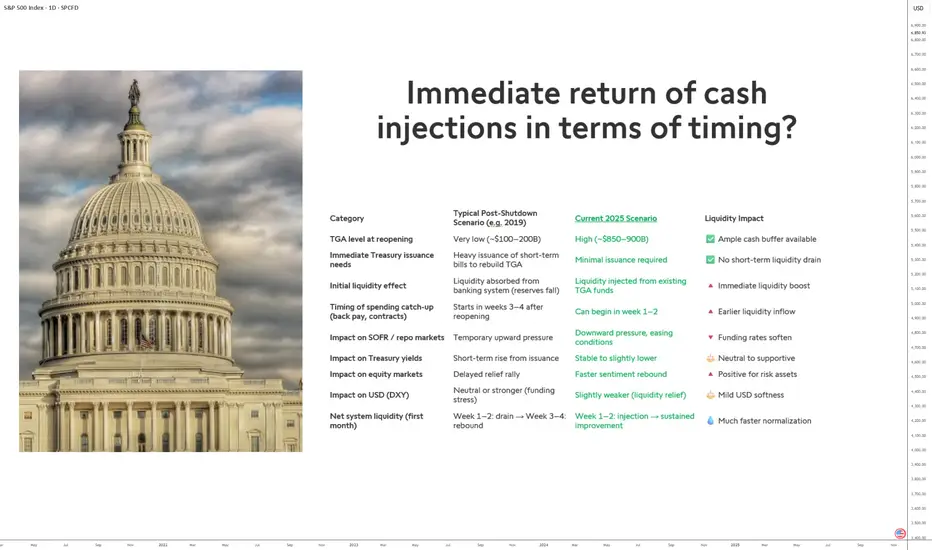
Cryptocurrencies are not considered legal tender in some jurisdictions and are subject to regulatory uncertainties.
The use of Internet-based systems can involve high risks, including, but not limited to, fraud, cyber-attacks, network and communication failures, as well as identity theft and phishing attacks related to crypto-assets.
Spot forex trading — practical “secrets”1. Trade the market you see, not the story you tell
One of the most costly “secrets” is simply this: markets don’t care about your narrative. Human brains love stories (inflation, wars, central banks) and those stories can be useful, but your priority must be price action and confirmed structure. If price breaks a key level and confirms with follow-through, act. If your view relies entirely on a neat story without price confirmation, you’re speculating, not trading.
2. Make risk management your system’s backbone
Successful traders manage risk first, edge second. A few principles:
Risk a fixed small percent of capital per trade (commonly 0.5–2%). This prevents one loss from wiping your gains.
Define stop loss and maximum acceptable daily drawdown before entering.
Use position sizing math (risk per trade / distance to stop) to determine lots. This is mechanical and removes emotion.
Never average down into a losing position unless you have a documented, statistically tested scaling plan and the trade still fits your edge.
3. The spread and slippage are your invisible costs
Spreads, commissions and slippage silently erode profitability. Avoid trading pairs with wide spreads or during low-liquidity hours. Be mindful of news events that widen spreads and cause slippage. Using limit orders where sensible can reduce market impact, but they come with the risk of not getting filled.
4. Know when liquidity favors you
Forex liquidity follows a daily rhythm: London and New York sessions see the most volume and narrowest spreads. Volatility is higher at market overlaps (London/New York). Trade when your strategy thrives — if you’re a breakout trader, trade during high-liquidity hours; if you prefer quiet mean-reversion, consider quieter times but watch for thin-market spikes.
5. Use timeframes intentionally — multi-timeframe confirmation
A “secret” repeatedly practiced by pros: align multiple timeframes. Identify the primary bias on a higher timeframe (daily/4H), then refine entries on a lower timeframe (1H/15m). This reduces random noise and improves odds. Don’t confuse confirmation with paralysis — you still need execution rules.
6. Focus on a handful of pairs
Mastery beats variety. Pick 3–6 currency pairs and learn their quirks: baseline volatility, reaction to economic releases, correlation to other assets (e.g., USD/JPY sensitivity to risk sentiment). Specialization lets you anticipate typical behavior and manage trades more skillfully.
7. Correlation awareness avoids accidental overexposure
Many currency pairs move together. Holding multiple correlated positions doubles risk without you noticing. Monitor correlations and limit portfolio-level exposure to avoid being leveraged into a single macro move.
8. Trade the event, not the headline
Economic releases are traded in two stages: initial fast move (often noisy and driven by order flow) and the follow-through as market participants digest the new information. If you trade news, have rules about whether you fade the initial spike, chase momentum, or wait for the post-news structure. Rushing in during the chaotic first seconds is a common way to get stopped out.
9. Execution matters: order types and placement
Limit orders can capture better prices and reduce spread costs — use them for entries and scaling.
Stop orders protect capital; place them beyond logical structural levels, not at obvious spots where they’re likely to be hunted.
Virtual stops (mental stops) are dangerous; write your stops in the platform and accept fills.
10. Keep a rigorous trading journal
Record entry/exit, stop size, reasoning, timeframe, emotions, and post-trade thoughts. Over weeks and months, the journal reveals systematic errors (overtrading, revenge trading, entering too early). The journal is the only honest performance feedback loop — analyze it weekly.
11. Have a clear, tested edge
An “edge” might be: specific breakout behavior after a London open, mean reversion after RSI extremes on 1H for EURUSD, or trading divergence with volume confirmation. Backtest carefully, but beware overfitting. Simpler rules that generalize are better than complex rules that only worked historically.
12. Use position scaling and pyramiding conservatively
Scaling in (adding to winners) can be more effective than averaging losers. Add small increments as the trade proves correct and widen stops appropriately. Pyramiding increases position when evidence supports it; averaging into a losing trade destroys capital.
13. Understand carry, swaps, and overnight exposure
Holding spot forex overnight can incur swap/rollover credits or charges depending on interest rate differentials. For short-term traders this is minor; for swing traders it matters. Include swap costs in your plan when holding for days.
14. Manage psychology like a trader, not a gambler
Common mental traps: FOMO (chasing a missed move), revenge trading (immediately trying to recoup a loss), and overconfidence after a streak. Predefine a daily trade limit and a rule to stop after N consecutive losses. Mindfulness, routines, and small rituals before trading can stabilize decision-making.
15. Build a repeatable routine and playbook
Have a morning checklist: review economic calendar, market internals, correlated asset moves (equities, bonds, commodities), overnight price action, and your watchlist levels. A consistent routine reduces impulsive trades and protects capital.
16. Use technology — but avoid overreliance
Algos and EAs can execute consistently, but remember they inherit your assumptions. Backtest on out-of-sample data and forward paper-trade before going live. Latency, slippage, and broker behavior differ from backtest assumptions.
17. Respect market structure — support/resistance, trend, range
Trade with the structure: buy pullbacks in a clean uptrend; sell rallies in a downtrend; trade ranges only when price respects levels repeatedly. Recognize when structure is shifting (higher highs/lows breakdown) and adapt.
18. Continual learning vs. strategy churn
Many traders hurt themselves by switching strategies too often. Test a new idea on a small size or in a demo account and apply only if it shows consistent edge. Maintain a learning log and implement improvements incrementally.
Final secret: small consistent edges compound
You don’t need to be right all the time. If your average win is larger than your average loss and you manage trade frequency and risk, compounding will work in your favor. Shrink risk, increase discipline, and keep trading costs low — that combination, repeated, is the truest “secret” in spot forex.
Derivatives Trading in Emerging Markets1. Understanding Derivatives
A derivative is a financial instrument whose value is derived from the price of an underlying asset. The underlying can be stocks, bonds, commodities, interest rates, exchange rates, or market indices. The most common types of derivatives include forwards, futures, options, and swaps.
Forwards are customized contracts traded over the counter (OTC), where two parties agree to buy or sell an asset at a future date at a predetermined price.
Futures are standardized contracts traded on exchanges, reducing counterparty risk through clearing houses.
Options give the holder the right, but not the obligation, to buy or sell an asset at a specified price within a certain period.
Swaps involve the exchange of cash flows or financial instruments between two parties, often to manage exposure to interest rates or currencies.
Derivatives are used for hedging, speculation, and arbitrage, making them vital tools for both risk management and profit generation.
2. Growth of Derivatives in Emerging Markets
Emerging markets such as India, China, Brazil, South Africa, and Indonesia have witnessed rapid growth in derivatives trading over the past two decades. Initially, their financial systems were dominated by cash or spot markets. However, the volatility in exchange rates, commodity prices, and interest rates created demand for instruments that could mitigate these risks.
India’s derivatives market, for example, began in 2000 with index futures on the NSE (National Stock Exchange). Today, it is one of the largest derivatives markets globally in terms of contract volumes.
China launched commodity futures exchanges in the 1990s and gradually introduced financial derivatives, although its government maintains strict control to prevent speculation-driven instability.
Brazil’s BM&FBOVESPA (now B3) is another major hub, offering derivatives on interest rates, currencies, and commodities.
This expansion reflects both the globalization of finance and the increasing sophistication of local investors and institutions.
3. Role and Importance in Emerging Markets
a. Risk Management
Derivatives are crucial for hedging against uncertainties in currency rates, interest rates, and commodity prices. For instance, exporters in India use currency futures to protect themselves from exchange rate fluctuations, while farmers in Brazil hedge their crop prices through commodity futures.
By allowing investors and companies to transfer risk to those willing to bear it, derivatives enhance financial stability.
b. Price Discovery
Futures and options markets help in determining the expected future price of an asset based on market sentiment. For example, futures prices of crude oil or gold on Indian exchanges provide valuable information to producers, traders, and policymakers about expected market conditions.
c. Market Liquidity and Efficiency
Derivatives attract speculators who add liquidity to the market. This increased participation tightens bid-ask spreads and improves overall price efficiency. Furthermore, arbitrage between spot and derivatives markets ensures prices remain aligned, reducing distortions.
d. Financial Deepening
A vibrant derivatives market signals financial maturity. It encourages institutional participation, supports innovation, and contributes to the development of related sectors such as clearing and settlement systems, credit rating agencies, and risk management firms.
4. Challenges Faced by Emerging Markets
While the benefits are clear, emerging markets face several structural and operational challenges in developing robust derivatives markets.
a. Regulatory and Legal Framework
In many countries, the regulatory environment is still evolving. Over-regulation can stifle innovation, while weak supervision can lead to excessive speculation and financial crises. For instance, in some Asian markets, derivatives trading was temporarily banned after being linked to market volatility.
Emerging markets need transparent, consistent, and globally aligned regulations to build investor confidence and attract international participation.
b. Limited Market Depth and Participation
Retail participation in derivatives is often low due to limited awareness and the perception of high risk. Institutional investors, such as pension funds and insurance companies, may face restrictions on using derivatives. As a result, markets may be dominated by a few large players, reducing competition and liquidity.
c. Counterparty and Credit Risk
In OTC derivatives markets, the risk that one party may default on its obligation remains significant. The lack of centralized clearing mechanisms in some markets exacerbates this problem. Developing central counterparty (CCP) systems and improving risk management practices are vital.
d. Infrastructure and Technology
Efficient trading, clearing, and settlement require advanced infrastructure. Some emerging markets still face technological constraints, slow transaction processing, or inadequate risk monitoring systems, limiting the scalability of derivatives trading.
e. Market Manipulation and Speculation
Because derivatives offer high leverage, they can be used for speculative purposes, sometimes leading to market manipulation or bubbles. Regulatory oversight and investor education are essential to prevent misuse.
f. Low Financial Literacy
Many investors in emerging markets lack a full understanding of derivatives. Without proper knowledge, they may engage in speculative trading or misuse derivatives, leading to losses and erosion of trust in the system.
5. Case Studies
India
India’s derivatives market is among the most developed in the emerging world. The NSE and BSE offer a wide range of products, including equity futures and options, currency derivatives, and commodity contracts. The Securities and Exchange Board of India (SEBI) plays a crucial role in regulating the market, ensuring transparency and risk management. India’s introduction of interest rate futures and index options has enhanced hedging opportunities for institutional and retail investors alike.
China
China’s derivatives market has grown rapidly but remains tightly controlled by regulators to avoid excessive speculation. The Shanghai Futures Exchange and Dalian Commodity Exchange are major platforms. China’s government uses derivatives strategically to stabilize commodity and currency markets, reflecting a cautious but steady approach to liberalization.
Brazil
Brazil’s derivatives market, integrated through B3 Exchange, is known for innovation in interest rate and currency products. It supports both domestic and international investors and serves as a model of how derivatives can aid monetary policy and risk management in volatile economies.
6. Future Prospects
The future of derivatives trading in emerging markets is promising, driven by technological innovation, financial integration, and policy reforms.
Digital transformation and algorithmic trading will enhance liquidity and efficiency.
Blockchain and smart contracts could make derivatives trading more transparent and secure.
Cross-border trading and integration with global exchanges will deepen market access.
ESG-linked derivatives may emerge, allowing investors to hedge environmental and sustainability risks.
However, to realize this potential, emerging markets must invest in education, infrastructure, and governance. Collaboration with global institutions such as the International Monetary Fund (IMF) and the World Bank can also provide technical assistance and policy guidance.
7. Conclusion
Derivatives trading has evolved from a sophisticated financial tool to a vital pillar of modern emerging economies. It helps manage risks, enhances liquidity, and strengthens the resilience of financial systems. However, the path to maturity is complex—emerging markets must balance innovation with regulation, speculation with stability, and access with responsibility.
As these economies continue to integrate into the global financial system, the expansion of derivatives markets will play a key role in supporting sustainable growth, attracting foreign investment, and providing the foundation for a more resilient global economy. With prudent regulation, improved market infrastructure, and growing investor sophistication, the future of derivatives trading in emerging markets is both dynamic and promising.