Bitcoin Is Ranging — And Macro Is Keeping It That WayBitcoin on H1 remains locked inside a clearly defined range, with price oscillating between a defended support zone near the lower boundary and a heavy resistance band overhead. The sharp rejection from resistance confirms active sellers at the top, while repeated bounces from support show that buyers are still willing to defend the range. This back and forth price action reflects balance and liquidity building rather than trend continuation, with momentum paused after the prior impulsive move.
Structurally, BTC is showing overlapping candles and failed follow-through in both directions classic range behavior. As long as price remains capped below resistance, upside attempts are corrective, not impulsive. A rotation back toward the mid-to-lower range remains the higher-probability path unless acceptance above resistance is achieved with strength.
From a macro perspective, this consolidation aligns with a broader wait-and-see environment across risk assets. Markets are currently sensitive to U.S. macro data and expectations around Fed policy, with no clear catalyst pushing liquidity decisively risk-on or risk-off. This macro indecision is mirrored directly in Bitcoin’s price action, where volatility compresses and directional conviction fades.
In summary, Bitcoin is not breaking it is balancing. Until macro conditions and liquidity provide a clear push, BTC is likely to continue rotating within the range. The edge lies in patience: wait for a clean range resolution with intent, not anticipation.
Technical Analysis
Correction Is Not a Reversal — Gold Is Reloading 1. Market Structure Overview
- Gold is still trading within a medium-term bullish structure, but price has entered a short-term corrective phase after failing to hold above the upper resistance zone.
- Strong rejection occurred at the POC / resistance area 4.35x – 4.38x, confirming active profit-taking.
The current price action is developing a classic ABC correction:
- Wave A: Completed with a sharp pullback.
- Wave B: Ongoing technical rebound.
Importantly, price remains above the major moving averages, meaning the primary uptrend is still intact.
This correction is technical in nature, not a trend reversal.
2. Market Context & Liquidity Behavior
Sellers are active near the highs, but downside momentum remains controlled.
The market is likely seeking liquidity clearance before deciding the next impulsive move.
The 4.26x – 4.20x zone stands out as a key re-accumulation area where buyers may step back in.
3. Today’s Price Scenarios
🔹 Primary Scenario (High Probability)
Price continues its corrective leg toward 4.26x – 4.20x.
This zone acts as a decision point:
Holding above it → supports re-accumulation and trend continuation.
Strong breakdown → opens room for a deeper short-term correction.
🔹 Alternative Scenario (Lower Probability)
Failure to reclaim strength after the correction may extend downside pressure.
Confirmation only occurs if support is decisively broken with volume.
4. Intraday Trading Setups — Re-Accumulation Focus
📌 SETUP 1 – Intraday Sell (Correction Timing)
XAUUSD SELL ZONE: 4369 – 4372
Take Profit: 4366 – 4361
Stop Loss: 4376
📌 SETUP 2 – Intraday Buy (Re-Accumulation Zone)
XAUUSD BUY ZONE: 4262 – 4265
Take Profit: 4268 – 4273
Stop Loss: 4258
⚠️ Always apply strict risk management to protect capital.
5. Summary & Trading Guidance
Main Trend: Bullish
Short-Term State: Correction → Re-accumulation
Bias: Wait for price to reach key zones, avoid chasing highs
👉 Today’s session is a balancing phase. The market’s reaction at the support zone will define whether gold resumes its uptrend or extends the correction. Patience and discipline remain the optimal strategy.
1000LUNCUSDT.P: short setup from daily support at 0.04315BINANCE:1000LUNCUSDT.P , following a strong rally, consolidated briefly and then started returning to where it came from, as is often the case. We currently have a local level at 0.04315, above which the price is consolidating. The crucial criterion in this situation will be to wait for the daily bar close (UTC). If the close is near the level and close to the day's low, these will be good signals for a short position.
Key factors for this scenario:
Price void / low liquidity zone beyond level
Volatility contraction on approach
Immediate retest
Closing near the level
Closing near the bar's extreme
Factors that contradict this scenario:
Lack of consolidation
Was this analysis helpful? Leave your thoughts in the comments and follow to see more.
EURUSD: Support & Resistance Analysis For Next Week 🇪🇺🇺🇸
Here is my latest structure analysis and important
supports and resistances for EURUSD for next week.
Consider these structures for pullback/breakout trading.
❤️Please, support my work with like, thank you!❤️
I am part of Trade Nation's Influencer program and receive a monthly fee for using their TradingView charts in my analysis.
What to Expect From Gold on Monday?!
As Christmas Holidays are just around the corner, we see that
many instruments started to slow down and overall volatility dropped
significantly.
Gold remained relatively calm the last week too.
The price formed a narrow horizontal range on an hourly time frame,
respecting that from Tuesday.
I think that we will see a continuation of such a consolidation after the market opening.
Gold will likely stay calm at least till the release of the US Core PCE Price Index
after the NY Session opening.
Expect price movements within the range.
❤️Please, support my work with like, thank you!❤️
I am part of Trade Nation's Influencer program and receive a monthly fee for using their TradingView charts in my analysis.
Key Levels – Where Gold Reacts, Not Indicators?Many traders start trading gold using indicators, and that’s something almost everyone goes through. However, the longer you stay in the market, the more clearly you realize one important truth: gold does not react to indicators; it reacts at key levels . Indicators only describe what price has already done, while key levels are where real money actually makes decisions.
Price does not move randomly. It reacts at important price zones.
Key levels are areas where the market has shown clear reactions in the past — strong reversals, repeated rejections, or consolidation before a breakout. In gold trading, these zones often align with major highs and lows, round numbers, or areas of concentrated liquidity.
This is where both retail traders and large capital are paying attention.
One major reason many traders consistently enter too late is over-reliance on indicators. Indicators are always based on past price data, so when a signal appears, the key reaction has often already happened. At that point, entries are less attractive, risk-to-reward deteriorates, and the probability of false breaks or stop hunts increases.
Indicators are not wrong, but they always lag behind price.
Professional traders don’t try to predict whether price will go up or down. They wait for price to reach a key level and then observe how the market reacts. Is price strongly rejected, or does it break through easily? Is real buying or selling pressure actually showing up?
Key levels are not places to predict — they are places to observe and react.
This doesn’t mean indicators are useless. Indicators still have value for momentum confirmation or for understanding market context. But they should not be the primary factor for making entry decisions.
Key levels tell you where to trade.
Indicators only help you understand how price is behaving.
Conclusion
If you are trading gold and still searching for the “best indicator for XAUUSD,” you may be asking the wrong question.
The better question is:
Which key level is the market respecting right now?
Because in the end, price reacts at levels — not at indicators.
$SPY: 15m Structural Repair & Dynamic Trend BreakoutWhat I’m Seeing: I am currently observing a confluence on the AMEX:SPY 15-minute chart following the Friday close at $680.59. My Structure Engine shows that price has fully cleared the $679 intraday demand threshold, effectively 'repairing' the liquidity void created during the mid-morning dip. Simultaneously, the Automatic Trend Line script has printed a fresh support level at $679.50, confirming that the short-term trend is now realigned with the larger bullish bias.
Why It Matters: This 15m confluence is a high-confidence signal for intraday expansion. By 'sealing' the void below $679, the market has established a new structural floor. When the Automatic Trend Line engine identifies support right on top of a repaired zone, it indicates that the 'path of least resistance' has shifted upward. It suggests that intraday sellers have been absorbed and momentum is now being guided by the dynamic trend.
What I Expect to See Next: I expect the 15m trend to hold as price targets the immediate pivot high at $681.50. If we see a 15m candle body close above $681.50, the 'void' to the next major resistance at $684.22 (Monday's projected range high) becomes the primary target. I will be watching for the Trend Engine to maintain its slope; a breakdown below the $676.75 support would invalidate this short-term structural repair thesis.
XAUUSD 51st Record High of 2025 | Symmetrical Triangle BreakoutHistoric Context - A Record-Breaking Year
According to the Wall Street Journal and Dow Jones Market Data released December 19, 2025:
Gold futures have closed at record highs 51 times in 2025
Price has surged 66 percent year-to-date to 4387.30 USD per troy ounce
This is gold's best annual performance since 1979
Silver has soared 131 percent in 2025, hitting 14 record highs
Both metals are on pace for their biggest gains since 1979, the last year they hit this many records
This historic context is critical for understanding current price action. We are not in a normal market environment. Gold is experiencing a generational bull run driven by central bank accumulation, geopolitical uncertainty, and monetary policy expectations.
Current Market Context - December 20, 2025
Gold experienced volatility following the Federal Reserve December 18, 2025 policy decision. The central bank maintained its hawkish stance, projecting fewer rate cuts for 2026 than markets anticipated. Despite this headwind, gold recovered and hit another record high on December 19.
The resilience above 4300 USD despite hawkish Fed rhetoric demonstrates the strength of underlying demand from central banks and institutional investors.
Key Events This Week:
December 18: Federal Reserve held rates steady, projected only two rate cuts for 2026 versus market expectations of three to four
December 18: US Dollar Index surged following hawkish Fed commentary, initially pressuring gold
December 19: Gold recovered to close at 51st record high of 2025 at 4387.30 USD according to WSJ
December 19: CFTC COT report released showing strong speculative long positioning
December 20: Price consolidating near 4338 USD within symmetrical triangle pattern
Ongoing: PBOC and Chinese ETF buying continues despite record high prices
Ongoing: Physical demand weakness in India and China as discounts widen to multi-year highs
Technical Structure Analysis
Pattern Identification - Symmetrical Triangle
The 45-minute chart displays a textbook symmetrical triangle formation characterized by:
Converging trendlines with lower highs and higher lows
Decreasing volatility as price compresses toward the apex
Volume declining during the consolidation phase
Pattern duration of approximately 10-12 days
Apex convergence point approaching within the next 24-48 hours
Symmetrical triangles are continuation patterns approximately 55-60 percent of the time, but given the preceding choppy price action, this formation could break in either direction.
Triangle Boundaries
Upper Trendline (Descending Resistance):
Connects the highs from December 12-13 around 4380-4390 USD
Currently intersecting near 4355-4360 USD
A decisive close above this trendline signals bullish breakout
Lower Trendline (Ascending Support):
Connects the lows from December 9-10 and December 18-19
Currently providing support near 4300-4310 USD
A decisive close below this trendline signals bearish breakdown
Key Price Levels
Resistance Levels:
4355-4360 USD - Descending trendline resistance immediate
4380-4390 USD - Recent swing high and horizontal resistance
4400-4410 USD - Psychological resistance and previous rejection zone
4450-4475 USD - Major resistance from November 2025 highs
4500 USD - Psychological round number and measured move target
Support Levels:
4310-4320 USD - Ascending trendline support immediate
4280-4290 USD - Horizontal support from December lows
4250-4260 USD - Previous consolidation zone
4200-4220 USD - Major support and psychological level
4150-4175 USD - Secondary support if breakdown accelerates
Moving Average Analysis
Price is oscillating around the 20-period moving average indicating indecision
The 50-period moving average is relatively flat confirming the consolidation phase
The 200-period moving average on higher timeframes remains in uptrend supporting long-term bullish bias
A sustained move above the 20 and 50 MAs would confirm bullish momentum
A breakdown below both MAs would signal bearish continuation
RSI Analysis
RSI on the 45-minute timeframe is currently neutral oscillating between 45-55
No overbought or oversold conditions present
RSI is forming a similar compression pattern to price suggesting energy building for directional move
Watch for RSI to break above 60 for bullish confirmation or below 40 for bearish confirmation
Volume Analysis
Volume has been declining during the triangle formation typical behavior before breakout
Expect volume surge on the breakout candle to confirm validity
Low volume breakouts often result in false moves and should be treated with caution
Watch for volume at least 150 percent of average on breakout candle
Fibonacci Analysis
Measuring from the December low near 4200 USD to the December high near 4390 USD:
0.236 retracement: 4345 USD - Currently testing this level
0.382 retracement: 4317 USD - Aligns with triangle support
0.5 retracement: 4295 USD - Key level if support breaks
0.618 retracement: 4273 USD - Strong support zone
Current price action around 4338 USD is testing the 0.236 Fibonacci level, a relatively shallow retracement suggesting buyers remain interested.
CFTC Commitments of Traders Analysis - December 19, 2025
The latest COT report released December 19, 2025 provides critical insight into market positioning:
Gold Futures Only Positions as of December 9, 2025:
Open Interest: 432,569 contracts
Non-Commercial Long: 268,485 contracts ( 62.1 percent of open interest)
Non-Commercial Short: 44,599 contracts (10.3 percent of open interest)
Commercial Long: 63,707 contracts (14.7 percent)
Commercial Short: 326,286 contracts ( 75.4 percent )
Changes from December 2, 2025:
Open Interest increased by 14,079 contracts
Non-Commercial Longs added 7,154 contracts
Non-Commercial Shorts added only 828 contracts
Commercial Shorts added 10,791 contracts
COT Interpretation:
The positioning data reveals several important dynamics:
Speculators (Non-Commercial) are heavily net long with 62.1 percent long versus only 10.3 percent short
This represents a 6:1 long to short ratio among speculators - extreme bullish positioning
Commercial hedgers (producers and merchants) are heavily short at 75.4 percent, which is normal hedging behavior in a bull market
Open interest is increasing alongside price, confirming the uptrend has participation
The continued addition of speculative longs suggests momentum traders remain committed to the bull case
Warning Signal: Extreme speculative long positioning can precede corrections when longs begin to take profits. However, in strong trending markets, positioning can remain extreme for extended periods. The key is watching for a shift in the weekly changes - if longs start liquidating while price stalls, that would be a bearish signal.
Physical Demand Analysis - Asia Market Weakness
Reuters reported on December 19, 2025 that physical gold demand in Asia has weakened significantly due to record high prices:
India Market:
Dealers offering discounts of up to 37 USD per ounce to official domestic prices, up from 34 USD last week
Domestic gold prices hit fresh record of 135,590 rupees per 10 grams
Demand is roughly one quarter of normal levels according to PN Gadgil and Sons CEO
Wedding season jewelry purchases dampened despite being peak demand period
Demand expected to remain subdued as prices continue rising
China Market:
Bullion trading at discounts of up to 64 USD to global benchmark - highest in over five years
This is the widest discount since August 2020 during COVID-19 pandemic
Wholesale and retail demand described as incredibly weak by analyst Ross Norman
However, ETF buying and PBOC purchases continue despite weak physical demand
Other Asian Markets:
Singapore: Trading from 0.5 USD discount to 2.2 USD premium
Hong Kong: Trading from par to 1.8 USD premium
Japan: Discounts up to 6.0 USD, though retail shops out of gold bar stocks
Physical Demand Interpretation:
The divergence between weak physical demand and strong prices is significant:
Traditional price-sensitive buyers in India and China are stepping back at these levels
However, institutional demand (ETFs, central banks) is offsetting physical weakness
PBOC continues accumulating gold as part of reserve diversification strategy
This suggests the rally is being driven by institutional and speculative flows rather than traditional jewelry demand
A correction could occur if institutional buying slows, as physical demand is unlikely to provide support at current prices
Fundamental Analysis
Federal Reserve Policy Impact
The December 18, 2025 FOMC meeting delivered several key takeaways affecting gold:
Interest rates held steady as expected but forward guidance was more hawkish than anticipated
Dot plot projections showed median expectation of only two rate cuts in 2026
Fed Chair emphasized data dependency and willingness to maintain restrictive policy longer if needed
Inflation concerns remain despite progress with services inflation proving sticky
Labor market remains resilient reducing urgency for rate cuts
Implications for Gold:
Higher-for-longer interest rates are traditionally bearish for gold as they increase the opportunity cost of holding non-yielding assets. However, gold has shown remarkable resilience to rate expectations in 2024-2025, suggesting other factors are driving demand.
US Dollar Dynamics
The US Dollar Index strengthened following the hawkish Fed reaching multi-week highs
Dollar strength typically pressures gold prices due to inverse correlation
However the correlation has weakened in recent months as both assets attract safe-haven flows
Watch DXY price action for confirmation of gold direction
A reversal in dollar strength would provide tailwind for gold
Central Bank Demand
Central bank gold purchases remain a crucial support factor despite weak retail demand:
Global central banks have been net buyers of gold for consecutive years
PBOC (People's Bank of China) continues accumulating gold alongside Chinese ETF buying according to analyst Ross Norman
India central bank has increased gold reserves significantly
Emerging market central banks continue accumulating gold as reserve diversification from USD
This institutional and central bank demand is offsetting weak physical retail demand in Asia
Central bank buying provides structural floor under prices even when retail demand weakens
Geopolitical Factors
Safe-haven demand remains elevated due to:
Russia-Ukraine conflict continues with no resolution in sight
Middle East tensions remain elevated with ongoing regional instability
US-China relations remain strained with trade and technology disputes
Global election cycle creating policy uncertainty
Debt ceiling and fiscal concerns in major economies
These factors support gold safe-haven bid and help explain its resilience despite hawkish Fed policy.
Directional Bias Assessment
Arguments for Bullish Breakout:
Gold has hit 51 record highs in 2025 - momentum clearly favors bulls
Best annual performance since 1979 with 66 percent YTD gains
Long-term uptrend remains intact on daily and weekly timeframes
COT data shows speculators adding to long positions with 62.1 percent long exposure
Central bank and ETF demand continues despite weak physical demand
PBOC accumulation ongoing according to analyst reports
Geopolitical tensions maintaining safe-haven bid
Technical measured move target of 4480-4500 USD if triangle breaks higher
Arguments for Bearish Breakdown:
Extreme speculative long positioning (6:1 ratio) creates correction risk
Physical demand in India at one quarter of normal levels
China discounts at 64 USD - widest since August 2020
Hawkish Fed policy supporting stronger dollar and higher yields
Price has risen 66 percent in one year - mean reversion risk elevated
Holiday liquidity reduction could exacerbate any profit-taking
Technical measured move target of 4200-4220 USD if triangle breaks lower
My Assessment - Cautiously Bullish with Correction Risk:
The weight of evidence supports the bull case given the historic momentum and institutional demand. However, several warning signs warrant caution:
Extreme speculative positioning creates vulnerability to profit-taking
Physical demand weakness in Asia suggests price-sensitive buyers are exhausted
The rally is increasingly dependent on institutional flows rather than broad-based demand
Short-term (next 1-2 weeks): Neutral to slightly bearish. The combination of extreme positioning, weak physical demand, and holiday liquidity conditions creates correction risk. A pullback to 4280-4320 USD would be healthy and provide better entry for longs.
Long-term (1-3 months): Bullish. The structural drivers (central bank buying, geopolitical uncertainty, monetary policy expectations) remain intact. Any correction should be viewed as buying opportunity. Targets of 4500-4600 USD remain valid for Q1 2026.
Trade Framework
Scenario 1: Bullish Breakout Trade
Entry Conditions:
45-minute candle closes decisively above 4360 USD upper trendline
Volume on breakout candle exceeds 150 percent of 20-period average
RSI breaks above 60 confirming momentum
Ideally accompanied by dollar weakness DXY declining
Trade Parameters:
Entry: 4365-4370 USD on confirmed breakout
Stop Loss: 4330 USD below triangle midpoint
Target 1: 4400-4410 USD previous resistance
Target 2: 4450-4460 USD November highs
Target 3: 4500-4520 USD measured move target
Risk-Reward: Approximately 1:2.5 to first target
Scenario 2: Bearish Breakdown Trade
Entry Conditions:
45-minute candle closes decisively below 4300 USD lower trendline
Volume on breakdown candle exceeds 150 percent of 20-period average
RSI breaks below 40 confirming bearish momentum
Ideally accompanied by dollar strength DXY rising
Trade Parameters:
Entry: 4295-4300 USD on confirmed breakdown
Stop Loss: 4340 USD above triangle midpoint
Target 1: 4250-4260 USD horizontal support
Target 2: 4200-4220 USD major support
Target 3: 4150-4175 USD measured move target
Risk-Reward: Approximately 1:2 to first target
Risk Management Guidelines
Position sizing should not exceed 1-2 percent risk per trade given current volatility
Reduce position size during holiday period due to lower liquidity
Use hard stop losses do not move stops further from entry
Scale out of positions at each target level 33 percent at each target
Move stop to breakeven after first target achieved
Avoid holding large positions over weekend given geopolitical risks
Monitor DXY and Treasury yields for confirmation of gold direction
Be prepared for false breakouts wait for candle close confirmation
Invalidation Levels
Bullish thesis invalidated if:
Price closes below 4250 USD on daily timeframe
Triangle breaks down with volume confirmation
DXY breaks to new highs above 110
Bearish thesis invalidated if:
Price closes above 4410 USD on daily timeframe
Triangle breaks up with volume confirmation
DXY reverses sharply below 106
Conclusion
OANDA:XAUUSD has delivered a historic performance in 2025 with 51 record highs and 66 percent gains - the best year since 1979. The precious metal is currently consolidating within a symmetrical triangle near 4338 USD, setting up for the next directional move.
Key Data Points:
51 record highs in 2025 according to Dow Jones Market Data
66 percent YTD gains - best since 1979
COT shows 62.1 percent speculative long positioning (6:1 long/short ratio)
India physical demand at 25 percent of normal levels
China discounts at 64 USD - widest since August 2020
PBOC and ETF buying continues despite weak retail demand
Key Takeaways:
The symmetrical triangle is approaching its apex suggesting a breakout is imminent within the next 24-72 hours
Historic momentum (51 records) supports bullish bias but extreme positioning creates correction risk
Physical demand weakness in Asia is a warning sign that price-sensitive buyers are exhausted
Institutional demand (central banks, ETFs) is currently offsetting retail weakness
Short-term bias is neutral with correction risk; long-term bias remains bullish
Bullish breakout targets 4450-4500 USD; bearish breakdown targets 4250-4280 USD
Risk management is critical given extreme positioning and holiday liquidity conditions
The optimal approach is to wait for confirmed breakout with volume rather than anticipating direction. Given the extreme speculative positioning, any breakdown could trigger rapid profit-taking. Conversely, a breakout to new highs could accelerate as shorts cover.
Trade the breakout, not the anticipation. Let price confirm direction before committing capital.
This is not financial advice. Always conduct independent research and manage risk appropriately.
Don’t Rush to Call the Top on EURUSDEURUSD in the late December 20–21 period is showing a clearly bullish picture , supported by both fundamental news and technical structure . This is not a euphoric phase , but rather a period where the market slows down to accumulate before making its next move.
From a fundamental perspective, the ECB has kept interest rates unchanged and delivered a relatively positive outlook, while the USD lacks fresh momentum as U.S. data has not been strong enough to push the Fed back into a hawkish stance. This backdrop allows the euro to maintain a short-term advantage.
On the chart, price remains firmly above the 1.1680 support zone , and the Higher Low structure is still intact. The Ichimoku setup shows sideways movement above a thin cloud , a condition that often appears before a trend continuation rather than a reversal.
As long as the current support holds , the preferred scenario remains EURUSD pushing higher toward 1.1750, with the potential to retest the upper resistance zone. When the trend has not broken , following the flow is far wiser than trying to predict a top.
SOLUSD - December Distribution Structure
Executive Summary
COINBASE:SOLUSD has declined approximately 52 percent from its November 2024 all-time high of 264 USD to current levels around 126 USD. This analysis examines the technical structure, on-chain metrics, and fundamental catalysts to determine high-probability trade zones. The evidence suggests further downside toward the 100-115 USD accumulation zone before a sustainable recovery can begin.
Technical Structure Analysis
Price Action Overview
Solana is currently trading within a descending channel that formed after the November 2024 peak. The structure shows:
Lower highs at 264, 220, 180, and 145 USD forming clear descending resistance
Lower lows indicating sustained selling pressure
Current price testing the 125-130 USD zone which previously acted as resistance in October 2024
Volume declining on bounces and increasing on selloffs - classic distribution signature
Key Support and Resistance Levels
Resistance Zones:
140-145 USD - Recent swing high rejection zone
160-165 USD - Previous support turned resistance
180-185 USD - Major structural resistance
Support Zones:
115-120 USD - Minor support, likely to break
100-105 USD - Major support, November 2024 breakout origin
85-90 USD - Secondary support if macro deteriorates
Moving Average Analysis
Price is trading below the 20, 50, and 200 period moving averages on the daily timeframe
The 20 MA has crossed below the 50 MA, confirming short-term bearish momentum
The 200 MA is flattening and beginning to slope downward
Moving averages are fanning out in bearish alignment
RSI and Momentum
Daily RSI is currently in the 35-40 range, approaching oversold but not yet at extreme levels
RSI has been making lower highs alongside price, confirming the downtrend
No bullish divergence present yet - divergence at the 100-115 zone would be a strong buy signal
Weekly RSI has room to decline further before reaching oversold extremes seen at previous bottoms
Volume Profile
High volume node exists at the 100-115 USD zone from the November 2024 accumulation period
Current price zone shows relatively low volume, suggesting lack of strong buyer interest
Volume has been declining during recent bounce attempts - weak demand
A volume spike at the 100-115 zone would confirm institutional accumulation
Fibonacci Retracement
Measuring from the September 2024 low of 120 USD to the November 2024 high of 264 USD:
0.382 retracement: 209 USD - Already broken
0.5 retracement: 192 USD - Already broken
0.618 retracement: 175 USD - Already broken
0.786 retracement: 151 USD - Already broken
Full retracement: 120 USD - Currently testing
The breakdown through the 0.786 level suggests the move is corrective in nature and a full retracement to the 100-120 USD origin zone is probable.
On-Chain and Fundamental Analysis
Network Activity Metrics
Solana network statistics show mixed signals:
Daily active addresses have declined from peak levels during the meme coin mania
Transaction counts remain elevated compared to other Layer 1 networks
Total Value Locked in Solana DeFi protocols has decreased from highs
NFT trading volume on Solana marketplaces has cooled significantly
Supply Distribution
Large holder concentration remains high with significant whale wallet activity
Exchange inflows have increased in recent weeks, indicating selling pressure
Staking participation remains strong, reducing liquid supply
FTX bankruptcy estate continues systematic liquidation of SOL holdings
Macro Factors Affecting Solana
Bearish Catalysts:
Federal Reserve December 2025 meeting maintained hawkish stance with fewer rate cuts projected for 2026
Risk-off sentiment affecting high-beta assets disproportionately
BITSTAMP:BTCUSD dominance rising, indicating capital rotation from altcoins to Bitcoin
Regulatory uncertainty regarding Solana ETF approval timeline
FTX estate selling pressure creating persistent supply overhang
Meme coin speculation that drove the 2024 rally has cooled substantially
Bullish Catalysts:
Solana network upgrades improving transaction throughput and reliability
Growing institutional interest in Solana ecosystem projects
Potential Solana ETF approval could drive significant inflows
Strong developer activity and ecosystem growth metrics
Firedancer client development progressing, promising improved network performance
Solana remains the preferred chain for new DeFi and consumer applications
Competitive Positioning
Solana maintains advantages over competing Layer 1 networks:
Transaction costs remain significantly lower than BITSTAMP:ETHUSD mainnet
Transaction speed and finality superior to most competitors
Developer ecosystem continues expanding despite price decline
Institutional partnerships and integrations increasing
However, challenges persist:
Network outages and congestion issues have damaged reputation
Centralization concerns regarding validator distribution
Competition from Ethereum Layer 2 solutions intensifying
Regulatory classification uncertainty in United States
Whale and Institutional Activity
Recent on-chain data indicates:
Large wallets have been net sellers over the past 30 days
Exchange deposits from whale addresses have increased
Institutional funds have reduced Solana allocation according to fund flow data
However, accumulation signals are appearing at lower price levels
The pattern suggests distribution at current levels with potential accumulation beginning at the 100-115 USD zone.
Trade Framework
Primary Scenario - Bearish Continuation (Higher Probability)
The weight of evidence supports further downside before a sustainable bottom forms:
Technical structure remains bearish with lower highs and lower lows
Price below all major moving averages
Macro environment unfavorable for risk assets
On-chain metrics showing distribution
No bullish divergence on momentum indicators yet
Short Setup:
Entry Zone: 130-140 USD on relief bounces
Stop Loss: Above 148 USD
Target 1: 115-118 USD
Target 2: 105-108 USD
Target 3: 95-100 USD
Secondary Scenario - Accumulation at Support
The 100-115 USD zone represents a high-conviction long opportunity if confirmation signals appear:
This zone was the origin of the November 2024 rally
High volume node from previous accumulation period
Full Fibonacci retracement level
Psychological round number support at 100 USD
Long Setup:
Entry Zone: 100-115 USD
Stop Loss: Below 92 USD
Target 1: 130-135 USD
Target 2: 150-160 USD
Target 3: 180-200 USD
Confirmation Signals Required for Long Entry:
Bullish RSI divergence on daily timeframe
Volume spike on bullish candle at support
Price reclaiming the 20 period moving average
Higher low formation on 4-hour timeframe
Decrease in exchange inflows from whale wallets
Risk Management
Position sizing should not exceed 2-3 percent of portfolio for short setups
Long setups at the 100-115 zone warrant 3-5 percent allocation due to higher conviction
Scale into positions using 3 tranches rather than single entry
Move stop loss to breakeven after first target achieved
Avoid trading the 120-130 USD range without clear directional confirmation
Monitor BITSTAMP:BTCUSD price action as correlation remains high
Invalidation Levels
Bearish thesis invalidated if:
Daily close above 150 USD with increasing volume
Price reclaims 50 and 200 moving averages
RSI breaks above 60 with momentum
Bullish thesis invalidated if:
Daily close below 92 USD
Volume spike on breakdown below 100 USD
Bitcoin breaks below 75000 USD triggering broader market selloff
Timeline Expectations
Short-term (1-4 weeks): Expect continued weakness toward 100-115 USD support zone
Medium-term (1-3 months): Potential basing pattern formation if support holds
Long-term (3-6 months): Recovery rally possible if macro conditions improve and Solana-specific catalysts materialize
Conclusion
COINBASE:SOLUSD is in a clear distribution phase following the November 2024 peak. The technical structure, on-chain metrics, and macro environment all point to further downside before a sustainable bottom forms.
The 100-115 USD zone represents the highest probability accumulation area based on:
Historical significance as the November 2024 breakout origin
Fibonacci full retracement level
High volume node from previous accumulation
Psychological support at 100 USD round number
The recommended approach is patience. Avoid buying at current levels where distribution is occurring. Wait for price to reach the 100-115 USD zone and confirm with bullish divergence and volume signals before establishing long positions.
For traders seeking short exposure, relief bounces to the 130-140 USD zone offer favorable risk-reward entries with defined stops above 148 USD.
This is not financial advice. Always conduct independent research and manage risk appropriately.
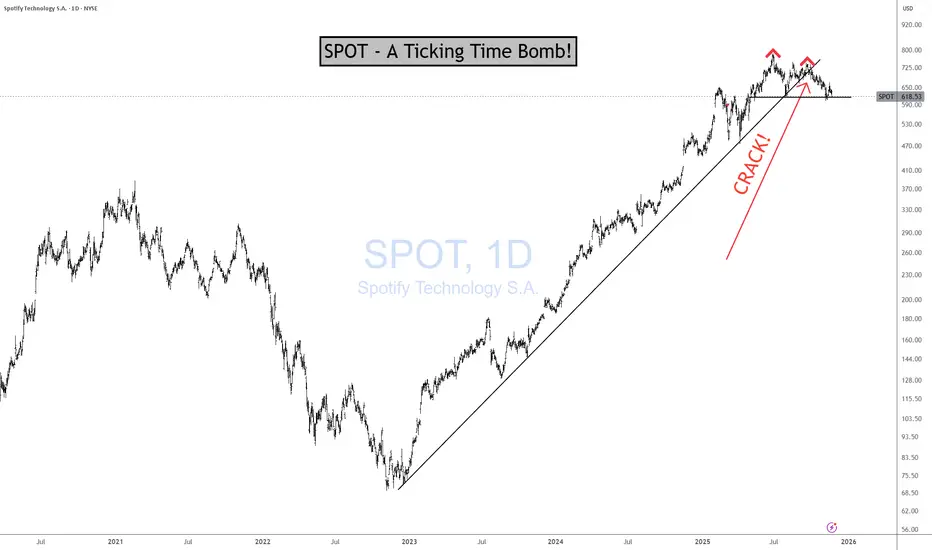
BTC Gold - BKC Charting ExampleBare Knuckle Charting BKC is something I developed (And still developing) over the years.
I will use this chart to give you a crash course in BKC.
Here is the original post I made back in March to follow along. )
So, BKC, let's start with:
1. Always start with a plain chart.
2. 99.9% of the time, look for 3 waves plus a hook.
3. Count 4 points (2 top and 2 bottom) connecting with a line. Price can NEVER violate price. EVER! so it must be the highest or lowest points in that particular wave.
4. A structure will reveal itself pointing in a direction up, down sideways.
-Sideways means continuation of the previous trend.
-Up/Down structure means a reversal structure is coming.
5. Now you can clearly identify key areas of the structure. What I call "CRACK!" A break in momentum.
6. A CRACK can collapse or give you early warning signs.
7. Once a crack has revealed itself at key areas, don't be fooled by the subsequent price action. This is where most get F up. They don't see what you see. A CRACK & weak buying barely trying to hold the trendline that will ultimately CRACK again and more likely than not collapse with them holding a bag of schitt! Mesmerized with the overall trend and more specifically mesmerized by the most recent trend after the CRACK (they don't see) that moved in their favor.
These people can't see past their noses. Completely unaware of what is actually happening. The best part is when they show you a chart, they just draw lines randomly violating price (CRACKS) and concluding that the chart is bullish or bearish, and telling you how it is. HAHAHAHA! SMH!
8. Because you can all see past your noses using BKC. This will help you in so many ways that you can't even imagine! Why?
- You won't take random trades anywhere in the chart! You will wait for key areas to get involved. This alone will dramatically cut down on the # of needle trades you make, which at best are 50/50 happenstance results that you then give meaning to. Basically, gambling with the illusion of analysis.
-Next, you completely remove the subjectivity and cute stories that produce the illusion of "analysis."
THIS IS IMPORTANT! With BKC you extract information FROM the data. Not applying your vague hunches and feelings TO THE DATA! That's the difference between Real & Illusion of analysis.
- Continuing on. With BKC, you have a much more holistic understanding of price and what investors' emotions are. It's all right there in the chart. People talking with their money. Not their mouth!
- Once you see charts properly and understand what they are actually telling you, Waves - hooks - Structures - key Areas - Strengths -Weaknesses - CRACKS etc... you can't UNSEE IT! It's impossible!
- Your actual trade or investment positioning and size drastically improve. You understand that a single CRACK may just be a warning, as such, you don't run out and bet the farm and have it blow up in your face! That alone will greatly improve win win-loss ratio and help prevent blown-out accounts or massive losses. You can't be a trader investor if you are losing your ars beyond the typical cost of doing business draw downs. That is just so basic!
- Most importantly, you will finally STOP! this maddening going for 2, 3, 4% "targets"! Then on to the next big guess and keep repeating until you blow yourself out! I know I used to do it! Now with BKC you will go for mammoth moves 30, 50, 75, 100% plus moves! Bc you see the holistic view. Not the hiccups of random simple price movement, thinking you did something.
- With BKC, Small losses are viewed as informational. Schitt didn't do what it was supposed to do. It went back into structure strongly, so I am out! Simple. Who cares? If I repeat this 10 times in the end, I will be profitable. Even if 9 weren't! WHAT? Yes! Because when you go for the big moves, that is actually possible as crazy as it sounds. But you will never experience that unless you actually learn how to do it. That's what BKC is for. You will never learn how to do it if you keep going for silly 2-3% piker moves! 100% GUARANTEED! You must stop wasting your time & fooling yourself with randomness and then trying to apply meaning to it.
This is not by any means an inferential! You all share your stuff and approaches, scripts, bots, and mostly the same old tired candlesticks, moving averages, FIBS, and targets etc.. which is why you can all speak the same language and understand each other, but fail to produce real, meaningful results.
BKC is a completely different approach as far as I know. It does not give you a fish, it teaches you HOW to fish! For BIG ONES!
I will keep posting examples here as I have been, but now you should have a bit more clarity as to how and why I post what I post. Follow along and see the difference in real time. No hindsight crystal ball nonsensical bullschitt.
As for this chart with a H&S at a top Look for a pop then a drop! Should this H&S break, it will be ugly for the Crypto Bros.!
The proof is in the pudding! ;)
THANK YOU for getting me to 5,000 followers! 🙏🔥
Let’s keep climbing.
If you enjoy the work:
👉 Boost
👉 Follow
👉 Drop a solid comment
Let’s push it to 6,000 and keep building a community grounded in truth, not hype.
RNDR – Weekly Structure Price is currently trading at a major HTF support zone around $1.20–$1.30.
This level previously acted as strong support and resistance, making it a key decision area.
The recent downside wick has been partially filled (~50%), which often signals temporary demand, but structure is still bearish on the higher timeframe.
Key levels to watch:
Support: $1.20 – $1.30
Next downside risk: If this level fails → possible continuation lower
Bias:
As long as price holds above support → potential range / relief bounce
Weekly close below support → bearish continuation scenario
Patience is key here. Let price confirm direction before entering.
Not financial advice. Always manage risk.
MrC
BCH: $700–$800 Before the Next Bear MarketBCH Macro Resistance Before Bear Market
Based on historical price structure, Bitcoin Cash (BCH) appears to be approaching a macro resistance zone around $700–$800 , which has previously marked the final upside before major bear markets.
In 2018 and 2022, BCH followed a very similar pattern:
A prolonged accumulation phase
A strong push into a horizontal resistance zone
A rejection from that zone, followed by a deep bear market decline
The current structure closely mirrors those past cycles. Price is once again testing the same historical supply zone, where sellers previously stepped in aggressively.
Key idea:
I expect BCH to reach the $700–$800 range
This level could act as the last distribution zone before the broader market transitions into a new bear market phase
This is not a short-term trade idea, but a macro perspective based on repeating market behavior and long-term resistance reactions.
⚠️ As always, confirmation is needed, and this scenario is invalidated i f price accepts and holds above the resistance zone.
Market Panic: Gold or Crypto?When the market enters a state of panic, the question is no longer “How much profit can I make?” but rather “Which asset helps me survive and protect my capital?”
In moments like these, gold and crypto are often placed side by side. Both are seen as safe havens—but in very different ways, and that difference is the key to making the right decision.
1) Gold – Where Capital Flows When Confidence Breaks
Gold has existed for thousands of years with one core purpose: preserving value.
When inflation rises, geopolitical tensions escalate, or the financial system shows signs of stress, large capital tends to move into gold first.
Why gold performs well during crises:
High global liquidity, accepted across all markets
Relatively “orderly” volatility, suitable for defensive positioning
Often benefits when real interest rates fall and the USD weakens
In other words, gold won’t make you rich overnight, but it helps you avoid being washed away when the storm hits.
2) Crypto – An Asset Driven by Expectations and Emotion
Crypto represents a new generation of assets, where value is heavily influenced by future expectations, technology narratives, and speculative capital.
In normal or euphoric market conditions, crypto can rise very quickly.
But when panic sets in, the story changes.
Here’s the reality we need to face:
Crypto reacts extremely sensitively to “risk-off” sentiment
High leverage + thin liquidity during stress periods can trigger chain liquidations
In major shocks, crypto is often sold alongside growth stocks, rather than acting as a true safe haven
Therefore, crypto is not a defensive asset in the traditional sense—it is an asset of belief and market cycles.
3) When Should You Choose Gold? When Should You Hold Crypto?
The answer is not “which is better,” but what the market context is.
True panic (systemic risk, war, financial crisis):
➡ Gold is usually the preferred choice.
Capital seeks certainty, not stories.
Short-term crisis followed by monetary easing:
➡ Gold often leads the first wave,
➡ Crypto tends to recover more aggressively after a psychological bottom forms.
Stable markets with abundant liquidity:
➡ Crypto performs at its best.
4) My Perspective: Don’t Choose with Emotion
From my experience, the biggest mistake traders make during panic is choosing assets based on personal belief instead of capital flow and market behavior.
A professional trader asks:
Where is large capital taking refuge?
Is current volatility suitable for my trading style?
Is my goal capital preservation or outsized returns?
If your priority is safety and stability, gold is usually the more reasonable choice.
If you accept high risk in pursuit of high reward, crypto should only be approached after clear confirmation, not during extreme panic.
Adyen 1W: The trend broke twice, the market is just catching upOn the weekly chart, Adyen has broken the long term downtrend twice, and price is now performing a controlled pullback retest. The current consolidation holds above the $15.5–16.0 demand zone, where MA100, 0.786 Fibonacci and strong volume profile support align. Selling pressure is fading, volumes on the pullback are declining, and bullish divergence remains intact. This structure favors confirmation of the breakout rather than a return to a bearish trend. As long as price stays above this zone, upside remains the priority. First target stands at $19.94, followed by $23.23.
Fundamentally, Adyen continues to deliver consistent growth. H1 2025 revenue reached $1.28B, up from $1.13B in H2 2024. H2 2025 revenue is projected at $1.49B, with forecasts extending toward $1.53–1.88B in 2026–2027. EPS came in at $0.18 for H1 2025, with $0.21 expected in H2, rising toward $0.25–0.26 by 2027. Analyst sentiment leans bullish as digital payment volumes continue to expand globally.
When a trend breaks twice, patience usually gets paid.
ETH Is Free — But Not Trending YetETH/USD – 1H
Price has broken the descending trendline, signaling selling pressure is weakening.
However, this is a technical rebound, not a confirmed uptrend.
Key Levels
Support: 2,760–2,800 (strong buyer reaction)
Current zone: 2,940–2,960 (decision area)
Resistance: 3,150–3,160 (major supply)
Outlook
Base case: range / shallow pullback, then a retest toward 3,050–3,160.
Bullish continuation only if price closes and holds above 3,160.
Bottom Line
Momentum has improved, but the real move comes after resistance breaks.
Patience beats prediction here.
Bitcoin Is Trapped in a High-Liquidity RangeMarket Structure (H1)
Bitcoin is currently locked inside a clearly defined range, capped by a heavy resistance zone around 90,500 and supported by a well-defended demand area near 85,200. Price action inside this box is choppy and overlapping, with repeated sweeps of both highs and lows — a classic liquidity-building environment rather than a trending phase.
The sharp sell-off from the left side of the chart established a lower structural regime, after which BTC transitioned into sideways rotation. Each bounce toward resistance fails to achieve acceptance, while each dip into support is aggressively defended. This confirms balance, not strength or weakness.
Liquidity & Price Behavior
The green projected swings highlight how price is likely to continue oscillating between resistance and support, hunting liquidity on both sides. This behavior typically precedes a range expansion, but until a clean breakout occurs, moves inside the range remain low-probability and noise-driven.
Macro & U.S. Policy Context
From a macro perspective, Bitcoin remains constrained by unfavorable U.S. conditions:
The Federal Reserve maintains a restrictive policy stance, keeping real yields elevated.
A relatively strong USD continues to pressure risk assets.
Liquidity conditions remain tight, reducing follow-through on upside attempts.
These factors explain why BTC struggles to accept above resistance despite multiple tests — macro headwinds are capping momentum.
Conclusion
Bitcoin is not trending it is accumulating liquidity.
Above 90,500 with acceptance → upside expansion becomes likely.
Failure at resistance → continued rotation and potential downside sweep toward support.
Until price leaves the range with intent, patience is the edge.
This Is a Distribution Trap Below ResistanceBITCOIN (BTCUSD) — H1 MARKET ANALYSIS
1. Market Structure
BTC is still trading within a short-term bearish structure. Despite the recent bounce from the support zone, the market continues to form lower highs under a well-defined resistance band. The recovery leg is corrective, not impulsive a key sign that sellers remain in control.
Price behavior shows:
Strong sell-off → weak rebound
No higher high formed
Structure remains capped below resistance
2. Key Technical Zones
Resistance Zone: 88,800 – 89,600
This is a major supply area aligned with previous breakdown structure and EMA resistance.
Support Zone: 84,800 – 85,400
A critical liquidity pool where buyers previously defended, but still vulnerable to another sweep.
3. Moving Averages & Momentum
EMA 34 (blue): Acting as dynamic resistance during the rebound.
EMA 89 (red): Still trending downward and clearly above price → confirms bearish market bias.
Momentum lacks follow-through; bullish candles are short-lived and overlap heavily.
4. Market Psychology & Liquidity
The current consolidation is distribution, not accumulation:
- Buyers are chasing rebounds after a sharp drop.
- Smart money is selling into strength below resistance.
- The market is building liquidity for a second downside expansion.
This sideways-up movement is designed to:
- Trap late buyers
- Create exit liquidity for sellers
- Prepare for continuation lower
5. Scenario Outlook
🔽 Primary Scenario (High Probability): Bearish Continuation
Price fails at resistance
Sideways consolidation completes
Breakdown toward:
- First target: 85,800
- Main target: 84,500
- Extension: 83,800 – 84,000
🔼 Invalidation Scenario
Only if BTC breaks and holds above 89,600 with strong volume, the bearish structure is invalidated and a deeper recovery becomes possible.
6. Trading Bias
Main Bias: Bearish
Market Phase: Distribution → Liquidity Setup
Strategy: Sell rallies near resistance, avoid long positions inside corrective moves.
Conclusion
BTC is not showing strength it is recycling liquidity below resistance. Until the resistance zone is decisively broken, the path of least resistance remains to the downside. Patience is key; the real move comes after distribution is complete.
ETH Just Defended the FloorETHUSD (H1) — MARKET ANALYSIS
1. Market Structure
Ethereum has successfully defended the key support zone around 2,900 – 2,920, forming a strong rejection candle after the recent sell-off. This confirms that the prior drop was a liquidity sweep, not a trend reversal. The structure now shows a higher low, signaling a short-term bullish shift.
2. Key Zones
Support Zone: 2,900 – 2,920
This level has been tested and defended decisively, indicating active demand.
Target 1: ~3,060
First upside objective aligned with previous intraday resistance.
Target 2: ~3,160
Higher liquidity target and next major resistance zone.
3. Price Action & Momentum
Strong impulsive bullish candle from support → clear sign of buyer aggression.
Pullback structure remains shallow, showing no strong selling pressure.
Price acceptance above support suggests continuation rather than retracement.
4. Market Psychology
This move reflects smart money re-entry after forcing weak hands out below support. Late sellers are now trapped, and any consolidation above the support zone increases the probability of a trend continuation push upward.
5. Scenario Outlook
🔼 Primary Scenario (High Probability):
Hold above 2,900 – 2,920
Minor consolidation / pullback
Expansion toward:
TP1: 3,060
TP2: 3,160
🔽 Invalidation Scenario:
Strong breakdown and close below 2,880
→ would open room for a deeper correction.
Conclusion
ETH is showing clean bullish re-accumulation behavior after a liquidity grab. As long as price holds above the support zone, the path of least resistance remains to the upside, with buyers firmly back in control.
Two Forces Cancel Each Other Out, EURUSD Tilts BearishAlthough the USD is weakening due to expectations that the Fed will continue its monetary easing , EURUSD has failed to break higher as the euro’s internal strength shows clear signs of weakness . With these two fundamental forces offsetting each other , the market is gradually leaning toward a short-term corrective decline.
On the fundamental side, disappointing Eurozone PMI data highlights a sharper-than-expected slowdown in economic growth , particularly in manufacturing and services. This has weighed on the euro, preventing EURUSD from capitalizing on USD weakness and increasing the likelihood of a pullback as buying momentum fades.
From a technical perspective, price is currently pulling back to retest the rising trendline and the Ichimoku cloud, signaling that selling pressure is building. The preferred technical scenario is a pullback toward the 1.1700 area, where dynamic support and structural support converge.
At this stage, it is more appropriate to observe price reaction at key support levels rather than expect a strong upside move. The market is testing patience—and it is often during these corrective phases that the clearest opportunities begin to emerge.
USDJPY Still Hot – 157.00 Is CallingHello traders,
USDJPY is currently showing a short-term bullish bias , as the narrative of a weak JPY despite the BOJ’s rate hike has not yet shifted overall market sentiment. Although the BOJ raised rates to 0.75%, the yen remains soft, indicating that much of the move was already priced in, and markets are still skeptical about the pace of further tightening.
At the same time, the USD continues to hold relative strength across the currency basket, providing a solid foundation for USDJPY to stay supported.
From a technical perspective, price action reflects a “slow but steady” uptrend : higher lows are being formed, and the 155.50 area is acting as a key support and pivot zone . The consolidation around 155.5–156.0 suggests accumulation, and as long as this base holds, the probability favors a move higher to retest the upper resistance.
The preferred scenario is to look for BUY opportunities on pullbacks : if price holds above 155.50 and shows a rebound, the near-term target is 157.00. Only a clear H4 close below 155.50 would weaken the short-term bullish outlook and warrant a reassessment.
Thank you for listening, and wishing you successful trading ahead.
EURUSD Finds Its Rhythm: Buyers Remain in ControlIn the current trading phase, EURUSD is presenting a clean and easy-to-read bullish structure , especially when viewed against a news backdrop that has recently tilted slightly in favor of the euro . Following the ECB’s more stable and optimistic tone , the market has shown less appetite for aggressive USD buying, creating room for EUR to maintain its short-term advantage .
Looking at the chart, the price structure remains clearly constructive : the uptrend is intact with higher highs and higher lows. Recent pullbacks appear to be nothing more than a healthy pause, as price continues to find solid support around the 1.1700 zone — a well-defined technical level where buying interest repeatedly steps in. This behavior confirms that buyers are still in control, rather than stepping aside.
Under a favorable scenario, EURUSD has room to extend higher and test the 1.1800 area , which stands as the nearest resistance and a logical upside target for the current move. As long as price holds above 1.1700, the bullish bias remains dominant, and any pullback should be viewed as opportunity rather than risk.
In summary, EURUSD is advancing in an orderly bullish manner — not rushing into a breakout, yet showing no signs of meaningful weakness . If market sentiment remains steady, the upside path stays open for traders willing to stay patient and follow the trend.
Ethereum Isn’t Weak — It’s Being AbsorbedETH/USD – H1 Technical Breakdown
Ethereum is currently trading inside a well-defined sideways range, bounded by a firm support zone near the lower box and a clearly defended resistance band above. This is not random consolidation it is structured balance, where liquidity is being built rather than released.
On the price action side, ETH has repeatedly swept liquidity near the support zone and responded with sharp rebounds, indicating aggressive absorption by buyers. Each sell-off into the lower boundary has failed to extend, suggesting that downside momentum is being capped. Meanwhile, upside attempts are still capped by the resistance zone, keeping price compressed inside the range.
From a trend and moving average perspective, price is now attempting to reclaim the short-term EMA, while the longer EMA still acts as a dynamic ceiling. This creates a classic compression environment: volatility contracts, fake moves appear, and impatient traders are forced out.
Market Logic Going Forward
- As long as ETH holds above the support zone, downside remains corrective, not trend-defining.
- A clean acceptance above the resistance zone would signal range resolution, opening room for expansion toward the upper targets.
- Until that happens, ETH is in a positioning phase, not a trending phase — chasing candles inside the box remains low probability.
Key Takeaway
This is not a market choosing direction yet. It is a market testing commitment. The real move begins when price leaves the range with acceptance, not when it reacts inside it.