Is Bitcoin Quietly Building Power for a Breakout?📌 1. Market Structure
Bitcoin on the 1H timeframe is forming a clear higher-low structure off the support zone.
Price rejected the green support block aggressively, showing buyer absorption.
The current structure is transitioning from a consolidation phase into a potential bullish continuation leg.
📌 2. Key Zones
Support Zone (Strong Demand):
- Located around the $88,800 – $89,400 region.
- Price has tapped this zone multiple times and continues to bounce — clear demand.
Resistance Zone (Major Supply):
- The large red block at $94,000 – $97,600.
- This is the target zone for the next impulse move.
📌 3. Price Action
- Price formed a V-shaped recovery from support.
- Followed by a sequence of HL → HH attempts, signaling trend resumption.
- The latest pullback is shallow — a bullish sign showing sellers are weak.
- The green projection aligns perfectly with standard bullish market flow:
higher low → push up → correction → strong breakout leg.
Momentum is slowly shifting from neutral to bullish.
📌 4. Technical Confirmation
-Buyers defended support with strong reaction wicks.
-No breakdown beneath the key swing low — bullish structure intact.
-Mid-range is now acting as a local accumulation zone.
-Liquidity above $91,200 and $92,500 is likely to be targeted next.
This setup aligns with classic trend continuation inside a wide range.
📌 5. Trading Plan (Entry – SL – TP)
🎯 Long Setup
Entry: 90,300 – 90,450
Stop Loss: 89,650 (below last swing low & support zone)
Take Profit 1: 92,500
Take Profit 2: 94,800
Final Target: 97,500 (top of resistance zone)
Why this works:
You’re entering on a bullish higher low, with low risk and high reward as price moves toward the resistance block.
X-indicator
BTC Is Coiling Up — One Big FED Candle Will Decide....BTC MARKET ANALYSIS – 1H
1. Current Price Structure
- BTC continues to move inside a wide sideway range, with price repeatedly rejecting both the resistance zone and the support zone.
- After the strong drop earlier, the market has entered a compression structure, signaling accumulation rather than continuation of the downtrend.
- The sideway zone is clearly defined:
+ Resistance zone: 92,500 – 93,500
+ Support zone: 88,700 – 89,500
The repeated sweep of highs and lows shows liquidity collection, a classic sign of market-makers positioning before major macro events.
2. Liquidity Zones
- Resistance liquidity: A large cluster located at the top of the range. Price has tapped this zone multiple times → liquidity is building for a potential breakout.
- Support liquidity: Several wick spikes into the support zone indicate stop-loss hunts and accumulation by larger players.
- BTC is effectively building a liquidity box, preparing fuel for the next impulsive move.
3. Today’s Market Scenario
🔹 Main Scenario – Sideway Until FED → Then Breakout
- BTC is entering a news compression phase, where the market moves sideways waiting for high-impact events.
- With FED policy statements and U.S. inflation data approaching, traders and institutions are delaying large entries.
The structure suggests:
+ Price continues ranging inside the sideway zone.
+ More false breaks (liquidity taps) both at support and resistance.
+ Once FED news is released → volatility expansion.
+ Highest probability: BTC breaks the resistance zone upward after news clears uncertainty.
This aligns perfectly with your green-path projection on the chart.
4. Market Psychology
Before major macro announcements, the market often freezes, showing:
- Low volatility
- Tight consolidation
- Fake moves above and below the range
Smart money avoids early positioning; instead, they accumulate inside the range.
Retail traders become confused or trapped → ideal environment for MM to collect orders.
Sideway → Liquidity → News → Expansion.
This is exactly the structure BTC is showing now.
5. Intraday Strategy
Do not chase breakouts before FED → high probability they are false moves.
Best strategies:
- Buy near support zone with tight SL.
- Sell near resistance zone if price rejects and stays below.
- Wait for FED announcement → then trade breakout with confirmation.
Upside target after clean breakout: 94,500 – 96,000
Potential expansion if momentum is strong: 98,000+
Stay patient. Sideways is not weakness — it’s preparation.
The market is saving energy for the traders who know how to wait.
ETH Is Quietly Loading Up Power — Are You Ready for....Most traders get trapped during sideways markets because they don’t understand what the structure is preparing for.
This ETH chart reveals a very clear accumulation pattern and those who can read these signals early will position themselves before the breakout happens.
📌 1. Market Structure
- ETH is currently moving inside a third consecutive sideways zone, showing repeated accumulation phases.
- Each consolidation has produced a higher low afterward, forming a clean uptrend continuation structure.
- Price is respecting the dotted uptrend line, confirming buyers are still in control.
📌 2. Key Zones
Sideway Zone #1: ~3,140 – 3,210
Sideway Zone #2: ~3,020 – 3,070
Sideway Zone #3 (current): ~3,080 – 3,170
This third sideways block is the most important — it’s forming right at the uptrend support, signaling smart money accumulation before the next push.
📌 3. Price Action
- Strong recovery from the previous support sweep.
- Price created a sharp HL bounce, then moved sideways again a common bullish re-accumulation pattern.
- ETH is currently compressing inside the range, forming smaller internal highs and lows typical behavior before a breakout.
- Projection (green path) shows a series of higher lows forming inside the zone before price expands upward.
This structure shows balanced liquidity absorption bullish.
📌 4. Technical Confirmation
- The dotted uptrend line is acting as dynamic support.
- Multiple wick rejections from the lower side of the range show buyers aggressively defending.
- Volatility is contracting — a textbook sign of pre-breakout compression.
- No bearish structure change unless price breaks below the uptrend line.
Everything aligns with a bullish continuation leg.
📌 5. Trading Plan (Entry – SL – TP)
🎯 Long Position Setup
Entry: 3,085 – 3,110 (lower side of current range)
Stop-Loss: 3,045 (below range + below uptrend line)
Take Profit 1: 3,165
Take Profit 2: 3,210
Final Target: 3,260+
Why it works:
You buy at the bottom of the re-accumulation while the uptrend line protects structure and range compression leads to an expansion move.
Gold Is Preparing for a Reversal — Only Smart Money Will 📌 1. Market Structure
Gold is currently forming a bullish market structure on higher timeframes, with clear sequences of:
- HH (Higher Highs)
- HL (Higher Lows)
The recent drop created a series of LL & LH patterns, but this occurs inside a falling wedge, which typically appears as a bullish correction phase before a strong continuation upward.
The wedge + liquidity sweep + key HL zone indicates a potential trend continuation.
📌 2. Key Zones
Major Support Zone: 4163 – 4170
This is the large liquidity zone where price previously formed HL + BOS.
Price is now dipping back into this zone — ideal for liquidity collection.
Upper Resistance Target: 4230 – 4265
This is where previous HH formed and where price may extend after breaking the wedge.
📌 3. Price Action
- Price broke structure (ChoCh) during the drop, but this move is corrective, not reversal.
- The wedge is compressing with lower volatility and higher rejection wicks.
- Sellers are losing strength; buyers are absorbing entries near the HL liquidity zone.
- Current projection shows a possible V-shaped reversal or a slower corrective retest bounce, both converging to bullish continuation.
This matches your yellow & green projection lines.
📌 4. Technical Confirmation
-Falling Wedge: A classic bullish reversal pattern.
-Liquidity Sweep: Price wicked below the previous LL, grabbing liquidity for buyers.
-BOS signals: Multiple Break-of-Structure points confirm prior bullish intent.
-Rejection at Support: Strong wick rejections inside the wedge base show institutional buying.
-Fib Confluence (if applied): 0.618–0.705 zone aligns perfectly with the current rebound.
All technicals suggest a bullish reversal is highly probable.
📌 5. Trading Plan
🎯 BUY Setup
Entry Zone: 4165 – 4175 (at wedge bottom / liquidity zone)
Stop-Loss: 4148 (below liquidity sweep & wedge invalidation)
Take Profit 1: 4210 (first structure break)
Take Profit 2: 4235
Final Target: 4260 – 4265 (previous HH)
Why this setup works:
You’re entering at the end of a liquidity sweep, inside a falling wedge, at a major HL zone, with BOS support behind you.
This is exactly where institutions enter not retail traders.
AMZN — Dec 10 Outlook | Tight Coil Under Resistance & GEX Shows the Real Battle
1H Structure
AMZN has been grinding inside a clear descending structure, capped by the falling trendline around $229–$230. Every bounce is getting weaker, and price is still sitting underneath the main breakdown zone from earlier in the week. The lower wicks around $225 continue to show buyers defending, but they haven’t been strong enough to change the trend.
This creates a very tight squeeze toward the apex — pressure building, direction coming soon.
15M Price Action
The 15M shows the real story:
A small CHoCH attempt earlier, but no follow-through. Price stayed pinned under the micro trendline and keeps grinding sideways between $227.7 and $226.7. That’s a classic liquidity trap range before expansion.
Support at $225.10 is still the major line in the sand. Losing that opens the air pocket toward $222.
GEX Perspective — Why the Options Market Agrees
GEX is heavily skewed this week, and it lines up almost perfectly with the chart.
Strong Call Walls:
Major call resistance stacks up at:
* $230
* $232.5
* $235+
These levels match the upper trendline on your 1H chart. Dealers hedge short calls by selling, which caps upside — exactly what we’re seeing intraday.
Put Support Cluster:
Big put positioning sits around:
* $225 (your chart support)
* $222.5
* $220
These GEX put levels create a “magnetic floor,” which explains why AMZN wicks down but can’t flush through yet.
Highest NET GEX resistance is at $232+, the same zone where your higher-timeframe breakdown began. That alignment strengthens the bearish rejection narrative.
The options market is telling the same story the chart is showing:
AMZN is trapped under heavy dealer resistance, with limited upside until the trendline breaks.
My Bias Going Into Dec 10
If price stays under the 1H trendline, downside retest remains the higher-probability scenario. I’m watching:
* A rejection at $228–$229 → potential continuation down
* A clean reclaim above $230 → changes the whole script and opens $232.5 quickly
Right now, the structure and GEX lean slightly bearish unless bulls step up.
Key Levels I’m Tracking
Upside:
$229.50 → $230 → $232.50
Downside:
$227 → $226 → $225.10 → $222.50
Final Thoughts
AMZN looks like it’s preparing for its next expansion move, and both price action and GEX agree on where the real barriers are. As long as it stays below the trendline and call-walls, expecting clean upside is tough.
A breakout above $230 would be the first sign the bulls are ready to flip the script.
Disclaimer
This analysis is for educational purposes only and reflects my personal trading perspective. It is not financial advice. Always do your own research and manage risk carefully.
NZD/USD short: The flightless bird is descendingHello traders
I have previously posted about the Kiwi's rapid ascent but it appears that it is now coming back to earth.
Even so, it is a fairly complicated technical picture. There are two competing channels but the 0.5800 level seems like a tough nut to crack.
The pair is also firmly below the 20/50/100/200 weekly MA.
There is also a rough confluence of the two channels.
The short term chart shows a break below the uptrend line and unless there is a dramatic reversal, it will be a 4h close in roughly twenty minutes.
The reason for the kiwi's reluctance to depart from this roughly 40 pip range is probably the 10Y yield at 4.62 and the US 10y yield at 4.18
I have entered into a reduced position size ahead of the FOMC but will give it some room to breathe until the end of the week. Unless the FOMC surprise us with an unlikely "dovish" or a "black swan", no cut. An entire aviary of options.
Best of luck and buckle up for tomorrow's volatility.
Gold Stalls as Markets Brace for the FedGold is entering a sensitive phase as both news and technicals show the market temporarily hitting the brakes ahead of the Fed’s signal. On the macro side, the delayed release of October–November PPI data to January 2026 adds another layer of uncertainty around inflation. With a lack of critical numbers, investors typically reduce risk exposure, causing safe-haven demand for gold to cool off. At the same time, this week’s Fed meeting is creating notable psychological pressure. Many traders fear Powell may adopt a firmer tone or signal that it is “too early to ease,” which could dampen rate-cut expectations. In this environment, the DXY has inched higher and the 10-year yield is holding near 4.15%, both acting as headwinds for gold.
On the chart, after failing to retest 4,220 USD/oz successfully, gold slipped back toward 4,180–4,190 and is showing visible hesitation. The 4,210–4,220 area remains a short-term ceiling, with repeated upper-wick rejections signaling ongoing profit-taking pressure. To the downside, price is still holding above the Ichimoku cloud and the 4,170–4,180 equilibrium zone, but if this area breaks, the risk of a deeper move toward 4,140–4,150 increases significantly.
META (Dec. 10) — Sitting on the Edge of Breakdown or Reversal?META is in a tricky spot right now. The 1H chart shows price grinding along the rising trendline that has been supporting the entire December move. Buyers have been defending that line, but the structure has weakened with lower highs forming on every bounce. The trendline is now being tested again, and momentum continues to fade.
If META loses this 1H trendline, the next demand doesn’t show up until the 642–650 zone — the exact area highlighted by the 15M chart and confirmed by the GEX put-support levels. So the downside path is clean if the trendline gives way.
On the 15M chart, price has been compressing under a descending trendline. Sellers have the upper hand intraday — every bounce is getting sold off quickly, and the tape keeps drifting back toward the red liquidity zone at 653–654. META needs to reclaim the breakdown zone near 662–665 to flip the tone back to bullish; otherwise, the structure is still leaning downward.
The GEX layout matches the chart almost perfectly. Strongest positive gamma sits all the way up at 670–680 — nowhere near current price — which tells us dealers aren’t defending the downside. Meanwhile, the put support walls at 653 and 642 are located exactly at the two major technical demand zones on 1H and 15M charts. When price stalls right on top of these put walls, it usually means the market is waiting for liquidity before the next move.
Because META is trading inside the red liquidity box and under the 662–665 rejection zone, the GEX map confirms that the path of least resistance is still lower unless bulls step in with force.
My thoughts:
META is in a bearish bias short-term unless it reclaims 662–665. If that level stays resistance, the chart and GEX both point toward a potential flush into 653 first, and then the deeper 642–645 zone if that breaks. Those are the only areas where I'd expect real buyers to show.
If the 1H trendline somehow holds again and price breaks above the descending trendline on the 15M, then a recovery toward 670 becomes possible — but META must break structure before any upside becomes meaningful.
Disclaimer:
This analysis is for educational purposes only and is not financial advice. Always do your own research and manage your risk before trading.
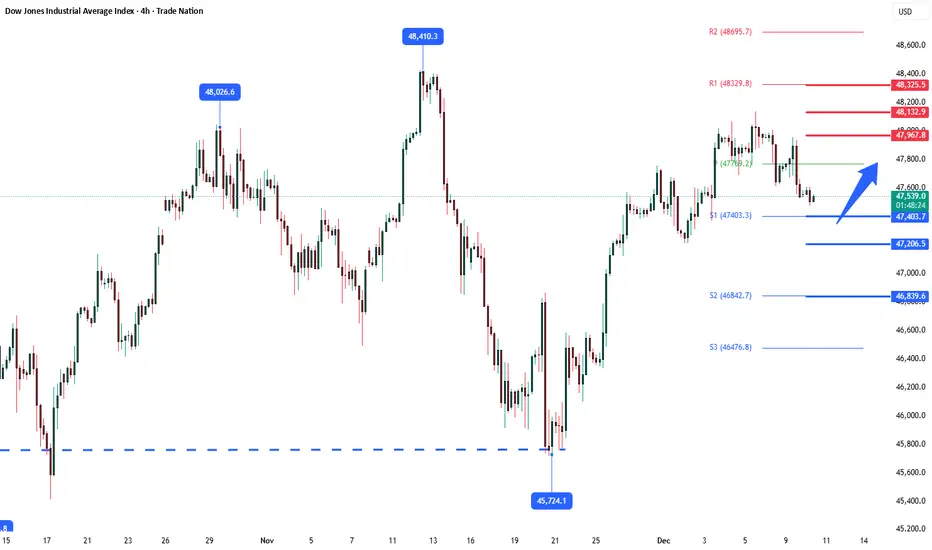
GOOGL at a Key Decision Zone — Dec. 10 TA with GEX InsightGOOGL continues to respect one of the most important levels on its chart: the 311–312 zone. Every time price dips into this area, it gets absorbed instantly, creating a solid base for the recent recovery. That kind of repeated defense usually means real buyers are sitting there, not just random bounces.
The move back toward 316–318 shows where supply still lives. Price wasn’t able to push through that pocket, and the rejection lined up perfectly with the upper trendline on the 1-hour chart. It doesn’t break the bullish structure, but it does tell us that sellers remain active and patient at that level.
On the 15-minute timeframe, the picture is cleaner. GOOGL had a strong run off the 311 support, pushed straight into 318, and then shifted into a controlled pullback. EMAs are flattening, which usually means the market is transitioning from momentum into consolidation. The structure stays constructive as long as price avoids making a new lower low. That 311–312 zone is the line in the sand.
The gamma exposure map adds clarity to why the stock keeps behaving this way. The put wall is stacked right at 311–312, which means dealers hedge by buying each time price approaches it — creating that reliable support. On the other side, the first meaningful call-wall pressure sits at 316–318. That’s exactly where price keeps getting rejected, because dealer hedging tends to produce sell-side flow as we approach those levels.
This leaves GOOGL pinned between two strong forces: a supportive floor and a heavy ceiling. Until one of those gives way, the stock is likely to keep drifting around the middle of the range, roughly near 315. A clean breakout over 318 would free it toward 322–325, where the next gamma pockets sit. A breakdown under 312, on the other hand, would open room toward 310 and possibly even 300 if momentum shifts.
Right now the chart and the options-based gamma structure are aligned, and that usually produces reliable levels. GOOGL is coiling — and whichever side breaks first will define the next directional leg.
Disclaimer: This analysis is for educational purposes only and is not financial advice. Always do your own research and manage your risk.
ORCL A Tradable Bounce?ORCL is in a deep downtrend, a capitulation low & now a first bounce back toward the declining 50d MA
ORCL sold off brutally from the $320s to $185
The recent bottom was high-volume, capitulation-like, followed by a sharp multi-day reversal
Price has now reclaimed $220, which was an important support-turned-resistance in the prior trend
The stock is approaching the declining 50d MA, which is almost always a test in the first rebound after a major trend break
A technical rebound is underway, but ORCL has not confirmed a trend reversal
The stock is in a repair phase, not a confirmed uptrend
RSI has lifted from deeply oversold levels and is now around 47-48
That’s a constructive shift - rising momentum off oversold levels is bullish, but not yet a momentum breakout
Stoch is fully overbought (~70–75) & still rising
In the context of a downtrend, this often signals a pause or pullback is coming before trend reversal is confirmed
Momentum is improving but stretched short-term, raising odds of chop or a retest into earnings
ORCL’s volume spike at the low looks like flush + reversal demand
Subsequent up-days have lighter demand, suggesting early buyers grabbed the low, but institutions have not returned aggressively
This is a tradable bounce, but not a major accumulation
ORCL typically carries +/-4% to +/-6% expected move into earnings
For price at ~$223, that implies a post-earnings range of roughly $211-$236
If volatility spikes ahead of earnings (as it often does for ORCL), the upper end can reach +/-7% (~$207–$239)
ORCL rarely makes outsized earnings moves unless guidance shifts meaningfully
ORCL tends to drift higher into earnings after selloffs
Post-earnings first day moves are usually +3% to -4%, with relatively few >8% outliers
Guidance commentary typically matters more than the headline numbers
The current relief rally fits ORCL’s typical pre-earnings posture, but historical reactions skew toward moderate moves, not blowouts
Resistance
$225–$230 is immediate resistance near the 50d MA
$240 is a strong supply level from the October breakdown
$260 is only reachable on a major earnings beat + guidance upgrade
Support
$210 is the first level buyers must defend
$200 is a psychological + structural support
$185–$190 is the the capitulation low & losing this would signal a failed recovery & potential new down-leg
1. Bullish (high-quality beat + upbeat cloud/AI commentary)
Price breaks above the 50d MA with volume
Push into $235-$240
Follow-through toward $250 possible if guidance confirms acceleration
~30%
2. Base Case (meets expectations, but no powerful guide)
ORCL stalls at/near the 50d MA
Post-earnings drift into $215-$225
No trend reversal, but also no collapse
~50%
3. Bearish (miss, weak bookings, soft guide)
Price rejected at 50d MA & drops below $210
Retest of $190-$200
If $185 breaks, downtrend resumes
~20%
The rebound is real, but it is early, it is approaching the first major resistance, momentum is short-term overbought & ORCL remains in a primary downtrend until proven otherwise
This setup favors a modest move higher into earnings, not necessarily after earnings
Upside is possible, but requires a strong fundamental catalyst
AMEX:SPY
GBP/USD – Bullish Setup with Key LevelsPrice is consolidating above the support zone and holding near the entry level at 1.3320. If bullish momentum continues, a move toward the targeted zone at 1.3344 is likely.
Key Levels:
Entry Zone: 1.3320
Target: 1.3344
Invalidation: Below 1.3308
This analysis is based on price structure and zone reactions. Always confirm with your own strategy and manage risk.
DISCLAIMER : THIS IS NOT A FINANCIAL ADVICE EDUCATIONAL PURPOSE ONLY
Silver Pauses After ATH RunLast week, silver printed a series of new ATHs.
However, after Monday’s one, each subsequent high was only marginal, and the market shifted into a consolidation box — very similar to gold’s recent price action.
The uptrend is still dominant, but for a new accelerated bullish leg, silver needs a clean break above 59.
If that happens, the measured move points toward a target near 61.
On the downside, if bulls lose control of the 57 zone, the most probable outcome becomes a drop toward 54.
For now, it’s a classic wait-and-see environment.
Buy CHF/JPY at 23.6% Fib retracement.I had this same trade last week which entered by 1 pip but I cancelled it due to the weekend. CHF/JPY is now sitting at 23.6% Fib retracement of it's previous move and this makes an excellent place to buy again to push the price back up to recent highs.
Buy Limit : 192.25 23.6% Fib retracement
Stop : 191.35
Profit : 195.40 before recent highs
Risk 1 : 3.5 / Stop is 90 pips.
$QQQ Update & Charting"My 5 year plan for NASDAQ's ETQ (QQQ)" Update:
Nasdaq's ETF NASDAQ:QQQ , has a historic support on the weekly 200 Moving average (MA) as shown as the dark blue line-indicator. I will do a brief TA breakdown of the indicators, charting & future steps.
At point (A), we visualize the start of a zone-block & trendline rejection zones, which will later become a breakout point and wick support on point (B) in pair with a 200 MA indicator support zone. Now at point (B), we also see the same 200 MA indicator support zone, followed by a previous support zone-block visualized by a left arrow. Finally on point (C), we observe price action find support at point A's zone-block & MA zone, after rejection by 50 MA.
What to expect:
After APR 25, we see bullish price action and can expect to hit 'target', calculated by FIB retracements. We are visualizing this chart to foresee bearish price action that will trigger buy-limits at both buy zones (555.60-493.80), with a trailing stop-loss at 388.00, being activated at 400.00-407.00 zone-block.
Indicators & Tools: 200 & 50 SMA, FIB RETRACEMENT (-0.618, -27, 0, 0.5, 0.618, 0.786, 1), rectangle (support/resistance/buy-zone) & trendline.
Below is the link to the original idea.
AVGO Cautiously Bullish, but Extended Short-TermAVGO has reclaimed its 50d MA decisively & is riding it upward
After a mild multi-week consolidation, AVGO is breaking out toward prior highs (~$406)
This type of structure (pullback → higher low → reclaim key MA → push toward highs), tends to imply that dip buyers are in control
RSI is rising & sits around the mid-60s, not overbought, but trending strongly
Rising RSI ahead of earnings usually reflects bullish positioning
Stoch is overbought (>90) which often signals short-term exhaustion, not necessarily a reversal, but it does imply that the easy part of the move may already be behind us going into the report
Volume has picked up on green days, suggesting accumulation
No clear signs of distribution into strength
Historically, AVGO tends to run into earnings because it’s seen as a high-quality operator with secular AI-exposure
Breakout attempts near earnings often indicate expectations of a positive guide or at least no negative surprises
Short-term overbought signals could mean the stock is “priced for good news"
If earnings are merely “okay,” the setup allows for a post-earnings shakeout
The stock is sitting near a local resistance shelf, so upside may require a true beat/raise to sustain
Bullish Bias, but vulnerable to sell-the-news
Momentum, structure & accumulation all favor further upside into the event
Because it’s extended on short-term oscillators, any miss or soft commentary could trigger a retrace back toward the 50d (~$370s)
In other words, the trend is up, but the timing (overbought) is tricky
Current options pricing suggests a roughly +/- 6% move in either direction around earnings
In dollar terms (with AVGO near $406), that implies a potential range between ~$382 & ~$430 ($377–$425, depending on exact strike & expiration)
Some more aggressive estimates out of earnings-volatility models go as high as a +/-10% swing (~$365 to $447), though that's more of a “max stress test” than a central expectation
After earnings, the options-market implied volatility (IV) historically drops sharply (the so-called “IV crush”)
For AVGO, average IV contraction post-earnings has been around 19% & that means even if the stock moves in your favor, gains on options may be partially offset by the drop in IV - something to keep in mind if you trade options instead of stock
Implied Move Range) of ~$382-$430 is the “base case” expected range, with more conservative estimates closer to $395-$420
1. Conservative (base-case)
Stock stays near the expected move of $395-$420
In this case it's a likely modest upside or a mild pullback
Risk/reward is relatively balanced with downside maybe slightly larger than upside if market punishes anything less than a strong beat
2. Bullish if earnings impress
Good beat + strong guidance could push toward or exceed the $425-$430
That range would require near-full “realization” of options-market expectations, but is not unrealistic given prior positive earnings reactions & bullish sentiment toward AVGO’s AI/data-center exposure
3. Bearish (“sell-the-news”)
If results disappoint or forward guidance is soft, price could retrace toward $370-$380 (maybe even lower, eventually to 50d MA or support
Because much of the “good news” may already be priced in, downside risk could be nontrivial if expectations aren’t met
Waiting for the first 1-2 days post-earnings may offer a cleaner entry & you might avoid the “volatility junk” to see more “organic” price action
The stock is already fairly “priced for good news”
If the beat is anything less than strong (or forward guidance is conservative), the sell-side could react harshly
Fed interest-rate moves, general market volatility, or weakness in the tech/AI sector could exacerbate downside even if AVGO’s earnings are okay
The “data center/AI infrastructure” theme (a big part of the bullish case) may disappoint if large clients delay orders or macroeconomic headwinds slow demand
NASDAQ:QQQ AMEX:SPY
EURGBP 10 Dec 2025 Market OutlookOn the daily timeframe, we’ve observed a break of the key Support and Resistance level, signaling that sellers are gaining control.
The dynamic support, represented by the EMA50, has also been breached.
Today, I anticipate a potential retest of the broken S&R level or the EMA50 before an impulsive move to the downside.
As always, calculate your own risk-to-reward ratio before entering any trade.
Happy Trading and Good Luck!
QQQ Implied Move RangeQQQ's implied expected move is calculated using the current option chain to find the ATM straddle (cost of ATM call + ATM put for nearest expiry)
Expected Move (≈ 1σ) ≈ $0.85 × (ATM Straddle Premium)
The result gives a one-standard-deviation range (≈ 68% probability) for the underlying’s move over the option’s life
For a short horizon (“by tomorrow”), pick the front-month (or nearest-term) options that expire soon & use their straddle; alternatively, use annualized implied volatility (IV) converted to daily/weekly via the standard volatility-scaling formula
Move = S × IV × SQRTΔ t /365
Where S = underlying price & Δ t = number of days to expiry
This yields a symmetric “+/-” band, but it does not forecast direction - only the magnitude (volatility expectation)
The front-month or nearest options typically price in a short-term move of roughly +/-1% to +/-1.5% around the current price, ~$625, which suggests a likely trading range for tomorrow of roughly $618 to $634 (-1% to +1.5%)
The implied move is derived from option-markets’ aggregated expectations - it doesn’t tell you direction
Actual price can & often does, break outside the straddle-implied band; especially, if there's a surprise (Fed tone, macro data, headlines)
The implied move reflects volatility pricing
If implied volatility collapses (after the event), realized moves may be smaller
If IV remains elevated or rises, moves may exceed the band
The “+/-1%-1.5%” range is a typical result for front-month options under normal volatility
In a “event week” (like FOMC), implied volatility can be distorted, meaning the real move could be larger, or the band may understate risk
Use the $618-$634 band as a “probability envelope”
Markets seem to expect QQQ to stay somewhere in that range under “normal” conditions
If you expect a dovish surprise - the upper half (near $629-$634) is reasonable
If you expect a hawkish or cautious tone - then the lower half (near $620–$618) is better
If you expect a major surprise or risk-off - plan for possible breakouts beyond that band (to either side)
1. FOMC 27 July 2022
QQQ closed @ $306.81 the day before FOMC
1 day close was $309.81
3 day close was $315.27
Actual 1 day move was +0.98%
Actual 3 day move was +2.76%
The 1 day move stayed within the typical implied move (~+/-1-1.5%)
The 3 day move exceeded the common expected-move envelope (~+/-2-3%), driven by a surprise dovish tone
2. FOMC 14 December 2022
QQQ closed @ $297.50 the day before FOMC
day close was $285.94
3 day close was $268.60
Actual 1 day move was -3.9%
Actual 3 day move was -9.7%
This massively exceeded the typical implied move band
Implied range around that meeting was ~+/-1.5-2% & the realized move was far greater
Powell pushed back on easing conditions
3. FOMC 22 March 2023
QQQ closed @ $305.00 the day before FOMC
1 day close was $309.42
3 day close was $315.57
Actual 1 day move was +1.45%
Actual 3 day move was +3.47%
The 1 day move landed right inside the expected band
The 3 day move pushed to the upper edge or slightly beyond the common ~+/-3% implied envelope
A mild dovish shift + banking-crisis risk-off reversal supported tech
1. QQQ usually stays within the implied move on Day 1
Roughly +/-1–1.5% is historically typical
Breaks above +/-2% tend to occur only on strong surprises
2. QQQ frequently breaks the implied move by Day 3-5
The 3-5 day window often includes volatility expansion, trend continuation if the Fed surprises & mean-reversion if the first move was emotional
3. Surprises create the largest deviations
Hawkish surprises are the biggest downside breaches (December 2022)
Dovish surprises are sizable upside breaches (July 2022)
4. Base-case FOMC outcomes generally stay within the implied band
Typical outcomes settle into the +/-1-1.5% Day 1 move, but still tend to fade over 3-5 days
Around 70-80% of the time, QQQ stays within a “1σ” band after FOMC
20-30% of the time, it breaks out with a big move (usually driven by a surprise)
The 3 day window is actually slightly more prone to exceed the band than 1 day or 5 day
This suggests that 3-5 sessions after FOMC is where the real repricing happens
🕊️ Dovish
Day 1 +0.5% to +1.5%
Day 3 +1% to +3% if the narrative sticks
Day 5 some giveback is common = net +0.5% to +2%
🧸 Base Case (“hawkish cut”/cautious)
Day 1 –0.5% to +0.5% (within 1σ band)
Day 3 drift –0.5% to –1.5%
Day 5 further mild weakness = total -1% to -2.5%
🦅 Hawkish
Day 1 -1% to -2.5% (near or beyond 1σ band)
Day 3 -2% to -4% total
Day 5 is either stabilization or a small overshoot lower = –3% to –5% total in a stronger shock
Something like the base-case band happens ~70-80% of the time
A true “shock” move (outside band, +/-3–5%) occurs roughly 1 in 4 to 1 in 5 meetings
Directionally, given current positioning yield re-steepening + QQQ’s extension, I’d assign higher odds of a base or mildly hawkish outcome, so statistically, the 3-5 day fade is still my default
The 3-5 session window is where the bigger, more directional, macro-driven moves happen
In the current macro setup, the bias is toward the base/mildly hawkish path, which historically lines up with a contained Day 1 move, then a drift lower over the following 3-5 sessions
+/-1.5% (1 day)
Upside $625 × 1.015 ≈ $634
Downside $625 × 0.985 ≈ $616
+/-3% (bigger, 3-5 day)
Upside $625 × 1.03 ≈ $644
Downside $625 × 0.97 ≈ $606
+/-5% (shock/tail scenario)
Upside $625 × 1.05 ≈ $656
Downside $625 × 0.95 ≈ $594
1. If we close >$634, it nudges into “strong dovish” territory & day 3-5, holding above $625-$630 keeps the “wave 5 extension” idea alive; even then, a later retest of $620-$625 is typical behavior
2. A drift toward $608-$615 lines up with historical negative median returns & if QQQ breaks below ~$615 & closes there on Day 3-5, odds increase that we’re in bigger corrective territory, not just a quick shakeout
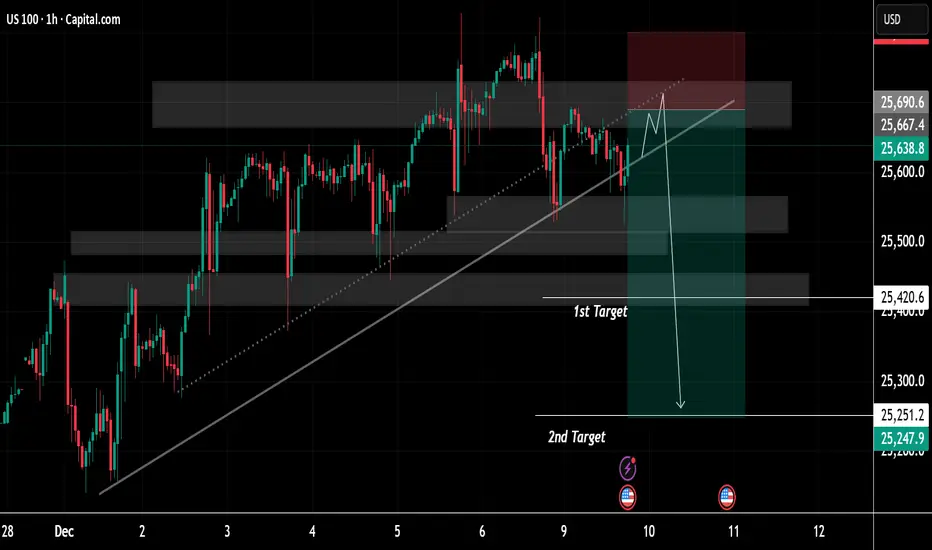
NQ 100 Direction and indicationsWaiting for another indication or reversal from NQ.
Key Levels need to be broken or rejected to tell direction. Generally it is looking like NQ is bearish. Just need to wait for the right time to enter. No trading NQ for the rest of the week due to holidays and lack of Gov data.
How AI is Revolutionizing Risk ManagementIn a world where bots can fire off hundreds of orders in the time it takes you to sip your coffee, risk management isn't a checkbox at the end of your plan it's the core operating system.
AI has given traders incredible leverage:
Faster execution than any human
Exposure to more markets and instruments
Complex position structures that would be impossible to manage manually
But that same leverage cuts both ways. When something breaks, it doesn't trickle it cascades.
The traders who survive this era won't be the ones with the most aggressive models. They'll be the ones whose risk frameworks are built to handle both human mistakes and machine speed.
Why Old-School Risk Rules Aren't Enough Anymore
For years, the standard advice looked like this:
"Never risk more than 1–2% per trade"
"Always use a stop loss"
"Diversify across assets"
Those principles still matter so much. But AI and automation helped improve and changed the landscape:
Orders can hit the market in microseconds your "mental stop" is useless
Correlations spike during stress what looked diversified suddenly moves as one
Multiple bots can unintentionally stack risk in the same direction
Feedback loops between algos can turn a normal move into a cascade
In other words: the classic rules are the starting point , not the full playbook.
How AI Supercharges Risk Management (If You Let It)
Used well, AI doesn't just place trades it monitors and defends your account in ways a human never could.
Dynamic Position Sizing
Instead of risking a flat 1% on every trade, AI can adjust size based on:
Current volatility
Recent strategy performance
Correlation with existing positions
Market regime (trend, range, chaos)
When conditions are favorable, size can step up modestly.
When conditions are hostile, size automatically steps down.
The goal isn't to swing for home runs.
It's to press when the wind is at your back, and survive when it's in your face.
Smarter Stop Placement
Fixed stops at round numbers are magnets for liquidity hunts.
AI can analyze:
ATR-based volatility bands
Clusters of swing highs/lows
Liquidity pockets in the book
Option levels where hedging flows are likely
Stops get placed where the idea is broken, not where noise usually spikes.
Portfolio-Level Heat Monitoring
Most traders think in single trades. AI thinks in portfolios.
It can continuously measure:
Total percentage of equity at risk right now
Sector and theme concentration
Correlation clusters (everything tied to the same macro factor)
Worst-case scenarios under shock moves
If your "independent" trades are all secretly the same bet, a good risk engine will tell you.
The 4-Layer Risk Stack for AI Traders
Think of your protection as layered armor:
Trade Level
Clear stop loss
Defined target or exit logic
Position size tied to account risk, not feelings
Strategy Level
Max number of open positions per strategy
Daily loss limit per system
"Three strikes" rules after consecutive losing days
Portfolio Level
Total open risk cap (for example: no more than 2% at risk at once)
Limits by asset class, sector, and narrative
Rules to prevent over concentration in one theme (AI stocks, crypto, etc.)
Account Level
Maximum drawdown you're willing to tolerate
Hard kill switch when that line is crossed
Recovery plan (size reductions, pause period, review process)
AI can monitor all four layers at once every position, every second and trigger actions the moment a rule is violated.
Kelly, Edge, and Why "More" Is Not Always Better
The Kelly Criterion is a famous formula that tells you how much of your account you could risk to maximize long‑term growth.
Kelly % = W - ((1 - W) / R)
Where:
W = Win probability
R = Average Win / Average Loss
Example:
Win rate (W) = 60%
Average win is 1.5× average loss (R = 1.5)
Kelly = 0.60 - (0.40 / 1.5) ≈ 0.33 → 33%
On paper, that says "risk 33% of your account each trade." In reality, that's a fast path to a margin call.
Serious traders and any sane AI risk engine treat Kelly as the ceiling , then scale it down:
Half‑Kelly (≈ 16%)
Quarter‑Kelly (≈ 8%)
Or even less, depending on volatility and confidence
AI can recompute W and R as fresh trades come in, adjusting risk when your edge is hot and cutting risk when your edge is questionable.
Designing Your AI‑Era Risk Framework
You don't need hedge‑fund infrastructure to think like a pro. Start with five questions:
What is my absolute pain threshold?
At what drawdown (%) would I stop trading entirely?
Write that number down. Build backwards from it.
How many consecutive losses can I survive?
If you want to survive 10 straight losses at 20% max drawdown, your per‑trade risk must be ~2% or less.
How will I shrink risk when volatility spikes?
Tie your size to ATR, VIX‑style measures, or your own volatility index.
What are my circuit breakers?
Daily loss limit
Weekly loss review trigger
Conditions where all bots shut down automatically
Is everything written down?
If it's not in rules, it's just a wish.
Rules should be clear enough that a bot could follow them.
Four AI Risk Mistakes That Blow Accounts Quietly
Over‑optimization - Training models until the backtest is perfect… and live trading is a disaster.
Ignoring tail risk - Assuming the future will look like the backtest, and underestimating rare events.
No true kill switch - Letting a "temporary" drawdown turn into permanent damage.
Blind trust in the model - Assuming "the bot knows best" without understanding its logic.
AI should be treated like a high‑performance car: powerful, fast, and absolutely deadly if you drive it without brakes.
Discussion
How are you handling risk in the age of automation?
Do you size positions dynamically or use fixed percentages?
Do you cap total portfolio risk, or just think trade by trade?
Do your bots or strategies have clear kill switches?
Drop your thoughts and your best risk rules in the comments. In the future of trading AI will be the one watching your back.....
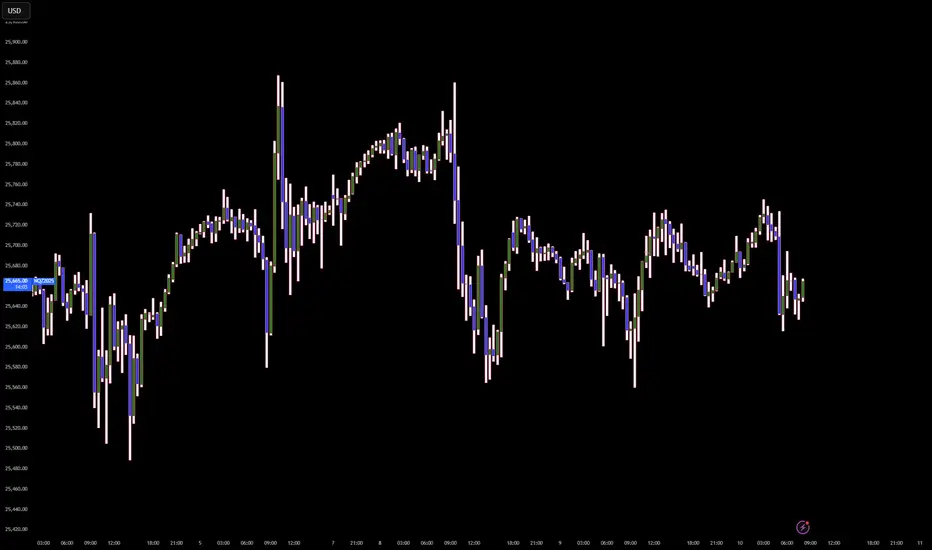
NQ Q4 CloseQ4 2025 told a clear story: higher prices were accepted. Now we're just resolving the details — will Q4 close at the highs, or will it pull back to let more participants join?
October: Market rejected 23,900 — a clear displacement origin and higher-timeframe PO3 forming.
November: Pure expansion. One massive macro dealing range repricing with no meaningful retrace.
December: Price is now in re-accumulation at a higher premium. The question:
Will 26,000 be accepted as the new macro fair value?
Buy-side: 26,050 → 26,350 + (clean BSL) → October ATH
Sell-side / Discount: 25,900 → 25,650 (first draw on liquidity) → 25,480 (HTF sell-side)
Scenarios
A → Continuation: Hold 25,650, reach for BSL at 26,350 + → October ATH
B → Normal Drawdown: Run sell-side at 25,480–25,650 → rebalance → move higher.
C → Shift in Orderflow: Acceptance below 25,480 = November’s expansion re-priced.
As a PermaBull, I am looking for a typical December Santa Rally! B for Bulls.
Q4 has been a one-way train higher
Weekly structure supports continuation
Dips are being bought
BUT we're trading at premium.
Radicati in Luce — Rooted in Light
TIME × PRICE × LIQUIDITY.
NFA Disclaimer:
This is for educational purposes only. Not financial advice. Trade at your own risk.