International Finance TransformedNavigating the New Era of Global Economic Integration.
1. The Evolution of International Finance
International finance traditionally referred to cross-border trade in capital, foreign exchange, and investment. Its foundations were built on fixed exchange rate systems, gold standards, and government-managed monetary frameworks. But with globalization, deregulation, and digitalization, this landscape has evolved beyond recognition.
The late 20th century saw the liberalization of capital markets—countries began dismantling barriers to trade and investment, allowing free flow of capital and fostering multinational growth. Simultaneously, technological innovation revolutionized communication and transaction systems, enabling real-time trading across continents.
By the early 21st century, financial globalization had reached new heights. Institutions like the International Monetary Fund (IMF), World Bank, and World Trade Organization (WTO) played pivotal roles in creating standardized policies for global trade and finance. Today, international finance is not just about currency exchange or capital movement—it encompasses digital finance, cryptocurrency markets, sovereign debt, climate finance, and even artificial intelligence-driven economic modeling.
2. Drivers of Transformation
Several key forces have fueled the transformation of international finance:
a. Technological Innovation
Technology has redefined the financial world. The rise of fintech, blockchain, and digital payment systems has altered how nations conduct cross-border transactions. Decentralized finance (DeFi) and cryptocurrencies challenge traditional banking, while artificial intelligence and big data analytics enhance risk management and financial forecasting.
The introduction of central bank digital currencies (CBDCs) is another monumental shift. Nations like China, India, and the European Union are experimenting with digital versions of their currencies to make international trade faster, safer, and more transparent.
b. Globalization and Trade Liberalization
Globalization remains a fundamental pillar of international finance. As trade barriers diminished, supply chains became more integrated, and capital markets opened, global financial interdependence deepened. Investments from institutional players now span multiple continents, linking the fortunes of economies like never before.
However, this interdependence also makes the world more vulnerable to shocks. A financial crisis in one region can quickly become a global contagion—just as the 2008 financial crisis demonstrated.
c. Geopolitical Realignment
Geopolitics plays a defining role in shaping international finance. The ongoing tensions between major economies—like the U.S. and China—have shifted the dynamics of global trade, currency valuation, and capital flow. Sanctions, tariffs, and shifting alliances constantly influence investment sentiment and financial stability.
Moreover, emerging economies have gained prominence. Countries like India, Brazil, Indonesia, and Nigeria are now key players in global financial discussions, representing the voice of the Global South in institutions traditionally dominated by Western powers.
d. Sustainability and Green Finance
Climate change has introduced a new dimension to finance: sustainability. Governments and corporations alike are now integrating environmental, social, and governance (ESG) criteria into investment decisions. Green bonds, carbon credits, and climate finance mechanisms have become critical tools in combating environmental challenges.
The shift toward sustainable finance is not only ethical but also strategic. Investors increasingly demand transparency and accountability from corporations, and green investments are proving to be both profitable and future-proof.
3. The Rise of Digital and Decentralized Systems
The 21st century has ushered in a financial revolution powered by digital innovation. The emergence of blockchain technology, cryptocurrencies, and decentralized finance (DeFi) has disrupted traditional banking and monetary systems.
Bitcoin’s inception in 2009 marked a turning point. Initially dismissed as a fringe experiment, it evolved into a multi-trillion-dollar market influencing global investment portfolios and central bank policies. Blockchain technology, the backbone of cryptocurrencies, enables transparent, tamper-proof financial transactions without intermediaries.
Moreover, fintech startups have democratized finance by offering mobile-based solutions for lending, insurance, and remittances. This financial inclusion movement has empowered millions in developing economies, bridging gaps left by conventional banking systems.
Cross-border transactions have become more efficient through systems like SWIFT gpi, Ripple, and stablecoins. Traditional remittance systems that once took days now execute transfers in seconds. Digitalization has effectively transformed the speed, accessibility, and inclusiveness of international finance.
4. The Role of Global Institutions and Policies
Despite decentralization, global financial institutions remain central to international finance. The International Monetary Fund (IMF) manages monetary stability and provides support to countries facing balance-of-payment crises. The World Bank continues to fund development projects, while the Bank for International Settlements (BIS) coordinates central bank cooperation.
Recently, new alliances and institutions have emerged—like the Asian Infrastructure Investment Bank (AIIB) and BRICS New Development Bank—offering alternatives to traditional Western-led financial structures. These new institutions reflect the shifting balance of power in global finance, where emerging economies seek greater representation and influence.
International agreements, such as Basel III norms, ensure global financial stability by setting capital adequacy and risk management standards for banks. Similarly, organizations like the Financial Stability Board (FSB) monitor vulnerabilities in the global financial system.
5. Challenges in the New Financial Era
While international finance has advanced dramatically, it faces significant challenges that require urgent attention.
a. Financial Volatility
Rapid capital movement can destabilize economies. Currency fluctuations, speculative trading, and interest rate disparities often trigger volatility in global markets. The U.S. Federal Reserve’s monetary decisions, for instance, can cause ripple effects in emerging markets—strengthening or weakening local currencies and affecting capital inflows.
b. Inequality and Financial Inclusion
Despite globalization, financial benefits are unevenly distributed. Many developing nations still struggle with debt burdens, currency depreciation, and limited access to credit. Digital finance offers solutions, but it also risks excluding those without digital literacy or access to technology.
c. Regulation and Security
The expansion of digital finance introduces cybersecurity risks and regulatory dilemmas. Ensuring financial security in an era of crypto transactions, online trading, and AI-driven investments requires international cooperation. Regulatory frameworks must balance innovation with stability to prevent misuse and fraud.
d. Climate and Sustainability Risks
Climate change presents both economic and financial threats. Extreme weather events disrupt supply chains and increase insurance costs, while the transition to green energy requires massive financial restructuring. Investors and governments must align financial strategies with sustainable growth goals to ensure long-term stability.
6. The Future Landscape of International Finance
Looking ahead, international finance will continue to evolve, driven by innovation, policy reform, and global cooperation. The coming decades will see a fusion of finance and technology unlike anything before.
a. Digital Currency Dominance
Central bank digital currencies (CBDCs) are expected to become mainstream, offering faster and more secure global transactions. China’s digital yuan and India’s digital rupee could challenge the dominance of the U.S. dollar in international settlements.
b. Artificial Intelligence and Predictive Analytics
AI will play a crucial role in financial modeling, risk assessment, and portfolio management. Machine learning algorithms will enable smarter decision-making and real-time monitoring of financial health across institutions and nations.
c. Decentralized and Tokenized Assets
The tokenization of real-world assets—like real estate, art, or commodities—will make global investment more accessible. Decentralized finance will continue to expand, reducing reliance on traditional intermediaries while increasing transparency and efficiency.
d. New Financial Power Centers
Emerging markets are set to become the growth engines of the world economy. Asia, Africa, and Latin America will lead the next phase of financial expansion, supported by digital innovation, youthful populations, and rapid industrialization.
e. Sustainable Global Finance
Sustainability will be the cornerstone of future financial systems. Green investments, renewable infrastructure, and ESG-focused portfolios will shape investor preferences. Financial institutions will prioritize ethical responsibility alongside profitability.
7. Conclusion: The New Age of Global Finance
International finance has truly been transformed—from a slow, bureaucratic system confined by national borders into a dynamic, interconnected web of innovation, opportunity, and complexity. The fusion of digital technology, policy reforms, and global collaboration has redefined how money moves, how businesses operate, and how nations prosper.
However, with great transformation comes great responsibility. As we embrace financial globalization, we must ensure that inclusivity, sustainability, and stability remain at the forefront. The next phase of international finance will not only be measured by profitability or speed—but by its ability to create equitable growth, empower nations, and safeguard the future of our planet.
The transformation of international finance is not just a story of economic evolution—it’s a testament to human adaptability, innovation, and the relentless pursuit of progress. We are living in an era where finance is not just global—it is universal, transcending boundaries, currencies, and even traditional definitions of money itself.
Tarders
Drivers of Profits in Emerging Markets1. Introduction to Emerging Markets
Emerging markets are economies experiencing rapid growth and industrialization, typically with increasing integration into the global economy. They are often characterized by:
High growth potential: GDP growth rates exceeding those of developed economies.
Structural transformation: Shifts from agriculture to industry and services.
Market volatility: Exposure to political, economic, and currency fluctuations.
Untapped consumer bases: Large populations with rising income levels.
Profits in emerging markets are driven by unique combinations of internal and external factors, which can differ significantly from developed markets.
2. Macroeconomic Drivers of Profits
Macroeconomic stability and growth are primary drivers of corporate profitability. Key factors include:
2.1 Economic Growth
Strong GDP growth increases demand for goods and services.
Rapid urbanization fuels infrastructure, real estate, and consumer markets.
Industrialization and rising manufacturing output create investment opportunities.
2.2 Inflation and Interest Rates
Moderate inflation encourages consumption and investment.
High inflation can erode profit margins.
Interest rate policies influence borrowing costs for businesses and consumer credit availability.
2.3 Exchange Rates
Currency stability attracts foreign investment and reduces transactional risks.
Depreciation can boost export competitiveness but increase import costs.
Multinational companies must manage currency risk to protect profits.
2.4 Fiscal and Monetary Policies
Government spending on infrastructure, health, and education stimulates economic activity.
Central bank policies controlling money supply affect liquidity and capital availability.
Tax incentives or subsidies for strategic sectors can improve profitability.
3. Market Structure and Competitive Dynamics
The structure of the market significantly impacts profitability:
3.1 Market Concentration
Oligopolistic markets with few competitors often allow for higher profit margins.
Competitive markets encourage innovation but may pressure prices and reduce margins.
3.2 Entry Barriers
Regulatory hurdles, capital requirements, and access to distribution networks influence profitability.
Markets with moderate entry barriers attract strategic investments without saturating demand.
3.3 Informal Sector and Shadow Economy
In many emerging markets, the informal sector constitutes a significant portion of economic activity.
Businesses navigating both formal and informal markets can identify niche opportunities for profit.
4. Sectoral Drivers of Profit
Profitability varies by industry due to sector-specific trends and growth potential:
4.1 Consumer Goods and Retail
Rising middle-class incomes drive consumption of packaged goods, electronics, and luxury items.
Brand loyalty, product differentiation, and pricing strategies are crucial.
4.2 Financial Services
Expanding access to banking, microfinance, and digital payments increases revenue potential.
Fintech innovations reduce costs and widen customer reach.
4.3 Infrastructure and Real Estate
Rapid urbanization fuels demand for housing, roads, and utilities.
Public-private partnerships and government investment in infrastructure enhance returns.
4.4 Technology and Telecommunications
High mobile penetration and digital adoption create opportunities in software, e-commerce, and telecom.
Profit margins are driven by scalability and network effects.
4.5 Natural Resources and Commodities
Emerging markets often have abundant natural resources, making mining, oil, and agriculture lucrative sectors.
Global commodity prices and extraction costs determine profitability.
5. Consumer Behavior and Demographics
5.1 Rising Middle Class
Increasing disposable income drives demand for consumer goods, services, and entertainment.
Businesses can profit by targeting evolving lifestyles and preferences.
5.2 Youth Population
A large, young population accelerates adoption of technology, fashion, and social trends.
Marketing strategies tailored to digital-native audiences enhance revenue potential.
5.3 Urbanization
Migration to cities boosts consumption of housing, retail, transport, and healthcare services.
Urban demand patterns create profitable business clusters.
6. Innovation and Technology Adoption
6.1 Digital Transformation
Mobile banking, e-commerce, and online platforms expand market reach.
Technology reduces operational costs and increases efficiency.
6.2 Product and Service Innovation
Companies introducing affordable, locally tailored products often achieve higher profitability.
Innovations in supply chain, logistics, and payment solutions enable scalability.
6.3 Automation and Efficiency
Adopting modern manufacturing, AI, and logistics technologies reduces production costs.
Operational efficiency directly translates into improved profit margins.
7. Government Policies and Regulatory Environment
7.1 Regulatory Reforms
Simplified business registration, reduced tariffs, and foreign investment liberalization enhance profitability.
Clear legal frameworks protect intellectual property and contracts.
7.2 Tax Incentives and Subsidies
Sector-specific incentives (e.g., renewable energy, manufacturing) lower operational costs.
Export incentives improve competitiveness in global markets.
7.3 Trade Policies
Trade agreements and preferential tariffs facilitate exports.
Regulatory alignment with global standards attracts multinational partnerships.
8. Globalization and Foreign Investment
8.1 Foreign Direct Investment (FDI)
FDI brings capital, technology, and managerial expertise.
Joint ventures with foreign firms often lead to higher profitability.
8.2 Access to Global Markets
Emerging markets integrated into global supply chains benefit from export-driven profits.
Access to international brands and technology enhances competitiveness.
8.3 Remittances
Inflows from diaspora populations increase domestic consumption, driving profits in consumer sectors.
9. Risk Management and Profit Sustainability
Profitability in emerging markets requires managing inherent risks:
9.1 Political and Regulatory Risk
Political instability, policy reversals, and corruption can disrupt operations.
Companies employing local partnerships and risk mitigation strategies sustain profitability.
9.2 Currency and Inflation Risk
Hedging against currency depreciation protects international revenues.
Pricing strategies adjusted for inflation safeguard margins.
9.3 Operational and Supply Chain Risk
Robust supply chains and logistics networks reduce operational costs.
Local sourcing and diversified suppliers enhance resilience and profitability.
10. Sustainability and ESG Considerations
Environmental, social, and governance (ESG) practices increasingly influence profitability.
Companies adopting sustainable practices gain long-term market trust and access to global investors.
Renewable energy projects, sustainable agriculture, and ethical manufacturing often yield competitive returns.
11. Case Studies and Examples
India: Rapid growth of fintech and e-commerce driven by a young, tech-savvy population.
Vietnam: Manufacturing and exports of electronics and garments have created high-margin business opportunities.
Brazil: Agricultural exports and natural resources remain major profit drivers, influenced by global commodity prices.
Nigeria: Telecommunications and mobile payment services have seen exponential growth due to rising urbanization and digital adoption.
12. Conclusion
Profits in emerging markets are driven by a complex interplay of macroeconomic growth, market dynamics, sector-specific trends, consumer behavior, innovation, regulatory frameworks, and global integration. While opportunities are substantial, businesses must navigate volatility, political risks, and operational challenges to sustain profitability. Strategic investments, technological adaptation, and understanding local market nuances are crucial for capitalizing on the growth potential of emerging markets.
Introduction and Types of Correlations in Markets1. Introduction to Market Correlations
In the financial world, no asset class exists in complete isolation. Prices of stocks, commodities, currencies, and bonds often move in relation to one another because they are influenced by shared factors like global economic conditions, investor sentiment, monetary policy, or geopolitical events. This interconnectedness is what we call correlation.
Correlation is a statistical measure that indicates how two assets or variables move in relation to each other. For traders, investors, and portfolio managers, understanding correlation is not just a matter of academic interest—it is a powerful tool for risk management, diversification, and strategy design.
If two assets tend to move in the same direction, they are said to be positively correlated.
If they move in opposite directions, they are negatively correlated.
If their movements show no consistent relationship, they are considered uncorrelated.
For example:
Gold and the U.S. dollar often show a negative correlation—when the dollar strengthens, gold tends to weaken.
Crude oil and airline stocks may also display negative correlation—higher oil prices increase costs for airlines, pressuring their stock prices.
Global equity indices like the S&P 500 and NASDAQ often move in positive correlation due to shared economic influences.
Understanding correlations helps traders anticipate price behavior, hedge risks, and create well-diversified portfolios.
2. Importance of Studying Correlations
Before diving into the types of correlations, it is vital to understand why correlations matter in financial markets:
Risk Management:
Correlation allows investors to measure exposure. If a portfolio has assets that are highly correlated, risks multiply during market downturns. By mixing low or negatively correlated assets, one can reduce overall volatility.
Portfolio Diversification:
“Don’t put all your eggs in one basket” is one of the oldest principles of investing. Correlation helps identify which assets can act as hedges against each other.
Market Prediction:
By analyzing correlations, traders can sometimes predict the direction of related markets. For instance, strong movements in the bond market can foreshadow shifts in stock prices.
Hedging Strategies:
Many hedging strategies depend on correlation. For example, if you hold exposure to crude oil, you might short airline stocks to hedge risks.
Arbitrage and Pairs Trading:
Traders use correlation in pairs trading, where they go long one asset and short another highly correlated one, profiting from deviations when the correlation temporarily weakens.
Understanding Economic Cycles:
Different asset classes perform differently across economic cycles. Correlation analysis helps map these relationships.
3. Mathematical Foundations of Correlation
To analyze correlations, we often use correlation coefficients:
Pearson Correlation Coefficient (r):
Measures the linear relationship between two assets.
r = +1 → Perfect positive correlation.
r = -1 → Perfect negative correlation.
r = 0 → No correlation.
For example:
If crude oil and the Canadian dollar (CAD) show r = +0.85, it means they strongly move in the same direction.
If gold and the U.S. dollar index show r = -0.75, they move in opposite directions.
Another advanced tool is Spearman’s Rank Correlation, useful when relationships are not linear but monotonic.
4. Types of Correlations in Markets
Market correlations can be categorized in multiple ways: by direction, time, asset class, or causation. Below are the key types:
4.1 Positive Correlation
A positive correlation exists when two assets move in the same direction.
Example 1: S&P 500 and Dow Jones Industrial Average usually rise and fall together, reflecting broad U.S. economic sentiment.
Example 2: Crude oil and the Canadian dollar often show positive correlation because Canada is a major oil exporter.
Trading Implication:
Investors holding two highly correlated assets risk magnifying losses during downturns. For instance, owning both Google (Alphabet) and Microsoft doesn’t provide much diversification since both are tech giants affected by similar factors.
4.2 Negative Correlation
A negative correlation exists when one asset rises while the other falls.
Example 1: Gold and the U.S. dollar. When the dollar weakens, gold becomes cheaper for foreign buyers, pushing its price up.
Example 2: Oil prices and airline stocks. Rising oil increases operating costs for airlines, dragging stock prices lower.
Trading Implication:
Negative correlation is the backbone of hedging strategies. Investors buy negatively correlated assets to protect themselves during downturns.
4.3 Zero (or Low) Correlation
When assets show no significant relationship, they are considered uncorrelated.
Example: Wheat prices and semiconductor stocks usually show no relationship.
Trading Implication: Adding uncorrelated assets provides true diversification benefits.
4.4 Perfect Correlation
This is rare in real markets but theoretically exists.
Perfect Positive (r = +1): Two assets move exactly in sync. Example: A stock and its futures contract.
Perfect Negative (r = -1): One asset rises exactly as the other falls.
In practice, perfect correlation is rarely sustained because markets are influenced by multiple external factors.
4.5 Spurious Correlation
Sometimes correlations appear strong but are misleading because they are caused by an external factor or pure coincidence.
Example: Ice cream sales and drowning incidents may rise together during summer, but one doesn’t cause the other.
Market Example: Correlation between Bitcoin prices and search engine traffic may exist but doesn’t always indicate causation.
Trading Danger: Traders relying on spurious correlations without deeper analysis risk making poor decisions.
4.6 Short-Term vs. Long-Term Correlation
Short-Term Correlation: Assets may move together during specific news events or crises. Example: During the COVID-19 crash of March 2020, most asset classes (stocks, bonds, commodities) fell together.
Long-Term Correlation: Over longer horizons, assets often revert to their fundamental relationships. Example: Bonds and stocks tend to have a long-term negative correlation due to risk-on vs. risk-off dynamics.
4.7 Dynamic or Time-Varying Correlation
Correlations are not static—they change with market conditions, economic cycles, and monetary policy.
During crises, correlations between risk assets (stocks, commodities, emerging markets) often spike, a phenomenon called “correlation breakdown” or “flight to safety.”
In stable markets, correlations may weaken as assets reflect sector-specific fundamentals.
Trading Implication: A strategy based on past correlations may fail if relationships shift suddenly.
4.8 Cross-Asset Correlation
This refers to relationships between different asset classes.
Stocks and Bonds: Often negatively correlated; when stocks fall, investors rush to bonds.
Oil and Currencies: Oil exporters like CAD (Canada) and RUB (Russia) often rise with crude oil prices.
Gold and Equity Markets: Gold often rises when equities fall due to safe-haven demand.
Cross-asset correlations are critical for global macro traders.
4.9 Inter-Market Correlation
Correlation also exists across geographic markets.
U.S. and European stock indices often show strong positive correlation.
Emerging market equities may correlate with commodity prices.
Asian currencies like INR, KRW, and SGD often move in tandem with Chinese Yuan.
4.10 Sectoral Correlation
Within equity markets, sectors show different correlation patterns:
Banking stocks tend to move together due to shared exposure to interest rate cycles.
Technology stocks often display high correlation because they react to global tech demand.
Defensive sectors like utilities may show lower correlation with cyclical sectors like consumer discretionary.
4.11 Lead-Lag Correlation
Sometimes, one market leads another.
Example: Bond yields often move before stock markets because bonds are more sensitive to interest rate expectations.
Example: Oil prices can impact inflation expectations, which later affect central bank decisions and equities.
Trading Use: Traders look for leading indicators to anticipate moves in lagging markets.
5. Practical Applications in Trading and Investing
Pairs Trading:
Identify two assets with strong historical correlation. When their prices diverge, traders bet on convergence. Example: Long Coca-Cola and Short Pepsi.
Portfolio Construction:
Use correlation analysis to combine assets that balance each other. Example: Stocks + Bonds + Commodities.
Hedging:
Airlines hedge oil risk because of negative correlation. Investors hedge equity risk with gold.
Macro Trading:
Correlation between the U.S. dollar and emerging market equities helps global macro funds position themselves.
Volatility Forecasting:
Strong correlations between assets often increase market volatility.
6. Limitations of Correlation Analysis
Correlation ≠ Causation: Just because two markets move together doesn’t mean one drives the other.
Dynamic Nature: Correlations change over time.
Black Swan Events: In crises, correlations may behave unpredictably.
Hidden Variables: External factors can distort relationships.
7. Conclusion
Market correlations are the invisible threads weaving global financial markets together. From equities to commodities, from currencies to bonds, understanding how assets move in relation to one another is crucial for traders, investors, and policymakers.
Positive correlations show alignment.
Negative correlations create hedging opportunities.
Zero correlations enable diversification.
Dynamic correlations remind us that markets are never static.
Ultimately, correlation analysis is both a science and an art. While mathematical tools provide clarity, real-world application requires judgment, experience, and awareness of ever-changing global conditions. By mastering correlation, market participants gain a powerful lens to navigate complexity, reduce risk, and capture opportunities.
Multinational Corporations (MNCs) & Their Impact on Global TradiHistorical Evolution of MNCs in Global Trade
Early Forms (Pre-19th Century):
Trading companies like the British East India Company and Dutch East India Company (VOC) in the 17th century were precursors of modern MNCs.
These entities controlled trade routes, natural resources, and colonies, combining commercial with quasi-governmental powers.
They were central to early globalization, particularly in spices, textiles, and precious metals.
Industrial Revolution (19th Century):
Rise of steamships, railways, and telegraphs facilitated international business expansion.
Companies like Singer Sewing Machine and Coca-Cola began setting up operations in multiple countries.
Access to new markets and raw materials became driving forces.
20th Century Expansion:
Post-WWII era saw unprecedented growth in MNC activity.
Organizations like the World Bank, IMF, and GATT/WTO created favorable conditions for cross-border trade.
Automotive companies (Ford, Toyota), pharmaceuticals (Pfizer, Novartis), and oil firms grew into global giants.
21st Century Globalization & Digital Age:
MNCs now dominate global trade through sophisticated supply chains and digital platforms.
Technology firms like Amazon, Google, Meta, and Alibaba reshape e-commerce and services.
The scale and influence of MNCs rival those of many nation-states.
MNCs’ Role in Shaping Global Trade
1. Expansion of Global Markets
MNCs increase trade volumes by producing goods in one country and selling them in another. For instance:
Apple designs in the U.S., manufactures in China, and sells globally.
Nestlé sources raw materials from Africa, processes them in Europe, and distributes worldwide.
This multiplies cross-border flows of goods, services, and intellectual property.
2. Creation of Global Supply Chains
MNCs pioneered the idea of fragmented production. A single product may pass through 10–15 countries before reaching consumers.
Example: A smartphone’s chips from Taiwan, software from the U.S., assembly in Vietnam, packaging in China, and final sales in India.
This supply chain structure makes global trade deeply interconnected.
3. Foreign Direct Investment (FDI)
MNCs contribute significantly to global trade through FDI, where they invest in factories, offices, or infrastructure abroad.
FDI increases production capacity and export potential.
Countries like India, Vietnam, and Mexico attract MNCs for low-cost production and skilled labor.
4. Technology Transfer
MNCs carry cutting-edge technologies across borders, fostering industrial upgrades in host nations.
For example, Toyota’s lean manufacturing system spread globally, revolutionizing efficiency.
Tech giants bring digital innovations to developing economies.
5. Employment Generation & Skill Development
MNCs provide millions of jobs in host countries and train local workforces in global standards.
BPOs in India (Infosys, Accenture, IBM) boosted IT-enabled services exports.
Manufacturing hubs in Southeast Asia thrive because of MNC-driven employment.
6. Influence on Trade Policies
MNCs lobby governments for trade liberalization, favorable tax regimes, and investment treaties.
WTO and regional trade agreements are shaped significantly by corporate interests.
They encourage reduction of tariffs, opening markets for goods and services.
Positive Impacts of MNCs on Global Trading
1. Increased Efficiency & Lower Costs
MNCs exploit comparative advantages across countries—cheaper labor in Asia, advanced R&D in Europe, or abundant resources in Africa.
This leads to cost efficiency, making products affordable globally.
2. Market Expansion for Developing Nations
Countries gain access to international markets by integrating into MNC supply chains.
Example: Vietnam emerged as a textile and electronics hub thanks to MNC-led exports.
3. Enhanced Consumer Choices
Consumers worldwide enjoy diverse products—from Starbucks coffee to Samsung phones—reflecting cultural and trade interconnections.
4. Rising Standards of Living
Jobs created by MNCs, along with affordable goods, enhance purchasing power and lifestyles in host countries.
5. Stimulation of Competition
MNC entry often forces domestic firms to innovate, improve efficiency, and adopt international best practices.
Negative Impacts of MNCs on Global Trading
1. Economic Dependence & Vulnerability
Host nations may become overly dependent on MNCs for exports and employment.
Example: Mexico’s reliance on U.S. auto firms makes its trade highly vulnerable to U.S. policy changes.
2. Unequal Power Relations
MNCs sometimes exploit weak regulatory systems, extracting resources without fair returns to host nations.
Oil and mining companies in Africa often face criticism for resource exploitation.
3. Cultural Homogenization
Global brands replace local products, diluting cultural uniqueness.
McDonaldization or Coca-Colonization symbolizes cultural dominance.
4. Tax Avoidance & Profit Shifting
MNCs use complex accounting methods to shift profits to low-tax jurisdictions.
Example: Google and Apple have faced criticism for using tax havens.
5. Environmental Challenges
Global production driven by MNCs often leads to pollution, deforestation, and carbon emissions.
Fashion MNCs contribute significantly to fast fashion waste and water pollution.
6. Labor Exploitation
MNCs are accused of paying low wages, unsafe working conditions, and exploiting cheap labor.
Sweatshops in Southeast Asia producing garments for Western brands are prime examples.
MNCs and the Future of Global Trade
Digital Globalization:
E-commerce, cloud services, and fintech expand trade without traditional borders.
Geopolitical Tensions:
U.S.-China trade war shows MNCs must adapt supply chains to political risks.
Sustainability Pressure:
ESG (Environmental, Social, Governance) standards are pushing MNCs to adopt greener practices.
Technological Disruption:
AI, automation, and blockchain reshape trade operations, logistics, and transparency.
Deglobalization Trends:
Some countries are reshoring industries, reducing reliance on foreign supply chains.
MNCs must balance globalization with localization strategies.
Conclusion
Multinational Corporations are at the heart of global trade. They are engines of growth, technology transfer, and cultural exchange, but they also raise questions about fairness, sustainability, and sovereignty. As global trading continues to evolve in the 21st century, MNCs will remain both drivers and disruptors. Their influence is likely to increase as technology erases borders, but they must balance profit with responsibility.
Ultimately, the future of global trading will be shaped not only by governments and international institutions but also by the strategies, ethics, and adaptability of MNCs. Their choices will determine whether globalization leads to inclusive prosperity or deepening divides.
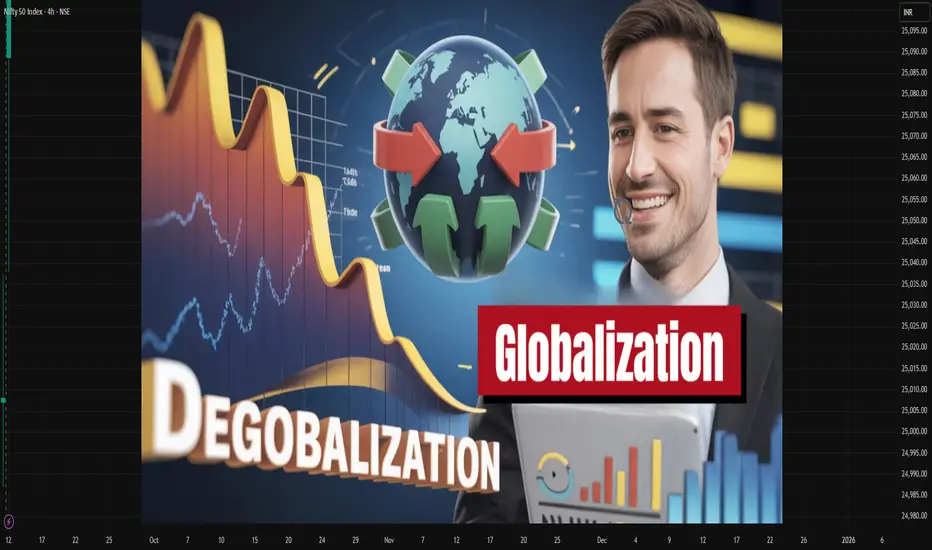
Globalization vs. Deglobalization Debate in the World MarketUnderstanding Globalization
Globalization can be defined as the process of increasing interdependence and interconnectedness among countries in economic, political, cultural, and technological dimensions. In markets, it primarily manifests as:
Free Trade Expansion – Removal of tariffs, quotas, and trade restrictions.
Global Supply Chains – Companies outsourcing production to countries with cost advantages.
Cross-Border Investments – Growth of foreign direct investment (FDI) and multinational corporations (MNCs).
Financial Integration – Capital moving across borders through stock markets, banks, and investment funds.
Technology & Communication – Internet and digitalization connecting producers, consumers, and investors worldwide.
Globalization surged after the Cold War (1990s onward), when liberalization and deregulation policies spread across emerging markets. Institutions like the World Trade Organization (WTO), International Monetary Fund (IMF), and World Bank promoted cross-border economic integration. The rise of China as the world’s factory, India’s IT revolution, and global consumer brands like Apple, Toyota, and Samsung are products of globalization.
Understanding Deglobalization
Deglobalization refers to the deliberate reduction of interdependence between nations in trade, investment, and financial flows. Instead of expanding global linkages, countries adopt policies that bring economic activities closer to home. It manifests as:
Trade Protectionism – Tariffs, quotas, and restrictions on imports.
National Industrial Policies – Encouraging domestic manufacturing (e.g., “Make in India,” “America First”).
Supply Chain Re-shoring – Companies moving production back to home countries or nearby regions.
Geopolitical Rivalries – Economic sanctions, tech wars, and restricted access to markets.
Financial Decoupling – Limiting cross-border capital exposure to reduce vulnerability.
Deglobalization does not imply complete isolation but rather a recalibration of global connections. It gained momentum post-2008 financial crisis, accelerated during COVID-19 when countries realized the risks of overdependence on global supply chains, and strengthened further with geopolitical conflicts like the Russia-Ukraine war.
Historical Evolution of Globalization & Deglobalization
The globalization-deglobalization cycle is not entirely new.
First Wave of Globalization (1870–1914): Fueled by industrial revolution, railroads, shipping, and colonialism. Trade flourished until World War I disrupted global markets.
First Wave of Deglobalization (1914–1945): Wars, the Great Depression, and protectionist policies (e.g., Smoot-Hawley Tariff in the US) restricted global trade.
Second Wave of Globalization (1945–1980s): Post-WWII reconstruction, Bretton Woods system, and the spread of liberal economic policies.
Third Wave of Globalization (1990–2008): Collapse of the Soviet Union, rise of China, internet boom, global outsourcing, and trade liberalization.
Second Wave of Deglobalization (2008–Present): Financial crises, populism, technological nationalism, environmental concerns, and supply chain reconfiguration.
Thus, globalization and deglobalization are not absolute opposites but phases of world economic history.
Globalization: Benefits and Challenges
Benefits:
Economic Growth: Expanding markets allow countries to specialize and scale production.
Lower Costs: Outsourcing and supply chains reduce production costs for consumers.
Innovation & Technology Transfer: Global collaboration accelerates knowledge sharing.
Access to Capital: Emerging economies benefit from FDI and portfolio investments.
Cultural Exchange: Travel, media, and education foster cross-cultural connections.
Challenges:
Job Displacement: Outsourcing leads to unemployment in high-cost economies.
Income Inequality: Benefits unevenly distributed between nations and social groups.
Environmental Damage: Global supply chains increase carbon emissions.
Financial Vulnerability: Global crises spread rapidly (2008, 2020).
Cultural Homogenization: Local cultures risk being overshadowed by global brands.
Deglobalization: Benefits and Challenges
Benefits:
Domestic Industry Protection: Safeguards jobs and industries from global shocks.
Supply Chain Resilience: Reduces vulnerability to disruptions.
National Security: Greater control over critical industries (food, energy, defense).
Environmental Gains: Local production may cut transport-related emissions.
Balanced Global Order: Prevents excessive dependence on a few countries (e.g., China).
Challenges:
Higher Costs: Localized production increases consumer prices.
Reduced Innovation: Less collaboration slows technological progress.
Market Fragmentation: Trade restrictions reduce efficiency of global systems.
Risk of Retaliation: Trade wars harm exporters and global supply chains.
Slower Global Growth: Reduced trade and capital flows hinder overall prosperity.
Impact on World Markets
Trade Volumes: WTO data shows slowing global trade growth since 2015.
Stock Markets: Globalization increases correlation across markets; deglobalization creates divergence.
Commodities: Oil, gas, and food supplies disrupted by geopolitical tensions.
Currencies: Dollar dominance challenged by yuan, euro, and alternative payment systems (de-dollarization debates).
Corporate Strategies: Multinationals now adopt “China+1” strategy to diversify manufacturing bases.
Future Outlook: Convergence or Divergence?
Not the End of Globalization: Rather than collapse, globalization is restructuring.
Selective Deglobalization: Nations are decoupling in strategic sectors (defense, tech, energy) while still integrating in consumer goods and services.
Regionalization: Global supply chains are evolving into regional blocs (USMCA, EU, RCEP).
Digital Globalization: Data, AI, and digital finance will shape future trade flows.
Sustainable Globalization: Green energy, climate agreements, and ESG investments may form a new framework.
Conclusion
The globalization vs. deglobalization debate is not about one force replacing the other but about how the balance shifts over time. Globalization brought unprecedented prosperity, technological progress, and interconnectedness, but it also exposed vulnerabilities such as inequality, overdependence, and fragility of global systems. Deglobalization responds to these weaknesses, yet it risks reversing gains made over decades.
In reality, the world is likely moving toward a hybrid model—“re-globalization” or “regional globalization”—where countries remain interconnected but with greater safeguards, diversification, and focus on self-reliance. The future world market will not be flat, as Thomas Friedman once wrote, but rather fragmented yet interconnected, shaped by geopolitics, technology, and sustainability imperatives.
Potential for Further Price Growth to $6.50 After Pullback!Hey there, ✌ The price entered an uptrend phase from the $3.70 range and, following the breakout of the descending trendline on the daily timeframe, has shown a significant increase, reaching $5.70. Currently, after this upward movement, the price has faced a slight correction and has returned to the broken $5 level.
Given the overall market conditions, the outlook remains more bullish.
It is expected that after this pullback, the price will likely continue its significant upward movement towards the $6 and $6.50 levels. The price ranges of $5 and $4.50 – $4.20 can be considered key reversal zones. If a bullish candlestick pattern is observed and confirmed, there is a high possibility of positive price fluctuations.
💢 Please remember that this is just my personal viewpoint and should not be taken as investment advice. I’d love to hear your thoughts and share opinions!
Happy trading!✌😎
Sure, if you have any more questions or need further clarification, feel free to ask. I'm here to help!✌
SasanSeifi| NZD/USD,4-Hour Hey there, ✌ In the short-term 4-hour timeframe, we’ve observed a bearish trend starting from the 0.63700 price range. The recent breakdown below the 0.62500 level has pushed the price down to the 0.62000 zone, showing some corrective movement.
Currently, the price is trading around 0.62000.my short-term outlook leans toward further downside towards targets at 0.61700 and the demand zone below.
However, if we see signs of weakening momentum around 0.62000, there is a possibility that the market could enter a ranging phase. In such a scenario, potential pullbacks could bring the price up to levels of 0.62350, 0.62500, and 0.62750 as a corrective move before resuming the bearish trend.
To better understand the market's direction, it’s crucial to monitor price reactions in these zones.
Alternative Scenario: Price Correction Another scenario to consider is continued price correction. In this case, we expect the price to make a corrective move towards our targets. If the market enters a range and confirms the price action, we could then see positive fluctuations from the specified targets and the demand zone.
This analysis is my personal viewpoint and not financial advice. If you found this helpful, please like and comment – I’d love to hear your thoughts! Happy trading! ✌😊
SasanSeifi|GBP/USD on the rise?Hey there, Upon reviewing the FX:GBPUSD chart from a mid-to-long term perspective, the trend still leans towards the bullish side, with medium-to-long term targets potentially lying within the 1.32 to 1.33 range. Currently, on the 4-hour timeframe, the price is trading around the 1.30300 level.
Possible Scenarios:
In the current situation, if the price continues to be supported by strong demand and breaks above 1.30600 with confirmation, short-term targets of 1.31 to 1.31400 could be in sight. This could lead to the formation of a new high above the 1.30500 level.
To better understand the continuation of this trend, it is crucial to monitor how the price reacts to these short-term targets. Should the price encounter resistance and fail to hold above 1.30600, we might see a pullback to the levels of 1.29700, 1.29500, or even 1.29.
💢 Please remember that this is just my personal viewpoint and should not be taken as investment advice. I’d love to hear your thoughts and share opinions!
Happy trading!✌😎
Sure, if you have any more questions or need further clarification, feel free to ask. I'm here to help!✌
US30 all TimesUp bullishUS30 all Times-Up bullish H1 Time Frame
We think Stocks were Stabilize economy due to End of War Crisis
So its Time to Up lets start this week trade on us30 as a Bullish
Tagrets - 35312
Tagrets - 35616
Tagrets - 35849
Stop-Loss - 34072
ULong
Is swing trading more profitable than long-term investment?Look at the image below. Let me give you a small example. This is the real chart of the State Bank of India.
I have coded swing trader in black and long-term investor in blue for your easy understanding.
In the first scenario, both the swing trader and the long-term investor bought SBI at the same level.
After a month the swing trader sold his holdings and made 60% on his capital of 1 lakh. Now he has 1 lakh 60 thousand. But the long-term investor didn’t sell.
Again the prices of the stock went down and the swing trader got an opportunity to buy in dip. The swing trader sold his positions and made 36% this time. Now he has (1 lakh 60 thousand) + 36% that is 2 lakh 17 thousand.
This time the long-term investor sold his holdings and made 64% total. He has now 1 lakh 64 thousand.
Everybody trades the swings. Nobody buys in dip and sells in the dip. That is just foolishness. Some people trade the larger time frames and some people smaller time frames.
RidetheMacro| RISK REWARD PATTERN EXPLAINED (PART 2)Risk Reward Completely Explained in two Educational idea.
If you not check the part one The please Visit the below link for Part (1) and part(2).
Share your Comments Ideas Below to make things more better and understandable for community
Thank you,
USDCAD D1After price made new highs and hit our TP1 from our previous markup, we expect USDCAD to make a correction to the downside before bulls regain momentum towards 1.35500 & possibly higher!
With all the economic fundamental news events this week make sure you're patient and trading with proper risk management before entering any trade.