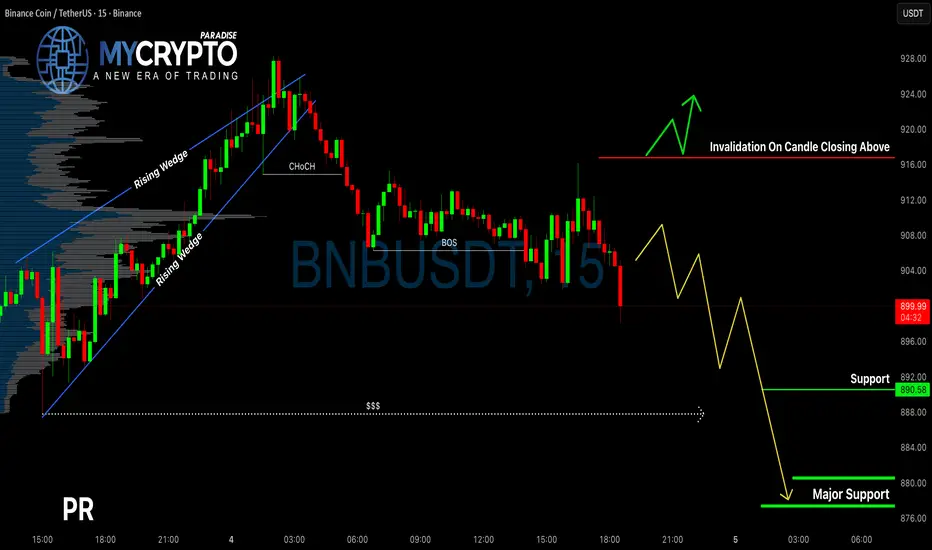
GRAB 1D - picking phones off the market floor again?GRAB pulled back exactly into the 4.90–5.10 buy-zone, where the wedge retest aligns with the MA200 - a major technical cluster that previously launched strong impulses. Oscillators show deep oversold conditions, candles print buyer tails, and the first resistance sits at 5.35, matching the 0.618 retracement. A breakout above 5.35 opens the path toward 8.65 (1.618), and a move above 6.80 could initiate a larger rally toward 11.92 based on the 2.618 extension.
Company: Grab Holdings is Southeast Asia’s largest super-app platform, combining ride-hailing, food delivery, fintech, payments, and micro-lending across Singapore, Malaysia, Indonesia, Thailand, and Vietnam.
Fundamentally , as of November 19, GRAB continues to strengthen: gross profit and GMV grow, operational efficiency improves, and both ride-hailing and delivery segments have reached sustainable profitability. Fintech is expanding at double-digit rates, margins improve as subsidies are reduced, and operating losses continue to shrink. Cash flow strengthens, the path to full profitability is visible, and the overall digital-services boom across Southeast Asia remains a long-term driver for growth. Competition cooled, monetization improved - exactly то environment the company needed.
Technically , the bullish scenario holds as long as price stays above 4.90–5.10. A breakout above 5.35 activates the 8.65 target, and the major upside - 11.92 - becomes realistic once price gets above 6.80. A drop below 4.80 complicates the picture, but current structure still looks like a controlled reset rather than a trend break.
Grab acting like usual: discounts first, acceleration later - Southeast Asia likes this script.
Wedge
The Support Zone That Refused To Be IgnoredSome chart zones whisper. This one practically waved its arms.
Price slid right into a hefty support area on the higher timeframe… and suddenly started behaving like it had forgotten how to move lower. Classic clue.
Zoom in, and the daily chart shows price squeezing itself into a falling wedge — the market’s equivalent of someone pacing in a hallway, unsure whether to sit down or sprint. Sellers kept trying to push prices lower, but each attempt had less conviction than the last.
When you stack those two pieces together — a big support zone from the monthly chart and a daily pattern running out of room — things start to get interesting. Not predictive, just… interesting.
A breakout above the wedge (around 0.0065030) would basically say, “Alright, I’m done compressing.”
A stop tucked below the lower support range (roughly 0.0063330) keeps the scenario clean.
And a structural projection toward 0.0067695 gives the idea a tidy endpoint if momentum decides to stretch its legs.
Of course, leverage cuts both ways, and traders working with the standard or micro contracts often choose size based on how much room they want between entry and invalidation. When traders choose between the standard and micro versions of this market, it usually comes down to scale. The bigger contract represents 12,500,000 units of the underlying with a $6.25 tick, while the micro mirrors the behavior at 1,250,000 units with a $1.25 tick. Estimated margins also differ — roughly $2,800 for the larger contract and about $280 for the micro. Same chart logic, just two very different footprints on the account.
The real takeaway? When a major zone teams up with a compression pattern, it’s usually worth paying attention. Maybe it leads to a beautiful breakout. Maybe it fizzles. But structurally, this is one of those “save the screenshot” moments.
And whatever the outcome, risk management keeps the whole thing sensible — size smartly, define failure points, and let the chart prove itself instead of assuming it will.
Want More Depth?
If you’d like to go deeper into the building blocks of trading, check out our From Mystery to Mastery trilogy, three cornerstone articles that complement this one:
🔗 From Mystery to Mastery: Trading Essentials
🔗 From Mystery to Mastery: Futures Explained
🔗 From Mystery to Mastery: Options Explained
When charting futures, the data provided could be delayed. Traders working with the ticker symbols discussed in this idea may prefer to use CME Group real-time data plan on TradingView: www.tradingview.com - This consideration is particularly important for shorter-term traders, whereas it may be less critical for those focused on longer-term trading strategies.
General Disclaimer:
The trade ideas presented herein are solely for illustrative purposes forming a part of a case study intended to demonstrate key principles in risk management within the context of the specific market scenarios discussed. These ideas are not to be interpreted as investment recommendations or financial advice. They do not endorse or promote any specific trading strategies, financial products, or services. The information provided is based on data believed to be reliable; however, its accuracy or completeness cannot be guaranteed. Trading in financial markets involves risks, including the potential loss of principal. Each individual should conduct their own research and consult with professional financial advisors before making any investment decisions. The author or publisher of this content bears no responsibility for any actions taken based on the information provided or for any resultant financial or other losses.
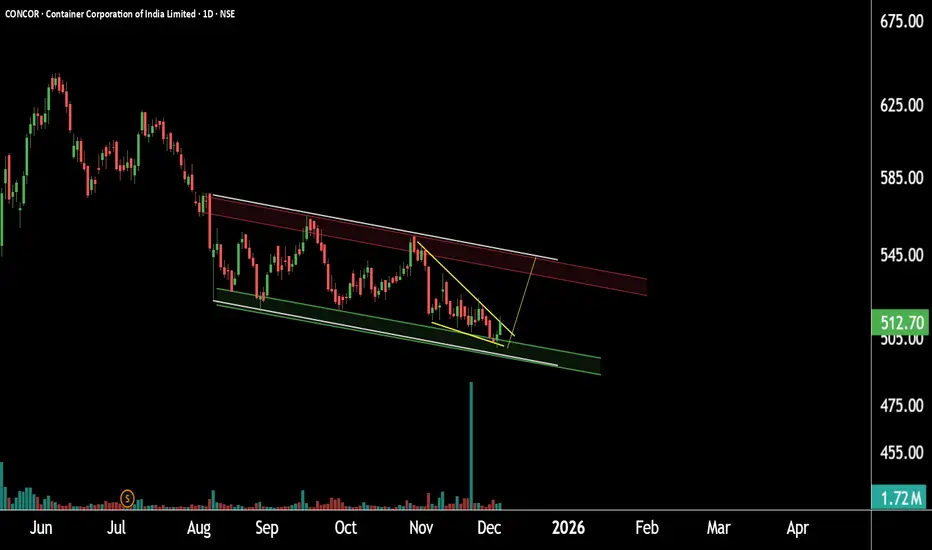
RK Forgings Showing a Clean Reversal Setup — Trend Change Ahead?This is the daily timeframe chart of Ramkrishna Forgings.
The stock is forming a well-defined pattern at a strong support zone near 490–510.
The pattern resistance is placed near 570, and a breakout above this level may open the path for a potential upside target toward the 710+.
If the support zone near 490–510 continues to sustain, we may witness higher prices in Ramkrishna Forgings.
THANK YOU !!
GBP/USD: Trouble Brewing for Bulls?A revisit of the November lows may be on the cards for cable, coiling within what resembles a rising wedge following its lurch lower in October. Sitting on uptrend support and showing little inclination to bounce meaningfully in recent days, traders should be on alert for a potential downside break.
If we see a bearish wedge break, shorts could be established beneath the level with a stop above for protection, targeting 1.3100 initially. Unless the move is definitive, a close beneath the uptrend would be preferable before entering the position.
As a bearish continuation pattern, convention suggests we may see the starting point for the wedge revisited, putting 1.3010 on the radar as a level to assess whether to hold, add or reverse should the price return there.
There’s evidence that downside strength is building again, with RSI (14) breaking its uptrend before reversing away from the neutral 50 level. MACD remains in negative territory but has yet to cross the signal line from above. If that occurs, it will increase conviction in the trade.
Good luck!
DS
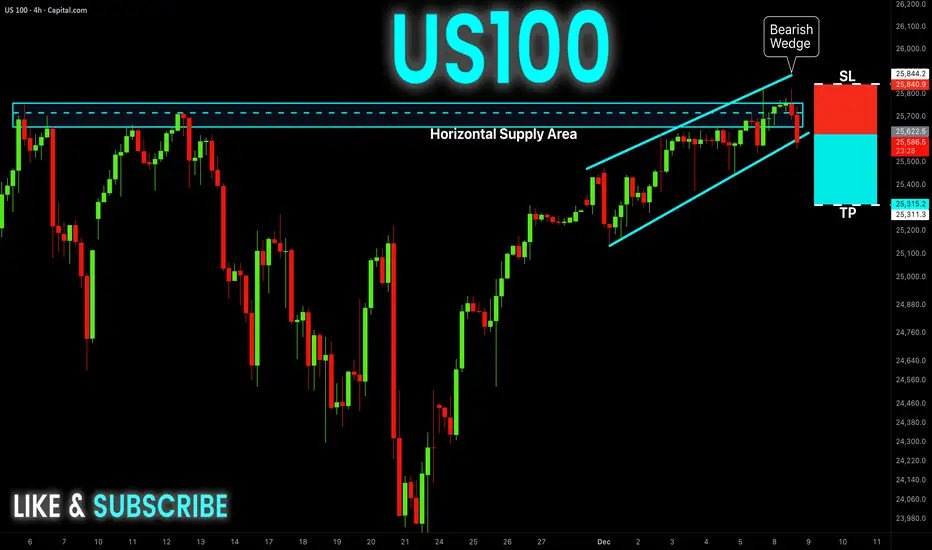
NATGAS Bearish Breakout! Sell!
Hello,Traders!
NATGAS broke down from the bearish wedge, signalling displacement and a shift in order flow. After sweeping internal liquidity, price is expected to expand lower toward the marked target demand zone. Time Frame 4H.
Sell!
Comment and subscribe to help us grow!
Check out other forecasts below too!
Disclosure: I am part of Trade Nation's Influencer program and receive a monthly fee for using their TradingView charts in my analysis.
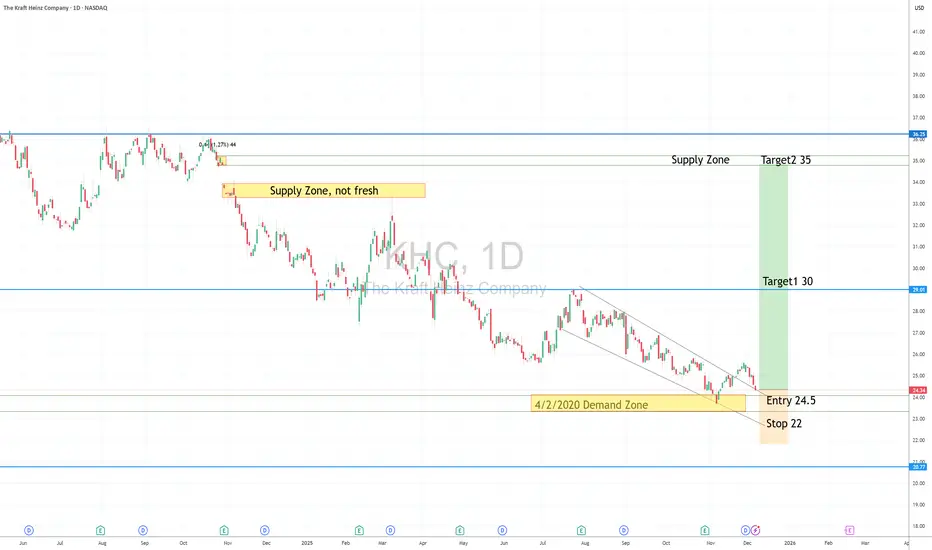
Campbell's may be bottoming, reinvest those dividends!After a lengthy drawdown, NASDAQ:CPB may finally be grinding out a bottom. A small falling wedge, which tends to be a reversal pattern, appears to be forming.
Analysts are dour on consumer staples companies, but few have the moat Campbell's does. The conventional wisdom in markets now is, the AI bubble has more room to inflate, so you may as well hold onto those positions and be one of the first out at the exit...
Why not start building a position in some of these high quality left-for-dead value stocks and start averaging in with the dividends? In the case of NASDAQ:CPB the yield is now better than the yield you'll get on cash.
A High-Impact Support Zone Meets a Breakout StructureIntroduction
Markets occasionally compress into areas where structure, momentum, and historical buying pressure align with surprising precision. When that compression occurs at a major higher-timeframe floor, traders often pay closer attention—not because the future is predictable, but because the chart reveals a location where price behavior typically becomes informative.
The current case study centers on a market pressing into a high-impact support zone visible on the monthly chart, while the daily chart displays a falling wedge pattern that has gradually narrowed the range of movement. This combination often highlights moments where the auction process is nearing a decision point. The purpose here is to dissect that confluence using multi-timeframe structure, pattern logic, and broad order-flow principles—strictly for educational exploration.
Higher-Timeframe Structure (Monthly)
The monthly chart shows price approaching a well-defined support area between 0.0065425 and 0.0063330, a region that has acted in the past as a base for significant reactions. These areas often develop because markets rarely absorb all buy interest in a single pass; pockets of unfilled orders may remain, leading to renewed reactions when price returns.
This type of zone does not guarantee a reversal. However, historically, when price reaches such levels, traders tend to monitor whether selling pressure slows or becomes less efficient. In this case, the structure suggests a recurring willingness from buyers to engage at these prices, forming a foundation that has held multiple swings.
The presence of a clear, higher-frame resistance at 0.0067530 anchors the broader range. When price rotates between such boundaries, the monthly context often acts as a roadmap: major support below, major resistance above, and room in between for tactical case-study exploration.
Lower-Timeframe Structure (Daily)
Shifting to the daily chart, price action has carved a falling wedge, a pattern often associated with decelerating downside movement. In wedges, sellers continue to push price lower, but with diminishing strength, as each successive low becomes less effective.
This type of compression structure can provide early evidence that the auction is maturing. Traders studying such patterns often watch for:
tightening of the range,
shorter waves into new lows,
initial signs that buyers are defending intraday attempts to drive price lower.
The daily wedge in this case sits directly on top of the monthly support zone—an alignment that strengthens its analytical relevance. The upper boundary of the wedge sits near 0.0065030, and a break above that line is often interpreted as price escaping the compression phase.
Multi-Timeframe Confluence
Multi-timeframe confluence arises when higher-frame structure provides the background bias and lower-frame patterns offer the tactical trigger. In this case:
The monthly chart signals a historically responsive support zone.
The daily chart shows structural compression and slowing downside momentum.
The interaction between them creates a scenario where educational case studies tend to focus on breakout behavior, as the daily timeframe may provide the first evidence that higher-frame buyers are engaging.
This confluence does not imply certainty. It simply highlights a location where structure tends to become more informative, and where traders often study the transition from absorption to response.
Order-Flow Logic (Non-Tool-Specific)
From an order-flow perspective, strong support zones typically develop where prior buying activity left behind unfilled interest. When price returns to that region, two things often happen:
Sellers begin to encounter difficulty driving price lower, as remaining buy orders absorb their activity.
Compression patterns form, as the market oscillates in a tightening range while participants test whether enough liquidity remains to cause a directional shift.
A breakout of the daily wedge represents a potential change in the auction dynamic. While sellers are still active inside the wedge, a breakout suggests their pressure may have become insufficient to continue the sequence of lower highs and lower lows. Traders studying market transitions often use such moments as part of hypothetical scenarios to understand how imbalances evolve.
Forward-Looking Trade Idea (Illustrative Only)
For educational purposes, here is how a structured case study could frame a potential opportunity using the discussed charts:
Entry: A hypothetical entry could be placed above the falling wedge, around 0.0065030, once buyers demonstrate the ability to break outside the compression structure.
Stop-Loss: A logical invalidation area in this case study would be at or below the monthly support, around 0.0063330, where failure would indicate the higher-timeframe zone did not hold.
Target: A purely structural wedge projection would suggest a target near 0.0067695, aligning closely with the broader resistance region on the monthly chart.
These price points yield a reward-to-risk profile that is measurable and logically linked to structure, though not guaranteed. This case study exists solely to illustrate how support-resistance relationships and pattern logic can be combined into a coherent, rules-based plan, not as an actionable idea for trading.
Yen Futures Contract Context
The larger (6J) and micro-sized (MJY) versions of this futures market follow the same underlying price but differ in exposure and margin scale. The standard contract generally carries a greater notional value and therefore translates each price movement into a larger monetary change. The micro contract mirrors the same structure at a reduced size, allowing traders to adjust position scaling more precisely when navigating major zones or breakout structures such as the one discussed in this case study:
6J equals 12,500,000 Japanese Yen per contract, making it suitable for larger, institutional players. (1 Tick = 0.0000005 per JPY increment = $6.25. Required Margin = $2,800)
MJY equals 1,250,000 Japanese Yen per contract, making it suitable for larger, institutional players. (1 Tick = 0.000001 per JPY increment = $1.25. Required Margin = $280)
Understanding margin requirements is essential—these products are leveraged instruments, and small price changes can result in large percentage gains or losses.
Risk Management Considerations
Strong support zones can attract interest, but risk management remains the foundation of any structured approach. Traders studying these transitions typically:
size positions relative to the distance between entry and invalidation,
maintain clear exit criteria when structure fails,
avoid adjusting stops unless the market has invalidated the original reasons for the plan,
adapt to new information without anchoring to prior expectations.
These principles emphasize the importance of accepting uncertainty. Even at major support zones, markets can remain volatile, and scenarios may unfold differently than anticipated.
When charting futures, the data provided could be delayed. Traders working with the ticker symbols discussed in this idea may prefer to use CME Group real-time data plan on TradingView: www.tradingview.com - This consideration is particularly important for shorter-term traders, whereas it may be less critical for those focused on longer-term trading strategies.
General Disclaimer:
The trade ideas presented herein are solely for illustrative purposes forming a part of a case study intended to demonstrate key principles in risk management within the context of the specific market scenarios discussed. These ideas are not to be interpreted as investment recommendations or financial advice. They do not endorse or promote any specific trading strategies, financial products, or services. The information provided is based on data believed to be reliable; however, its accuracy or completeness cannot be guaranteed. Trading in financial markets involves risks, including the potential loss of principal. Each individual should conduct their own research and consult with professional financial advisors before making any investment decisions. The author or publisher of this content bears no responsibility for any actions taken based on the information provided or for any resultant financial or other losses.
Falling wedges: Are you convinced now about what's to come?Yes, we are still in a downtrend, but this is not the first time this happens. Maybe this chart will convince you why.
The upcoming two weeks will become very important on what's next for COINBASE:SOLUSD : will a breakout occur on this last falling wedge just like previous times?
I think it will.
Chuck's coin teetering on the brink of a dramatic plunge to 9cCardano, along with many other high market cap tokens, certainly stands out.
As we find ourselves in the crypto bear market,
I would argue that we have actually been in one for quite some time now.
The rapid declines can catch newcomers off guard.
Meanwhile, those who have weathered several cycles tend to quietly withdraw and wait for BTC to undergo its usual year-long downturn.
Will BTC hit a bottom again next November, similar to the previous four-year cycles?
The odds still seem to favor a yes.
Even with the influx of institutional capital.
This situation simply means that the OGs finally have the liquidity to cash out completely.
And they have been doing so with great intensity since the summer.
Unfortunately, altcoins do not benefit from this liquidity, and there are hardly any profitable wallets aside from those of founders and VCs who essentially created the coins or acquired them for a pittance.
Retail investors will likely bear the brunt of falling for the hype once more.
I see no INCentive for holding Richard Hearts INC token.As cryptocurrency investors grapple with the realisation that the four-year cycle has indeed unfolded, we find ourselves pondering, that all of 2025 was a distribution year for the entire industry.
(especially when considering the BTC/GOLD ratio)
Richard's Hearts Pulsechain ecosystem has faced numerous challenges and obstacles.
From legal confrontations with the SEC
To a cult founder who operates from the sidelines instead of leading the charge at the forefront.
The ETH price has been stagnant, constrained by early investors who are locking in multi-cycle gains.
Pulsechain has largely remained an isolated, siloed pool of capital for a small group of investors who cling to the hope that their leader will return and guide them to Valhalla.
There is indeed a possibility for this to happen in the next cycle, once the dust settles from this bear phase in crypto.
The INC token is particularly vulnerable as it lacks a real use case.
It does not provide yield.
As RH once mentioned, it is the token he cares about the least.
It was intended as a reward for providing liquidity on his DEX.
However, those rewards have been significantly reduced as the Heart man has attempted to prevent economic energy from leaving his chain, which has been hindered by a small group of large whales that have capped price growth in the past.
Therefore, I believe that #INC, #HEX, #PLSX, and #PLS will all experience significant new lows in 2026.
With INC potentially trading as low as 5 cents due to this inverted HVF pattern that has formed and triggered.
CDSL !! Time to Be Cautious! Bearish Signals Getting StrongerThis is the Daily Timeframe Chart Analysis of CDSL
CDSL is currently forming a Rising Wedge pattern near the key resistance zone of 1680–1700. A breakout above this level with strong volume could lead to an upside target around 1800.
However, if the stock fails to break this resistance and the zone holds, we may witness a downside move. In that case, CDSL could retrace towards the range-bound support area of 1500–1520.
Thank you.
RIO | Metals Miner Will Rise | LONGRio Tinto Plc engages in the exploration, mining, and processing of mineral resources. It operates through the following business segments: Iron Ore, Aluminium, Copper, and Minerals. The Iron Ore segment supplies iron ore mining and salt and gypsum production. The Aluminium segment produces bauxite, alumina and primary aluminum. The Copper segment offers gold, silver, molybdenum and other by-products. The Minerals includes businesses with products such as uranium, borates, salt and titanium dioxide feedstock together with coal operations. The Other Operations segment covers the curtailed Gove alumina refinery and Rio Tinto Marine operations. The company was founded in 1873 and is headquartered in London, the United Kingdom.
KASPA Is Compressing Into a Macro Coil — Big Move Approaching?📉➡️📈 KASPA Weekly Falling Wedge – Compression Before a Larger Move
_______________________________________________________________________________
KASPA (KASUSD) – Weekly Falling Wedge Analysis
Kaspa has been forming a large falling wedge on the weekly timeframe, a structure often associated with decreasing selling pressure and potential bullish reversal setups. The trendlines have held for months, and price continues to compress as it approaches the apex of the pattern. Confidence is medium at this stage: the pattern remains valid, but momentum has not yet confirmed a breakout.
_______________________________________________________________________________
📉 Structure Overview
On the weekly chart, price action has been steadily narrowing between lower highs and relatively stable lows. The lower trendline has been tested multiple times, and the aggressive wick on October 6th highlighted strong buying interest at this support. Since the Kraken listing, volume has gradually declined, which is typical behavior in the later stages of a wedge. Based on the current trajectory, a breakout still appears to be several weeks away as the market continues its compression.
_______________________________________________________________________________
🐂 Bullish Scenario
If Kaspa continues to respect the wedge support, the first significant move would likely be a push toward the upper boundary of the structure near $0.09. Should price break out of the wedge, the next areas of interest become:
🎯 $0.09 – First touch of upper wedge resistance
🎯 $0.10 to $0.11 – Key structural resistance zone
🎯 $0.13 – A measured-move extension and historical supply area
The strong wick reaction at the lower boundary suggests that buyers are active at these levels, which supports the idea that upside continuation is a realistic scenario if structure holds.
_______________________________________________________________________________
🐻 Bearish Scenario
A full weekly candle close below the wedge would invalidate the structure and would likely lead to increased bearish momentum. If this breakdown occurs, the next downside levels to watch are:
🔻 $0.032 – First major support
🔻 $0.015 – Broader structural low
Although this outcome is technically possible, it currently appears less probable due to the strength of demand visible along the lower trendline.
_______________________________________________________________________________
📐 Why This Pattern Matters
A falling wedge represents tightening volatility and a reduction in selling strength as the pattern matures. These conditions often create a coiled-spring effect, leading to significant movement once the structure resolves. On a weekly chart, wedge breakouts tend to result in multi-week or multi-month directional moves, which makes this current setup important to monitor.
💡 Fundamental Tailwinds Supporting Long-Term Strength
Kaspa’s fundamentals continue to evolve alongside this technical setup.
_______________________________________________________________________________
🧠 VProgs (Virtual Programs)
VProgs introduce customizable, programmable rules directly into transactions. This allows users to define spending conditions, automate certain behaviors, and create more complex logic without relying on a full smart contract engine. They deliver much of the flexibility associated with smart contracts while keeping execution lightweight and efficient.
_______________________________________________________________________________
⚙️ Smart-Contract-Like Capabilities via the BlockDAG
Kaspa’s BlockDAG architecture, combined with VProgs, provides room for expressive, rule-based applications while maintaining extremely fast confirmation times and strong Proof-of-Work security. This positions Kaspa to serve as a high-throughput programmable network without the bloat or congestion common in legacy smart contract environments.
These fundamental developments support strong long-term potential, even as price compresses in the short term.
_______________________________________________________________________________
📌 Summary and Final Outlook
Kaspa is approaching the apex of a clean falling wedge on the weekly chart. Volume is tapering, structure remains intact, and both bullish and bearish scenarios are clearly defined. The next major move will likely emerge once price resolves this tightening pattern.
_______________________________________________________________________________
Bullish Targets:
📈 $0.09 → $0.10–$0.11 → $0.13
Bearish Invalidations:
📉 Weekly close below the wedge → $0.032 → $0.015
Overall, Kaspa continues to show long-term promise, supported by both technical structure and evolving fundamentals. Traders should watch closely as price approaches the point of resolution within this macro wedge.
AUD/USD Climbs on Jobs Report as Wedge Pattern Eyes BreakoutDespite a slightly stronger dollar, via the DXY index, AUD/USD managed to tick slightly higher on Friday, rising by about 0.15% in afternoon U.S. trading. The Australian employment report surprised to the upside this week, with the country’s unemployment rate dropping to 4.3%. That reduced rate cut odds, likely explaining some of the strength this week.
Friday’s move helped the currency rise about 0.73% for the week, although prices remain inside of last week’s open/closing range. Zooming out a bit, this month’s price action puts the currency at about a 0.08% loss, with prices remaining contained within the October swing high/low levels. In fact, prices have retracted to the pseudo 50% Fibonacci retracement level from that range. Indecision within the range shows that AUD/USD traders haven’t come to a consensus on the direction for the currency’s path yet.
Zooming out to the weekly chart, we see that a symmetrical wedge pattern has formed, with the bottom of the wedge starting in late June and the top of the wedge defined by the September highs. Prices rallied into the wedge formation, suggesting that this could be a bullish wedge that could see an upside breakout if prices manage to pierce above the pattern. If we assume an upside breakout is to occur, we can take the measured move to gauge the upside target once resistance breaks. The measured move is defined by the widest part of the pattern, which measures 0.03344. That could put prices within touching distance of the 0.69000 level, which is where 2024 trading saw resistance. Alternatively, a clean break below the pattern’s support would invalidate the pattern and dash hopes of a breakout.
BTC long-Term Technical Analysis📍 Current Status:
Bitcoin is forming a Bullish Flag Pattern🎯
•Currently at the bottom of the pattern
•Key Support: $93,000 🛡️ (Flag Bottom)
•**Main Resistance**: $108,000 🚧 (Flag Top)
📊 Technical Signals:
•Bullish Flag pattern confirmed 📈
•RSI: Showing oversold bounce potential 💪
•Trading Volume: Consolidating at support ✅
•Fear & Greed Index: 22 - Extreme Fear Zone 🚨
🎯 Possible Scenarios:
•Bounce from pattern bottom → Target $108,000 🚀
•Break above flag → Targets:
· $116,000 🎯
· $132,000 📈
· $145,000 🏁 (Final Target)
•Pattern failure: Only if breaks below $93,000 ❌
⚡ Key Insights:
•This is the optimal entry zone within the bullish flag!
•Fear & Greed Index suggests potential reversal 📊
•Historical pattern success rate: ~75% ✅
•Potential 56% growth to final target 📊
⚠️ Risk Management:
•Stop Loss: Below $92,500 📌
•Take Profit Targets:
· $116,000 🎯
· $132,000 📈
· $145,000 🏁
💬 What's Your Analysis?
Do you confirm these signals?Share your thoughts! 👇
UDMY turning profitable and in deep value territoryNASDAQ:UDMY stock has been left for dead. It's formed a massive falling wedge on the monthly chart and until late has done so with improving momentum.
While not strictly aligned to disciplined charting techniques I view the recent meltdown in momentum as capitulation and a good time to start a small position.
Looking at the annual and quarterly profit figures we can see the company has been bleeding cash for years, but in recent quarters is starting to make a small profit.
It's a speculative buy, so keep the position sizing small, but I think there's room to double or even triple with sufficient time.
AUDNZD Rally Losing Steam – Watch This Reversal Zone!As we’ve seen, AUDNZD ( OANDA:AUDNZD ) recently began an upward move after forming a Falling Wedge Pattern , and it’s been in an Ascending Channel for about the past 16 days.
Currently, AUDNZD is moving into a Heavy Resistance zone(1.1662 NZD-1.1340 NZD) and a Potential Reversal Zone(PRZ) .
From an Elliott Wave perspective, it seems like AUDNZD is completing the microwave 5 of the main wave 3 . Once it breaks below the lower line of the ascending channel, we can somewhat confirm the end of the main wave 3.
Additionally, we can see a Negative Regular Divergence(RD-) forming between two consecutive peaks.
I expect that in the coming hours, AUDNZD might decline at least to the Support zone(1.1480 NZD-1.1444 NZD) . If it breaks that Support zone, we could see it dropping toward around 1.1353 NZD(Second Target) .
Stop Loss(SL): 1.16403 NZD
Please respect each other's ideas and express them politely if you agree or disagree.
Australian Dollar/New Zealand Dollar Analyze (AUDNZD), 4-hour time frame.
Be sure to follow the updated ideas.
Do not forget to put a Stop loss for your positions (For every position you want to open).
Please follow your strategy and updates; this is just my Idea, and I will gladly see your ideas in this post.
Please do not forget the ✅' like '✅ button 🙏😊 & Share it with your friends; thanks, and Trade safe.
FILUSDT — the formation is repeating, the structure is familiar.Filecoin(FIL) - is a decentralized storage system with the goal of "storing humanity's most important information." During its initial coin offering (ICO) in 2017, the project raised $205 million. The launch was initially planned for mid-2019, but the mainnet launch date was postponed until block 148,888, which occurred on October 15, 2020.
📍 CoinMarketCap : #50
📍 Twitter(X) : 667.3K
🔍 What I observe:
I’ve added the full trading history to the chart for better understanding (the chart on exchanges is cut off). The coin is liquid. I also added the prices for the public and private offerings.
There’s a large horizontal channel, or more specifically, a channel within a channel, which has been active for about 1111 days.
After another drop, a descending wedge formed, and now we are witnessing a breakout of its resistance (a retest is possible).
These patterns are ones I regularly track and trade, based on personal experience accumulated over the years and my strategy.
📊 I’ve plotted the nearest resistances and target prices with movement percentage calculations.
💭 It’s quite possible that this formation in the lower part of the wedge, coinciding with the area of lows on the support of the outer channel, was used to gather liquidity and shake out weak hands.
I also want to point out the large wicks in this zone - a characteristic pattern for accumulation points and subsequent reversals.
______
📌 Not financial advice. Observing structure and recurring phases.
Operate within your strategy and with an awareness of risks.
C98USDT — Descending Wedge & High R/R ZoneBased on the current structure, BINANCE:C98USDT is moving within a descending wedge , approaching zones that align with early investor positions.
🔍 What I’m seeing:
Potential drop into the range of a previous horizontal channel - marked on the chart.
We've already reached the Strategic Round level; below that is the Seed Round .
Assuming the project isn’t abandoned, it makes sense to expect investor defense in this zone.
From what I observe, there's likely accumulation happening from weak hands - at a discount .
🛡️ Approach:
As I’ve said before - you can’t treat coins like this in isolation .
They should be traded as part of a group of low-liquidity tokens , with proper risk management .
You can’t know in advance which one will “survive” without insider info from the team.
So the key is having a solid strategy and managing your portfolio and risk wisely .
📈 Targets:
Potential breakout targets from the wedge are marked on the chart.
If the market remains weak, I’ve noted a lower zone where consolidation might occur (sideways chop within a horizontal channel).
💭 Opinion:
The market is “paused” and waiting for a catalyst. You can’t rush it.
But zones like the current one on BINANCE:C98USDT seem attractive in terms of risk/reward .
The goal isn’t to guess - it’s to follow a pre-built strategy and stay focused .
📌 As always, this is not financial advice. Just my personal take and observations on the structure.
Bitcoin - Why everyone is probably wrongYou may have noticed published ideas on tradingview.com are now calling for price action to take one direction and that direction is down. Don’t take my word for it, click on BTCUSD pair to the bottom right of this screen and then ‘ideas’ then ‘Recent’. A significant number of analysts are “short” at this time.
The number of short ideas should not be surprising, there is tens of millions of dollars in short interest around the 74-75k area waiting to be liquidated.
Two falling wedge patterns are shown on the above 1-day chart. All too easily these patterns produce false breakouts. How do you verify? Verification is made in a similar way to the recently published “How to void or validate a head and shoulders pattern” (idea linked below). We achieve validation by observing the movements of the oscillators.
1) A cross up of 20 indicates momentum is returning to the market. Look left.
2) Momentum oscillators cycle from above 80 to below 20 the majority of the time between 20 to 30 days. Look left and confirm, don’t take my word for it! At this time 26 days have passed since Stochastic RSI was above 80.
3) Considering points (1) and (2) the falling wedge now has a high probability of confirming the continued uptrend.
4) The wedge target area may be forecast by measuring the flagpole height (black circles). You can observe how accurate the first wedge target was forecast using this process. The forecast for the 2nd wedge is shown, towards the 115k area.
5) The 115k target area was first forecast from the “Is Bitcoin about to rally to 110-120k” idea (linked below) in July 2022 as price action was around $18k using the same method described above.
6) When the target is reached the bull market is over. There will be calls from all quarters informing us how price action is now going to $250k and beyond. Ignore it. The next macro long opportunity will be in 2026.
Is it possible price action continues correcting from the new all time high? Sure.
Is it probable? No
Ww
How to void or validate a head and shoulders pattern
Is Bitcoin about to rally to 110-120k
S&P500 (US500): Important Breakout & Bullish Continuation
US500 likely completely a correctional movement,
breaking a resistance line of a bullish flag pattern on a 4H time frame.
I think that a bullish wave is going to start soon
and the market will reach at least to 6917 level.
❤️Please, support my work with like, thank you!❤️
I am part of Trade Nation's Influencer program and receive a monthly fee for using their TradingView charts in my analysis.