Chart Patterns
BTCUSDT: Holding 87,300 Support Ahead of a 89,000 RetestHello everyone, here is my breakdown of the current BTCUSDT setup.
Market Analysis
BTCUSDT is trading within a well-defined ascending channel, reflecting a sustained bullish structure after breaking out of the prior consolidation range. Earlier in the chart, price spent significant time moving sideways inside a broad range, capped by a resistance zone near 89,000 and supported by demand below. A decisive breakout from the range confirmed a shift toward bullish market conditions.
Recently, BTC pushed back into the 89,000 Resistance Zone, where selling pressure appeared again. The current reaction from resistance looks corrective, not impulsive, suggesting temporary rejection rather than a trend reversal. Price is consolidating just above support, indicating compression between support and resistance within the bullish channel.
My Scenario & Strategy
My primary scenario remains bullish as long as BTCUSDT holds above the 87,300 Support Zone. Continued defense of this area could lead to another attempt to test the 89,000 Resistance Zone. A clean breakout and acceptance above resistance would confirm continuation within the channel and open the door for further upside.
However, on the flip side, a decisive breakdown below the support zone and channel structure would weaken the bullish bias and signal a deeper corrective move toward lower levels. For now, price remains constructive, with buyers defending structure while BTC consolidates below resistance.
That's the setup I'm tracking. Thank you for your attention, and always manage your risk.
Gold crashes 5%! Dead cat bounce or buy-the-dip opportunity?Gold has taken a brutal hit, plunging over 5% from the $4,550 highs down to $4,300 as profit-taking slams the market in thin holiday trade. We are now seeing a bounce toward $4,400, but the big question is: is this just a dead cat bounce before a drop to $4,150?
In this video, we analyse the sharp reversal driven by year-end profit-taking and thin liquidity after an extraordinary ~70% rally in 2025. We then map out the critical Fibonacci retracement zones that will determine whether we see a V-shaped recovery or another leg lower.
Key drivers
Profit-taking & thin liquidity : The 5% drop was fuelled by a lack of buyers to absorb heavy selling in a thin, pre-New Year market. This is classic risk-off behaviour after an extended run.
Dead-cat-bounce risk : Bounces to the 38.2% ($4,400) or 50% ($4,430) Fibonacci levels are typical after violent drops. If price rejects here, the technical structure favours another leg down.
Downside targets : A measured move extension from a rejection at $4,400 points to a target around $4,150, which aligns with the 100% Fibonacci extension and previous support zones.
RSI reset : The 4-hour RSI has swung from overbought to oversold in one go. A bounce to the 50-60 level on the RSI would likely reset momentum for the next wave of selling.
Trade plan Bearish continuation : Sell the rally into $4,400–$4,430, targeting $4,170–$4,180 with a stop above $4,500.
Bullish reversal : Watch for hidden bullish divergence on the RSI or a break above the 61.8% retracement ($4,460) to invalidate the immediate bearish bias.
Are you selling this bounce or waiting for the bottom? Share your plan in the comments, and happy New Year to all traders! See you in 2026.
This content is not directed to residents of the EU or UK. Any opinions, news, research, analyses, prices or other information contained on this website is provided as general market commentary and does not constitute investment advice. ThinkMarkets will not accept liability for any loss or damage including, without limitation, to any loss of profit which may arise directly or indirectly from use of or reliance on such information.
$XAUUSD BULLISH ANALYSIS (READ CAPTION)Hello traders! today is 30 December 2k25 and here is today my Analysis chart see it and send me your ideas in comment section.
Gold market currently work around 4365 and previous two days market continually working in bearish trend, Now market shown strong pull back movement. bear hit all sell Areas and now its dont break major Area so now we focus in retestment. If market going upside and hit our supply then its going more further upside and trying to making new higher high.
Bullish scenario:
Pivot point: ($4365)
Supply zone: ($4400)
Resistance Zone:($4450)
Higher High: ($4500)
Support Area: (4341)
Please dont forget like and comment for more XAUUSD Latest updates
this Analysis for informational purposes only. Trade is own your risk
Silver Crash Incoming ?Why Silver Prices Rose So High in 2025:
1. Strong Investor Demand and Safe-Haven Flow:
Investors have been buying silver as a hedge against inflation, currency weakness, and geopolitical uncertainty.
2. Industrial and Technological Demand:
Silver isn’t just a precious metal, it is widely used in electronics, solar panels, electric vehicles, and data centers. Rising demand from these sectors has tightened supply. Artificial intelligence, data centers, advanced computing, and next-generation electronics all require high-conductivity materials, and silver is one of the most efficient electrical conductors in existence. As AI infrastructure expands globally, from chips and servers to power systems and cooling technology, silver’s industrial role is likely to grow, adding a structural layer of real-world demand that did not exist during previous silver cycles. This gives today’s silver market a much stronger technological foundation than the purely speculative surges of the past.
3. Supply Constraints:
Concerns over restricted exports, particularly from major producers like China, have heightened supply fears, adding upward pressure on prices.
All these factors combined created a strong bullish environment for silver in 2025.
Why Silver Fell Sharply on December 29, 2025? :
On December 29, 2025, silver prices dropped significantly after reaching record highs a nearly 15% one-day decline. The main reasons were:
1. Profit-Taking After Big Gains:
Investors who had benefited from the rapid price increase began selling to lock in profits, which put downward pressure on the market.
2. Higher Margin Requirements:
The Chicago Mercantile Exchange (CME) raised the margin requirements for trading silver futures, meaning traders needed more capital to hold positions. This often forces leveraged traders to cut positions, which accelerates selling.
3. Lower Liquidity and Market Volatility:
This drop also occurred in a relatively thin holiday trading period, which can exaggerate price moves.
Historical Crashes: 1980 and 2010s vs. 2025:
1. 1980 Silver Spike and Crash:
In late 1979–1980, silver prices surged from around $6/oz to ~$48–$50/oz in just months due to rampant speculation and the Hunt brothers’ attempt to corner the market. Once prices peaked, the rally collapsed quickly, silver fell back toward previous levels within a few months, marking one of the most dramatic commodity crashes ever.
2. 2010s Silver Rally and Pullback:
In the late 2000s to early 2011, silver again rose strongly (approaching ~$48/oz) alongside gold and other commodities. Prices then retraced significantly over the following years as speculative demand faded and broader market conditions changed. ( )
[ Key lessons from these past events:
Those price spikes were rapid and driven heavily by speculation rather than fundamental industrial demand alone. Both saw significant overvaluation followed by sharp corrections.
Will Silver Crash Like in 1980 or the 2010s?:
The short answer: Not necessarily, at least not in the same way.
Differences between 2025 and past spikes:
1. More Structural Demand:
Today’s silver price rally is supported not just by speculation, but by genuine industrial demand and supply constraints, especially from tech, energy, and renewable sectors.
2. Broader Economic Drivers:
Inflation fears, interest rate expectations, weakening currencies, and safe-haven buying have contributed to silver’s uptrend, factors that were either less pronounced or different in past spikes.
3. Market Mechanisms and Regulation:
After historical events like the Hunt brothers’ cornering in 1980, regulators tightened exchange rules to prevent similar trading abnormalities. Modern futures and clearing requirements are generally more robust, though higher margin requirements can still trigger sharp corrections.
4. Experts Argue vs. Crash Fears:
Some contemporary analysts argue that while silver is volatile, the 2025 uptrend does not necessarily imply an imminent crash similar to 1980 or 2011, because the underlying demand and market structure differ.
Side notes:
1. Historically, when gold prices rise, silver tends to follow, often with greater volatility. Gold usually leads major precious-metal cycles as the primary safe-haven asset, and silver then benefits from the same macroeconomic forces, amplified by its smaller market size and industrial demand. As investors gain confidence in a precious-metal uptrend, capital often rotates from gold into silver in search of higher returns, reinforcing silver’s upward momentum.
2. Central banks have been purchasing gold in record volumes, reinforcing gold’s status as a long-term store of value. As gold becomes more expensive and increasingly concentrated in institutional hands, many private investors are turning to silver as a more accessible and affordable alternative safe haven. This substitution effect expands silver’s investor base and increases its strategic importance during periods of monetary uncertainty, inflation risk, and geopolitical stress.
3. Silver has gone up 500% since April 2020, meaning that within 5 years, it has gone up by 500%. Hence, a pull back could be on its way, but silver could keep going up as the previous big pumps in silver were both times 1000% each (check the monthly chart to see this phenomenon).
Disclaimer:
This analysis is for informational and educational purposes only and does not constitute financial advice, investment recommendation, or an offer to buy or sell any securities. Stock prices, valuations, and performance metrics are subject to change and may be outdated. Always conduct your own due diligence and consult with a licensed financial advisor before making investment decisions. The information presented may contain inaccuracies and should not be solely relied upon for financial decisions. I am not personally liable for your own losses; this is not financial advice.
Outside Bar Formation in HINDZINCTF: Daily
CMP: 615
One 29th Dec, price has formed an Outside bar completely engulfing the previous day's candle.
One can wait for the break of this candle to trade the range breakout targets.
The upside target is at 698 and the lower end target is 572
If you have a bullish bias on this counter, either wait for the breakout on the upside and enter, OR wait for the breakdown target (570-580 levels) to buy the dip.
For now, it is a wait and watch
Disclaimer: I am not a SEBI registered Analyst and this is not a trading advise. Views are personal and for educational purpose only. Please consult your Financial Advisor for any investment decisions. Please consider my views only to get a different perspective (FOR or AGAINST your views). Please don't trade FNO based on my views. If you like my analysis and learnt something from it, please give a BOOST. Feel free to express your thoughts and questions in the comments section.
EURUSD Is Not Breaking Out Yet — It’s Still Balancing Hello everyone,
On the H1 timeframe, the key focus right now is not an immediate bullish breakout, but the fact that EURUSD remains locked inside a clearly defined range, rotating between strong resistance and a well-respected support base.
After multiple attempts into the upper resistance zone around 1.1800–1.1820, price has repeatedly failed to gain acceptance above this area. Each push higher has been met with selling pressure, resulting in sharp rejections and a return back into the range. This behavior confirms that supply remains active overhead and that buyers are not yet strong enough to force a directional expansion.
From a structural perspective, the market is printing overlapping highs and lows, which is a classic sign of balance rather than trend. There is no clean sequence of higher highs to validate an uptrend, and at the same time, sellers have been unable to drive price decisively below support. This tells us that both sides are active, but neither is in control.
The support zone around 1.1750–1.1760 continues to act as a demand area. Every test into this zone has been absorbed, leading to short-term rebounds rather than continuation lower. As long as this support holds, downside risk remains contained, and the market stays in a consolidation phase.
The projected path on the chart reflects this logic well: a possible dip into support to test demand, followed by another rotation higher toward resistance. Only a clean breakout and acceptance above the resistance zone would confirm bullish continuation and open the door for a move toward higher levels. Conversely, a decisive breakdown below support would invalidate the range structure and shift the bias bearish.
Until one of those scenarios plays out, EURUSD is not trending. It is rebalancing and building liquidity inside the range, and patience remains essential.
Wishing you all effective and disciplined trading.
GOLD Long Trade TVC:GOLD / OANDA:XAUUSD is showing strong structural strength as we move into the weekly expansion phase. After a precise retest of key liquidity zones, we’ve seen a clear bullish confirmation on the H4 timeframe, signaling that the buyers are back in full control.
The Strategy:
This setup is strictly aligned with my Weekly logic. We waited for the price to stabilize and then captured the momentum shift right at the institutional entry point.
Trade Details:
🚀 NEW SIGNAL: XAUUSD (Buy)
✅ Entry: 4367.20
🎯 TP: 4542.46
Risk Management & SL: I am a firm believer that "Risk First" is the only way to trade professionally. While I am sharing my entries and targets here to show the direction.
Feel free to share your thoughts here or message me directly if you have questions about the setup!
Let’s watch the momentum build. Trade safe! 📈✨
This is good trade.
Don't overload your risk like Greedy gambler!!!
Be Disciplined Trader, risk what you can afford.
Use proper risk management.
Disclaimer: Trading is risky, only idea, not advice.
XAU/USD Liquidity Sweep at Resistance | Potential Fake Breakout XAU/USD has reached a strong breakout selling zone after an impulsive bullish rally. Price is showing rejection near the highs, indicating potential buy-side liquidity sweep and early signs of distribution. A failure to sustain above the 4508–4477 support band may confirm a fake breakout, opening the door for a deeper corrective move. Downside continuation could target the major demand and liquidity area near 4338, which aligns with prior structure support.
Repeat of 1979 or 2011?So, im trying to overlay past 2 bullruns on the current run.
If i overlay 2011's fractal and 12k% gain, the 5th wave could end at 190$.
If i overlay 1979 fractal, the 5th wave ends at 500$.
While 2011 was a pure speculative paper bubble, 1979 was a short squeeze. Current market looks like both together. There is a supply squeeze and a paper bubble.
In 2011, there was no backwardation, no crazy spike in loan costs, physical supply and demand where in balance, no huge price differences between us/eu/asia prices.
Just in december 13000 contracts of 5000 oz where delivered. Thats 65 million ounces. World total monthly suply is 80 million. When you compare to 2011 deliveries/ supply ratio, you cant compare it. This is 2011 + actual physical shortage for 6 years in a row. So the chart will not be like 2011as raising margins will kill the paper game, but not the physical, so yes !! There will be a big correction in 2026 after cme increases marges week after week till price crashes.
Every paper will scream silver bear market is here, but then phase 2 of the physical shortage will start and give the real blowout top.
We arent even.close to the 2011 , 12.000% gain, and this time fundamentals are worse, so no chance in hell this is the end. This is wave 4 correction and wave will go at least to 190$ (2011 cope) and 500$ (1979 copy).
At a 2011 gsr of 30, thats
190$ silver vs 5700$ gold
Or
At 1979 gsr of 15 , thats
500$ silver vs 7500$ gold
Those numbers sudenly dont sound like totally crazy anymore.
Nvidia Just Made Its Biggest M&A Deal Ever. What Its Chart SaysNvidia NASDAQ:NVDA has risen some 40% in 2025 as the tech giant positions itself for the coming artificial-intelligence era, announcing a deal Christmas Eve to pay $20 billion cash for most assets of high-performance AI chip designer Groq. What does NVDA's chart and fundamental analysis say as the year draws to a close?
Let's check it out:
Nvidia's Fundamental Analysis
The news broke last week that Nvidia had entered into a non-exclusive licensing agreement with 9-year-old tech start-up Groq to gain access to that firm's inference technology.
Groq designs AI accelerator chips, and Nvidia is acquiring most of the firm's assets other than its cloud business.
The cloud unit will continue as an independent company under current CFO Simon Edwards, who will take over as CEO from Groq founder and current chief Jonathan Ross. (Ross and Groq President Sunny Madra will join Nvidia.)
The deal represents Nvidia's largest M&A agreement ever, far surpassing a $7 billion 2019 purchase of Mellanox.
Nvidia CEO Jensen Huang wrote to his employees that "we plan to integrate Groq's low-latency processors into Nvidia's AI factory architecture, extending the platform to serve an even broader range of AI inference and real-time workloads. While we are adding talented employees to our ranks and licensing Groq's IP, we are not acquiring Groq as a company."
It was just September that Groq raised $750 million in a funding round that valued the entire shop at $6.9 billion. That round was led by Disruptive, with other participants including BlackRock NYSE:BLK , Neuberger Berman and DTCP.
Earlier well-known Groq investors have included Samsung, Cisco NASDAQ:CSCO , Altimeter and Donald Trump Jr.'s 1789 Capital.
As for NVDA, the stock has gained some 40% so far in 2025 -- more than double the roughly 17% year-to-date increase for the S&P 500 $SP:SPX.
Nvidia's Technical Analysis
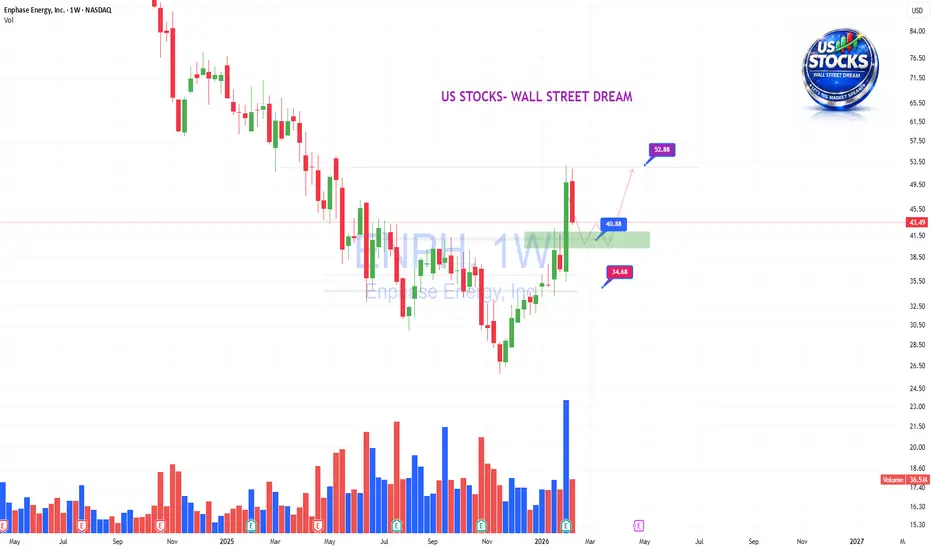
Now let's look at NVDA's chart going back to May and running through Friday afternoon (Dec. 26):
Readers will see that Nvidia survived a minor lull coming out of an April-to-October rising-wedge pattern of bearish reversal (shaded orange at the chart's left).
NVDA then found support at its 50-day Simple Moving Average (or "SMA," marked with a blue line) and rallied in late October.
But the stock pulled back in November and lost both its 50-day line and 21-day Exponential Moving Average (or "EMA," denoted by a green line). Still, Nvidia appears to have taken back both of those lines in recent days.
Meanwhile, NVDA has developed a clearly defined double-bottom pattern of bullish reversal over the past two months, as marked with green jagged lines and two green boxes at the chart's right.
This pattern indicates a $188 pivot, which NVDA is attempting to take and hold. (Shares were trading Tuesday afternoon at $187.88.)
As for Nvidia's other technical indicators, the stock's Relative Strength Index (the gray line at the chart's top) has been improving for about a week. It appears to be accelerating to the upside, but doesn't look overbought yet.
The chip giant's daily Moving Average Convergence Divergence indicator (or "MACD," denoted by black and gold lines and blue bars at the chart's bottom) has been improving as well.
Separately, the histogram of the 9-day EMA (the blue bars) and the 12-day EMA (the black line) are both above the zero-bound, and the 12-day line has crossed above the 26-day EMA (the gold line).
Those are all positives, and if Nvidia gets that 26-day line into positive territory, this pattern would strengthen into an overtly bullish signal.
An Options Option
Options investors wanting to get long on NVDA equity but reduce net basis might use what's known as a "buy-write" strategy.
That's where investors buy shares of a stock and immediately sell a covered call against that position, reducing net basis by the call's premium amount.
If these investors are seeking to maintain a longer term position in the stock, they'd prefer that their shares not get called away -- but if that happens, the trade is still profitable. Here's an example:
-- Long 100 NVDA shares at Friday's $190.53 closing price.
-- Short one NVDA $197.50 January monthly call with a Jan. 16 expiration date. This would bring in a $3.30 premium at recent prices.
Net Basis: $187.23.
This investor is hoping not to be called away, as he or she wants to own NVDA stock going forward.
But to reduce net basis, the investor has exposed himself or herself to potentially being called away (through the assignment on the short call) at $197.50 in just a few weeks.
If that happens, the investor will still net $10.27 per share on the above trade.
But if NVDA trades below $197.50 at expiration, the short call will expire worthless and the investor will simply keep the call's $3.30 premium and continue to own NVDA stock at a reduced net basis.
(Moomoo Technologies Inc. Markets Commentator Stephen "Sarge" Guilfoyle was long NVDA at the time of writing this column.)
This article discusses technical analysis, other approaches, including fundamental analysis, may offer very different views. The examples provided are for illustrative purposes only and are not intended to be reflective of the results you can expect to achieve. Specific security charts used are for illustrative purposes only and are not a recommendation, offer to sell, or a solicitation of an offer to buy any security. Past investment performance does not indicate or guarantee future success. Returns will vary, and all investments carry risks, including loss of principal. This content is also not a research report and is not intended to serve as the basis for any investment decision. The information contained in this article does not purport to be a complete description of the securities, markets, or developments referred to in this material. Moomoo and its affiliates make no representation or warranty as to the article's adequacy, completeness, accuracy or timeliness for any particular purpose of the above content. Furthermore, there is no guarantee that any statements, estimates, price targets, opinions or forecasts provided herein will prove to be correct.
Options trading is risky and not appropriate for everyone. Read the Options Disclosure Document ( j.moomoo.com ) before trading. Options are complex and you may quickly lose the entire investment. Customers should consider their investment objectives and risks carefully before investing in options. Because of the importance of tax considerations to all options transactions, the customer considering options should consult their tax advisor as to how taxes affect the outcome of each options strategy. Supporting documents for any claims will be furnished upon request.
Options trading subject to eligibility requirements. Strategies available will depend on options level approved.
Maximum potential loss and profit for options are calculated based on the single leg or an entire multi-leg trade remaining intact until expiration with no option contracts being exercised or assigned. These figures do not account for a portion of a multi-leg strategy being changed or removed or the trader assuming a short or long position in the underlying stock at or before expiration. Therefore, it is possible to lose more than the theoretical max loss of a strategy.
Moomoo is a financial information and trading app offered by Moomoo Technologies Inc. In the U.S., investment products and services on Moomoo are offered by Moomoo Financial Inc., Member FINRA/SIPC.
TradingView is an independent third party not affiliated with Moomoo Financial Inc., Moomoo Technologies Inc., or its affiliates. Moomoo Financial Inc. and its affiliates do not endorse, represent or warrant the completeness and accuracy of the data and information available on the TradingView platform and are not responsible for any services provided by the third-party platform.
Gold will continue to fall.
Distinguished Traders,
Thank you for your consistent trust and cooperation! Despite today's market fluctuations, our team's precise analysis and decisive execution have once again delivered substantial results. Below is a live review of today's trading strategies:
🎯 Summary of Today's Trading Results
A total of 5 strategies were executed today, with 4 successfully reaching take-profit and 1 strictly stopped out. Overall, profitability remained stable.
✅ Net Profit Total: 550 PIPS (after deducting losses)
📊 Detailed Trading Records
Precision Long Trade: Entry 4460-4465 → Take Profit 4472 | Profit: 90 PIPS
Buy-the-Dip Strategy: Entry 4440-4435 → Take Profit 4455 | Profit: 150 PIPS
High-Altitude Sniper Short: Entry 4455-4453 → Take Profit 4427 | Profit: 260 PIPS
Short-Term Rebound Trade: Entry 4365-4360 → Take Profit 4383 | Profit: 230 PIPS
Risk Control Execution: Entry 4405-4410 → Stop Loss 4390 | Loss: 180 PIPS
Latest Trading Strategy Analysis
I. Core Market Logic Analysis
Gold has recently retreated significantly after hitting a new phase high, driven primarily by the following factors:
Profit-Taking and Technical Adjustments: The rapid gains in the earlier phase accumulated a large number of long positions. Year-end capital repatriation and leveraged fund position reductions triggered concentrated selling.
Shift to Cautious Sentiment: Easing geopolitical tensions reduced short-term safe-haven premiums, shifting market focus to the trade-off between inflation and the Federal Reserve's policy path.
Structural Factors Amplifying Volatility: Year-end liquidity contraction, institutional risk budget adjustments, and trading mechanisms (such as margin requirement increases) accelerated capital outflows from high-volatility assets (e.g., silver), with gold also affected by spillover effects.
II. Key Technical Signals
Trend Reversal: The daily chart failed twice to break through the resistance near 4520, and moving averages formed a death cross, indicating exhaustion of bullish momentum and a short-term shift to weakness.
Critical Support and Resistance Levels:
Strong Support Zone: 4300–4280 (the launch platform of the previous uptrend + lower boundary of the 4-hour ascending channel).
Resistance Zone: 4350–4360 (key suppression level for today's rebound).
Oversold Warning: After consecutive declines, the market is approaching oversold territory. A technical rebound may occur near 4280, making direct short chasing relatively risky.
III. Trading Strategy
Overall Approach: Focus on selling during rebounds, with light positions to capture rebounds at key support levels.
Short Trade Opportunity:
Entry Zone: 4350–4360
Stop Loss: 4368
Targets: 4320 → 4300 (breakthrough target: 4280)
Long Trade Opportunity:
Entry Zone: 4280–4285
Stop Loss: 4272
Targets: 4300 → 4320 → 4350
IV. Risk Warnings
Year-end volatility may intensify, requiring strict position control.
If the gold price strongly breaks above 4360 and holds, short-term short positions should be promptly closed.
Monitor U.S. session sentiment changes and movements in the U.S. Dollar Index to avoid impacts from data events.
Core Strategy: Prioritize selling opportunities in the 4350–4360 resistance zone. If prices directly drop and stabilize near 4280, consider light long positions. Always implement strict stop-loss measures and avoid holding losing positions.
💡 Today's Strategy Highlights
Flexible long/short switching, following market trends
Accurate entry and exit points, capturing swing profits
Strict risk control, manageable losses, steady profitability
📈 By Joining Us, You Will Gain
✅ Real-time, precise entry and exit points
✅ Strict risk control and position guidance
✅ Continuous market analysis and strategy optimization
✅ Dedicated one-on-one customer service
✨ Professional Team, Guiding Your Journey; Rigorous Strategies, Ensuring Steady Profits!
👉 Welcome to inquire about cooperation details and create the next profitable trading day together!
EURUSD: Bullish Pullback or Trap? (Using H4 ADX to Decide)EURUSD is currently pulling back into the moving averages on the 4-Hour timeframe. The structure is still bullish, but the question is: Is this a discount buy, or is the momentum dying?
I use a custom script ("The Lighthouse Protocol") to filter out low-probability environments based on the ADX.
The Analysis:
Price Action: We are sitting on dynamic support.
The Filter: My H4 ADX is currently at 25.4, which is above my "Choppy Threshold" of 20.
Visual: The background remains Black (Active Mode). If the ADX drops below 20, my script will turn the background Gray, signaling that the institutional trend has paused.
The Plan: As long as the background stays Black (ADX > 20), I am looking for a lower timeframe (15m) breakout to the upside to catch the trend continuation.
Invalidation: If price consolidates here long enough for the ADX to dip below 20, the background will turn Gray. In that scenario, I cancel all limit orders and sit on my hands to avoid the chop.
Trade the volatility, not just the price.
XAUUSD H1 – Short-Term SELL Opportunity Looking for a Short-Term SELL Move Inside the Uptrend Channel
Gold is entering a technical pullback phase after losing momentum near the upper boundary of the rising channel. For today, the focus is to look for short opportunities on reactions, using Volume Profile levels and the recent break of short-term support.
TECHNICAL CONTEXT
On H1, price is still inside a rising channel, but the market has shown a clear loss of short-term bullish structure, signalling profit-taking pressure.
The POC–VAH area above is now acting more like a sell-on-rally zone rather than an immediate continuation point.
Weak rebounds during the Asian session can offer better timing for short setups in a corrective phase.
PRIORITY SCENARIO – MAIN PLAN
Sell the pullback into value
Primary sell zone: 4497 – 4500 (Sell VAH)
Confirmation sell zone: 4465 – 4468 once price confirms a break of support during the Asian session
Expected behaviour:
Price rebounds into high-volume areas, shows rejection, then continues lower toward the next liquidity pocket.
CORRECTION TARGETS
Nearest support: around 4431
Potential buy zone: 4399 – 4396 (Fibonacci extension 1.618 plus lower-channel support)
This area is a key liquidity confluence where a bullish reaction could appear and the corrective move may complete.
WHY THE SELL IDEA MAKES SENSE
H1 structure shows short-term momentum fading
Volume Profile highlights the POC–VAH region as a high-probability sell-on-rally area
This move is treated as a correction within a broader bullish trend, not a long-term reversal
MACRO BACKDROP AND USD
The US Dollar Index (DXY) has extended its weekly decline for three straight sessions, reaching the lowest levels since early October. Key drivers include:
US CPI for November coming in weaker than expected
Signs of cooling in the US labour market
Rising expectations that the Fed could deliver two additional rate cuts in 2026
A softer USD supports gold in the medium to long term, but short-term technical corrections remain normal as the market rebalances.
SUMMARY VIEW
Priority is to sell rallies into 4497–4500 and 4465–4468
The downside move is viewed as a technical correction
Watch 4399–4396 closely for a potential bullish reaction and end of the pullback
GOLD H4 | Potential Bullish BounceBased on the H4 chart analysis, we can see that the price has bounced off our buy entry level at 4,343.11, whichis a pullback support that aligns with the 38.2% Fibonacci retracement.
Our stop loss is set at 4,265.18, which is an overlap support that lines up with the 50% Fibonacci retracement.
Our take profit is set at 4,446.51, which is a pullback resistance that aligns with the 61.8% Fibonacci retracement.
High Risk Investment Warning
Stratos Markets Limited (
Be wary of another drop in gold prices.
I. Core Pricing Logic Analysis
Macro Fundamentals Remain Supportive:
The medium-to-long-term pricing of gold continues to revolve around two core drivers: real interest rate expectations and safe-haven demand. On one hand, market expectations of further Fed rate cuts in 2026 continue to suppress the real interest rate environment, reducing the opportunity cost of holding the non-yielding asset. On the other hand, persistently elevated geopolitical risks (such as the ongoing volatility in the Ukraine conflict) raise tail-risk premiums, reinforcing gold's role as the "ultimate safe-haven collateral."
Short-Term Market Sentiment Profile:
The current market exhibits a pattern of "safe-haven undertone intact, but risk appetite fluctuating." Geopolitical uncertainty provides underlying dip-buying support for gold. However, increased margin requirements and tighter liquidity amplify short-term volatility, leading to a price action structure characterized by "difficulty rallying, swiftness in declines." It is important to note that the recent pullback is more attributable to shifts in micro-trading structures (e.g., forced deleveraging by leveraged funds) rather than a reversal of the fundamental macro narrative.
II. Technical Analysis Summary
Key Level Identification:
Resistance Zone: $4400 – $4405 (corresponding to the 38.2% Fibonacci retracement level from the prior significant decline).
Support Zone: $4300 – $4280 (the lower bound of the recent consolidation range and a psychological level).
Trend Structure & Momentum Assessment:
The daily chart shows a "bearish engulfing" pattern, confirming near-term corrective pressure. The 1-hour moving averages are in a bearish alignment, indicating weak short-term momentum. The failure of the price rebound to sustain above the $4400 level reflects a lack of conviction from the bulls. The overall structure continues to favor an extension of the corrective pullback.
III. Specific Trading Strategy Deployment
Core Idea: Favor selling into strength, with opportunistic buying at key support levels.
Strategy 1: Sell on Rebound (Primary)
Entry Zone: $4395 – $4400
Stop Loss: Above $4410
Target Zone: $4350 → $4300 → $4280
Rationale: The $4400 area acts as both a technical resistance level and a significant psychological barrier, making a rejection and decline from this zone a higher probability scenario.
Strategy 2: Buy on Pullback (Secondary/Counter-trend)
Entry Zone: $4280 – $4285
Stop Loss: Below $4270
Target Zone: $4300 → $4320 → $4350
Rationale: This zone represents a key recent support cluster. The first test of this area could prompt a technical relief bounce.
IV. Risk & Opportunity Guidance
Key Catalysts to Monitor:
Fed Policy Signals: Dovish-leaning commentary could trigger a rapid gold rebound, while emphasis on persistent inflation may lead to continued consolidation.
Geopolitical Developments: Any escalation in tensions could ignite safe-haven buying flows.
Trading Discipline Emphasis:
No Emotional Holding (Averaging Down): Exit positions decisively if stop-loss levels are breached and reassess the situation.
Avoid Chasing Price: Exercise patience and wait for confirmation around key technical levels before entering.
Time flies, 2025 is drawing to a close, and 2026 is approaching. Although the weather is getting colder, spring is also getting closer, isn't it?
We all want to get a piece of the market pie, but have you noticed that the harder you try, the more severe your losses become? Your capital continues to shrink, and your confidence gradually fades. If you find yourself trapped in such a predicament, I suggest you: pause for a moment.
Stop those repetitive trading mistakes, step away from the cycle that keeps draining you. What you need isn't just luck, but a mentor who can guide you in the right direction—a professional partner who can help you clarify your thoughts, turn the situation around, and recover your losses.
The market has its ups and downs; we've all experienced bull and bear markets. Difficult times don't mean there is no hope. Periods of loss can also be periods of consolidation: accumulating experience, learning lessons, and consistently summarizing—these are the foundations for recovery.
I am a professional analyst specializing in the gold market. With years of practical experience and systematic methods, I am willing to guide you out of the fog. Investing isn't just about market trends; it's also about choices—one right choice can benefit you for a lifetime.
If you're ready for a change, I welcome you to reach out. We can start with a diagnostic conversation to clarify your trading issues and find a path better suited for you.
📩 Contact me, and let's start 2026 on a more stable note.
May every step you take from here on be more composed and determined.
The process itself remains the most valuable guideOne of the aspects of this form of analysis that I genuinely enjoy, but which I know can be frustrating for others, is that there are moments when the pattern appears to be communicating something very clearly…yet price refuses to cooperate with that viewpoint. When that happens, my focus immediately shifts to why. What am I missing? That process doesn’t disillusion me, it fascinates me. Because sooner rather than later, the market provides the answer, and every time it does, there is something to be learned.
In the case of Solana, the pattern appears to be saying exactly what the arrows on the chart are suggesting. And yet, I currently have no price-based evidence to support that interpretation. Price has not advanced in any meaningful way, has not challenged important resistance areas, and has not begun to break apart the broader downside structure. There’s a disconnect that cannot be ignored.
A misinterpretation of the pattern in my analysis?
A lack of patience on my part? My process is to become self-inquisitive.
Structurally, I can identify all the constituent waves necessary to consider the decline complete, and price has reached the Fibonacci extensions that would typically signal the end of such a pattern. Under normal circumstances, that would already have produced a response to the upside.
So, for now, patience is required. In the days ahead, the market will either reveal why this pattern is not cooperating with my current perspective, or it will begin to deliver the subdivisions that should accompany a completed decline. Either outcome provides clarity. Until then, the process itself remains the most valuable guide.
The Interplay of Investors, Traders, and Policymakers1. The Global Trading Ecosystem: An Overview
Global trading encompasses equity markets, bond markets, commodities, currencies (forex), derivatives, and alternative assets such as cryptocurrencies. These markets operate across multiple time zones, making trading a 24-hour phenomenon. Capital flows seamlessly from one region to another in search of returns, safety, or diversification. This fluid movement is driven by information—economic data, corporate earnings, geopolitical events, and policy decisions—which is instantly reflected in asset prices.
Within this ecosystem, investors provide long-term capital, traders ensure liquidity and efficient pricing, and policymakers establish the rules of the game. The balance among these participants determines market confidence, volatility, and sustainability.
2. Investors: Long-Term Capital and Value Creation
Investors are the cornerstone of global trading. They typically operate with a medium- to long-term horizon, aiming to grow wealth through appreciation, income, or both. Institutional investors such as pension funds, mutual funds, insurance companies, sovereign wealth funds, and endowments dominate global capital flows. Retail investors, though smaller individually, collectively have a significant impact, especially with the rise of online platforms.
Investors focus on fundamentals—economic growth, corporate profitability, balance sheets, governance, and long-term trends such as demographics, technology, and climate transition. Their decisions determine where capital is allocated globally: emerging markets versus developed economies, equities versus bonds, or traditional industries versus new-age sectors.
In global trading, investors also play a stabilizing role. By holding assets through market cycles, they help dampen excessive volatility. Long-term investments in infrastructure, manufacturing, and innovation contribute to economic development and employment. However, shifts in investor sentiment—such as risk-on or risk-off behavior—can trigger massive cross-border capital movements, impacting currencies, interest rates, and asset prices worldwide.
3. Traders: Liquidity, Price Discovery, and Market Efficiency
Traders operate on shorter time horizons compared to investors. They range from intraday and swing traders to high-frequency trading (HFT) firms and proprietary desks at global banks. Traders focus on price action, liquidity, volatility, and market psychology rather than long-term fundamentals.
Their primary contribution to global trading is liquidity. By continuously buying and selling, traders ensure that markets remain active and that investors can enter or exit positions efficiently. This liquidity is crucial for accurate price discovery, allowing asset prices to reflect real-time information.
In modern global markets, technology plays a dominant role. Algorithmic and quantitative trading strategies analyze massive datasets in milliseconds, exploiting small price inefficiencies across geographies and asset classes. While this enhances efficiency, it can also amplify short-term volatility, especially during periods of stress.
Traders are highly sensitive to macroeconomic data releases, central bank announcements, geopolitical developments, and unexpected news. Their rapid reactions often cause sharp intraday movements, which can later be assessed and absorbed by longer-term investors.
4. Policymakers: Regulation, Stability, and Economic Direction
Policymakers—governments, central banks, and regulatory authorities—set the framework within which global trading operates. Their decisions influence interest rates, inflation, currency values, capital flows, and investor confidence.
Central banks play a particularly critical role. Through monetary policy tools such as interest rates, open market operations, and liquidity measures, they directly affect asset prices and risk appetite. For example, accommodative monetary policy tends to support equities and risk assets, while tightening cycles often strengthen currencies and pressure valuations.
Fiscal policymakers influence markets through taxation, public spending, subsidies, and trade policies. Infrastructure spending can boost equities and commodities, while protectionist measures may disrupt global supply chains and increase market uncertainty.
Regulatory bodies ensure market integrity by enforcing transparency, preventing fraud, managing systemic risk, and protecting investors. Well-designed regulation fosters confidence and long-term participation, while excessive or unpredictable regulation can deter capital and reduce market efficiency.
5. Interaction Between Investors, Traders, and Policymakers
The global trading environment is shaped by the continuous interaction among these three groups. Policymaker actions influence investor expectations and trader behavior. Traders interpret policy signals instantly, often driving short-term price movements. Investors then reassess long-term implications and adjust portfolios accordingly.
For example, a central bank’s indication of future rate cuts may trigger an immediate rally led by traders, followed by sustained inflows from investors reallocating capital toward growth assets. Conversely, unexpected policy tightening can cause sharp sell-offs, currency appreciation, and capital outflows from riskier markets.
This interaction is not one-way. Market reactions also influence policymakers. Severe volatility, financial instability, or market crashes may prompt intervention through liquidity support, regulatory changes, or fiscal stimulus. Thus, global trading is a dynamic feedback loop rather than a static system.
6. Globalization, Geopolitics, and Cross-Border Complexity
Global trading does not occur in isolation from political and geopolitical realities. Trade wars, sanctions, military conflicts, and diplomatic shifts can significantly alter capital flows and market structures. Investors reassess country risk, traders exploit volatility, and policymakers respond with strategic measures.
Emerging markets are particularly sensitive to global capital flows driven by developed-market monetary policy. Changes in interest rates in major economies can influence currencies, bond yields, and equity markets worldwide, highlighting the asymmetry of global financial power.
7. Technology and the Future of Global Trading
Advancements in technology continue to reshape global trading. Artificial intelligence, machine learning, blockchain, and digital assets are transforming how markets operate. Retail participation has expanded due to easy access to information and low-cost trading platforms, blurring the line between investors and traders.
Policymakers face new challenges in regulating digital markets, managing systemic risks, and ensuring fair access while fostering innovation. The balance between efficiency, stability, and inclusivity will define the next phase of global trading.
8. Conclusion
Global trading is a complex, interconnected system driven by the collective actions of investors, traders, and policymakers. Investors provide long-term capital and stability, traders ensure liquidity and efficient pricing, and policymakers set the economic and regulatory framework. Their interaction determines market direction, volatility, and resilience.
In an increasingly globalized and technologically advanced world, understanding this interplay is crucial for navigating financial markets effectively. As economic power shifts, new asset classes emerge, and policy challenges grow, the role of global trading will remain central to shaping economic outcomes and wealth creation across the world.