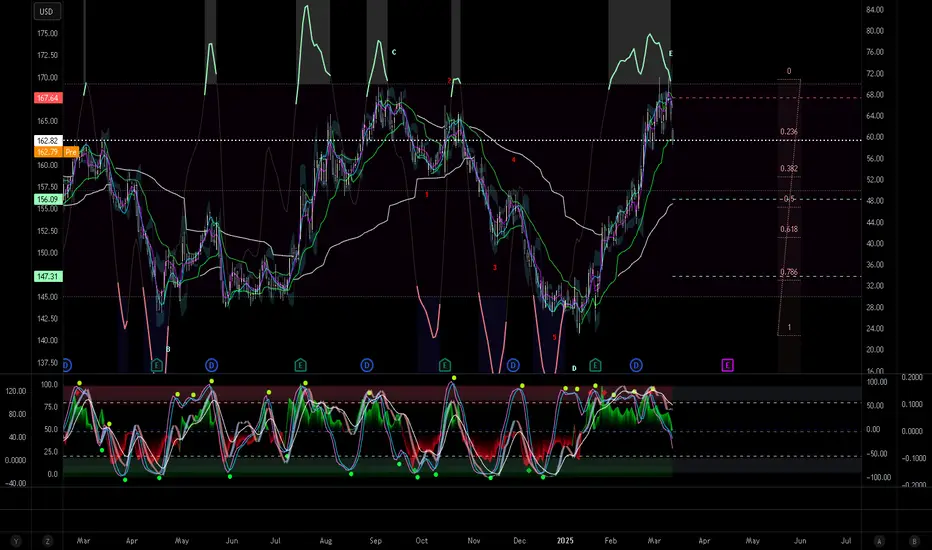
Centered Oscillators
XRP Price Prediction Today: Can Bulls Break $1.20XRP price today is trading above $1.10 after gaining nearly 4%, while Bitcoin has climbed back above $65,000. The recent recovery has improved market sentiment, but XRP still needs to move above $1.20 to confirm a stronger uptrend.
The $1.20 level has acted as a strong resistance in recent weeks.
According to analyst, a sustained move above this level could push XRP toward the next resistance zone between $1.24 and $1.28. A break above $1.29 would strengthen the bullish trend.
On the downside, XRP needs to stay above $1.13 to maintain the current recovery. A drop below $1.10 could erase recent gains.
XRP Price Rises as Funding Rates Fall
One unusual signal during the latest rally is the sharp drop in XRP funding rates.
Funding rates fell 240% in one day, even as XRP moved above $1.13. At the same time, trading volume increased 64% over the past 24 hours.
This suggests the price increase is being supported by spot buying rather than excessive leveraged trading, making the move appear healthier than a leverage-driven rally.
Whale Buying Continues
Large XRP holders added around 70 million XRP during the recent price recovery. Despite this accumulation, XRP has remained below $1.20, showing that buying pressure has not yet been strong enough to trigger a larger breakout.
Network Activity Remains Weak
Active XRP addresses have dropped to around 20,000, the lowest level in nearly a year. Lower network activity suggests fewer users are currently interacting with the XRP Ledger, even as the price attempts to recover. At the same time, new capital entering XRP remains limited, which has slowed upward momentum.
Key XRP Price Levels
$1.10 – Major support
$1.13 – Short-term support
$1.20 – Key resistance
$1.24-$1.28 – Next resistance zone
$1.29 – Level that could open the way for a stronger rally
XRP has started to recover, supported by higher trading volume and continued accumulation by large holders. However, the price remains below its key resistance, network activity is near a one-year low, and fresh buying remains limited. Holding above $1.13 and breaking $1.20 will be the next important signals to watch.
How to Interpret Bitcoin Time Series MomentumBitcoin Daily Time Series Momentum is designed to measure whether Bitcoin's short-term momentum is stronger or weaker than its longer-term momentum baseline.
Unlike many traditional momentum indicators, it focuses on the relationship between short-term and long-term momentum rather than simply measuring recent price changes.
The Neutral Level (1.0)
The most important level on the indicator is 1.0 .
Above 1.0 – short-term momentum is stronger than the longer-term baseline.
Below 1.0 – short-term momentum is weaker than the longer-term baseline.
A move through 1.0 does not automatically generate a buy or sell signal. Instead, it shows that momentum conditions have changed.
Upper Reference Zone (1.2)
When the indicator rises above 1.2 , Bitcoin is experiencing unusually strong daily momentum.
Strong momentum can continue for some time, so this level should not automatically be interpreted as a reversal signal.
Lower Reference Zone (0.8)
When the indicator falls below 0.8 , daily momentum is unusually weak.
Weak momentum may continue during strong downtrends, so this level should not automatically be interpreted as a buying opportunity.
How I Use It
Rather than looking at the indicator in isolation, I combine it with price action.
Is momentum strengthening or weakening?
Is Bitcoin approaching an important support or resistance level?
Is momentum confirming the current price trend or diverging from it?
The indicator is intended to provide additional context for market analysis rather than predict future prices.
Final Thoughts
No indicator should be used on its own.
Bitcoin Daily Time Series Momentum works best when combined with price structure, support and resistance, and sound risk management.
This post is intended for educational purposes only and does not constitute financial or investment advice.
Bitcoin Daily Momentum Update #1: Momentum Remains Below NeutralBitcoin Daily Momentum Update #1: Momentum Remains Below Neutral
Bitcoin Daily Time Series Momentum is currently reading approximately 0.97 , which remains below the neutral level of 1.0 .
This means Bitcoin’s short-term daily momentum is still weaker than its longer-term momentum baseline.
However, the indicator has recently recovered after approaching the lower reference zone near 0.8 . This suggests that downside momentum has started to ease.
At this stage, momentum is improving, but it has not yet confirmed a return to positive territory.
Key levels to watch
Above 1.0: Short-term momentum becomes stronger than the longer-term baseline.
Above 1.2: Momentum enters the upper reference zone, indicating unusually strong or extended positive momentum.
Below 0.8: Momentum enters the lower reference zone, indicating unusually weak daily momentum.
Current view
The recent recovery toward the neutral level is encouraging, but I would like to see a confirmed move above 1.0 before considering daily momentum to have shifted back in favour of the bulls.
Until then, Bitcoin remains in a momentum recovery phase rather than a confirmed positive momentum phase.
The 1.2 and 0.8 levels are reference zones and should not be treated as automatic buy or sell signals.
Momentum should be used together with price structure, support and resistance, and appropriate risk management.
I will update this idea if the momentum reading changes materially during the week.
This analysis is for informational and educational purposes only and does not constitute financial advice.
EURUSD H4 FVG DeliversEURUSD reacted exactly where the higher-timeframe H4 Fair Value Gap suggested. After sweeping liquidity, buyers stepped in with bullish displacement, keeping the upside narrative intact.
This is why location always comes before confirmation.
Market Read
• Sell-side liquidity has been taken.
• Strong reaction from the H4 Fair Value Gap.
• Bullish displacement confirms buyer intent.
• Looking for continuation into external liquidity.
Trade Plan
🟢 Entries are valid only after displacement from the H4 FVG.
🛡️ Protect risk below the reaction low.
🎯 TP1: Internal buy-side liquidity.
🎯 TP2: Previous swing high and external liquidity.
HangSeng50: Both profit targets banked updated trade is here!Five days ago, the Hang Seng had an unfriendly technical backdrop in Asia with the US imposing a 50% tariff on copper imports in the country on July 9, Chinese PPI deflation reading of 3.6% year-on-year, and geopolitical tensions from the Strait of Hormuz. But with its positive MACD histogram divergence and the 50-day EMA intact, it turned out to be a good momentum long trade with its 24,355 primary target breached on July 10 and 24,533 secondary target breached thereafter. The story became more interesting on Wednesday with Q2 GDP growing by only 4.3% year-on-year which was below the 4.5% market expectation and the official target floor of Beijing for the first time since late 2022. But the details behind this GDP miss reveal that China's economy is unbalanced rather than broken as the retail sales grew by 1.0% (vs. 0.1% drop expected) in June, industrial production recorded 5.3% (vs. 4.6% estimate) and exports grew at the fastest pace since October 2021. On the other hand, the domestic demand is weak with fixed asset investment falling 5.7% year-on-year (vs. 4.9% drop expected) and property investment falling 18% in the first six months.
Indeed, the daily chart shows a real structural change. Both the EMA 9 and EMA 20 that provided resistance throughout the month of June have been retaken and are curling higher, indicating institutional accumulation. An additional bullish MA Cross at 23,952 and 23,738 corroborates this change in direction. The RSI at 60.48 offers a very interesting indicator as it has convincingly crossed above its signal line of 39.60, indicating strong buying pressure while remaining below overbought conditions and hence showing there is some scope for continuation of the trend. This is confirmed by a bullish MACD crossover, where the MACD line at 219.25 is comfortably above the signal line and the histogram is showing its biggest readings since April. But, of course, the miss on Q2 GDP growth (brings a fundamental driver into play as the story switches from sentiment to policy dependence. Although the technical indicators are providing the runway for an advance, hitting the extended target of 25,113 would depend on a policy announcement in late July in the Politburo meeting.
Updated trade plan
Direction : Long both targets banked, manage the remainder with discipline
Status : Primary target (24,355) hit 10 July. Secondary target (24,533) hit 15 July.
New operative target : 24,874
Extended target : 25,113
Trailing stop : 24,000
Key date to watch : Late July Politburo meeting
Technical scenarios
Bull case : Stimulus mandate unlocked with Q2 growth below the 4.5% floor, the late-July Politburo meeting is critical. If Beijing implements rate cuts or fiscal expansion, the confirmed MACD crossover supports a move toward the 25,113 EMA 200 target. The GDP miss effectively acts as a catalyst for aggressive policy support.
Base case : Consolidation and positioning the index will likely oscillate between support at 24,355 and the 24,874 peak as institutions await the Politburo signal. Expect RSI cooling and MACD histogram compression. With the 24,000 trailing stop secure, this remains the most probable near-term outcome.
Bear case : Structural headwinds trigger reversal If the 4.3% growth and 18% property slump signal ineffective stimulus, risk appetite will likely fade. A daily close below the 24,000 trailing stop invalidates the current recovery, refocusing on June lows. Until then, the EMA and RSI structural shift remains the dominant framework.
BABA showing signs of life.BABA, Alibaba, 1W / 1D
(AI summary of my analysis)
China internet has quietly started to turn up this week (KWEB, MCHI, FXI all curling higher on relative strength for the first time in a while). BABA is the name I want inside that. This is an early one, so I'm treating it like a probe, not a conviction long.
The setup:
- Fresh 52-week low, one week of consolidation, and now a big thrust week. Daily is up double digits on the heaviest volume in months and reclaimed the 21 EMA and 10 SMA. Weekly reclaimed the 200-week line and stochastics are buried and just starting to curl.
- Not extended. Price is still sitting a couple ATRs below the 50-day, so there's room to run into resistance rather than chasing something that already went vertical off the MAs.
What I'm watching:
- 117.90 is the first shelf, and then 120 to 128 is the real wall (declining 50-day plus the weekly cloud base). That whole zone is stuffed with trapped supply from the slide down from 148. First push into it probably stalls.
- I want to see it clear 117.90 and hold, with MACD actually crossing up instead of just getting less negative. That's when I'd add.
Risk:
- Stop under the 21 EMA reclaim, roughly 104 to 105. Lose that and the thrust failed, no argument. Risk is about $4-5 per share, small.
- Wider structural line is 98, and the whole thing is dead if it takes out the 90 low.
Caution:
- This is still a countertrend trade. Below a falling 50 and 200 day, MACD hasn't turned, and it's the first bounce off a new low. Those retest or base more often than they V straight up. The theme turn is only one week old too.
- So it's early and the risk is defined and small, which is exactly why I like it here. Starter now, add if China's second week confirms and 117.90 gives way. If it can't hold the 21 EMA, I'm out cheap and I wait for the base.
Not advice, just how I'm playing it.
XAUUSD | Gold Bullish Continuation Pattern at Major Support ZoneThe Gold Price experienced a sharp downward trend initially, bottoming out near the 3,980 region before undergoing a major Structural Shift. Following a period of accumulation and a breakout above local resistance, price action flipped the market structure from bearish to bullish. Currently, price is experiencing a corrective pullback after hitting a local peak near 4,200, returning to retest a crucial demand zone.
Key Confluences
Parallel Channel: The corrective move down from the 4,200 highs is tightly contained within a Parallel Channel This serves as a bullish continuation structure, suggesting the selling pressure is corrective rather than impulsive.
Channel Bottom Alignment: The lower boundary of the parallel channel perfectly aligns with the Support zone, creating a high probability confluence area for buyers.
Support & Resistance Zones
Key Support : 4,080 – 4,100. This is where buyers are heavily sitting, validated by the structural ceiling turning into a floor.
Major Resistance : 4,220 – 4,240. This represents the overhead supply zone originating from the previous major breakdown point.
Projected Path
Price is expected to find significant liquidity and buying interest within the current 4,080 – 4,100 support zone. A successful defense of this level will likely trigger a breakout above the upper of the parallel channel. The projected path shows a brief consolidation at support before an impulsive drive toward the key Liquidity Target and resistance level at 4,230.
Trade Sentiment
Long BiasValid as long as the 4,080 structural support holds.
⚠️ Disclaimer: This is only for educational purposes
I'm not you Financial advisor.
Nebius Pulls BackNebius hit a record high in mid-June, and now it’s pulled back.
The first pattern on today’s chart is the rally on May 13, propelled by strong quarterly results. The AI infrastructure stock fluctuated around $205 that session and has stayed mostly above that price area since. It’s now trying to stabilize in the same zone.
Second, a series of higher weekly lows may suggest accumulation is underway.
Third, NBIS is now trying to stabilize at its rising 50-day simple moving average (SMA). That could reflect a positive intermediate-term trend.
Fourth, the 50-day SMA is above the 100-day SMA. Both are above the 200-day SMA. Such a configuration, with faster SMAs above slower SMAs, may reflect a longer-term bullishness.
Next, stochastics have dipped to an oversold condition.
Finally, NBIS is an active underlier in the options market. (It averages 195,000 contracts per session.) That could help traders take positions with calls and puts.
TradeStation has, for decades, advanced the trading industry, providing access to stocks, options and futures. If you're born to trade, we could be for you. Learn more here about TradingView’s Broker of the Year!
Past performance, whether actual or indicated by historical tests of strategies, is no guarantee of future performance or success. There is a possibility that you may sustain a loss equal to or greater than your entire investment regardless of which asset class you trade (equities, options or futures); therefore, you should not invest or risk money that you cannot afford to lose. Online trading is not suitable for all investors. View the document titled Characteristics and Risks of Standardized Options at www.TradeStation.com . Before trading any asset class, customers must read the relevant risk disclosure statements on www.TradeStation.com . System access and trade placement and execution may be delayed or fail due to market volatility and volume, quote delays, system and software errors, Internet traffic, outages and other factors.
Securities and futures trading is offered to self-directed customers by TradeStation Securities, Inc., a broker-dealer registered with the Securities and Exchange Commission and a futures commission merchant licensed with the Commodity Futures Trading Commission). TradeStation Securities is a member of the Financial Industry Regulatory Authority, the National Futures Association, and a number of exchanges.
Options trading is not suitable for all investors. Your TradeStation Securities’ account application to trade options will be considered and approved or disapproved based on all relevant factors, including your trading experience. See www.TradeStation.com . Visit www.TradeStation.com for full details on the costs and fees associated with options.
Margin trading involves risks, and it is important that you fully understand those risks before trading on margin. The Margin Disclosure Statement outlines many of those risks, including that you can lose more funds than you deposit in your margin account; your brokerage firm can force the sale of securities in your account; your brokerage firm can sell your securities without contacting you; and you are not entitled to an extension of time on a margin call. Review the Margin Disclosure Statement at www.TradeStation.com .
TradeStation Securities, Inc. and TradeStation Technologies, Inc. are each wholly owned subsidiaries of TradeStation Group, Inc., both operating, and providing products and services, under the TradeStation brand and trademark. When applying for, or purchasing, accounts, subscriptions, products and services, it is important that you know which company you will be dealing with. Visit www.TradeStation.com for further important information explaining what this means.
Turning Conflicting Signals into Structured DecisionsOne of the biggest misconceptions in trading is the belief that every good opportunity should look obvious. Many traders wait for every indicator, every chart pattern, and every momentum signal to point in the same direction before considering a position. While this sounds logical, markets rarely offer such perfect alignment.
Instead, they often present conflicting information. A chart may display a bullish pattern while momentum remains weak. A trend may appear constructive while resistance sits immediately overhead. Oscillators may begin improving before price confirms the move.
At first glance, conflicting signals appear to complicate decision-making. In reality, they can offer one of the most valuable lessons in trading: uncertainty is unavoidable, but risk can still be structured.
This idea can be illustrated using Ether futures as a practical case study.
Every Decision Has Pros and Cons
Trading is not unique in requiring decisions under uncertainty.
Buying a home involves weighing location against cost. Accepting a new job means balancing opportunity against risk. Starting a business requires optimism while acknowledging uncertainty.
Every meaningful decision contains arguments for and against it.
Financial markets are no different.
Waiting until every piece of evidence agrees often means waiting for a move that has already developed. On the other hand, acting on a single indicator while ignoring conflicting information can expose traders to unnecessary risk.
Rather than searching for certainty, experienced traders often focus on building a structured process for evaluating competing evidence.
The objective is not to eliminate uncertainty.
The objective is to make disciplined decisions despite uncertainty.
A Chart That Tells Two Stories
The accompanying daily chart of Ether futures provides an interesting example.
At first glance, several bullish characteristics are visible.
Price has developed a falling wedge, a classical chart pattern frequently associated with the possibility of an upside resolution after a period of declining prices. As the wedge narrows, selling pressure appears to become less aggressive, allowing buyers an opportunity to regain control.
The Commodity Channel Index (CCI) adds another constructive observation.
Although price recently produced lower lows, the CCI formed a bullish divergence, suggesting downside momentum may be weakening. Divergences do not guarantee reversals, but they often encourage traders to monitor price action more closely.
If those were the only observations available, many traders might conclude that the market presents a constructive technical picture.
However, the chart also contains meaningful bearish evidence.
Immediately above price lies a bearish UFO resistance (Sell UnFilled Orders) between approximately 1,959.0 and 2,140.5. This area represents a zone where previously unexecuted sell orders may still be waiting, potentially increasing selling pressure should price revisit the region.
Momentum also introduces caution.
The MACD histogram remains below the zero line, indicating bearish momentum has not fully reversed despite recent price improvement.
The result is a chart where neither buyers nor sellers possess overwhelming technical evidence.
Bullish signals exist.
Bearish signals exist.
Neither side completely dominates the discussion.
For many traders, this is exactly where uncertainty begins.
Replacing Opinions with a Decision Matrix
Instead of asking a simple question—
"Is this chart bullish or bearish?"
—it may be more useful to ask a different one:
"What evidence supports each side?"
Viewed this way, the chart becomes less emotional and more objective.
Bullish observations
Falling wedge pattern.
CCI bullish divergence.
Early signs that selling pressure may be slowing.
Bearish observations
Bearish UFO resistance directly overhead.
MACD histogram remains negative.
Overhead supply may limit upside progress.
Notice that none of these observations automatically invalidates the others.
All of them can be true simultaneously.
Markets frequently contain conflicting information because buyers and sellers are continuously expressing different opinions.
The purpose of technical analysis is not to identify certainty.
It is to organize evidence into a structured decision-making process.
The Hidden Opportunity Inside Conflicting Signals
Many traders stop their analysis once they recognize conflicting signals.
They conclude that uncertainty means no opportunity exists.
Yet conflicting evidence often creates another characteristic that deserves attention.
When opposing technical arguments meet within a relatively narrow price range, the market frequently resolves the disagreement sooner rather than later.
In other words, the market may reveal relatively quickly which side has gained control.
This can create an important advantage from a risk management perspective.
Suppose a trader believes the bullish interpretation deserves greater weight.
If the bullish thesis is correct, price should continue respecting the falling wedge while attempting to challenge the overhead resistance.
If the bullish thesis is incorrect, the market may invalidate the pattern relatively quickly by breaking decisively below the wedge.
The chart therefore provides a clearly identifiable point where the original hypothesis would no longer be supported.
Rather than focusing exclusively on whether the market eventually moves higher, the trader can focus on whether the original idea remains valid.
This distinction is important.
Successful trading is often less about predicting direction and more about defining when a trading idea is no longer supported by evidence.
A Hypothetical Case Study
Consider a purely illustrative example.
A trader observes the falling wedge beginning to resolve to the upside while recognizing that meaningful resistance remains overhead.
Rather than assuming the bullish pattern must succeed, the trader constructs a hypothesis.
The hypothesis could be summarized as follows:
The falling wedge suggests buyers may be regaining control.
The bullish CCI divergence supports the possibility of improving momentum.
Overhead UFO resistance represents the first significant obstacle.
The bearish MACD histogram reminds traders that downside momentum has not fully disappeared.
Under this framework, a hypothetical long position might only be considered after sufficient confirmation that buyers are attempting to regain control.
Equally important, the trader defines an invalidation level before entering the position.
On this chart, a decisive move below approximately 1,504 would represent a meaningful breakdown beneath the falling wedge, suggesting the bullish technical structure has failed.
If that occurs, the original thesis would no longer be supported.
Notice that this approach is not built around certainty.
It is built around predefined risk.
Should the bullish interpretation prove incorrect, the trader knows relatively quickly that the hypothesis requires reassessment.
Conversely, if buyers continue gaining control, price may begin challenging the identified resistance area.
Whether the market ultimately succeeds or fails is less important than the process itself.
The lesson is that structured decisions begin with clearly defining both the opportunity and the conditions under which that opportunity no longer exists.
Ether Futures and Micro Ether Futures
This case study uses CME Ether futures and Micro Ether futures to illustrate the concepts discussed above.
The standard Ether futures contract (ticker: ETH) represents 50 ether, providing exposure suitable for larger notional positions. The Micro Ether futures contract (ticker: MET) represents 0.1 ether, allowing traders to adjust exposure in much smaller increments while following the same underlying market. Both contracts are cash settled using the CME CF Ether-Dollar Reference Rate.
From a contract specification perspective:
ETH (Ether Futures): The minimum price fluctuation for ETH is 0.50 index points, equivalent to $25.00 per contract.
MET (Micro Ether Futures): The minimum price fluctuation for MET is 0.50 index points, equivalent to $0.05 per contract.
Because cryptocurrency markets can experience elevated volatility, margin requirements may change over time.
At the time of writing, traders should expect approximately:
ETH Margin: approximately $25,000 per contract.
MET Margin: approximately $50 per contract.
These figures are exchange requirements and remain subject to periodic adjustment as market conditions evolve. Traders should always verify current requirements with their broker before initiating any position.
The availability of both standard and micro-sized contracts gives market participants flexibility to align position size with their individual risk management framework.
Risk Management Comes Before Direction
Perhaps the most valuable lesson from this chart has little to do with Ether itself.
It concerns risk management.
Charts containing conflicting signals remind traders that no indicator deserves absolute trust.
Instead of searching for perfect agreement, traders may benefit from asking three simple questions:
What evidence supports the trade?
What evidence argues against it?
At what price would my original idea no longer be valid?
Answering those questions before entering a position encourages discipline rather than emotion.
Equally important, a relatively small predefined risk does not imply a trade is "safe."
Unexpected news, volatility, and execution differences can always influence outcomes.
Position sizing should therefore remain consistent with an individual's overall trading plan, regardless of how attractive a particular technical setup may appear.
Being proven wrong quickly is not a failure.
Failing to recognize when the original hypothesis has been invalidated is often the greater risk.
Final Thoughts
Conflicting technical signals are often viewed as obstacles.
In practice, they can become valuable teachers.
They encourage traders to organize evidence objectively rather than searching for certainty where none exists.
The falling wedge, bullish CCI divergence, bearish UFO resistance, and bearish MACD histogram each contribute meaningful information.
None should be ignored.
Rather than asking which indicator is "correct," traders may find greater value in asking how all available evidence fits together within a structured decision-making process.
Markets will always contain uncertainty.
Good risk management does not eliminate that uncertainty.
It simply provides a disciplined framework for navigating it.
Data Consideration
When charting futures, the data provided could be delayed. Traders working with the ticker symbols discussed in this idea may prefer to use CME Group real-time data plan on TradingView: www.tradingview.com - This consideration is particularly important for shorter-term traders, whereas it may be less critical for those focused on longer-term trading strategies.
General Disclaimer
The trade ideas presented herein are solely for illustrative purposes forming a part of a case study intended to demonstrate key principles in risk management within the context of the specific market scenarios discussed. These ideas are not to be interpreted as investment recommendations or financial advice. They do not endorse or promote any specific trading strategies, financial products, or services. The information provided is based on data believed to be reliable; however, its accuracy or completeness cannot be guaranteed. Trading in financial markets involves risks, including the potential loss of principal. Each individual should conduct their own research and consult with professional financial advisors before making any investment decisions. The author or publisher of this content bears no responsibility for any actions taken based on the information provided or for any resultant financial or other losses.
Short Term Bearish on TechI think Nasdaq rolls over one more time to test the current range lows. Besides memory stocks, not sure if the market likes current levels and will capitulate back under 29K. Fears are generally still fresh of the idea of higher US interest rates impacting lofty valuations.
Double Top/Head & Shoulders Forming (Expect -16% Statistically)A head and shoulders (H&S) occurs when the price peaks on three separate occasions, with two peaks forming the “shoulders” and the central peak forming the head.
The head-and-shoulders pattern is considered one of the most reliable bearish reversal signals in technical analysis. According to the Encyclopedia of Chart Patterns and confirmed by my own research, this formation indicates an 81% chance of a downside move and an average price decline of about 16%.
Additionally, there are notable negative divergences in both the CCI and CMF.
As mentioned in earlier posts, I remain short on the market and anticipate a significant correction.
NetApp Rallied. Now It’s Pulled BackNetApp ripped on strong earnings last month. Will some traders see opportunities as the technology infrastructure stock pulls back?
The first pattern on today’s chart is the 22 percent surge on May 29, its biggest one-day gain in more than two decades. Strong results, powered by AI demand, triggered the move.
Second, the rally pushed NTAP to record territory above its previous peak from October 2000. Prices have since pulled back near that old level, which could make some traders look for old resistance to become new support.
Third, stochastics are nearing oversold territory.
Fourth, the 8-day exponential moving average (EMA) is above the 21-day EMA. That may reflect short-term strength.
Finally, the 50-day simple moving average (SMA) crossed above the 200-day SMA last month and has remained there since. That may reflect the start of a longer-term uptrend.
TradeStation has, for decades, advanced the trading industry, providing access to stocks, options and futures. If you're born to trade, we could be for you. Learn more here about TradingView’s Broker of the Year!
Past performance, whether actual or indicated by historical tests of strategies, is no guarantee of future performance or success. There is a possibility that you may sustain a loss equal to or greater than your entire investment regardless of which asset class you trade (equities, options or futures); therefore, you should not invest or risk money that you cannot afford to lose. Online trading is not suitable for all investors. View the document titled Characteristics and Risks of Standardized Options at www.TradeStation.com . Before trading any asset class, customers must read the relevant risk disclosure statements on www.TradeStation.com . System access and trade placement and execution may be delayed or fail due to market volatility and volume, quote delays, system and software errors, Internet traffic, outages and other factors.
Securities and futures trading is offered to self-directed customers by TradeStation Securities, Inc., a broker-dealer registered with the Securities and Exchange Commission and a futures commission merchant licensed with the Commodity Futures Trading Commission). TradeStation Securities is a member of the Financial Industry Regulatory Authority, the National Futures Association, and a number of exchanges.
TradeStation Securities, Inc. and TradeStation Technologies, Inc. are each wholly owned subsidiaries of TradeStation Group, Inc., both operating, and providing products and services, under the TradeStation brand and trademark. When applying for, or purchasing, accounts, subscriptions, products and services, it is important that you know which company you will be dealing with. Visit www.TradeStation.com for further important information explaining what this means.
Oracle: Potential Space to the Downside?Oracle fell on earnings last week, and some traders may see more space to the downside.
The first pattern on today’s chart is the gap on June 11 after the release of quarterly results. While numbers were strong, increased capital-raising plans dragged prices lower.
Second, the software stock has remained below that bearish gap after bouncing. That lower high may suggest that new resistance formed under old support.
Third, the 50-day simple moving average (SMA) has remained below the 200-day SMA. The 8-day exponential moving average (EMA) is also below the 21-day EMA. Those signals could reflect bearishness in the long and short terms.
Fourth, ORCL remains above its 52-week low of $134.57. Wilder’s Relative Strength Index (RSI) is also roughly in the middle of its range. Could traders expect a move down the ranges – especially with peers like Microsoft and Salesforce struggling?
Next, prices could be slipping under the 50-day SMA. The last time that happened in October was followed by a steady downtrend. (See the red arrows.)
Finally, ORCL is an active underlier in the options market. (Its average daily volume of 436,700 contracts ranks 12th in the S&P 500, according to TradeStation data.) That could help traders take positions with calls and puts.
TradeStation has, for decades, advanced the trading industry, providing access to stocks, options and futures. If you're born to trade, we could be for you. Learn more here about TradingView’s Broker of the Year!
Past performance, whether actual or indicated by historical tests of strategies, is no guarantee of future performance or success. There is a possibility that you may sustain a loss equal to or greater than your entire investment regardless of which asset class you trade (equities, options or futures); therefore, you should not invest or risk money that you cannot afford to lose. Online trading is not suitable for all investors. View the document titled Characteristics and Risks of Standardized Options at www.TradeStation.com . Before trading any asset class, customers must read the relevant risk disclosure statements on www.TradeStation.com . System access and trade placement and execution may be delayed or fail due to market volatility and volume, quote delays, system and software errors, Internet traffic, outages and other factors.
Securities and futures trading is offered to self-directed customers by TradeStation Securities, Inc., a broker-dealer registered with the Securities and Exchange Commission and a futures commission merchant licensed with the Commodity Futures Trading Commission). TradeStation Securities is a member of the Financial Industry Regulatory Authority, the National Futures Association, and a number of exchanges.
Options trading is not suitable for all investors. Your TradeStation Securities’ account application to trade options will be considered and approved or disapproved based on all relevant factors, including your trading experience. See www.TradeStation.com . Visit www.TradeStation.com for full details on the costs and fees associated with options.
Margin trading involves risks, and it is important that you fully understand those risks before trading on margin. The Margin Disclosure Statement outlines many of those risks, including that you can lose more funds than you deposit in your margin account; your brokerage firm can force the sale of securities in your account; your brokerage firm can sell your securities without contacting you; and you are not entitled to an extension of time on a margin call. Review the Margin Disclosure Statement at www.TradeStation.com .
TradeStation Securities, Inc. and TradeStation Technologies, Inc. are each wholly owned subsidiaries of TradeStation Group, Inc., both operating, and providing products and services, under the TradeStation brand and trademark. When applying for, or purchasing, accounts, subscriptions, products and services, it is important that you know which company you will be dealing with. Visit www.TradeStation.com for further important information explaining what this means.
Corning Bounces Near Old HighsCorning has doubled since December as AI drives fiber-optic demand. Now some traders may see further upside.
The first pattern on today’s chart is the $168.01 level. It was the closing price on April 27, immediately before the release of quarterly results. GLW quickly rebounded above that price, which was tested and held last week. That could suggest new support is in place.
Second, the 50-day simple moving average (SMA) is above the 100-day SMA. Both are above the 200-day SMA. That arrangement, with faster SMAs above slower ones, may be consistent with an uptrend.
Third, stochastics are rebounding from an oversold condition.
Finally, GLW is back above its 21-day exponential moving average. That may reflect short-term bullishness.
TradeStation has, for decades, advanced the trading industry, providing access to stocks, options and futures. If you're born to trade, we could be for you. Learn more here about TradingView’s Broker of the Year!
Past performance, whether actual or indicated by historical tests of strategies, is no guarantee of future performance or success. There is a possibility that you may sustain a loss equal to or greater than your entire investment regardless of which asset class you trade (equities, options or futures); therefore, you should not invest or risk money that you cannot afford to lose. Online trading is not suitable for all investors. View the document titled Characteristics and Risks of Standardized Options at www.TradeStation.com . Before trading any asset class, customers must read the relevant risk disclosure statements on www.TradeStation.com . System access and trade placement and execution may be delayed or fail due to market volatility and volume, quote delays, system and software errors, Internet traffic, outages and other factors.
Securities and futures trading is offered to self-directed customers by TradeStation Securities, Inc., a broker-dealer registered with the Securities and Exchange Commission and a futures commission merchant licensed with the Commodity Futures Trading Commission). TradeStation Securities is a member of the Financial Industry Regulatory Authority, the National Futures Association, and a number of exchanges.
TradeStation Securities, Inc. and TradeStation Technologies, Inc. are each wholly owned subsidiaries of TradeStation Group, Inc., both operating, and providing products and services, under the TradeStation brand and trademark. When applying for, or purchasing, accounts, subscriptions, products and services, it is important that you know which company you will be dealing with. Visit www.TradeStation.com for further important information explaining what this means.
Freeport Flirts with Record HighsFreeport-McMoRan has been challenging a long-term level, and some traders may think a breakout is coming.
The first pattern on today’s chart is the series of higher lows since mid-March, which may reveal buying pressure.
Second is the previous all-time high of $63.62 from 2008. The copper miner jumped to that price zone in late January and has pushed against it repeatedly since. Could it move through the resistance soon?
Third, the 50-day simple moving average (SMA) is near the 100-day SMA. That compression, with both rising, may create potential for a longer-term uptrend in FCX.
Fourth, Wilder’s Relative Strength Index (RSI) has been making higher lows.
Finally, the 8-day exponential moving average (EMA) is above the 21-day EMA. That could reflect a bullish short-term trend.
TradeStation has, for decades, advanced the trading industry, providing access to stocks, options and futures. If you're born to trade, we could be for you. Learn more here about TradingView’s Broker of the Year!
Past performance, whether actual or indicated by historical tests of strategies, is no guarantee of future performance or success. There is a possibility that you may sustain a loss equal to or greater than your entire investment regardless of which asset class you trade (equities, options or futures); therefore, you should not invest or risk money that you cannot afford to lose. Online trading is not suitable for all investors. View the document titled Characteristics and Risks of Standardized Options at www.TradeStation.com . Before trading any asset class, customers must read the relevant risk disclosure statements on www.TradeStation.com . System access and trade placement and execution may be delayed or fail due to market volatility and volume, quote delays, system and software errors, Internet traffic, outages and other factors.
Securities and futures trading is offered to self-directed customers by TradeStation Securities, Inc., a broker-dealer registered with the Securities and Exchange Commission and a futures commission merchant licensed with the Commodity Futures Trading Commission). TradeStation Securities is a member of the Financial Industry Regulatory Authority, the National Futures Association, and a number of exchanges.
TradeStation Securities, Inc. and TradeStation Technologies, Inc. are each wholly owned subsidiaries of TradeStation Group, Inc., both operating, and providing products and services, under the TradeStation brand and trademark. When applying for, or purchasing, accounts, subscriptions, products and services, it is important that you know which company you will be dealing with. Visit www.TradeStation.com for further important information explaining what this means.
Nvidia Holds Old HighsNvidia has retreated from record territory in mid-May, but some traders may see an opportunity in the pullback.
The first pattern on today’s chart is the $202.49 level, an earlier record weekly closing price from October 31. The chip giant is apparently stabilizing around that old peak. Has old resistance become new support?
Second, the 50-day simple moving average (SMA) recently compressed near the 100- and 200-day SMAs. They’re now expanding away from each other, with the faster SMAs above the slower. That may reflect the beginning of a longer-term uptrend.
Next, stochastics have been mired in oversold territory.
Finally, NVDA is a highly active underlier in the options market. (Its average daily volume of 2.5 million contracts ranks first in the S&P 500, according to TradeStation data.) That could help traders take positions with calls and puts.
TradeStation has, for decades, advanced the trading industry, providing access to stocks, options and futures. If you're born to trade, we could be for you. Learn more here about TradingView’s Broker of the Year!
Past performance, whether actual or indicated by historical tests of strategies, is no guarantee of future performance or success. There is a possibility that you may sustain a loss equal to or greater than your entire investment regardless of which asset class you trade (equities, options or futures); therefore, you should not invest or risk money that you cannot afford to lose. Online trading is not suitable for all investors. View the document titled Characteristics and Risks of Standardized Options at www.TradeStation.com . Before trading any asset class, customers must read the relevant risk disclosure statements on www.TradeStation.com . System access and trade placement and execution may be delayed or fail due to market volatility and volume, quote delays, system and software errors, Internet traffic, outages and other factors.
Securities and futures trading is offered to self-directed customers by TradeStation Securities, Inc., a broker-dealer registered with the Securities and Exchange Commission and a futures commission merchant licensed with the Commodity Futures Trading Commission). TradeStation Securities is a member of the Financial Industry Regulatory Authority, the National Futures Association, and a number of exchanges.
TradeStation Securities, Inc. and TradeStation Technologies, Inc. are each wholly owned subsidiaries of TradeStation Group, Inc., both operating, and providing products and services, under the TradeStation brand and trademark. When applying for, or purchasing, accounts, subscriptions, products and services, it is important that you know which company you will be dealing with. Visit www.TradeStation.com for further important information explaining what this means.
Pullback in Apple Apple is dipping this week, but some traders may see opportunity in the pullback.
The first pattern on today’s chart is the December 3 peak of $288.62 (an all-time high at the time). The tech giant rallied above it in early May and pulled back to test it yesterday. Has old resistance become new support?
Second, this week’s low was near a 50 percent retracement of the advance between April 10 and early June.
Third, the rising 50-day simple moving average may reflect a bullish intermediate-term trend.
Next, Wilder’s Relative Strength Index (RSI) has pulled back from an overbought condition. That could make some investors more comfortable building positions.
Finally, AAPL is an active underlier in the options market. (Its average daily volume of 1 million contracts ranks third in the S&P 500, according to TradeStation data.) That could help traders take positions with calls and puts.
TradeStation has, for decades, advanced the trading industry, providing access to stocks, options and futures. If you're born to trade, we could be for you. Learn more here about TradingView’s Broker of the Year!
Past performance, whether actual or indicated by historical tests of strategies, is no guarantee of future performance or success. There is a possibility that you may sustain a loss equal to or greater than your entire investment regardless of which asset class you trade (equities, options or futures); therefore, you should not invest or risk money that you cannot afford to lose. Online trading is not suitable for all investors. View the document titled Characteristics and Risks of Standardized Options at www.TradeStation.com . Before trading any asset class, customers must read the relevant risk disclosure statements on www.TradeStation.com . System access and trade placement and execution may be delayed or fail due to market volatility and volume, quote delays, system and software errors, Internet traffic, outages and other factors.
Securities and futures trading is offered to self-directed customers by TradeStation Securities, Inc., a broker-dealer registered with the Securities and Exchange Commission and a futures commission merchant licensed with the Commodity Futures Trading Commission). TradeStation Securities is a member of the Financial Industry Regulatory Authority, the National Futures Association, and a number of exchanges.
TradeStation Securities, Inc. and TradeStation Technologies, Inc. are each wholly owned subsidiaries of TradeStation Group, Inc., both operating, and providing products and services, under the TradeStation brand and trademark. When applying for, or purchasing, accounts, subscriptions, products and services, it is important that you know which company you will be dealing with. Visit www.TradeStation.com for further important information explaining what this means.
XAUUSD 1H: TRIX Divergence Case StudyThis is another educational case study showing how TRIX Chart Divergence can work on XAUUSD, this time on the 1H timeframe.
The logic is simple: price updates a local high or low, but TRIX does not confirm the move. The indicator marks the divergence both in the oscillator pane and directly on the price chart.
For me, divergence is not an automatic entry signal. It is only a warning that momentum may be weakening. I still need confirmation, such as a trendline break, an order block reaction, a structure shift, or another price action setup.
On the examples visible on this chart, the previous divergence setups offered around 1:2 R/R or better after confirmation.
Now a new TRIX divergence is forming on the current move. The divergence is already visible, but the trade setup still needs confirmation. I’m watching whether price gives a clean entry setup and how much reaction this divergence can produce.
This indicator is not a standalone trading system. Divergences can warn about a possible correction or reversal, but they do not guarantee an immediate reversal.
The indicator used in this example is TRIX Chart Divergence, available on my profile.
DPRO: When Canadian drones storm the Pentagon and EuropeDraganfly builds unmanned systems for militaries, border forces and first responders. Its platforms are involved in programs of the US, Canadian and Swedish armies, and the May contract with DEVCOM for a counter‑drone system locks the company into a priority defense direction. The company trades on Nasdaq, and everyone who understands that the global shift to mass‑produced reconnaissance drones gives a small manufacturer a chance to grow into a global military supplier is watching.
Fundamentals
The first quarter of 2026 brought record revenue of 2.31 million dollars, a 49 percent increase. Gross margin came in at 15 percent due to an unfavorable sales mix and one‑time inventory write‑offs. The net loss widened to 5.63 million dollars, with a loss per share of 0.18 dollars. The balance sheet holds 147 million dollars in cash after a February offering at 7 dollars per share.
Key events: on May 20, Draganfly and F4 Defense were selected by the DEVCOM Army Research Laboratory to develop a modular counter‑unmanned aircraft system. In March, the company and Palladyne AI completed the integration of SwarmOS, validating autonomous swarm capabilities. In Sweden, drones have been deployed for search‑and‑rescue operations using Smith Myers ARTEMIS mobile phone detection and geolocation. The company supplies Flex FPV drones for US Air Force Special Operations Command training and became the exclusive integrator and distributor of the Blitz EO/IR payload for the Americas.
Risks
The operating gap between revenue and loss requires either rapid scaling or further equity raises. Insiders have been selling shares with no purchases. Dilution remains a real threat.
Technicals
On the three‑day chart, price broke out of a descending wedge and completed a retest, forming the buy zone at the confluence of the 0.786 Fibonacci level, the fair value gap, and the 100‑day moving average. Yesterday‘s close was 5.98 dollars. Volume is many times above multi‑month averages. ADX and MACD give a buy signal, and the 100‑day and 200‑day moving averages have formed a golden cross.
First target is 10.62 dollars, second target is 14.40 dollars.
The market values Draganfly as a speculative bet on military rearmament and the shift to mass‑produced drones. Losses and dilution remain risks, but the growing defense portfolio and technical breakout create an asymmetric setup.
Is Alphabet Oversold?Alphabet jumped in late April, and now it’s pulled back.
The first pattern on today’s chart is the gap following its last quarterly report. The Internet giant pulled back to test that price zone before bouncing, which may suggest new support has developed above the old highs.
Second, prices could be stabilizing above the rising 50-day simple moving average. That could reflect a bullish intermediate-term trend.
Next, stochastics are trying to turn up from an oversold condition.
Finally, GOOGL is an active underlier in the options market. (Its average daily volume of 569,300 contracts ranks 11th in the S&P 500, according to TradeStation data.) That could help traders take positions with calls and puts.
TradeStation has, for decades, advanced the trading industry, providing access to stocks, options and futures. If you're born to trade, we could be for you. Learn more here about TradingView’s Broker of the Year!
Past performance, whether actual or indicated by historical tests of strategies, is no guarantee of future performance or success. There is a possibility that you may sustain a loss equal to or greater than your entire investment regardless of which asset class you trade (equities, options or futures); therefore, you should not invest or risk money that you cannot afford to lose. Online trading is not suitable for all investors. View the document titled Characteristics and Risks of Standardized Options at www.TradeStation.com . Before trading any asset class, customers must read the relevant risk disclosure statements on www.TradeStation.com . System access and trade placement and execution may be delayed or fail due to market volatility and volume, quote delays, system and software errors, Internet traffic, outages and other factors.
Securities and futures trading is offered to self-directed customers by TradeStation Securities, Inc., a broker-dealer registered with the Securities and Exchange Commission and a futures commission merchant licensed with the Commodity Futures Trading Commission). TradeStation Securities is a member of the Financial Industry Regulatory Authority, the National Futures Association, and a number of exchanges.
Options trading is not suitable for all investors. Your TradeStation Securities’ account application to trade options will be considered and approved or disapproved based on all relevant factors, including your trading experience. See www.TradeStation.com . Visit www.TradeStation.com for full details on the costs and fees associated with options.
Margin trading involves risks, and it is important that you fully understand those risks before trading on margin. The Margin Disclosure Statement outlines many of those risks, including that you can lose more funds than you deposit in your margin account; your brokerage firm can force the sale of securities in your account; your brokerage firm can sell your securities without contacting you; and you are not entitled to an extension of time on a margin call. Review the Margin Disclosure Statement at www.TradeStation.com .
TradeStation Securities, Inc. and TradeStation Technologies, Inc. are each wholly owned subsidiaries of TradeStation Group, Inc., both operating, and providing products and services, under the TradeStation brand and trademark. When applying for, or purchasing, accounts, subscriptions, products and services, it is important that you know which company you will be dealing with. Visit www.TradeStation.com for further important information explaining what this means.